

Ascent Passport
- Climbing category: winter.
- Climbing area: Caucasus, Sugan Range.
- Peak, route: Sugan-Bashi (4450 m), via the North-Eastern wall.
- Complexity category: 6A.
- Height difference:
- including the actual wall part — 1060 m (excluding the ice fall)
- sections with a steepness of 90° and above — 270 m
- total route length — 1270 m
- wall part length — 1270 m
- including 6th category complexity — 490 m
- including 5th category complexity — 420 m
- average steepness of the wall part — 75°
- average steepness of the route — 75°
- Pitons used: rock 167, bolt 67, protection 89, snow 7.
- Climbing hours/days — 82 h 45 min / 7 days
- Overnight stops:
- 1 — Rankluft.
- 2 — Rannkluft.
- 3 — Rannkluft.
- 4 — Shelf under the second bastion.
- 5 — Shelf under the second bastion.
- 6 — Pre-summit ridge.
- Team leader: Khamitsaev Kazbek Borisovich, Candidate Master of Sports
Team members:
- Proyaev Yuri Viktorovich, 1st sports category
- Zelensky Alexander Lvovich, 1st sports category
- Bachmanov Sergey Pavlovich, 1st sports category
- Volkov Vyacheslav Nikolaevich, Candidate Master of Sports
- Zevakhin Gennady Yuryevich, 1st sports category
- Coach: Sedenko Vladimir Pavlovich, Candidate Master of Sports, instructor
- Approach to the route: February 28, 1996. Summit: February 28, 1996. Return: February 29, 1996.
Tactical and Technical Actions of the Team
February 23:
- 8:00 — the rope team of Yu.V. Proyaev — A.L. Zelensky departs, using the "Zalsug" system with bolt pitons and ladders.
- 11:00 — the first rope length is completed.
- 13:00 — the 2nd rope length is completed.
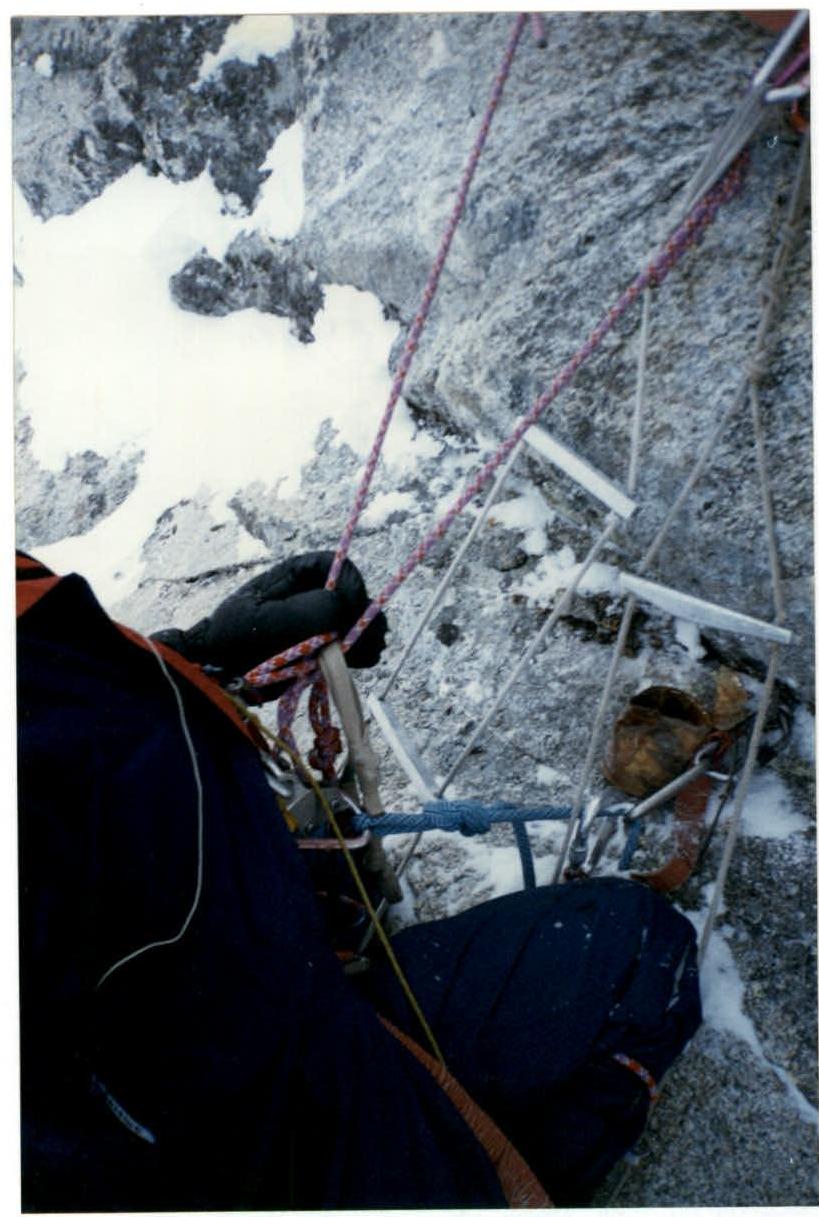
- 16:00 — the 3rd rope length is completed. Reached under the 2nd cornice to the 1st control tour. Found a note from a group of instructors from the "Digoria" alpine camp led by A.A. Kiselev dated July 15, 1993.
- 17:15 — descended to an overnight stop at the rannkluft.
February 24:
-
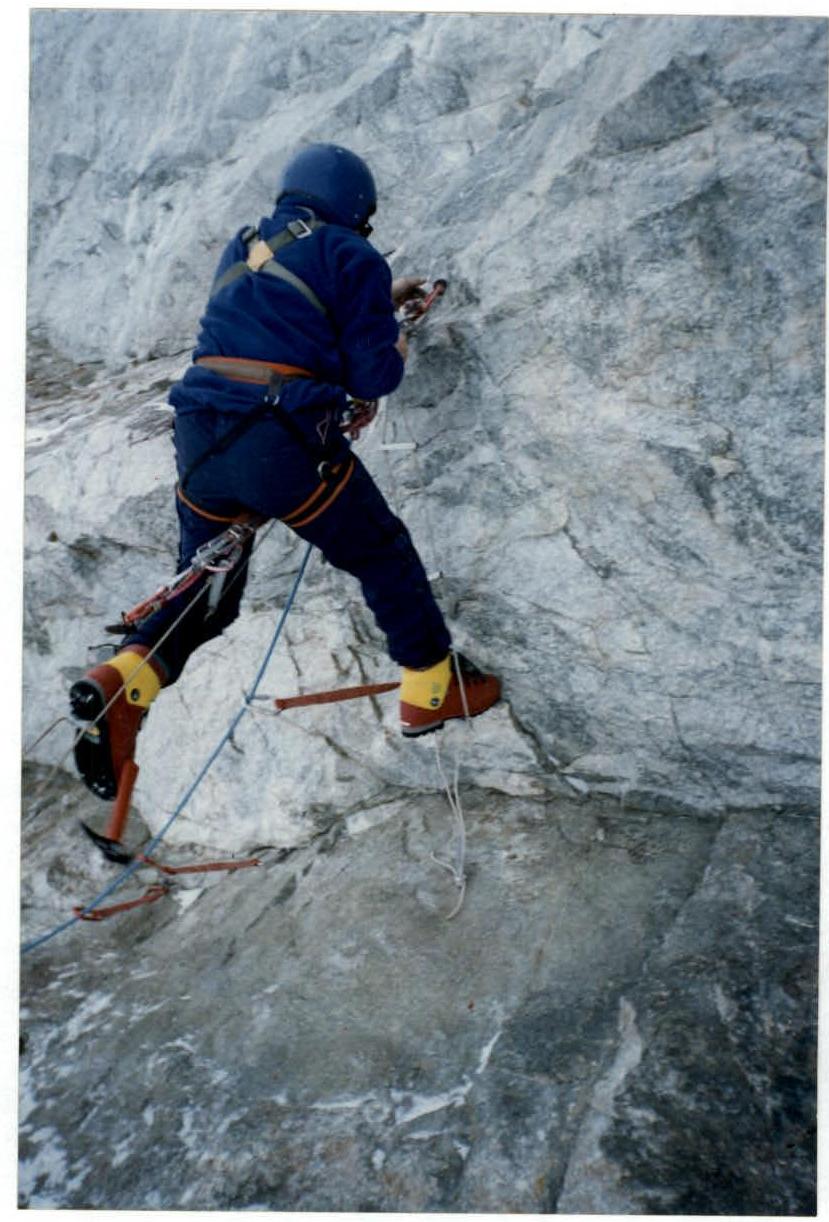
7:30 — the rope team of S.P. Bachmanov — V.N. Volkov departs, passed the 2nd cornice, with alternating leads, reached under the 3rd cornice, overcoming a 30-meter overhang, dry slab. Under the cornice, followed a groove to the upper part of the first bastion. Overcame the cornice with complex climbing, using:
- ladders,
- bolt pitons,
- rock pitons in some places.
The rope was straightened.
-
17:30 — descended to an overnight stop at the rannkluft.
February 25:
- 7:00 — the rope team of K.B. Khamitsaev — G.Yu. Zevakhin departs. Overcame a bend with complex climbing, using ladders, bolt, and rock pitons.
- 15:00 — retrieved a note from Kiselev's group at the 2nd control tour.
- 17:00 — descended to an overnight stop at the rannkluft.
February 26:
- 7:00 — the rope team of Yu.V. Proyaev — S.P. Bachmanov departs. After the roof of the 1st bastion, having passed over 200 m along a steep snowy slope, approached the 2nd bastion and further processed 4 rope lengths under the "Red Wall".
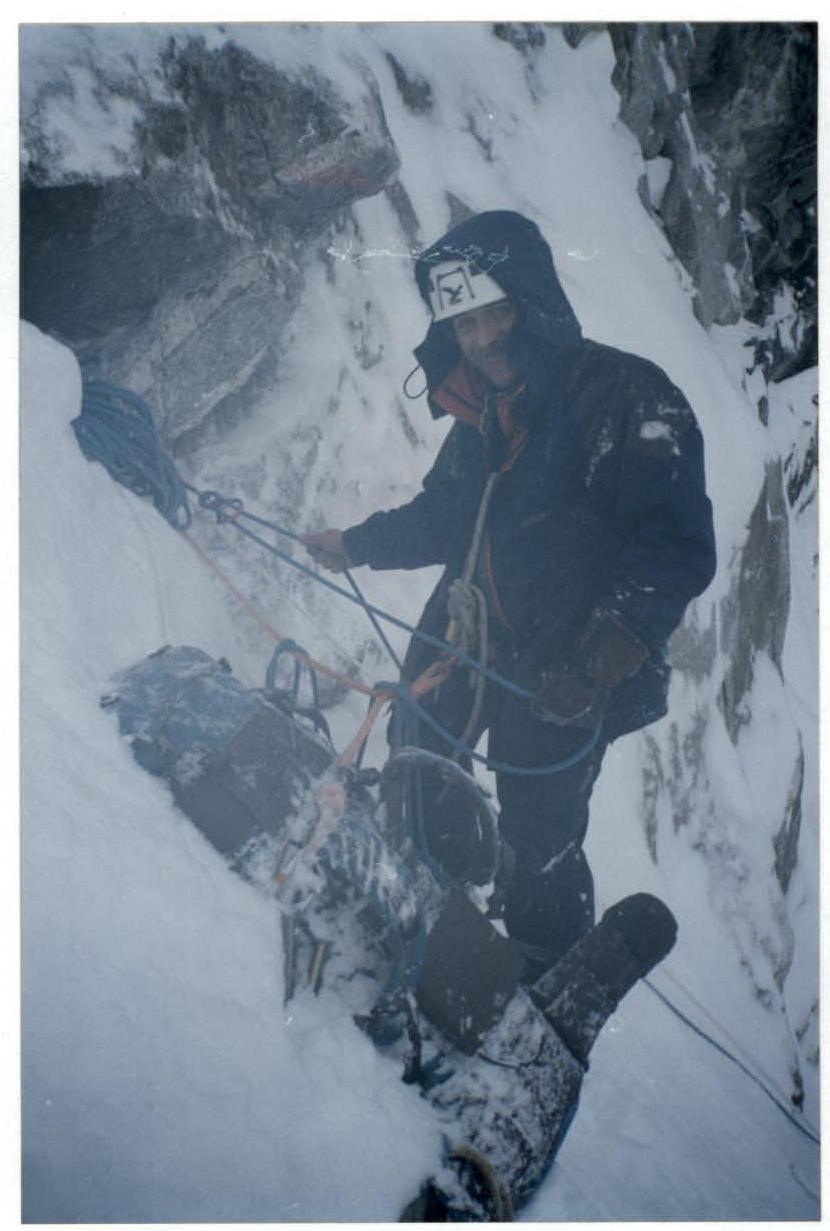
- The remaining four team members lifted the bivouac to a shelf under the 2nd bastion.
- 16:00 — the entire team gathered for an overnight stop under the 2nd bastion.
February 27:
-
7:00 — the rope team of A.L. Zelensky — G.Yu. Zevakhin departs first, processing two key sections of the 2nd bastion. The rope team of Yu.V. Proyaev — S.P. Bachmanov followed. Further, the rocks were snow-covered, cracks were hard to find, so they made extensive use of protection elements and friends.
-
Then followed:
- a 40-meter wall,
- followed by a 40-meter internal corner that led above the cornice.
Very complex climbing, ladders.
-
18:00 — descended to an overnight stop under the 2nd bastion.
February 28:
- 7:00 — dismantled the bivouac, began ascent along the fixed ropes in the following order:
- Yu.V. Proyaev — V.N. Volkov;
- K.B. Khamitsaev — S.P. Bachmanov;
- G.Yu. Zevakhin — A.L. Zelensky.
- Due to periodic small snowfalls, micro-avalanches constantly occurred, sometimes burying them. Again, used protection elements, rock pitons, and, having reached snowy sections, — several snow pitons. Rope teams alternately led the way.
- 18:00 — established a bivouac on the pre-summit ridge, 60 m from the summit.
February 29:
- 8:15 — began movement.
- 9:00 — Summit!!!
- Began descent via the 5A category route. On the Sugan pass, met a group of observers.
- 19:45 — descended to Sugan overnight stops.
March 1:
- Return to the "Digoria" Alpine Camp.
Protocol
Analysis of the ascent by the combined team of the Alpinism Federation of RSO-Alania and the North Ossetian Regional Rescue Service of the Russian Emergencies Ministry to the peak Sugan-Bashi (4450 m) via the North-Eastern wall, 6A category, in the 14th Russian Alpinism Championship 1996, winter category.
Attendees:
- Senior coach, head of the rescue team V.P. Gudenko;
- coach V.O. Rodin;
- head of the observer group G.A. Eputaev.
Speakers:
Yu.V. Proyaev: The route was very challenging due to it being the snowiest and coldest winter period, with temperatures dropping to −35 °C. Even the approach required significant physical effort. We encountered numerous difficulties. Each rucksack weighed over 50 kg. We're grateful to the observer group for their assistance during the approach and observation of our ascent. Still, I enjoyed the route; it's something I've never seen before. Judging by its current state, it corresponds to, or even exceeds, the 6A category. I believe that overnight stops on the bastion during winter are impractical; instead, one should descend to the rannkluft area at night, which we did. Of course, the cornices, which protrude 15–20 m from the wall, were particularly memorable. The team's work was well-coordinated, as we had prepared for this in advance. We were fully equipped with any type of gear. During training, we had covered sufficient rock sections with negative inclines. Thus, we completed the route at a good pace. It was a pleasure working within our team. The excellent moral climate and very cohesive group allowed us to succeed. Therefore, I believe our team is capable of even more complex routes.
V.O. Rodin: Was the classic double-rope system used everywhere?
Yu.V. Proyaev: Generally, the "Edelrit" rope allows for single-rope operation, but we didn't use that, consistently working with double ropes.
A.L. Zelensky: I enjoyed the ascent. We've been dreaming about it for a long time. The route is challenging but very logical and relatively safe, with a clear direction; it certainly corresponds to, and even exceeds, the 6A category. The tactical plan was well-developed, with minimal deviations. I particularly note the choice of overnight locations. The organization and preparation of the team were suitable for the harshest winter conditions. Two minor remarks:
- V.N. Volkov's red "Koflach" boots were not suitable for winter conditions;
- Our standard harnesses are not ideal for prolonged work on negative inclines.
I'm very satisfied with our team's moral climate. I'm ready to tackle more complex routes with this team.
V.P. Gudenko: How was the team provisioned with supplies?
A.L. Zelensky: We had all necessary supplies, but had to be weight-conscious due to the abundance of gear.
V.O. Rodin: What gear was considered surplus?
A.L. Zelensky: Nothing. The route was complex. We had prepared for it extensively, and everything was thought out in detail.
G.Yu. Zevakhin: I too will note the serious nature of the route. The approaches were also challenging, particularly the ascent to the Sugan pass — we had to climb twice due to the abundance of snow and heavy loads. On the 6A category route for the first time, but felt confident, although I almost fell ill during the approach but then acclimated. I particularly enjoyed the work involving high-level mountaineering techniques. The teamwork was very cohesive and precise, with virtually no unnecessary actions. We were ready for the route, as evident from our preparatory training on rocks, especially towards the end. One of the main factors for our success was the healthy moral climate — it was a pleasure to work within the team. The gear selection was very competent, meeting international standards. I particularly liked the "Saleva" ice screws. On icy sections where I worked first, I noticed these ice screws, unlike others, didn't chip off lenses even in the most solid bottle glass ice.
V.P. Gudenko: Is there a desire to undertake a similar ascent with this group again?
G.Yu. Zevakhin: With pleasure.
S.P. Bachmanov: We knew the route would be challenging, and we were prepared. There were moments when the route's complexity wasn't just technical but also physical, like when pulling rucksacks, especially on the ascent to the pass. Honestly, I didn't expect such an abundance of snow. On the wall, all cracks were filled with snow, making it hard to place pitons; on many sections, besides those with negative inclines, it was generally hard to find cracks; we relied on:
- protection elements
- friends in large numbers — this was above the second bastion.
Up to this section, many bolt pitons were used. Despite the complexity, we managed to take many photos, and our leader captured a unique video. This is a tradition in our team, starting from the Pamir. The team dynamics were excellent.
V.O. Rodin: How do you evaluate the radio communication during the ascent?
S.P. Bachmanov: There were occasional radio communication disruptions, but the observer group helped significantly. Perhaps we didn't fully master the new ALINCO VHF radios, but we'll work on that. Overall, we had the necessary information.
V.P. Gudenko: How was the process of pulling rucksacks and moving loads?
S.P. Bachmanov: During the route, we moved loads as follows: since we covered a section from bivouac to bivouac within a working day, using blocks to pull was impractical. It was easier and faster to hook the remaining load to the system and climb with it along the length of the fixed ropes.
V.N. Volkov: Knowing other 6A category routes in this area, I believe this route surpasses them, not just in winter. Generally, across the Caucasus, this is one of the most complex 6th category routes. The ascent proceeded in a clear rhythm. The load was evenly distributed among team members. The tactical plan was developed over a long period, using all available materials, observations, and consultations. Thus, there were no deviations from it. The gear was fully appropriate for the route, and almost everything was used, with nothing being surplus. Although the red "Koflach" boots I wore were not the best choice, being insufficiently warm for winter. The team's cohesion offers great prospects for future high-category ascents.
V.P. Gudenko: How do you evaluate your psychological preparation for the route?
V.N. Volkov: We were all psychologically prepared, despite encountering significant difficulties, especially on prolonged negative incline sections.
K.B. Khamitsaev: We had been preparing for this route for more than a year, but certain circumstances, not technical but organizational, delayed us. Initially, the team was divided into rope teams as follows:
- Yu.V. Proyaev — S.P. Bachmanov;
- A.L. Zelensky — G.Yu. Zevakhin;
- K.B. Khamitsaev — V.N. Volkov.
Then, during the work, the rope teams constantly mixed, maintaining a high and clear rhythm. By the end of the sixth day, the wall was essentially passed. This is a significant achievement. Proyaev demonstrated remarkable leadership skills. Generally, each participant is capable of being a leader. The particularly challenging sections with negative inclines were of great interest. These required a high level of athletic and technical skill, and their resolution decided the route's outcome. Fortunately, these sections were in the first third. Classical work was performed using high-level techniques and the "Zalsug" system, maintaining the pace set by the leading rope team of Yu.V. Proyaev — A.L. Zelensky until the summit. Compared to available materials, a significant change in our tactical plan was the decision not to spend the night on the wall but in the rannkluft area, which proved to be the only correct and decisive decision for winter conditions. The gear was selected correctly, being high-quality and meeting UIAA requirements. One remark concerns the duralumin carabiners, which began to wear out on the piton-boxes during the passage of cornices. The excellent moral climate and good psychological preparation of all participants were key to the successful work on the route. I'm ready to continue working within my team on ascents of the highest complexity, including future expeditions, and first of all, on Kilimanjaro in the summer.
V.P. Gudenko: Tell us about the medical support.
K.B. Khamitsaev: First, we had a fully stocked first-aid kit. Second, two participants are professional rescuers, and the rest are non-staff members of the North Ossetian Regional Rescue Service of the Russian Emergencies Ministry, so the entire team has good training in providing medical assistance. Fortunately, this training wasn't needed.
Beginning
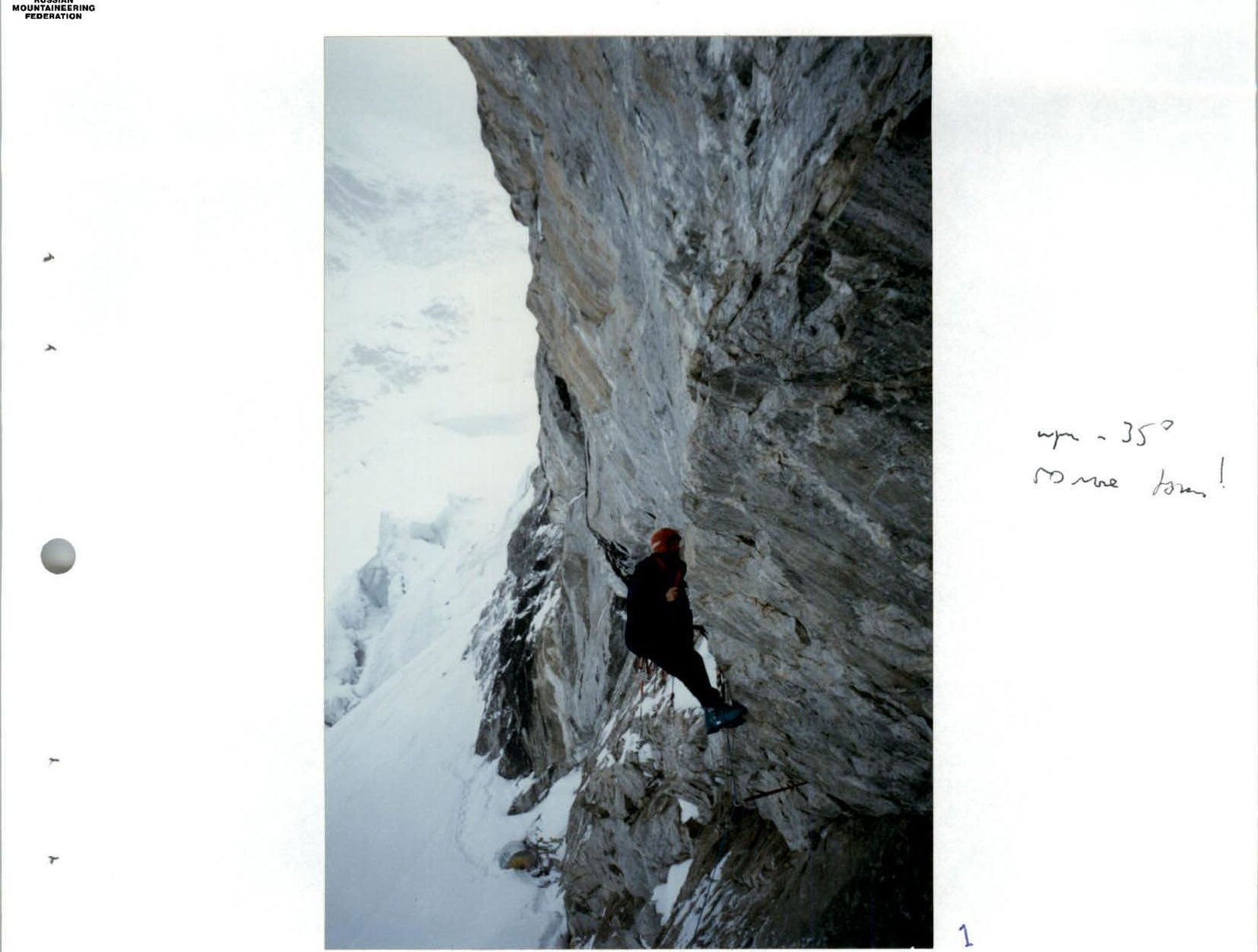
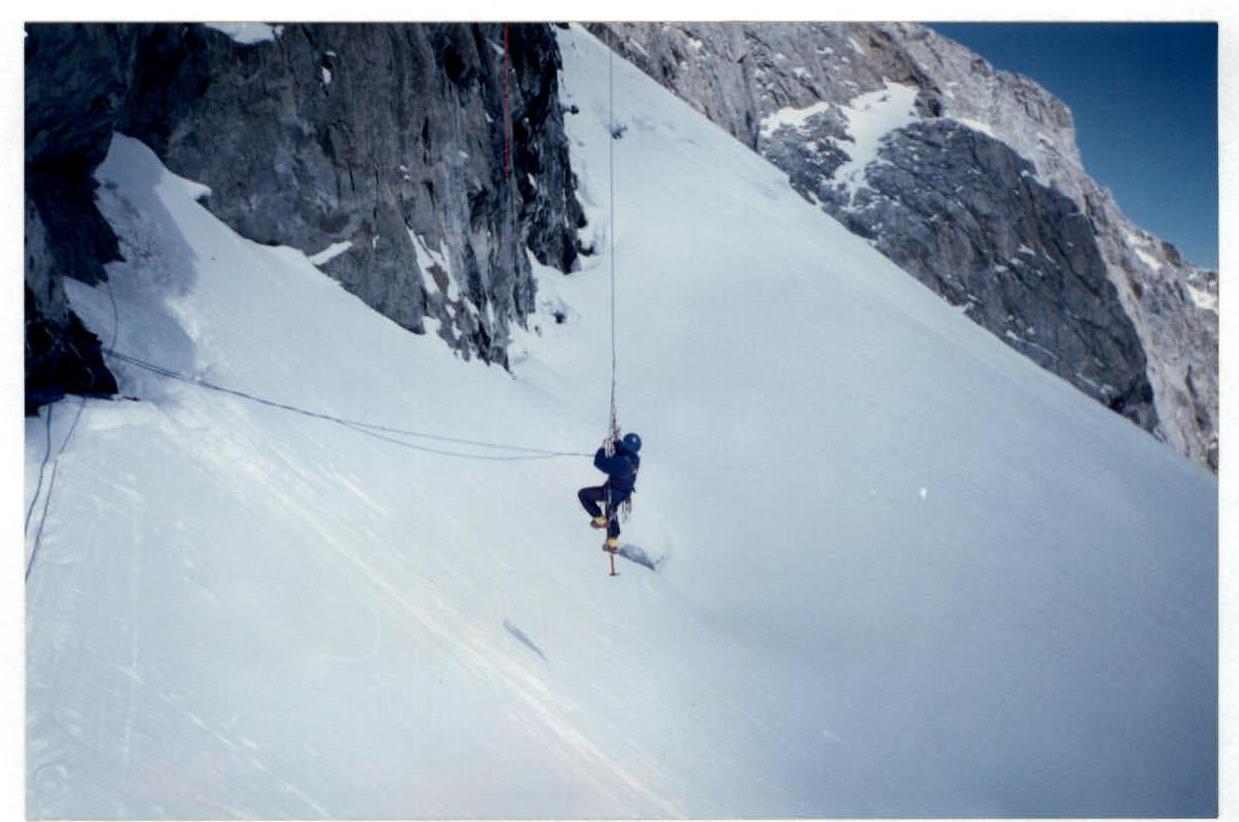
Ascent under the cornices. In the background, Dopakh West peak
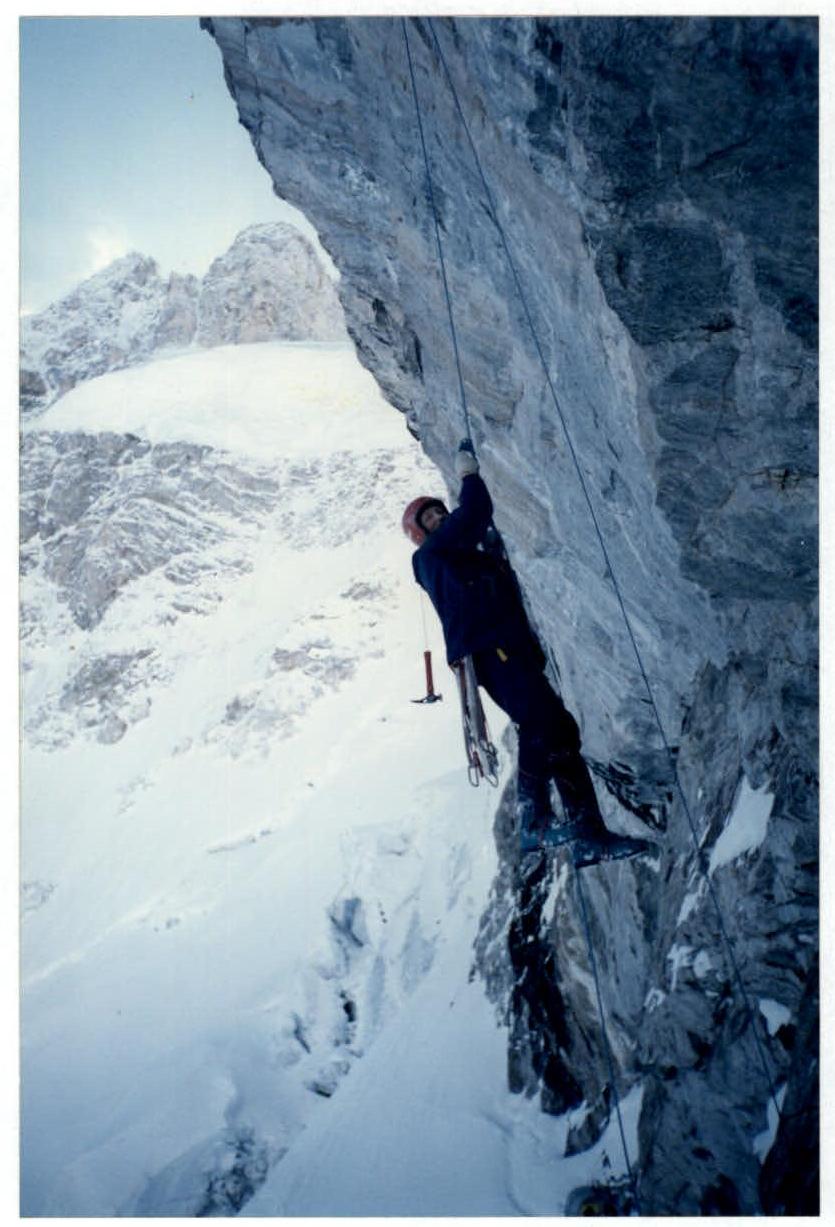
After straightening the ropes
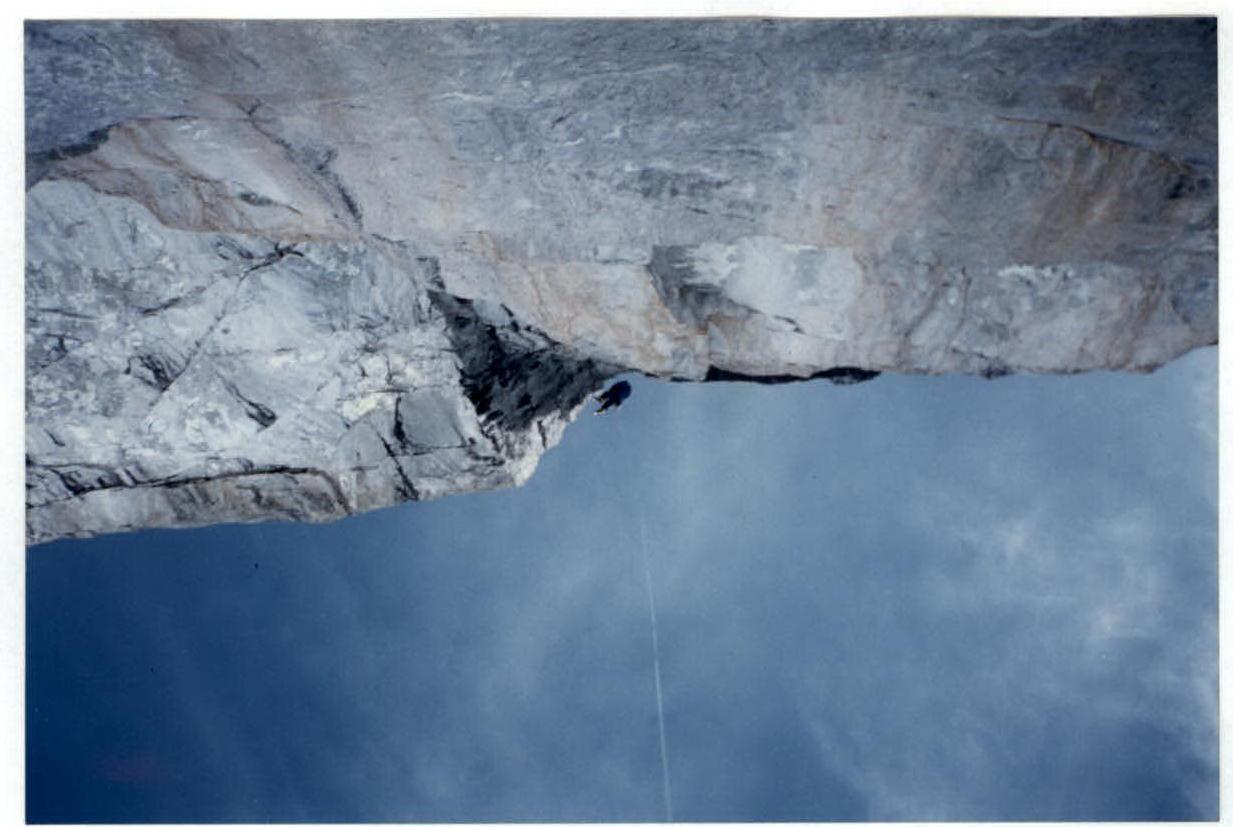
Near the bend
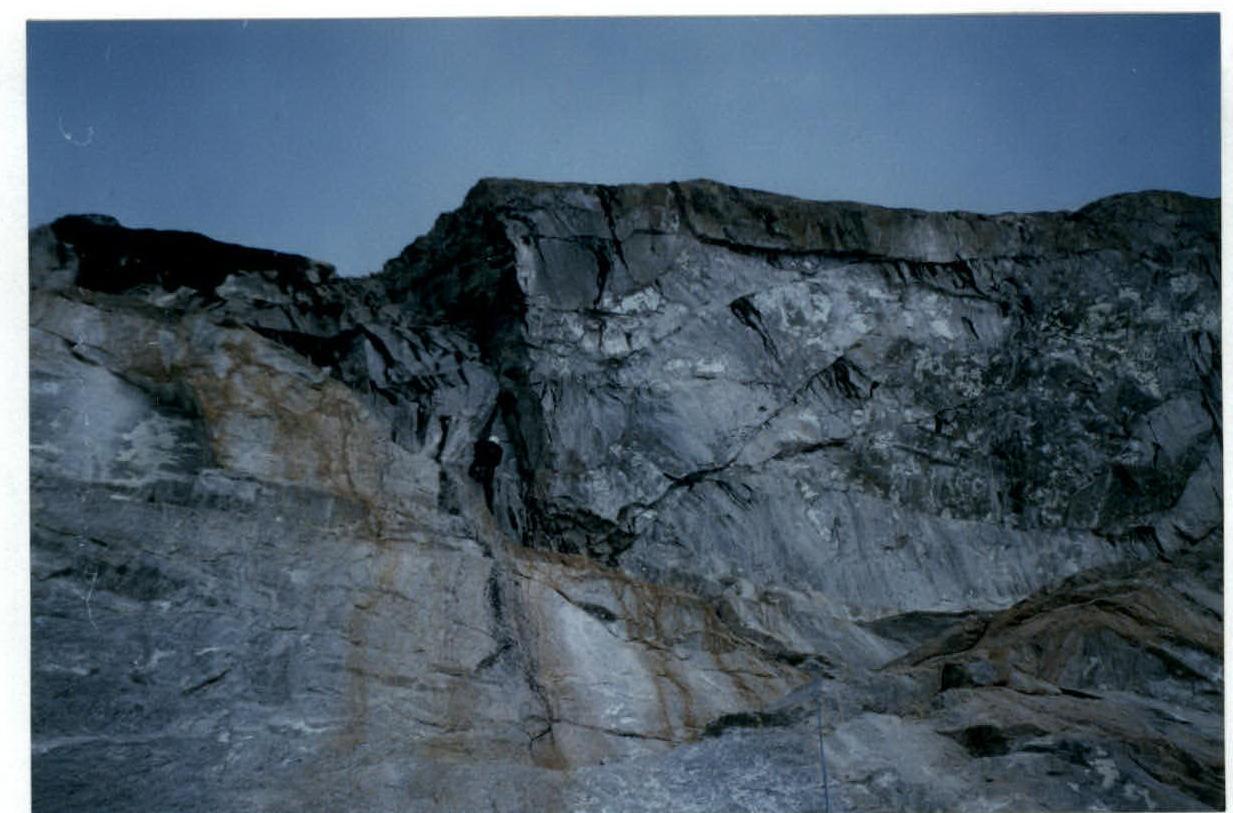
Ascent to the large 110° cornice
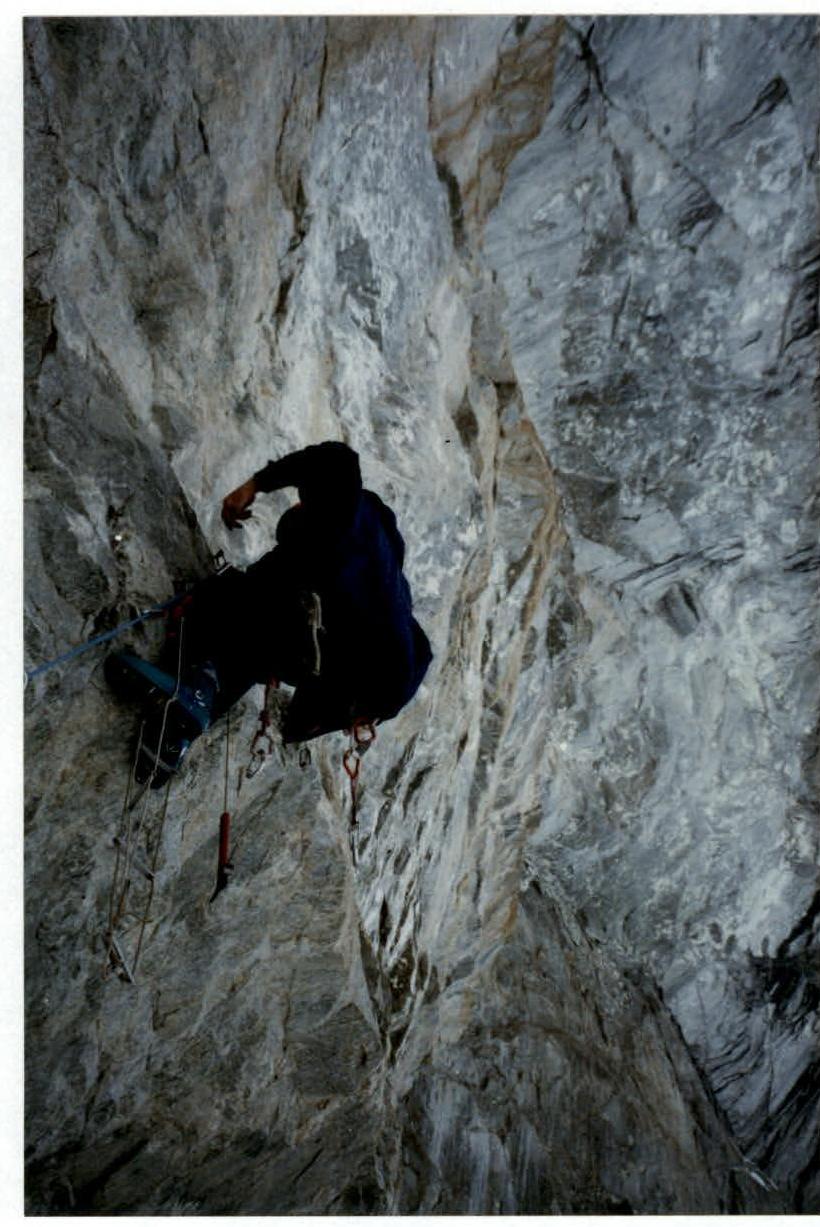
Ascent to the large cornice
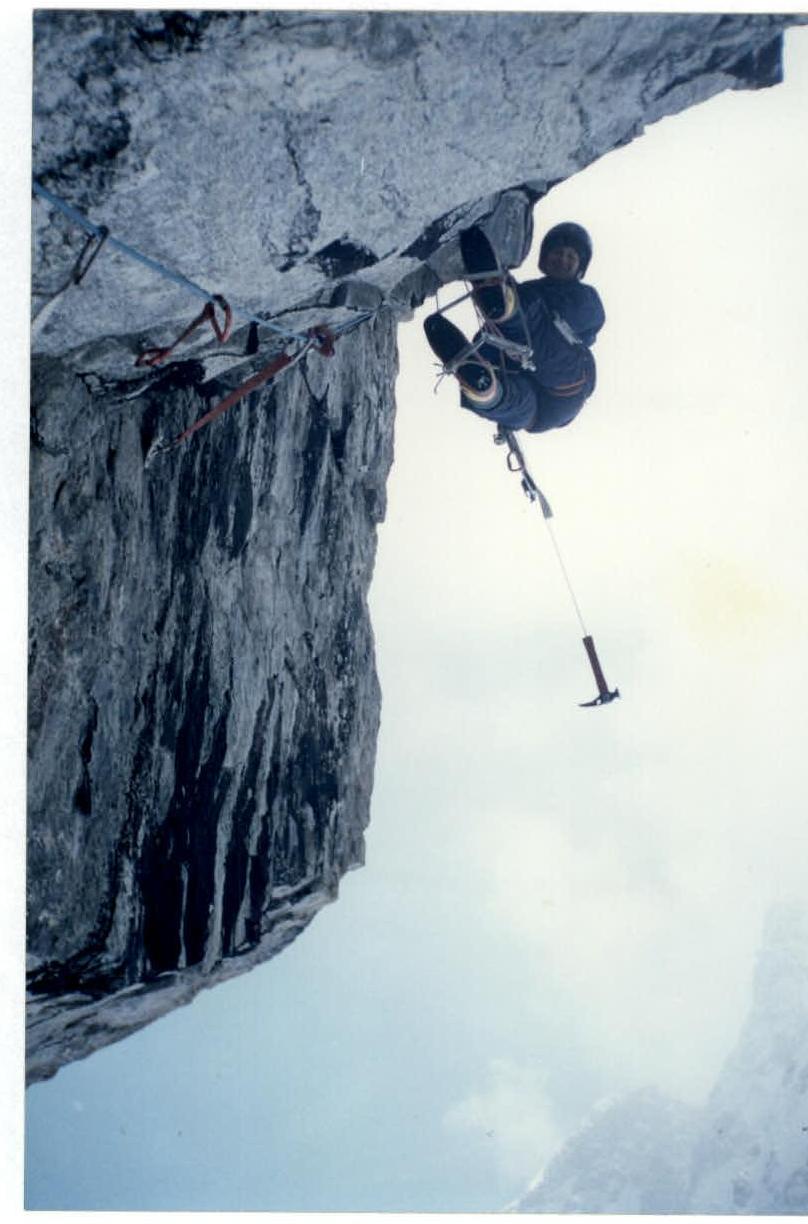
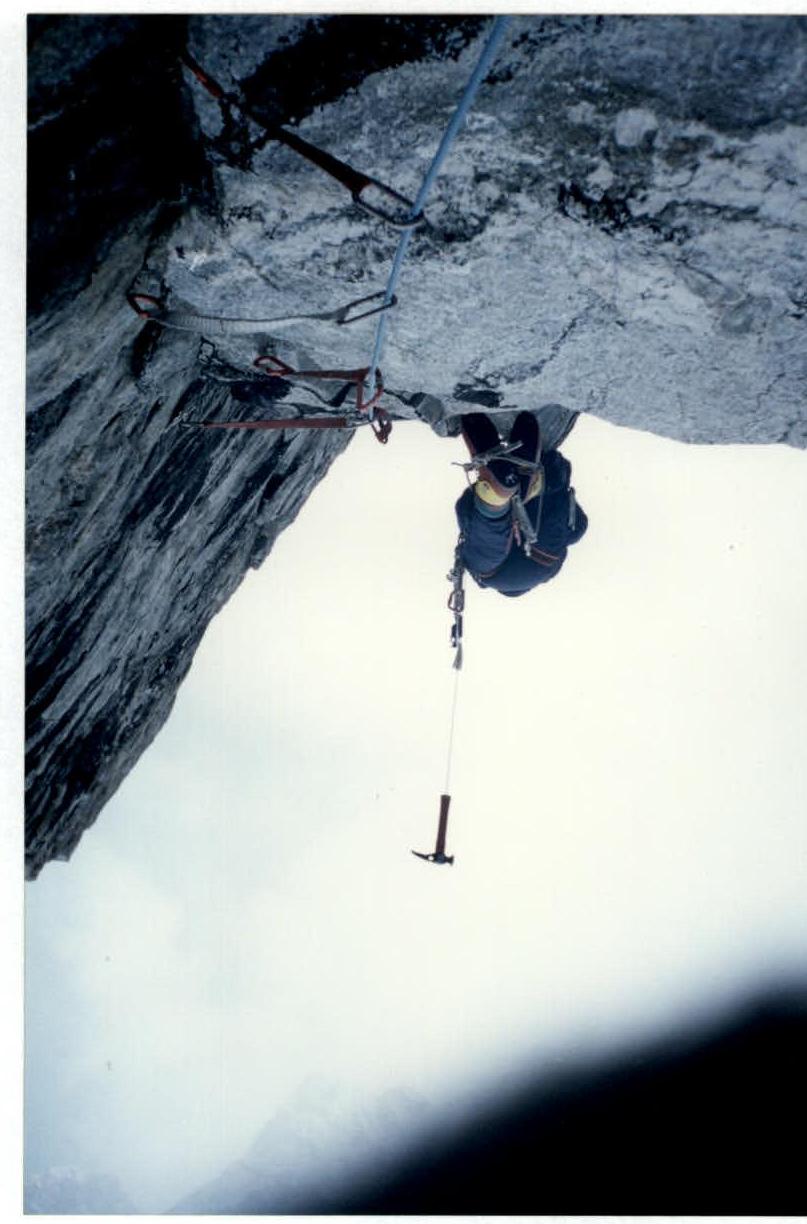
Passing the negative internal corner 145°.

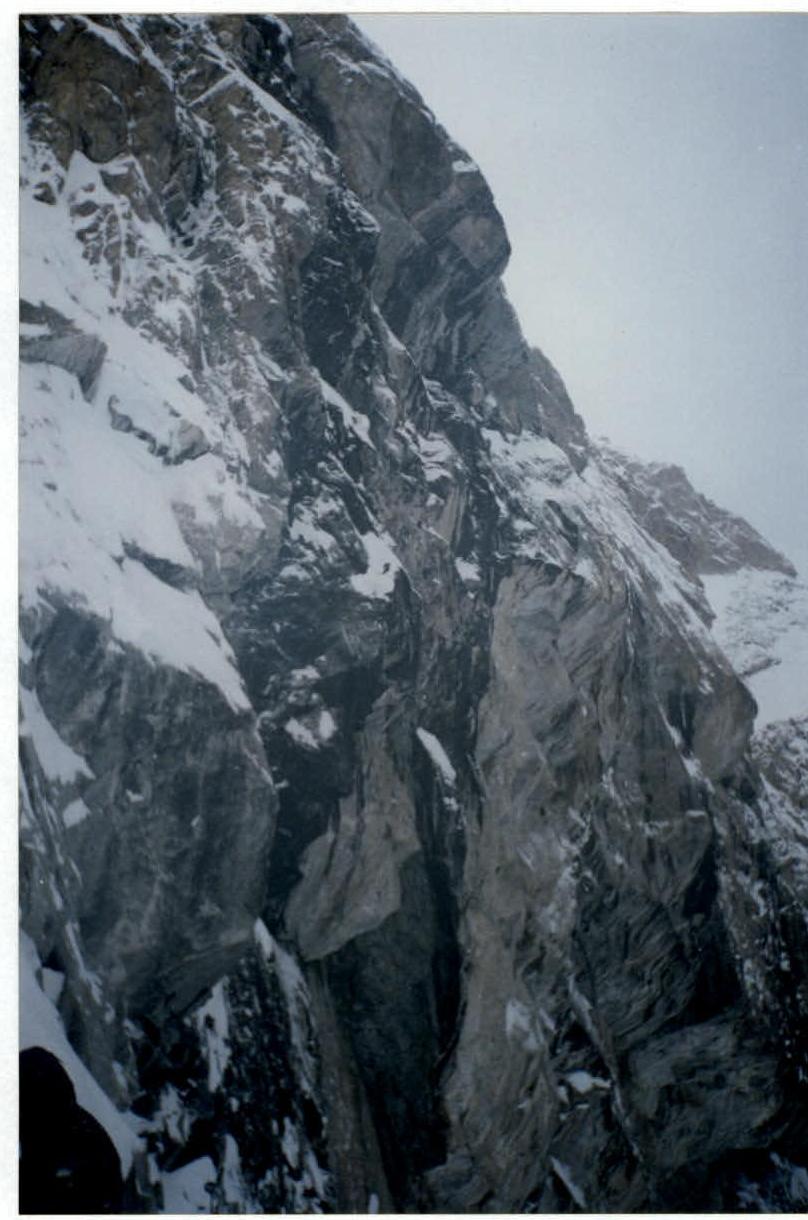
Exit to the roof of the first bastion
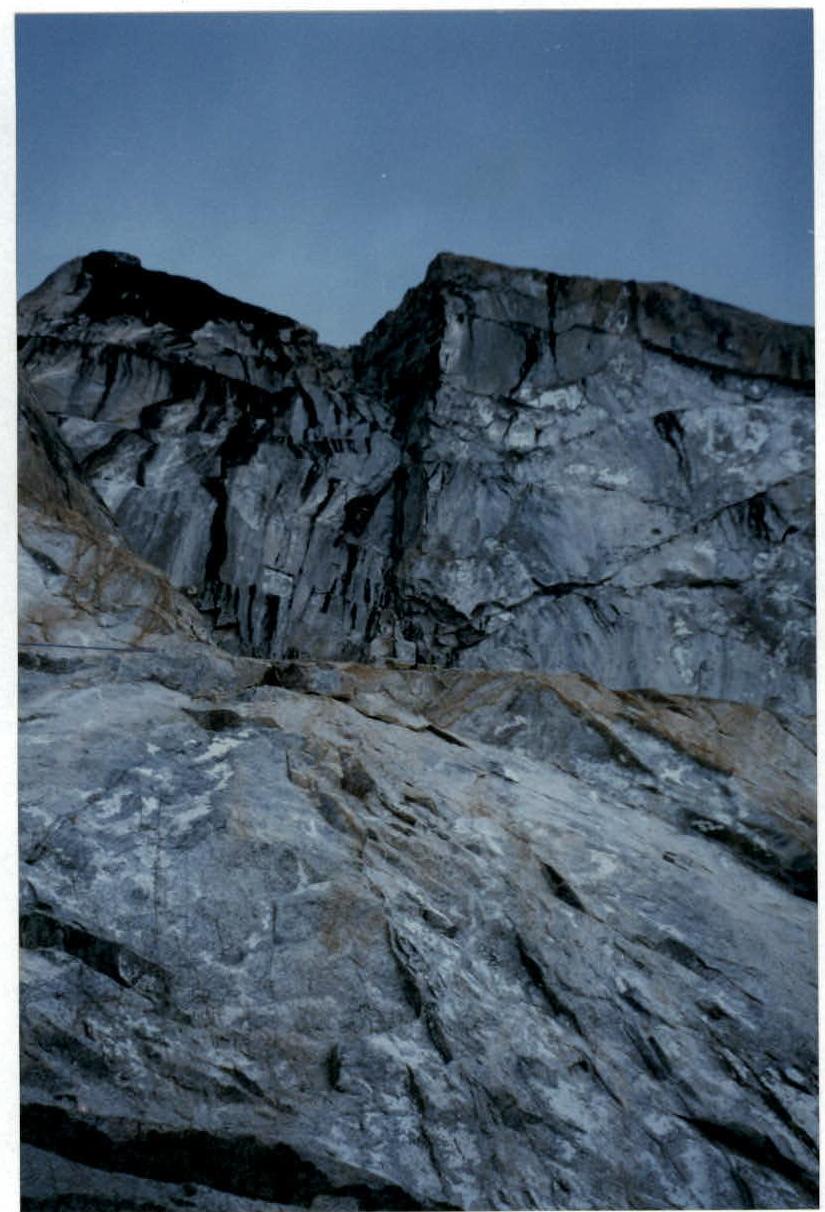
Large cornice
2nd control tour.
Pulling loads on the 2nd bastion

Overnight stop location under the 2nd bastion
Passing the 3rd cornice