
Ascent Passport
- Central Tian Shan, Sarydzhan range, Marble Wall glacier.
- Traverse of peaks Karlytau (5450 m) – Marble Wall (6400 m) from Marble Wall glacier, first ascent.
- Submitted – 5B cat. diff. (tentative).
- Route character — combined.
- Route height difference — 2030 m.
Route length – 4316 m.
Length of sections: V cat. diff. – 2500 m, VI cat. diff. – 300 m.
Average steepness:
- main part of the route (sections?) – 70°
- entire route – 30°
- Ice screws left on the route: total – 3. Screws used: ice: 22, rock: 0.
- Team's working hours on the route: 45 h 30 min.
- Leader: Barbashinov Kirill Olegovich — CMS.
Participants:
- Muravyov Dmitry — MSR
- Chervonenko Nikolay — CMS
- Samoylov Sergey — CMS
- Puchinin Andrey — MS
- Fedorov Andrey — CMS
- Coach: Khaibullin Rinat Rashitovich — IMSC, MSR, Honored Coach of the USSR.
- Departure to the route: March 2, 2001 — 9:30 AM. Karlytau summit: March 3, 2001 — 10:30 AM. Marble Wall summit: March 5, 2001 — 3:40 PM. Descent to Base Camp: March 6, 2001 — 11:00 PM.
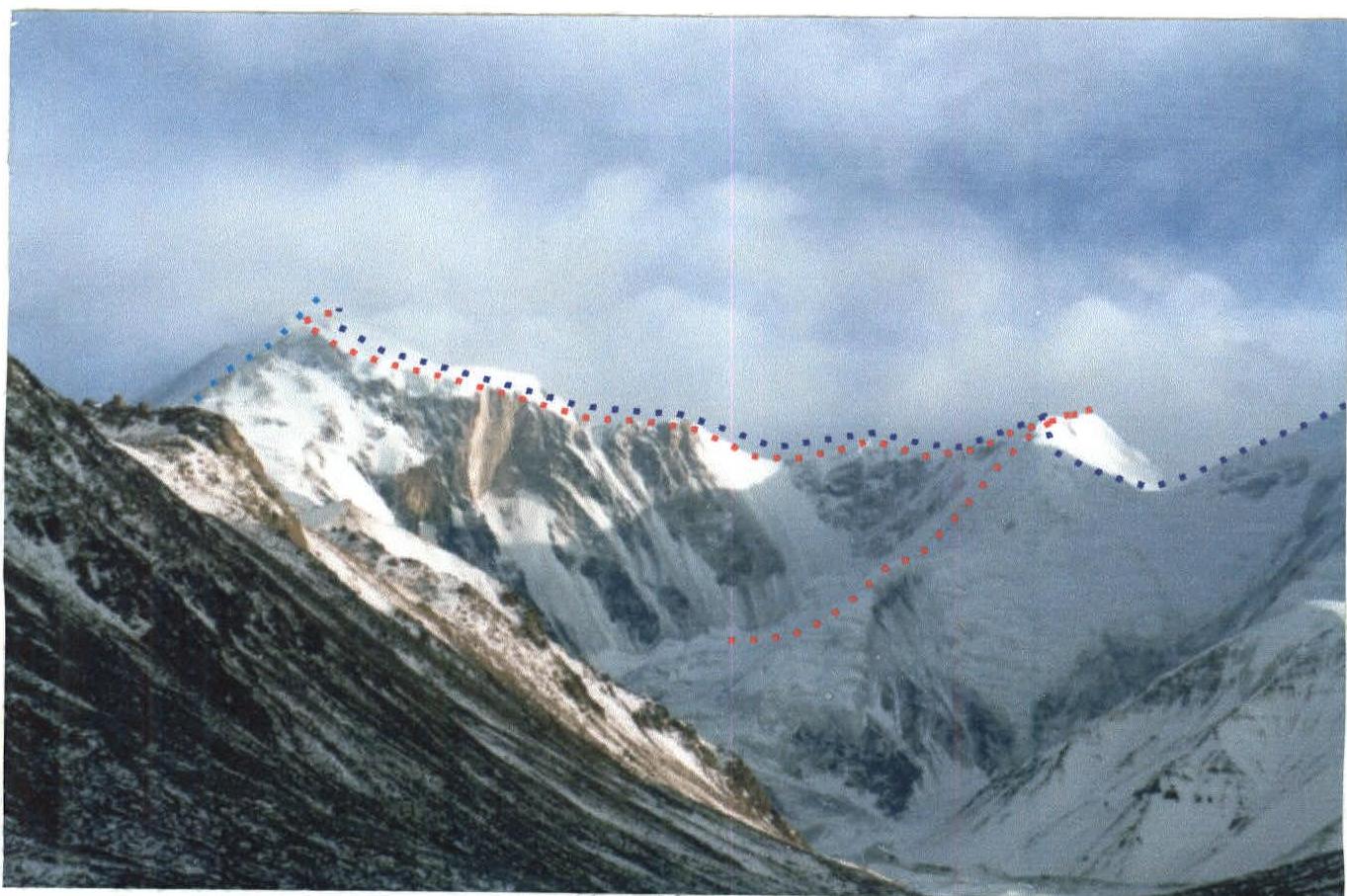
General photo of the summit
- Classic route
- CSB — CSKA MO RK team route, 2001
- Traverse of Saryndzhan range

- Ascent route
- Descent route (classic route)
Overnight stays on the route:
- Overnight stays during ascent
- Overnight stays during descent
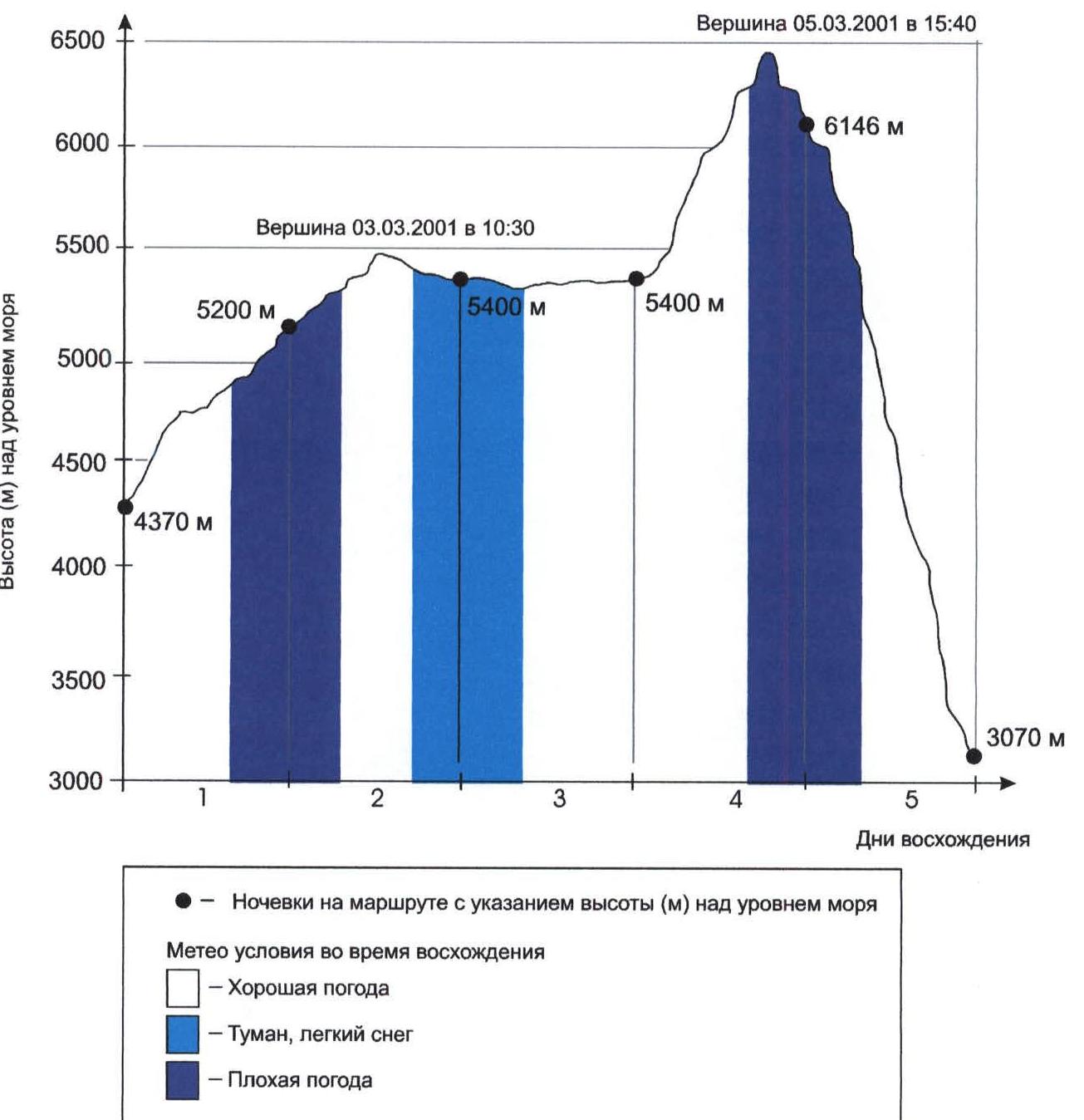
- Overnight stays on the route with altitude (m) above sea level
Weather conditions during the ascent:
- Good weather
- Fog, light snow
- Bad weather
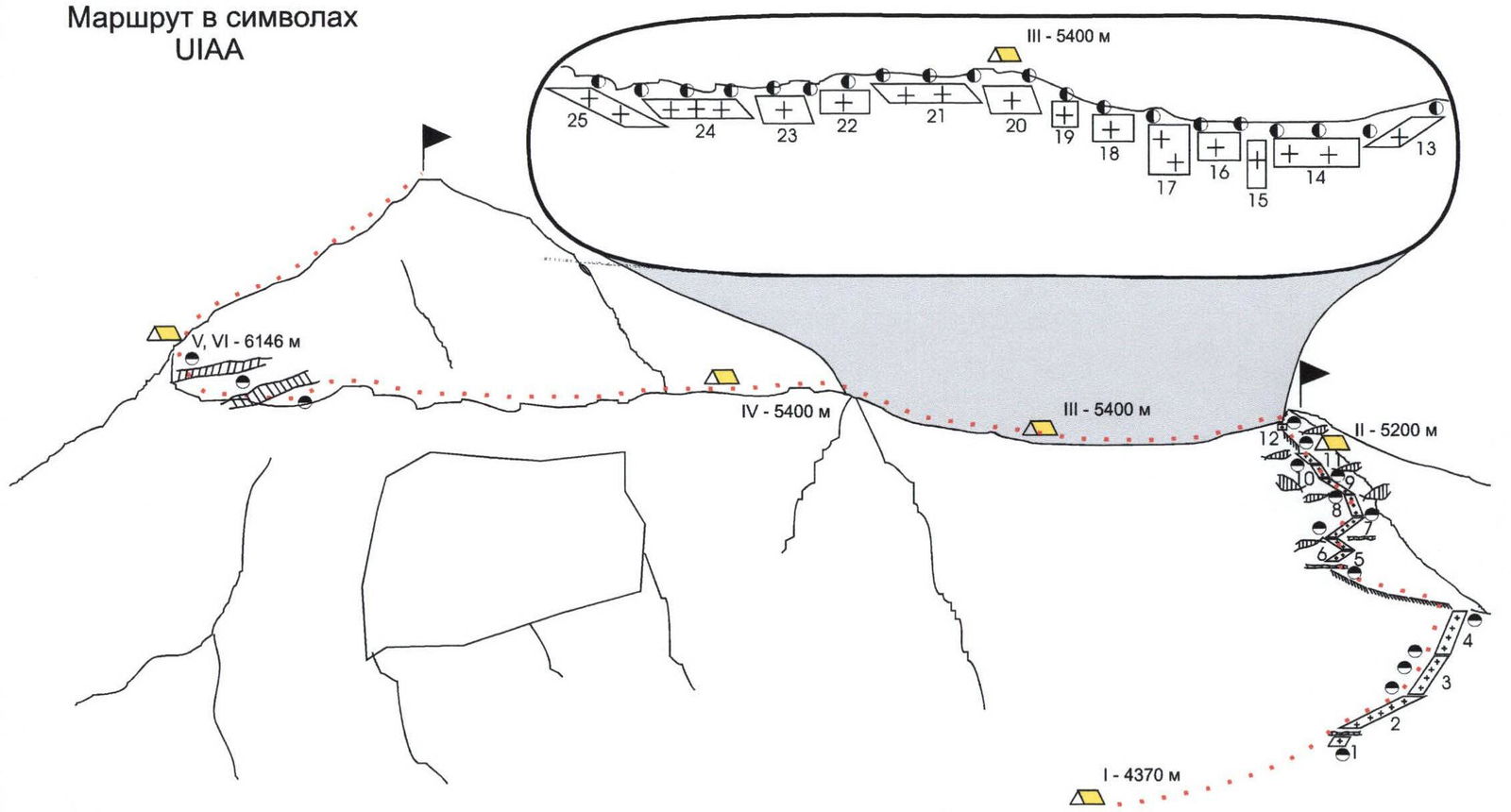
Route in UIAA symbols
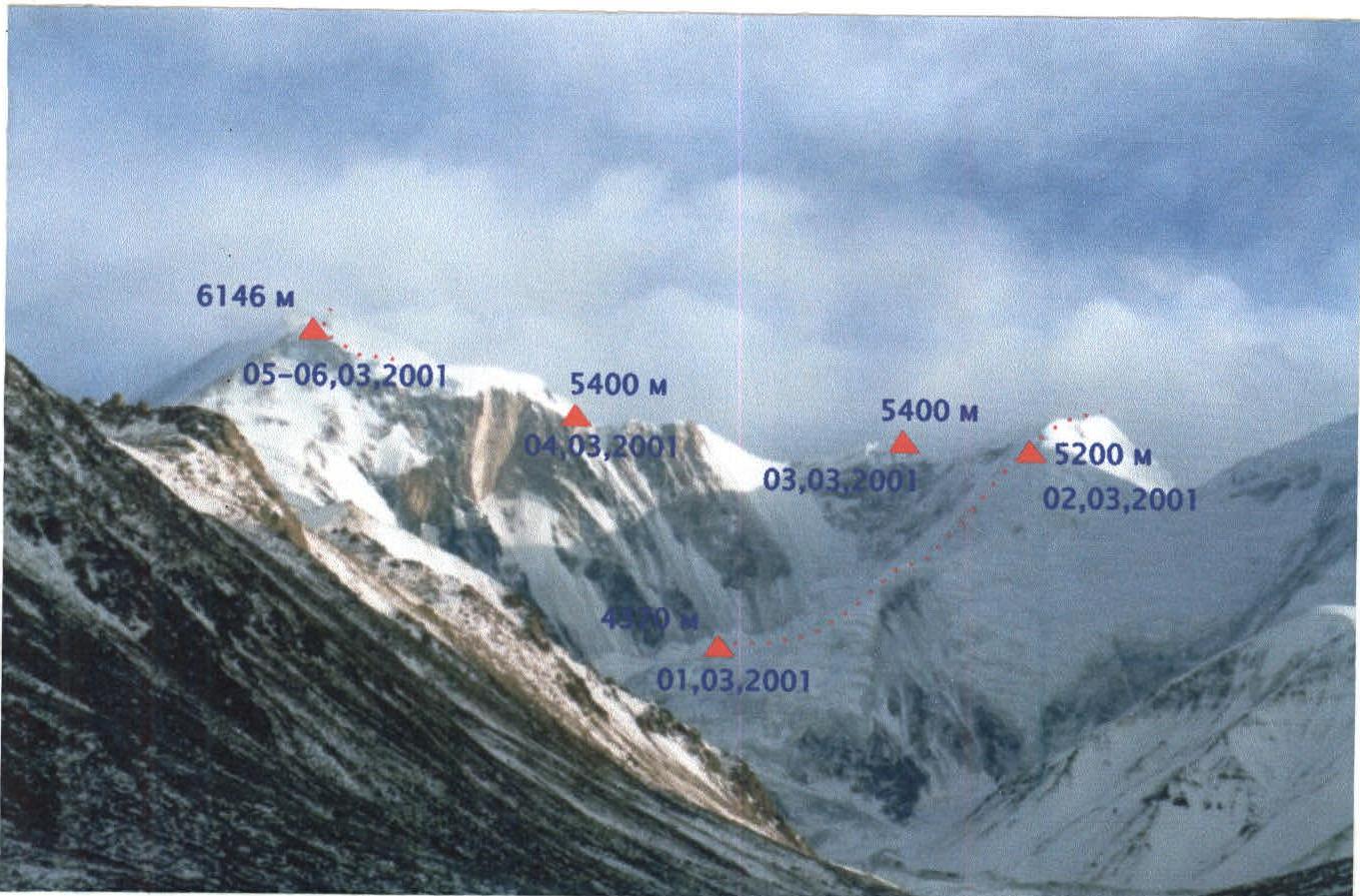
General photo of the summit
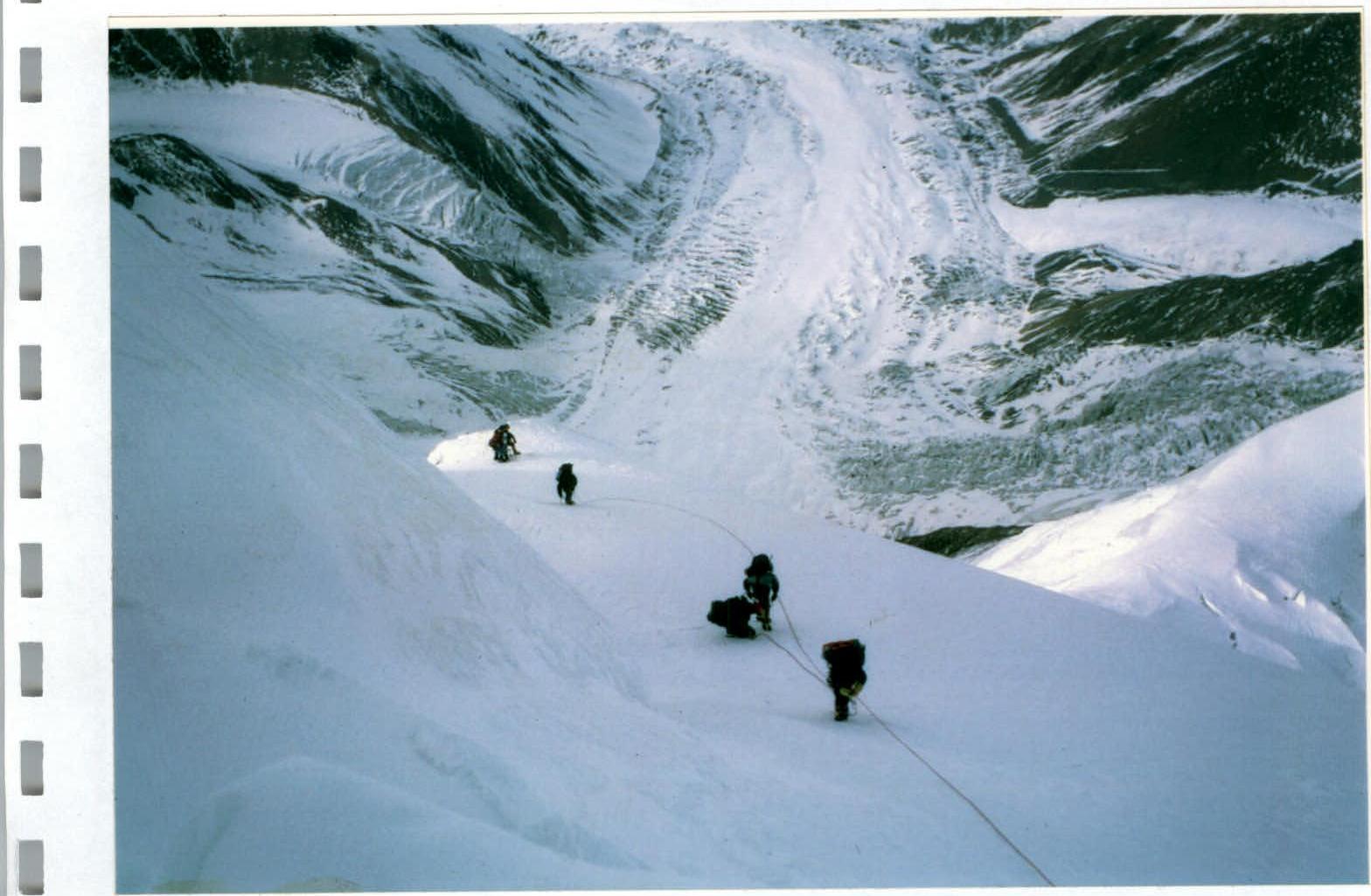
General photo of the summit
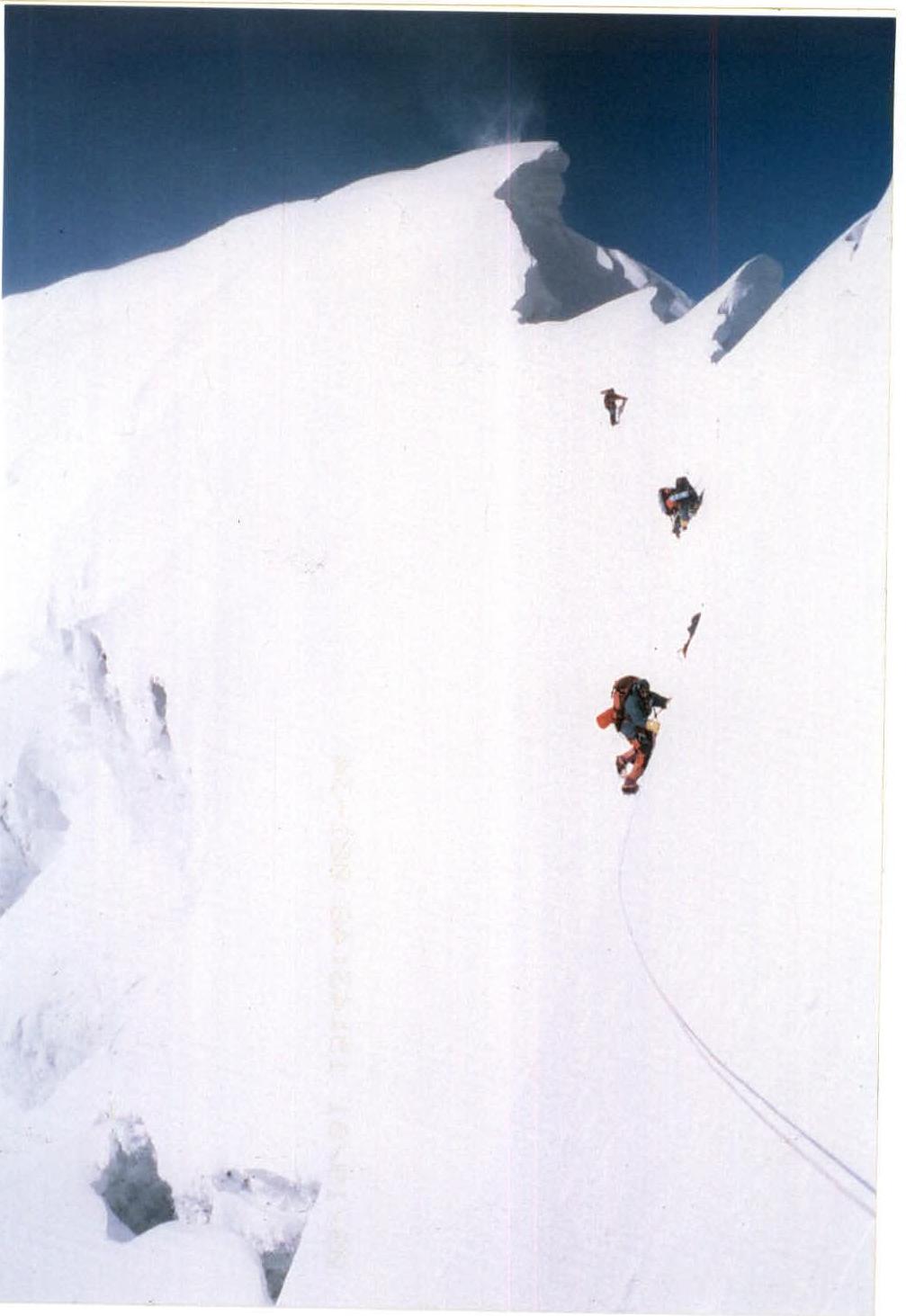
Photo of section #11
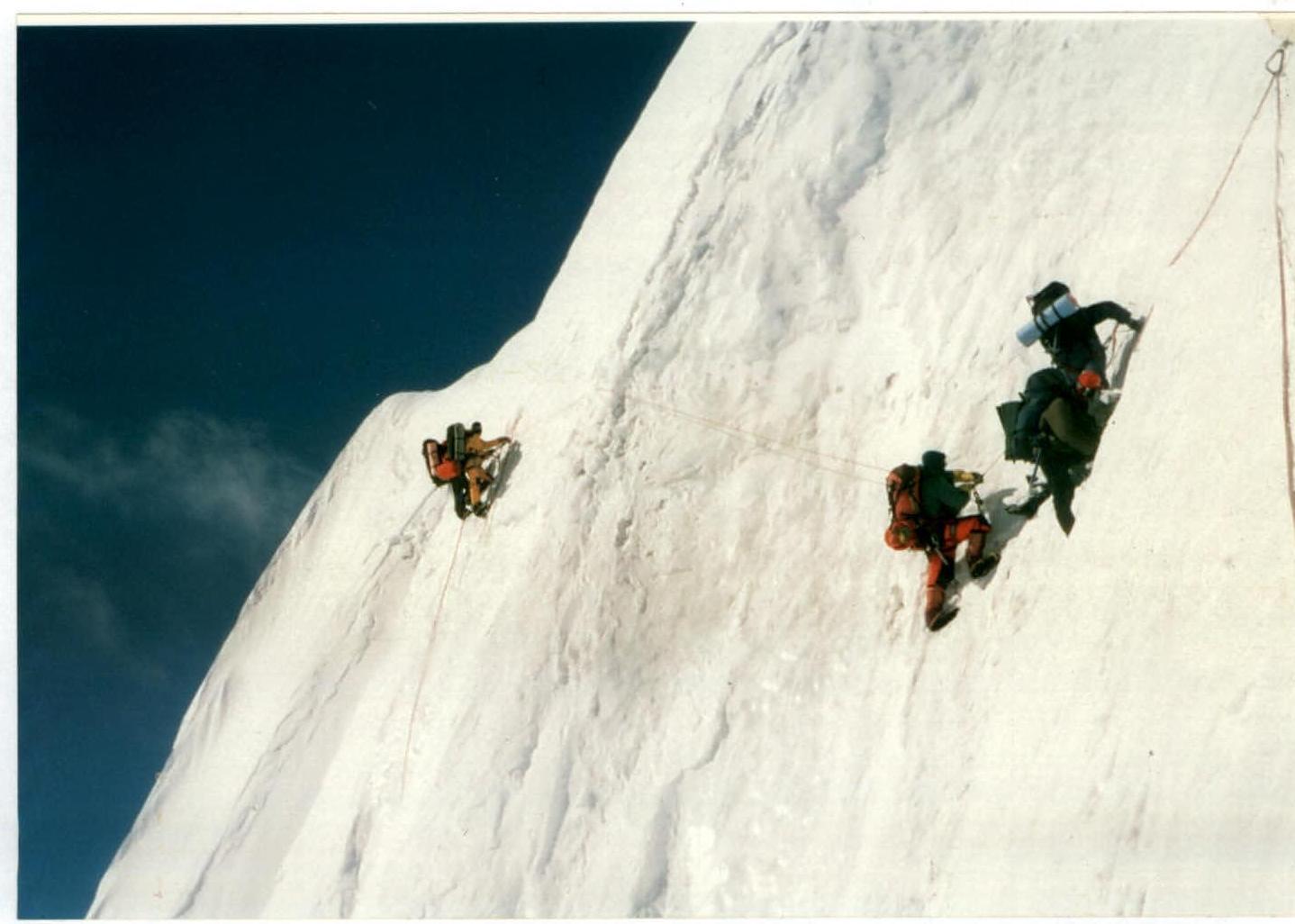
Photo of section #21
Photo of section #24.
Ascent Review
Barbashinov K. (leader) — "The traverse of Karlytau — Marble Wall was a serious test. A lot of preparatory work was done for this. Fortunately, we were lucky with the weather conditions. The route that the team took was planned in the fall during the preparation period. I also believe that the logic of the route is beyond doubt and is the right choice. The team's preparation allowed us to work relatively quickly and was just sufficient for the traverse. All team members worked coherently and focused on the summit. But the good relationships within the team were the key to success that helped us throughout the long ascent."
Muravyov D. — "I consider the ascent successful and worthy of a good evaluation. Finally, a team has come together that is capable of solving such problems. There were some miscalculations: we thought we would cover the ridge coming from Karlytau in 2 hours, but due to the large number of cornices and the very steep slope, we were unable to do so. But in principle, the team was ready for any difficulties that might arise along the way."
Samoylov S. — "Having extensive experience in high-altitude ascents, I can say that the team is strong, cohesive, and communicative. A serious and good ascent was made. Overall, I believe that the group has great prospects."
Puchinin A. — "Naturally, safety is paramount during the ascent. This happened at the expense of some speed, but there was a large margin of safety for the team."
Chervonenko K. — "For our team, this was the first ascent of such a large scale. Thanks to good organization, the food was distributed just right for the days, and we had enough of everything: gas and food. I consider the team strong."
Fedorov A. — "The team worked clearly and coherently on the route. Key sections were passed quickly and stably. The organization of bivouacs was competent, and the sites were safe and relatively comfortable. Overall, I consider the ascent very successful."
Khaibullin R.R. — (CSKA MO RK alpine coach) — "Preparation for the ascent was tactically sound. Literature on winter weather was предварительно reviewed, and an analysis of previous ascent groups was conducted. Photos of the mountain and approaches were examined. A tactical plan was drawn up from Almaty to Akkol and further to the summit and back."
Technical Support:
- Radio communication was at the highest level; the group was practically monitored every 2 hours every day throughout the route.
- Special equipment — good assortment, allowing the team to move without interruptions throughout the route.
- Bivouac equipment — satisfactory.
The tactical plan was followed, taking into account adjustments made during the ascent and several tips and recommendations from the base. On the route, everyone worked, each person doing specific tasks every day, which allowed the entire group to move very compactly and quickly. It is recommended to improve the quality of equipment, especially crampons and ice axes. I think that with some adjustments to the team composition, the group is capable of undertaking more complex ascents.

Comments
Sign in to leave a comment