
Ascent Passport
- Ascent category — technical
- Ascent area — Tian-Shan, Kyrgyz Ala-Too ridge
- Peak Svobodnaia Korea (4740 m) via the left part of the North face
- Proposed category 6B (first ascent)
- Height difference — 1040 m, length of the wall section — 920 m, including 5B — 506 m, 6B — 330 m, average steepness — 66°.
- Pitons used:
| rock | bolt | placed elem. | ice |
|---|---|---|---|
| 54 | 3 | 148 | 34 |
| 23 | 3 | 68 | 0 |
- Team's travel hours — 51 and 5 days
- Overnights: 1st — sitting on a ledge, 2nd, 3rd — lying on a snow platform, 4th — hanging in hammocks.
- Team leader — Sergey Alekseyevich Semiletkin, Master of Sports of the USSR
team members:
- Nikolay Anatolyevich Totmyanin, Master of Sports of the USSR
- Alexander Nikolayevich Terekhov, Candidate for Master of Sports
- Sergey Mikhailovich Uspensky, Candidate for Master of Sports
- Team coach — Igor Vasilyevich Stepanov, Master of Sports of the USSR
- Departure to the route — July 8, 1988
Reached the summit — July 12, 1988
Returned from the route — July 12, 1988
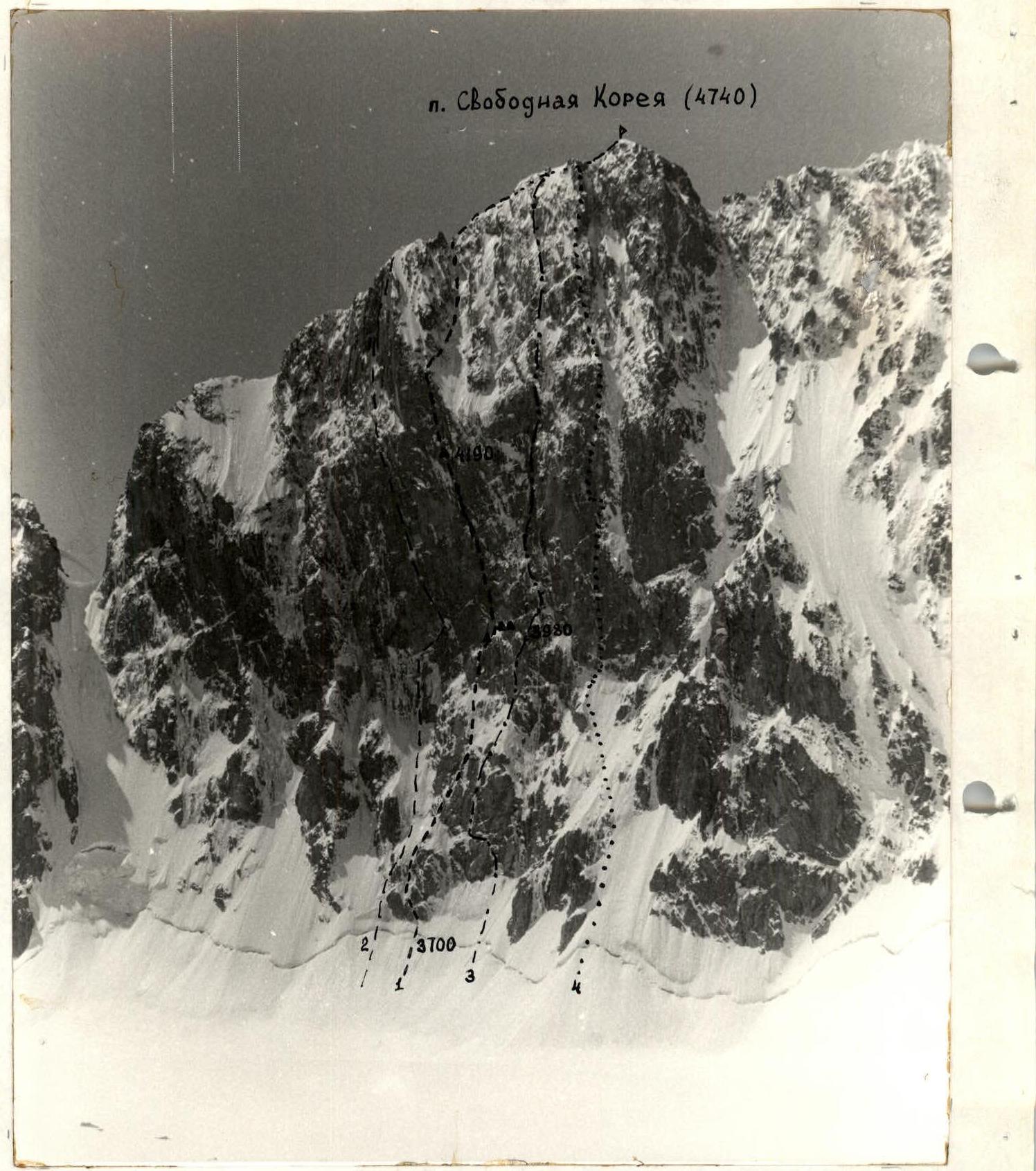
Photo 1. General view of the North face of Peak Svobodnaia Korea (4740 m). Taken from point #1 (height 3750 m, distance 1 km, July 4, 1988, T-22 lens, focal length 7.5 cm)
- — — — team's route; 2. — — — — A. Kustovsky's route (1969);
- — — — — Yu. Popenko's route (1972); 4. ... . V. Bezzubkin's route
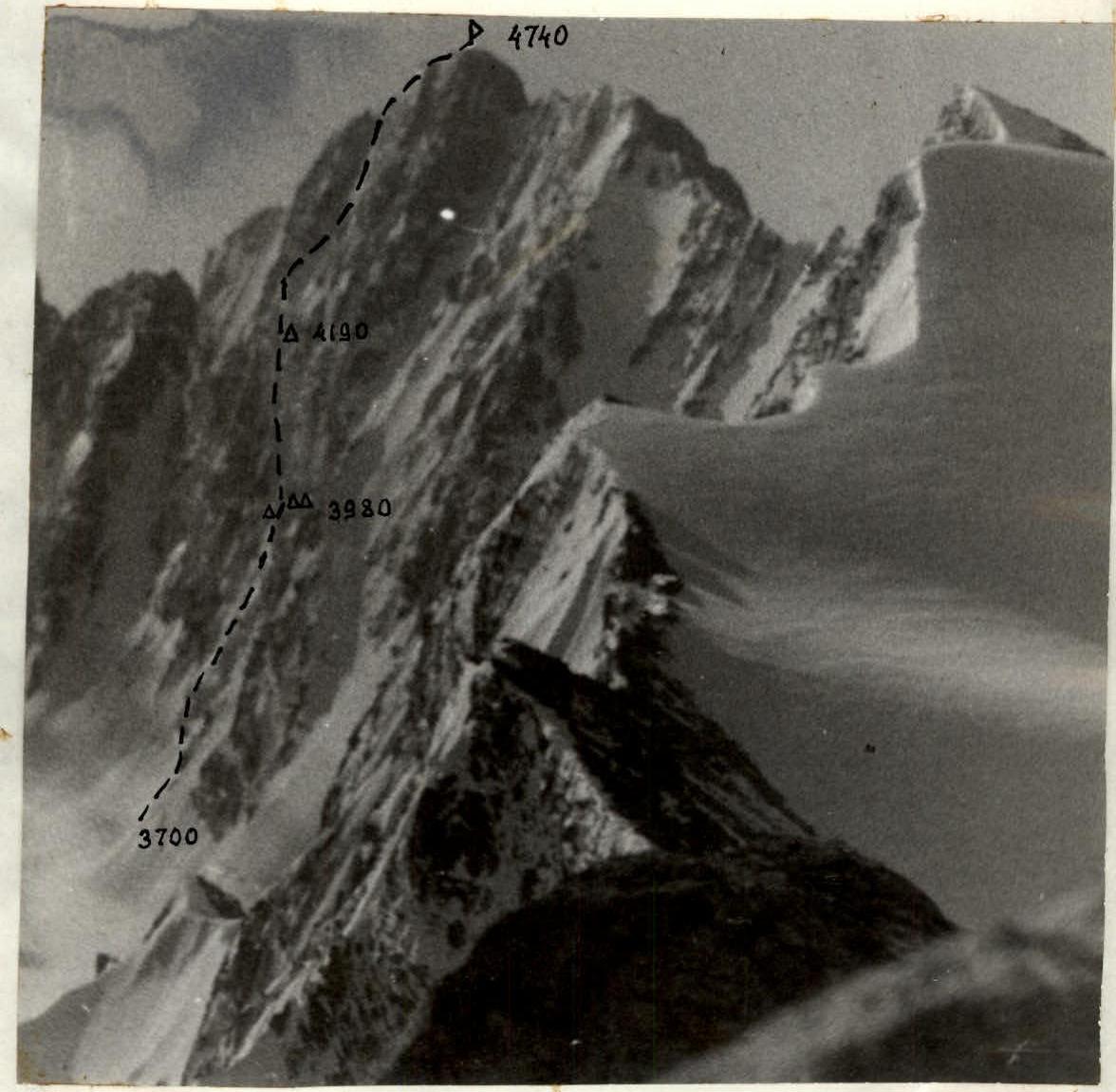
Photo 2. Wall profile from the right. Taken from point #2 (height 4000 m, distance 2 km, July 4,
1988, T-22 lens, focal length 7.5 cm)
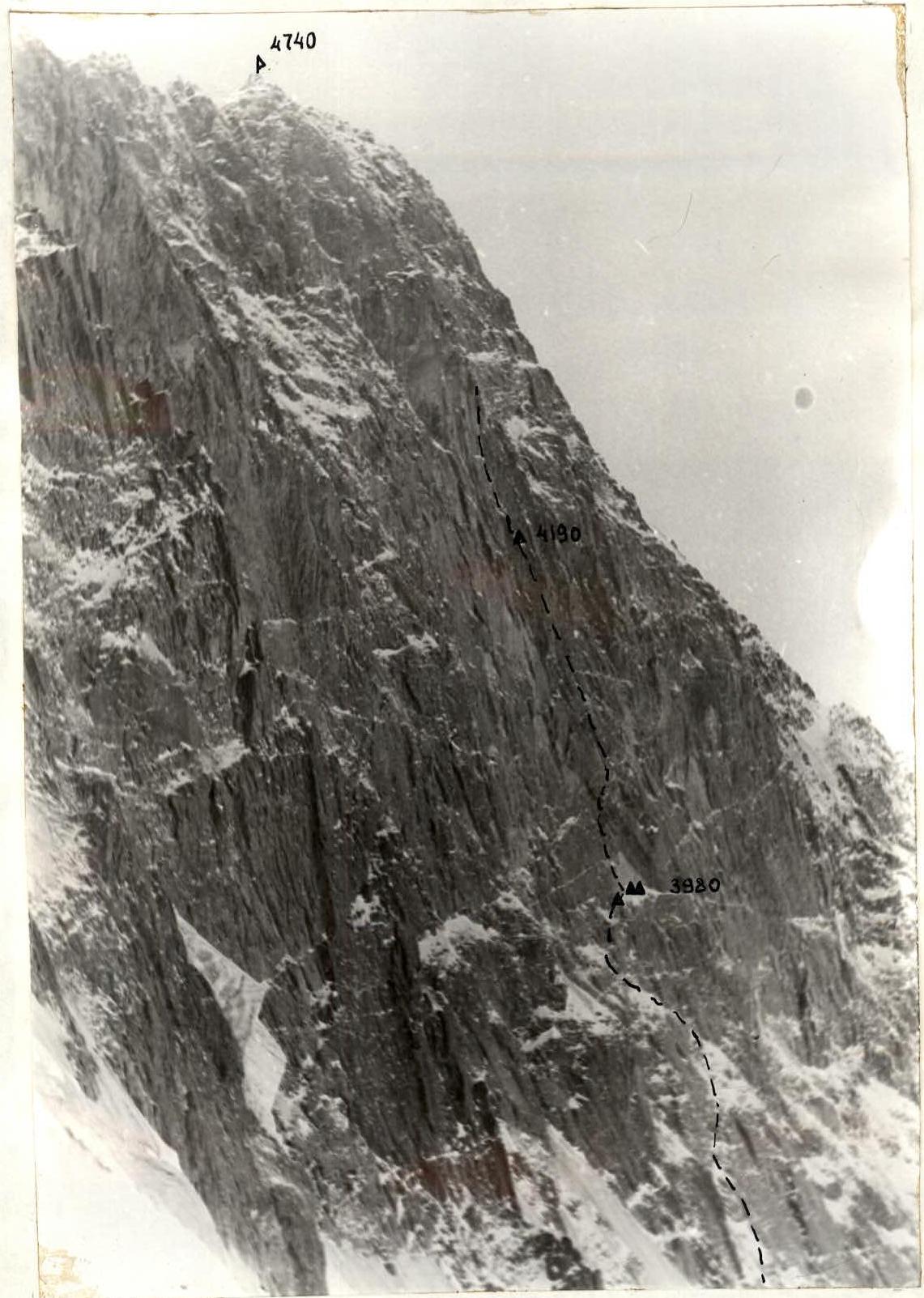
Photo 3. Wall profile from the left. Taken from point #3 (height 4300 m, distance 4 km, July 2,
1988, T-43 lens, focal length 40 mm)
rock placed ice
pitons elem.
1st day of ascent. July 8, 1988. The group started the route at 16:00, 4 hours after a heavy snowfall.
Section R0–R10:
- Bergschrund is climbed via a steep ice wall.
- Then — traverse right upwards into an ice-filled vertical chimney, which leads to steep rocks, smoothed and covered with ice.
- Rock walls alternate with snow-covered inclined ledges.
- Ice crust on rocks is unreliable, ice breaks off under body weight.
- To organize belays, crevices need to be dug out.
Section R10–R12:
- Rocks resembling "sheep's foreheads" lead to a snow-ice ridge, which approaches the beginning of the steepest part of the wall.
- Left upwards starts a steep snow-filled internal corner.
- Further straight up through an ice-filled internal corner.
- Exit onto steep snow-covered slabs.
- Across the slabs — traverse right to a "window" — with a mirror-smooth slab under a giant cornice.
- In the right part of the window — the most convenient place for an overnight stay.
2nd day. July 9, 1988.
- Snow falls again in the morning, and strong wind blows between the tent and the wall.
- We start working at 12:00 amidst the sound of streams flowing down the wall.
Section R12–R14:
- Smooth slab with a narrow crack is climbed using aid climbing.
- Further — through a cornice with 0.5 m overhang on a crack in its right part and down a vertical section.
- Through a system of narrow vertical cracks.
- Approach under the cornice.
On the second day, 35 m of extreme climbing were completed. The cornice was decided to be climbed the next day, as small streams turned into a waterfall by 20:00, and wet gear and clothes started to freeze.
3rd day. July 10, 1988. A cold clear morning promises good weather. We start work according to plan at 8:00.
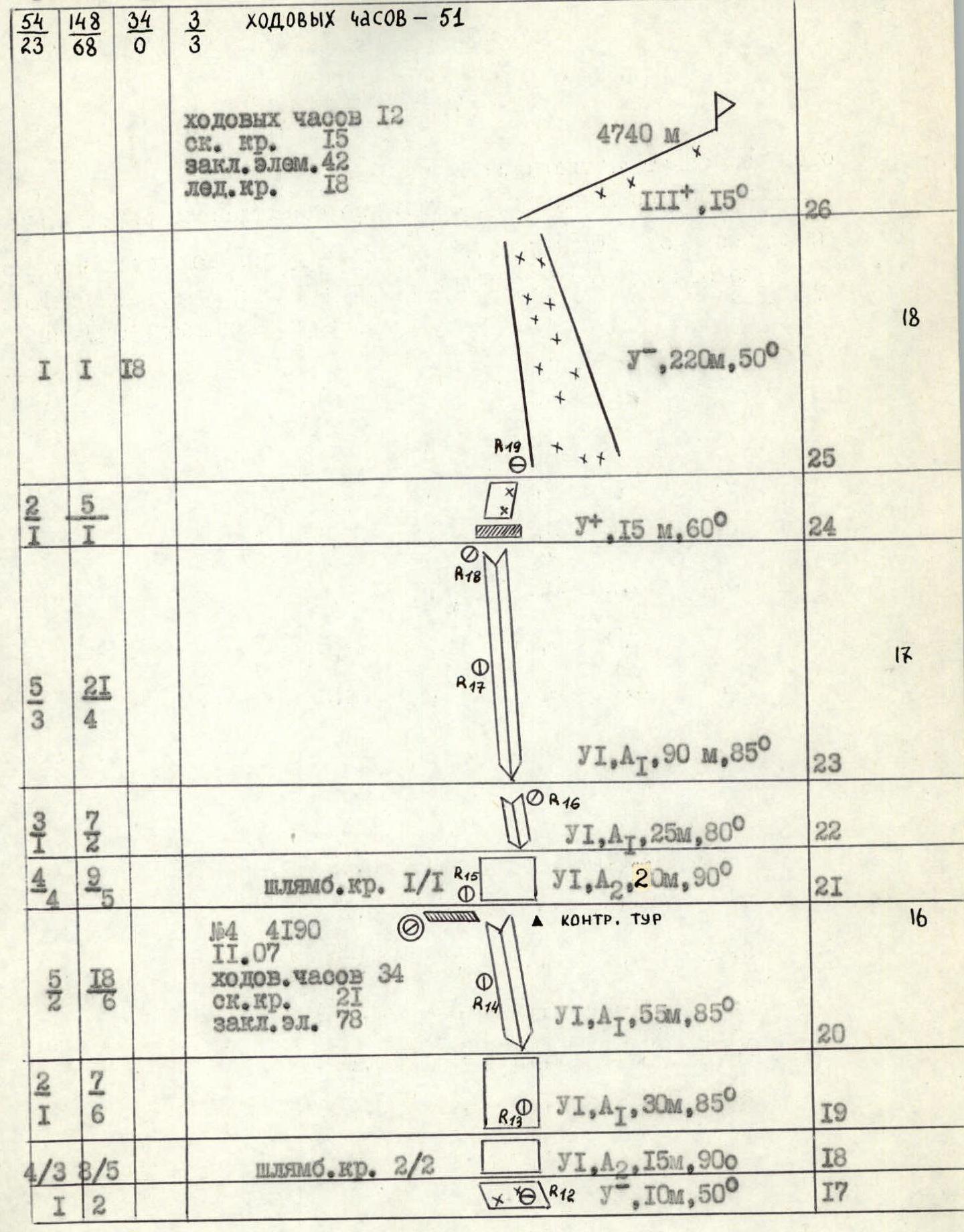
Section R14–R19. A 10-meter wall with a slight overhang leads under a "ceiling" (cornice with steepness close to 180° and 4.5 m overhang). It is climbed between stepwise arranged rock blocks using aid climbing and a pendulum move to the right. Under the cornice — a control cairn. Above the cornice starts a steep monolithic wall with rare vertical cracks. Direction of movement — left upwards to a chimney filled with ice. The chimney leads to a steep snow-covered ledge (section 18) — a good place for belays, but not suitable for an overnight stay, as it gets flooded in the evening. Above the ledge starts a vertical wall. Few cracks and holds. Two bolt pitons were used for climbing and belays.
At 20:00 we stop working on the route and decide to spend the night at the previous campsite.
4th day. July 11.
Section R19–R21. Movement is determined by the rock terrain. To the right — overhanging smooth rocks, to the left — the edge of a cornice. Up the wall and then along the left wall of an internal corner using aid climbing through numerous small cornices. Overnight stay on a steep "ledge" in hammocks (control cairn #2).
Section R21–R22. Steep wall with overhangs. Cracks for thin pitons. One bolt piton was used for belays and climbing.
5th day, July 12. At 8:00 the lead climber passes the previously climbed section and starts climbing the internal corner.
Section R22–R24. Internal corner with overhangs and small cornices. Very difficult climbing using aid climbing. Ends with a cornice with 1 m overhang.
Section R24–R26. Cornice is climbed head-on through a crack. Further exit onto the "roof" — snow-covered rocks and an ice-filled couloir. Couloir is climbed in crampons on ice along rock outcrops.
From the exit onto the ridge to the summit — 30 minutes, movement in teams with belays through outcrops.
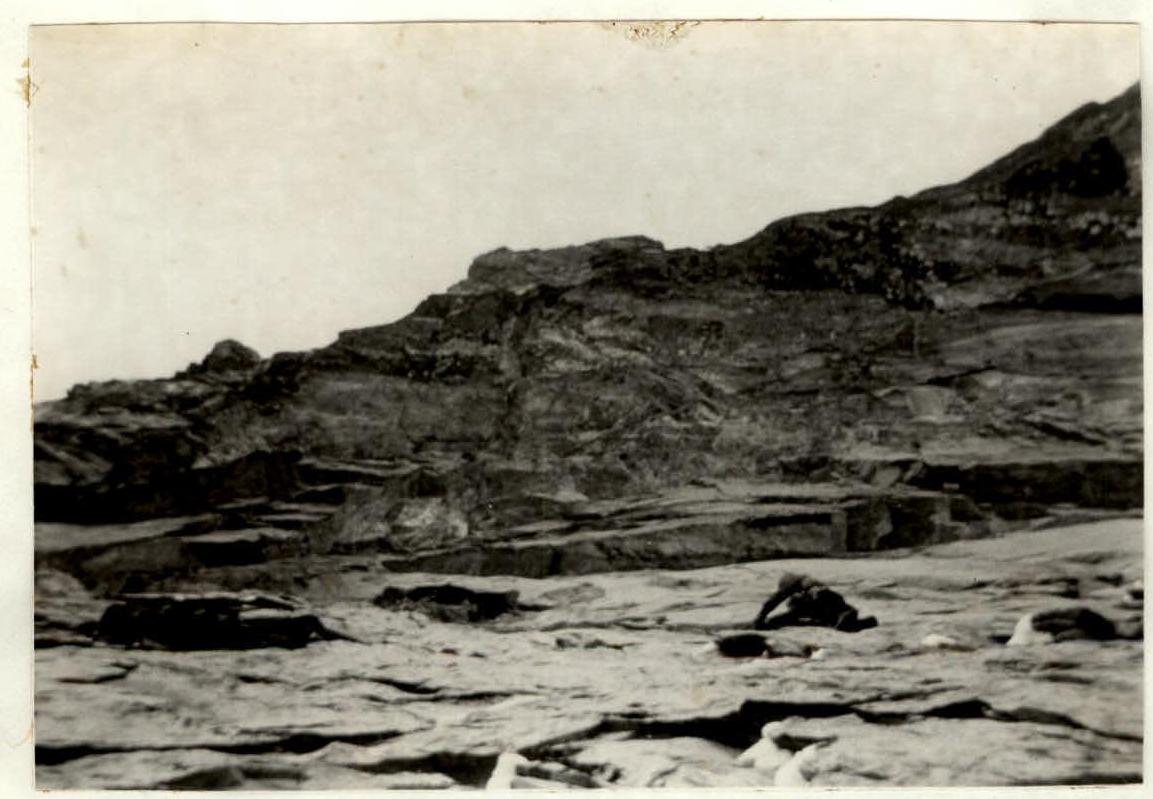
Photo 7. Climbing section 12–13.
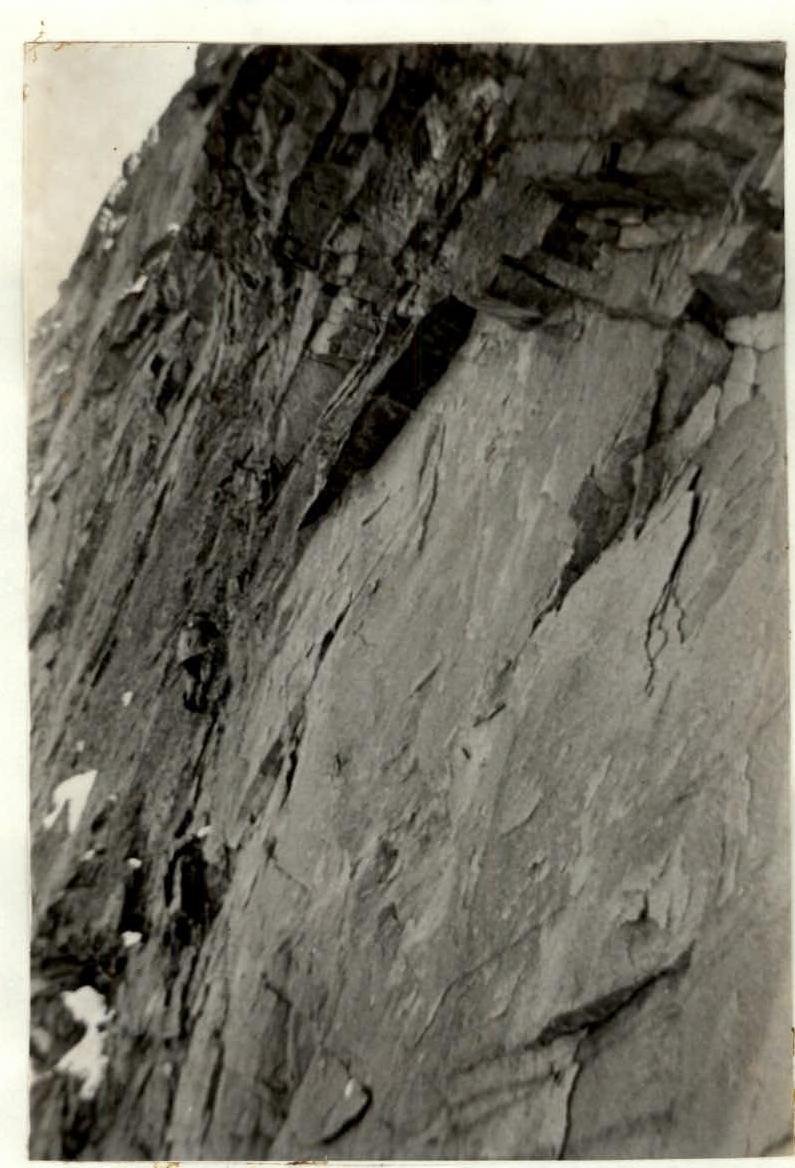
Photo 8. View from overnight stay #2 to section 12–13.
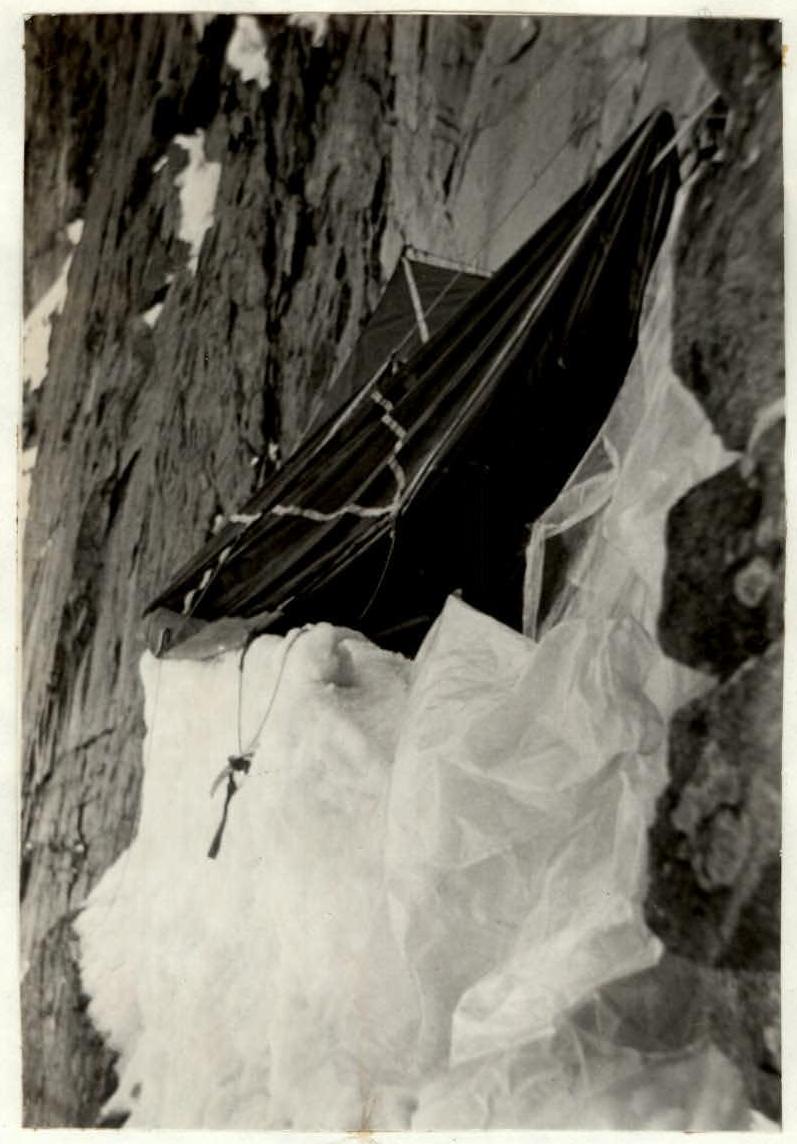
Photo 9. Overnight stays #2,3.
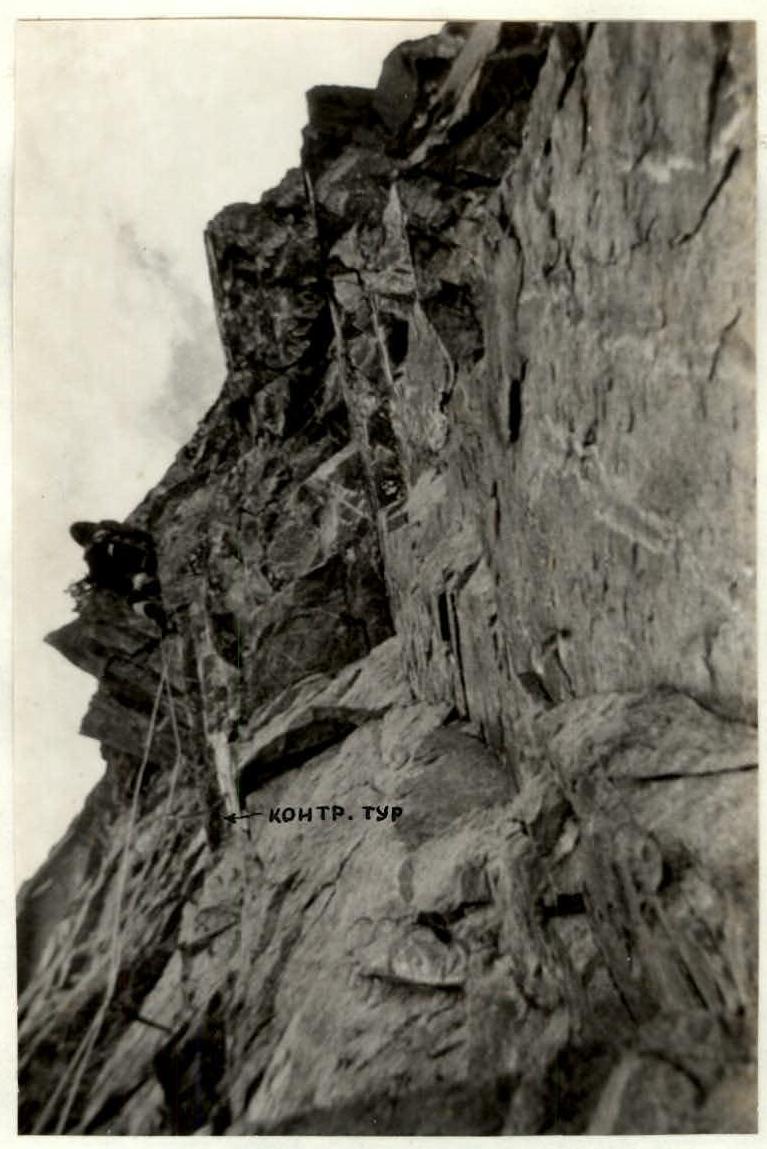
Photo 11. Moment of exiting onto the cornice after pendulum move to the right. Control cairn on the pendulum piton.
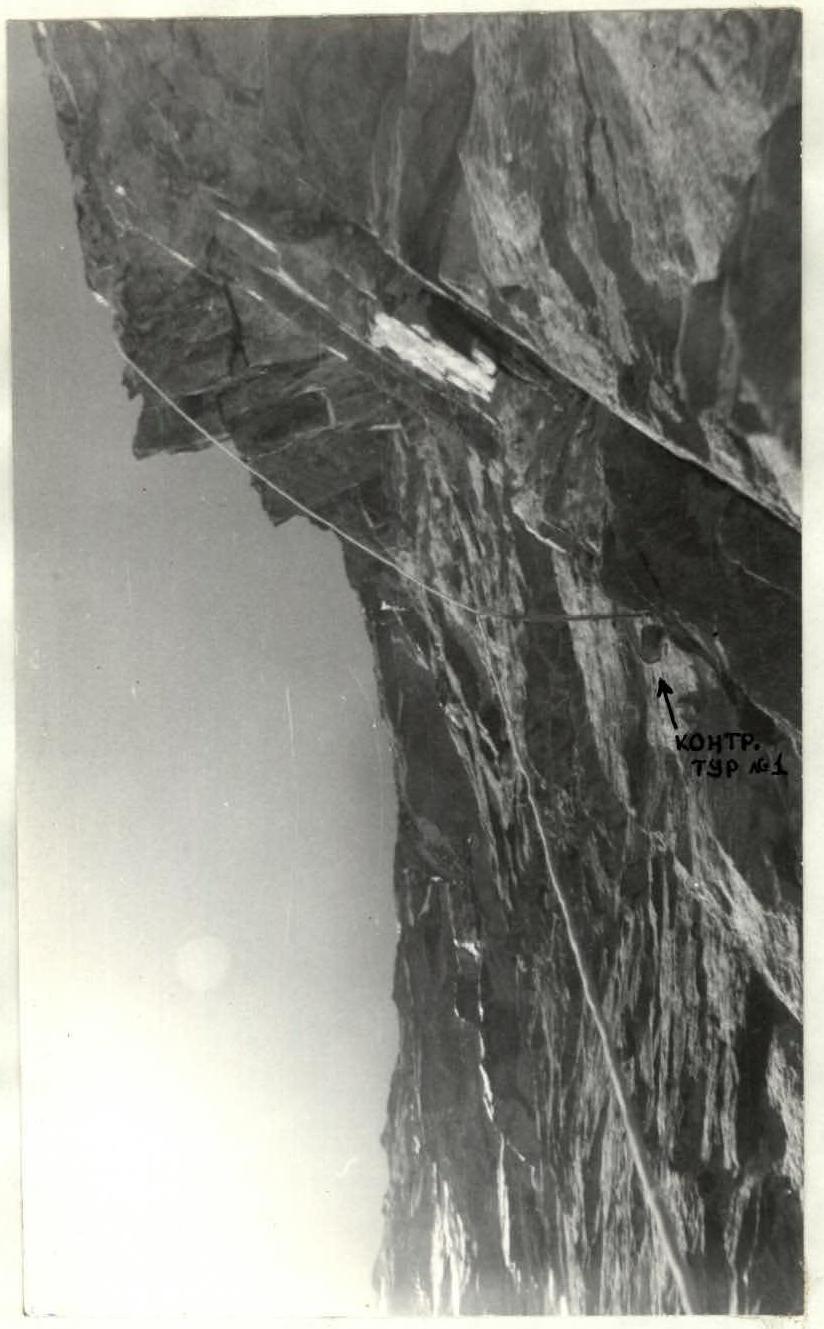
Photo 15. Section 13–14.

Comments
Sign in to leave a comment