Passport
- Category — High-altitude
- Pamir, Akademiya Nauk range, Walter Glacier
- Traverse of Peak Khokhlova — Peak Kommunizma via the North Counterfort from Walter Glacier (V. Bezzubkin's route)
- 5B category of difficulty
- Elevation gain — 2795 m, length — 4260 m
Length of sections with 5–6 categories of difficulty — 1480 m
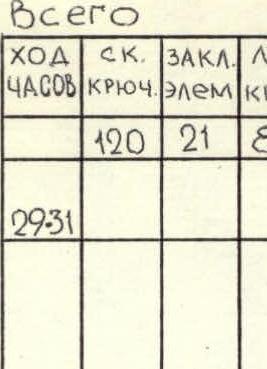
- Pitons used:
- Rock — 120
- Bolt — 0
- Nuts — 21
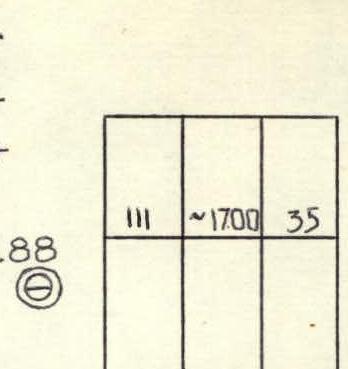
- Ice — 83
-
Team's travel hours: 55 and days — 11
-
Overnights: 1st — platform made of stones 2nd — carved on an ice ridge, "sitting" 3rd — on a narrow stone ledge, "sitting" 4–8 — in a cave on the plateau 9 — on a wide saddle (6500 m) 10 — on a wide saddle (6500 m) 11 — on a rocky ridge (5100 m)
-
Leader: Dyachenko Nikolai Nikolaevich — Master of Sports
Participants:
- Sannikov Yuri Vasilyevich — Candidate Master of Sports
- Astakhov Sergei Evgenyevich — Candidate Master of Sports
- Pavlov Igor Leonidovich — Candidate Master of Sports
- Kolesnikov Igor Evgenyevich — Candidate Master of Sports
- Kazakov Vladimir Alexandrovich — Candidate Master of Sports
-
Coach — Dyachenko Nikolai Nikolaevich
-
Departure on the route: July 28, 1988
Summit: August 6, 1988 Return: August 8, 1988
-
Organization — Tomsk Regional Sports Committee
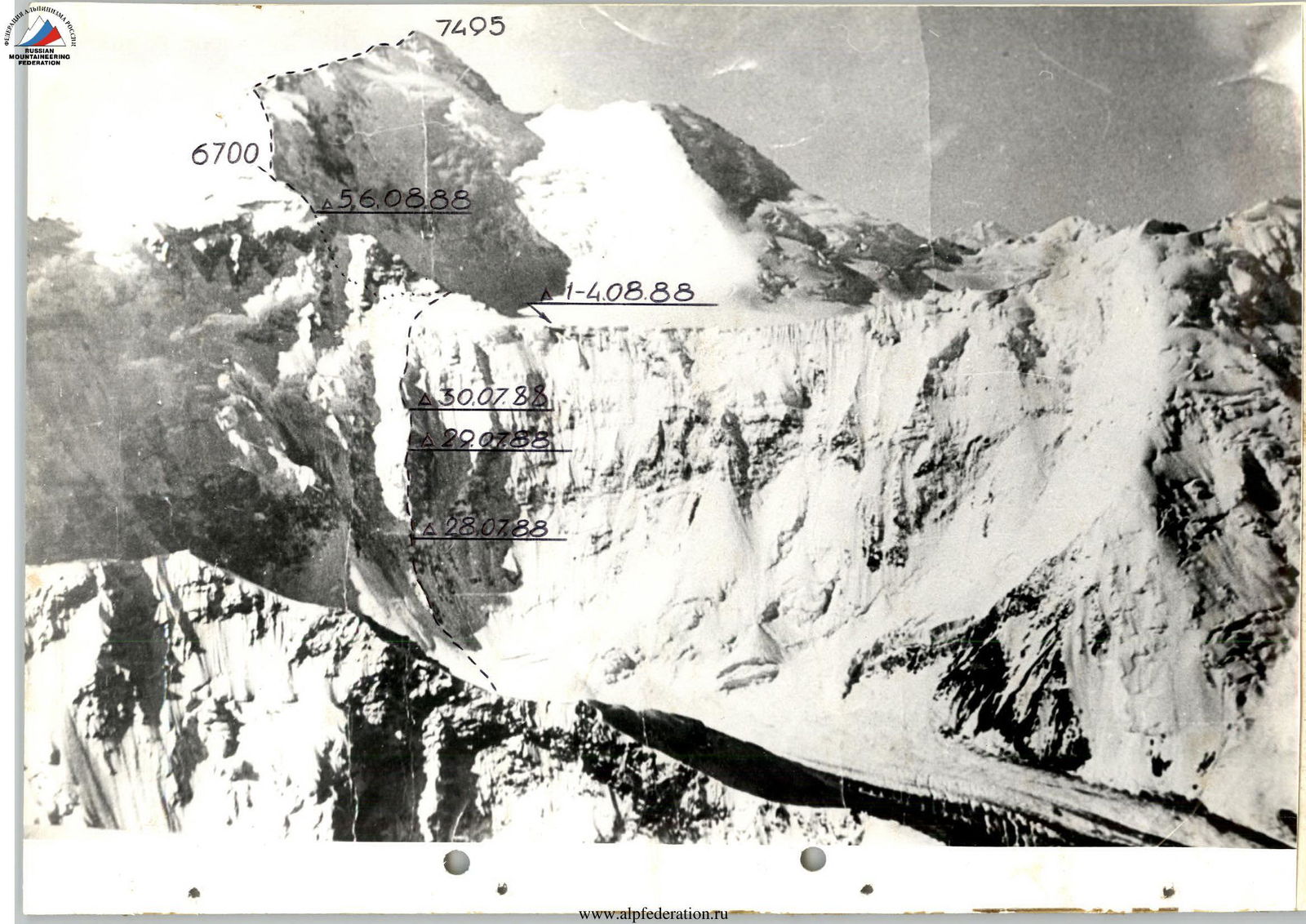

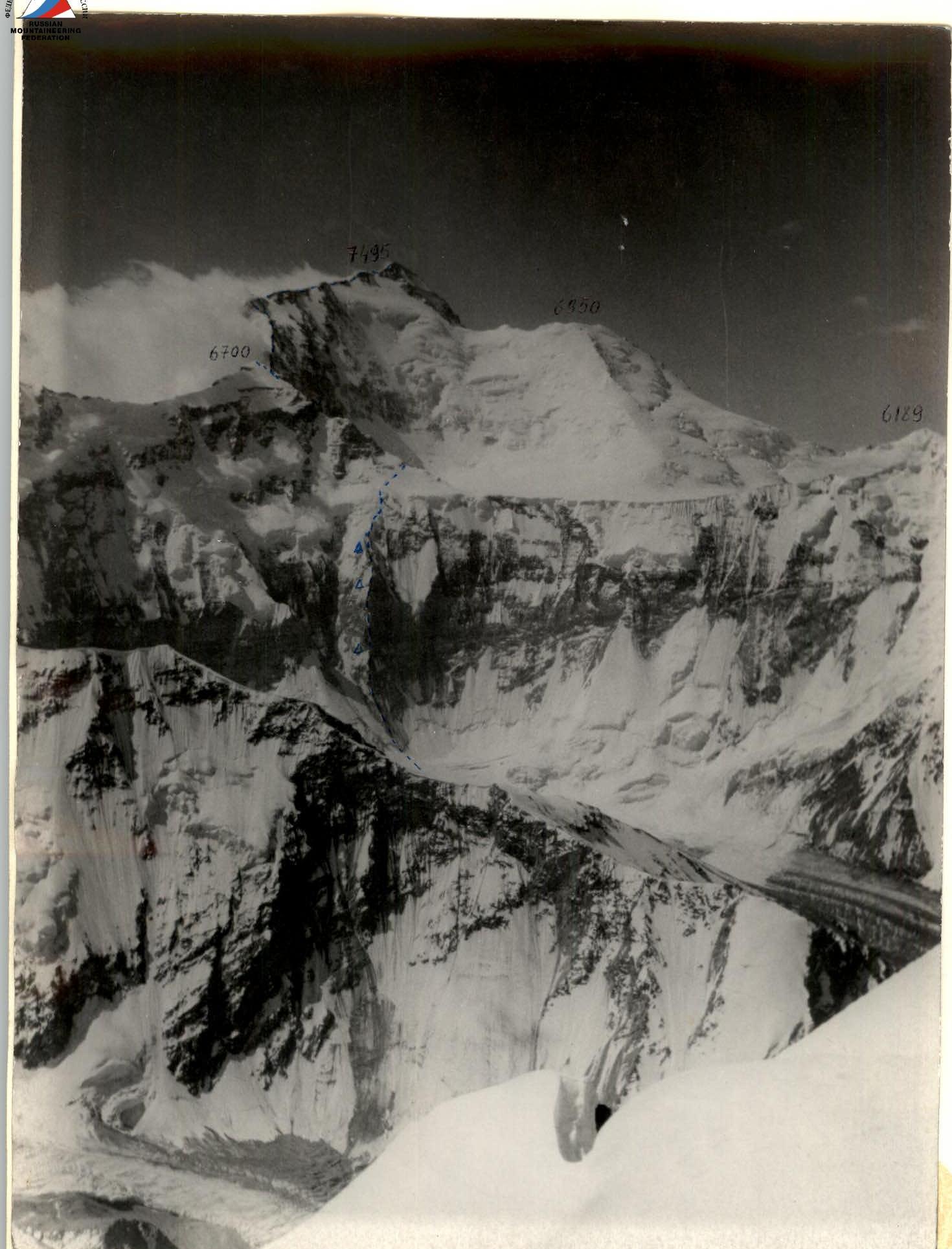
Peak Kommunizma. Taken from the slope of Peak Korzhenevskaya
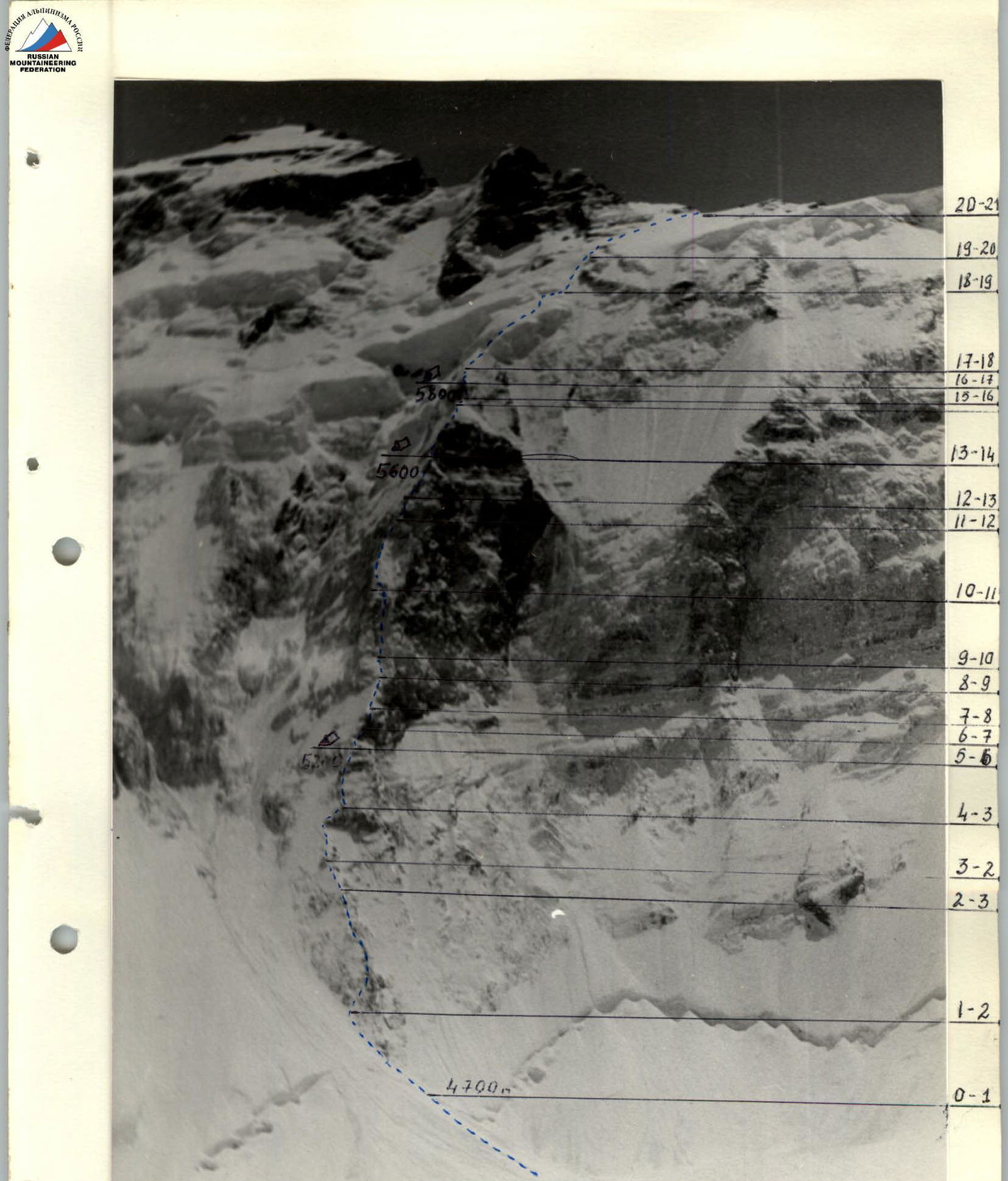
Technical photograph of the North Counterfort of Peak Khokhlova
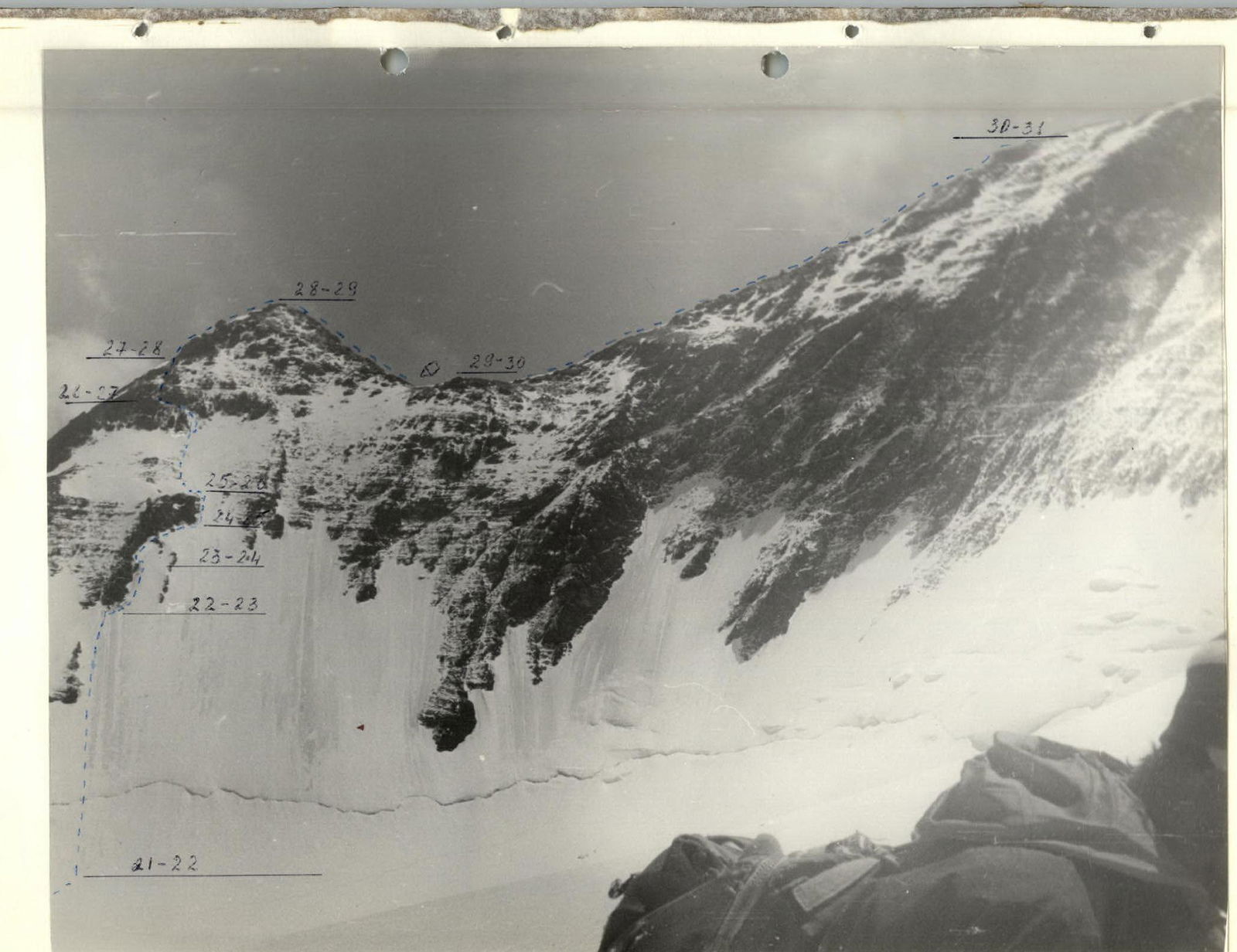
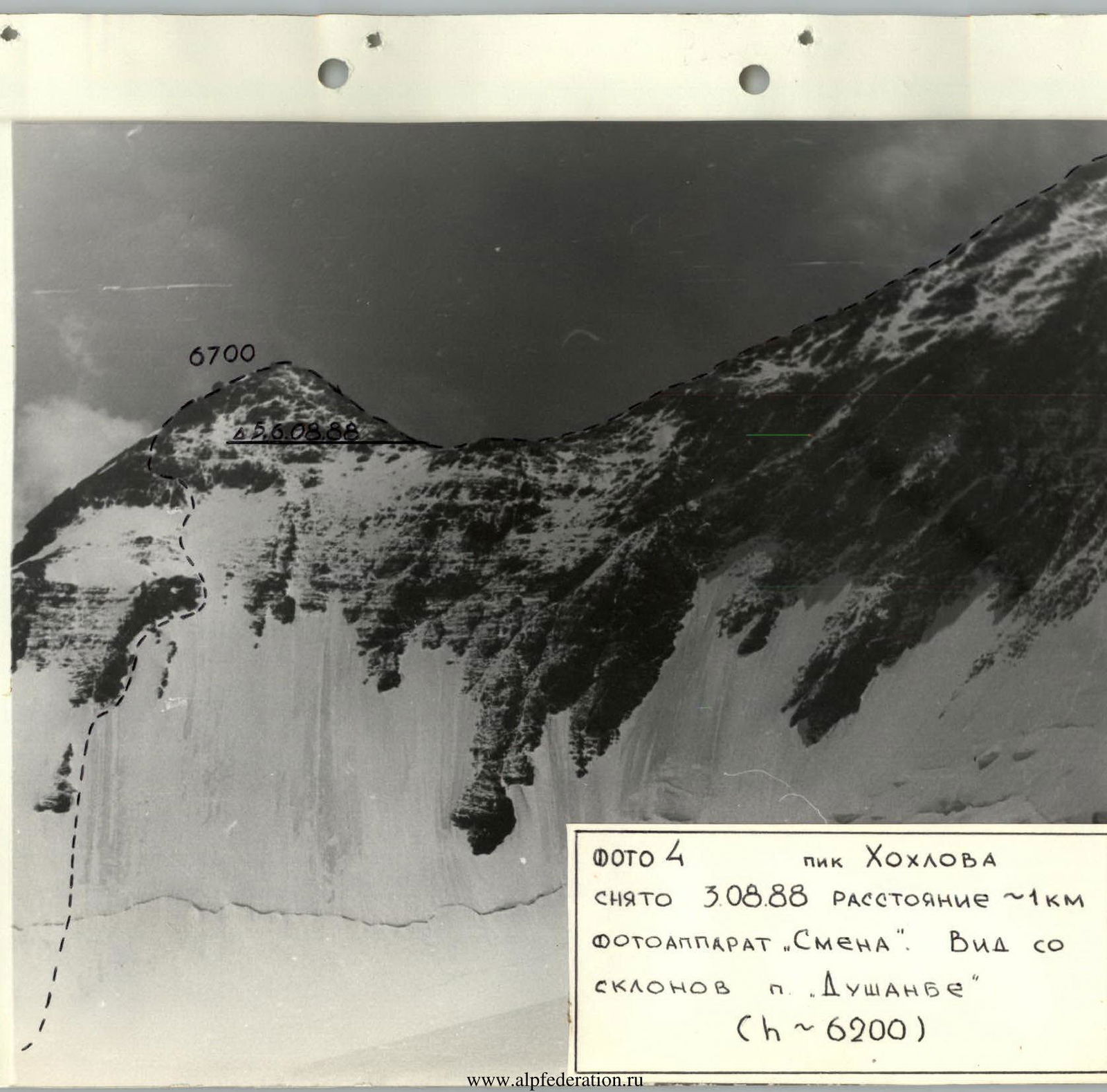
Tactical Actions of the Team
The tactical plan was based on completing the route without prior daily processing of the section. It was planned to process individual sections in the evening by a team of two (sections R5–R8; R16–R17), while the other participants prepared platforms for tents. The counterfort (starting from section R1–R2 and up to the exit to the plateau) was traversed first on a double rope, participants climbed using a safety rope with the help of jumar. For the work of the first climber and safety, an "Elita" rope was used, for fixed ropes — a standard Soviet rope (since its coefficient of extension is very low, it significantly facilitated the passage of vertical fixed ropes).
Belay loops and slings were made from the main rope.
Ice sections were typically led by S. Astakhov, who had extensive experience in ice climbing and competing in the ice class. Rocky sections were led by V. Kazakov and I. Pavlov (sections R5–R8). When ascending Peak Khokhlova, I. Kolesnikov and N. Dyachenko worked as lead climbers. Many sections (from the plateau) were traversed by independent rope teams.
From the overnight stay at 6500 m, to the summit and back, the team moved in two rope teams of three people each.
During the ascent, there were deviations from the tactical plan due to unusually hot weather for the area three days before the departure and during the first three days. In the morning, rocks were covered with ice, and by afternoon, everything was wet.
Previous teams had passed the chimney (section R9–R10) using snow steps (according to consultations with Moscow and Irkutsk climbers), but we had to pass it to the right along a sheer rocky section (photo) because the chimney was filled with ice and falling rocks.
Upon approaching section R17–R18 at 17:00, we planned to traverse the snow ridges and cushion in the evening (as the team from Sverdlovsk did in 1986). However, reconnaissance showed that the snow cornices and ridges were oversaturated with water, very unstable, and would not freeze in time. Therefore, it was decided to organize another overnight stay.
The Moscow team, a week before us, ascended from the overnight stay to the plateau on snow. As noted, previous teams emphasized the avalanche danger of the exit to the plateau, but we had to traverse section R18–R19 using ice axes and fixing ropes (photo).
Due to a sharp deterioration in weather on August 1 and 2, the team was stuck on the plateau (on August 2, despite bad weather, the route was processed — 250 m of fixed ropes were installed on the ice board of the western wall).
On August 3 and 4, the team conducted rescue operations (a team from Karaganda) on the slopes of Peak Dushanbe.
Considering that we received a storm warning from MAL via radio communication, with the peak of bad weather expected on August 7, it was decided:
- to abandon the declared route;
- to continue the ascent via Peak Khokhlova.
This decision was coordinated with the judge and the authorized representative of the USSR State Sports Committee.
The team's good shape is evident from the fact that after:
- two days of "rest";
- two days of rescue work (at an altitude of 6000–6500 m)
the group ascended Peak Khokhlova on August 5 and descended to the 6500 m saddle, and on August 6, in very strong winds, completed the ascent to Peak Kommunizma and descended (via the ascent route) to 6500 m.
The composition of the rescue team and its interaction with our team are given in the appendix.
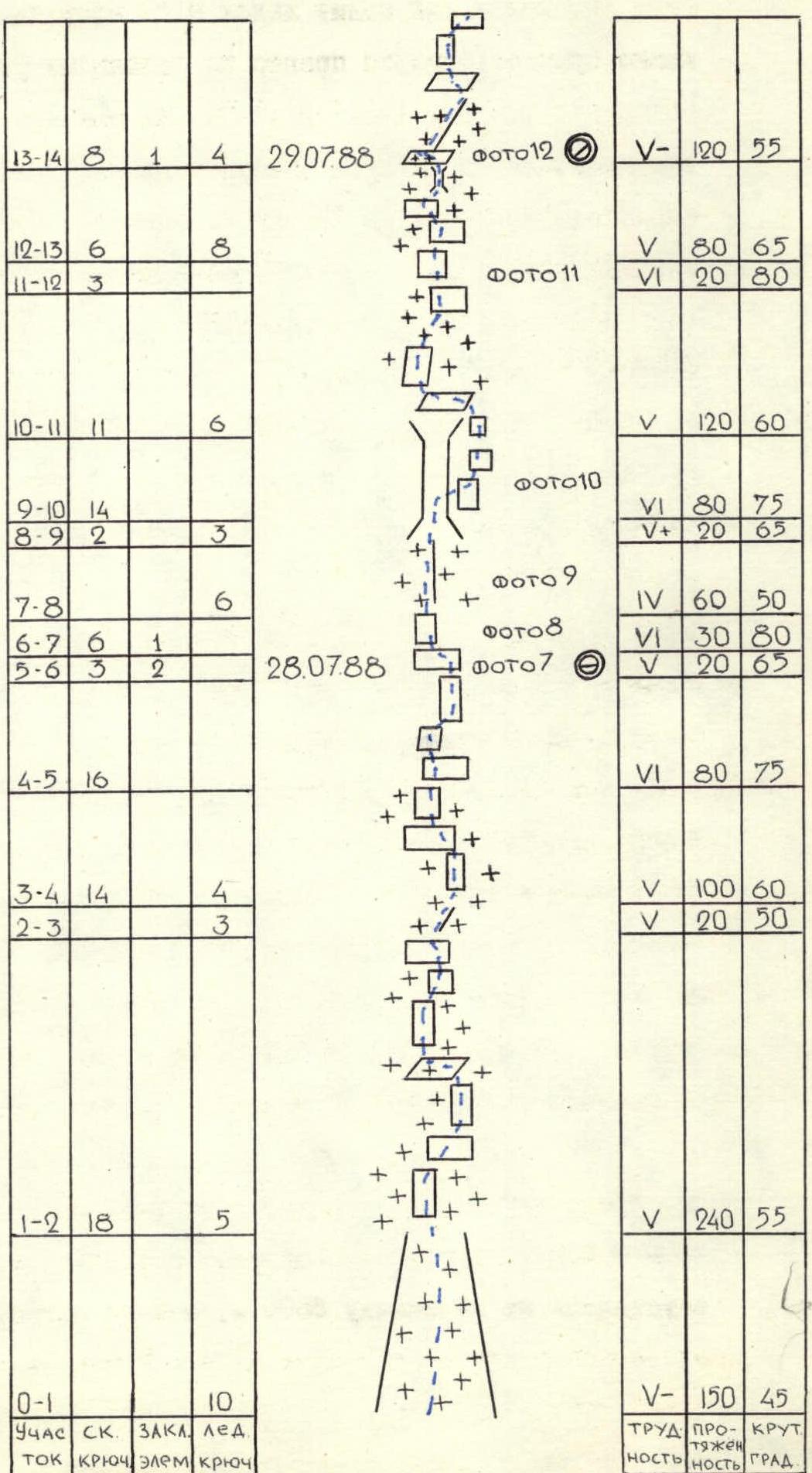
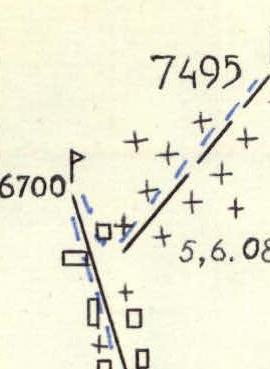
Route scheme on photographs Scale 1:5000
 |  |  |
|---|
Route Description by Sections
The route can be conditionally divided into three parts:
- Exit to the plateau via the North Counterfort of Peak Khokhlova;
- Ascent along the Southwest slope with exit to the West ridge and then to the summit of Peak Khokhlova;
- Ascent to Peak Kommunizma from the 6500 m saddle along the North ridge.
The main technical difficulty of the route is the North Counterfort — elevation gain of 1400 m, average steepness 60°, length of sections with category 5 difficulty — 700 m, 6 — 200 m. Hot weather before and during the ascent significantly increased the technical difficulty of the route — rocks were filled with ice, and rockfall was observed in the second half of the day. The ascent path to Peak Khokhlova became somewhat more complicated due to snowmelt, exposing ice in many places and increasing the likelihood of rockfall. The technical difficulty corresponds to a route of 4B–5A category.
The section of the route from the saddle (6500 m) to the summit of Peak Kommunizma does not present technical difficulties.
July 28. Departure on the route. Start of work at 9:00.
Simultaneous movement in rope teams along a snow-ice slope. Above the bergschrund — use of piton belay (section R0–R1). Then to the right upwards on ice using an ice axe. Rocks are smoothed, firn, ice. Further along a short ice nose and a rocky, not clearly defined ridge — approach under the "red" rocks (section R1–R4).
Section R4–R5 — technically very complex rocks, cracks filled with ice, on ledges — a thin layer of ice and firn, belay — pitons. At 15:00, we reached a platform. The team of I. Pavlov — V. Kazakov processed the route (sections R5–R8), the others equipped the platform.
Passage:
- Sections R0–R4 were led by S. Astakhov
- Section R4–R5 — V. Kazakov
July 29. Departure at 10:00. Passage of the processed section (three ropes). Entry into the chimney. Slabs covered with ice make it difficult to organize belay. The path through the chimney is objectively dangerous due to falling rocks.
Further ascent was carried out along the right part, bounded on the left by the chimney and on the right by a wide, ice-filled couloir. Rocks are technically very complex. The belayer on section R9–R10 used "hook-legs" or stirrups.
After passing the chimney section, the slope becomes less steep (to 60°). On an inclined slab (directly above the chimney), a reliable stance is organized, where 3–4 people can gather.
Section R10–R11 — a wide ice slope with many rocky outcrops (or a rocky slope filled with ice). Ice is quite soft, crampons hold well, belay — pitons.
Section R11–R12 — a short black wall (20 m, 80°) — traversed "head-on", requiring long pitons for belay.
Section R12–R13 — rocks covered with ice and firn, and further — bypassing a sheer tower to the right upwards along a chimney — exit to the tower, overnight stay. The platform is very small, impossible to expand.
The first to work on the sections:
- R9–R11 — Kazakov V., Dyachenko N.
- R11–R13 — Astakhov S.
Stopped for the night at 21:30.
July 30. Departure at 10:00. From the overnight stay — along a firn slope to a heavily destroyed rocky ridge. The rock is grey shale, thus very fragile, and in many places turned into dresva.
Exit under the first "gendarme", before the gendarme — a short snow-firn shoulder (possible to organize an overnight stay).
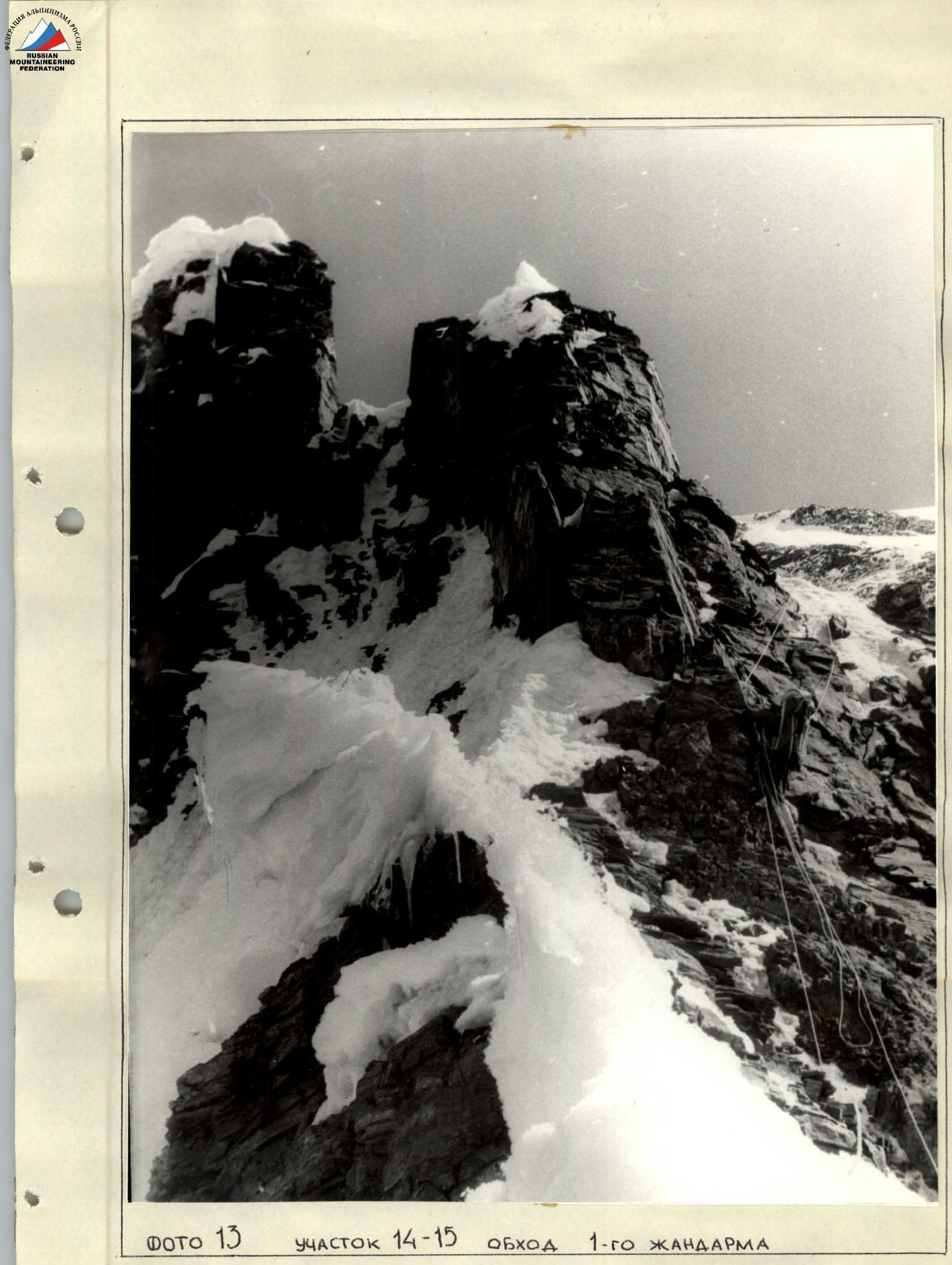
Section R14–R15 — bypassing the gendarme to the right upwards with exit to a ledge. Marble slabs.
Ascent to the gendarme "head-on" — a short sheer wall, but it's possible to organize good belay (section R15–R16). Further — descent to the base of the second gendarme.
At 7:00, the entire group gathered on a narrow (~1 m) long ledge. The team of I. Kolesnikov — V. Kazakov fixed ropes on the second gendarme (section R16–R17) and exited onto a firn ridge. According to the tactical plan, the group was supposed to reach the plateau that day. The passage time for previous groups was no more than 4 hours. However, due to unusual heat (water flowed down the right part of the counterfort), movement along the ridge and further along the snow slopes seemed objectively dangerous, so it was decided to stop for the night on a narrow ledge before the second gendarme.
July 31. Departure at 9:00. Passed the processed section (R16–R17), then descended to a short horizontal ridge and further along a firn ridge to visible fractures. Section R17–R18 is not technically complex. At 13:00, we had to stop as the weather beganled by cloud cover, visibility reduced to 10–15 m. In brief moments of clarity, we reached the area of the upper fracture. Section R18–R19 is not technically complex. The team from Sverdlovsk warned about avalanche danger on this section. Before us, it appeared as an ice board with separate firn patches. The first (Astakhov S.) traversed this section (three ropes) using an ice axe. Section R19–R20 is straightforward (firn slope) but requires attention and piton belay. At 18:00, in worsening weather, we reached the plateau.
August 1–2. Bad weather, huddled on the plateau (dug a cave).
August 3–4. Conducted rescue operations (a team from Karaganda) — exited onto the slopes of Peak Dushanbe (6400–6500 m), descended the injured to the plateau, and then ascended Peak Kirova.
August 5. Departure at 10:00 — Southwest slope of Peak Khokhlova, section R21–R22 — firn slope, in the upper part piton belay. Section R22–R23 — along rocks, ice — firn, then to the right, bypassing a rock with exit to a narrow ice gully (section R24–R25). The first (Kolesnikov I.) traversed using an ice axe and thorough piton belay, the group used fixed ropes. After passing the gully — exit to a rocky "table" and further straight up along a firn slope with separate rocky outcrops. Exit to the ridge of Peak Khokhlova (section R26–R27) — along an ice scree to a horizontal ledge, then along an internal corner (~20 m) and destroyed rocks. Rocks on the ridge are destroyed, many convenient belay points. Having passed the summit of Peak Khokhlova, the group descended to the saddle (6500 m) by 19:00, where another overnight stay was organized.
August 6. Departure at 10:00. The ascent path along the ridge is not technically complex. The main difficulty — significant altitude and very strong wind. Movement was carried out in two rope teams of three people each. At times, the wind reached hurricane force, so we had to wait out these gusts in mulde. Around 15:00, the group reached the summit and by 19:00 descended to the saddle (6500 m) to the overnight stay.
Further descent is traditional — 6500 m — plateau — shoulder of Peak Kirova — Borodin's rib — Moskvina Glacier.
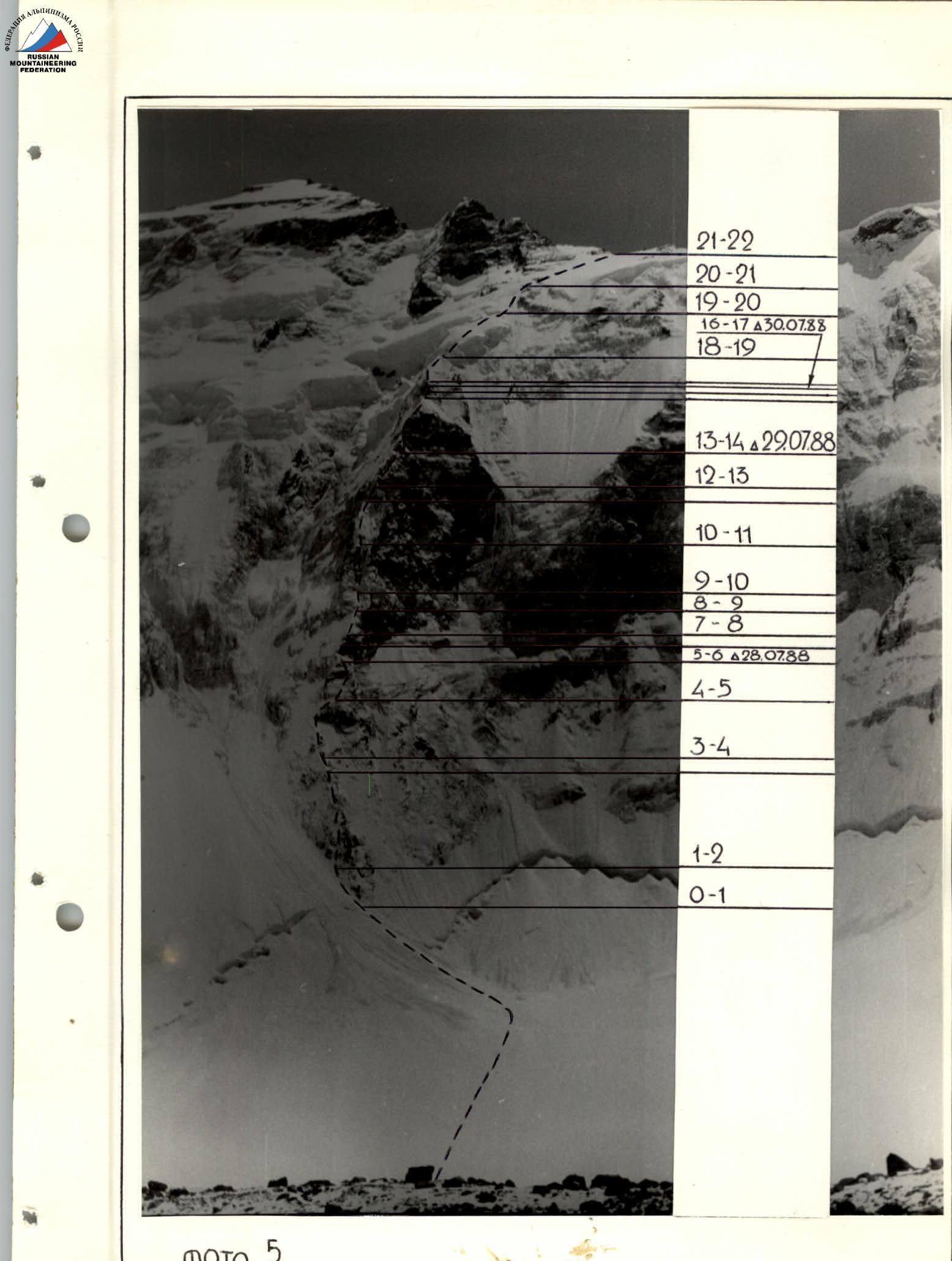
Photo 5
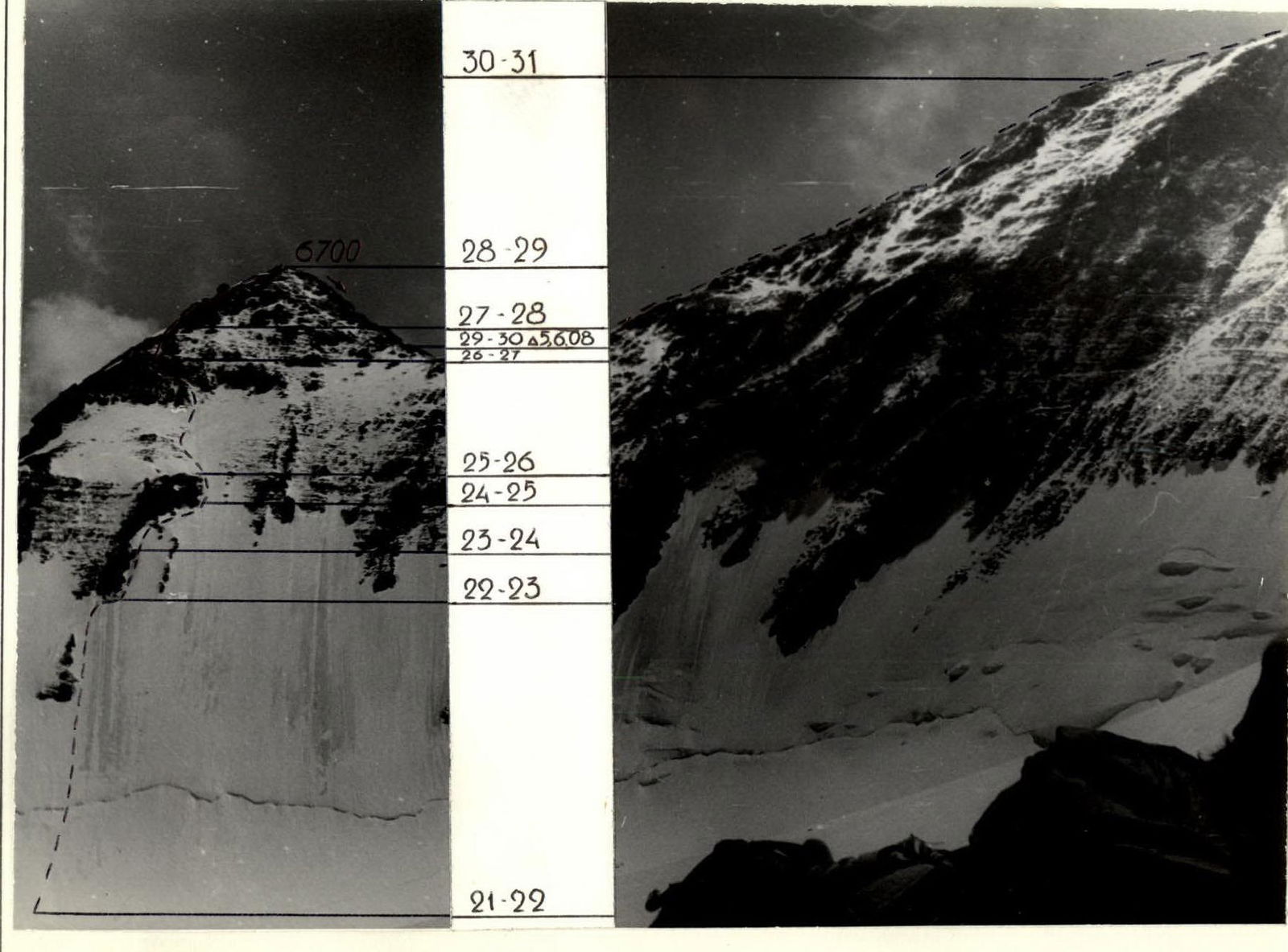 Photo 6
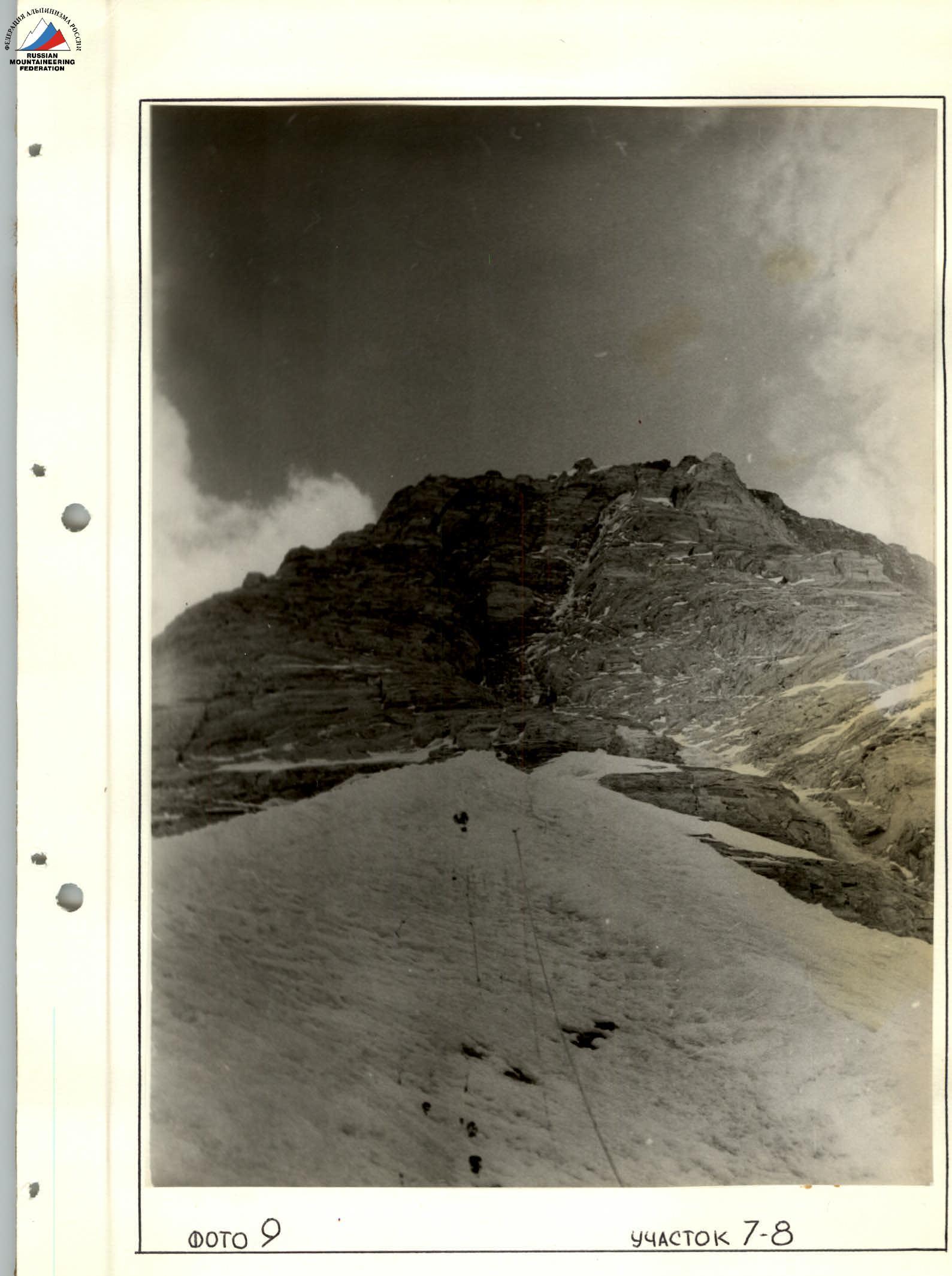
Photo 10. Section R9–R10. 6 category of difficulty
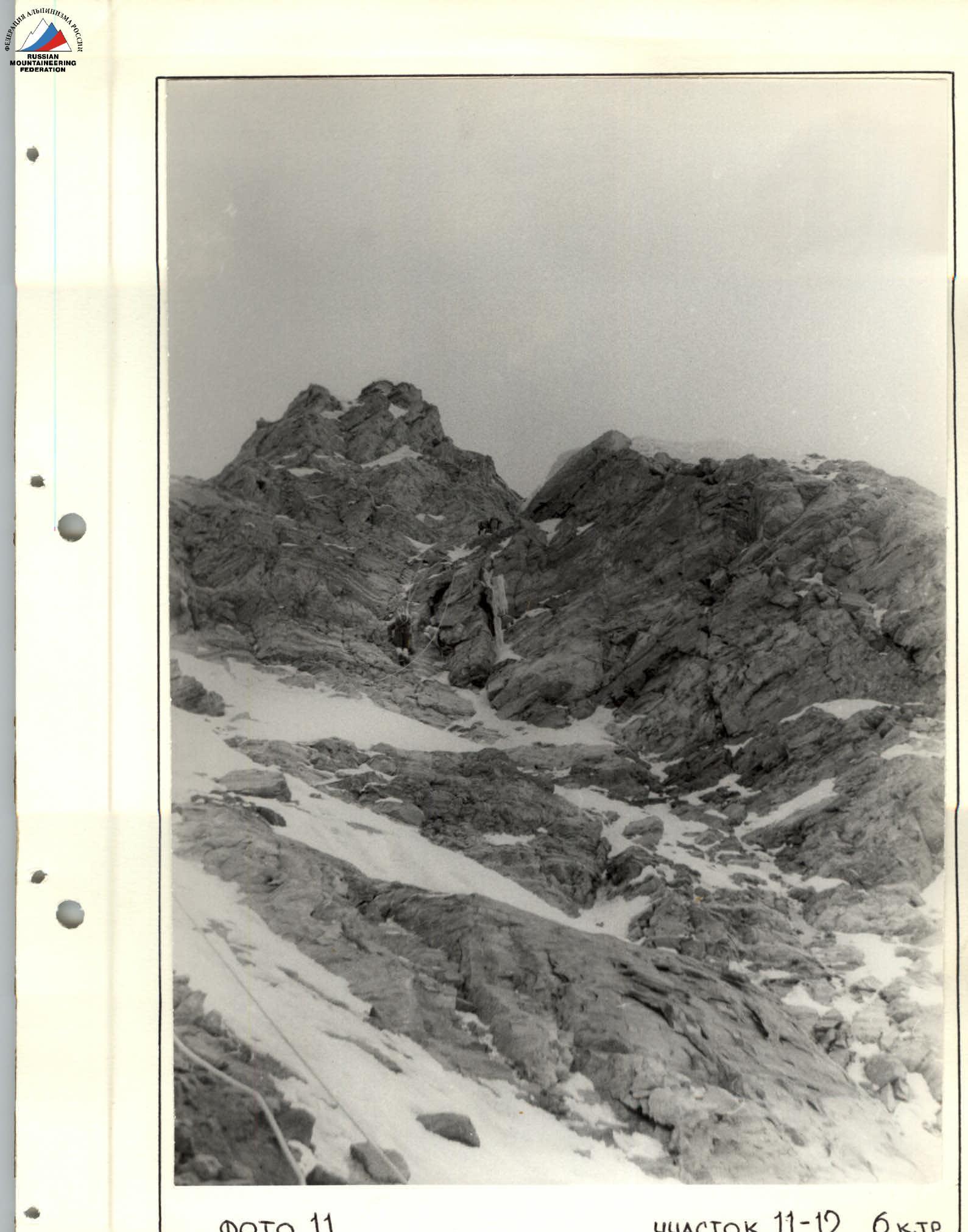
Photo 11. Section R11–R12. 6 category of difficulty
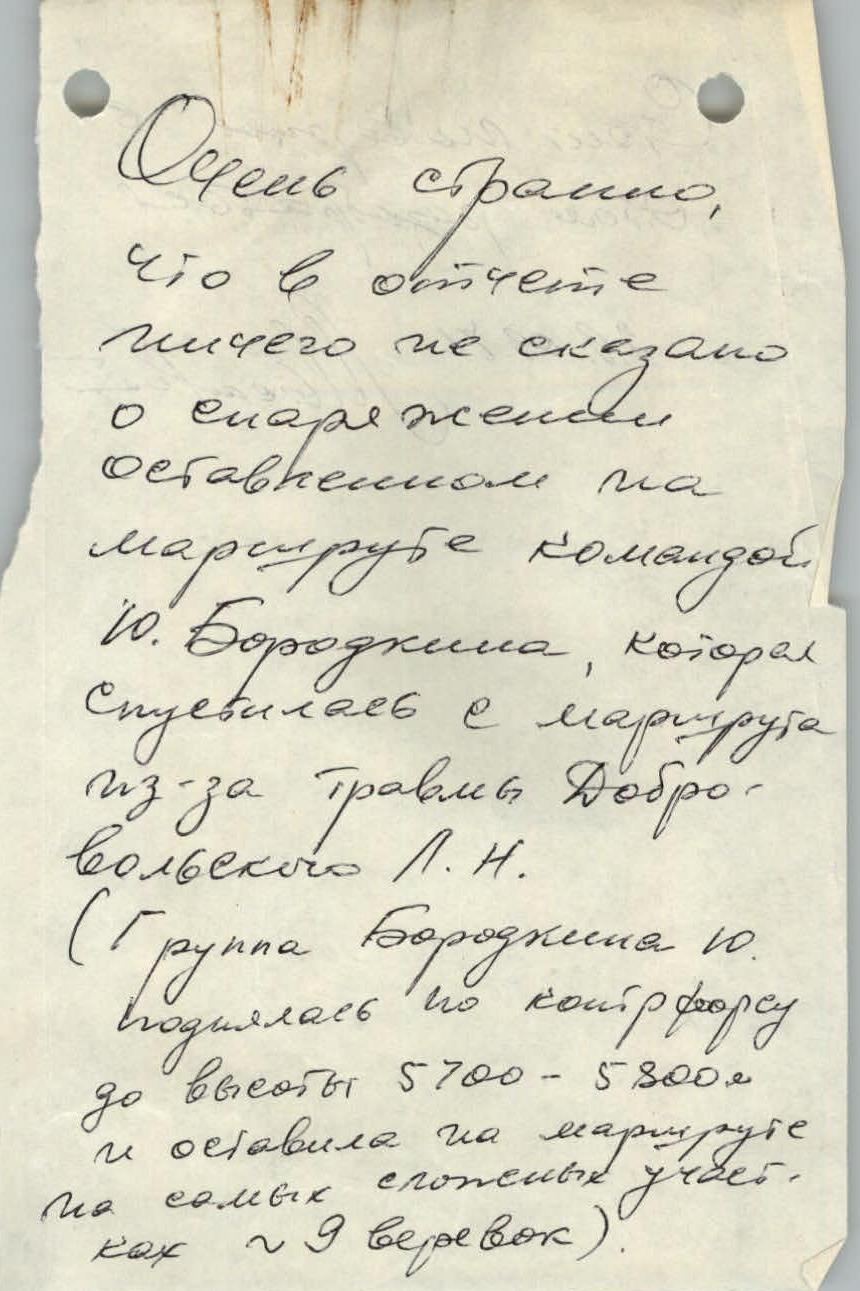
It's very strange that the report doesn't mention the equipment left on the route by team 10. Borodkin, who descended due to Dobrovolsky L.N.'s injury. (Borodkin's team ascended the counterfort up to 5700–5800 m and left spare gear ~1 rope on the route).
It might be worth looking into this.

September 29. Albekov.