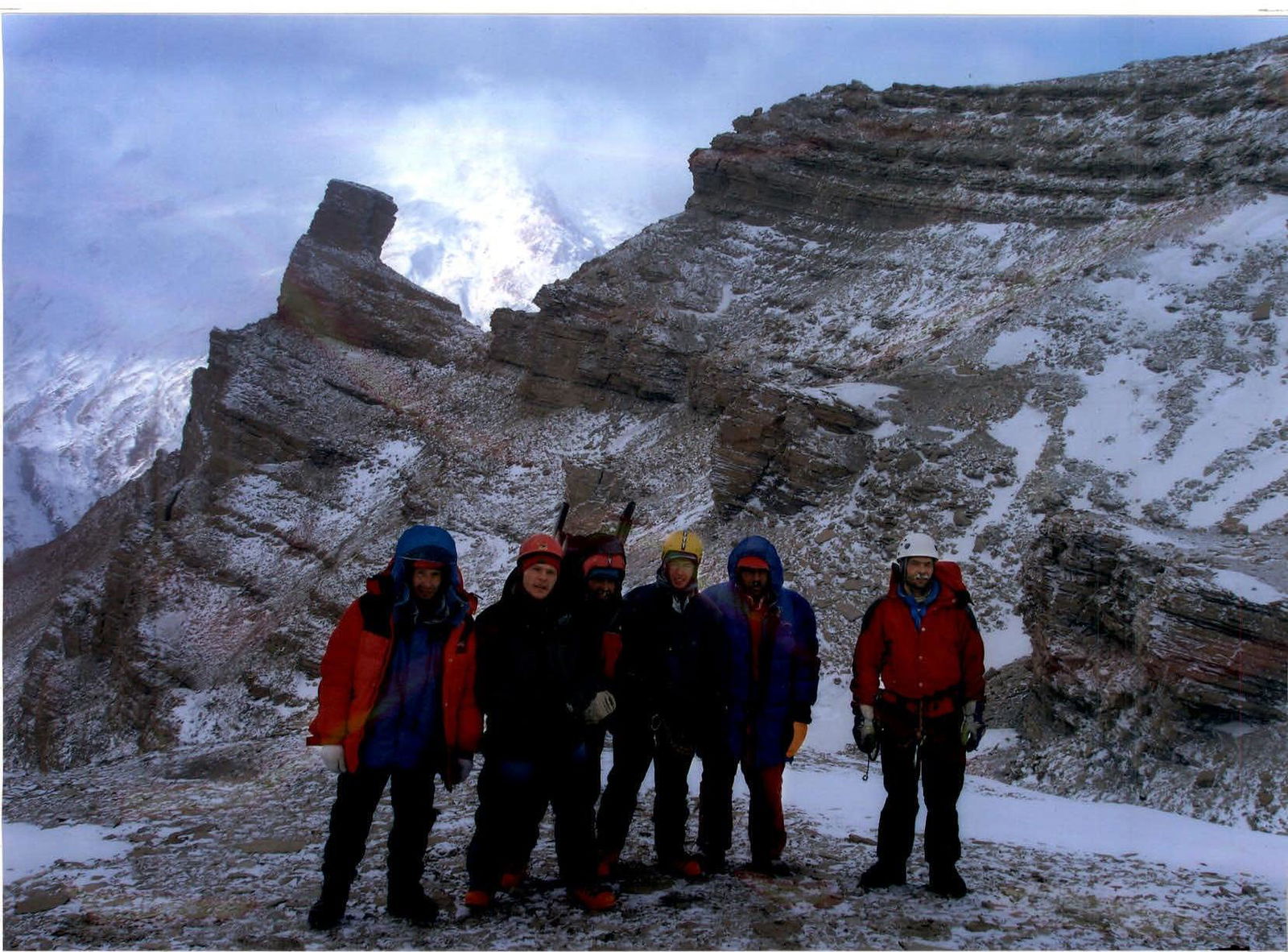
Ascent Passport
- Region 2.10, Caucasus, Dagestan mountains, Chekhychay gorge.
- Erydag (NNW), 3887 m, via the center of the right bastion on the NW wall (Voronin route).
- Proposed category: 6B in winter, third ascent.
- Route type: rock.
- Route height difference: 1127 m.
Length of the wall section: 1165 m.
Section lengths:
- category V: 230 m
- category VI: 760 m
Average slope of the main route section: 80°.
Total route slope: 75°.
- Pitons left on the route: total 20, including 20 bolt pitons, 12 of which were used for setting up camps R1–R4.
Pitons used on the route:
- stationary bolt pitons: 23, including 10 for artificial climbing (AID)
- removable bolt pitons (8 mm): 64, including 45 for AID
Total AID used: 754.
- Team's climbing time: 108 hours over 14 days.
| 8. Team leader: Morozov Daniil Vladimirovich | Candidate Master of Sports |
|---|---|
| Team members: Tarnakin Yuri Alexandrovich | Candidate Master of Sports |
| Bakin Alexey Vladimirovich | Candidate Master of Sports |
| Kondrashov Vladimir Viktorovich | 1st sports category |
| Ustyantsev Andrey Alekseevich | Candidate Master of Sports |
| Sidorenko Andrey Viktorovich | 1st sports category |
- Coach: Igolkin Viktor Ivanovich, Master of Sports
- Departure to the route: 10:00, January 13, 2006.
Reached the summit: 15:00, January 27, 2006.
Returned to the base camp (village Kurush): 24:00, January 27, 2006.
General summit photo
1 — route climbed by the team; 2 — Shalbuzov's 2005 route; 3 — Radoshkevich's 1981 route; photo taken on January 21, 2006, from the summit of Shalbuzdag.
Profile of the route on Erydag (NNW) via the center of the right bastion on the NW wall
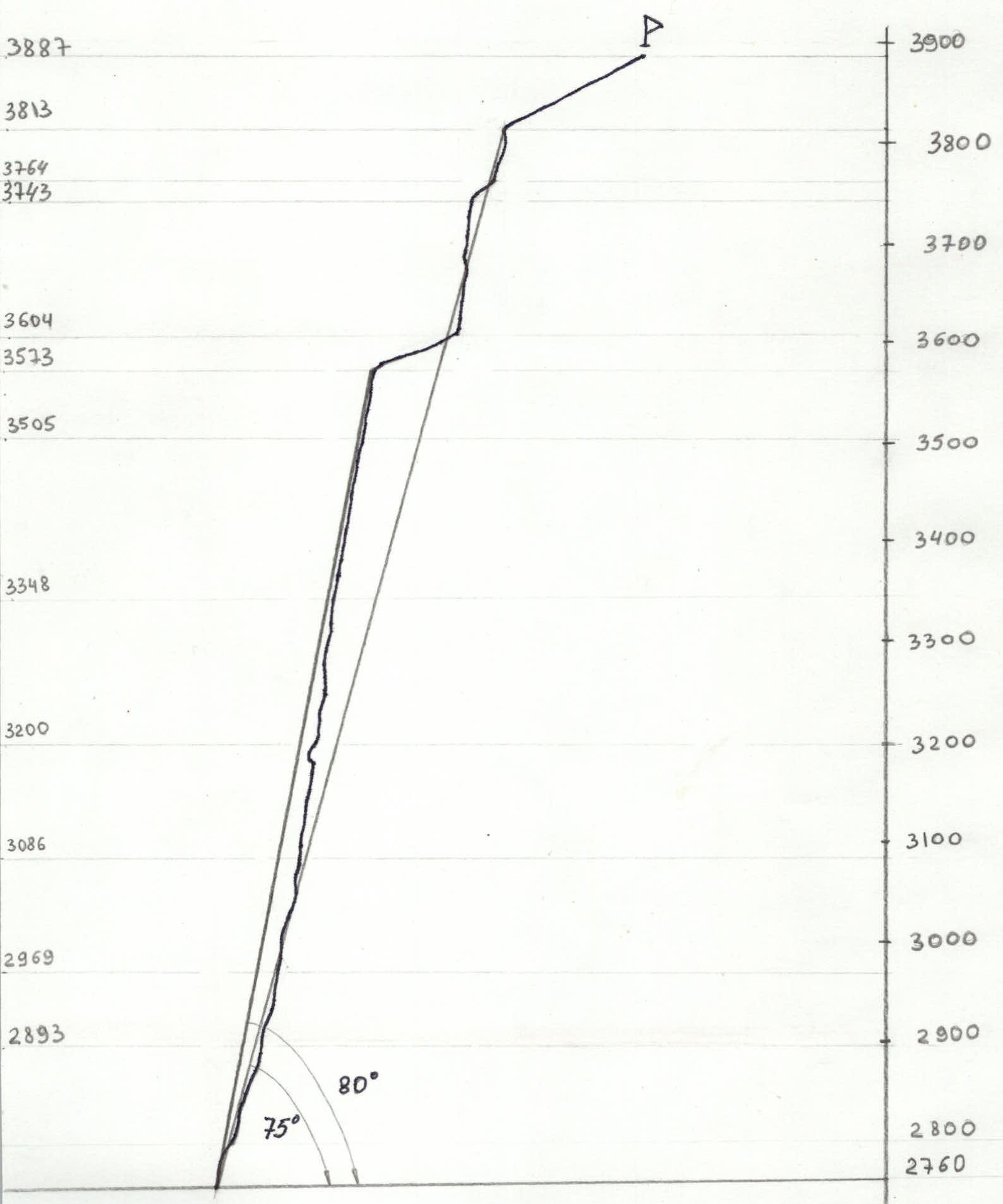
Photo of the wall profile from the right
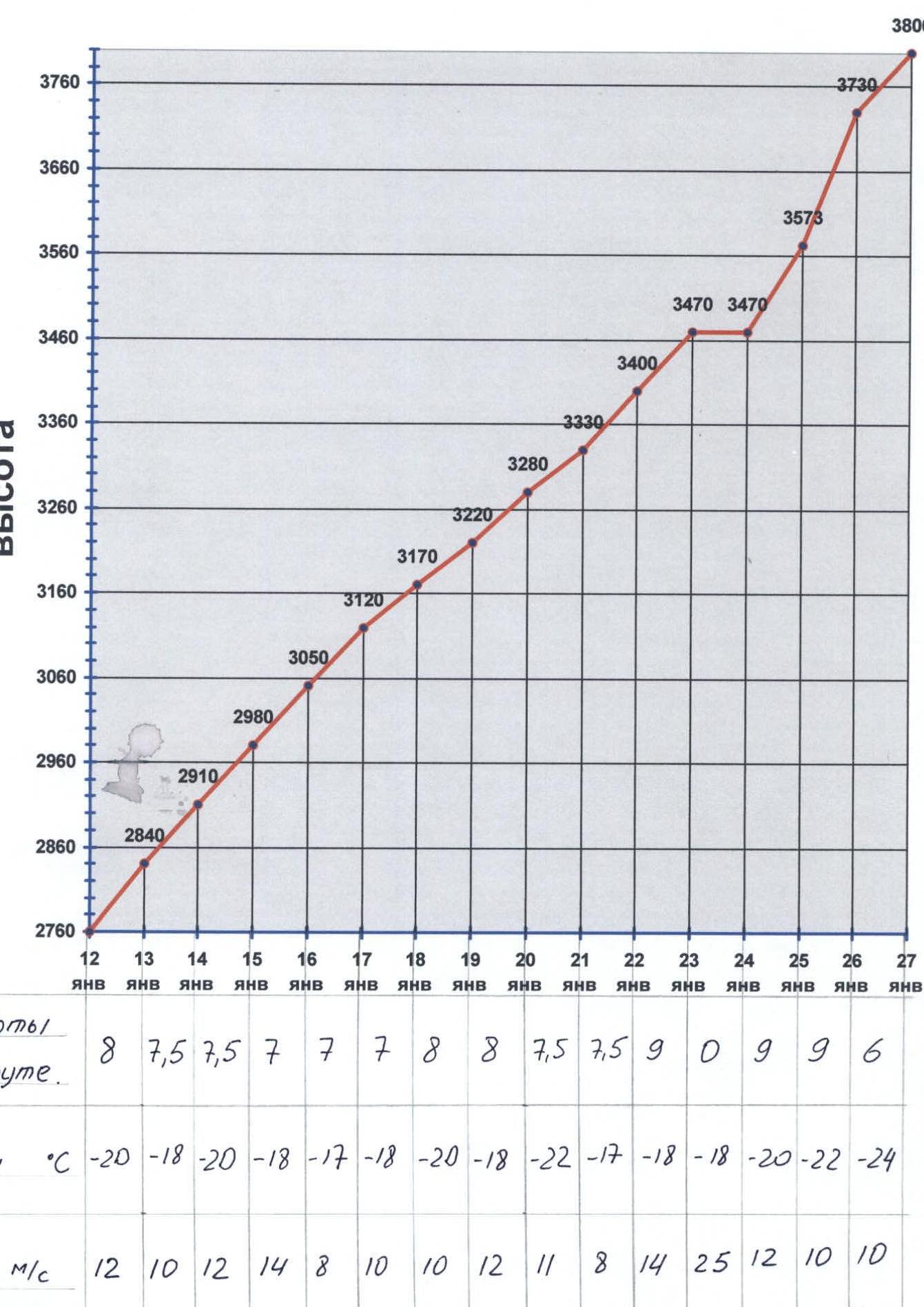
Ascent graph
scale 1:2000 sheet-1
| anchor pitons (AID) | inserted elements (AID) | bolt pitons (AID) | skyhooks (AID) | meters | degree | complexity | |||
|---|---|---|---|---|---|---|---|---|---|
| 2/2 | 5/5 | 23 camp №3 | 10 | 80° | VI A2 | ||||
| 5/4 | 5/4 | 10/10 | 22 CT №1 | 25 | 75° | VI A2 | |||
| 3/3 | 1/1/1 | 2/2 | 21 | 10 | 80° | VI A2 | |||
| 14/12 | 3/1 | 2/1 | 14/14 | 20 | 30 | 75° | VI A2 | ||
| 2/1 | 1/1 | 2/2 | 19 | 10 | 70° | VI A3 | |||
| 5/4 | 4/3 | 24/24 | 18 | 30 | 85° | VI A2 | |||
| 8/7 | 7/6 | 3/3 | 17 | 20 | 85° | VI A2 | |||
| 7/6 | 2/2 | 16 | 10 | 75° | VI A2 | ||||
| 2/1 | 2/1 | 9/9 | 15 | 10 | 80° | VI A3 | |||
| 5/4 | 2/1 | 3/3 | 14 | 10 | 80° | VI A2 | |||
| 2/1 | 1/1 | 10/10 | 13 | 10 | 80° | VI A3 | |||
| 12 camp №2 | 0.5 | 20° | |||||||
| 5/4 | 5/4 | 5/5 | 11 | 20 | 75° | VI A | |||
| 4/3 | 5/4 | 24/24 | 10 photo — 2 | 20 | 80° | VI A3 | |||
| 1 | 9 | 2 | 50° | 3 | |||||
| 4/3 | 11/9 | 8 photo — 1 | 15 | 110° | VI A1 | ||||
| 3/2 | 5/4 | 3/3 | 7 small cucumber | 15 | 90° | VI A1 | |||
| 2/2 | 1 | 8/8 | 10 | 80° | VI A3 | ||||
| 6 | 0.5 | 30° | |||||||
| 5/4 | 7/6 | 1 | 4/4 | 5 | 25 | 80° | VI A2 | ||
| 2 | 4 camp №1 | 10 | 50° | 2 | |||||
| 4/3 | 4/4 | 6/6 | 3 | 35 | 75° | V A1 | |||
| 2 | 5 | 50° | 2 | ||||||
| 11/9 | 14/12 | 1 | 45 | 75° | V A1 |
Diagram of the route in UIAA symbols for Erydag (NNW) via the center of the right bastion on the NW wall
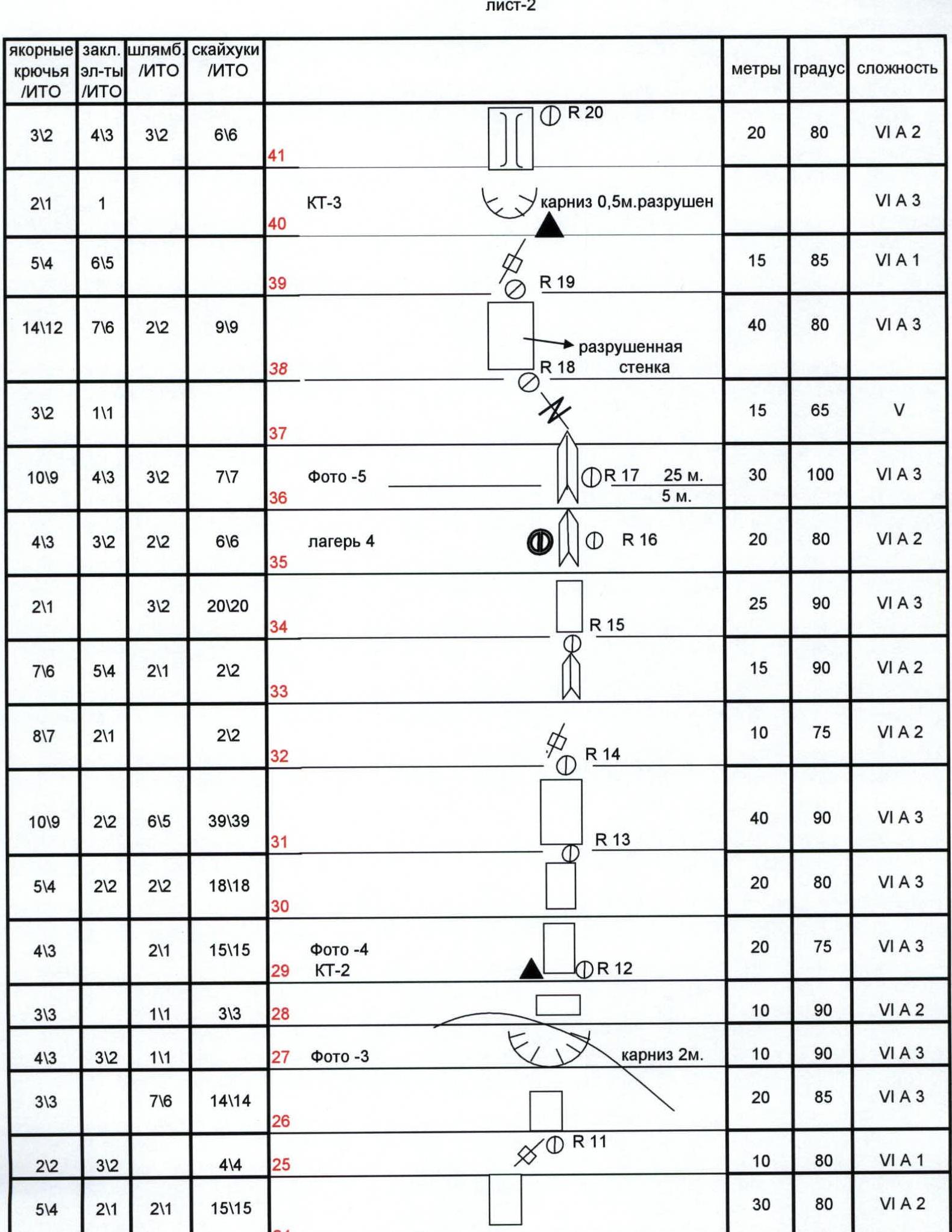 scale 1:2000
sheet-2
scale 1:2000
sheet-2
| anchor pitons (AID) | inserted elements (AID) | bolt pitons (AID) | skyhooks (AID) | meters | degree | complexity | |
|---|---|---|---|---|---|---|---|
| 3/2 | 4/3 | 3/2 | 6/6 | 41 | 20 | 80° | VI A2 |
| 2/1 | 1 | 40 CT №3 | 20 | 80° | VI A3 | ||
| 5/4 | 6/5 | 10/10 | 39 | 15 | 85° | VI A1 | |
| 14/12 | 7/6 | 2/2 | 9/9 | 38 | 40 | 80° | VI A3 |
| 3/2 | 1/1 | 37 | 15 | 65° | 5 | ||
| 10/9 | 4/3 | 3/2 | 7/7 | 36 photo — 5 | 30 | 100° | VI A3 |
| 4/3 | 3/2 | 2/2 | 6/6 | 35 camp №4 | 20 | 80° | VI A2 |
| 2/1 | 3/2 | 20/20 | 34 | 25 | 90° | VI A3 | |
| 7/6 | 5/4 | 2/1 | 2/2 | 33 | 15 | 90° | VI A2 |
| 8/7 | 2/1 | 2/2 | 32 | 10 | 75° | VI A2 | |
| 10/9 | 2/2 | 6/5 | 39/39 | 31 | 40 | 90° | VI A3 |
| 5/4 | 2/2 | 2/2 | 18/18 | 30 | 20 | 80° | VI A3 |
| 4/3 | 2/1 | 15/15 | 29 photo — 4 | 20 | 75° | VI A3 | |
| 3/3 | 1/1 | 3/3 | 28 | 10 | 90° | VI A2 | |
| 4/3 | 3/2 | 1/1 | 27 photo — 3 | 10 | 90° | VI A3 | |
| 3/3 | 7/6 | 14/14 | 26 | 20 | 85° | VI A3 | |
| 2/2 | 3/2 | 4/4 | 25 | 10 | 80° | VI A1 | |
| 5/4 | 2/1 | 2/1 | 15/15 | 24 | 30 | 80° | VI A2 |
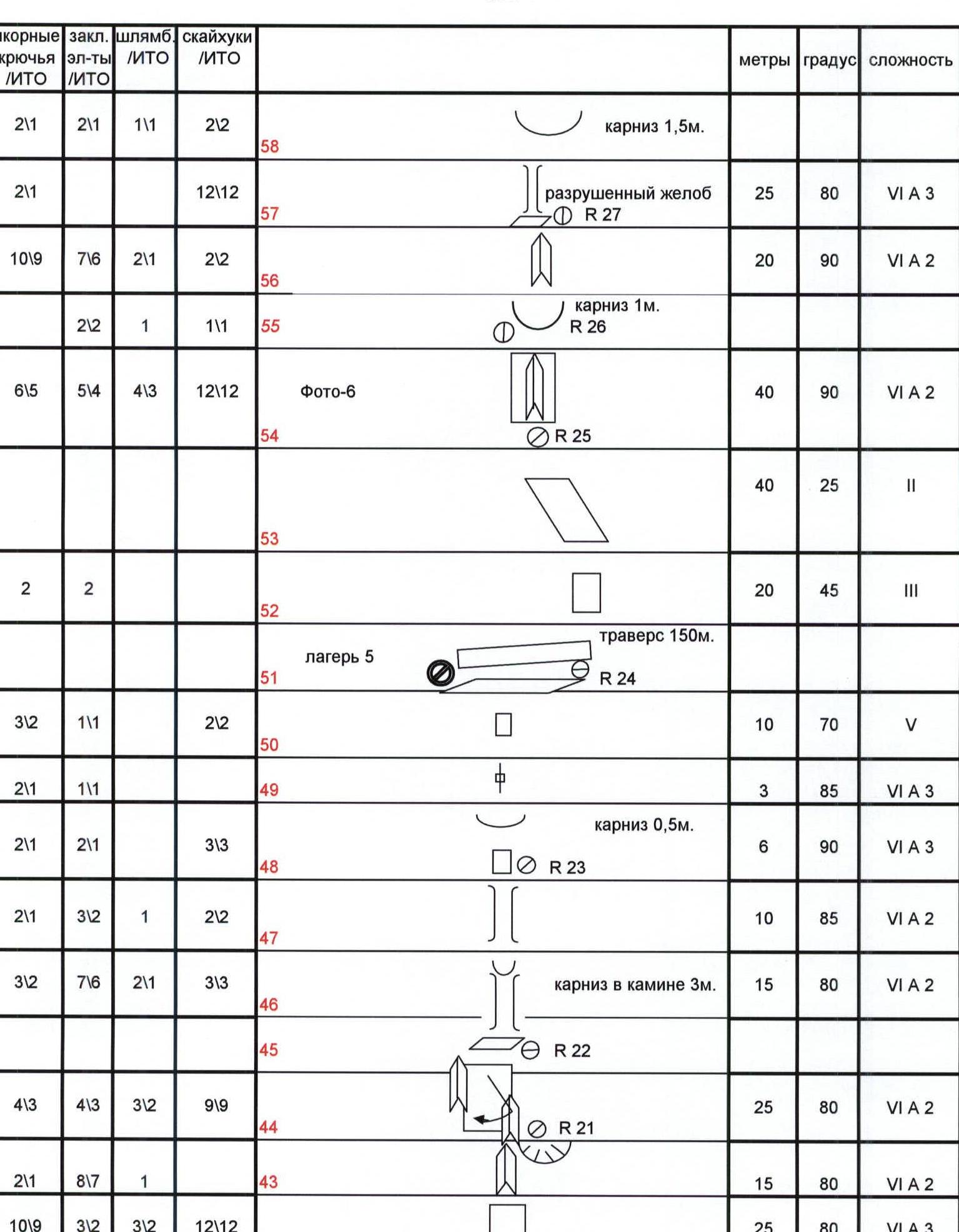 scale 1:2000
sheet-3
scale 1:2000
sheet-3
| anchor pitons (AID) | inserted elements (AID) | bolt pitons (AID) | skyhooks (AID) | meters | degree | complexity | |
|---|---|---|---|---|---|---|---|
| 2/1 | 2/1 | 1/1 | 2/2 | 58 | 10 | 80° | VI A2 |
| 2/1 | 12/12 | 57 | 25 | 80° | VI A3 | ||
| 10/9 | 7/6 | 2/1 | 2/2 | 56 | 20 | 90° | VI A2 |
| 2/2 | 1 | 1/1 | 55 | 10 | 80° | VI A2 | |
| 6/5 | 5/4 | 4/3 | 12/12 | 54 photo — 6 | 40 | 90° | VI A2 |
| 53 | 40 | 25° | 2 | ||||
| 2 | 2 | 52 | 20 | 45° | 3 | ||
| 3/2 | 1/1 | 2/2 | 50 camp №5 | 10 | 70° | 5 | |
| 2/1 | 1/1 | 49 | 3 | 85° | VI A3 | ||
| 2/1 | 2/1 | 3/3 | 48 | 6 | 90° | VI A3 | |
| 2/1 | 3/2 | 1 | 2/2 | 47 | 10 | 85° | VI A2 |
| 3/2 | 7/6 | 2/1 | 3/3 | 46 | 15 | 80° | VI A2 |
| 4/3 | 4/3 | 3/2 | 9/9 | 44 | 25 | 80° | VI A2 |
| 2/1 | 8/7 | 1 | 43 | 15 | 80° | VI A2 | |
| 10/9 | 3/2 | 3/2 | 12/12 | 42 | 25 | 80° | VI A3 |
 scale 1:2000
sheet-4
scale 1:2000
sheet-4
| anchor pitons (AID) | inserted elements (AID) | bolt pitons (AID) | skyhooks (AID) | meters | degree | complexity | |
|---|---|---|---|---|---|---|---|
| 3/2 | 7/6 | 2 | 70 | 700 | 10° | 1 | |
| 69 | 200 | 25° | 1 | ||||
| 68 | 150 | 35° | 2 | ||||
| 67 | 200 | 40° | 2 | ||||
| 66 | 300 | 30° | 1 | ||||
| 4/3 | 2/1 | 4/3 | 64 photo — 7 | 10 | 85° | VI A3 | |
| 3/2 | 2/1 | 2 | 5/4 | 63 camp №6 | 20 | 80° | VI A2 |
| 62 | 60 | 20° | 2 | ||||
| 5 | 1 | 61 | 10 | 80° | 5 | ||
| 7/6 | 6/5 | 2/1 | 2/2 | 60 | 20 | 85° | VI A2 |
| 2/2 | 1 | 6/6 | 59 | 15 | 80° | VI A2 |
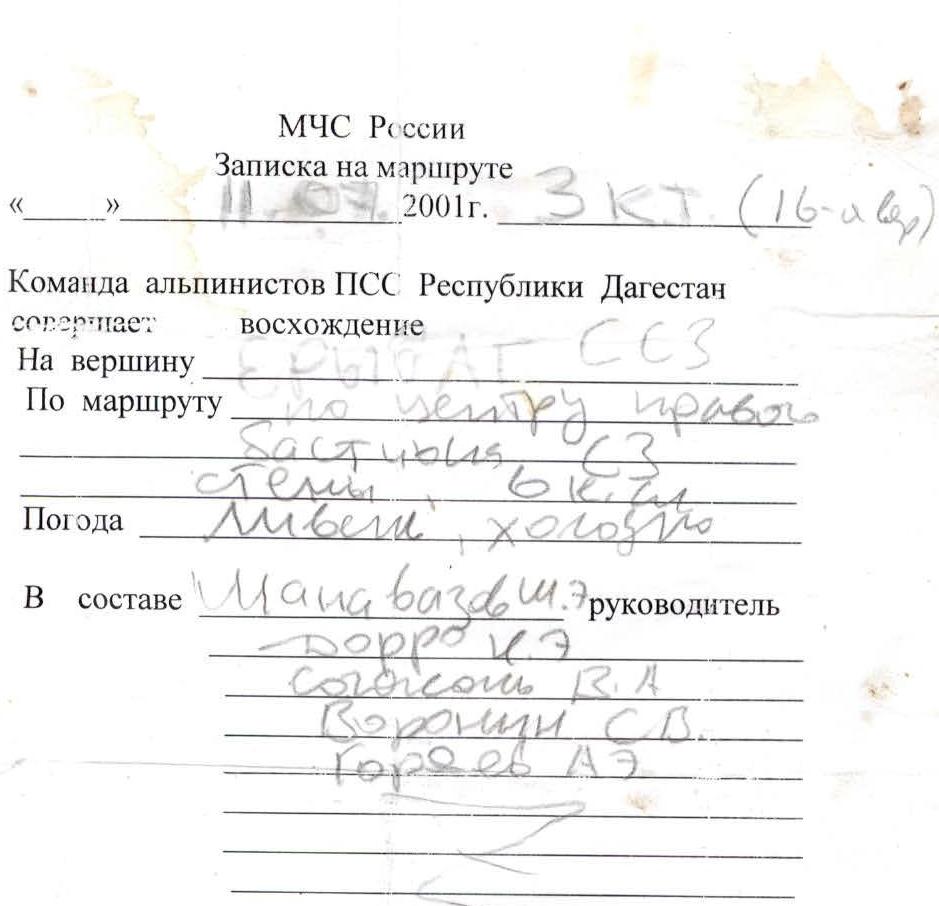
Greetings to the next climbers!
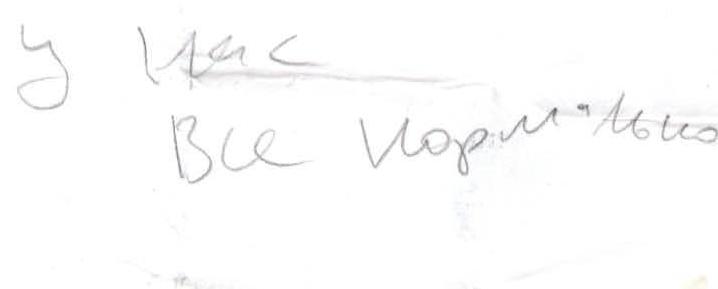
The team did not find notes from CT №1 and CT №2.
At the location of CT №1, a rock piton and a torn reepschnur were found.
At CT №2, a втулка from a spit was found where it was supposed to be, alongside two 8 mm diameter holes and an abandoned rock piton in a niche.
At CT №3: a can on a reepschnur is tightly pressed against a rock piton, which likely preserved CT №3.
The summit of Erydag (NNW) is a vast plateau without a distinct peak; in winter conditions, this plateau is covered with 30–40 cm of compacted snow. Searching for a note on the summit took about four hours for two assistants and about two hours for me, team captain Morozov D.V.
The note was not found.
Team's tactical actions
January 8, 2006. In the evening, the team arrived in the village Kurush. They made arrangements with locals for horses.
January 9, 2006. Loaded six horses, took one backpack each, and headed to Polyakovskie bivouac. The last two climbs were too challenging for the horses; they unloaded and started shuttling the gear. After four trips each, by 15:00, all gear was at Polyakovskie bivouac. Quick snack, backpack on, and forward to Efimovskie bivouac.
January 10, 2006. Continued shuttling gear to Efimovskie bivouac.
January 11, 2006. Started preparing for the ascent: sorted provisions and equipment. Engaged in heated discussions about the route choice; decided on Voronin's route as the most understandable and logical on this bastion.
January 12, 2006. Cleared a trail to the start of the route and made the first supply delivery under the wall.
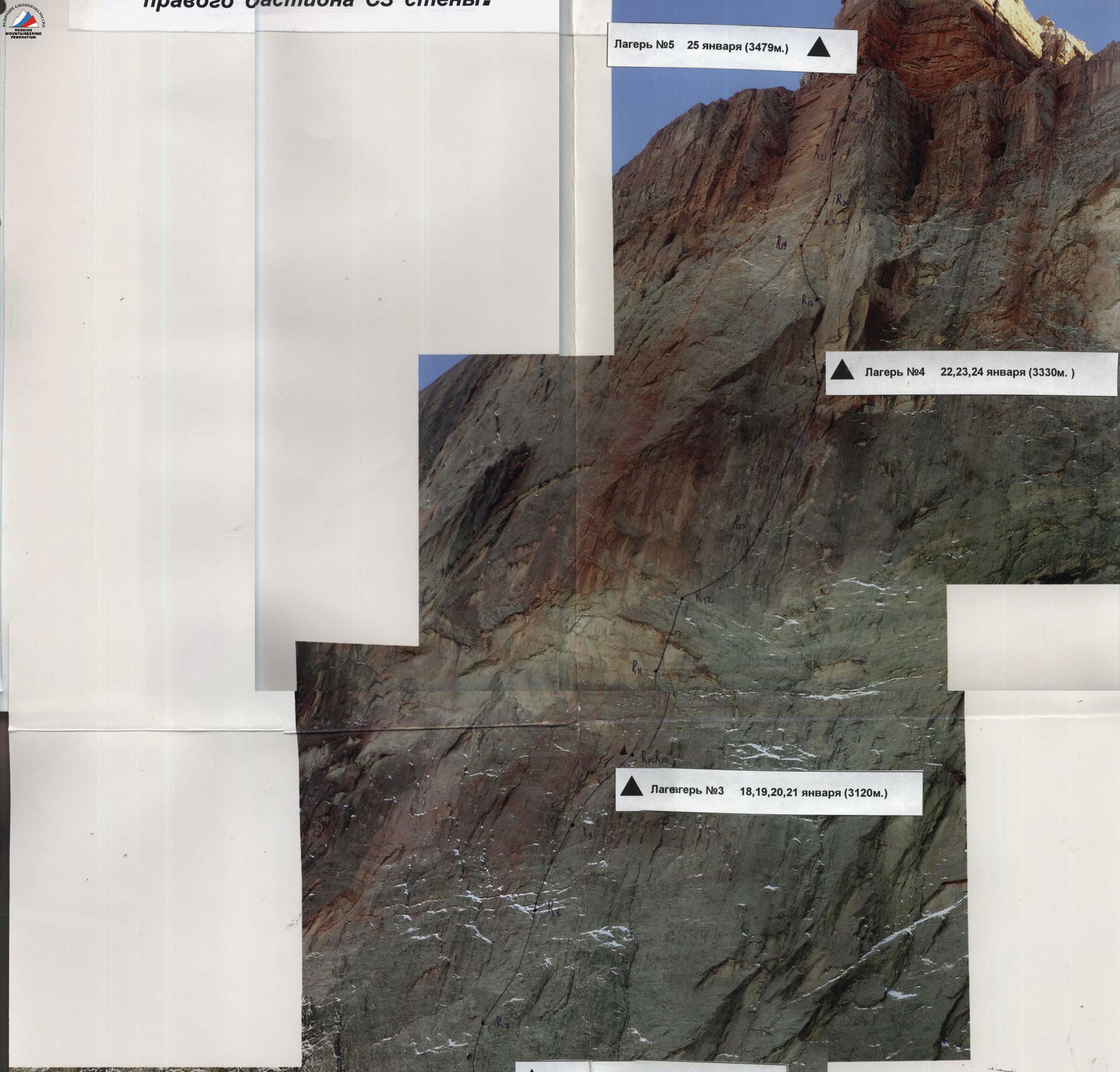
January 13, 2006. The duo Morozov — Tarnakin started working on the route, while others hauled and prepared supplies and assembled platforms. An additional challenge was the lack of water on the wall due to strong winds blowing snow away. The duo Bakin — Sidorenko found ice, chopped it, and packed it into bags — a total of 150 kg was taken on the route. They completed the section R0–R2 and spent the night on a ledge (camp №1).
January 14, 2006. Morozov — Tarnakin continued working on the route, while others hauled supplies to the ledge, set up a bivouac, and hung about 70 m of rope. Spent the night on the ledge.
January 15, 2006. Kondrashov — Bakin worked on the route, while others transferred supplies via the fixed ropes. The total weight was about 300 kg, including ice. By 13:00, the duo reached R6, prepared a site for camp №2, and continued working above, hanging two platforms and spending the night underfoot on a narrow ledge.
January 16, 2006. Tarnakin — Ustyantsev worked on the route, while others lifted supplies to the platforms. The duo covered 70 m.
January 17, 2006. Morozov — Bakin launched an attack, covering about 75 m and preparing a site for camp №3. The whole day was snowy, and by evening, the wind picked up, turning into a hurricane at night: tents were torn, and it was impossible to sleep.
January 18, 2006. Tarnakin — Kondrashov attacked, advancing 55 m. The team distributed the loads and began relocating to camp №3.
January 19, 2006. Tarnakin — Ustyantsev started navigating the wall under the sickle, while others transferred supplies to camp №3.
January 20, 2006. Morozov — Kondrashov navigated the sickle and worked above, while others lifted supplies to camp №3.
January 21, 2006. Kondrashov — Sidorenko worked on the route, while others lifted supplies. They covered 50 m and prepared a site for camp №4.
January 22, 2006. Morozov — Bakin worked on the route, while others hauled supplies to camp №4.
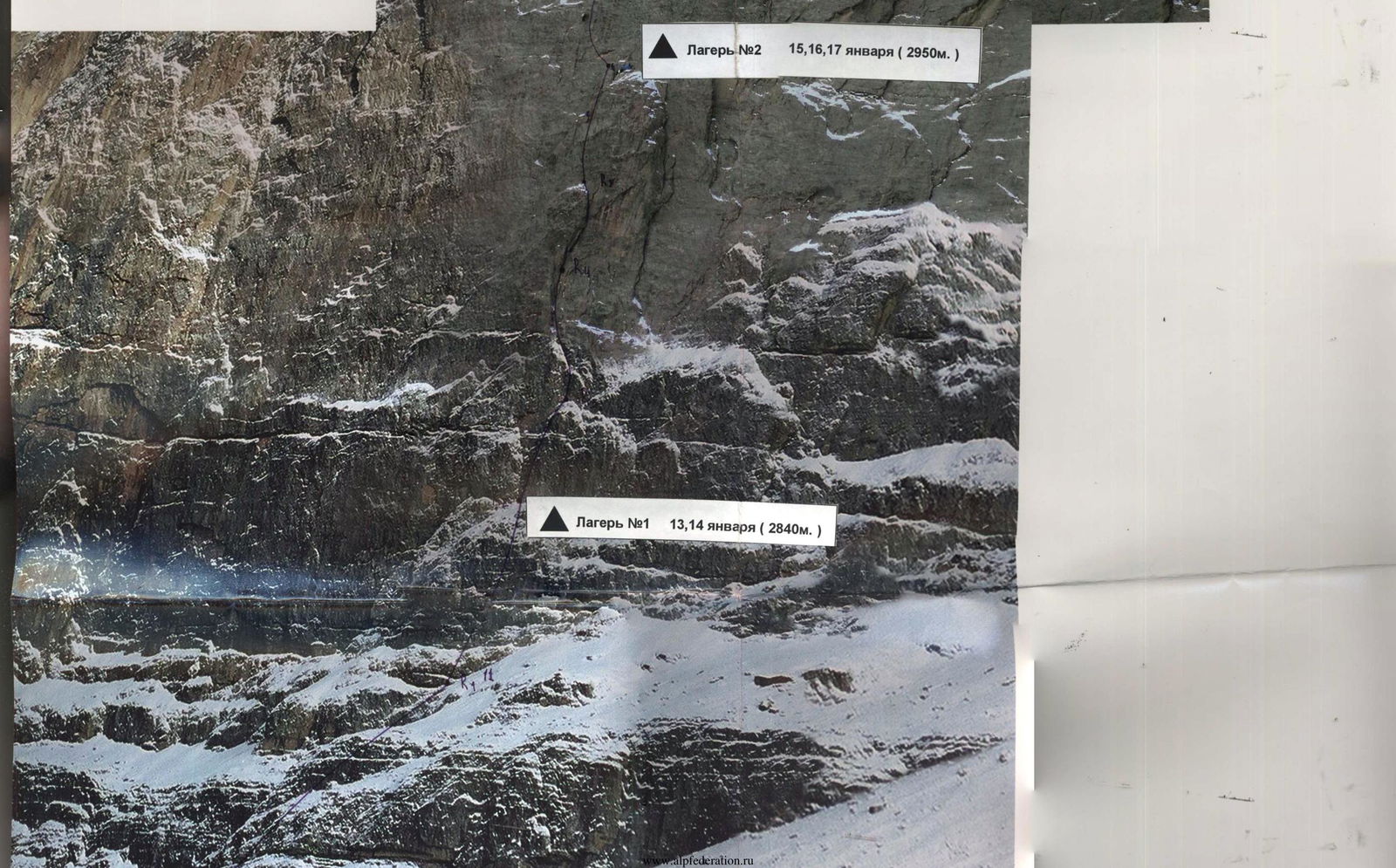
January 23, 2006. Morozov — Tarnakin worked on the route, hanging 70 m of rope. After lunch, the wind started picking up, turning into a severe hurricane at night.
January 24, 2006. A severe hurricane; the team stayed in the platforms.
January 25, 2006. The wind subsided only by morning. Morozov — Kondrashov departed for the route, advancing 50 m before Morozov gave the order to move up. The team dismantled the platforms and started pulling up to the lead duo. By dusk, Morozov reached a large ledge. About two hours later, the entire team was on the ledge. It was pleasant to walk on it, but some gear and rope were left below. The wind intensified, making it hard to stand during gusts. Everyone was very tired but content — the main wall was conquered.
January 26, 2006. Everyone except Tarnakin rappelled down for the remaining gear. By 10:00, everything was hauled up, distributed, and they began traversing the ledge. By 11:00, they faced the second rock bastion. Morozov — Kondrashov started working on it. In the dark, they reached an osypnaya polka, gathered the ropes, and all squeezed into one tent, ate the last food, and fell asleep. The wind blew throughout the night — the coldest night.
January 27, 2006. Morozov — Kondrashov started working on the third rock bastion. The belayers kept changing due to the extreme cold. By 12:00, the wall ended, and they covered about 60 m. At 14:00, the team gathered on the saddle. They met two assistants who had been waiting for over a day, and received the first congratulations. After searching for a note on the summit, at 16:00, the team began their descent. The wind and snowstorm made it difficult to find the descent route 1B, and by 24:00, the team was back in Kurush.
For the belayer's convenience, an industrial climbing board was used. The team used relief sky-hooks, ice fifi, and anchor pitons for the ascent. Rock pitons were not used. Removable bolt pitons with a diameter of 8 mm and a length of 15 mm were used for the ascent, and 22 mm for belaying. Old holes from the Dagestan team were hardly used due to being clogged with dirt, dust, and snow. Several bent construction bolts were found, likely left after the Yekaterinburg team's ascent in 2002.
During the re-packing of gear on January 19, one of the sacks with food was lost, resulting in a shortage of supplies in the last days of the ascent. Ice was used in camp №4; before that, they managed to collect snow. There were practically no rockfalls; only during the hurricane did two stones hit a platform, tearing a tent.
Overnight stays:
- 1st-2nd on a ledge in platforms (camp №1);
- 3rd, 4th, 5th in platforms (camp №2);
- 6th, 7th, 8th, 9th in platforms (camp №3);
- 10th, 11th, 12th in platforms (camp №4);
- 13th on a ledge in one tent (camp №5);
- 14th on a ledge in one tent (camp №6).
Igolkin V.I. believes that the ascent brought out the best physical and moral qualities in all team members.
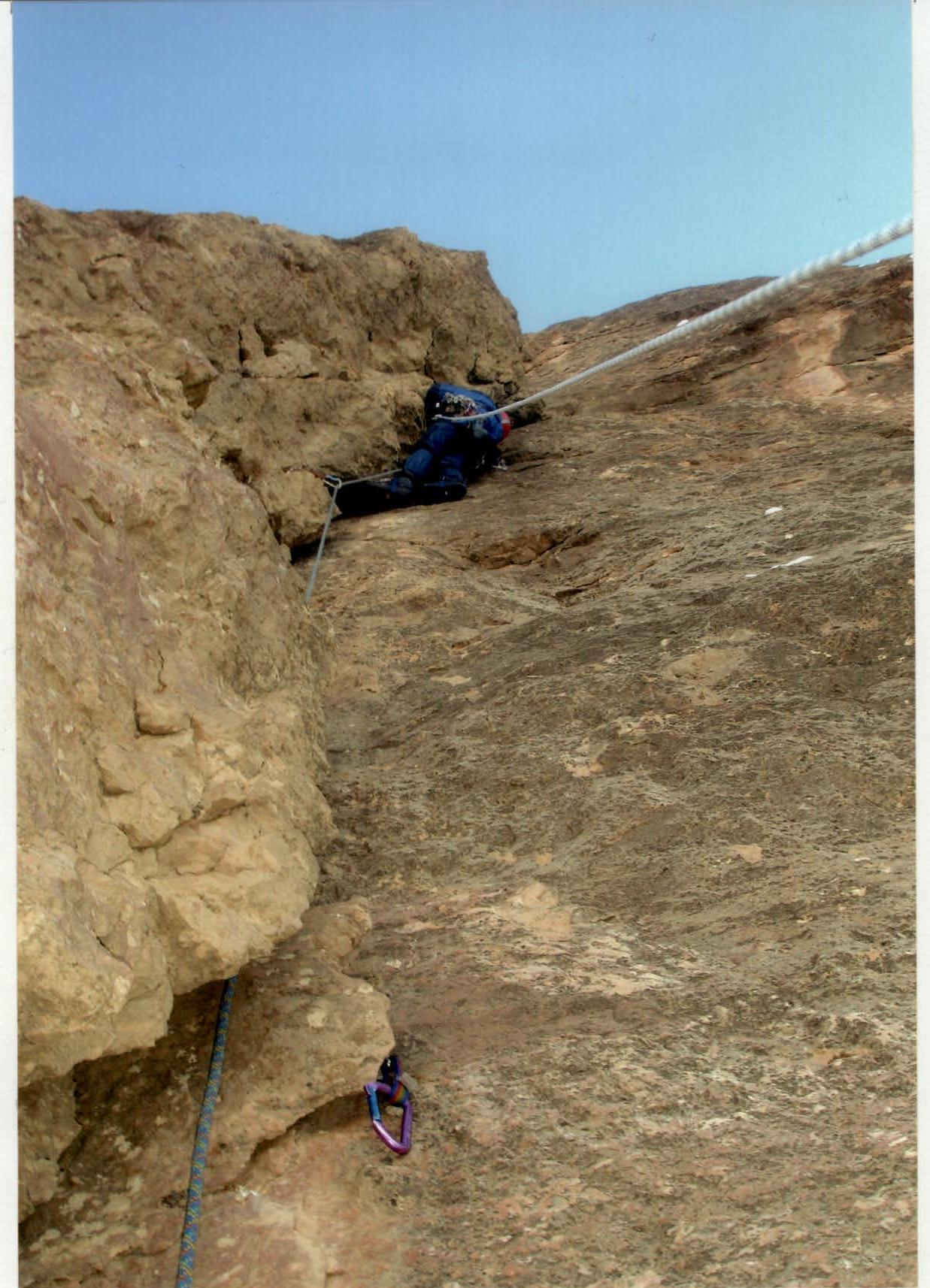
Kondrashov V. navigating the Inner corner, section R4–R5
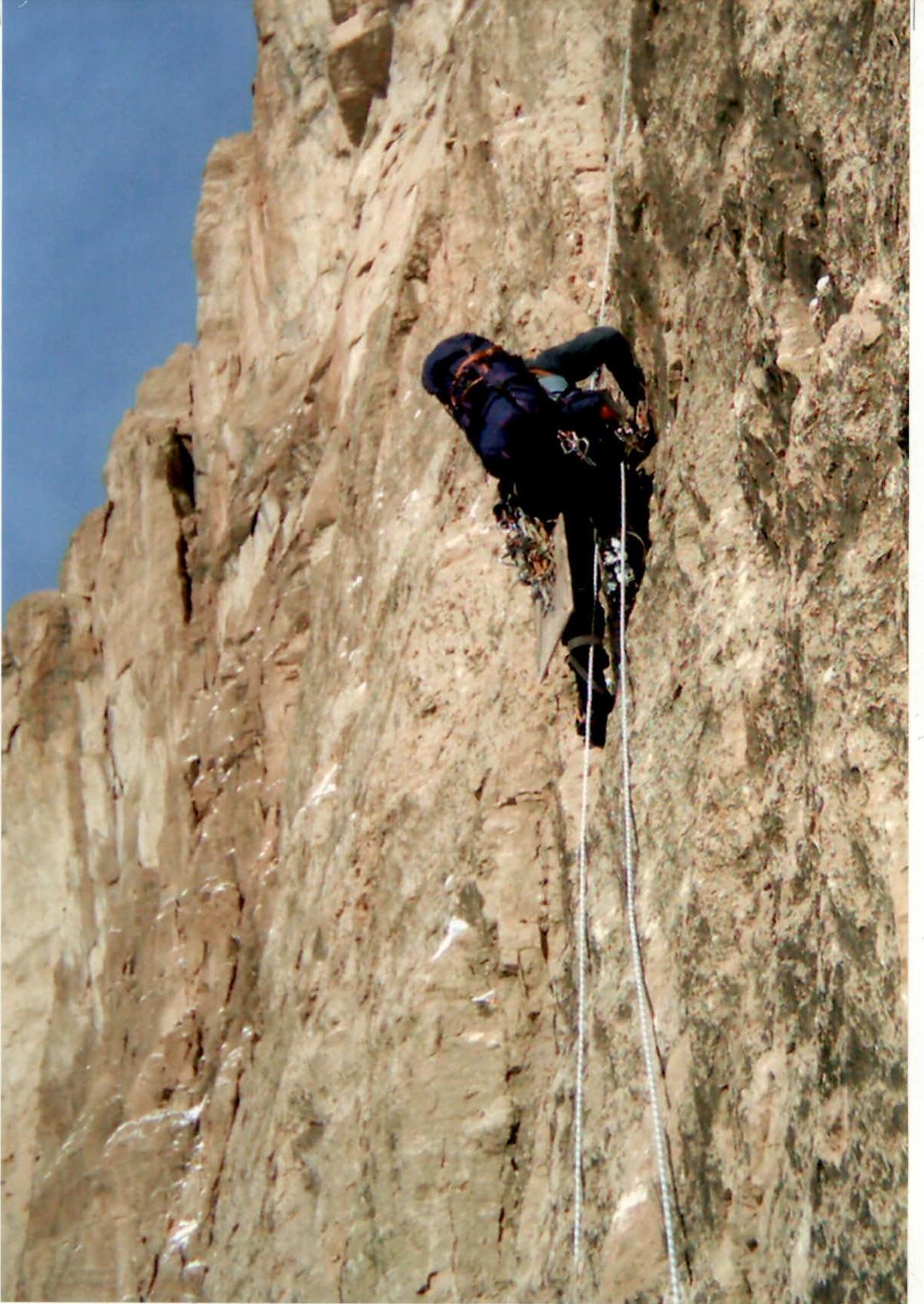
Bakin A. on the fixed ropes, section R5–R6
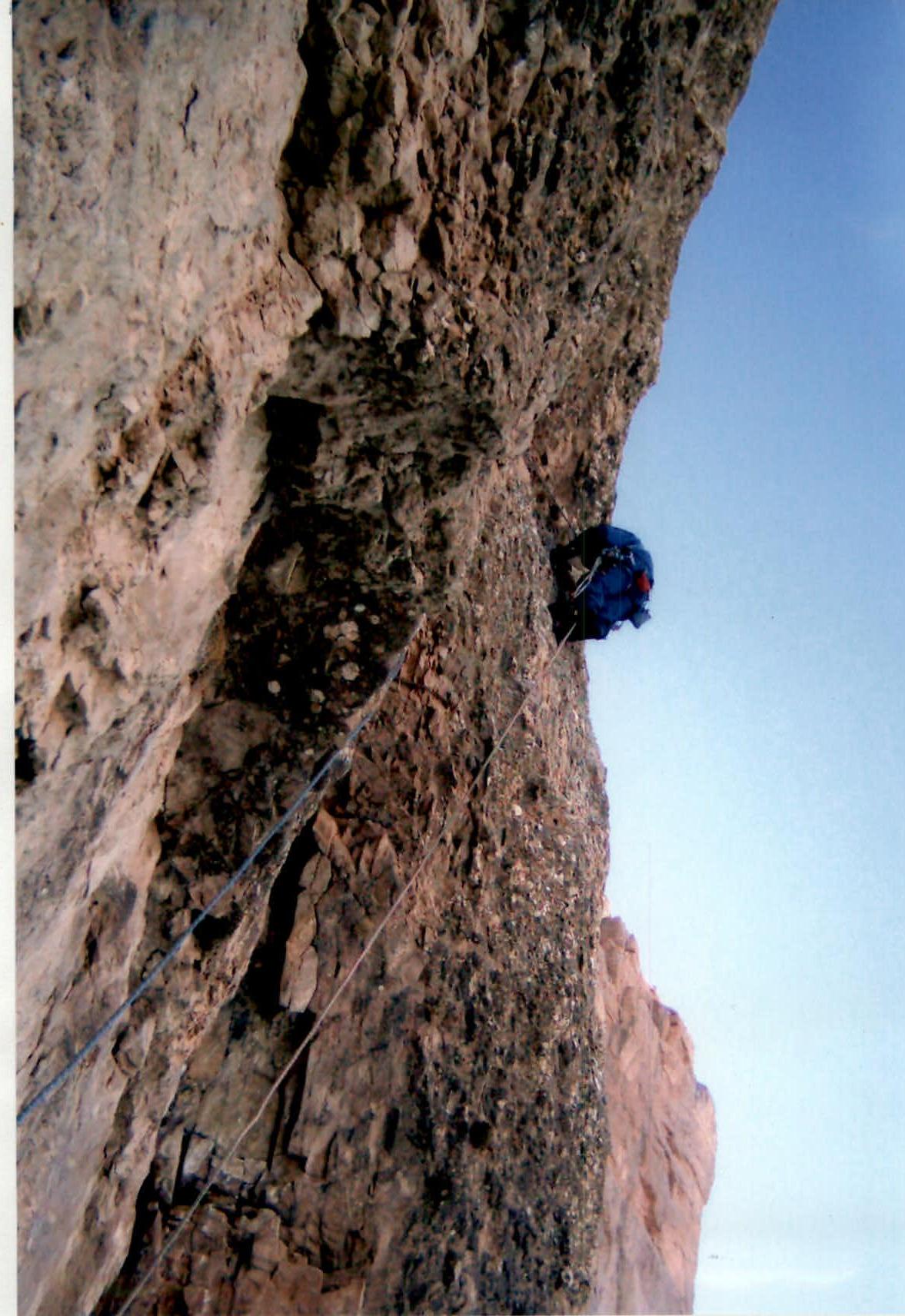
Kondrashov V. navigating the sickle, section R11–R12
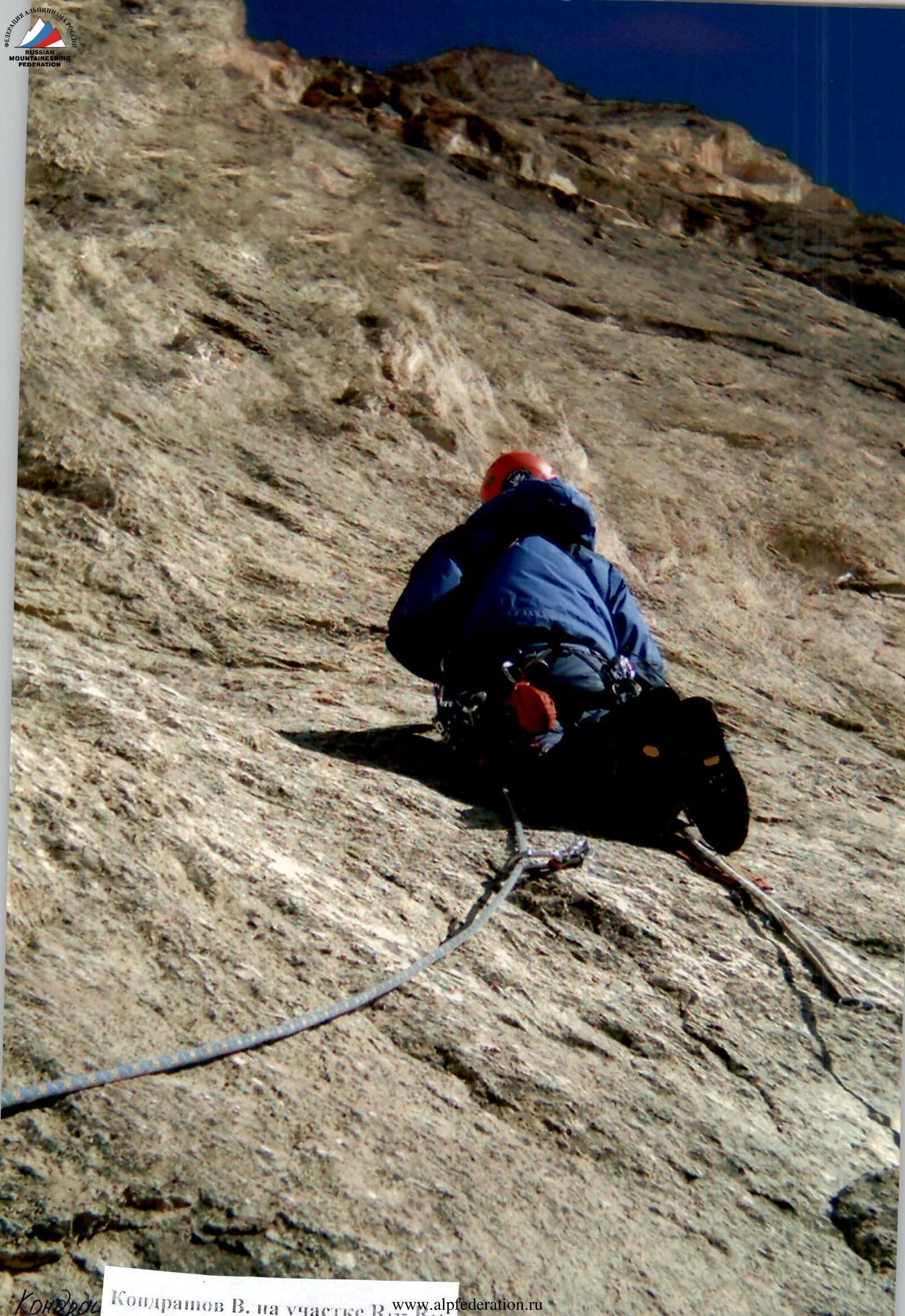
Kondrashov V. on section R12
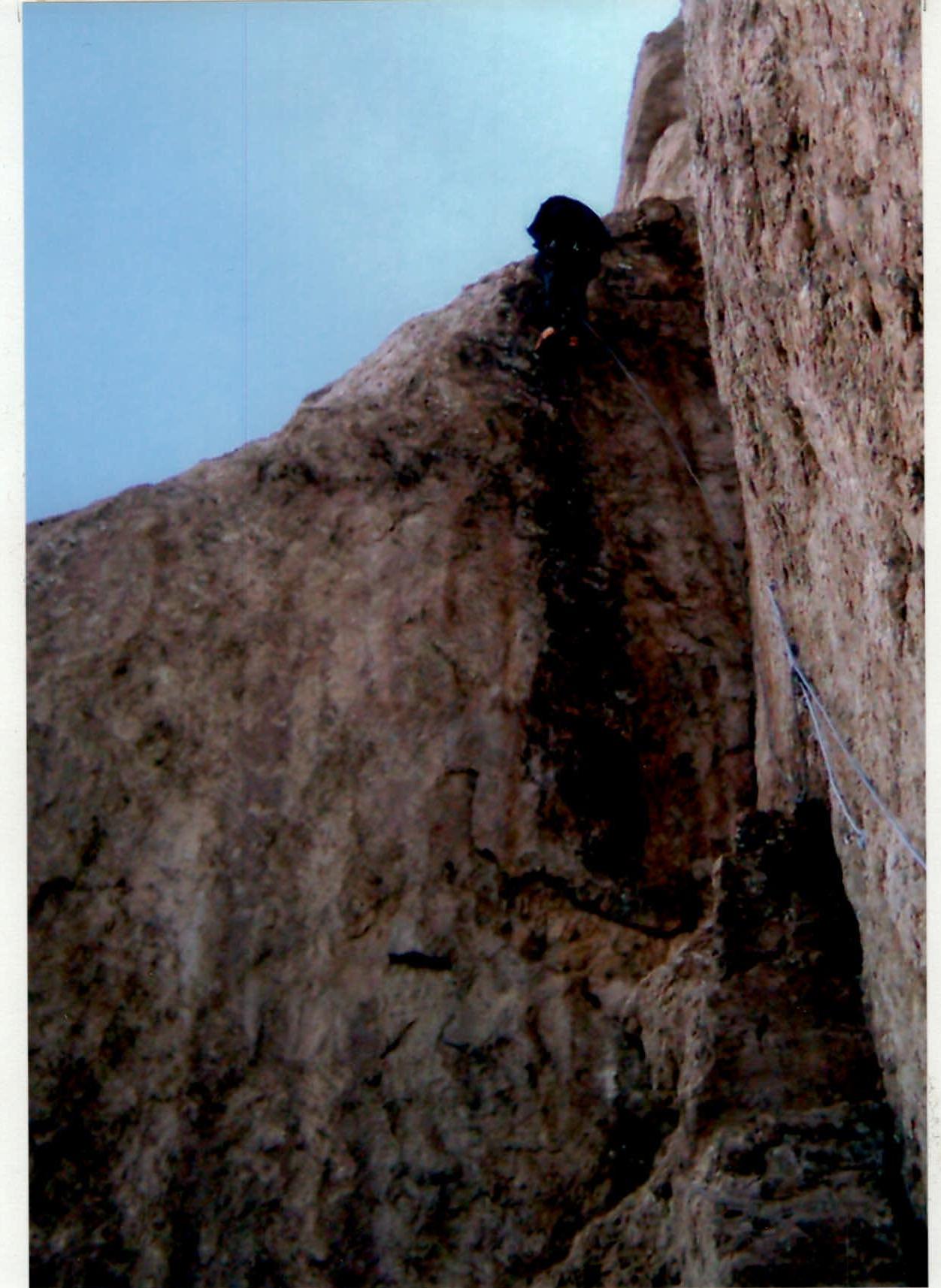
Morozov D. on the fixed ropes, section R17–R18
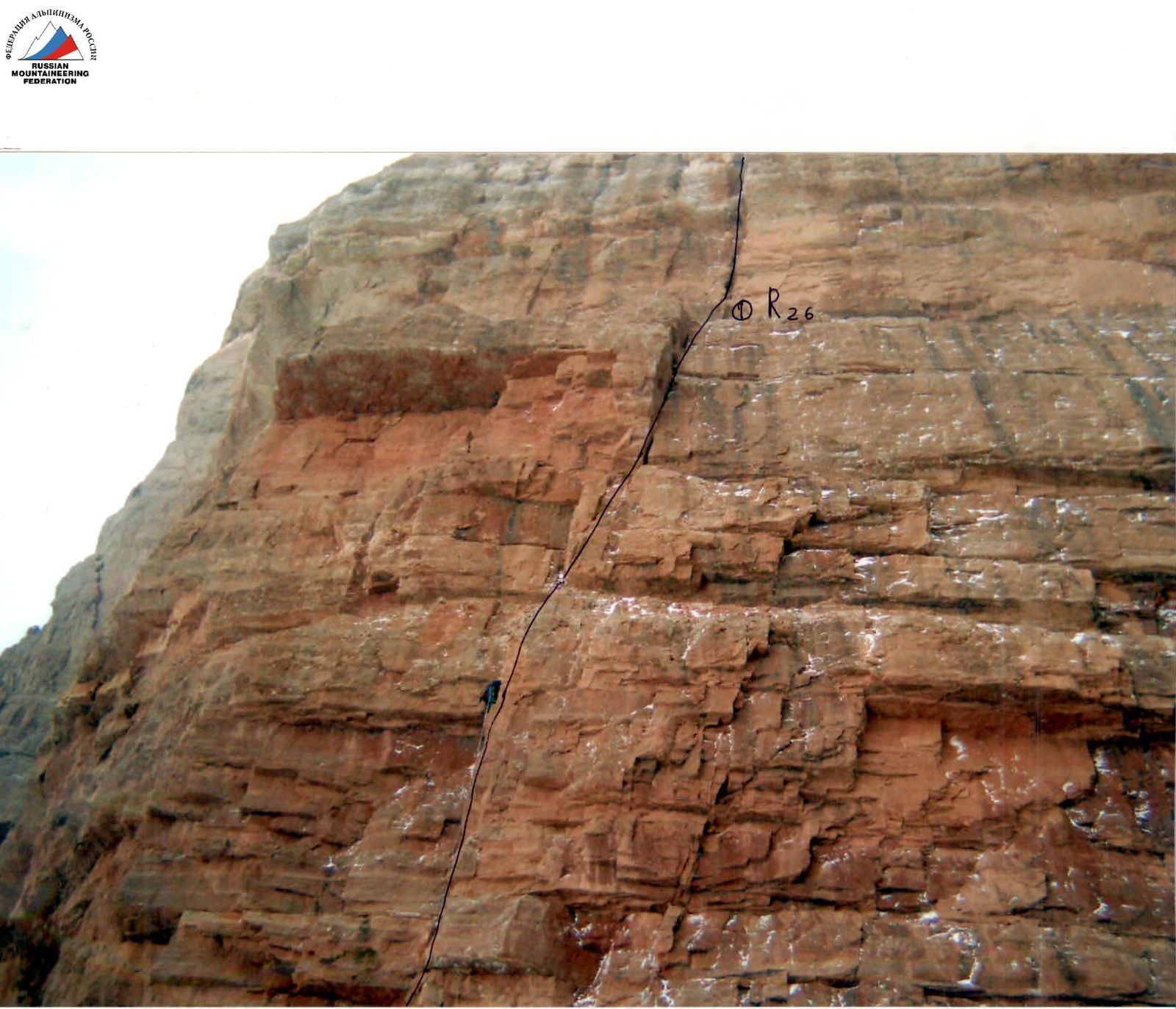
Morozov D. on the 2nd rock bastion, section R25–R26
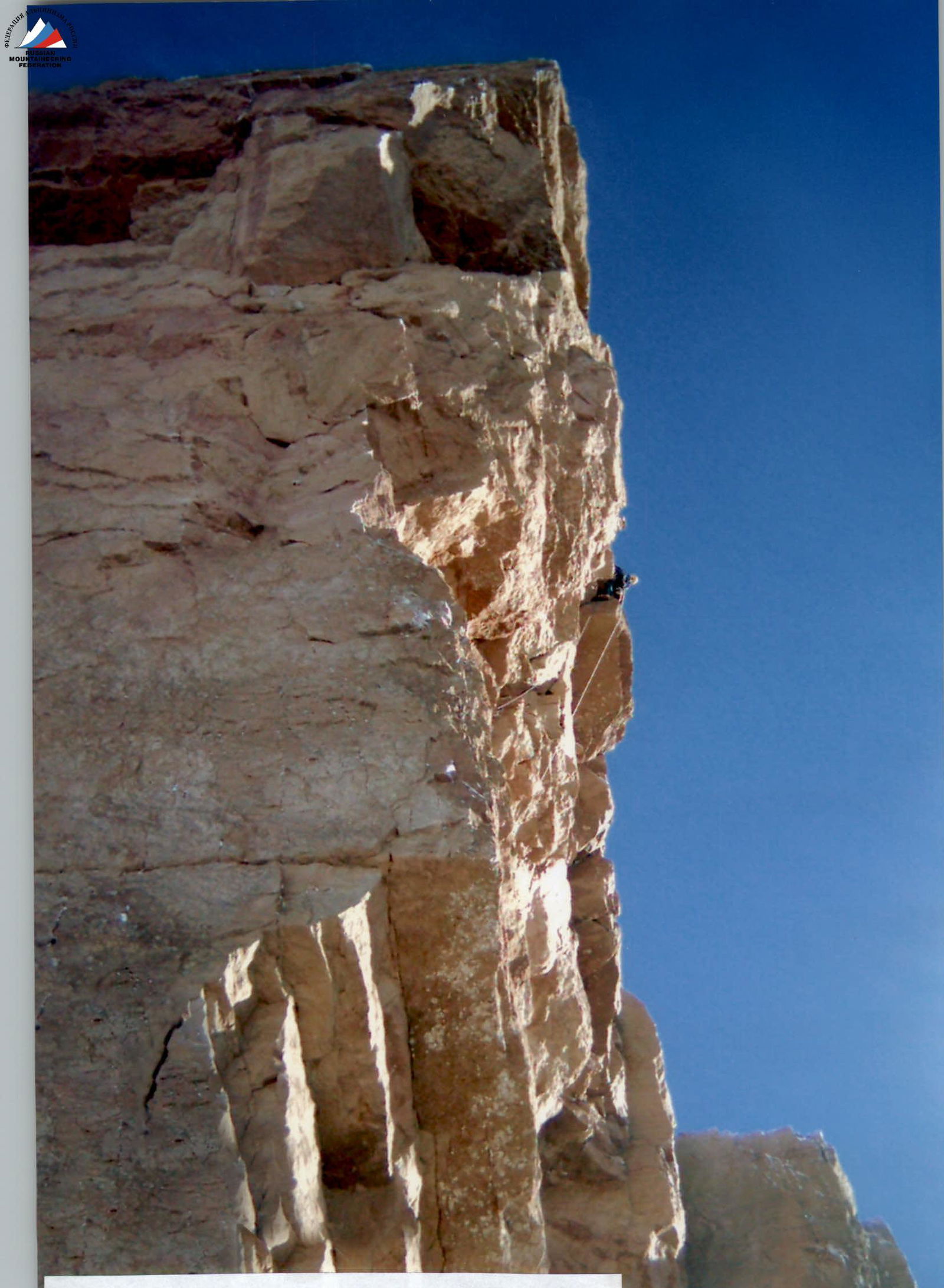
Morozov D. on the 3rd rock bastion, section R31–R32