
Passport
I. Rock climbing category 2. Eastern Caucasus 3. Mt. Erydag, 3925 m via the left part of the NW wall 4. Category 5B complexity 5. Elevation gain 1050 m, length — 1270 m Length of sections R0–R6 cat. complexity — 870 m. Average steepness — 69°. 6. Pitons hammered in: rock 117/20, bolted 0/0, chocks 119/24 7. Team's walking hours: 31 and days — 3 8. Overnight stops: 1 — wide ledge under an overhanging rock; 2 — wide ledge under an overhanging rock 9. Team leader: Shevchuk Alexander Denisovich — Master of Sports
Team members:
- Ivashchenko Alexey Sergeevich — Master of Sports
- Sibayev Mingalim Minsalimovich — Candidate Master of Sports
- Sigov Sergey Ivanovich — Candidate Master of Sports
- Soldatov Sergey Yurievich — Candidate Master of Sports
- Shchukin Vladimir Ivanovich — Master of Sports
Coach:
- Retyunsky Yuri Dmitrievich, Master of Sports, 1st category
II. Departure to the route: August 2, 1987 Summit: August 4, 1987 Return: August 4, 1987
- RSFSR State Sports Committee team — I
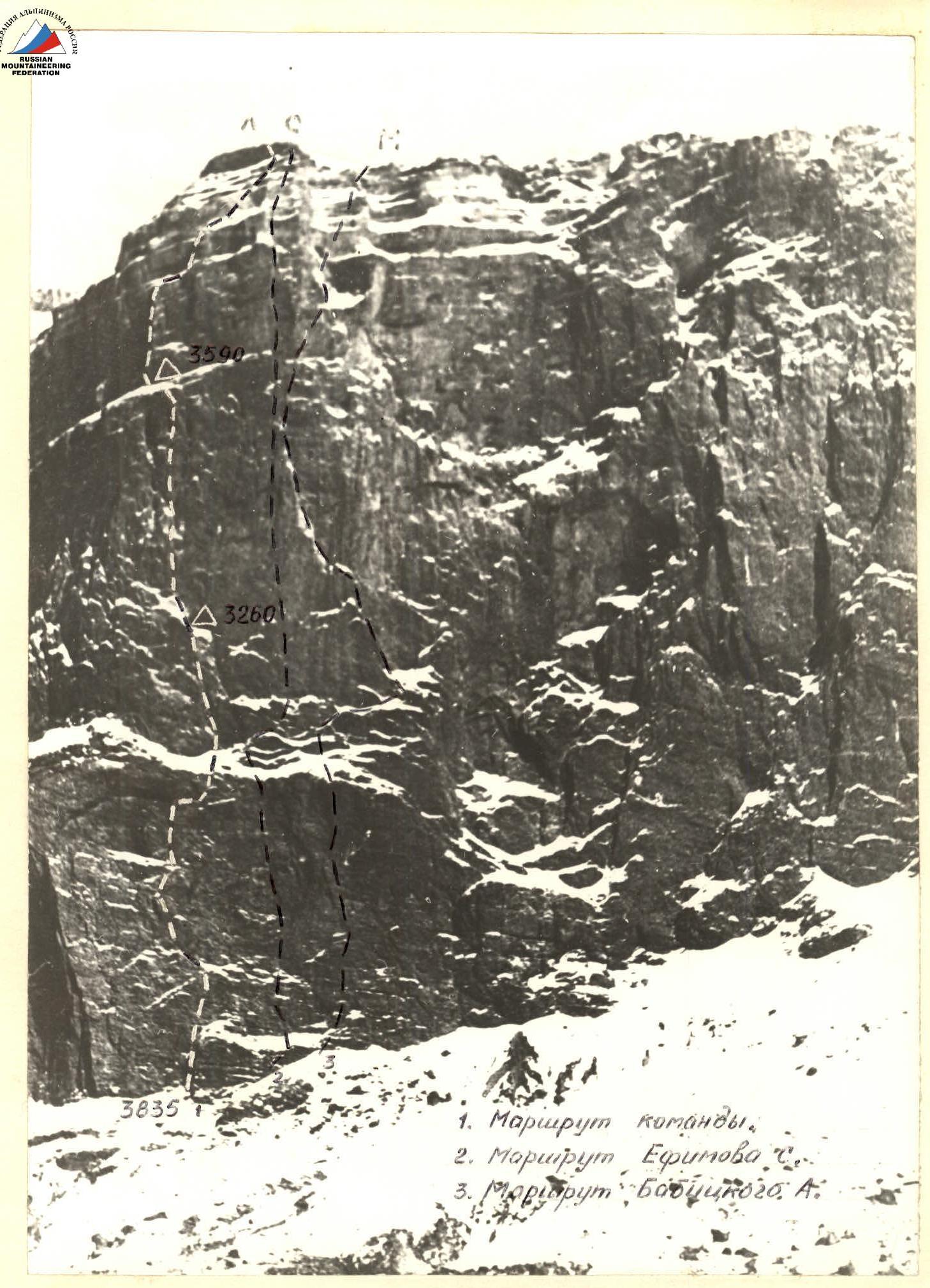
General photo of the summit. Photo taken from the slopes of Mt. Shalbuzdag. 05.02.1983. 16:00. 3 km. Lens: Helios-44.
Tactical actions of the team
The team based their actions on the tactical ascent plan. There were no deviations from the planned time for passing control sections and overnight stops. The team followed the route without deviating from the line shown in the judging photograph.
During the day, the lead climber was rotated, and each participant worked on the section assigned to them beforehand.
Group movement scheme:
- The first worked on a double rope with a shock absorber
- The second — with top rope, brought two free ropes and, while removing pitons, straightened the fixed ropes
- The third — on "double" fixed ropes
- The fourth, fifth, and sixth — on fixed ropes with top rope.
For safety, belay points were organized in places protected from falling rocks and on at least three linked anchor points.
Overnight stops were chosen for comfort, lying under overhanging rocks, allowing the team to rest properly.
Upon arriving at the overnight stops:
- Four team members organized the bivouac;
- Two went ahead to prepare the next section.
Diet:
- Hot meals in the morning and evening
- High-calorie dry rations during the day.
There were no falls or injuries during the ascent. The team's qualification, technical preparedness, and experience allowed them to overcome difficult sections without delaying the group's progress.
The team's physical reserve was based on:
- High overall physical fitness of the participants;
- Even distribution of workload among team members over the days.
The team's technical reserve was ensured by:
- Interchangeability of each participant in any position;
- Mastery of various technical skills by each team member;
- High individual rock climbing skills.
The team used modern equipment on the route:
- Friends
- Sky hooks
- Hookah
- Ladders with rings
- etc.
In case of bad weather, besides the main route, two alternative routes and additional overnight stops were planned.
Communication with the base camp was maintained regularly via "Dnepr" radio; in case of radio failure, alternative signaling methods were planned.
The rescue team was stationed at the base camp and was ready to be deployed if necessary. The rescue fund was adequately equipped with gear suitable for the ascent. The rescue team included a traumatologist with climbing qualifications. Official permission was obtained from the Kurush village collective farm to provide transportation in case of emergency evacuation.
Familiarization with Mt. Erydag's routes began with studying the reports of the first ascenders, consultations, and literature on Dagestan, and continued with reconnaissance trips and observations to:
- Assess rockfall danger on the wall at different times of day;
- Visually study and inspect the wall;
- Identify potential overnight stops under the wall and on the route.
Based on this, the team's tactical actions on the route were developed.
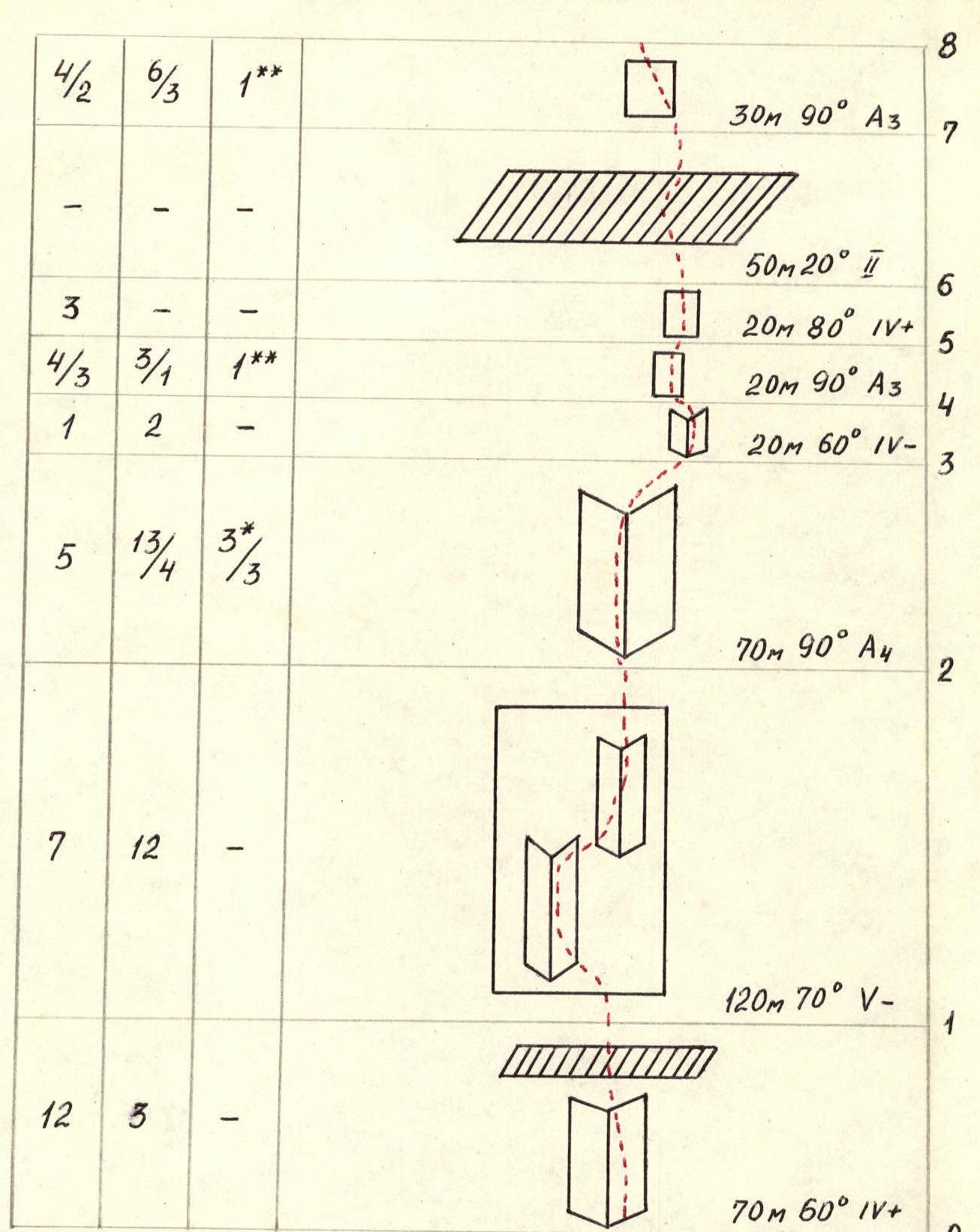
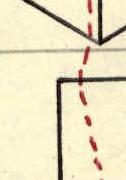
- Use of previously hammered bolted pitons. ** Use of sky hooks. Route scheme in symbols.
| Rock | Chocks | Bolted | |
|---|---|---|---|
| 4/2 | 6/3 | 1** |  |
| - | - | - |  |
| 3 | - | - |  |
| 4/3 | 3/1 | 1** |  |
| 1 | 2 | - |  |
| 5 | 13/4 | 3* |  |
| 7 | 12 | - |  |
| 12 | 3 | - |  |
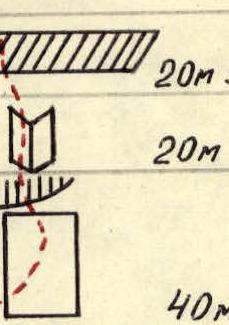 20 m 30° H
Variant
| Rock | Chocks | Bolted |
|---|---|---|
| - | - | - |
| 3 | 1 | - |
| 8/3 | 5/2 | - |
| 19/10 | 4/2 | 5** |
| 5 | 2 | - |
| 6/2 | 27/12 | - |
| 6 | 1 | - |
| 10 | 13 | - |
| 14 h. 138 pitons. |
Pitons:

| Rock | Chocks | Bolted |
|---|---|---|
| - | - | - |
| 3 | 5 | - |
| - | - | - |
| 5 | 5 | - |
| 4 | 2 | - |
| - | - | - |
| 12 | 15 | - |
| 31 h. 236 pitons. | ||
| 5 h. 31 pitons. | ||
| 12 h. 67 pitons. |