
I. Technical class.
-
Digoria. Eastern part of the Central Caucasus.
-
Laboda Western peak (4300 m) via North-West ridge.
-
Category 5B difficulty (Popov's route).
-
Height difference 1050 m. Length 1440 m.
Length of sections with category IV–V difficulty is 628 m. Average steepness of the route is 55°.
- Pitons driven:
- rock: 70
- ice: 4
- chocks: 107 I, 0, 2
- Team's travel time: 22 hours, 2 days.
- Overnight stay: lying, on a ledge, in a tent.
- Leader — Spiridonov Alexander Semenovich — Candidate Master of Sports
Team members:
- Shapovalov Vitaly Anatolyevich — 1st sports category
- Eritenko Alexey Nikolayevich — 1st sports category
- Shubin Yuri Vladimirovich — 1st sports category
-
Coach — Pyatnitsin Alexander Alekseyevich
-
Departure to the route: August 5, 1988.
Reached the summit: August 6, 1988.
Return: August 7, 1988.
- Committee for Physical Culture and Sports of the Rostov-on-Don Regional Executive Committee.
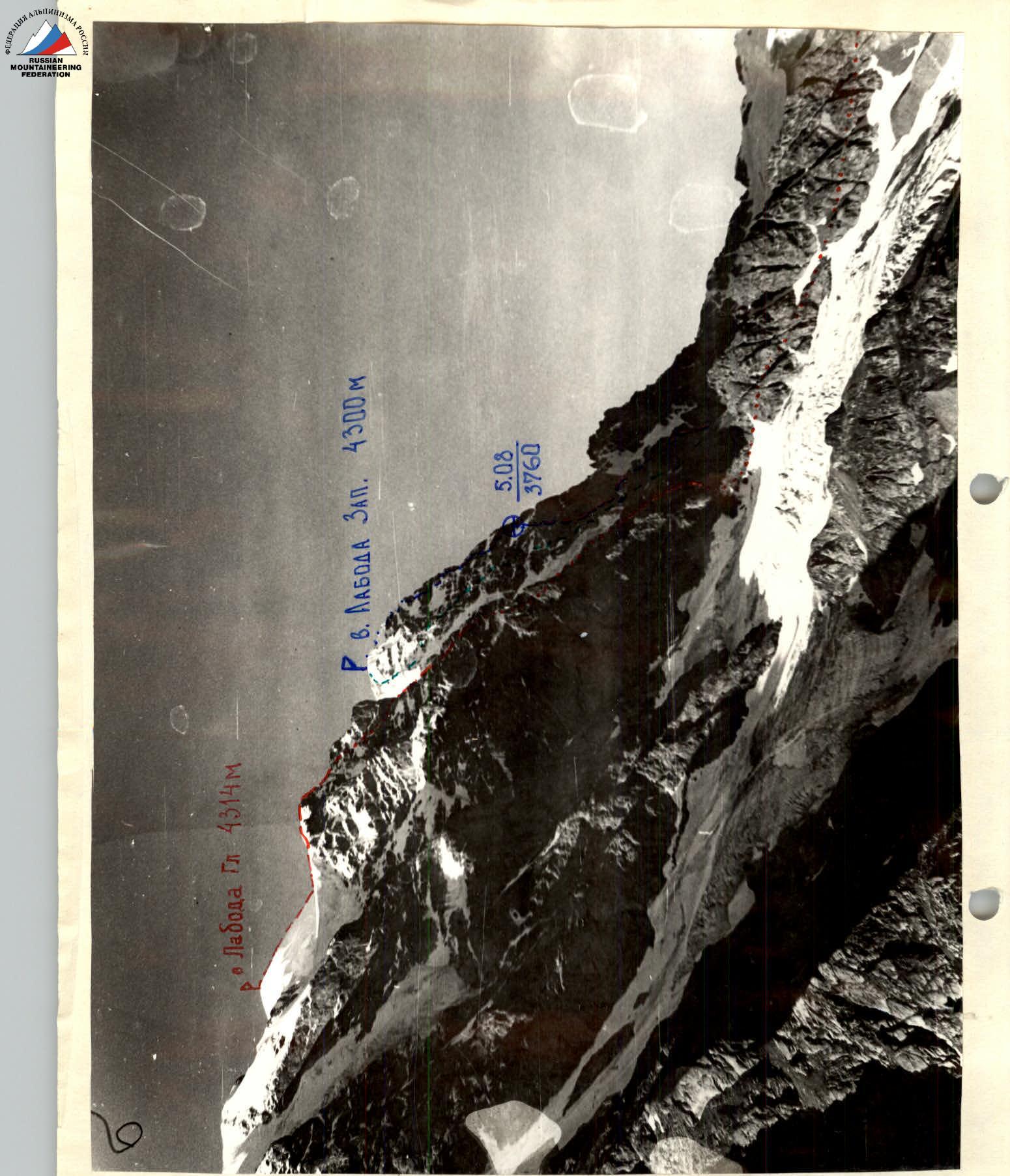
Route of the Rostoblsporkomitet team:
- K–F North wall, Pyatnitsin's route, category 5B difficulty
- right North-West ridge, Stotsky's route, category 5B difficulty.
It is not possible to capture the profile of the wall on the right.
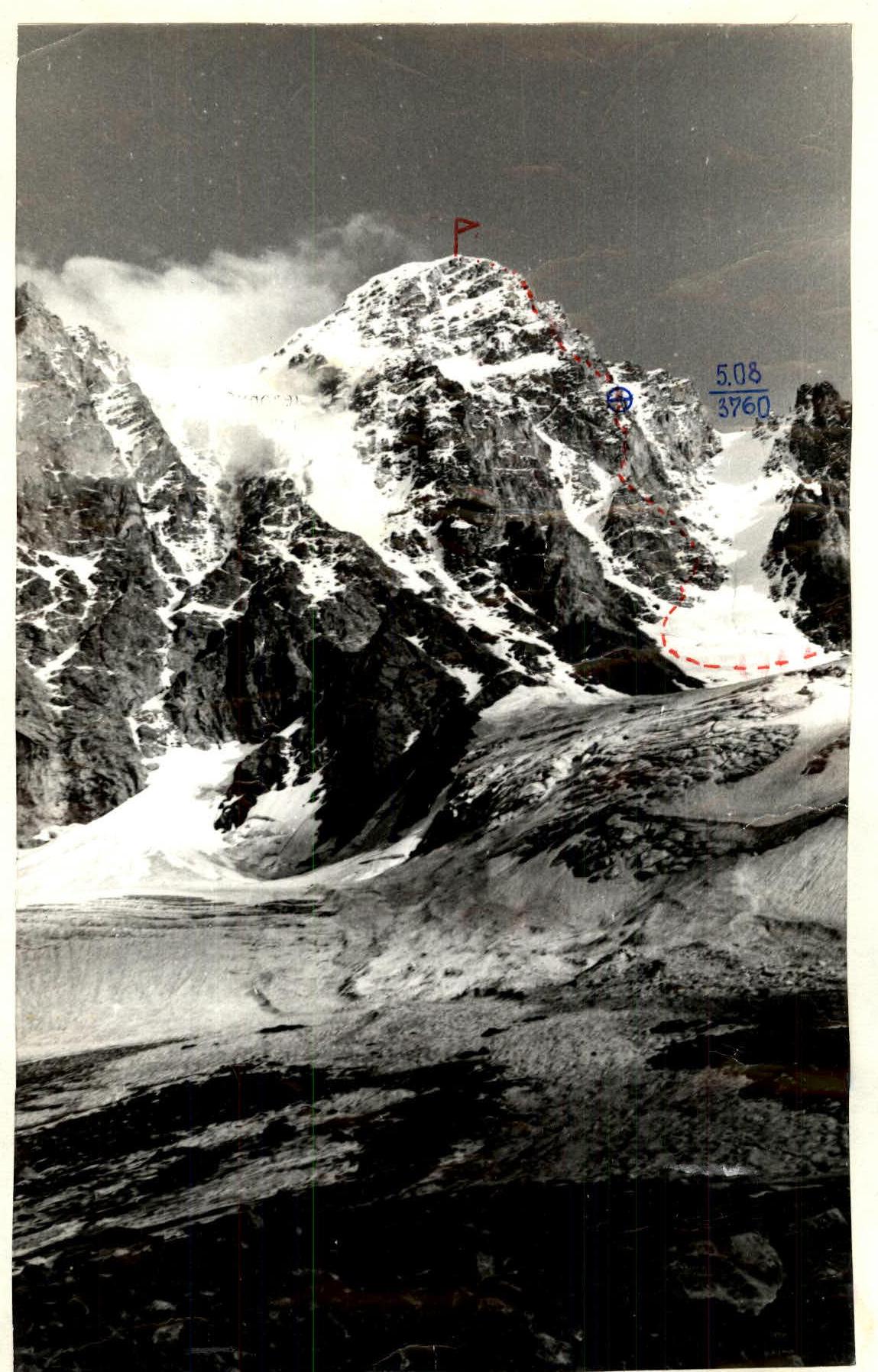
Photo # 2. Profile of the left wall. July 19, 1988, 16:00. "Zenitar" lens, focal length 50 mm. Distance to the object being photographed 500 m. Shooting point number 2. Height of shooting 2700 m.
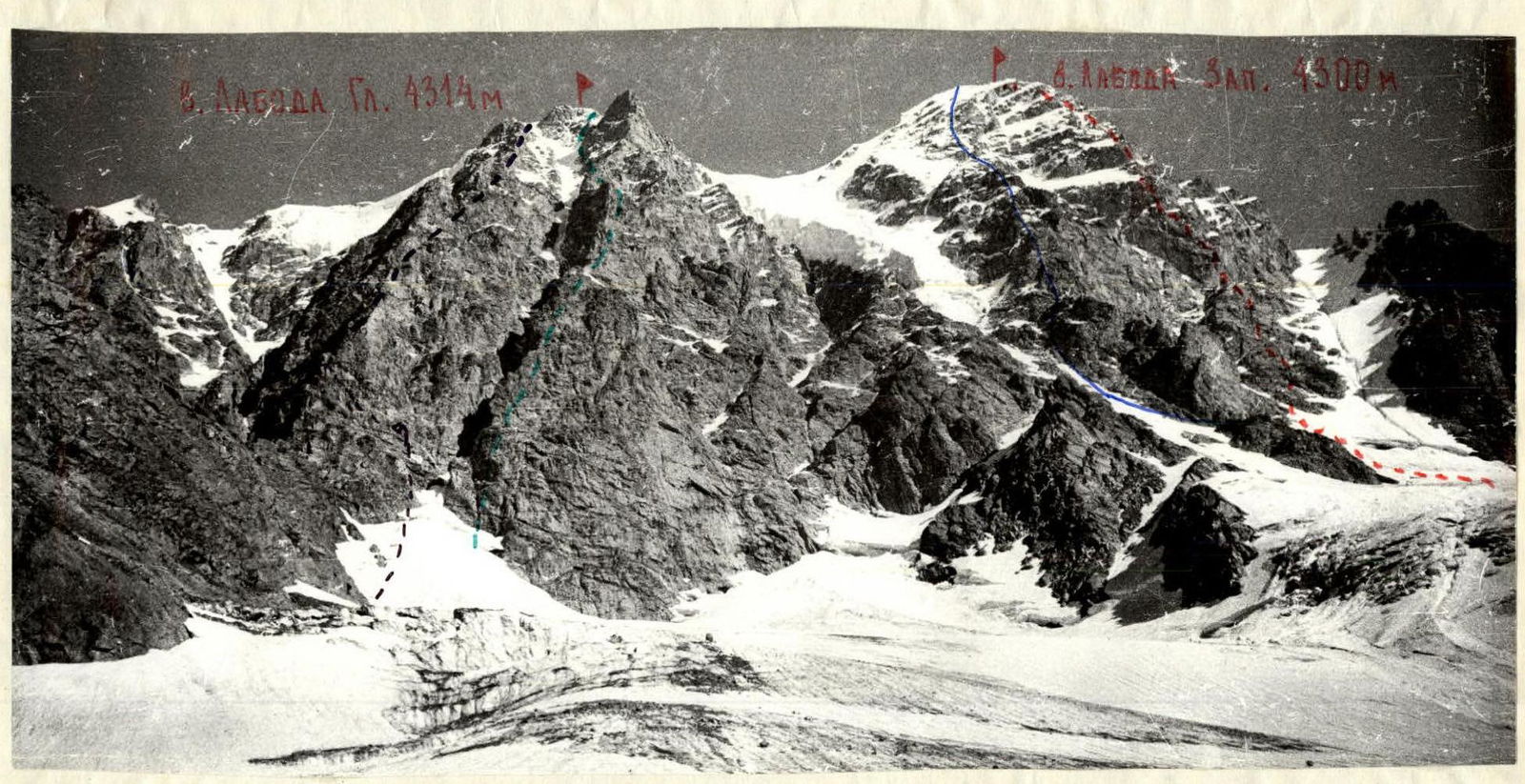
Photo 3. Panoramic photograph of the area. July 27, 1988, 13:00. "Minitar-1" lens, focal length 32 mm, distance to the object being photographed 700 m, height of shooting 2800 m, shooting point 4.
Route of the Rostoblsporkomitet team:
- K–F North wall, Pyatnitsin's route, category 5B difficulty
- right North-West ridge, Stotsky's route, category 5B difficulty
- left North-West ridge, Penchuk's route, category 5B difficulty
| ROCK PITONS | ICE PITONS | CHOCKS | SECTION NUMBER | LENGTH, M | STEEPNESS, ° | CATEGORY OF DIFFICULTY |
|---|---|---|---|---|---|---|
| 1 | 2 | 20–21 | 30 | 40 | IV | |
| 2 | 3 | 19–20 | 15 | 60 | V | |
| 1 | 1 | 18–19 | 8 | 80 | IV | |
| 2 | 17–18 | 10 | 80 | IV | ||
| 2 | 2 | 16–17 | 10 | 70 | V | |
| 1/1 | 1/1 | 15–16 | 15 | 90 | V | |
| 1 | 2/1 | 14–15 | 15 | 95 | V | |
| 5 | 4 | 13–14 | 50 | 60 | IV | |
| 2 | 12–13 | 15 | 60 | IV | ||
| 1 | 2 | 11–12 | 30 | 40 | III | |
| 2 | 10–11 | 10 | 55 | III | ||
| 9–10 | 30 | 45 | III | |||
| 3 | 5 | 8–9 | 50 | 60 | IV | |
| 2 | 1 | 7–8 | 30 | 50 | III | |
| 2 | 1 | 6–7 | 50 | 40 | III | |
| 1 | 5–6 | 10 | 40 | III | ||
| 2 | 3 | 4–5 | 10 | 70 | V | |
| 3–4 | 40 | 60 | III | |||
| 1 | 2 | 2–3 | 10 | 70 | IV | |
| 2 | 3 | 1–2 | 30 | 60 | IV | |
| 0–1 | 20 | 30 | III | |||
| 3 | 7 | 45–46 | 40 | 60 | IV | |
| 1 | 2 | 44–45 | 35 | 55 | III | |
| 5 | 5 | 43–44 | 40 | 70 | V | |
| 3 | 2 | 42–43 | 15 | 70 | IV | |
| 3 | 41–42 | 15 | 60 | III | ||
| 2 | 4 | 40–41 | 20 | 70 | IV | |
| 39–40 | 20 | 40 | III | |||
| 2 | 3 | 38–39 | 15 | 80 | V | |
| 3 | 37–38 | 20 | 70 | IV | ||
| 2 | 3 | 36–37 | 35 | 50 | III | |
| 2 | 6 | 35–36 | 45 | 60 | IV | |
| 34–35 | 15 | 30 | II | |||
| 2 | 5 | 33–34 | 30 | 60 | IV | |
| 32–33 | 10 | 30 | II | |||
| 39 / 4 | 58 / 2 | August 5 | 13 | |||
| 3 | 31–32 | 2 | 30 | II | ||
| 30–31 | 15 | 80 | V | |||
| 2 | 2 | 29–30 | 10 | 70 | V | |
| 3 | 28–29 | 25 | 70 | IV | ||
| 1 | 27–28 | 5 | 80 | V | ||
| 2 | 2 | 26–27 | 10 | 50 | III | |
| 1 | 1 | 25–26 | 15 | 60 | IV | |
| 3 | 24–25 | 15 | 80 | V | ||
| 3 | 23–24 | 10 | 40 | III | ||
| 4 | 3 | 22–23 | 30 | 30 | II | |
| 0 | 21–22 | 15 | 70 | V | ||
| 70 / 4 | 107 / 2 | Total travel | 22 | |||
| 31 | 4 | 49 | August 6 | 9 | ||
| 48–49 | 200 | 40 | III | |||
| 3 | 1 | 5 | 47–48 | 35 | 60 | III |
| 3 | 3 | 4 | 46–47 | 40 | 40 | IV |
Description of the route by sections.
0–4. Sections do not present any technical or tactical complexity — a system of alternating ledges and small walls, rocks are highly fragmented.
4–5. Smooth slabs, rime ice, passed on the left.
5–12. System of small walls and ledges, rocks are highly fragmented.
12–14. Inner corner turning into a steep inclined slab, passing under the "rusty wall", ending in an ice couloir, rime ice on the rocks, many cracks. Belay via pitons, chocks.
14–15. Beginning of the "rusty wall", steep wall, few holds, cracks. Passed through an overhang in the left part. Short thin pitons and small chocks are used.
15–16. Inner corner, passed on the right part. "Live" stones, artificial technical aids.
16–17. Chimney passed on the right part, there are gaps for medium chocks.
17–18. Inner corner approaching the wall, many cracks. Rocks are monolithic, medium chocks fit well.
18–19. Wall passed through the center.
19–20. Inner corner passed on the right side. Belay via chocks.
20–21. Ledge of highly fragmented rocks, belay via rock outcrops.
21–22. Inner corner, many cracks, belay via chocks, outcrops.
22–23. Ledge passes under an overhang, there is a convenient place for an overnight stay: water, snow.
23–24. Ice-snow couloir leading to steep rocks. Belay via pitons.
24–25. Wall. On the left, there is a gap, small chocks fit.
25–26. Ledge leads to a wall, rime ice.
26–27. Fragmented rocks, many cracks. Belay via pitons, chocks.
27–28. Steep slab, snow on top, rime ice. Leads to a ledge.
28–29. Along the ledge to the left towards the wall, passed through the center.
29–30. Snow on the upper part, passed through the center, few cracks.
30–31. Along the right part of the inner corner, few cracks. Belay via pitons, chocks.
31–32. Small ledge.
32–33. Inclined ledge leading to slabs.
33–34. Smooth slabs, few holds, cracks. Small chocks and short thin pitons are used.
34–35. Along the ledge, approaching the inner corner.
35–36. Part of the rocks is snow-covered, ice in some places. "Live" stones. Belay via chocks.
36–37. Steep snow ridge, stones protruding in some places. The first person goes with an ice axe and crampons. Snow is dense, holds well.
37–39. System of small walls, snow-covered in some places. Belay via chocks.
39–41. Snow ridge leading to a ledge, then along a rock ridge. Belay via pitons, chocks.
41–42. Highly fragmented rocks, many holds, cracks.
42–43. Snow-covered inner corner, passed through the center. Small pitons and chocks are used, few holds. Cracks are blind.
43–44. Steep wall. Few cracks, cracks are blind. Chocks are used.
44–46. Slabs covered with snow.
46–47. Couloir leading under a rock wall. Belay via ice screws, pitons.
47–48. Along a steep snow ridge — approach to the rock and exit to the ridge.
48–49. Pre-summit ridge — highly fragmented rocks with snow. Simultaneous movement.
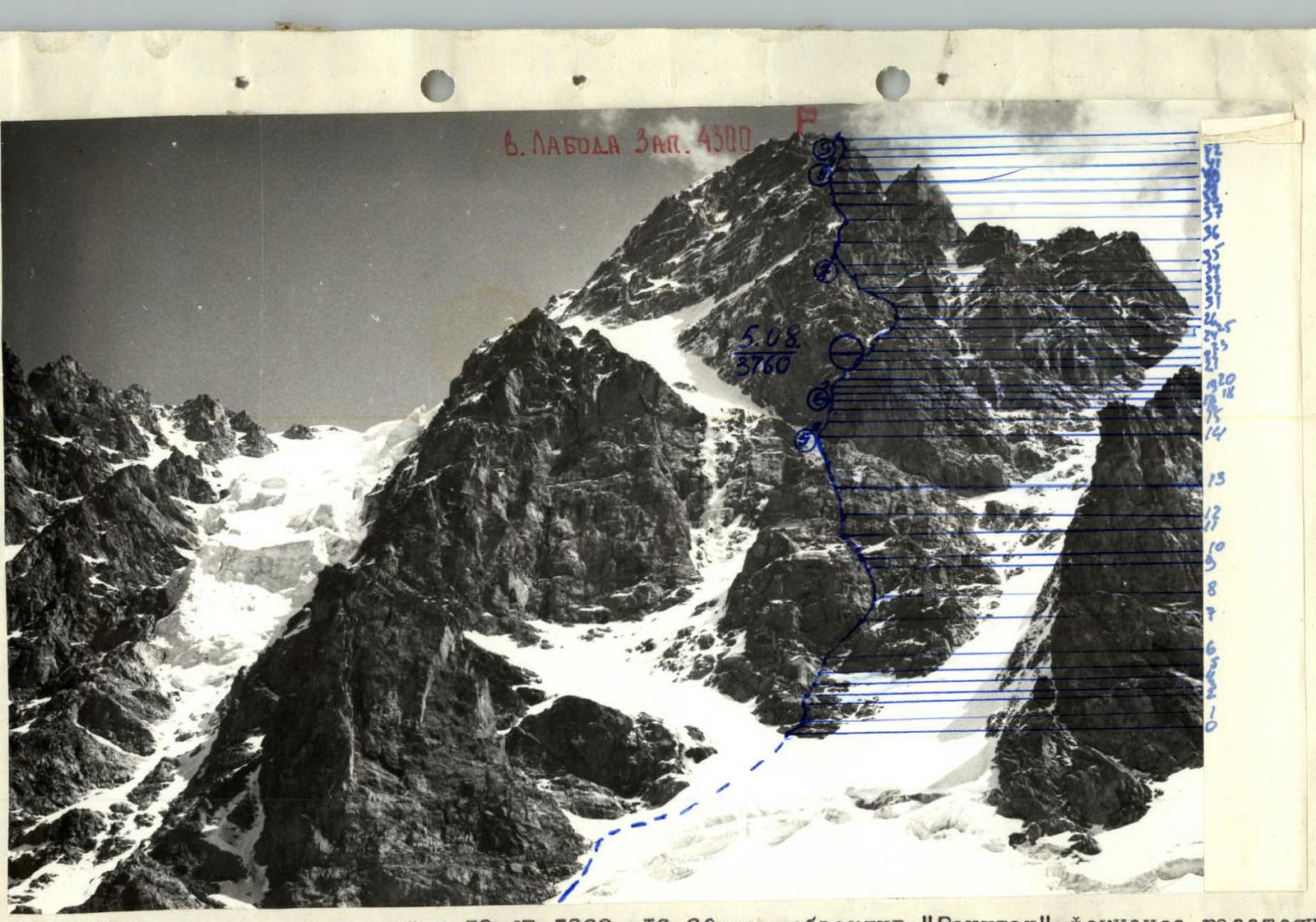
Photo 4. Technical photograph. July 19, 1988, 12:30. "Zenitar" lens, focal length 50 mm, distance to the object being photographed 400 m, height of shooting 3000 m, shooting point 1.