
Russian Mountaineering Championship 2024. High-Technical Class
Report on the Ascent of Kara-Kaya (3646 m) via the Central Counterfort of the Southwest Wall, 6A cat. compl. (E. Poltavets) by the Voronezh Team from September 11 to 14, 2024
I. Ascent Passport
| 1. General Information | ||
|---|---|---|
| 1.1 | Full Name, Sports Rank of the Team Leader | Lomara A. Maksimova, Candidate for Master of Sports |
| 1.2 | Full Name, Sports Rank of Participants | Alexey Yu. Gagarinov, 1st sports rank |
| 1.3 | Full Name of Coach | Mikhail V. T. Torshin |
| 1.3 | Organization | Voronezh Regional Public Organization "Sports Federation of Alpine Climbing" |
| 2. Characteristics of the Ascent Object | ||
| 2.1 | Region | Caucasus |
| 2.2 | Valley | Bezengi Valley |
| 2.3 | Section Number according to the 2013 Classification Table | 2.5.226 |
| 2.4 | Name and Height of the Summit | Kara-Kaya Central (3646 m) |
| 2.5 | Geographic Coordinates of the Summit (Latitude/Longitude), GPS Coordinates | 43°16′01″ N 43°14′47″ E |
| 3. Characteristics of the Route | ||
| 3.1 | Route Name | Via the Central Counterfort of the SW Wall (E. Poltavets, 2010) |
| 3.2 | Proposed Category of Difficulty | 6A |
| 3.3 | Degree of Route Exploration | High |
| 3.4 | Relief Characteristics of the Route | Rock |
| 3.5 | Height Difference of the Route (Altimeter or GPS data) | 712 m |
| 3.6 | Route Length (in meters) | 1151 m |
| 3.7 | Technical Elements of the Route (Total length of sections of varying difficulty with relief characteristics) | I–III+ cat. compl. rocks — 480 m, IV cat. compl. rocks — 40 m, V cat. compl. rocks — 190 m, VI cat. compl. rocks — 441 m |
| 3.8 | Average Steepness of the Route, (°) | 68 |
| 3.9 | Average Steepness of the Main Part of the Route, (°) | 1st bastion — 76 2nd bastion — 81 3rd bastion — 87 |
| 3.10 | Descent from the Summit | Rappelling down from the control cairn 100 m west of the saddle between Kara-Kaya Central and Kara-Kaya Western. |
| 3.11 | Additional Route Characteristics | Water is absent |
| 4. Characteristics of Team Actions | ||
| 4.1 | Time in Motion (Team's walking hours, in hours and days) | 35 hours; 4 days |
| :--: | :--: | :--: |
| 4.2 | Overnight Stays | Platform, haul bag |
| 4.3 | Route Processing Time | - |
| 4.4 | Start of Ascent | 11:30, September 11, 2024 |
| 4.5 | Reach the Summit | 18:20, September 14, 2024 |
| 4.6 | Return to Base Camp | 16:00, September 15, 2024 |
| 5. Weather Conditions | ||
| 5.1 | Temperature, °C | −5…+10 |
| 5.2 | Wind Speed, m/s | 10 m/s |
| 5.3 | Precipitation | Snow, rain, sleet, hail |
| 5.4 | Visibility, m | 2 m – 10 km |
| 6. Report Responsible | ||
| 6.1 | Full Name, e-mail | Alexey Yu. Gagarinov, [email protected] |
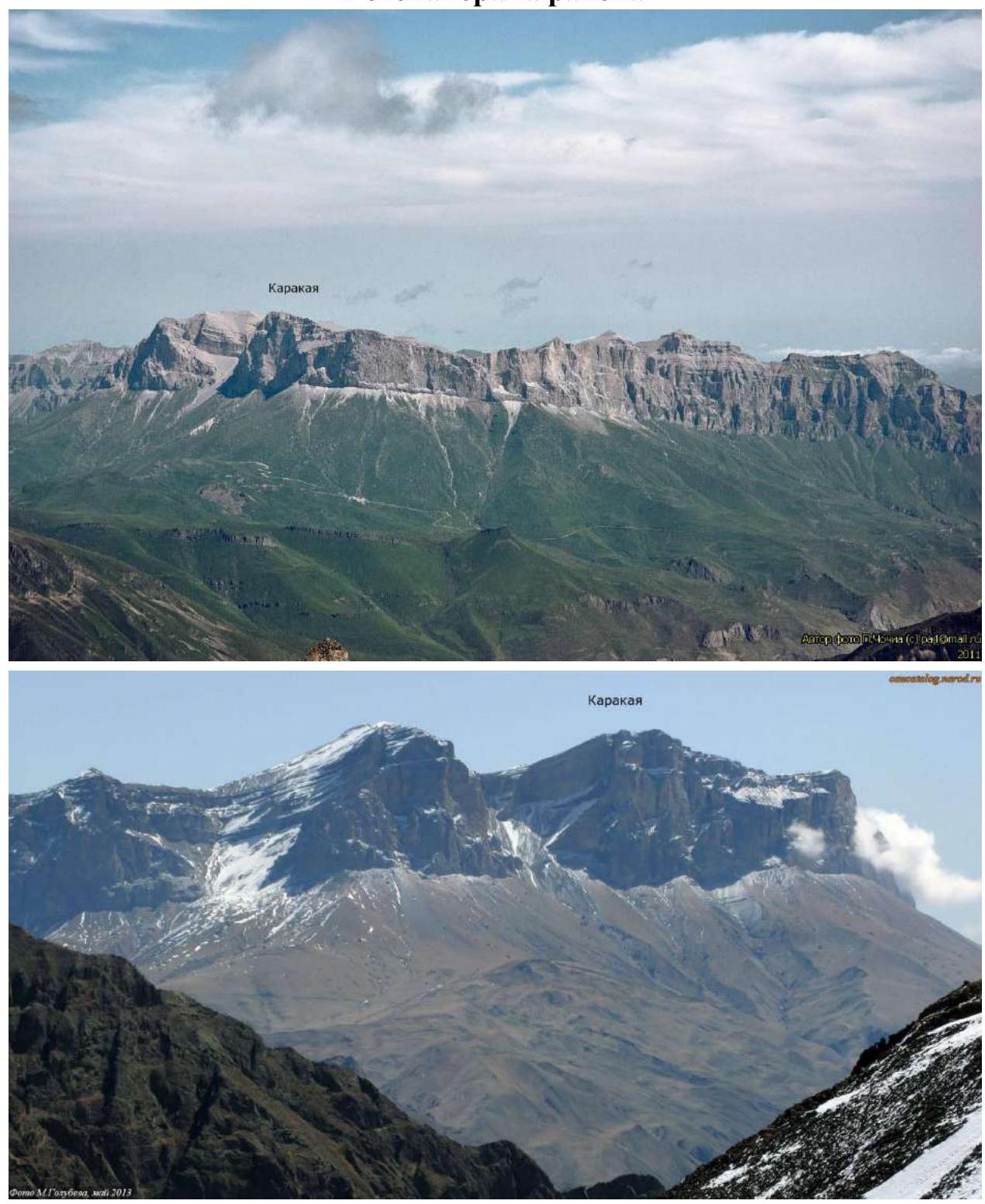
Panorama of the Area
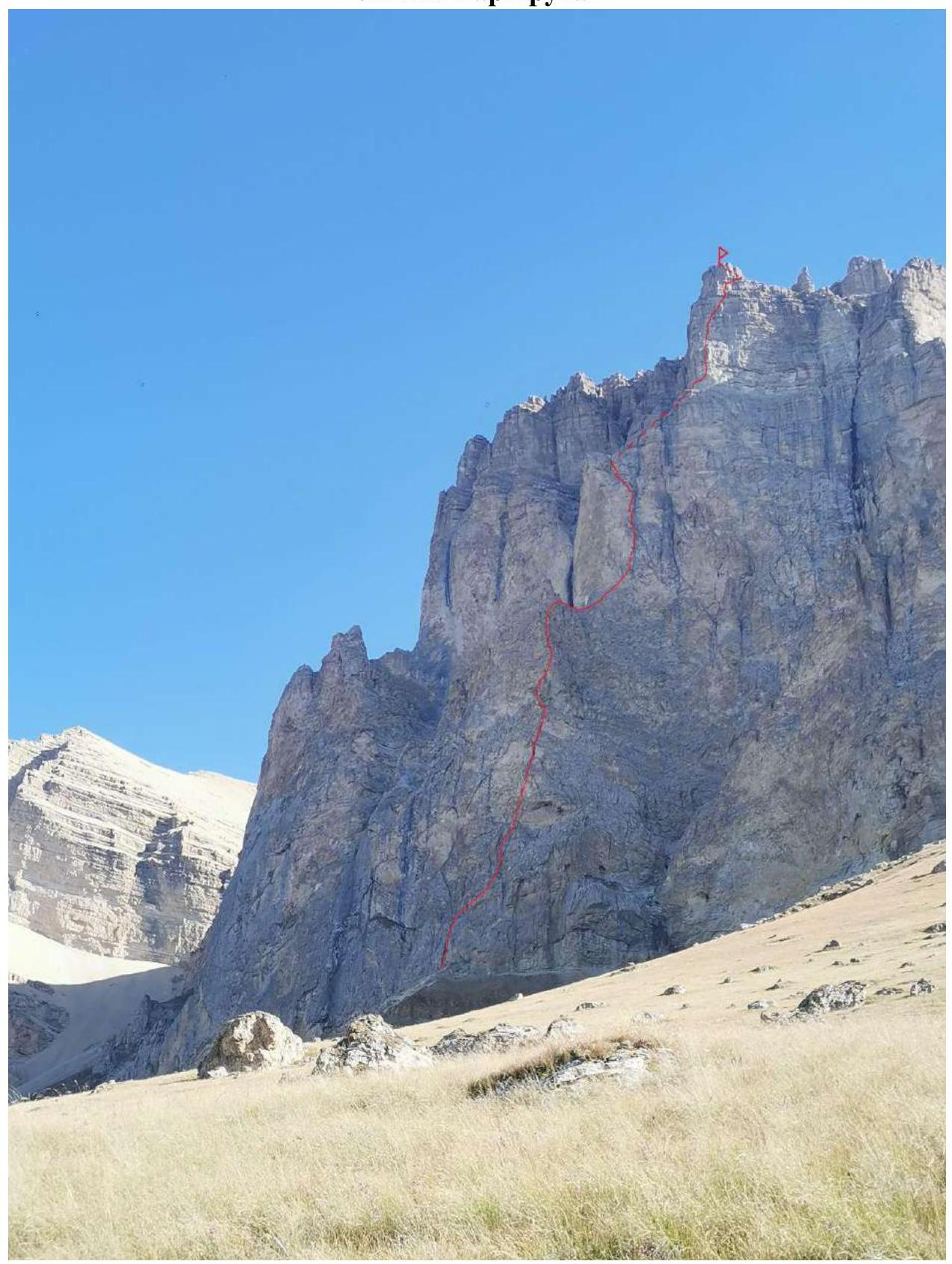
 Route Line
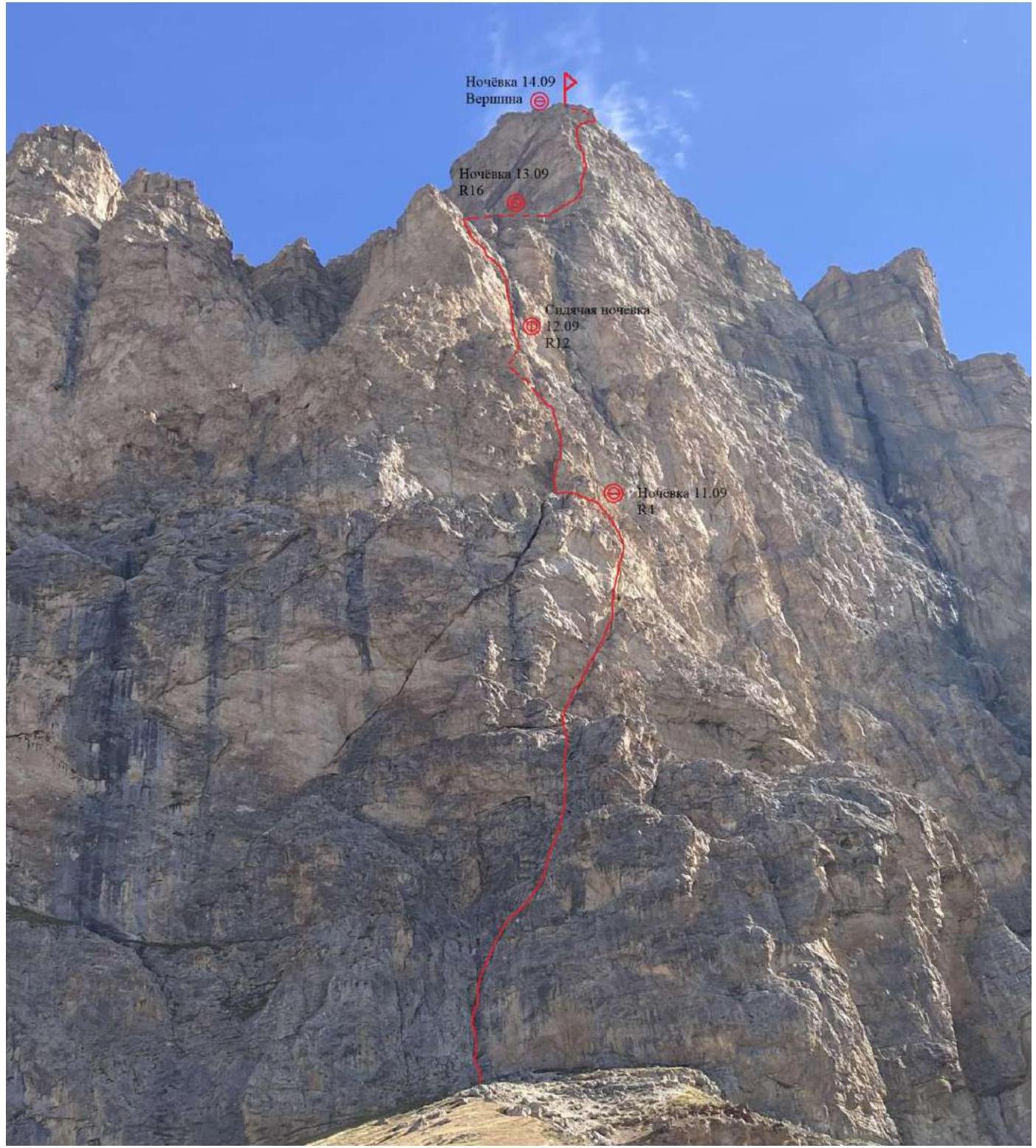
 Technical Photograph of the Route
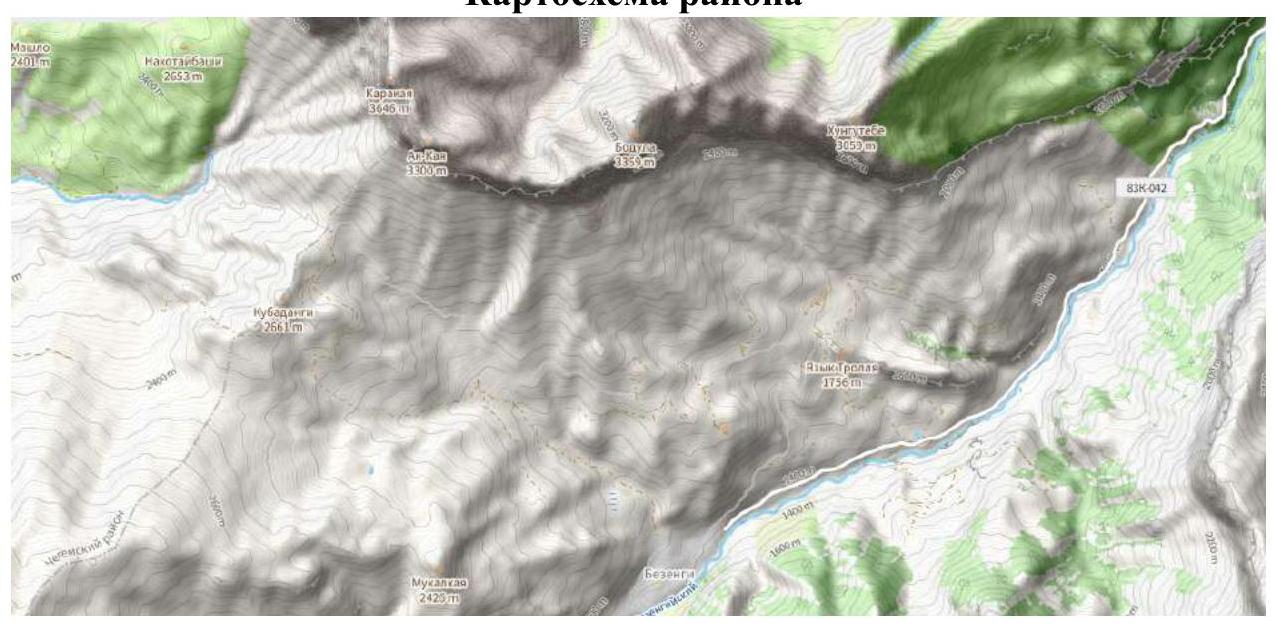
 Area Map
 Drawn Route Profile
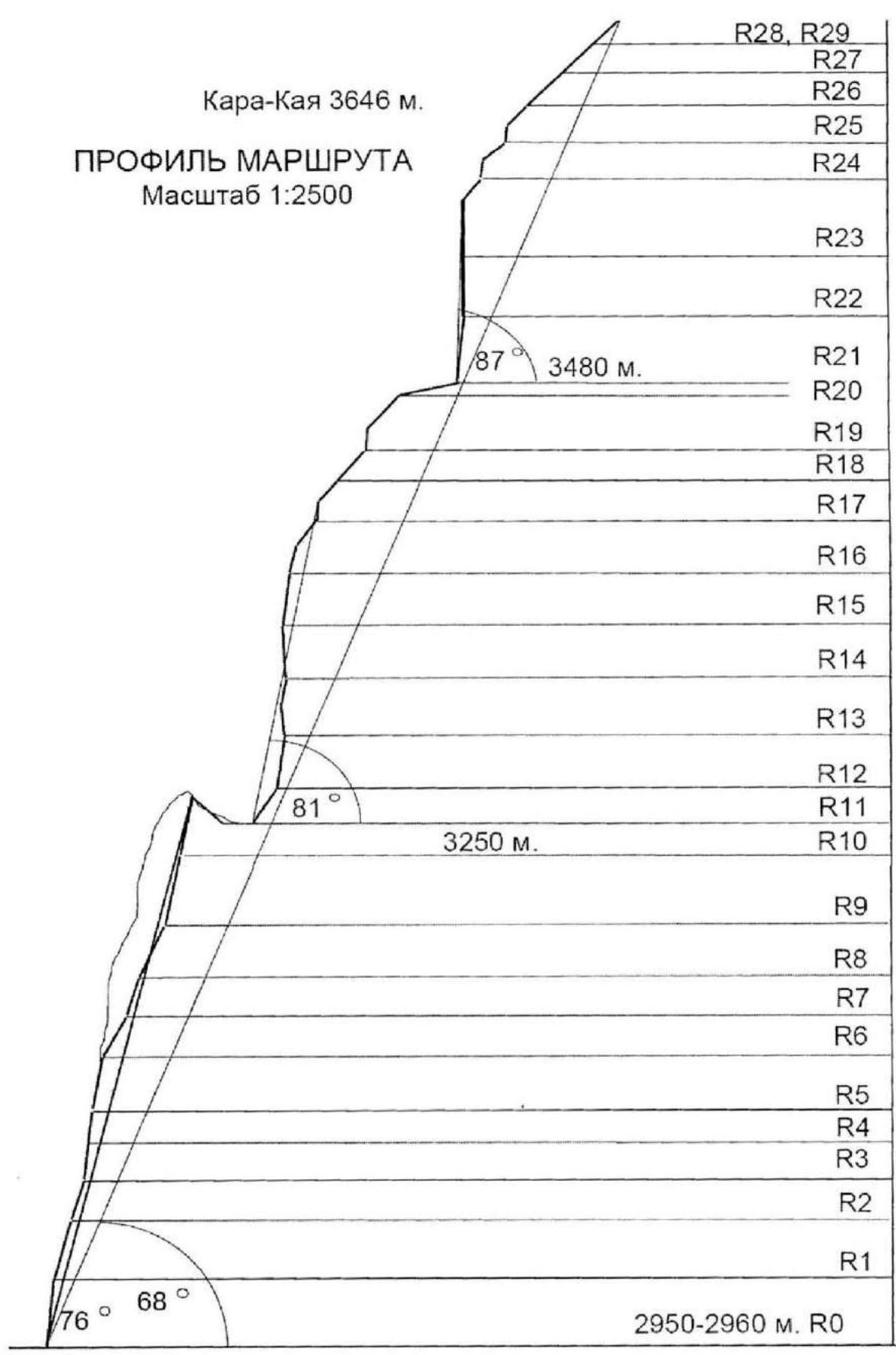
Route Characteristics
| Section # | Route Diagram in UIAA Symbols | Section Difficulty (UIAA) | Section Length, m | Steepness, α° |
|---|---|---|---|---|
| R23–R24 |  | II | 130 | 50 |
| R22–R23 | VI A1, II, III | 8 15 20 | 90 50 50 | |
| R21–R22 | VI A1, II | 8 15 | 90 50 | |
| R20–R21 | VI A2, II | 40 10 | 90 45 | |
| R19–R20 | VI A1 | 35 | 90 | |
| R18–R19 | VI A1, VI A2 | 20 25 | 85 95 | |
| R17–R18 | III | 25 | 90 | |
| R16–R17 | I | 30 | 50 | |
| R15–R16 | VI A1, II | 15 25 | 95 50 | |
| --- | --- | --- | --- | --- |
| R14–R15 | VI A1 | 15 | 90 | |
| R13–R14 | VI A2, IV, III | 25 15 10 | 85 60 60 | |
| R12–R13 | VI A2, V+ | 20 10 | 90 80 | |
| R11–R12 | VI A3 | 30 | 95 | |
| R10–R11 | VI A3, VI | 15 15 | 100 80 | |
| R9–R10 | V, VI+ A2, VI | 15 20 15 | 60 90 85 | |
| R8–R9 | IV, II | 15 20 | 60 30 | |
| R7–R8 | III | 25 | 60 | |
| R6–R7 | V+ | 25 | 80 | |
| --- | --- | --- | --- | --- |
| R5–R6 | IV, VI A2, V+ | 10 20 20 | 70 90 75 | |
| R4–R5 | V, VI | 25 25 | 75 80 | |
| R3–R4 | III, VI A2, V | 15 40 10 | 65 90 80 | |
| R2–R3 | VI A1 | 50 | 85 | |
| R1–R2 | III, V, V | 15 15 20 | 60 90 75 | |
| R0–R1 | V+ A1, V | 35 15 | 80 90 |
Route Description
| Section # | Description | Photo # |
|---|---|---|
| R0–R1 | Start of the route — a characteristic inner corner 10 meters to the left of the edge of the scree couloir. Up the inner corner. 35 m V+ A1. Up the crack to the right 15 m. 35 m V+ A1; 15 m V | 1 |
| R1–R2 | 15 m through simple rocks to a vertical wall. Up the wall to a ledge under the cornice 15 m. Up the corner to a large ledge. Station under the cornice. Bolt (not found) 15 m III; 15 m V. 30 m V. | 2 |
| R2–R3 | Through a destroyed, partially overhanging crack to the right and up. Enter the chimney. Live rocks! At the base of the chimney, a bolt. 50 m VI A1. | 3 |
| R3–R4 | Avoid the plug, exit the chimney. Through a steep, overhanging wall to the right and up to a ledge. Station on a large stone. 10 V, 40 m VI+ A2. Here, further under the cornice, a good overnight stay is possible. (After exiting the chimney, we went up and left along the wall and reached the "Finger" ledge. The option is complex in climbing and has poor protection; we do not recommend repeating it.) | 4 |
| R4–R5 | Along the ledge, traverse left under the "Finger" ledge. Station on the ledge to the left. 15 m III. | - |
| R5–R6 | Up the left edge of the ledge along the wall. Up the wall 25 m. Uncomfortable station on an oblique ledge with a bolt. 25 m V; 25 m VI. | - |
| R6–R7 | Up to a comfortable ledge. To the right to a bolt, then through a steep, destroyed wall to the right and up to an inner corner. 10 m VI; 20 m VI A2; 20 m V+. | 5 |
| R7–R8 | Enter the inner corner. Up the corner to a ledge. Exit to the ridge. Comfortable overnight stay on the ledge at the top of the first bastion. There is a bolt. 25 V+; 25 III. | 6 |
| R8–R9 | Along the ridge, approach under the second bastion "Iron". Along the slabs, approach under the overhanging wall. Station on a large stone. 25 m II; 15 m IV. | 7,8 |
| R9–R10 | Difficult traverse along an oblique ledge to the right to a bolt (behind the bend, not immediately visible). Traverse to the right to an overhanging crack, up it, then along the wall to the right and up to a bolt (loose rock, points may be unreliable). 15 m V; 20 m VI+ A2–A3; 15 m VI. | |
| R10–R11 | Difficult climbing to the right and up into an overhanging inner corner. Up the corner (there is a bolt), overcome the cornice, further difficult climbing up to a ledge. 15 m VI A3+; 15 m VI. | 9 |
| R11–R12 | Up the corner 10 m, then difficult climbing along a slab to an overhanging corner. There is a bolt (visible not immediately, climb along the right boundary of the black streak). Up the corner through the cornice 15 m. Station is uncomfortable. There is a local piton. 30 m. | 10,11,12 |
| VI A3+. The bolt misled us. It is worth either ignoring it or immediately after clipping, moving back to the left into the corner. | ||
| R12–R13 | Up, under the cornice. Overcome the cornice and exit to a ledge with a bolt (to the right). 20 m VI A2; 10 m V+. | 13 |
| R13–R14 | Up and to the right into an inner corner, along the corner to a ledge (higher, under the overhanging "bald head" a channel with a carabiner is visible — do not climb there!). Along the ledge, carefully traverse left onto the counterfort (top of the "Iron" bastion). Overnight stay is possible here. Up 10 m to a ledge, station is uncomfortable. 25 m VI A1; 15 m IV; 10 m III. | 14,15 |
| R14–R15 | Overcome the wall and along gentle rocks to the left onto a ledge to an inner corner. 15 m VI A1; 10 m III. | 16 |
| R15–R16 | Through an overhanging inner corner, pass the wall, exit onto gentle, destroyed rocks. Further to a comfortable ledge in the middle part of the scree going from the base of the third bastion. On the ledge — a comfortable and safe overnight stay. 15 m VI A1; 35 m II. | - |
| R16–R17 | From the overnight stay site, up under the base of the third bastion. 30 m I. | 17 |
| R17–R18 | Along a narrow ledge, careful traverse to the right to an overhanging inner corner. Station at the base of the corner. 25 m III. | 18 |
| R18–R19 | Up through the inner corner, further to the right along blocks to an inner corner closed by a cornice. Overcome the cornice and further move to the right and up to a ledge with a bolt (driven low). 20 m VI A1; 25 m VI A2. | 19 |
| R19–R20 | Up the wall to a ledge. In the lower part of the ledge, traverse to the right to a fragment. Bolt. 35 m VI A1. Did not find the bolt. Climbed between the fragment itself and the wall. There was no possibility to organize good protection points. Station on top of the fragment. | 20,21 |
| R20–R21 | 5 m to the right into the corner. Up the corner under the cornice. Overcome the cornice and move up, bearing left under a large cornice (live blocks, very rockfall prone!). This cornice is passed in the left part. Further up 8 m through a vertical wall to a scree ledge. 40 m VI A2; 10 m II. | 22,23,24 |
| R21–R22 | Overcome a short, difficult wall and along the scree, approach under the next rise of the counterfort. 8 m VI A1; 15 m II. | - |
| R22–R23 | To the right around the corner. Along the ledge, approach to an inner corner. Up the corner, then along strongly destroyed rocks to a monolithic wall. 15 m II; 8 m VI A1; 20 m III. | - |
| R23–R24 | Move up along simple, strongly destroyed rocks. Sometimes there are short, steep walls. Exit to the summit ridge. 130 m II. | 25 |
Characteristics of Team Actions
Initially, the group planned to climb a more complex route but decided to postpone and eventually abandon the planned ascent due to a participant's prolonged illness. Kara-Kaya was chosen for the following reasons:
- The route has been repeatedly climbed as a first 6A;
- The route has many ledges, reducing the speed requirements;
- The rock climbing route best suits our preferences and technical skills.
On September 10, 2024, the team arrived in Nalchik. We gathered equipment: 12 cams and 12 pitons, and also brought 9 liters of water. The food consisted of freeze-dried packets and isotonic drinks.
On September 11, 2024, at 6:00, we departed from the Bezengi office. The total weight of the backpacks was approximately 38 kg. At 8:00, we began walking from the pass under the Kara-Kaya peak. We started working on the route at 11:30. At 18:40, we reached the "Finger" outcrop (section R4), to the right of which there is a comfortable overnight stay site. Pure climbing, Maksimova led.
On September 12, 2024, we began working at 7:30. We reached the top of the first bastion relatively quickly. Then the weather deteriorated slightly. On the second bastion, the relief becomes significantly more complex. The leader moved on aid climbing, sometimes switching to free climbing. On section R11–R12, when it was necessary to climb along the right edge of the black streaks, the leader encountered an overhanging wall with almost no relief. (If passing this section on aid climbing, it is better to climb directly to the inner corner, along the center of the black streaks, to the left of the bolt). After spending a lot of time attempting to pass this section, we decided to set up an overnight stay right there, on a small "ledge". We set up several stations and hung a haul bag between them and slept sitting on it. Thanks to the external slings, we organized protection from the rain for the night. Surprisingly, it was a comfortable overnight stay. Gagarinov led, pure climbing up to section R10.
On September 13, 2024, we began working on the route at 8:00. Reached the top of the second bastion at 13:00. We mostly used aid climbing. The weather worsened. Snow and hail. We waited under a tarp on a ledge. At 14:40, we continued moving. After 1.5 hours, we reached a large ledge under the 3rd bastion. We set up a tent, waited out another charge of rain with hail. At 18:00, we went to process the 3rd bastion. We placed 1 rope: straightened the traverse and climbed a bit above R18. At 19:00, we were in the tent. Gagarinov led.
On September 14, 2024, we began moving along the processed section at 7:00. Maksimova led, pure climbing, we moved quickly. On section R19–R20, we did not find the bolt. Many live rocks, poor protection. Under the overhang of section R20–R21, hail started, followed by snow. Maksimova descended to a ledge. We waited out the bad weather: fog, close thunderstorm. After the thunder subsided, Gagarinov led in the rain. He passed the remaining part of the wall using aid climbing. The rocks were wet, in snow. Sleet was falling. After overcoming several more small walls, we moved simultaneously along the scree to the summit. We reached the summit at 18:20. We were very wet. In conditions of bad weather and zero visibility, we decided not to descend on an unfamiliar route that day. We set up a tent, warmed up. The only dry thing we had between us was a sleeping bag rated for +4 °C, but we could stop conserving water.
On September 15, 2024, we descended via the saddle with Kara-Kaya Western. The descent route is well described in Kananykhin's report from 2019. We began descending at 9:00. We reached the scree slopes by 13:00. Then we walked. We reached the road at 16:00. Everything was covered in clouds, there was no connection, so we walked another 8 km to the Bezengi settlement on foot.
Summary
We accomplished our minimum plan — climbed 6A for Alexey. It was not possible to move according to the Krasnoyarsk simultaneous scheme due to a stable lack of protection points, however, the second always had top-rope protection via Grigri when climbing on a rope. This is Gagarinov's first 6A, and Maksimova's second 6A in the high mountains.
The route was generally liked; it is diverse and logical. There are no pronounced keys, it keeps you in tension. For most of its length, there is no feeling of monolithic rock, which creates discomfort during climbing.
The group contacted the Bezengi alpine base and registered with the Ministry of Emergency Situations. However, during bad weather:
- Radio worked unstably;
- Cellular communication worked unstably.
We thank Aliy Khuseinovich and the Voronezh Alpine Climbing Federation for their help and support!
Photos from the Route

Photo 1. Section R0–R1 (Start of the route)

Photo 2. Section R1–R2
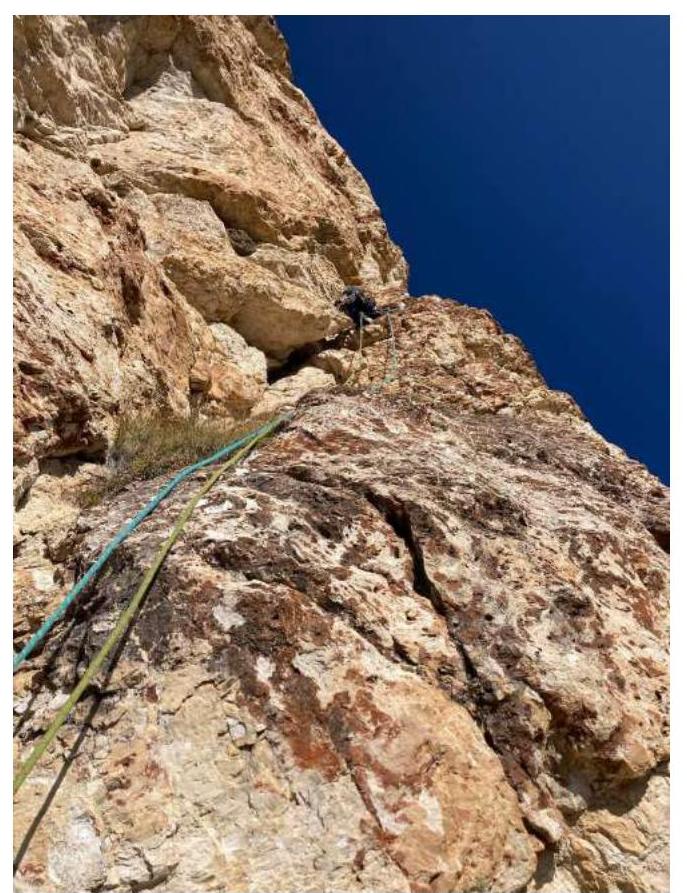
Photo 3. Section R2–R3
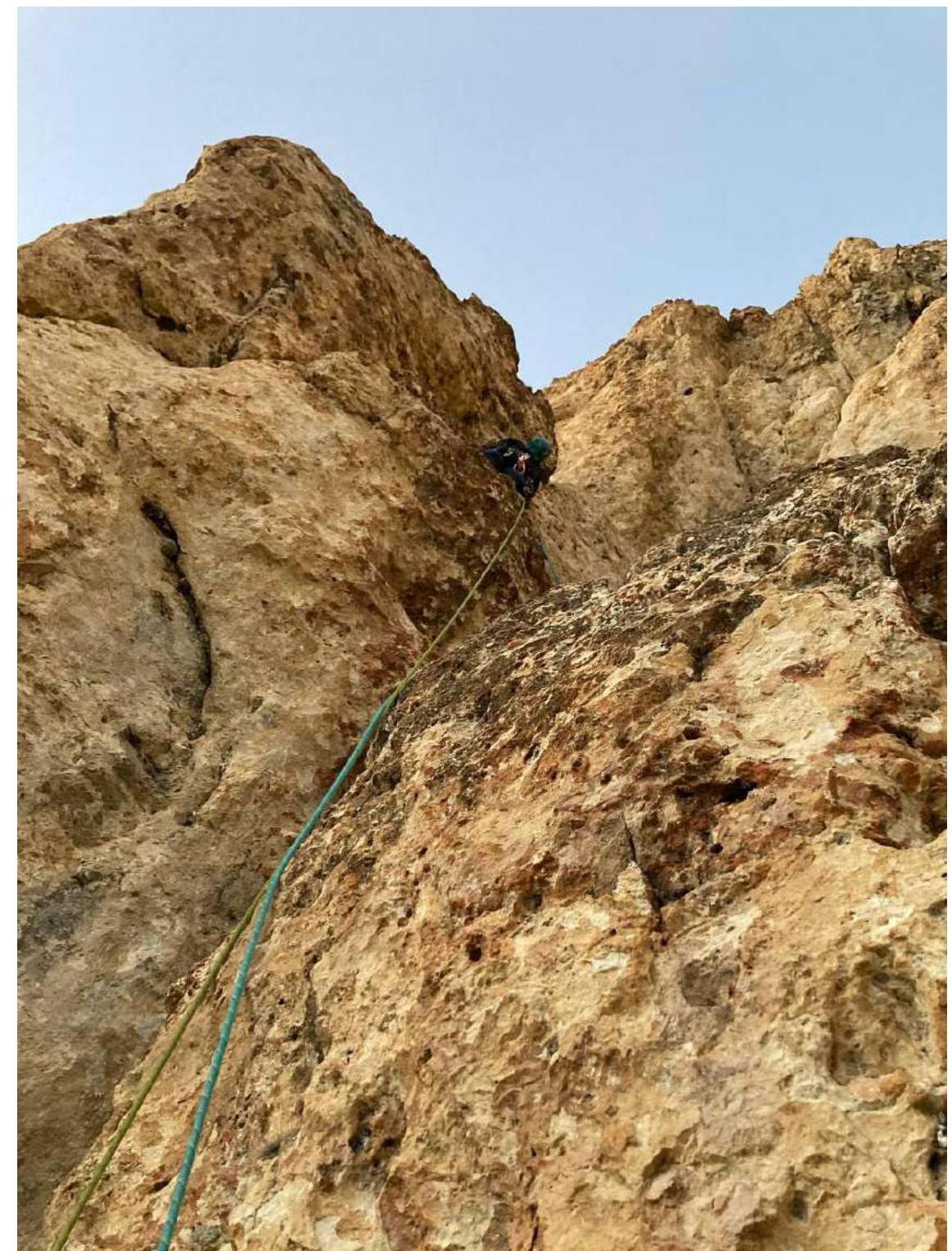
Photo 4. End of section R3–R4. (Very complex climbing above the chimney. To the right, there may be an alternative path)

Photo 5. Section R6–R7
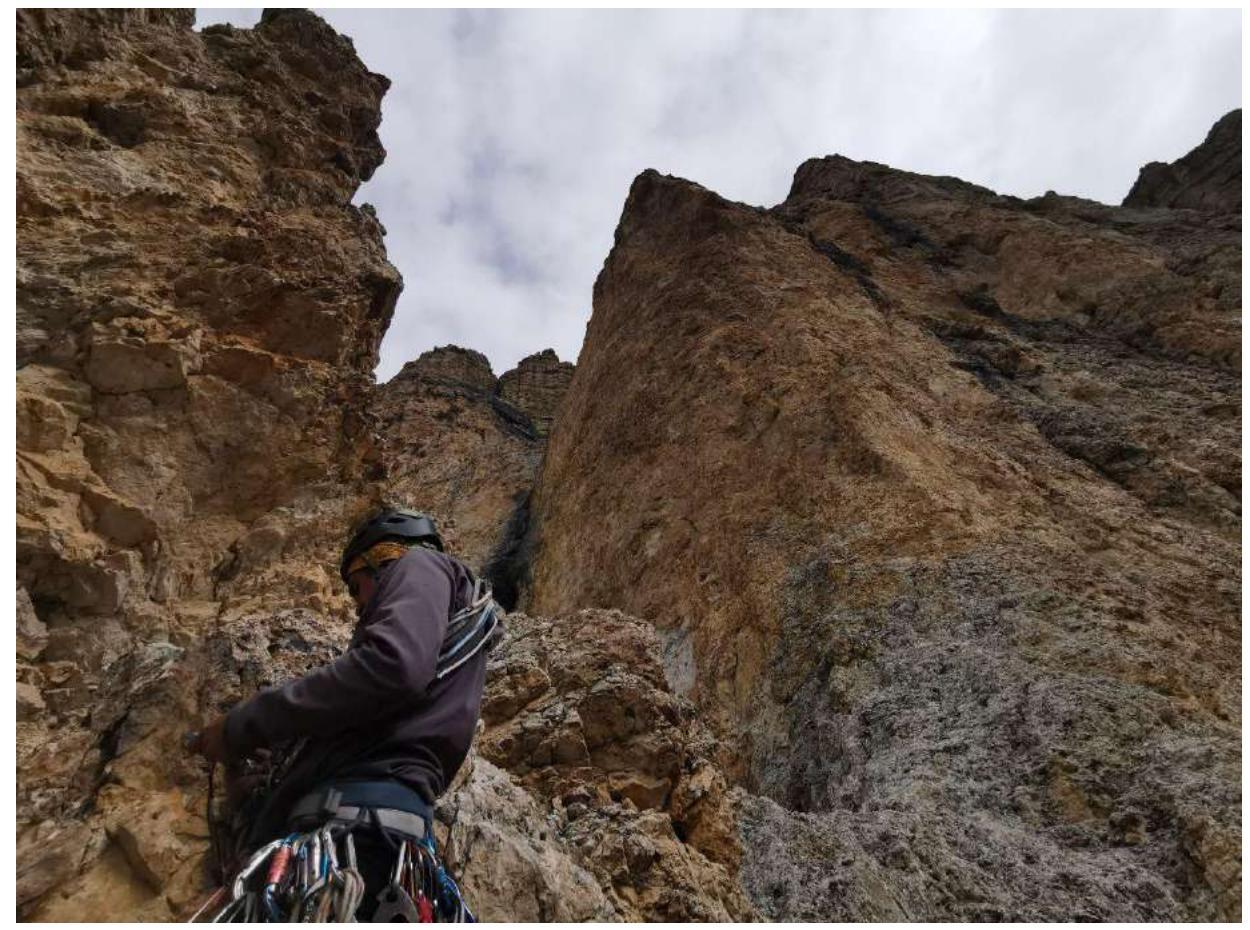
Photo 6. R8. Top of the first bastion. View of the 2nd bastion "Iron".
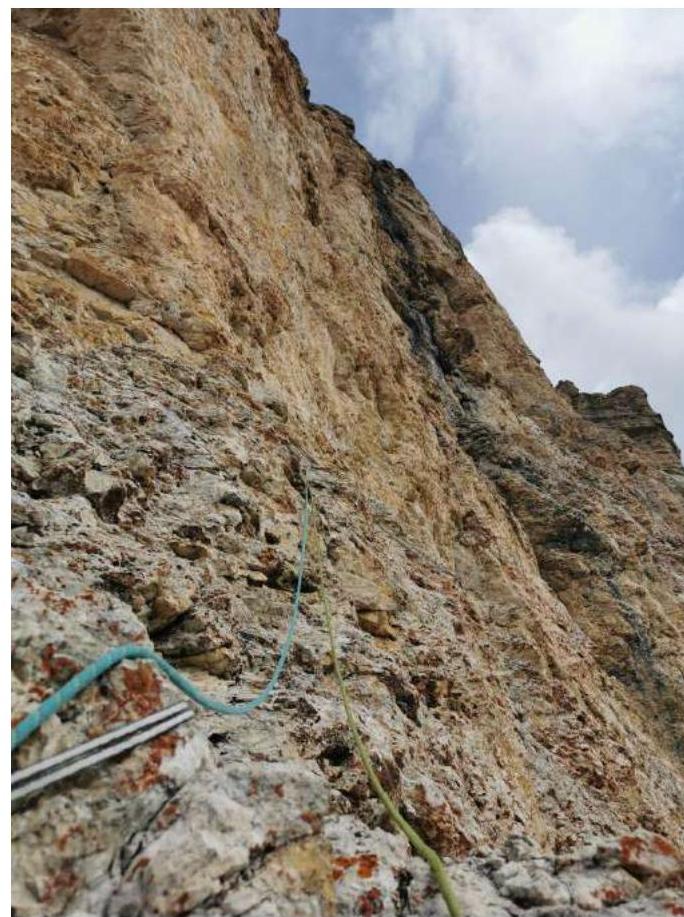
Photo 7. Section R9–R10. Traverse at the start of the second bastion. The second climbed with a haul bag.

Photo 8. End of section R9–R10
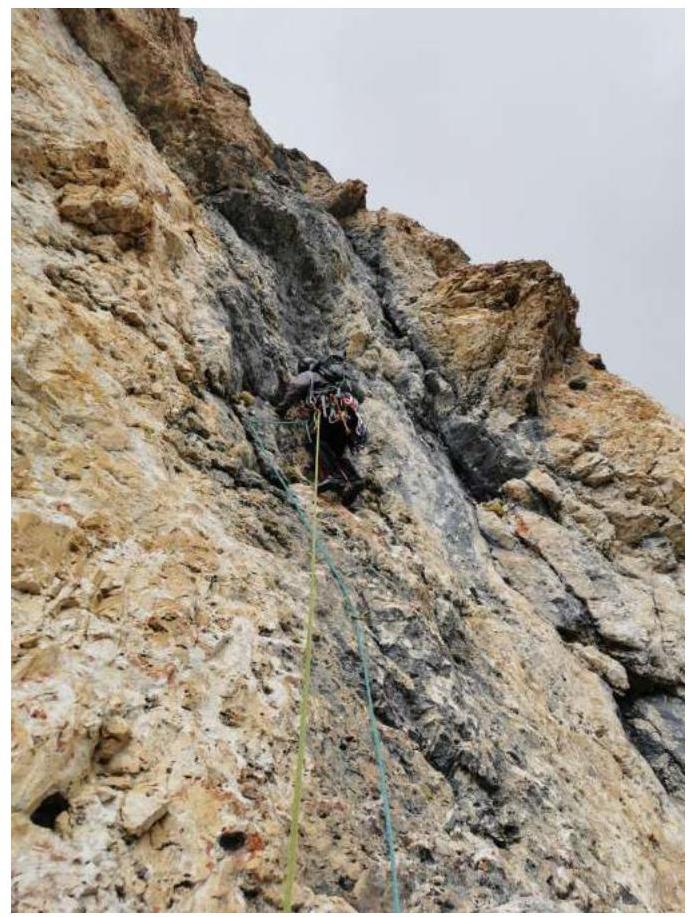
Photo 9. Section R10–R11
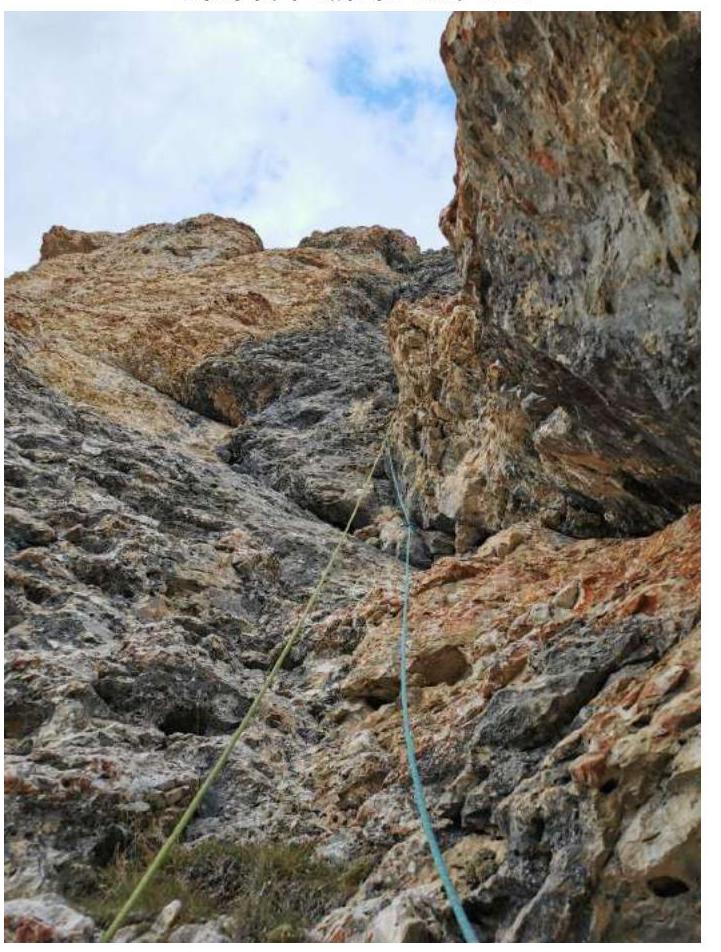
Photo 10. Section R11–R12
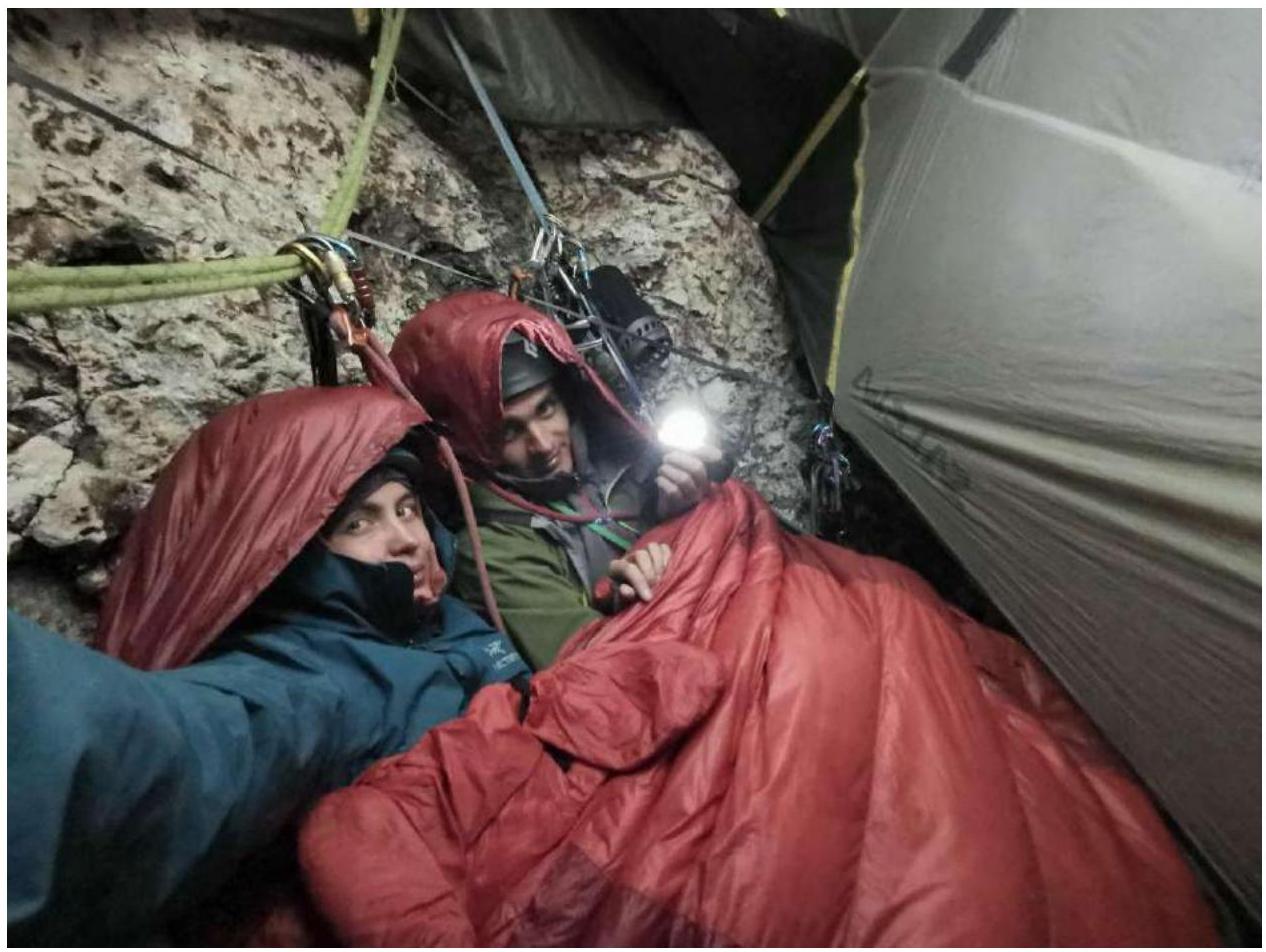
Photo 11. Unplanned sitting overnight stay on section R11–R12
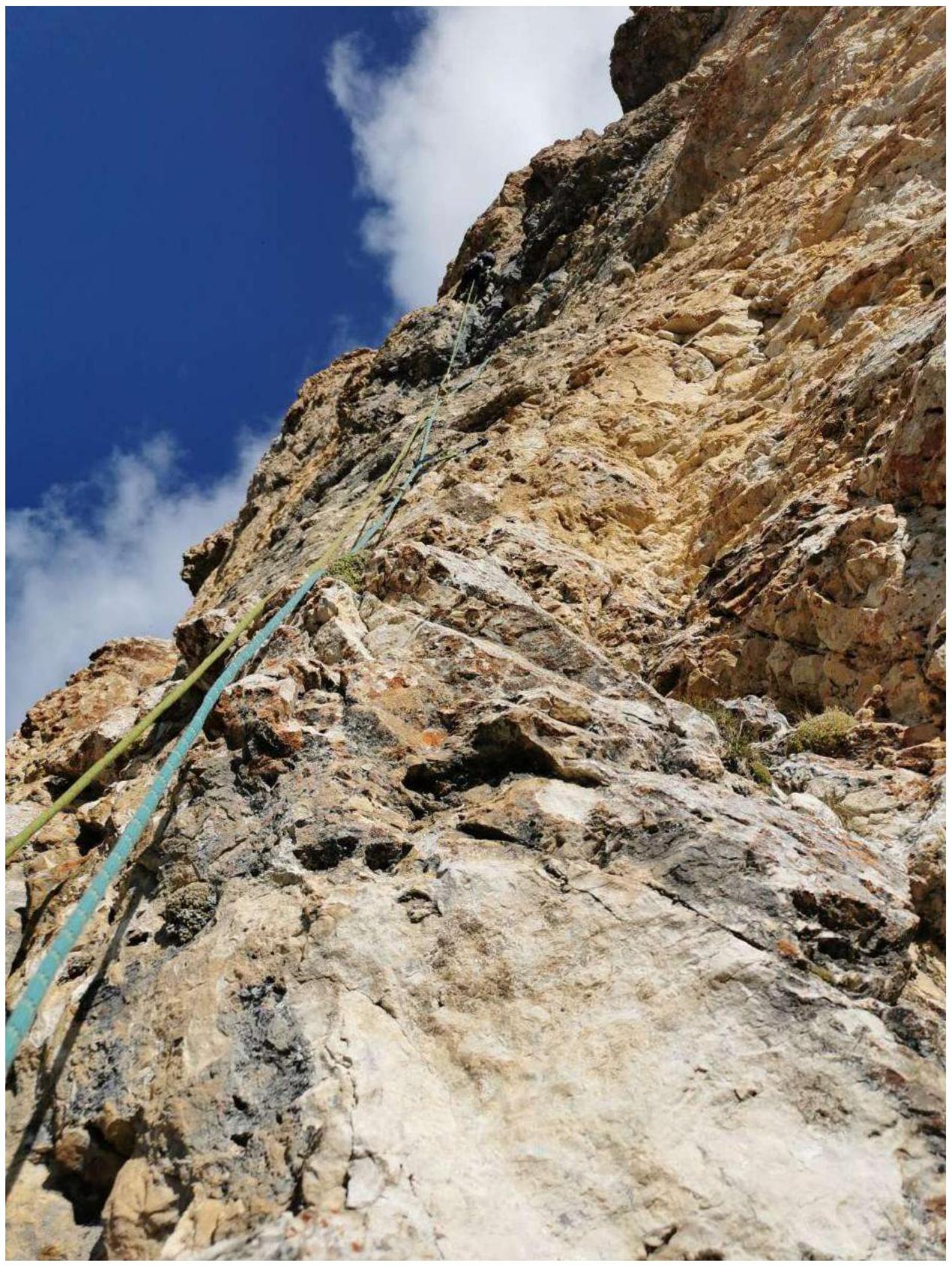
Photo 12. End of section R11–R12 (after sitting overnight stay)
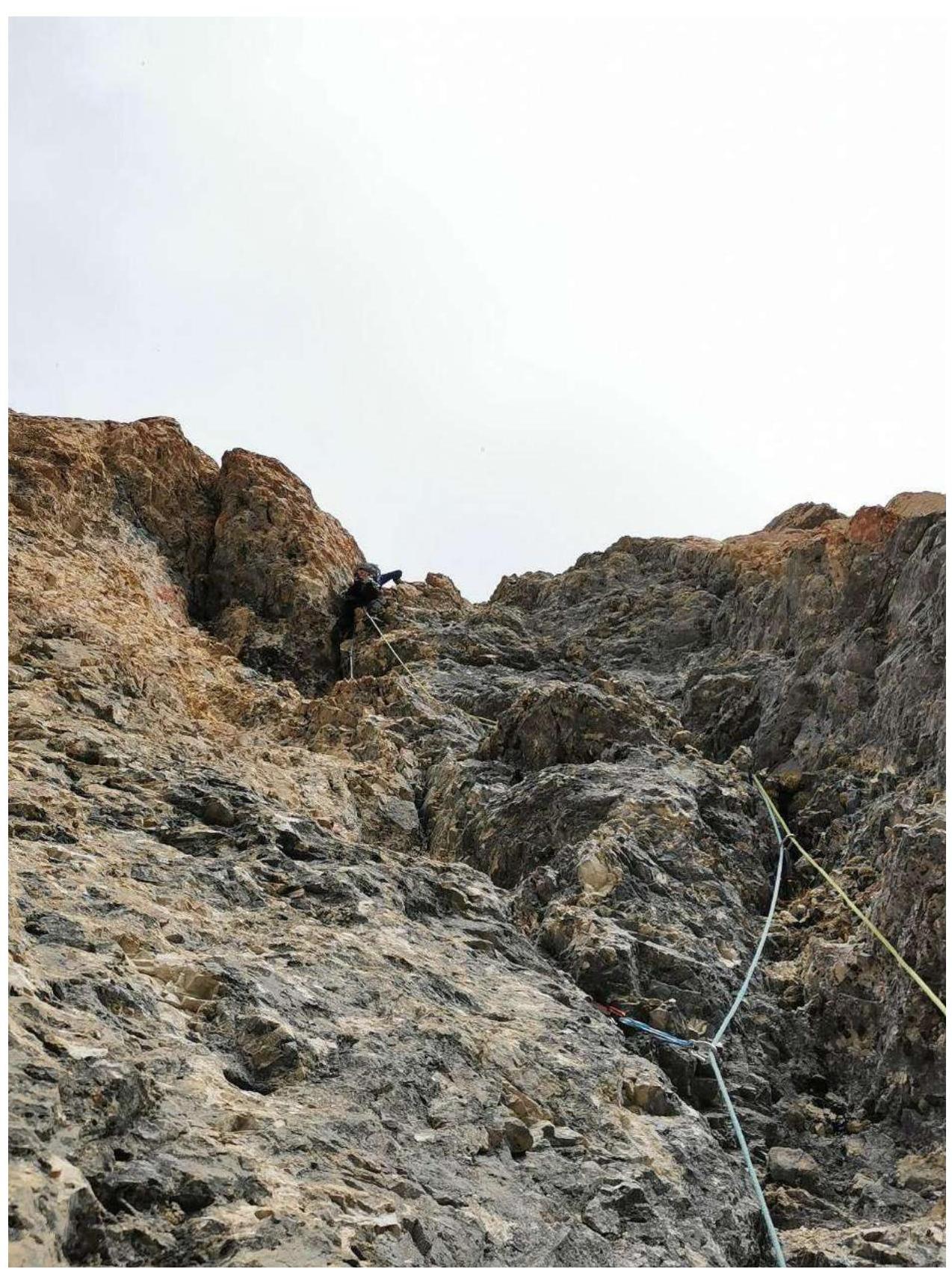
Photo 13. Section R12–R13
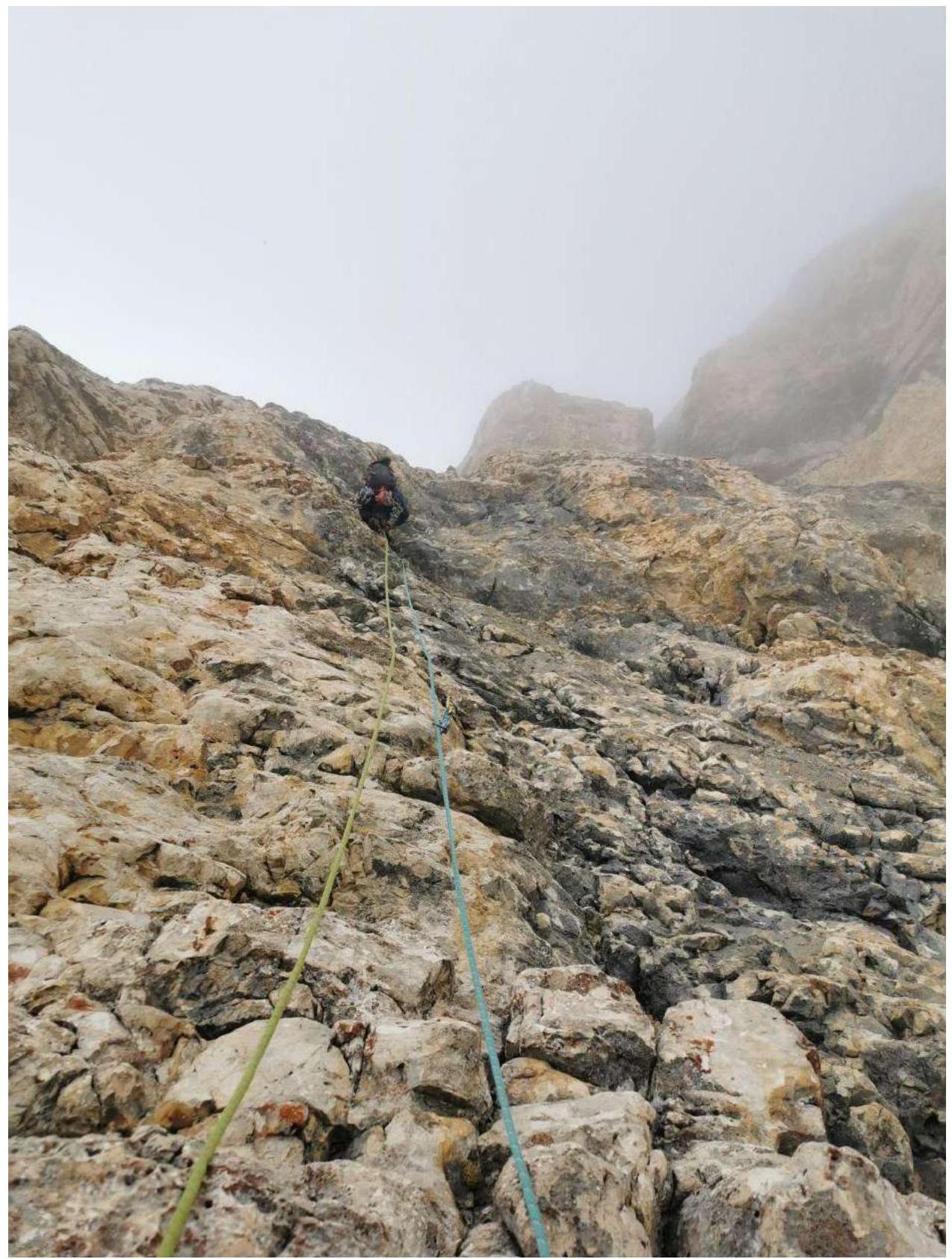
Photo 14. Section R13–R14
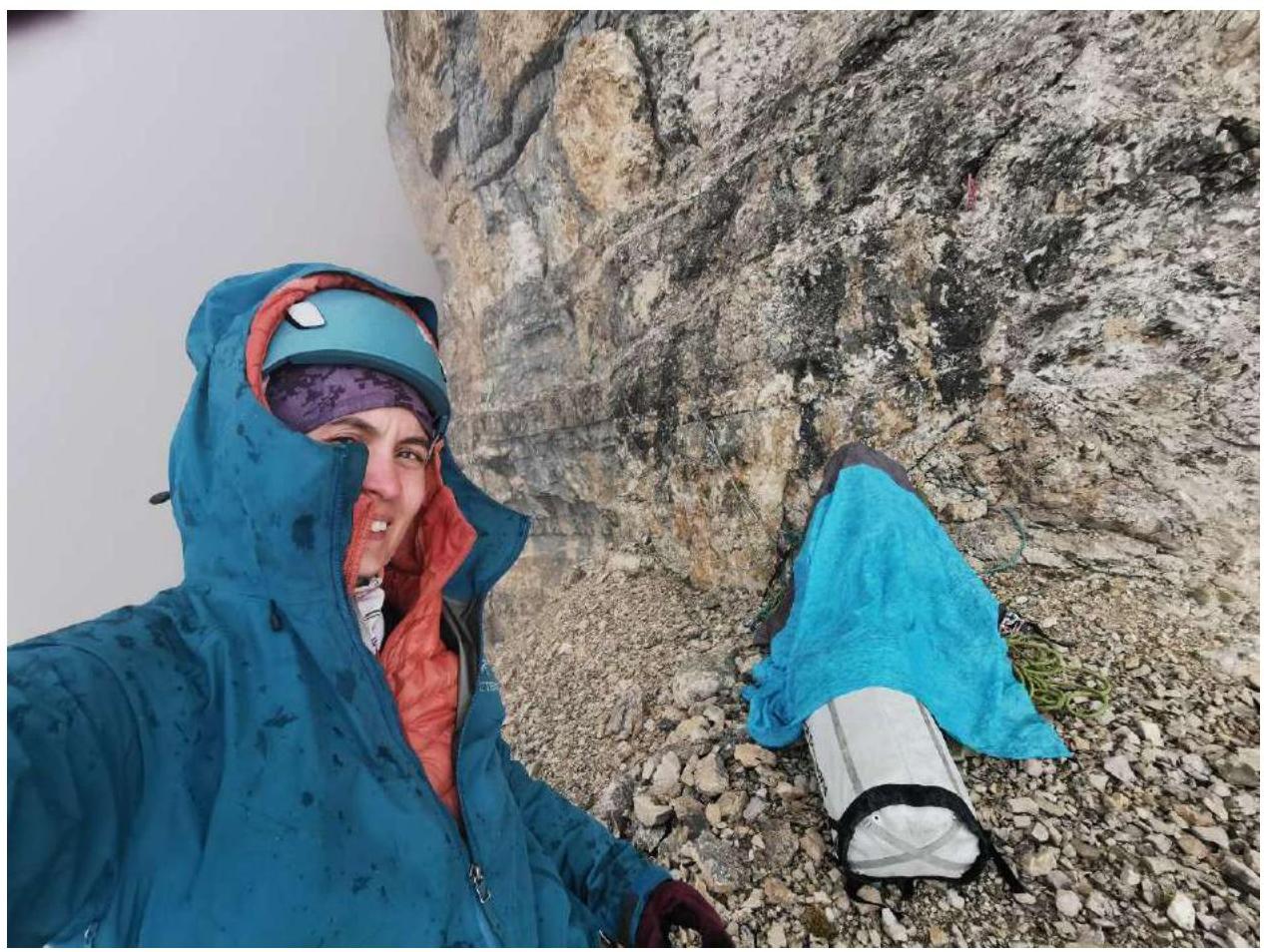
Photo 15. Top of the second bastion "Iron", R14. Waiting out bad weather.
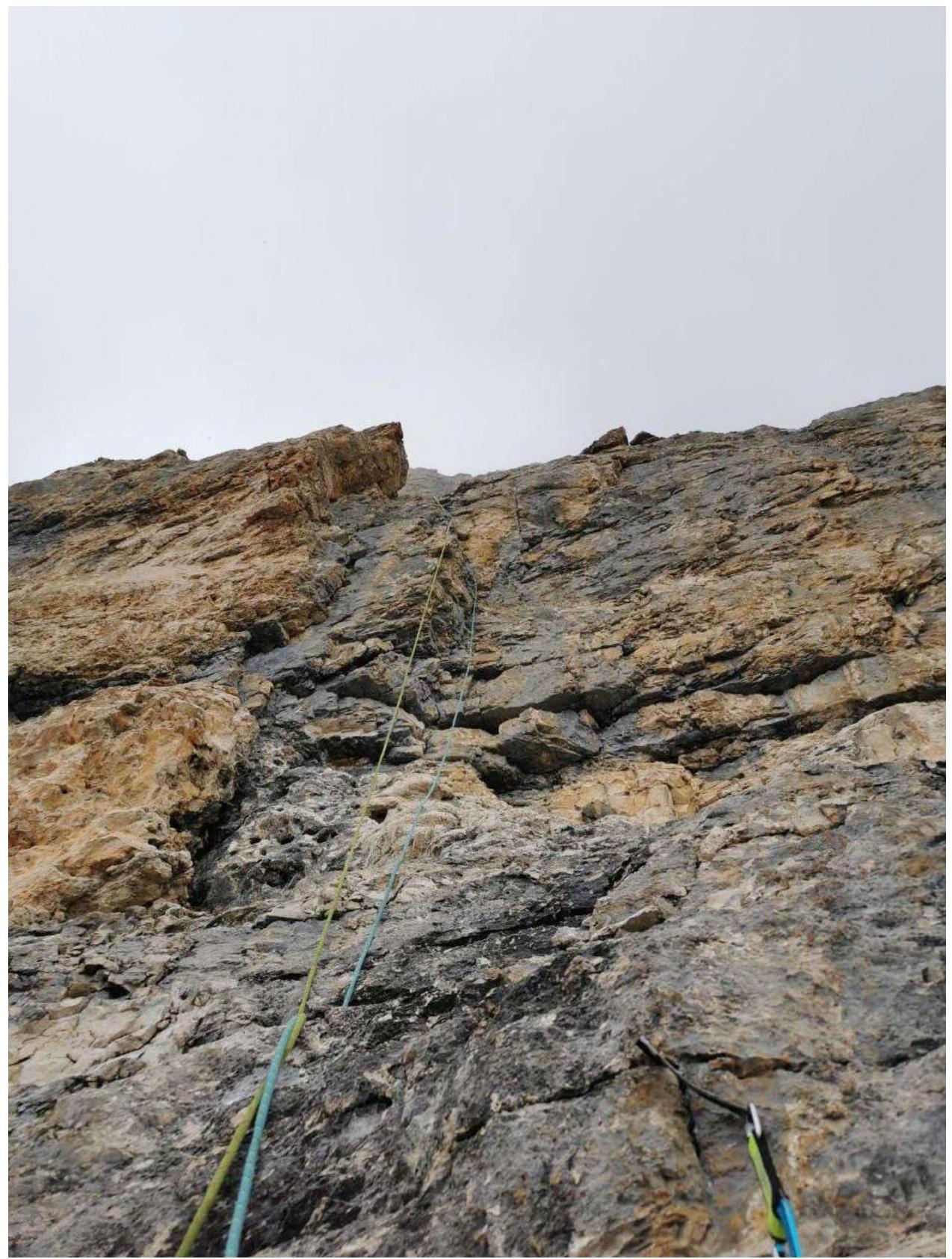
Photo 16. Section R14–R15
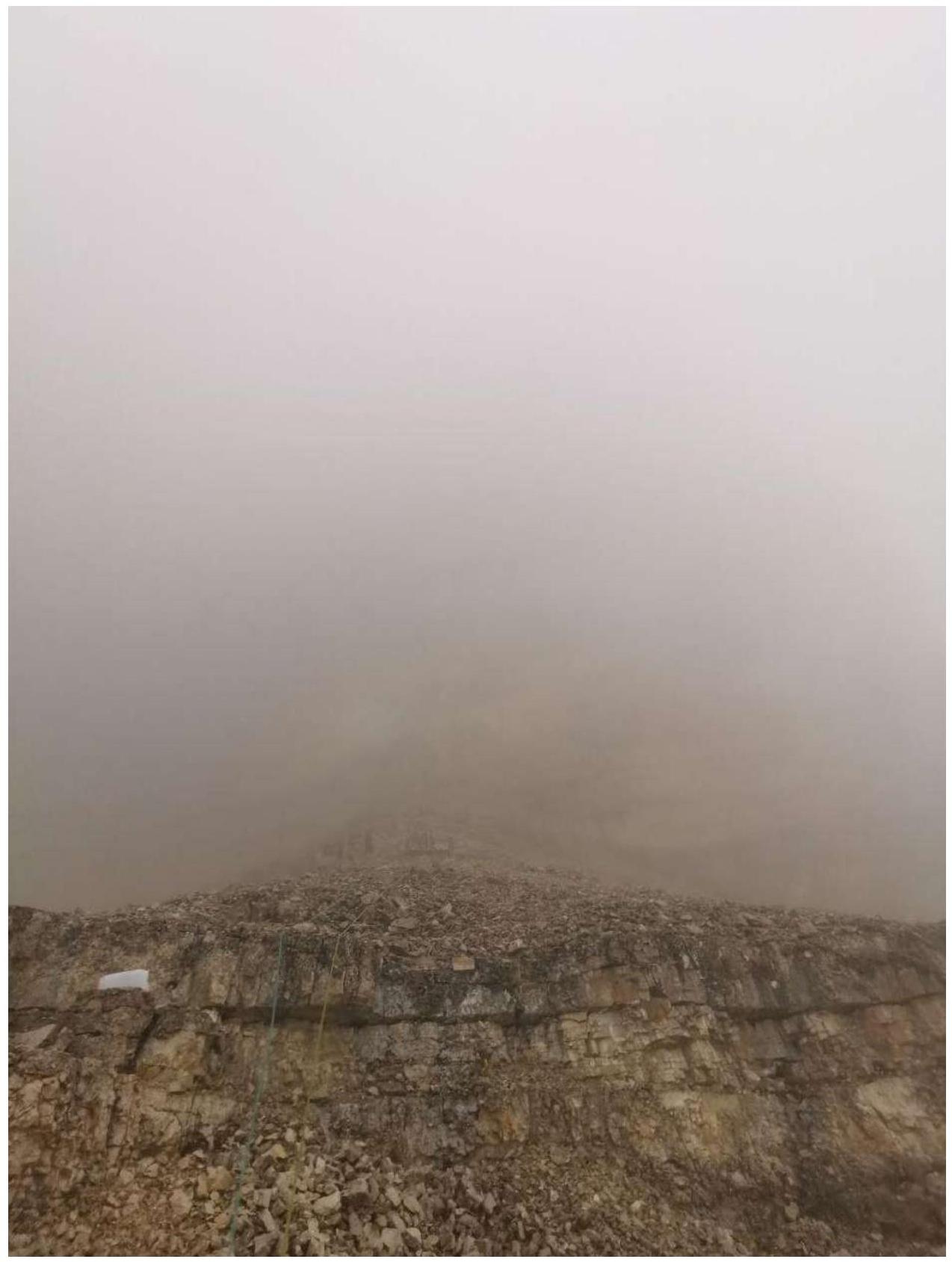
Photo 17. Approach under the 3rd bastion. Section R16–R17
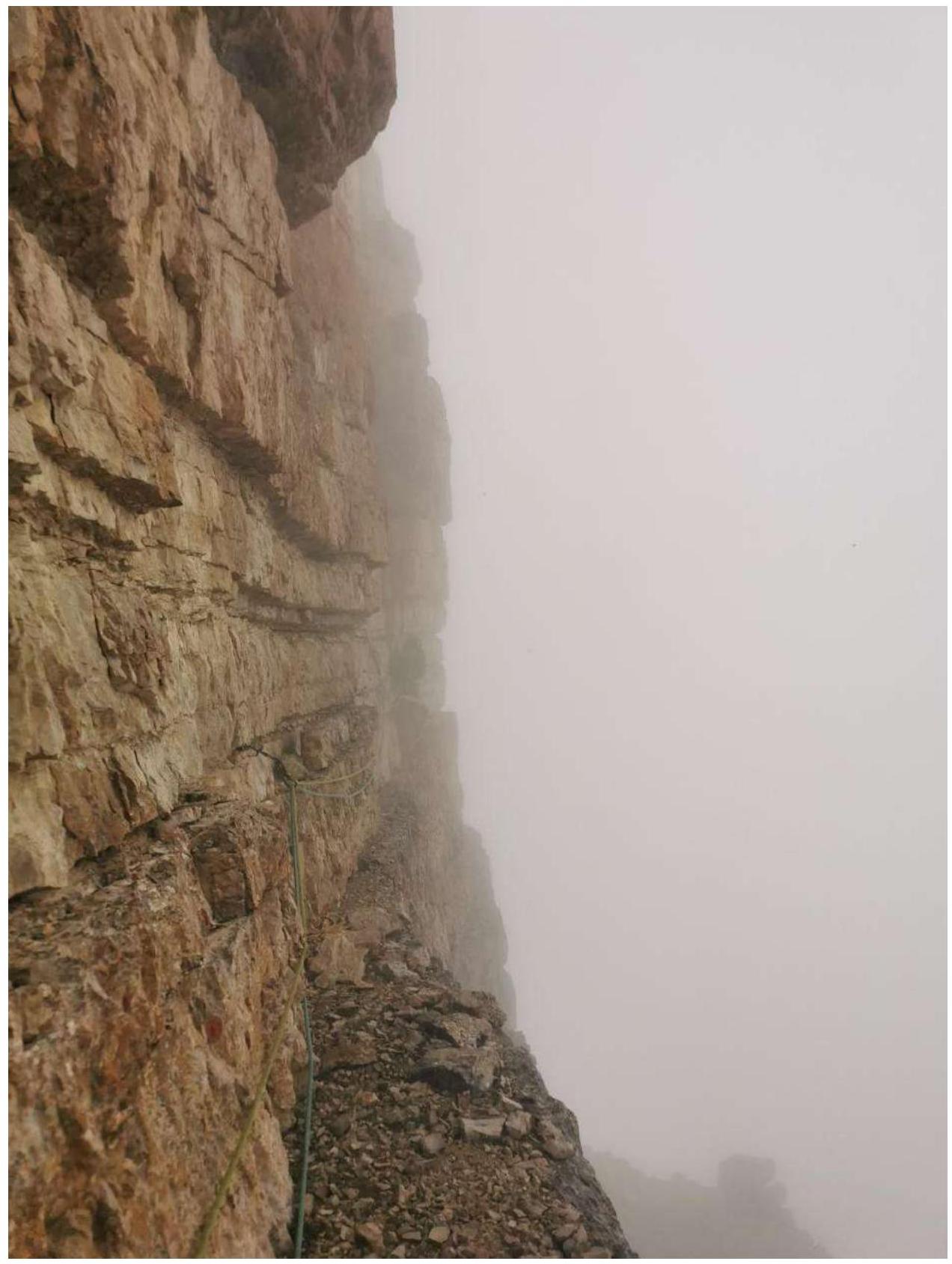
Photo 18. Traverse. Section R17–R18
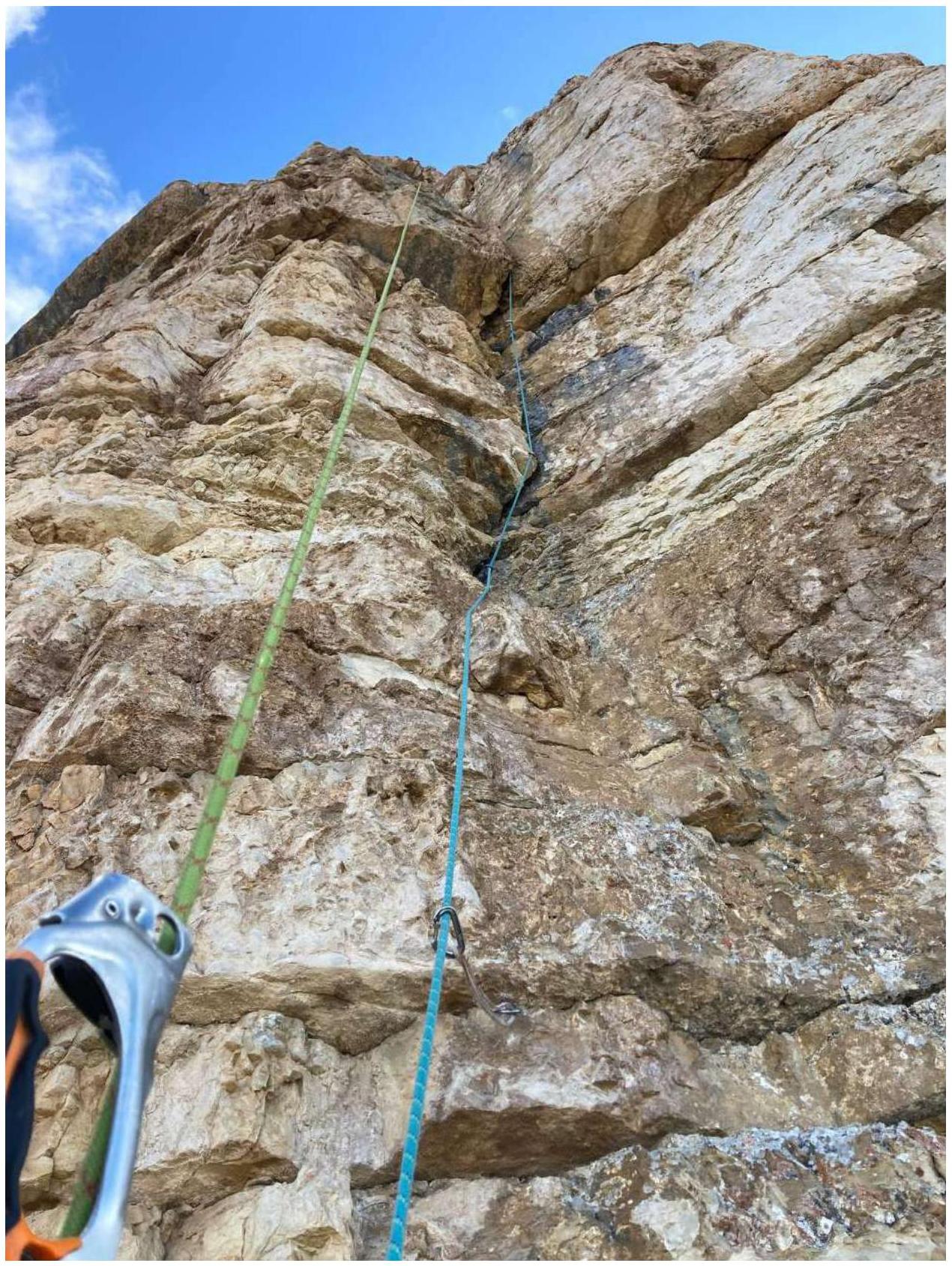
Photo 19. Cornice on section R18–R19. Passed by free climbing.
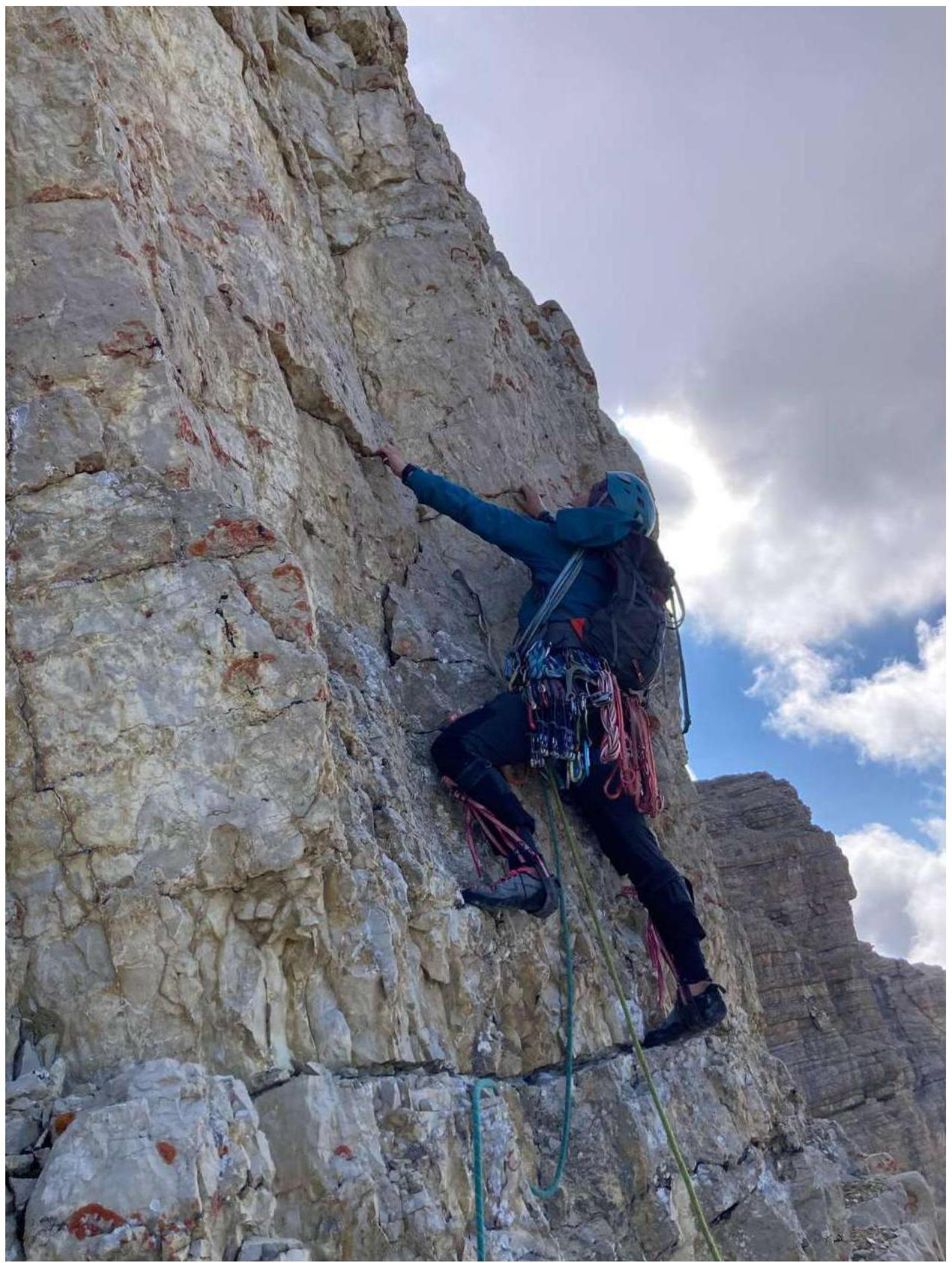
Photo 20. Leader starting on section R19–R20
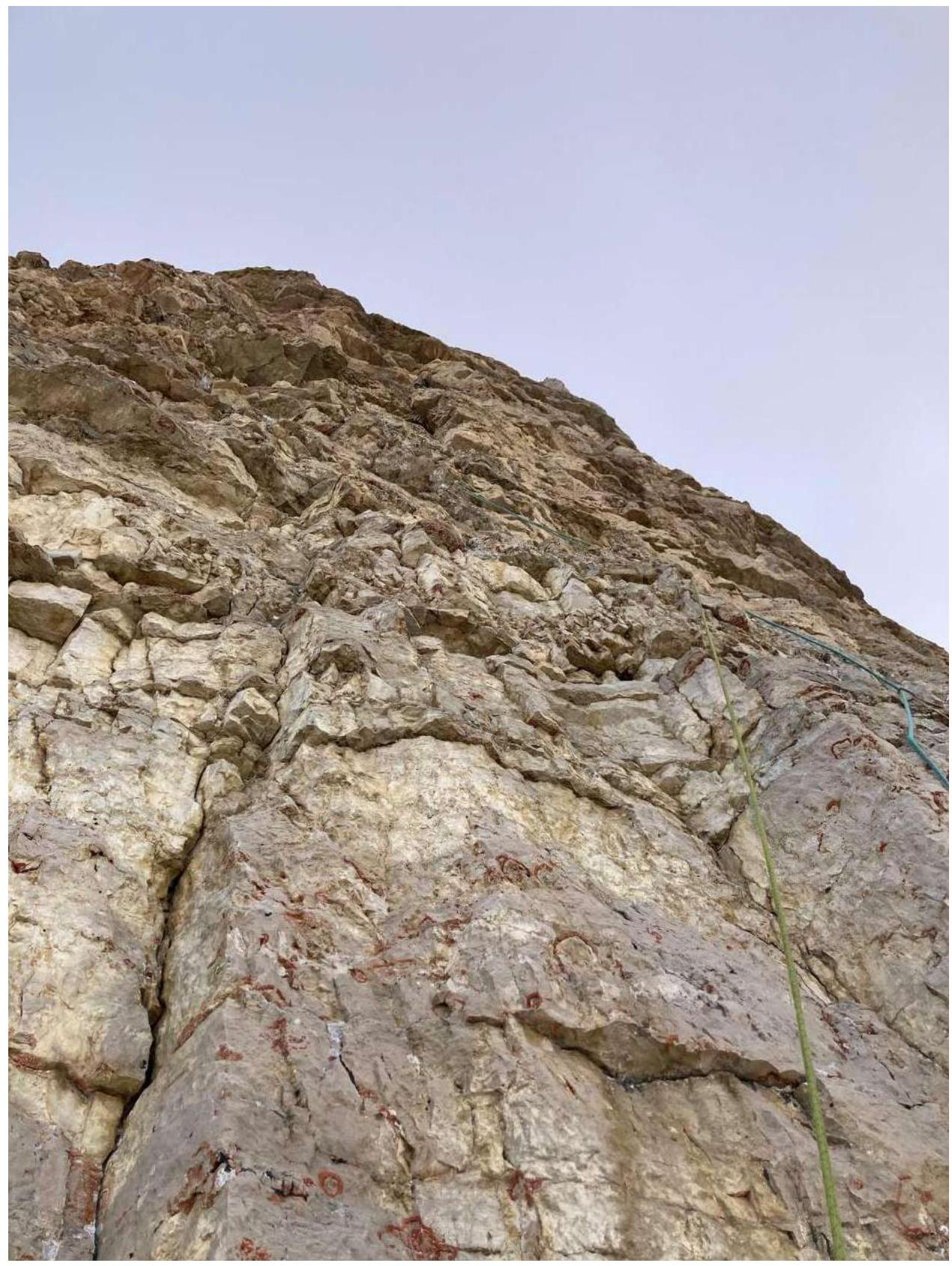
Photo 21. Section R19–R20. Complex orientation, poor protection. Did not find the local bolt!
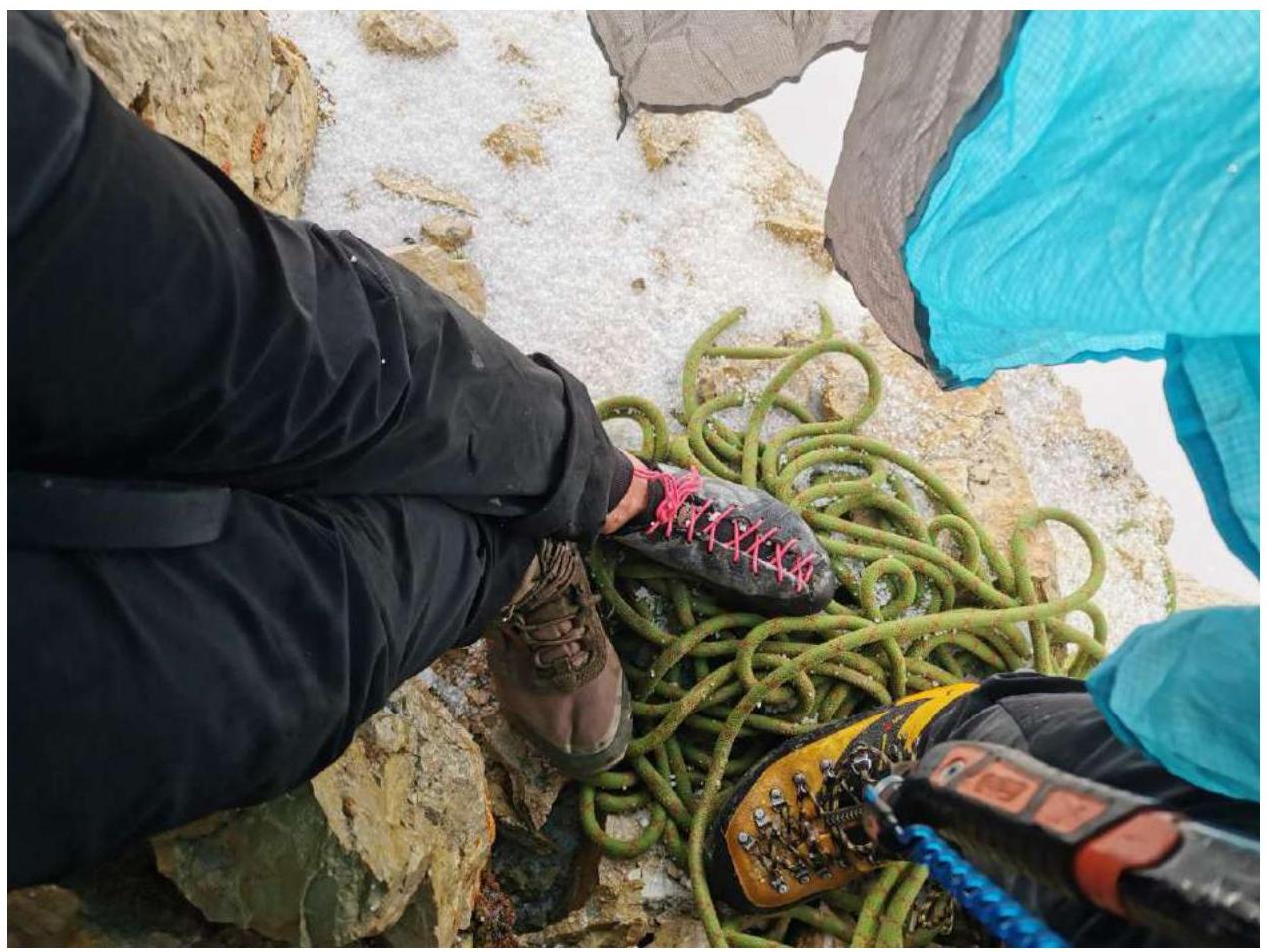
Photo 22. Waiting out bad weather on section R20
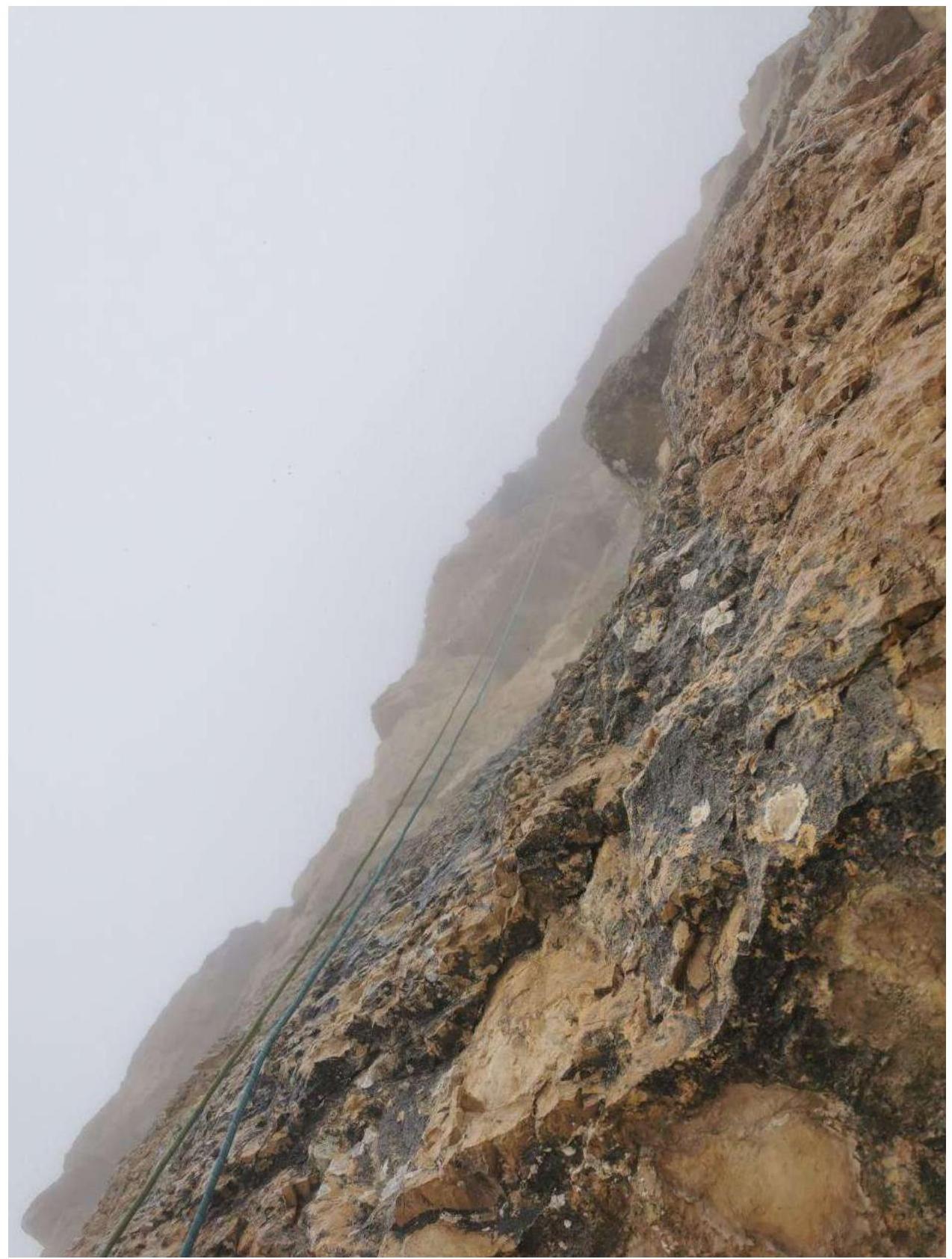
Photo 23. Section R20–R21
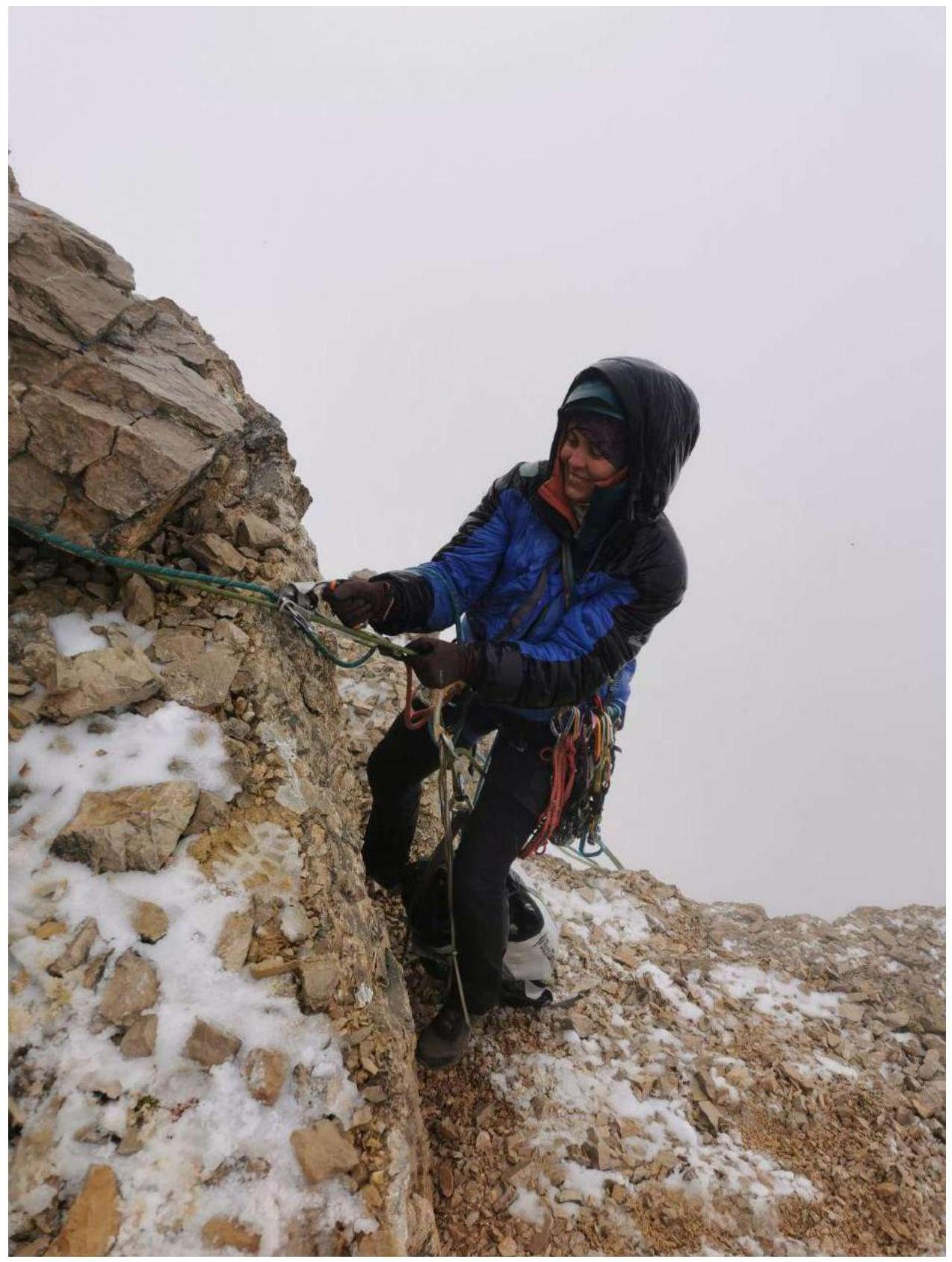
Photo 24. Exit to a ledge on section R20–R21. Down jacket is breathing freshness!
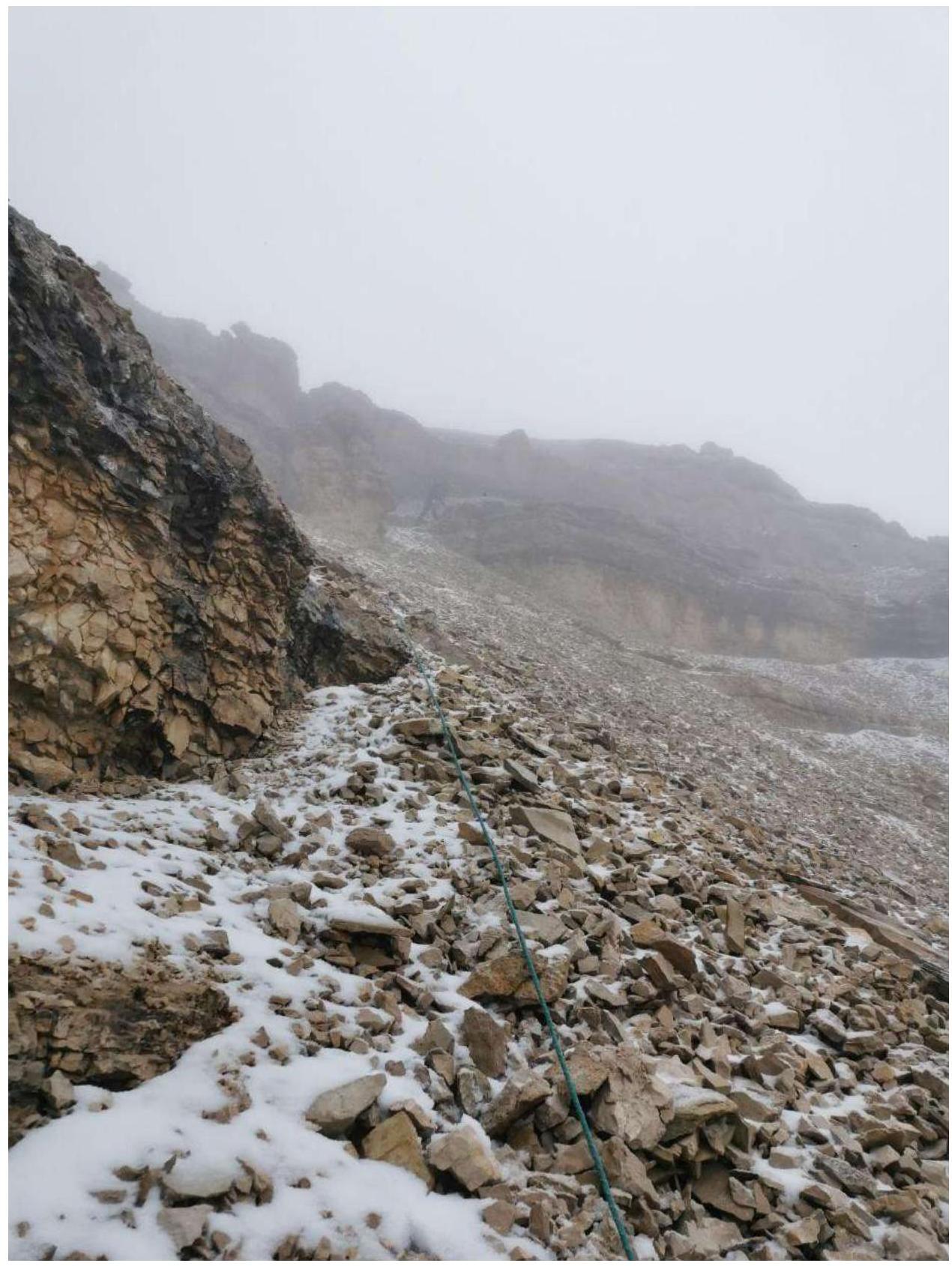
Photo 25. Section R23–R24. Exit along scree to the summit.
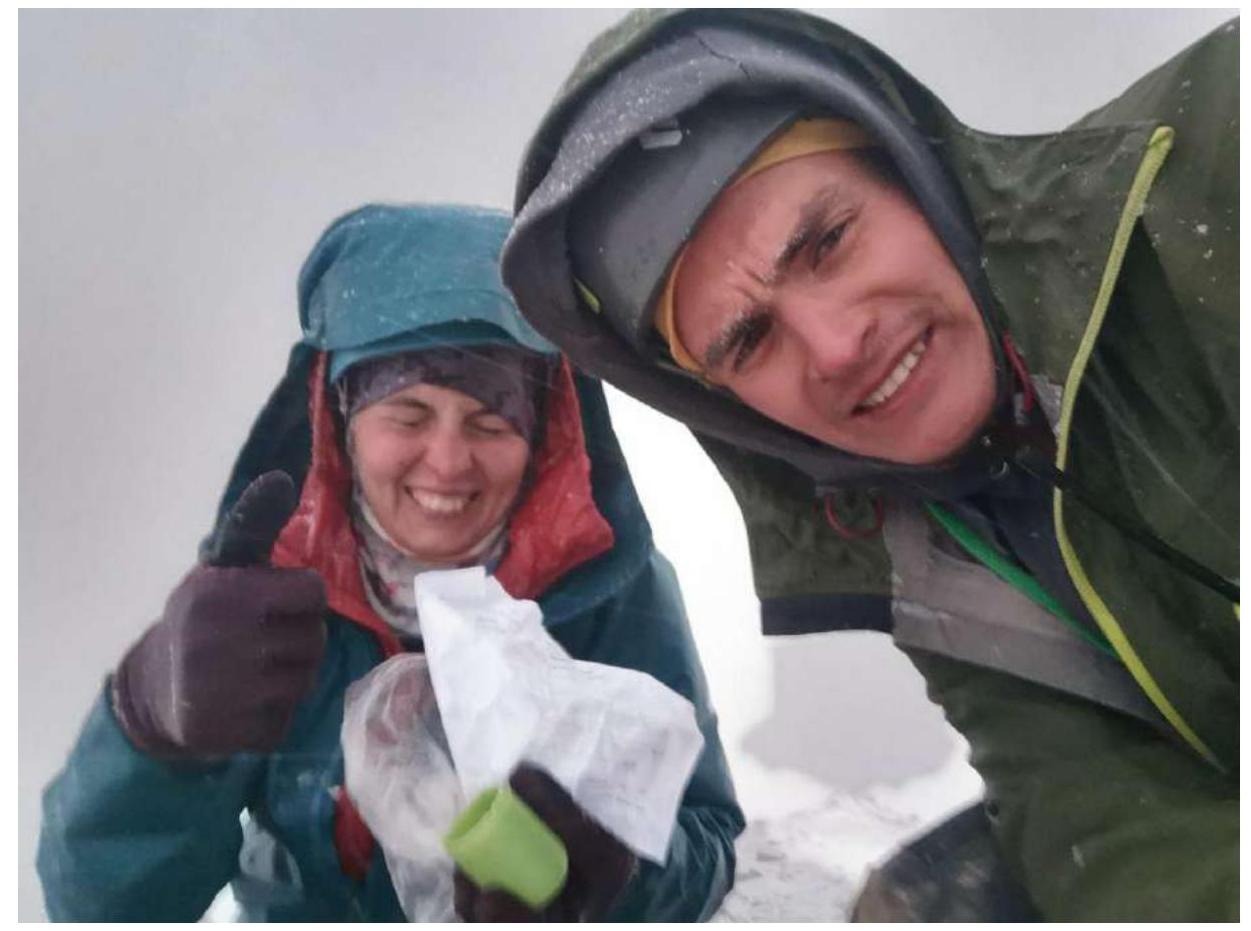
Photo 26. At the summit with a note from St. Petersburg. Did not leave our own.
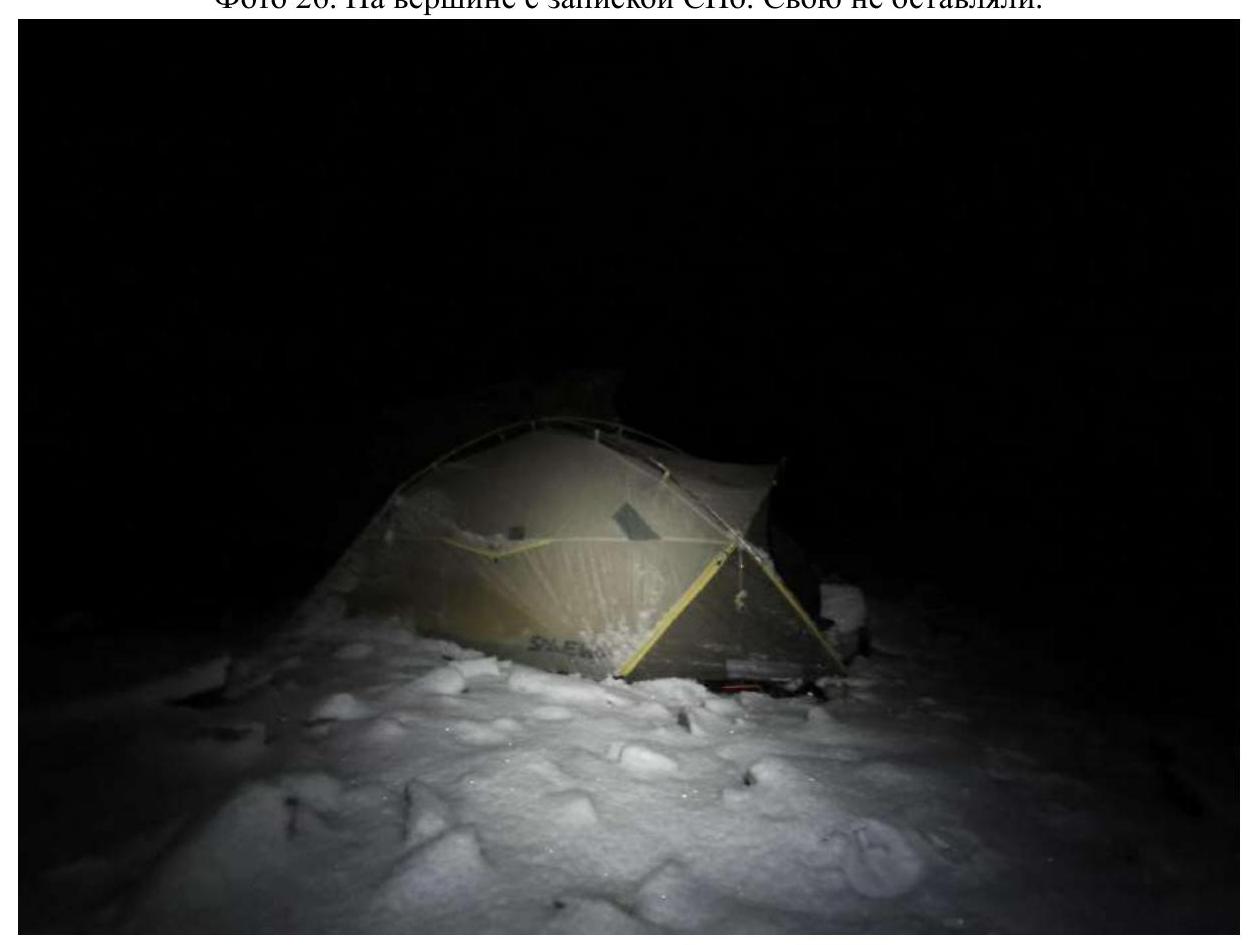
Photo 27. Overnight stay at the summit
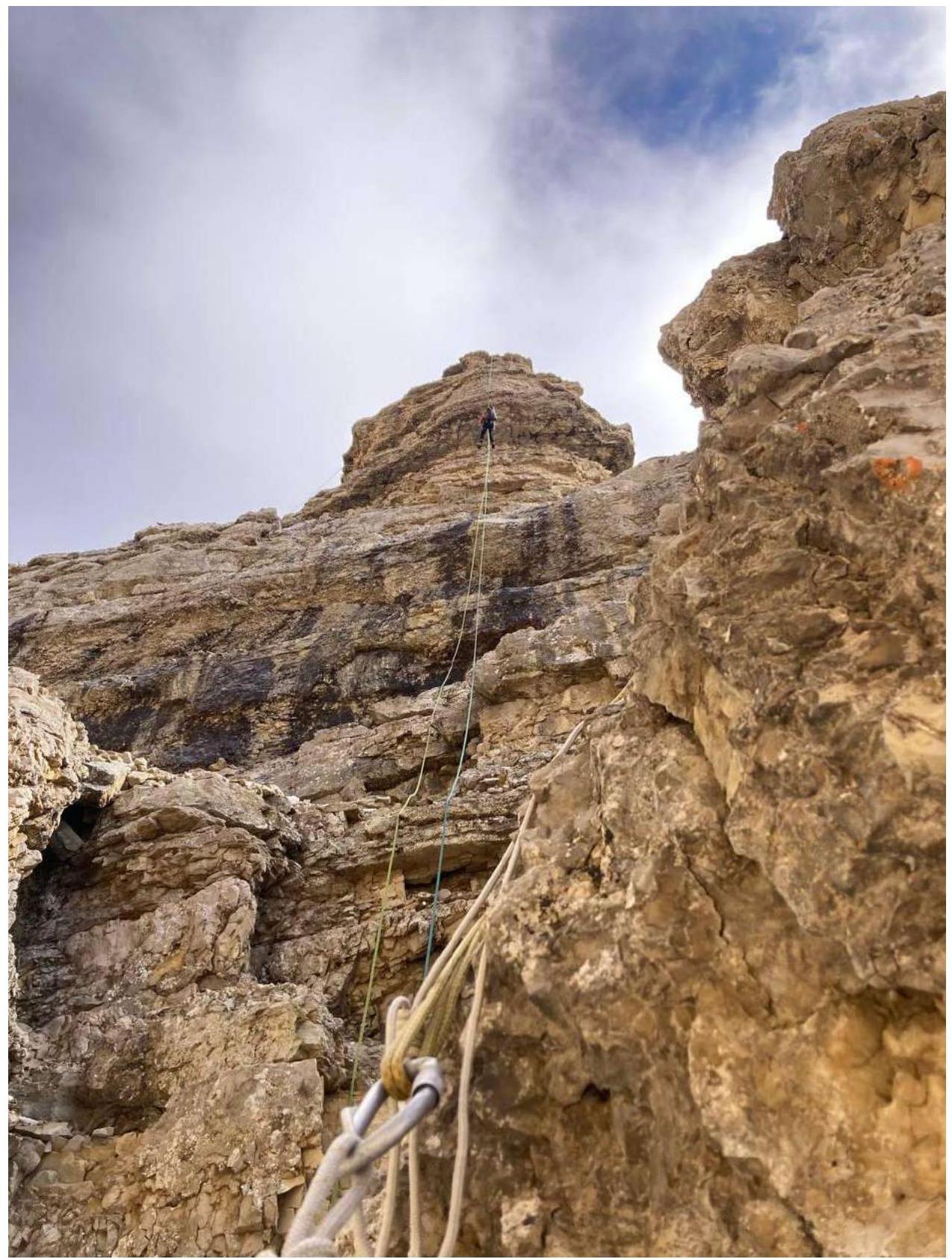
Photo 28. Rappelling on descent
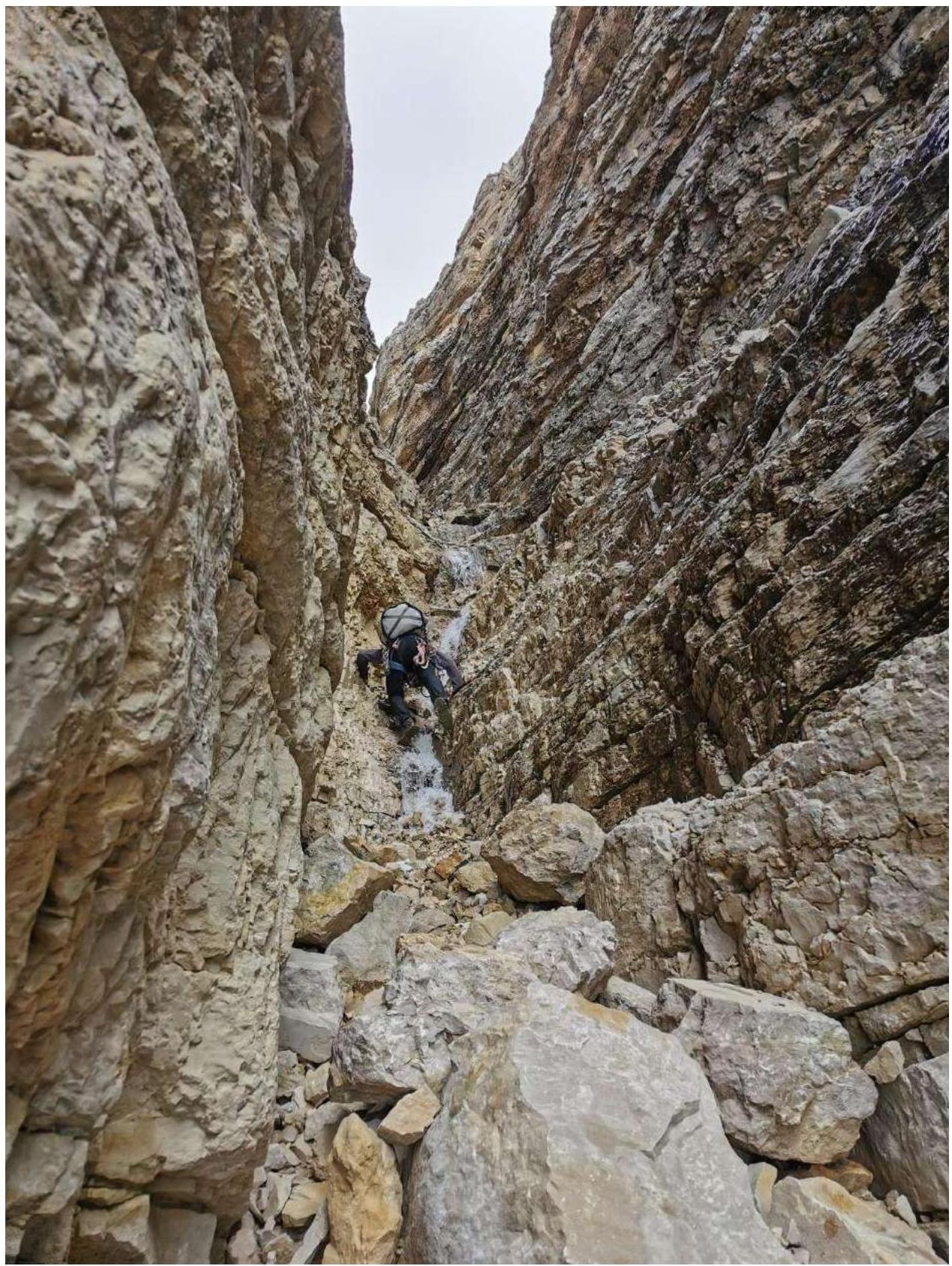
Photo 29. Descent through the couloir.
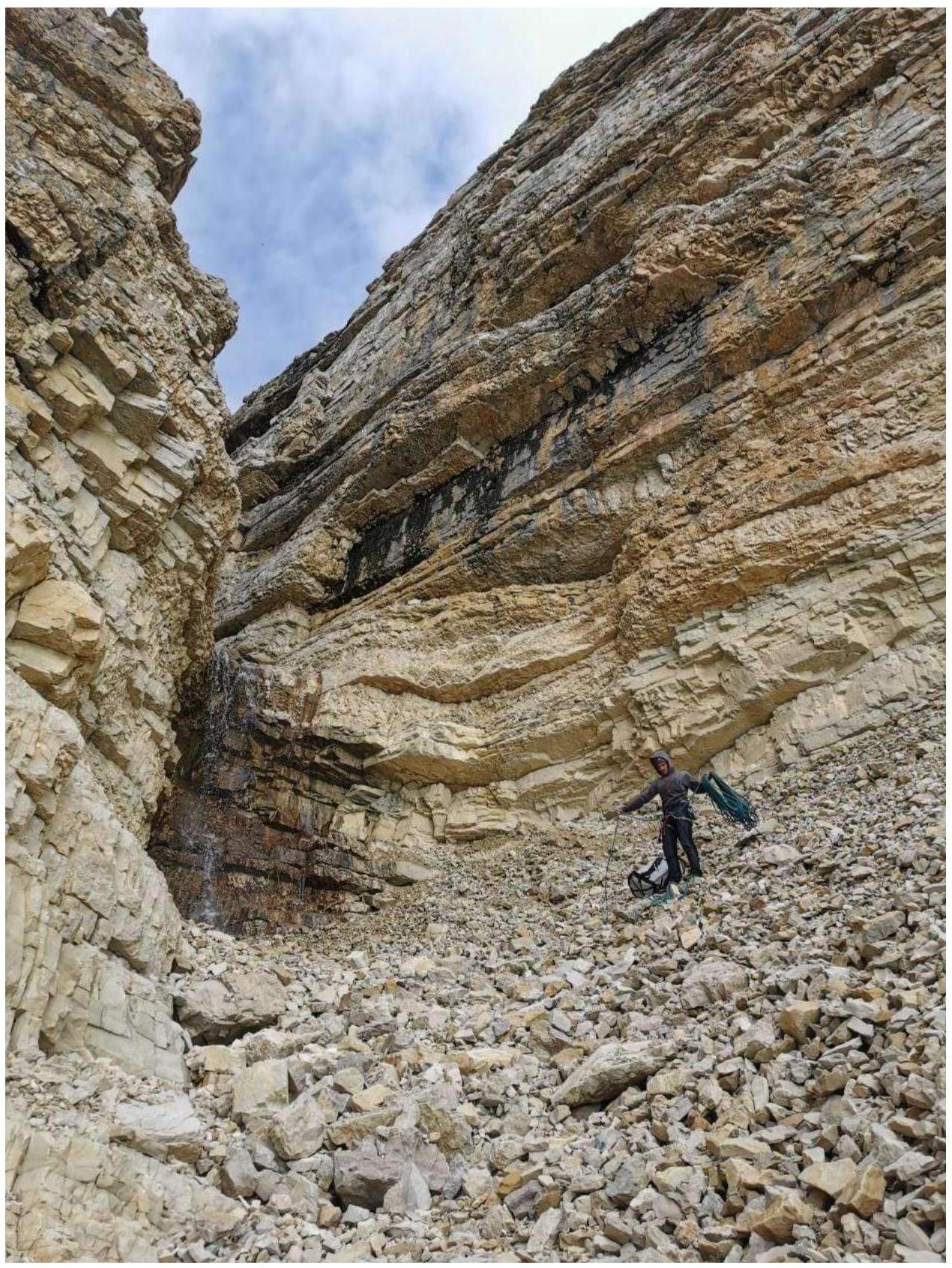
Photo 30. Exited onto scree after the couloir. Further on foot to the road.

Comments
Sign in to leave a comment