

Ascent Passport
- Ascent class: technical
- Ascent area: Central Caucasus, Shkhelda gorge
- III West Shkhelda, 4229 m, via the North wall and traverse of Central and Eastern Shkhelda peaks (4320 m)
- Estimated difficulty category: 5B
- Route characteristics: — wall section height difference: 1130 m — average steepness of the wall section: 48° — route length: 3190 m — wall section length: 1560 m — length of sections with 5–6 difficulty category: 1000 m
- Pitons hammered: — ice screws: 33 — rock pitons: 70
- Climbing hours: 47.5 hours
- Number of nights: 6 (one on descent), including 3 uncomfortable ones
- Team composition: — Balyberdin V.S. — Honored Master of Sports — team leader — Razumov Yu.M. — Master of Sports — Shustrov A.B. — Candidate for Master of Sports — Gurevich V.B. — Candidate for Master of Sports
- Team coach: Kruglov E.M.
- Departure date 1 February 1984, return date 7 February 1984
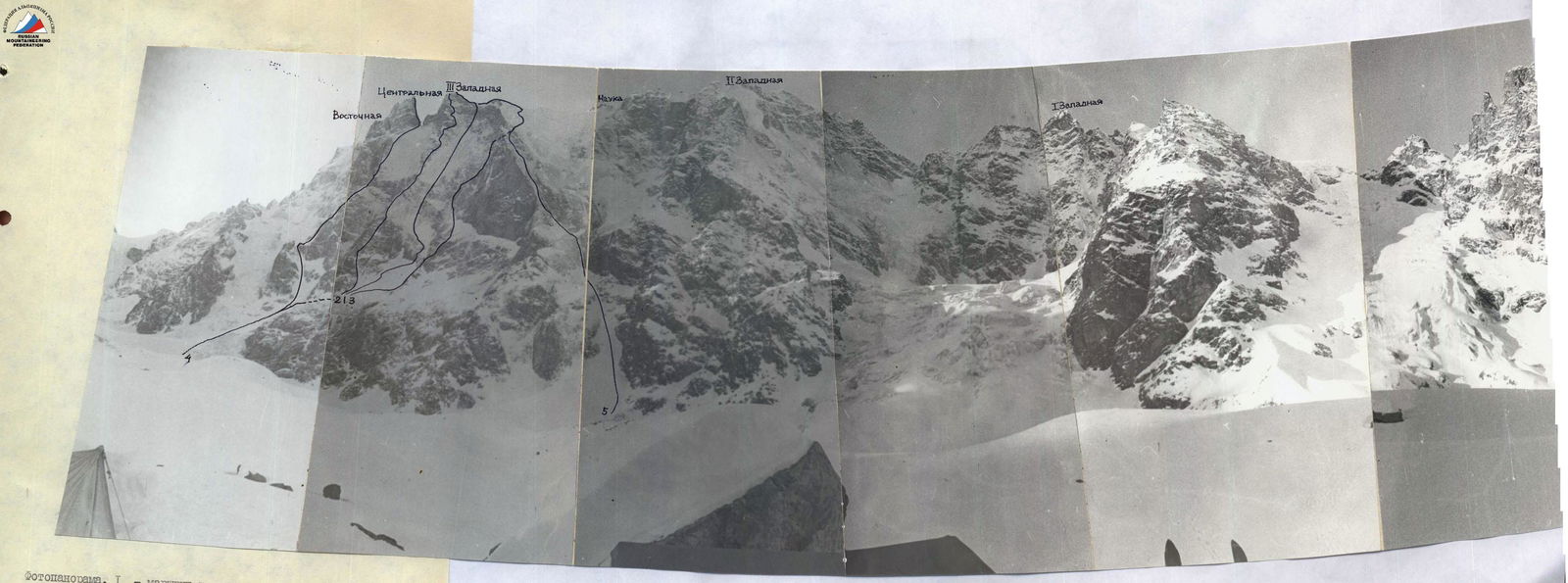
Photo 1. General photo of the peak. 1 — team route. 2 — 3 West Shkhelda via N wall "po rybke". 3 — 3 West Shkhelda via N wall NW edge (K. R. Rotataev's route).
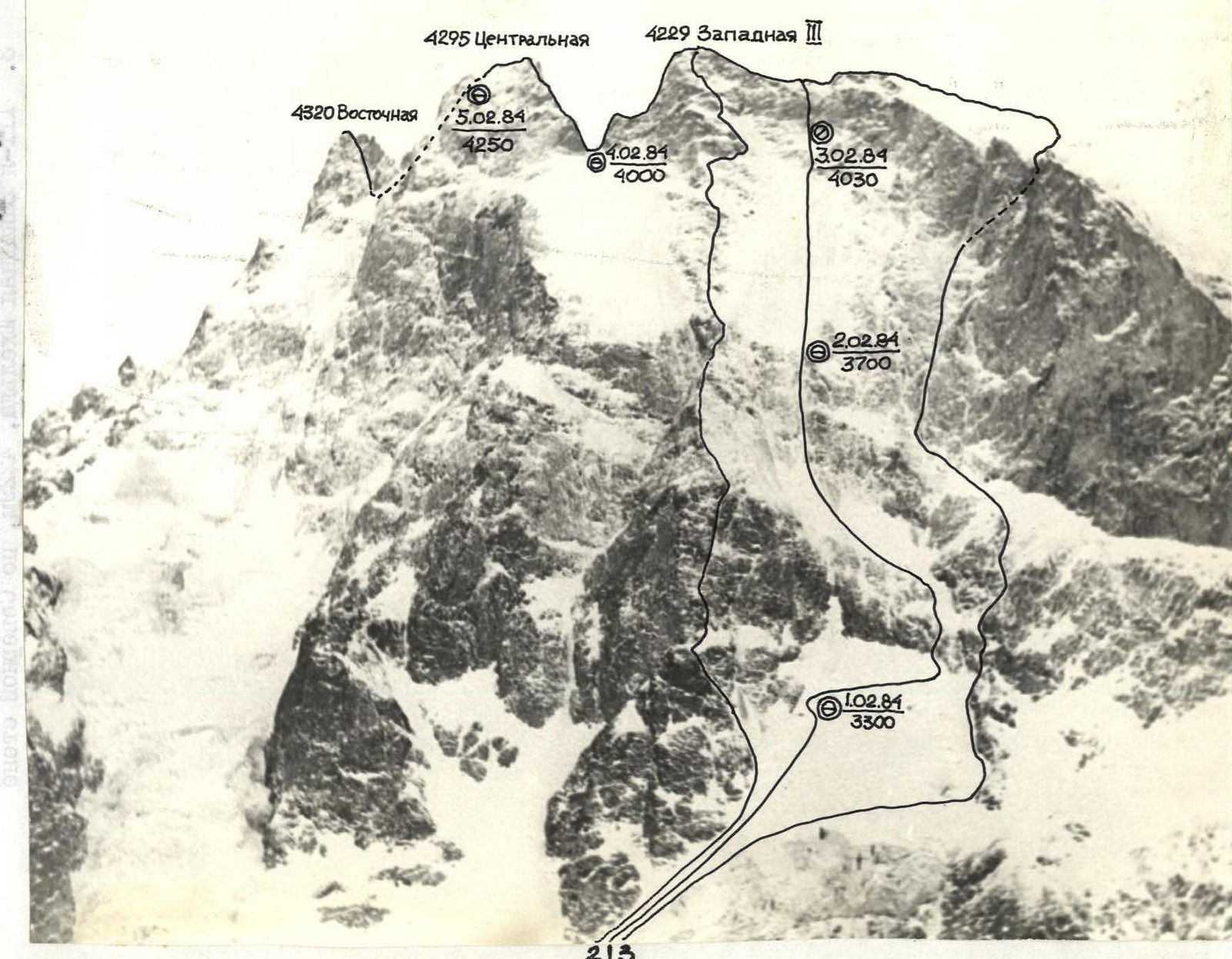
Photo 3. Technical photo of the route.
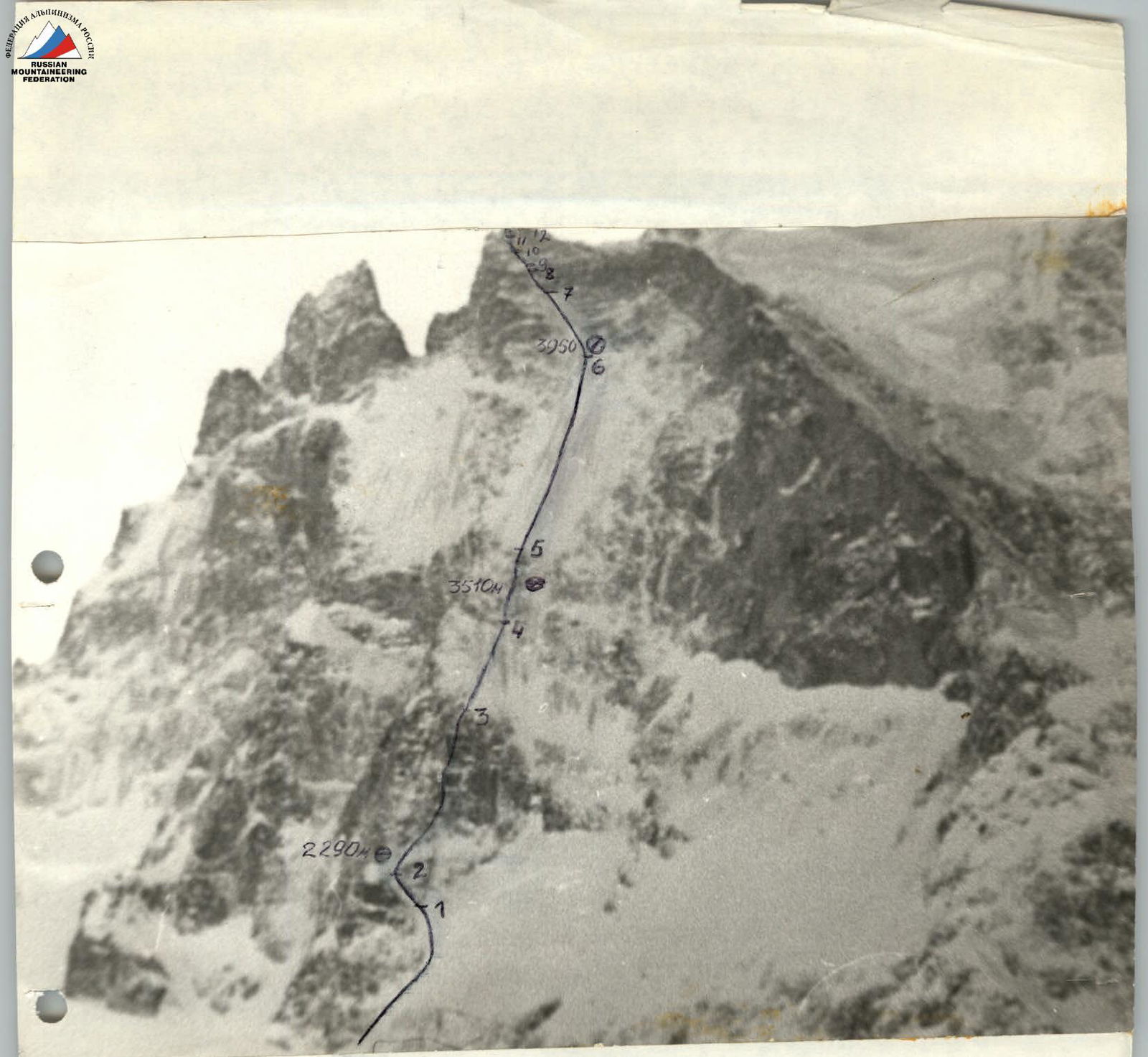
Photo 4. Technical photo of the route.
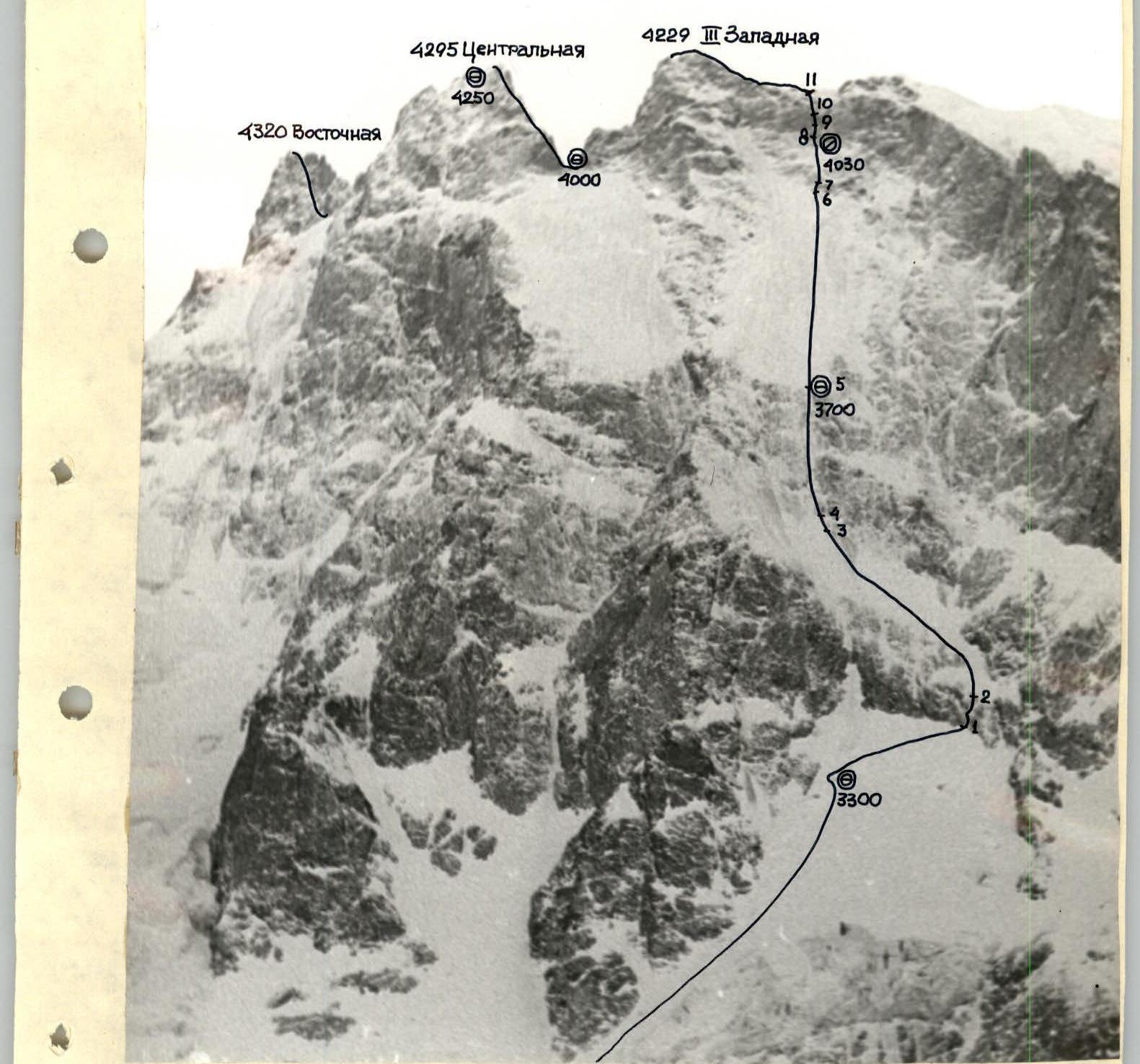
Photo 2. Wall profile on the right.
Ascent Preparation
The Central Caucasus region attracted attention for several reasons:
- Presence of many routes of varying complexity.
- Relatively easy and avalanche-safe approaches.
- Possibility to organize proper rest between harsh winter ascents.
- Presence of qualified climbers in the ascent area almost any time of the year.
- Stable weather in late January – early February. A certificate from the hydrometeorological service was obtained, compiled on the basis of многолетние data.
The upcoming ascent area was well-studied. Many team leaders and participants had been to this area before. In addition, when discussing the future route, the library of route descriptions of the Elbrus region KSP and consultations with its staff were used.
Winter conditions open up new possibilities in well-studied climbing areas. In extreme cold:
— rockfall is absent — many new interesting routes become accessible
This direction of winter climbing seems more preferable to us than passing well-known summer routes. Our route is very characteristic in this regard, which immediately attracted us with its beauty and logic.
Team preparation included training to develop general physical qualities, selecting equipment, and improving techniques for winter rock climbing. For this purpose, in December we conducted a two-day trip to the Vyborg rocks. There, we also practiced rescue techniques using improvised means in winter conditions.
Given the particular danger of any injury or illness in extreme cold and deep snow, we tried to create a well-equipped high-altitude base under the route.
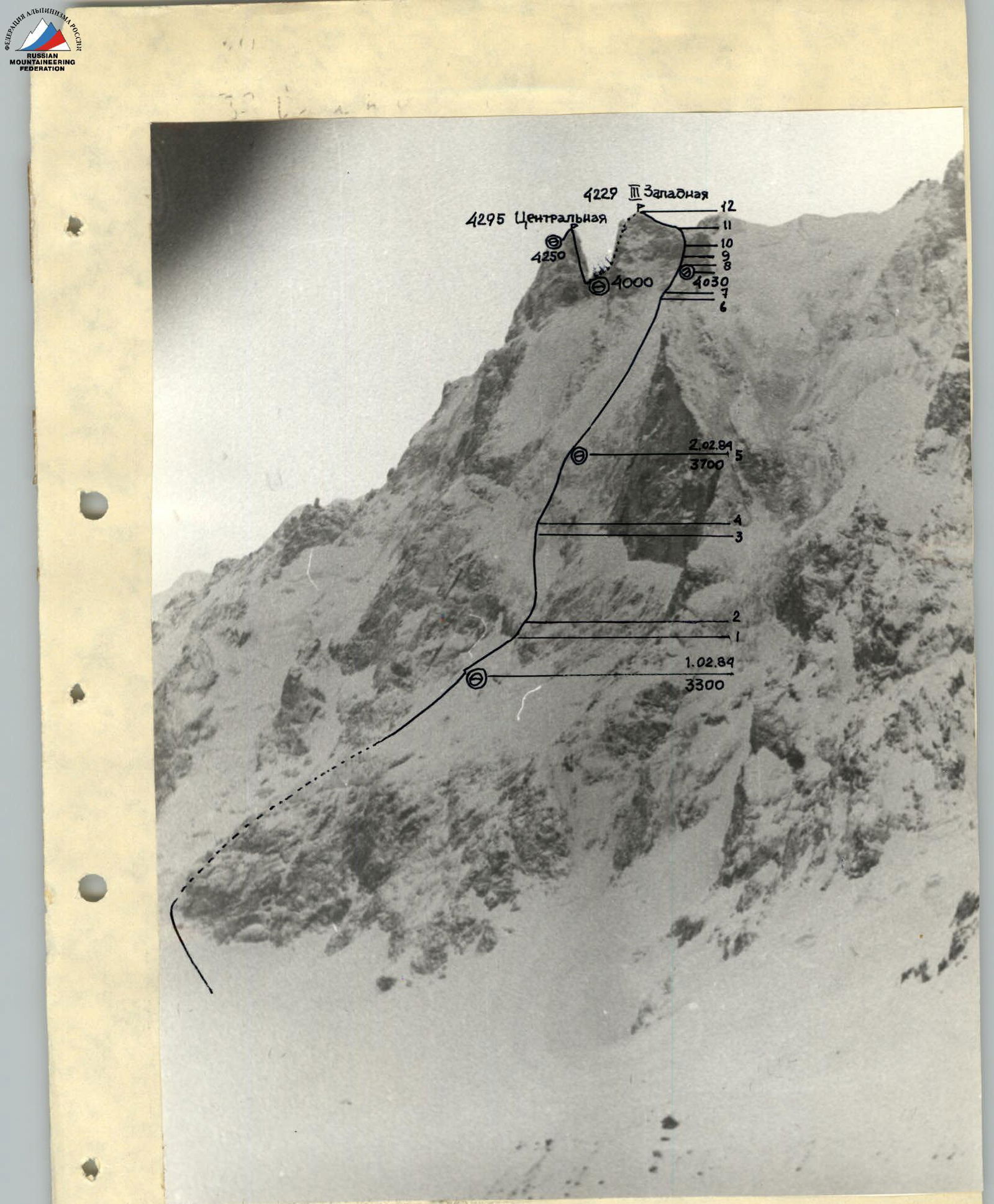
Photo 3. Wall profile on the left.
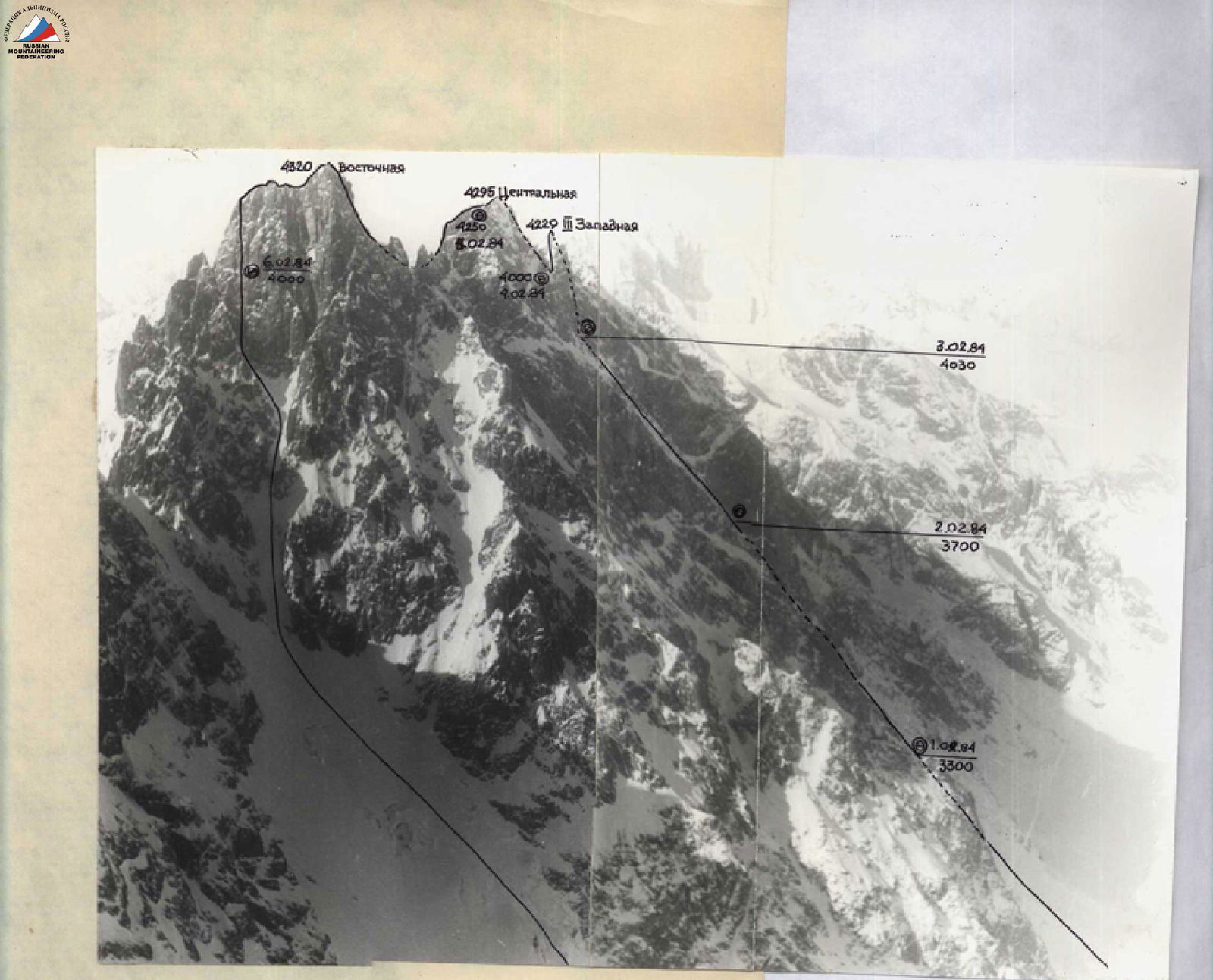
Photo 6. Ascent to Central Shkhelda.
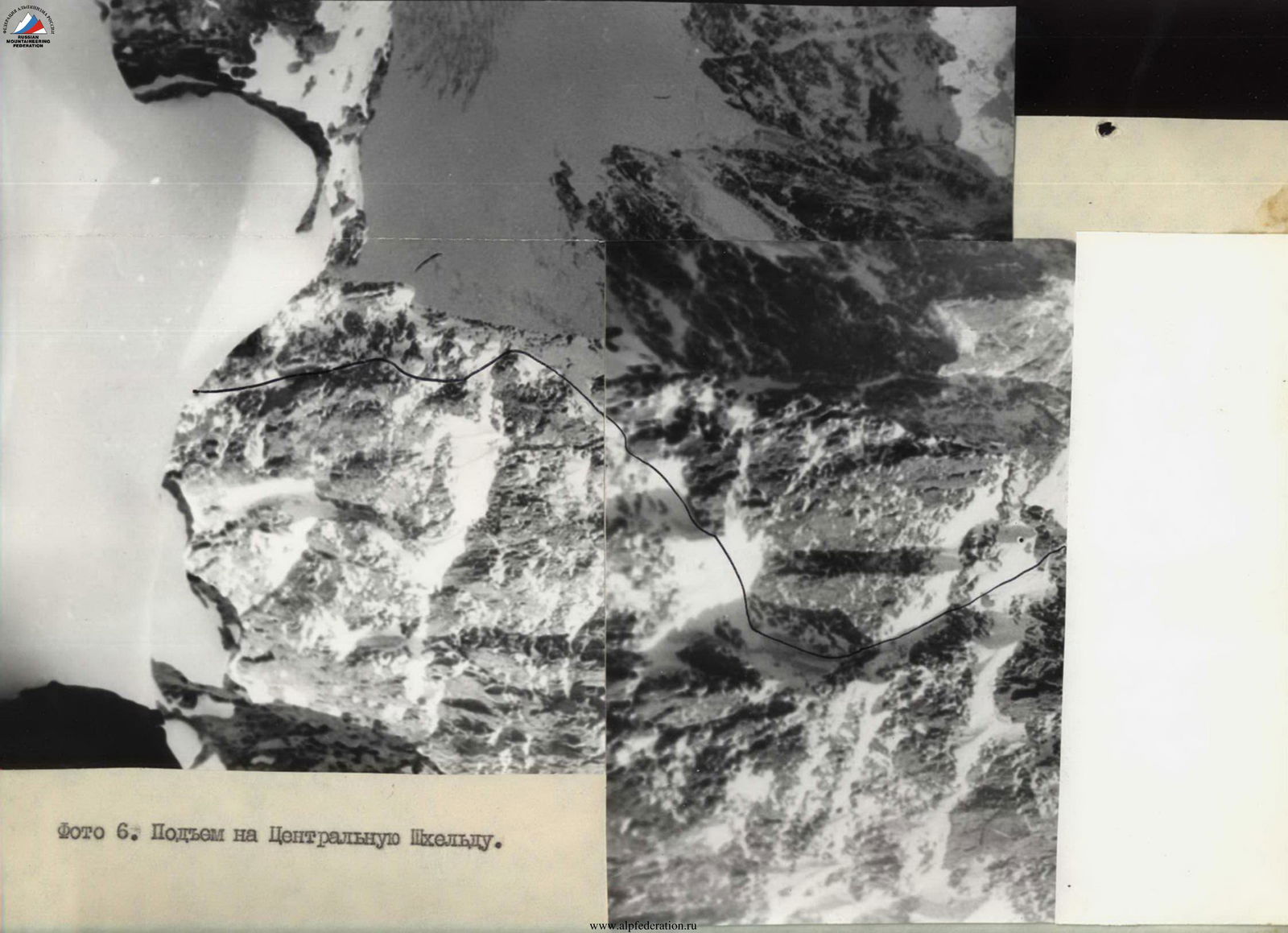
Photo panorama. 1 — team route. 2 — 3 West Shkhelda via N wall "po rybke". 3 — 3 West Shkhelda via N wall NW edge (K. R. Rotataev's route). 4 — Central Shkhelda via right edge of N wall "po lopate". 5 — 3 West Shkhelda via Shmader's edge.
Therefore, all acclimatization outings, training sessions, and ascents were conducted near the main object. A spacious tent was set up at Aristov's bivouac, equipped with:
— a large quantity of food, — gasoline, — equipment, — medications.
During preparation and acclimatization, rock, ice, and bivouac equipment were tested. A Himalayan-style tent was very helpful against strong winds and frosts. A snow shovel proved necessary on snowy routes. An autoclave allowed saving time and fuel. Otherwise, there was a full set of ice and rock equipment for high-complexity routes.
Team Tactics
The main principle in the team's actions was maximum flexibility in tactics depending on changes in relief and route complexity, weather conditions, and participants' well-being. Sufficiently high and relatively equal qualification allowed any participant to work first on any terrain and make responsible decisions on work organization. The team strived to work as much as possible in independent rope teams. All snowy and icy sections were passed in this manner. It was planned to pass the lower half of the upper rock belt in the same way, but it turned out to be too complex, and they had to use fixed ropes.
When passing the second rock belt, the first rope team fixed all eight ropes that the group had, and the second rope team, after passing the lower four ropes, packed them in a bag and dropped them to the observers.
A significant difference from summer tactics was the organization of the movement regime. Since it gets dark very early in winter, there was no point in stopping for a bivouac two–three hours before darkness to:
— have one rope team process the further route, — and the other prepare the bivouac site.
The group planned to finish moving just before darkness fell to maximize the use of daylight. Then, with the help of flashlights, they managed to make a good bivouac site, and there was enough time to prepare food and rest properly. Moreover, severe frost and late sunrise did not allow leaving very early.
Constant radio communication with the team coach, who observed from the opposite side of the gorge, was very helpful in searching for the best path and bivouac site on the upper rock belt. His consultations on the traverse were also invaluable, especially when searching for descent options and standard places for securing the rappel rope.
On the R7–R8 section.
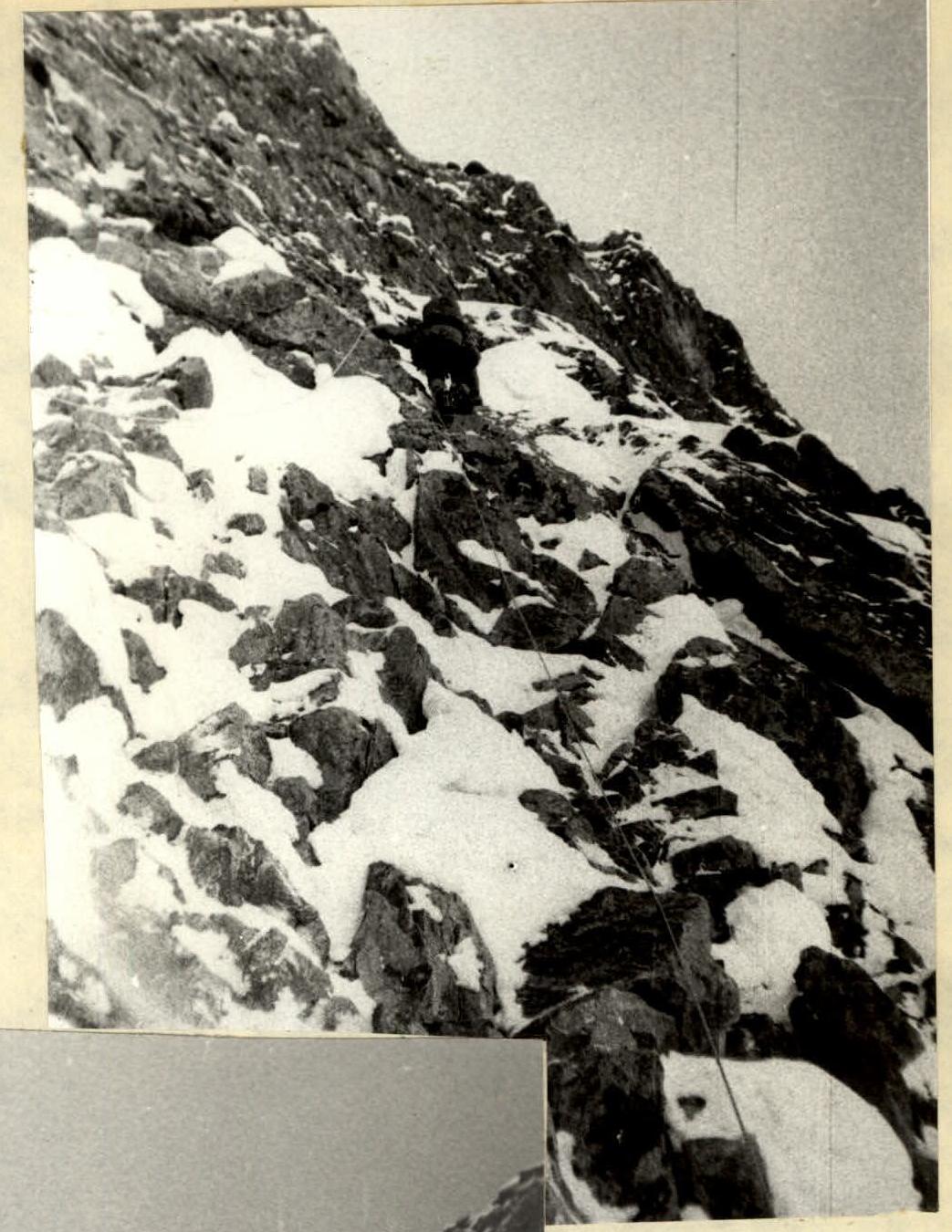
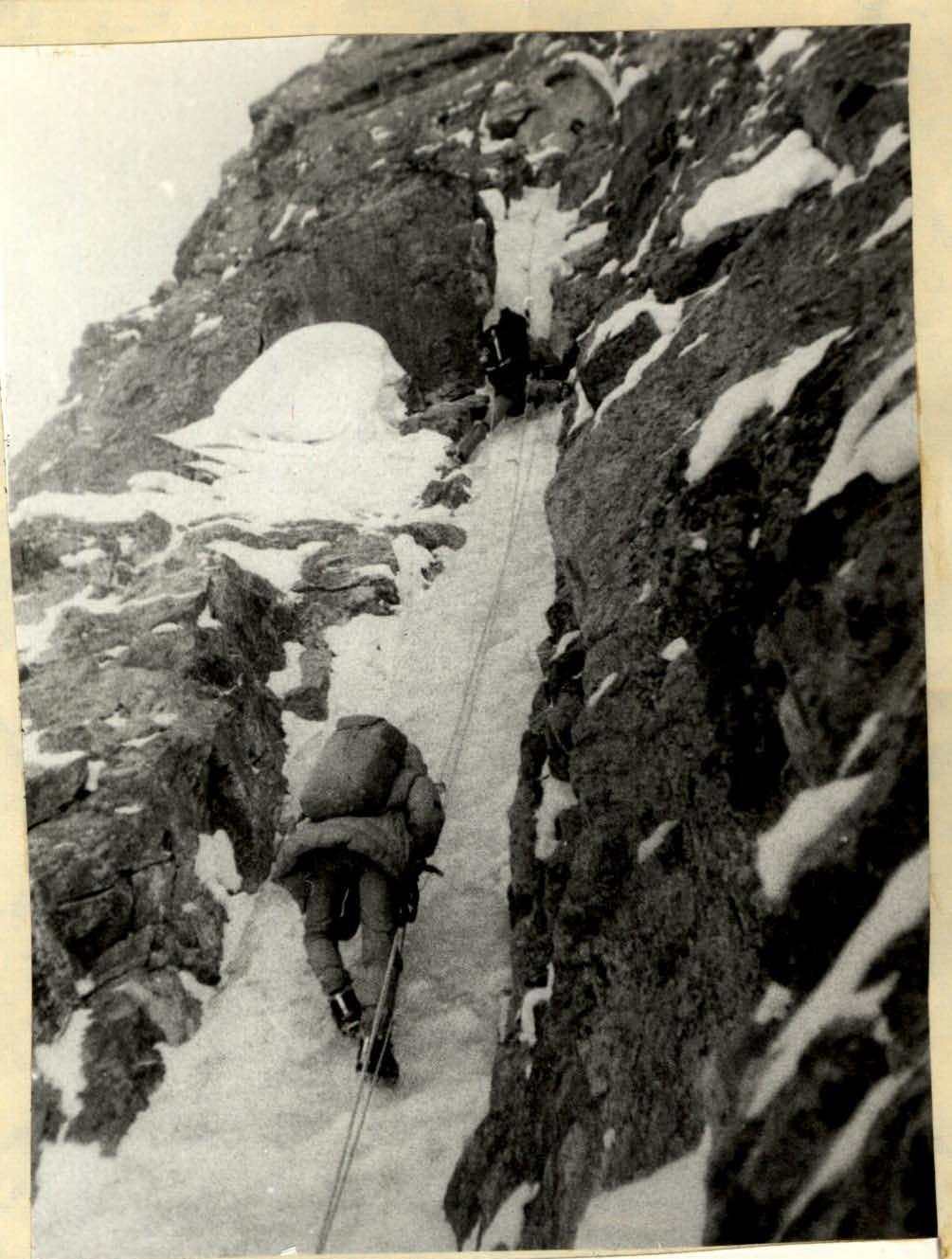
On the R5–R6 section. Sections R8–R10 (chimney) are visible. The summit tower is on the left.
Control tour
On the R5–R6 section. Sections R8–R10 (chimney) are visible. The summit tower is on the left.
Control tour
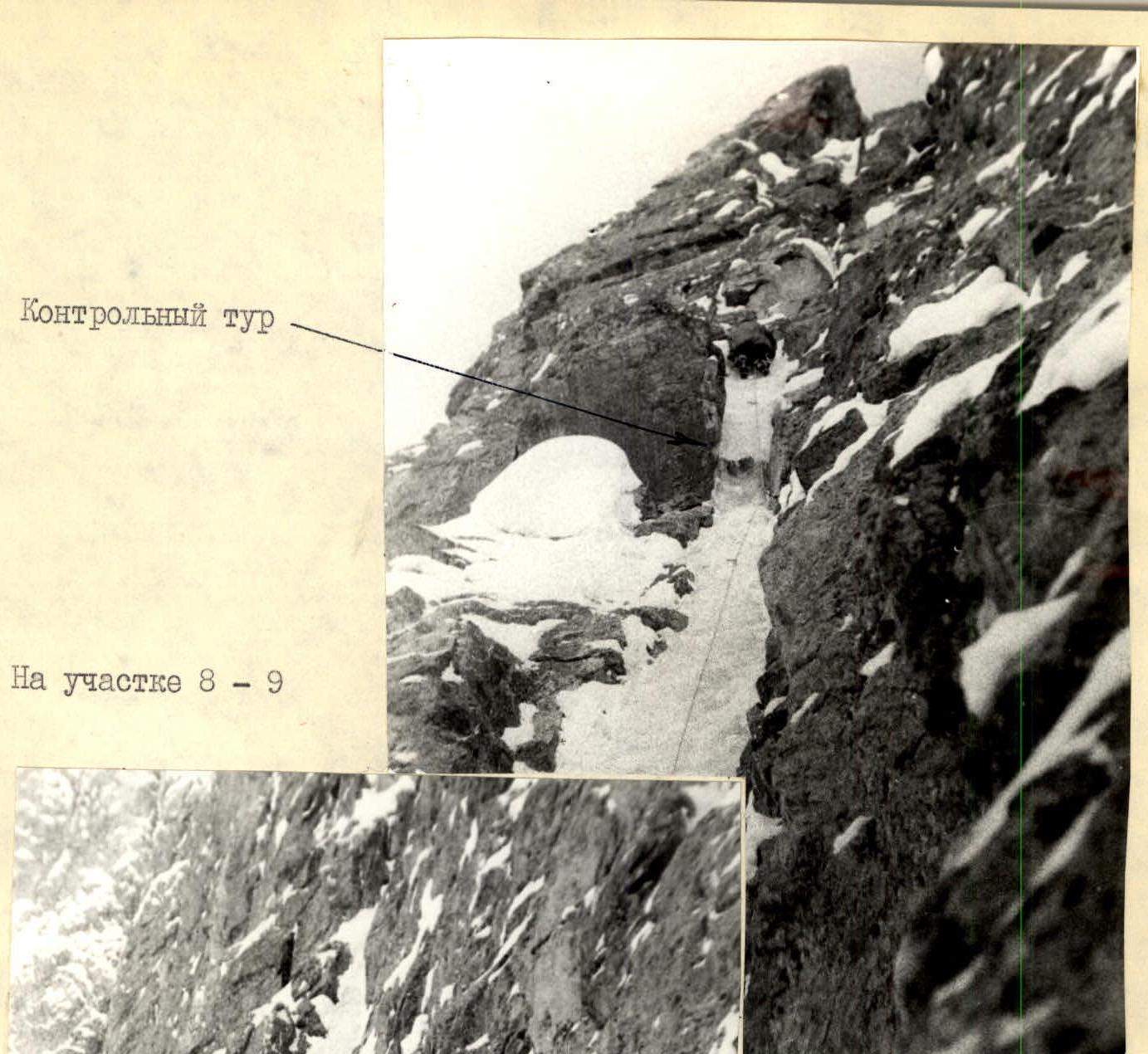
On the R8–R9 section.
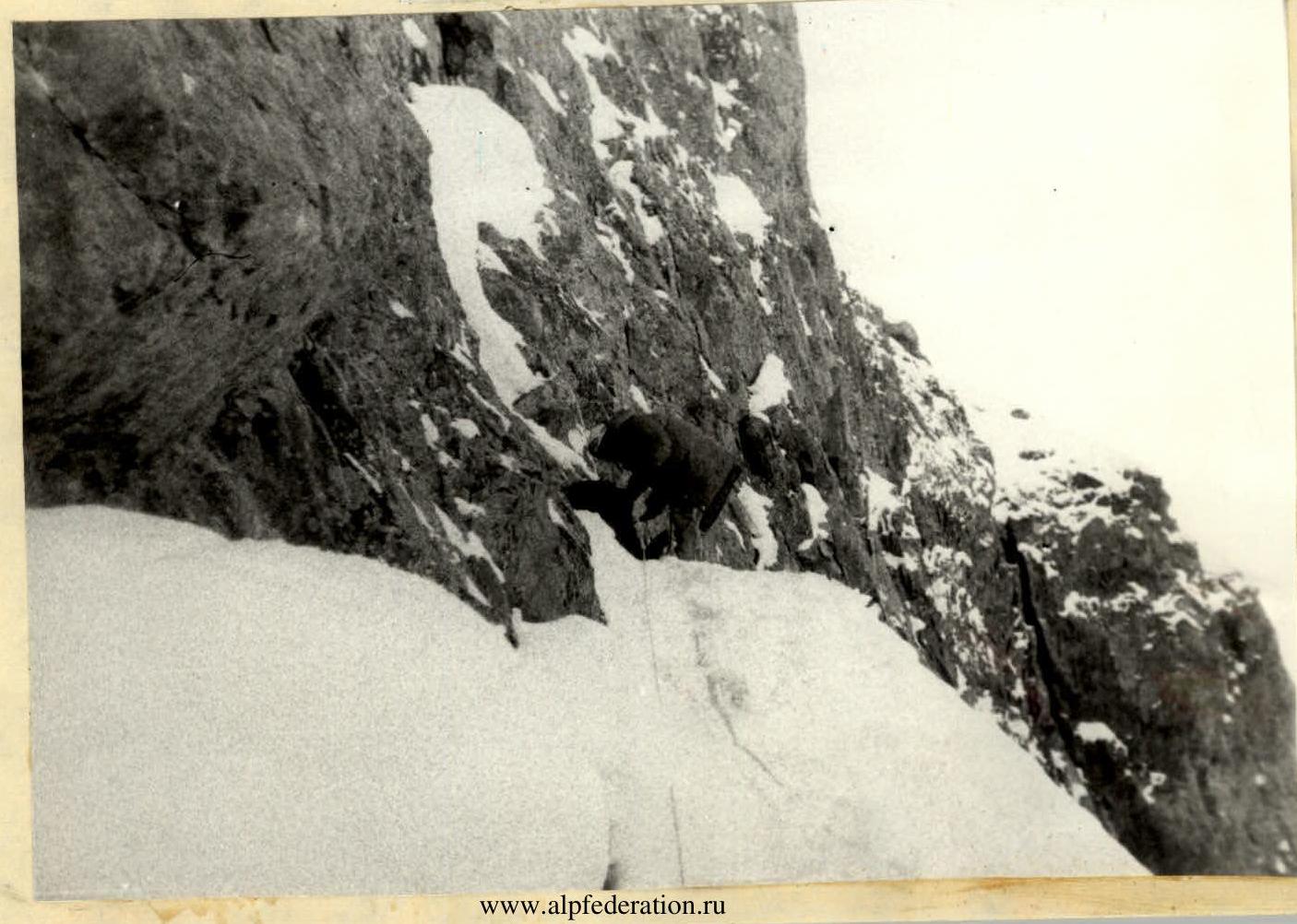
Third bivouac site.
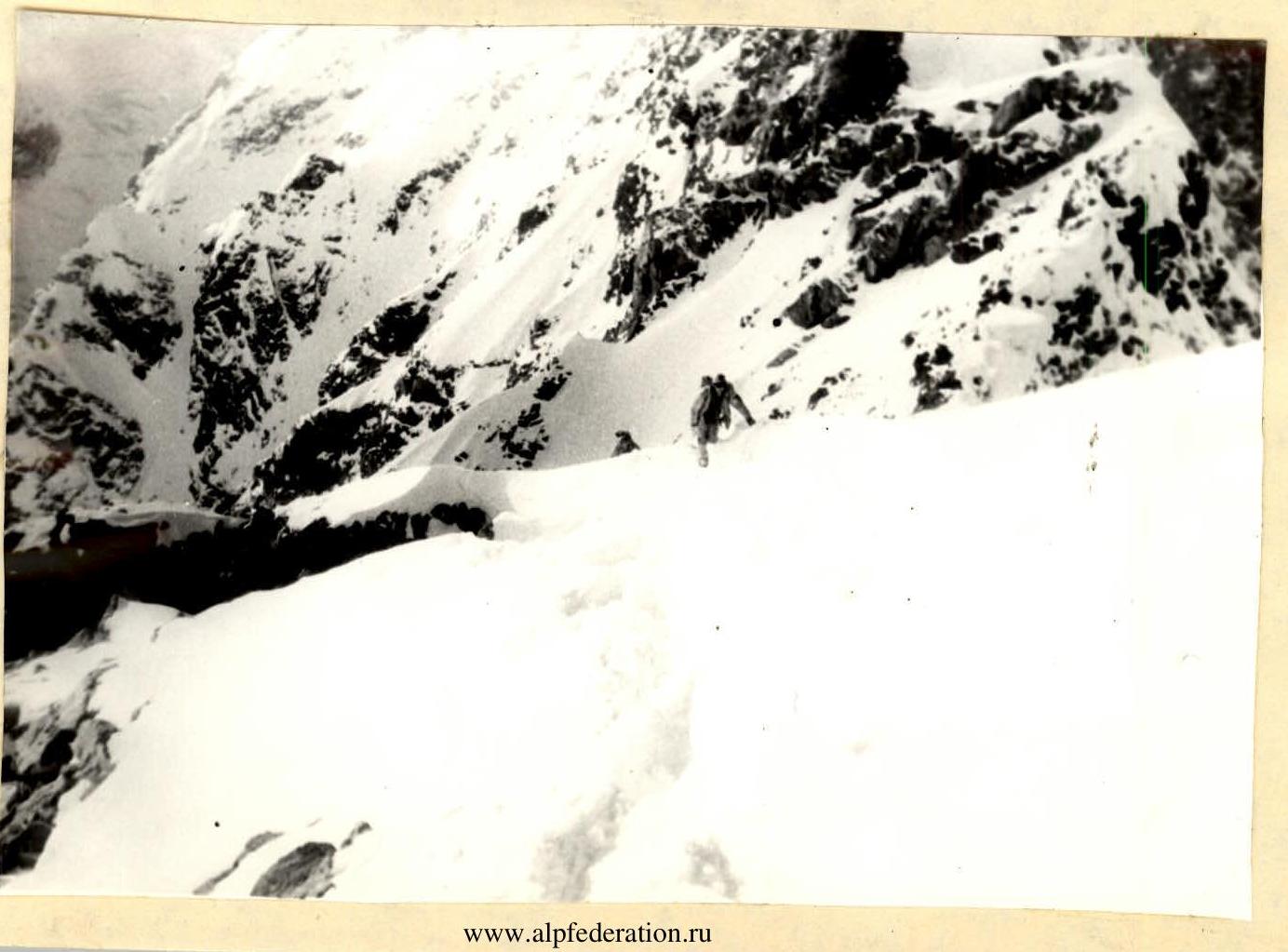
Ahead — traverse of Central and Eastern peaks.

R11–R12 section.
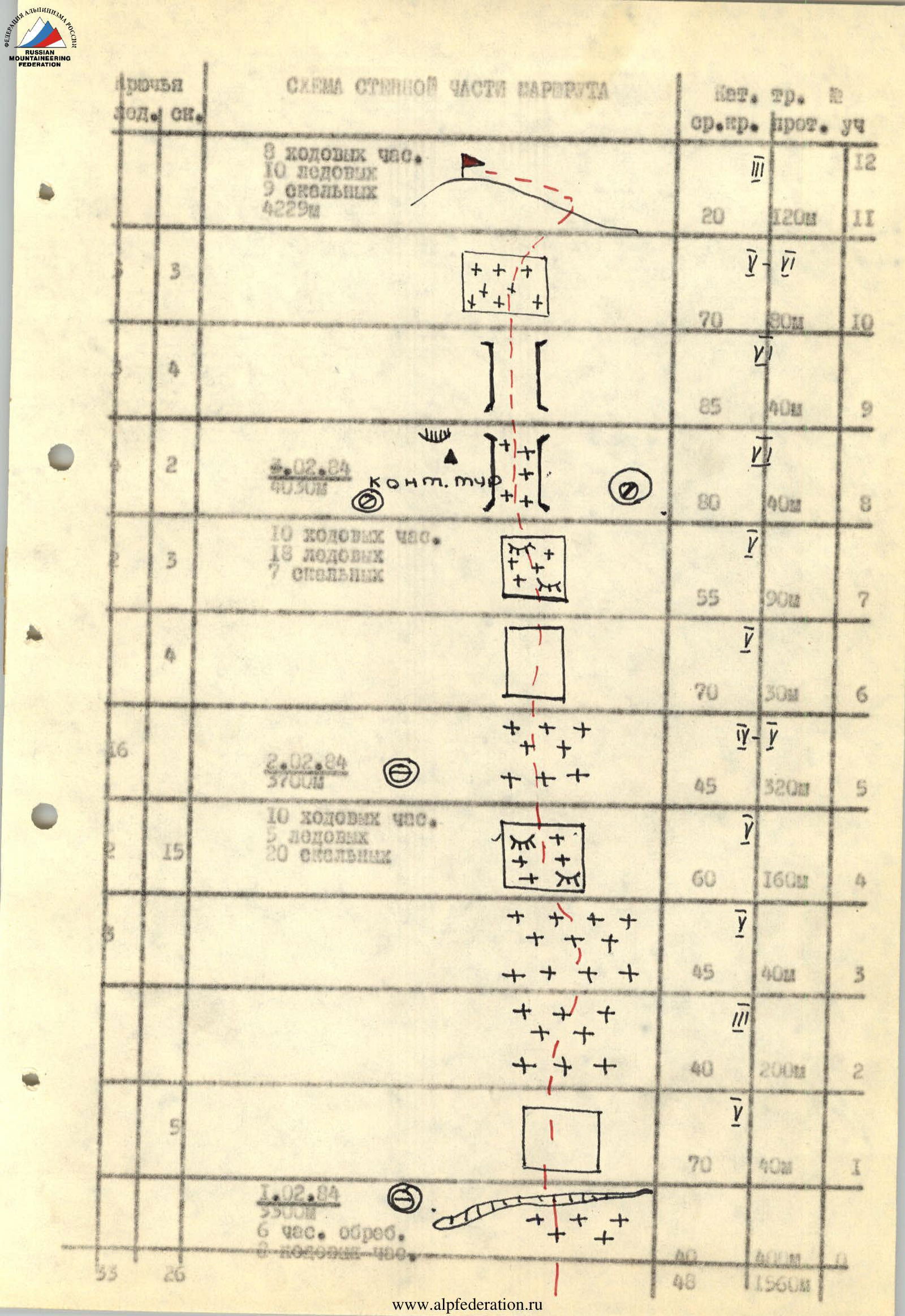
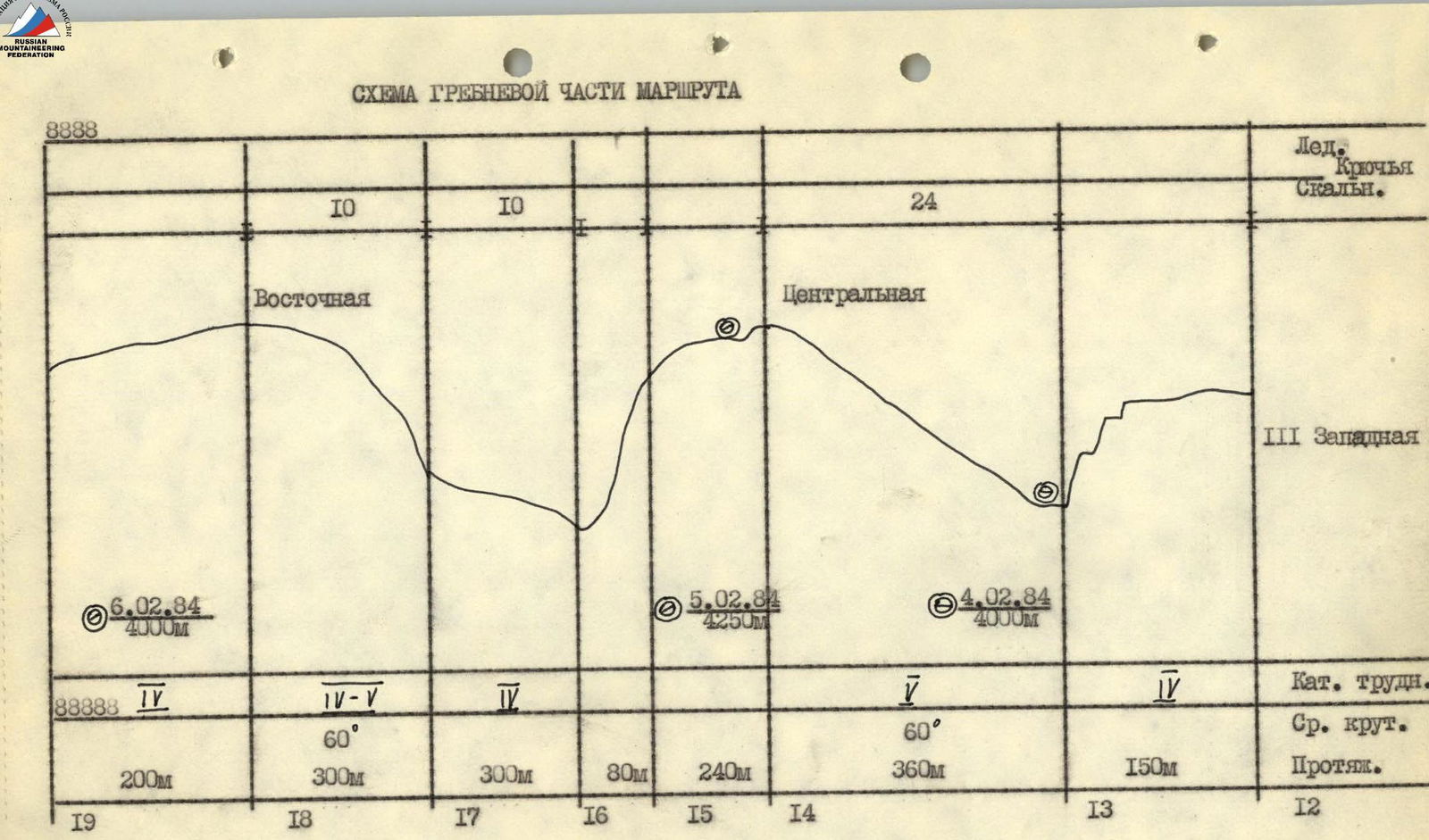
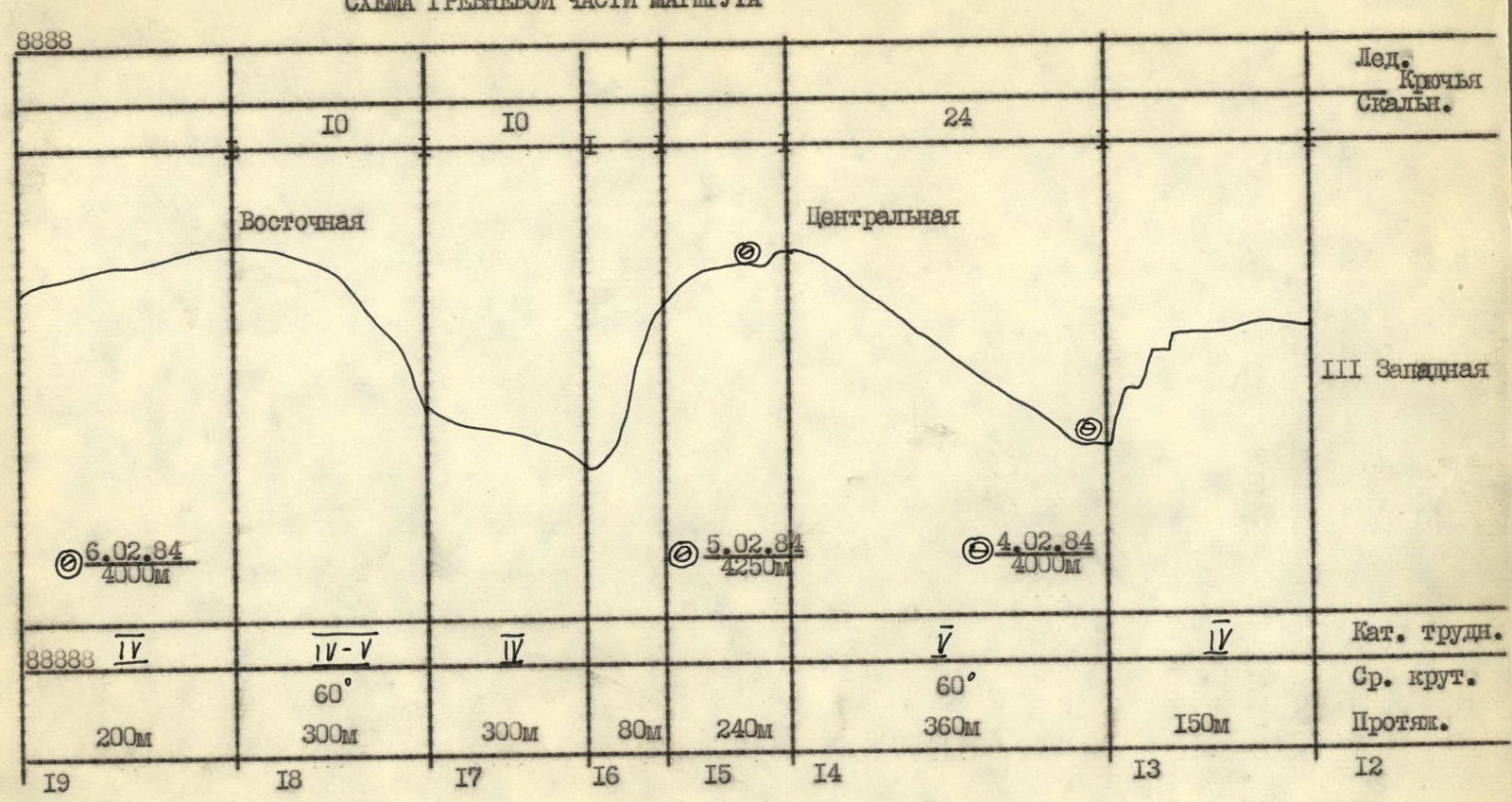
Ridge Section Route Diagram
Route Description by Sections
R0–R1. Even after a short ascent from the glacier, it is necessary to put on crampons, as the snow becomes very hard.
R1–R2. Passing through the snowy tongue is impossible, as it is a vertical niche filled with snow. Passing along the boundary of dark and light rocks is complicated by abundant snow and lack of cracks. These are large granite blocks, heavily smoothed and poorly fractured.
R2–R3. The section requires cautious passage, as deep snow here is interspersed with tongues of hard ice under a thin layer of snow.
R4–R5. The second rock belt is mostly passed through icy gullies, but protection is provided through pitons on rocks, as the ice is typically too thin for ice screws.
R5–R6. The ice slab is passed on front points with piton protection.
R6–R11. The third rock belt is passed using rock climbing techniques, but in crampons. Overhangs and niches are used for piton placement, as cracks in overhanging areas are filled with ice.
R12–R19. On the traverse, the sloping ledges on the southern side of the ridge are particularly different from summer conditions. They have very hard, smooth ice covered with a thin layer of powdery snow.