
Ascent Passport
- Region — Western Sayan, Ergaki ridge.
- Peak — Zvezdny via the NE wall and the bastions on the NW ridge
- Category — 6A, first ascent
- Route type — rock
- Route characteristics: elevation gain — 600 m. Route length — 830 m. Length of 6B sections — 375 m, 5B sections — 220 m. Average steepness of the main part: first bastion — 80°, second — 80°, third — 90°, whole route — 67°.
- Equipment left on the route: pitons — 1, including drilled pitons — 0, chocks — 1. Pitons used on the route: stationary drilled — 0. removable drilled — 1, including protection — 0. Total protection used — 140, including skyhooks and Fifi — 70.
- Duration: 19 hours, 1 day.
- Leader: Balyezin Valery Viktorovich, Master of Sports of International Class
Team members:
- Arkhipov Vladimir Alekseyevich, Master of Sports
- Zakharov Pavel Yuryevich, 1st sports category
- Dmitrienko Yevgeny Vladimirovich, 1st sports category
- Team coaches: Zakharov Nikolay Nikolayevich, Master of Sports of International Class, Honored Coach of Russia Balyezin Valery Viktorovich, Master of Sports of International Class
- Dates: departure — June 7, 2001, 4:00 AM. summit — June 7, 2001, 11:00 PM. return — June 8, 2001, 12:10 PM.
11. Organisation: Krasnoyarsk Regional Sports Committee
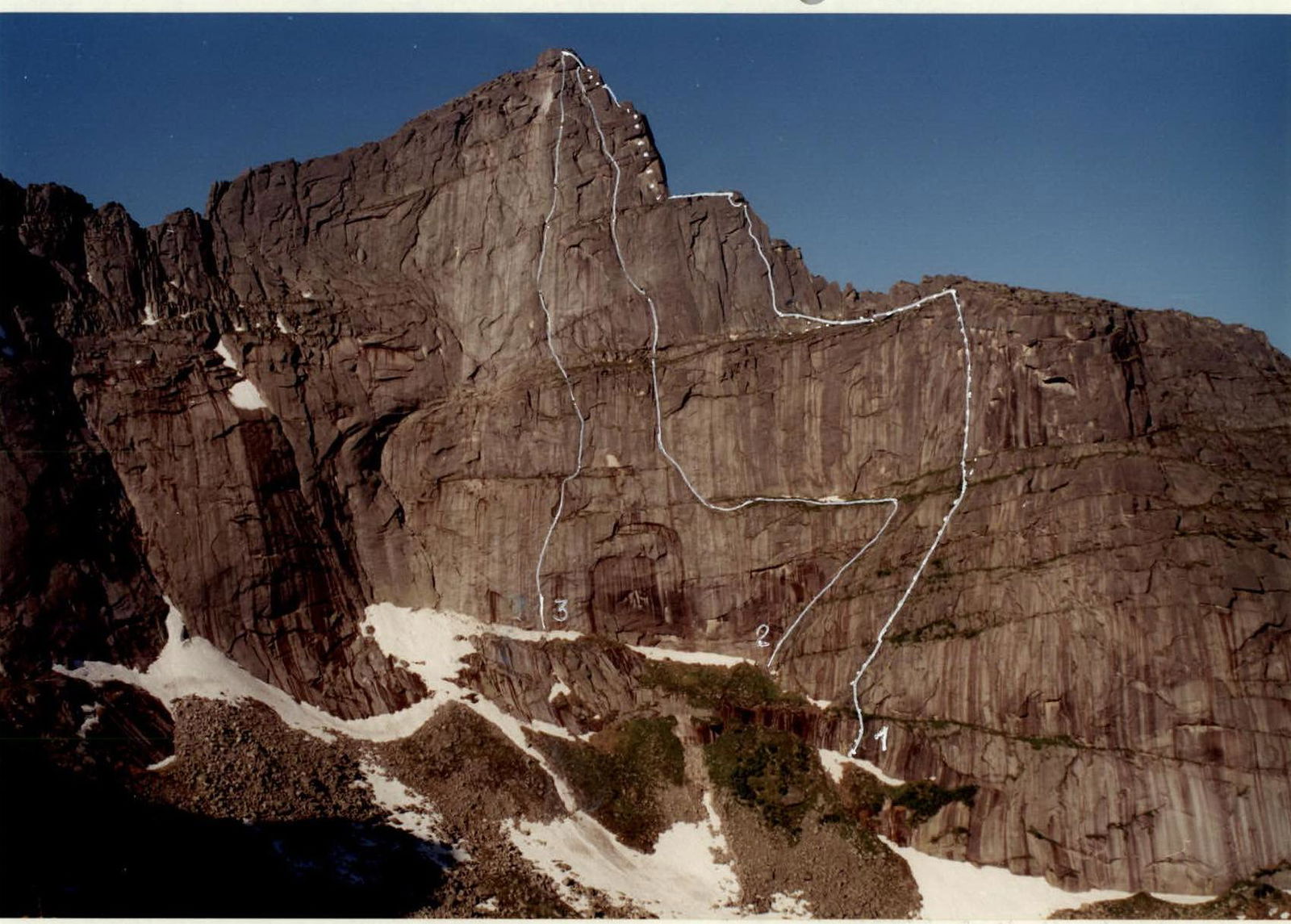
General view of the NE wall of Zvezdny Peak
- Team's route, first ascent via the NE wall and the bastions on the NW ridge, 6A
- Route on the NE wall, 6A (Balyezin 97). 3. Centre of the NE wall, 6A (Khvostenko 01) — first ascent
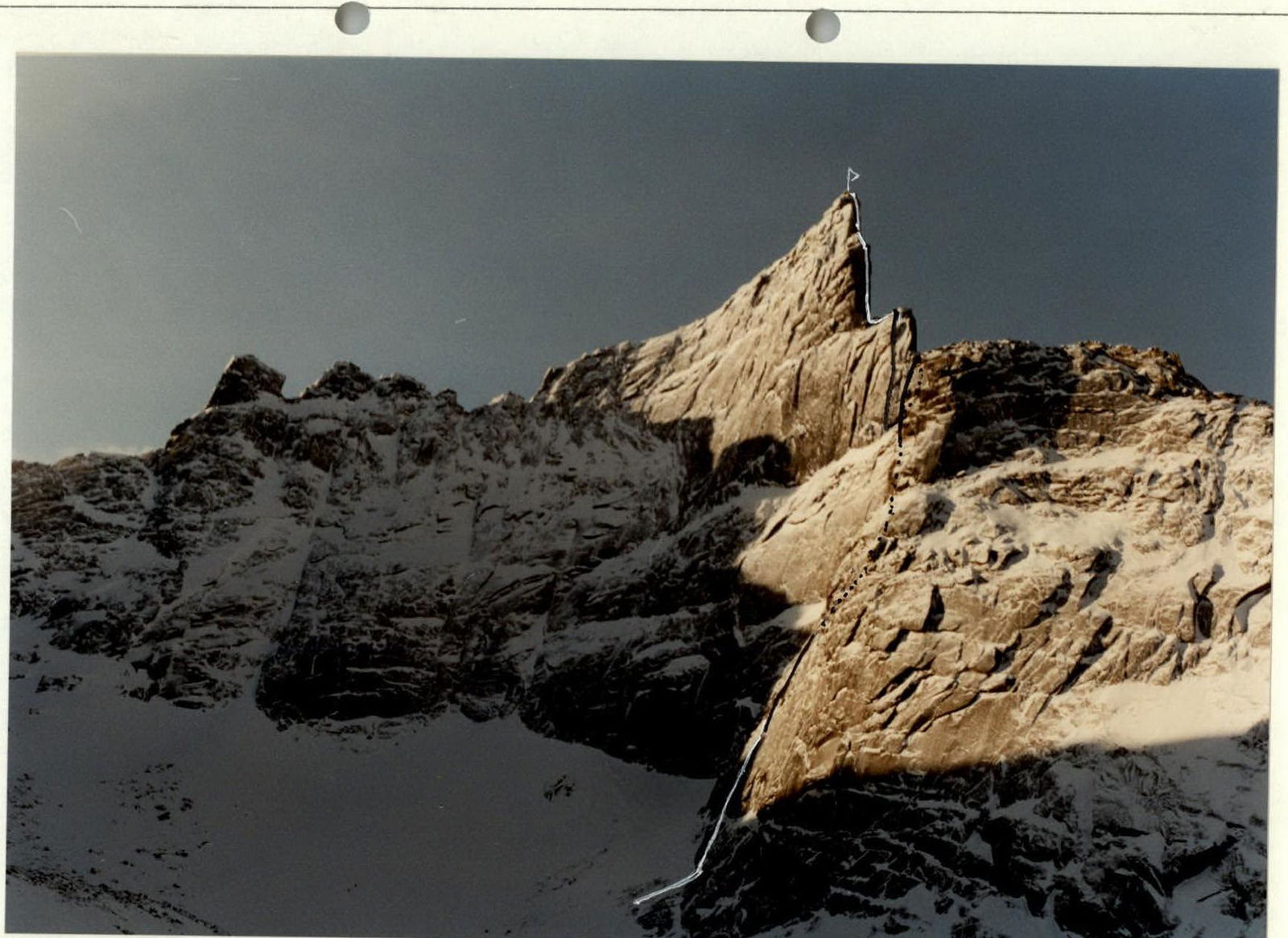
View of the route from the right. Part of the route on the first bastion is not visible
Taken in February 1997.
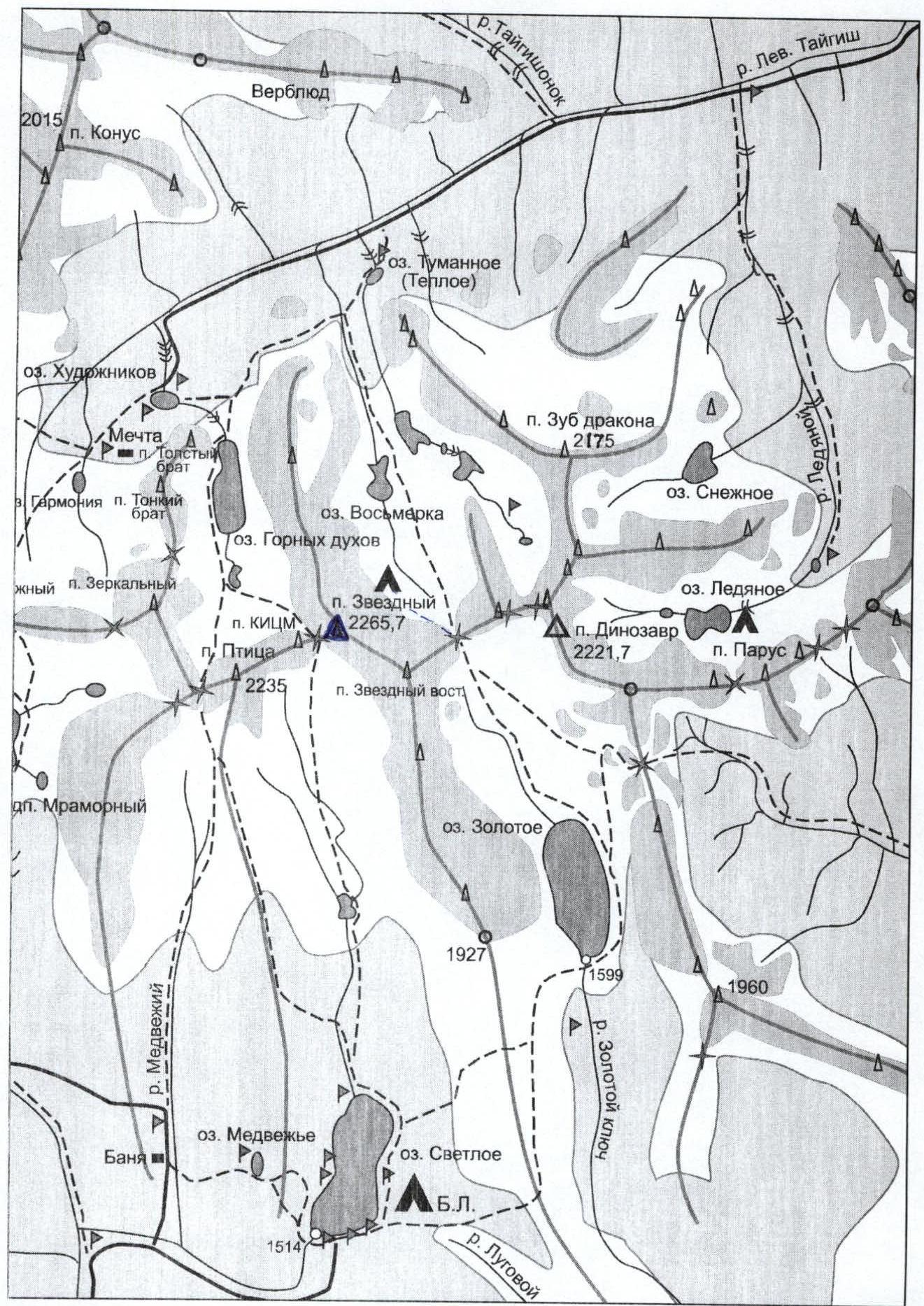
Area map
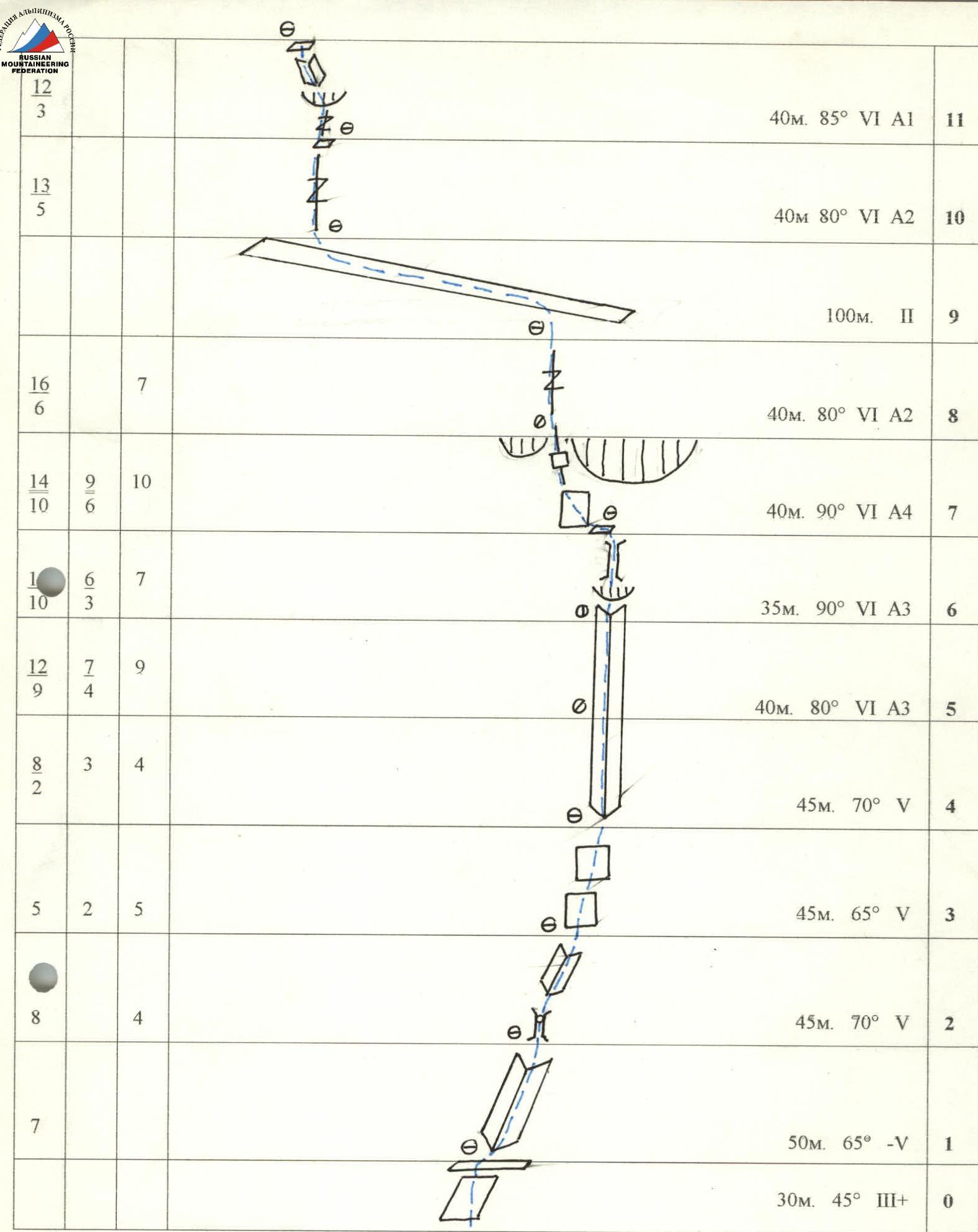
UIAA scheme. Page 1
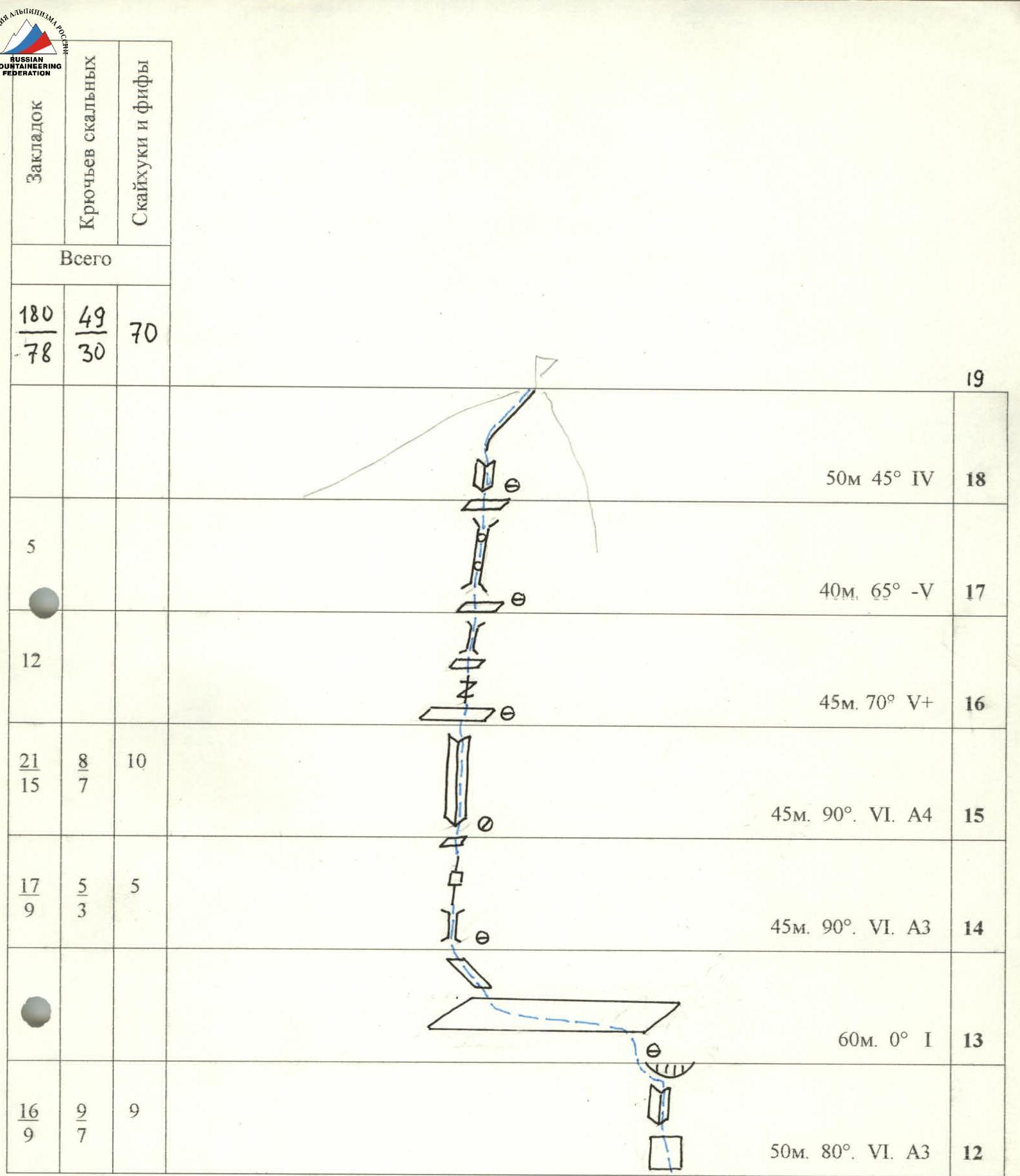
UIAA scheme. Page 2
Brief description by sections
Section R0–R1. Wet and slippery slabs.
Section R1–R2. Inner corner, heavily overgrown with grass.
Section R2–R3. Vertical chimney, then an inner corner overgrown with grass.
Section R3–R4. Wet walls and slabs, overgrown with grass.
Section R4–R5. Wet and steep inner corner, heavily overgrown with grass.
Section R5–R6. Steep, wet inner corner, climbing is difficult, some "loose rocks".
Section R6–R7. Overhanging corner-chimney, leading under a large overhang. Climbing is difficult, some "loose rocks". At R7, under the overhang, there's a control cairn.
Section R7–R8. Traverse under the overhang to the left, then up-left along a smooth steep wall under the overhang. Big problems with belay organization. Protection on skyhooks and Fifis.
Section R8–R9. Wall with wide cracks, leading to the summit of the first bastion.
Section R9–R10. Large grassy ledge, about 100 m traverse to the left.
Section R10–R11. Beginning of the second bastion. Steep wall with a crack.
Section R11–R12. Wall with an overhang in the middle.
Section R12–R13. Wall with scarce relief, then an inner corner, at the end of the corner a 10 m traverse to the right onto a ledge. From it, up and through the overhang — exit to the summit of the second bastion.
Section R13–R14. Large wide ledge, excellent bivouac site.
Section R14–R15. Steep, and in the upper part overhanging wall with a crack, sometimes turning into a chimney. Climbing is very difficult. At R15 — control cairn.
Section R15–R16. Slightly overhanging inner corner, with poor, mostly blind cracks. Key section of the route. Protection on skyhooks and Fifis. Mainly small chocks and pitons are used. Leads to a good ledge.
Section R16–R17. Large monolithic blocks with very wide cracks, passable by climbing, but problems with belay organization. Exit to a good ledge under a chimney.
Section R17–R18. Chimney leading to the pre-summit shoulder.
Section R18–R19. At the beginning, a small, about 8 m, steep inner corner, then an easy pre-summit ridge leading to the summit.
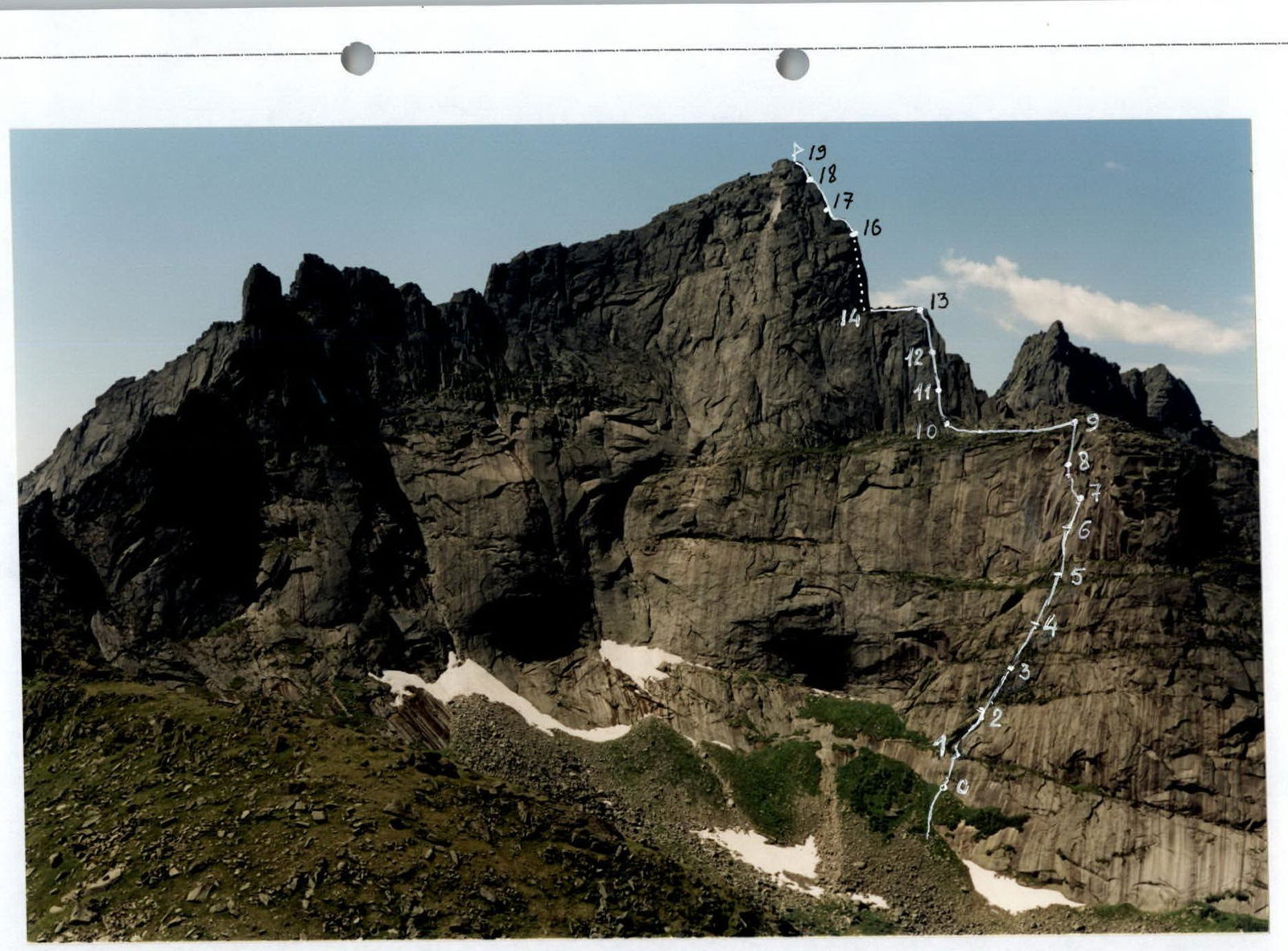
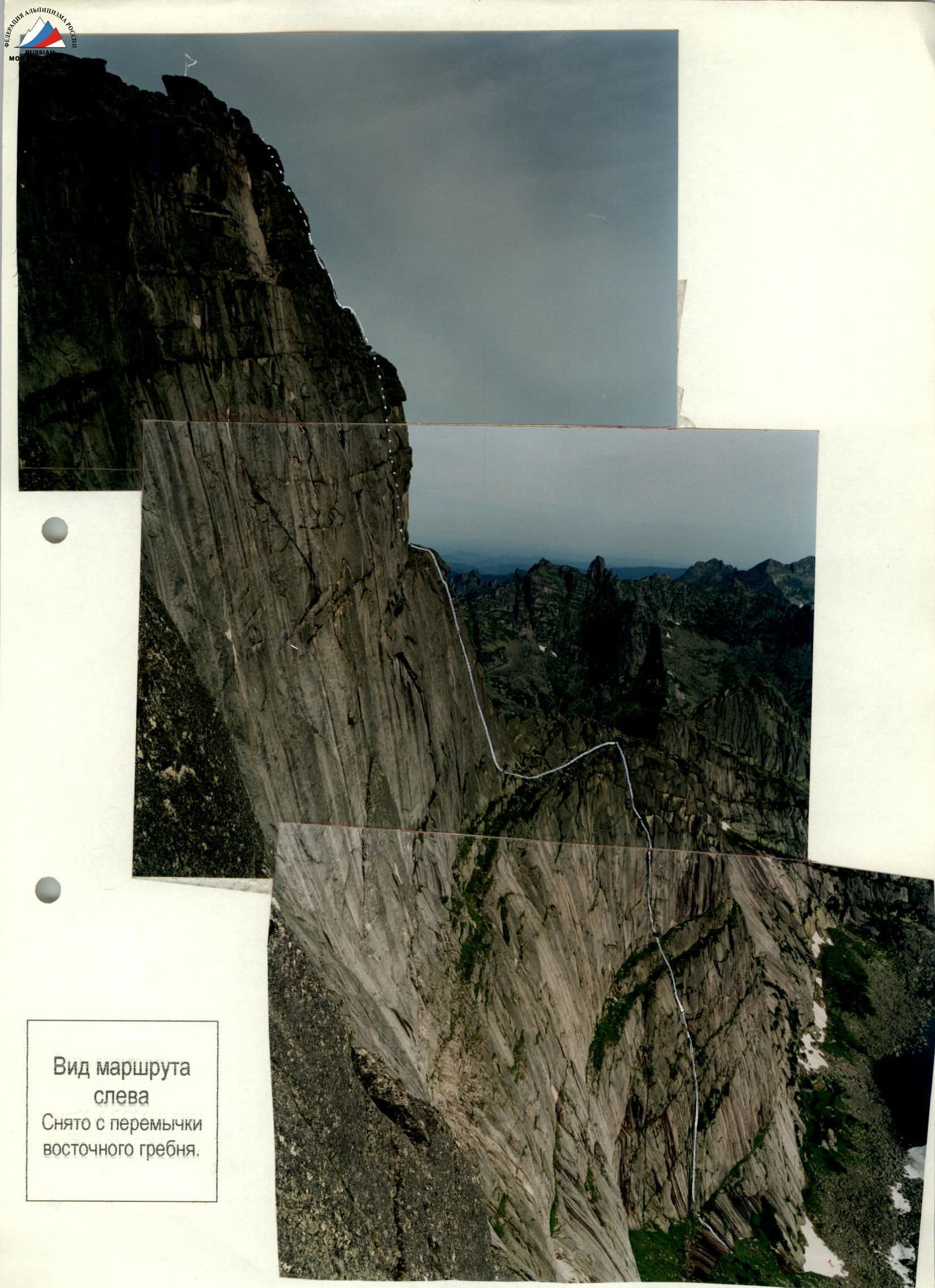
Technical photograph of the route.
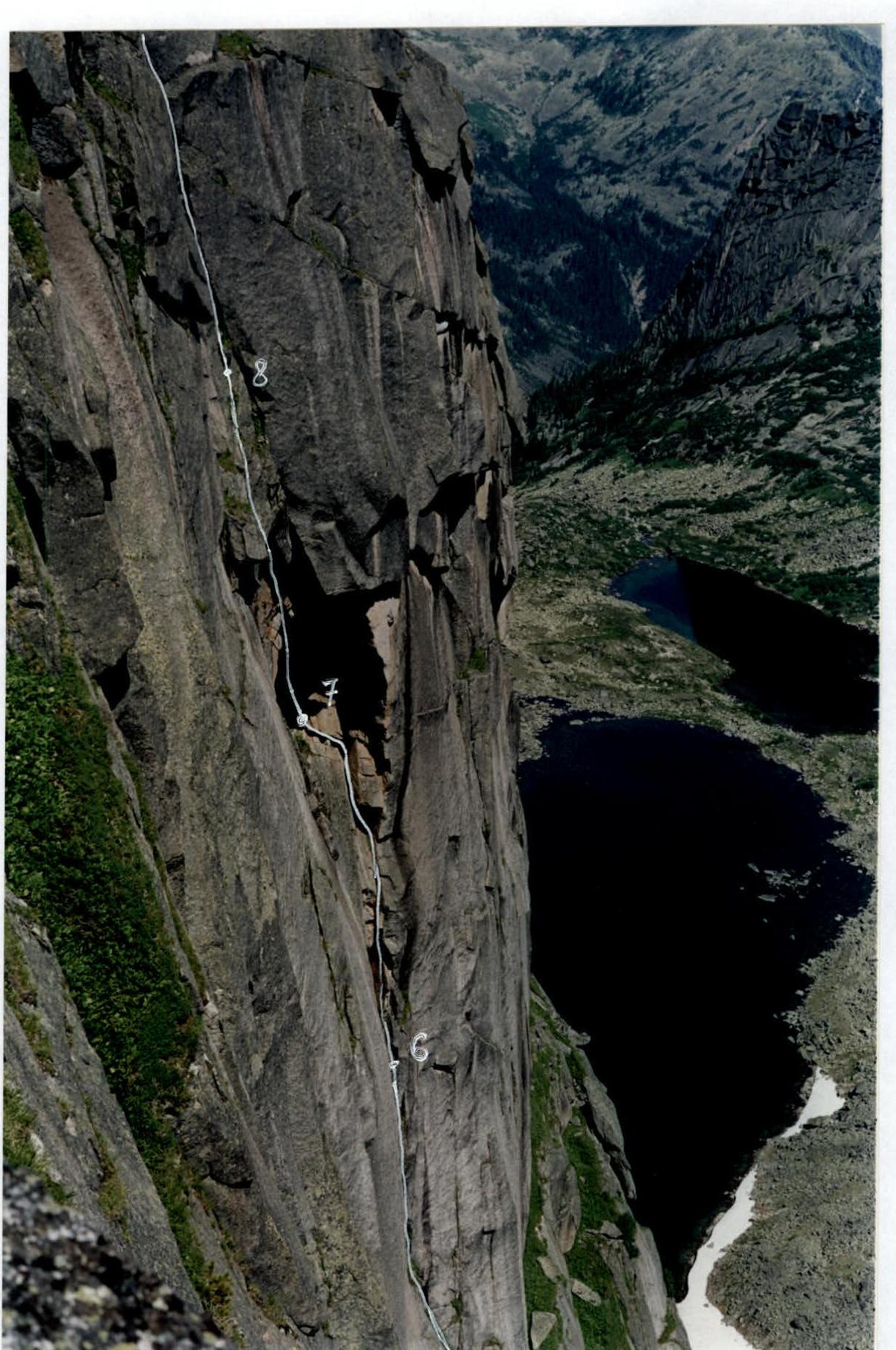
Technical photograph of the main part of the first bastion.
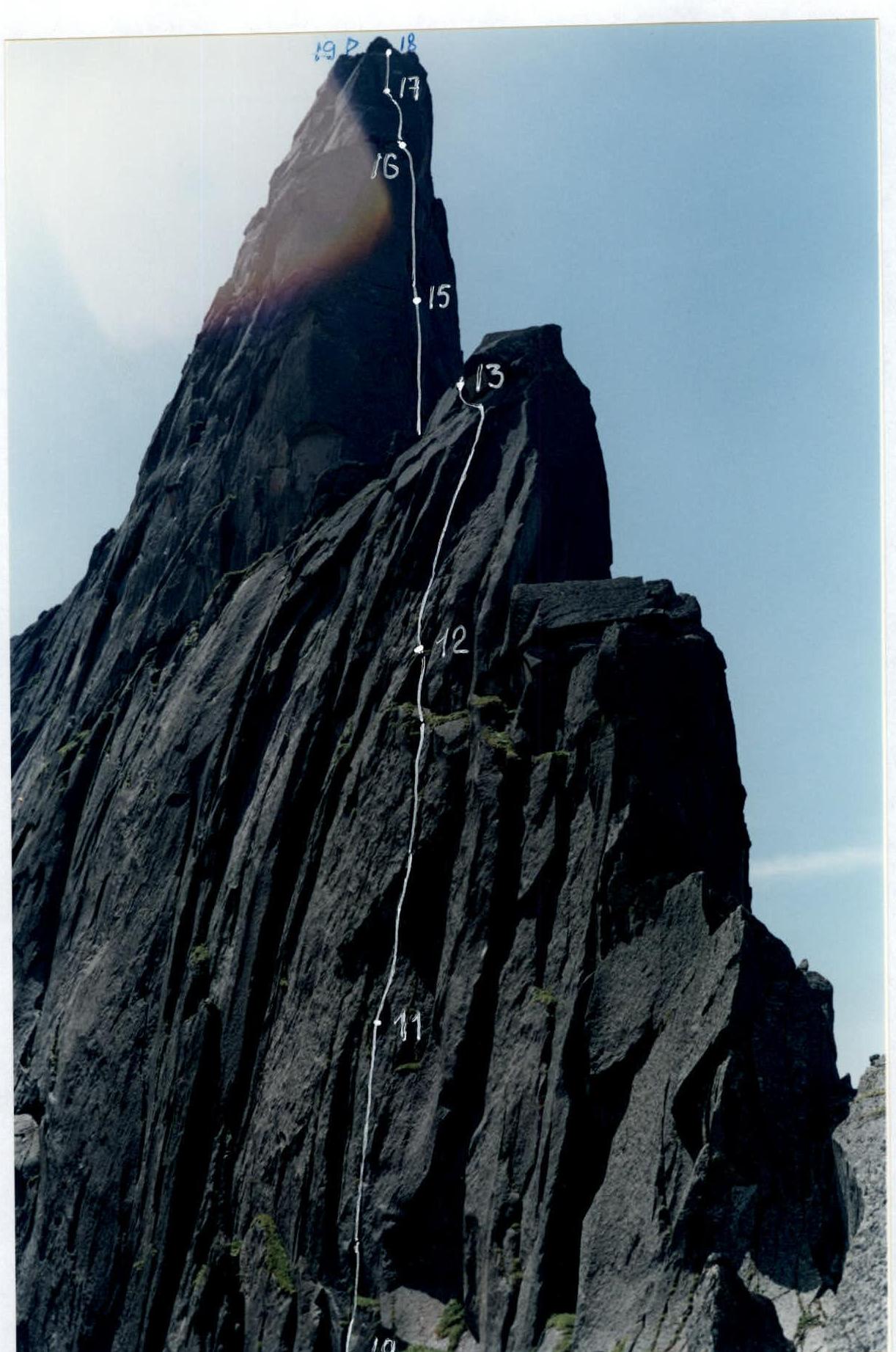
Technical photograph of the second and third bastions.
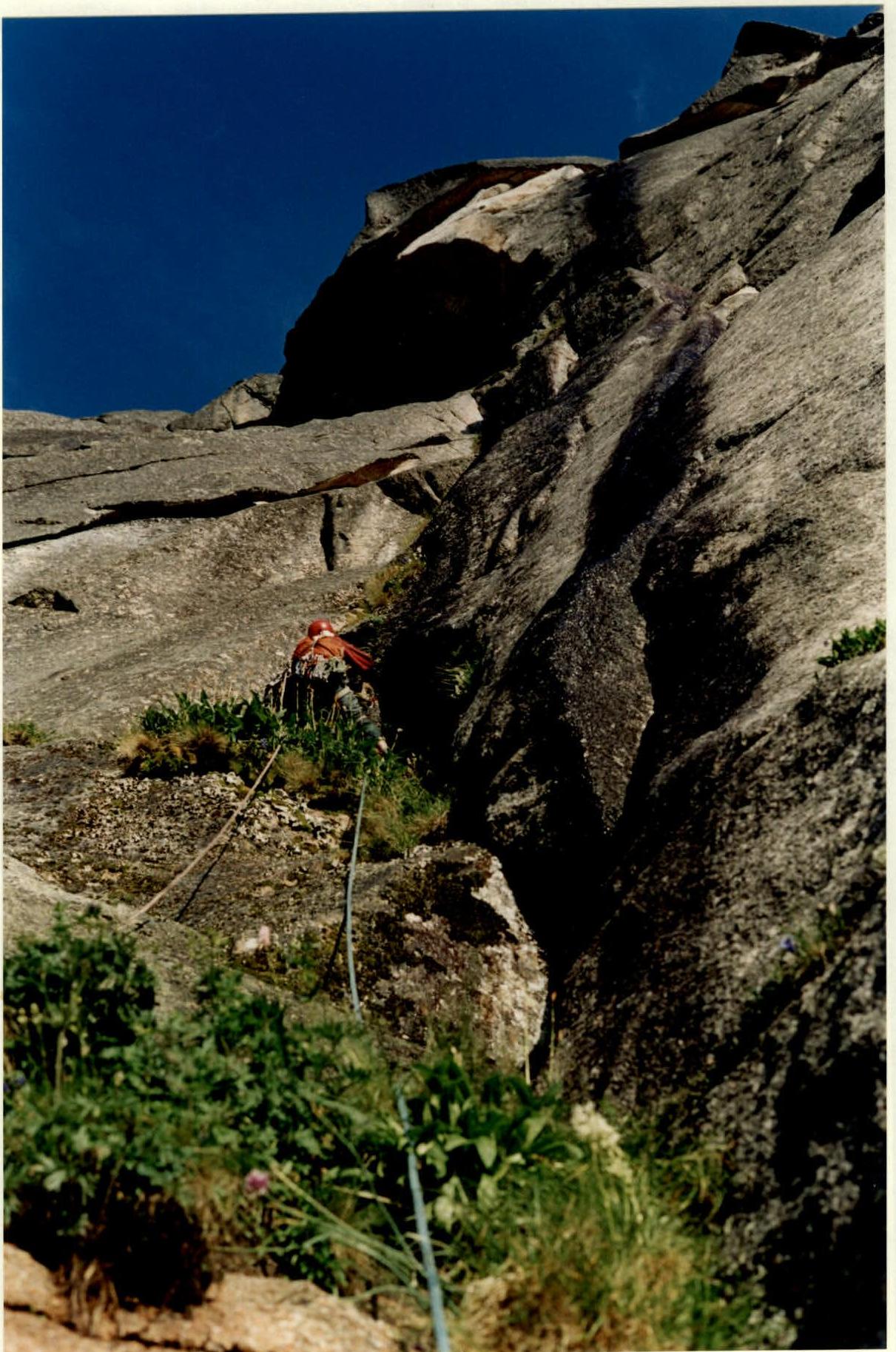
Section R4–R5, wet, steep, heavily overgrown inner corner. Beginning of the main part of the first bastion.
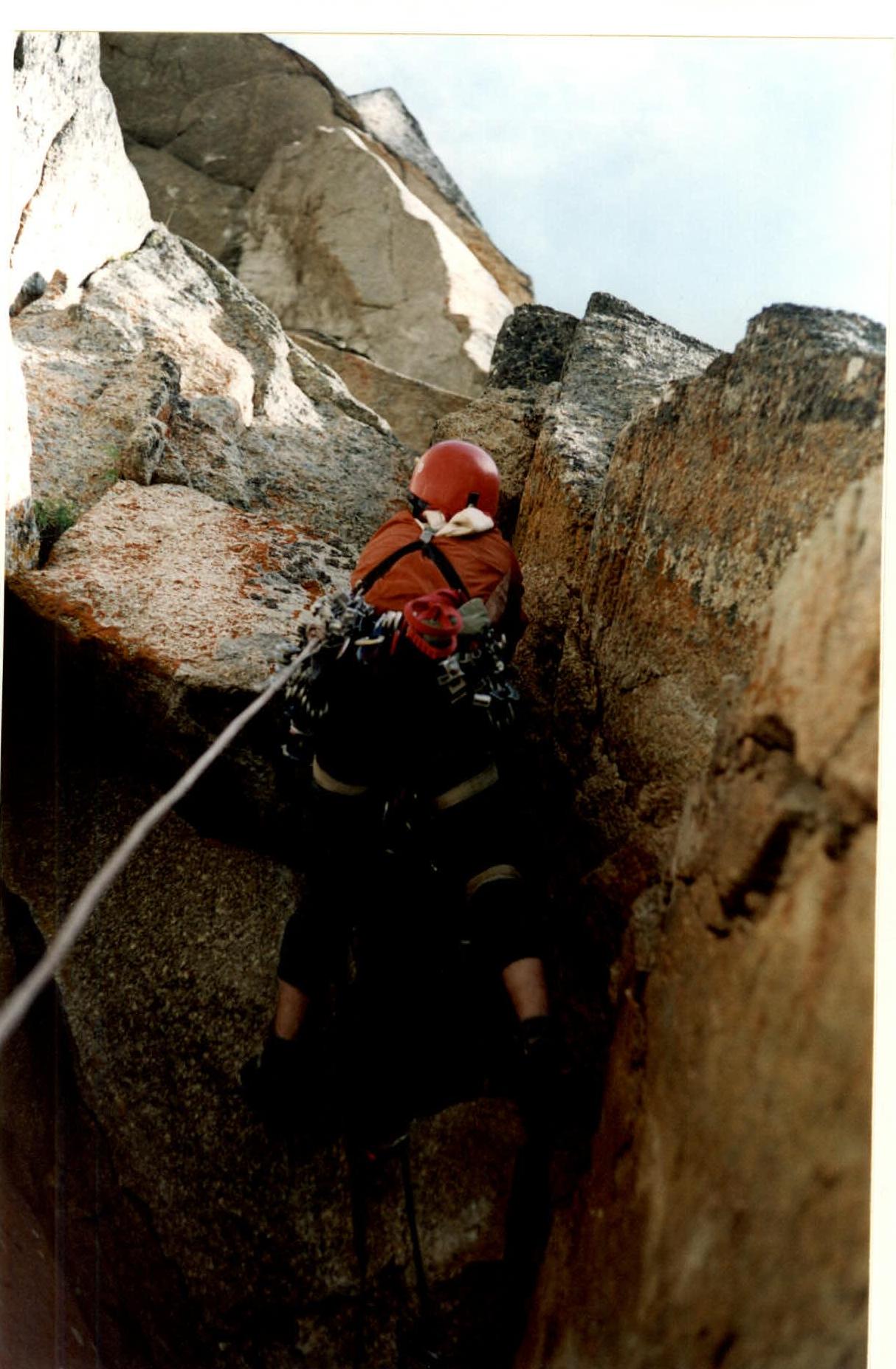
Section R6–R7. Passing the overhang.
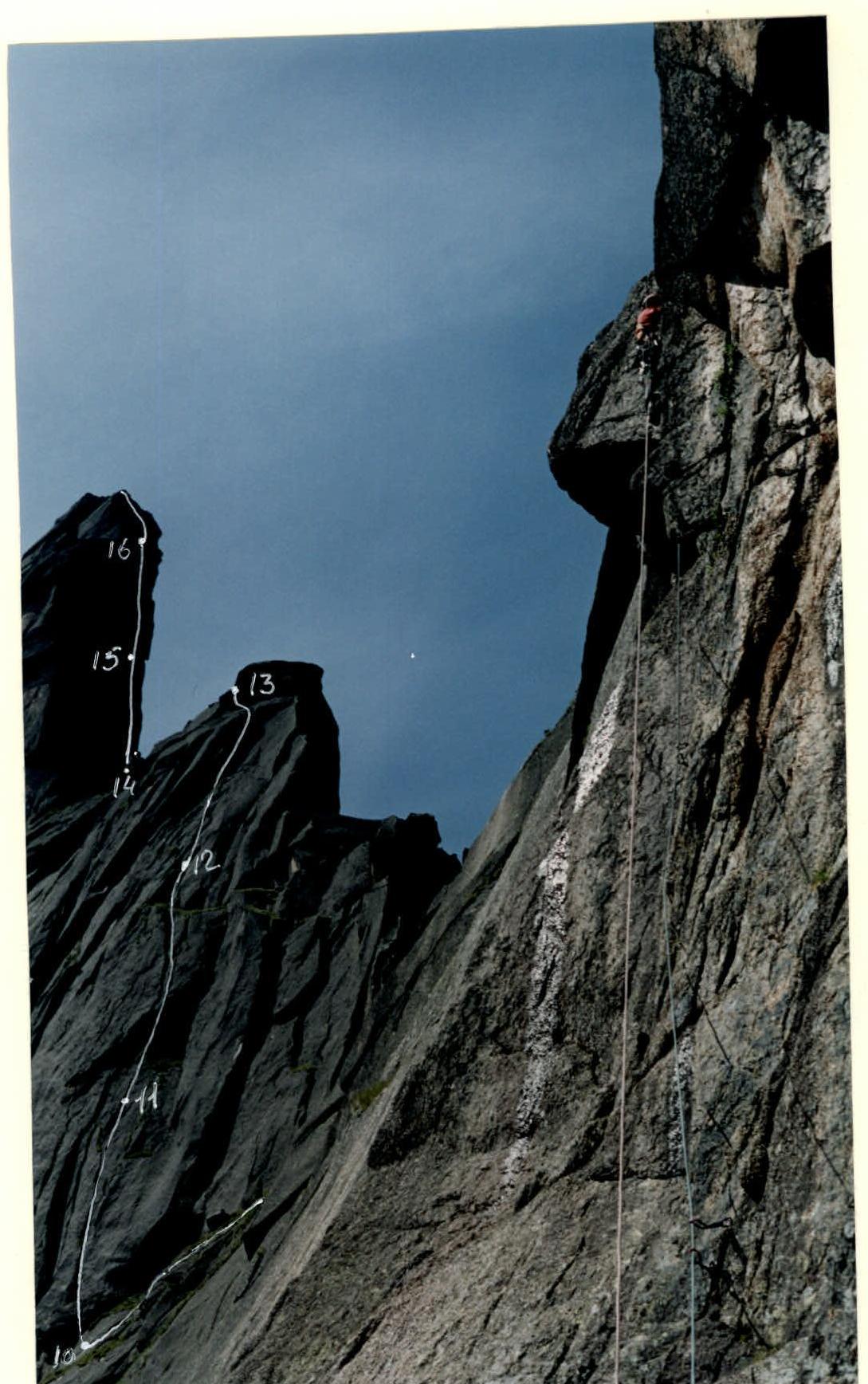
Section R7–R8. Key part of the first bastion, exit from under the big overhang.
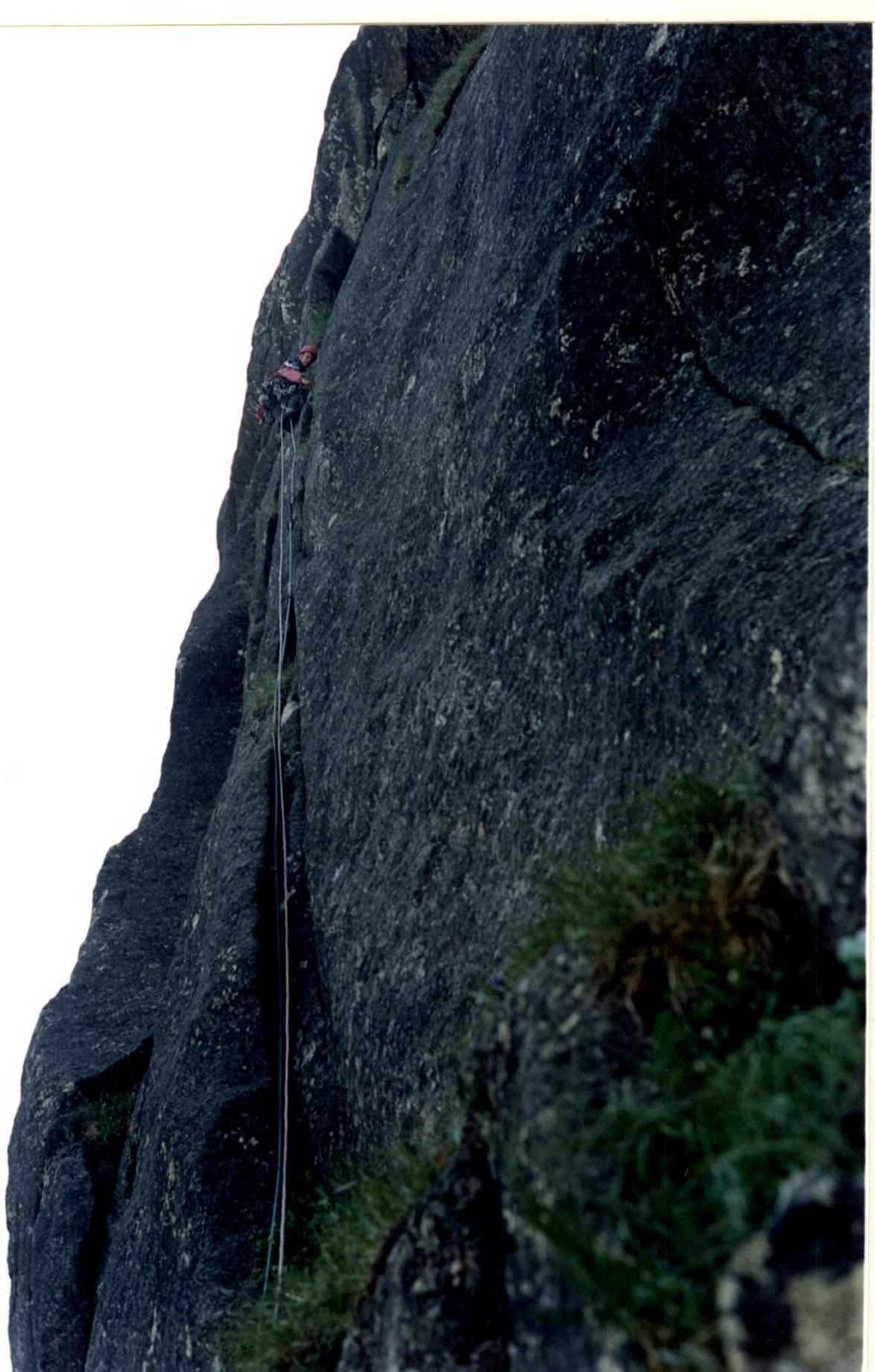
Section R10–R11. Beginning of the second bastion.
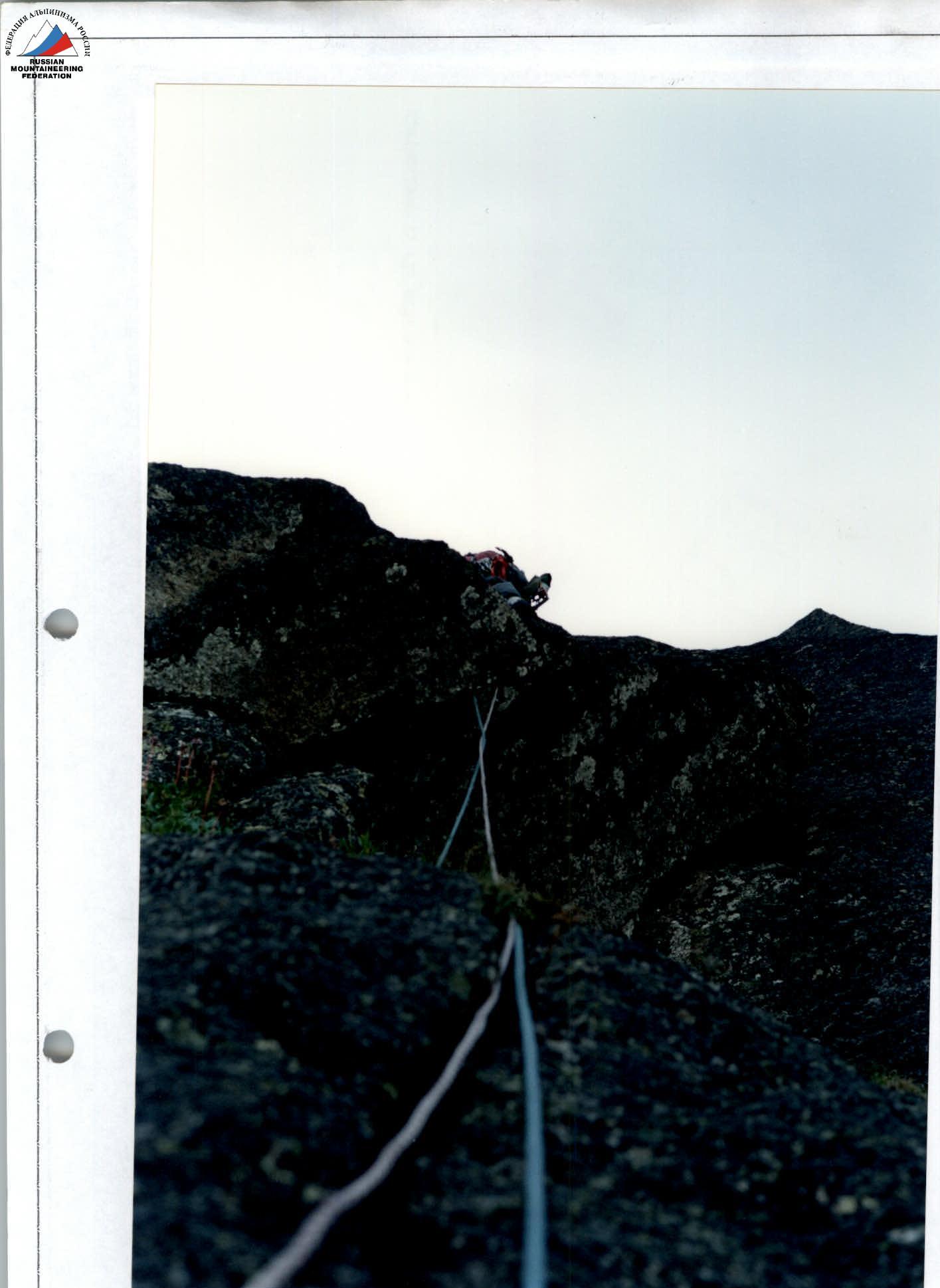
Overhang in the middle part of section R11–R12.
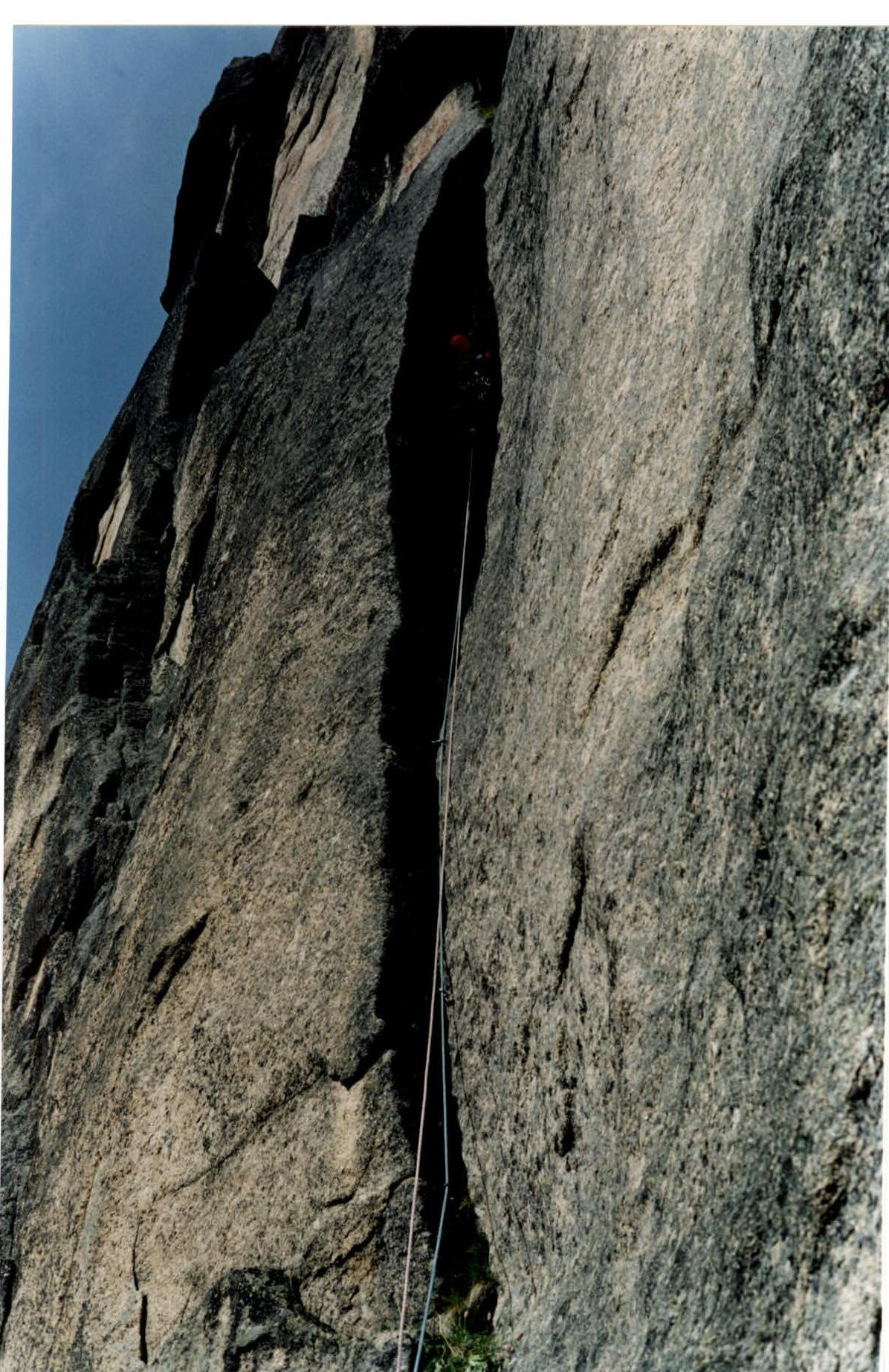
Section R14–R15. Beginning of the third bastion