

PASSPORT
- Rock class.
- Western Sayan, Ergaki ridge.
- Peak Zvezdny, 2265 m via the South-West edge.
- Proposed — 5A cat. dif., first ascent.
- Route characteristics: elevation gain 315 m, length 340 m, length of section 5–6 cat. dif. 210 m, avg. steepness of the wall part of the route 78°, of which 6 cat. dif. 80 m (sect. R4–R6).
- Pitons driven:
| rock | nuts | bolt pitons |
|---|---|---|
| 20 | 65 | 9 |
| 8 | 16 | 9 |
- Climbing hours — 13, days — 1.
- Participants: Lebedev V.A. MS Bogdanov V.A. CMS
- Coach: Zakharov Nikolai Nikolaevich
- Departure to the route: June 27, 1996 summit: June 27, 1996 return: June 27, 1996
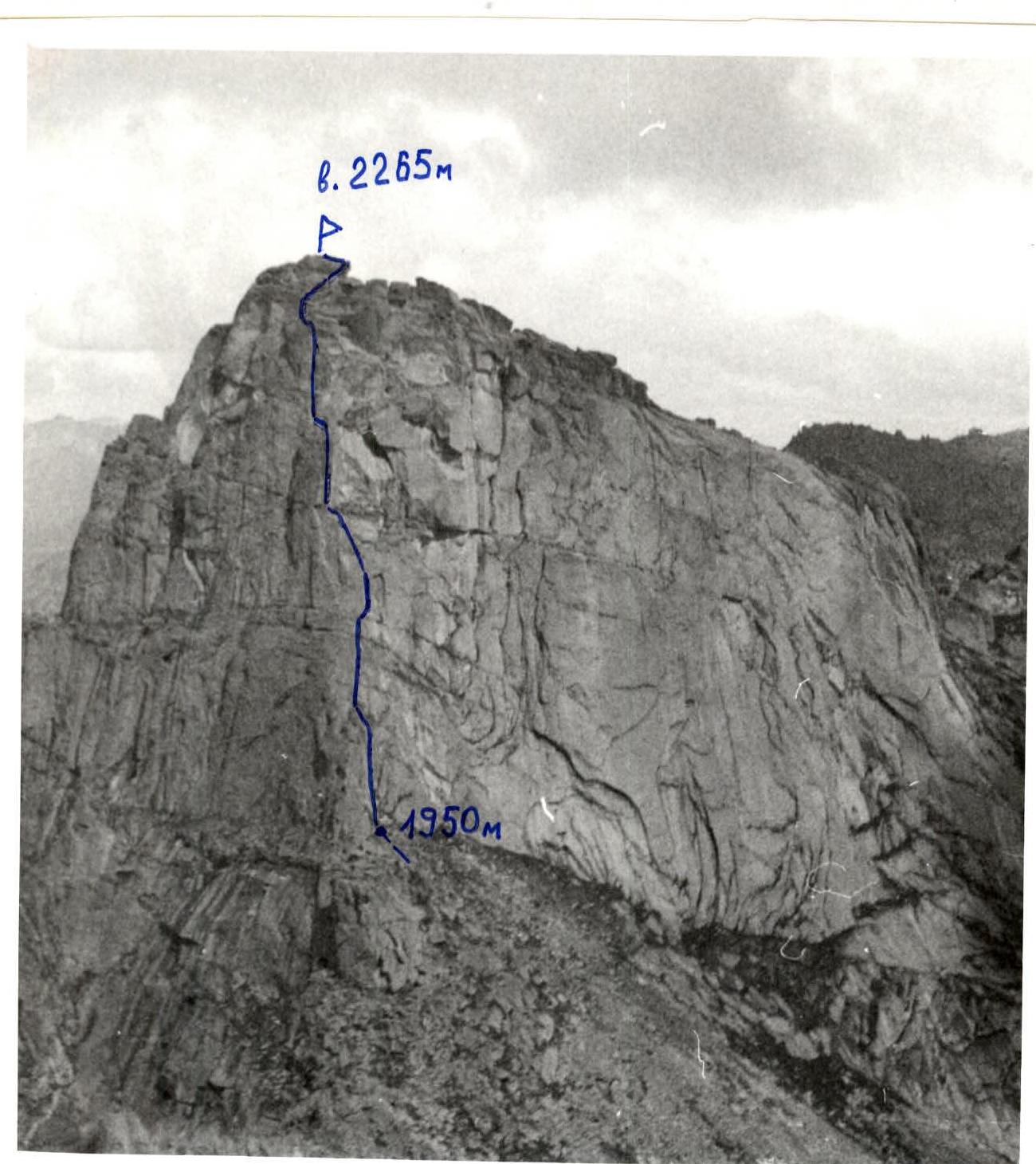
General photo of the summit, taken in July from p. Ptitsa with "Smena".
-2-
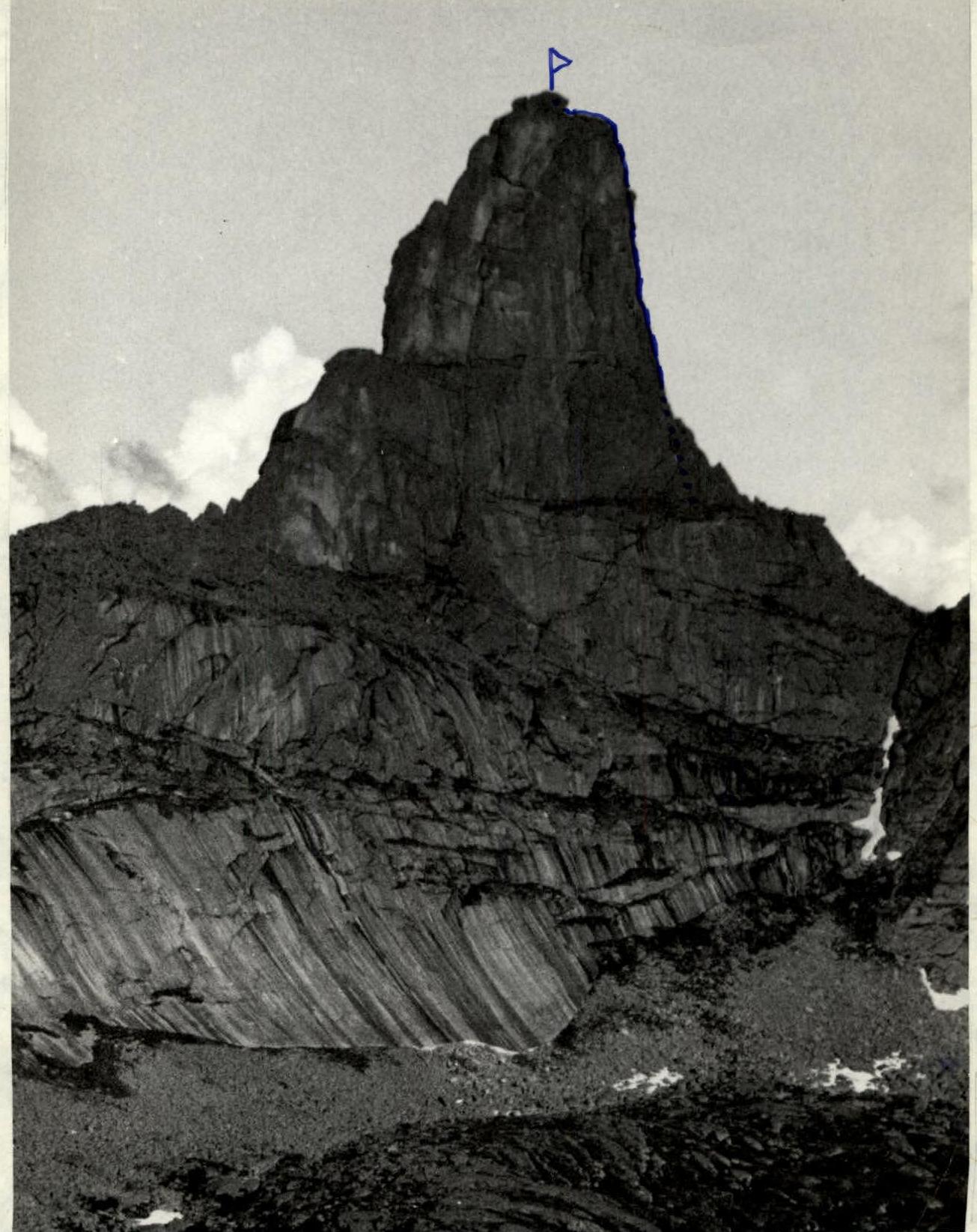
Route profile from the left
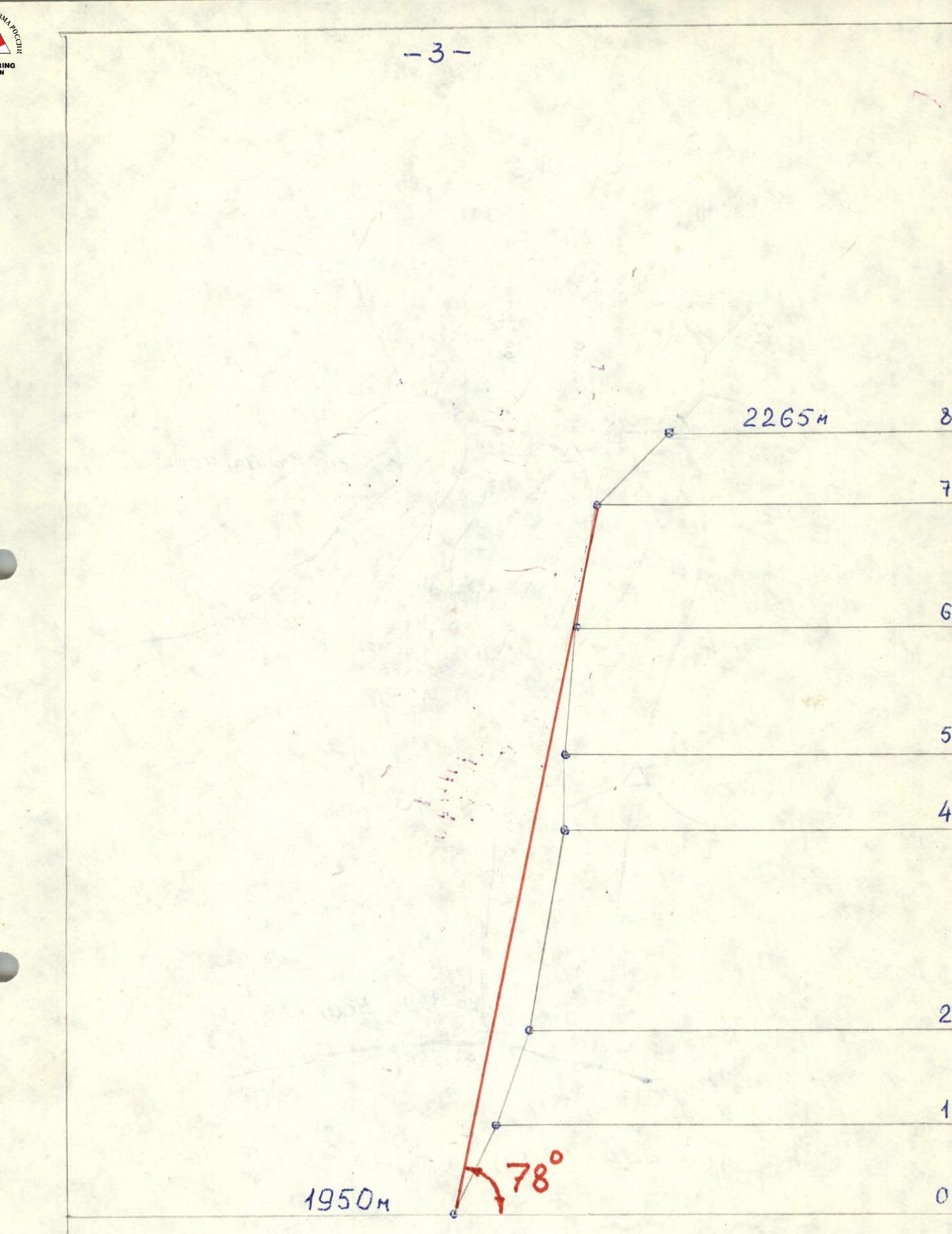
Route profile
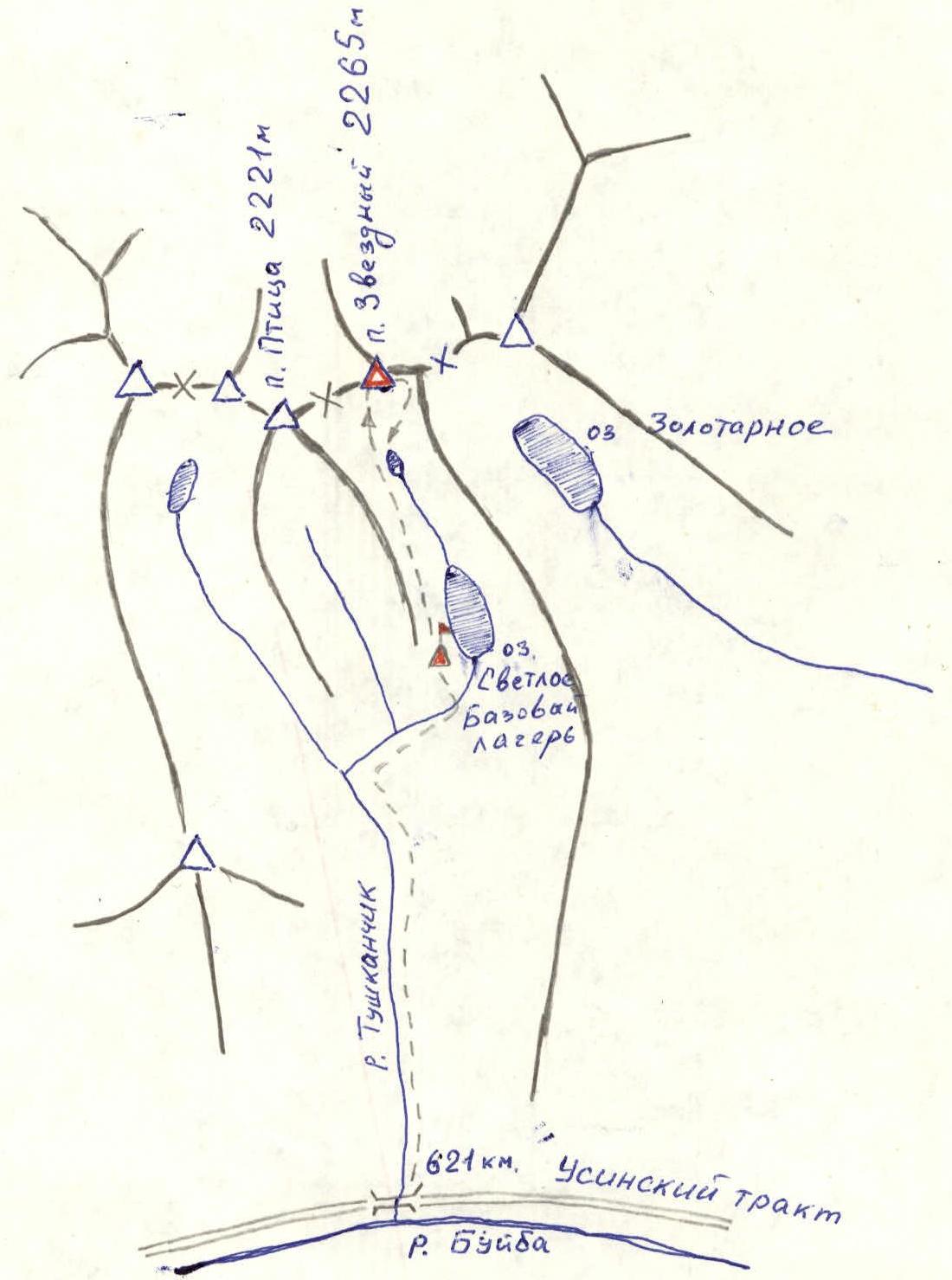
Area map M 1:100000
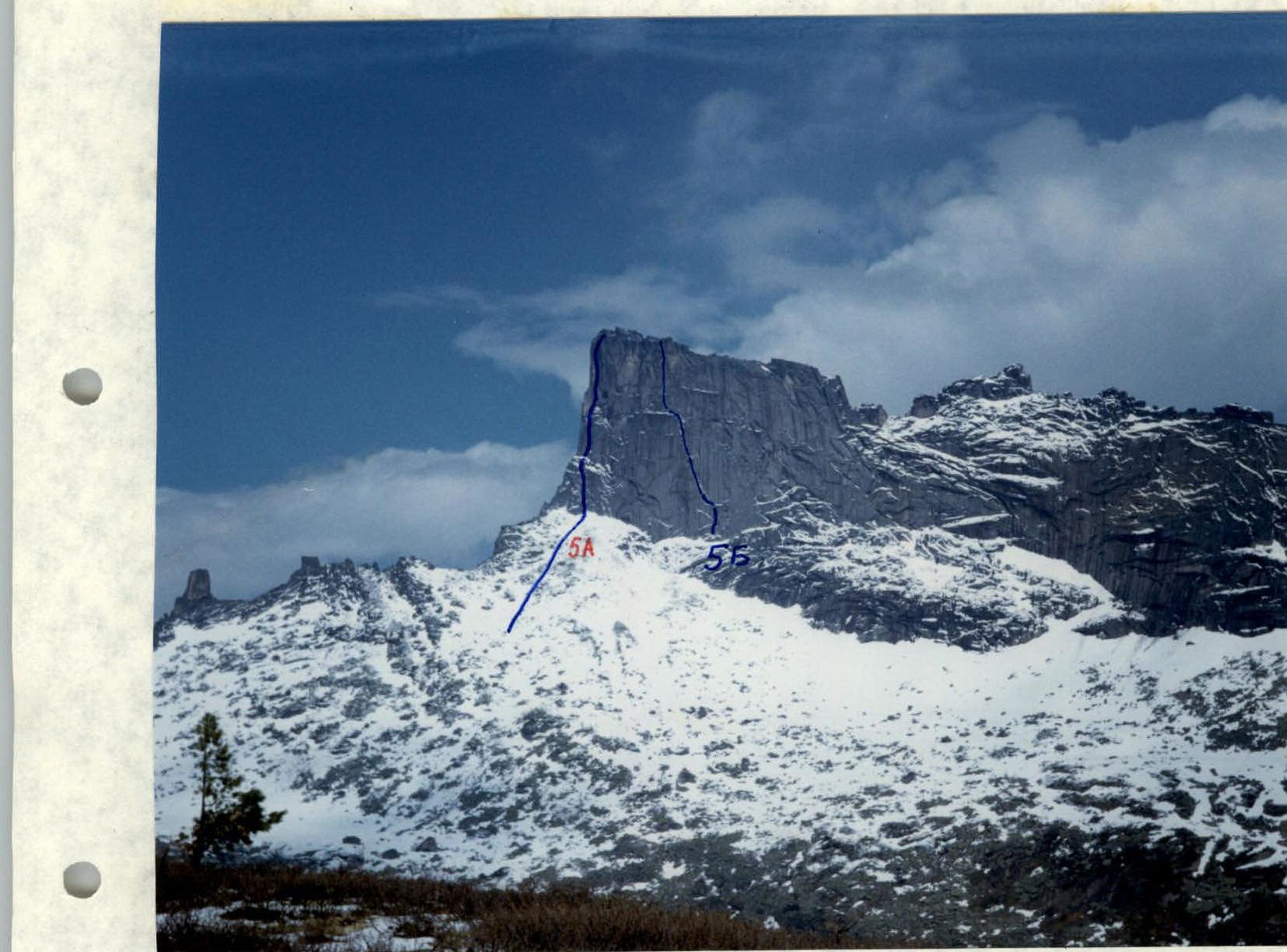
Route profile from the right
Brief overview of the climbing area
The Ergaki massif is located in the central part of the Western Sayan. The length of the massif from west to east is about 80 km, the width is about 60 km. The Ergaki massif is heavily dissected, with many steep rock walls, deep river valleys, and lakes. The terrain is mountainous and forested with a dense river network. The relief is mid-mountainous, with prevailing heights of 1450–2100 m. The highest point is 2281 m. The weather in the area is very unstable, with high precipitation. This territory is characterized by an East Siberian type of climate with a long and harsh winter; snow in the high-altitude zone melts only by the end of June and falls again in late August. Summer is cool:
- Daytime temperatures in July: +10 °C, +15 °C
- Nighttime temperatures: +2 °C, +6 °C
In June, there are many midges and mosquitoes. Peak Zvezdny is the second highest summit (2265 m) and is considered the most difficult peak in the area.
The area is very promising for mountaineering, with steep rock walls having a height difference of up to 600 m.

Route description by sections
Section R0–R1. Wide crack leading to a small ledge, then right along the internal corner to a grassy ledge.
Section R1–R2. Monolithic wall ending in a good ledge.
Section R2–R4. Internal corner leads under a steep monolithic internal corner with a slit. 8 bolt pitons driven. Exit to a good ledge.
Section R4–R5. Monolithic wall, pendulum to the left on a bolt piton to a thin slit, which is climbed using aid climbing. Internal corner under an overhanging chimney with a plug. Climbing is very difficult.
Section R5–R6. Very difficult narrow chimney with a plug in the lower part, then a steep monolithic wall with a thin slit, aid climbing.
Section R6–R7. Wide crack, then a cornice is bypassed on the left using aid climbing. Exit to a ledge.
Section R7–R8. Alternation of steep walls and ledges leading to the ridge, then to the summit.