Central Council of the Spartak Sports Society
Report
on the ascent of Peak Engel'sa via the north-eastern wall
- Kustovsky A.A.
- Kletsko K.B.
- Cherevko V.L.
- Shalaev G.I.
- Yakovenko Yu.K.
- Yakovina V.A.
1964
III. Tactical Plan of the Ascent and its Implementation
The tactical plan of the ascent was largely clear to us even before we left for the mountains.
After being adjusted based on observations made during preliminary exits, it looked as follows:
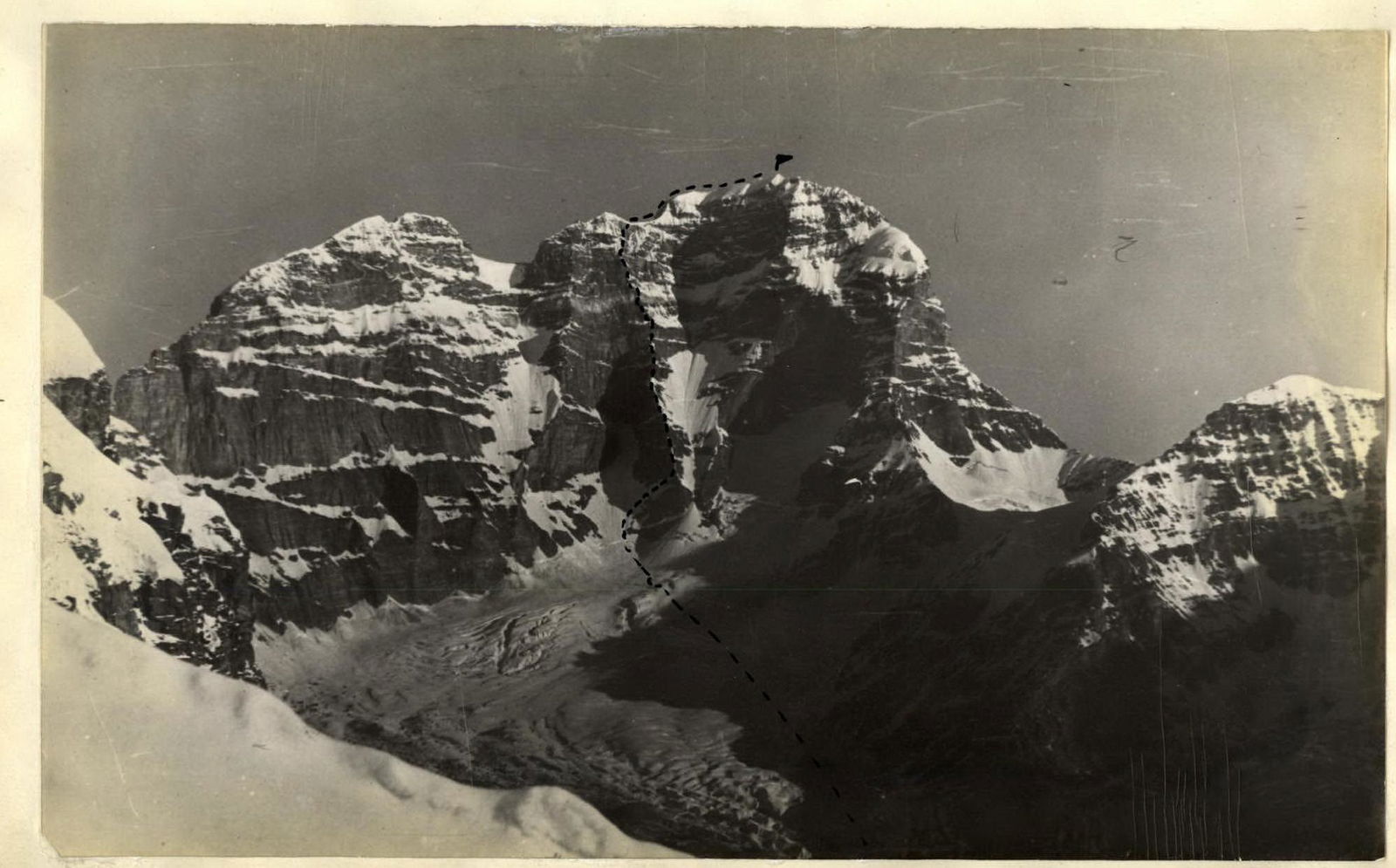
The ascent route was chosen via the north-eastern wall, as indicated in the application as an alternative, due to its logical nature and greater safety. The route was divided into three characteristic sections:
- The first section, starting from the Nesper Pass, was a ridge of 4A–4B cat. dif.
- The second section — a wall with three sheer steps.
- The third section — a snow-ice cushion and the pre-summit ridge of 4A–5A cat. dif.
The main difficulty was the second section, approximately 750 m long, which involved very complex climbing up to altitudes of 6300 m.
The tactical plan provided for departure from the assault camp (5000 m) under Nesper Pass on the first day.
On the second day, it was planned to overcome the ridge part of the route with an overnight stay under the wall.
On the third day — movement along the wall's first step, with an overnight stay under its overhanging part.
On the fourth day — passage of the overhanging part of the first step, reaching the beginning of the second step.
On the fifth day — overcoming the sheer second step, reaching the beginning of the third step.
On the sixth and seventh days, it was planned to:
- pass the third step;
- reach the snow-ice cushion.
In the next three days, it was planned to traverse the pre-summit ridge, descend to the saddle between Peak Marx and Peak Engel'sa, and return to the assault camp.
The implementation of the tactical plan did not require any adjustments. The timing of the passage of the route sections and the estimated difficulty were confirmed. However, the pre-summit ridge required more effort from the group than expected due to very poor snow conditions.
IV. Description of the Ascent
August 17. We leave the base camp by the lake at an altitude of 4500 m at 6:00 and arrive at the assault camp under the slopes of Peak 5800 by 9:00. We check radio communication with the base camp, collect pre-prepared food and equipment, and depart under Nesper Pass at 13:00. The weather is good. We stop for the night under the pass at 17:00. A pair processes the exit to the ridge through the bergschrund and hangs a rope, while the others set up a tent in the bergschrund.
August 18. We start early at 6:00. We cross the bergschrund and exit onto the ridge leading from Nesper Pass to the north-eastern wall of Peak Engel'sa (R0–R1). The ridge is snow-ice with rock outcrops and two small gendarmes. The total length of the ridge is about 300 m with a relatively small altitude gain. We organize belays through outcrops and rock pitons (R1–R2). Heavy backpacks significantly slow down the pace. This section corresponds to 4A cat. dif.
Further, the ridge turns into a rib leading to the start of the wall. The rib begins with a 15-meter rock wall with a crack at the bottom. Here, we organize the first hauling of backpacks (R2–R3). Then follows a rocky rib with snow ridges and small rock walls up to 5 m. The overall steepness of the rib is 40–50° with increasing steepness in the upper part. The rocks are solid (R3–R4).
The rib ends in rock slabs covered with rimed ice. The slabs form an internal angle of 60° (R4–R5), which transitions into a groove with icy walls. The section (R4–R5) is traversed without backpacks, with step-cutting in the upper part.
Next is a small snow ridge from which the wall begins. We cut away the ridge and organize a bivouac. As anticipated during route reconnaissance, the overnight stay is good, in a tent.
August 19. We depart from the bivouac at 7:00. Immediately from the overnight site, a nearly sheer rock wall begins, which is traversed without backpacks (R6–R7). Further follows almost smooth rock slabs (R7–R8) with rare wide cracks. This section is passed relatively easily. Here, the "Vibram" boots worn by all group members again prove their advantage on rock.
After the slabs, we move along snowy rocks. Climbing is complex, and snow does not hold. The section (R8–R9) is traversed by all without backpacks. From here and until the top of the third step (R20), we move without backpacks, organizing staged hauling. On this day, we manage to pass a chimney with a plug (R9–R10), after which:
- the lagging group begins to organize a bivouac;
- a pair moves another twenty meters, hanging a rope on a very complex section (R10–R11), and then descends.
Two hours of effort by the group allows for only a seated bivouac, and in different places.
August 20. The first pair begins movement at 8:00. It's quite cold, making an earlier start difficult.
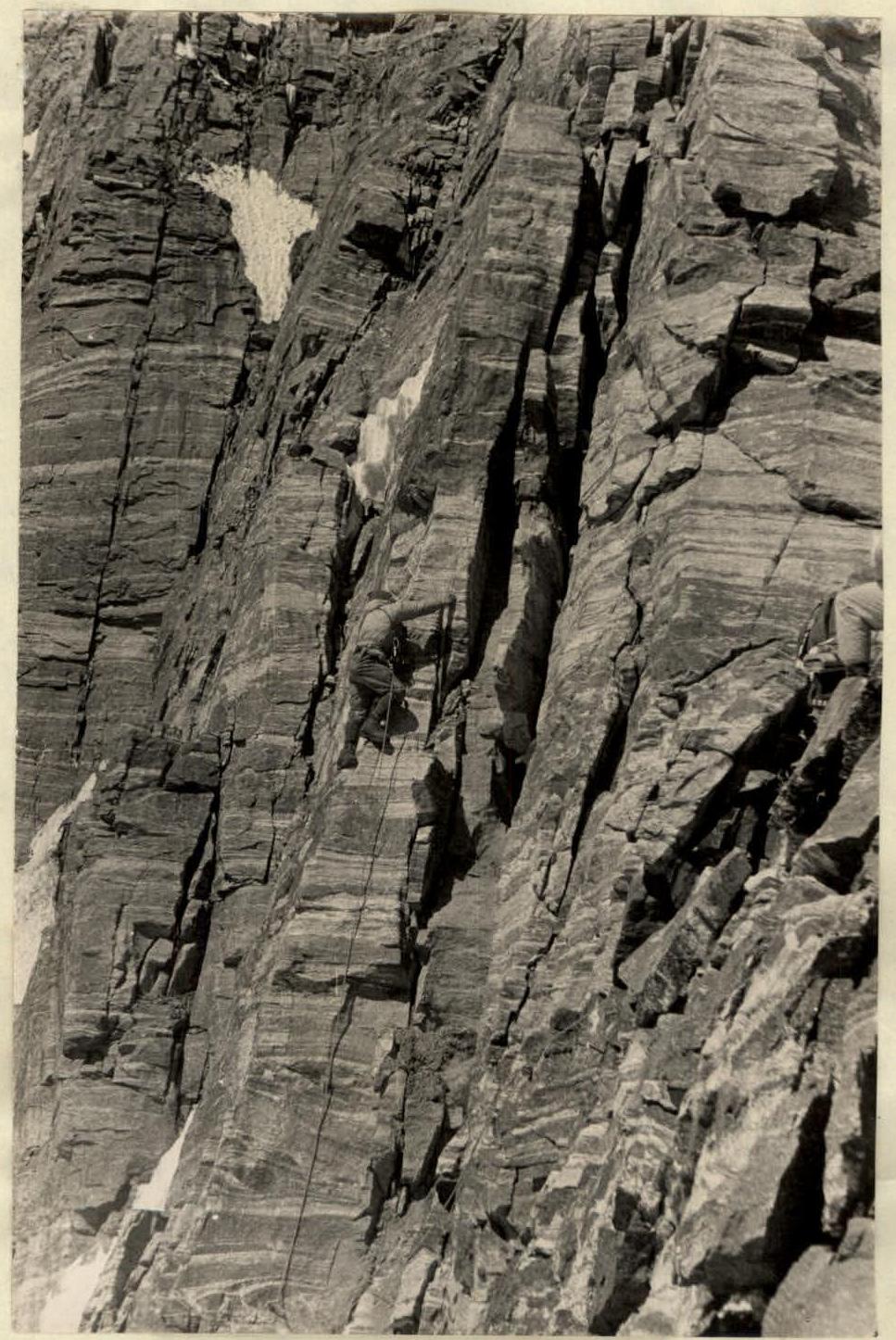
Having passed the section (R10–R11), we begin work on the sheer first step, which culminates in an imposing cornice (R12–R13). Fortunately, there's a section where the cornice does not exceed 1 m.
The sheer face is covered with almost a continuous layer of ice up to several centimeters thick. The ice forms from melting snow located above the first sheer face, visible in photographs. We use:
- ladders;
- platforms that each group member has.
Huge icicles hang from the cornice, which start to break off after the rocks are warmed by the sun. We are safely under the cornice by then. Helmets protect us well from small ice fragments.
On this day, the entire group reaches the top of the first step. We spend the night again seated and again in different places.
August 21. Again, the first pair moves ahead somewhat earlier than the others. The second step is less steep than the first. However, climbing here is just as complex due to the soft and should come with extensive use of pitons.
In the upper part of the sheer face, we veer right along a ledge (R14–R15) and exit to the base of the third step via destroyed rocks.
Snow pellets and snow fall from the second half of the day. The overnight stay is similar to the two previous ones.
August 22. The weather is clear in the morning. We start moving along the sheer third step (R16–R17). We are now above 6000 m. Climbing the complex rocks that make up this step is very strenuous. Passing the overhanging section (R17–R18) takes at least an hour for each participant, even though they use a pre-hung rope.
By evening, having passed an internal angle with ice (R18–R19), we settle in for the night. Some participants prefer a lying-down overnight stay in a hammock to a seated one.
August 23. In the first two-thirds of the day, we continue movement along the sheer third step. Part of it is traversed by climbing, and in some places, artificial aids are used. Large sections of the route are covered with rimed ice. Finally, in the second half of the day, we are at the top of the third step (R19–R20).
A steep snow-ice slope, where steps are cut and ice screws are used, does not seem particularly steep after the rocks traversed (R20–R21). At 18:00, we are on the snow cushion that the ЦСКА team reached in 1963 during their ascent of Peak Engel'sa via the south-eastern rib. As on previous days, we communicate by radio with the base camp. We spend the night on the snow with all the comforts.
August 24. In the morning, we exit onto the pre-summit ridge (R21–R22) and move along it towards the summit (R22–R23). The ridge is composed of large blocks forming separate small walls. There's a lot of powdery snow, so all ascents on the ridge have to be made head-on. The estimated difficulty of this part of the route corresponds to 4A–5A cat. dif.
We organize a bivouac on a convenient snow platform not far from the summit.
August 25. The ascent to the summit (R23–R24) does not present serious difficulties, and we are on the summit of Peak Engel'sa by 12:00.
After retrieving the note left by MS Budanov's group, we begin our descent to the saddle between Peaks Marx and Engel'sa without delay. The descent route is well known to us.
Having organized several rappels totaling about 100 m on the descent, the group reaches the assault camp on August 26.
On August 27, we return to the base camp.

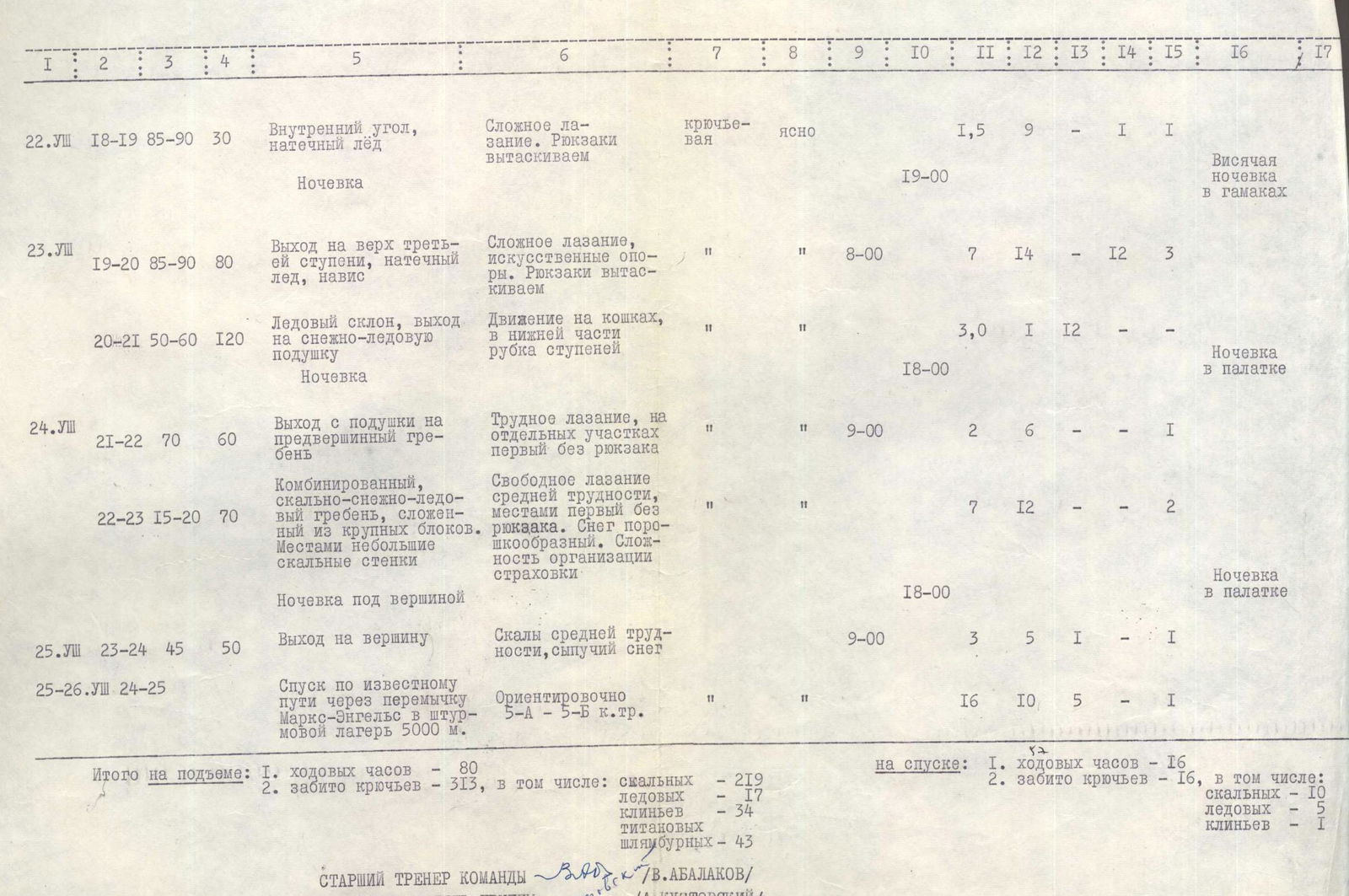
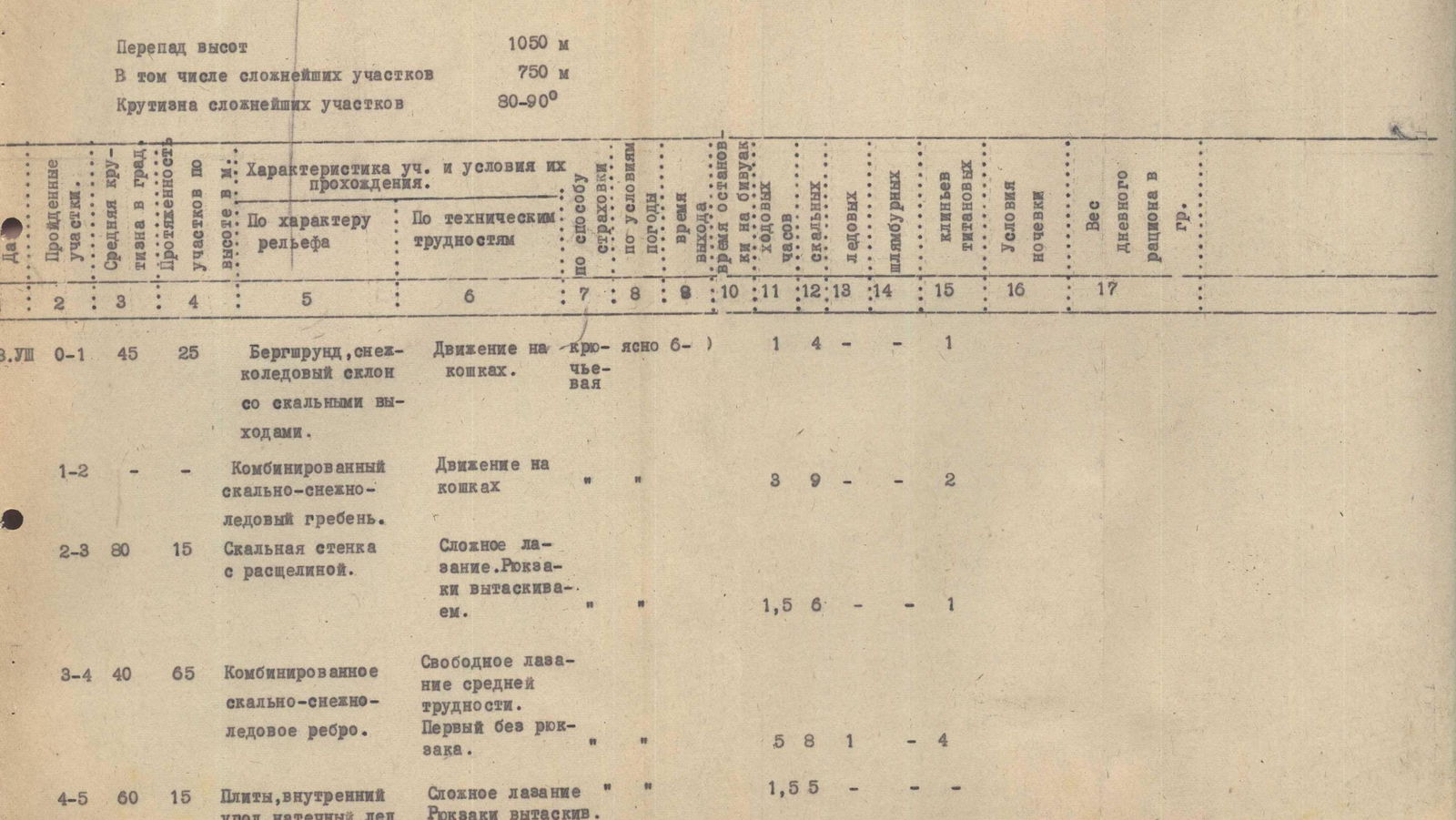
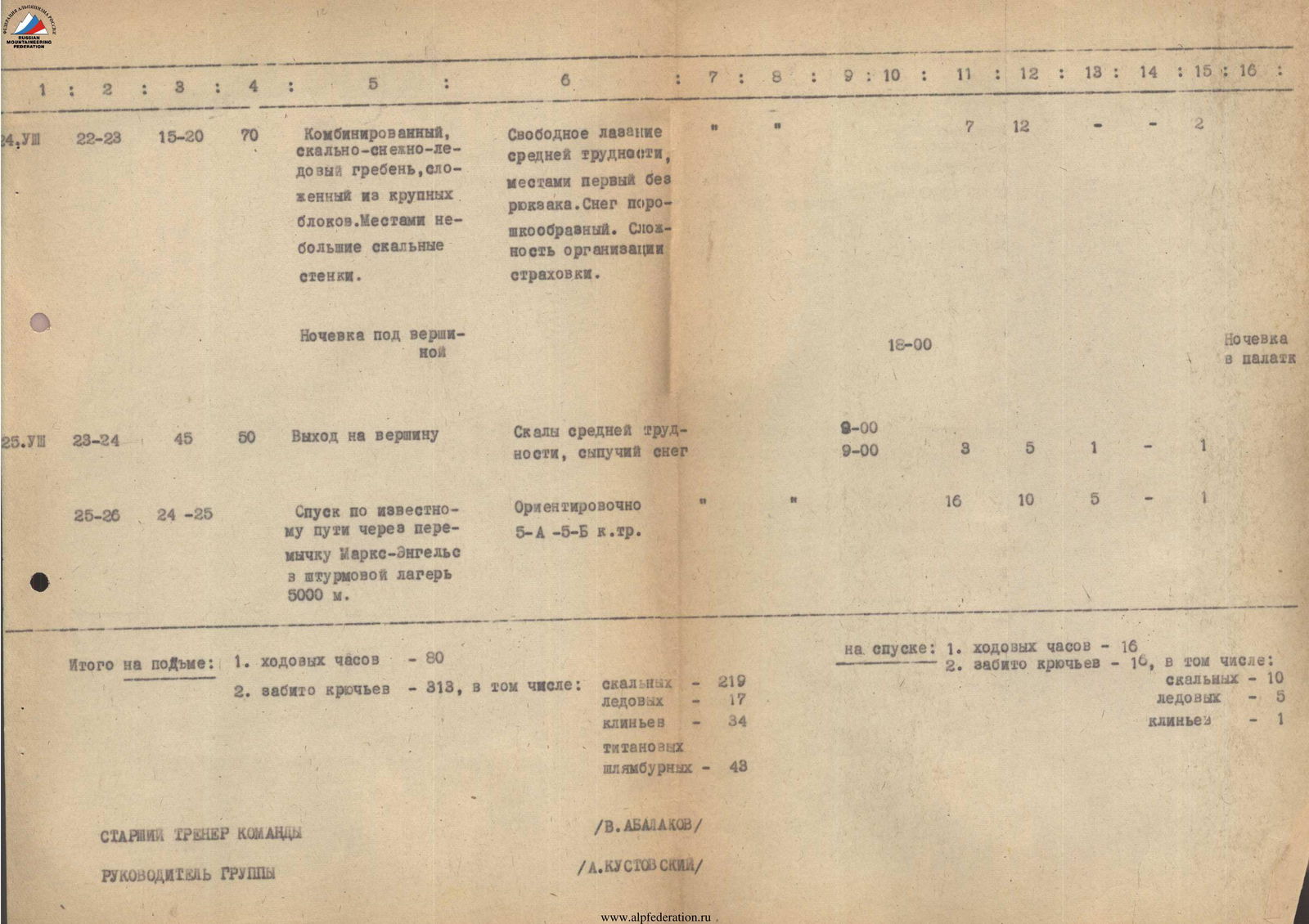
Table
of main characteristics of the ascent route to Peak Engel'sa via the north-eastern wall
Height difference: 1050 m Including the most complex sections: 750 m Steepness of the most complex sections: 80–90°
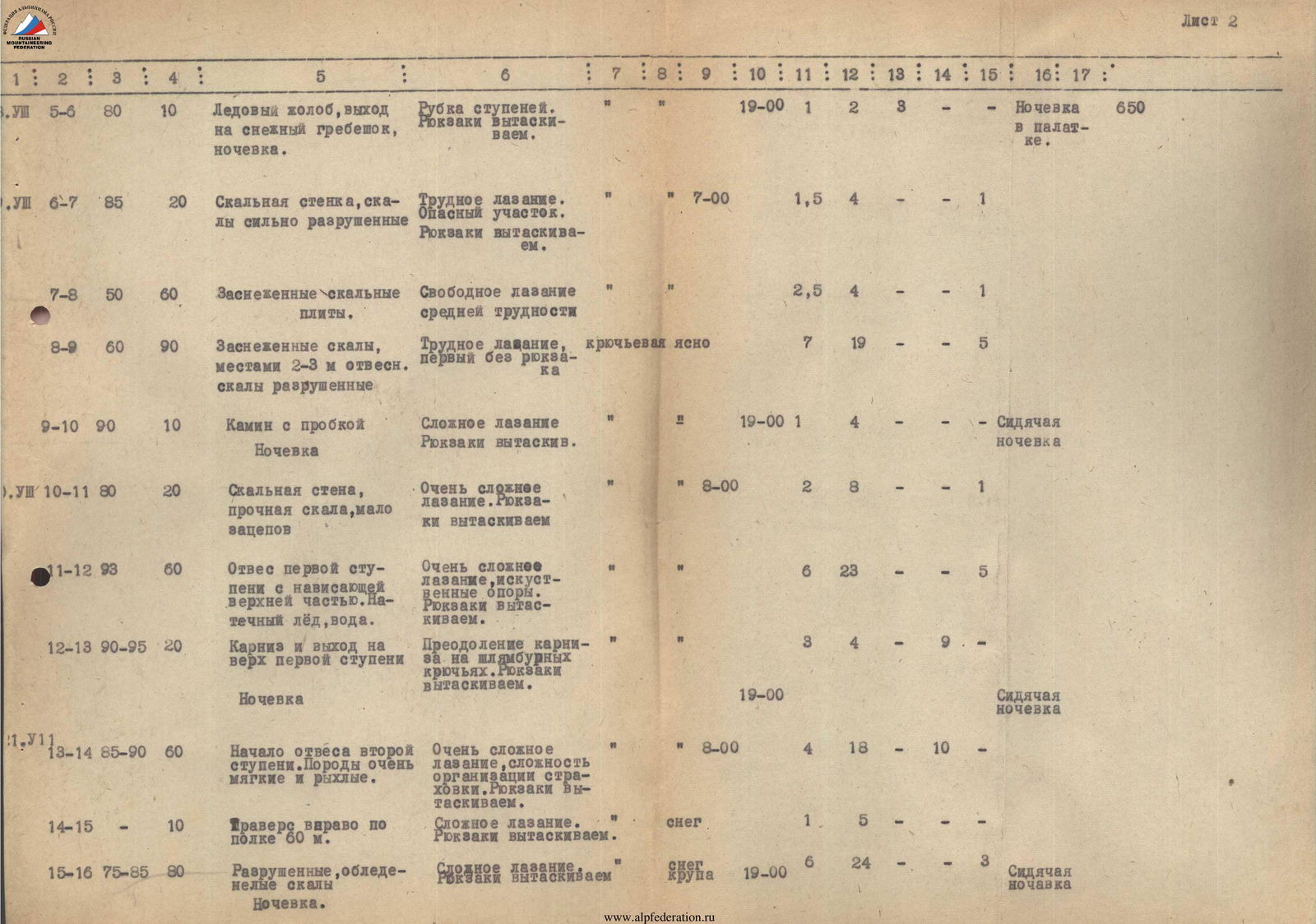
| Date | Section Length | Average Steepness in Degrees | Length of Most Complex Sections by Character | Relief Character | Technical Difficulty | Belay Method | Weather Conditions | Departure Time | Bivouac Stop Time | Working Hours | Rock Pitons Driven | Ice Pitons Driven | Shoulder Pitons Driven | Titanium Wedge Pitons Driven | Bivouac Conditions |
|---|---|---|---|---|---|---|---|---|---|---|---|---|---|---|---|
| Aug 18 | R0–R1 | 45 | 25 | Bergschrund, snow-ice slope with rock outcrops | Movement on crampons | Piton belay | Clear | 6:00 | 1 | 4 | — | — | 1 | — | |
| R1–R2 | — | — | Combined rock-snow-ice ridge | Movement on crampons | " | " | — | — | 3 | 9 | — | — | 2 | — | |
| R2–R3 | 80 | 15 | Rock wall with a crack | Complex climbing. Backpacks hauled | " | " | — | — | 1.5 | 6 | — | — | 1 | — | |
| R3–R4 | 40 | 65 | Combined rock-snow-ice rib | Free climbing of medium difficulty. First without backpack | " | " | — | — | 5 | 8 | 1 | — | 4 | — | |
| R4–R5 | 60 | 15 | Slabs, internal angle, rimed ice | Complex climbing. Backpacks hauled | " | " | — | — | 1.5 | 5 | — | — | — | — | |
| R5–R6 | 80 | 10 | Ice groove, exit to snow ridge, overnight stay | Step-cutting. Backpacks hauled | " | " | — | 19:00 | 1 | 2 | — | — | 3 | Overnight in a tent | |
| Aug 19 | R6–R7 | 85 | 20 | Rock wall, rocks heavily destroyed | Difficult climbing. Hazardous section. Backpacks hauled | " | " | 7:00 | — | 1.5 | 4 | — | — | 1 | — |
| R7–R8 | 50 | 60 | Snowy rock slabs | Free climbing of medium difficulty | " | " | — | — | 2.5 | 4 | — | — | 1 | — | |
| R8–R9 | 60 | 90 | Snowy rocks, местами 2–3 m sheer, rocks destroyed | Difficult climbing, first without backpack | Piton belay | Clear | — | — | 7 | 19 | — | — | 5 | — | |
| R9–R10 | 90 | 10 | Chimney with a plug | Complex climbing. Backpacks hauled | " | " | — | — | 1 | 4 | — | — | — | Seated bivouac | |
| Overnight | — | — | — | — | — | — | — | 19:00 | — | — | — | — | — | — | |
| Aug 20 | R10–R11 | 80 | 20 | Rock wall, solid rocks, few holds | Very complex climbing. Backpacks hauled | " | " | 8:00 | — | 2 | 8 | — | — | 1 | — |
| R11–R12 | 93 | 60 | Sheer first step with an overhanging upper part. Rimed ice, water. | Very complex climbing, artificial aids. Backpacks hauled | " | " | — | — | 6 | 23 | — | — | 5 | — | |
| R12–R13 | 90–95 | 20 | Cornice and exit to the top of the first step | Overcoming the cornice on shлямбурных pitons. Backpacks hauled | " | " | — | — | 3 | 4 | — | — | 9 | — | |
| Overnight | — | — | — | — | — | — | — | 19:00 | — | — | — | — | — | Seated bivouac | |
| Aug 21 | R13–R14 | 85–90 | 60 | Start of the second step. Rocks very soft and friable. | Very complex climbing, complexity of organizing belays. Backpacks hauled | " | " | 8:00 | — | 4.0 | 18 | — | 10 | — | — |
| R14–R15 | — | 10 | Traverse right along a 60 m ledge | Complex climbing. Backpacks hauled | " | Snow | — | — | 1.0 | 5 | — | — | — | — | |
| R15–R16 | 75–85 | 80 | Destroyed, icy rocks | Complex climbing. Backpacks hauled | " | Snow, graupel | — | — | 6.0 | 24 | — | — | 3 | Seated bivouac | |
| Overnight | — | — | — | — | — | — | — | 19:00 | — | — | — | — | — | — | |
| Aug 22 | R16–R17 | 85–90 | 80 | Start of the third step, rocks solid, few holds | Very complex climbing. Backpacks hauled | " | Clear | 8:00 | — | 6.5 | 22 | — | 3 | 2 | — |
| R17–R18 | 90–95 | 10 | Overhanging section with a cornice at the top | Very complex climbing, artificial aids, overcoming the cornice using shлямбурных pitons. Backpacks hauled | " | " | — | — | 3 | 3 | — | 8 | — | — | |
| R18–R19 | 85–90 | 30 | Internal angle, rimed ice | Complex climbing. Backpacks hauled | Piton belay | Clear | — | — | 1.5 | 9 | — | 1 | 1 | Hanging bivouac in hammocks | |
| Overnight | — | — | — | — | — | — | — | 19:00 | — | — | — | — | — | — | |
| Aug 23 | R19–R20 | 85–90 | 80 | Exit to the top of the third step, rimed ice, overhang | Complex climbing, artificial aids. Backpacks hauled | " | " | 8:00 | — | 7 | 14 | — | 12 | 3 | — |
| R20–R21 | 50–60 | 120 | Ice slope, exit to the snow-ice cushion | Movement on crampons, step-cutting in the lower part | " | " | — | 18:00 | 3.0 | 1 | — | 12 | — | Overnight in a tent | |
| Overnight | — | — | — | — | — | — | — | — | — | — | — | — | — | — | |
| Aug 24 | R21–R22 | 70 | 60 | Exit from the cushion to the pre-summit ridge | Difficult climbing, first without backpack on individual sections | " | " | 9:00 | — | 2 | 6 | — | — | 1 | — |
| R22–R23 | 15–20 | 70 | Combined rock-snow-ice ridge, composed of large blocks. местами небольшие скальные стенки | Free climbing of medium difficulty, местами первый без рюкзака. Powdery snow. Complexity of organizing belays | " | " | — | 18:00 | 7 | 12 | — | — | 2 | Overnight in a tent | |
| Overnight under the summit | — | — | — | — | — | — | — | — | — | — | — | — | — | — | |
| Aug 25 | R23–R24 | 45 | 50 | Exit to the summit | Rocks of medium difficulty, loose snow | " | " | 9:00 | — | 3 | 5 | 1 | — | 1 | — |
| Aug 25–26 | R24–R25 | — | — | Descent via a known path through the Marx–Engel'sa saddle to the assault camp 5000 m. | Approximately 5A–5Б cat. dif. | " | " | — | — | 16 | 10 | 5 | — | 1 | — |
Total for the ascent:
-
- working hours — 80
-
- pitons driven — 313, including: rock — 219, ice — 17, wedges — 34, titanium shлямбурных — 43
For the descent:
-
- working hours — 16
-
- pitons driven — 16, including: rock — 10, ice — 5, wedges — 1
HEAD COACH OF THE TEAM (V. ABALAKOV)
GROUP LEADER (A. KUSTOVSKY)