
PASSPORT
- Altitude class.
- Pamir, Walter Glacier.
- Peak K. Tsetkin via West face — Peak Kommunizma.
- Category 6B difficulty.
- Elevation difference to Peak Kommunizma — 2895 m, to Peak K. Tsetkin — 2080 m.
Distance to Peak Kommunizma — 9140 m, to Peak K. Tsetkin — 2642 m. Length of sections with 5–6 category difficulty — 3425 m, of which 6B category — 270 m. Average steepness of the third wall of Peak K. Tsetkin — 55°. 6. Pitons used:
| Rock | Nuts | Bolts | Ice screws |
|---|---|---|---|
| 61/0 | 152/0 | 0/0 | 30/0 |
- Climbing hours: 78, days: 9.
- Overnights: №4 — semi-reclined, the rest reclined.
- Captain: Boyko Valery Viktorovich, Master of Sports
Team members:
- Opoytsev Nikolai Anatolyevich, Candidate for Master of Sports
- Levchenko Alexander Nikolaevich, Candidate for Master of Sports
- Martynov Leonid Borisovich, Candidate for Master of Sports
- Kalagin Yuri Grigoryevich, Candidate for Master of Sports
- Akhmatov Fyodor Alexandrovich, Candidate for Master of Sports
- Kalyuzhny Veniamin Ivanovich, Candidate for Master of Sports
-
Coach: Korsun Anatoly Grigoryevich, Master of Sports
-
Departure to the route on August 6, 1987. Peak K. Tsetkin — August 12, 1987. Peak Kommunizma — August 14, return — August 15.
-
Moscow Regional Sports Committee.
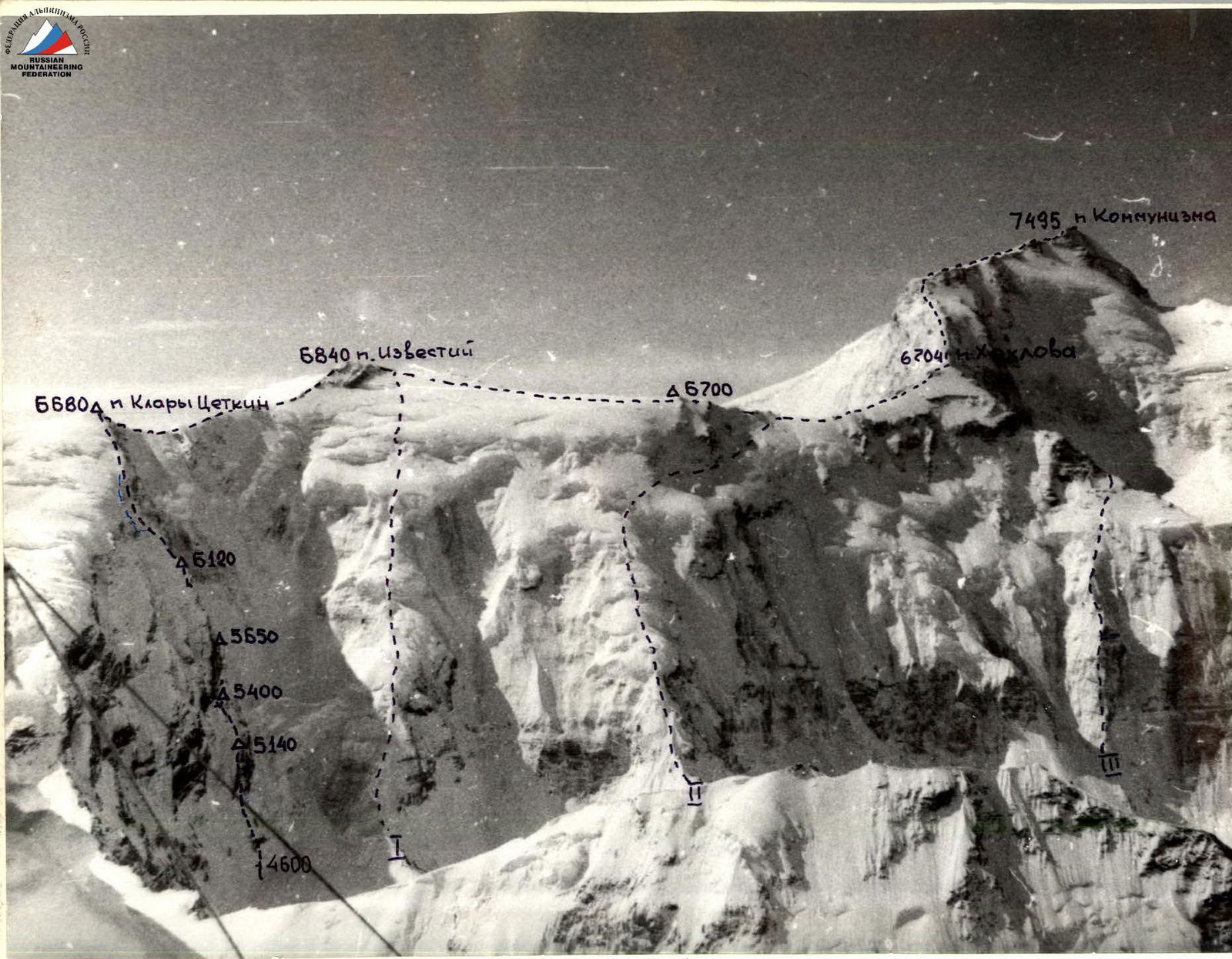
General photo of the peak Point №1 L ~12 km, H ~6400 m July 24, 1987 10:00 Zenit V lens MIR-1 F=37 A — overnight stays I — N. Chernogo route to Peak Izvestiy II — N. Chernogo route to Peak Kommunizma III — Bezzubkin route to Peak Kommunizma
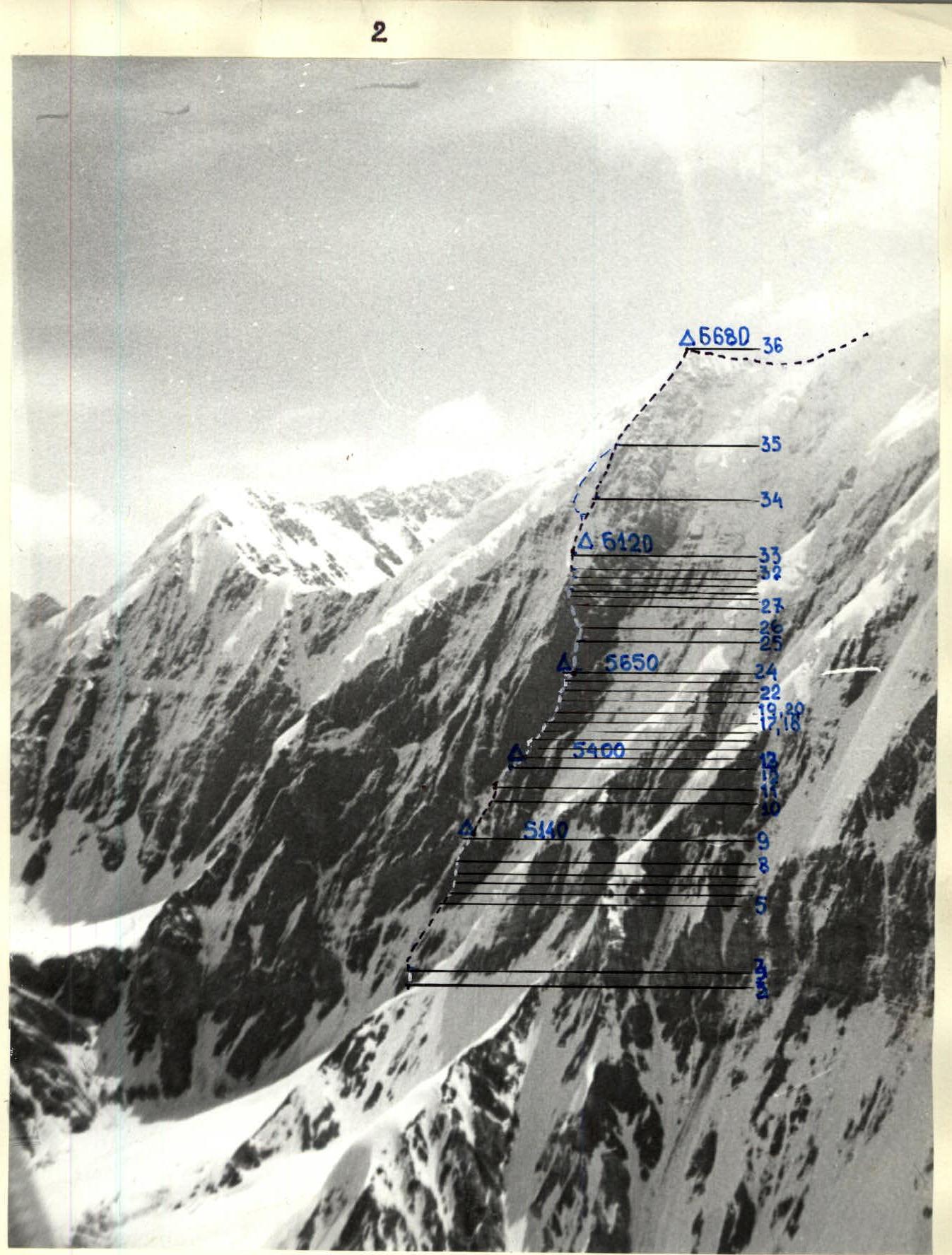
PROFILE OF THE WALL FROM THE RIGHT August 15, 1987 12:00 Lomo-Compact, lens "Minitar-1", F = 32 mm Point №2 (Borodkin ridge) L 4–6 km, H–6000 m — ice-snow route variation
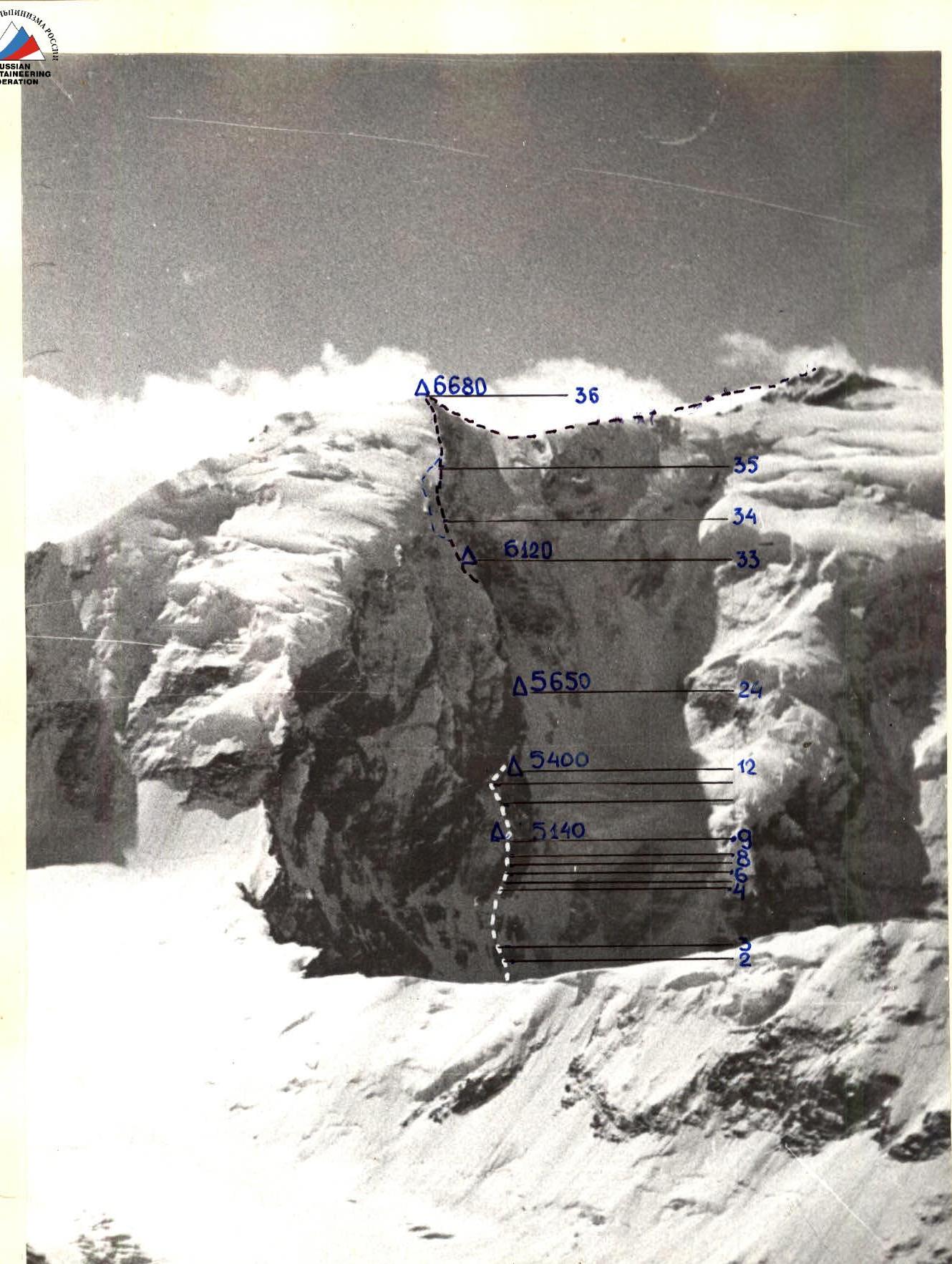
Profile of the wall from the left July 21, 1987 10:00 Lomo-Compact, lens "Minitar-1", F = 32 mm Point №1 (Peak E. Korzhenevskoi) L ~12 km, H ~6400 m Route variation on the ice-snow slope Tactical actions of the team. The tactical plan provided for the route to be completed in 7 overnight stays. It was fulfilled to the day, thanks to the first day's "hideout" as ordered by the Climbing Committee. This "hideout" influenced the subsequent movement schedule. We changed lead climbers at least once a day. The first climber went without a backpack not only on the wall but also on the ridge, which allowed us to maintain a fairly high pace of movement through deep snow. The lead climbers passed the following sections:
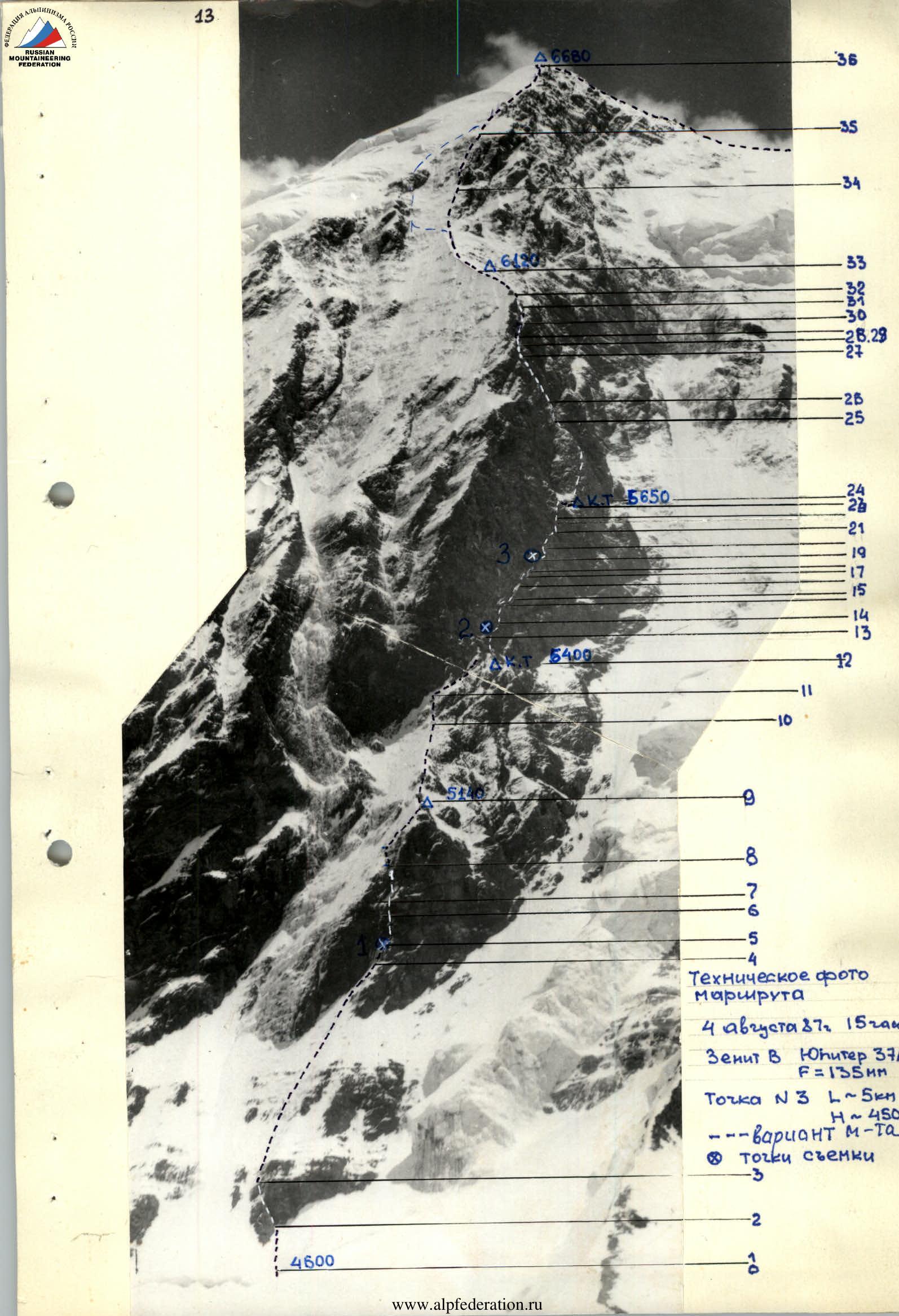
- Day 1: Kalyuzhny (R1–R3), Akhmatov (R4–R5), Martynov (R6–R7), Boyko (R8–R9)
- Day 2: Boyko (R10–R12)
- Day 3: Martynov (R13–R23)
- Day 4: movement on fixed ropes, Kalyuzhny (R24)
- Day 5: Boyko (R25–R33)
- Day 6: Martynov (R34–R36), Boyko, Lapin, Opoytsev (R36); Days 7–8 — all in turn (R37–R40)
- Day 9: Kalagin, Lapin, Martynov (R41)
We carried out preliminary route processing on the 2nd bastion (Martynov). We could have moved immediately as a whole team and possibly reached the overnight stay before dark, but there was a risk of not making it. Since our goal was not just to climb the wall but to do so with minimal energy expenditure for the subsequent traverse, we opted for the processing variation.
Throughout the wall (up to the "roof") and during the ascent to Peak Khokhlova, we set up fixed ropes. Movement on fixed ropes was done using 2 jumar clamps, with top rope protection and backpacks. We did not use rope hauling.
The relatively late starts were due to the wall's western exposure and cold nights. Our thermometer showed 13–18°C below zero at night, and on the last overnight stay before the assault on Peak Kommunizma, it was -23°C. The same western exposure allowed us to work late into the day (it got dark after 21:00).
Careful study of the route and consultations allowed us to plan the movement so that almost all overnight stays were convenient and allowed for good recovery. A large high-altitude tent, which we modified from a regular one, allowed all eight of us to gather for dinner in relatively comfortable conditions.
Two stoves provided:
- abundant drinking water
- warmth
Safety measures: the first climber went without a backpack on a double rope.

Photopanorama of the area Point № (Peak E. Korzhenevskoi) July 21, 1987 Lomo-Compact, "Minitar-1", F=32 L ~12 km, H ~6400 m. All subsequent climbers moved on fixed ropes with top rope protection. On the ridge, we moved in teams, sometimes with alternating belays.
Belay points and fixed rope anchors were chosen under overhangs in safe locations and were set up on at least 3–4 anchor points. Continuous and careful observation of the team was maintained. We made the fixed ropes diagonal, which, given the abundance of loose rocks and inevitable rockfall, allowed for relatively safe movement. However, the main safety measure that enabled us to complete the route without injuries was the careful, competent work of the entire team, especially the lead climbers.
There were no falls or injuries. When moving along the ridge, some team members experienced frostbite on their legs. We immediately brought out a stove and warmed up, not being deterred by the time loss. There were no frostbites.
Radio communication with observers and simultaneously with the base camp, and from August 2 to 13, also with the backup group, was of high quality and regular.
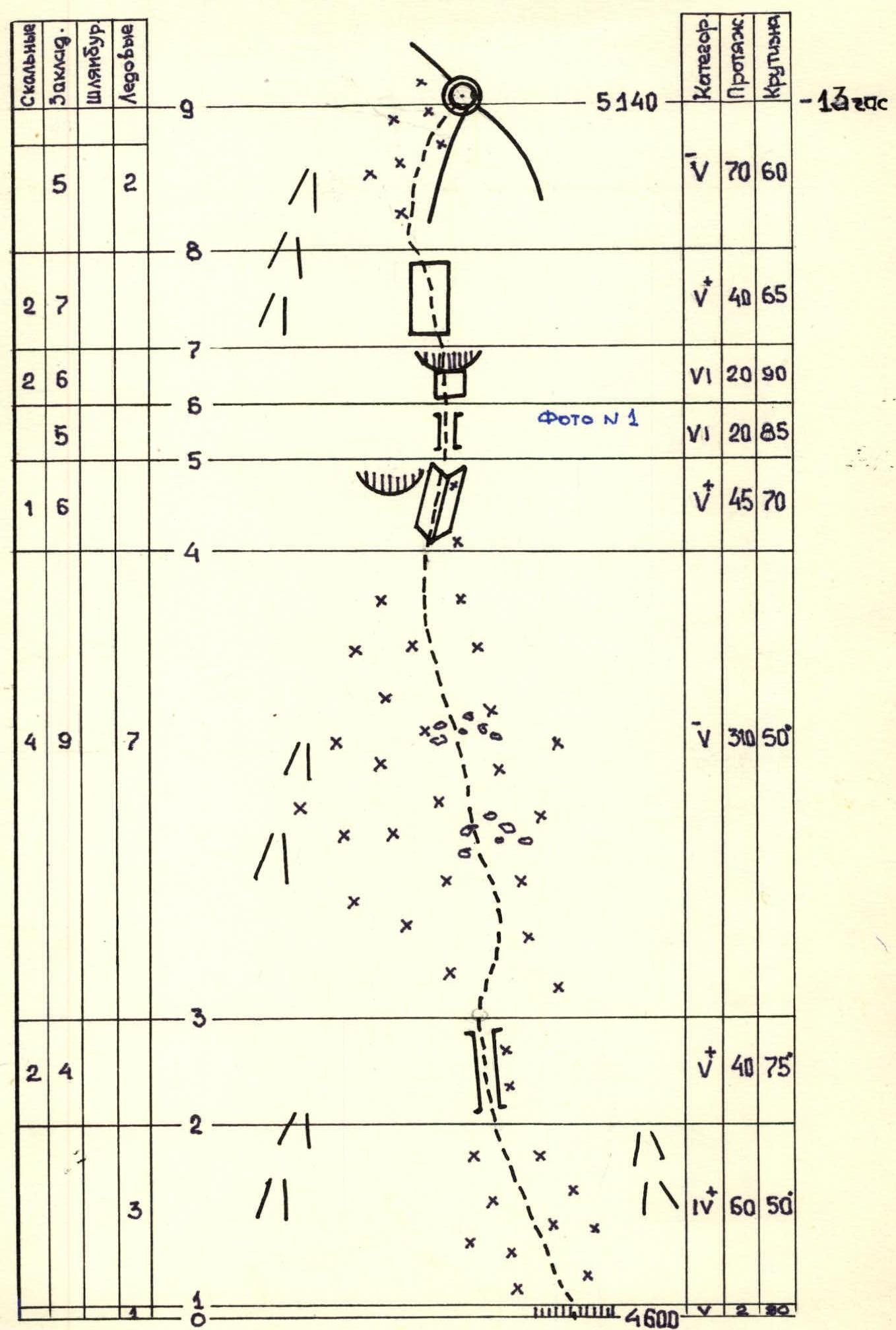
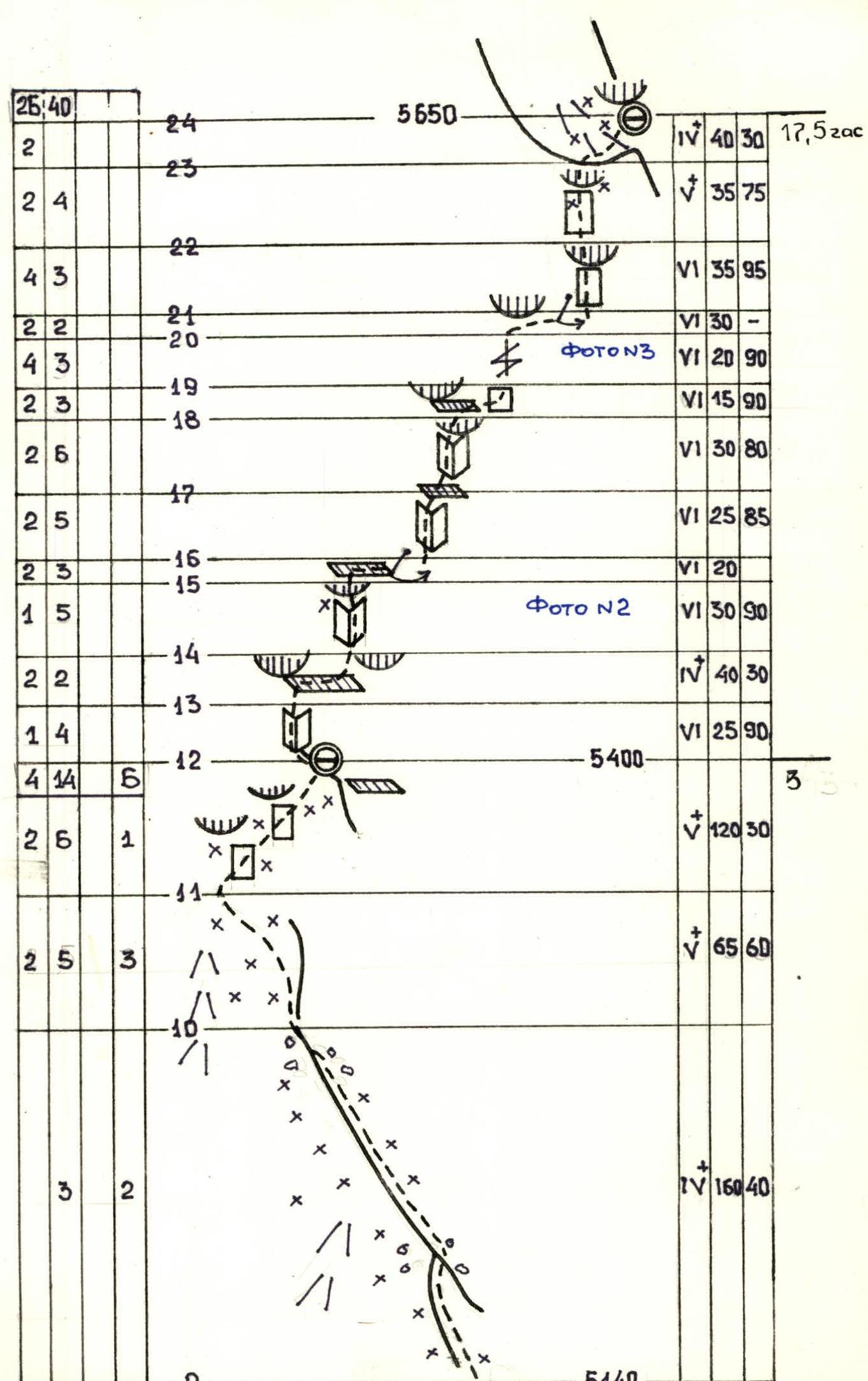
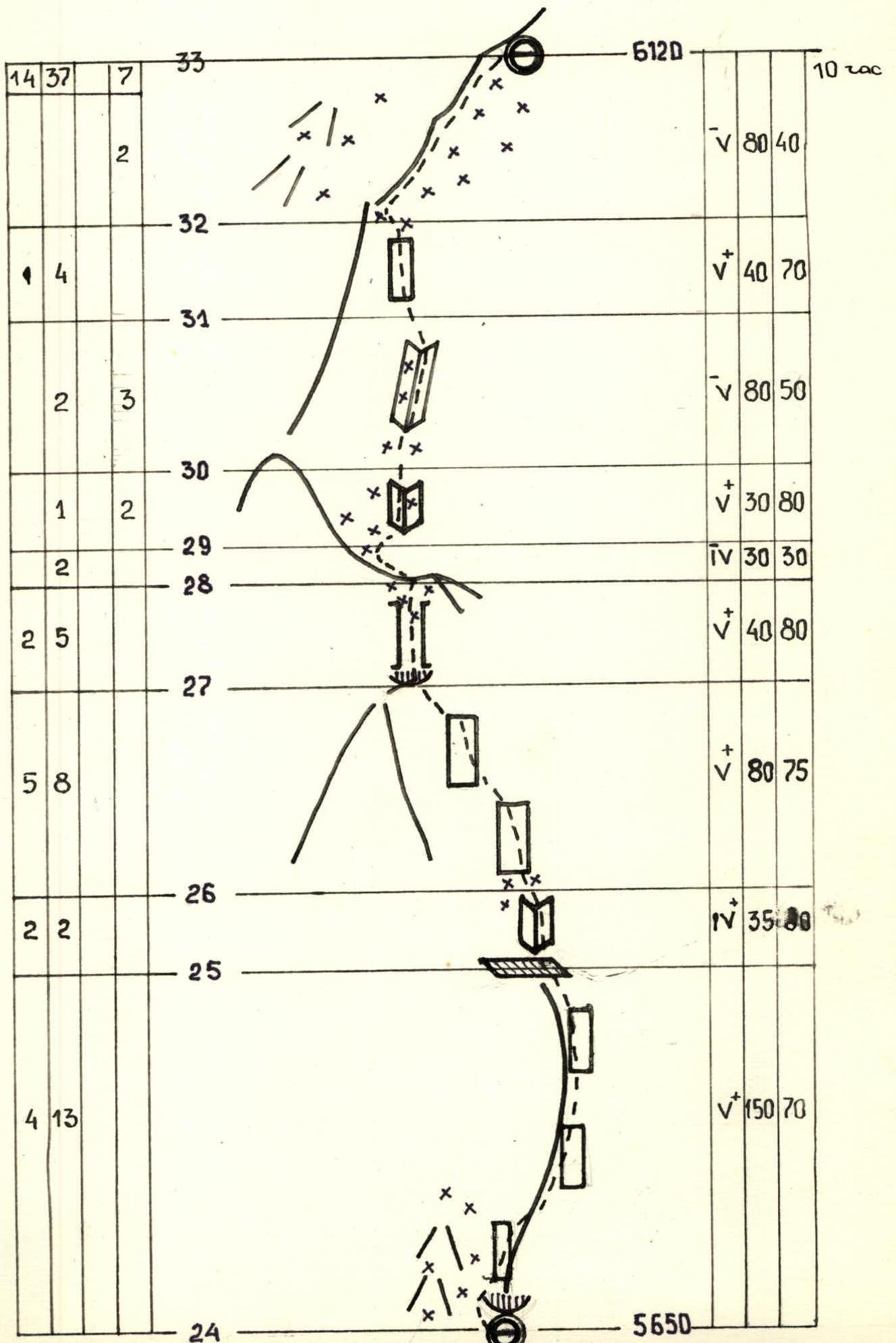
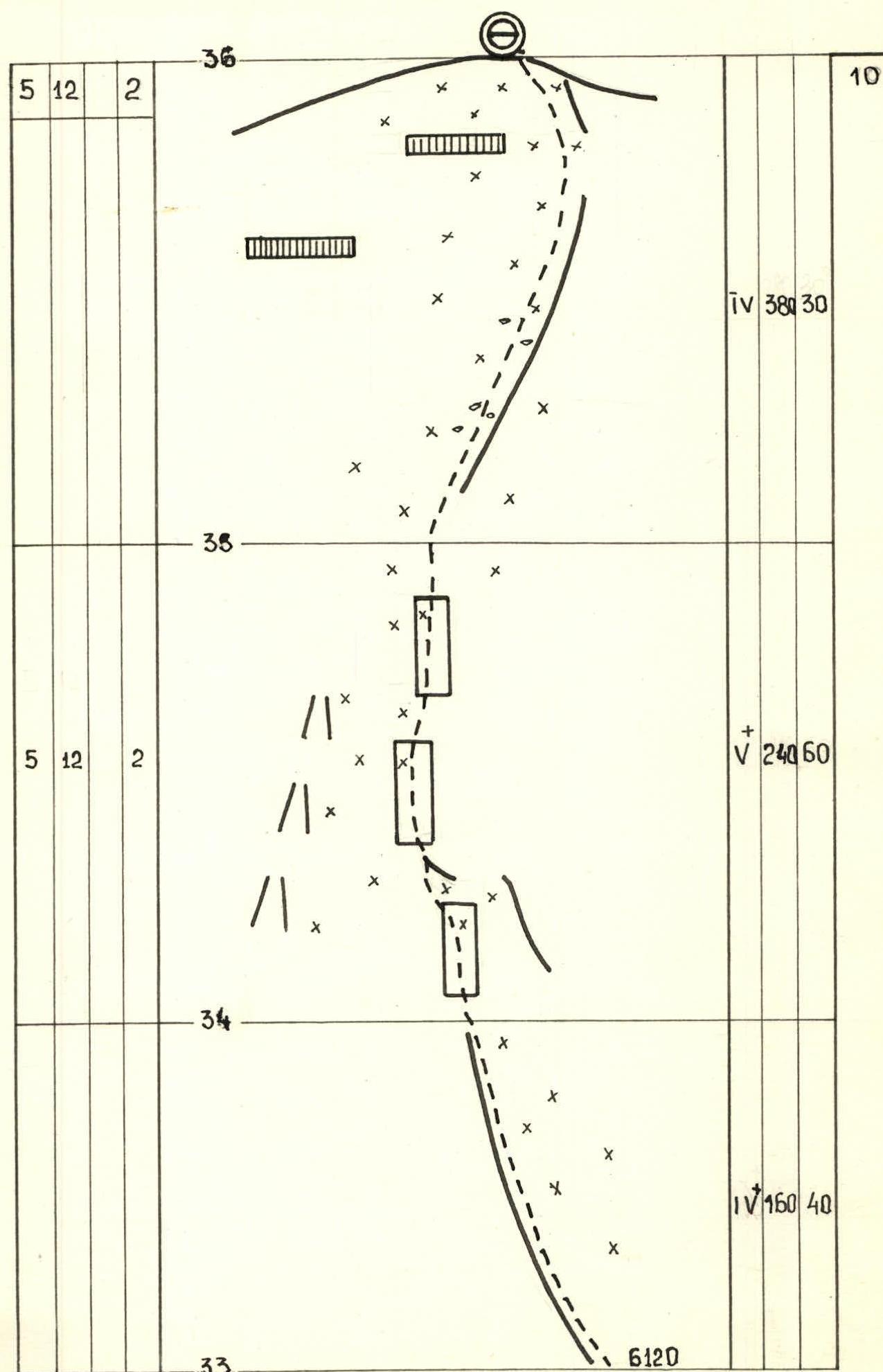
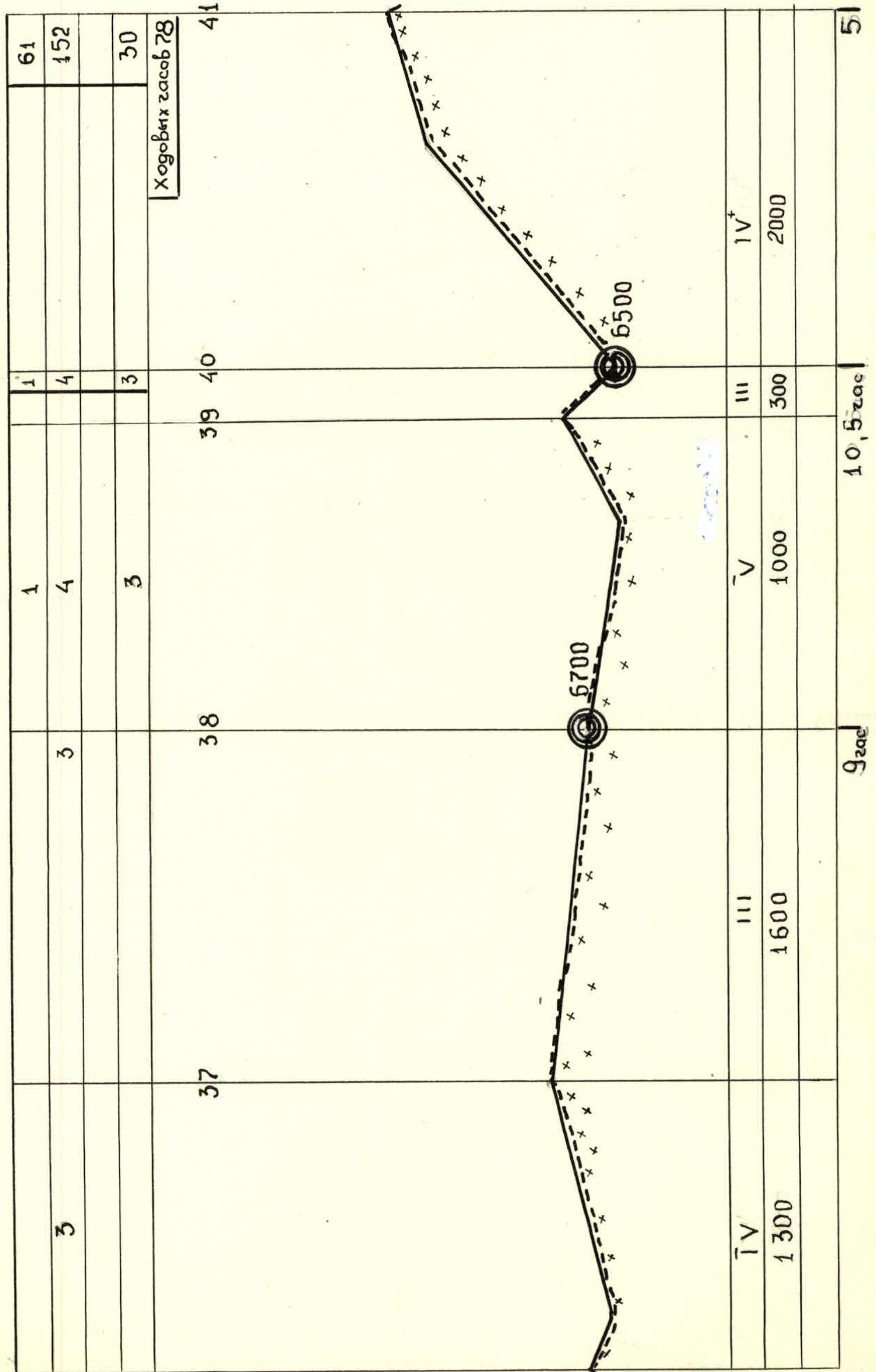
Route scheme in symbols
 www.alpfederation.ru ↗
 www.alpfederation.ru ↗
 www.alpfederation.ru ↗
Ridge section (Peak Klara Tsetkin — Peak Kommunizma) M = 1:25000
Route description by sections
R1. Bergschrund. Passed with a boost. R2. Ice slope under snow 0.2–0.1 m. R3. Chimney with flowstone. R4. Icy rocks covered with snow. Difficult to find places for belay. R5. Rock wall with an internal angle, partially icy. R6. Chimney with flowstone. Rock is solid. R7. Wall with a cornice. The cornice is icy and snow-covered from above. Passed on the left side. R8. Wall with ledges, with ice and snow on them. R9. Rocks like "ram's foreheads," covered with ice and snow. Very unpleasant place. Difficult to belay. Exit to an ice-snow ridge. Can dig out a platform for tents. R10. Ice-snow ridge with rock outcrops. R11. Section similar in structure to R9–R10. R12. Movement to the right, along the wall, on an icy steep shelf with walls. First control point. R13. Wall with an internal angle. Rock is crumbling. R14. Narrow ledge under a hanging wall. Traverse to the right. R15. Wall with a smooth slab and a cornice at the top. R16. Ledge with loose rocks. At the end of the ledge, a pendulum swing across a gap. R18. Internal angle with smooth walls and a cornice at the top. R19. Wall with a narrow inclined ledge. Traverse to the right through an overhang on rock blocks. R20. Wall made of blocky rocks. Movement along a crack to the right. Highly deteriorated. Requires extreme caution. R21. Traverse along a rock wall to the right and up. After a narrow ledge, a pendulum swing into a couloir. R22. Rock wall with a cornice at the top. Rock is brittle, sandy. The cornice is passed from left to right. Extreme caution required. R23. Rock wall made of sandy rocks. Many loose rocks. Exit to the left part of a snow-filled depression. R24. Small descent and traverse to the right under a bastion. Second control point. A small platform is set up. R25. Rocks of a stepped type. Many loose rocks. Movement straight up. Exit to a snow ledge. R26. Snow ridge and traverse through an internal angle to the right. R28. After a wet cornice, a steep, crumbly chimney. R30. Steep snow-ice couloir. Many loose rocks in the upper part. R32. Snow-covered, icy, deteriorated rocks. R35. Icy rocks like "ram's foreheads." Icy and snow-covered "tiles." Difficult to belay. Have to clear 30–40 cm of loose snow to reach the rocks. Very unpleasant place. R36. Snow "roof." Had to dig a trench throughout. Snow above the belt, in places up to the chest. R37. Traverse to Peak Izvestiy. Powerful cornices hang to the left. Snow about knee-deep. R39. Ascent to Peak Khokhlova. Ridge is narrow, with snow cornices. Movement with alternating belay. Before the peak, an icy wall 50 m.

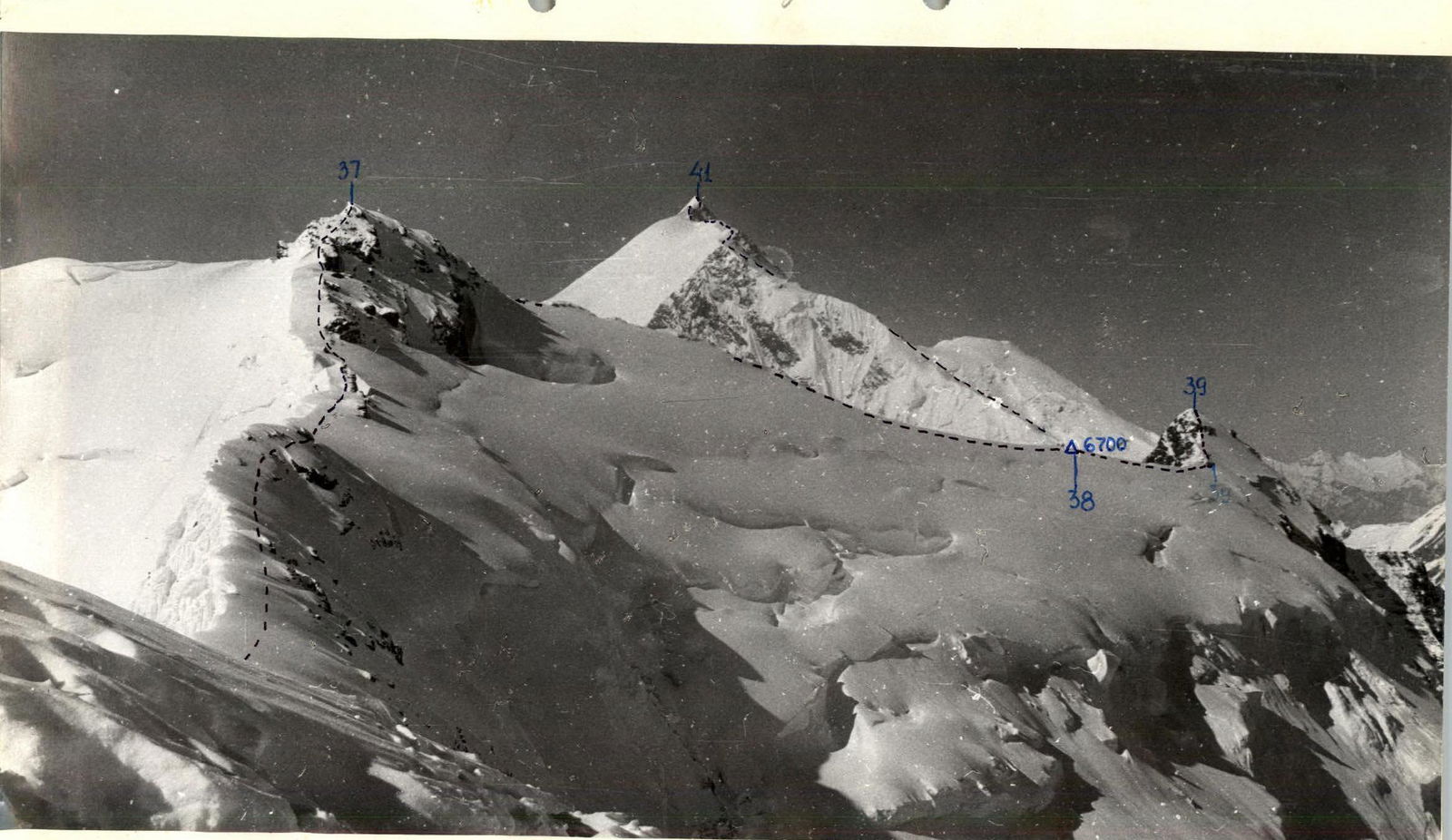
Technical photo (ridge) August 12, 1987 10:00 Zenit V, MIR-1, F=37 Point №4 (Peak K. Tsetkin)

Comments
Sign in to leave a comment