Ascent Logbook
- Technical Climb Category.
- Region 2.10, Caucasus, Dagestan Mountains, Chekhychay Valley.
- Erydag, 3925 m, point 31–32, S. Efimov's route 1981, via the left part of the NW wall through "Zerkalo", rock climb.
- 6A category difficulty, 3rd ascent.
- Route Characteristics: route elevation gain 1065 m, wall elevation gain 940 m (from 2860 to 3800 m), average wall slope 70°, route length 2400 m, wall section length 1100 m (sections R3–R19 and R20–R60 on UIAA rock scale), section lengths: 1 — 1075 m, 2 — 295 m, 3 — 65 m, 4 — 170 m, 5 — 610 m, including 90 m on artificial aids (AID), 6 — 185 m, including 120 m on AID, total AID climbing — 210 m, including 25 m on sky-hook, AID climbing difficulty: A1–55 m, A2–95 m, A3–60 m.
- Equipment used: 216/99 chocks, 114/44 rock screws, 53/23 bolt hangers, 3 rock features. Of these, previously placed chocks not removed — 2 pcs, previously driven rock screws not extracted — 8 pcs, previously driven bolt hangers — 24 pcs, previously drilled bolt holes for sky-hooks — 10 pcs. Left on the route: chocks — 2 pcs, rock screws — 3 pcs, bolt hanger holes — 29 pcs.
- Team travel days — 3, hours — 37.5, including 4 hours of evening preparation.
- Overnight stays: 1st (3250 m) in a niche, lying on a laid-out platform for three; 2nd (3550 m) one person in a hammock, two people semi-reclining on a laid-out shelf.
- Team Leader: Dorro Konstantin Eduardovich — CMS (Candidate for Master of Sports)
Team Members:
- Velikanov Vladimir Yuryevich — CMS
- Shanavazov Shanavaz Eldarovich — CMS
- Coach: Murtazaliev Ziyabudin Murtazalievich — 1st sports category
- Approach to the route — June 18, 1996. Summit — June 20, 1996. Return to "Erydag" base camp — June 21, 1996.
- Organization: Dagestan Search and Rescue Service of the Russian Emergency Ministry.
1996, Makhachkala
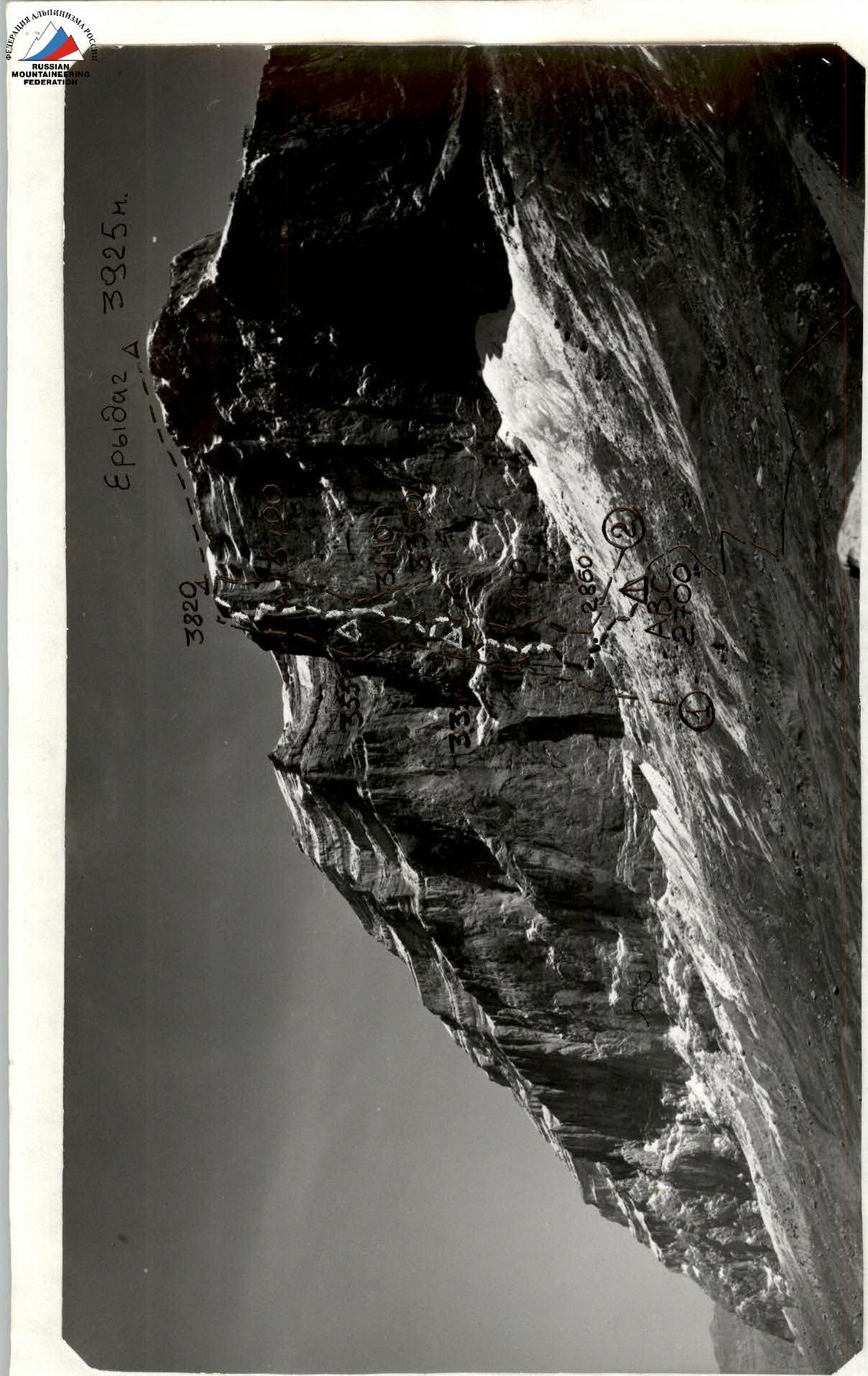
Photo 0 — General view of Erydag summit (3925 m) Team's route: via the left part of the NW wall through "Zerkalo" 6A category difficulty
- S. Efimov's route–81
- G. Shchedrin's route–81 via the left part of the NW wall
- A. Babitsky's route–81 via the left part of the NW wall via "Serp"
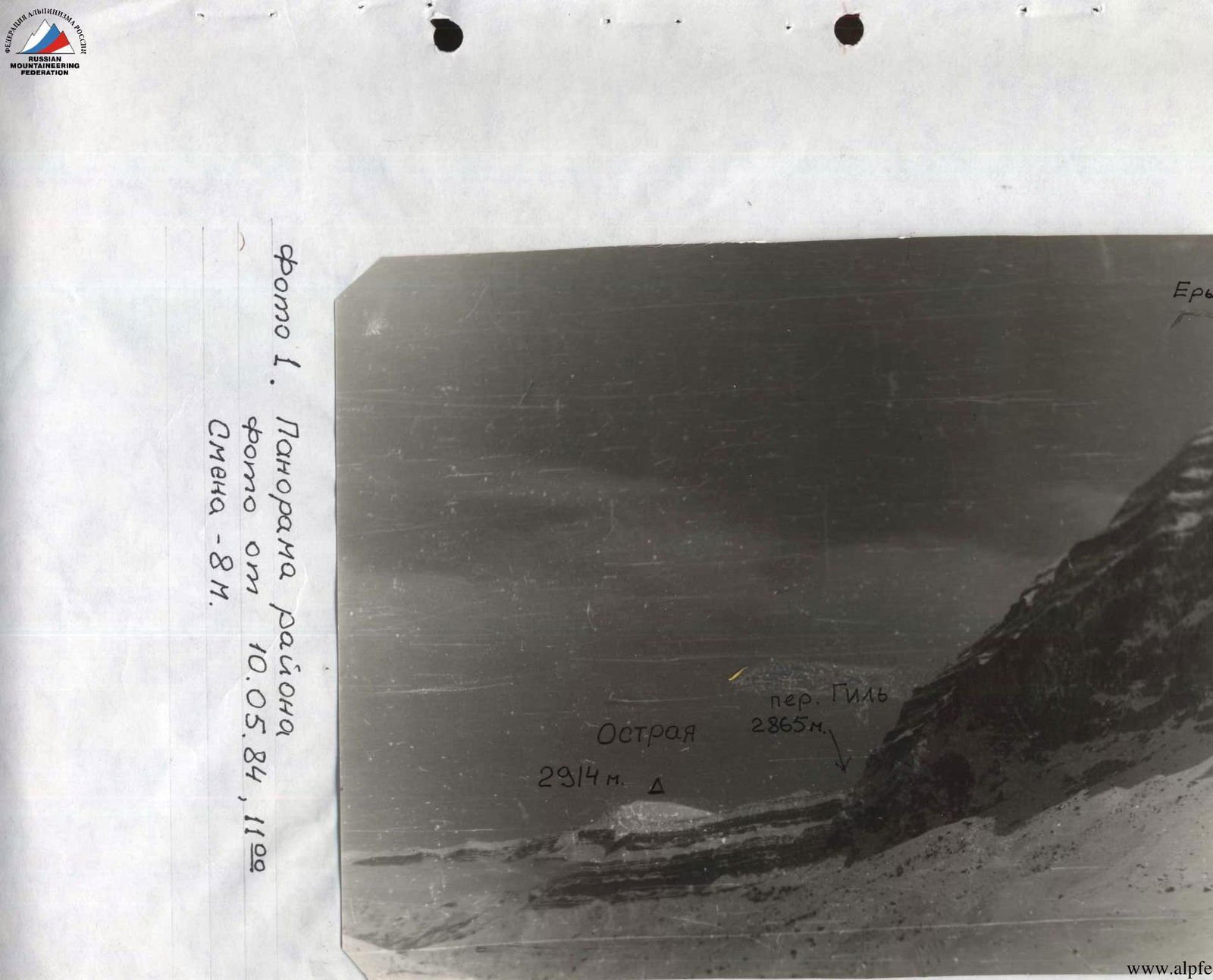
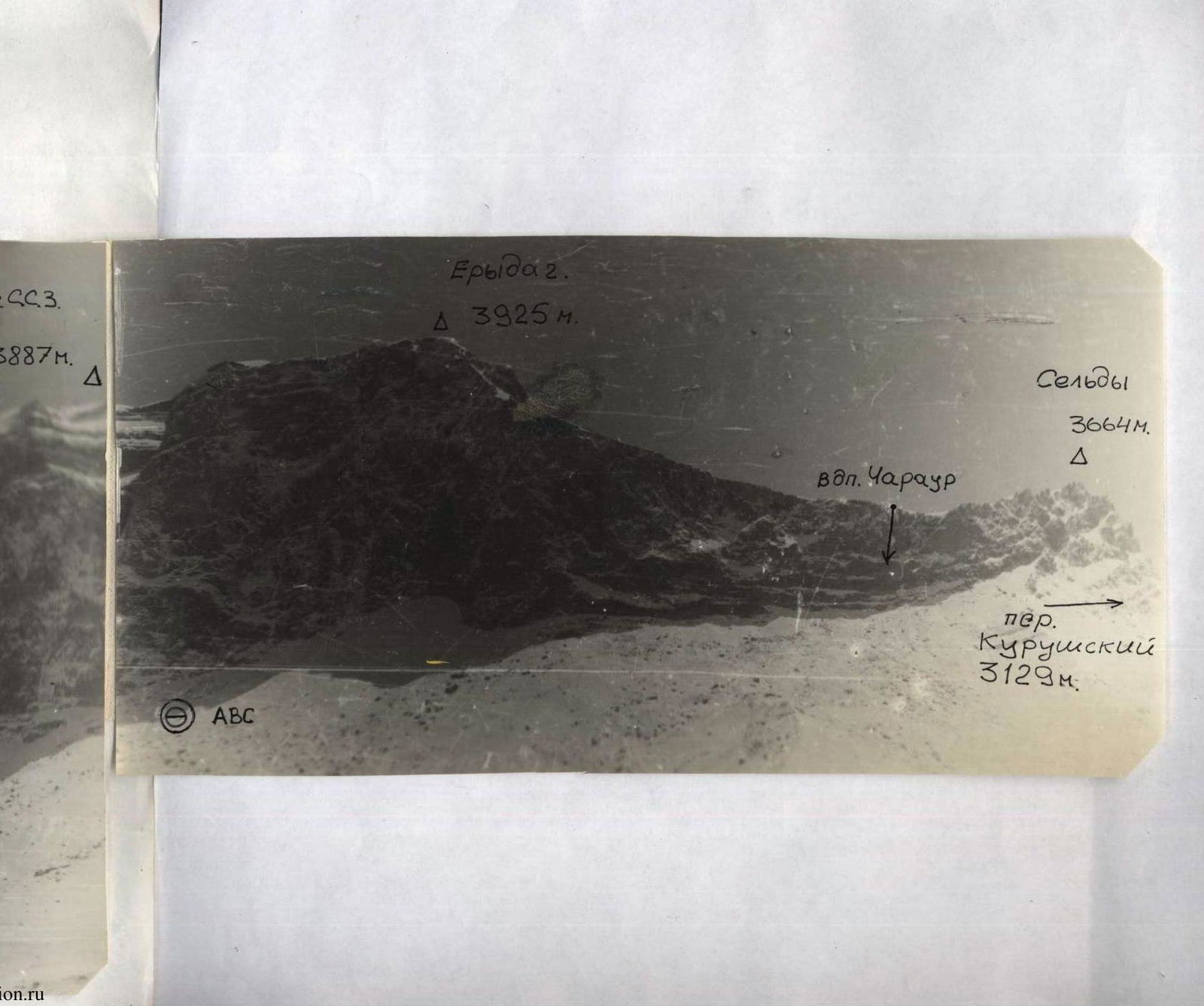
Photo 1. Panorama of the area. 8 m pitch. Photo taken on May 10, 1984, 11:00.
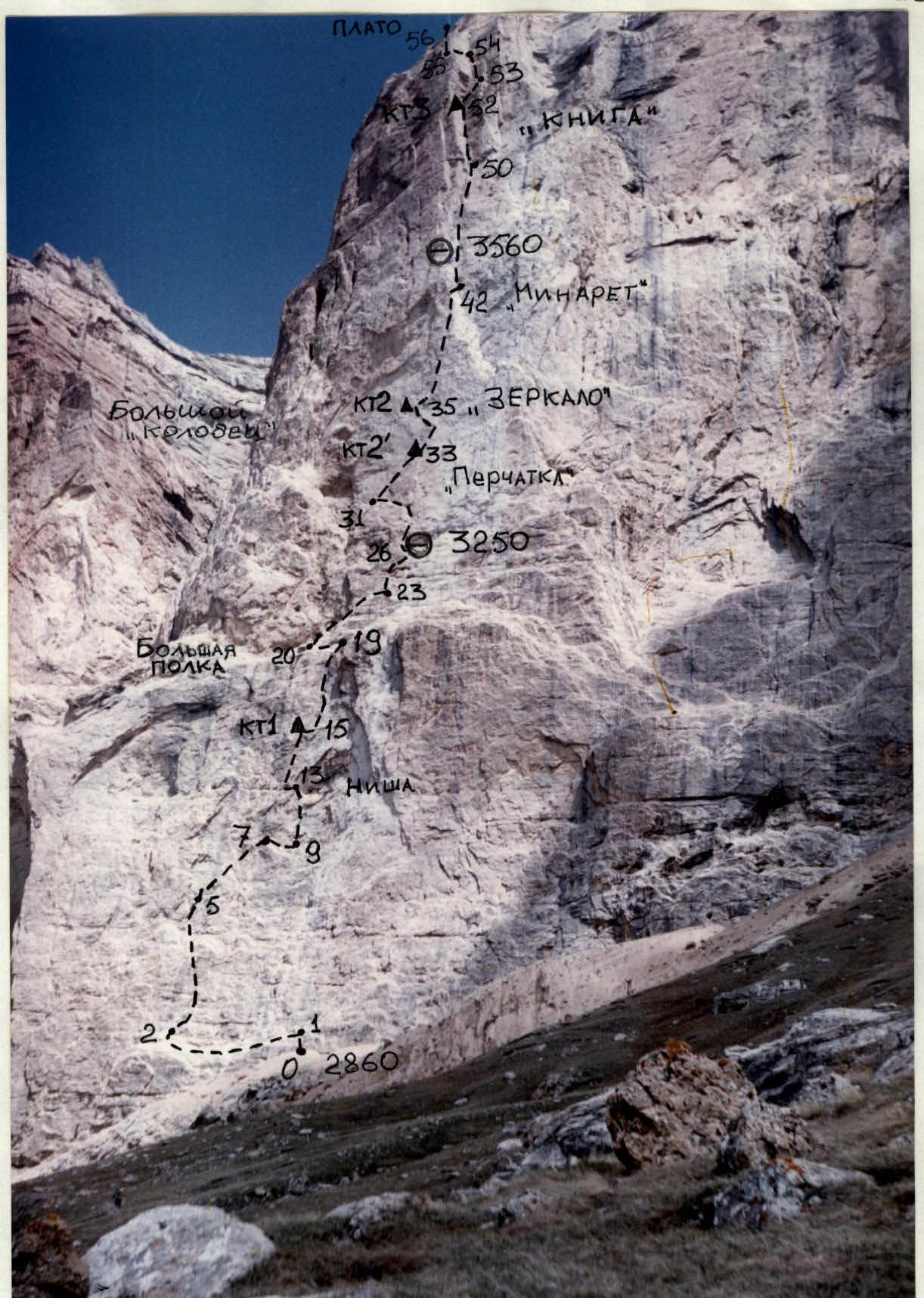
Photo 2. Technical photograph of the route. Photo taken on June 17, 1996, 16:00. 8 m pitch, Kodak-100 film.
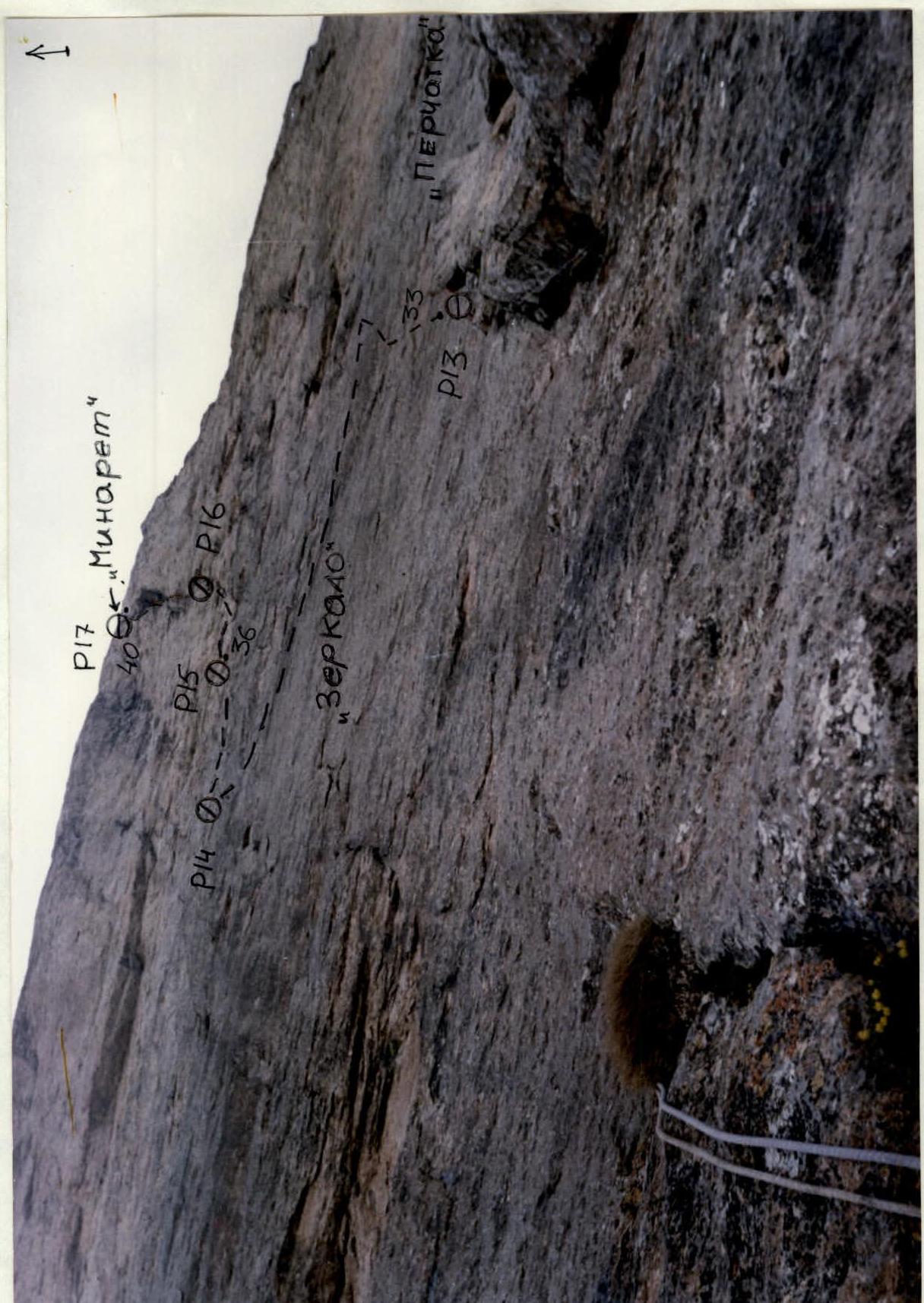
Photo 4. "Zerkalo" from R12, "Perchatka" visible on the right. Sections R31–R40 and belay points R13–R16, June 18, 1996, 19:45:
- Sections R31–R36
- Sections R36–R40
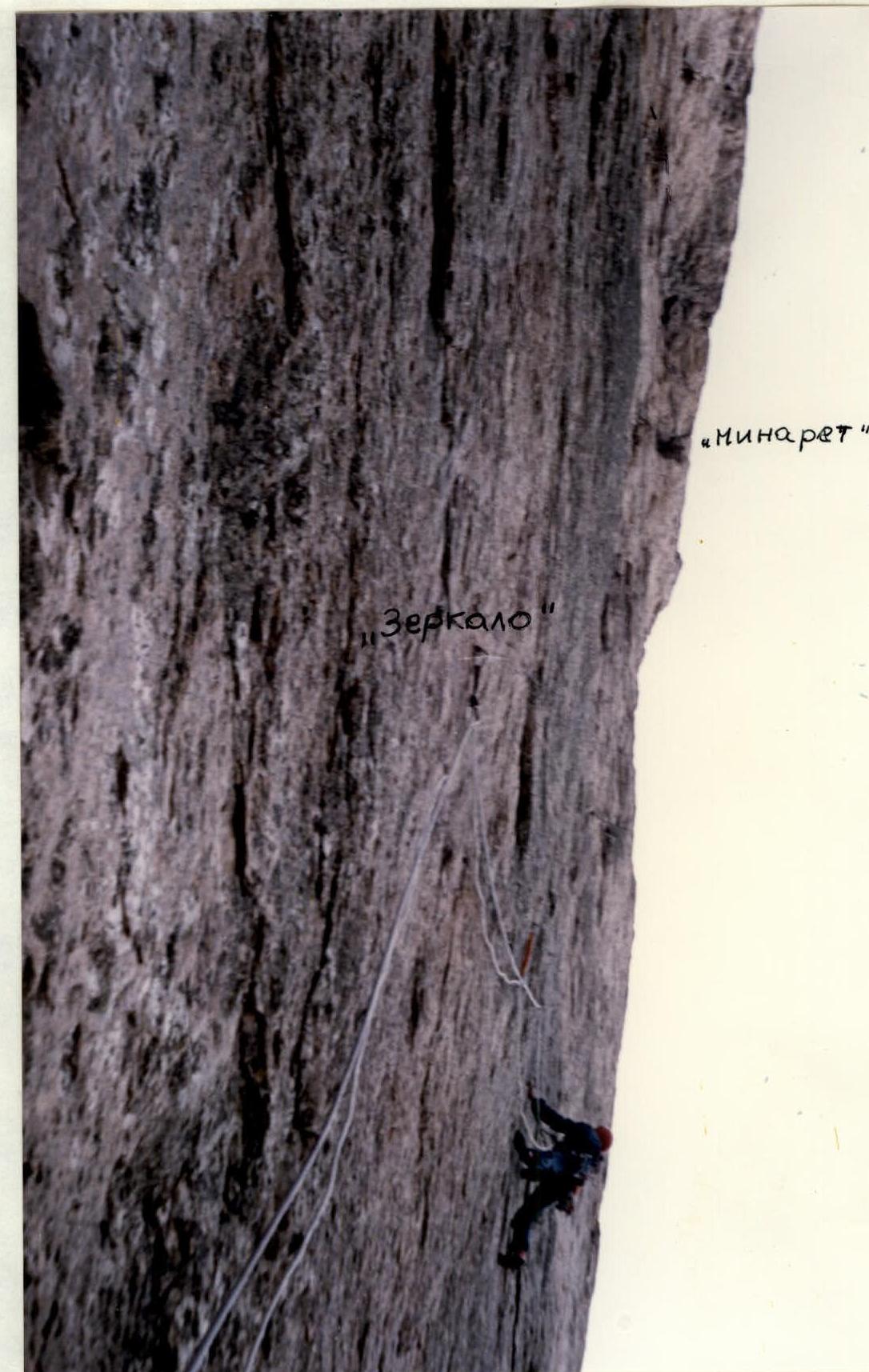
Photo 5. Dorro working on "Zerkalo". Photo taken from R13 on June 19, 1996, 9:00. Section R33–R34, 150 m to "Minaret".
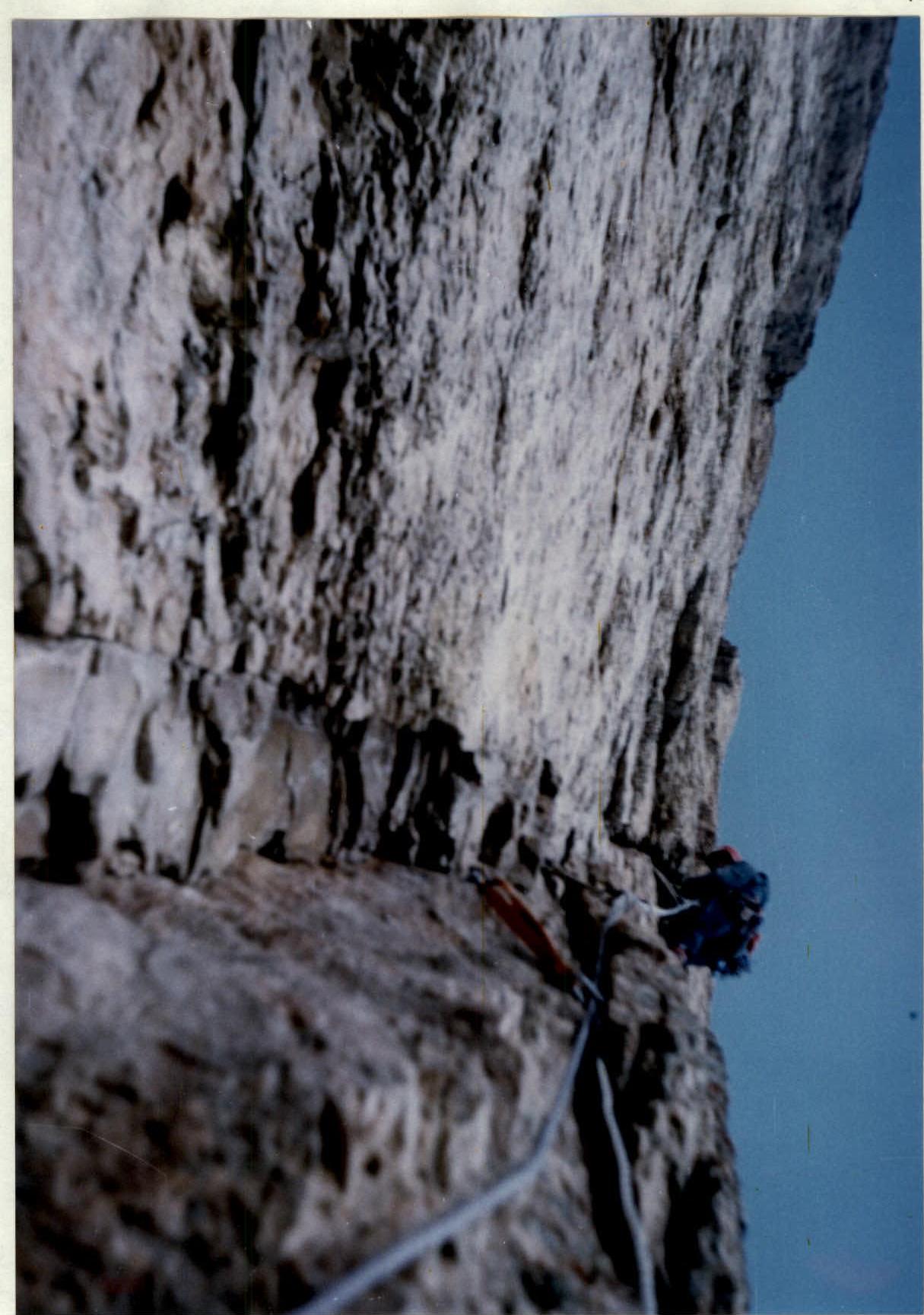
Photo 6. Section R36–R37, Dorro working. First rope in "Minaret" crack. Photo taken from R15 on June 19, 1996, 13:30.
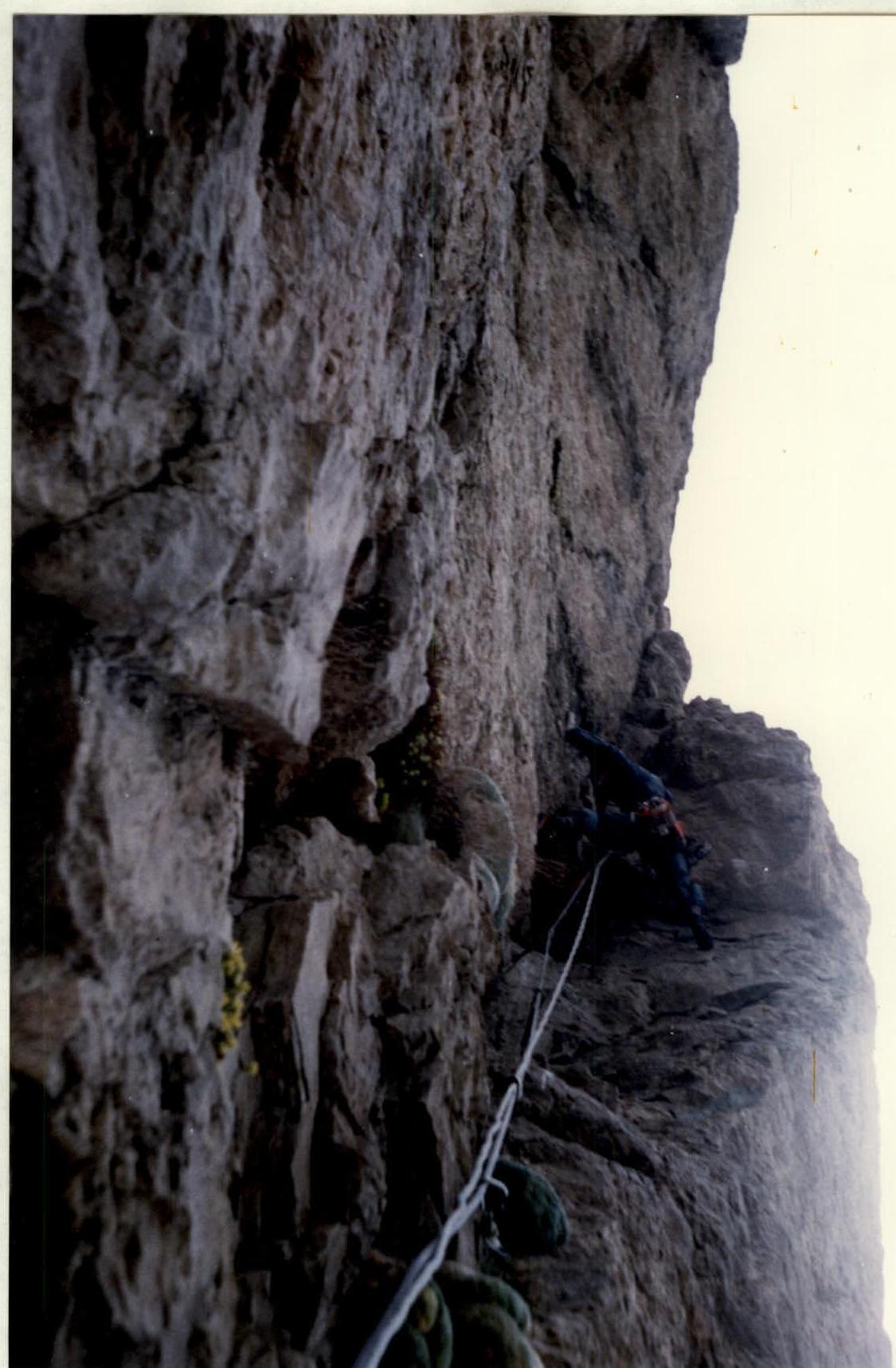
Photo 7. Section R37–R39. First pendulum traverse by Dorro. Photo taken from R16 on June 19, 1996, 15:08.
Team Tactics
The ascent was planned around anchoring overnight stays to convenient ledges, preferably to niches. A comfortable bivouac allowed for good rest. The team decided against pre-processing the route to minimize the time taken to ascend the wall. The tactical plan was fully executed, with overnight stay locations matching the plan. The time taken to reach the first overnight stay was ahead of schedule, at 18:00 instead of 18:30. The second overnight stay was reached exactly on schedule at 18:30. The team reached the plateau at 20:00 and the summit at 20:30.
On the first day of climbing (June 18, 1996):
- The Shanavazov–Dorro team started at 7:00.
- Velikanov was the last to work.
- The first on the rope used a single "MAMMUT" 11 mm rope.
- He also carried and placed a 10 mm static rope for the belay.
- Two more static ropes were being used, with the third team member working on them.
- Everyone climbed on a double rope; the second and third team members had top-rope belay.
The upper four ropes of the lower bastion were challenging. Shanavazov navigated them with mostly free climbing. The transition through the cornice of the niche on AID — using large friends (section R10–R11). The next (5th) rope went vertically up, requiring powerful strength climbing. Necessary chocks and friends were prepared in advance to reduce the time taken to set up the belay. On the 6th rope, a pendulum move was used, and the team retreated down to straighten the belay (bolt hangers were extracted). Belay stations on R5 and R6 were inconvenient and semi-suspended. On section R17–R18, wedged blocks were encountered in a crack. Danger! After "Bolshaya Polka", a niche was found over two ropes. As they approached it, the weather started to deteriorate. Velikanov began preparing the overnight stay. Shanavazov–Dorro worked three ropes, taking 2 hours. They worked the last rope and descended in snowfall, gathering at the overnight stay at 20:30.
On section R27–R28, Shanavazov, while climbing a crack, hammered a bolt hanger on a slab. As he moved right onto AID, a friend pulled out of the opening crack — a fall. He fell about 6 m and hung on the bolt hanger. There were no injuries or bruises.
The wet snow stopped at 2:00 AM, and the niche remained dry.
June 19, 1996:
- The Dorro–Velikanov team left the overnight stay at 7:30.
- On "Perchatka", a tin can with a note was found on a hook on the inner side of the slab.
- The note was washed away by water and was illegible.
Work began on "Zerkalo":
- About 7 m of very difficult climbing led to the first hook.
- A "path" of hooks went right-upwards.
- On hook-protected sections, the team moved from hook to hook, then the distance increased.
- Dorro used a sky-hook.
- He reached the descent loop.
- Then moved left-upwards, about 8 m, through blind short cracks.
- Dorro worked on sky-hooks, reaching a ledge with a bolt hanger R14.
- He retreated down three times to straighten the belay.
On section R33–R34, Dorro had a fall — the sky-hook dislodged a rock feature. The terrain was absolutely smooth. Dorro hung on a bolt hanger, falling about 8 m. There were no injuries or bruises.
From R14, Dorro, using sky-hooks and small chocks, reached control point 2 by 12:00. A worn-out rappel loop was found on a bolt hanger, but no can or note.
To the left of the control point, an unpleasant section on AID was encountered in a crack. Dorro had several instances of chocks pulling out.
Using a pendulum move to the right on a bolt hanger, the first climber reached the start of a crack that led to "Minaret".
Dorro periodically returned from the upper hook, retrieving some gear and straightening the ropes.
The last climber, Shanavazov, consistently used a cordelette to move off the belay stations on diagonal belays, hanging.
On the last rope, the team used rope dragging to pull up the packs.
They reached "Minaret" (R17) at 16:30. The tension didn't ease — an unpleasant pendulum move into the chimney of "Serp". They reached the second overnight stay at 18:30. By 20:30, Dorro–Velikanov finished processing two ropes. Shanavazov had already hung his hammock and cleared a ledge for two.
The weather significantly deteriorated in the evening: strong wind, cold. The team used "Gor-Tex" bivouac bags by "Salewa".
At 9:00 AM:
- Velikanov–Shanavazov team started upwards.
- Dorro dismantled the camp and carried gear.
After climbing the two ropes processed the previous evening, Velikanov entered "Kнига" (the "Book"). R22 was made on a convenient ledge, although it wasn't a full rope.
Velikanov reached control point 3 by 15:00. Bypassing the roof of "Kнига" was psychologically challenging, involving large pendulum moves. The weather finally deteriorated — snow started falling. The last three ropes on the wall were climbed in snowfall. It was particularly hazardous on the ledges when traversing the upper belts — very slippery. They reached the plateau at 20:00 and the summit at 20:30.
They descended from the summit about 100 m and bivouacked on the scree.
The team's main task — to complete the route in three days — was accomplished. However, a more significant deterioration in weather or intense heat would not have allowed them to climb the wall so quickly.
Water was rationed — 18 liters, replenished twice:
- On "Bolshaya Polka" from a snowpatch.
- On the first overnight stay during rain, using a polyethylene sheet.
Based on the presence of tracks and gear from previous teams, we believe our ascent via the original route is the third. Only two types of bolt hangers were used. Almost no hooks left on the route were found. On the wall section from "Bolshaya Polka" to "Perchatka", at least 4 descent loops were visible. Also, a descent loop was found on the first twenty meters of "Zerkalo". A hanging rope was found from "Perchatka" downwards.
The team had information that "Zerkalo" was bypassed via "Serp". The lower bastion was bypassed on the right — via central wall ledges.
According to Vladimir Automonov (North-Elbrus Rescue Team, Kislovodsk): during their ascent of the combination (lower section — S. Efimov-81, upper section — A. Babitsky-81), on the lower bastion, on control point 1, they removed S. Efimov's note in 1987, although according to Moscow data, there were already three ascents of the route.
On the wall, the team used gas burners — their low weight allowed for hot meals and, most importantly, hot drinks. High-calorie food was used:
- Honey
- Nuts
- Chocolate
- Lard
- Sausages
- Crackers
- Dried fruits
- etc.
The average pace (including processing, climbing belays, resting on stations, and snacking) was 1 hour 25 minutes per rope. The team completed the route with reserves of physical and mental strength. The equipment was used to its full extent:
- Assorted chocks (stoppers, Roks, hexes, friends, eccentrics)
- Four types of sky-hooks — allowing for maximum weight reduction and faster work for the first climber.
The use of extractable bolt hangers for belaying and organizing stations provided confidence for both the first climber and the entire team.
Communication was conducted exactly according to schedule. The rescue team was at "Erydag" base camp. Observers monitored the group until they exited "Kнига" from ABC.
Route Diagram
Route diagram in UIAA symbols: Erydag, 6A — Efimov's route. 37.5 hours of work, including 4 hours of evening preparation. Scale: 1 cm — 20 m. Erydag, 3925 m. Summit: June 20, 1996, 20:30. 11.5 hours of work.
End of processing on June 18, 1996, 20:00. 13 working hours. June 19, 1996. Start of work at 7:30. Overnight stay 1: 3250 m. Arrival at overnight stay at 18:00. Descent after processing at 20:30.
"Perchatka": 25 m, 75°V, 3 chocks, 1 screw; 15 m, 65°IV, 2 chocks, 1 screw; 15 m, 20°I, 1 chock; 15 m, 50°I, 1 chock, 1 screw. Deviation, crack opens to the right. Pendulum 5/3 chocks. 61/9 chocks, 4/2 screws. 2730 m. 15 m, 80°V+ and 15 m. IV, including A2–12 m, 1/1 bolt. 15 m, 35°V+, 2 screws. 10 m, 35°V+, 2 screws on a ledge. 10 m, I. 25, 15 m, 65°V+, 1 screw. 15 m, 80°V+, A1–5 m, 2/1 chocks, 2/2 screws. R23: 20 m, 70°V+, 1 screw, 2 bolt hangers. 10 m, 20° I. 20 m, 60° II. 13 kg, 1 screw. 80 m, 40° II. 3170 m, 16:30. Niche. 80 m, 25° II. "Bolshaya Polka". 13 kg, 2 screws, R19.
End of processing on June 19, 1996, 20:30. 36:30. Start of work on June 20, 1996, 6:00. Overnight stay 2: 3560 m. Descent after processing on June 19, 1996, 20:50. Arrival at overnight stay at 18:30. Work — 13 hours.
"Zerkalo": R14: 1 screw.D, 1 rock feature. 12:00. 13 chocks, 1 screw, 2 bolt hangers. R15: 45 m, 90°V, A2–35 m, 20/15 chocks, 15/10 screws, 2 bolt hangers. Pendulum–8 m. R16: 20 m, 85°–90°V, A3–15 m, 10/8 chocks, 5/5 screws, 3/2 bolt hangers. Pendulum–5 m. R17: 25 m, 85°–90°V, A3–115 m, 10/10 chocks, 3/3 screws, 1 bolt hanger. R18: 3350 m. Crack opens to the right. R19: 40 m, 85°–90°V, A3–30 m, 5/5 chocks, 4/4 screws, 1/1 bolt hanger.
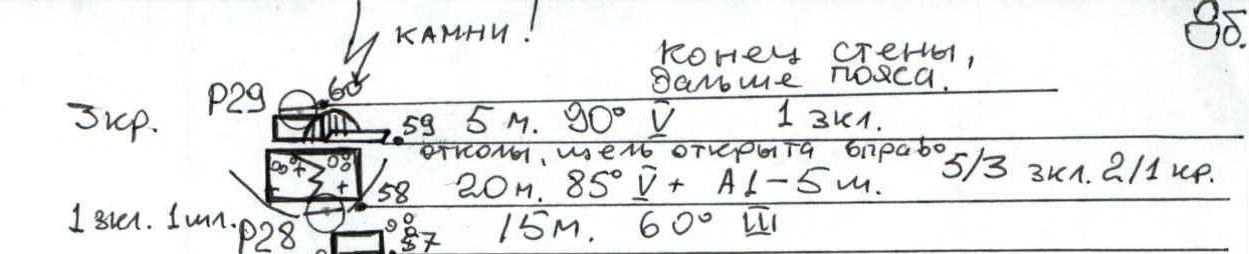
End of the wall, further belts. R29: 5 m, 90°V, 1 chock. R28: 20 m, 85°V+, A1–5 m, 5/3 chocks, 2/1 screws. R27: 1 screw.D, rock feature. R26: 3 screws. 13 kg, 2 bolt hangers. R25: 20 m. Caution! Rocks! R24: 1 chock, 2 bolt hangers. R23: 40 m, 70°V+, 5 chocks, 3 screws. R22: left wall locked by a ceiling. 30 m, 80°V+, A2–5 m, 4/2 chocks, 2/2 screws, 1 bolt hanger. R21: 20/15 chocks, 6/3 screws, 1 bolt hanger. 50 m, 85°V+, A2–20 m. "Kнига" (the "Book"). Block. R20: 25 m, 90°V+, A1–2 m, 5/2 chocks, 1 screw, 1 bolt hanger. R19: 30 m, 80°V+, 2 chocks, 4 screws. R18: 10 m, 85°V+, 2 chocks. R17: 2 chocks, 1 screw, R20. Flakes. 3 chocks, 1 screw, 1 bolt hanger. R16: 40 m, 75°V+, A1–5 m, 6/3 chocks, 2/4 screws. R15: 10 m, 65°IV, 1 screw. R14: 15 m, 85°V+, A2–3 m, 2/2 chocks, 1 screw, 1/1 bolt hanger. R13: 5 m, 70°–V, 1 chock. R12: 10 m, 85°V+, 3/2 chocks. R11: 42, 20 m, 85°V+, A1–10 m, 4/3 chocks, 1/1 screw. R10: 10 m. IV, 1 chock, 1 screw. R9: 15 m, 80°V, 3 chocks. R8: 15 m, 95°V+, A2–5 m, 5/5 chocks, 1 bolt hanger. R7: 10 m, 100°V+, A2–10 m, 8/8 chocks, 2/2 screws. R6: 5 m, 90°V+, A1–3 m, 4/4 chocks, 1/2 screws. "Serp" (the "Sickle") R5: 1 chock, 1 screw, R15. "Zerkalo" (the "Mirror"). R4: 1 screw.D, 1 rock feature. June 19, 1986, 8:30. R3: 3350 m. 40 m, 85°–90°V, A3–30 m, 5/5 chocks, 4/4 screws, 1/1 bolt hanger.