

SOUTHERN FEDERAL DISTRICT OF THE RUSSIAN FEDERATION ALPINISM CHAMPIONSHIP 2009
REPORT OF THE TEAM OF THE NORTH OSSETIAN SEARCH AND RESCUE UNIT AND THE ALPINISM FEDERATION OF NORTH OSETIA
Peak: Monakh (2757 m) — via the left part of the North face. First ascent.
ASCENT DOCUMENTATION
- Caucasus. Tsey valley. Classification section number 2.7.
- Monakh (2757 m) — via the left part of the North face.
- Proposed category: 5B. First ascent.
- Route type: rock climbing.
- Route height difference: 760 m (according to GPS).
Total route length: 1100 m. Length of sections with 5–6 category difficulty: 210 m. Steepness of key sections: up to 100°. Average steepness of the route: 65°.
- Number of pitons left on the route: 7, including 5 bolt pitons (Petzl brand).
Total pitons used on the route: 55. Number of chocks used: 35. Number of pitons and chocks used for ITO (Intermediate Technical Operations): 50. Number of removable bolts: 30. ITO on rock features (skyhooks): about 500.
- Total climbing hours: 40; days: 7.
- Team leader: Egorin S.V. — Master of Sports — Vladikavkaz.
Team members:
- Abisalov A.D. — Candidate Master of Sports — Vladikavkaz.
- Zhirnov D.N. — 1st category — Vladikavkaz.
- Coach: Khamitsaev K.B. — Candidate Master of Sports.
- Approach to the route: June 16, 2009.
Summit: June 23, 2009. Descent: June 23, 2009.
- Team: North Ossetian Search and Rescue Unit of the EMERCOM of Russia and the Alpinism Federation of North Ossetia.
MONAKH
2757 m.
R17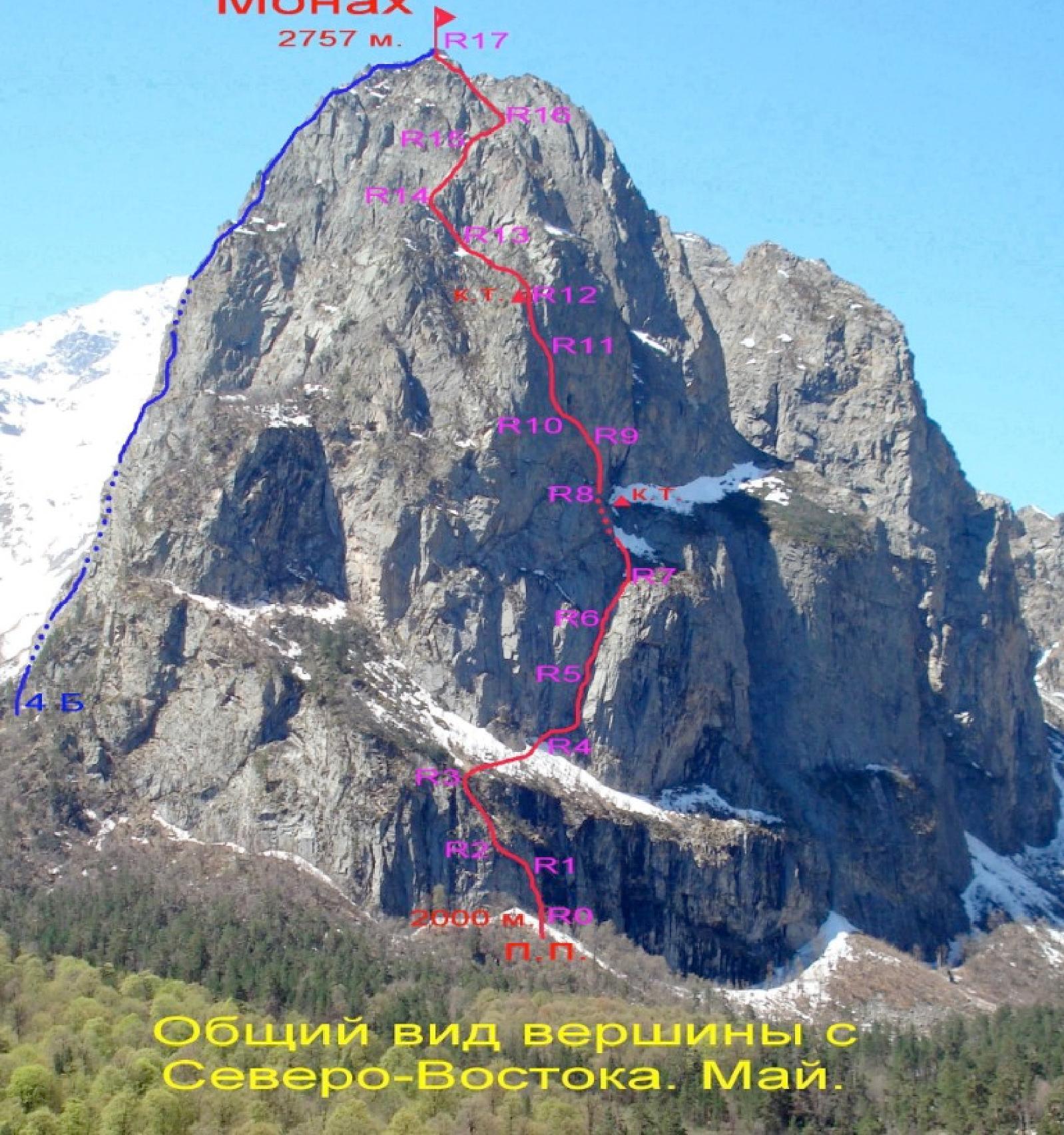
BRIEF OVERVIEW OF THE CLIMBING AREA. HISTORY OF THE PEAK'S DEVELOPMENT.
The Tsey valley is located in the Republic of North Ossetia-Alania, between the Ardon and Uruh rivers. The main river of the Tsey valley is the Tseydon.
In its upper reaches, Tseydon receives a right tributary, the Skazdon river. The watershed of the Tseydon and Skazdon basins is the North-Eastern ridge of the Adaiykhoh peak (4405 m). It first forms the Kaltberg peak (4123 m), then, descending below the snow line, this ridge becomes purely rocky with steep slopes.
One of the most pronounced жандармов of this ridge was named Kaltberg East by L. Volkov's team in 1983, with a height of 3223 m. Behind it, the ridge continues further to the North-East and, after a specific "Teapot" жандарм, easily recognizable from almost any point in the Skazdon valley, it descends to a height of about 3000 m. Here, on the ridge and on the ledges, grass begins to appear.
The North-Eastern ridge of the Kaltberg peak ends not far from all mountain camps with a unique жандарм-peak: Monakh (2757 m). Monakh drops down to the south, east, and north with walls ranging from 400 to 700 m, which have caught the attention of many generations of climbers. In some places, the walls have entire terraces overgrown with grass and trees. The development of Monakh was practically neglected due to the presence of grass on the ledges, lichen on the rocks, and moss on the North-facing walls. Moreover, the classification of so-called "small mountains" — peaks below 3500 m — was difficult in Soviet mountaineering.
The rock structure of Monakh's walls is one of the most monolithic in Ossetia. These are strong granites with a high quartz content, so they often have no gaps.
The sport development of Monakh's walls practically began in 1983 by a group led by L. Volkov. They ascended the most difficult route on Monakh from the south at that time and named it "Via the Eastern edge of the жандарм Monakh peak of Kaltberg East". Although the actual orientation of this edge is South-Eastern.
The route they ascended is technically challenging, especially in the lower part. They ascended the lower part via the most difficult path — directly up the wall from the base of the edge. Although the easiest and most logical path up this edge goes along its left side (now a 4B category route).
At that time, their ascended route was not classified. Currently, the first part of their route — up to Monakh peak — is classified as a 5A category route along the wall of the right South-Eastern edge.
In 1996, a youth team from the "Ossetia" mountain club made a first ascent of the neighboring edge next to the 1983 route. They ascended the left South-Eastern edge — now a classified 4B category route.
L. Volkov's group ascended the South-Western ridge of Monakh peak towards Kaltberg back in 1983. However, they actually bypassed the ridge along the North slopes, as it appears technically challenging from Monakh peak. In fact, most of the жандармс on the South-Western ridge are passable. This ridge was first ascended from west to east (i.e., towards Monakh peak) in August 2001. The difficulty of the ascended route is 2B category.
The first winter ascent of Monakh was made in February 2003. In August 2005, the peak was reached by the first woman. In September 2005, a first ascent was made from the South-East via the Eastern ridge, category 3A.
In recent years, ascents of Monakh via various routes have become especially popular. The ascents are convenient due to the close approach and the possibility of climbing during the off-season.
There were no attempts to ascend the North walls until June 2009. From June 16 to 23, 2009, under unstable weather conditions, a joint team of the North Ossetian Search and Rescue Unit of the EMERCOM of Russia and the Alpinism Federation of North Ossetia made a first ascent of the left part of the North wall.
PANORAMA OF THE AREA FROM THE NORTH
Classified routes and the first ascent route are marked.
DESCRIPTION OF THE APPROACH TO THE ROUTE
There are two options for approaching the route:
- From the "Tsey" alpine camp, cross the Skazdon river and walk through the forest towards the base of the Eastern walls of Monakh peak. Upon approaching the wall, walk down to the right along the rocks. After about 100 m, the wall starts to turn left. Climb up a cone with signs of a rockfall that occurred in July 2007. In some places, fallen trees and rocks are visible. From the top of the cone, descend along the rocks down about 50 m. The lower bastion of the North wall has black streaks here. To the left of them is the start of the route.
- Cross the bridge over the Tseydon river, then walk up the valley past the base of the North Ossetian Search and Rescue Unit of the EMERCOM of Russia. Follow the road until you reach a pipe crossing the Tseydon — this is a water intake for holiday bases. Cross to the other side of the river via the pipe. Then walk up to the left through the forest to the base of the large chimney separating the North walls of Monakh. Before reaching the chimney, turn left. Do not get too close — there is a risk of falling rocks from above! Under the North wall of Monakh, turn left for about 100 m. Climbing up, you will reach signs of the rockfall that occurred in July 2007. The lower bastion of the North wall has black streaks here. To the left of them is the start of the route.
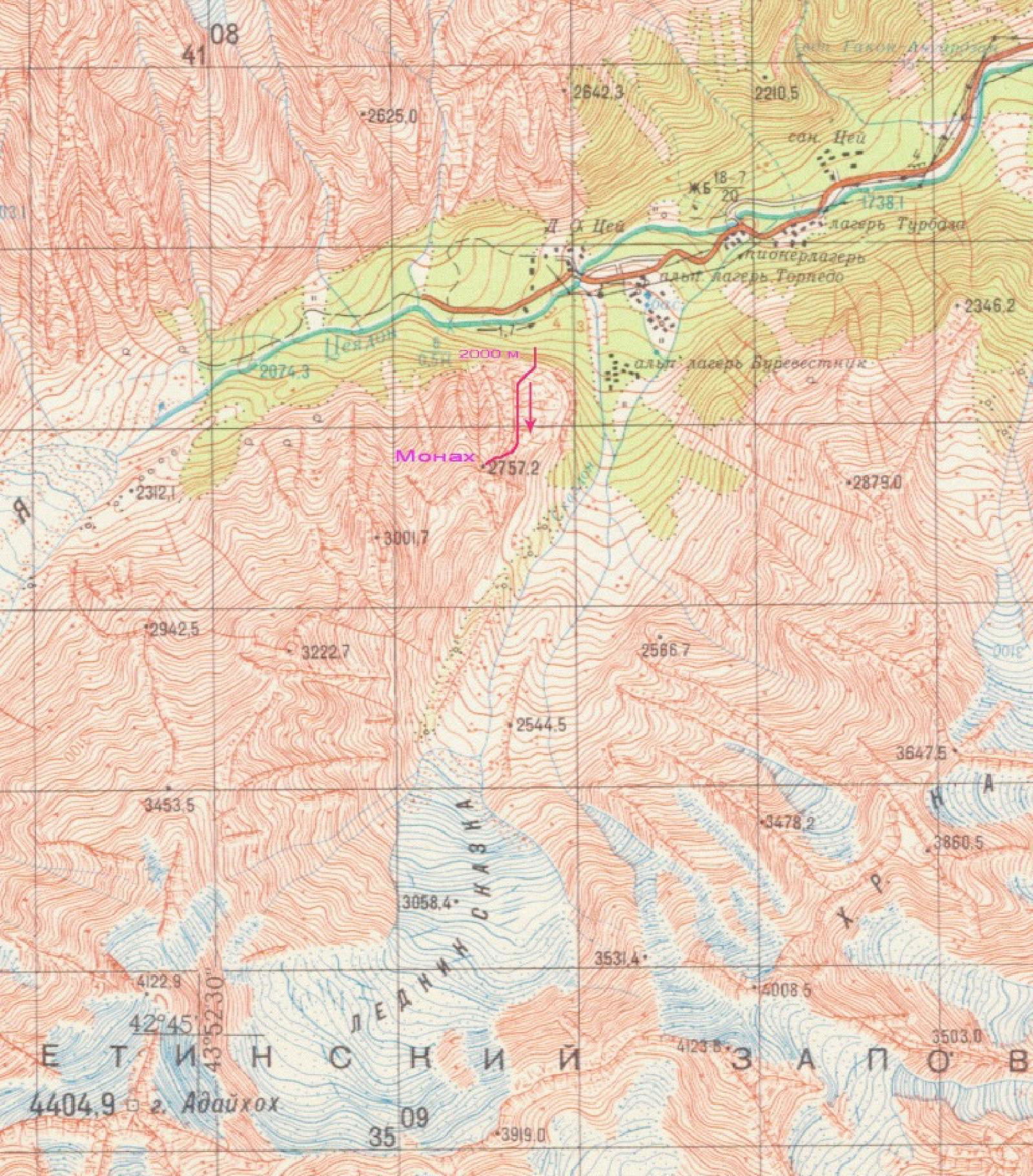
- 2625.0
- 2842.3
- 2210.5
- 2346.2
- 2312.1
- 2342.5
- 2322.7
- 2566.7
- 2544.5
- 3647.5
- 3453.5
- 3058.4
- 3531.4
- 4008.5
- 4404.9
- 3503.0
- 3919.0
ROUTE DESCRIPTION
R0–R1:
The start of the route is along the wall to the left of the wet black streaks. Move up and to the left towards a small tree visible above. From it, follow a poorly defined internal corner straight up. Through overhanging grassy ledges, exit left onto a ledge with trees. The entire section is about 60 m.
Section characteristics:
- Length: about 60 m
- Angle: 60–90°
- Category: 5–6
- Class: A2e
R1–R2:
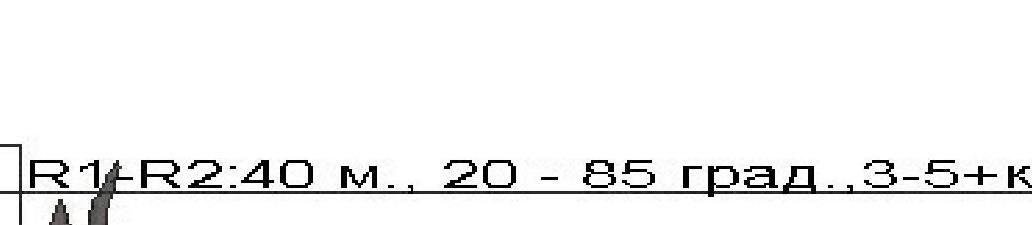
From the ledge, descend left and down. Traverse about 10 m around the corner along a sloping ledge upwards. Further, the partner is not visible. In case of route development, it is possible to shortcut the rope to the ground from here. Continue up the wall with grass, left and upwards, to a ledge. From it, via a wet, steep wall (4 m, 85°, A2), exit beyond the wall's bend. The entire section is about 40 m, 20–85°, 3–5 category.
R2–R3:
Along the right side of a poorly defined ridge, move straight up. To the right is a gully-ravine. The rocks are heavily overgrown, 3–4 category, 50–60°. 40 m after the start of the section, exit onto the lower terrace.
R3–R4:
Along the terrace, move right — towards a large internal corner going up to the right. It is necessary to reach the base of its left part, onto a ledge under a cornice. Here, a sitting bivouac is possible. The entire section is about 100 m, 20–30°, 1 category.
R4–R5:
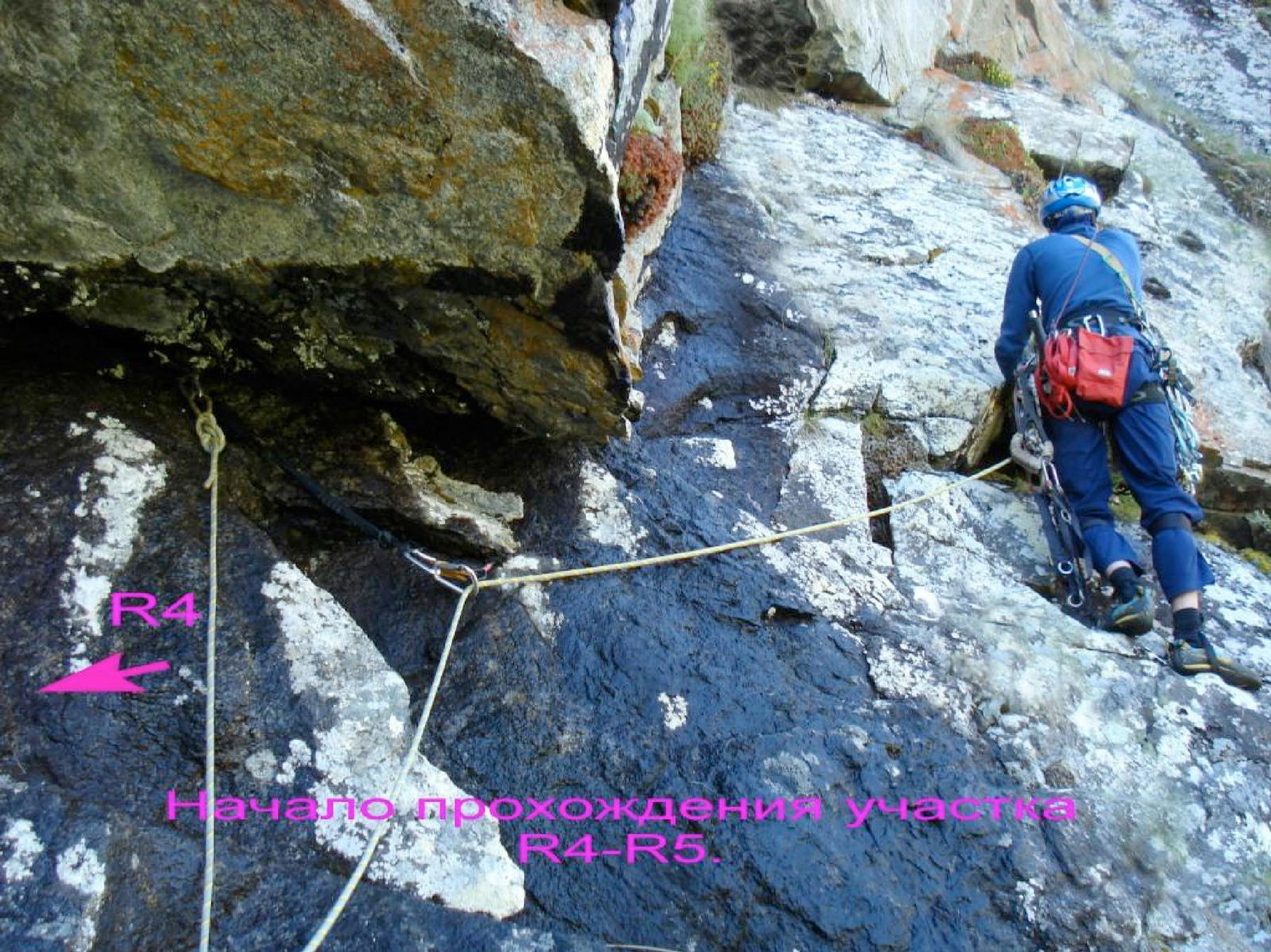
From under the cornice, move right along a wet slab and ledges with grass for about 25 m to the entrance to an internal corner. Further, the partner is not visible.
Up the internal corner with bushes, 5 m, and exit left onto a ledge. Further, up and to the right along an internal corner with grass for another 20 m.
Station on a tree.
The entire section is 50 m, 50–80°, 3–5 category, A2.
R5–R6:
Move up along the internal corner, narrowing in some places to the width of a chimney. In some places, climbing is done to the right of the corner along slabs. At the end of the section — a flattening, after which enter a wet chimney. Station on a screw thread.
Section:
- Length: about 60 m
- Category: 4–5
- Angle: 50–90°
- Class: A2
R6–R7:
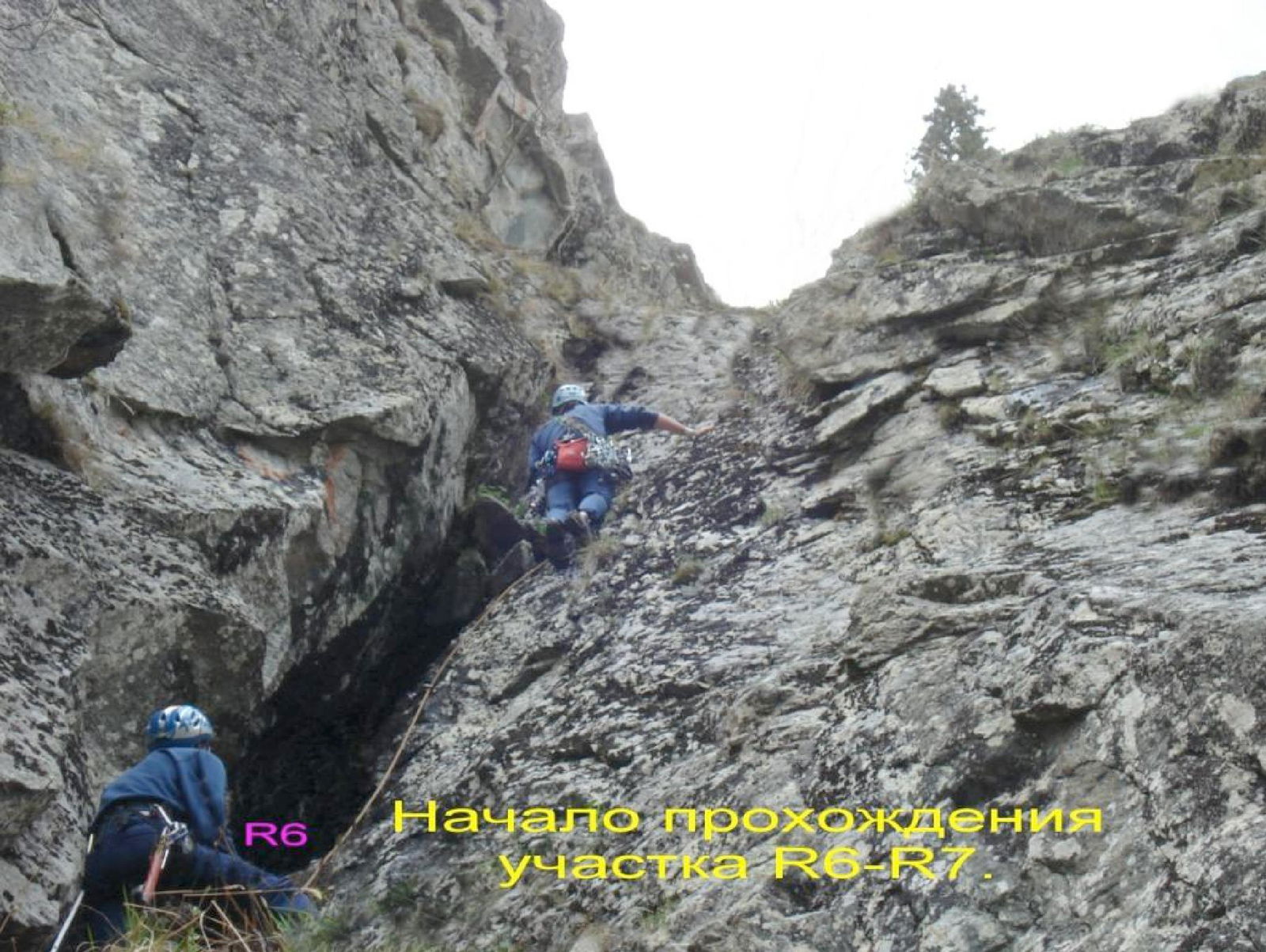
From the screw thread, move up the right part of the chimney with ITO A2e for about 7 m. Then exit right onto slabs and move towards a pine tree visible above. Behind the tree, the steepness of the rocks gradually decreases, and 40 m from the start of the section, exit onto a large ledge. The partner is only visible for the first 15 m.
The entire section:
- Category: 4–6
- Angle: 40–90°
- Length: 40 m
- Class: A2e
R7–R8:
Further, move straight up a gully-ravine for about 100 m under the upper bastion. Pass two walls in the gully along their left parts. At the end of the section, exit onto a ledge under the wall, to the left of a black cornice with streaks. 30 m to the right of this location, in the left part of the upper terrace, under a large rock, on its western side — the first control point.
Near the rock, a bivouac is possible, but there is a risk of falling rocks from above.
The entire section is 100 m, 1–3 category, 30–60°.
R8–R9:
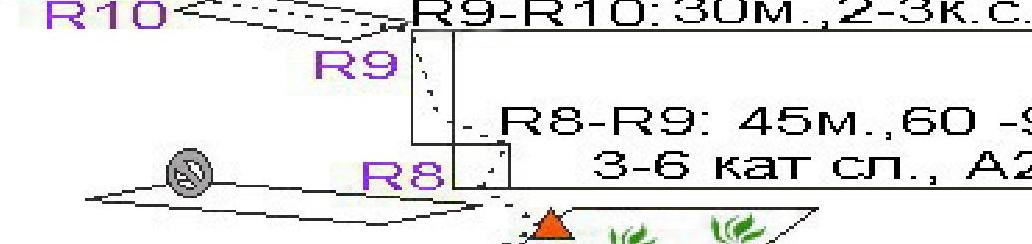
From the ledge, located 30 m to the left of the control point, through a small wall (4 m), exit onto a ledge with grass, which leads up and to the right onto a small platform behind a fragment. From it, it is convenient to belay further.
Traverse left for 5 m.
Through an overhanging internal corner, 4 m up, onto a ledge. From it, traverse left for 4 m, 4 category.
Further, straight up, A2e, 5 m. Along a concave wall, through cracks filled with earth and grass, up and to the left onto rock features (fifas), onto the right edge of a long ledge.
Under a large block, traverse left with an exit onto a ledge. Above this block — another live block!
The entire section is about 45 m, from 60 to 95°, 3–6 category, A2e.
R9–R10:
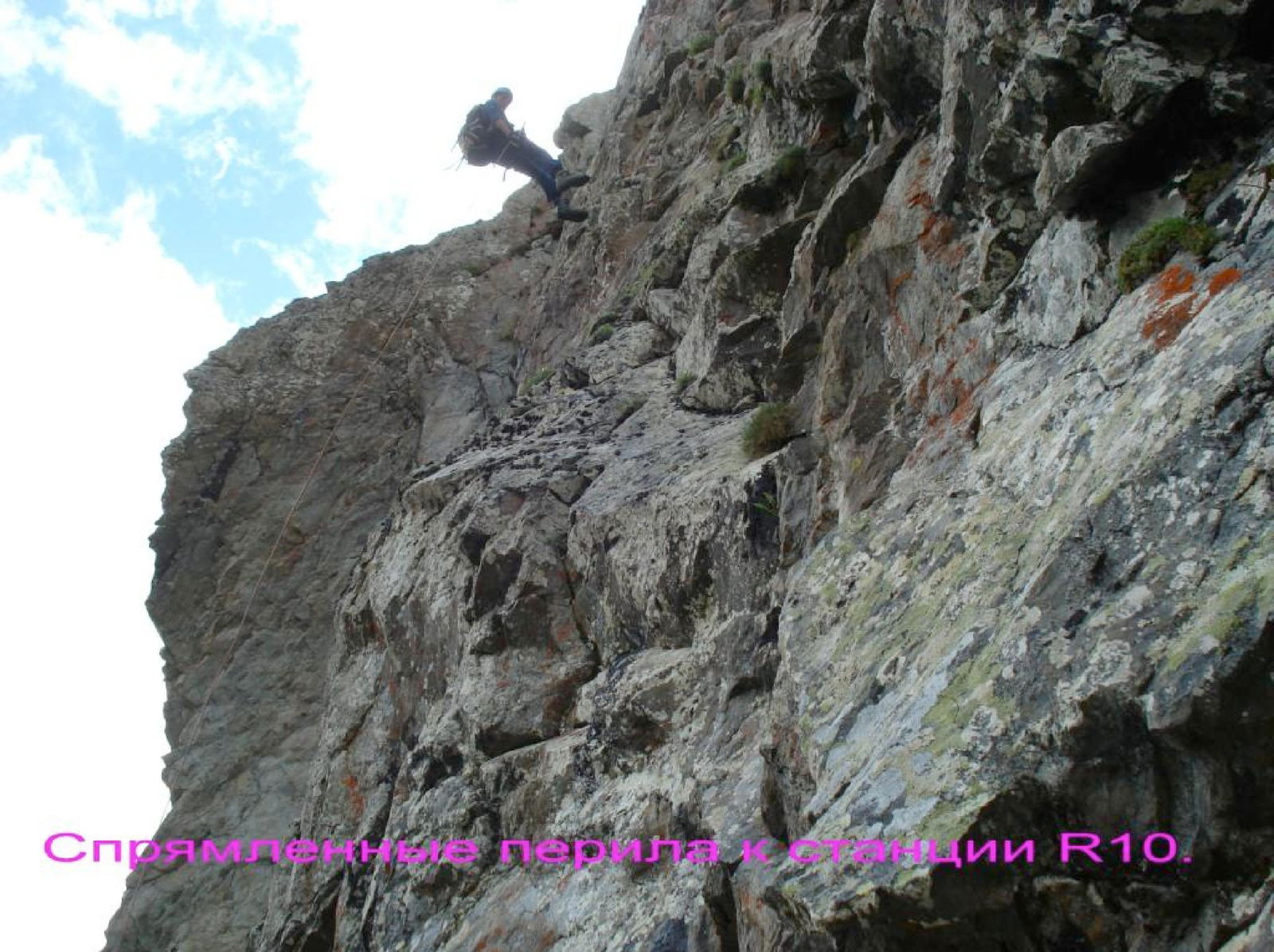
Along the long ledge, overgrown with grass, traverse left for 20 m to its expansion. Here, a screw thread with an eyelet is driven. From it, down to the ledge, it is possible to shortcut the rope (30 m). To the lower part of these shortcutted ropes, it is possible to reach along the ledge, 1–3 category, from point R8. Further along this ledge, a sitting bivouac is possible under the wall. From the screw thread, continue along the ledge, left and up — to a station under a rock. The entire section is 30 m, 2–3 category, 20–40°.
The next two sections are the key part of the route:
- R10–R11
- R11–R12
R10–R11:
From under the rock, left and up, under a wall with fragmented relief, 10 m, 4 category, 55–60°. Along the right part of the wall, 10 m up, to a ledge, A3e, 5–6 category, 80–95°. From the ledge, approach a narrow left chimney. Up this chimney, to its middle, then exit left (bolt on the bend) into an internal corner with grass. The chimney is 80–100°, 10 m, 5–6 category, A3e. Up the internal corner, 10 m, 70–80°, 4–5 category, A2, and exit left onto a narrow ledge. Here, a screw thread is driven. The entire section is about 40 m.
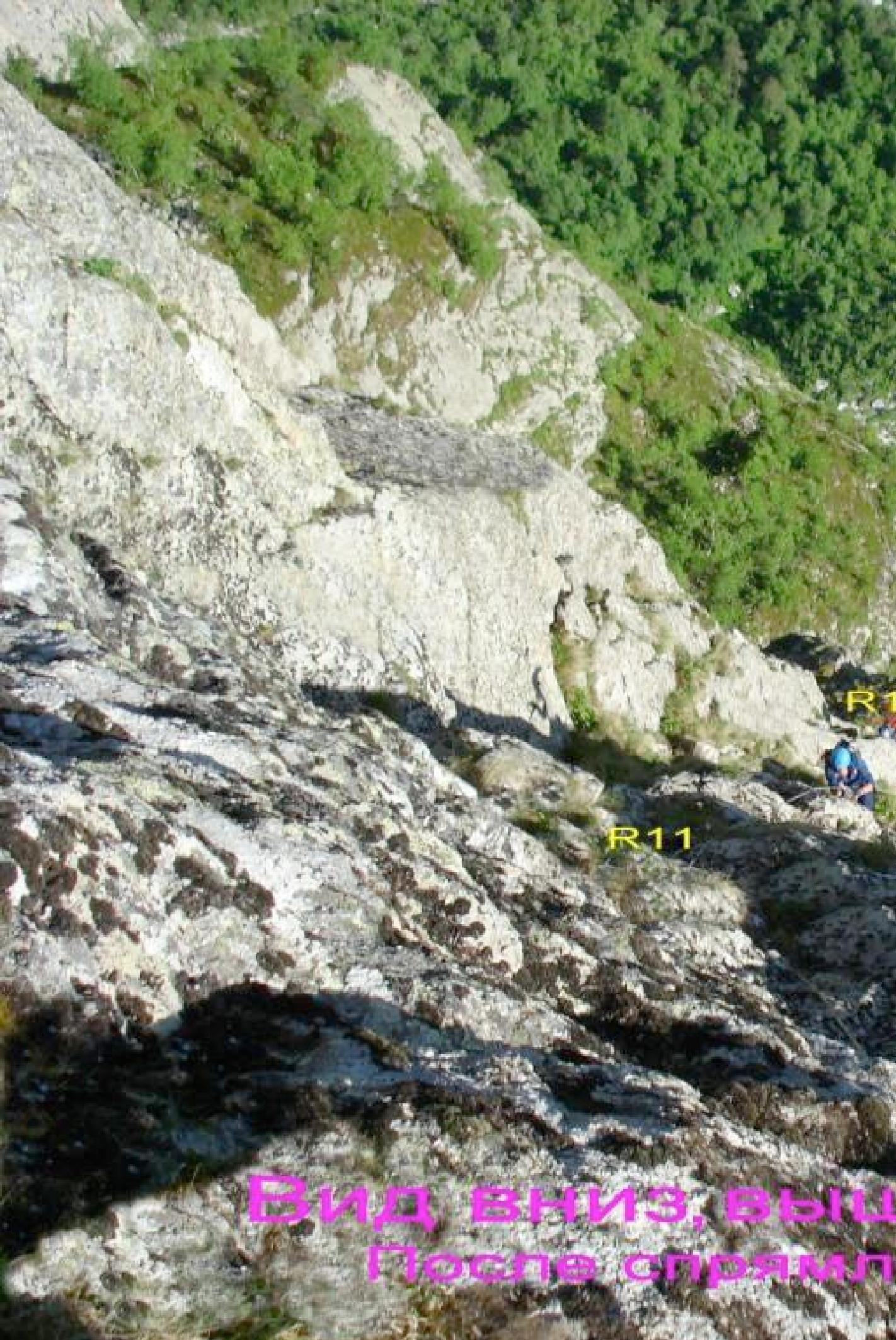
R11–R12:
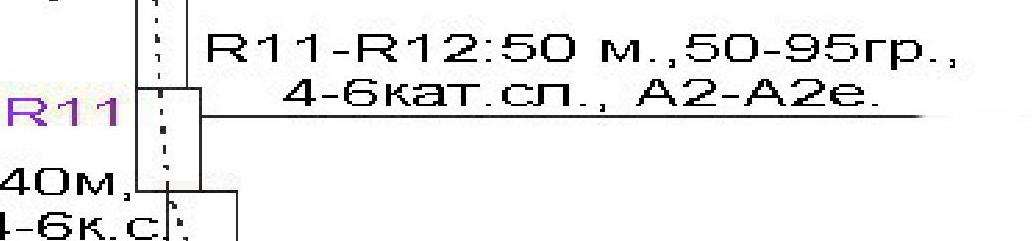
From the screw thread, return right and continue up along the internal corner with grass, entering the lower part of a chimney — 10 m, 5 category, 70–90°, A2. Further, exit from the chimney left onto a small ledge — 85–90°, A2e, 5–6 category, another 12 m, here, in the left part of the ledge, a bolt. Further, along a monolithic wall, left and up — removable 8 mm bolts, skyhooks for holes, section 8 m, 80–95°, A3e, to a ledge. Above the ledge, the wall's steepness slightly decreases, and the rocks are all covered with moss. Further movement is towards a pine tree visible ahead against the sky. The rocks are monolithic, with few holds and cracks — another 20 m, 70–80°, A2e, 5–6 category. In the upper part of the slabs, 50–60°, 5–4+ category. The entire section is about 50 m. At the end of the section, exit onto a shoulder near the pine tree. Further, the route to the summit is without fifas, bolts, and ITO.
R12–R13:
To the left of the pine tree, under a rock — the second control point. On the shoulder, a sitting bivouac is possible.
Further:
- Turn right and climb up slabs overgrown with grass and bushes for 20 m.
- Turn left and move up along ledges with trees.
The direction of movement is towards a red rock (the site of a rockfall in July 2007). Approach the base of an internal corner with grass, which is located to the right of the rockfall site.
The entire section is about 80 m, 2–3 category, 30–50°.
R13–R14:
Straight up along the internal corner onto a shoulder. Here is control point 3A. The entire section is 40 m, 3–4 category, 40–70°. On the shoulder, a sitting bivouac is possible.
R14–R15:
On the shoulder, turn right. First, follow the line of the ridge, then turn left into a wide internal corner overgrown with grass. Move up along it. After 80 m, exit right back onto the ridge.
The entire section:
- 30–50°
- Rocks 2–3+ category
R15–R16:
Further, move 10 m and approach a sloping internal corner, 10 m long (2–3+ category; 50°), and exit onto the North-Eastern ridge.
R16–R17:
Along the North-Eastern ridge, first move along its right side (along the North slopes), then move along the left side of the ridge and exit under Monakh peak from the East. Along rocks of 3 category, ascend the summit tower to the highest point.
The entire section is about 200 m; 20–40°; 2–3 category.
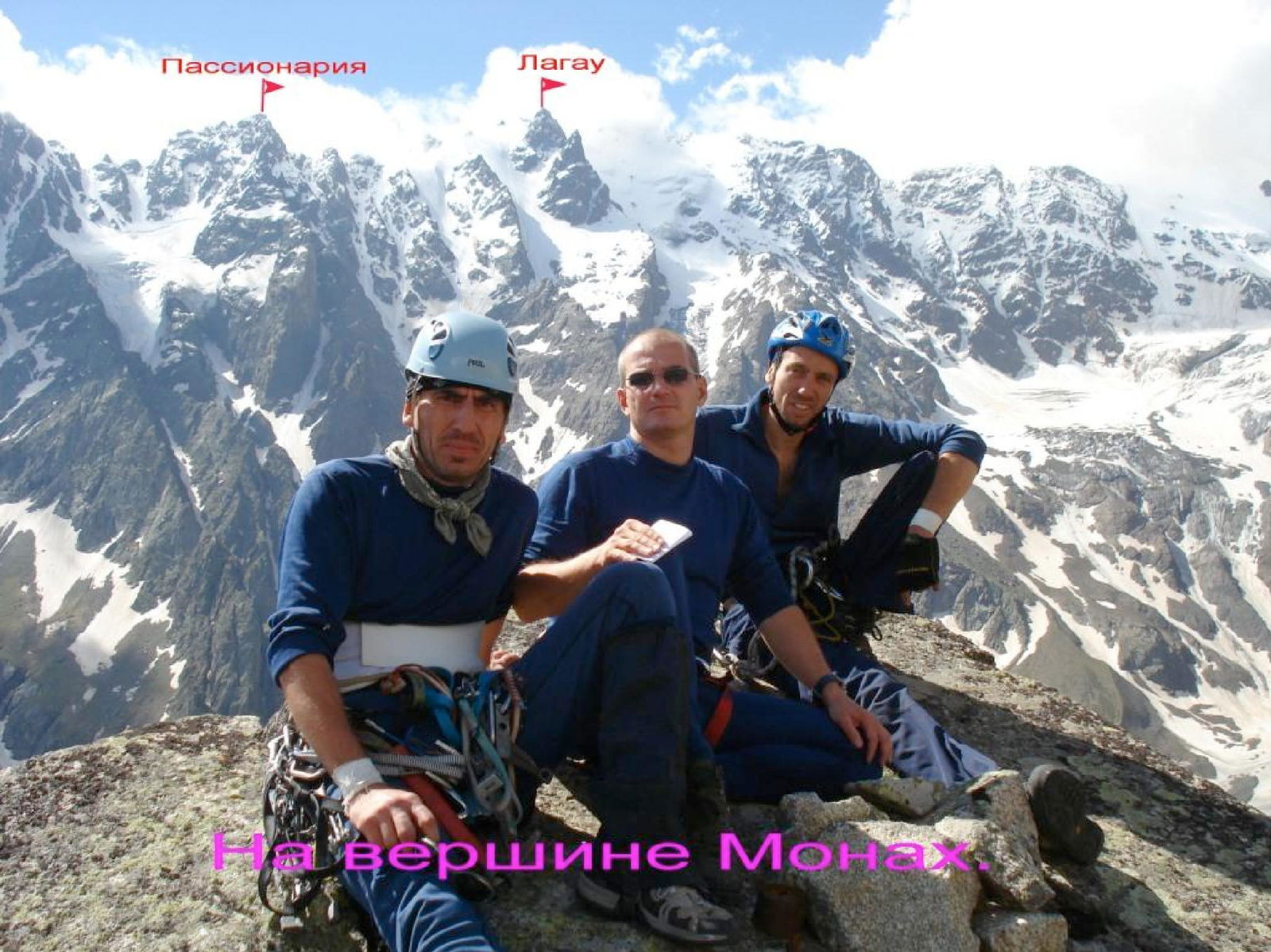
The summit is a good panoramic point for the entire Tsey area. Descent is via the South-Western ridge (2B category). It is recommended to study the descent route in advance (complex orography).
MONAKH 2757 M
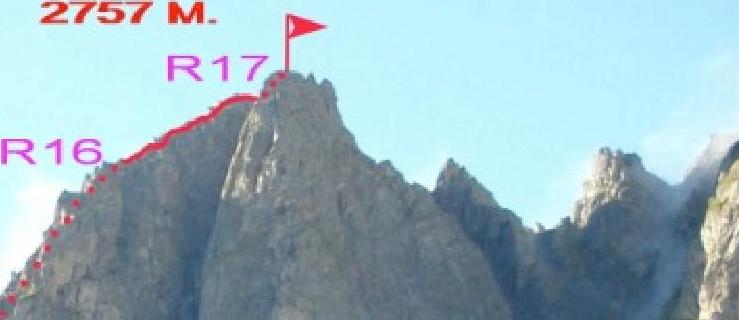
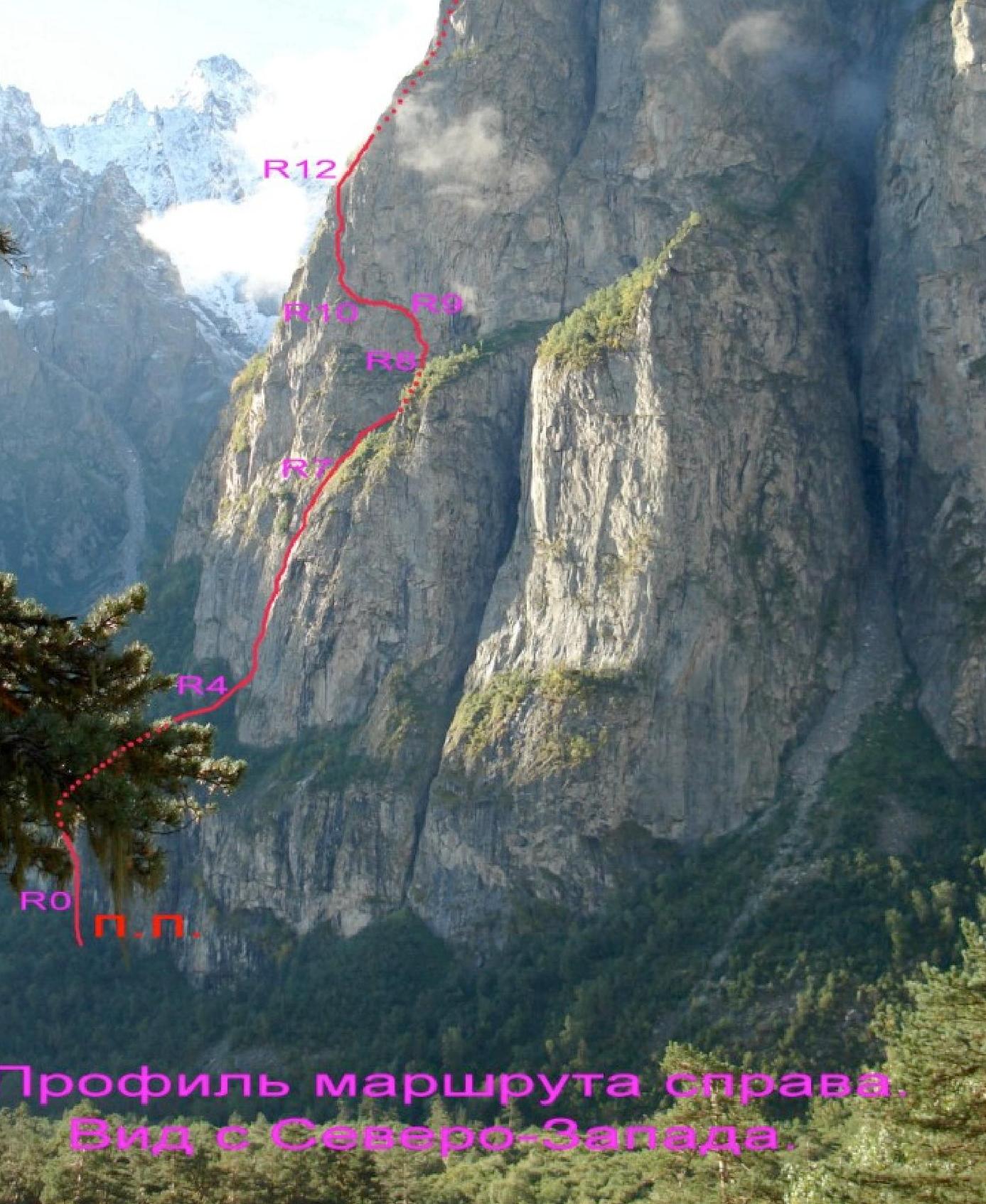
 R14–R15: 80 m, 2–3+ category, 30–50°. R13–R14: 40 m. R12–R13: 80 m, 2–3 category, 30–50°.
 R11–R12: 50 m, 50–95°, 4–6 category, A2–A2e.
 R10–R11: 40 m. R9–R10: 30 m, 2–3 category, 20–40°. R8–R9: 45 m, 60–95°.






| Ascent Day | June 16, 2009 | June 17, 2009 | June 18, 2009 | June 19, 2009 | June 20, 2009 | June 21, 2009 | June 22, 2009 | June 23, 2009 |
|---|---|---|---|---|---|---|---|---|
| Achieved Height; Section Number | 2050 m R1 | 2150 m R4 | 2300 m R8 | 2300 m R8 | 2350 m R10 | 2400 m R11 | 2450 m R12 | 2757 m R17 |
| Weather | ||||||||
| Number of Climbing Hours | 4 | 5 | 8 | - | 5 | 6 | 7 | 5 |
The Metrics of the 1990s


Crosswater and Fisher
2010
Passing the Middle Part of Section R8–R9
Passing the Lower Part of Section R10–R11
2011
1.1. 2011
PRODUCTS TO KIT 2011
REPORT
Passionaria
CONCLUSIONS AND RECOMMENDATIONS FOR THE ASCENT
From June 16 to 23, 2009, under unstable weather conditions, a joint team of the North Ossetian Search and Rescue Unit of the EMERCOM of Russia and the Alpinism Federation of North Ossetia made a first ascent of the left part of the North wall.
A paradoxical difference was observed between the rocks on the North and South exposures. While free climbing is possible on the South-Eastern ridges, movement on the North-facing rocks was mainly done using rock features (fifas).
Due to significant precipitation in the Tsey valley — up to 1000 mm per year — and the fact that the North-facing rocks are not exposed to sunlight, they remain wet for a long time after rainfall. These factors and the low height of the peak contribute to the growth of abundant vegetation on the North walls of Monakh.
Even in the narrowest, smallest cracks, grass grows, forming significant grassy ledges that cannot withstand even a slight load.
Rocks with a steepness of up to 90° are covered with numerous black streaks from water flowing from above. Moss and lichen grow even on overhangs, hiding holds.
The rock structure on Monakh is monolithic, consisting of strong granites with a high quartz content, so gaps are rare.
Moreover, cracks in the rocks are often filled with earth, making it difficult to organize reliable protection with regular pitons. The following were helpful:
- anchor pitons
- bolt pitons
Protection was sometimes also organized using large trees.
The route was ascended via the path of least resistance — along the easiest relief of the North wall, without compromising safety. Deviating from the route leads to more challenging terrain.
On the upper terrace, there was an attempt to turn right around the corner and exit onto the pre-summit via the North-Western wall. However, the rocks there were completely covered with moss and lichen and were very monolithic — without cracks for protection.
In terms of the number of sections ascended using ITO, this is currently the most challenging route in Ossetia. For comparison:
- Height difference on the North wall of Chancha: 600 m
- Height difference on the North wall of Monakh: 760 m
- Length of ITO sections on Chancha routes, 6A category: not more than 50 m
It is recommended to bring ropes of at least 50 m in length. There are several sections of 60 m. It is essential to have anchor pitons and rock features (fifas) in the group. It is desirable to have a set of bolts. We used 8 mm removable bolts and screw threads from Petzl. Therefore, it is necessary to have eyelets for screw threads.
Snow for water on the route is available on the North side from around late October to mid-June. Bivouac sites on the route are suitable for sitting or for a small tent.
It is recommended to have radios or phones in the group, as the noise of the river interferes with normal command transmission.
Cellular coverage from the three main Russian operators is available throughout the route.