
Ascent Description
On July 13, the group, having completed preparations, left alpl Ulлу-Тау for alpl Uzunkol and arrived at their destination in the evening of July 14.
July 15. After receiving the "start," the team headed to the wall of Kirpich, set up a base camp, dropped off some of their gear, and returned to Uzunkol the same day.
July 16. The group retrieved the rest of their gear and, along with observers, moved to the base camp. They arrived under the wall in the first half of the day. The base camp was established on a rocky island within a 50-minute walk from the start of the route. This location was the most convenient and safe from rocks, which in the morning, when the crust was still frozen, rolled down to all the rock outcrops closer to the wall. The condition of all participants was excellent. Climbing preparation was scheduled for the morning. The duo, Zadorozhny — Rasspopov, were relieved of all bivouac chores and were put to bed early. They had serious work ahead.
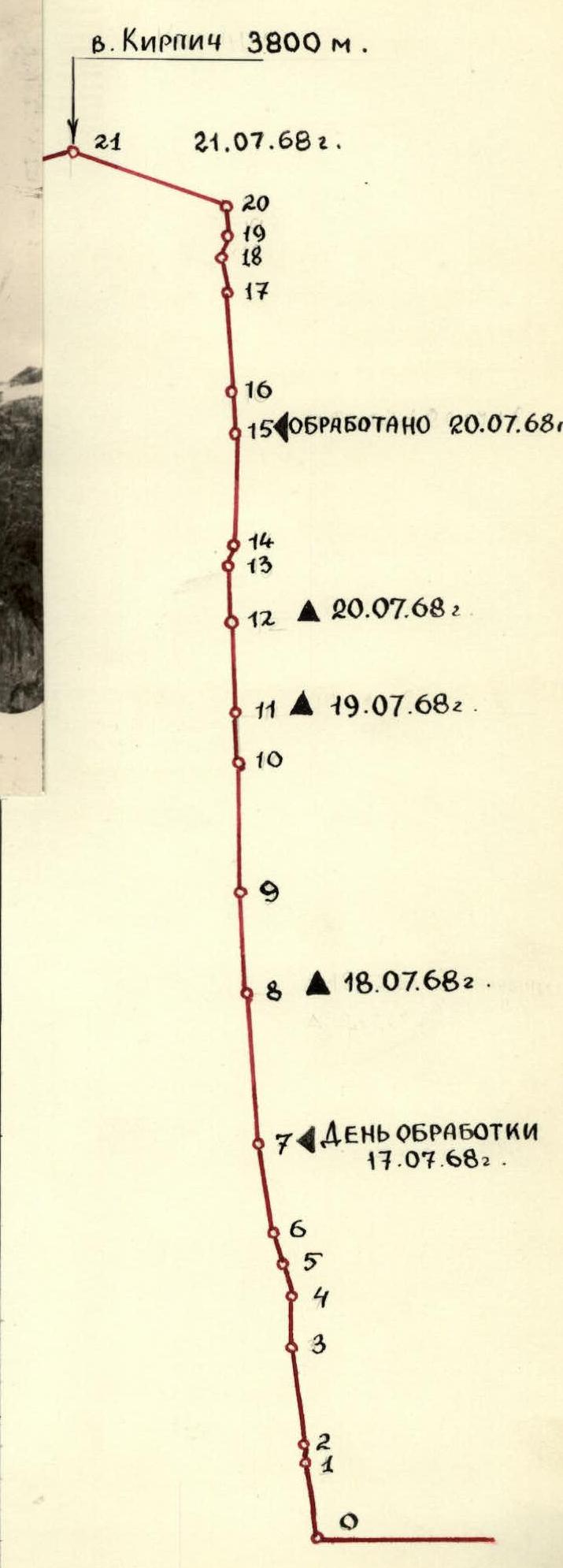
July 17. Day 1 of the assault, processing day! Early in the morning, the climbers headed under the wall. Their figures could be seen moving up the chimney. The weather was excellent! It was clear that the team was making their way up the chimney by climbing and advancing relatively quickly. The day passed unnoticed. The climbers returned to base camp. In 11 hours, they managed to cover a distance of 185 meters and hang ropes! This was a good start, especially since ladders were not used throughout this path, and a logical exit to the "otkol" via a fissure-chimney was visible above. The processed section was a narrow, inclined chimney formed by a giant rock outcropping detaching from the wall, sometimes disappearing and turning into walls.
July 18. At 5:30 AM, the team of Nepomnyashchiy — Khokhlov, with backpacks, headed under the wall and began the tiring ascent along the fixed ropes while simultaneously pulling up their backpacks. They would not return down and would spend the night on the wall. By noon, they managed to pass the processed section and start moving along the fissure leading to the "otkol". There were many "fans" in the base camp. Climbers descending from neighboring peaks stopped by to watch the ascent. Nepomnyashchiy Tolya was clearly visible, confidently and quickly navigating a difficult vertical fissure. There was also communication with the team, and valuable information was received that water could be found in a couloir on the wall, and they could even bring their kitchen. This news was very encouraging. 45 liters of water, distributed among flasks, were already under the wall. Now, they could reduce their water supply and significantly lighten their load. The rest of the day at base camp was spent on final preparations for the team's ascent onto the wall.
July 19. Ruzhevsky — Lankin, Zadorozhny — Rasspopov began their ascent to the "otkol". Moving with backpacks was almost impossible. They once again recalled E.M. Emelyanov's simple and economical method of pulling up backpacks using a clamp and a pulley, which he introduced during training before Chatyr-Dag in 1965. Even with this method, pulling up backpacks was hard work, taking precious time and energy. The wall was already lit by the sun, and thirst was tormenting them. It seemed that the two liters of water allocated for the day would be consumed in one gulp. The team of Zadorozhny — Rasspopov removed the fixed ropes and extracted the pitons. The ascent of the backpacks to the top of the "otkol" was perhaps the most inconvenient section. The backpack got stuck in a narrow chimney. At one point, they had to accompany each backpack individually, as the unfavorable terrain did not allow it to pass through. The section was difficult, and it was satisfying to know that Nepomnyashchiy had passed this place by climbing without using ladders. The upper part of the "otkol" was not as convenient as it seemed from below. It was a narrow, open ledge, covered by a smooth wall above. The traces of the leading team's overnight stay were visible. The team needed to be relieved. They had been working on the wall for the second day and had advanced significantly above the "otkol". The team refused to "rest" and asked to continue working for the day. From the opposite part of the wall (the shoulder of Kirpich), shouts were heard. It was again "fans" — a group descending from the summit, who had been sitting for over an hour. On July 19, Nepomnyashchiy and Khokhlov covered an interesting part of the wall above the "otkol". The wall was approaching a sheer drop but was still passable by free climbing. The relief allowed for it. Insurance was provided through wide box pitons. Where it was difficult to find a suitable crack, a drill piton was hammered in for insurance. The day was coming to an end. Lankin Vitya approached the leading team, bringing them water and hot drinks prepared on the "otkol". It was decided to spend the night in threes. Below, on the "otkol", Ruzhevsky, Zadorozhny, and Rasspopov organized the replenishment of empty flasks with water. This operation was swift but could be considered virtuosic. It required traversing into a completely vertical corner of the couloir where there was shelter from stones in the form of a small overhang; finding a thicker stream of water; holding on and refilling the flask. Zadorozhny T. went for water twice but returned dry, using a polyethylene anorak-cape. By the end of the day, the weather had noticeably worsened. A cloud hung between Dalar and Dvoynyshka. They say this is a bad sign. The evening was spent on preparations and getting ready for the night. They had to change clothes, prepare for potential bad weather, and sort out the ropes so as not to waste time on this in the morning. A strong wind blew at night. It was cold. Despite training nights on the wall at the camp, no one slept. They longed for morning.
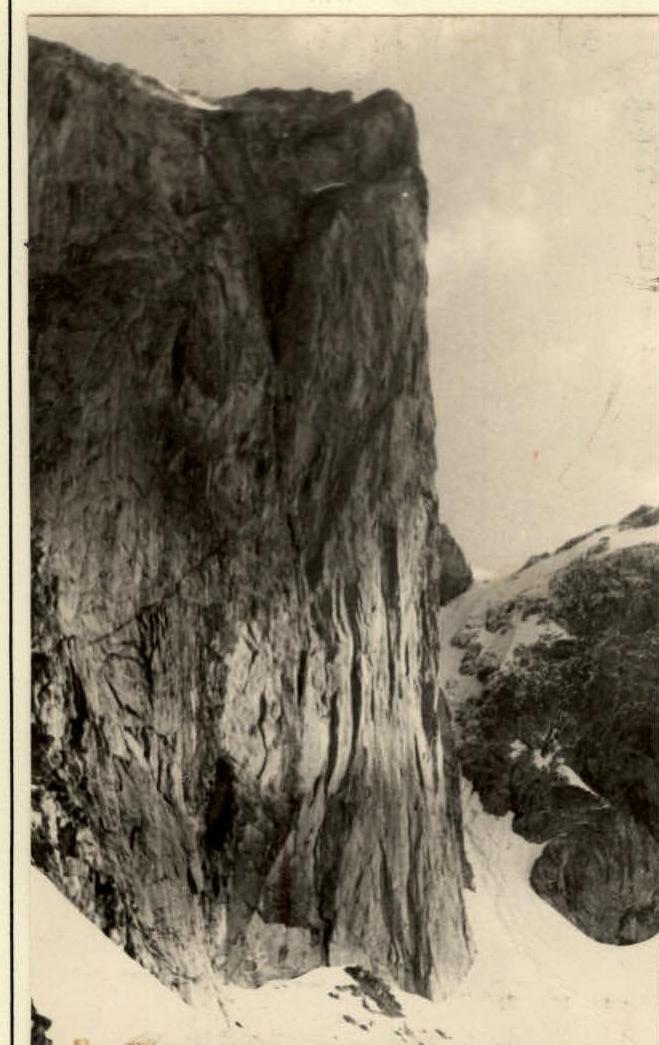
July 20. Thick fog. A strong ascending wind lifted water from the couloir, splashing it from below and above. Work on the rocks became significantly more complicated. The team of Ruzhevsky–Lankin led the way. The rock section was difficult. In some places, they had to hang ladders. A small section of rock in the form of a bulge was used for a short rest and to redistribute the load of the backpacks. They planned to spend the night here, as "overhangs" and the most challenging part of the wall were visible above. The ledge was as wide as a primus stove, but they were incredibly satisfied with it. From here, moving left, the climbing became less demanding. The нависающий пояс скал (overhanging rock belt) was passed on a platform. Soon, a vertical slit (see wall photo, section R15) came to their aid, where titanium boxes could be wedged. Somewhere in the middle of the day, V. Lankin went up, relieving Ruzhevsky. After 20 meters, he was replaced by Zadorozhny. Thus, together, under continuous bad weather, the difficult section was overcome. Already at dusk, four began to prepare for the night at the top of R12. Two (Khokhlov — Rasspopov) remained below, near R11. They replenished their water supply again. Now, T. Nepomnyashchiy demonstrated his skill. Hot meat broth made from freeze-dried meat was lowered to the lower duo. A strong, raw wind blew at night. No one slept. The night seemed like an eternity.
July 21. There were some hopes for an improvement in the weather. Observers on the radio promised them sunshine. The duo Ruzhevsky–Lankin moved up. It was still cold, and removing their down jackets was not appealing. After a challenging section of the wall, there was free climbing, but it was necessary to move very carefully, as there were places with loose rocks. Recently (the rocks in fact had not yet had time to "tan") almost a meter from the pre-summit edge, a part of the wall had broken off. A huge, vaguely expressed depression was formed (to the left of R17). Enormous masses of stones had fragmented all the protruding parts along the path, and now it was necessary to move across them as if on "glass". To avoid unnecessary worries, they turned right and ascended in the direction of the black нависающие скалы (overhanging rocks). Here, the rocks had a large-block structure, and movement across them was safe. It was already mid-day. The weather was improving, although the summit was covered with clouds. It was felt that somewhere, the wall was coming to an end. Ahead was a нависающая кромка (overhanging edge) of more solid black rocks. Climbing was ruled out. Even on fully extended supports on a platform, it was impossible to stand. They were pushed off. It was necessary to pass this pre-summit section while seated on the platform. The wall ended just as unexpectedly as it began. A bend, and it was possible to walk "on foot" without a rope! Soon, almost the entire group appeared on the bend. Together, they pulled up the backpacks "in a chain". And there was the last one, Sergey Rasspopov! That was it. From now on, everything would be very simple. Their happiness knew no bounds. They recalled that V. Lankin's birthday was on that day. He was to be the first to open the tur! In the tur, there was a note from the Leningraders, who had ascended to the summit from the north. They ate the most delicious wall dish (nuts with honey), washed down with water, which would have been enough for another day. The day was coming to an end. They began their descent via the "unit" to the Dalar Pass. Soon, they were met by their observers. From the shoulder of Kirpich, a view of the wall opened up. They sat down and silently stared at it for a long time, tracing their path and not believing that they had passed it. It was already getting dark when they returned to base camp. The observers were preparing a festive dinner.
July 22. They decided not to stretch the evacuation of the camp over two trips and to clear everything at once. No one had carried such heavy backpacks in a long time, but everyone's mood was excellent. On the same day, they were congratulated in Uzunkol. The south wall of Kirpich was successfully passed.
General Conclusion on the Route
The south wall of Kirpich is an unexpectedly and steeply rising rock sheer face without pronounced bends or characteristic forms. The wall is characterized by very simple approaches (not requiring a rope). Technical complexity begins from the first meter of movement on the wall and ends just as unexpectedly upon reaching the summit. Probably, the name "Kirpich" was given to the peak not only for its yellow-brown color but also for its shape, which resembles a brick stood on its end. The middle part of the wall is abundant with powerful smooth blocks and numerous cornices, where the logic of the route is completely absent. This part entirely excludes free climbing, especially in its middle section. It was precisely in this place that the path of the group led by Yu.I. Chernoslivin, laid in 1961, gradually deviated from the vertical to the left. Significantly to the right of this path, the wall is cut by a deep vertical internal angle — a couloir descending down, with smooth monolithic walls. The top of this couloir opens into a wide rock funnel that collects all the stones. Moving up the couloir as a path to the summit is ruled out due to extreme danger. The most logical path to the summit along the south wall is along the left "bank" of the couloir, along an implicitly expressed outer angle, where the convexity itself allows the use of significant rock erosion for free climbing. The start of the route is also the most logical of all options and represents a series of narrow chimneys and wide fissures, allowing for pure climbing. The wall has a rich assortment of various forms of rock surface (chimneys, fissures, steep slabs, cornices, walls with good holds), which makes the route very interesting and not tedious due to its monotony. Thus, the newly passed wall rehabilitates Kirpich, which had earned a reputation as an "industrial" wall. Unlike the route on Kirpich in 1961, which led to the shoulder of the summit and thereby shortened the extent of the wall, the new path leads almost to the summit, significantly lengthening the route, which is 605 meters. There are no places on the wall to set up tents, but there are locations where a semi-sitting bivouac can be organized. Almost all these places are under the shelter of overhangs, protecting against random stones. The wall is exposed to the south. On sunny days, it is unbearably hot on the wall, and since water has to be carried, and the drinking regime is limited, thirst is especially tormenting. It seems that a warm south wall is good, but in reality, it turns into an additional difficulty, especially during the day, although at night it is just as cold as on the north slope. On the route, it is possible to replenish water supplies in the couloir (only after the "otkol"). Before the "otkol", there is no water. However, the couloir is completely dry in the morning hours, and when water starts splashing through it, collecting water presents a technical difficulty and some danger, especially if not taken under the outcrops of the couloir. Therefore, it is necessary to carry water, not counting on the couloir, and replenish supplies during the ascent at convenient and safe places, although a truly "convenient" place is practically non-existent. The wall is safe if one excludes the pre-summit destroyed part — the place of detachment of a giant "skol". The path in this area passes along the right edge of the skol, where the rocks are significantly more monolithic. The route can be passed at any time of the season. At the beginning of June, it will be in the same condition as at the end of September, since solid precipitation does not linger on the wall. In bad weather, ascending air currents from the large couloir under the wall lift water droplets, flooding the wall (rain from below). Moreover, the air currents are so strong that, for example, an empty plastic flask thrown down was carried away upwards. It is precisely during such times that communication between group members can be very challenging. The wall is recommended for a well-prepared group, preferably of four people. This group should include training on overhanging terrain in their exercises, as the depth underfoot is constantly felt on Kirpich's wall. It is necessary to have a supply of ordinary "medium" and "large" pitons, especially of the "box" type, where there are many cracks suitable for such pitons. It is advisable for everyone to have Vibram boots. The group passed the wall without deviating from the route in 56 hours of climbing, hammering 143 pitons on the route (including 36 drill pitons). However, this number does not include pitons hammered for the convenience of pulling up backpacks and for overnight stays. The wall was enjoyed by all participants. Everyone received great satisfaction from the wall. The wall is difficult to compare with any other route, as it is unique in its own way. It is logical, complex, and interesting. The degree of its difficulty, in the group's opinion, goes beyond the 5B category.
Composition of the Assault Group
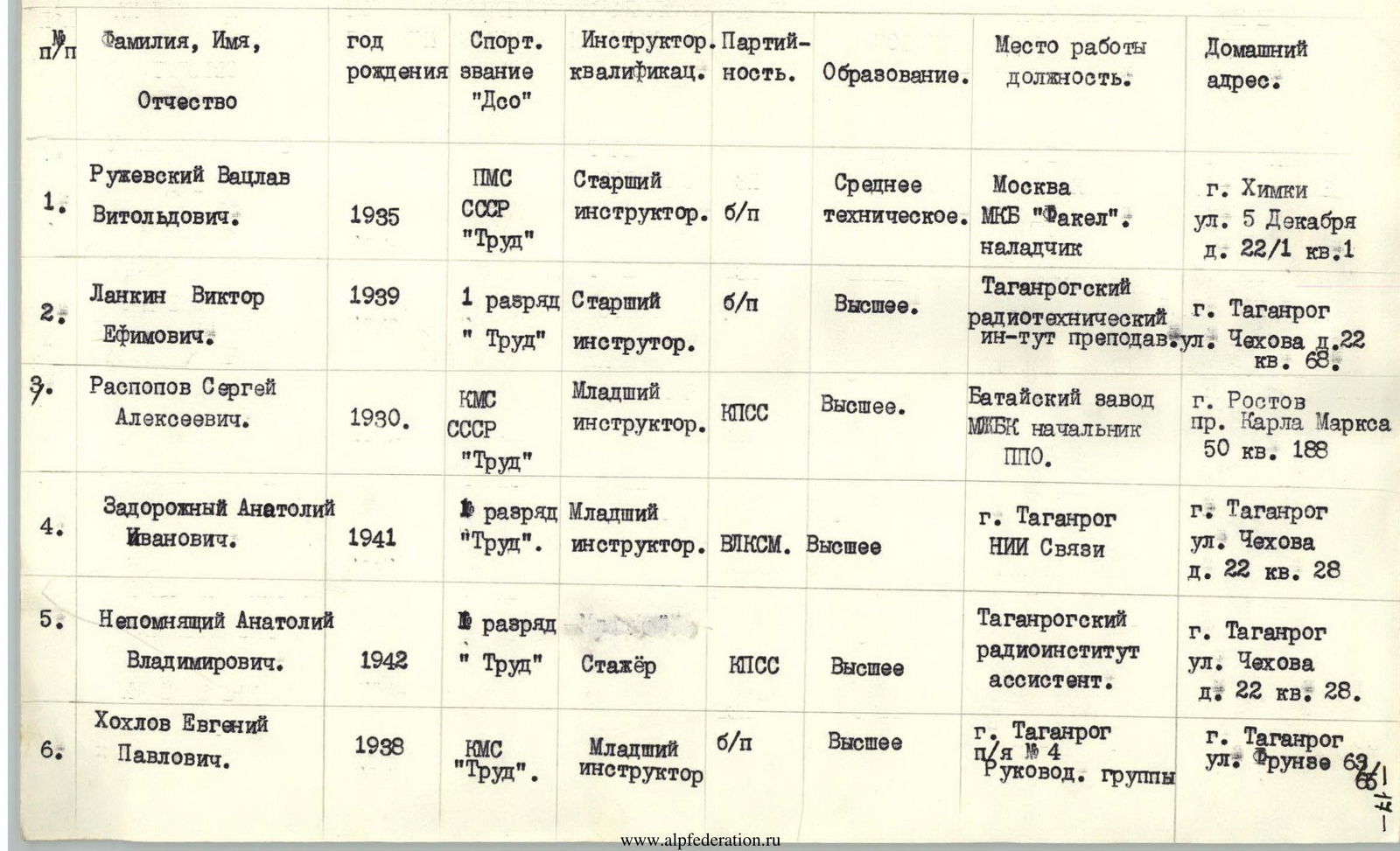
Table of Main Route Characteristics
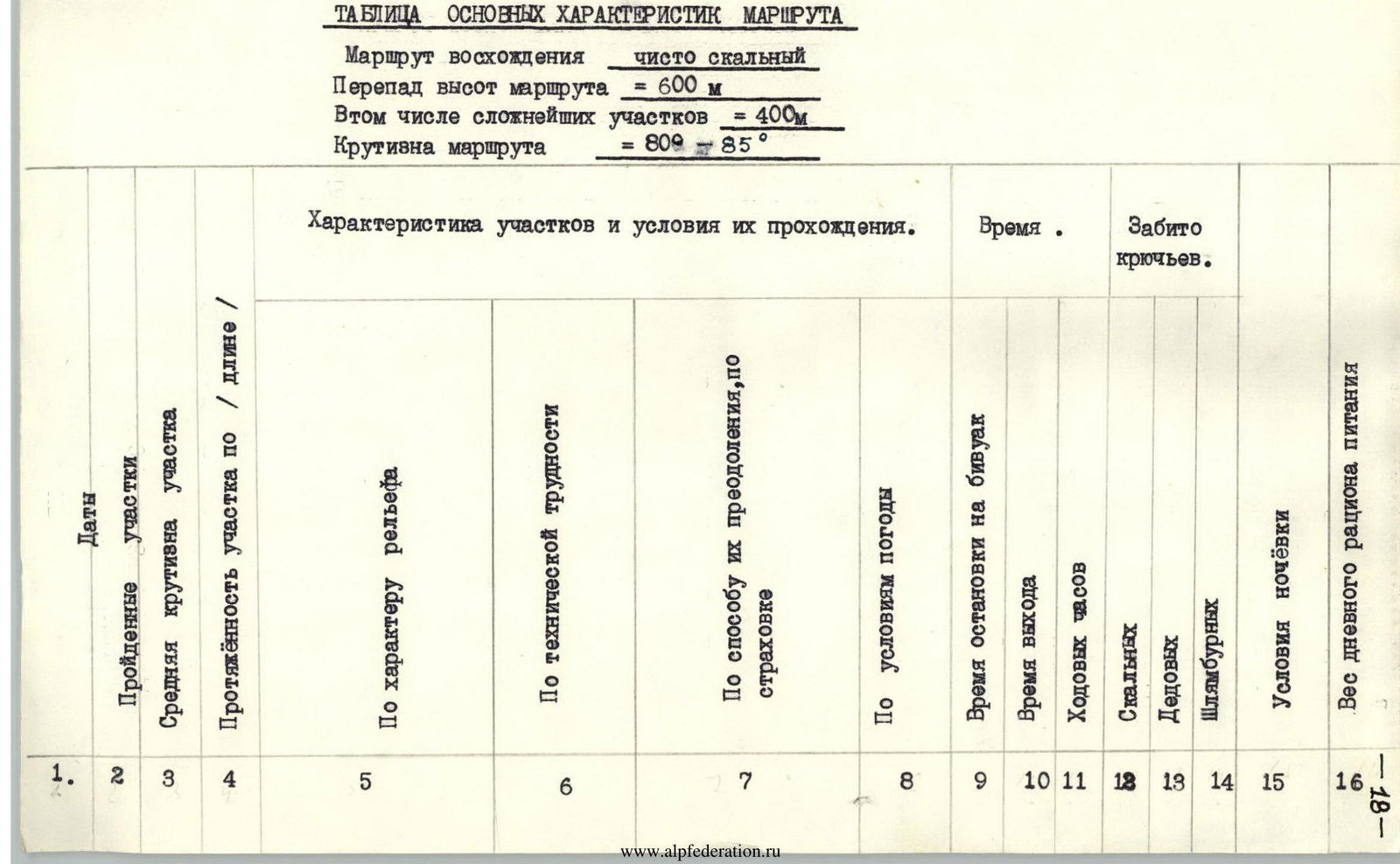
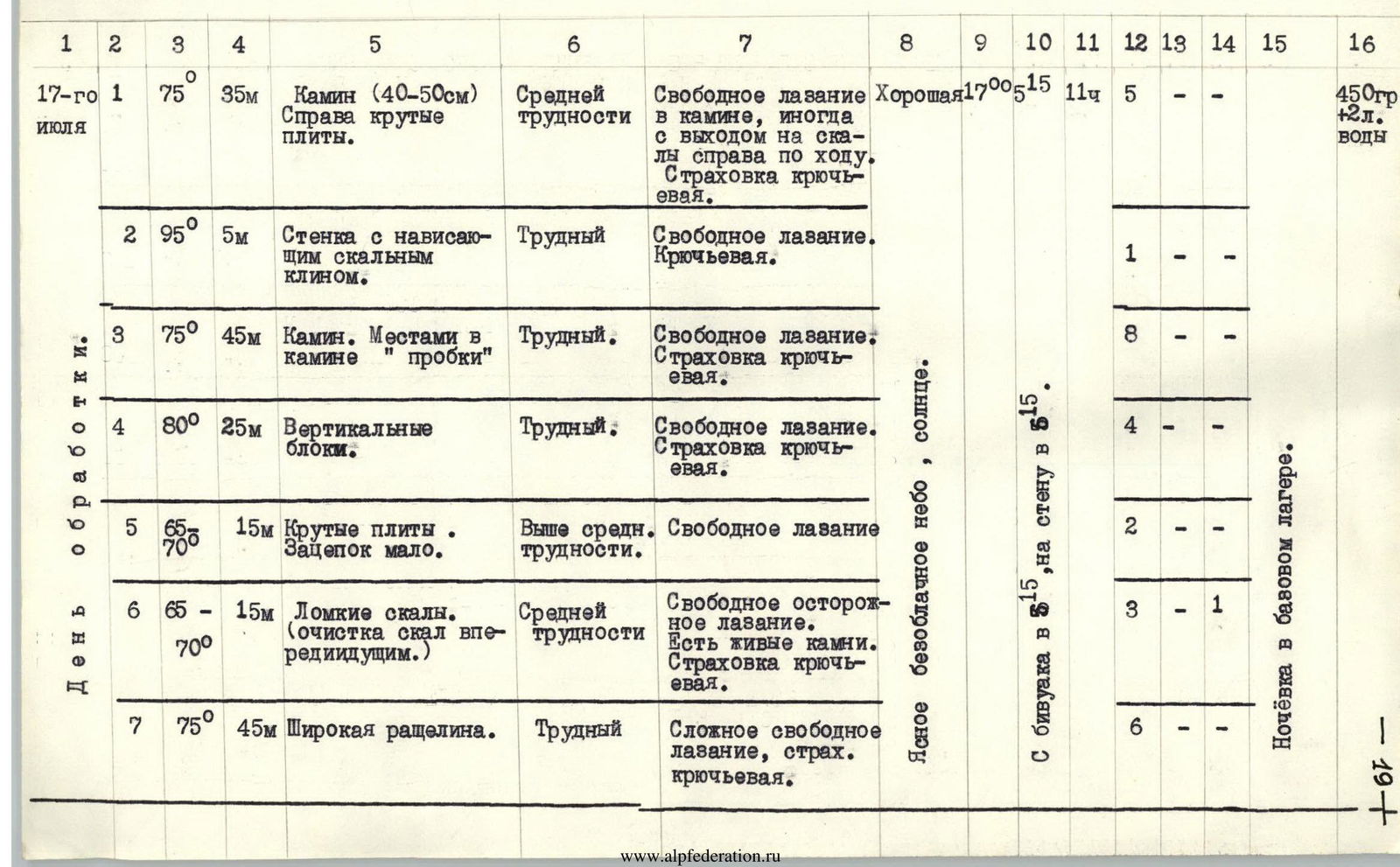
| Dates | Section № | Average Steepness of Section | Section Length by Distance | By Relief Character | By Technical Difficulty | By Method of Overcoming, Insurance | By Weather Conditions | Time of Stop on Bivouac | Time of Exit | Climbing Hours | Rock Pitons | Ice Axes | Drill Pitons | Bivouac Conditions | Weight of Daily Ration |
|---|---|---|---|---|---|---|---|---|---|---|---|---|---|---|---|
| July 17 | 1 | 75° | 35 m | Chimney (40–50 cm). Steep slabs on the right. | Medium difficulty | Free climbing in the chimney, sometimes exiting onto rocks on the right along the path. Pitons insurance. | Good. | Bivouac from 5:15 AM, onto the wall at 6:15 AM. | 11 hours | 5 | – | – | Overnight stay in base camp. | 450 g + 2 l water | |
| 2 | 95° | 5 m | Wall with an overhanging rock wedge. | Difficult | Free climbing. Piton insurance. | Clear, cloudless sky, sun. | 1 | – | – | ||||||
| 3 | 75° | 45 m | Chimney. Sometimes with "plugs" in the chimney. | Difficult | Free climbing. Piton insurance. | 8 | – | – | |||||||
| 4 | 80° | 25 m | Vertical blocks. | Difficult | Free climbing. Piton insurance. | 4 | – | – | |||||||
| 5 | 65–70° | 15 m | Steep slabs. Few holds. | Above average difficulty | Free climbing. | 2 | – | – | |||||||
| 6 | 65–70° | 15 m | Fragile rocks (cleaning rocks by the leading climber). | Medium difficulty | Cautious free climbing. Live rocks. Piton insurance. | 3 | 1 | – | |||||||
| 7 | 75° | 45 m | Wide fissure. | Difficult | Complex free climbing, piton insurance. | 6 | – | – | |||||||
| July 18 | 8 | 80–85° | 70 m | Narrow chimney turning into a wide vertical fissure. | Difficult | Difficult free climbing. Pitons. | Clear sky, sun. | 5:00 PM | 10 hours 30 minutes | 12 | – | 1 | Sitting overnight | 450 g + 2 l water | |
| July 19 | 9 | 80–85° | 50 m | Large blocks, many wide cracks. | Difficult | Free climbing, insurance through (boxes). | Cloudy, fog by the end of the day, weather worsening. | 4:00 PM | 6 hours 30 minutes | 7 | 1 | – | Semi-sitting overnight, cold. | 450 g + 2 l water | |
| 10 | 85–90° | 60 m | Solid rocks, few holds. | Difficult | Complex free climbing, insurance through wide pitons. | 4:00 PM | 10 | 2 | 2 | ||||||
| 11 | 80–85° | 20 m | Destroyed rocks. | Medium difficulty | Cautious free climbing. | 3 | – | 1 | |||||||
| July 20 | 12 | 80–85° | 45 m | Solid rocks, few holds, small overhanging brows. | Difficult | Difficult climbing, sometimes using ladders. | Bad weather, fog, light rain, wind. | 7:30 PM | 14 hours | 8 | – | 3 | Semi-sitting overnight, cold wind all night. | 450 g + 2 l water | |
| 13 | 85–90° | 25 m | Polished rocks with deep cracks. | Very difficult | Difficult maneuvering, interspersed with work on ladders. | 6 | – | 4 | |||||||
| 14 | 95° | 5 m | Section of overhanging rocks. | Very difficult | Work on ladders and on a platform. | Bad weather until noon. | 1 | – | 3 | ||||||
| 15 | 90° | 50 m | Monoliths lacking holds and protrusions. Rocks on the right overhang. Movement up through a slit. | Very difficult | Little free climbing. Work on ladders and on a platform. | 15 | – | 10 | |||||||
| July 21 | 16 | 85° | 20 m | Large blocks. | Above medium difficulty | Free climbing, insurance through pitons. | 7:15 PM to base camp, 5:00 PM to summit. | 6:00 AM | 11 hours | 4 | – | 1 | Overnight stay in base camp. | 450 g + 2 l water | |
| 17 | 85° | 45 m | Large blocks. Holds available. Big "skol" on the left. | Difficult | Cautious free climbing. | 8 | – | 2 | |||||||
| 18 | 75° | 15 m | Open ledge, many loose rocks. | Medium difficulty | Free climbing. Drill pitons for insurance and to divert the rope from loose rocks. | – | – | 3 | |||||||
| 19 | 100–110° | 5 m | Overhanging rock belt. | Very difficult | Work on a platform. | 1 | – | 4 | |||||||
| 20 | 85° | 10 m | Monolithic rocks. | Above medium difficulty | Free climbing. | 2 | – | – | |||||||
| 21 | 35° | 80 m | Simple pre-summit rocks. | Easy | Simultaneous movement. | – | – | – |
Total route length is 685 meters. Climbing hours spent — 56. Pitons hammered — 143 (including drill pitons — 36). This does not include pitons hammered for the convenience of pulling up backpacks and for overnight stays.
Profile Scheme of the South Wall of Kirpich
 V. Lankin (coach).
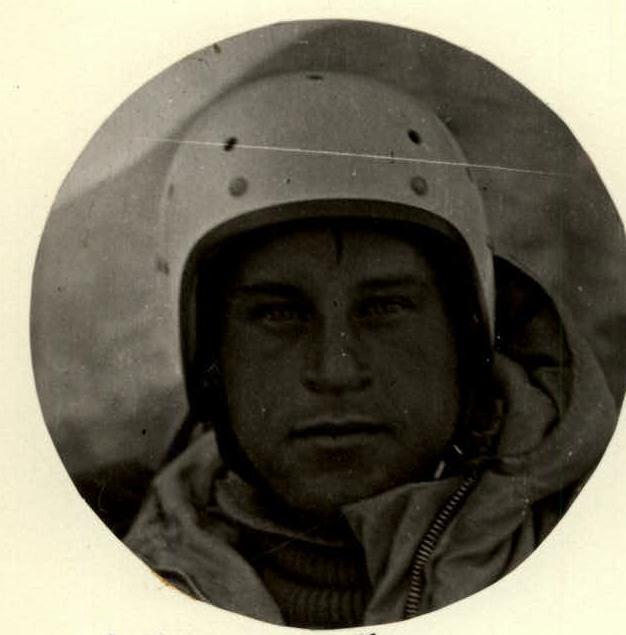 A. Nepomnyashchiy.
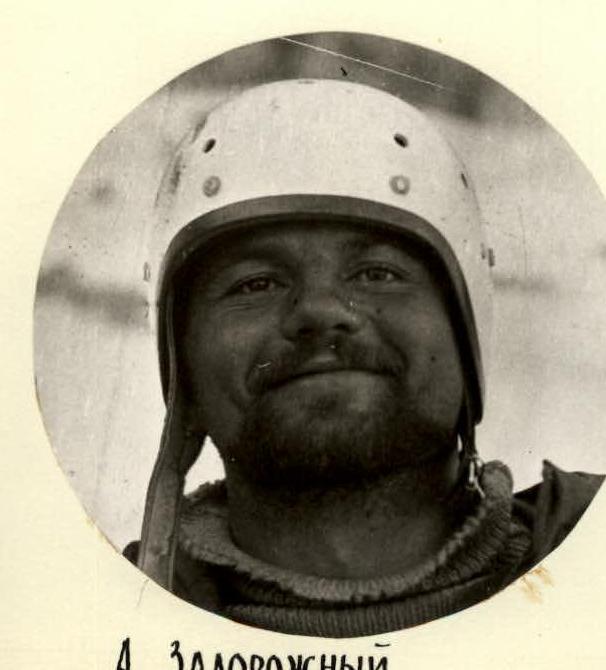 A. Zadorozhny.
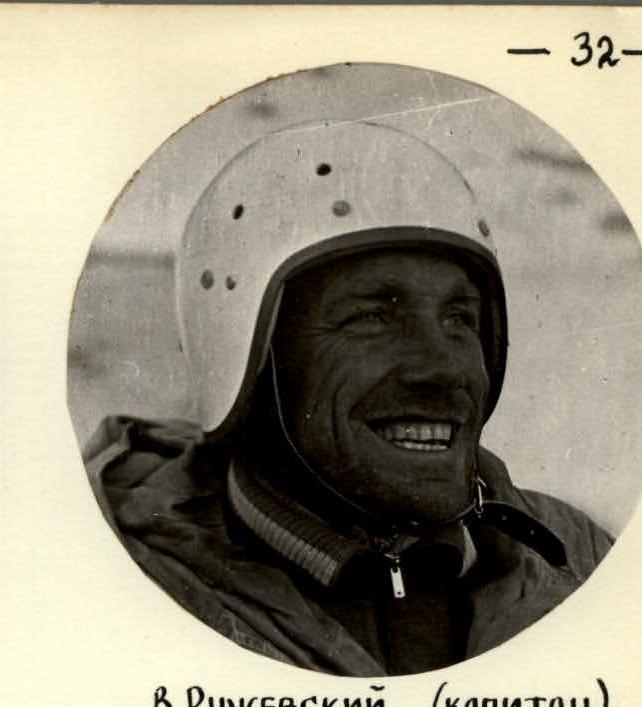 V. Ruzhevsky (captain).
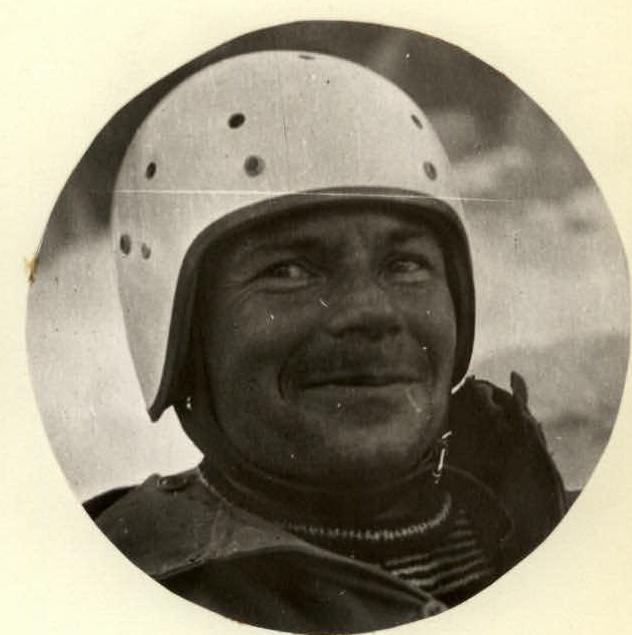 E. Khokhlov.
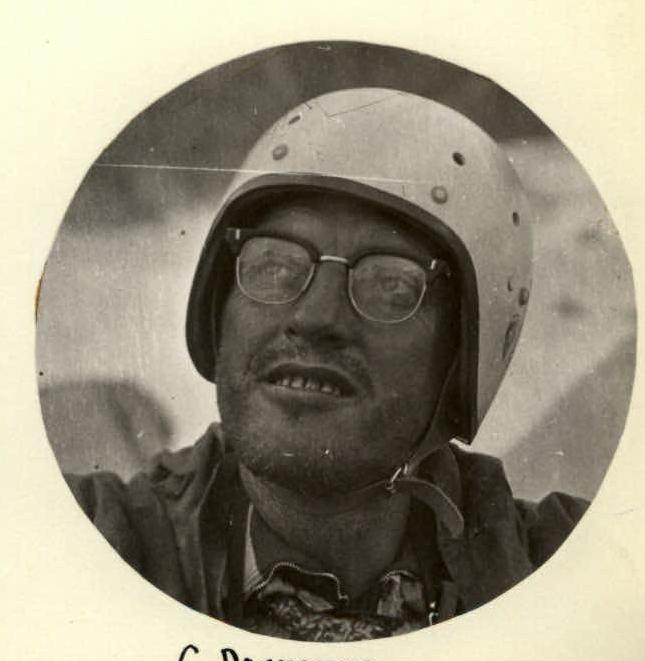 S. Rasspopov.