Ascent Passport
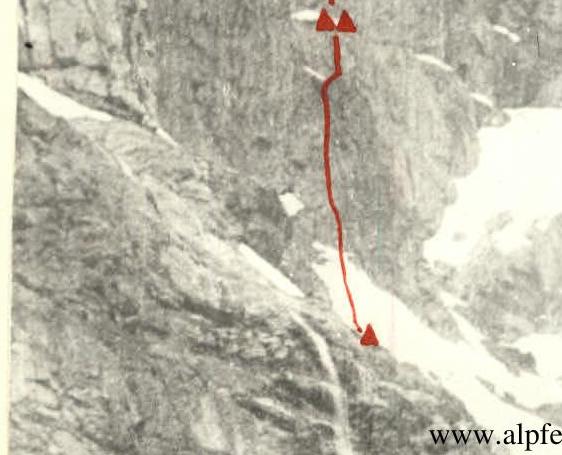
I. Ascent category: rock 2. Ascent area: Uzunkol — West Caucasus 3. Ascent route with indication of peaks, their heights, route complexity (and other approximate details): Zamok peak South wall 3930 m 4. Ascent characteristics: route length to the summit: 1200 m wall height difference: 670 m average wall steepness: 84–85° length of complex wall sections: 510 m 5. Pitons driven: rock: 226 ice: bolts: 28 6. Number of climbing hours to the summit: 47 7. Number of climbing days: five 8. Number of nights and their characteristics: three on semi-reclined ledges 9. Team name: Uzunkol mountaineering camp 10. Surname, first name, patronymic of the team leader, participants and their qualification: Korablin B.N. — Master of Sports — team leader, Vasiliev B.P. — Master of Sports — deputy leader, Grachev A.B. — Master of Sports of International Class, Shchedrin G.S. — Master of Sports, Oshe E.A. — Candidate for Master of Sports. 11. Team coach: Zakharov P.P. 12. Date of departure and return: July 16–22, 1978

Route Progression
July 16, 1978
Early rise, quick breakfast, and at 5:00 the group of three (Korablin B., Vasiliev B., Shchedrin G.) left the Uzunkol alpine camp for Dalar pass. The previous evening, two observers and participants Grachev A. and Oshe E. had gone to Dalar pass to set up an observation point.
At 12:00, the entire team and two observers set off from Dalar pass under the South wall of Zamok peak, traversing the southern slopes of Dalar and Dvoinyashki peaks and crossing ridges and spurs descending from these peaks. By 15:00, a spot was chosen and the observers' tent was set up, and by 16:00, the assault team's tent was set up on a rocky outcrop under the wall, within half an hour's walk from the observers' tent. The remaining daylight was used to observe the wall, refine the route's starting point, plan the first day — processing the lower bastion, and check radio communication with observers.
July 17, 1978 (Day 1)
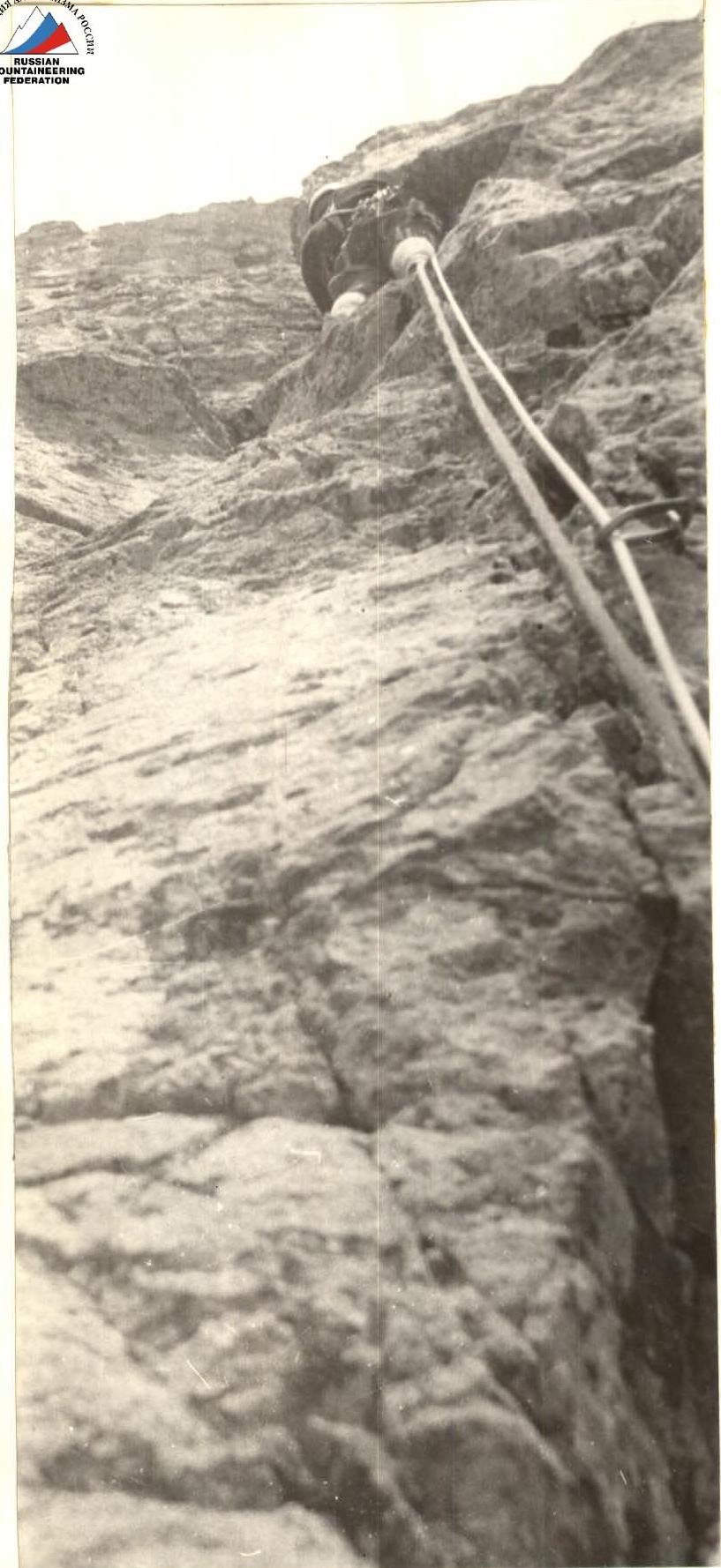
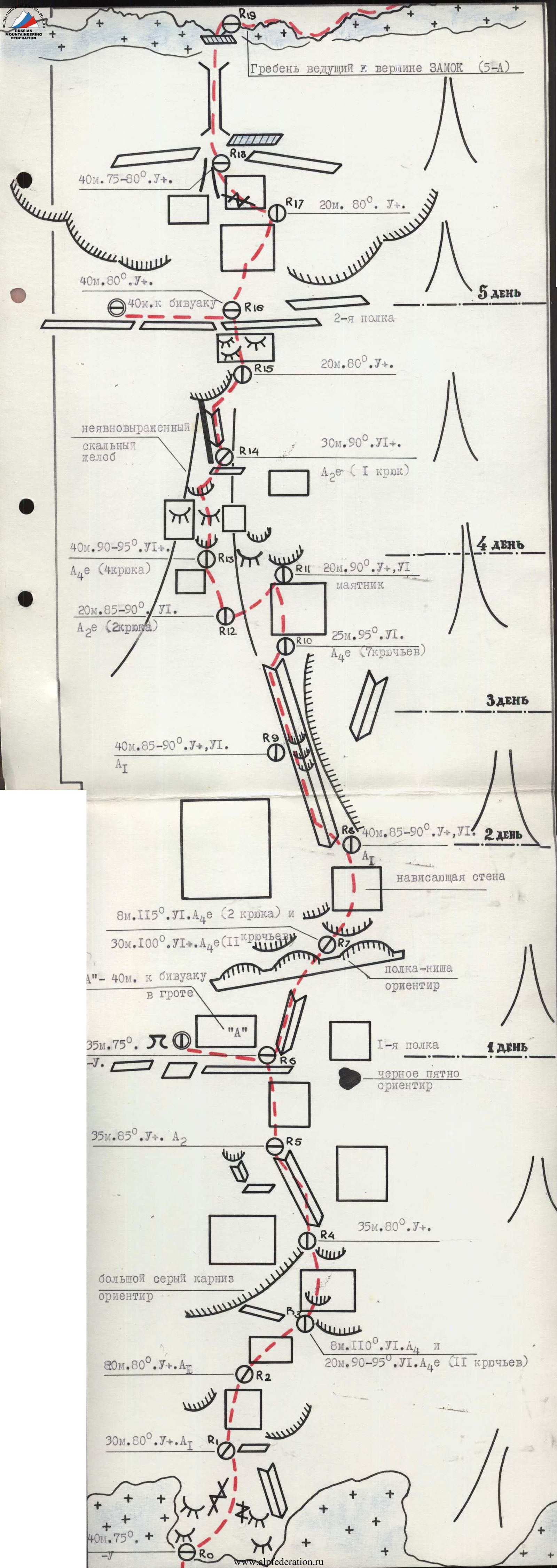
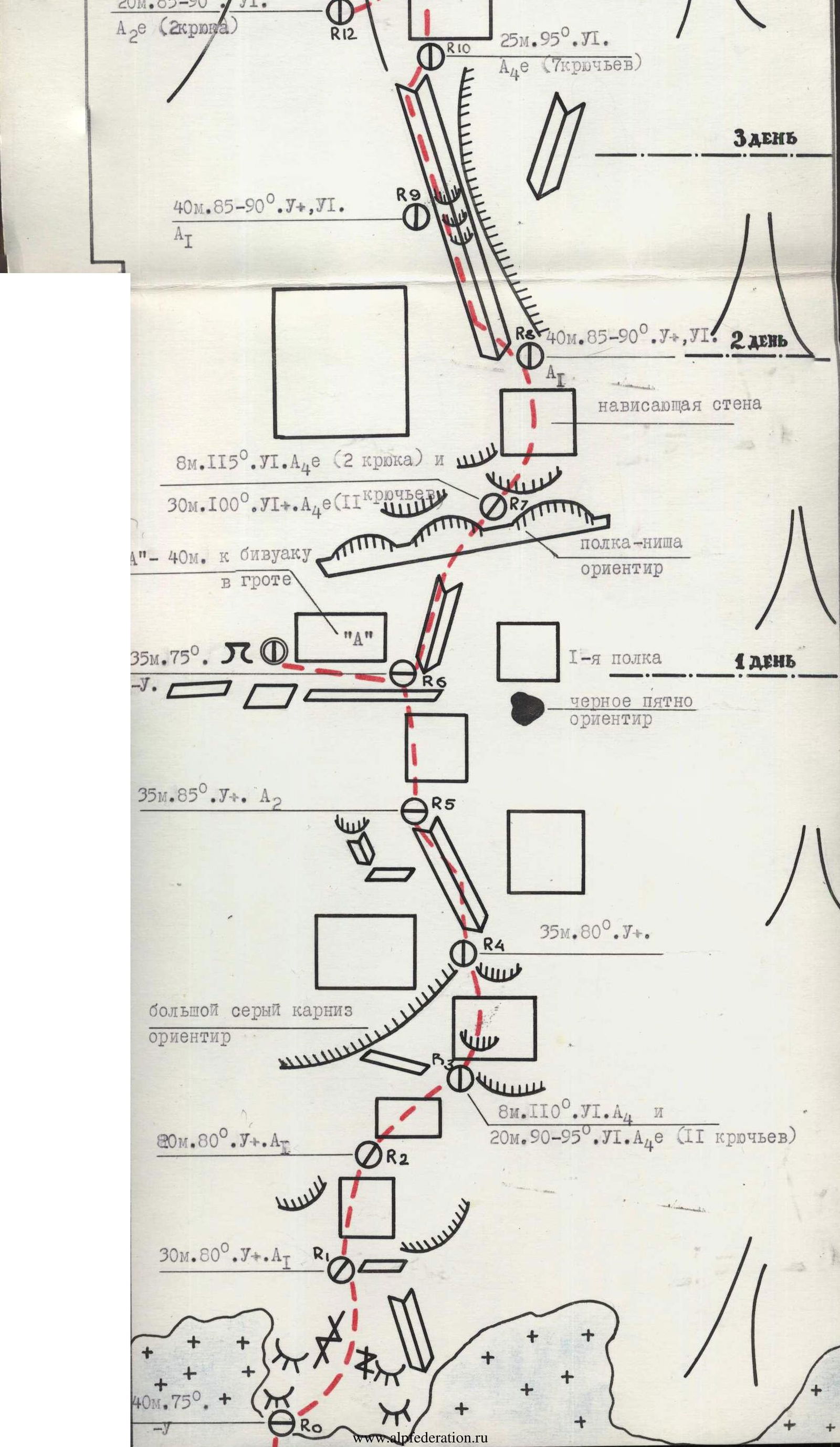
6:00 — Grachev A. — Oshe E. rope team, equipped with everything necessary for processing the first two ropes of the route, headed up under the wall. Vasiliev B. and Shchedrin G. followed, carrying the remaining gear under the wall. Today's task was to process the 200-meter lower bastion up to the ledge crossing the wall. From the tent, a steep (50–55°) firn slope led under the wall. The route's starting point on the wall was via a vertical cleft (15 m) almost in the center of the bastion, left of an inclined rusty ledge. Then across a slab under a wall and up it to a system of cornices (30 m), section R1–R2. The lower cornice (0.5 m) was bypassed on the right, other smaller ones were tackled head-on. Steepness increased; ladders were used, and pitons were driven more frequently (section R3–R4). Grachev A. — Oshe E. rope team worked here. Ahead lay a large 1-meter cornice, and 10 m further, another one. Through an overhanging cleft, overcoming the first cornice, they reached the second (section R4–R5), traversed under it (5 m) into an overhanging internal angle — the spot to overcome the second cornice (section R5–R6). Exit was into a vertical cleft (approximately 25 m), often interrupted by blank walls and small cornices (section R6–R7). Bolt pitons were driven twice for protection. On one of them, under a small cornice, the first control cairn was hung. The vertical cleft on the wall turned into an internal angle, locked from above by a sharp overhang (section R7–R8). The cornice was bypassed on the right; steepness decreased somewhat. Another rope length up the wall (section R8–R9) led to a ledge resembling a niche under overhanging cornices. The spot was very uncomfortable and wet, as water poured down continuously from above across the entire ledge. A rope length higher lay a more suitable ledge for a bivouac. However, exiting the first ledge to the second was quite challenging — everywhere there were 10–15 m overhangs of loose rock. They had to traverse rightwards up the ledge for 15 m into an internal angle, closed from above by a sharp cornice (0.5–0.7 m, section R9–R10). The exit was onto an inclined ledge, approximately 2 m wide and 45° steep, where some snow drifts still remained. Already in the twilight, the processing team began descending, having worked 11 hours on the route. 240 m of ropes (1×80 m and 40×40 m) were hung; 220 m were covered in height (up the wall); 66 rock pitons and 2 bolt pitons were driven.
July 18, 1978 (Day 2)
6:00. Today's task was to pass the processed bastion, set up a bivouac, and if possible, process the middle bastion. The group had rehearsed the movement scheme during training climbs: the first person went without a backpack, carrying necessary pitons and gear; the rest carried backpacks weighing 6–7 kg each, and additionally, a 22 kg sack was pulled, carefully packed and secured at the end of an 80-meter rope. A block-brake was used to pull the sack. On the first bastion, the sack had to be pulled three times, with the pullers hanging in harnesses or on ladders twice. The first bastion, like the entire route, was almost devoid of loose rocks, except for the upper part. Therefore, pulling the sack did not hinder the simultaneous movement of other participants. This system of movement allowed the group of five to have one rope team working ahead on the route at all times, enabling the fastest passage of processed sections.
By 13:00, the entire group was on the upper ledge. The weather worsened; they needed to hurry with setting up the bivouac. However, this proved not to be straightforward. The ledge was inclined with a rocky base. They had to build a foundation of stones 1 m high to be able to set up the tent. One person (Shchedrin G.) managed to create a spot under a tarp. By evening, the weather had deteriorated further, with rain turning to snow, and Shchedrin G. moved into the tent. Everyone was cramped in the tent, with knees tucked under.
On the same day, at 14:00, Vasiliev B. — Oshe E. rope team began work on the middle bastion. Directly from the tent, a 20-meter overhanging wall led to an inclined ledge, section R10–R11. Cracks that seemed reliable from below turned out to be blind; pitons wouldn't go in. With difficulty, one normal piton was driven into this wall. Bolt pitons were used, driven from a platform. After the little ledge, a completely vertical, partially overhanging 40-meter wall (section R11–R12) of the same character as the previous wall stretched upwards. Vasiliev B. attempted to pass the blank sections by climbing but returned after 3–4 m, struggling to find a reliable piton for protection. Again, bolt pitons were used, occasionally alternating with thin petal pitons used as additional support points, reducing the distance between bolt pitons. Another 20 m were covered. The onset of bad weather interrupted the processors' work. The outlook further was quite gloomy. If the entire middle bastion was like its beginning, the supply of bolt pitons might not be enough. The group worked 10.5 hours on the route that day, passing the first bastion and processing 40 m of the middle bastion, driving another 15 rock pitons and 5 bolt pitons.
July 19, 1978 (Day 3)
It rained and hailed all night. By morning, the rocks were wet, with some areas covered in ice. At 8:00, when the sun lit up the rocks, Grachev A. — Oshe E. rope team set out to further process the middle bastion. After driving another 2 bolt pitons, Grachev A. managed to climb the wall to an inclined 60° slab and drive a normal, reliable channel piton under a large 1.5-meter cornice. A 3-meter traverse left across the slab led to a crack, bypassing the cornice. Normal pitons were used from then on. The route continued up the crack, left of the cornice. The cleft was sometimes interrupted; climbing was extreme. Again, a "blank" 35-meter wall (section R14–R15) led to a narrow ledge. Bolt pitons alternated with rock pitons. Along the ledge, they managed to crawl left for 15 m, out from under the overhang, and then climb 10 m upwards, driving rock pitons. They sought a way to continue without using bolt pitons. Moving right upwards, Grachev A. entered a 15-meter internal angle, drove a reliable piton at its base, and climbed it, driving rock pitons (section R15–R16). The second half of the bastion was more generous with cracks. Under the cornice lay a loose belt. With difficulty, a spot was found to drive a rock piton; a bolt piton was driven nearby for reliable protection, as a complex traverse left was ahead, bypassing the cornice. From the left edge of the cornice, 10 m up an internal angle, bypassing another cornice on the left, and after 20 m, a complex traverse left — exit onto a comfortable ledge (section R16–R17). It was late; the processors descended to the bivouac in twilight, having worked 11 hours, hung about 200 m of ropes, covered 170 m in height, and driven 68 rock pitons and 17 bolt pitons.
July 20, 1978 (Day 4)
About one more rope length was needed to reach the ledge (top of the middle bastion). Therefore, at 6:30, Grachev A. — Oshe E. rope team went up first to "finish off" the middle bastion, pulling out loose pitons along the way. The others dismantled the bivouac and began ascending the hung ropes, followed by load transportation. No intermediate ledge was found for pulling the sack onto the bastion; thus, a "hanging station" had to be organized. The last person (Shchedrin G.) had it particularly tough. Meanwhile, the rope team ahead, having traversed right upwards for 35 m, began processing a 30-meter vertical wall leading to the top of the bastion (section R17–R18). Petal pitons and large wedges alternated with bolt pitons on this section (18 rock pitons and 4 bolt pitons). The entire group reached the ledge around 14:00. The ledge under the upper bastion was even steeper than under the middle one. Setting up a tent platform took 3.5–4 hours.
Simultaneously, to further process the third bastion, Vasiliev B. — Oshe E. rope team went up. Directly above the tent, a huge 7-meter cornice overhung. They traversed right along the ledge for 20 m, then straight up the wall with large overhanging blocks (section R18–R19). The rock relief was rich in clefts and cracks, although climbing was very difficult. A 20-meter traverse right upwards, then straight up the wall for 40 m led to a shoulder (section R19–R20). From the shoulder, a traverse right for one rope length approached the base of a 60-meter vertical internal angle (like a chimney), leading to the ridge (section R21–R22).
By 18:00, Vasiliev B. — Oshe E. rope team descended to the bivouac, having processed the rocks up to the ridge and covered about 200 m in height. On this section, 42 rock pitons were driven; the working day lasted 11.5 hours.
July 21, 1978 (Day 5)
The morning was cloudy, foggy, with 2 m visibility. They dismantled the bivouac and departed at 7:30. The journey along the hung ropes to the ridge took 3 hours. Here, the load was evenly distributed among the 5 backpacks, and they continued along the ridge to the summit via a route of category 5A difficulty, in rope teams with variable protection. The group reached the summit at 12:30, driving another 16 rock pitons, and began descending towards Burevestnik pass via a route of category 4A difficulty. That day, the group spent the night on a green meadow beyond Kichkinekol pass.
The next day, July 22, 1978, the group returned to the Uzunkol alpine camp.
Team Captain Korablin B.N.
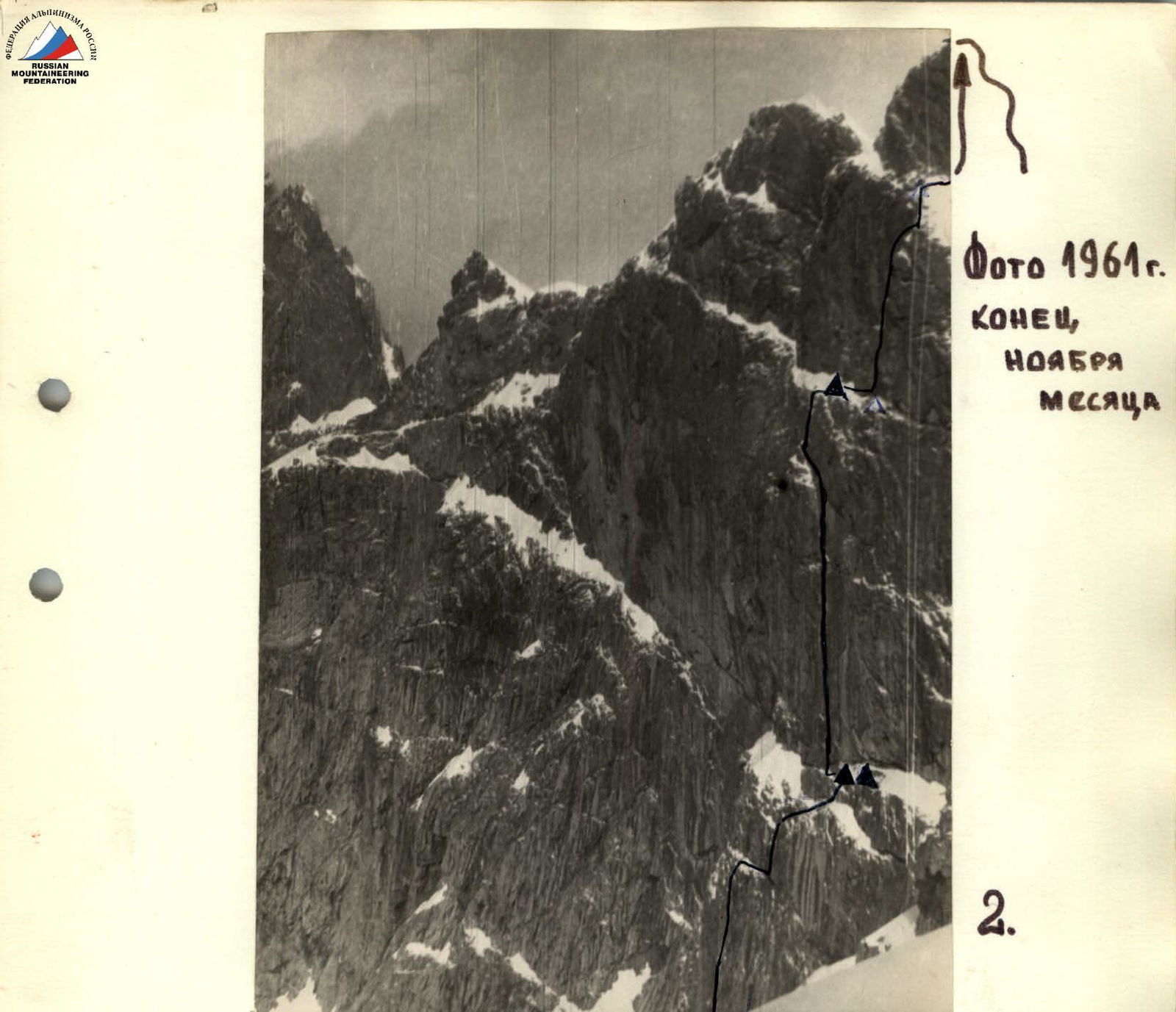
Wall Profile
- Left
- Right