
Report
on the ascent to the summit of DALAR from the West along the rocky triangle of the Western wall
a group of instructors from the mountaineering camp of CS DSO “Spartak”
senior instructor ZHEMCHUZHNIKOV Yu.A., instructor LEONOVICH O.A.
July 20–23, 1975
Route progression
Day 1 (July 20)
We left the Uzunkol mountaineering camp at 2:30, planning that an early arrival at the bivouac under the route would allow us to process the beginning of the wall. However, the approach took us longer than we expected: heavy backpacks significantly slowed our pace. We arrived at the bivouac at the end of the moraine on the plateau under the wall at 17:30.
The route lay before us, but it was too late to start processing; we conferred, reviewed the wall again, made a sketch, and clarified the sections to be traversed. A group from Taganrog was setting up a nearby bivouac, with whom we coordinated our efforts. They were planning to tackle the Korablinsky route on the Western wall of Dalar (category 5B difficulty). We synchronized our watches with the leader of the Taganrog group, confirmed our communication schedule, had a hearty dinner, and went to sleep. The weather took a turn for the worse: around 22:00, thunder boomed, and a severe thunderstorm with hail ensued. Powerful gusts of wind nearly tore off our well-secured tent. We fell asleep with difficulty, listening to the hail pounding against the tent and wondering what the next day would bring.
Day 2 (July 21)
We rose with the Taganrog group at 5:00. The sky was overcast, and the summit of Dalar was shrouded in thick fog… We decided to proceed. After a quick breakfast, we packed our backpacks, leaving only an empty "pamirka" tent at the bivouac. We set out onto the glacier at 5:40. The Taganrog group had already headed towards the start of their route.
By 6:40, we reached the randkluft via a steep snowy slope: the snow was hard, requiring us to cut steps. We searched for a spot to transition from snow to rock. The only viable option was to traverse a narrow snowy ridge on the vertically standing randkluft.
With ice axe protection, Yura Zhemchuzhnikov cautiously made his way along the ridge, cutting away the narrow part and treading down steps. We reached a rocky peninsula — ahead lay pure rock: we retrieved our "hardware," put on galoshes, and stowed our ice axes.
Zhemchuzhnikov led the way, adorned with a garland of carabiners and pitons that clinked with each movement. We immediately encountered steep rocky blocks-walls. The heavy backpacks complicated our work. The double rope disappeared over the bends of the steep wall, and only its slow movement and the sound of hammering indicated the first climber's progress.
By the time of our first radio check-in (8:30), we had managed only four rope lengths. We exchanged impressions and continued climbing.
By 12:00, we completed the lower part of the wall and reached a rocky "sickle" in the middle of a snowy shelf at the base of the steep rocky triangle. Up close, this wall looked even more imposing (a series of cornices, overhangs)…
We rested here, checked in, snacked, set up a control cairn, and left a note… We spotted the Taganrog group working on a parallel route.
Our shoulders hadn't fully recovered from the heavy backpacks, but work couldn't wait: ahead lay a challenging section of steep rock. Zhemchuzhnikov traversed it without his backpack. A lot of time was spent hauling up the heavy packs: after each haul, we rested.
Next, we faced a large section of smoothed rock resembling "sheep's foreheads," which didn't appear too difficult at first glance. In reality, this was one of the route's key sections. After advancing 10 meters, Yura Zhemchuzhnikov froze in place for a long time: there were no cracks, the micro-relief was smooth, and the heavy backpack hindered his movement. Yura was forced to backtrack a few meters. After driving a piton and hanging his pack on it, he approached the difficult section again without his pack: with great difficulty and stretching to the limit, he reached a single crack, wedged a petal-shaped titanium piton into it, and carefully tapped it in with a hammer. When the piton was halfway in, he clipped a carabiner with a reepschnur loop into it: this provided a good foothold for his left hand and allowed him to strike the hammer with the necessary force and amplitude. The piton was securely in place, a ladder was hung — we advanced another 2 meters. Beyond this point, there were no cracks. We resorted to using drill pitons. Again, ladders were hung, and the sound of hammering echoed…
We spent two hours covering thirty meters. The rope was securely anchored. Zhemchuzhnikov descended, put on his backpack, and continued upward. Oleg Leonovich faced an equally challenging task — traversing the section without leaving behind any titanium pitons. Jokingly grumbling about the firmly embedded pitons (the laborious task of extracting them!), Leonovich approached the first one.
We took a break, snacked. Rocks periodically fell along a rocky groove to our right, about 30–35 meters away, mainly coming from Dalar's tower, but we were at a safe distance.
After a short rest that somewhat restored our energy, we continued. We traversed several more rope lengths, crossed a narrow snowy belt (in crampons), and climbed more rock.
We reached a small inclined shelf beneath an overhanging rock. Ahead lay steep steps (100 meters) leading to a ridge with category 4 difficulty. The time was 18:00: we had worked for 12 hours. We decided to bivouac here. The platform was small, so we had to secure all our gear, including the primus stove.
Between arranging our bivouac, we saw a group of Taganrog climbers setting up on a broad talus shoulder of Dalar. We chatted, invited each other for tea…
We climbed into our secured "zdarka" tent and, despite the many discomforts, fell asleep to our mutual surprise… The night passed calmly.
Day 3 (July 22)
We rose at 5:00 and began working at 6:30. We overcame a 100-meter ascent of steep stepped walls and reached a narrow ridge with category 4 difficulty. We traversed an icy snow-ice shelf to the wall of the summit tower, overcame an 80-meter wall of the tower, and reached the summit by 12:00. We monitored the radio frequency (emergency communication time) while already on the summit. In response to the camp's call, we reported our location and the status of the Taganrog group.
The weather began to deteriorate: on our descent, we encountered a snow shower and fog. We moved slowly (the strain of the previous days was evident). By 17:00, we were relieved to drop our backpacks at our tent on the initial bivouac. Within minutes, the "Shmel" stove was roaring, and while waiting for our "substantial meal," we enjoyed chocolate and drank delicious, aromatic orange juice from "Greco," savoring it without worrying about spoiling our appetite.
We saw a group of climbers from Taganrog appearing on the Dalar pass; we offered them tea. By half past six, they arrived at our bivouac, and we treated them to tea — they were in a hurry to return to camp. We bid them farewell, sent regards to the camp, and asked them to inform the camp that we would be back for breakfast.
Left alone, we involuntarily turned our heads, gazing at the details of the route we had traversed, slowly fading into the approaching twilight, likely reliving the joy of labor, the challenges overcome, and new discoveries about our companion and ourselves.
Day 4 (July 23)
We rose at 5:00, dismantled our bivouac, and returned to camp by 9:00.

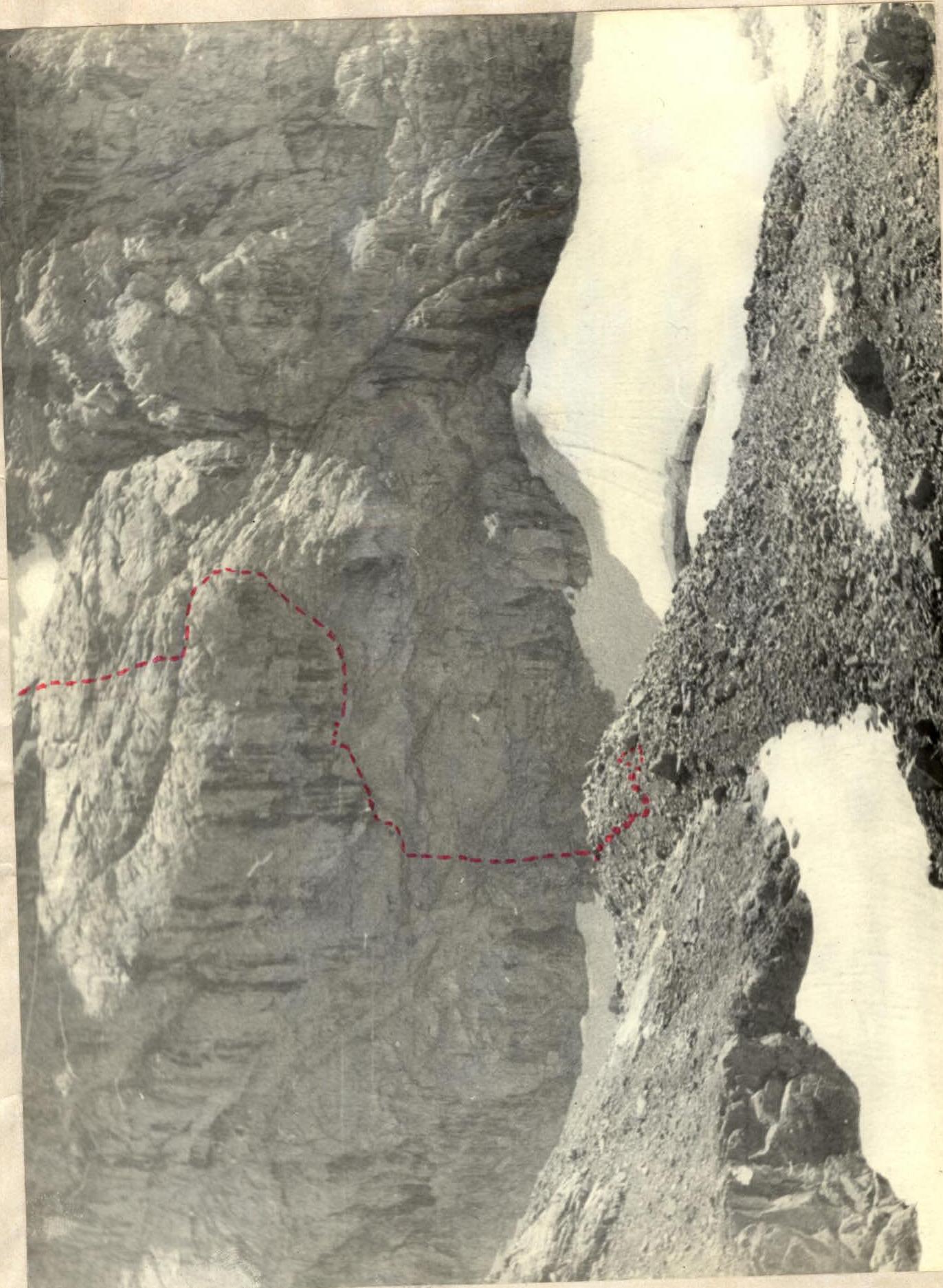
Photos of route sections (I)
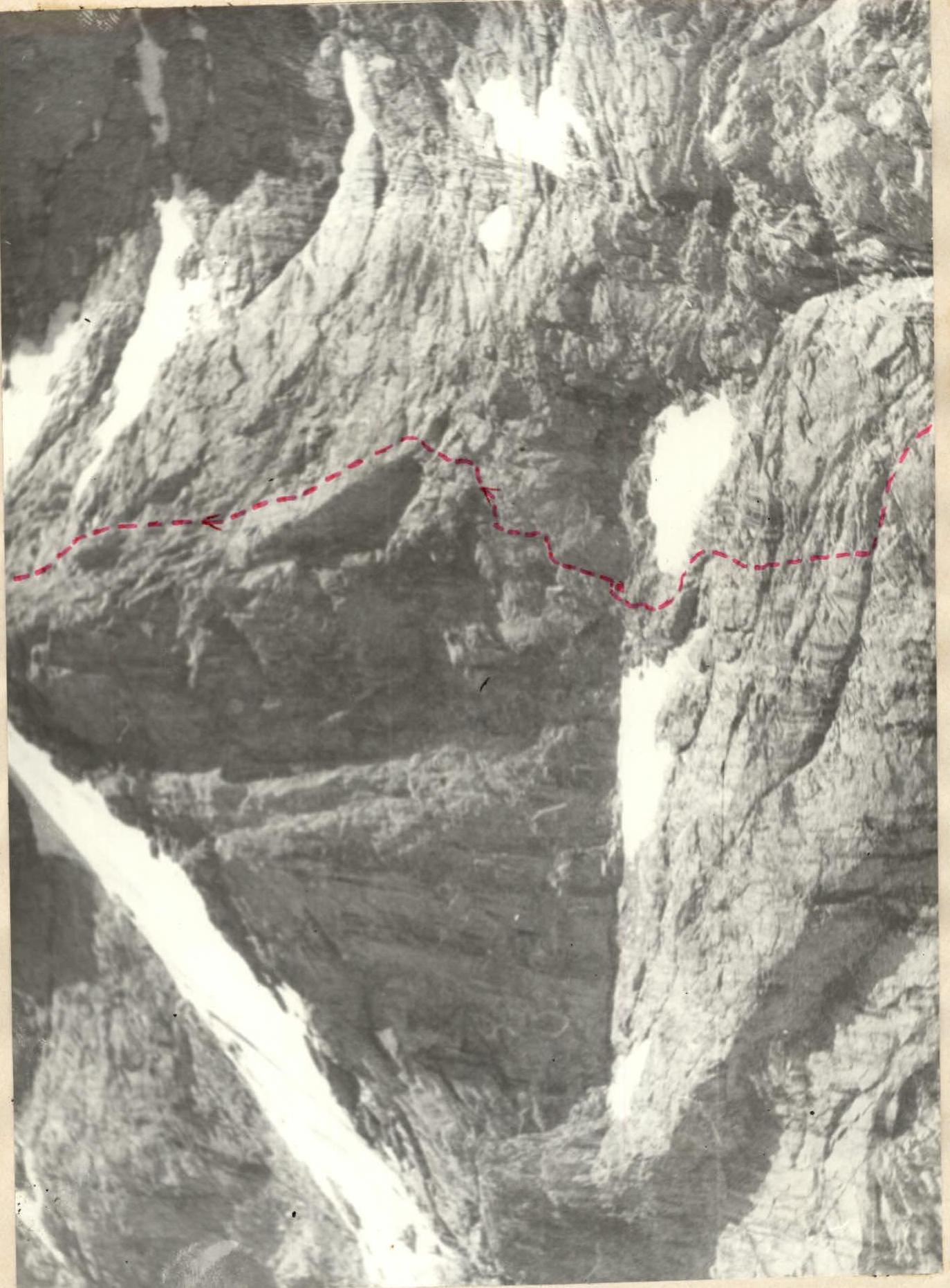
Photos of route sections (2)
Photos of route sections (3)
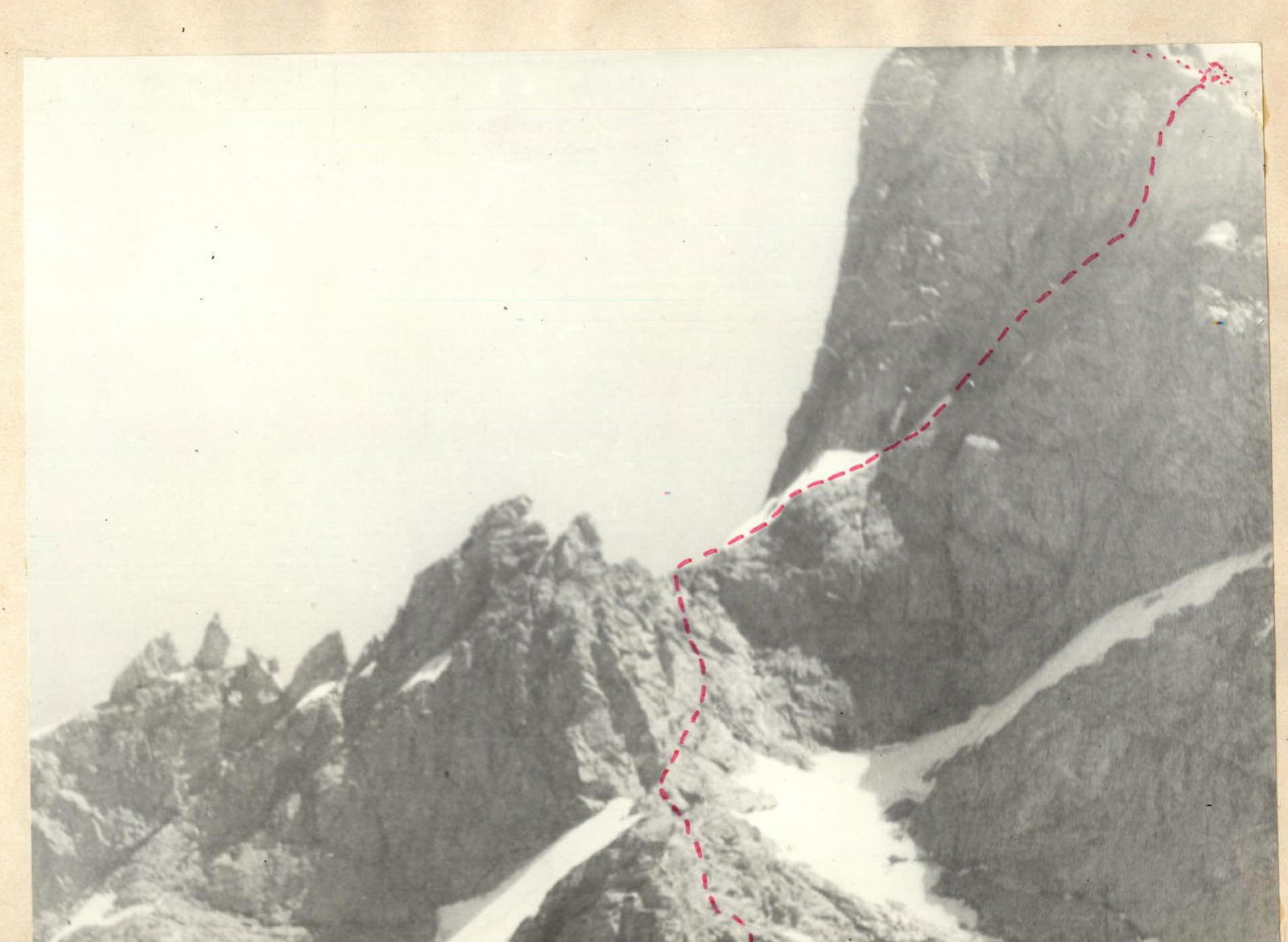

 Photos of route sections (4)

Comments
Sign in to leave a comment