
"Chimney in the Chimney", 4A (Chelebi)
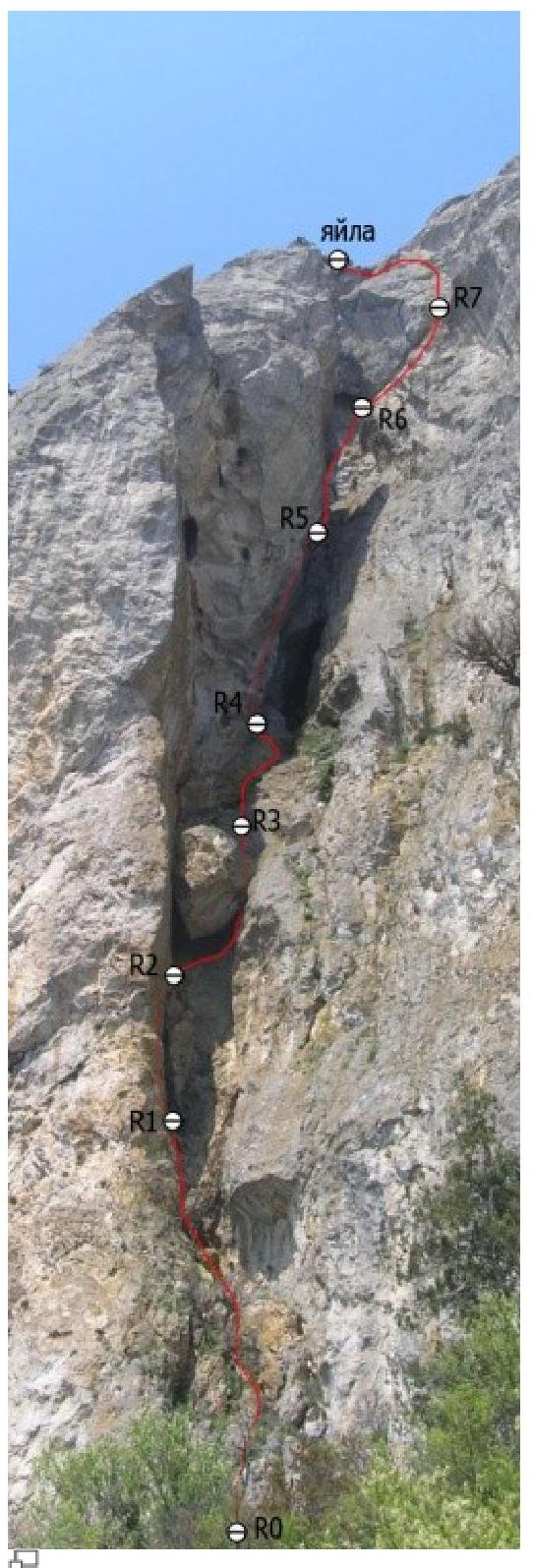
Route thread
A very interesting and beautiful route, abundant with diverse climbing, especially memorable for its chimneys. Judging by its condition, it is rarely climbed and requires clearing of ledges from stones.
Recommended for ascent by well-prepared groups. It is better to have experience in chimney climbing, although the route is well-suited for getting acquainted with this truly interesting and enjoyable type of climbing.
The terrain on the route does not lend itself to frequent use of protection, but there are places where pitons can be used.
In principle, for the passage of the route, it will be sufficient to have:
- several medium-sized friends,
- a set of stoppers,
- seven to ten quickdraws.
"No free ride"
The route has a sufficient number of rappel rings to safely descend in case of unforeseen circumstances.
Due to the route's specifics, it is necessary to make many intermediate stations: the route changes direction sharply, and the rope can be severely bent.
Climbers can be advised:
- to take as little extra gear as possible - a backpack is very hindering on the route
- to use a wall (speleo-)ball instead of a backpack
- to climb on "halves" to be able to either pull the ball or hang adequate handrails with insurance, which is especially important in chimneys.
— R0–R1: 40 m, simple climbing.
Garden-climbing with insurance on trees. We climb to the beginning of the chimney. The first and last stations are on trees. Be careful, there are loose rocks.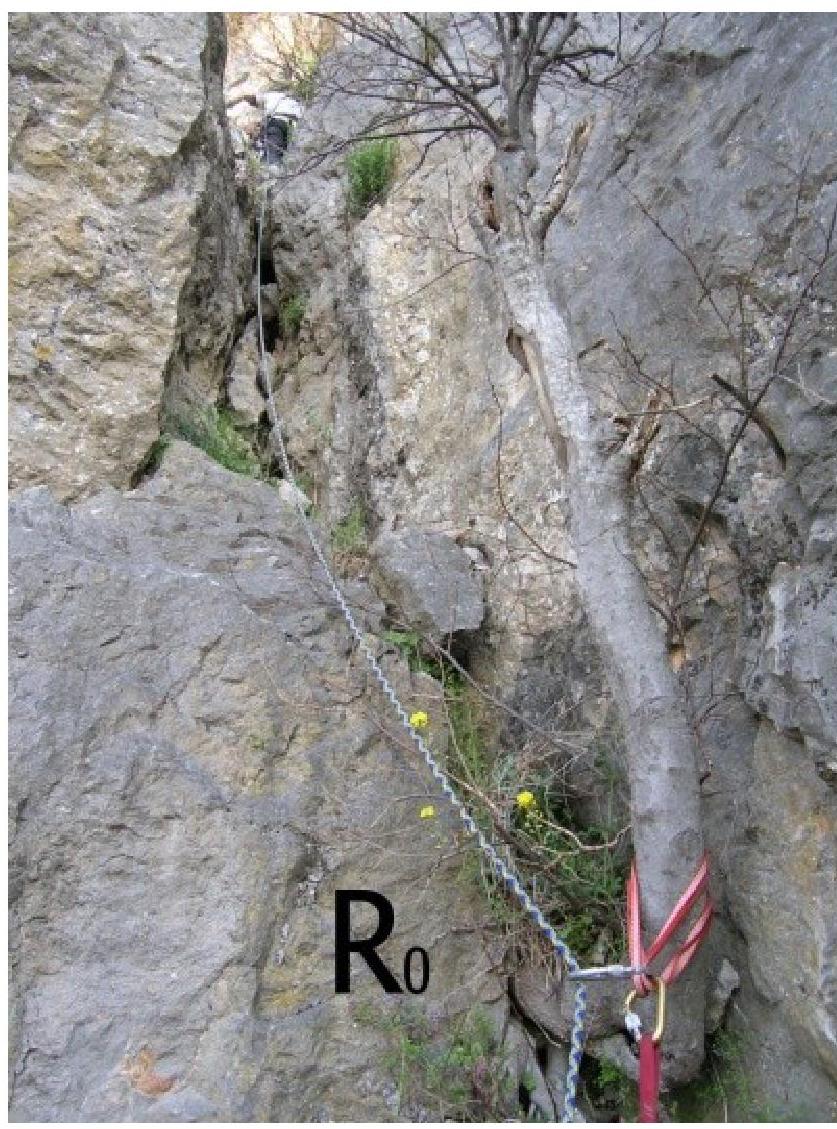
- R1–R2: 40 m. III
First, we climb under the chimney, then a section of simple chimney climbing. The station is at the exit from the chimney - where the wall begins, going under a large "plug".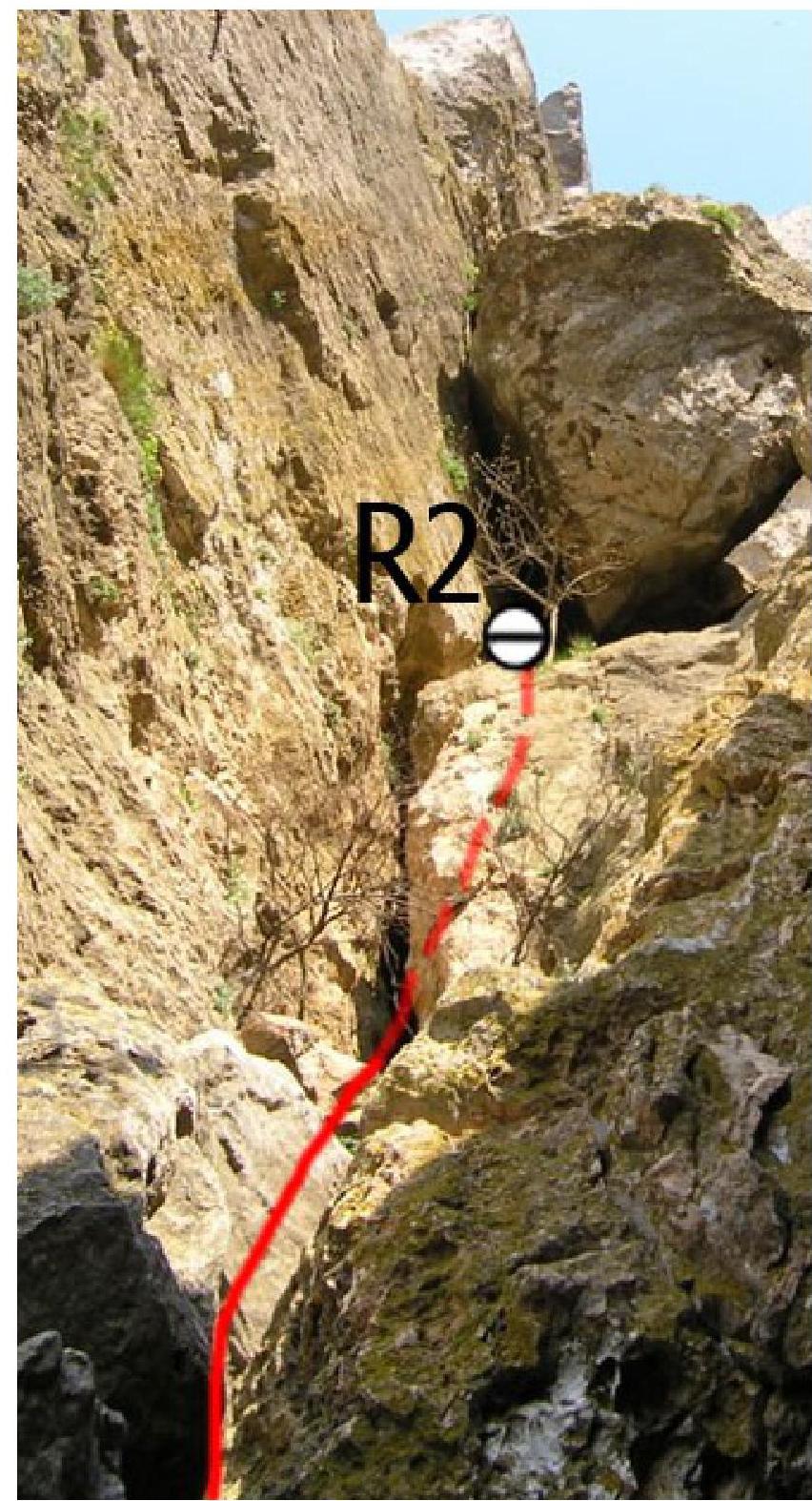
Digitized by
Google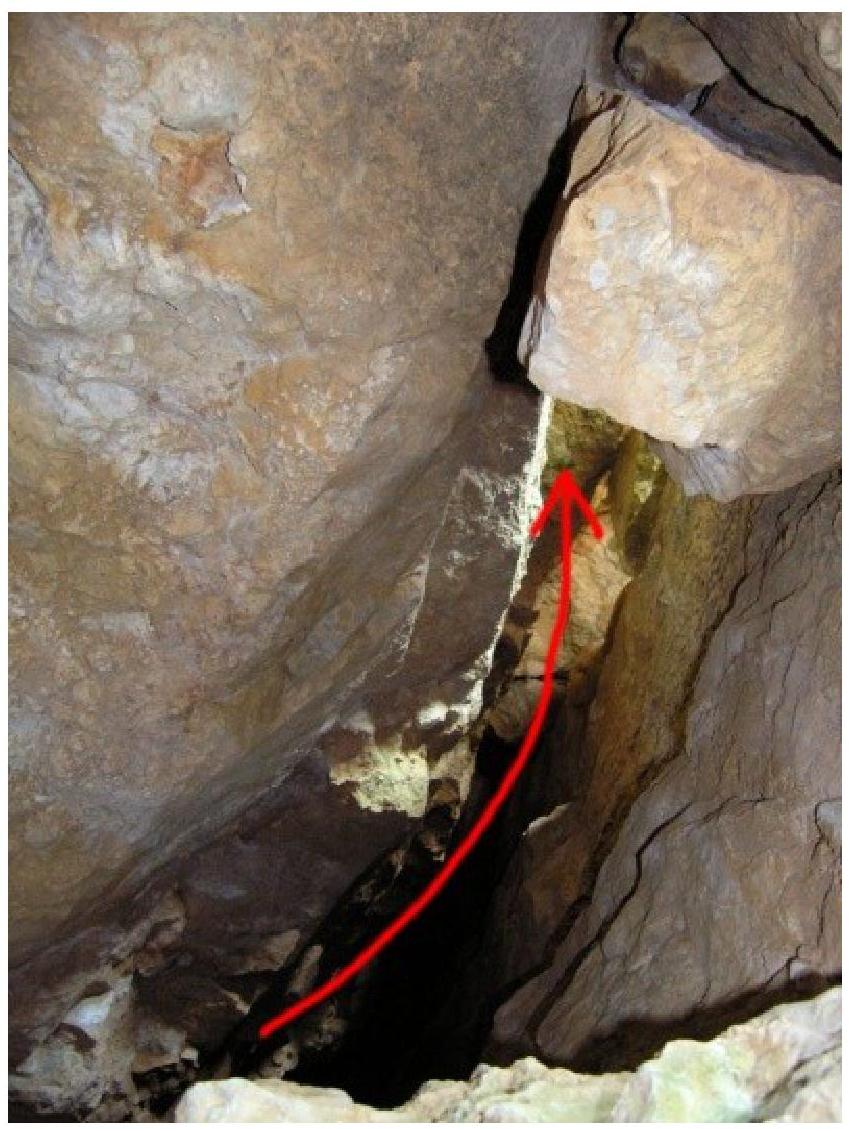
- R2–R3: 25 m, difficult climbing.
In the center of the wall, a rock piton is driven - to the right, in the crack - a driven stopper. You can pendulum to this stopper and climb further along the crack. You can also reach the crack along the very scarce relief of the wall.
We climb out from under the plug - we come out on top and see as many as three rappel rings, fastened with a steel ring. Here you can organize a station.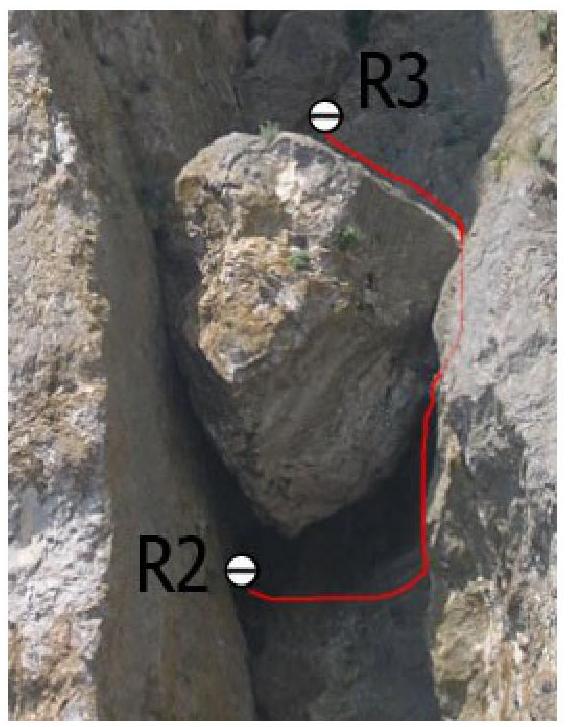
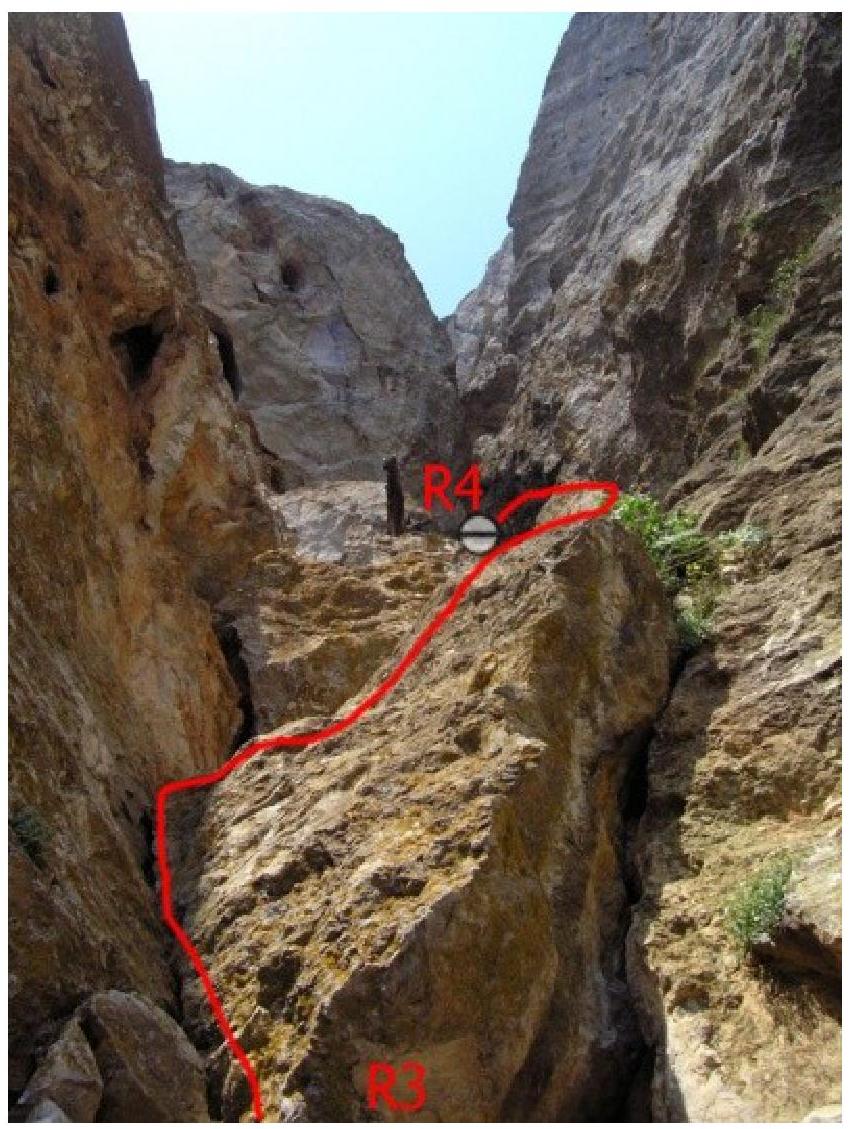
- R3–R4: 40 m, normal climbing.
Along the crack from the station upwards, then go to the right. Up and to the right, we climb to the base of the second chimney, it is convenient to organize a station in the crack at the beginning of the chimney, but there is also a convenient grassy ledge and a small tree.
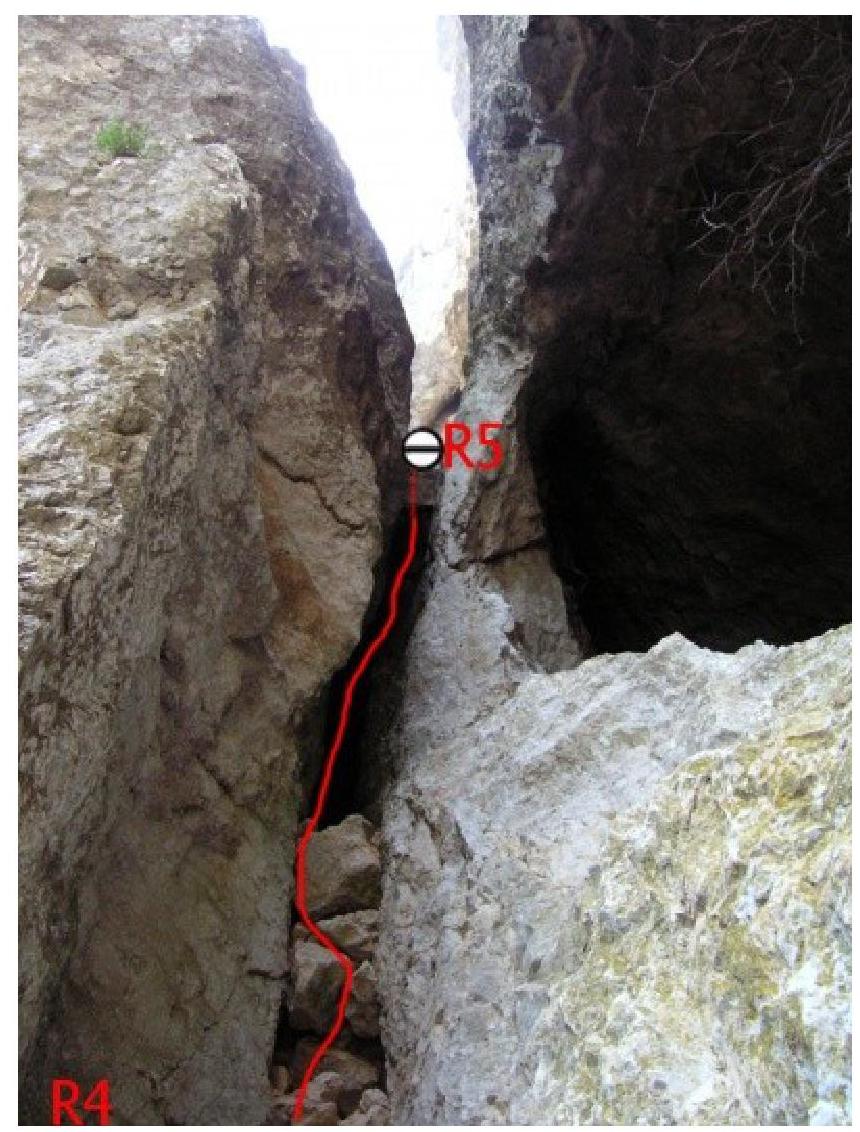
- R4–R5: 25 m. Psychologically difficult chimney climbing.
3 bolting points and one piton - your best friends, because in the chimney there is nowhere to rest or drive a piton. First, along the rocks of medium - high difficulty, we climb under the chimney, climb into the chimney - on its left side, an old bolting point. Even higher, on the right side - two relatively new Stregor bolting points at a decent distance, above them - a piton.
Overcoming the chimney:
- We squeeze through to the chimney plug through a small hole.
- The plug can also be climbed from the outside, but it's less interesting everywhere.
Inside the plug - rappel rings. In case you have already changed your mind.
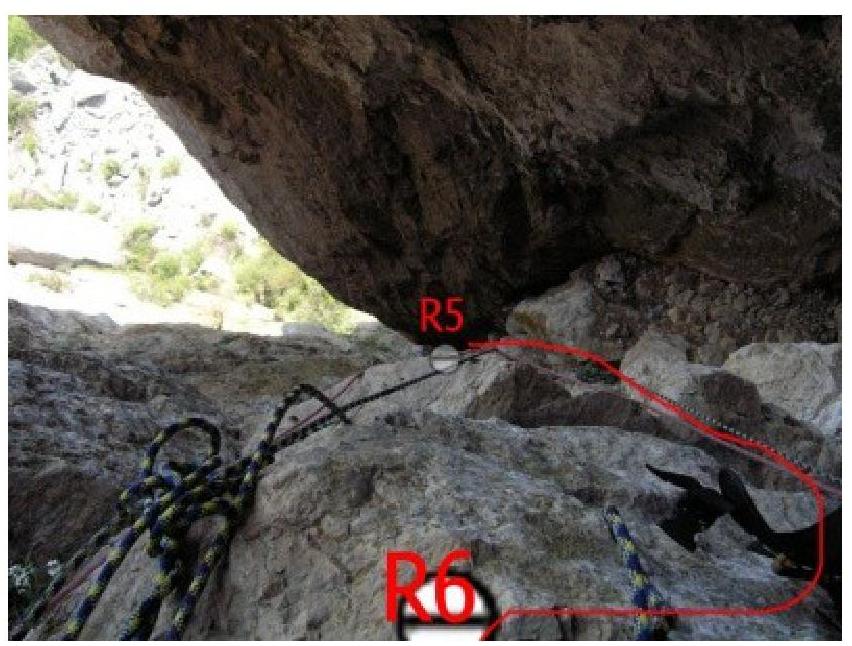
- R5–R6: 30 m, medium-difficulty climbing.
Up and to the right, first along the wall to the right of the plug, then in the direction of the small trees. You will have to climb along a small overhang, guided by the pitons driven there, one of them with a ring. From this moment on, there will be no more chimneys.
- R6–R7: 20 m. medium-difficulty climbing.
Traverse a large stone to the right along a clearly visible diagonal crack, into which you can place anything in any quantity, and pitons also stick out from there. Climbing is pleasant. We come out onto the wall to the right of the stone, make the last station.
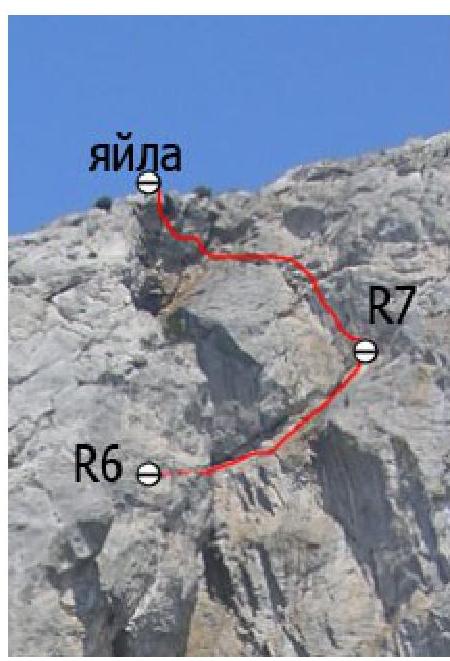
- R7–summit: 35 m.
Climbing is initially simple, then you will have to strain a bit. Along a simple ledge, we climb up and approach the overhang. We climb up and to the left, along a diagonal crack, the relief holds well, but climbing can be psychologically difficult. We attach the rope to a tree on the yayla, rejoice at the end of one of the most beautiful and interesting "fours".


