
Ascent Record
- Ascent category — technical
- Ascent area — USA, California, Yosemite National Park
- El Capitan 2498 m. Southeast wall, "Zodiac" route (2nd Russian ascent)
- Complexity category — 6 (proposed) VI, 5.11, A3+ American scale.
- Height difference — 600 m. Length 720 m (16 ropes). Average steepness of the route – 90°.
- Pitons left on the route: Rock — 3 Nuts — 1
- Number of climbing hours/days — 35/5 (with processing)
- Overnight stays: 1–4 on a platform
- Team leader — Pavel Shabalin, Master of Sports of Russia International Class Participant — Alexander Morozov, Candidate for Master of Sports of Russia
- Coach — Pavel Shabalin, Master of Sports of Russia International Class
- Entry to the route (processing) — June 18, 1999 Summit — June 22, 1999 Return — June 22, 1999
- Team of "Rodina" sports club, Kirov
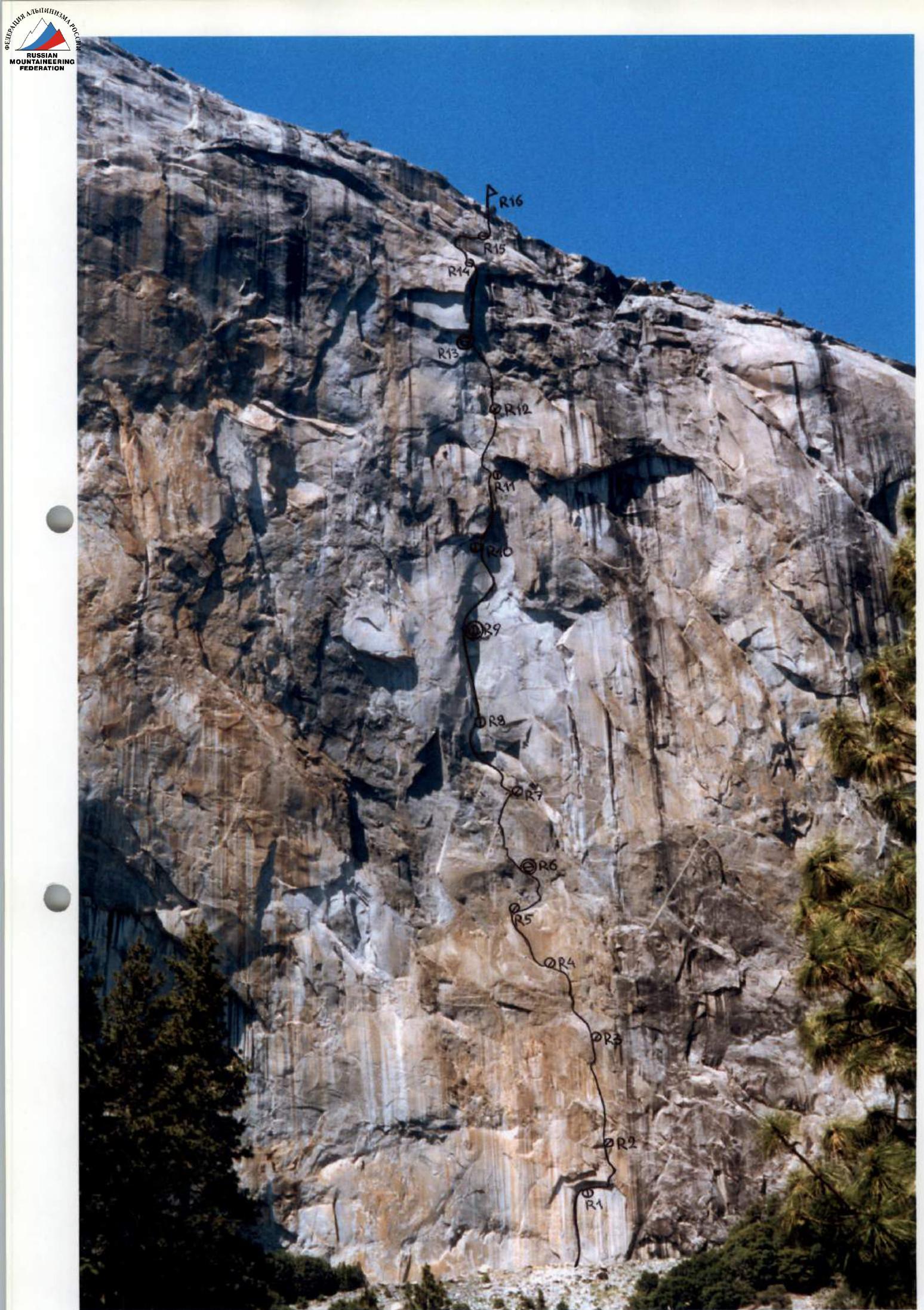
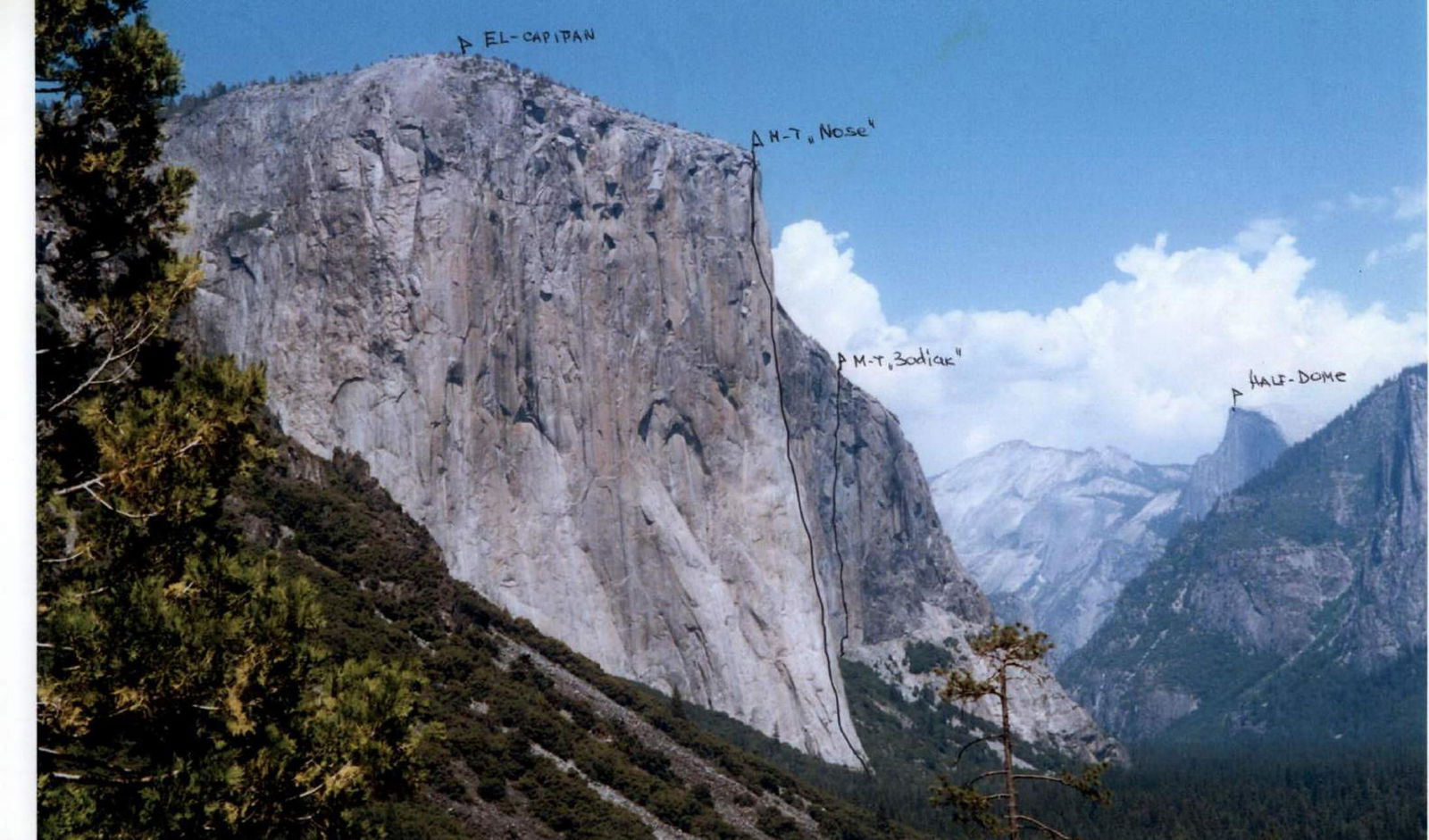
General photo of the summit
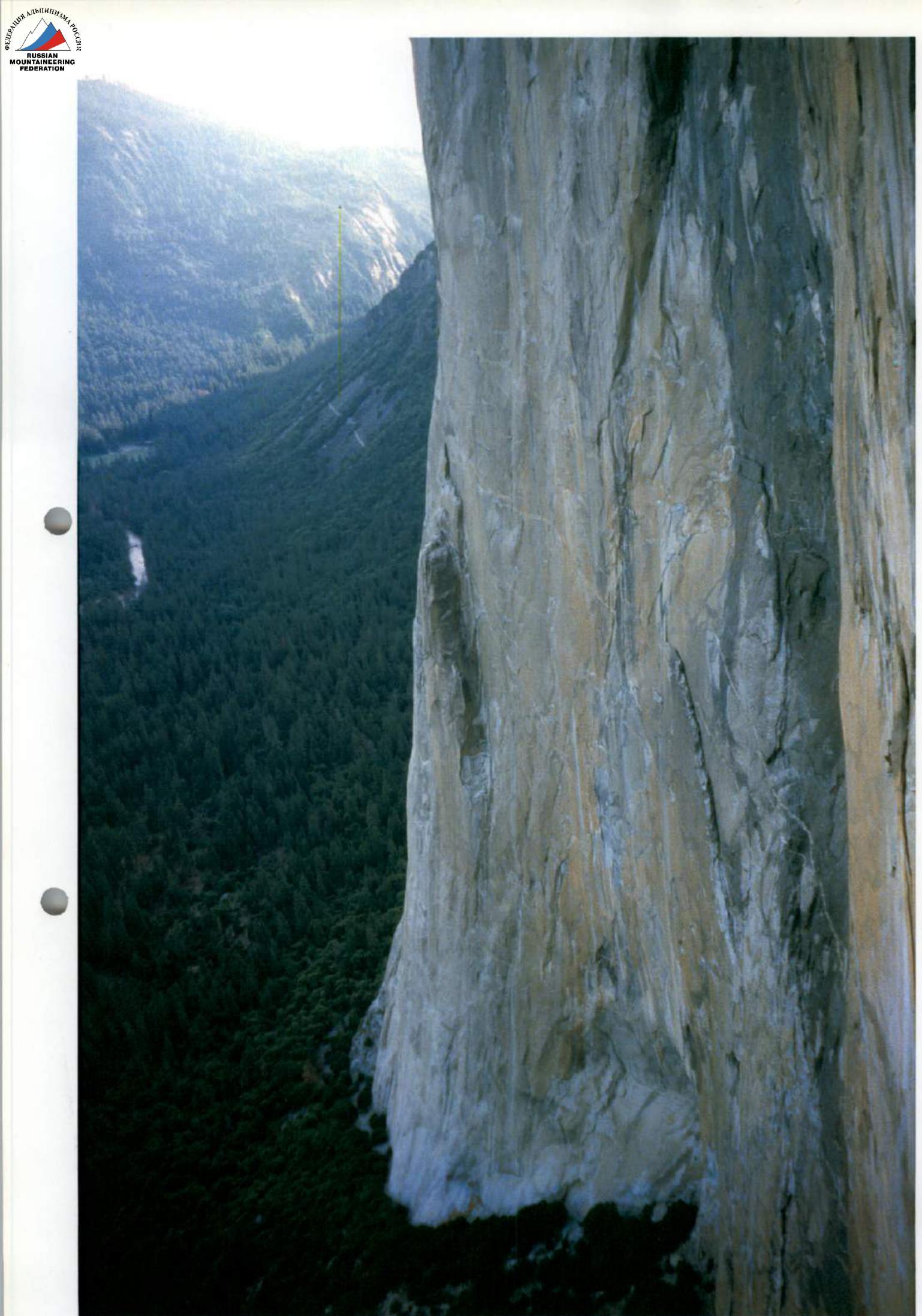
Profile of the wall (route "Nose") with "Zodiac" route www.alpfederation.ru ↗
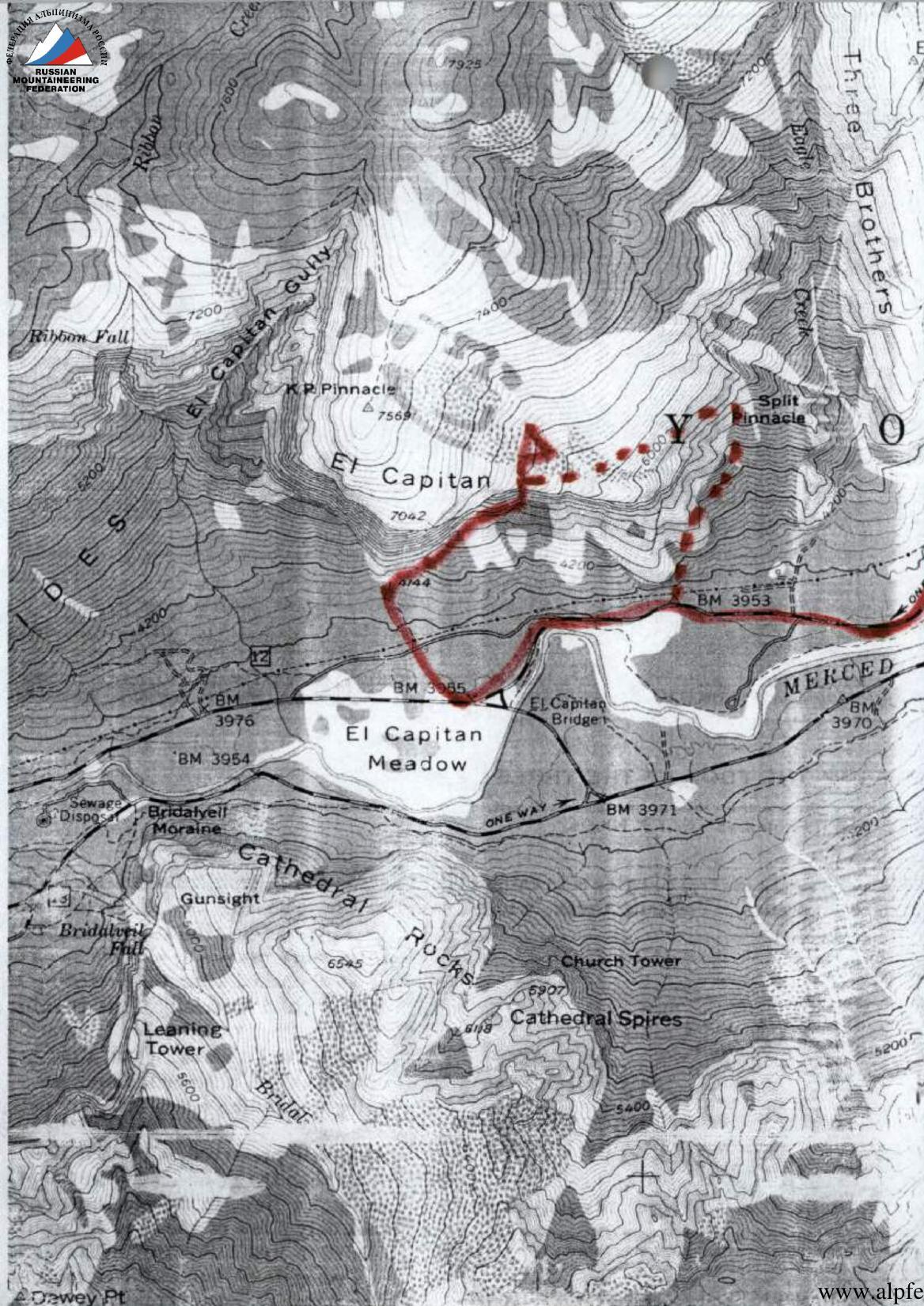
El Capitan. Panoramic photo of the area
Tactical actions of the team
The tactical plan for the ascent provided for passing the route in 4 days after one day of processing. This schedule was adopted after consultations with the chief guide of the local mountaineering school and studying the description of the route, as well as based on the recommendations of V. Babanov, who had previously passed this route.
The "Zodiac" route was first climbed in 1972. Currently, it is a calling card of Yosemite National Park along with routes like "Nose" and "Salathe". However, its main difference from the mentioned routes is that with a shorter length, "Zodiac" is laid through the steepest part of El Capitan's wall and is to the limit saturated with technical difficulties. If the technical difficulty of "Nose", for example, is VI, 5.11, A2, and "Salathe" is VI, 5.13b on the American scale, then "Zodiac" is rated VI, 5.11, A3+. That is, if the classic popular Yosemite routes are now climbed in 2 days mainly by free climbing, then "Zodiac" requires a different approach — 90% artificial climbing category A3+, that is, including all conceivable forms of rock relief to date with the likelihood of deep falls without guaranteed reliable belay points.
Hence, there is a special thoroughness in passing dangerous sections (live blocks, blind cracks, cornices above ledges and "feathers"), and a relatively low speed of movement due to the use of "Big Wall" tactics, when the entire load is pulled through a block-brake, and its weight exceeds 60 kg per pair due to the need to carry water (30 l) and a tent-platform. The first climber moves with two ropes, a dynamic safety rope and a static rope, the second works on ascenders on the "dynamic" rope, eliminating artificial aids and belay points, while the first pulls the load with their weight. All garbage and "waste products" have to be carried in special plastic containers according to approved rules, so the weight of backpacks decreases very insignificantly by the end of the ascent.
The technical arsenal of the used equipment is huge and includes almost all known samples of equipment to date: pitons, bong pitons, blades, cams, nuts, stoppers, copperheads, skyhooks of various modifications. Many devices are highly specialized and are used only in the Yosemite area, but familiarity with them significantly broadens the horizons of even the most experienced climber.
When selecting food products, we were also guided by the recommendations of local old-timers — dried fruits, nuts, chocolate, dried meat — pemmican, canned fish, soups that do not require cooking, crackers, and tea. The weather during the ascent was constantly good — not hot and without rain. There were no falls or injuries.
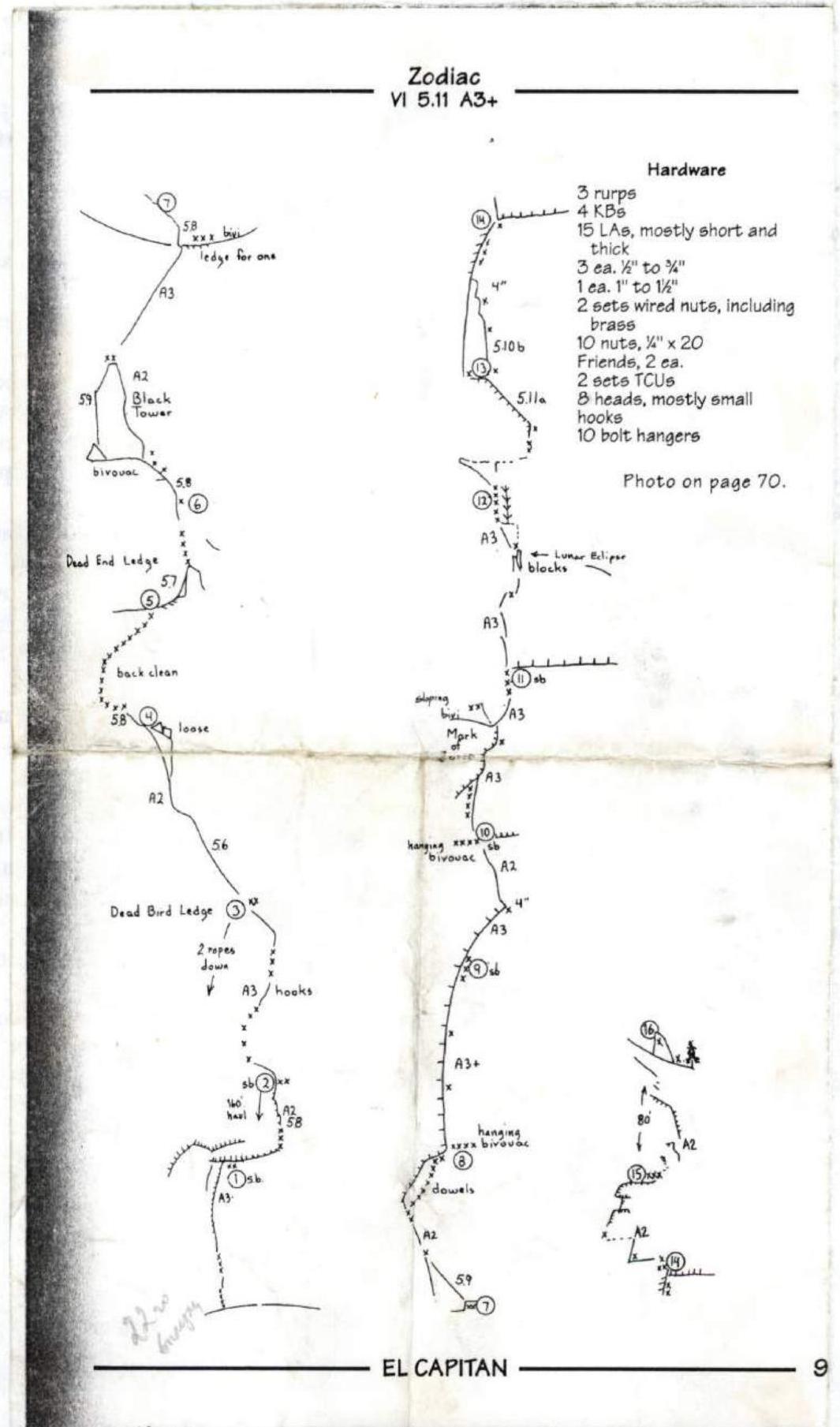
Zodiac
VI 5.11 A3+
Description of the route by sections
- The vertical crack leads under a cornice. The crack is partly blind, micro-nuts, copperheads, stoppers are used. For using "rivets" on the "mirror" — bolts hammered into drilled holes, removable cable loops are necessary. Very inconvenient approach to the right to the belay stance — on dubious protection.
- Traverse to the right under the cornice 12 m. Cams, pitons, and bong pitons on pull-out. Very unpleasant psychologically. Further up the path of "rivets" to a blind flake. Artificial aids are small nuts on flakes — unreliable.
- "Rivets", then on flakes unreliable artificial aids — A3 to a ledge after a cornice. At the top to the left is a belay stance. Possible overnight stay location.
- Good flake — climbing, with cams transitions to a dubious flake. At the end is a good belay stance.
- The path of "rivets" goes straight up to a flake. Traverse on the flake on inverted cams, then up to the belay stance.
- From here to the right on the flake to a ledge, from which you can reach the next "rivet", dubious pitons, and "rivets" lead to a decent ledge 1 × 1 m.
- "Black Tower" — a large flake, passed by climbing, with cams for protection. From the top of the tower, very unpleasant artificial aids on a blind overhanging corner. Falls are highly undesirable — flake below.
- From a good ledge to the left up climbing to a cornice. From here up a huge overhanging corner with "rivets" in the upper part to a hanging belay stance.
- The corner is amazingly beautiful with relatively reliable places for belay points only in the lower part. At the top are stoppers, copperheads, dubious pitons. A2+
- The same, plus strongly overhanging. Again pitons, bong pitons on pull-out. However, a fall is not scary — when descending, you don't touch the wall.
- Again overhangs and again unreliable. Pitons, bong pitons, cams, skyhooks, nuts – everything.
- Very unpleasant rope length – live flakes and delaminations. Skyhooks and "rivets" constantly. Almost no reliable belay points.
- Unpleasant rope length at first (pushes away, inverted protection) turns into an excellent parabolic corner with a crack for fingers and cams. At the end, the first excellent ledge 2 × 0.7 m.
- From here up 25 m. Huge flake under 4–5 cams. 2 "rivets" are so old that they serve more for reassurance than for protection. Further up the corner and exit through a 3-meter cornice-roof to the left to a ledge. Again inverted pitons.
- Very unpleasant rope length with dubious flakes. Exit to the top to the belay stance on live blocks — the most dangerous section.
- Relatively simple (in terms of reliability) rope length with an excellent exit to the roof through a 3-meter cornice.
Descent down the trail with 6 rappels leads to a highway.
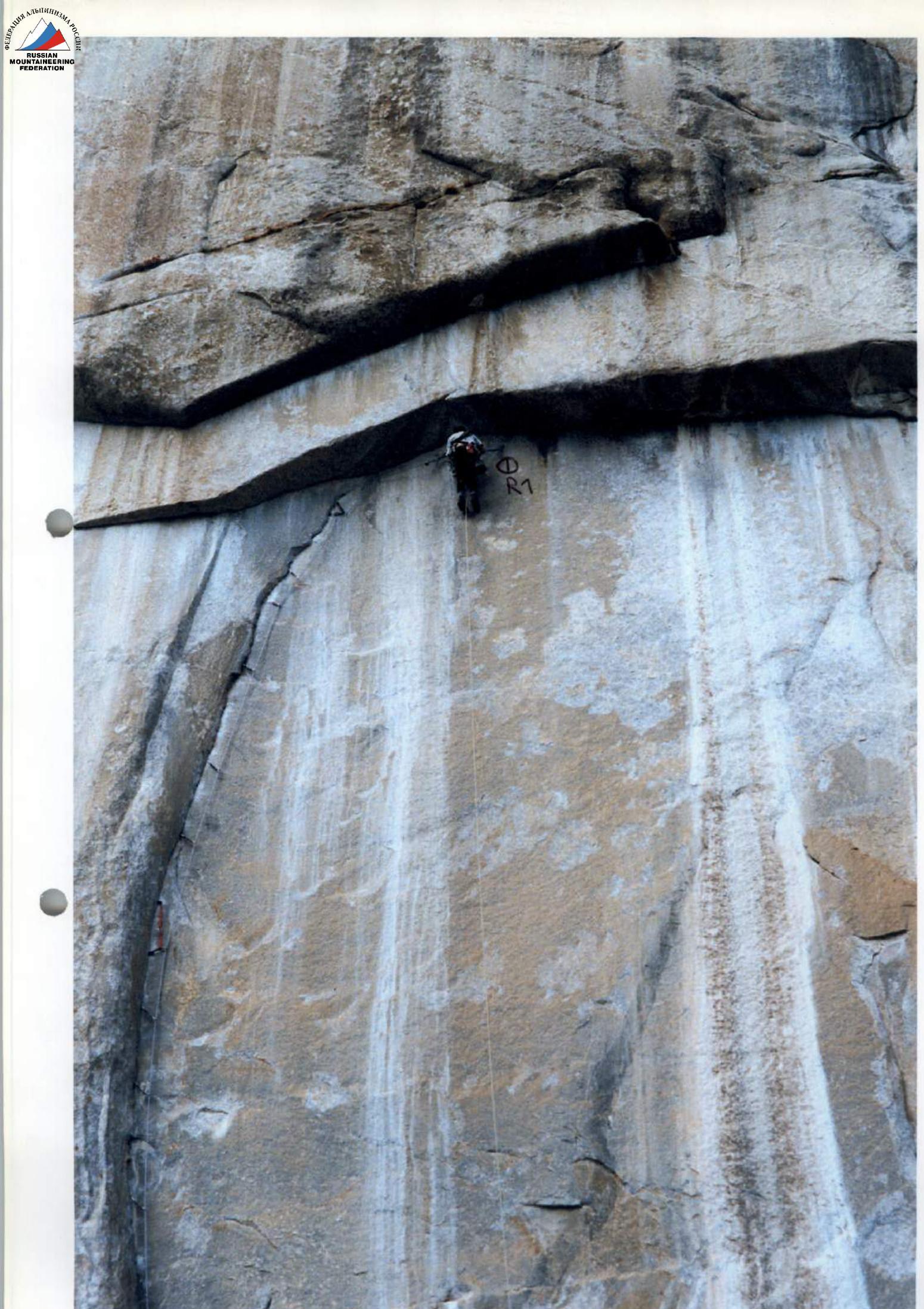
Section R1

Luxury
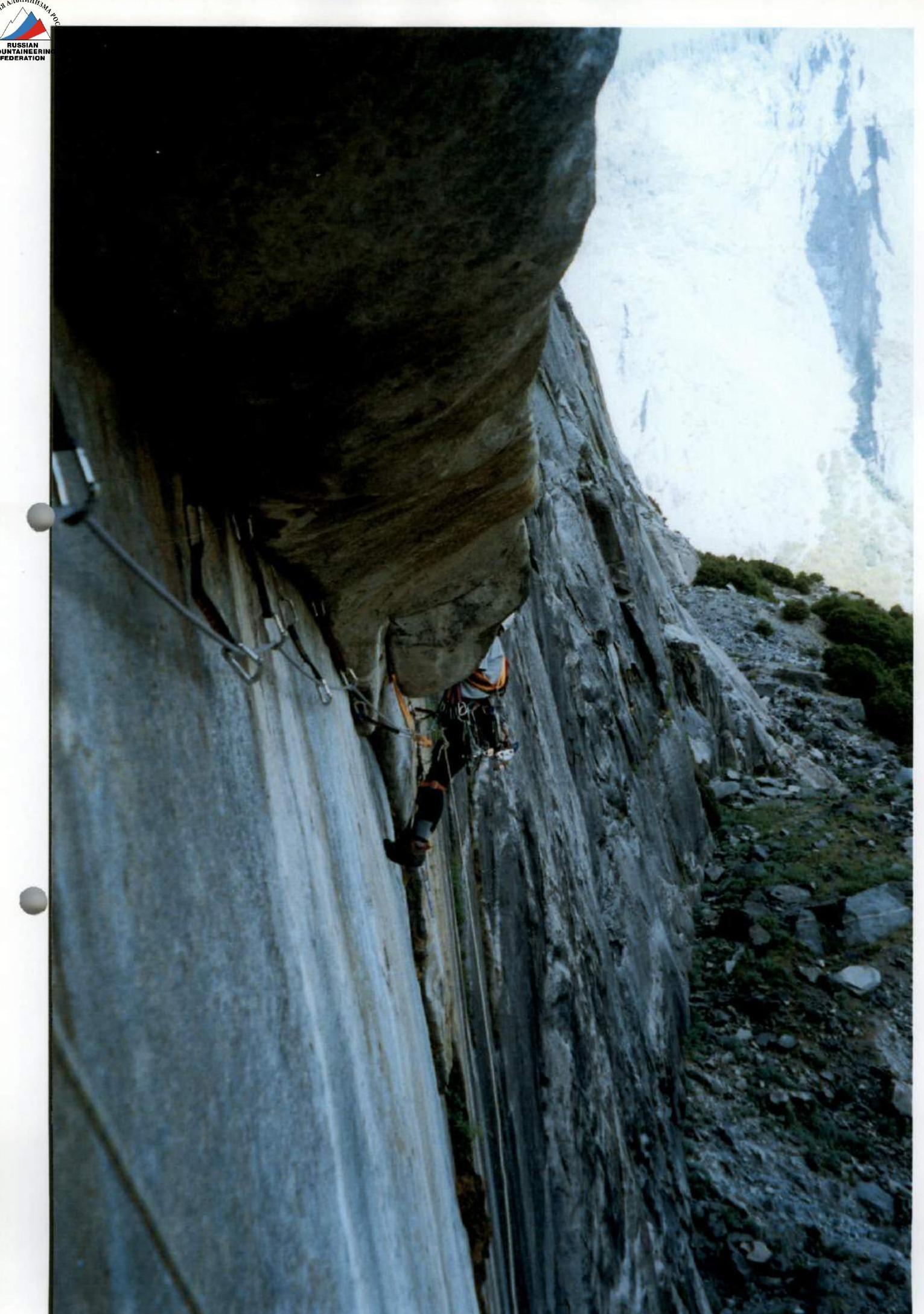
Section #2. Cornice after traverse

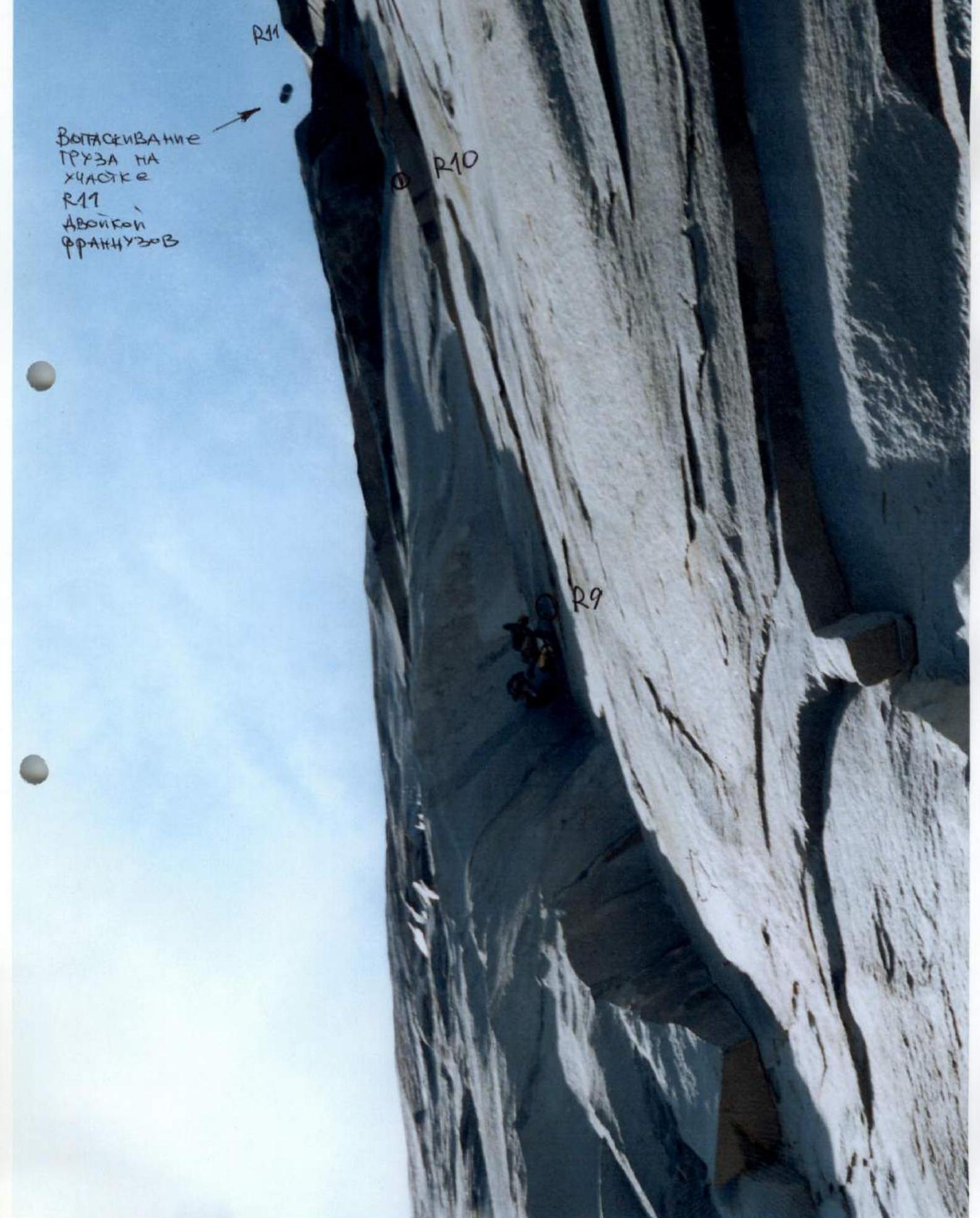
Hauling gear on section R11. Double French prusik
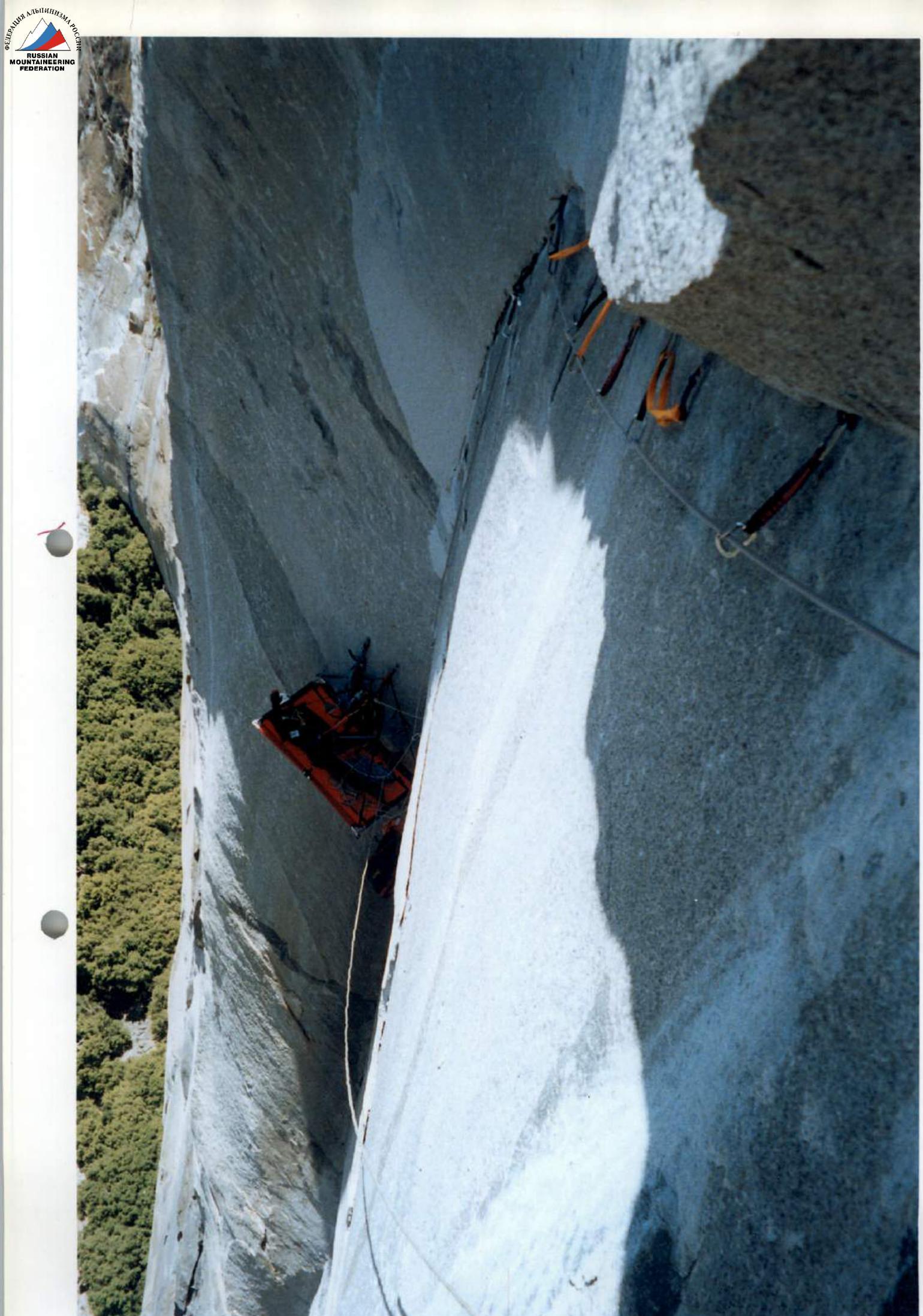
Section R9. Belaying from a platform
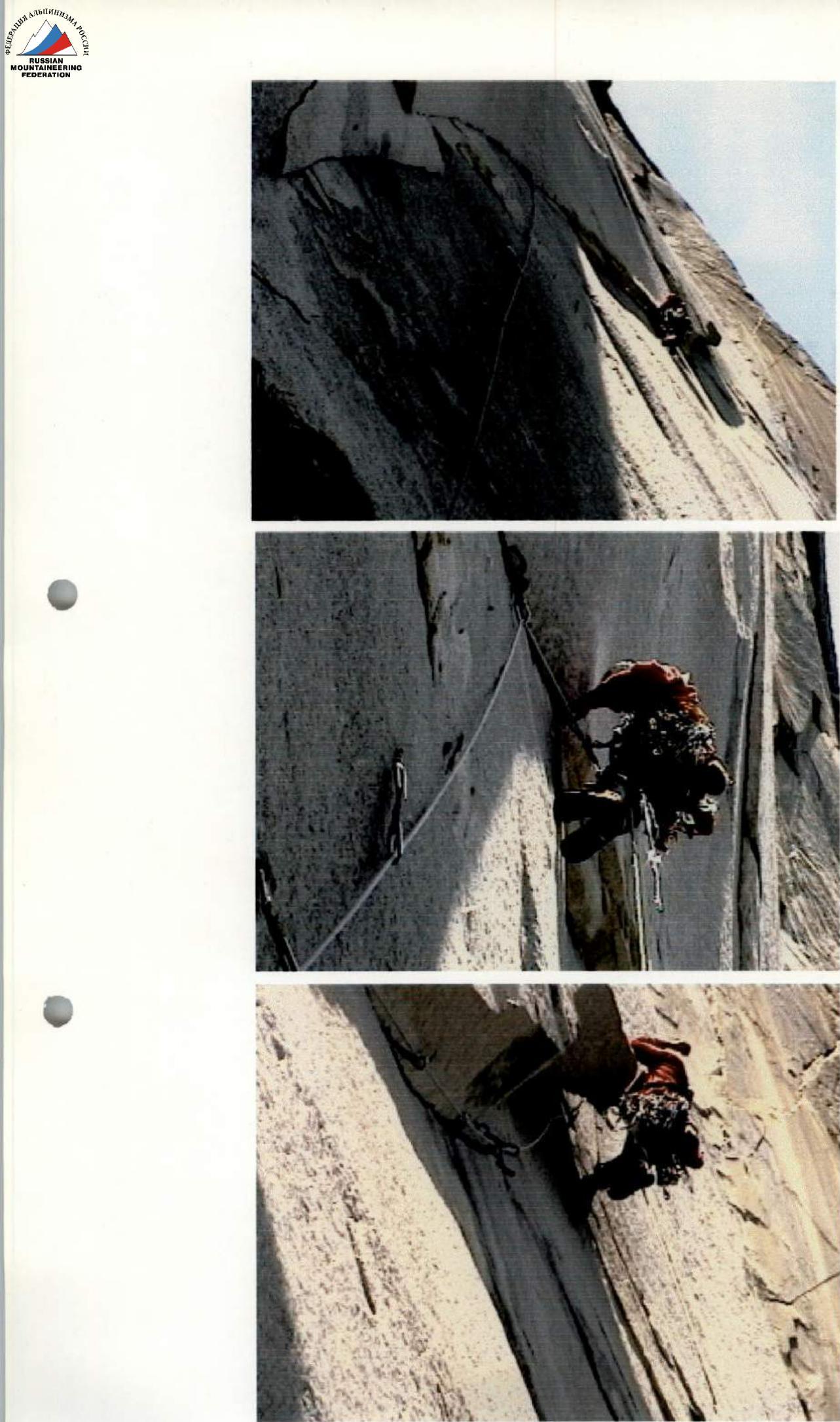
Passing section R9
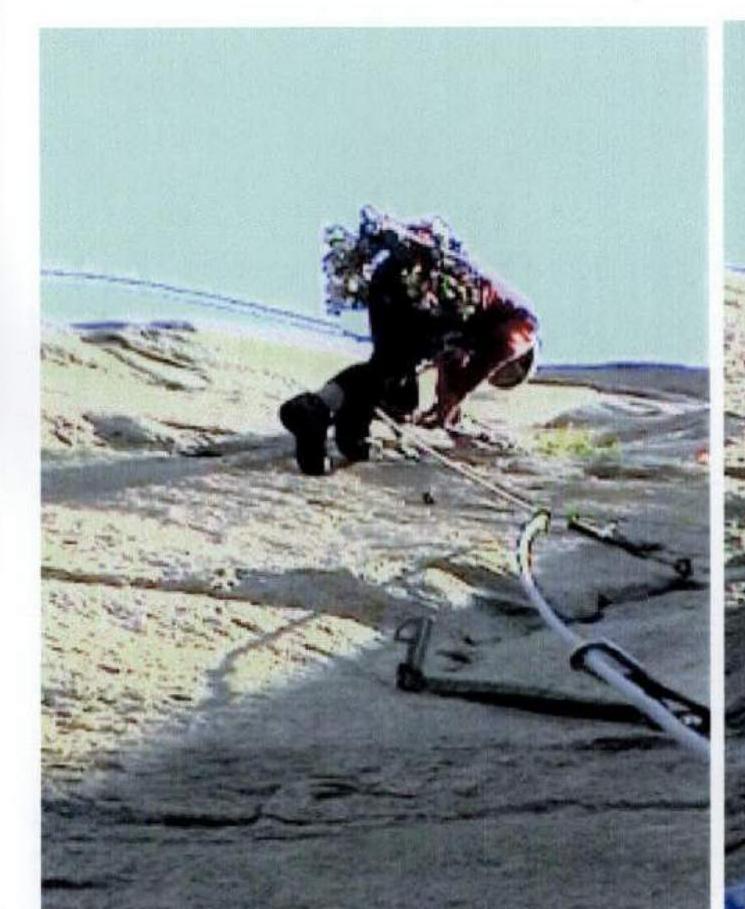
Section R11
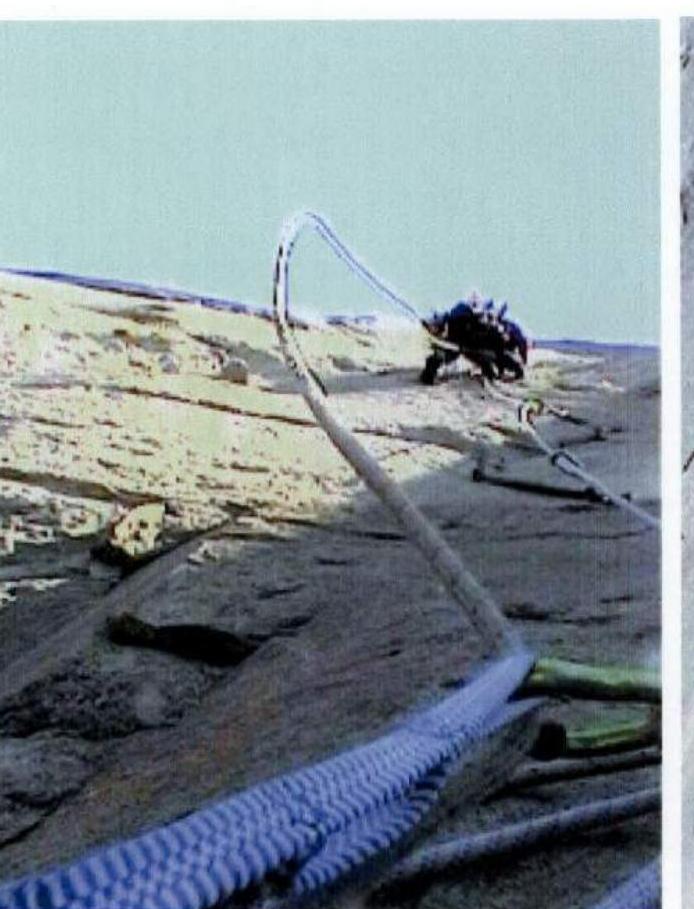
Section R11
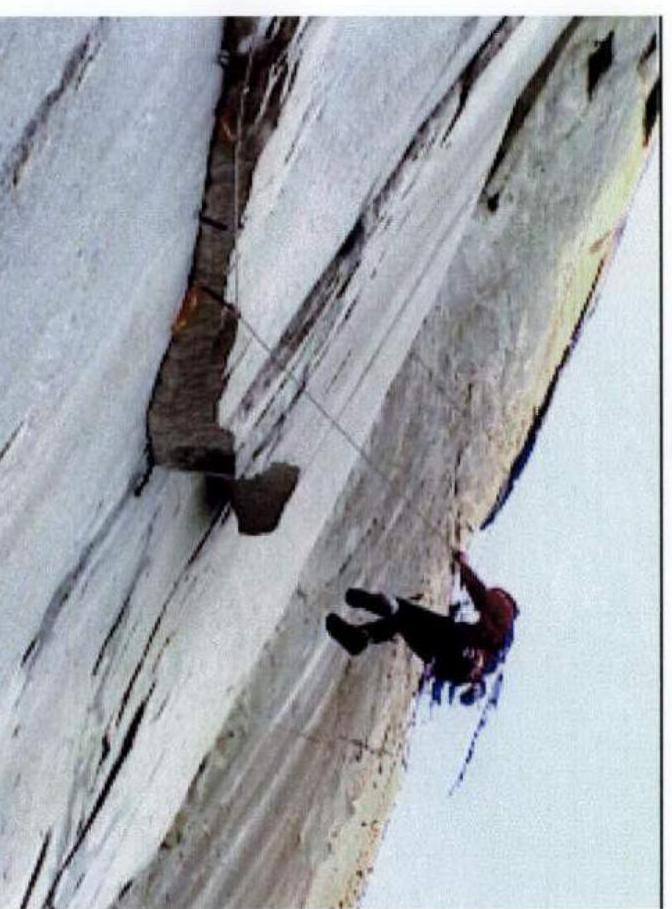
Straightening of the rope on section R9
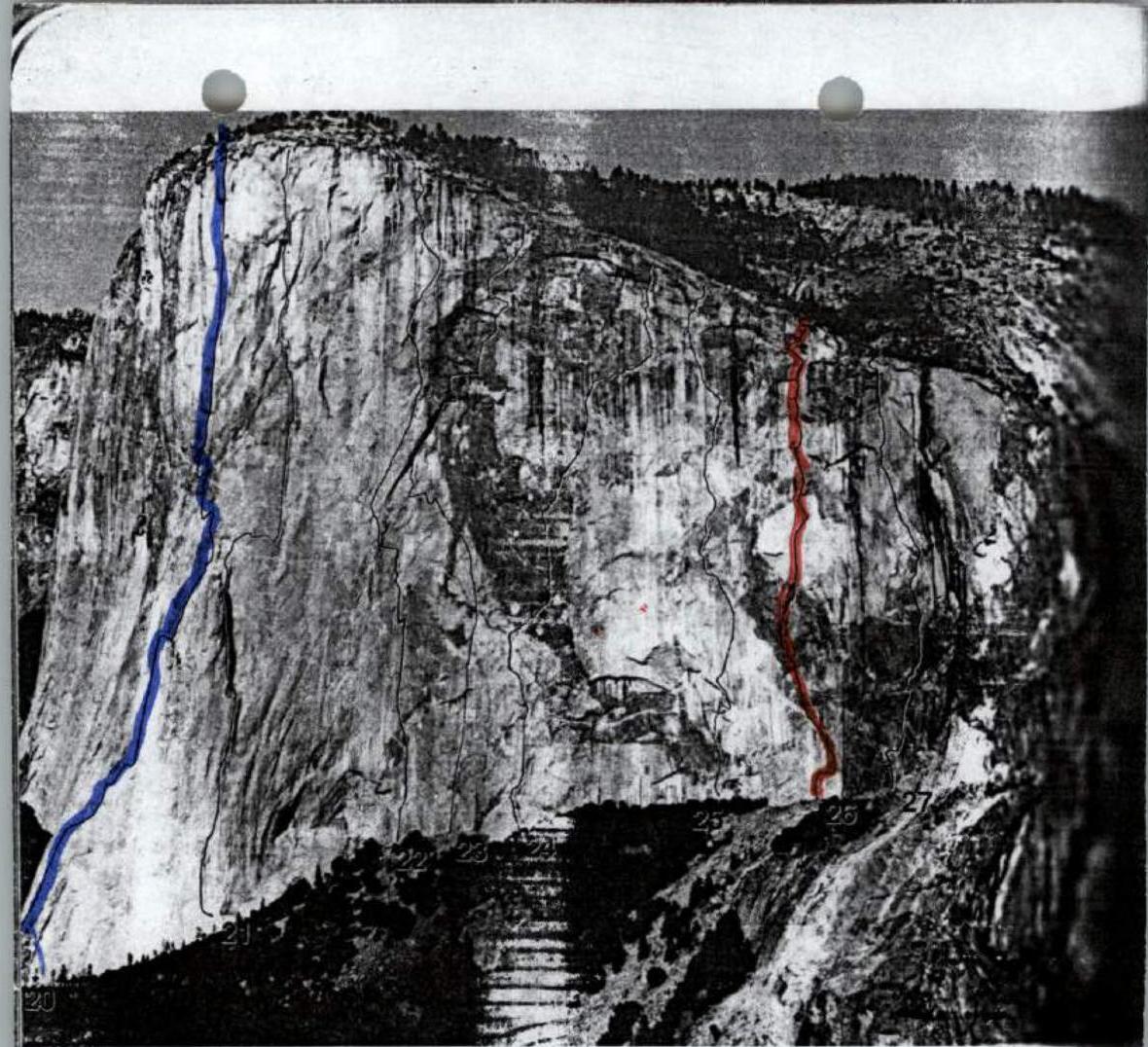
El Capitan: Southeast wall
- The Nose
- New Dawn
- Pacific Ocean Wall
- North America Wall
- New Jersey Turnpike
- Tangerine Trip
- Zodiac
- Eagle's Way (Note: Arrow on right margin indicates East Ledges Descent. Topo on page 100.)

Comments
Sign in to leave a comment