
Ascent Log
- Category — technical.
- Sierra-Nevada, Yosemite Valley (USA)
- Summit «El Capitan», route «The Nose».
- Proposed — 6B cat. diff. (according to American classification: VI 5.11 A3).
- Elevation gain: 870 m; length 1020 m.
Length of sections with 5th cat. diff. — 210 m; 6th cat. diff. — 810 m; Average slope: 82°.
- Pitons driven:
rock protection bolts
| 17 * | 460 | 44^{*} |
|---|---|---|
| 7 * | 210 | 32^{*} |
-
- reuse of previously driven pitons.
The denominator indicates usage for artificial protection (Aids).
- Team's travel hours: 46 h and days: 4.
- Overnights: 1st on a platform; 2nd on a ledge; 3rd on a platform.
- Leader: Tel'pow Alexander Alekseevich CMS 143400 Moscow
region, Krasnogorsk, Lenina 34–125 Team members: Vinokurov Anatoliy Filippovich MS Geshkenbein Vadim Borisovich CMS
- Coach: Vinokurov Anatoliy Filippovich MS Moscow region, pos.
Biokombinat, 5–10
- Departure to the route: 7:00 May 22, 1996.
Reached the summit at 22:00 May 1996. Returned to base camp on May 26, 1996.
- Organization: Moscow Regional Sports Committee. Summit photo
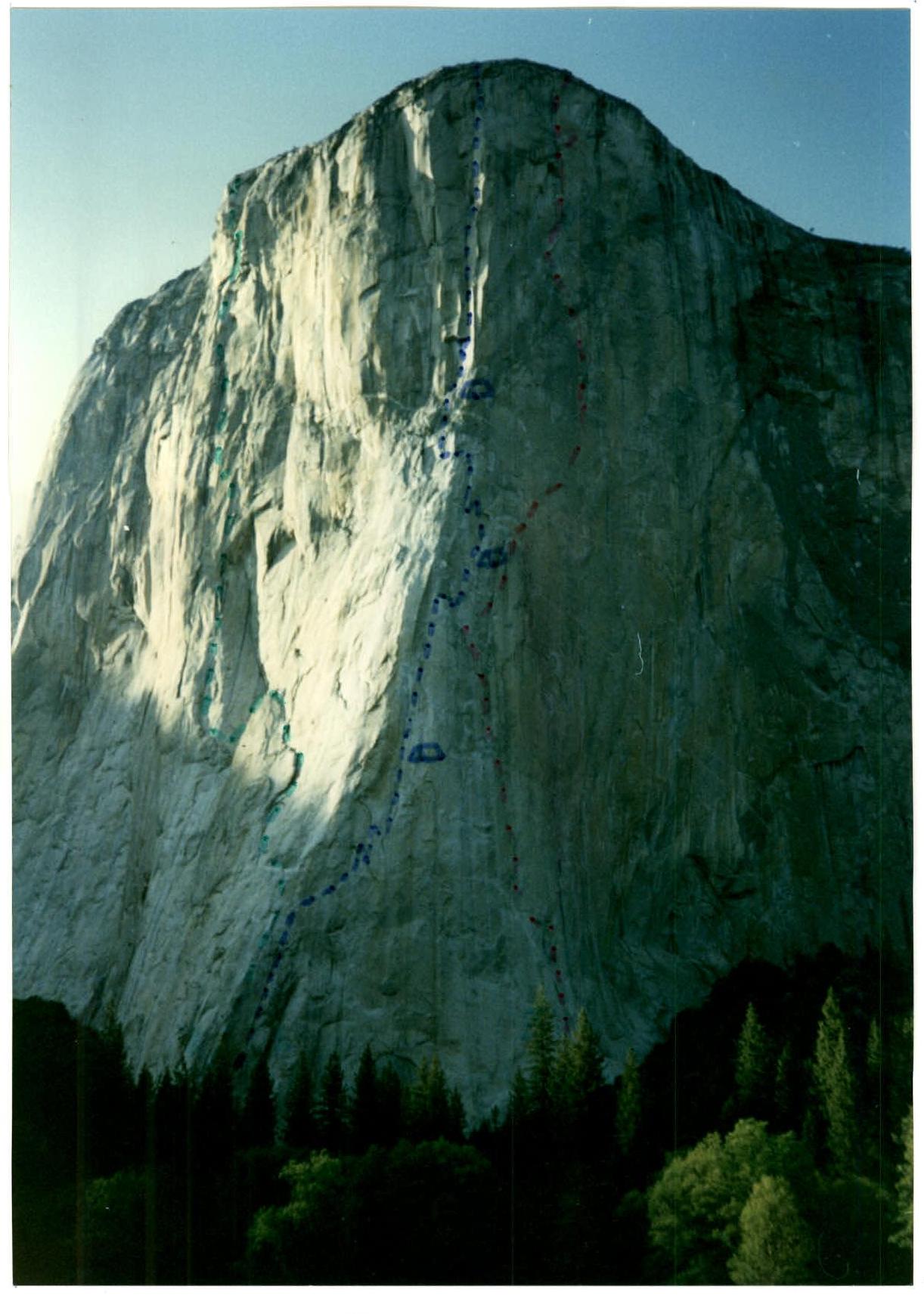
Taken on May 19, 1996 with a
«Pentax».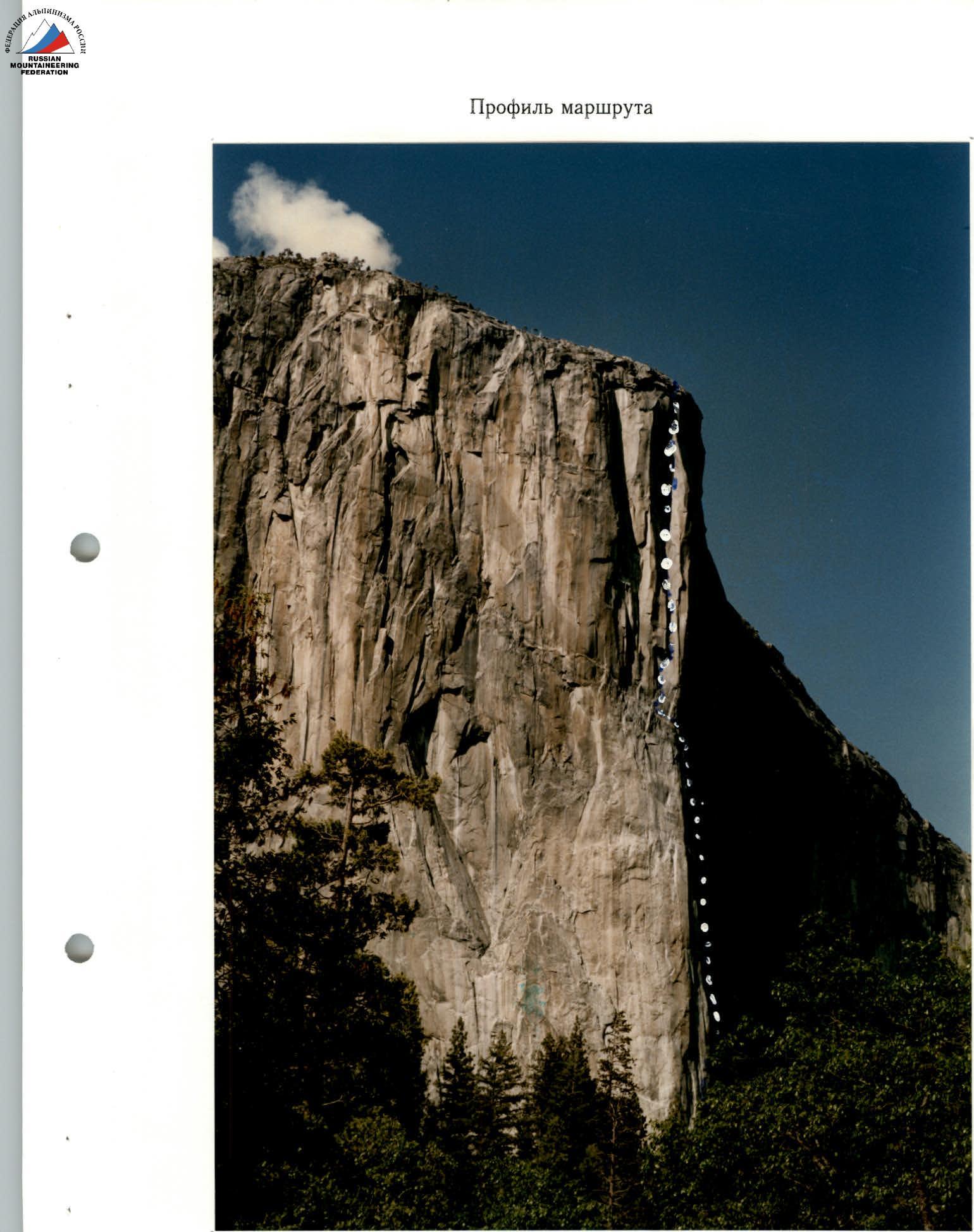
Taken on May 19, 1996 with a «Zenit» camera with a
«Gelyos-44» lens 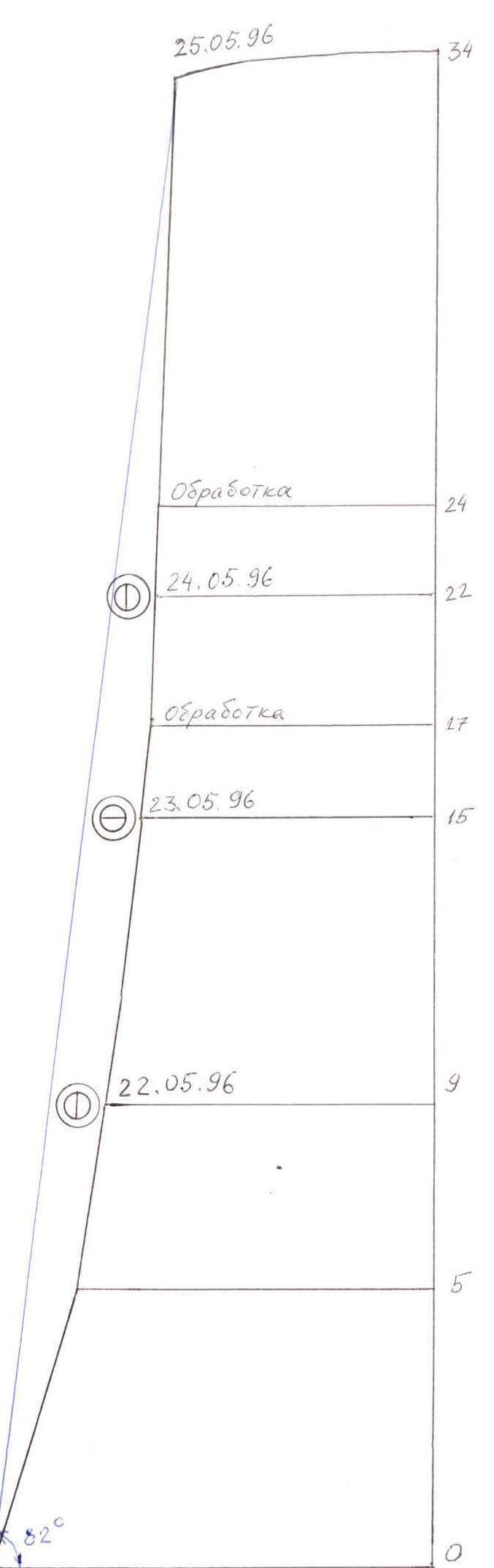 www.alpfederation.ru ↗
Tactical Actions of the Team.
The «Nose» route is abundant with pendulum moves and traverses from one vertical slit to another. Therefore, the team must be prepared for:
- hard work
- hauling rucksacks.
In particular, it is recommended to start by fixing the first four ropes up to the horizontal «Sickle Ledge», traversing it, and then descending vertically down with the ropes anchored at existing bolt stations to facilitate ascending with a load the next day, bypassing this traverse. Our team planned to follow this approach.
However, on May 21, 1996, as we began the route, we were caught in a heavy downpour that lasted until evening. Losing a day, on May 22 we set out without prior rope fixing, carrying a full load of water and gear.
The route is largely equipped with reliable 11mm bolts at belay stations, whereas in between, one typically has to belay using protection gear. «Friends» are particularly helpful, as they were invented in Yosemite for these smooth slits. To reach the equipped stations, 50m ropes are necessary.
The team used:
- one 50 m «Edelrid» rope;
- two Kaliningrad ropes.
We had:
- a double-triple set of «friends» of all sizes;
- a large quantity of rock protection.
The set of adjustable stoppers was especially helpful, particularly on the problematic section 4 cat. diff. A3.
It's worth noting that after the introduction of modern protection gear, old bolt pitons were removed from the route, and modern equipment is required for its passage, as regular rock pitons cannot be driven everywhere. Hook ladders and ring leisters were used for aid climbing.
Although there are ledges on the route, we brought a hanging platform to have the ability to bivouac anywhere. The 5.5 kg platform was designed by L. Martynov and has been used by Moscow region teams for many years in ascents on:
- «Cold Wall»,
- p. K. Marx,
- p. 4810.
On the route, we carried 20 l of water, cooked meals in the morning and evening on a gas burner using semi-finished products purchased at a local mountaineering store, and ate dry rations during the day, also bought there.
A.F. Vinokurov led the first rope length. V. Geshkenbein and A. Tel'pow worked as lead climbers next. On May 23, 1996, we were caught in an unexpected heavy rain with snow, typical for this area. With clear skies, a black cloud appeared from the Sierra's direction. Within half an hour, we managed to descend to a ledge and deploy the platform, and immediately a downpour began with strong winds. Fortunately, it lasted only 2 hours, the rock dried quickly, and we continued working on the route.
Although sunstroke is more common in Yosemite, throughout history:
- four people died from hypothermia.
- several dozen were rescued from the wall in a serious condition.
Therefore, it's considered necessary to have something waterproof, as dehydration makes the body less resistant to cold.
In preparation for the ascent, we used the book by George Meyers & Don Reid «Yosemite climbs» and received useful advice from Egor Timme.
Route scheme
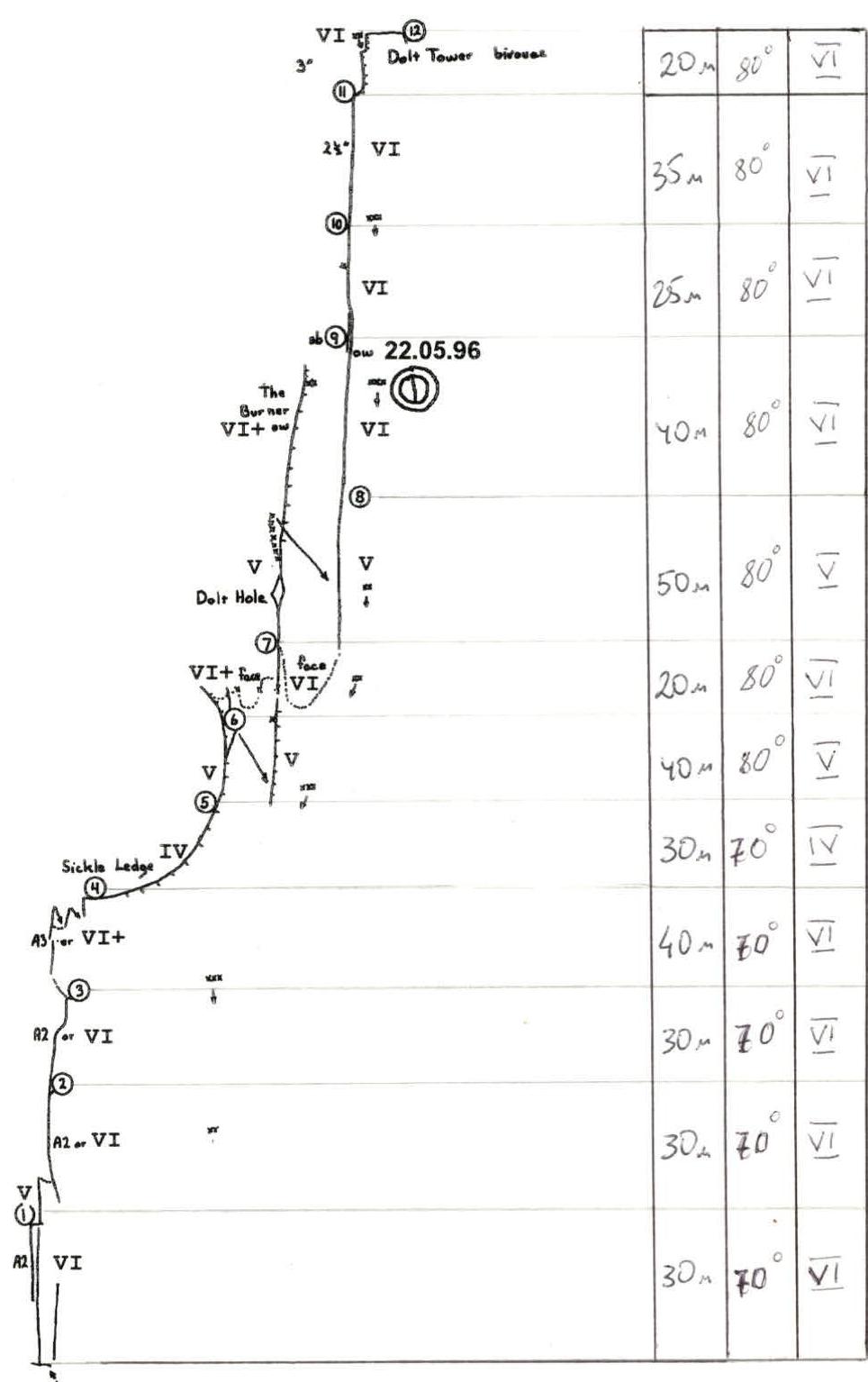
Route scheme
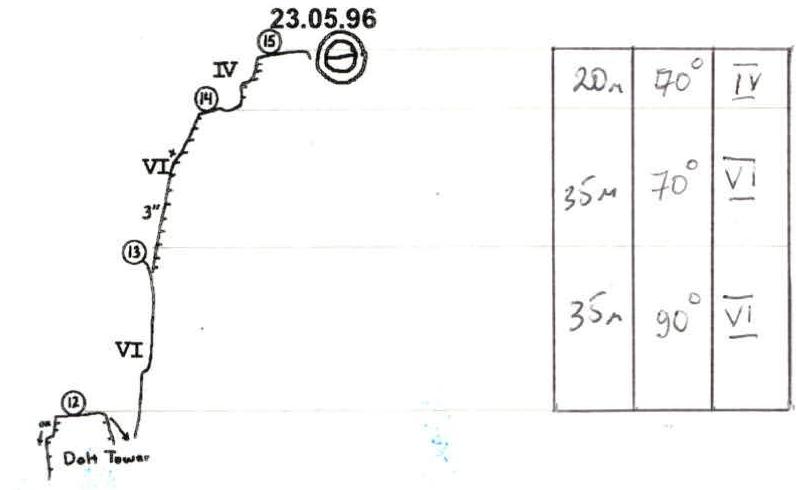
Route scheme
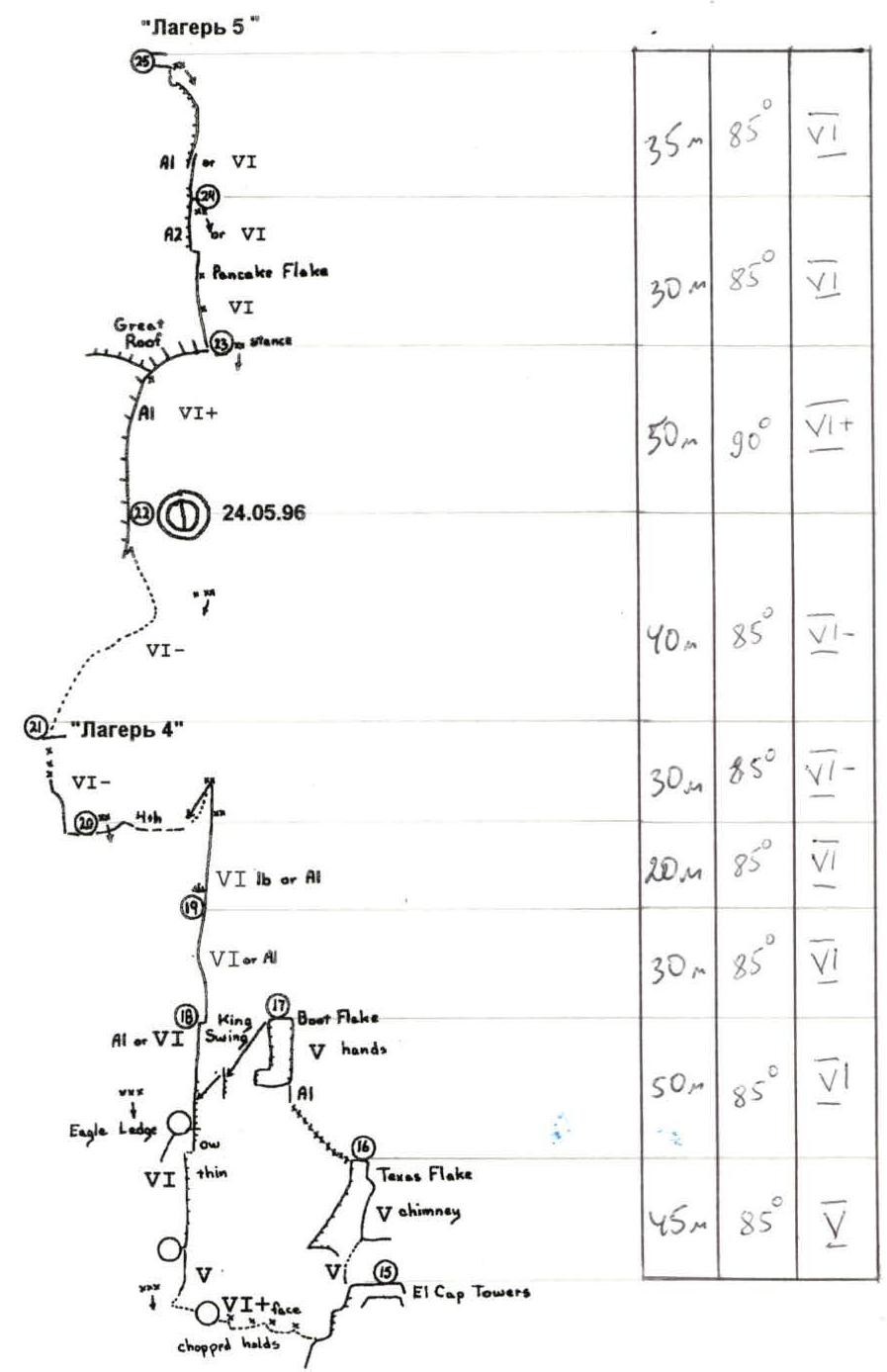
Route scheme
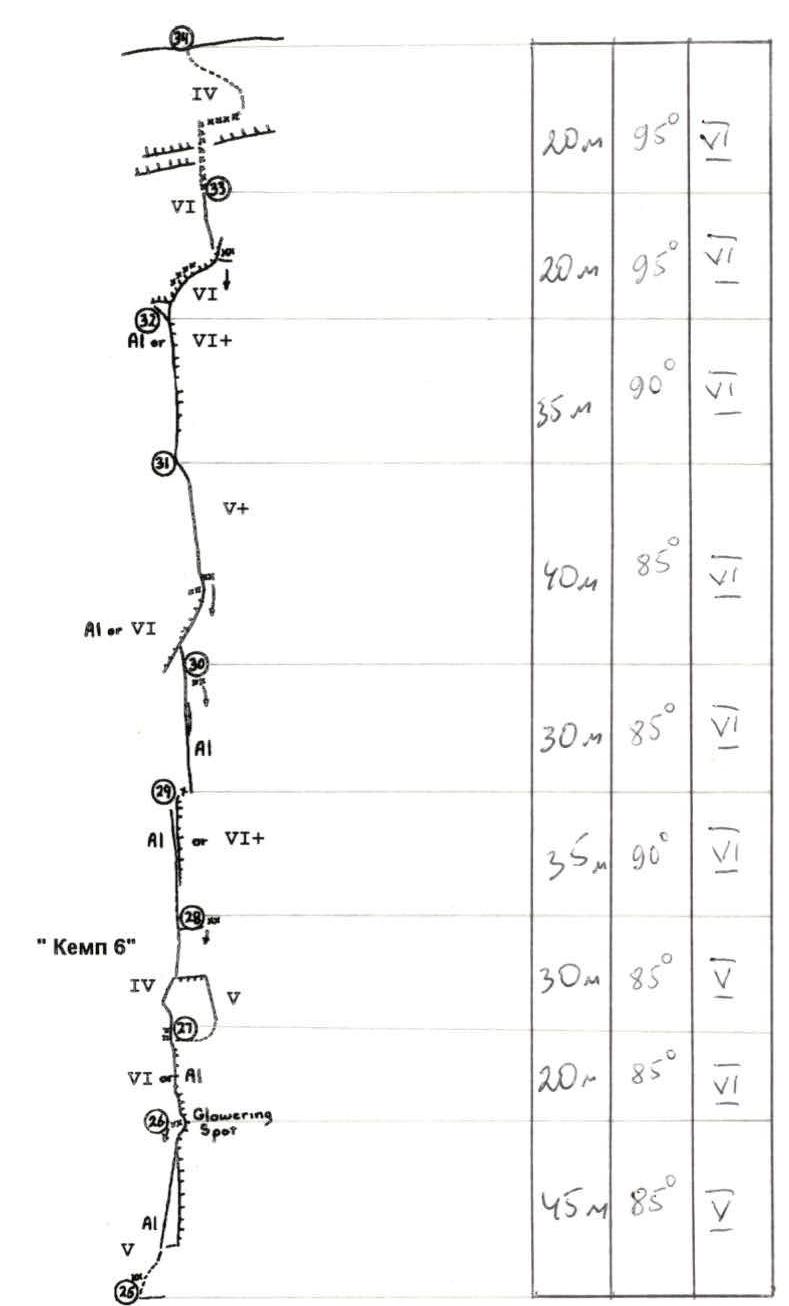
Description of the route by sections.
Numbers in circles on the scheme denote commonly used belay stations, often equipped with good bolts.
0–4. Up the corner, then a pendulum and a very difficult climbing section to the exit onto the «Sickle Ledge».
4–8. Right along the ledge to the end and up, pendulum right. Ascent into the «Dolt Torre», pendulum right and then up the slit.
8–12. Up the good slit to the «Dolt Tower». Ledge. 12–15. Rappelling right-down and then right-up to the «El Cap Tower». Ledge.
15–16. Up the chimney between the wall and the spalled slab to the top of the spall.
16–18. Bolted section left — up to the slit, then up to the loop. Very difficult and long pendulum left — down into a good slit. Then up.
18–21. Up the slit, then pendulum left to a ledge. Along the ledge left to the end and then up to «Camp 4». Ledge.
21–23. Ascent under the «Roof» and traverse right. Very difficult aid climbing on small protection along a vertical wet crack between the ceiling and the wall.
23–25. Up the slit to «Camp 5». Ledge. 25–28. Interesting rock with bowl-shaped protrusions of black rock in grey granite. Streamlet, possible to fetch water. Up to «Camp 6». Ledge.
28–34. Up steep and overhanging slits to the bolted section. Up the bolts onto the plateau.
From the summit, a trail leads right to the Big Yosemite Fall and down to Sunnyside camp.
Photo illustrations of the report
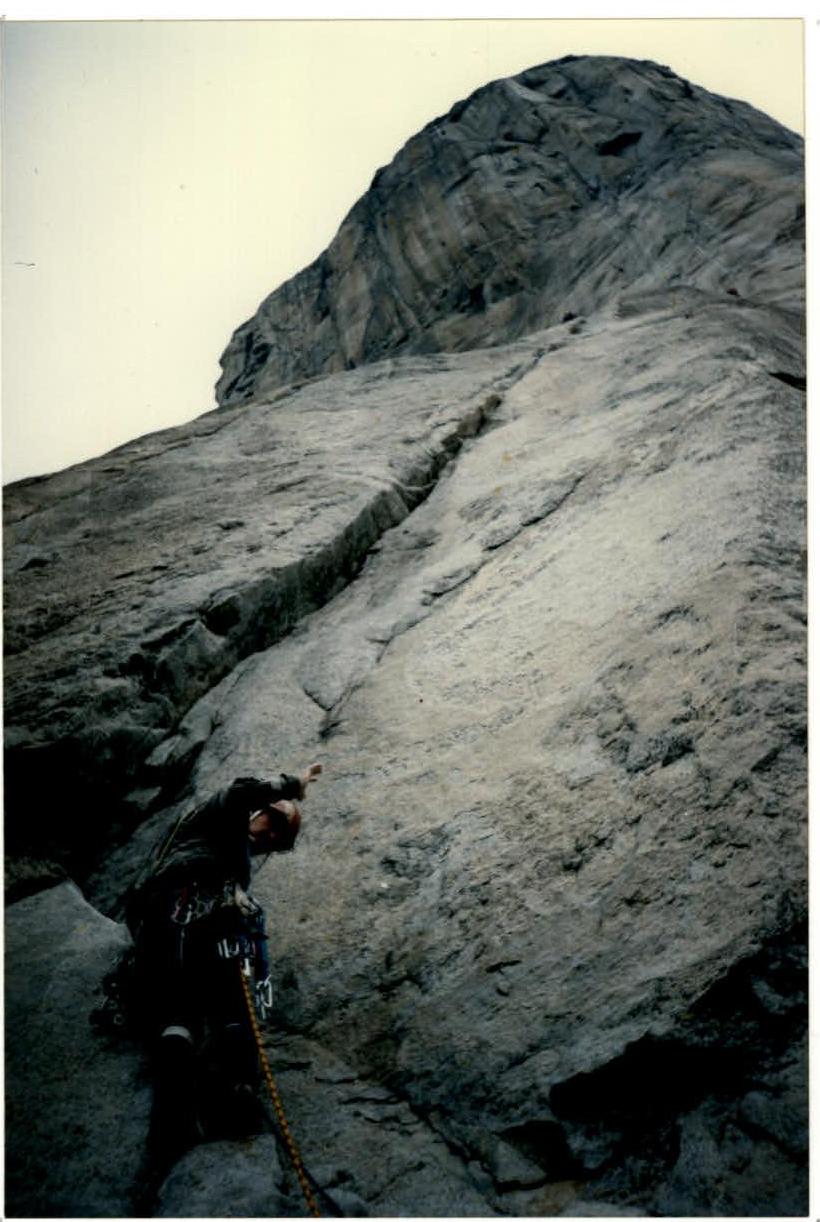
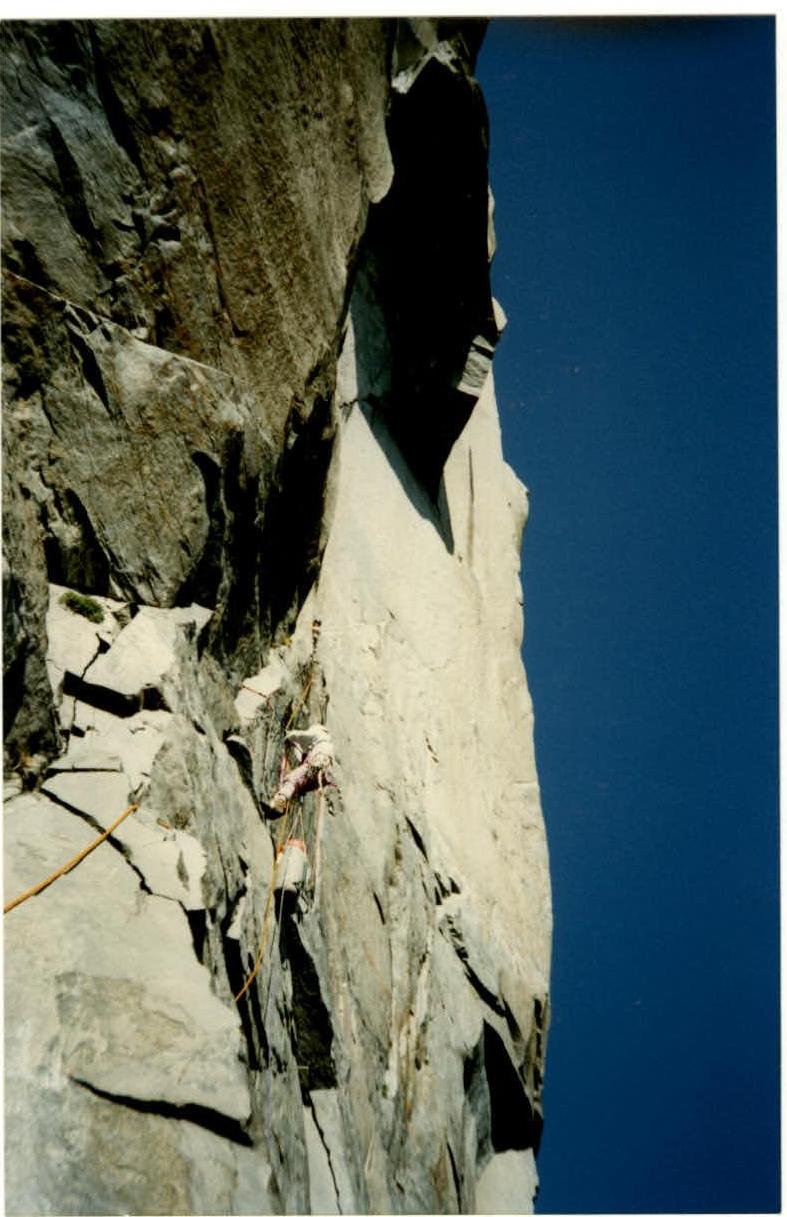
A.F. Vinokurov prepares to start working on the first rope. (sect. 1)
Photo illustrations of the report
Approaching the roof. Section 22. Photo illustrations
of the report 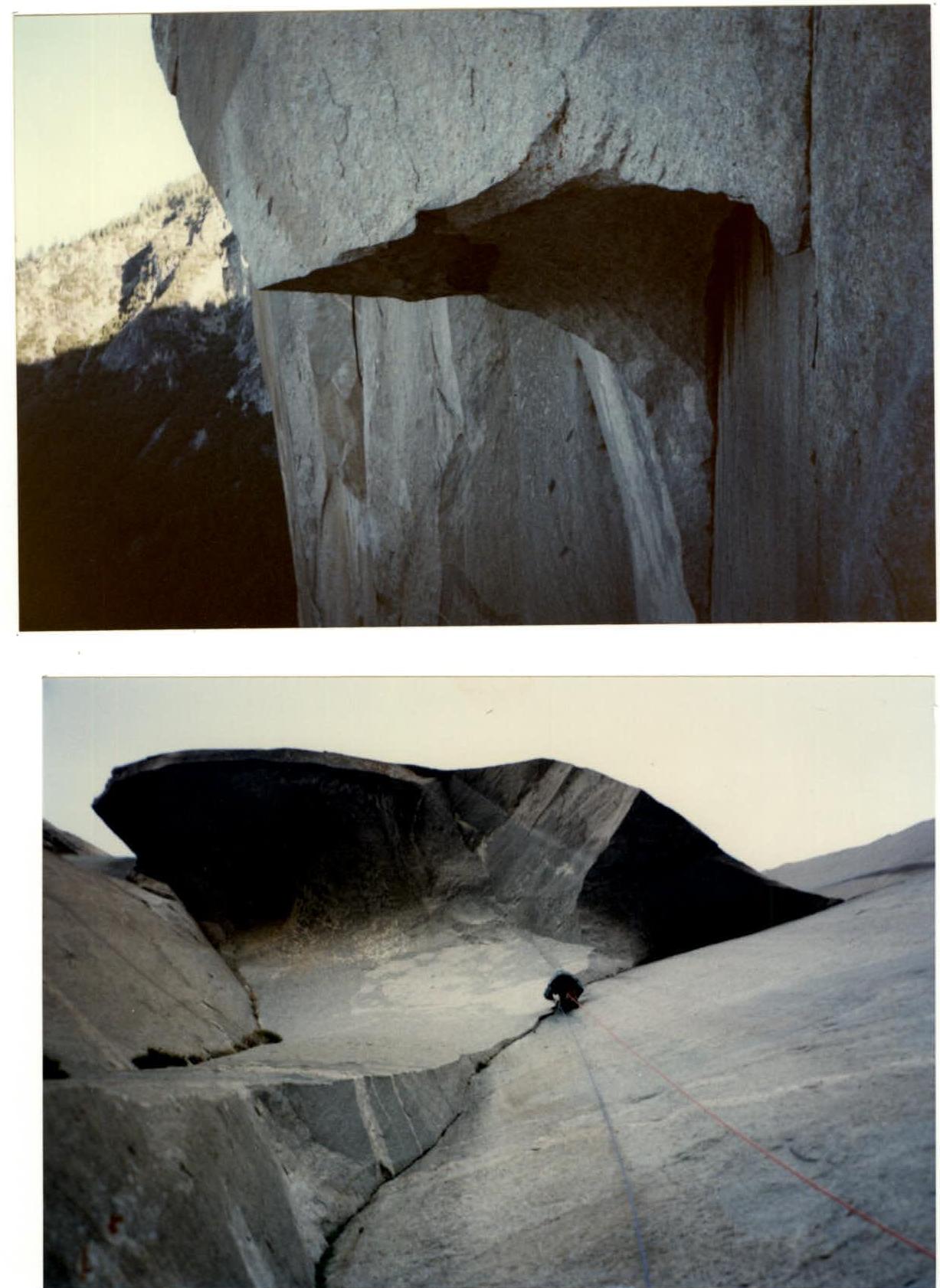
The «Roof». Section 23. Photo illustrations
of the report 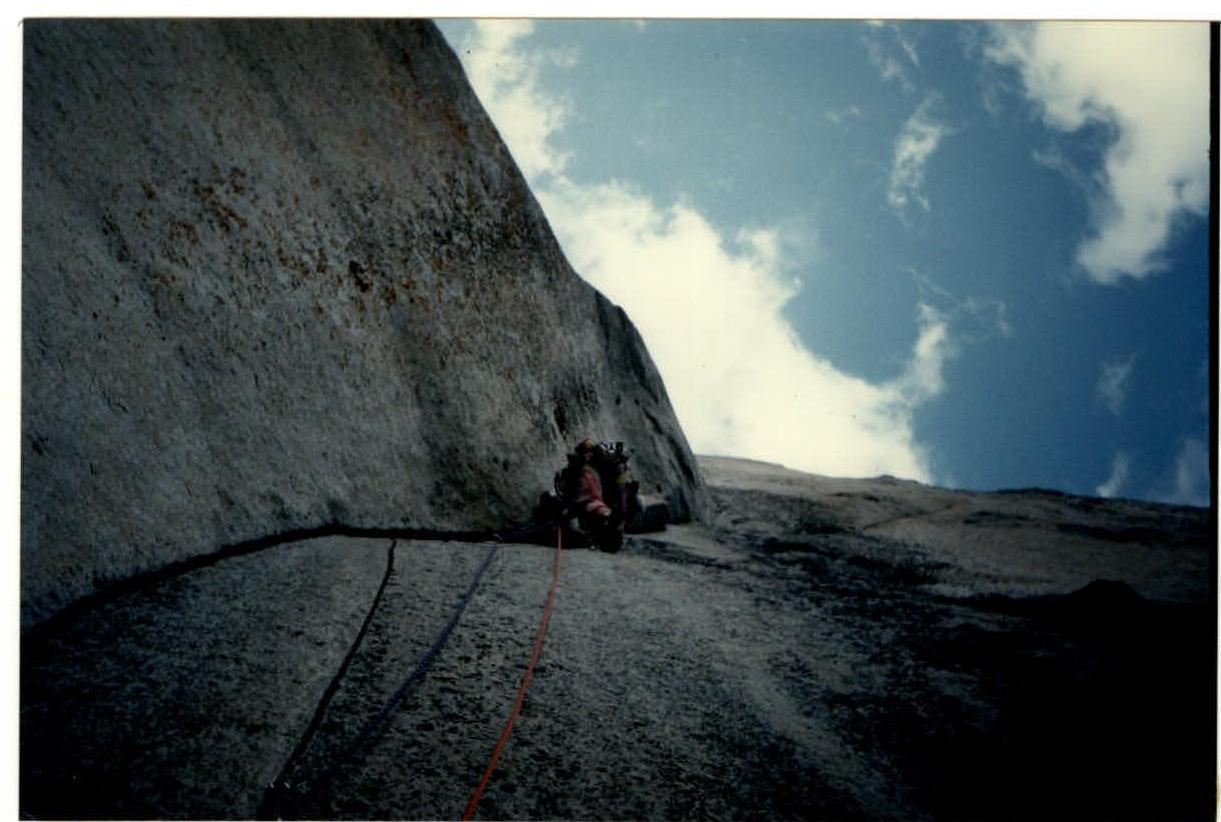
Section 28.

Comments
Sign in to leave a comment