
- Himalayas;
- Nanga Parbat (Diāmīr) 8126 m;
- Cat. difficulty — 6A;
- Route character — combined;
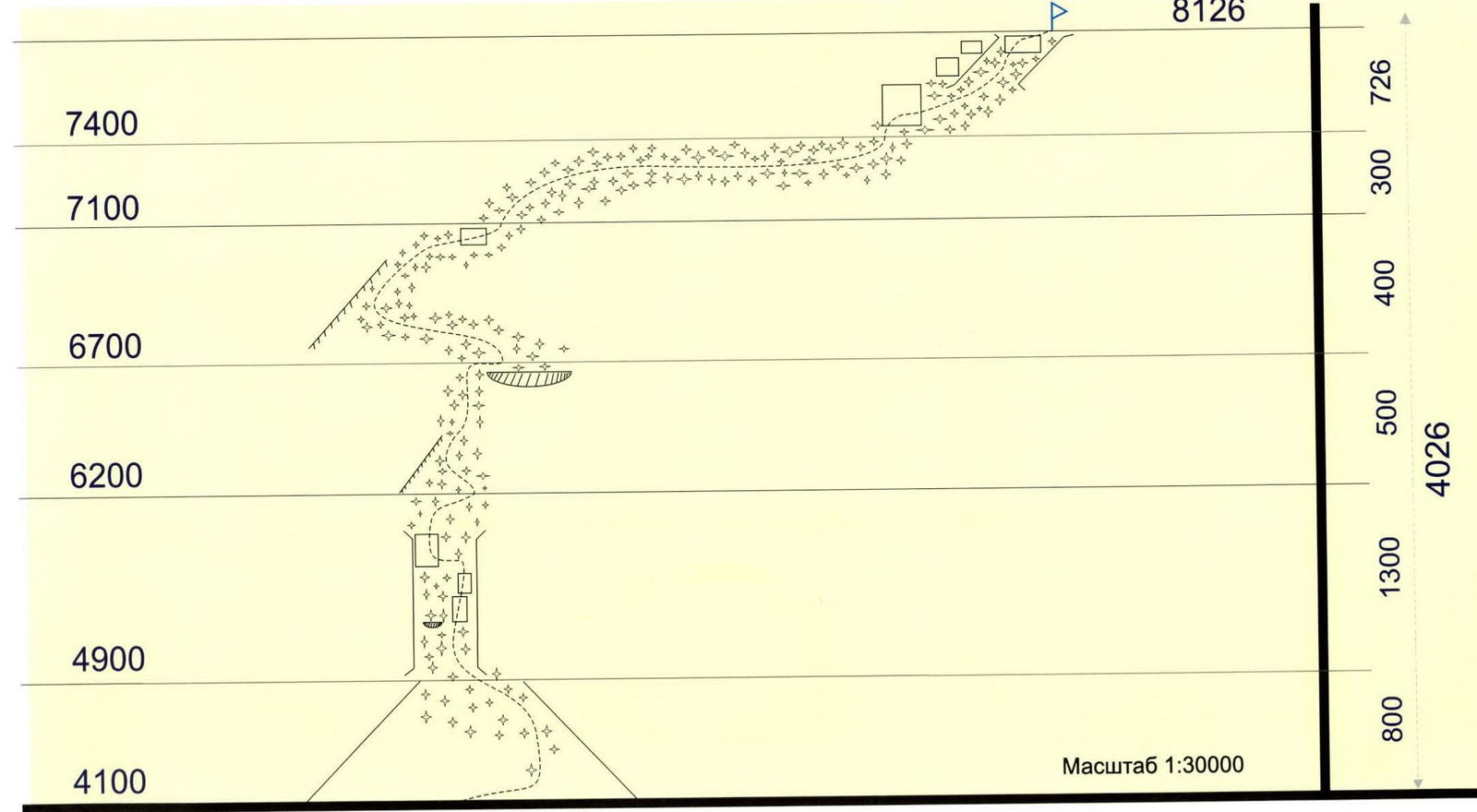
- Route height difference — 4026 m.
Route length — 6500 m.
- Pitons used on the route:
total — 35, left on the route — 35; Pitons used:
| Rock | Bolt | Ice | Chocks | Friend | Firn |
|---|---|---|---|---|---|
| 20/20 | 0/0 | 5/5 | 0/0 | 0/0 | 10/10 |
- Climbing hours of the team on the route: 85
- Team leader: Zhumaev Maksut Saginovich
Team members:
- Molgachev D. — MS
- Chumakov D. — CMS
- Zhumaev M. — CMS
- Lavrov S. — HMC RK
- Litvinov V. — CMS
- Raspopov A. — Candidate for Master of Sports
- Urubko D. — ICMS
- Pivtsov V. — ICMS
- Coach: Ilyinsky Ervand Tikhonovich
- Honored Master of Sports of the USSR, Honored Coach of the USSR and RK.
- First acclimatization exit from BC to the route: June 3, 2003 — 09:30. Descent to BC: June 4, 2003 — 14:30. Second acclimatization exit from BC to the route: June 6, 2003 — 18:00. Descent to BC: June 9, 2003 — 18:30.
- Ascent exit from BC to the route: June 12, 2003 — 16:00.
Summit: June 17, 2003 — 08:45. Descent to BC: June 18, 2003 — 15:00.
Brief description of the ascent area
The Himalayas — a large mountain range. The mountains of the Central Himalayas are located in Nepal, while the eastern mountains extend to the borders of Bhutan and Sikkim. Nanga Parbat — a mountain range in the western Himalayas. It is an isolated mountain region of peaks, which is the main watershed along the Indus and Astore rivers, between the Himalayas and Karakoram.
Nanga Parbat (8125 m) — this giant massif at the western end of the 2000-kilometer arc of the Himalayan ridge is located in the Indus bend in Pakistan. With its numerous ridges, hanging glaciers and rocky bastions, with a 5000-meter wall, it rises more than 1000 m above its neighbors. The mountain makes a very impressive impression. And although the Balti tribe calls it Diāmīr (king of the mountains), it is more known as Nanga Parbat, which in Sanskrit means "naked mountain of horrors".
Heights of the main peaks of Nanga Parbat:
- Nanga Parbat — 8126 m.
- Forepeak — 7910 m.
- North Peak I — 7816 m.
- North Peak II — 7785 m.
- Silver spur — 7597 m.
- Northeast peak — 7530 m.
There are only 14 eight-thousanders on our planet Earth:
In the Himalayas (9):
- Everest — 8848 m.
- Kangchenjunga — 8586 m.
- Lhotse — 8516 m.
- Makalu — 8463 m.
- Cho Oyu — 8201 m.
- Dhaulagiri — 8167 m.
- Manaslu — 8163 m.
- Annapurna — 8091 m.
- Shishapangma — 8046 m.
In the Karakoram mountain system (5):
- K2 (Chogori) — 8611 m.
- Nanga Parbat — 8126 m.
- Broad Peak — 8048 m.
- Gasherbrum II — 8035 m.
- Hidden Peak — 8068 m.
Preparation for the ascent
The CSKA MO RK team undergoes year-round constant training in all types of mountaineering activities. In the spring of 2002, a Kazakhstani expedition to Kangchenjunga (8586 m) (Himalayas) took place, which was successfully completed.
In the summer of 2002, the following events took place:
- expedition to the seven-thousander Lenin Peak (7146 m);
- participation in the International Festival on Belukha Peak (4506 m).
In the autumn of 2002, a Kazakhstani expedition to Shishapangma (8046 m) (Himalayas) took place, which was successfully completed.
When developing plans for 2003, together with the senior coach of CSKA MO RK for mountaineering E.T. Ilyinsky, it was decided to conduct winter training camps at the Tuyuk-Su sports mountaineering base in order to prepare for the spring-autumn seasons.
The autumn-winter period was characterized by intense physical special loads, as well as regular ascents in the Tuyuk-Su area (from 16 to 46).
As part of special training, the national team conducted a course of extreme training in a pressure chamber at the military base of the Air Defense Forces of the Ministry of Defense of RK.
During the preparation for the ascent, a collection and further analysis of materials regarding the object of the ascent was carried out. There was postal correspondence with the following foreign climbers regarding their joining our expedition:
- Simone Moro (Italy);
- Jean-Christophe Lafaille (France);
- Ed Viesturs (USA).
Also, recommendations were received from Mstislav Gorbenko and Roman Boyur on the nature of the route, tactical and climatic conditions of the ascent, and other necessary consultations.
Based on all this, the group selected the necessary equipment and developed a tactic for passing the route.
Conducting the ascent
On May 22, 2003, the first group of the Kazakhstani national mountaineering team flew on an "Air Kazakhstan" plane through Shymkent to Dubai, and then to the administrative capital of Pakistan — Islamabad.
On May 23, we were met at Islamabad International Airport by our old good friends from "Adventure Tours Pakistan", who once again helped us with the organization of the expedition.
May 24 — accommodation in a hotel in Rawalpindi and market research with the aim of further purchasing missing equipment and products.
May 25:
- Acquaintance with our guide, cook and liaison officer;
- Briefing at the Ministry of Tourism of Pakistan;
- Arrival in Pakistan and meeting with the foreign contingent of the Kazakhstani International Expedition.
May 26 — purchase of necessary high-altitude products, equipment for the ascent. Formation of a deposit and sending it to Skardu, intended for use in the second part of the Kazakhstani International Expedition.
On May 27, the second group of the Kazakhstani national mountaineering team flew on a charter flight from Almaty to Karachi, and then to the administrative capital of Pakistan — Islamabad.
May 28 — meeting at Islamabad International Airport of the second group led by head coach Ilyinsky E.T. and departure of the combined team to Chilas.
May 29–31 — trekking along the Diamir gorge to the base camp of Nanga Parbat.
June 1 — base camp opened (4100 m).
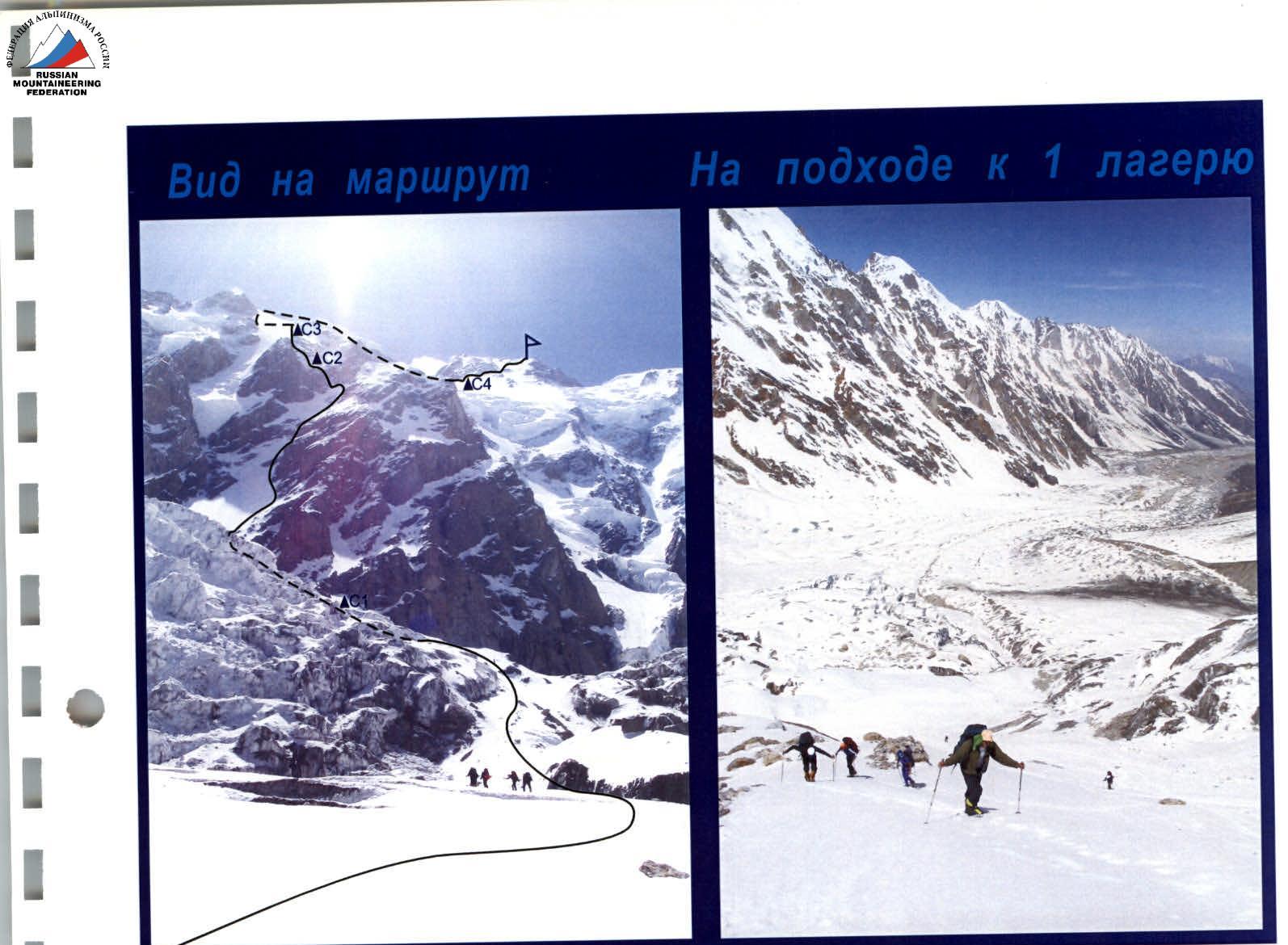
June 3 — the first and second groups set up camp 1 (4700 m).
- The first group remained in camp 1 for further processing of the route.
- The second group equips camp 1 with equipment and products necessary for further work on the mountain.
On June 4, the first group hung 1150 m of ropes towards camp 2 (6200 m) in two days.
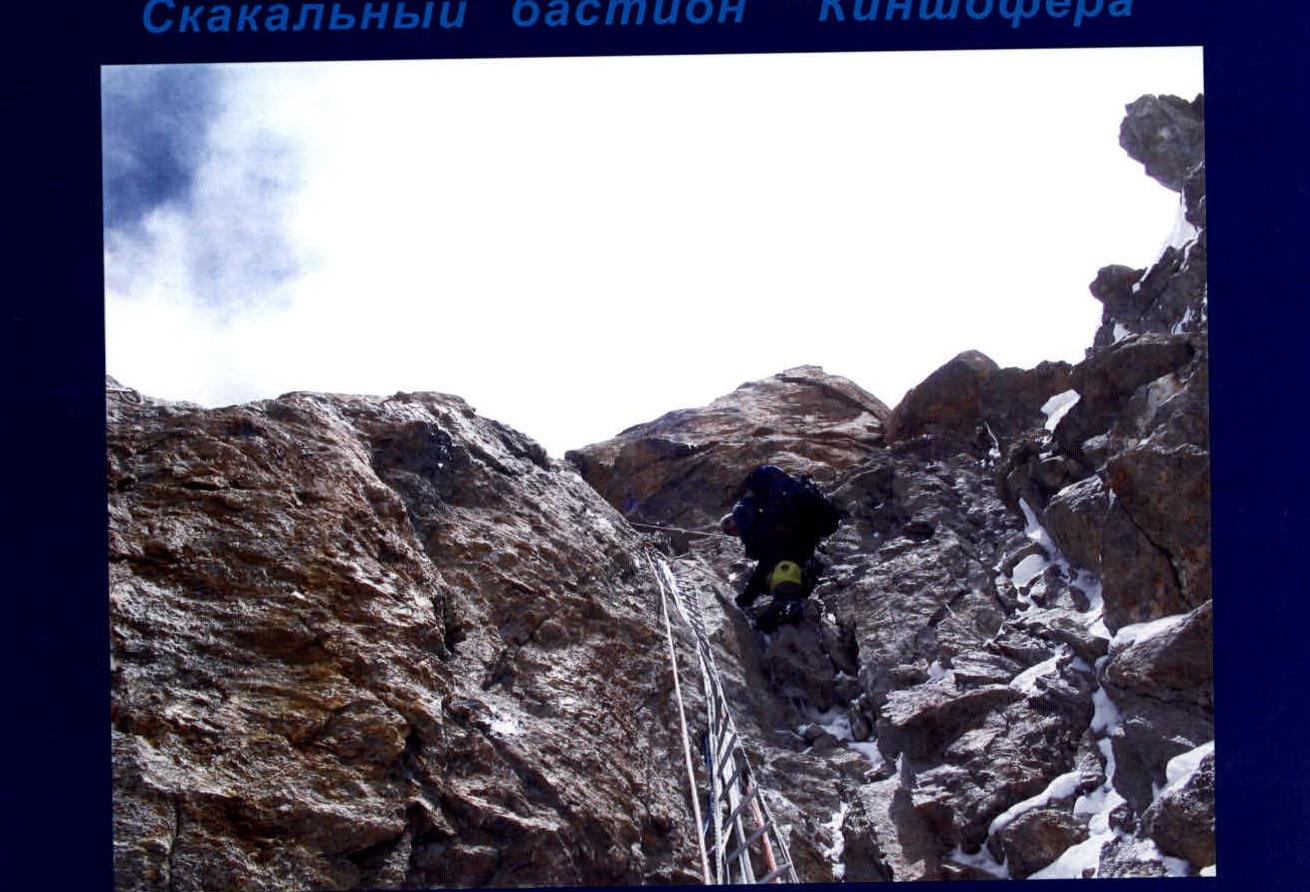
On June 5, the second group processed the route in the upper part of the couloir, up to the rocky bastion "Kinshofer".
Descent to the base camp for rest.
On June 7, the first group established camp 2 at an altitude of 6100 m.
On June 8, in adverse weather conditions, the first group hung 550 m of ropes and established an intermediate camp 3 at an altitude of 6700 m. And further work on the route in such weather conditions was unsafe.
On June 9, the first group descended to the base camp (4100 m) to rest, and the second group following it ascended to the intermediate camp 3 (6700 m).
On June 10, the "three" (Lavrov, Litvinov and Bogomolov) went up to process the route and determine the possibility of transferring camp 3 higher. Having hung the available 250 m of rope and not finding a suitable place for camp 3, they descended to the intermediate camp 3. It became clear that approximately:
- 500–600 m of rope would be required for further processing of the route.
On June 11, the second group descended to the base camp (4100 m) to rest. On the same day, a combined group of climbers (Italy, Spain, USA and France) led by Simone Moro left to further process the route, having 500 m of rope with them.
On June 12, the first group left for the ascent with the plan:
- camp 1
- camp 2
- camp 3
- camp 4
- summit of Nanga Parbat (8126 m)
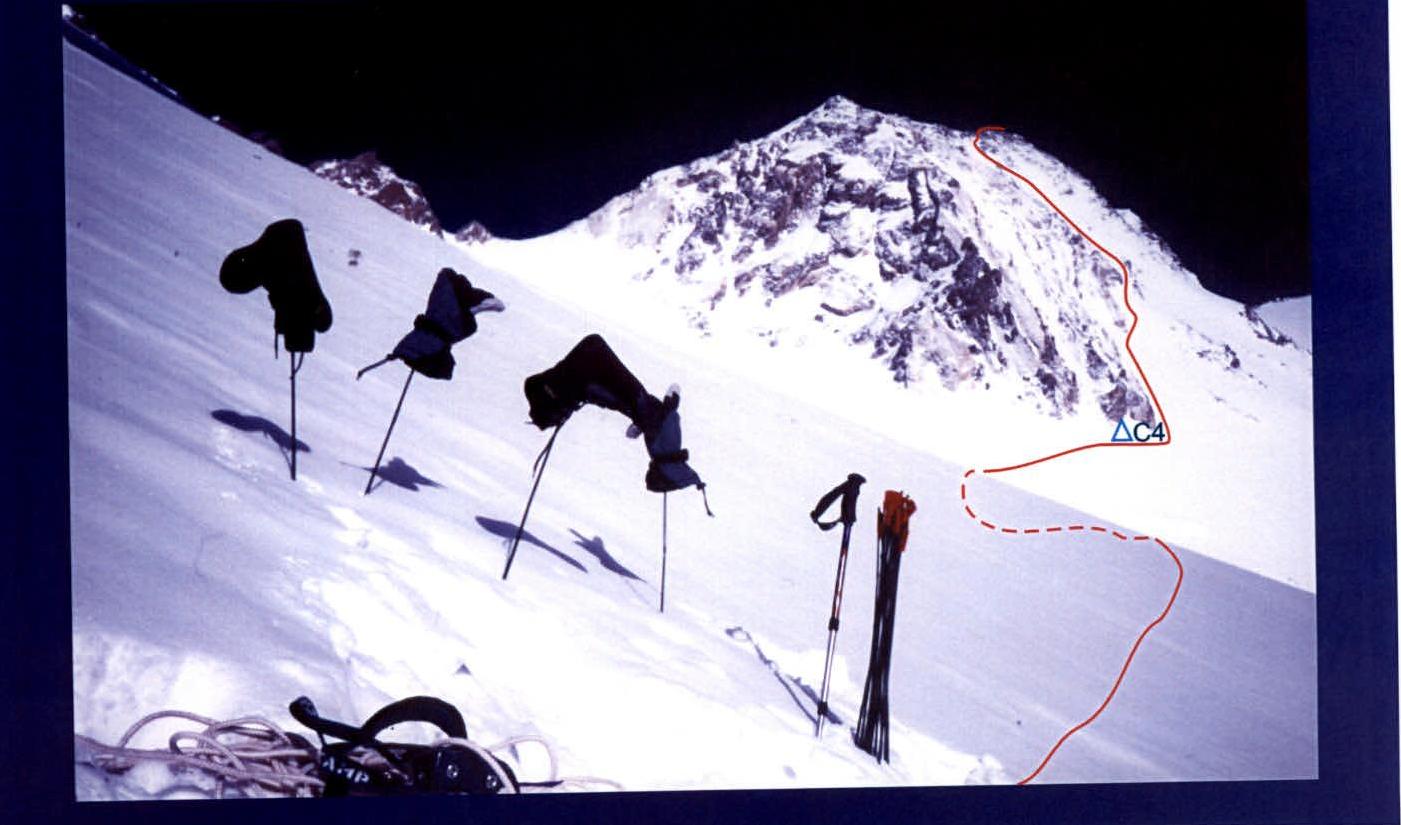
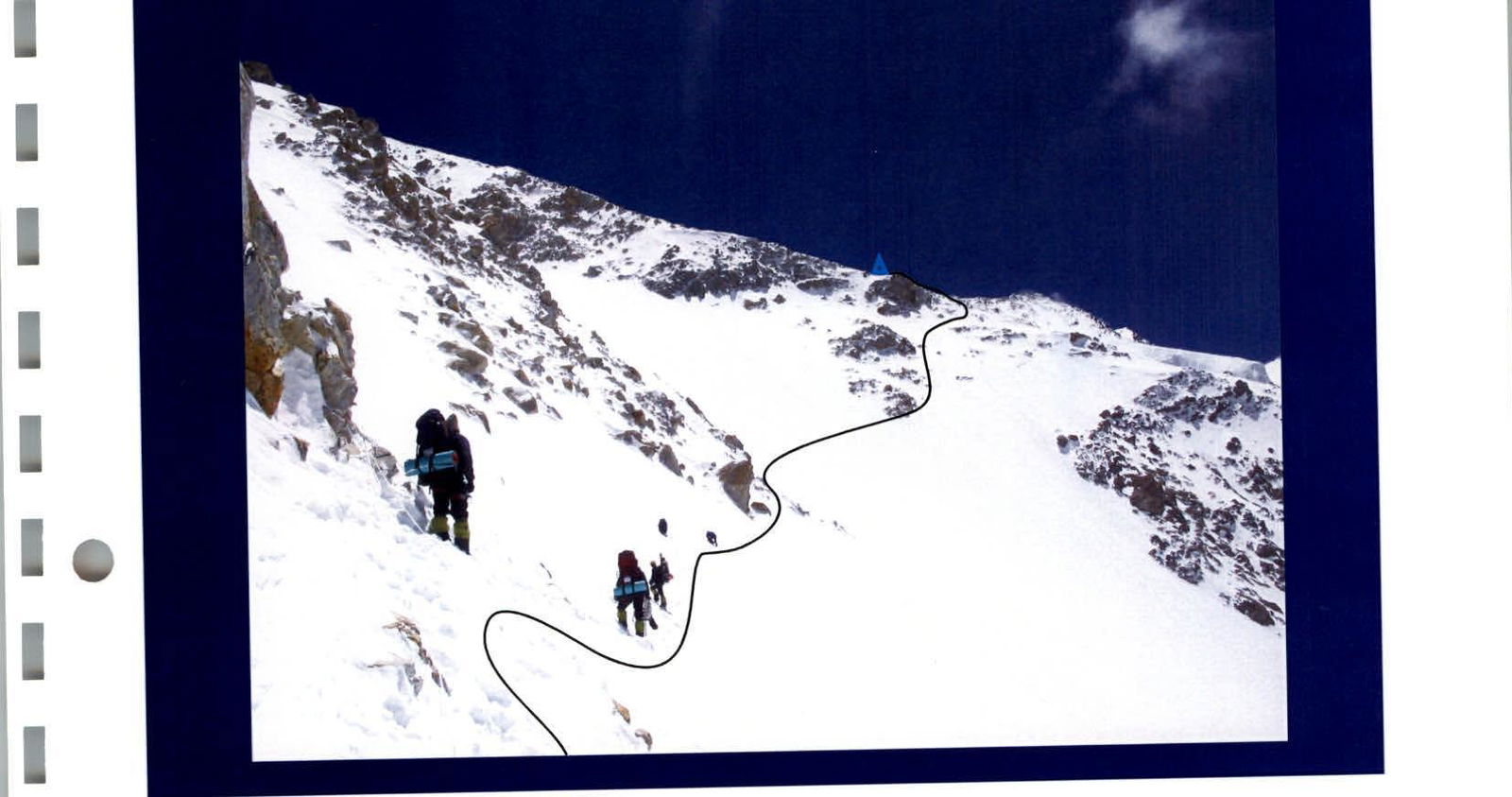
On June 15, an intermediate camp 4 was established at an altitude of 7100 m.
On June 16, a storm camp 4 was established at an altitude of 7400 m.
On June 17, at 10:45, the first group ascended to the summit of Nanga Parbat (8126 m) consisting of: Maksut Zhumaev, Dmitry Chumakov, Vasily Pivtsov and Denis Urubko. For the first time, climbers from Kazakhstan reached the summit of Nanga Parbat (8126 m).
On June 18, at 11:40, the second group ascended to the summit of Nanga Parbat (8126 m) consisting of: Alexei Raspopov, Sergey Lavrov, Vasily Litvinov and Sergey Bogomolov. Unfortunately, due to poor health, Damir Molgachev returned to camp 4 from an altitude of 7850 m.
On June 24, the first part of the expedition ended, and the next part will be ascents to Broad Peak (8048 m) and K2 (8611 m). The evacuation of the base camp began.
During the processing of the route, the team coach Ilyinsky E.T. considered the option of passing the Diamir wall, to the left of the "Kinshofer" route.
After preliminary acclimatization, a duo went out on the new route:
- Simone Moro (Italy);
- Jean-Christophe Lafaille (France).
Having established an intermediate camp 1 at an altitude of 6100 m on the new route, the route then connects with the classic one in camp 2 at an altitude of 6800 m. In camp 2, Ed Viesturs (USA) joined the duo Moro, Lafaille, and they made the further ascent in a trio. But due to poor health, S. Moro refused to ascend from storm camp 4, and the duo Lafaille and Viesturs ascended to the summit of Nanga Parbat on June 21.
Analysis of the ascent
Zhumaev M. — In my opinion, the ascent was accident-free, safe and successful. The key to success was the good physical condition of the participants and the correctly chosen ascent tactic. It should be noted:
- high altitude experience of the entire team;
- coherence in work;
- clear coordination of actions.
For the first time, Dmitry Chumakov took part in a high-altitude expedition, and based on the results of the expedition, he confirmed his high qualifications and proved himself to be a strong, competent and purposeful athlete.
Pivtsov V. — Some tactical shortcomings were compensated by the good preparation of the team. Good equipment is reliable in operation. We were lucky with the weather conditions, there was not much snow, but the wind was very dangerous. Avalanche slopes in the prevailing conditions were overcome competently.
Raspopov A. — Overall, we were lucky with the weather. Although the tactics included days for waiting out bad weather, which we did not have to use. All high-altitude camp deliveries were made normally, there was no shortage of anything, and no unnecessary work was performed. The route was processed up to an altitude of 6700 m, which allowed us to work safely and reliably on the mountain. In general, I believe the ascent was carried out at a good pace and style.
Urubko D. — Nanga Parbat was processed and passed in the style of a swift onslaught, which was due to the high technical and physical readiness of the participants. In general, everything makes us talk about progress. Nevertheless, I would like to note precisely the lack of coordination in actions when a decision to storm was made spontaneously. This, in my opinion, was the reason for the overstrain of Litvinov and Molgachev. I also consider it wrong that the participants of Raspopov's group decided to replace a section of ropes with old ropes, which almost led to a tragedy.
Lavrov S. — The overall and main assessment is given based on the result, it is excellent. A classic scheme of high-altitude ascents in expeditionary style. But there was not enough patience to withstand this tactic to the end. Was it good or bad that camp 4 was set up during the stormy exit? Having an overnight stay at 7000 m or two overnight stays at 6500 m (for the 1st and 2nd groups) — going to storm 8126 m — is it normal or acceptable for a qualified group? In which case are the risks optimized? I do not presume to say. When last year Raspopov and I told Kazbek Valiev about the ascent to Kangchenjunga and mentioned an acclimatization overnight stay at 7800 m in camp 4, he assessed it as not the best solution. Come, set up a camp, process something higher, but do not spend the night. Maybe there is some sense in this. Although on Everest in 1997, Farafonov and I had two difficult overnight stays at 8300 m without oxygen, after which there was a rest, and another storm, this time successful.
I am not digressing — it's all about tactics, about the storm camp on Nanga Parbat. All groups and all participants must adhere to the chosen and agreed-upon tactics, and the decision to change it should be made by a majority, or even by consensus, including the coach. If one group changes the tactical plan during the exit, it should do so in such a way as not to harm the second group or with mutual consent.
In this particular ascent, the margin of safety was sufficient — both physical and psychological, and tactical — with such a change in tactics with the successful ascent of both groups.
Another point:
- Damir should not have stayed in camp 4 for another attempt at the storm after three nights at 7400 m — health does not improve.
- This is not hindsight, it was already clear then.
- We, the second group, did not insist, did not convince, did not take Damir down.
- We were being "kind", it was easier, simpler.
- As if we are giving him another chance to try to ascend, knowing that there are no chances.
- And how he will descend — alone or with foreigners — is unknown.
- But this will be later.
This is the main and significant "slip-up" of our group.
Chumakov D. The ascent to Nanga Parbat was my first member of the Kazakhstan team to ascend an eight-thousander, I would like to express my gratitude to the entire team for their support during the ascent. The ascent itself, I believe, was carried out in an excellent style and normal working mode. Properly planned interaction between the two groups and the organization of high-altitude camps made it possible to acclimatize well and make the ascent at a high pace.
Ilyinsky E. — Some shortcomings in tactical preparation, caused by insufficient experience, were more than compensated by the team's efficiency and good relations in the team. The ascent, in general, was carried out competently, the first part of the expedition was successful. The leadership and ascent are to be counted. All participants — improvement of physical and technical training.
View of the summit from intermediate camp 4 (7100 m)
Tents of camp 1
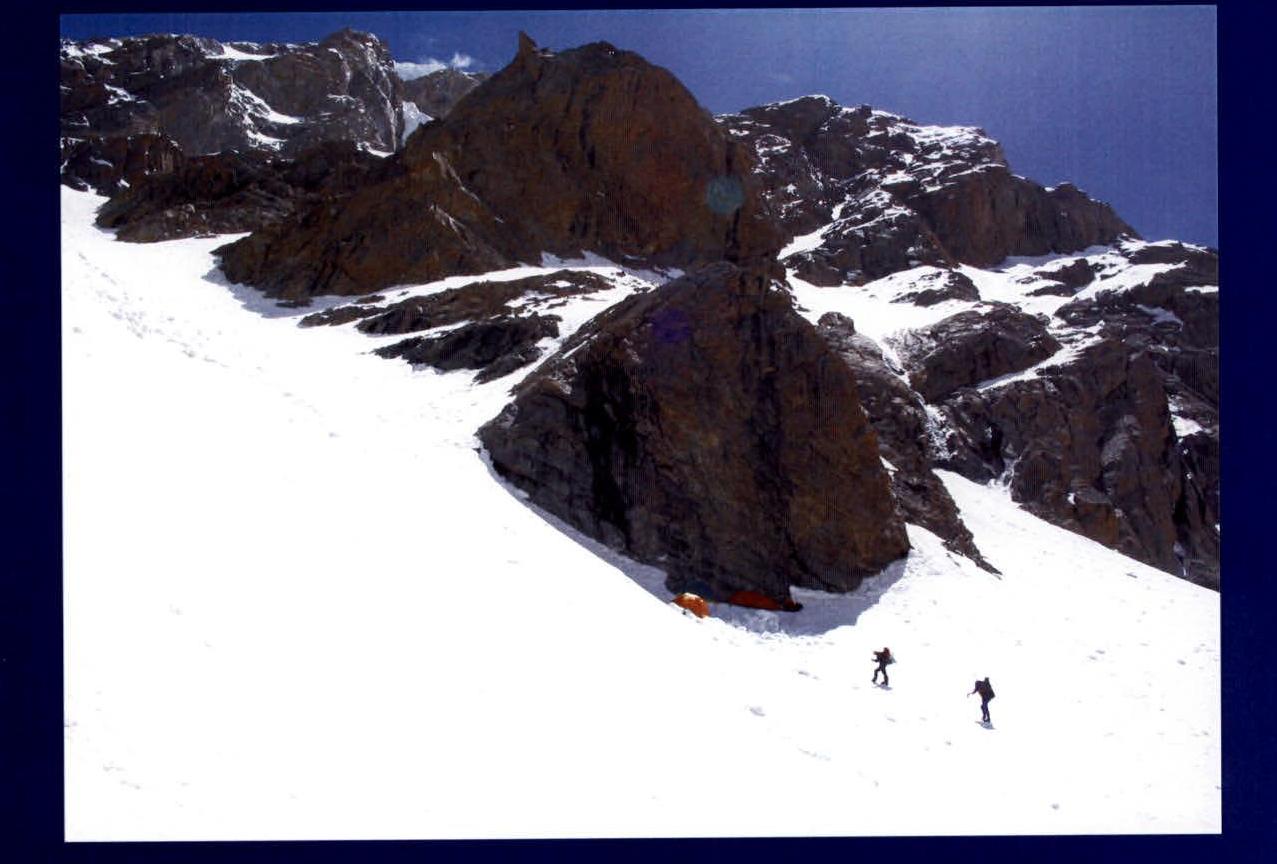
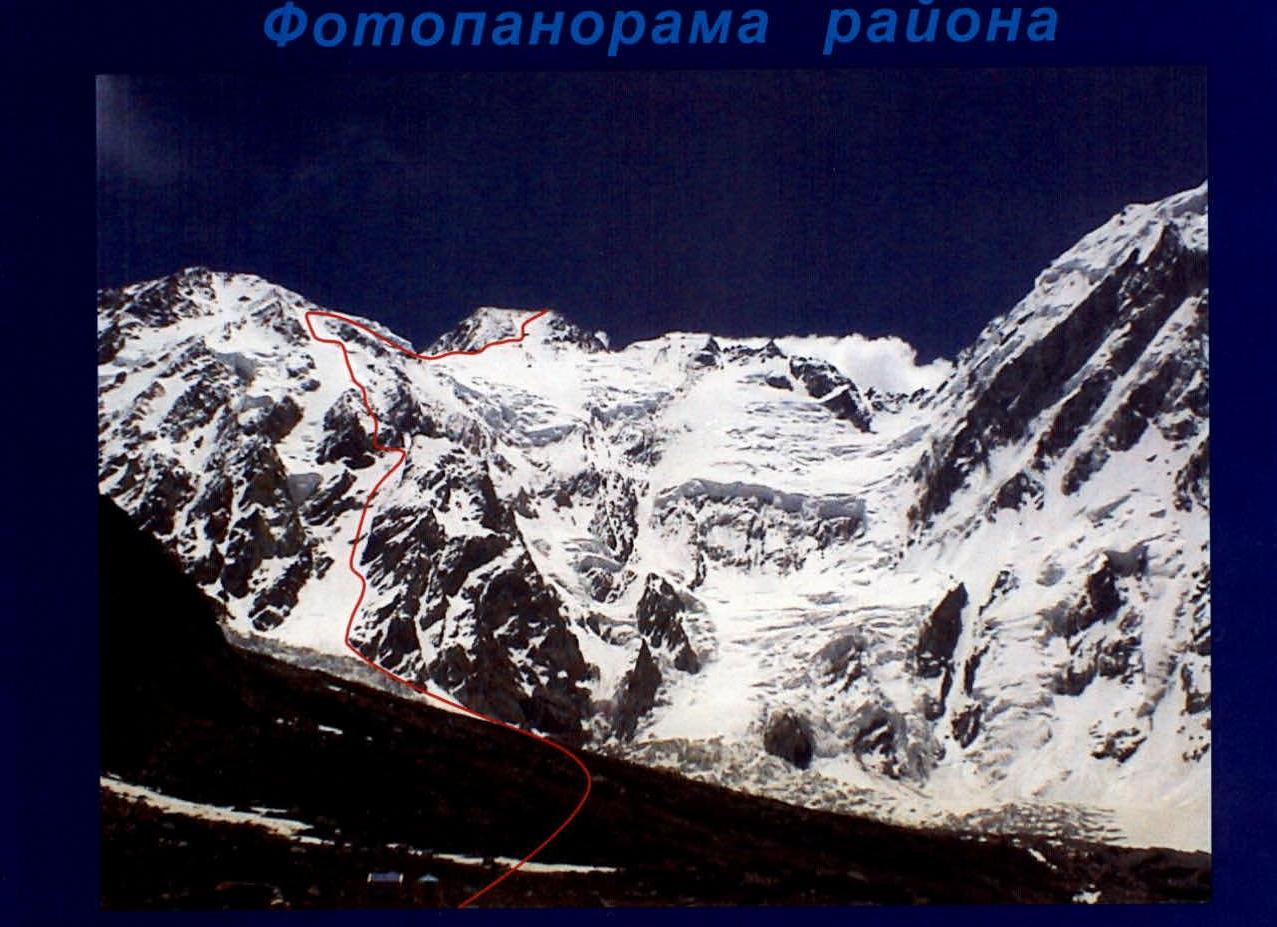
Photo panorama of the area

Rocky bastion "Kinshofer"
On the way to intermediate camp 4 (7100 m)
View from the main summit

Scheme of the route
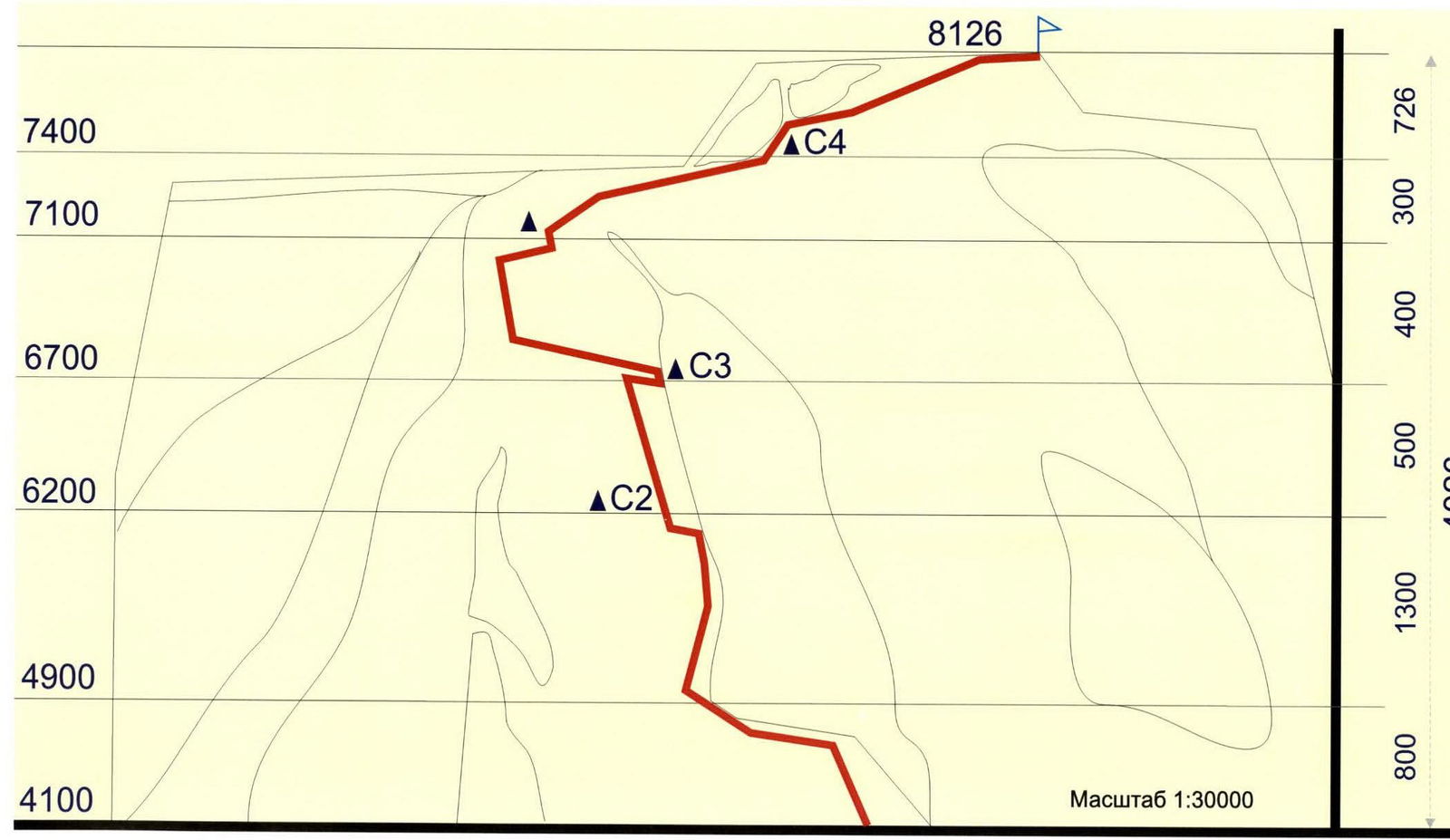
Scale 1:20 000
Route profile

Comments
Sign in to leave a comment