
Ascent Passport
-
High-altitude category.
-
Himalayas, Tibet, China, Rongbuk Glacier.
-
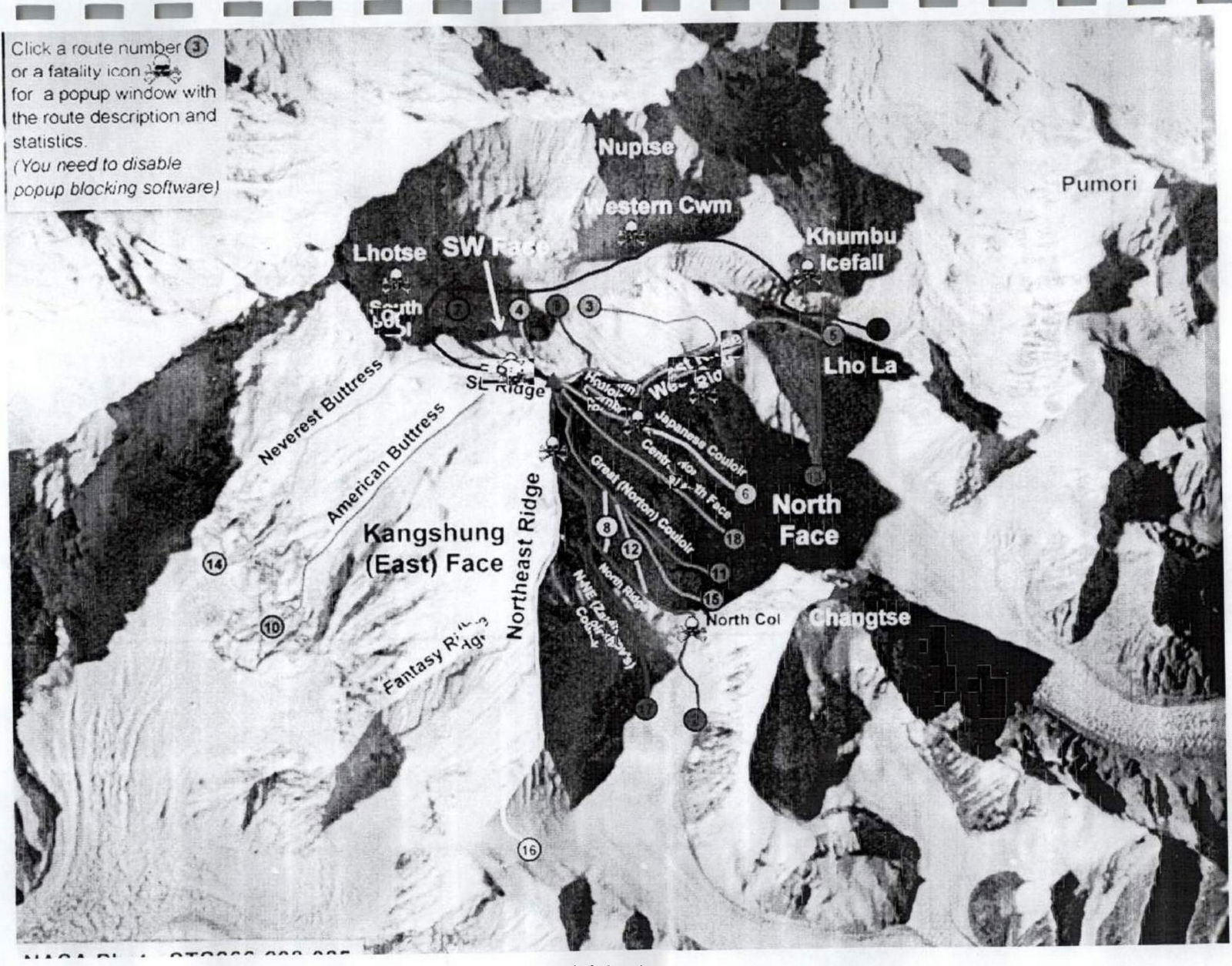
Everest 8848 m via the center of the North Face.
-
Proposed - 6B category of difficulty, first ascent.
-
Route elevation gain: 2648 m. Route length: 5350 m. Section length: Cat. diff. – 740 m, Cat. 1 diff. – 150 m. Average steepness of the main route section – 46°.
-
Hooks left on the route: approximately 140; including pitons: 0. Hooks used on the route: more than 300. Total IT used: 40.
-
Team travel time: 59 days.
-
Expedition leader: Kozlov Viktor (Moscow)
Group leader: Kuznetsov Pyotr (Krasnoyarsk) Participant: Vinogradsky Yevgeny (Yekaterinburg) Participant: Sokolov Gleb (Novosibirsk) Participant: Arkhipov Vladimir (Krasnoyarsk)
Group leader: Yermachek Yuri (Yekaterinburg) Participant: Zhilin Nikolai (Yekaterinburg) Participant: Volodin Viktor (Moscow)
Group leader: Koshelenko Yuri (Rostov-on-Don) Participant: Bobok Viktor (Moscow) Participant: Bukinich Alexey (Sochi)
Group leader: Shabalin Pavel (Kirov) Participant: Tukhvatullin Ilyas (Podolsk) Participant: Mariev Andrey (Togliatti)
-
Senior coach: Cherny Nikolai (Moscow)
Coach: Pyatnitsyn Alexander (Rostov-on-Don)
-
Departure to the route: April 5, 2004.
Summit departure:
- Mariev, Shabalin, Tukhvatullin – May 30, 2004.
- Kuznetsov, Vinogradsky, Sokolov – May 31, 2004.
- Volodin, Bobok – June 1, 2004.
Return to Base Camp: June 2, 2004.
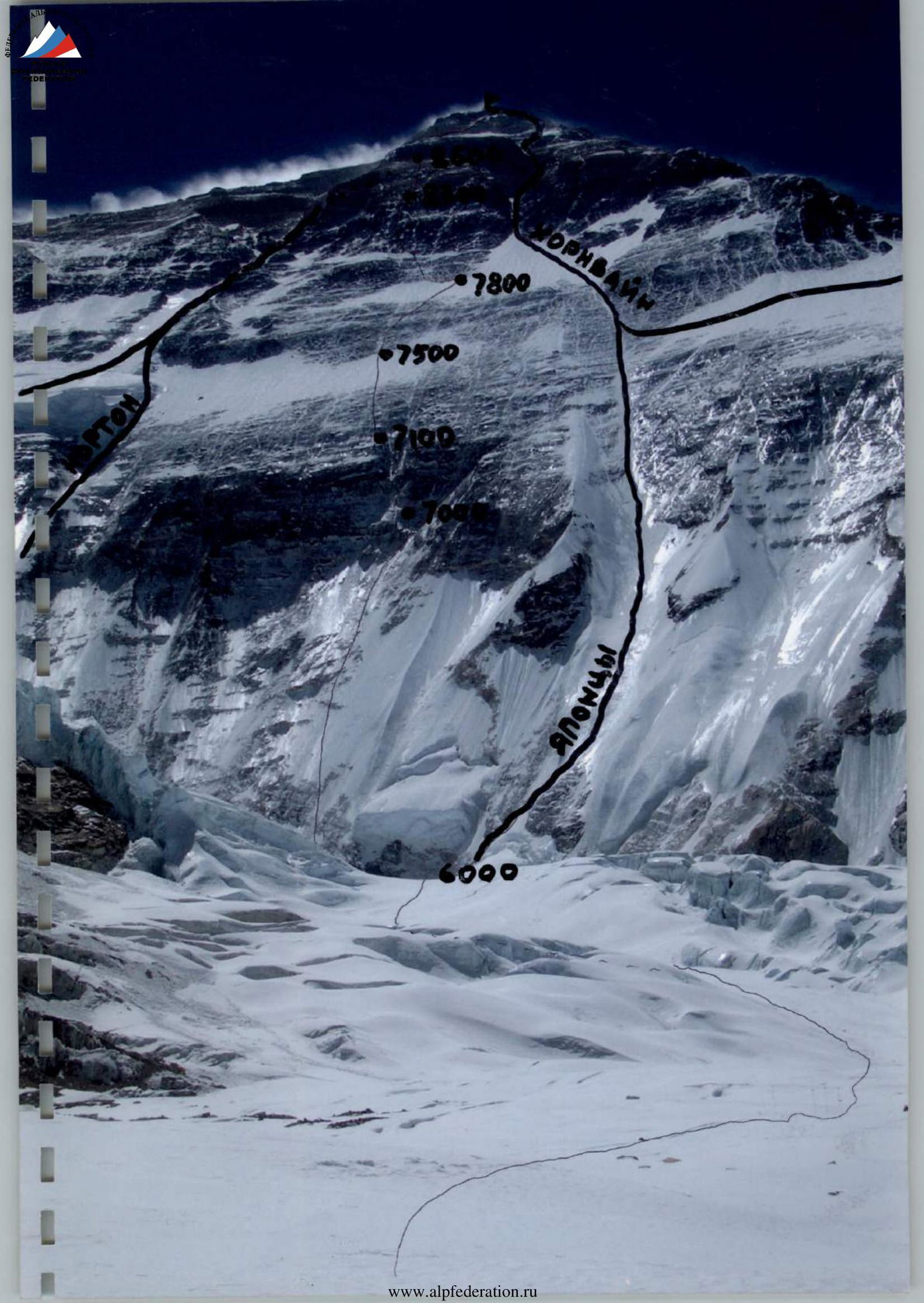 www.alpfederation.ru ↗
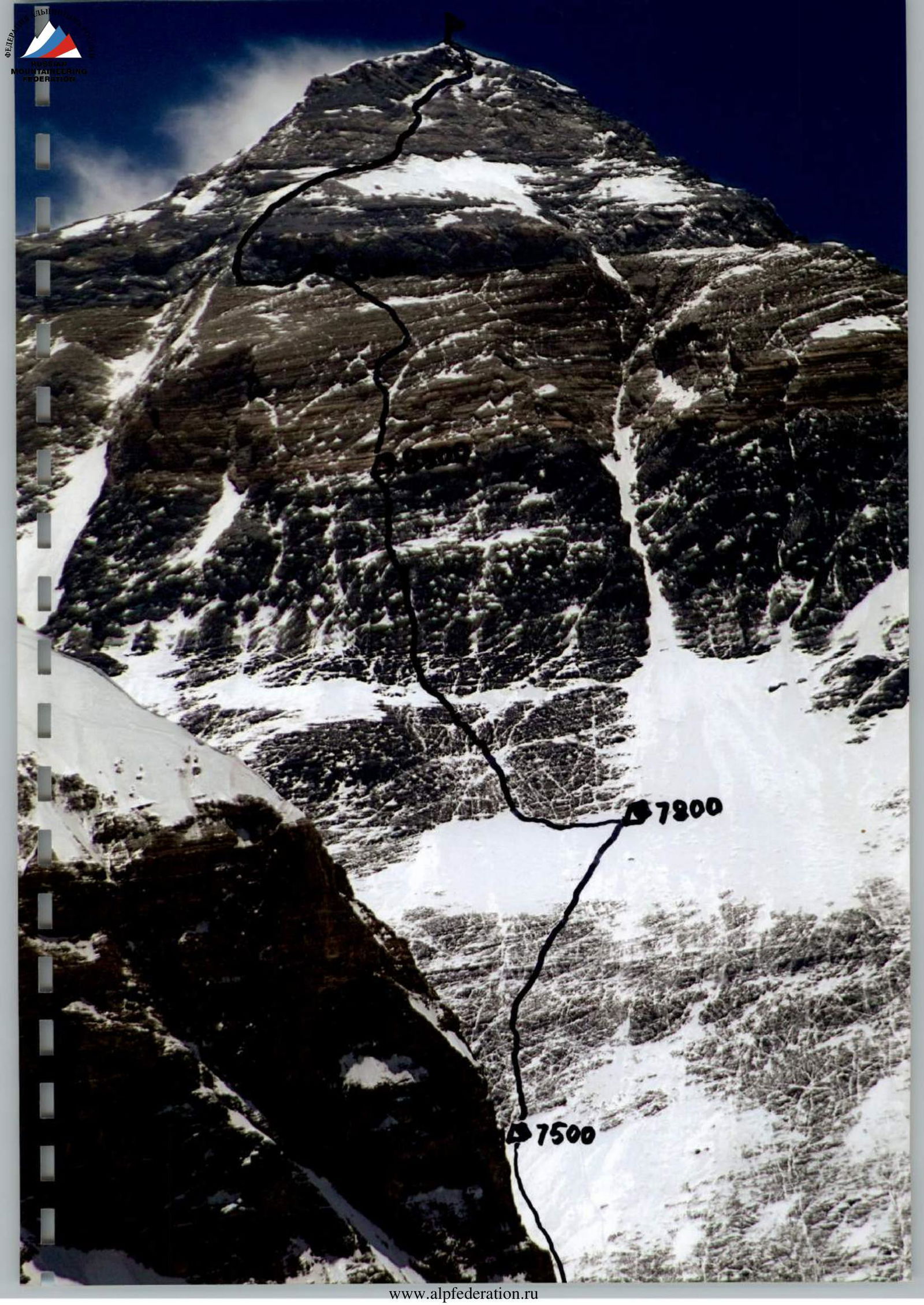 www.alpfederation.ru ↗
Tactical Actions of the Team
April 2 — Koshelenko and Shabalin's groups with Sherpas departed from Base Camp to ABC-1 (Tilman's meadow) 5600 m.
April 3 — Koshelenko and Shabalin's groups with Sherpas departed from ABC-1 to an intermediate ABC at 6000 m. Yermachek and Kuznetsov's groups accompany the first caravan of yaks from Base Camp to ABC-1 (total 50 yaks).
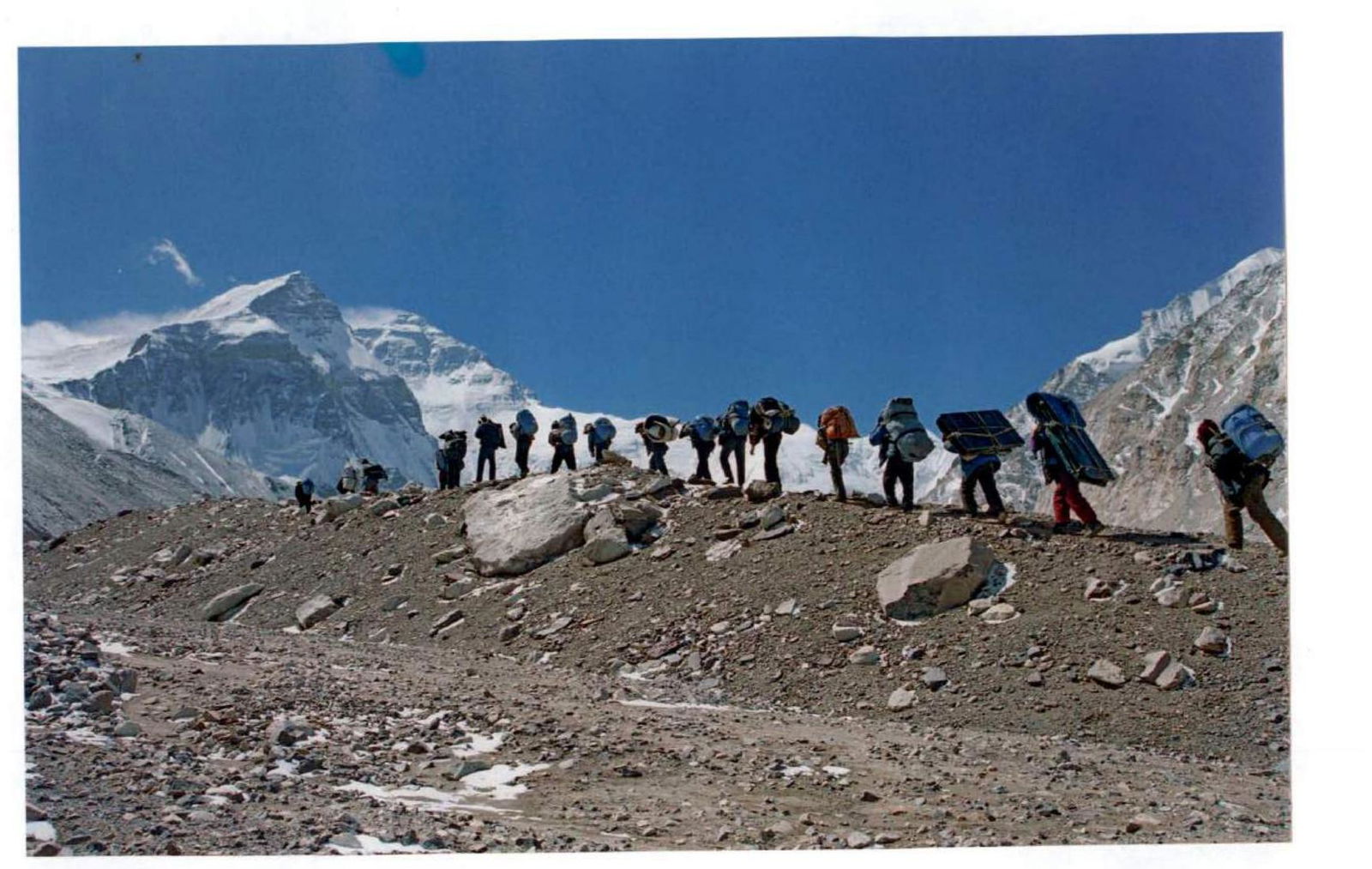
April 4 — Koshelenko and Shabalin's groups with Sherpas laid a road along the glacier to the location of ABC-2 at 6200 m under the wall. 40 minutes from ABC-2 to the start of the route. 50 porters departed from Base Camp to ABC-1.
April 5 — Koshelenko group and Mariev:
- Carried equipment to the start of the route.
- Hung the first rope across the bergschrund.
Shabalin — Tukhvatullin:
- Hung ropes along the glacier for porters.
- Cut steps.
50 porters:
- Carried cargo to the end of the moraine (6000 m).
- Dropped the cargo, refusing to go onto the glacier.
53 yaks arrived at ABC-1 with cargo.
April 6:
- Koshelenko's group hung 3.5 ropes above the bergschrund.
- Shabalin's group set up ABC-2 at 6200 m.
- From ABC-1 to 6000 m, 50 porters carried cargo. Again refused to go further along the glacier.
- Sherpas made cargo trips from 6000 m to 6200 m.
- Kuznetsov's group departed from ABC-1 to 6000 m.
- Tents were set up at the intermediate ABC at 6000 m.
April 7 — Koshelenko's group descended to rest. Shabalin's group hung two ropes. Yermachek's group departed from ABC-1 to 6000 m. Kuznetsov's group with Sherpas made a cargo trip to ABC-2.
April 8 — Shabalin's group hung three ropes and descended due to rockfall. Kuznetsov's group set up ABC-2.
April 9 — Kuznetsov's group worked on the wall. Yermachek with Sherpas made cargo trips from 6000 m to ABC-2. Shabalin's group went down to rest.
April 10 — Kuznetsov's group hung the 15th rope by the end of the day and stored equipment at the end of the fixed ropes. Sherpas continued to shuttle between 6000 m and 6200 m. ABC-2 was equipped with a kitchen, living quarters, and storage tents. Yermachek's group ascended to ABC-2.
April 11 — Yermachek's group worked on the wall, hanging one rope. Kuznetsov's group descended to rest. Sherpas shuttled along with the cook and kitchen assistant.
April 12 — Yermachek's group hung 2 ropes. Zhilin was hit by a rock on his leg. It's necessary to set up the first camp. The location is not yet found.
April 13 — Koshelenko's group and Cherny ascended to ABC-2. Yermachek's group descended to rest.
April 14 — Koshelenko's group departed to the wall and hung another rope.
April 15 — Koshelenko's group lifted cargo to the 16th rope and descended.
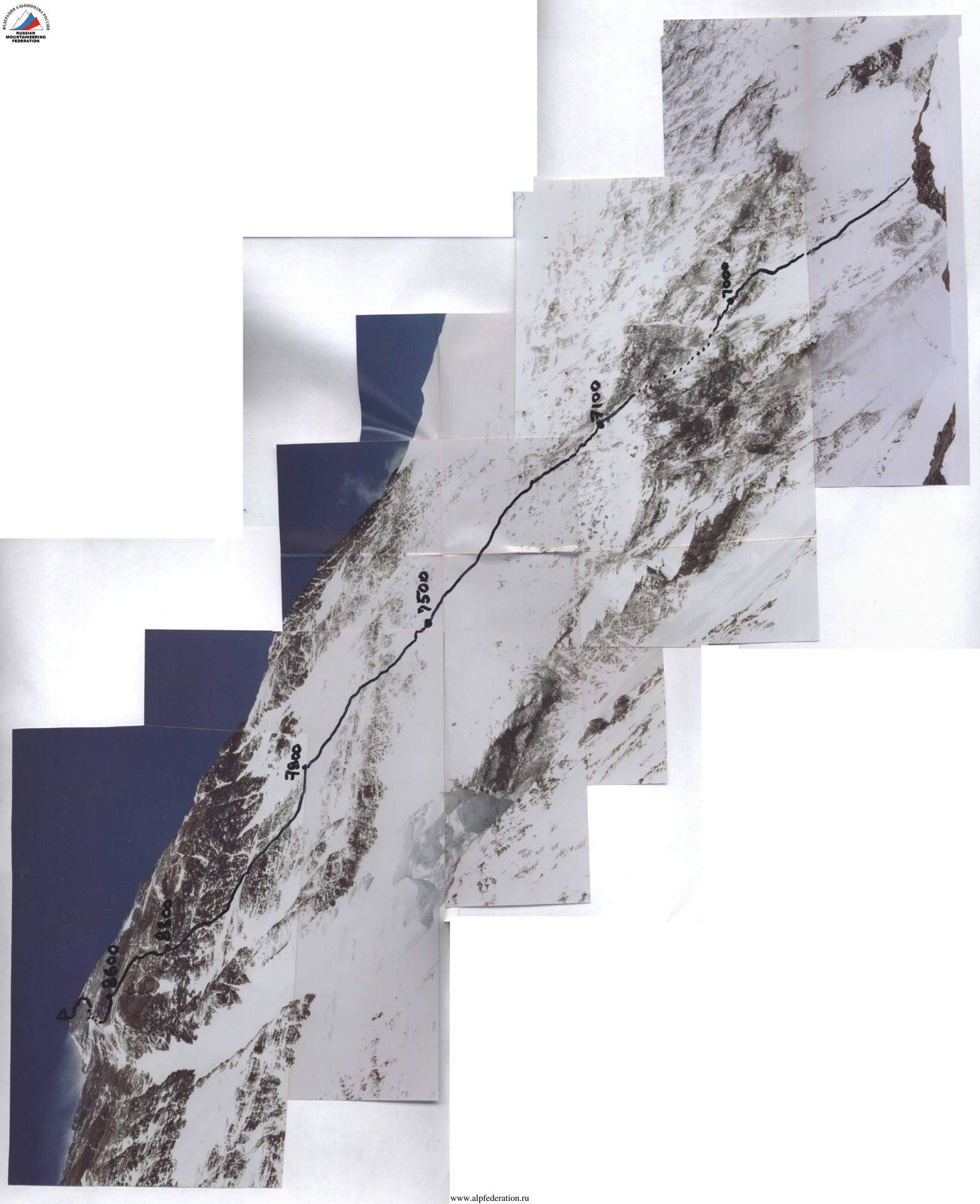
April 16 — Koshelenko's group brought bivouac equipment to the top and passed another 2 ropes. Tukhvatullin and Mariev made a cargo trip to the top of the fixed ropes, and Shabalin trained Sherpas on navigating vertical fixed ropes using two jumars. Bobok was hit by a rock on his knee. The camp location was not found.
April 17 — Shabalin's group ascended and created a site on the 20th rope. Sherpas brought cargo there. The night was spent sitting.
April 18 — Shabalin–Tukhvatullin hung 3 ropes, Mariev collected abandoned equipment below the overnight stay. Sherpas made a cargo trip to the 20th rope. Mariev descended to ABC-2, Shabalin and Tukhvatullin spent two nights at 7000 m. The site for the tent was not found.
April 19 — Shabalin and Tukhvatullin hung 2.5 ropes and descended to ABC-2. Kuznetsov's group departed with cargo. Kuznetsov and Sokolov stayed overnight at 7000 m, Arkhipov — Vinogradsky descended to ABC-2. Sherpas rested.
April 20 — Kuznetsov and Sokolov hung 3 ropes. On the 27th rope, they cleared a snow ridge for a tent site. The location was good and safe. Vinogradsky, Arkhipov, and 3 Sherpas ascended to 7000 m.
April 21 — Vinogradsky and Sokolov transferred cargo from 7000 m to 7100 m — Camp 1 location — and set up a tent. Kuznetsov and Arkhipov worked upwards. Yermachek's group ascended to 7100 m and spent the night. Kuznetsov's group descended to rest. Sherpas rested.
April 22 — Yermachek – Volodin hung fixed ropes above Camp 1. They spent the night at 7100 m. Sherpas rested.
April 23 — Yermachek's group continued to hang fixed ropes. Koshelenko's group departed to ABC-1 with Cherny.
April 24 — Yermachek's group worked on the wall and descended to ABC-2. A total of 8 ropes were hung above Camp 1. Sherpas did not go to the wall due to bad weather. They made cargo trips between 6000 m and 6200 m. Koshelenko's group and Cherny ascended to ABC-2.
April 25 — Koshelenko's group departed at 7:00, Sherpas at 9:30. Sherpas did not ascend above 7000 m, leaving cargo there. Bukinich felt unwell and descended to ABC-2. Koshelenko and Bobok spent the night at Camp 1.
April 26 — Bukinich departed at 7:00 with cargo. Sherpas rested. Koshelenko and Bobok hung 4 ropes. The group spent the night at 7100 m in Camp 1.
April 27 — A strong snowfall occurred at night. Sherpas did not depart to the wall. Koshelenko and Bobok hung another 4 ropes. Bukinich made a cargo trip from 7000 m to 7100 m. Shabalin's group ascended to ABC-2.
April 28 — Shabalin's group departed at 8:00. Sherpas at 9:00. Koshelenko's group made a cargo trip from 7000 m to 7100 m. Bukinich did not reach 7100 m due to jumars slipping. Sherpas brought cargo to 7100 m. Shabalin's group spent the night at Camp 1, Koshelenko and Sherpas descended to ABC-2. The weather was bad with snowfall.
April 29 — Shabalin's group made a cargo trip to the end of the fixed ropes, and Mariev with Tukhvatullin hung 3.5 ropes. Shabalin created a site for a tent.
April 30 — Shabalin's group brought cargo to the end of the fixed ropes and hung a rope towards the site. The weather worsened with snowfall and strong wind, so they did not set up the tent. They spent the night at Camp 1. Sherpas ascended to 7100 m.
May 1 — Hurricane-force winds – 18 m/s. Shabalin's group managed to bring cargo to the end of the rocks on the 7th rope. Higher up on the snowfields, they were simply blown away. Kuznetsov's group could not overcome the bergschrund at the start of the route due to constant avalanches. In ABC-2, the tents for the living quarters and storage were damaged. Kuznetsov's group worked on reinforcing the remaining tents. Shabalin's group descended to Shegar for rest.
May 2 — The wind continues, everyone stayed in place. May 3 — The same situation. May 4 — Kuznetsov's group ascended to 7100 m. The Camp 1 tent was intact. Shabalin's group departed down to Shegar for rest.
May 5 — Kuznetsov's group created a new site for Camp 2 at 7500 m and hung 1 rope upwards.
May 6 — Kuznetsov's group set up the Camp 2 tent and spent the night there. Yermachek's group ascended to ABC-2.
May 7 — Kuznetsov's group hung 6 ropes upwards. Arkhipov descended. Yermachek's group ascended to 7100 m. Koshelenko's group ascended to ABC-2.
May 8 — Kuznetsov's group hung another 5 ropes to 7800 m — the location of Camp 3 — and descended. Koshelenko – Bobok ascended to 7100 m. Bukinich returned from the wall and did not go back. Sherpas went on strike. Yermachek's group ascended from Camp 1 to Camp 2.
May 9 — Yermachek's group created a site for Camp 3 at 7800 m. Koshelenko's group made a cargo trip to 7500 m. Sherpas worked between ABC-2 and 7100 m. Kuznetsov's group departed down to Shegar for rest.
May 10 — Yermachek's group lifted cargo from Camp 2 to 5 ropes higher and descended due to poor health. Koshelenko and Bobok ascended from Camp 2 to Camp 3 with cargo. Bobok used oxygen. They spent the night at 7500 m. Shabibal's group ascended to ABC-2.
May 11 — Koshelenko's group ascended to 7800 m and set up the Camp 3 tent. They spent the night there. Shabalin's group ascended to Camp 1, and Mariev created a site for a second tent. Sherpas ascended there and set up the second tent. They spent the night at Camp 1.
May 12 — Koshelenko and Bobok hung 4 ropes above Camp 3 and descended to ABC-2. Shabalin's group brought cargo to Camp 2 and spent the night there. Sherpas made a trip from 7100 m to 7500 m and descended to 7100 m.
May 13 — Yermachek's and Koshelenko's groups departed to Shegar for rest. Shabalin's group ascended to Camp 3. Mariev and Tukhvatullin hung 4 ropes. They worked without oxygen. Sherpas brought ropes and cylinders from 7100 m to 7800 m.
May 14 — Mariev – Tukhvatullin hung another 4 ropes upwards. Shabalin made a cargo trip to 7500 m. They worked without oxygen. They spent the night with oxygen.
May 15 — Shabalin's group hung 5 ropes to 8300 m. They spent the night at 7800 m. Kuznetsov's group ascended to ABC-2.
May 16 — Kuznetsov's group ascended to Camp 1. Shabalin's group descended to ABC-2. May 17 — Kuznetsov's group ascended from Camp 1 to Camp 2. Sherpas made a trip to 7100 m. They spent the night there.
May 18 — Kuznetsov's group ascended to 7800 m and spent the night there. Sherpas made a cargo trip there.
May 19 — Kuznetsov's group hung 5 ropes upwards. Yermachek's group arrived at ABC-2. Sherpas descended from the wall to rest. Snow started falling in the evening. The weather worsened.
May 20 — Yermachek's group ascended from ABC-2 to the 18th rope and, leaving cargo, descended. Snowfall continued. Sokolov made a trip from 7800 m to 7500 m for oxygen. Kuznetsov and Vinogradsky stored oxygen and a tent at 8300 m, Arkhipov at 8000 m.
May 21 — Kuznetsov's group descended to Camp 1 to rest. Snow continued to fall with no visibility. Volodin made a cargo trip with oxygen to Camp 1. In the evening, he and Arkhipov descended to ABC-2. The weather was bad with snow and a blizzard.
May 22 — The weather did not improve. Kuznetsov's group descended. Shabalin's group ascended to ABC-2.
May 23 — The weather did not improve. Shabalin's group stayed at ABC-2, Kuznetsov's group rested at ABC-1.
May 24 — Shabalin's group with Zhilin departed to Camp 1. They spent the night there. Ropes were covered in snow, requiring digging.
May 25 — Shabalin's group ascended to Camp 2. Strong wind.
May 26 — Shabalin's group ascended to Camp 3. Sherpas refused to depart.
May 27 — Shabalin's group ascended to 8300 m and set up the Camp 4 tent. Kuznetsov's group ascended to Camp 1. Doctor prohibited Arkhipov from making a summit push.
May 28 — Shabalin's group ascended to the end of the fixed ropes, and Mariev hung 2 ropes. They then ascended without being tied to the base of the bastion at 8600 m. They set up the Camp 5 tent. Strong wind. Shabalin hung 30 m on the bastion. The rocks were crumbling and very steep. They conserved oxygen, working without it. They breathed with oxygen only at night. Tukhvatullin slept without oxygen. Kuznetsov's group ascended to Camp 3. Koshelenko's group ascended to Camp 1.
May 29 — Shabalin's group hung another 15 m upwards. It was very cold with strong wind. They lacked equipment. They requested ropes and equipment to be brought up. Sherpas went on strike. Kuznetsov's group carried oxygen and could not bring additional cargo. Kuznetsov's group ascended to Camp 4. Koshelenko descended to ABC-2, and Volodin with Bobok ascended to Camp 3. Mariev conducted a reconnaissance of the further route. Behind a corner to the left, the bastion crosses a snowy couloir. Shabalin's group decided to go there the next day.
May 30 — Shabalin's group departed at 6:00, and at 10:00, Mariev and Shabalin reached the summit. Tukhvatullin ascended at 10:20. By 15:00, they descended via the classic route (North Ridge) to the 8300 m camp. They spent the night there. Kuznetsov's group ascended to Camp 5, and Volodin with Bobok to Camp 4.
May 31 — Shabalin's group descended. Kuznetsov's group ascended to the summit at 9:00 and began descending immediately. Bypassing the camp at 8300 m on the North Col (7000 m), they caught up with Shabalin's group and descended together to Abramov's ABC in the evening. Volodin – Bobok ascended to Camp 5.
June 1 — Volodin – Bobok ascended to the summit at 9:00 and descended to Abramov's ABC. Volodin continued descending and arrived at Base Camp in the evening. Bobok spent the night at Abramov's ABC with Yermachek and Bukinich. Shabalin's and Kuznetsov's groups descended to Base Camp.
June 2 — Bobok, Yermachek, and Bukinich returned to Base Camp.
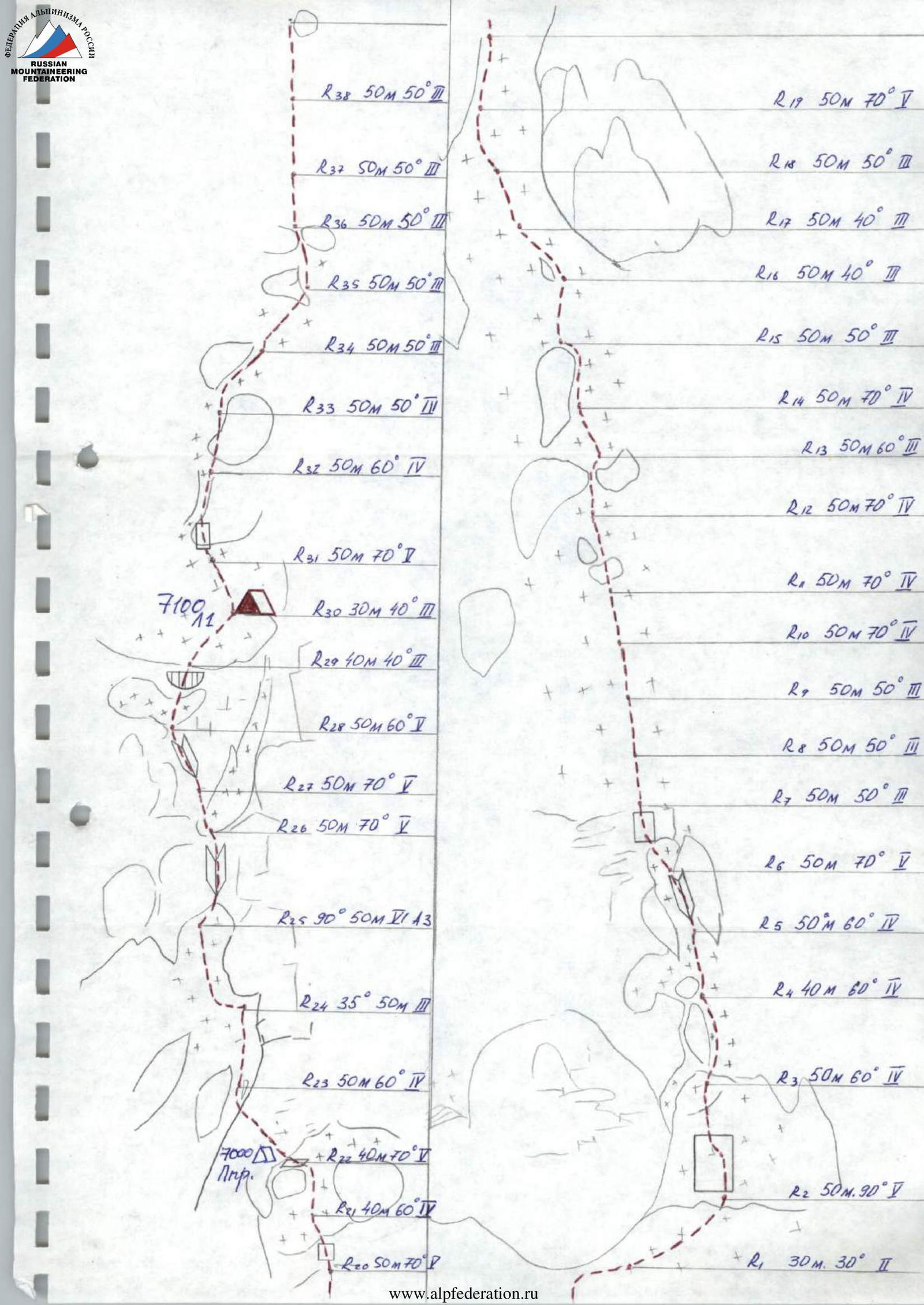
| R83 | 50 m 60° 4 | R62 | 50 m 70° 4 |
|---|---|---|---|
| R82 | 50 m 60° 4 | R61 | 50 m 70° 4 |
| R81 | 50 m 60° 4 | R60 | 50 m 60° 3 |
| R80 | 50 m 40° 3 | R59 | 50 m 50° 3 |
| R79 | 50 m 85° 6 | R58 | 50 m 50° 3 |
| R78 | 50 m 80° 2 | R57 | 50 m 50° 3 |
| R77 | 50 m 70° 2 | R56 | 50 m 50° 3 |
| R76 | 50 m 70° 2 | R55 | 50 m 50° 3 |
| R75 | 50 m 70° 2 | R54 | 50 m 45° 3 |
| R74 | 50 m 80° 2 | R53 | 50 m 45° 3 |
| R73 | 50 m 60° 2 | R52 | 50 m 45° 3 |
| R72 | 50 m 60° 2 | R51 | 50 m 50° 3 |
| R71 | 50 m 60° 2 | R50 | 50 m 70° 4 |
| R70 | 50 m 85° 2 | R49 | 50 m 70° 4 |
| R69 | 50 m 50° 4 | R48 | 50 m 70° 4 |
| R68 | 50 m 80° 2 | R47 | 50 m 70° 4 |
| R67 | 50 m 75° 2 | R46 | 50 m 60° 4 |
| R66 | 50 m 70° 4 | R45 | 50 m 60° 4 |
| R65 | 50 m 60° 4 | R44 | 50 m 60° 4 |
| R64 | 50 m 50° 3 | R43 | 50 m 60° 4 |
| R63 | 50 m 50° 3 | R42 | 50 m 50° 3 |
| R41 | 50 m 50° 3 | R40 | 50 m 50° 3 |
| R39 | 50 m 50° 3 |
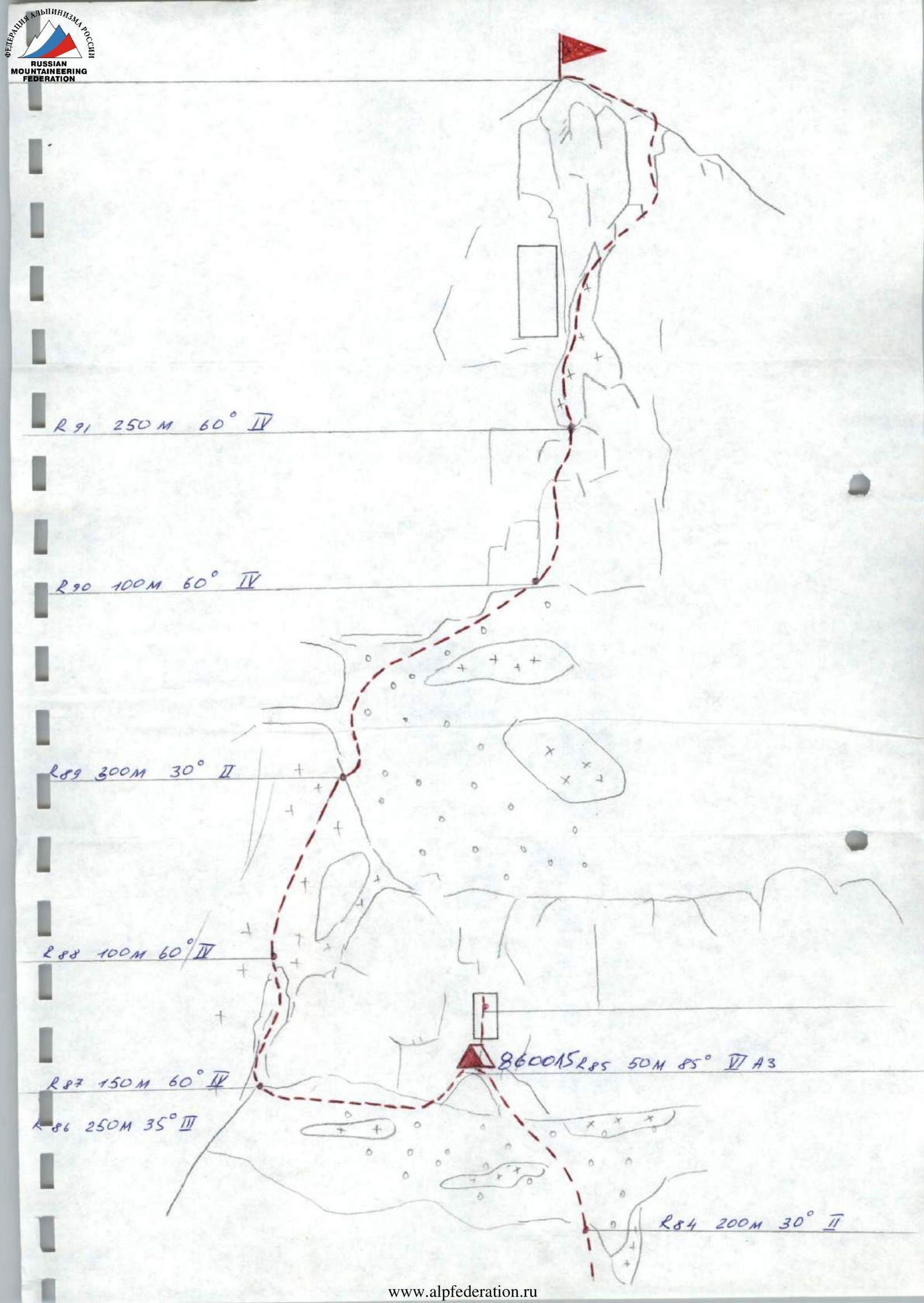
| R38 | 50 m 50° 3 | R19 | 50 m 70° 2 |
|---|---|---|---|
| R37 | 50 m 50° 3 | R18 | 50 m 50° 3 |
| R36 | 50 m 50° 3 | R17 | 50 m 40° 3 |
| R35 | 50 m 50° 3 | R16 | 50 m 40° 3 |
| R34 | 50 m 50° 3 | R15 | 50 m 50° 3 |
| R33 | 50 m 50° 4 | R14 | 50 m 70° 4 |
| R32 | 50 m 60° 4 | R13 | 50 m 60° 3 |
| R31 | 50 m 70° 4 | R12 | 50 m 70° 4 |
| R30 | 30 m 40° 3 | R11 | 50 m 70° 4 |
| R29 | 40 m 40° 3 | R10 | 50 m 70° 4 |
| R28 | 50 m 60° 2 | R9 | 50 m 50° 3 |
| R27 | 50 m 70° 2 | R8 | 50 m 50° 3 |
| R26 | 50 m 70° 2 | R7 | 50 m 50° 3 |
| R25 | 90° 50 m 2 A3 | R6 | 50 m 70° 2 |
| R24 | 35° 50 m 3 | R5 | 50 m 60° 3 |
| R23 | 50 m 60° 4 | R4 | 40 m 60° 4 |
| R22 | 40 m 70° 4 | R3 | 50 m 60° 4 |
| R21 | 40 m 60° 4 | R2 | 50 m 90° 2 |
| R20 | 50 m 70° 2 | R1 | 30 m 30° 2 |

After the team's press conference on June 10 in Moscow, the expedition's senior coach, Nikolai Cherny, answered several questions from Russianclimb:
- "There's an opinion that Russian mountaineering is experiencing a crisis, despite obvious successes - the average age of participants in serious Himalayan expeditions, as we can see, is over 40 years, they are all graduates of the Soviet school, and there are no new ones. What can you say to this?"
"It is indeed true. But, to be honest, you can't climb Everest before you're 35. Because you need to learn to endure - that's the main thing at high altitude. In 5 years, I'm sure there will be people who have grown up under Russian mountaineering and can do good routes."
- "Where will they come from? Who trains them to climb serious routes, not just the classics?"
"What is high-altitude mountaineering? The ability to climb at high altitudes is a gift from God. Like Pavel Shabalin - he has a very high tolerance! - who teaches him? - no one. In mountaineering, the concept of a coach is conditional... My task as a coach was not to interfere with the team: to ensure participants weren't bothered by Sherpas, etc., that everything was provided - ropes, equipment in camps, and that they didn't hurt each other, because they are all big masters, as you understand, with a lot of pride... and high-altitude feats are generally a gift from God. I know many people in Moscow who train, ski, win everything, but don't climb high mountains. Sherpas don't have it from God - 20 generations live at 3000-4000 m, they just have different hemoglobin. But here it's either "yes" or "no", and you can't change it."
- "In the 80s, there were enough people for the Union championships, there was significant competition, and now there's a problem assembling an expedition of a good level?"
"There were more masters, but actually, no one knew how many truly strong climbers there were back then."
- "How did you manage to persuade the Sherpas to work at high altitude? You had problems, didn't you?"
We were lucky…
- "Did you pay them a lot extra?"
"Not just that. The Sherpas were quite qualified. Their leader was Nawang - he was our sirdar in 2001 on Lhotse. In this expedition, he played both a positive and a negative role. He's quite ambitious and capricious. When they refused to go in bad weather - the other two might have agreed to work, but he said - no, we're not going. This was towards the end of the expedition."
- "How high did they climb?"
"To 7800 m - on fixed ropes with two jumars. They were using two jumars for the first time in their lives!"
-
"Did you teach them to work with two jumars?" "Pavel Shabalin conducted a training session with them - they revered him like a guru. Legends were circulating about our Sherpas - about how they had to climb the wall on vertical fixed ropes... And they earned good money. There was a bonus, but Kozlov had to increase the payment - in the end, they earned three and a half thousand dollars among the three of them."
-
"…when Kozlov called and said that the second overnight stay was at 8600 m, I was honestly very scared..."
"Well, Tukhvatullin is generally a phenomenon in terms of high-altitude climbing! He even slept without oxygen."
- "…and Shabalin was climbing for the first time... and immediately slept at 8600 m, and they had 4 nights above 8000 m. And what about Andrey Mariev?"
"Mariev is a healthy guy - he was the first to tread the whole way. Their trio passed the chimney in the lower part, a very dangerous place..."
- "Were those two ropes above 8600 m steep?"
"The main issue wasn't that they were steep - but the rocks were so bad there - unreliable... and the difficulty was that they didn't expect to encounter such terrain at this altitude, thought they would pass quickly, so they didn't take enough hooks and slings, and the tent was thin - just in case. And oxygen was in short supply."
- "…and what time did they depart from the last camp for the summit push?"
"At 7:00 AM. And at 10:00 AM, they were on the summit. It was tough for them, of course, after the overnight stay."
Pavel Shabalin (Kirov). Website: www.russianclimb.com ↗
Ascent via the center of the North Face of Everest.
Initially, it was planned to lay the route as close to the direttissima as possible, but due to several objective reasons, "it turned out as it did." Here's an explanation according to the scheme:
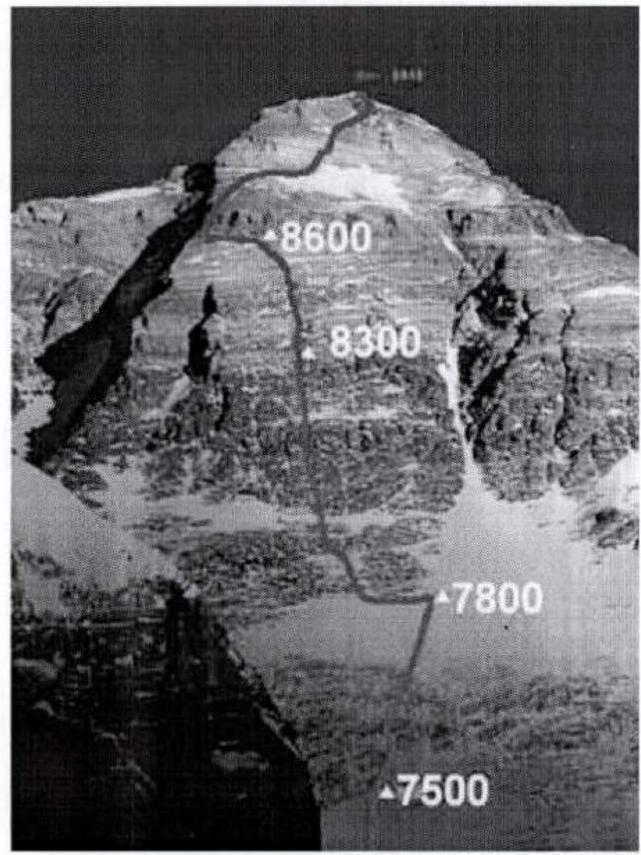
- Up to the second camp at 7500 m, the route looks like a straight line, or almost straight with minor zigzags.
The photo on the right is from www.stolby.ru ↗
-
Above 7500 m (starting from the 5th rope), the route deviates to the right for 10 ropes from the vertical line by 100 m, as seen in the photo. The reason is that vertically upwards, there are rock slabs covered in snow, making it difficult to organize belays (anchors) and passage. So, the "Sibir" group deviated two ropes to the right and reached the site of the future Camp 3 at 7800 m.
-
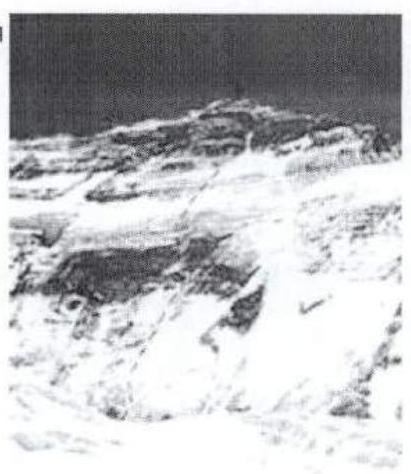
The "Don" group corrected the route by traversing left for two ropes (100 m) and hanging another 2 ropes up the rock. Thus, our group had to work upwards from this point along one of the two not clearly expressed central couloirs (there are four on the bastion), as the extreme couloirs (clearly expressed) lead too far from the direttissima as we assumed, and at around 8400 m, they run into problematic rock walls.
-
Having hung 14 ropes to the border of the gray and yellow belts, our group rested, and the next section of the bastion (5 ropes) was worked on by "Sibir". It was assumed there was an inclined ledge leading from left to right upwards, but the guys encountered deep snow and preferred to hang ropes on the rock. The yellow belt turned out to be less destroyed, and although climbing there is very difficult, the guys managed to hang over 200 m in a day.
-
The weather allowed them to bring oxygen, a tent, equipment, and gas to 8300 m (Camp 4 location), after which it catastrophically worsened for a week. After sitting on the wall for three more days, they were forced to descend to avoid wasting gas, food, and oxygen.
-
Approaching the end of the ropes hung by "Sibir", our trio hung another two ropes, after which the leading Andrey Mariev reached a flattening. That is, at a height of about 8450 m, our group broke away from the fixed ropes and, with a very strong wind, approached the upper rock belt at 8600 m to the supposed passage. A snowfield indented into a rock crevice, and it seemed possible to set up Camp 5 there, which we did.
-
To be honest, I was surprised by the steepness of the last rock belt, its extent, and the state of the terrain. From below, it didn't look so scary. The problem was that we again encountered an almost vertical "crumbling" rock face with only a minimum of equipment and three 50-m ropes made of thin cord. That is, we had to climb and hang 100 m of rock with a category of difficulty 6A (absolutely unreliable belay points over 20–25 m).
-
At this point (8300 m), we had two oxygen cylinders per person (3 and 4 liters), and we had to work and live in a regime of strict oxygen conservation. Partly because of this, partly due to the truly extreme difficulty of the rocks, I had to work without oxygen (the mask interferes, goggles fog up) while belaying Andrey Mariev on the first day and Ilyas on the second.
-
In the end, we managed to hang 50 m over two days, using up most of the equipment, gas, food, and one oxygen cylinder per person (two nights plus the "come down" after work).
-
The "Sibir" group physically could not bring equipment and dynamic ropes to 8600 m to continue work on the bastion because the Sherpas refused to work on the last trip, and they had to carry all the necessary supplies for life support from below themselves.
-
In the сложившейся ситуации нам ничего не оставалось, как принять решение пройти скальный пояс слева по канту, отклонившись от директа к краю стены. Этот вариант разведал Андрей Мариев во второй день нашей работы выше лагеря 5.

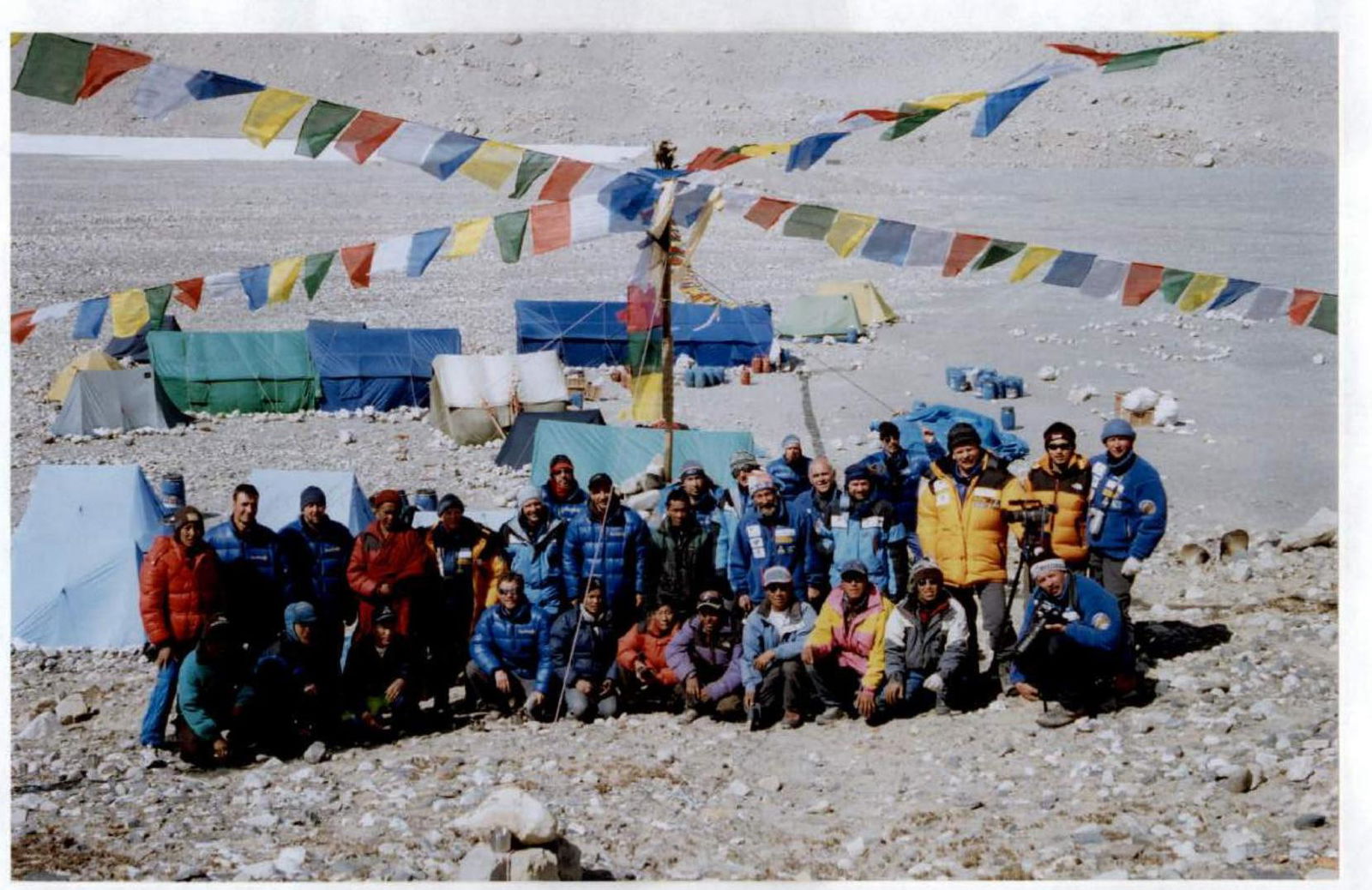
The team in Base Camp.
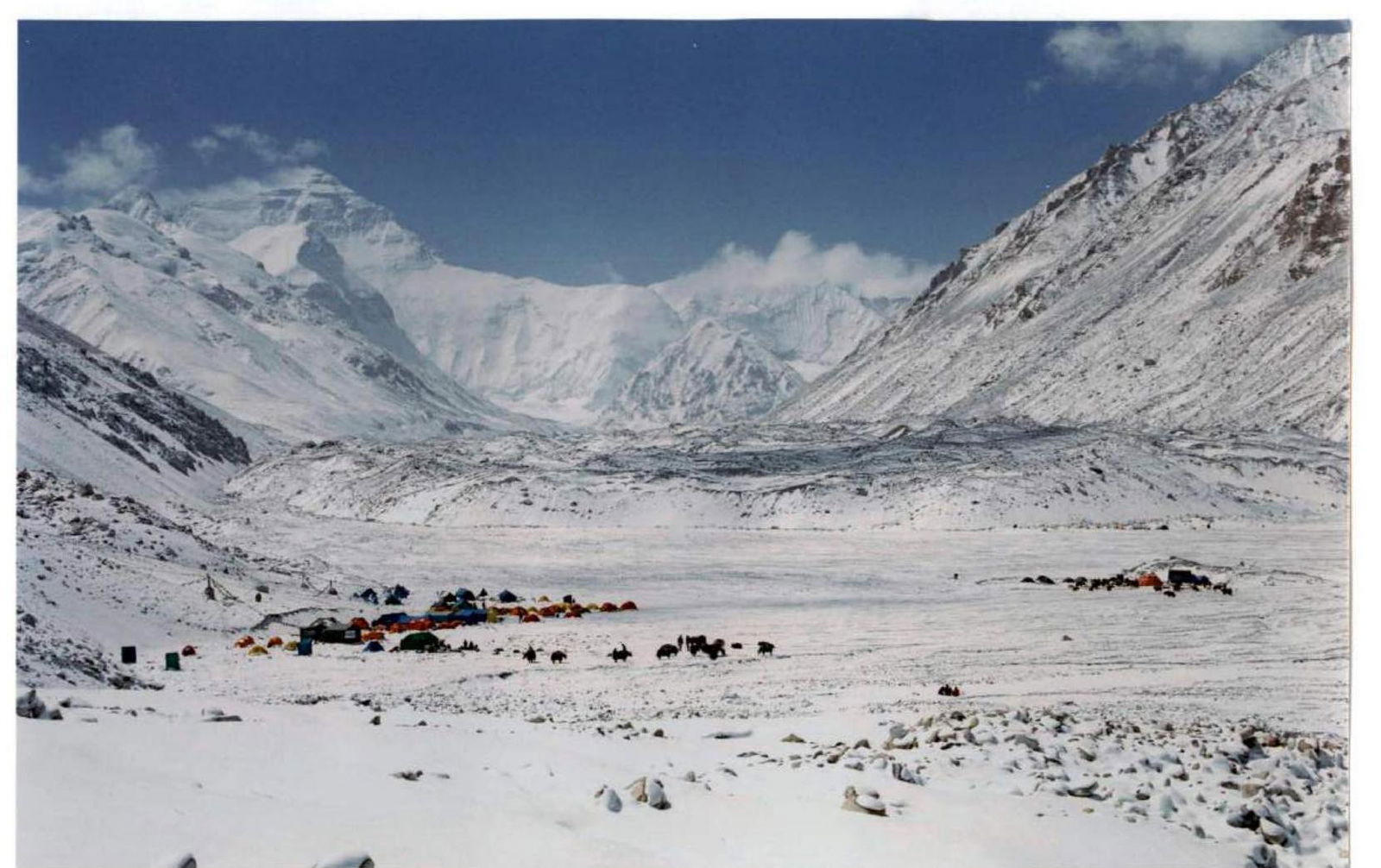
Base Camp after snowfall.

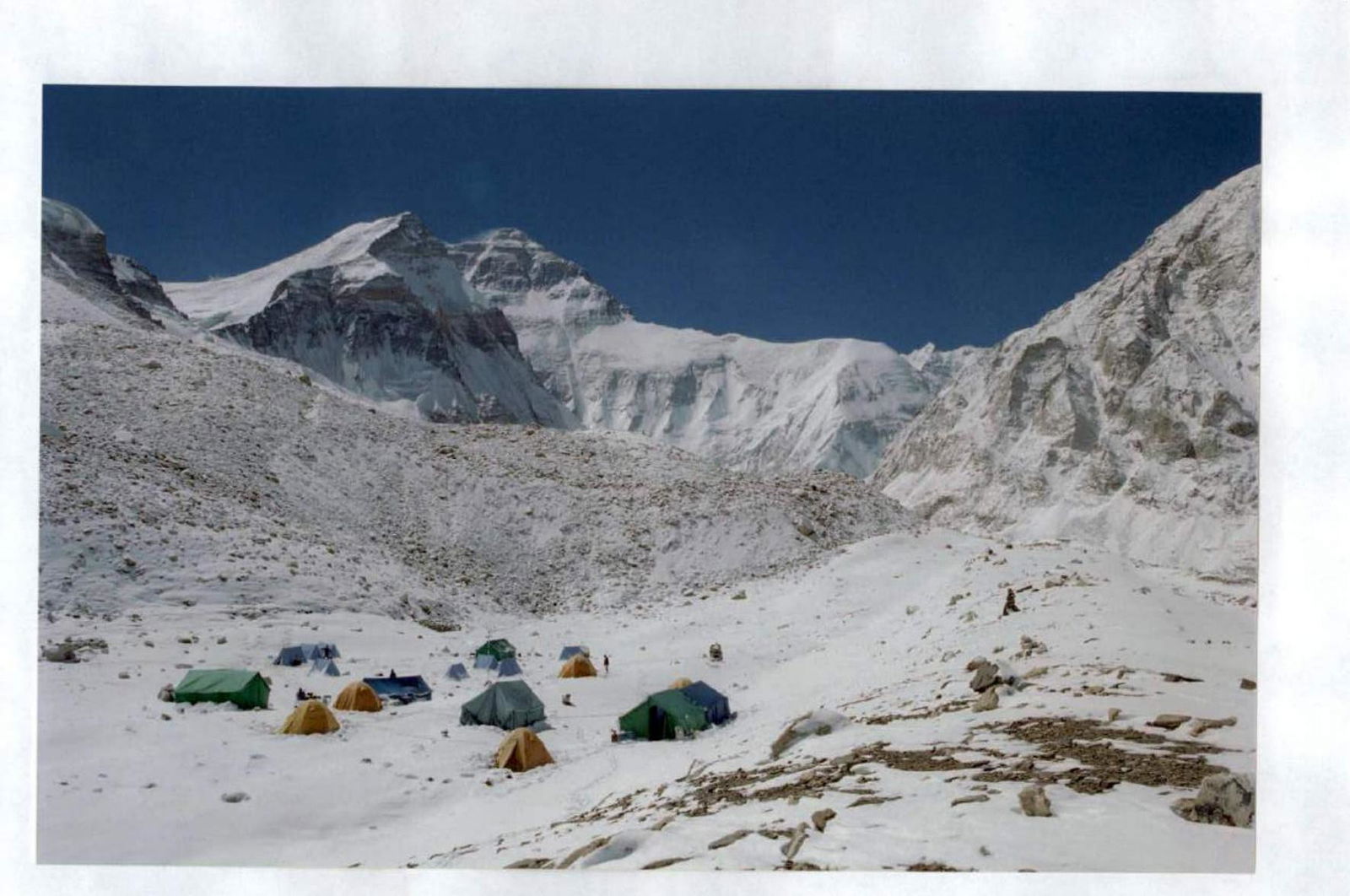
ABC-1 on Tilman's meadow. Height 5600 m.

Tibetan porters on the approach to ABC-2.

Ascent from

Comments
Sign in to leave a comment