
Passport
- Region — Altai. Northern spur of the South Altai ridge.
- Peak — Pik Pamyati patriotov, 3926 m.
- Route — via north-eastern ridge, 2A cat. dif., first ascent.
- Height difference 500–600 m. Steepness of the route 25–35°. Insurance via ice axe.
- Duration — 5.5 hours.
- Group composition: Vlasov V.A. — Master of Sports. Semenov S.A. — 1st sports category. Tankova M.V. — 1st sports category. Utkina V.V. — 3rd sports category. Gorbova G.M. — 3rd sports category.
- Date of ascent — July 8, 2005.
- Organization — group of Moscow veterans and Barnaul climbers.
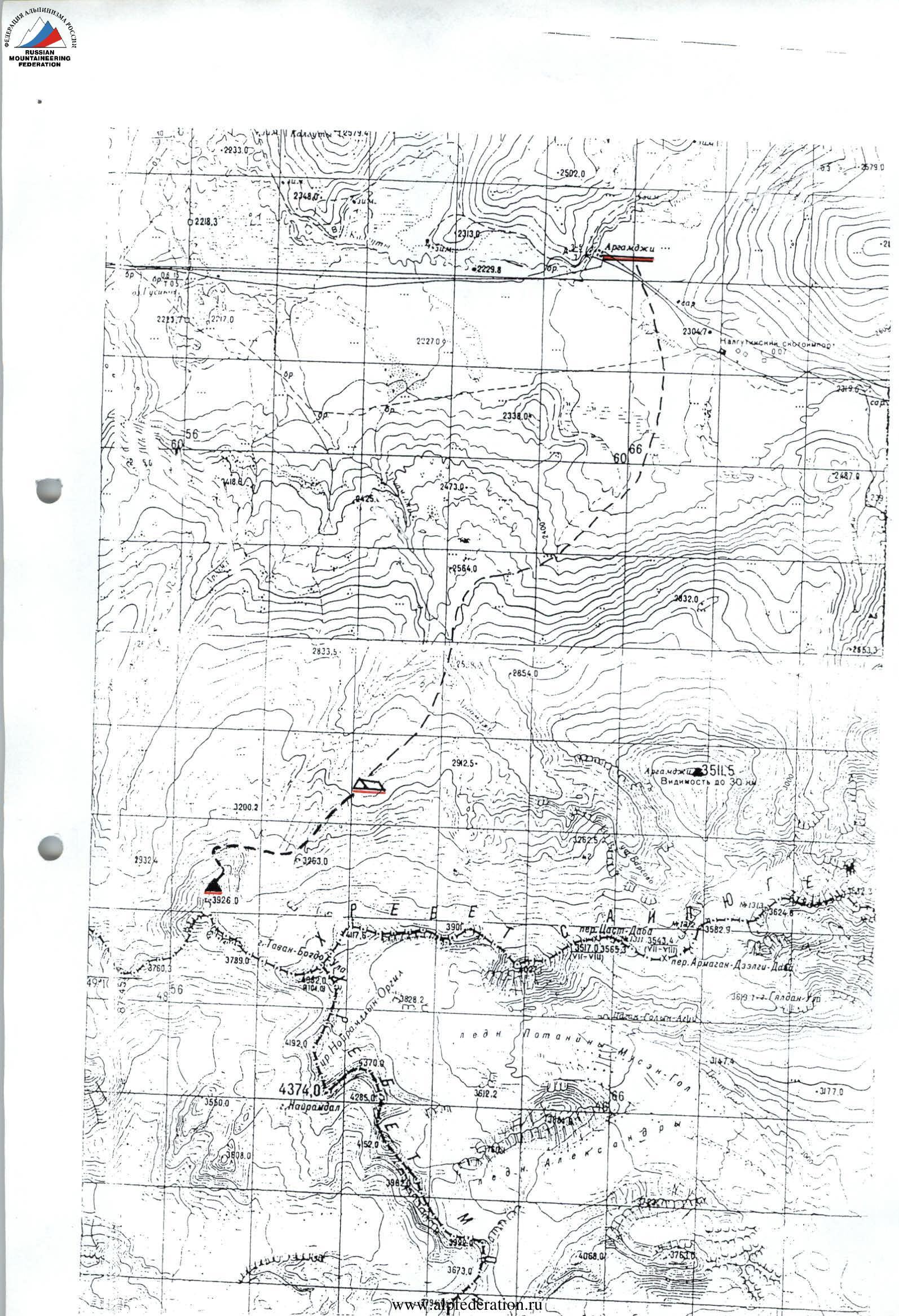
Pik Pamyati patriotov is located at the junction of the ridges: South Altai ridge, Saylyugem ridge, and Mongolian Altai ridge.
This mountain node is situated within the Kosh-Agach administrative district of the Altai Republic.
Travel along the Chuysky tract to the district center Kosh-Agach. Then, approximately 70 km southwest on a gravel road leading to Jazator. Then, on a dirt road, bypassing the Teply Klyuch pass 3304 m, to Argamji — approximately 60 km.
Further, the group moves south. The approach takes 1–2 days. There are marshes — even on the slopes — lying on permafrost. Depending on the amount of water in the Argamji river and its tributaries, the time spent searching for fords increases.
The peak — height 3926 m — is located in the northern spur of the South Altai ridge and resembles a truncated pyramid in shape.
The ascent was made along the north-eastern edge. From the bivouac, we approach the edge via snowfields and moraines and exit onto the snow-ice ridge from right to left (photo 1). Further movement is on crampons, in rope teams. On the ridge, there is a thin layer of snow with ice outcrops. The character of the ridge is well visible in photo 2. The summit is a snow dome with outcrops of rock (photos 3 and 4).
Descent is via the ascent route. The weather during the ascent was good. The route, as of the time of ascent, resembles traditional routes of 2A cat. dif.
One of the goals of the ascent was reconnaissance of the area and routes to nearby peaks.
In photos 5 and 6 — the neighboring peak — 4117 m and the nodal peak of the area — Tavan-Bogdo-Ula — 4104 m. In photo 7 — view to the south towards the Mongolian Altai.
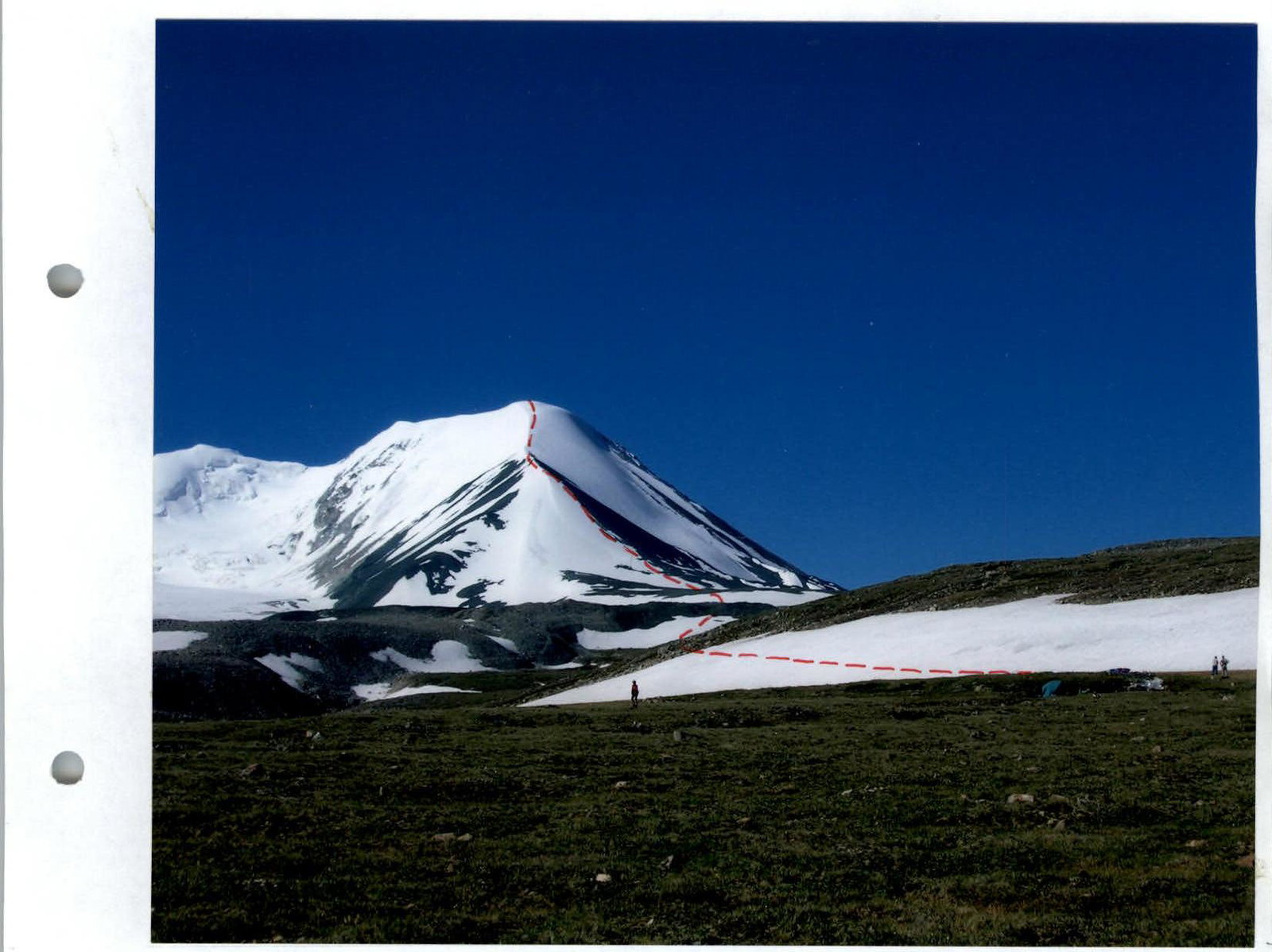 photo 1.
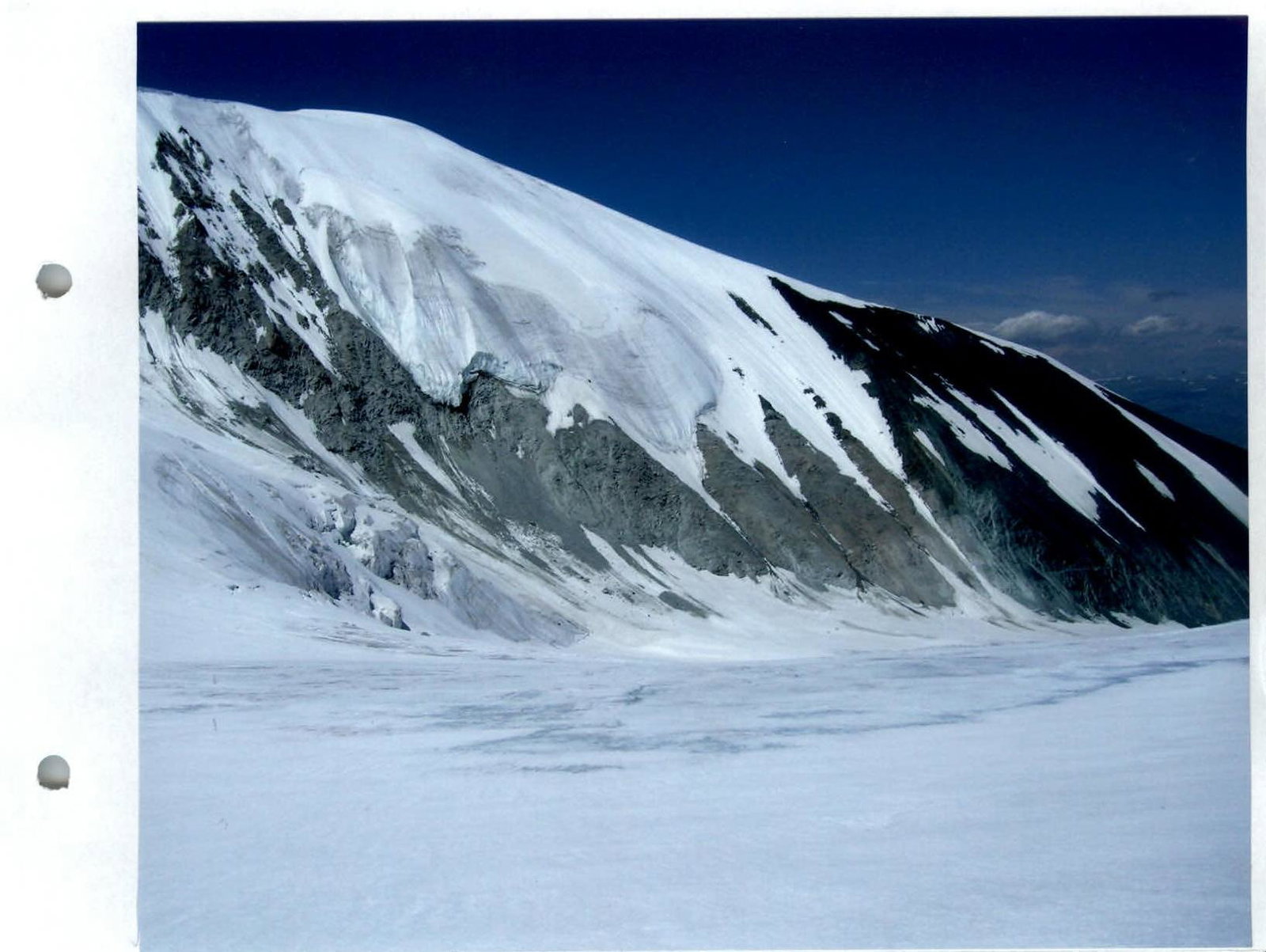 photo 2.
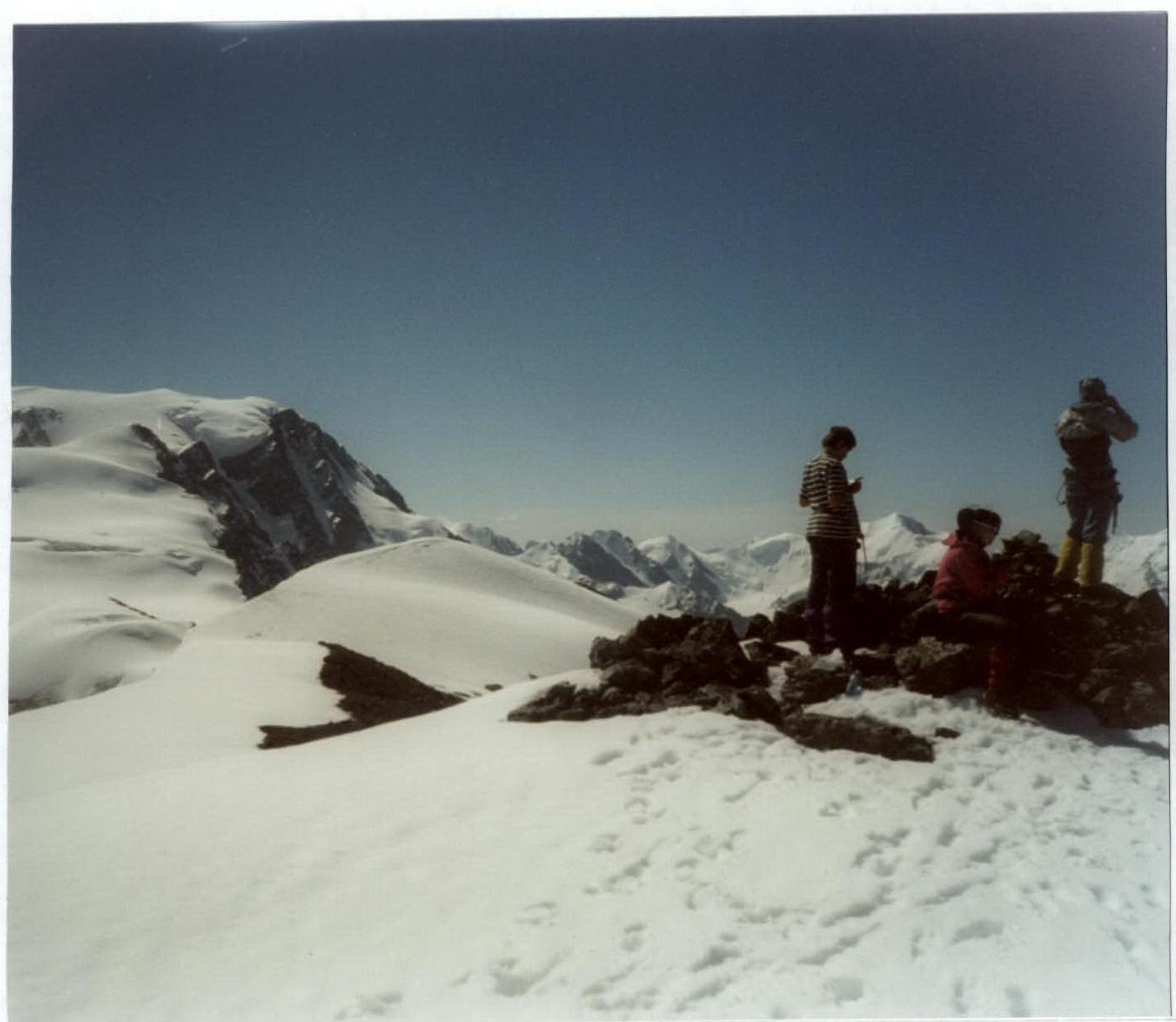 photo 3.
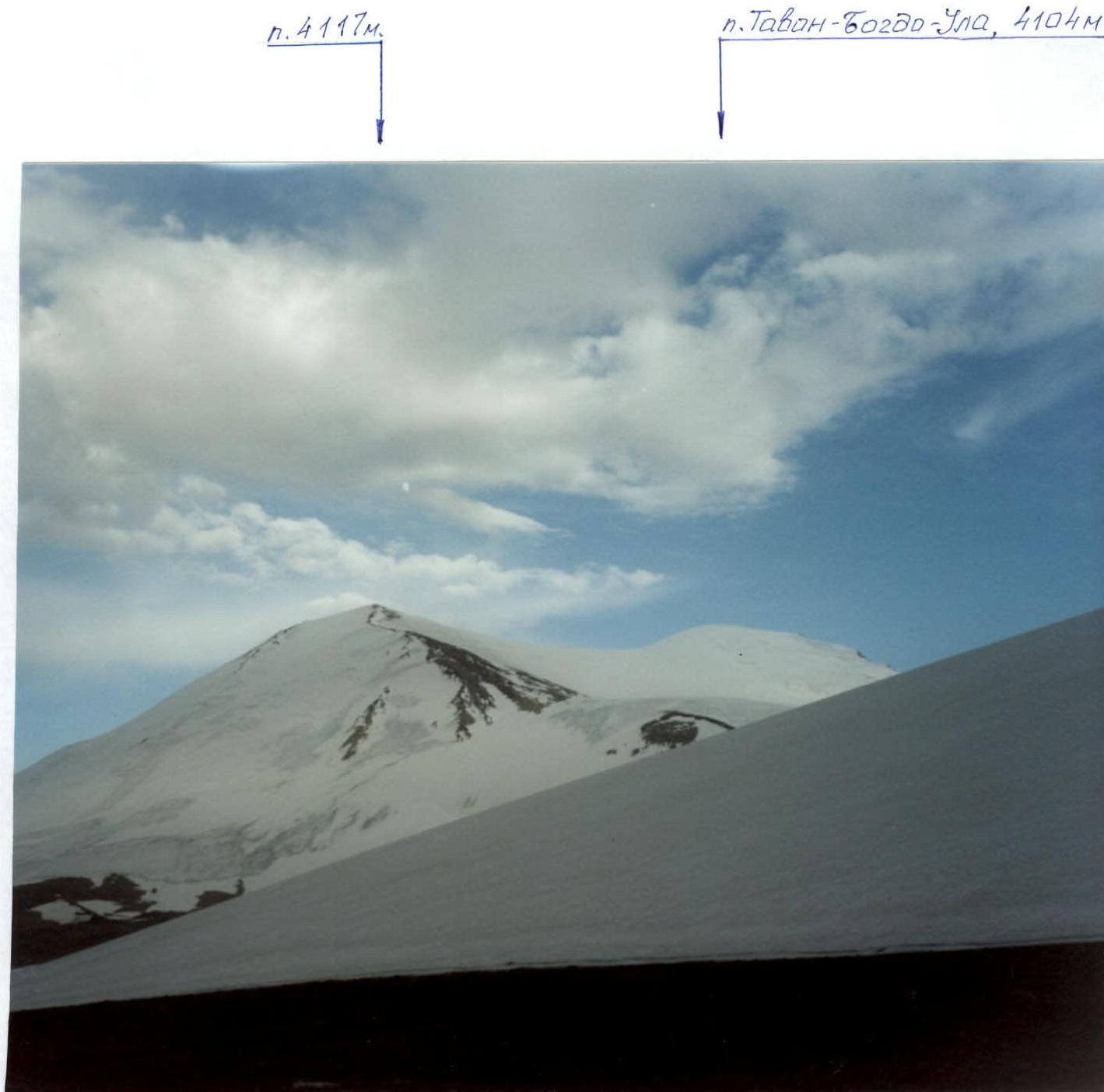 photo 4.
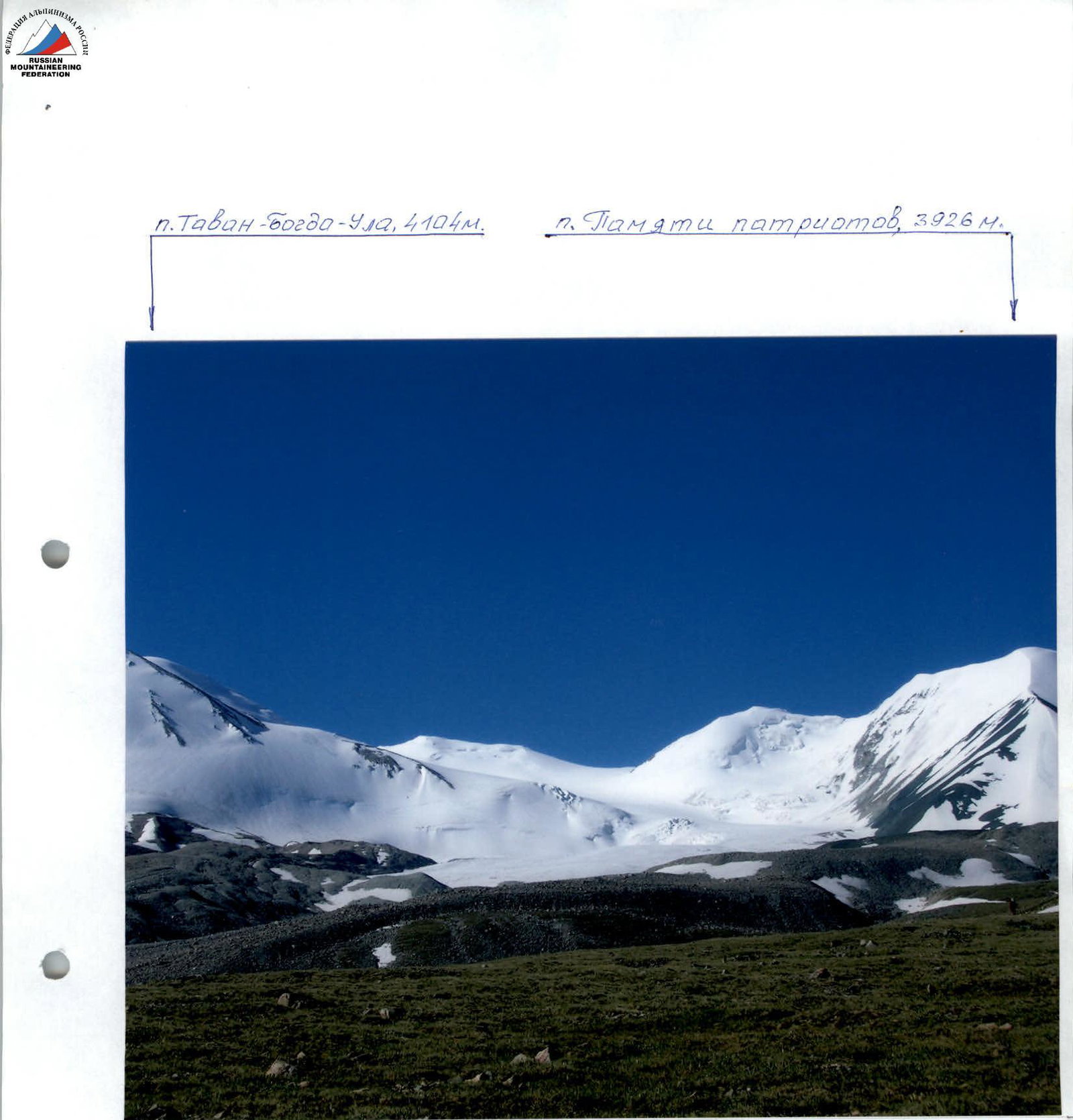 photo 5.
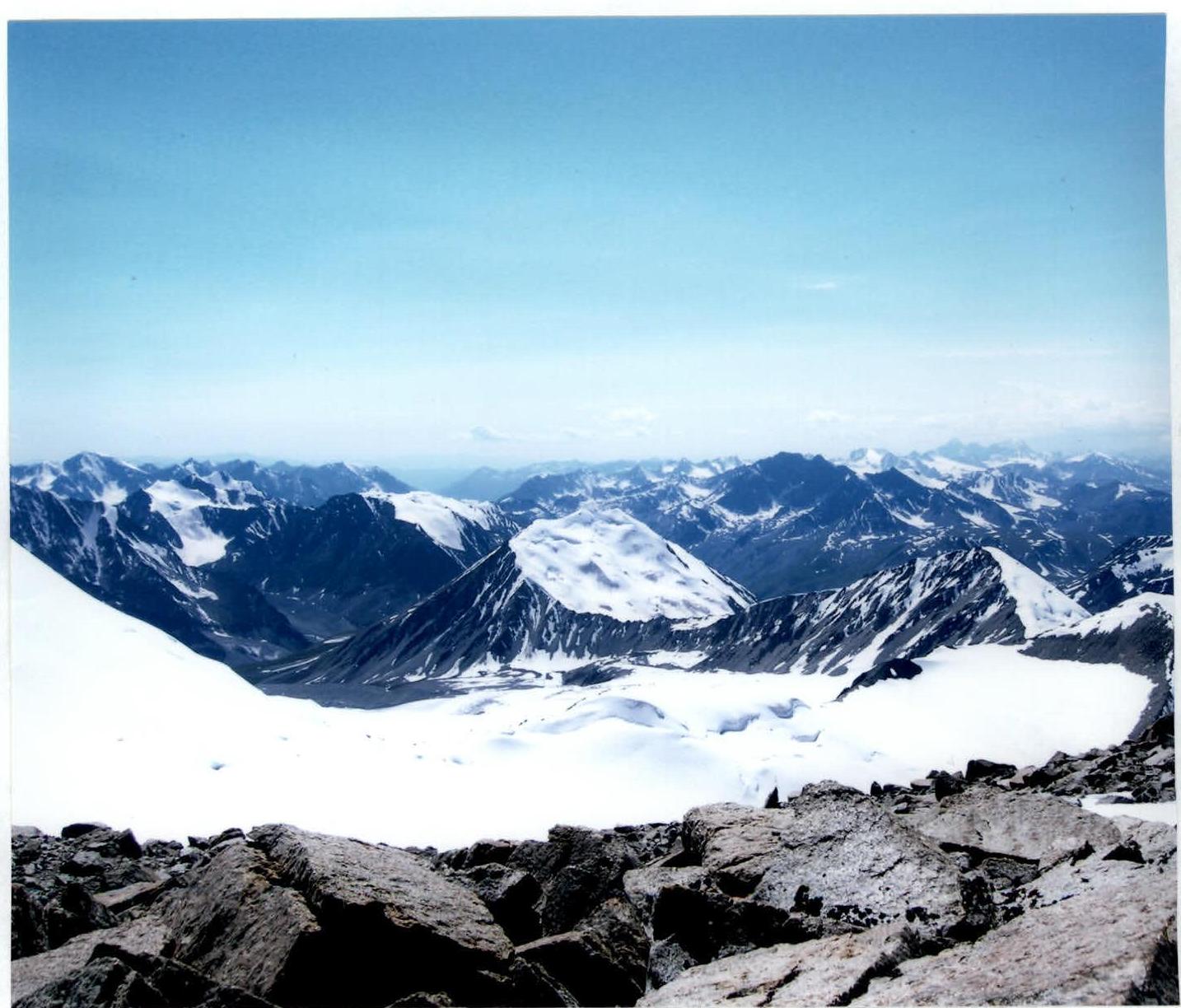 photo 6.
 photo 7. View to the south towards the Mongolian Altai.
Further, the camera froze, and it was not possible to take photos characterizing the subsequent stages of the ascent.
Appendix 1. An article about the ascent, published in the regional newspaper "Zvezda" on April 7, 2001, is attached.
Hobbies
Olga LUKANINA 48-67-30
This year has been unusually tragic for Perm climbers. Over the winter months, the mountains claimed the lives of six people. It's simply a curse — five groups set out to conquer various peaks in January–March. Only one of them, led by Andrey Korolev, managed to complete the entire route, ascend to the highest point in Mongolia, Mount Nayramdal (4374 meters), and return home.
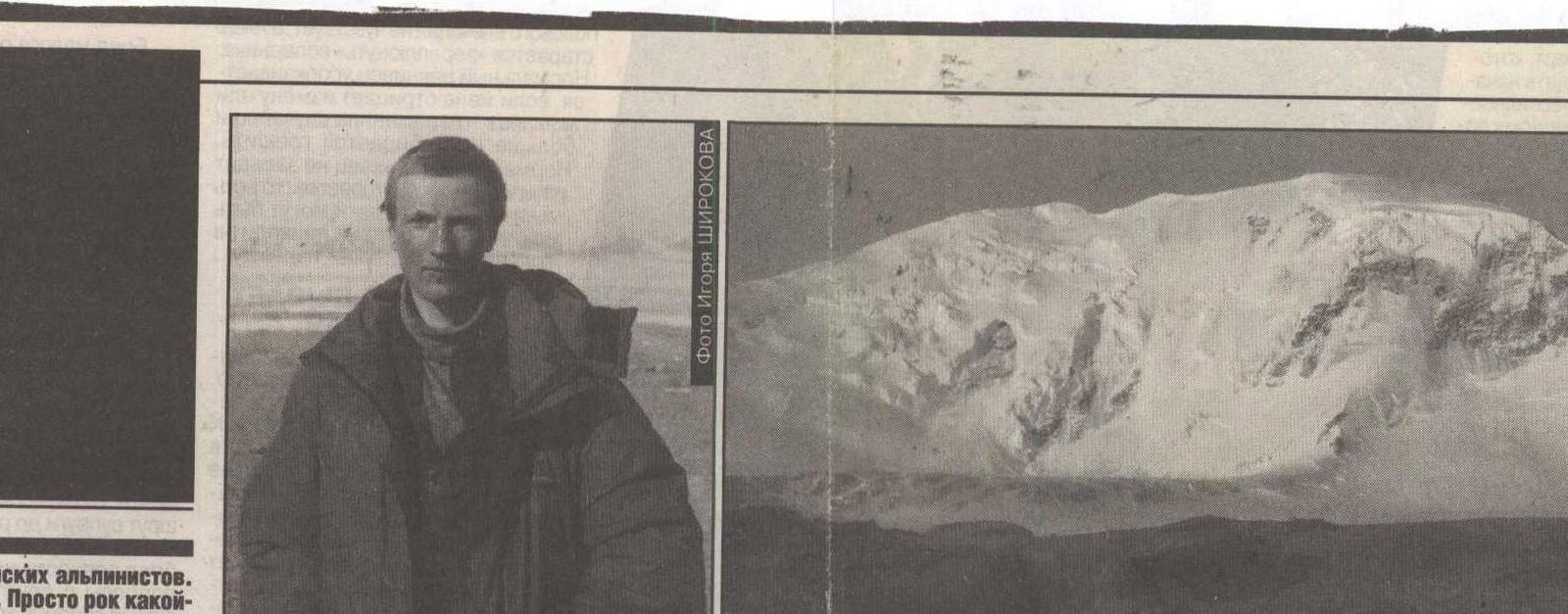
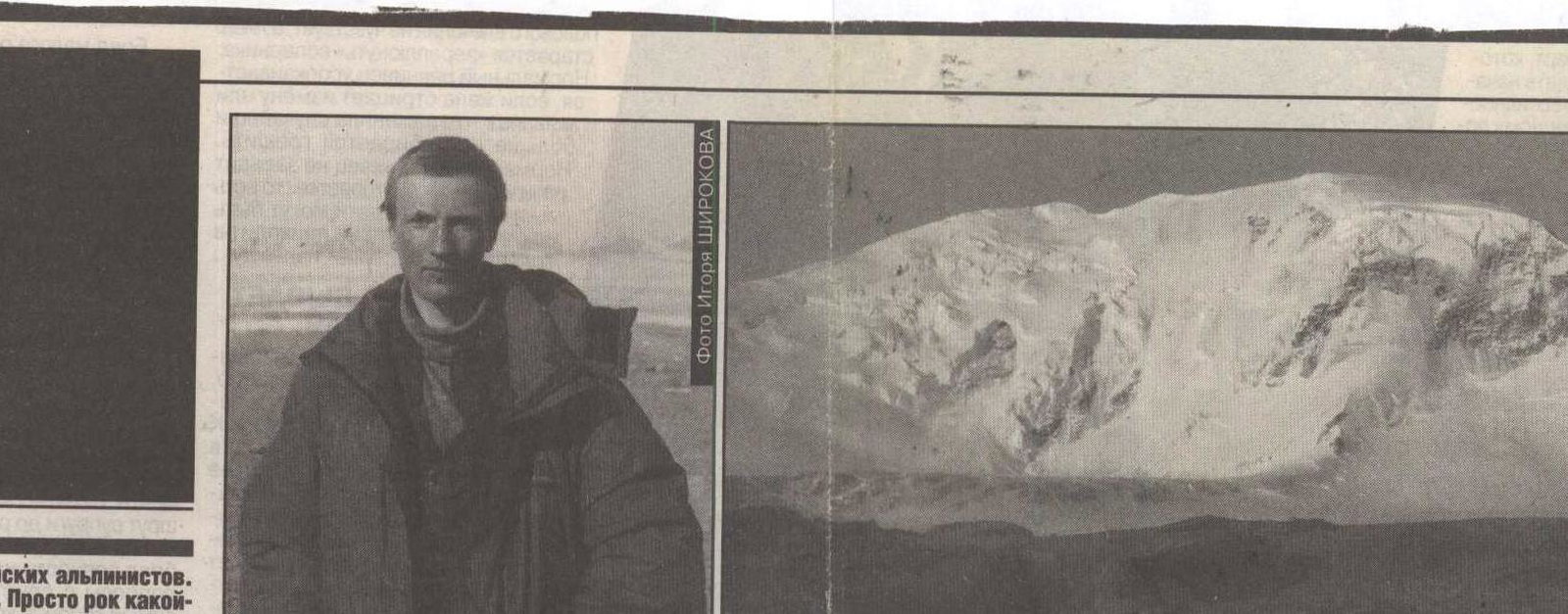
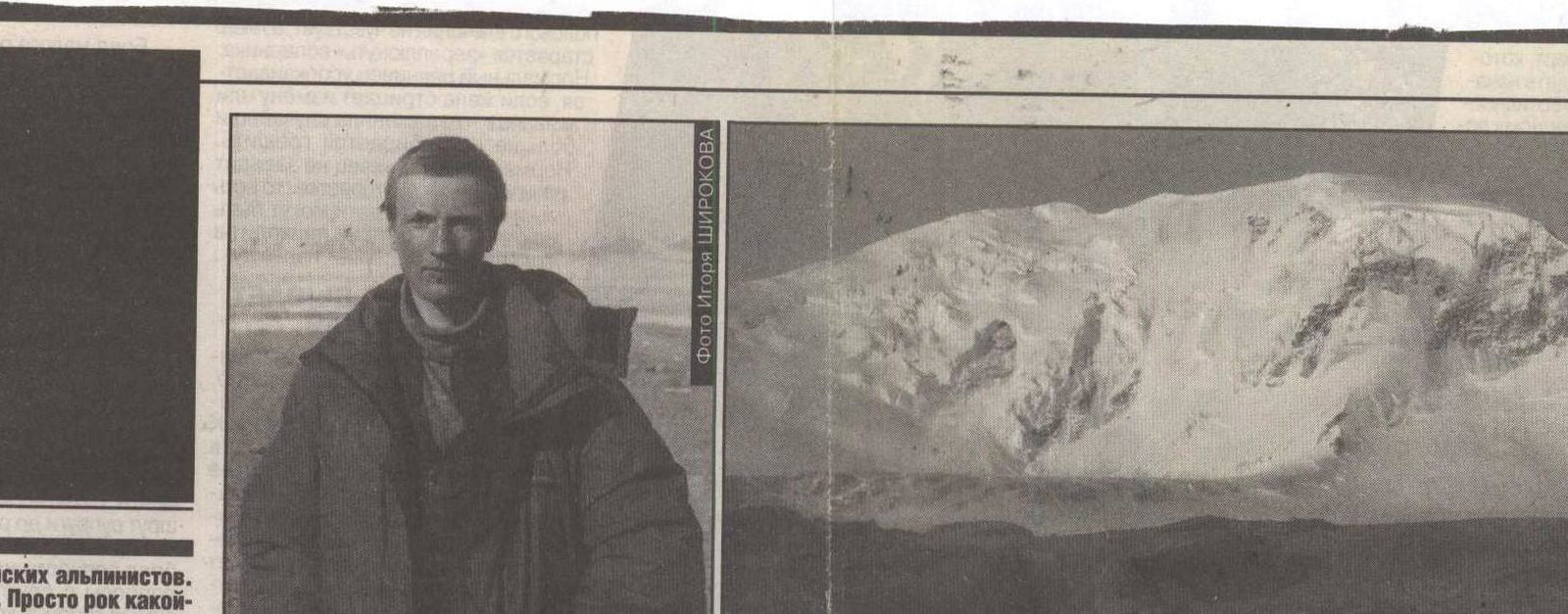
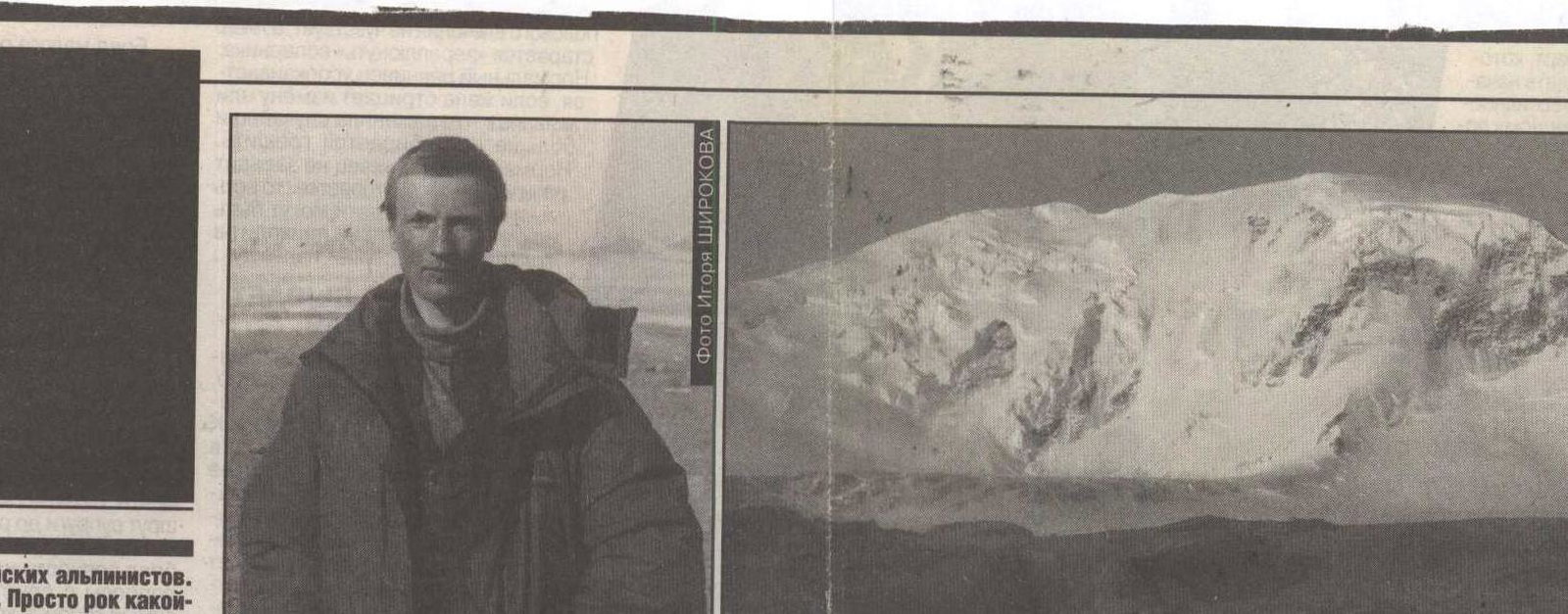
Korolev's group was not entirely typical in composition: three people, including one woman, embarked on the journey, although the minimum number for a hike of such complexity is six. Initially, they planned to go in a group of six, but three backed out at the last moment. Andrey Korolev, Igor Shirokov, and Lyudmila Bazhukova thought it over, weighed the pros and cons, and decided they could manage it. The goal was all the more tempting because none of the Perm climbers had ascended Nayramdal before.
We began our conversation with Andrey on a tragic note — all Perm climbers were heavy-hearted due to the losses...
"I knew Alexander Shavrovich's group had gone to Elbrus. They had passed the most challenging part, the Kukyurtly wall — in winter, no one had succeeded in doing that before."
The climbers ascended higher than the wall and covered 300 meters in height. That's where they found their camp and two bodies... For now, we can only speculate what happened...
In March, three of our team went to the site of the tragedy, attempted to retrieve the bodies — but the blizzard wouldn't subside. Attempts and searches for the remaining group members will continue. (As we learned, Vice-Governor of Perm Valery Shchukin took control of the search operation and promised full cooperation, including organizing a helicopter. — O. L.).
Another group went to Belukha around the same time but couldn't ascend due to bad weather. Both tourist groups (one from Chaykovsky) suffered losses on Kadyr...
I don't recall another such tragic year for Perm climbers.
Everything went normally for us, even unusually calmly, without extreme situations.
"Andrey, isn't it scary to go to the mountains? After all, no one knows what's waiting there..."
"Of course, it's scary. That's natural. If a person doesn't feel fear — they're just abnormal. Brave is not someone who doesn't fear anything, but someone who overcomes fear. And it depends a lot on specific situations. In the mountains, you just need to be more cautious, be able to assess the situation correctly, make decisions. And remember that mountaineering isn't a war against the mountains."
"Is conquering a peak a reward for everything?"
"We try to avoid the word 'conquer.' Because after that, it'll be scary to go back to that mountain — it might punish you somehow. Locals believe each mountain is alive, has its own spirit. I believe that too. So, you need to befriend the mountain, ask permission to ascend. And from the summit, the views are amazing, indescribable. You feel like a superhuman because you're in that space, you're a part of that power and beauty. You can't convey that feeling through photos or videos. And there's also a great sense of moral satisfaction. That you were able to do it! You proved to yourself — I can!"
"Which is what you managed to do this time... Tell us more about how the ascent went?"
Our main goal was Mount Nayramdal, the second peak in Altai (the first being Belukha). It's harder to go there in the summer — you need to arrange visas. In winter, it's simpler — temperature is minus 40, snowstorms, blizzards, poor visibility — we won't be bothering anyone there. Even the border guards told us that no one had been there in winter. Beyond the Argamji outpost, there's a huge ridge, the "sacred mountain" Tavan-Bogdo-Ula (4082 meters). It marks the borders of three states — China, Mongolia, and Russia. And you can ascend this mountain with a border zone permit from our side.
I slightly outsmarted the border guards. The peak. But how to get to it? Climb the pass leading to Mongolia and go along the ridge. We ascended, reached the summit, descended into Mongolia, crossed the largest glacier in Altai, and ascended to the highest point — Nayramdal...
We returned via a different route, ascending other peaks along the way. Here's what we achieved: we made the first winter ascent of Tavan-Bogdo-Ula, crossed eight passes, including three first ascents. No one has traversed these passes before; we named them and determined their difficulty category. We named the pass east of Tavan-Bogdo-Ula as Tavan-Bogdo-Ula-East, then another pass in the same ridge as the Pass of Perm tourists, and the pass on the Ukok plateau between the Argamji and Zhumaly rivers as the Argamji pass. They're not described anywhere yet — we'll be documenting the ascent route and sending it to the All-Russian Federation of Mountaineering. The passes and peaks will be registered and mapped.
Moreover, we visited six ridges — Saylyugem, South Altai, Mongolian Altai, Ukok plateau, South-Chuya ridge, Zhumalykir ridge.
"How do you determine that you're the first to pass through?"
"Usually, groups that are the first to go somewhere set up cairns with notes. We didn't see any such cairns. We set up our own — indicating that we passed here, assessed the difficulty category (all not more complicated than 2B). But on Nayramdal, we found a note from Tula climbers — they had been there before us. And we left our own note too."
"Andrey, thank God your last ascent was incident-free. What's the most extreme situation you've faced in your mountaineering career?"
"When it happens, you don't think it's extreme. You act on instinct. The most memorable... It was in the Pamirs in 1998. During the descent from a pass (6000 meters), visibility was zero. We were roped together, four people, I was second. The first person fell. I tried to arrest the fall with my ice axe, but it was ripped out, and I fell too. I thought the third person would arrest the fall — a woman was behind me. But no. The third and fourth people fell too... We were falling — nothing was visible, it was unclear which way was up or down, where to stick the ice axe... Luckily, we landed safely. My hat flew off, fortunately not my sunglasses — otherwise, I could have gone blind. But while falling, I slashed my leg with the ice axe. Later, it was stitched, and I lived in a tent on the glacier for six days until I could walk again..."
I also recall a blizzard on the Polar Urals, beyond the Arctic Circle. The wind was so strong it lifted and carried us several meters up — we even managed to ascend the pass without crampons. Then the wind took away two of our backpacks, crampons, ropes, and the inner layer of the tent...
"After such situations, it's very nice to return home — you realize that home is the best place on earth!"
"What are your plans for the future?"
"In the summer, I want to climb the Trans-Ili Alatau ridge, the seven-thousander Peak Lenin."
"Do you have a dream?"
It comes to me before a specific trip. I want to go to the Himalayas — but it's not time yet; I need to climb our seven-thousanders first...
Yes, we can say Andrey has his whole life ahead. Despite being 24, he's already considered an experienced climber. In everyday life, he's a veterinarian, works as a lecturer at the agricultural academy (teaching pathophysiology), and even manages to do scientific work. Additionally, he leads a section on tourism, survival, and medicine at the "Vityaz" sports-patriotic club and is into photography. He got hooked on hiking in high school, and started mountaineering five years ago, and as is clear, can't imagine life without the mountains. He's very devout and claims God helps him — there's an inner voice in critical moments in the mountains. When someone suddenly suggests which path to take. It's no wonder even senior comrades choose him as the group leader! He believes the most important thing in life is spiritual growth. And, as they say, God bless him in everything!
Olga LUKANINA
20357

Comments
Sign in to leave a comment