
Climbing Passport
- Technical category.
- Altai, Katunsky ridge, Ak-Kem gorge.
- Delaunay Peak. Central part of the Northwest Wall. 4260 m.
- Route 6B cat. diff. (approximately).
First ascent of the route.
- Height difference of the route: 1110 m (bergschrund 3150 - summit 4260).
Route length about 1600 m.
- Length of the central part 1100 m (height difference about 800).
- Length of sections 5: 445 m.
Length of sections 6: 250 m.
- Average steepness of the route about 62° (bergschrund - summit).
- Average steepness of the central part 70–72°.
- Number of pitons hammered (including for aid climbing):
- rock pitons and anchors 60/15;
- bolt pitons 11/0 (skyhooks ~20 holes);
- chock stones (stoppers, eccentrics, friends) 80/35;
- ice screws 20/1.
- Team's working hours: 64. Days: 7.
- Overnight stays: 6 semi-reclined (plus one on descent).
- Participants:
- Kirikov Alexander Vyacheslavovich — Candidate Master of Sports (Tomsk).
- Proskurin Alexander Vyacheslavovich — Candidate Master of Sports (Novokuznetsk).
- Approach to the route: May 5, 2003.
Summit: May 11, 2003. Descent: May 12, 2003. 15. Organization: Tomsk Alpinism Federation.
Overview of the area, characteristics of the climbing object
The route is prone to rockfall, although the wall consists of fairly solid rocks. Rocks fall from the upper part and cover almost the entire wall (in warm weather, it is likely to be highly prone to rockfall, and climbing in summer is not recommended). The wall is psychologically challenging. The reason is unclear.
The first ascenders (1972 G.G. Andreev, N.N. Dyachenko, Yu.I. Konovalov, …) approached the wall at least three times. After them, the Northwest wall was not repeatedly climbed. Partly due to its complexity, both technical and psychological, and partly because the route was categorized as 5B, while there was a 6-category route in the area (Altaysky-Gnoevsky), which was generally considered safer and easier.
Exceptions include several ice and snow routes through the gullies in the left part of the Northwest wall, climbed in 1997 as part of the snowy-ice class of the Russian Championship. Several teams reported climbing the wall but did not actually start the ascent.
Initially, there was a desire to climb the wall in a duo in winter, but due to weather conditions in January, after spending a couple of days under the wall and assessing their capabilities, they decided to postpone it.
Weather conditions during the May ascent were relatively favorable. There was no prolonged bad weather with continuous snowfall, although it snowed fairly regularly. Night and morning temperatures around −15–20°, possibly slightly lower, daytime temperatures −5–10°. They planned to complete the route in five to six days. Took seven days. The pace of movement could have been higher, but the route's relief did not always allow the second climber to pull two backpacks. The first climber worked without a backpack on most sections of the wall.
The route partially coincides with Andreev's route. It is worth noting that this section is the main crux of the 1972 route. They tried to lay a path to the left but would have had to drill a bolt-skyhook path on that section, so they considered it logical to follow the terrain. This is the first crux of their route. They did not find a control tour (although according to the first ascenders, it should have been there). Found a base made of bolts. These were the only traces on the wall.
11 stationary bolts were hammered on the stations for insurance on the route. Bolts were not used for climbing sections, but on some sections, holes were drilled for skyhooks. The entire arsenal of gear available was used on the wall. Rock anchors performed well. Some rock sections were climbed on fifi hooks.
Notes
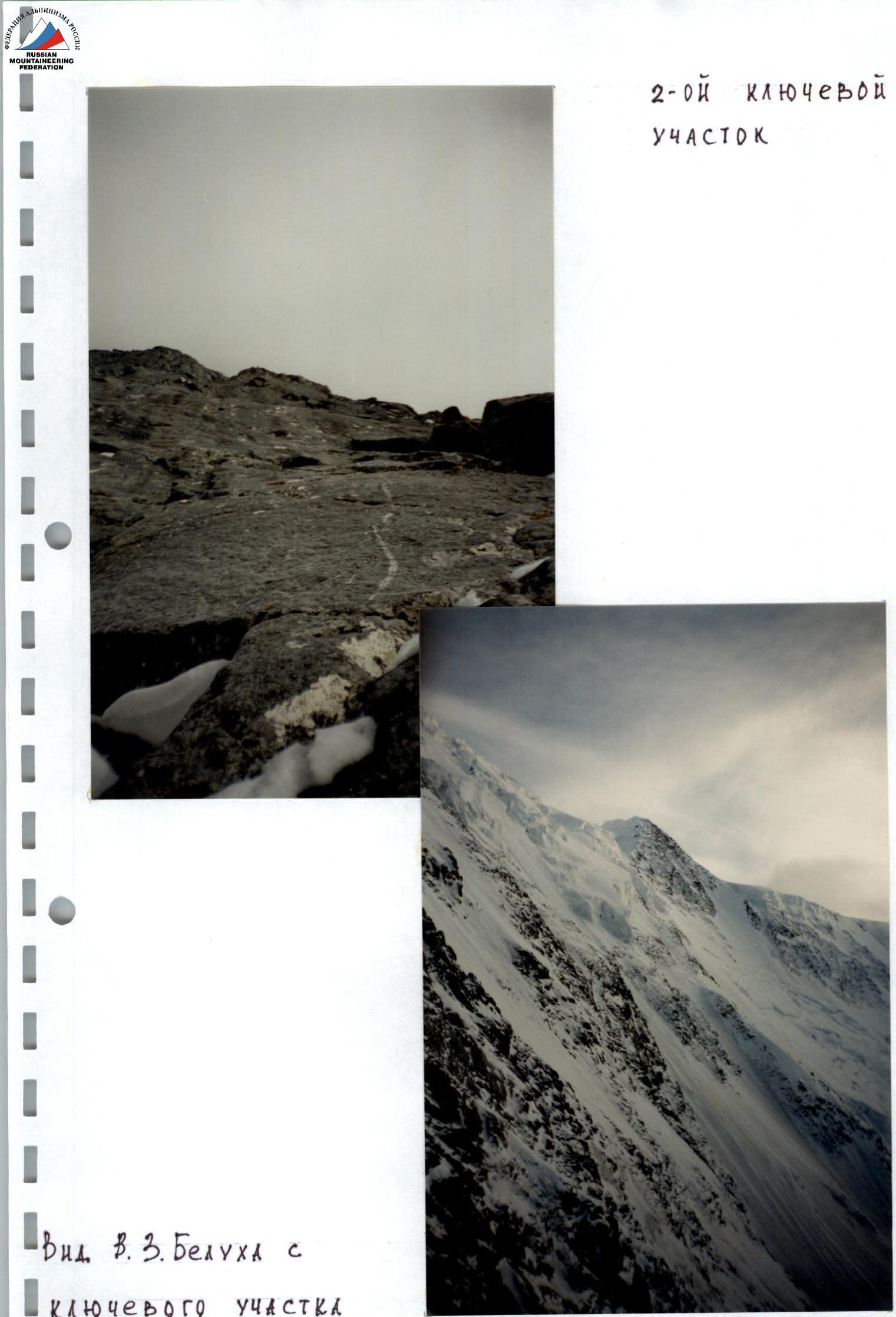
The report lacks a photograph of the route profile. The Northwest wall is in a depression between the north wall of the Belukha massif and the Northwest buttress (4B Agishev's route) — there is no vantage point at the bottom from which the overall slope of the wall can be seen (no photographs of the wall from Agishev's route were found). During the May trip, the photographic equipment was of low quality, so summer photographs were used to show the route thread, as they better reveal the wall's relief, but the first general photo of Delaunay Peak is from May, showing that there is more snow on the wall in May than in summer.
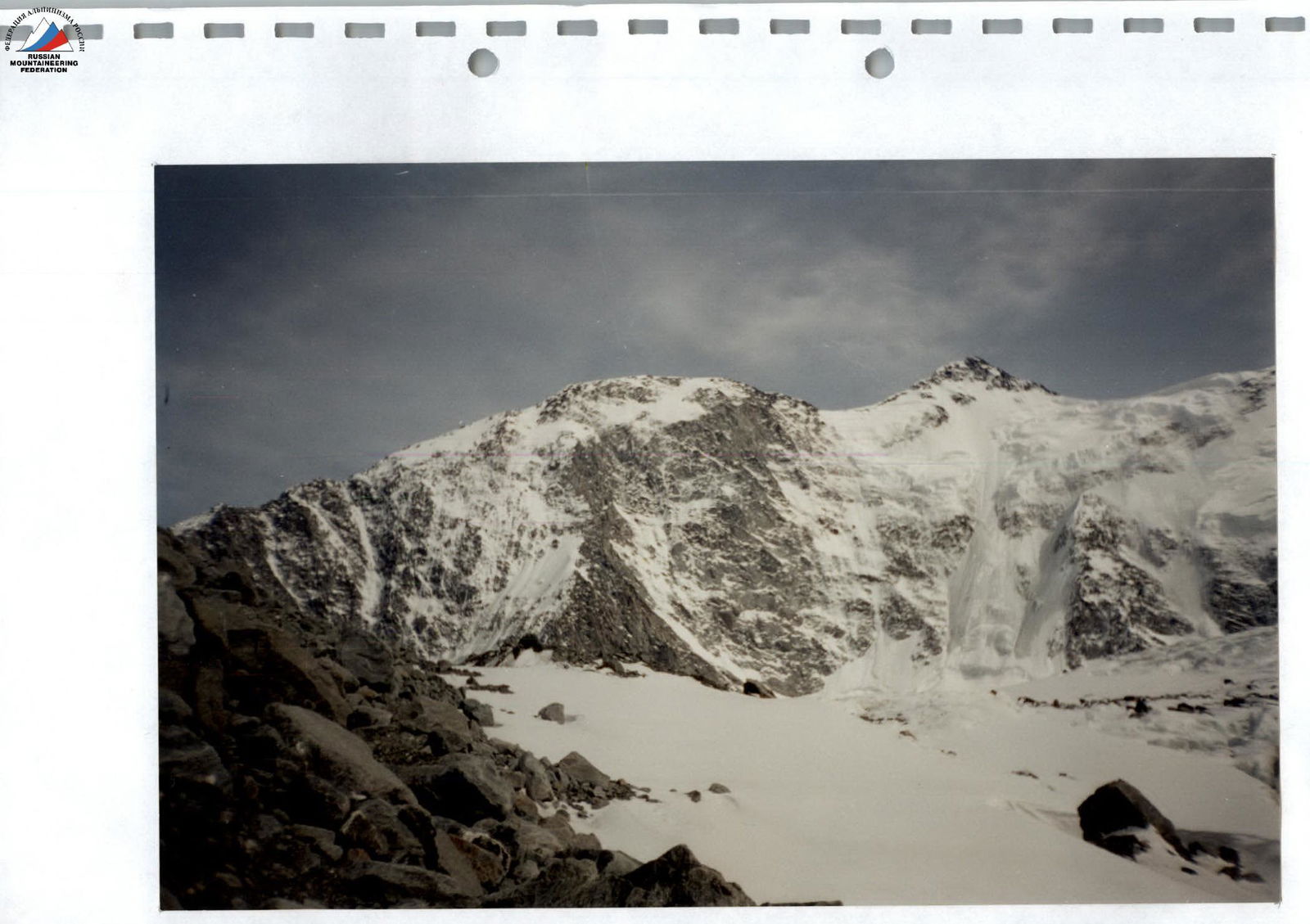
General photo of Delaunay Peak (right Belukha) (May 4, 2003). Diagram of the ascent to Delaunay Peak 4260 m via the central part of the Northwest wall in UIAA symbols (not to scale).
| Section # | Diagram in UIAA symbols | Length, m | Steepness, ° | Cat. diff. | Aid Climbing |
|---|---|---|---|---|---|
| R8 |  | 20/20 | 90/70 | 6 5 | A2+ |
| R7 |  | 45 | 65–70 | 4–4+ | |
| R6 | 25/15 | 80 | 6 5–5+ | A2+ | |
| R5 | (May 6, 2003) | 70 | 55–80 | 5 | |
| R4 |  | 20 | 90–95 | 6 | |
| R3 | 30 | 80 | 5+ | ||
| R2 | 30 | 80 | 5+ | ||
| R1 | 40 | 75 | 5 | ||
| R0 | 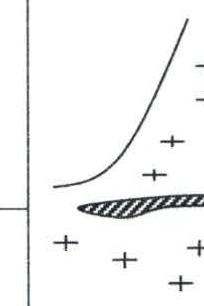 | 70 | 50–60 | 3–4 | |
| ++++++++++ | 100 | 30–40 | 1 |
| Section # | Diagram in UIAA symbols | Length, m | Steepness, ° | Cat. diff. | Aid Climbing |
|---|---|---|---|---|---|
| R19 |  | 40 | 60 | 3–4 | |
| R18 |  | 20/12/8 | 50–60/90/80 | 4 6 5+ | |
| R17 |  | 20–25/10–12 | 80/95–100 | 5+–6 6 | A2 A3 |
| R16 | 30 | 70–80 | 5 | ||
| R15 | 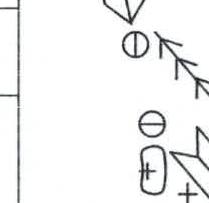 | 40 | 40–50 | 3 | |
| R14 | 40 | 75–85 | 5 (5+) | ||
| R13 |  | 60 | 60 | 3–4 | |
| R12 | 20/25 | 90/75 | 6 5 | A2–A3 | |
| R11 | 10/8/15 | 65/80/85 | 4 6 5+ | A2+ | |
| R10 | 35 | 90–95 | 6 | A2 | |
| R9 |  | 80 | 70–75 | 5 |
| Section # | Diagram in UIAA symbols | Length, m | Steepness, ° | Cat. diff. | Aid Climbing |
|---|---|---|---|---|---|
| R28 | 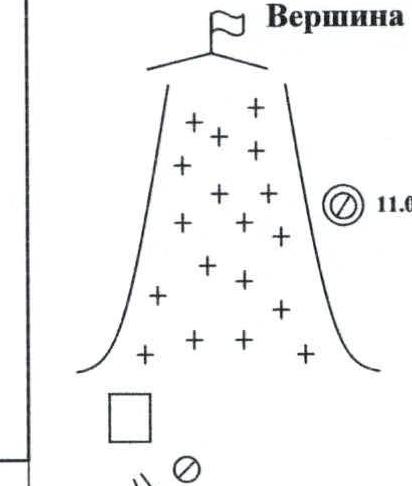 | 240 | 45 | 3 | |
| 10 | 70 | 4 | |||
| R27 | 40 | 85 | 4–5 | ||
| R26 | 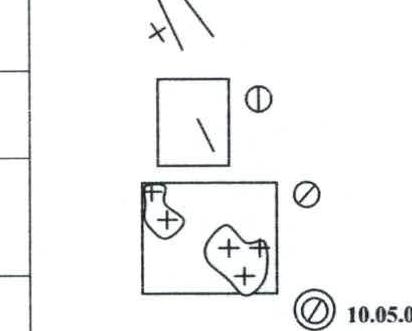 | 40 | 80–90 | 6 | A2–A3 |
| R25 | 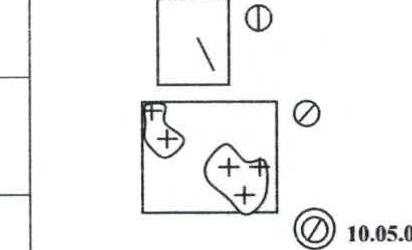 | 35 | 70–75 | 5 | |
| R24 | 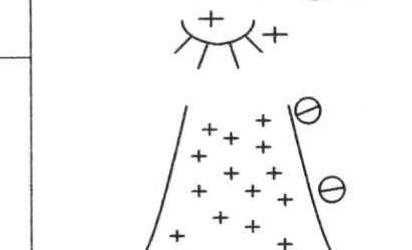 | 15 | 85 | 5 | |
| R23 |  | 95 | 40–45 | 3–4 | |
| R22 | 40 | 40–45 | 3 | ||
| R21 |  | 5/45 | 120/85–90 | 6 5+ 6 | A2 |
| R20 |  | 135 | 40–60 | 3–6 |
Route description by sections
Firn 30–40°. About 100 m to the bergschrund. Simultaneous movement.
| Sect. # | Date | Pitch # | Description |
|---|---|---|---|
| R0 | May 5 | 1–2 | Bergschrund 2.5–3 m wide and same height difference, then ice-firn slope 50–60° ~70 m straight up. (3–4). |
| R1 | 3 | Exit to rocks. First ropes climbing (5–5+). Slab, crack to the right. 75° 5, 40 m. | |
| R2–R3 | 4 | Crack to the right 30 m brings under a small cornice with an overhang of about a meter. 5+. | |
| R4 | 5 | After the cornice, a slab leads under an overhanging internal corner with climbing 6, 90–95°, 20 m. Then a small sloping ledge. | |
| R5 | 6–7 | Through a system of cracks and small internal corners 5, several flattenings 55–60°, snow-covered sections with climbing 4, we reach a ledge under a smooth rock slab. Here is the place of the first overnight stay. Section length 70 m. | |
| R6 | 8 | Slab with poor relief, start — thin blind crack, fifi hooks. 5–5+, 15 m, then skyhooks, rock anchors. 80° 6, 25 m. A2+. | |
| First overnight stay. | We settled for the night on a small snow-ice ledge that we managed to carve out. The width of the ledge is about 50 cm, another 30 cm was added using a "blanket". | ||
| Note | All ropes are fairly straight, on the level of 5. The average steepness of the rock slabs is 70–75°. Most of the ledges are exposed to rocks falling from above. This should be kept in mind when organizing overnight stays. The most rockfall-prone time is several hours after sunset in the evening, at dawn, and during sunrise on the wall around 12:00 (in May), i.e., when temperature gradients are highest. | ||
| R7 | May 6 | 9 | 4–4+, 65–70°, section length ~45 m, ram's foreheads, base of bolt piton. |
| R8 | 10 | Start of the rope through a snowy gully to the right 5 m 4, 60°. Rocky counterfort 5 (20 m), 70°. Then rock wall 15–20 m aid climbing A2+, 6, 90°. The main difficulty is the abundance of loose rocks and blocks. It is challenging to hang a rope so that nothing is dislodged afterward. We try to move left along the wall, but it turns out to be more logical to go the other way. | |
| R9 | 11–12 | Rock slabs with a system of cracks 70–75°. Climbing is pleasant but complicated by the presence of dense snow on the rocks in many places, and some sections have ice. Ropes ~5, 80 m. | |
| R10 | 13 | We approach a smooth overhanging rock slab. The slab is bypassed along its left edge, where there is a system of vertical cracks and flakes. 90–95°, 30–35 m, 6, A2. This is the first crux (the main crux on Andreev-Dyachenko's route). At the top of the slab, there is a small cornice. It is bypassed on the left. Above the cornice, there is a base made of 4 bolt pitons and a rope remnant. We understand that we are on the 1972 route. | |
| R11 | 14 | We still wanted to go left under the slab but saw that it was illogical and would require drilling and using skyhooks on a smooth slab when there is terrain nearby. After the base, we exit along a cornice 12–15 m 5+, 75–80°. The cornice has cracks filled with ice. It is bypassed on the left. Then a smooth slab 7–8 m. Skyhooks, 6, A2+. Rocky counterfort to the right 10 m 4. Base — bolt under the next rock wall. | |
| Second overnight stay. | At the end of the 13th rope, under the overhanging slab, i.e., under the crux of Andreev-Dyachenko's route. We carved out an ice ledge, enlarged it with carved snow and ice, creating a semi-reclined overnight stay. | ||
| Note | The bottom of the tent is made of cordura, reinforced with straps with thimbles, and is used as a hammock. However, it is more comfortable when there is a flat surface under the back and buttocks. | ||
| R12 | May 7 | 15 | Start 5 wall (25 m), then overhanging internal corner 90° 15–20 m aid climbing 6 (A2–A3). |
| R13 | 16–17 | 1.5 simple ropes, 3–4 (ram's foreheads, steepness not more than 60°, 60 m). Climbing is simple but unpleasant — everything is covered with snow, which is quite dense but does not hold. | |
| Third overnight stay | Behind a rocky outcrop on a counterfort. Semi-reclined. | ||
| Note | We started working late that day, broke a stove, and fixed it. We finished work early, as further on, the area is exposed to rockfall, and it is not possible to hide from rocks. Overnight stays are psychologically challenging, with rocks falling intensely for several hours in the evening, making unpleasant noises and falling nearby. We discussed the possibility of descending. We sleep in helmets. | ||
| R14 | May 8 | 18 | After the ram's foreheads, there is a smoothed rock slab, steepness 75–85°. Climbing 5–5+, 40 m. Movement is to the left. |
| R15 | 19 | Snow-covered rocks, steepness 40–50°, 3. Movement is to the left. | |
| R16 | 20 | Rocky counterfort 5, 30 m. On the base, a bolt is hammered. From here onwards, there are several possible options: either to the right along the internal corner, which is 15 m closed by a large rock block hanging unclearly on what, or to the left through the flexure of the counterfort into an overhanging internal corner with a blind crack. | |
| R17 | 21 | We choose the left option (internal corner with a shallow blind crack). To do this, we had to move the base 10 m to the left, as the place was exposed to rockfall from above. The base is hanging, on small chock stones, but safe. The rock overhangs 95–100°. Internal corner 95–100°, 6, A3, 10–12 m leads to a rock slab 5+ 6, A2, 20–25 m, 80°. For insurance, small stoppers and rock anchors are used. For climbing, fifi hooks. This is the 2nd crux of the route. During the passage of the internal corner, one of the rock anchors breaks (over-tempered metal), resulting in a fall of the first climber with a depth of about 10 m. | |
| R18 | 22 | Vertical crack turning into an internal corner 8 m, 80°, 5. Vertical wall to the left 10–12 m 6. We enter a weakly expressed gully 20 m, 50–60°, 4. | |
| R19 | 23 | Flattening. Rocks 3–4, 40 m, 60°. | |
| Fourth overnight stay | At the end of the 22nd rope in the upper part of the gully, the overnight stay is on a ledge under a rock wall. | ||
| Note | The weather is bad in the second half of the day, it snows. At night, several dry avalanches slide over the tent. | ||
| R20 | May 9 | 24–26 | Ropes 3–4. Ice with rock outcrops, steepness 40–60°, 120 m. |
| R21 | 27 | Start of the rope — ice with rock outcrops 15 m, then start of internal corner, 85–90°, ice on rocks, semi-hanging station. 5+–6, 25 m. | |
| 28 | Continuation of the internal corner — 3rd crux. Loose blocks, ice on rocks 6. Steepness 85–90°. Aid climbing A2, 20 m. Ice cornice locking the internal corner at the exit, 5 m, 120°. | ||
| R22 | 29 | Movement to the left along a wide oblique ledge: not steep rocks 3, 40–45°, rocks are snow-covered, covered with ice and "smoothed". | |
| R23 | 30 | 45°, 40 m, 3–4 (20 m traverse to the left, then 20 m left up). | |
| 31 | Ice. Proskurin. 45°, 40 m, 3–4. | ||
| 32 | Start ice 15 m. 45–50°, 4; then rocky nose 85°, 15 m 5. | ||
| R24 | |||
| Fifth overnight stay | We spent the night on a rocky nose, carving out a ledge on the ice under the rock wall. The weather is deteriorating. In the evening and at night, powder avalanches slide over the tent. | ||
| R25 | May 10 | 33 | The upper rock block is more destroyed. Steepness of rocks 70–75°, 5, 35 m. |
| R26 | 34 | The system of cracks and overall relief lead to the left. Many loose blocks, which have to be bypassed on monolithic slabs. Steepness of the section 80–90°, 40 m. 6. Skyhooks. A2–A3. This is the 4th crux. On the upper base, 2 bolts (one removable). | |
| R27 | 35 | Gully to the left, up: ice-covered rocks 4–5, 40 m. 10 m rocks 4. Exit to the ice cap. | |
| R28 | 36–40 | 3.5 ropes on ice. ~45° 3. | |
| Sixth overnight stay | on a rocky outcrop | ||
| R28 | May 11 | ~5.5 ropes on ice. Steepness 40–50°. 3. It is challenging to organize insurance. Crumbly ice — dense firn. |
Summit
(July 24, 2003) Delaunay Peak 4260 m
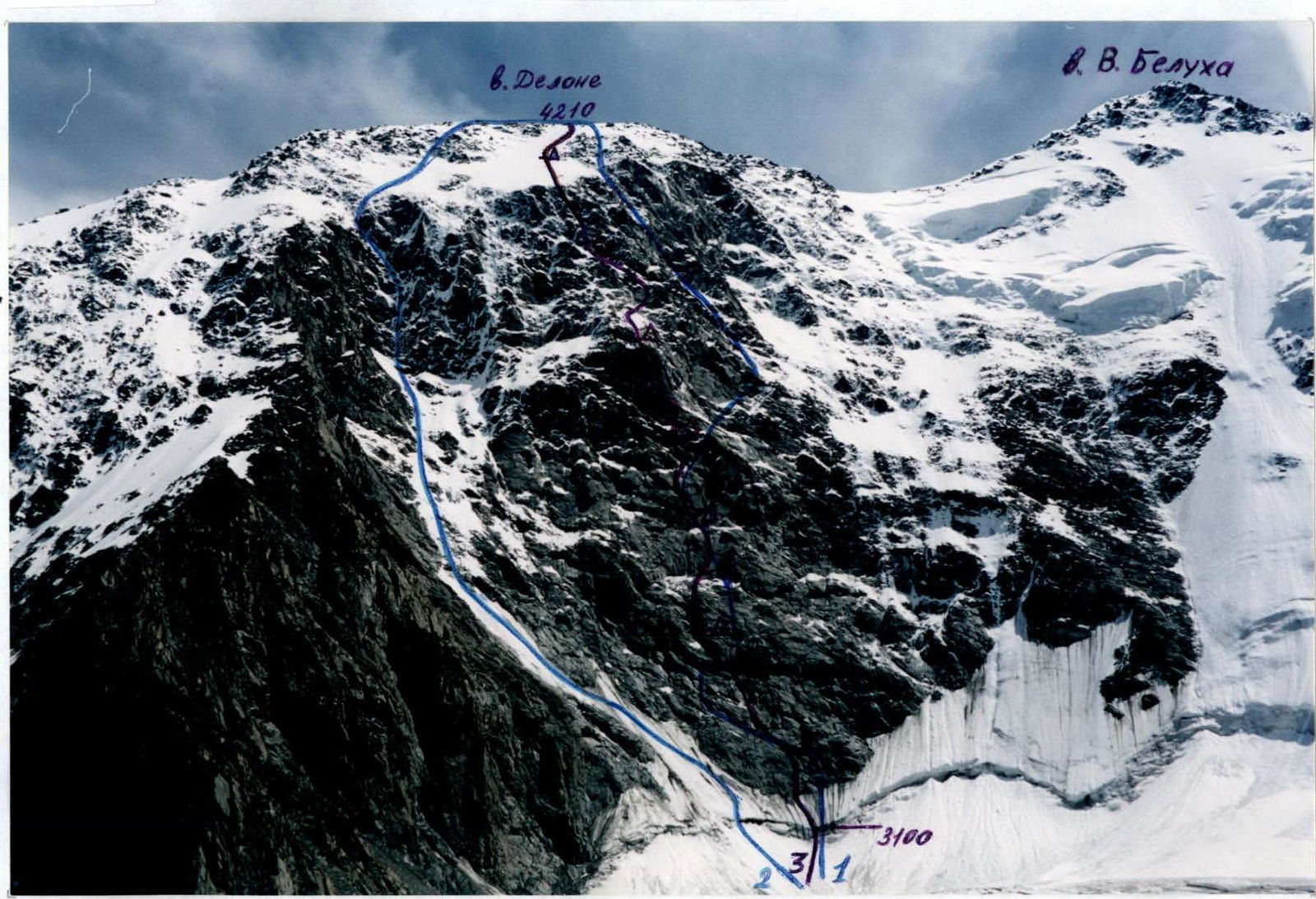
- Northwest wall 5B (k), G.G. Andreev, 1972 ("through the belly").
- Along the left part of the Northwest wall 5B (ls), 1997 (not classified ?).
- Through the center of the Northwest wall 6 (k), Kirikov—Proskurin, 2003.
View of Delaunay Peak from the Western Plateau of Belukha (July 26, 2003).

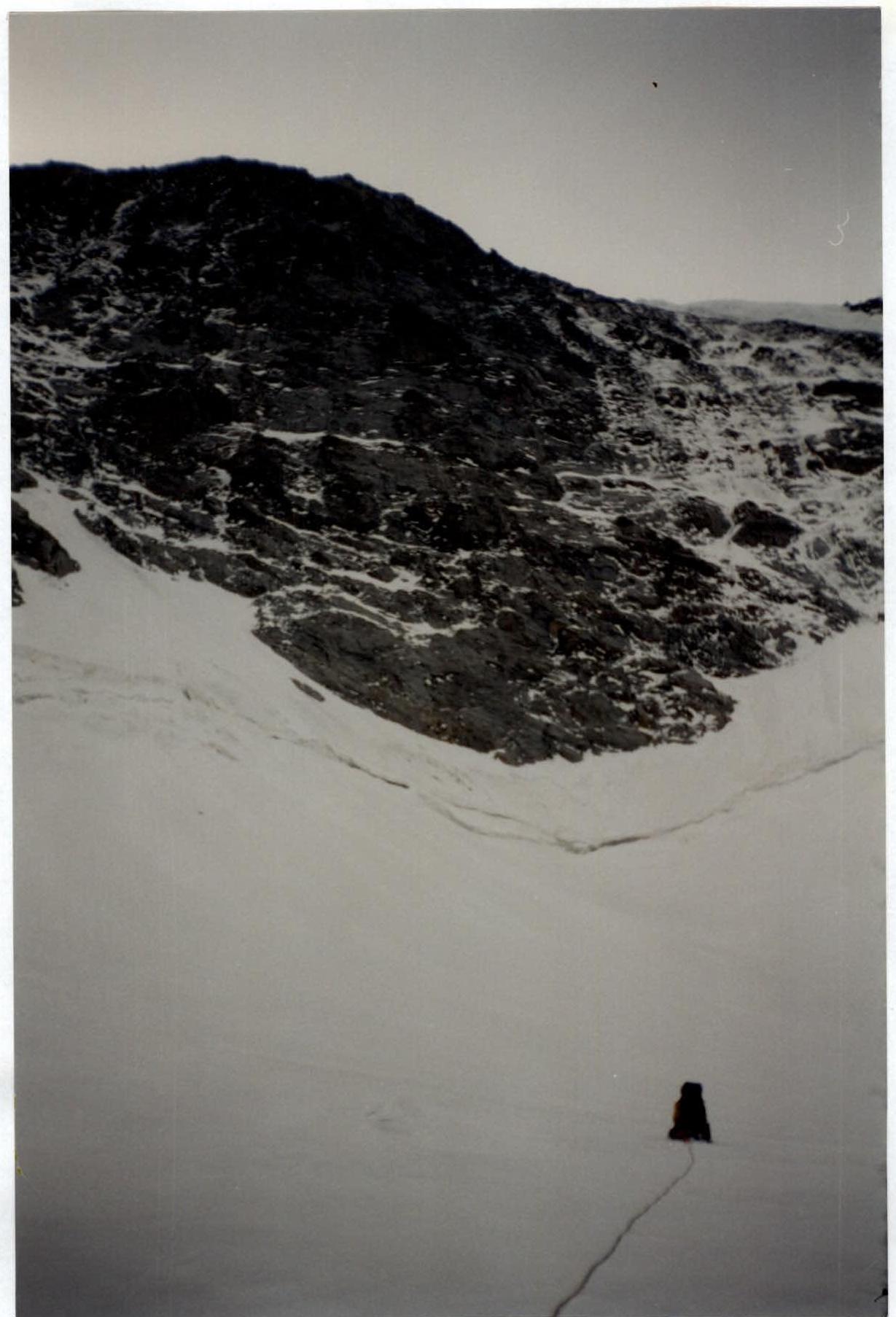
View from under the route (May 5, 2005)
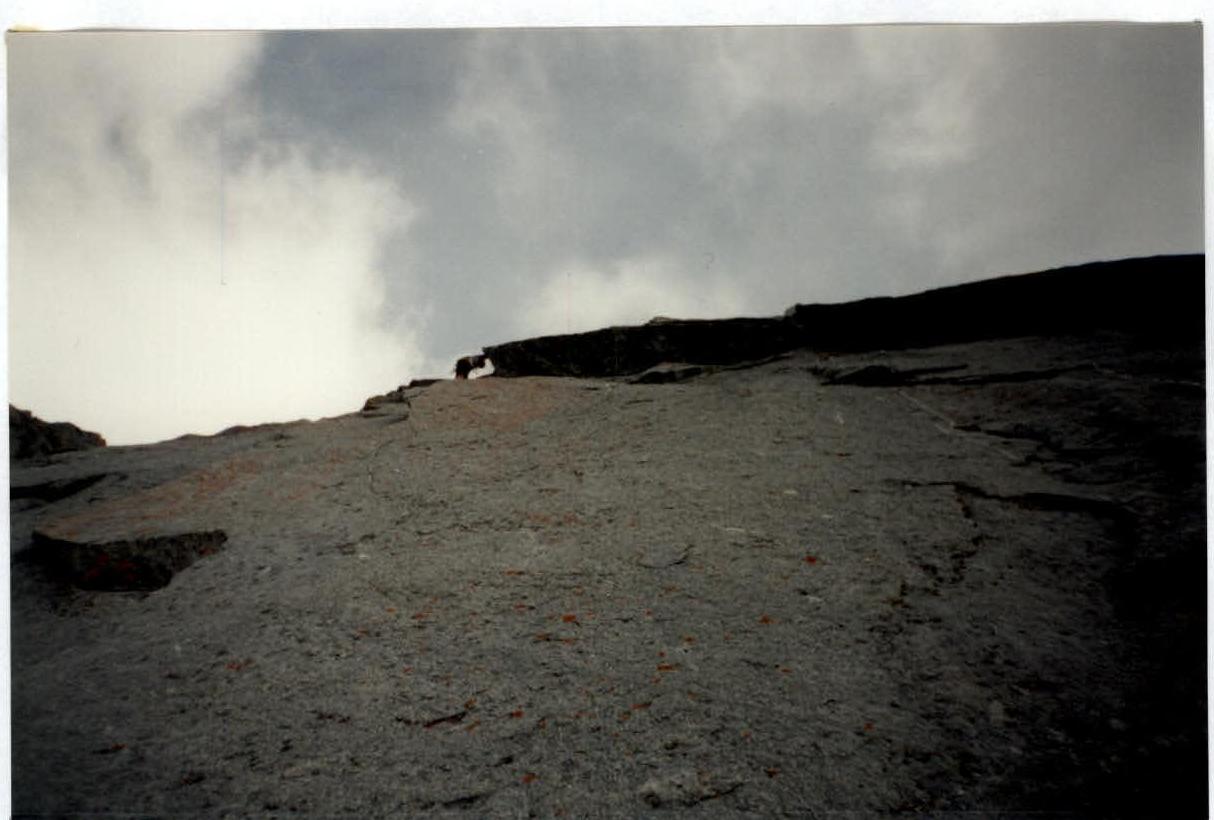
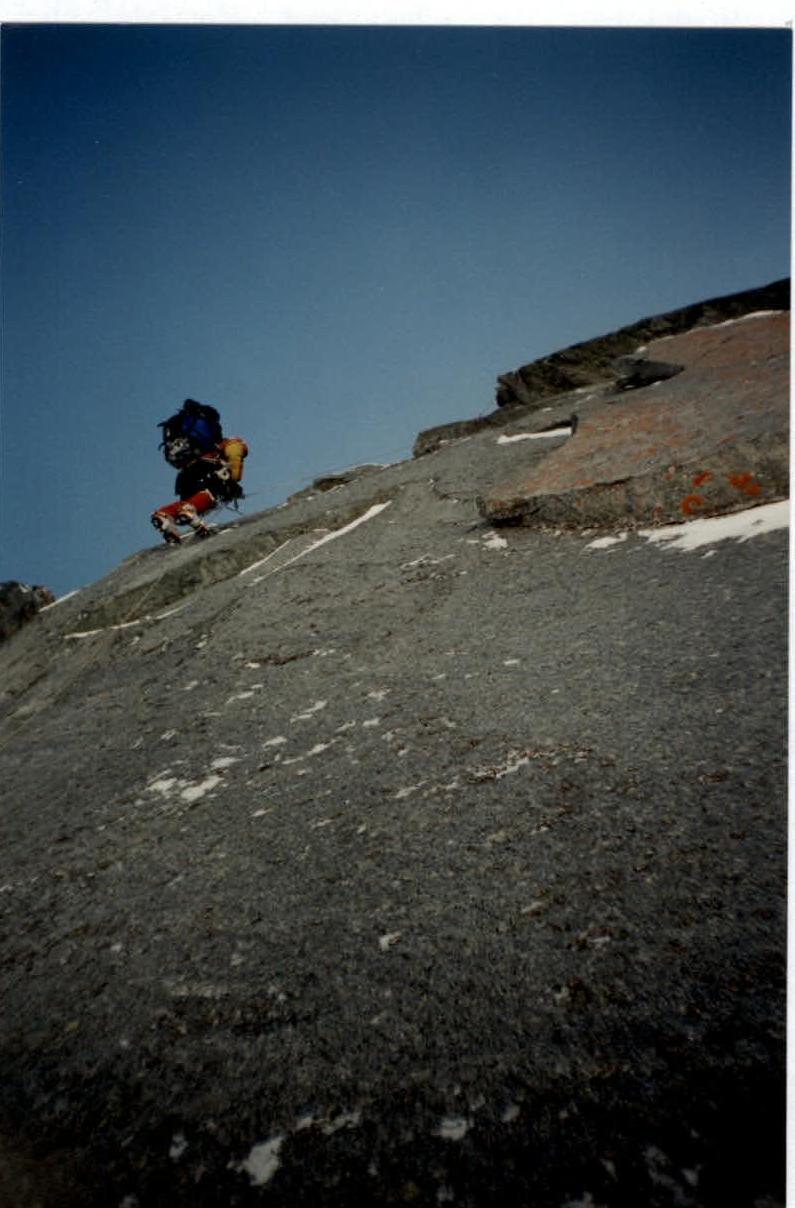
Passage of the 1st crux (May 6–7, 2003)
Our epic in numbers. Emotions
April 29. Departure from Tomsk on the night of April 30. The weather outside is unpleasant, around zero, damp, chilly, with wet snow falling. It's cold in the car, and I immediately get a toothache. I travel to Gorno-Altaisk with Valera Plotnikov, who conveniently happened to be in Tomsk, and is also heading through Barnaul and Gorno-Altaisk to Ust-Sema.
April 30. Arrived near Barnaul by 7:00. Slept for half the day at the rescuers' base, walked around the city, and bought some small items. Barnaul — Gorno-Altaisk. On the way, we inadvertently devoured all the red fish bought for the mountain under Barnaul's beer. However, it was still quite raw and heavy, but it went well with the beer. In the evening, I arrived at the rescuers' base in Gorno-Altaisk, where we had planned to meet with Sasha Proskurin. There was a grand pre-holiday drinking party at the base, and... Kolya Ziatkov was on duty. I fell asleep on the warehouse floor in the basement, where it was quiet. Around 3:00 AM, Sasha arrived, brought by his parents, who were heading to somewhere in Altai for the holidays.
May 1. Woke up at 5:30. Packed our gear. Drowsy and not fully rested, we made our way to the bus station. There, we quickly arranged for a taxi. Gorno-Altaisk — Tyungur. (Route taxi, travel time ~5–6 hours; cost 500 rubles/person, initially asked for 4500 rubles for a private car). We made a stop in Ust-Koksa. Bought some items. Sausage and tablets. My toothache was getting worse, but the pain had subsided a bit. Arrived in Tyungur at 14:00. Hired horses for transportation to Ak-Kem. It wasn't easy to agree; it's not the season, and everyone is eager to relax. Eventually, we agreed for 2000 rubles. Paid for two horses. One horse was ridden by an Altaian, and the other carried part of our gear. The horses were thin and weak due to hunger. The Altaian was careless, apparently lazy to prepare enough fodder for the winter. (In season, the price for horses ranges from 400 to 500 rubles/day. The ascent to Ak-Kem lake takes 1.5–2 days with horses, but you have to pay for three days, as the day of descent with horses is usually included. Additionally, the price usually includes a horse for the accompanying Altaian driver, although that horse doesn't actually carry a load. The total cost for horse transportation is around 1200–1500 rubles, plus the horse for the Altaian. The horses carry 80–100 kg of gear. There can be issues with Altaian drivers, such as losing part of the gear or not delivering it due to drinking or hunting. It's ideal to arrange with acquaintances or have recommendations. Bargaining is acceptable.)
We left Kucherla at 18:00 and crossed Kuzyak by ~10:00 and spent the night in a hut under the pass. The Altaian, Yura, started drinking diluted alcohol, which he was carrying, on the pass. We didn't immediately notice and strictly forbid it. However, he was riding separately, making it hard to monitor. By night, the Altaian began to hallucinate: didn't recognize us, and became aggressive. Tried to fight and was scared of some spirits (local Altaians have their beliefs, with their gods, spirits, holidays, superstitions, and scary stories). The Altaian's behavior was unbearable. His favorite "song" was: "Oh, how hard it is for me, a poor and good guy, to live here: no money, no work, and it's hard to work, but bad city people do nothing and have everything, and good rural guys can't live normally." We considered whether to hit him or not, but hitting was risky as we still had to walk a considerable distance to the lake, and being without horses would have unnecessarily prolonged our journey. We hid knives and axes. Around 1 AM, I took the drunk Altaian 300 m away from the hut, and he wanted to "sort things out." I left him and returned to the hut. It was pitch dark outside. To get some rest, we moved to the roof of our hut. It was cool but quieter. The Altaian's loud behavior continued until around 5:00 AM when he managed to get back to the hut. Naturally, we couldn't sleep normally after that. Thankfully, he seemed a bit more sober.
May 2. Started at 9:00 AM from our night's resting place. My cheek was throbbing. The toothache had almost stopped, but the swelling was significant. Yura with the horses and gear was supposed to leave 10 minutes later. We agreed to wait for him near "Three Birch Trees," a notable stopping point about an hour's walk away. We reached the stopping point, sat down to wait. The Altaian appeared about half an hour later. He could barely stay in the saddle, speaking incoherently. He rode past us, which suited us fine. We didn't want to walk alongside him due to his behavior. As it turned out later, he was already quite drunk when he passed us and didn't recognize us. During the hour we


