
Passport
I. Rock climbing category 2. Pamir-Alay, Turkestan Ridge, Ak-Su river gorge 3. Peak 4240 (Slesova) via North wall (Pogorelov's route) 4. 6B complexity category, third ascent 5. Height difference 810 m, length — 986 m.
Length of 5–6 cat. diff. sections — 874 m, including 6 cat. diff. sections — 789 m. Average slope of the route — 71°. Average slope of the wall section — 81°.
- Pitons driven: rock 128/48, chockstones 276/138, bolted 2/2+36 х – previously used
- Team's travel hours — 37.5 h Days on the route — 3
- Overnights: 2, two in hammocks, two lying and two half-lying on ledges
- Team leader: Gennadiy Pavlovich Kirievskiy USSR Master of Sports
Team members:
- Timofey Alekseyevich Gorobets CMS
- Renat Nurulovich Zaitov USSR Master of Sports
- Viktor Ivanovich Igolkin USSR Master of Sports
- Vladimir Anatolyevich Lutsenko CMS
- Sergey Yuryevich Soldatov USSR Master of Sports
- Coach: Viktor Ivanovich Igolkin USSR Master of Sports
- Route reconnaissance July 2–3, 1991 ascent start July 4, 1991, summit — July 6, 1991, return to base camp July 6, 1991
- Organization: MISIS alpine club, Magnitogorsk.
Team captain G.P. Kirievskiy
Team coach V.I. Igolkin
Senior coach A.V. Ivanov
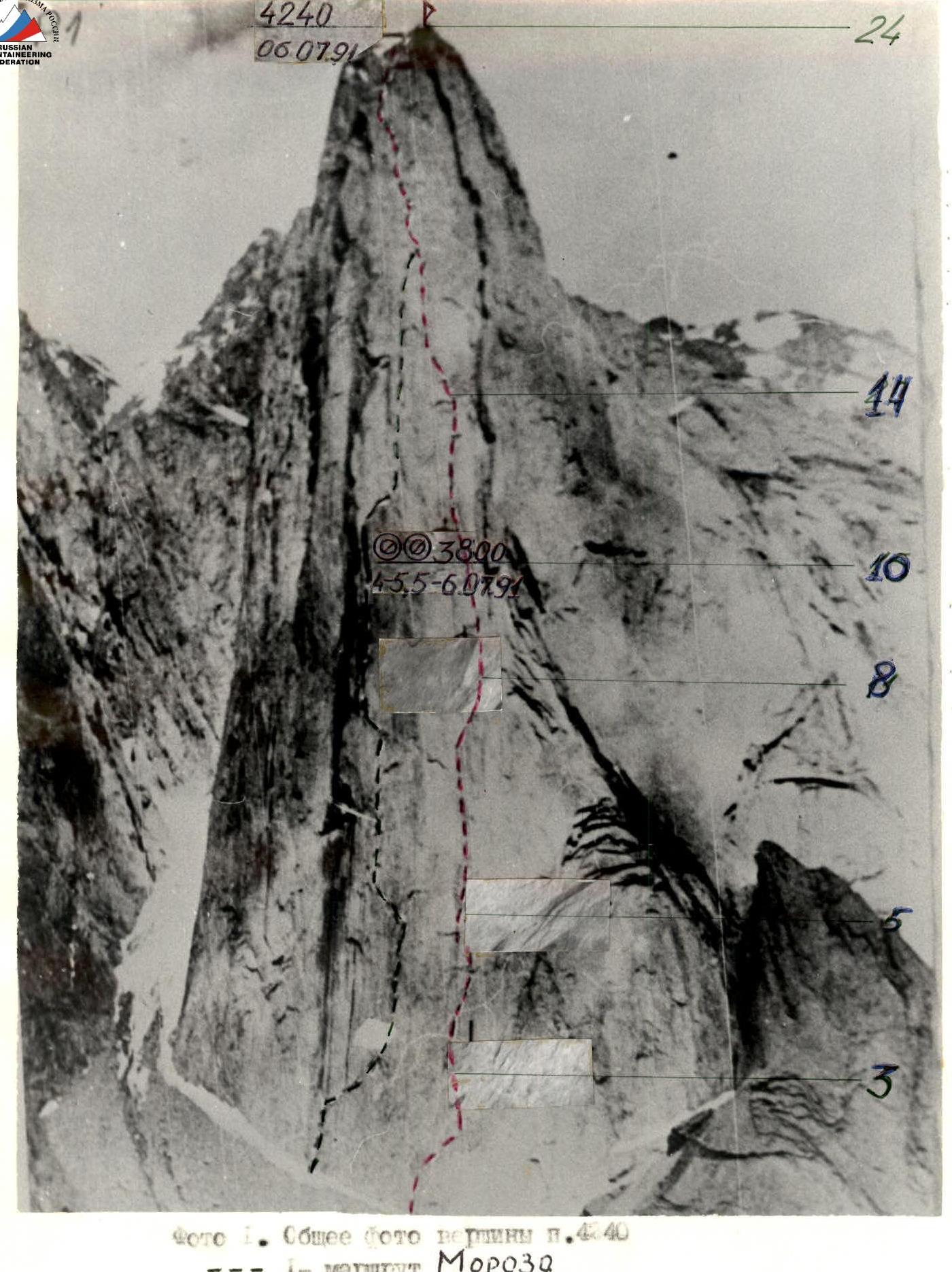
Photo 1. General photo of peak 4240 summit.
1st Moroz route
2nd Pogorelov route
Photo taken on June 16, 1988, distance 2000 m, "Teleis-44" lens.
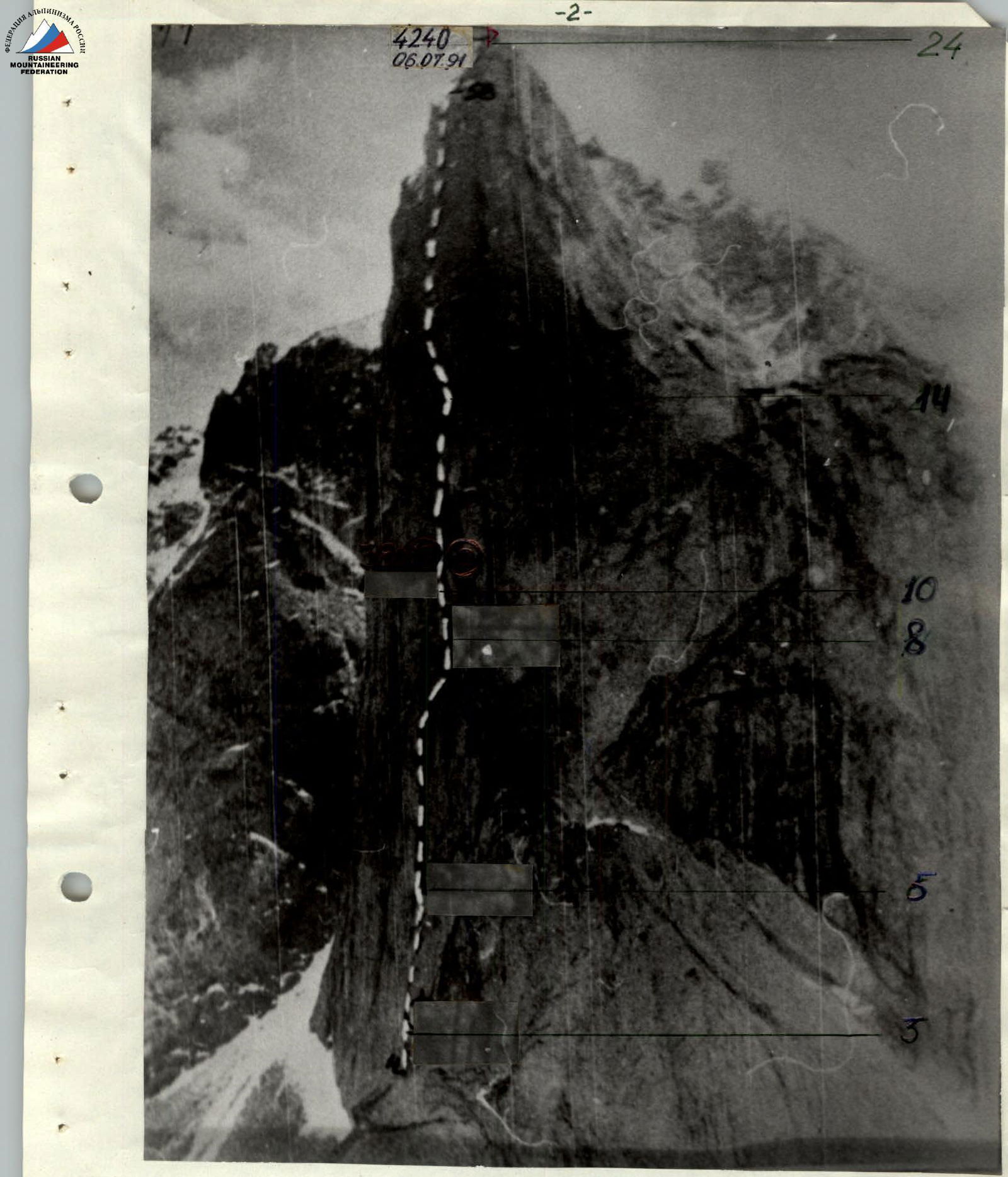
PHOTO 2. WALL PROFILE FROM THE RIGHT.
Photo taken on August 17, 1988, 11:30. "Helios-44" lens. Distance to object 2.5 km. Height 3400 m.
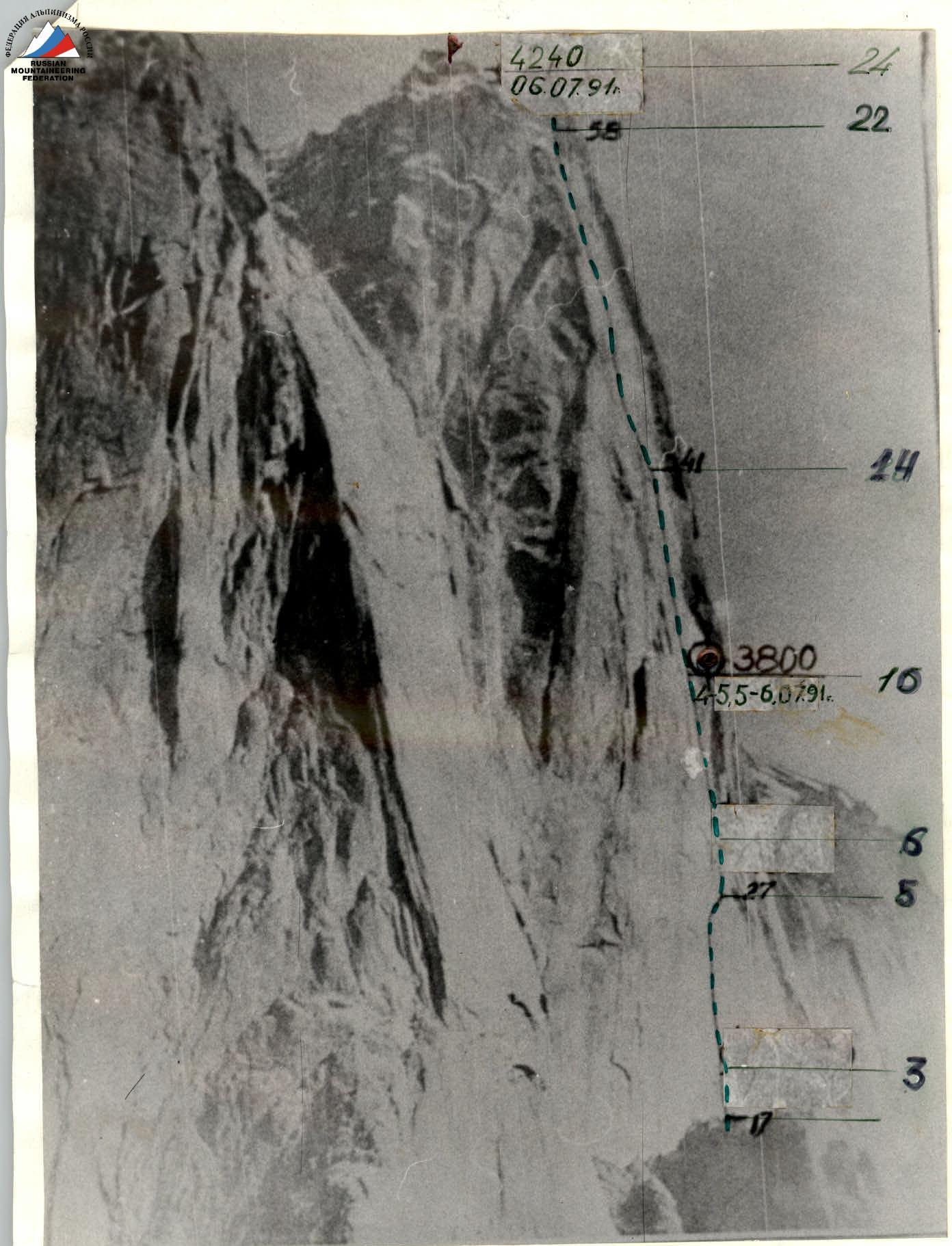
PHOTO 3. WALL PROFILE FROM THE LEFT. Photo taken on June 13, 1988, "Helios-44" lens, distance to object 4 km. Height 2900 m.
Tactical actions of the team
The strategy for participating in the rock climbing category of the USSR Championship according to the 1991 formula (two ascents within 10 days) considering the timeframe, region, and weather conditions (the improbability of having more than 4 consecutive days of good weather) dictated the choice of tactics for each ascent. On one hand, making the first ascent in a competitive rhythm and ensuring a time reserve for the second, it was necessary to maintain sufficient potential for the final ascent.
On the other hand, considering the preparation of competing teams (long-term work by teams from Leningrad and Sverdlovsk in this area), it was necessary to choose the most challenging routes and complete them before the competitors.
This justified an early arrival in the area (despite less favorable weather conditions at the time).
The Leningrad team followed a similar strategy, arriving even earlier and benefiting from more favorable circumstances due to the novelty of their route.
To counter this, we relied on:
- a faster ascent pace;
- competent (technically and psychologically) training at the UTS.
The choice of a training route with 6B cat. diff. ("Zolotoy" 1988) and its completion by a group of four and a pair from the team before the Championship served this purpose.
The team's tactical plan was based on two possible route scenarios depending on weather conditions. A prerequisite for success was considered to be the mandatory preliminary reconnaissance of the route up to a section with a good ledge for overnight stay. Depending on weather conditions, reconnaissance was planned for 2 or 3 days. The ascent itself was planned to be conducted quickly with one overnight stay on the wall on a suitable platform.
During the reconnaissance days, it was planned to take turns working on the route:
- in a trio: Lutsenko – Gorobets – Zaitov;
- or in a pair: Kirievskiy – Soldatov.
Each team member's technical skill allowed them to work confidently and quickly on any section of the route (a pair completed "Yellow wall" 5A cat. diff. in 34–32 h (Asan 6B cat. diff. – Timofeeva)).
The first to work on the sections were:
- R0–R12 Lutsenko;
- R12–R23 Gorobets;
- R23–R32 Soldatov;
- R32–R41 Igolkin;
- R41–R51 Kirievskiy;
- R51–R61 Soldatov.
Safety was ensured by:
- choosing the direction of movement;
- gathering participants in areas protected from accidental falling rocks;
- the first person in the group using a double rope with "Edelrid";
- mandatory movement on fixed ropes with belay.
There were no falls or injuries among the participants.
Due to bad weather, overnights #1 and #2 were organized on a ledge at the section:
- two in hammocks;
- four half-lying on ledges.
Meals were twice a day (morning and evening), and in addition:
- individual high-calorie snacks in a bag and a flask with a drink.
Due to the lack of water on the route, 12 liters of water were taken. For efficiency in meal preparation and to save fuel, an autoclave was used. Nutrition was planned with a reserve for bad weather.
Communication with the base camp, where the rescue team was located, was carried out via RPP-70 radio:
- directly;
- or, with strong interference, through a repeater under the route (height 4810 m) or on the pass under Duchtaricha peak.
An observer with a radio and binoculars was constantly stationed under the route.

Comments
Sign in to leave a comment