
Ascent Passport
- Technical class
- Pamir-Alay, Karavshin gorge
- Peak 5013 (p. Gornyak), via the center of the North-North-East wall, variant: Sidorov, 1992
- Proposed category of difficulty — 6B
- Height difference: 1150 m, wall — 1100 m, of which 5–6 cat. grade — 850 m: average steepness — 75°, including the wall part — 78°
- Route length: 1300 m, wall part — 1200 m.
- Pitons driven: rock 168/31 chocks 203/38 ice screws 32/11 bolt hanger 8/5
- Team's working hours — 46 hours, 7 days.
- Overnights: 4 lying on narrow ledges, 3 — sitting.
- Leader: Valery Pavlovich Shamalo, Master of Sports of Russia Participant: Kirill Vladimirovich Korabelnikov, Candidate for Master of Sports, 3rd category instructor.
- Coach: Igor Vasilievich Stepanov
- Approach start — July 26, 1998. Route start — July 30. Summit — August 7. Descent — August 8. Return to base camp — August 10.
- Organization: AltSport club, St. Petersburg The ascent was made within the framework of the XVI Russian Alpine Championship 1998 in the technical class.
 Photo 2. Detailed shot of the NNE wall of p. 5013, from Prokhodnoy pass. Lens: Jupiter-37. Shooting time — 18:30.
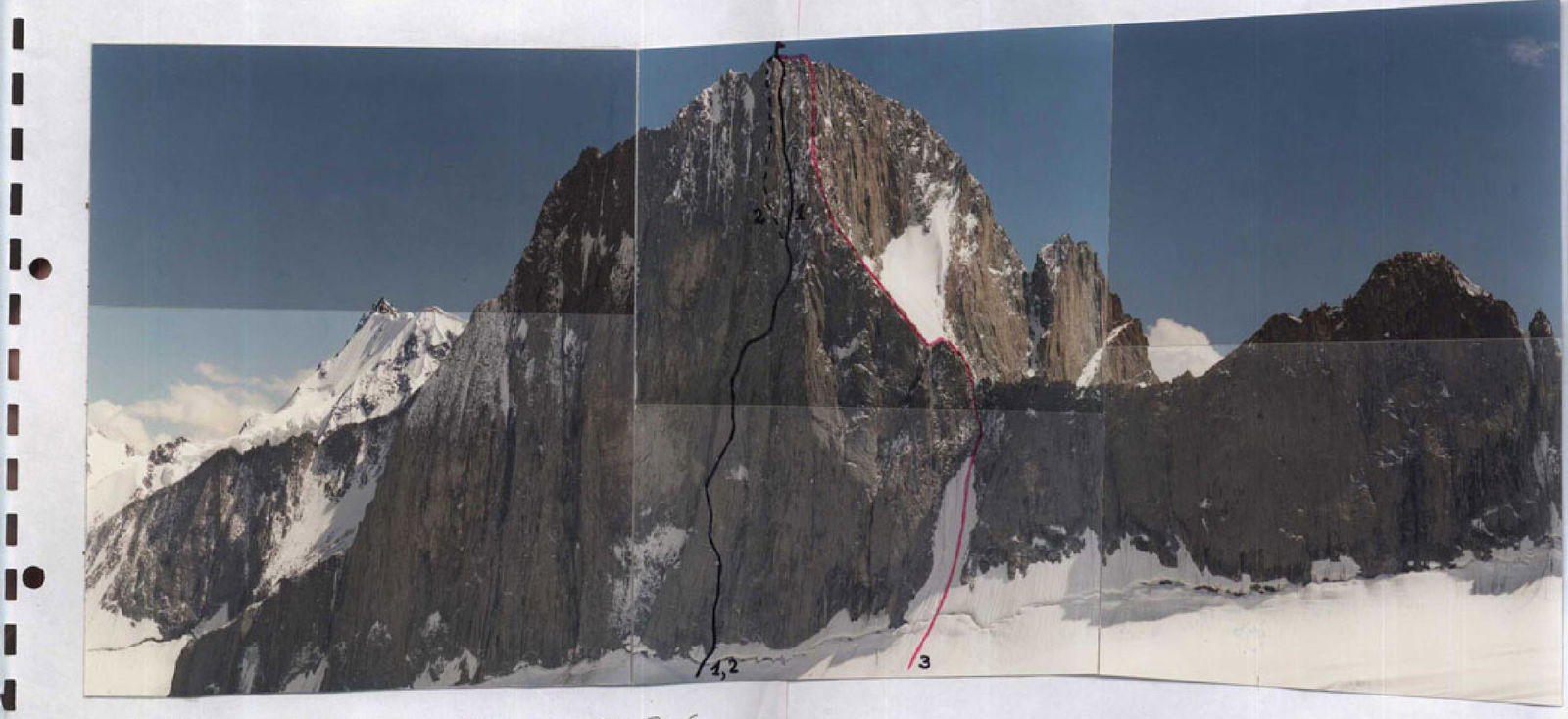 Photo 1. Panorama of the northern wall of p. 5013 from Prokhodnoy pass. Lens: Jupiter-37, shooting time — 18:30.
- Route climbed by the duo V. Shamalo — K. Korabelnikov, 1998.
- Route via the center of the NNE wall, 6B cat. grade., Sidorov, 1992.
- Route via the NW ridge, 5B cat. grade., Lenivkova, 1990.
Description of the Ascent Area
The object of the ascent by the team within the framework of the Russian Championship in the technical class was Peak 5013 (p. Gornyak), located in a spur of the Turkestan Range in the Karavshin gorge area, Pamir-Alay.
This area has several peaks known for their extremely complex rock walls:
- Aksu, 4810
- Asan
- others
The area has been explored by climbers since 1986.
The 5013 m peak is difficult to access, as the approach to the Preobrazhensky glacier, where the northern walls of the peak drop, takes several days from the Vorukh settlement. The path passes through:
- the Karavshin river valley
- the Aksu gorge
- the Aksu-Rama pass (1B cat. grade)
- the Prokhodnoy pass (n/c).
There are only two routes to the summit, each climbed only once:
- via the NW ridge 5B cat. grade (Lenivkova)
- via the center of the NNE wall 6B cat. grade (Sidorov, 1992).
The route chosen by the team was climbed by Sidorov's group of 5 people in 1992, and it was their second attempt.
To tackle this extremely challenging task, the first ascendants organized a gathering on the Preobrazhensky glacier with helicopter support to transport the entire team to the glacier and back.
Our team climbed this wall in autonomous mode, without helicopter support, without a base camp (not counting the tent under the wall), starting from the Karasu gorge camp and returning to the Vorukh settlement in 19 days.
Brief Technical Description of the Route
The route via the center of the NNE wall of p. 5013 is combined, extremely rockfall-prone. In the lower part, the route is predominantly rock, with an average steepness of about 80°.
In the upper part:
- the wall becomes less steep, but verglas appears;
- snow and ice couloirs are present;
- rockfall and avalanches are frequent.
Here, in conditions of almost continuous snowfall, we decided to take a shortcut from Sidorov's route and from R27 instead of traversing left, we went straight up to the summit via snow and ice couloirs, icicles, and ice-filled crevices.
Comparison of Variants:
- In good weather, Sidorov's variant seems more logical, as one can work in rock shoes and not fear ice avalanches.
- In bad weather, dry snow avalanches, relatively safe, come down the couloirs instead of rockfall, and one has to work predominantly using ITO, after clearing rocks of verglas or snow.
Despite being less steep, the upper part of the wall seemed more problematic to us than the lower part.
The route's category of 6B is beyond doubt.
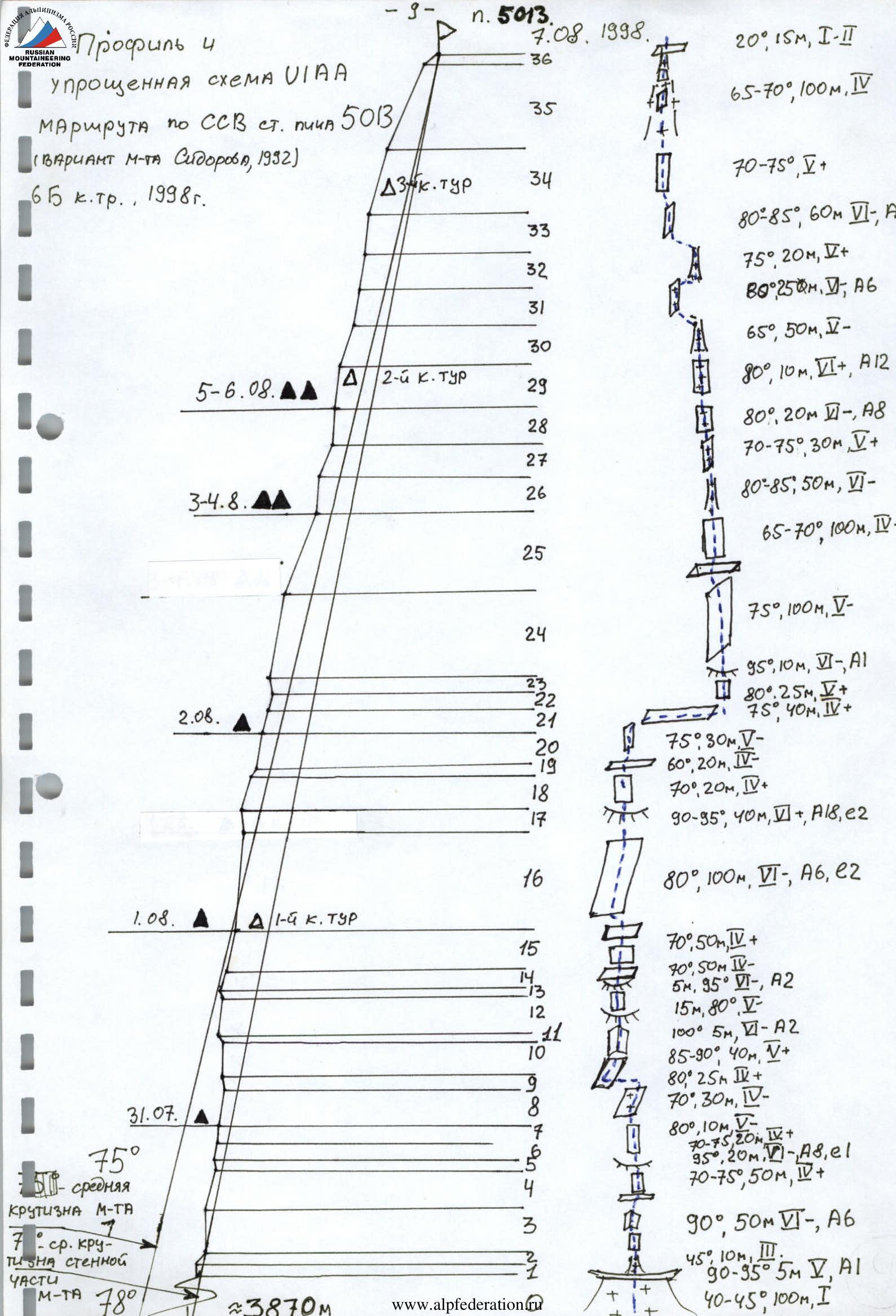
R0. Approach via a snow slope 40–45°, 100 m I cat. grade. Movement without protection. R1. Bergschrund 90°, 5 m V cat. grade. Ice screws. A1. R2. Ice slope. 45°, 10 m III cat. grade. Ice screws, rock piton. R3. Rock wall, inner corner. Overhang. 90°, 50 m VI- cat. grade. Pitons, chocks. A6. R4. Rock wall with ledges. 70–75°, 50 m IV+ cat. grade. Pitons, chocks. Free climbing. R5. Cornice. 90–95°, 20 m VI- cat. grade. A8, e1. R6. Wall with ledges. 70–75°, 20 m IV+ cat. grade. Chocks, pitons. R7. Rock wall 85°, 10 m V- cat. grade. Exit to a snow ledge. Overnight. Chocks. R8. Snow-covered ledge. 70°, 30 m IV- cat. grade. Chocks. R9. Traverse left 75–80°, 25 m IV+ cat. grade. Chocks. R10. Rock wall, inner corner 85–90°, 40 m IV+ cat. grade. Chocks, pitons. R11. Cornice 100°, 5 m VI- cat. grade. Chocks, pitons A2. R12. Rock wall 80°, 15 m V- cat. grade. Chocks. R13. Cornice 95°, 5 m VI- cat. grade. Pitons A1. R14. Ledges 70°, 50 m IV- cat. grade. Chocks. R15. Rock walls, ledges. 70°, 50 m IV+ cat. grade. Chocks. Exit to a snow ledge. Overnight. Three bolt hangers for protection. R16. Rock slabs with small ledges, cracks 80°, 100 m VI- cat. grade. Protection via pitons, chocks, bolt hangers. A6 e2. R17. Vertical wall with micro-cracks and overhang in the upper part. 90–95°, 40 m VI+ cat. grade. Pitons 15–20 mm long, titanium chocks № 1, 2. Skyhooks can be used for relief. A18 e2. R18. Wall with small ledges. 70°, 20 m IV+ cat. grade. Chocks. R19. Ledge 60°, 20 m IV- cat. grade. Chocks. R20. Wall 75°, 30 m IV- cat. grade. Chocks. Overnight on a narrow ledge. R21. Traverse right along snow-covered ledges 75°, 40 m IV+ cat. grade. Chocks. Oblique rappel 15 m. R22. Wall 80°, 25 m V+ cat. grade. Chocks, pitons. R23. Cornice 95°, 10 m VI- cat. grade. Chocks. A1. R24. Rock wall with small ledges 75°, 100 m IV- cat. grade. Chocks, pitons. R25. Snow-covered ledges, walls. 65–70°, 100 m IV- cat. grade. Chocks, pitons. To the right, 30 m from the route, a ledge for overnight. R26. Ice gully, wall 80–85°, 50 m VI- cat. grade. Ice screws, chocks, rock pitons. R27. Snow-covered rocks. Verglas 70–75°, 30 m IV+ cat. grade. Chocks, rock pitons. R28. Rock wall with verglas 80°, 20 m V- cat. grade. A8. Chocks, pitons. Overnight on a platform cut into the ice slope. R29. Rock-ice wall 80°, 10 m VI+ cat. grade. A12. Pitons, chocks, ice screws. 2nd control cairn. R30. Ice couloir 65°, 50 m IV- cat. grade. Ice screws. R31. Bypass left of an ice icicle via snow-covered rocks 80°, 25 m V- cat. grade. A6. Chocks, pitons. R32. Ice gully 75°, 20 m V+ cat. grade. Ice screws. R33. Inner corner. Bypass left of ice icicles 80–85°, 60 m VI- cat. grade. A15. Pitons, chocks. R34. Rock wall 70–75°, 30 m V+ cat. grade. Pitons, chocks. 3rd control cairn. A5. R35. Snow couloir with rock walls 65–70°, 100 m IV+ cat. grade. Pitons, chocks, ice screws. R36. Ridge 20°, 15 m I–II cat. grade. Simultaneous movement.
Team's Tactical Actions
July 25. The group left the base camp in the Karasu gorge and approached the campsite in the Aksu gorge under Peak Slesova. July 26. Waited out heavy rain. July 27. Approached the Aksu-Rama pass, leaving a cache under p. Slesova. July 28. Crossed the Aksu-Rama pass and reached the Preobrazhensky glacier. July 29–30. Conducted observations of the wall, took photos. Studied descent paths, possible route variants. July 31. Climbed sections R0–R7. V. Shamalo worked first. In the afternoon — light snowfall.
The entire wall section:
- The first climber used a double rope («Buuster», France + rigid, Kaliningrad) 50 m long.
- The second climber ascended on fixed ropes.
- One of the backpacks was pulled up on a rope while the second participant ascended.
August 1. Climbed sections R8–R15. K. Korabelnikov worked first. Cloudy weather, no precipitation. Dropped one rope damaged by a rock. August 2. Climbed the most complex part of the route — section R17 and reached the ledges. V. Shamalo worked first. Cloudy weather, but no precipitation. Light snowfall in the evening. August 3. Made a traverse right and reached snow ledges. Heavy snowfall started at noon. By 15:00, stopped for the night, making a pendulum move right to a noticed good ledge. Worked alternately. August 4. Waited out heavy snowfall that continued from morning till evening. August 5. Climbed 2 ropes to section R29. K. Korabelnikov worked first.
- Snowfall started at 10:00, gradually intensifying.
- At 14:00, began cutting a platform in the ice slope on a ledge.
- By 18:00, managed to make a lying overnight.
August 6.
- Hung three ropes up to section R32 by 15:00. V. Shamalo worked first.
- Snowfall started at 11:00, gradually intensifying.
- Hung a cairn on section R29.
August 7.
- Reached the summit by 19:00. K. Korabelnikov worked first, last 2 ropes — V. Shamalo.
- Cloudy weather, fog, no visibility, but no heavy precipitation.
- Hung a control cairn on section R34.
August 8.
- Descended to the Preobrazhensky glacier via the eastern ridge.
- Hung 5 rappels from the ridge to the south side, then bypassed a large icefall on the left and ascended the glacier to the tent left under the wall.
- Descent took about 7 hours.
August 9. Crossed to Aksu-Rama. August 10. Approached the cache in the morning, where they left money and documents. Found that the cache was missing. August 10 – 22. Journey to St. Petersburg.
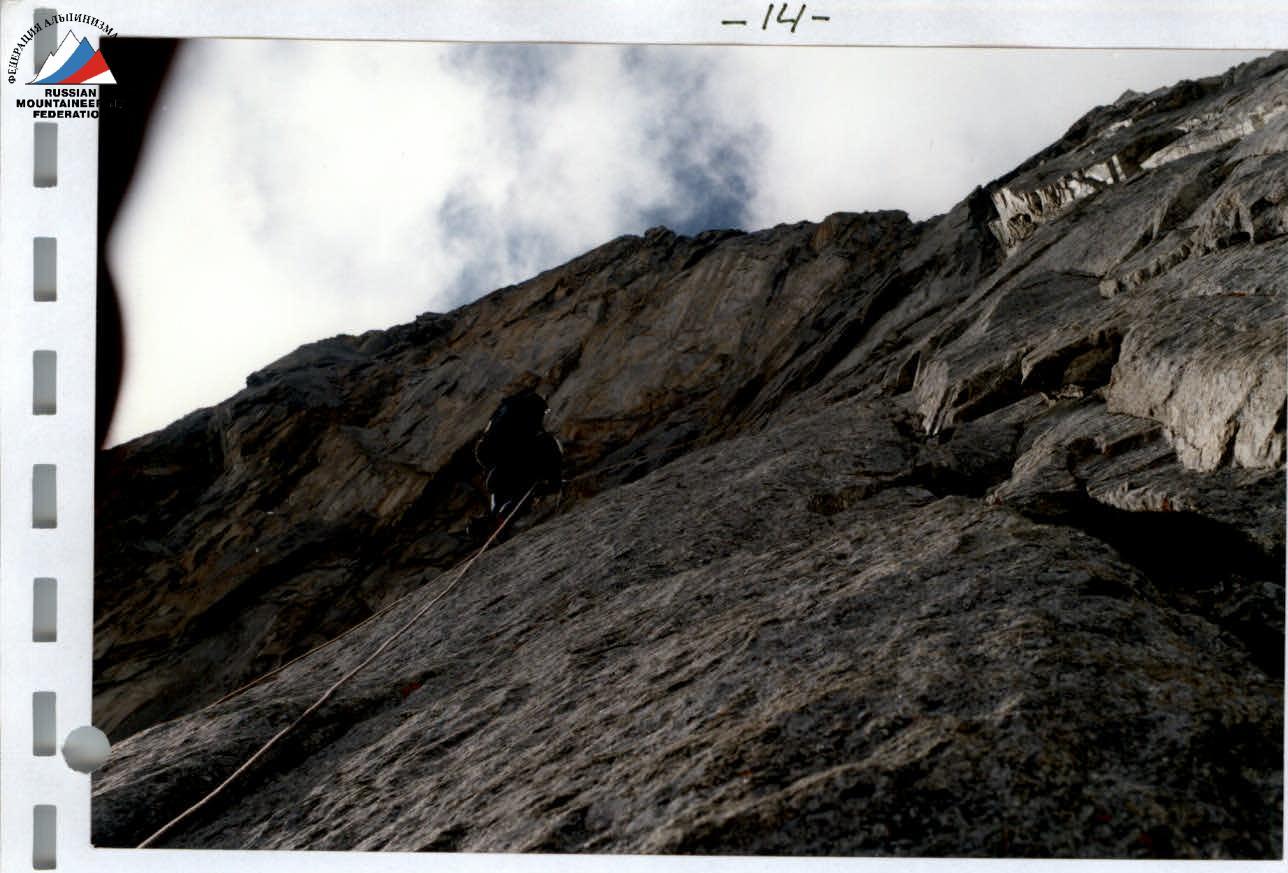
 August 2, 1998 — ascent via the rope fixed on August 1, 1998 (R16).
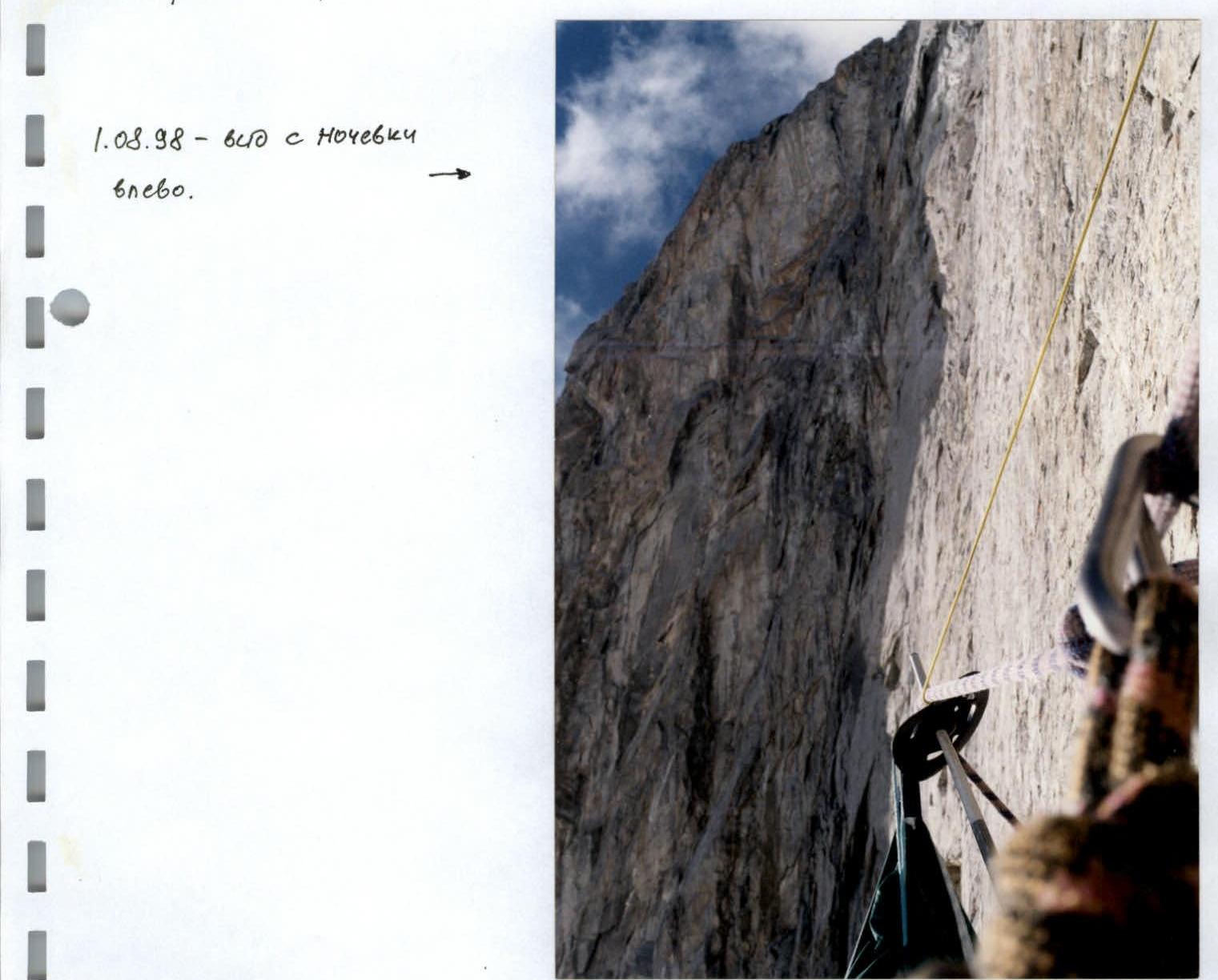
 August 1, 1998 — view from the overnight bivouac to the left.
 August 3, 1998 — traversing right (R21), view from the overnight bivouac.
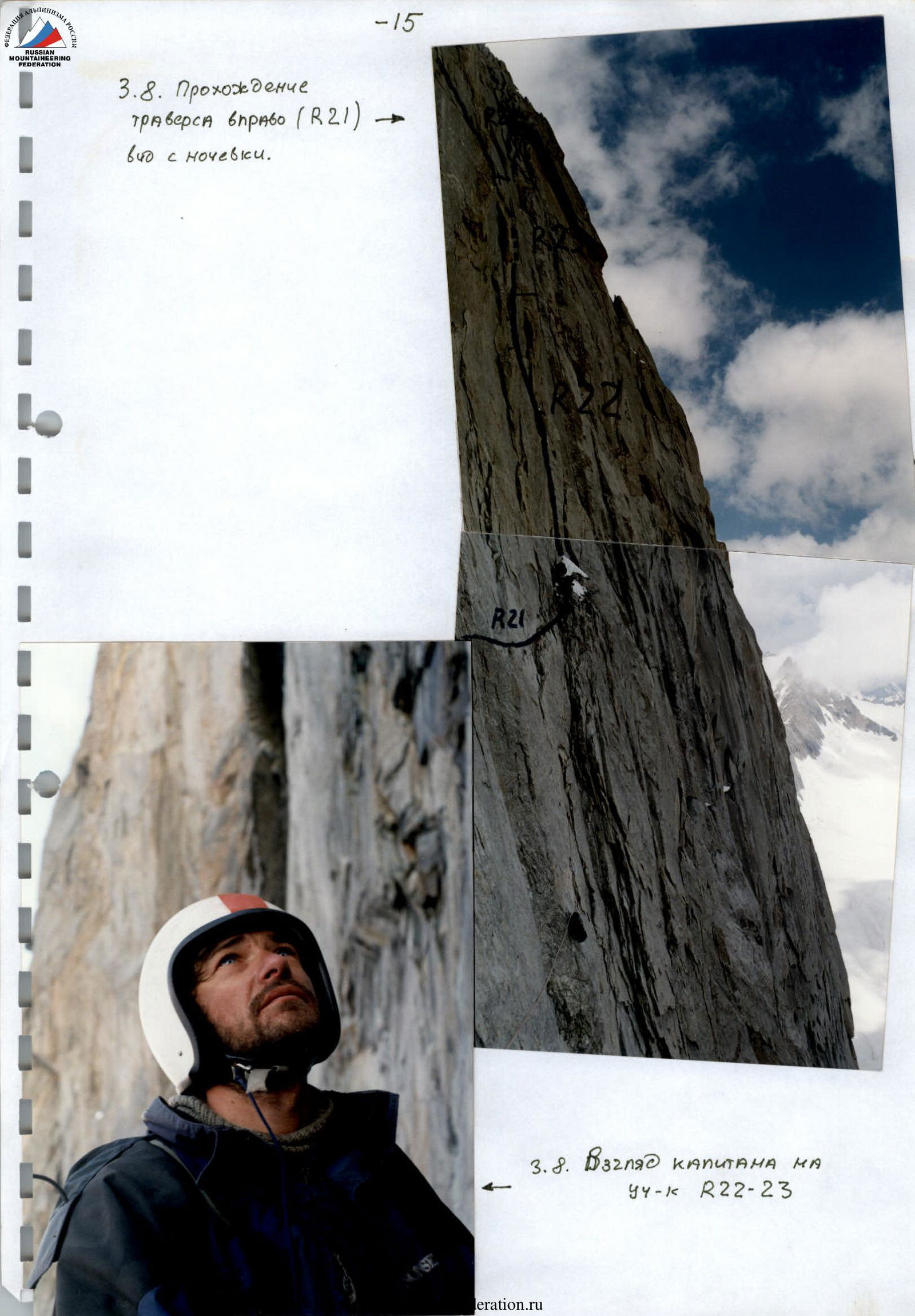 August 3, 1998 — captain's view of sections R22–R23.