
Passport
I. Technical Class 2. Pamiro-Alai, Turkestan Range, Ak-Su valley 3. Peak Ak-Su (5217) via 10-B rib 4. Proposed 6A first ascent 5. Route characteristics:
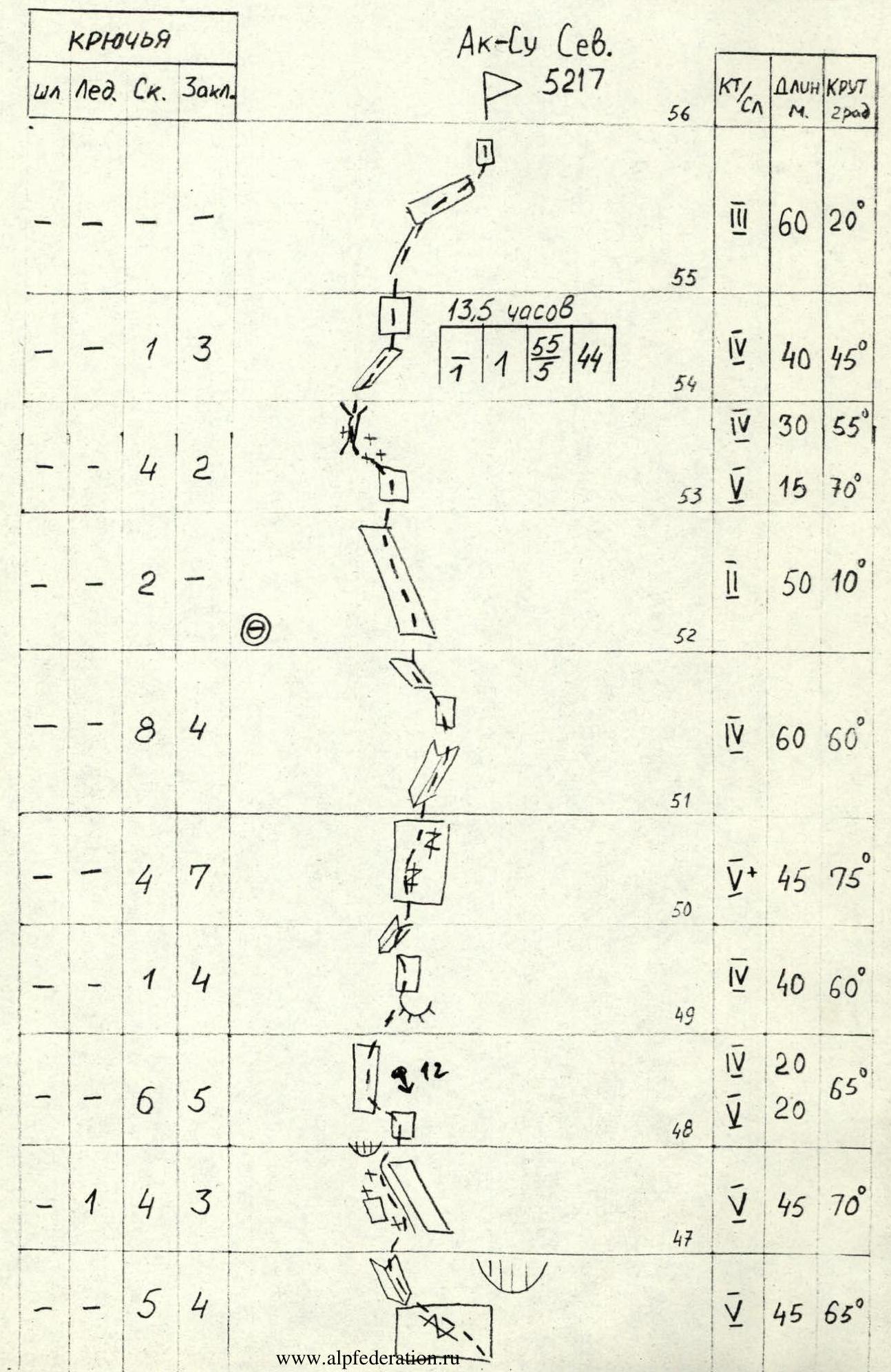
Elevation gain – 1350 m Length – 2600 m Length of sections with 5–6 difficulty grade – 1217 m Average steepness of the main part – 71° Steepness of sections with 5–6 difficulty grade – 80°
-
Number of climbing hours – 51 h Days – 6
-
Overnights: three lying down, two semi-reclined
-
Team leader: Petrov Nikolay Evgenievich MS
Team members:
- Egorov Dmitry Anatolievich CMS
- Mikhailov Sergey Vladimirovich MS
- Stetsenko Vladimir Dmitrievich CMS
- Yanochkin Vladimir Ivanovich MS
-
Coach: Bashkirov Vladimir Leonidovich MS
-
Arrival to the route on August 8, 1990 Summit on August 13, 1990 Return on August 15, 1990
II. Organization: SK MGS VDFSO trade unions
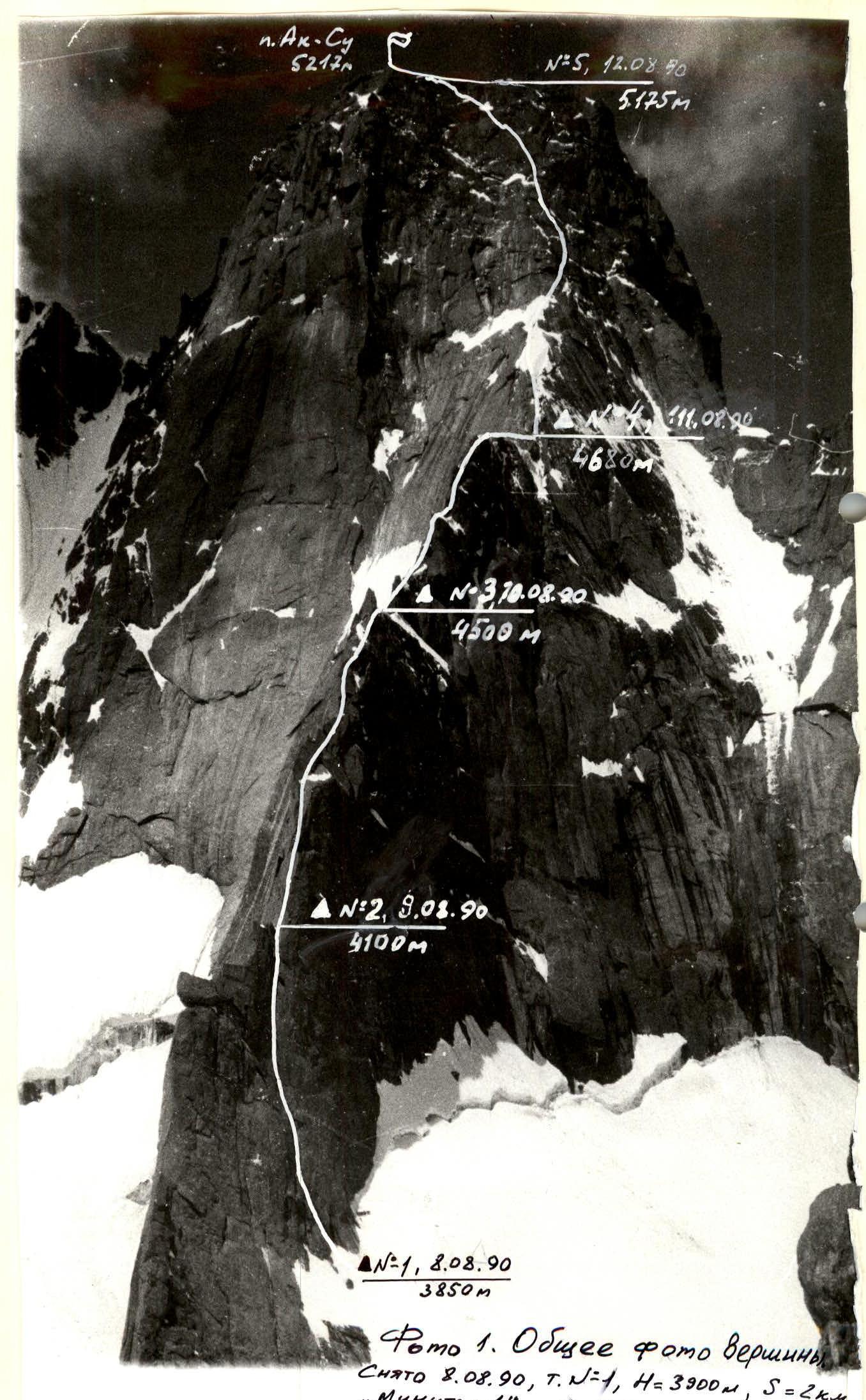
Tactical Actions of the Team
The tactical plan, drawn up based on reconnaissance and observations, was executed without deviations in time and overnight locations.
On the route, a rotating system was implemented for the lead rope team, with each team taking the lead for half a day. The teams worked in sections and days as follows: denoted by the first letter of the surname, first being the lead.
August 8. Sections:
- R0–R3 (processing)
- R3–R9 (Y–P)
August 9:
- R9–R11 (M–S)
- R11–R21 (S–E)
August 10:
- R21–R28 (P–Y)
- R28–R33 (M–S)
August 11:
- R33–R39 (E–M)
- R39–R43 (Y–P)
August 12:
- R43–R47 (P–M)
- R47–R52 (S–E)
August 13:
- R52–R56 (E–M)
Additional information: the group passed through the couloir early in the morning and reached the saddle between peak 4600 and Ak-Su. The approach to the route took approximately 1.5 hours. The P–Y team led the processing. The overnight stay was on the glacier.
On the morning of August 9, the entire group left the bivouac and approached the first overnight location. Climbing on this section was quite challenging, involving the use of artificial technical aids (ITOs). The route followed an oblique system of cracks, making this part of the route objectively safe. After some processing, the overnight location became habitable. They slept in a semi-reclined position in a small rock niche. On the same day, the rocks above the overnight location were processed. Teams M–S and S–E worked on this day.
August 10. P–Y led the way. The path was very logical. The route followed rocky slabs with limited handholds. A ledge was found for a good overnight stay. From this ledge, M–S proceeded. The ledge was used for an overnight stay.
August 11. E–M led the way. The path followed walls with pronounced relief—wide cracks and good handholds. Later, Y–P took the lead. This section was one of the most challenging and required the full range of technical skills. In the second half of the day, rocks started falling into the bastion, so it was decided to ascend the bastion the following day.
August 12. Early in the morning, P–M led the way. The climbing was very challenging with few handholds and required the use of ITOs. The traverse to the eastern ridge was particularly difficult. Bolt hangers were used for safety. After reaching the eastern ridge, S–E took the lead. On this day, bad weather began, which lasted for five days and significantly complicated the team's actions. A decent overnight location was found, and the group decided to process the section above it, as the weather was deteriorating.
August 13. The weather was bad on this day, but the path to the summit was relatively straightforward, and after reaching the summit, the group began their descent.
The descent took three days in bad weather. The team descended to the glacier on August 15, 1990.
During the ascent, the full range of equipment was utilized. The lead climber worked with a double rope. All rappel stations were set up on two to three anchors. The rappel lines were tied together and at several points.
There were no falls or injuries during the ascent. Overall, the team had a technical and physical reserve for unforeseen situations.
The optimal selection of food allowed for full-fledged, hot, two-meal-a-day nutrition, with snacks during the day.
List:
- Hot two-meal-a-day nutrition
- Snacks during the day
To save time, non-climbing teams prepared meals on the days they were not leading.
Throughout the ascent, the team maintained stable communication with the rescue team in the camp and with the KSP of the region.
KPO4BA вн. Хед. Ск. 30 км.
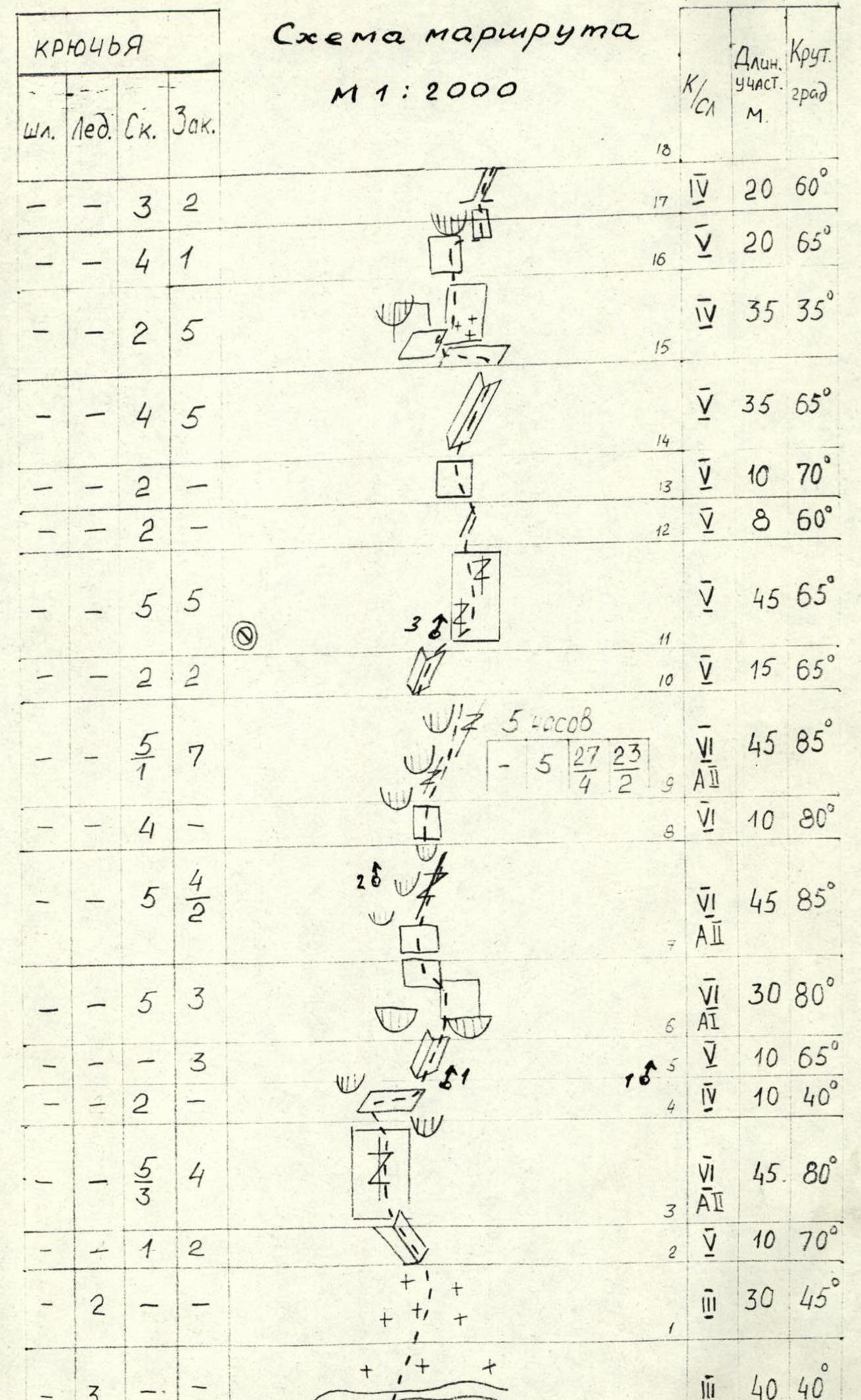
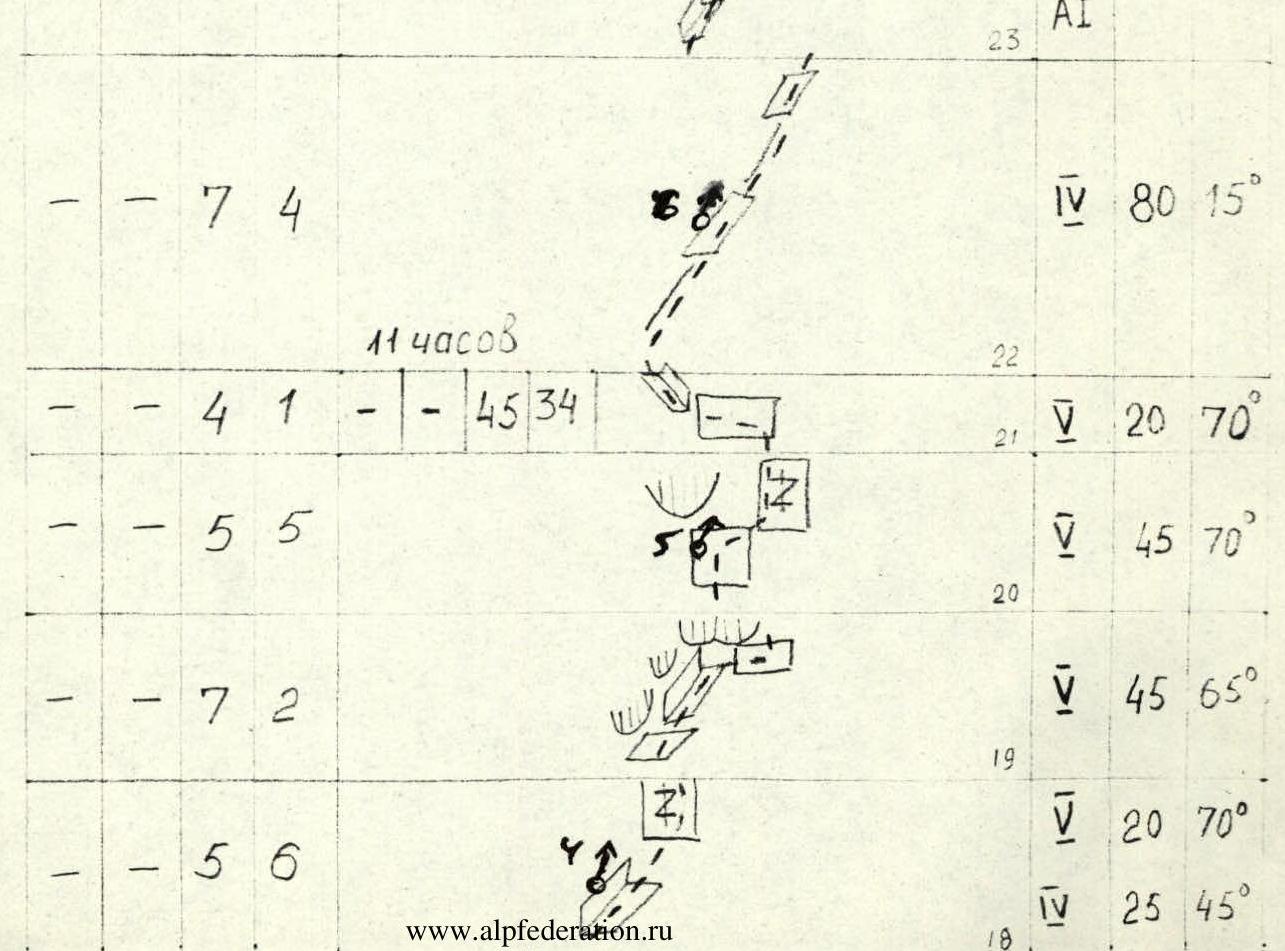
-85-
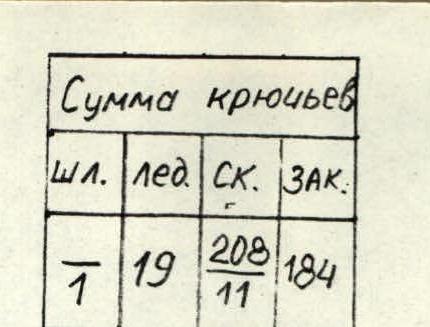
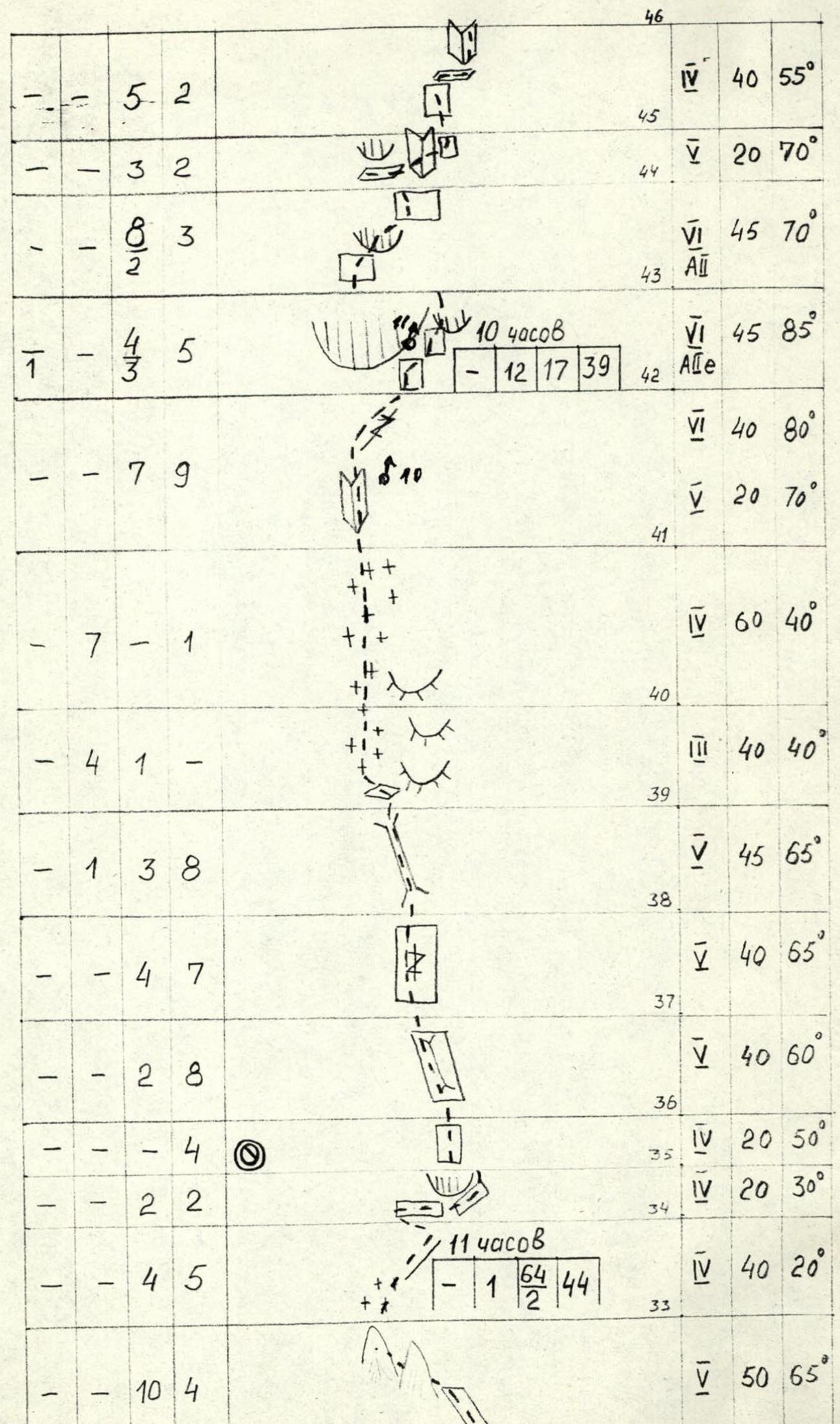 Total climbing hours: 51
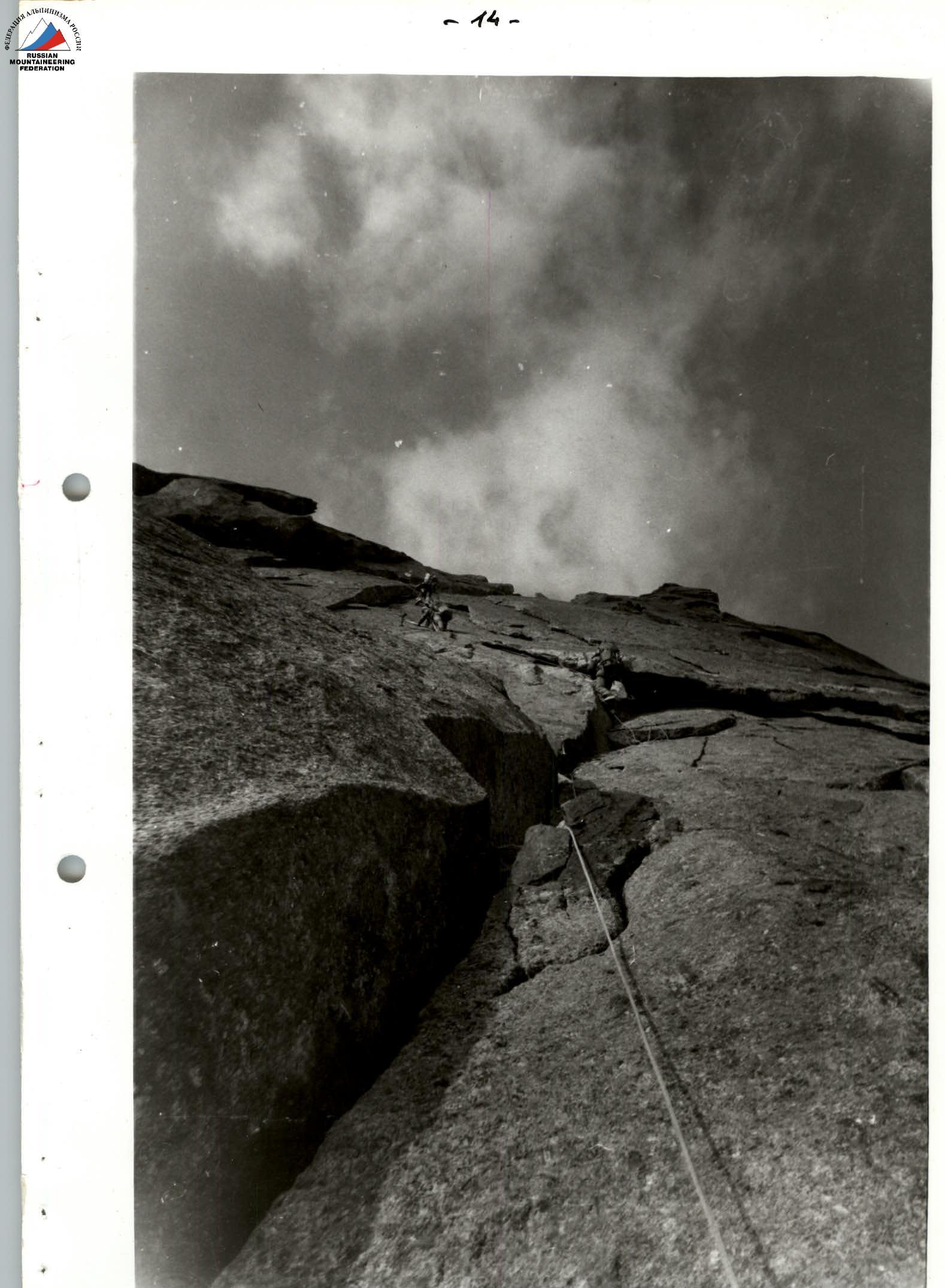
View of section R5–R8.
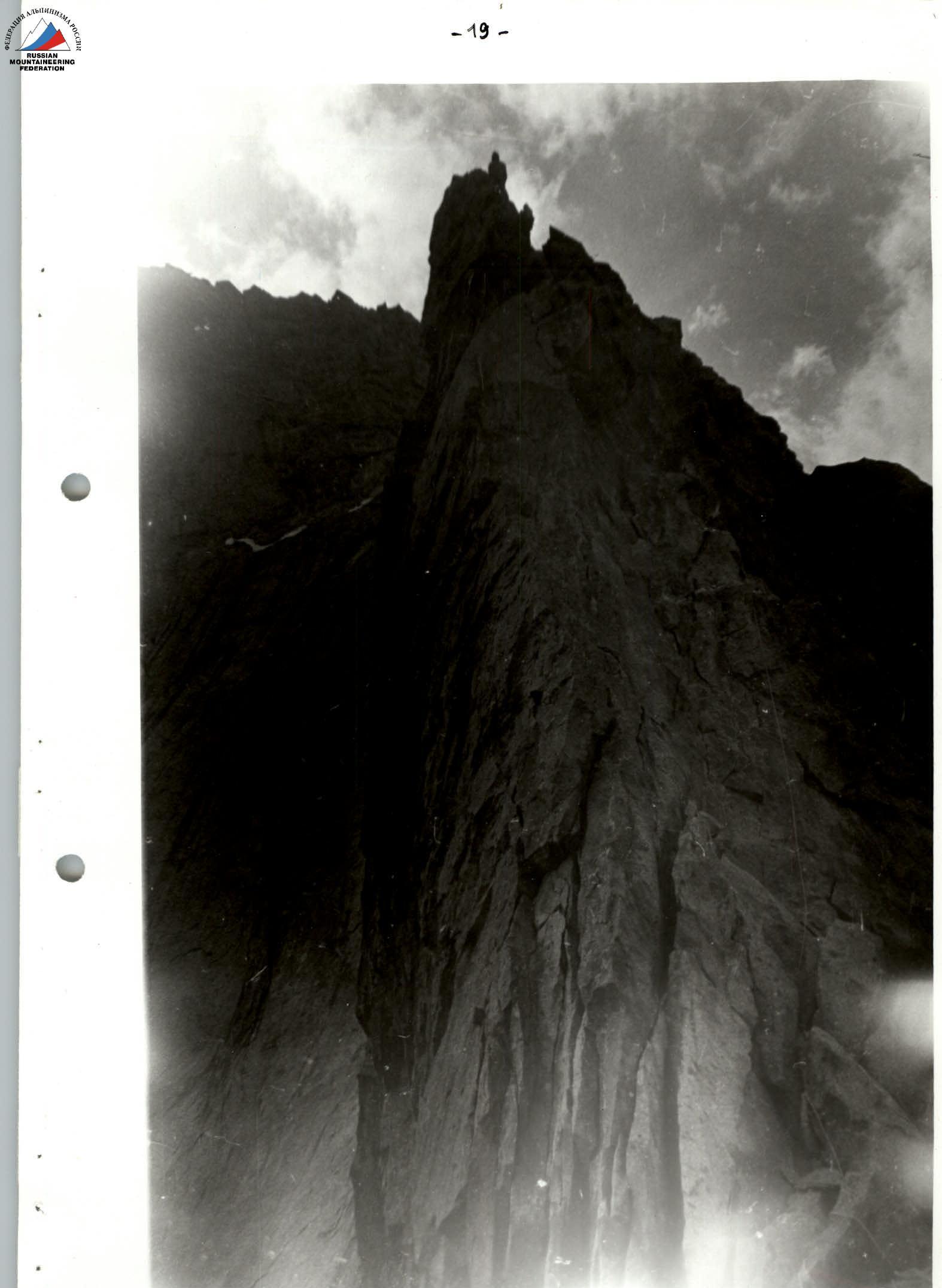
View of section R23–R24. Photo 6.
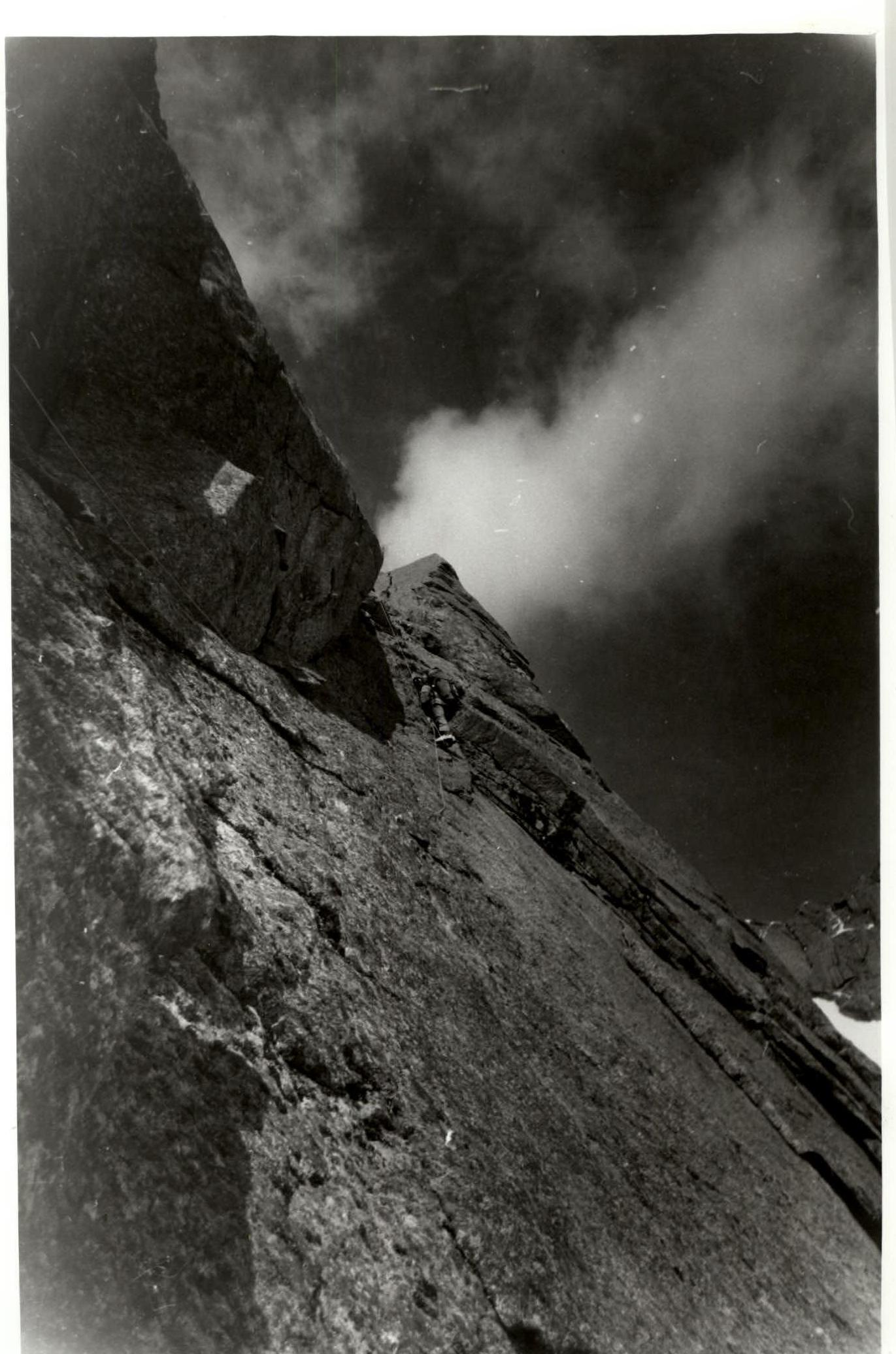
View of section R42–R43. Photo 1-1.