
-
Technical category
-
Pamir-Alay, Turkestan Range, Aksu valley
-
Aksu peak (C)
-
Category of difficulty — 6A, proposed 6B
-
Elevation gain — 1460 m, length — 2200 m, including 1430 m on the bastion.
-
Average steepness of the bastion — 76°
Average steepness of the route — 68° -
Pitons driven:
rock nuts bolt reused bolt skyhook holes ice 132/34 204/29 8/1 25/22 12 32 -
Team's total climbing hours — 76.5
Days — 7.5 -
Overnight stays:
- R1–R5 — on narrow ledges, on snow platforms molded in pairs
- R6, R7 — on snow ledges in a tent
-
Team leaders:
- Gennadiy Pavlovich Kirievskiy — Master of Sports
- Vitaliy Nikolaevich Kozlov — Candidate for Master of Sports
- Aleksandr Vladimirovich Lapko — Master of Sports
- Boris Gennadievich Mineev — Candidate for Master of Sports
-
Coach: Aleksandr Vladimirovich Lapko — Master of Sports
-
Approach to the route: July 31, 1995
Summit: August 7, 1995
Return: August 9, 1995
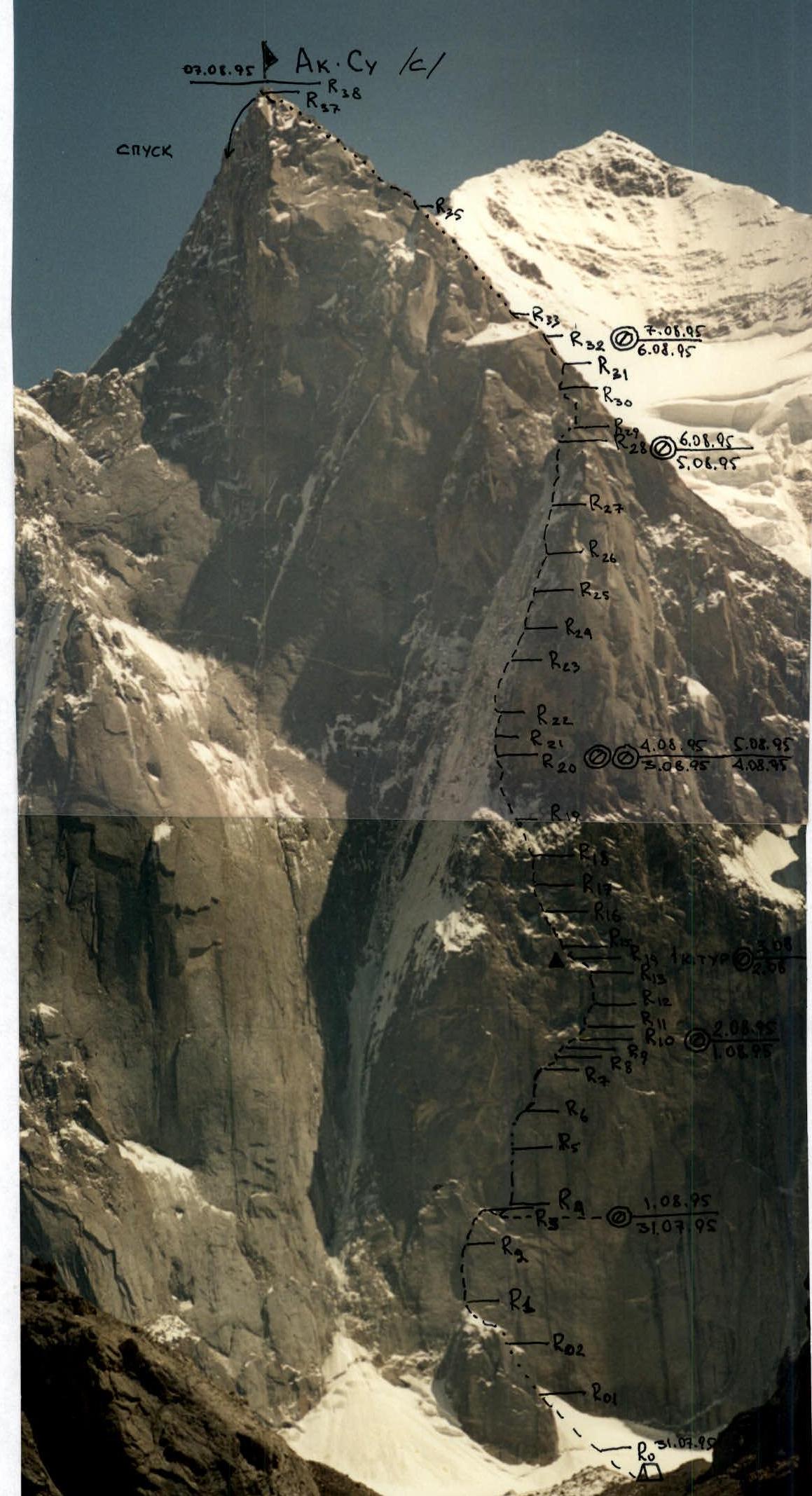
| Section № | Length, m | Steepness, ° | Category of difficulty |
|---|---|---|---|
| 38 | 2200 | ||
| 37 | 150 | 20 | 6 |
| 36 | 50 | 80 | 5 |
| 35 | 50 | 60 | 4 |
| 34 | 45 | 80 | 5+ |
| 33 | 45 | 60 | 5 |
| 65 | 5 | ||
| 32 | 100 | 65 | 5 |
| 80 | 5– | ||
| 31 | 90 | 50 | 4+ |
| 30 | 50 | 85 | 6 |
| 60 | 5 | ||
| 20 | 6 | ||
| 60 | 6 | ||
| 29 | 190 | 0 | 2 |
| 28 | 30 | 70 | 5 |
| 27 | 50 | 75 | 5+ |
| 26 | 50 | 75 | 6 |
| 25 | 50 | 75 | 6 |
| 24 | 40 | 75 | 5+ |
| 23 | 40 | 70 | 5+ |
| 22 | 50 | 70 | 5+ |
| 21 | 50 | 70 | 5+ |
| 20 | 30 | 75 | 5 |
| 19 | 50 | 65 | 5– |
| 18 | 50 | 65 | 4 |
| 17 | 45 | 95 | 6 |
| 16 | 50 | 65 | 5 |
| 70 | 4–5 | ||
| 15 | 50 | 75 | 6 |
| 14 | 35 | 65 | 5+ |
| 13 | 40 | 45 | 2 |
| 12 | 50 | 95 | 6 |
| 11 | 40 | 95 | 6 |
| 10 | 50 | 90 | 6 |
| 5+ | |||
| 9 | 50 | 85 | 6 |
| 8 | 60 | 85 | 6 |
| 7 | 50 | 70 | 6 |
| 80 | |||
| 6 | 50 | 100 | 6 |
| 120 | 6 | ||
| 5 | 50 | 90 | 5+ |
| 4 | 40 | 85 | 6 |
| 3 | 50 | 0 | 2 |
| 2 | 50 | 80 | 5+ |
| 1 | 50 | 90 | 5 |
| 0 | 130 | 50 | 2–5 |
Sections
R0 — along the snow-ice slope to the right of the "Iron" to a chimney with ice; R1 — along the left part of the inner corner, using flake formations, partially using artificial holds (AIDs); R2 — transition to the right part of the inner corner, free climbing, towards the ledge for overnight stay; R3 — traverse along the wall to the base of the 2nd "Integral"; R4 — along the inner corner to the start of a large chimney, using artificial holds (AIDs), to a small ledge inside the chimney. The chimney is filled with ice; R5 — along the chimney under a large overhanging slab to its right part. Using friends (AIDs), traverse left under the slab to the bolts. Before the bolts, holes for skyhooks. Upward, wedged to the next bolt, with a belay station on it; R6 — along the chimney (ice) under the "plug", exit through the "plug" using ice axes, along the ice inside the chimney to the top of the 2nd "Integral" to a ledge, preferably in crampons; R7 — to the right along the ledge to flake formations (ice flow), leading under the inner corner. To the left, a convenient ledge for belay; R8 — inner corner filled with ice, through an overhang to a ledge, belay station, second inner corner, under the wall with 4 bolts, AIDs, free climbing; R9 — using skyhooks, after the bolts, to the right to the inner corner. Exit to the overnight stay, "Korean loop"; R10 — from the "Korean loop", skyhook holes upward 10 m and a short traverse to the right, then upward along the edge of the corner. Everything is covered with ice flow; R11 — upward along the crack to the inner corner with a small cornice. A bolted path is visible, AIDs; R12 — along the bolted path, then along a thin crack leading to a snow-filled depression. At the exit — a bolt and a hole for a bolt; R13 — upward along the ice 15 m to the wall, left traverse to the 1st rock turret. Overnight stay on a platform hacked out in the ice; R14 — left along the chimney to the "finger"; R15 — along the smooth wall covered with ice to an overhang (holes for removable bolts), traverse 3 m to the right and upward to the left along easy rocks; R16 — upward towards the basalt rocks to a flake formation; R17 — inner corner filled with ice, AIDs, a slab, and exit to a ledge; R18, R19 — snow-covered rocks, many loose stones. Overnight stay on a platform hacked out in the ice; R20 — traverse under large cornices to the left onto an edge; R21 — along the edge upward through snow-covered and ice-filled rocks in crampons to a small inner corner under an overhanging wall to the right. Exit onto ice; R22 — along the ice to the left onto an ice "river", upward using ice axes, ice screws; R23 — upward along the ice under an overhang; R24 — bypassing the overhang on the left, upward along ice "rivers" to a large inner corner. To the left, a chimney filled with ice; R25 — to the right onto an edge and upward to a snow ledge, AIDs; R26 — from the ledge upward towards the "finger" to a wide inner corner filled with ice; R27 — along the right part of the inner corner, through a crack (using friends), upward; to the right, a ledge for belay; R28 — along the slab using free climbing to a ledge (overnight stay) under an overhanging wall; R29 — upward to the ridge. 1st rock turret — left upward along a crack, AIDs; 2nd rock turret — start with skyhooks, left upward, and bypassing the turret to the right, to a smooth inclined slab. Everywhere, ice flow and snow. AIDs. Further under the wall with an inner corner leading to the ridge; R30–R33 — upward along the ridge, free climbing; R34 — on friction upward along a sharp ridge to a loop, rappel to the right 7 m, traverse to the right with an exit to the top of a cornice into a snow depression; R35 — along an inclined slab upward to a pass; R36 — inclined slab, along it 15 m through a deep crack and traverse to the right around the corner to a loop, from it rappel 10 m onto a wall leading to the ridge to the summit; R37 — along the ridge to the summit, bypassing a small rock turret on the left. Belay through rock formations.
Team's technical and tactical actions
The team reached the route on July 31, 1995, having two tactical plan options. After bad weather, the wall was covered with a thin layer of ice in the morning and started to thaw and "flow" in the afternoon. Cracks were filled with ice, complicating the organization of belay stations and anchor points.
It was necessary to:
- knock off the ice flow from the holds;
- often combine free climbing with the use of artificial holds (AIDs).
Reaching the planned overnight stays, the leading pair processed the route, then descended and helped prepare the platforms for overnight stays. Wet snow on the ledges allowed for molding more or less "comfortable" platforms. During this time, one of the participants prepared dinner. On the bastion, almost all overnight stays were in pairs, with a plastic sheet stretched on top; the leading pair spent the night in a wall tent.
The team worked in an intense mode because organizing overnight stays took 1.5–2 hours and they could start resting when it was dark around them.
Before reaching the "ice rivers", there were two options in the tactical plan:
- passing the "ice rivers" and overnight stay on the shoulder;
- processing four ropes and returning to the previous overnight stay.
Everything depended on the condition of the route at this section.
The abundance of ice flow on the rocks and thin, "loose" ice "rivers" allowed the team to follow the second tactical plan option for this section.
On the bastion, the leading pair was Lapko — Kirievskiy, alternating every other day.
On the "ice rivers" and the ridge, the leading pair was Kozlov — Mineev, also changing the lead every other day.
Belay stations were organized on three to four elements, blocked together.
All bolts driven on the route were removable. Nutrition was twice a day: "hot" meals and individual snacks during the day. There were two first-aid kits on the route:
- the "main" one — with the third climber;
- for first aid — with the second.
The team completed the route steadily, with a reserve of strength, without falls or injuries, in accordance with the second tactical plan option.
The detailed consultation received from:
- Shabalin;
- Antonov;
- Shabunya was very helpful.
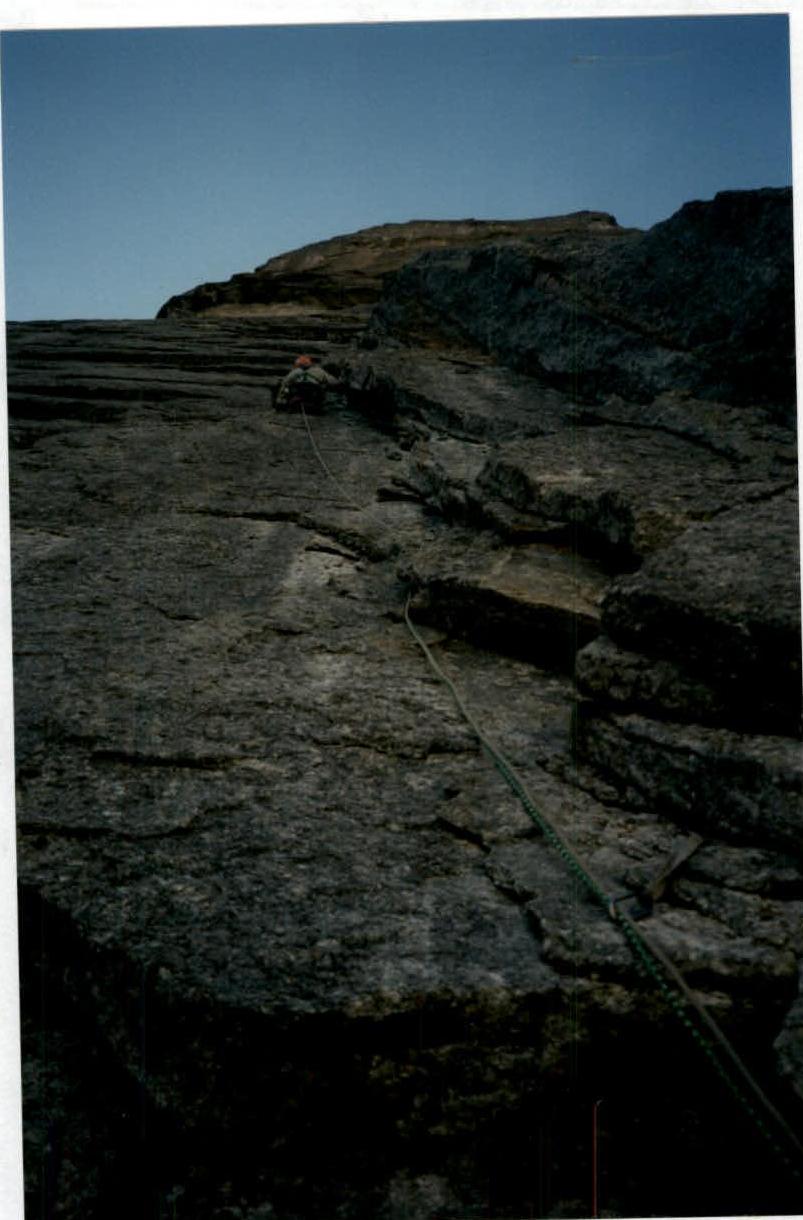
Section R1
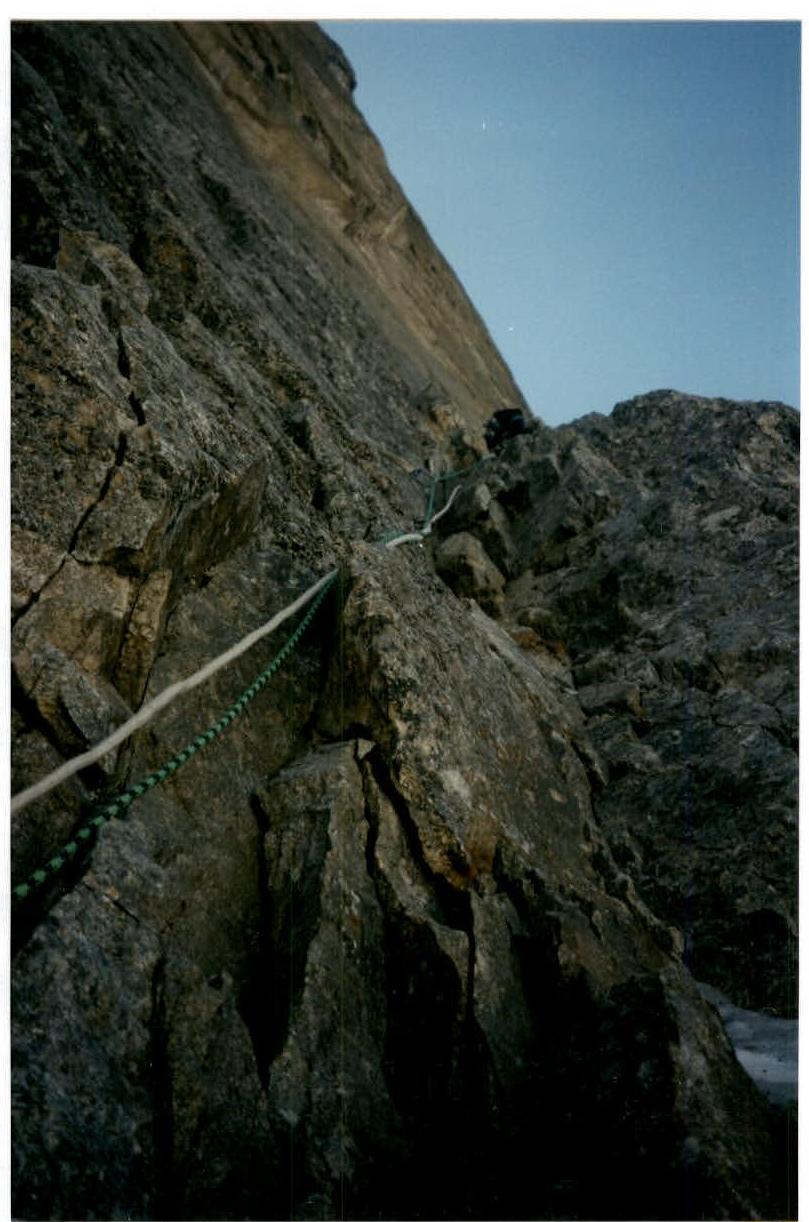
Section R2
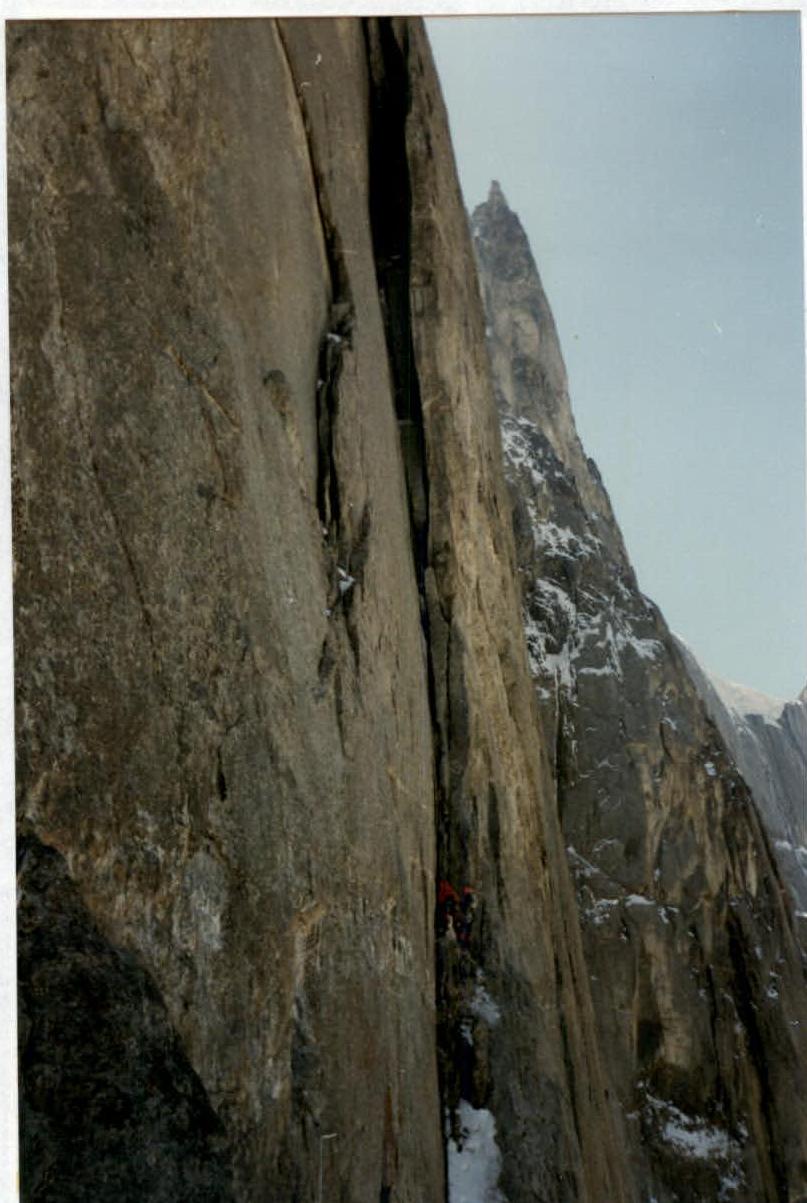
Section R4
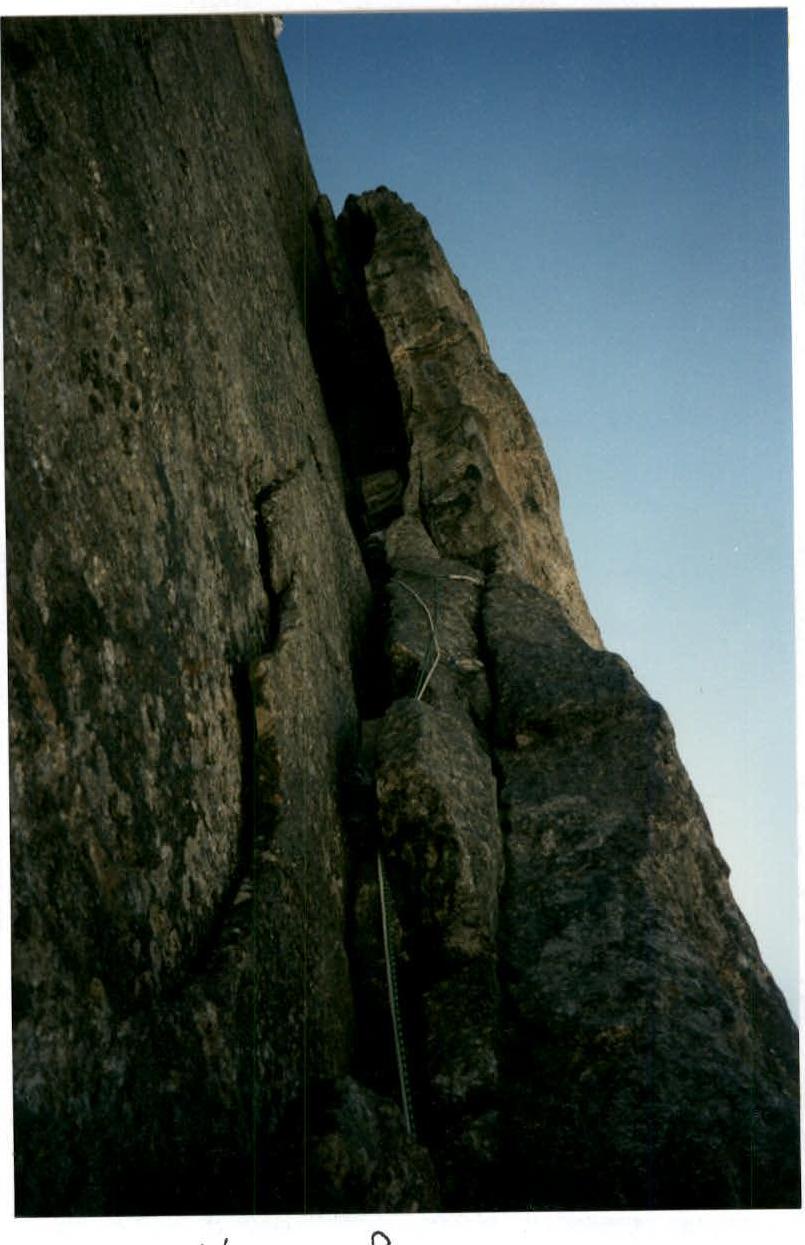
Section R4
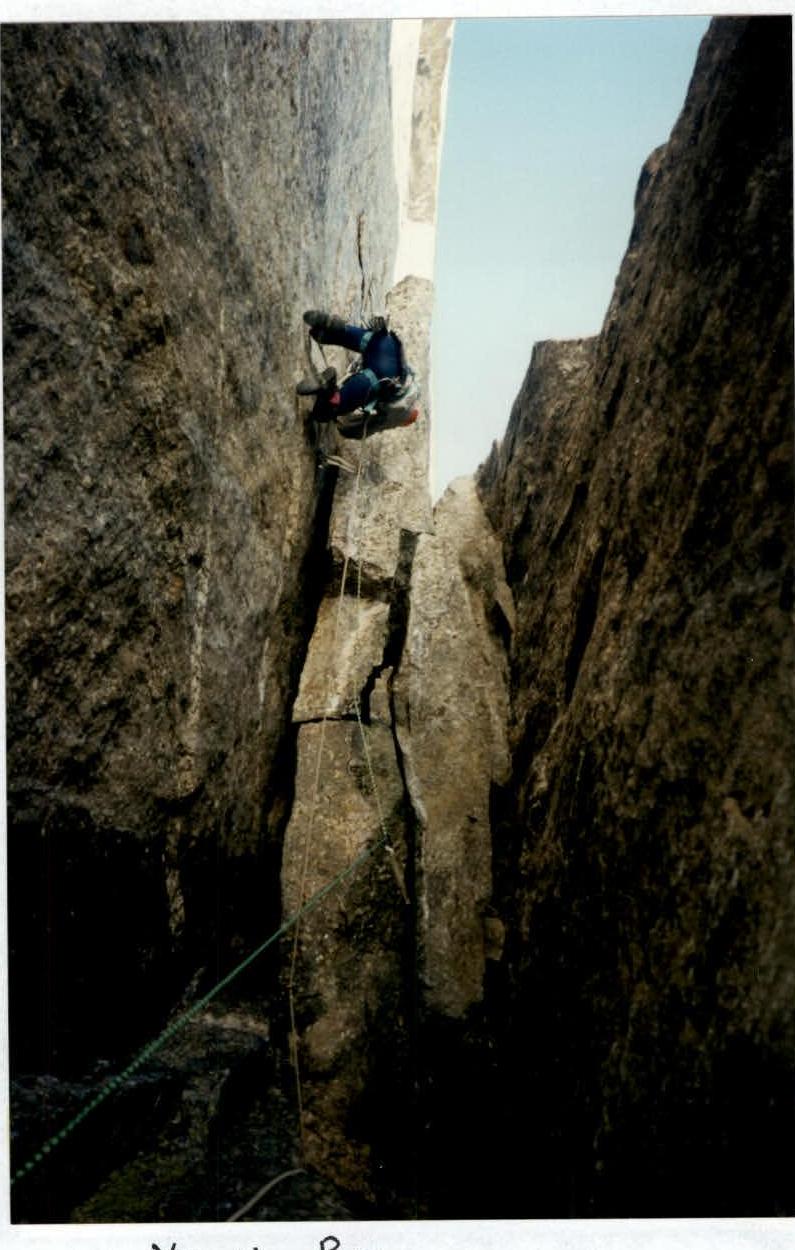
Section R5. Passing the "Slab"
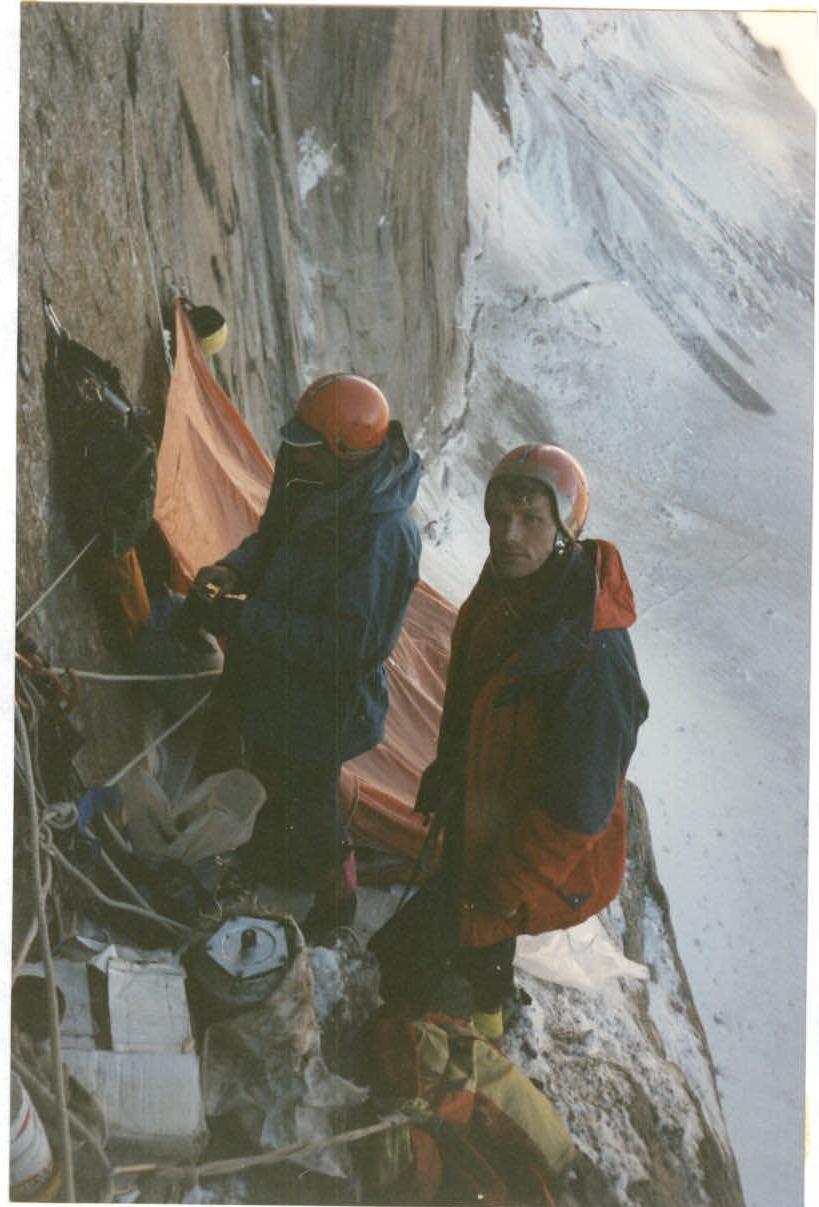
Overnight stay on section R4
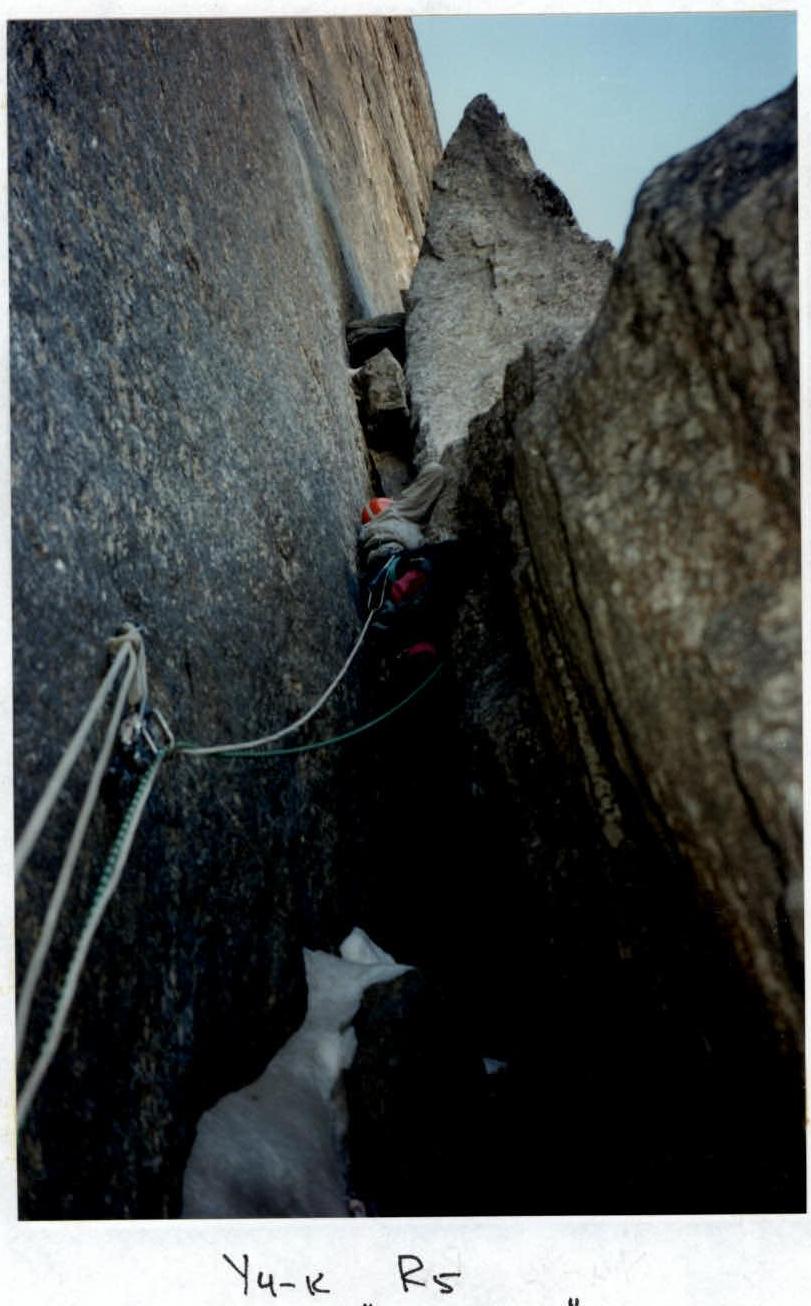
Section R5. Approach to the "plug"
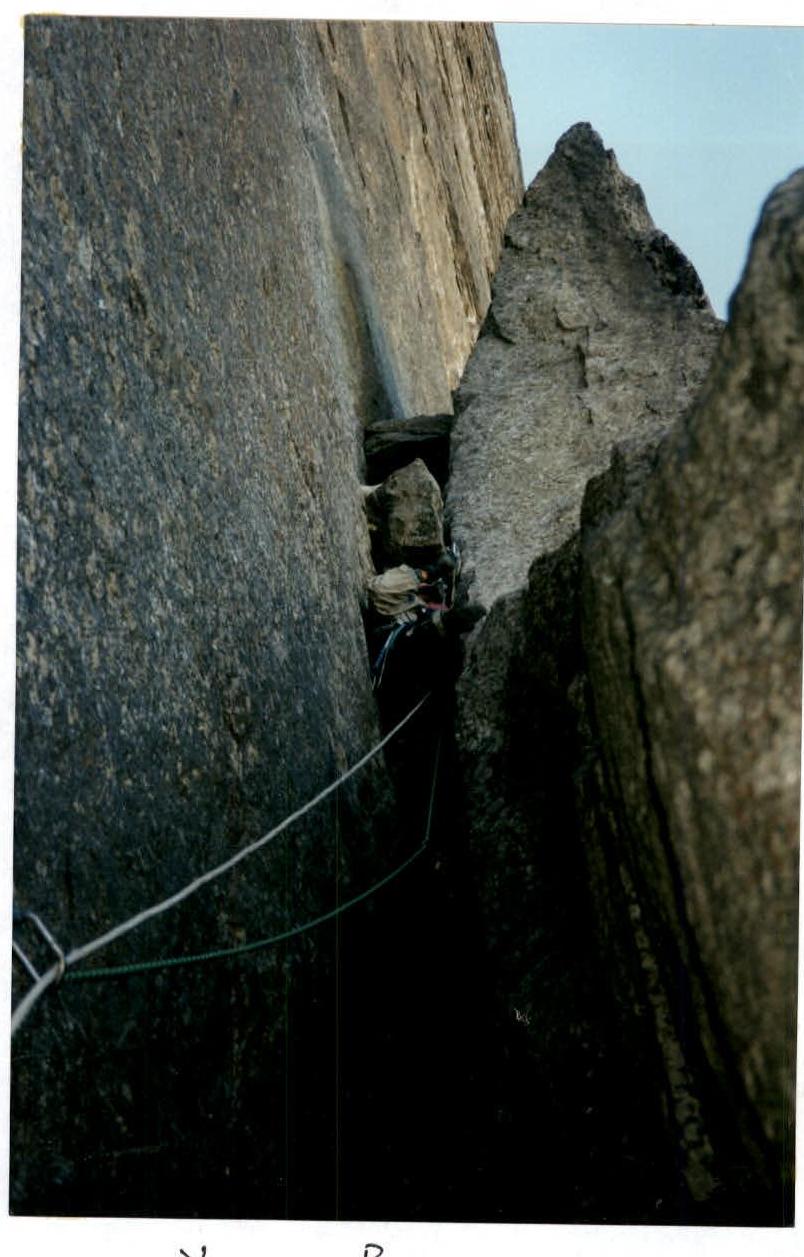
Section R6. Overcoming the "plug"
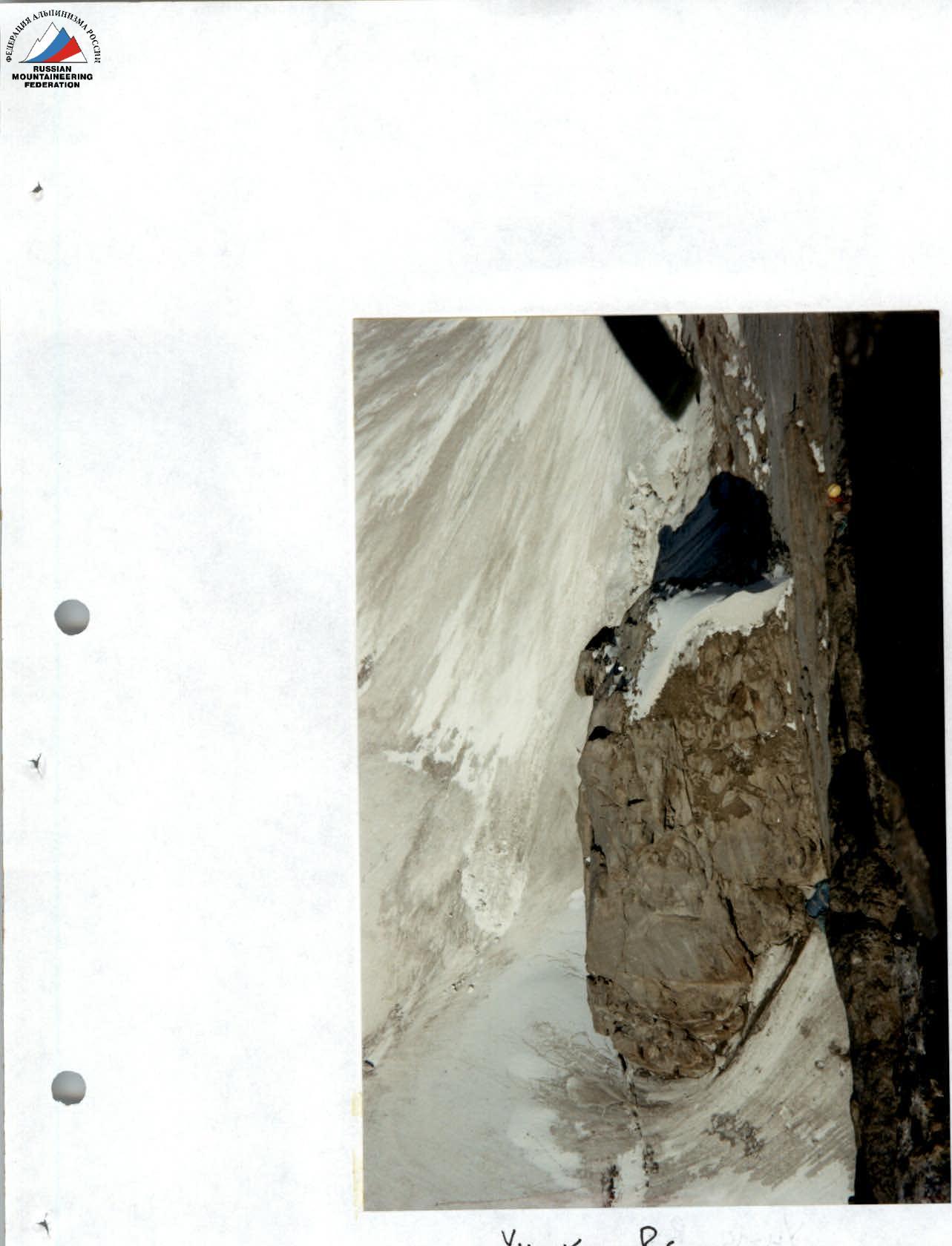
Section R6
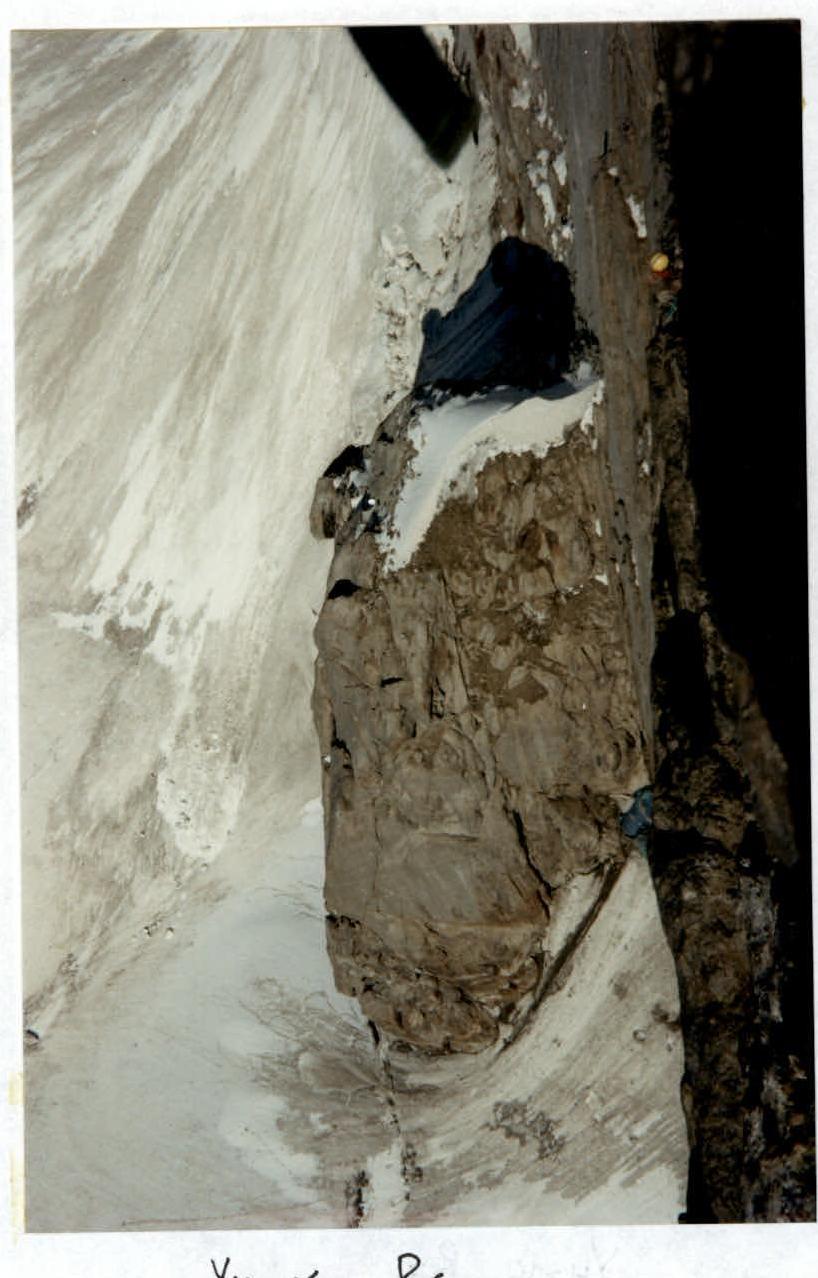
Section R7
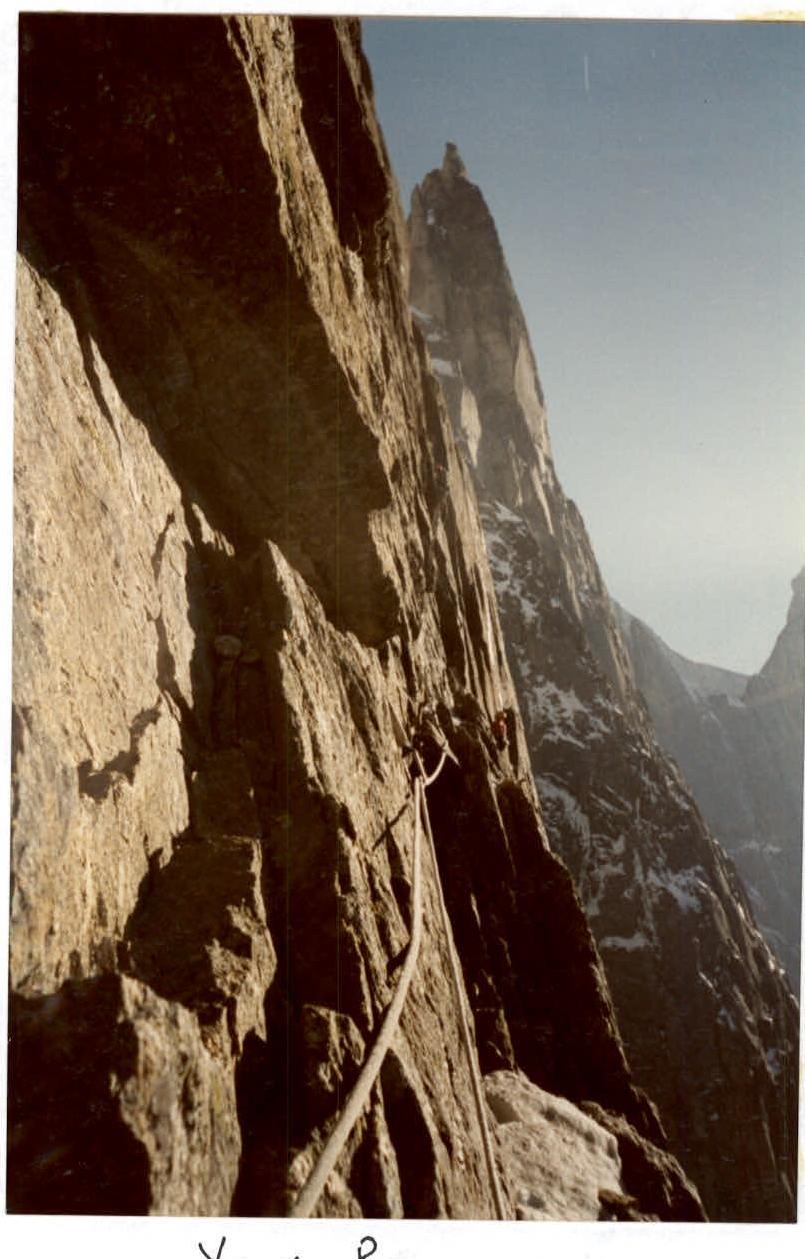
Section R7
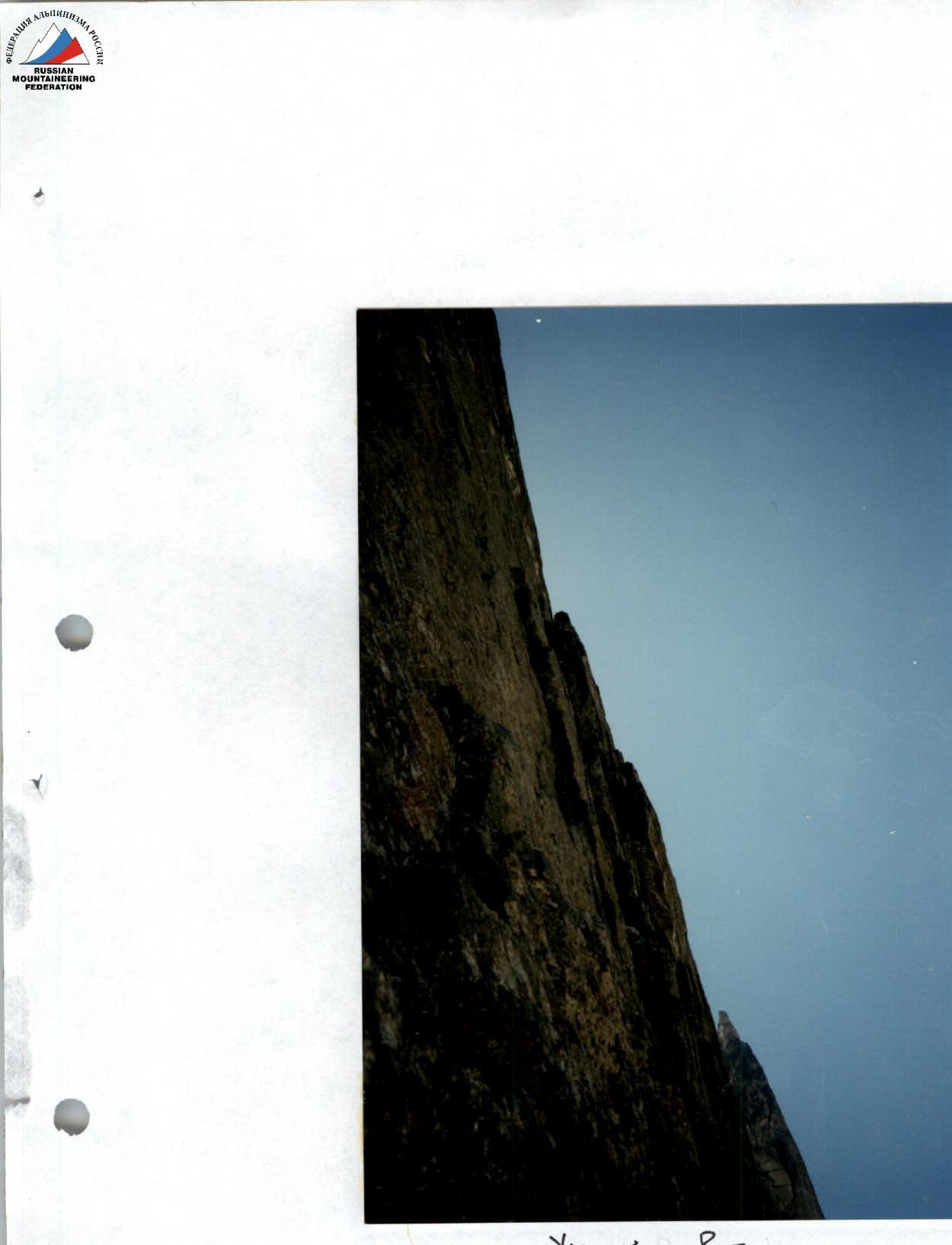
Section R7
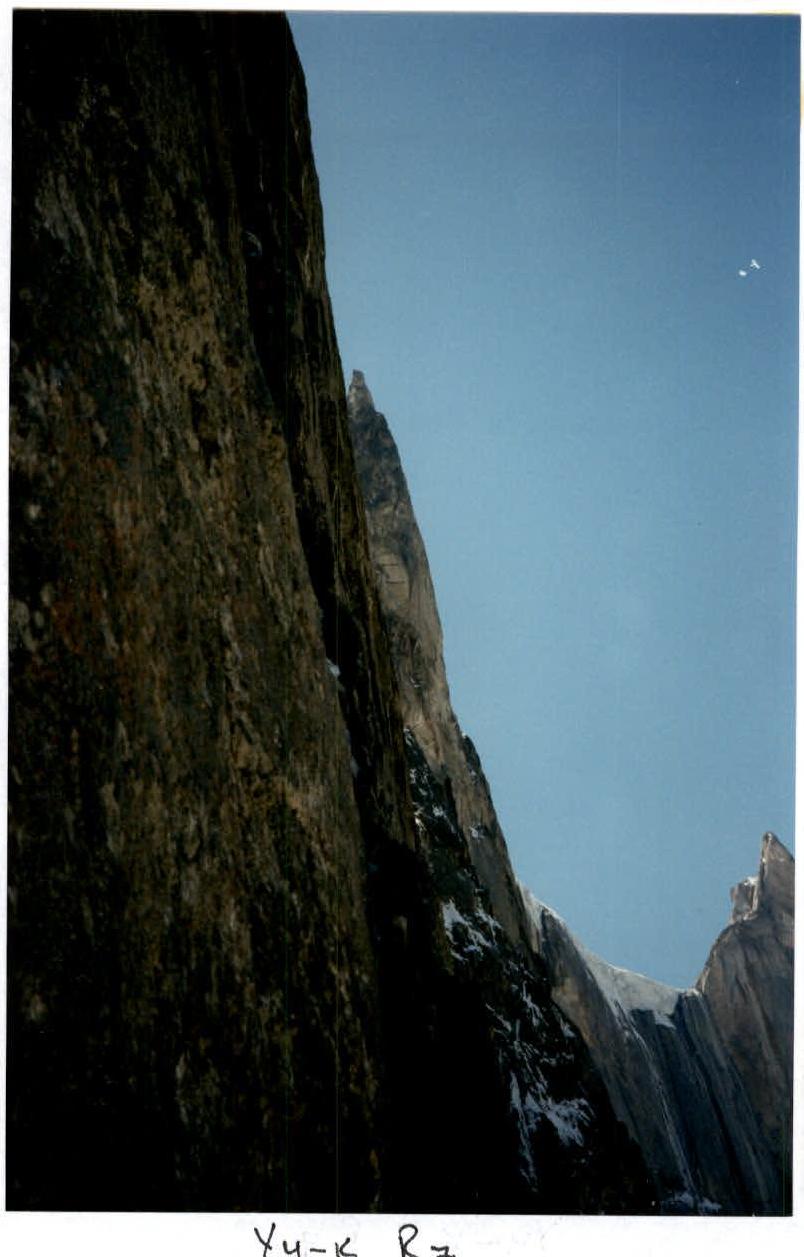
Section R8
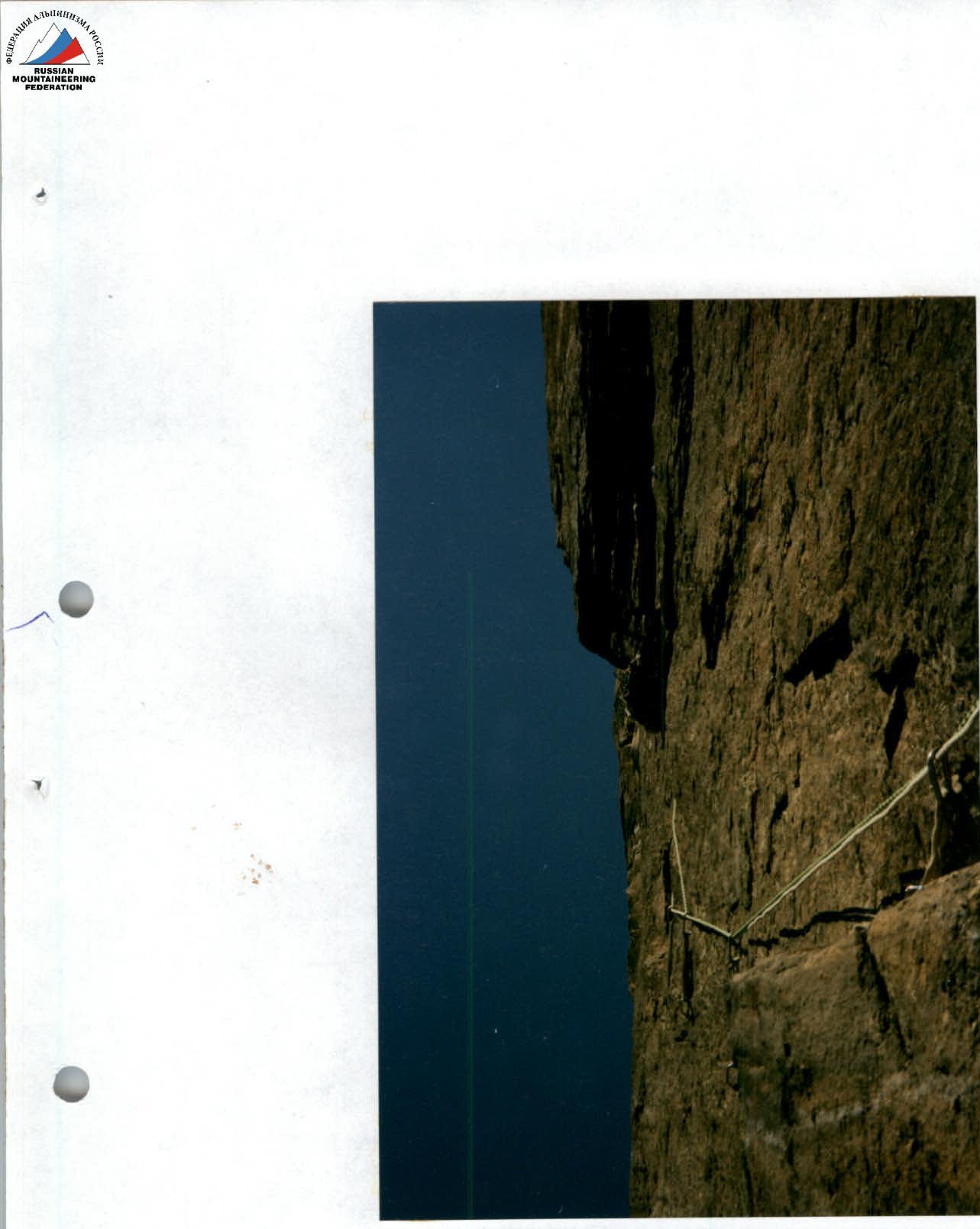
Overnight stay on section R10 on a molded platform.
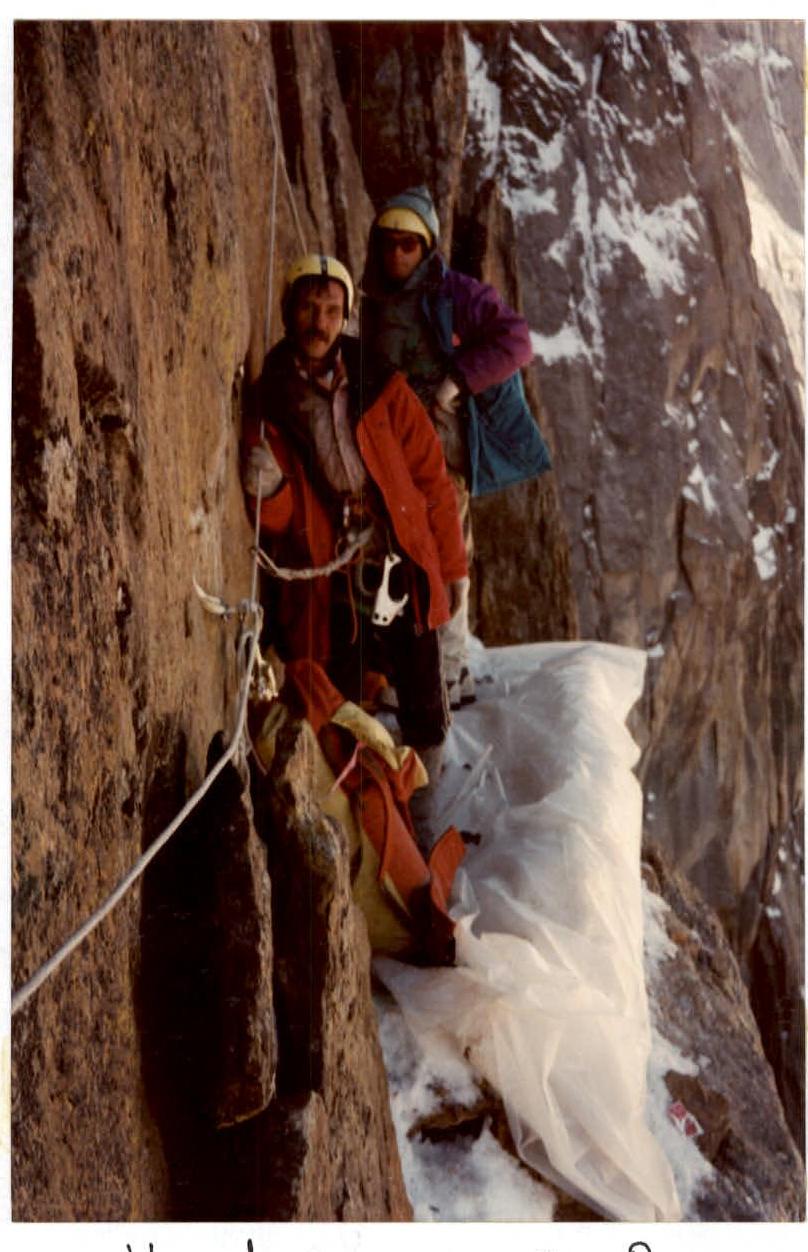
Section R17
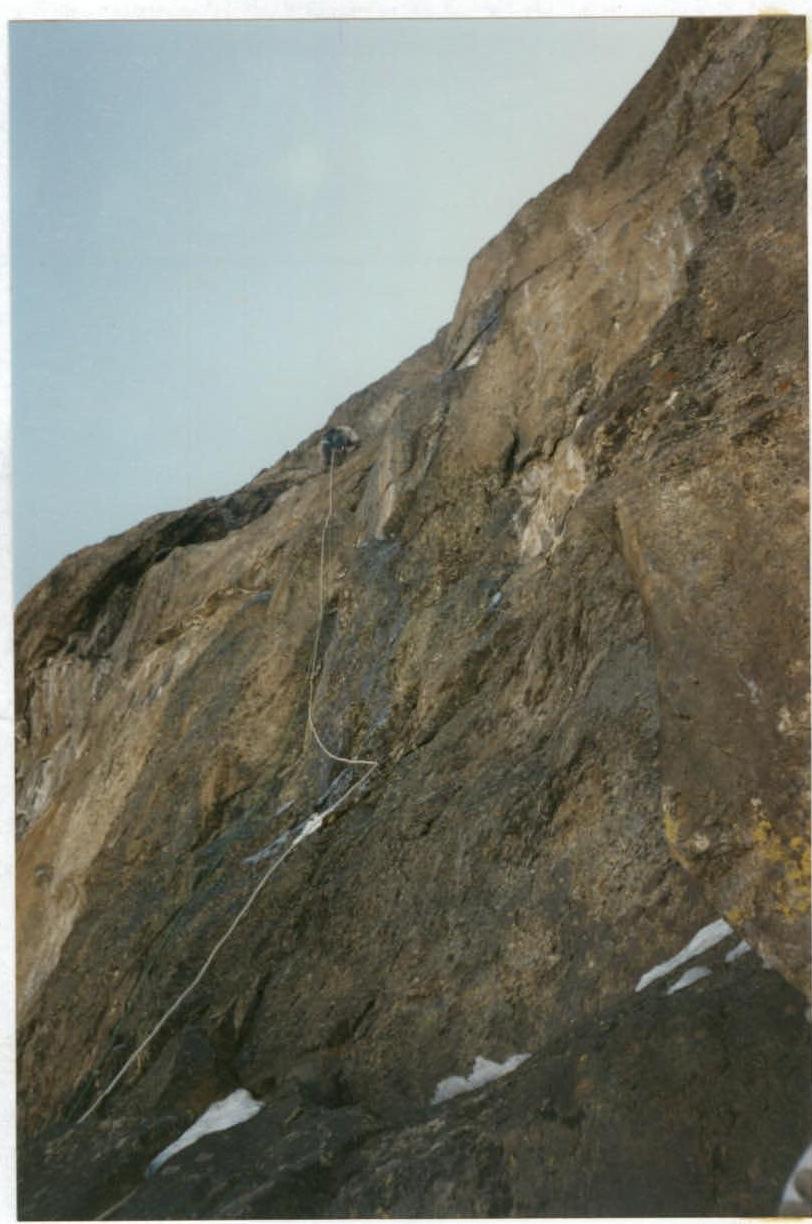
On section R10
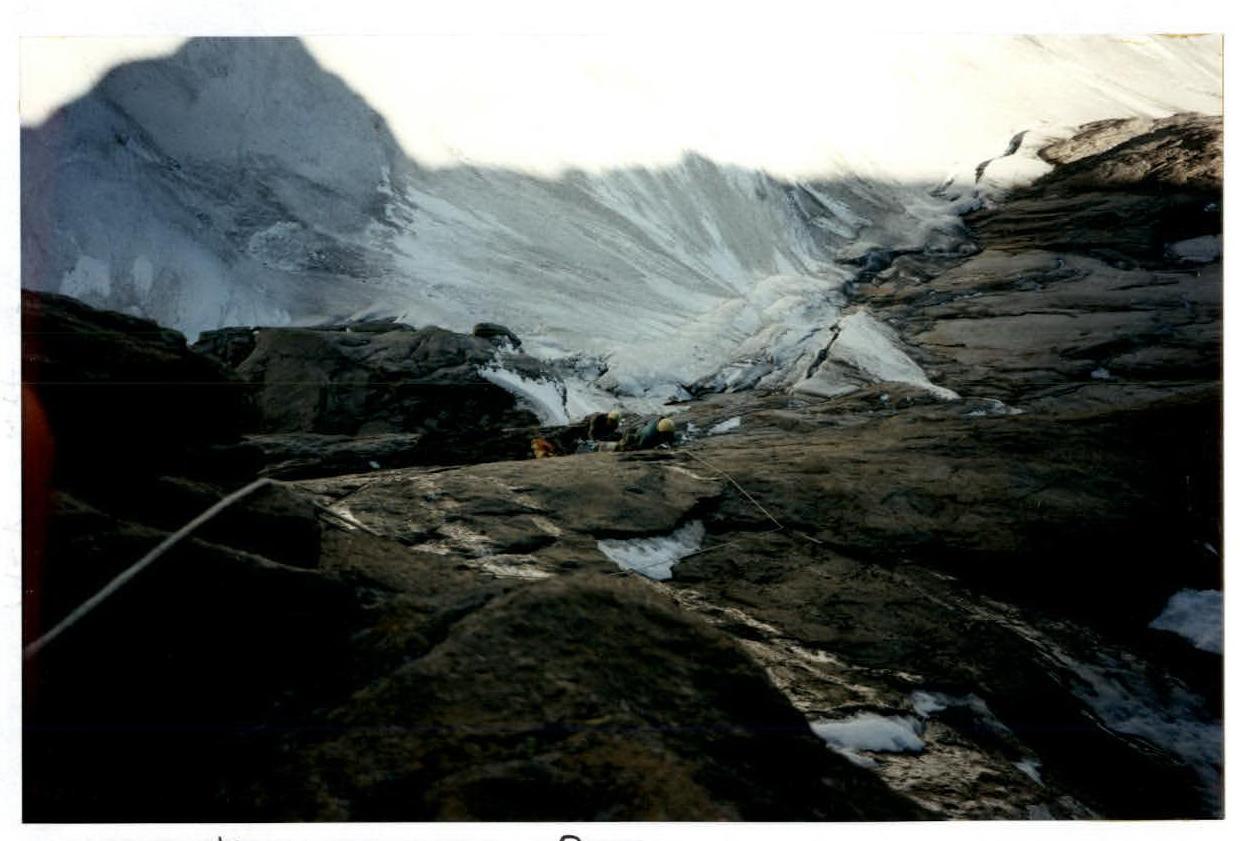
Section R11
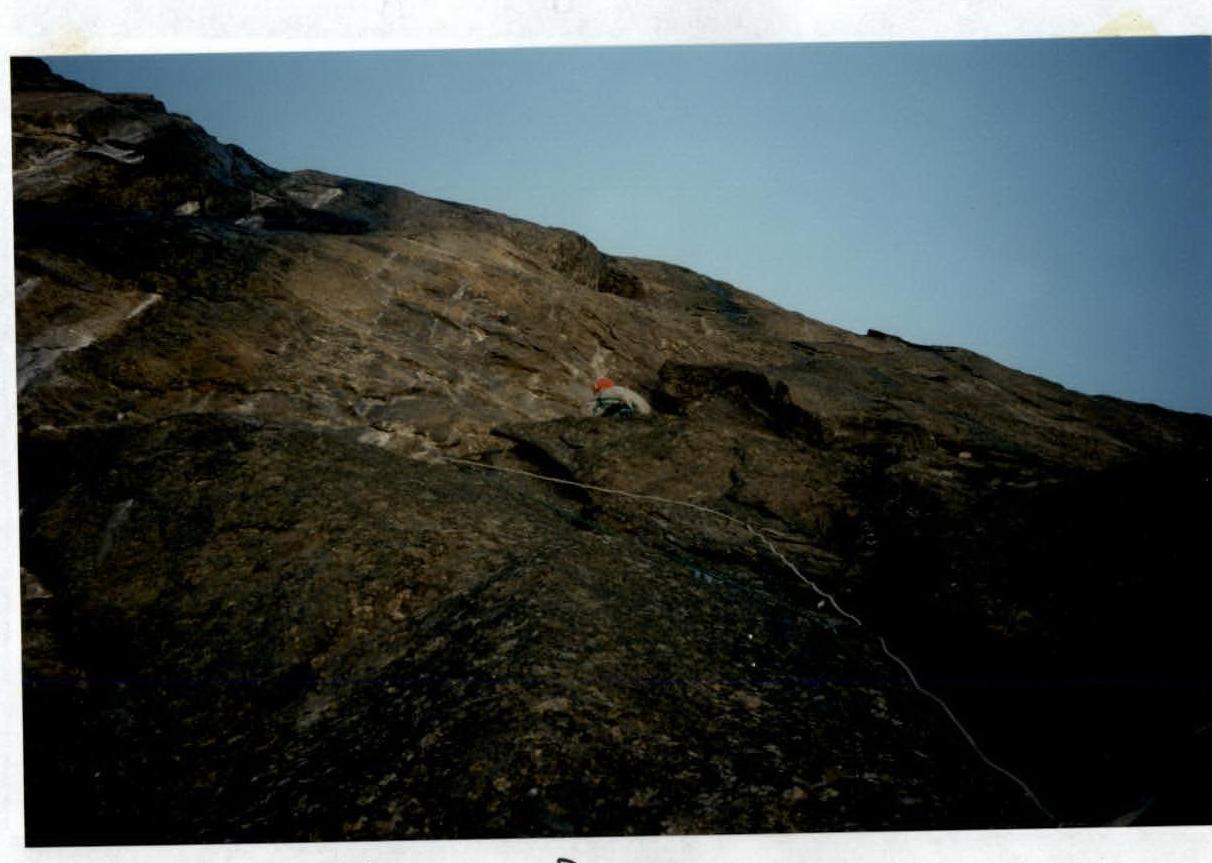
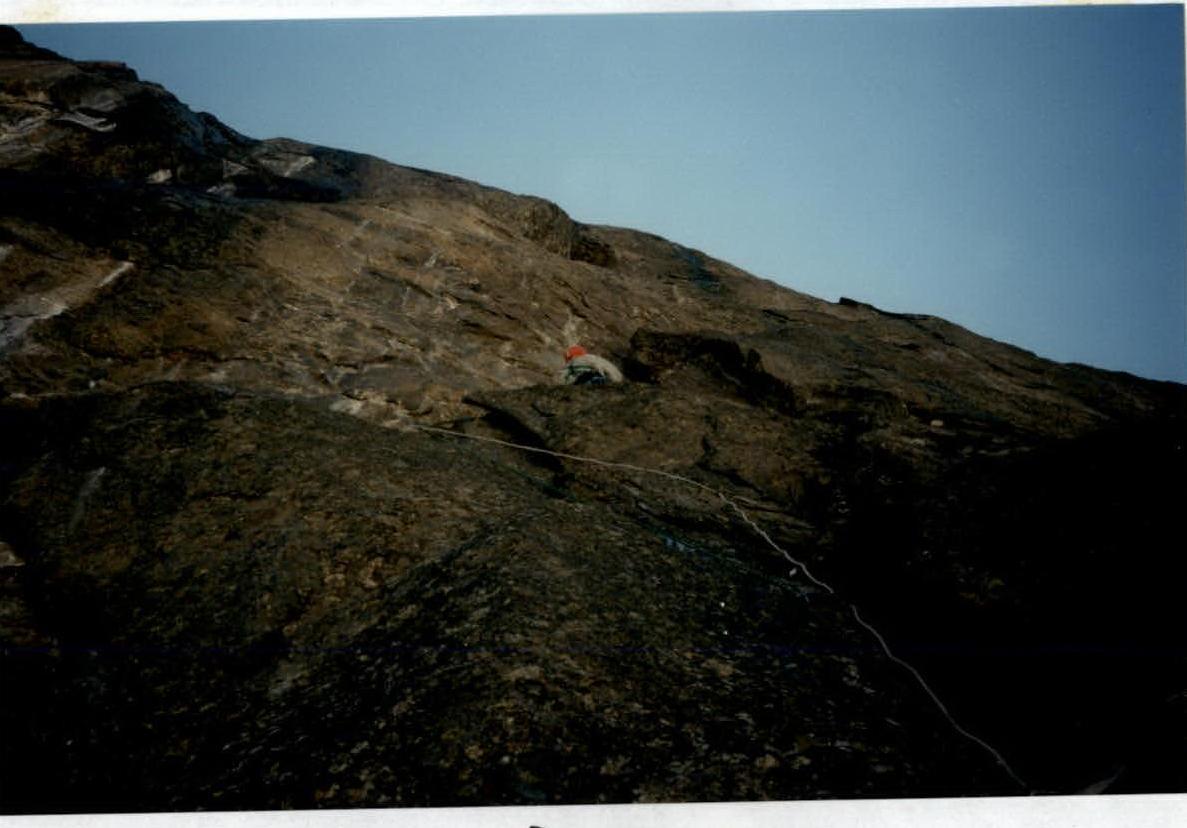

Section R12
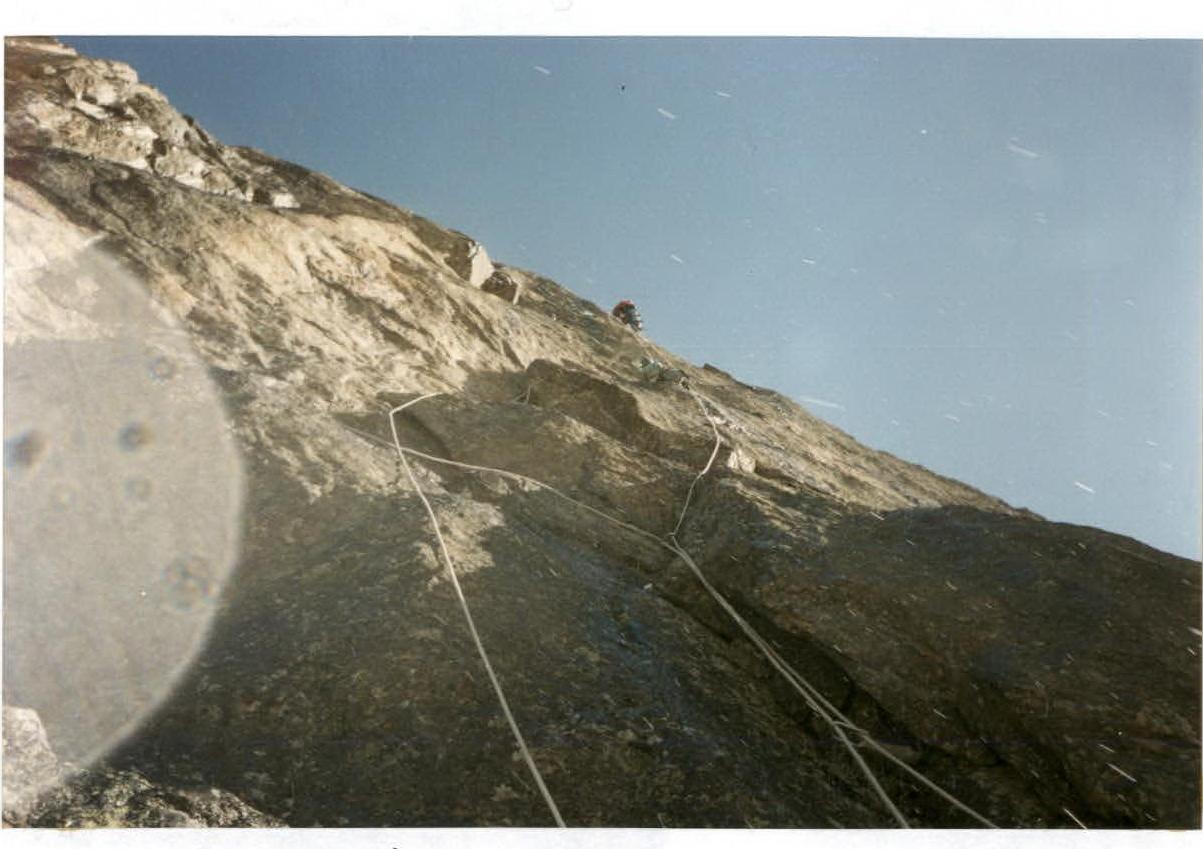
Section R13. Exit to the 1st rock turret.
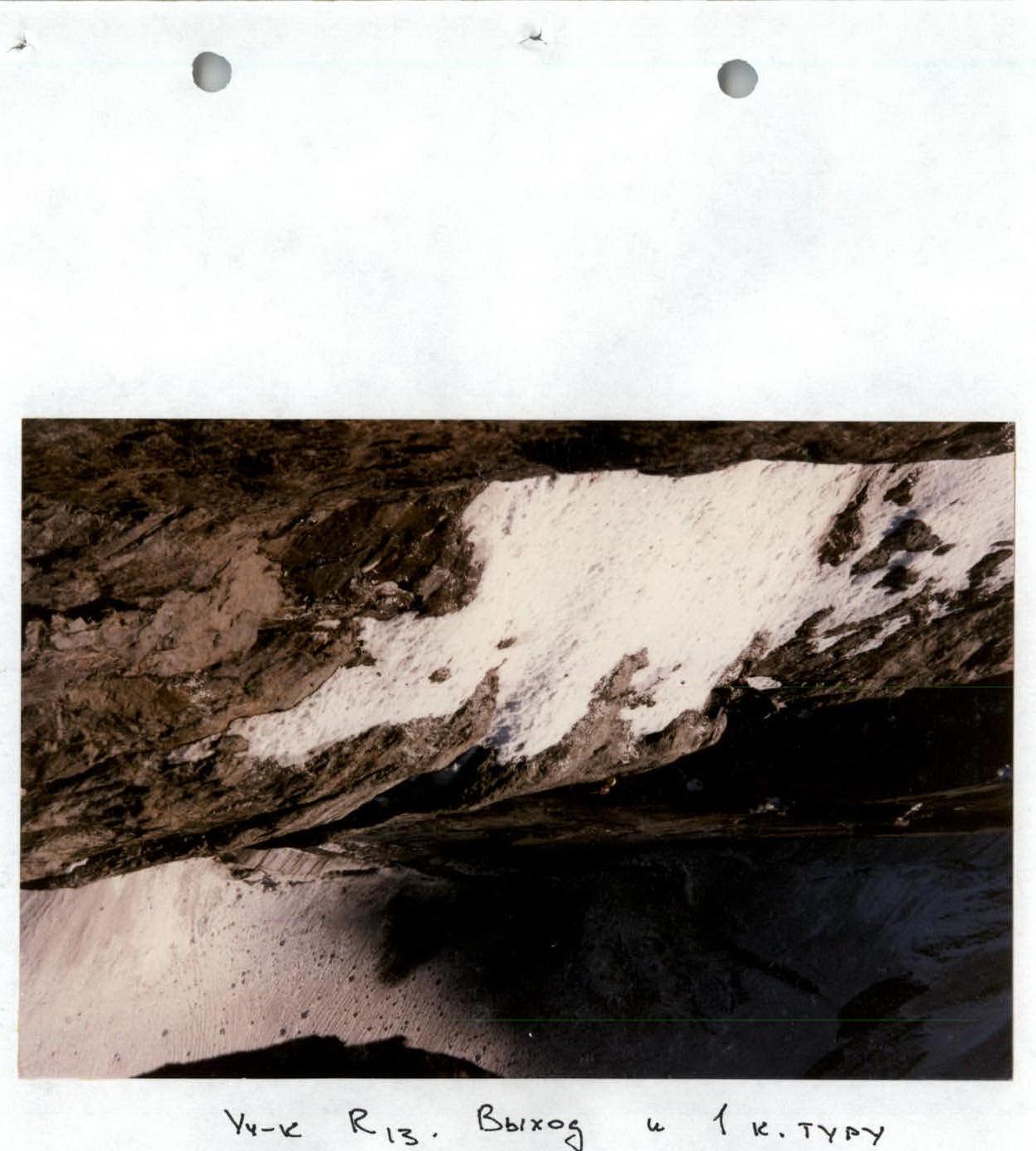
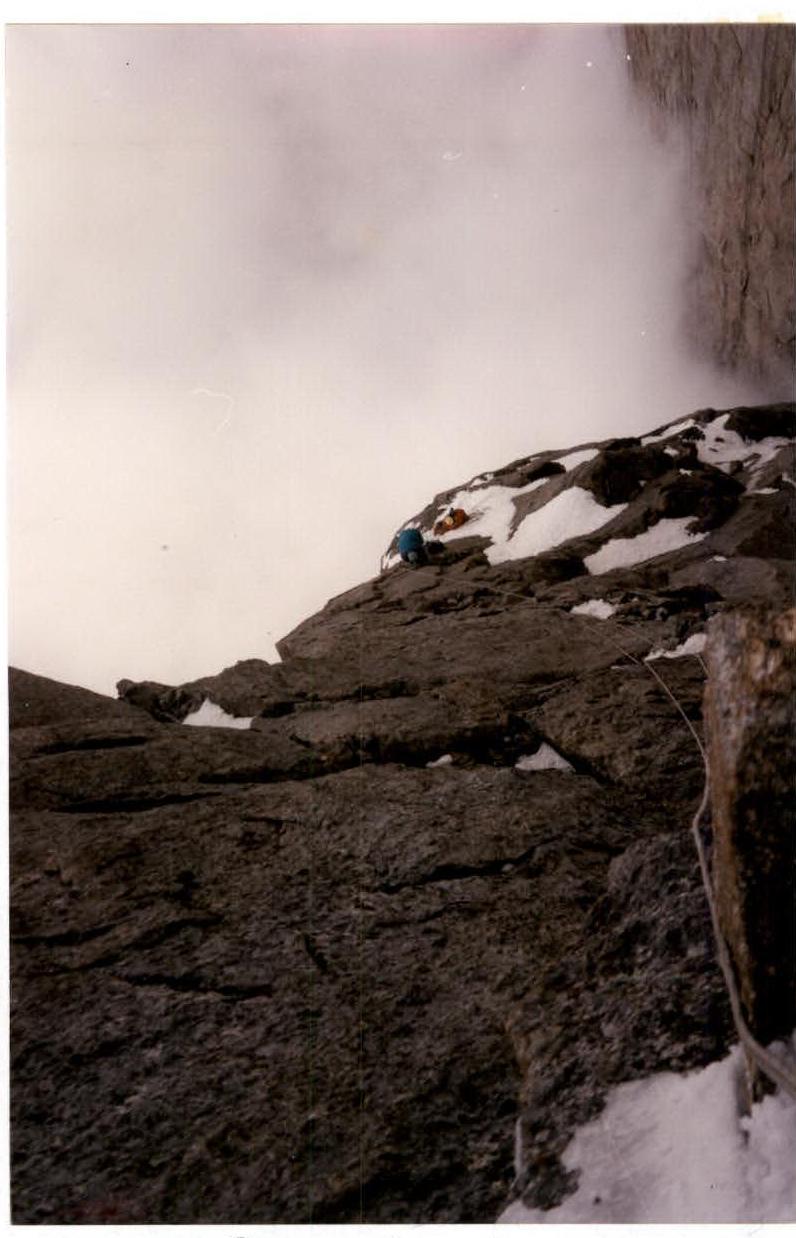
Section R20. Overnight stays on a platform hacked out in the ice.
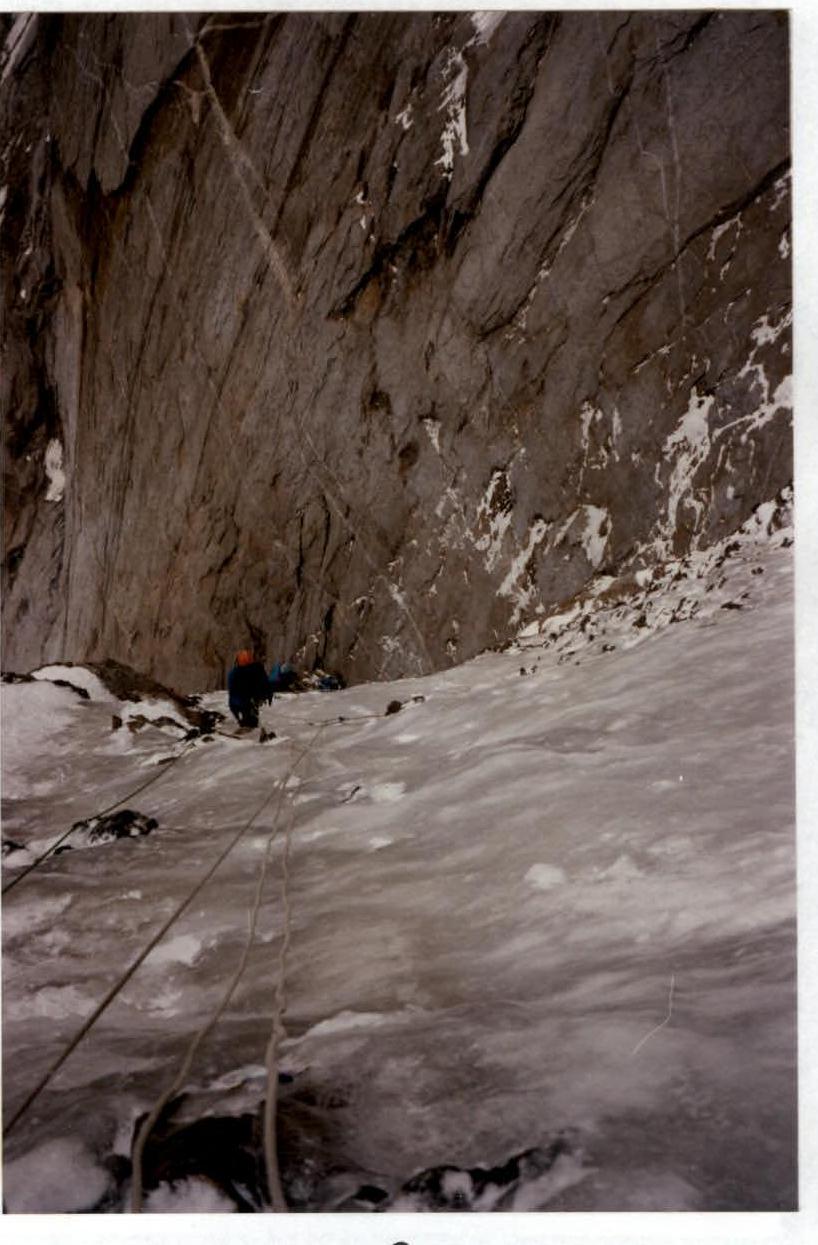
Section R22. On the "ice rivers"
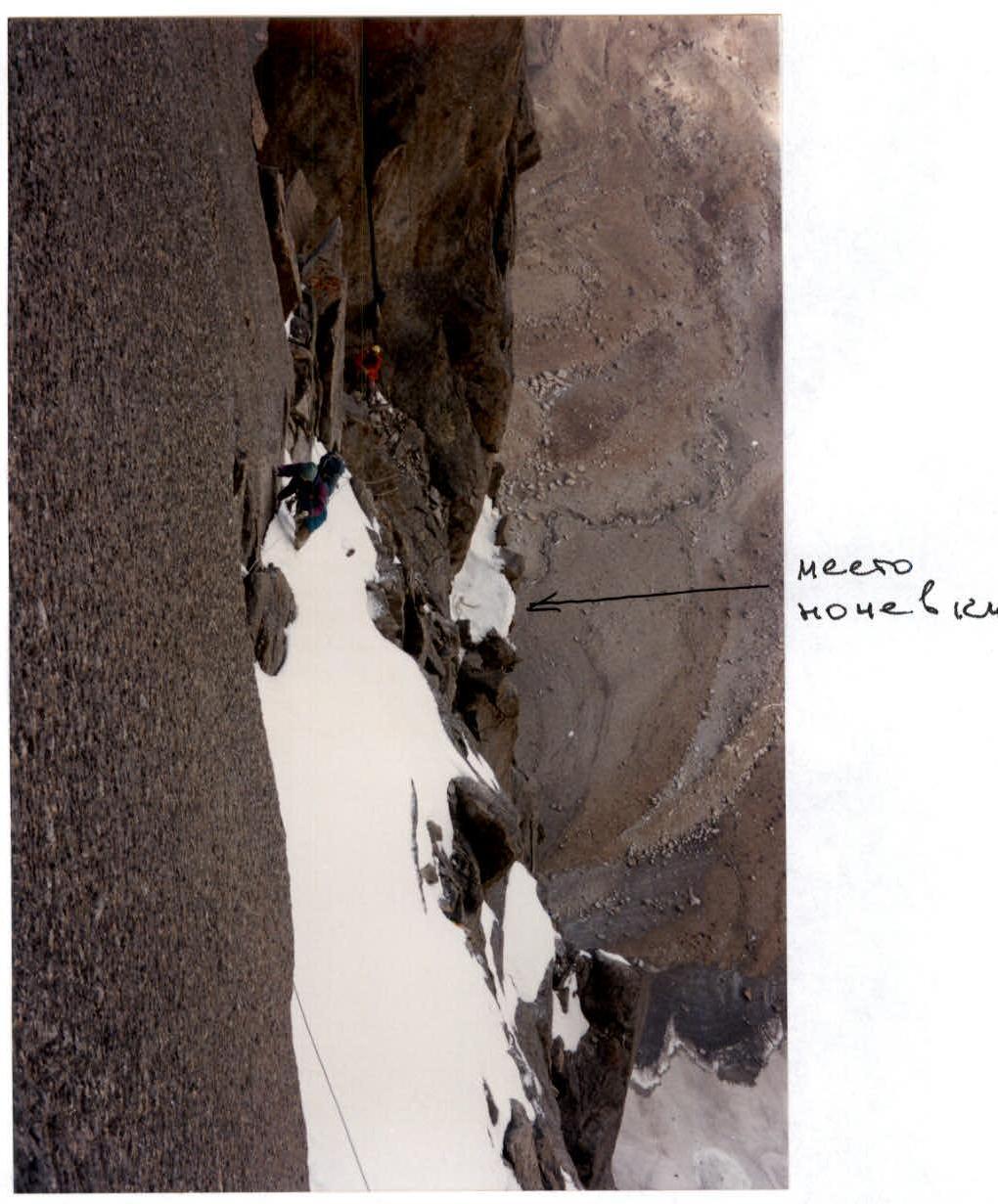
Overnight stay on section R28. Overnight location.