PASSPORT
of the ascent made in the 1973 USSR Alpine Climbing Championship.
- Ascent category — technically challenging.
- Ascent area — Fan Mountains, Surkhob Valley.
- Ascent route with indication of peaks and elevations — via the center of the northeast face of Chyorny Peak (5010 m).
- Ascent characteristics: elevation gain — 1450–1500 m, average steepness — 87–88°, length of complex sections — 1094 m.
- Number of anchors installed:
- rock anchors — 288,
- 9 ice anchors in rock,
- 8 wooden wedges;
- ice screws — 12;
- bolt anchors — none.
- Total climbing hours — 87.5.
- Number of bivouacs and their characteristics — 1 sitting bivouac, 5 on ledges in a tent.
- Team name — team from Krasnoyarsk GKFiS.
- Surname, name, patronymic of the team captain, coach, and participants, their qualification — Prusakov S.M., Master of Sports of the USSR; Yanov V.F., Candidate for Master of Sports; Kotov E.V., Candidate for Master of Sports; Bychkov V.M., Candidate for Master of Sports; Svetlakov V.A., Master of Sports of the USSR, coach.
- Date of ascent (year, month, day) — August 16, 1973.
- Team's final position —
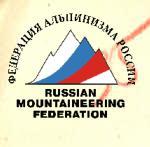
5010 m 4
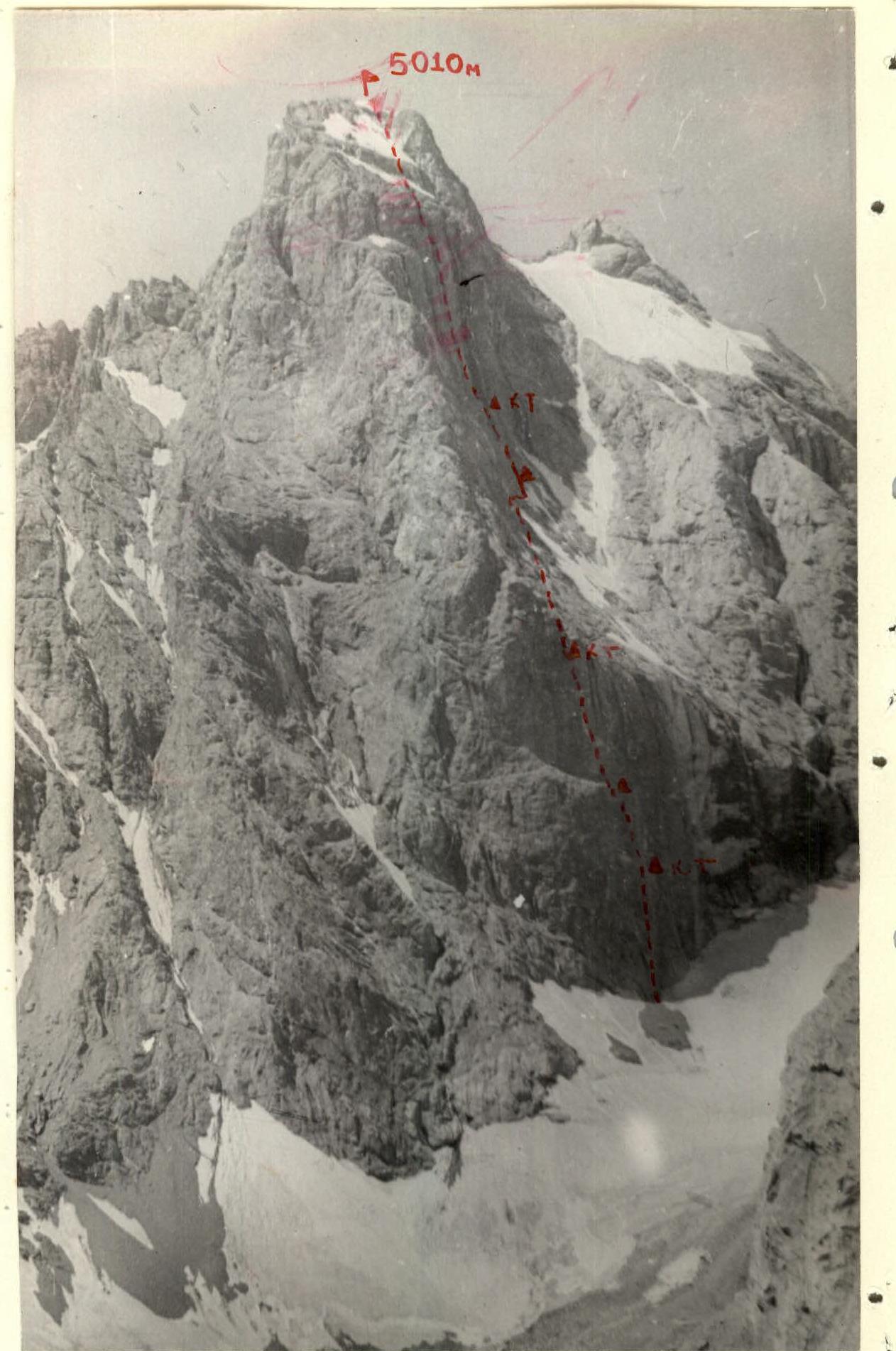
Map-scheme of the ascent area
- — MAIN GROUP EXIT
- ... RECONNAISSANCE
- --- TRAINING
- 8 BASE CAMP
- 8 OBSERVERS' CAMP
- PATH OF ARRIVAL AND RETURN
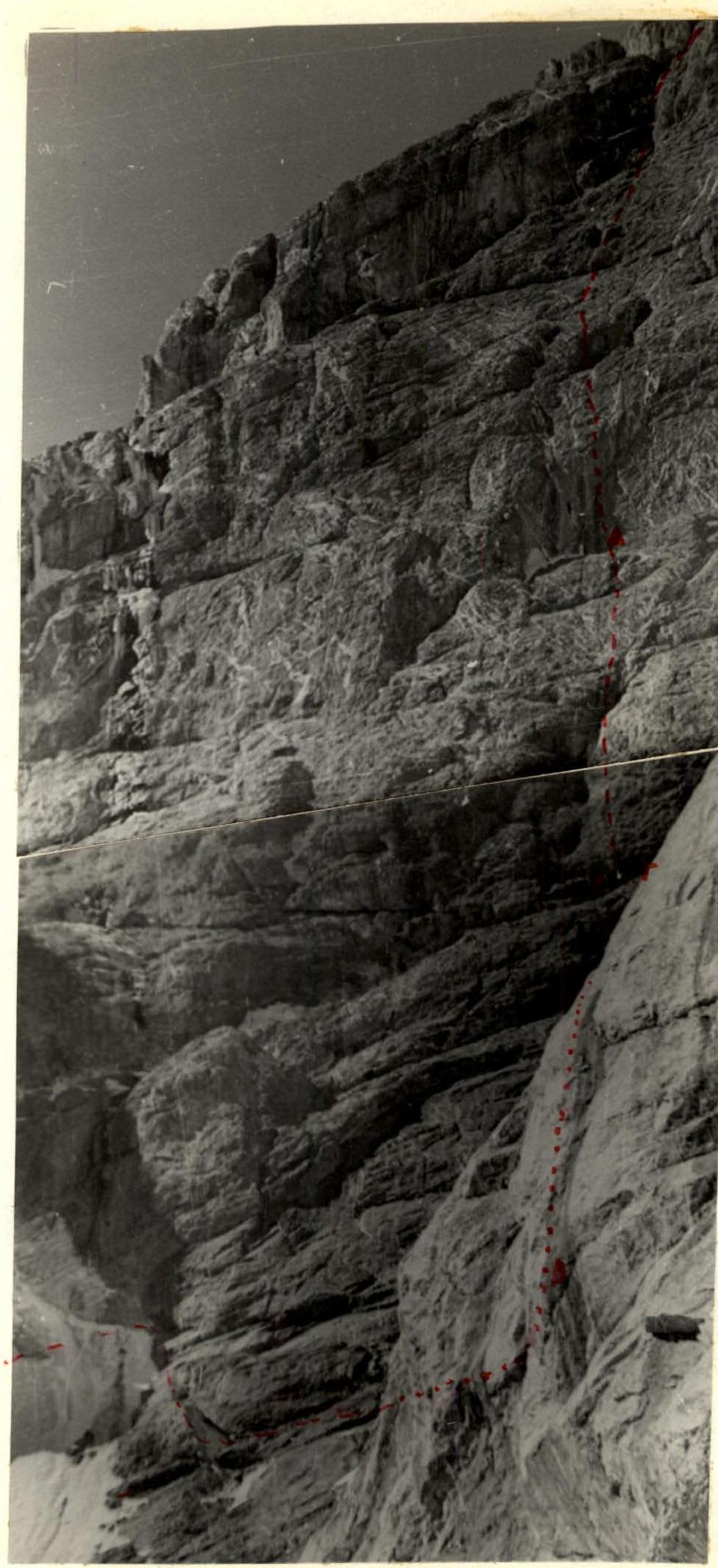
Fig. 5. Upper part of the Chyorny Peak route
Description of the route via the center of the northeast face of Chyorny Peak and its passage
August 7, day one. By 15:00, the backpacks of those heading up are lined up along an improvised line. Almost half of the camp's "population" is leaving: five participants in the wall assault, two observers, and the senior coach. Final words of encouragement, handshakes. We head out to the assault camp. We ascend to the two tents left from the previous exit in three and a half hours. Another tent is set up, we settle in comfortably, and prepare dinner. Everyone is busy: examining the wall through binoculars, discussing route details. Only V. Gudkov, not waiting for dinner, retreated to the tent, complaining of stomach pain.
The weather changed by evening. Light, harmless clouds thickened into a dense cloud hanging over Bodkhona. A bad sign; this corner of the valley is considered "rotten," and significant changes can be expected. After dinner, everyone goes to sleep; tomorrow is the first, tense day of the ascent.
August 8, day two. Early rise. Everything is ready for departure, but it has to be postponed. Vitaly feels worse; the pain has intensified, nausea and headache have appeared. Our doctor is attending to him; there's a suspicion of food poisoning. The health of the others is fine. A coaching council is held, and it's decided not to ascend today due to the impending bad weather and the teammate's health issues. The deteriorating weather continues throughout the day, with rain turning into wet snow and a thunderstorm.
Sitting in the tents, we discuss the situation. V. Gudkov's health is not improving; he'll likely have to descend. Later, at the district center hospital in Ayni, he is diagnosed with an acute gastritis attack.
The thunderstorm subsides by evening, but the snow continues. We periodically clear the snow from the tents. By night, the snow cover reaches 10–15 cm.
August 9, day three. The snow stopped late at night. A dense fog hangs in the morning, but there's no precipitation. If the weather stabilizes today, we can ascend tomorrow. By 10:00, the wind disperses the fog, and by 12:00, the sky is mostly clear. V. Gudkov is sent down to the base camp. We discuss changes in our tactics and re-sort our gear.
August 10, day four. We ascend at 6:00. The sky is clear; the weather has stabilized. The initial section of the route is processed in about 2 hours. E. Kotov remains below, handling the gear and sending up the backpacks using a 90-meter rope.
The ascent continues with the extraction of backpacks up a 90-meter sheer wall in about an hour. The first rope team begins working on the next section.
The route is chosen to bypass a red monolithic block (R4–R5) via a crack in the right wall of the angle. Three hooks are hammered, and a ladder is hung. The overhanging edge is traversed using a wooden wedge, an ice hook, and two ladders.
The ascent continues with complex climbing, using various techniques and anchors. We reach a ledge suitable for a bivouac, albeit challenging due to its size.
August 11, day five. We depart early. S. Prusakov leads, tackling a 10-meter section on a gray, steep wall (R9–R10). The climbing is very challenging. We continue with a series of complex maneuvers, using ladders and anchors.
The day's work is demanding, with the first rope being completed in 1.5 hours. We work in just our shirts due to the warmth. Stones occasionally fly by, but they don't threaten us.
By 16:00, we've reached a wide, inclined balcony — a transverse step (R18–R19). We organize a bivouac site and set up a tent under a safe overhanging ledge.
August 12, day six. We depart early. S. Prusakov and V. Yanov lead, tackling a 25-meter internal angle with a monolithic block at the top (R21–R22). The climbing is complex, with careful anchor placement.
The ascent continues with challenging sections, including a gray wall (R22–R23) and a cascade of cornices (R23–R24). We overcome a "gray belt" of "ram's foreheads" (R24–R25).
The day ends with a bivouac on a ledge, with the tent set up in a relatively safe location.
August 13, day seven. We continue ascending, traversing the "gray belt" (R26–R27) and reaching the black wall. The terrain becomes more challenging, with steep ice and rock sections.
We cross an icy gully (R27–R28) and reach the base of the black wall. The ascent continues with complex climbing, using various techniques.
We bivouac on a ledge, with the tent set up on a relatively flat area.
August 14, day eight. We continue ascending the black wall, facing challenging sections with overhanging rocks and ice (R30–R33). The climbing is cautious and complex.
The day ends with a bivouac on a ledge, with the tent set up under a relatively safe overhang.
August 15, day nine. The weather worsens, with clouds gathering. We continue ascending, tackling a difficult section with a two-tiered cornice (R38–R39). The climbing is extremely challenging, with wet and cold conditions.
We decide to stop and descend to a lower ledge, setting up a tent on a snowy surface.
August 16, day ten. We depart early, with the weather still unfavorable. We quickly descend the rappelling lines and continue ascending. The terrain remains challenging, with steep rock and ice sections.
We reach the summit by 19:00, leaving a note in the existing cairn. We begin our descent immediately, as daylight is limited.
The descent follows a familiar route, traversing snowy and rocky terrain to reach the glacier.
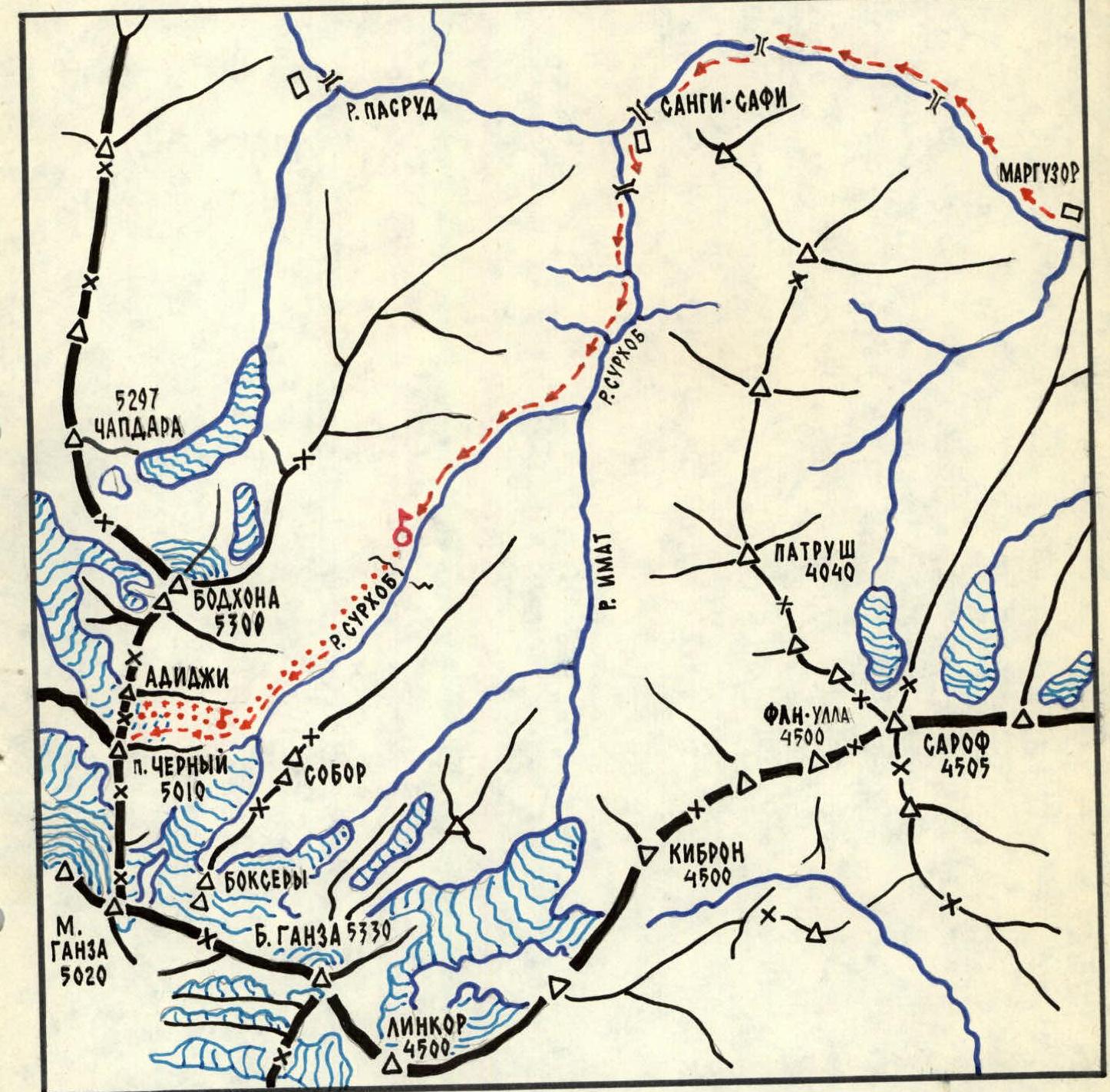
Table of main ascent characteristics
Ascent route — Chyorny Peak via the center of the NE wall. Elevation gain — 1450–1500 m. Including the most challenging sections — 1094 m. Route steepness — 87–88°.
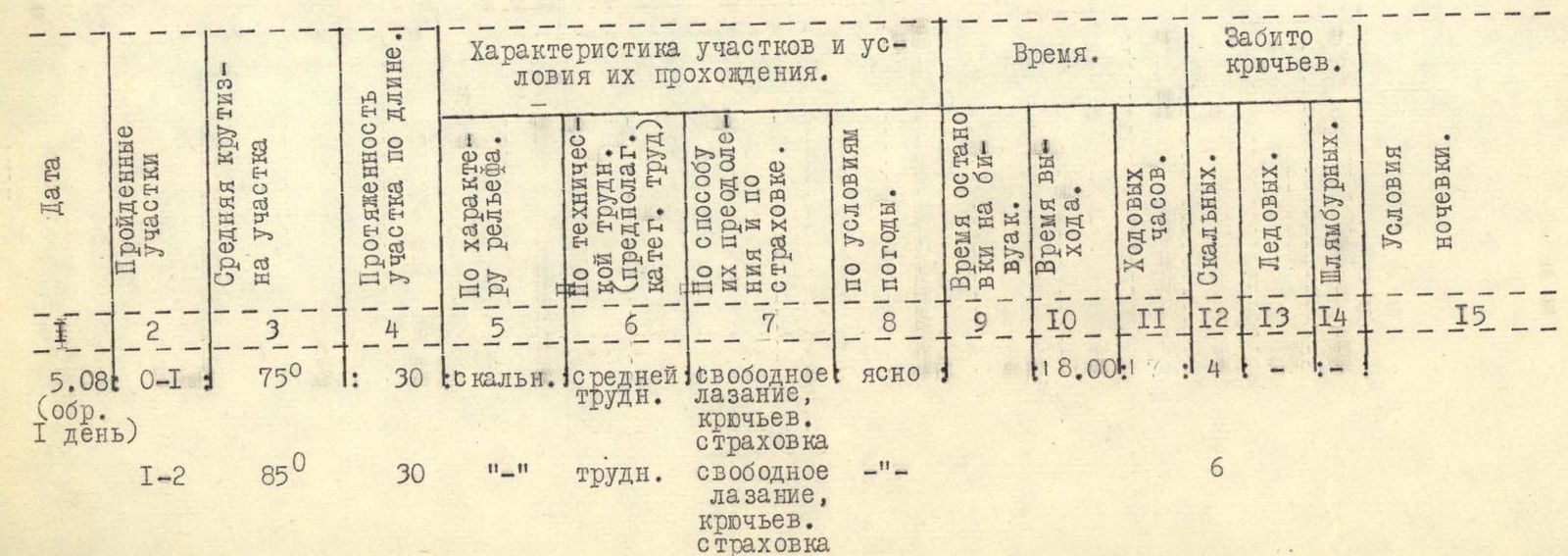
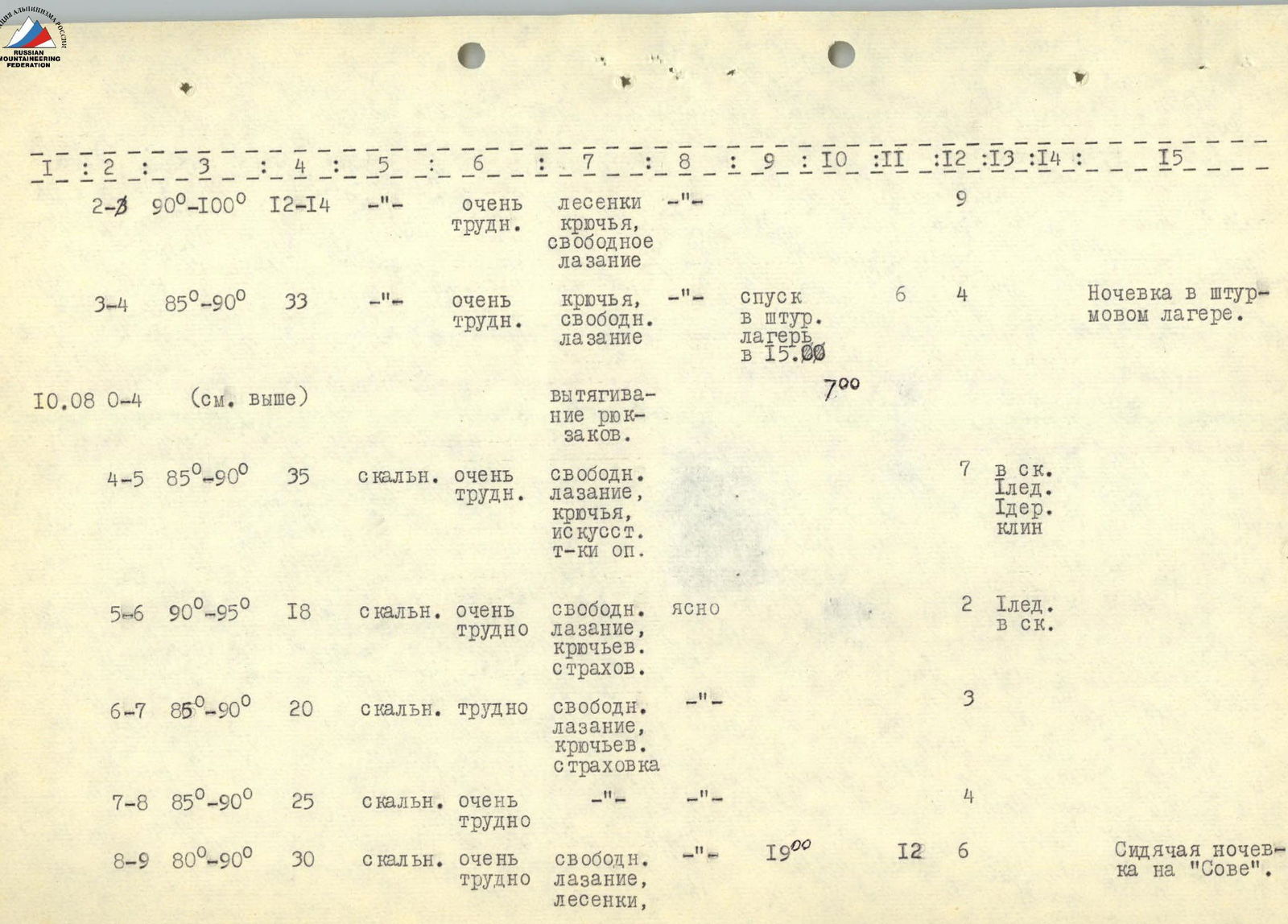
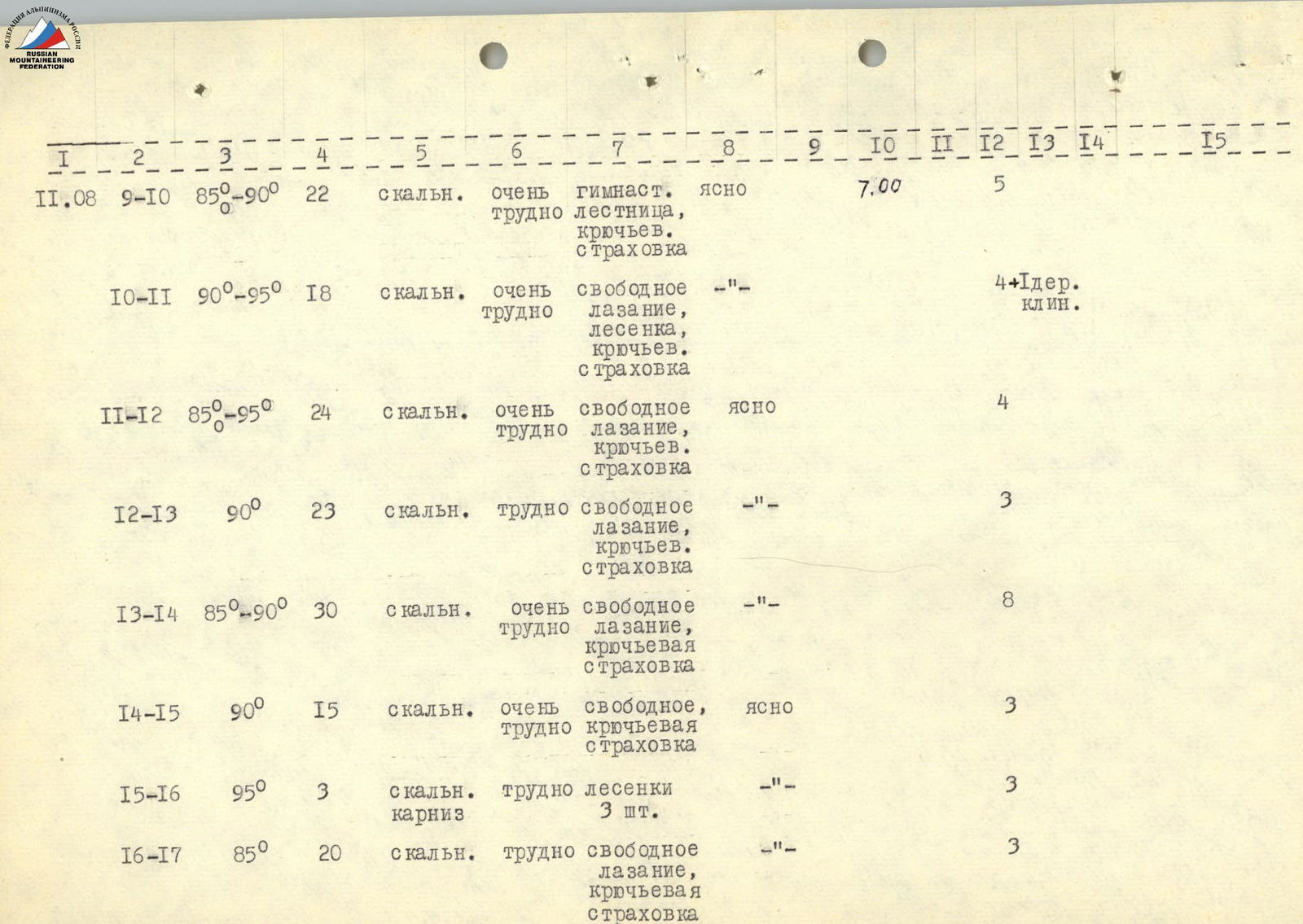
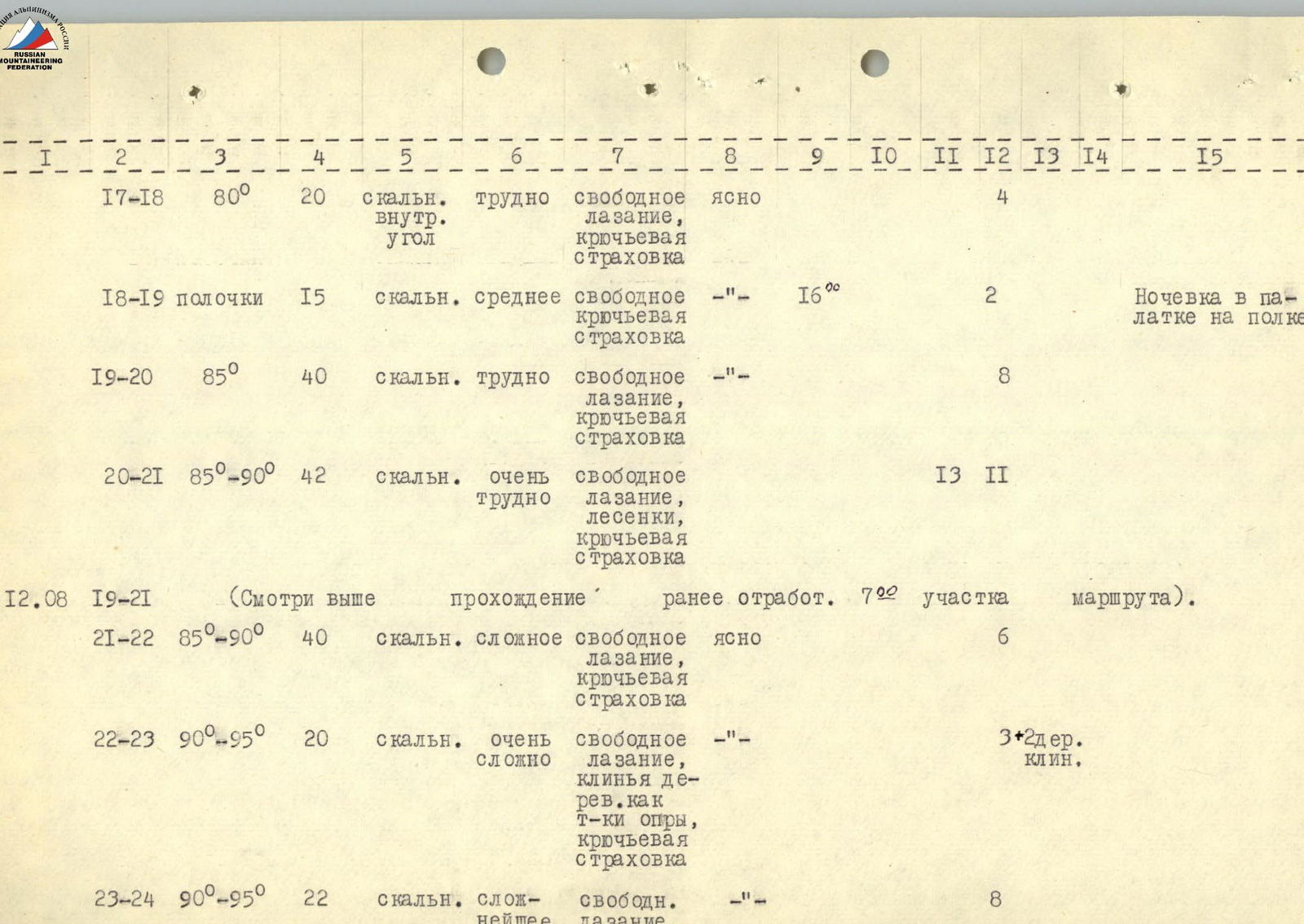
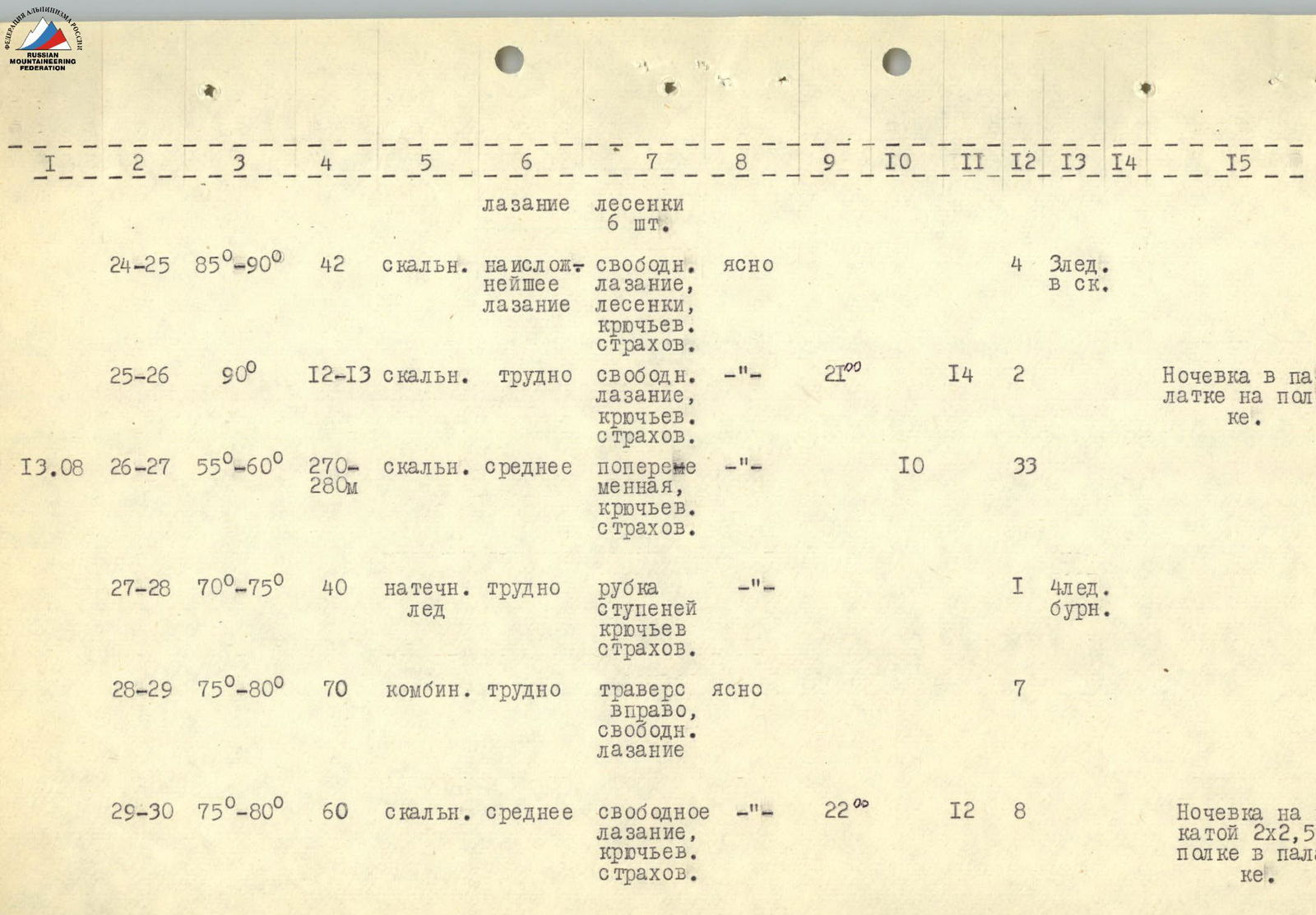
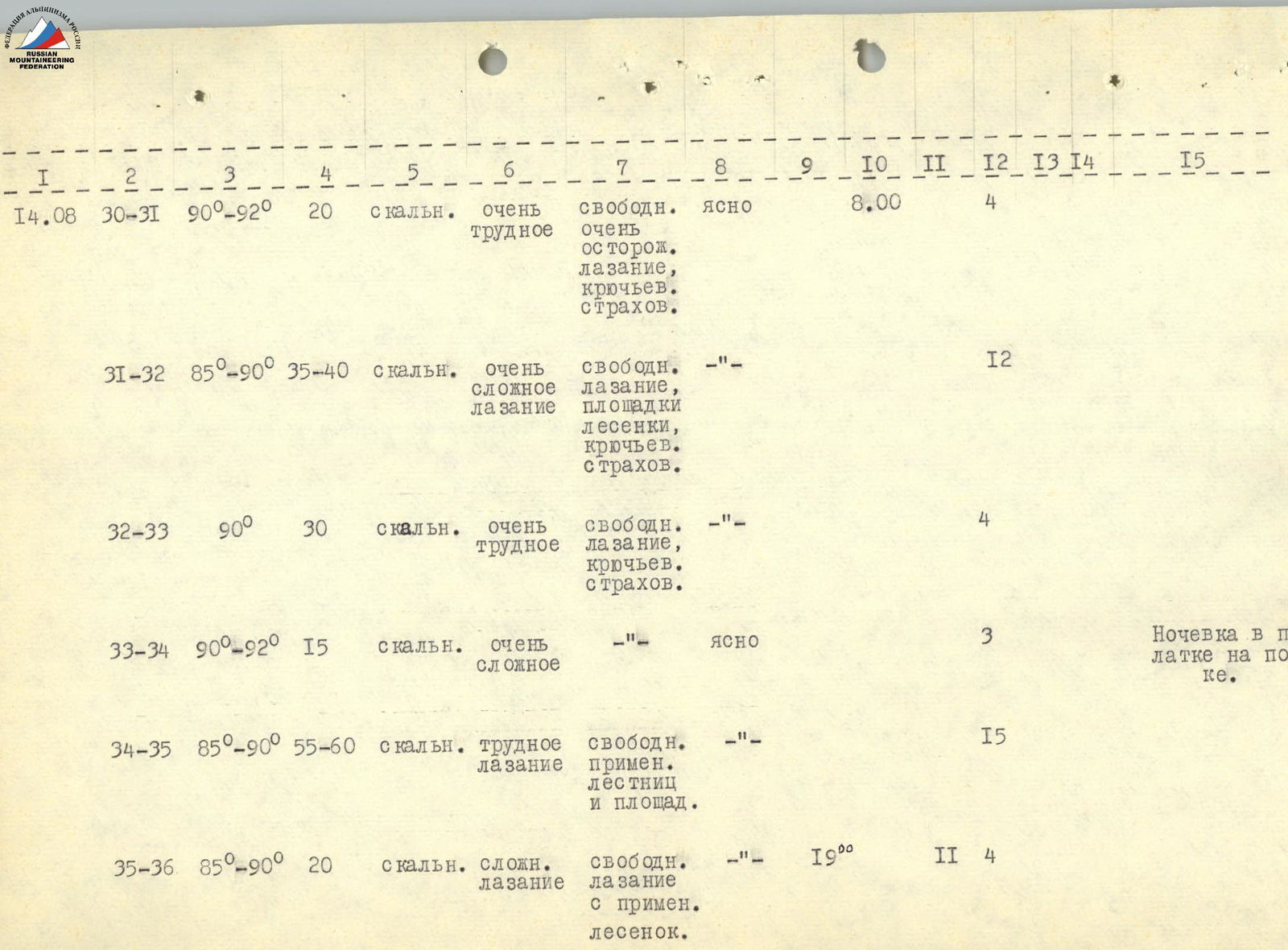
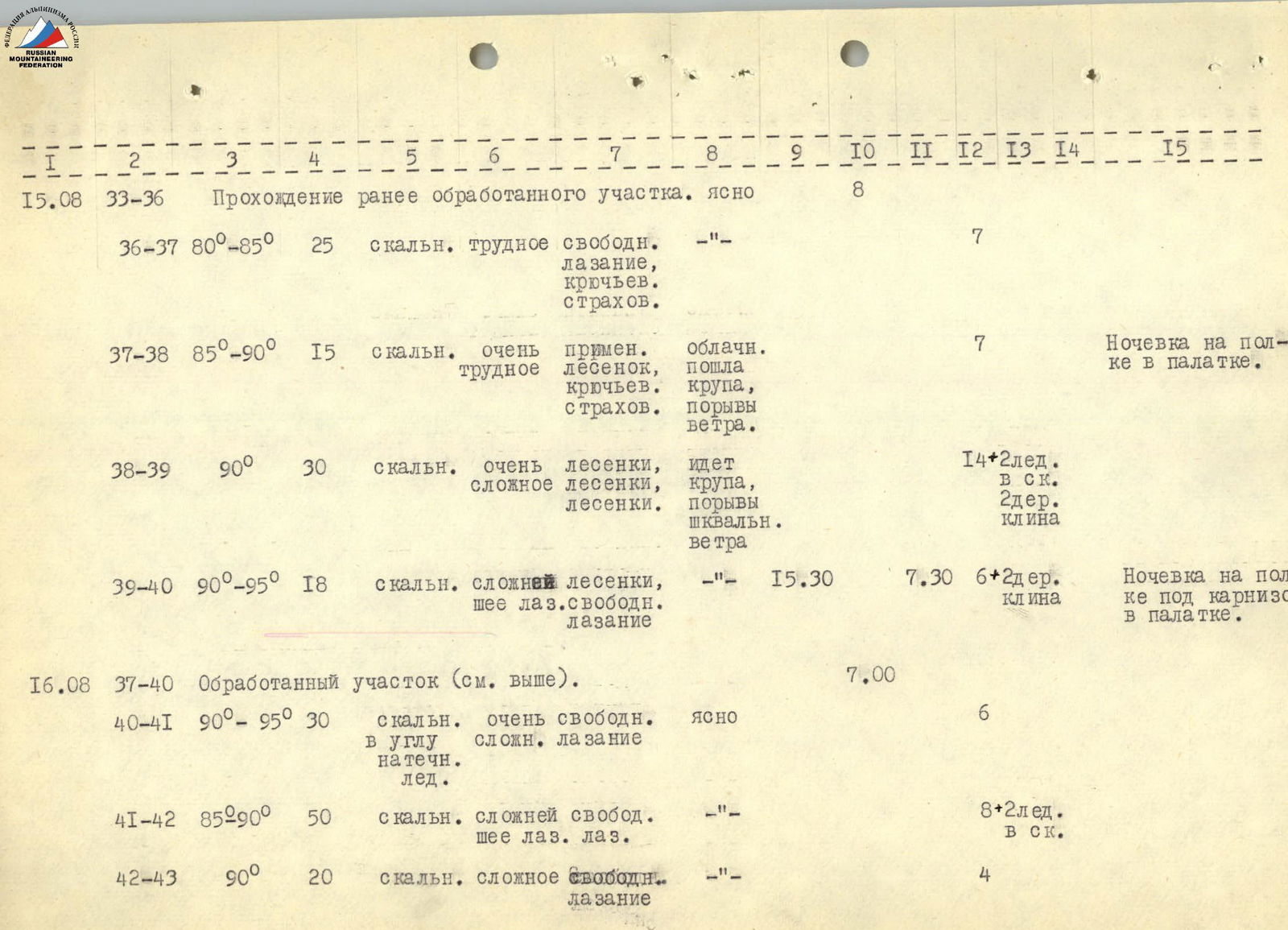
| Date | Section | Steepness | Length (m) | Tech. diff. | Climbing method | Bivouac time | Departure time | Climbing hours | Rock anchors | Ice anchors | Bolt anchors | Bivouac conditions |
|---|---|---|---|---|---|---|---|---|---|---|---|---|
| ... | ... | ... | ... | ... | ... | ... | ... | ... | ... | ... | ... | ... |
| 16.08 | R40–R41 | 90–95° | 30 | Very hard | Free climbing | Clear | – | – | 6 | – | – | |
| R41–R42 | 85–90° | 50 | Very hard | Free climbing | «–» | – | – | 8 | 2 | – | ||
| R42–R43 | 90° | 20 | Hard | Free climbing | «–» | – | – | 4 | – | – | ||
| R43–R44 | 70–75° | 20 | Hard ice | «–» | Clear | – | – | 4 | – | – | ||
| R44–R45 | 85–90° | 15 | Very hard ice | Ice anchors | Cloudy, snow | – | – | 3 | – | – | ||
| R45–R46 | 85–90° | 25 | Very hard | Angle climbing | «–» | – | – | 6 | – | – | ||
| R46–R47 | 70–75° | 30 | Hard | «–» | Snow, wind | – | – | 5 | – | – | ||
| R47–R48 | 65–70° | 180–190 | Medium ice | Crampons | «–» | – | – | 8 | 8 | – | ||
| R48–R49 | 40–45° | 30 | Easy | Simultaneous | «–» | 19:00 | 12 | – | – | – |
Total: 1766 m. Installed anchors: 288 rock, 12 ice screws, 9 ice anchors in rock, 8 wooden wedges.
Team captain, Master of Sports of the USSR: S.M. Prusakov Team coach, Master of Sports of the USSR, senior instructor: V.A. Svetlakov