
Ascent Passport
I. Ascent category — ice and snow 2. Ascent area — Central Tien-Shan; Terskey Ala-Too ridge 3. Peak named after N. Armstrong (4909 m) via the North face. 4. Estimated category of difficulty — 6B. First ascent. 5. Height difference — 830 m.
Distance — 1270 m. Distance of sections with 5th category of difficulty — 830 m. Average steepness — 43°. Steepness of the wall section — 51°
- Pitons driven:
| rock 3/0 | bolt | chocks | ice |
|---|---|---|---|
| 0/0 | 6/0 | 213/0 |
- Team's total climbing hours: 16
- Overnight stays: one on descent.
- Team "ProfSport-II" of the All-Union Council of the All-Union Voluntary Sports Society of Trade Unions
- Team leader — Boyko V.G. — Master of Sports of International Class
team members — Rykshin V.V. — Candidate Master of Sports, Suvorov V.A. — Candidate Master of Sports, Vakulo V.S. — Candidate Master of Sports. Team coach — Rozhkov Andrey Nikolaevich, Candidate Master of Sports
- Departure to the route — August 12
Summit ascent — August 12. Return — August 13
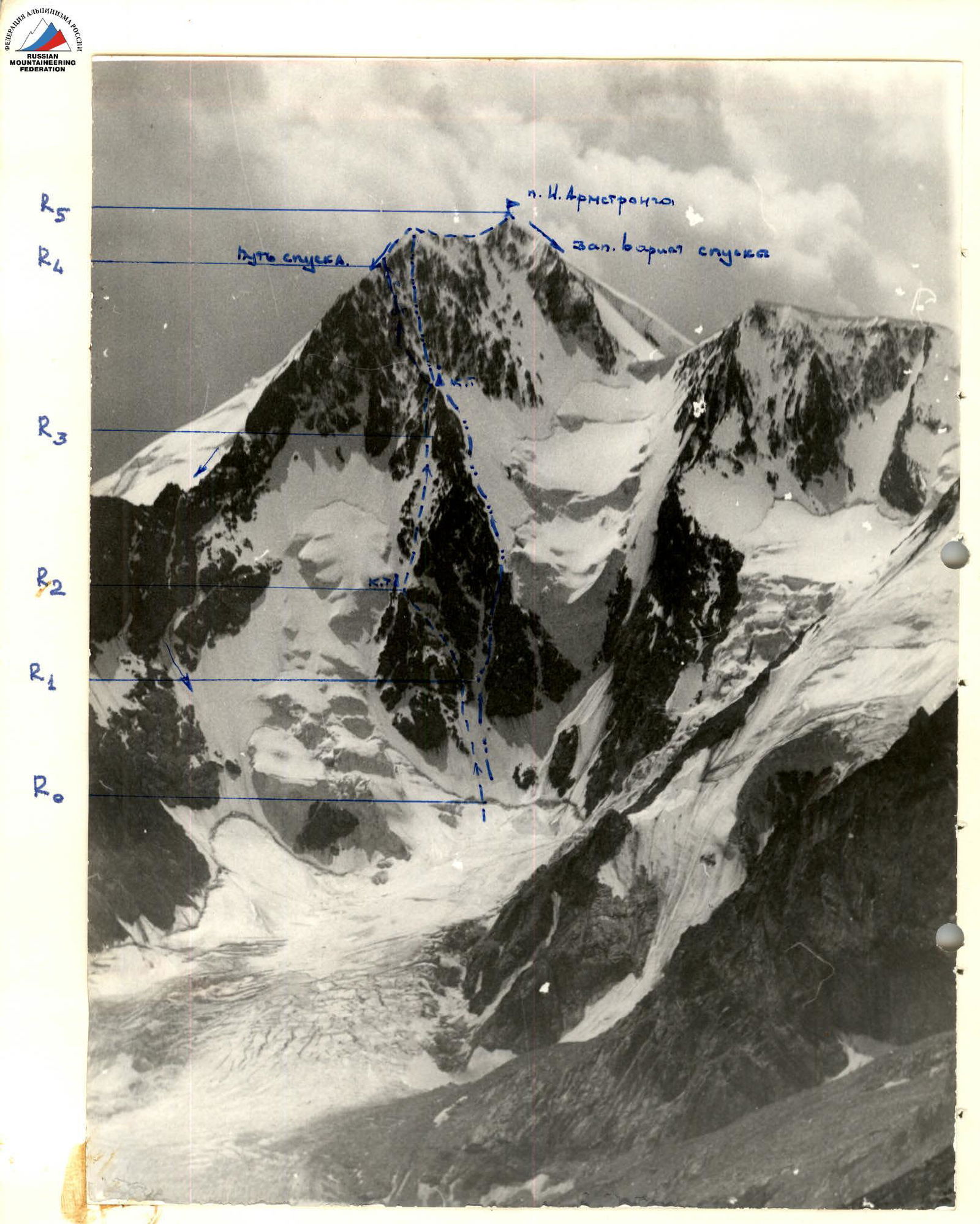
Team's Tactical Actions
The tactical plan for the ascent was to complete the route in one day with an overnight stay on descent, which fully corresponded to the actual ascent. The route was completed on August 12 in 16 hours, including a 1-hour break for lunch.
Given the length of the ice sections and the limited number of rest areas, the team relied on prolonged physical exertion, i.e., the high individual physical fitness of the participants.
Team composition (4 people):
- Boyko V.G. — team leader
- Vakulo V.S.
- Suvorov V.A.
- Rykshin V.V.
The team had experience of joint ascents of 6B category.
On the first section, the Vakulo–Suvorov rope team led; on the second section, the rope teams switched; on the third section, Vakulo–Suvorov led again; on the fourth and fifth sections, Boyko–Rykshin led.
Each participant carried their own backpack.
Section passage modes:
- First section: autonomous movement (the first rope team left pitons)
- Second section: autonomous movement, except for two particularly difficult pitches where interaction was used
- Third section: fully independent work by the rope teams
- Fourth section: one pitch was completed with interaction (fixed rope for the first member of the second rope team)
- Fifth section: autonomous work
Organization of belay stations:
- On all sections, belay stations were organized using blocked ice screws (at least 3 screws per station)
- On the fourth section, when passing a rock counterfort, выступы, chocks, and pitons were used for belaying
Equipment and movement:
- When moving on ice, each participant used ice axes and an ice hammer (ice axe)
- On difficult sections, a pair of ice axes was used
Nutrition:
- Each participant had a high-calorie pocket food reserve
- From 12:30 to 13:30, a break was taken to prepare a hot meal
The tactical plan had envisaged completing the fourth section in 3 hours. However, since the previous team "RSFSR-I" had passed this section the day before, a backup plan was used, which had been agreed upon in advance with the USSR Chief Coach for mountaineering, Comrade Shatayev V.N. Instead of ice, the team had to go through rock and loose snow, which delayed progress on this section to 5 hours. There were no further deviations from the tactical plan. There were no accidents or injuries.
The rescue team was located in the base camp under Peak named after N. Armstrong during the ascent. Communication was maintained via radios: "Lastochka" for the team, and "Kaktus" for the rescuers. With stable radio communication, all sessions went normally.
The descent from the summit was made along the western ridge towards Peak named after Academician Keldysh and further along the north-eastern slope of the summit to the base camp.
Safety measures during the route included:
- High physical, technical, and psychological preparation of the team.
- Tactical plan.
- Material and technical support, including the use of modern equipment: titanium rock and ice pitons, ice screws with stationary handles, lightweight carabiners, quickdraws, ice axes, ropes with UIAA certification.
- Presence of a rescue group under the route, constantly monitoring the team's actions with an 8x binoculars.
- The route included two hot meals. The nutrition plan was based on 350 g of dry substance per person per day.
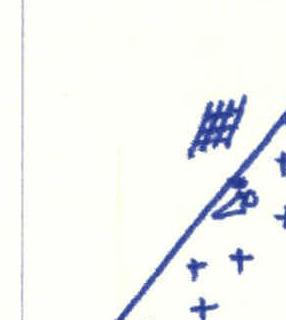 |
5 | 380 | 25 | 4 | | | 39 | 3 | — |
6 |
|
5 | 380 | 25 | 4 | | | 39 | 3 | — |
6 | |
4 | 260 | 55 | 5 | | | 52 | — | — |
— |
|
4 | 260 | 55 | 5 | | | 52 | — | — |
— | |
3 | 240 | 45 | 5 | | | 40 | — | — | — |
|
3 | 240 | 45 | 5 | | | 40 | — | — | — |
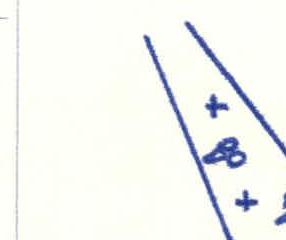 |
2 | 160 | 50 | 5 | | | 47 | — | — | — |
|
2 | 160 | 50 | 5 | | | 47 | — | — | — |
 |
1 | 230 | 45 | 5 |
|
1 | 230 | 45 | 5 |


