Ascent Passport
- Ascent class — ROCK.
- Ascent area — EASTERN SAYAN, TUNKINSKIE GOLTSY ridge.
- Peak, its height, ascent route — p. DINOSAUR, 2716 m, SOUTH BUTTRESS OF THE EASTERN RIDGE.
- Proposed difficulty category — 4B.
- Height difference — 416 m.
- Average steepness of the buttress — 55°.
- Length of sections — 4th diff. cat. – 28 m, 5th diff. cat. – 150 m.
- Pitons driven — rock: 42, ice: for ITO.
- Number of travel hours — 11 h.
- Number of nights spent — none.
- Surname I.O. of the leader, participants and their qualification:
- leader BELOUSOV V.M. — CMS
- TARAN N.S. — CMS
- MIKHAILOV A.A. — MS
- YURINSKY Y.I. — 1st sports category
- Team coach — PETRASHKO G.A.
- Date of ascent — May 4, 1981.


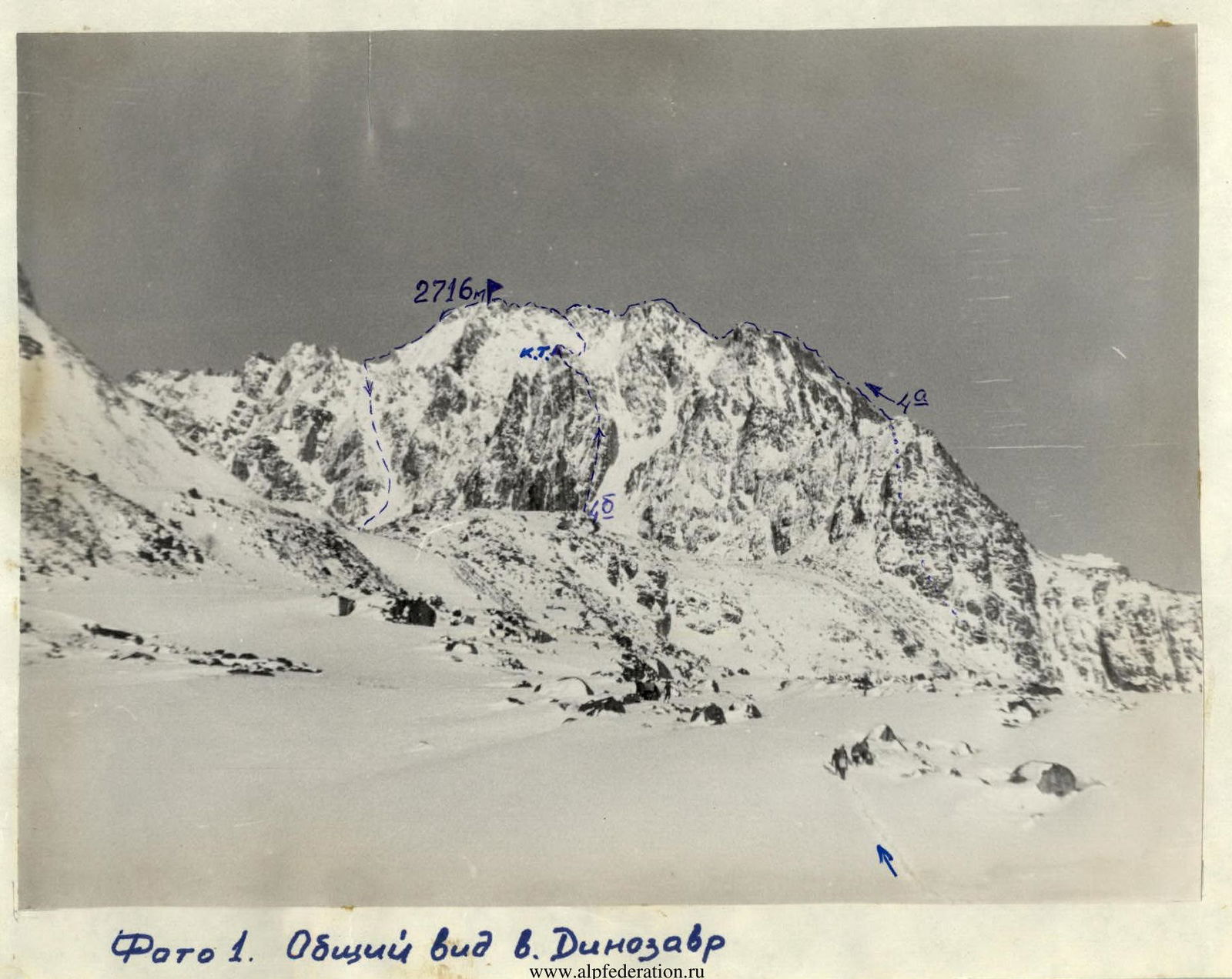
Photo 1. General view of p. Dinosaur.

Photo 2. Profile of the route buttress.
Table of main route characteristics

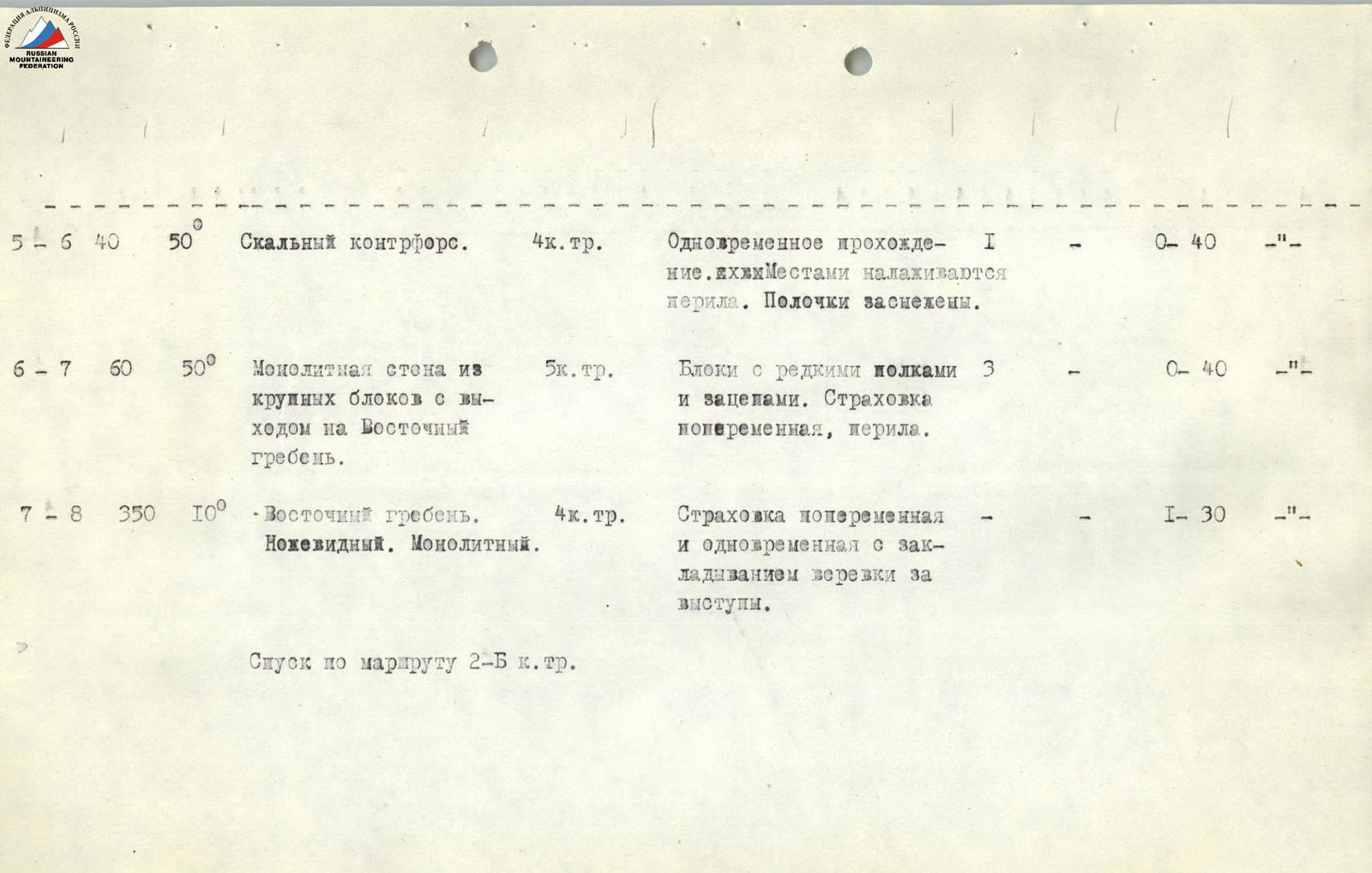
| Section | Section length, m | Section steepness, ° | Terrain characteristics | Section difficulty category | Passage method | Pitons driven (rock) | Pitons driven (ice) | Passage time | Weather |
|---|---|---|---|---|---|---|---|---|---|
| R0–R1 | 40 | 60 | Right edge of the buttress. 23 m. | 3rd diff. cat. | Monolith, shelves are snowy. Few holds. | 5 | – | 0–40 min | GOOD. |
| R1–R2 | 120 | 45 | Right edge of the buttress with inclined shelves. | 4th diff. cat. | Rocks are monolithic, shelves are snowy. Alternate belay. | 15 | – | 2–00 h | – |
| R2–R3 | 90 | 65 | Monolithic wall ending in a 25 m high gendarme. | 5th diff. cat. | Few cracks and holds are iced. Belay is alternate, with ropes. | 16 | – | 1–30 h | – |
| R3–R4 | 20 | 60 | Snowy wall of the gendarme. Descent to a saddle. | 4th diff. cat. | Destroyed rocks, snowy. Descent on ropes. | 2 | – | 0–30 min | – |
| R4–R5 | 150 | 30 | Snow ridge with rock outcrops. | 3rd diff. cat. | Simultaneous passage with step-kicking. | – | – | 0–30 min | – |
| R5–R6 | 40 | 50 | Rocky buttress. | 4th diff. cat. | Simultaneous passage. Ropes are placed in some areas. Shelves are snowy. | 1 | – | 0–40 min | – |
| R6–R7 | 60 | 50 | Monolithic wall of large blocks leading to the Eastern ridge. | 5th diff. cat. | Blocks with rare shelves and holds. Belay is alternate, with ropes. | 3 | – | 0–40 min | – |
| R7–R8 | 350 | 10 | Eastern ridge. Knife-like. Monolithic. | 4th diff. cat. | Belay is alternate and simultaneous with rope wrapped around ridge outcrops. | – | – | 1–30 h | – |
Descent via 2B category difficulty route.
Brief description of the route by sections
Section R0–R1
From the lower part of the buttress, go right into a wide couloir and then along it 15 m beside the wall. Under the wall, there are large ledges. From the ledges, go up to the wall of the buttress, slightly deviating to the right. Rocks are of medium difficulty. Many cracks, holds. Shelves are covered with deep snow. Steepness — 50°. Rocks are monolithic, not prone to rockfall. See photo 5.
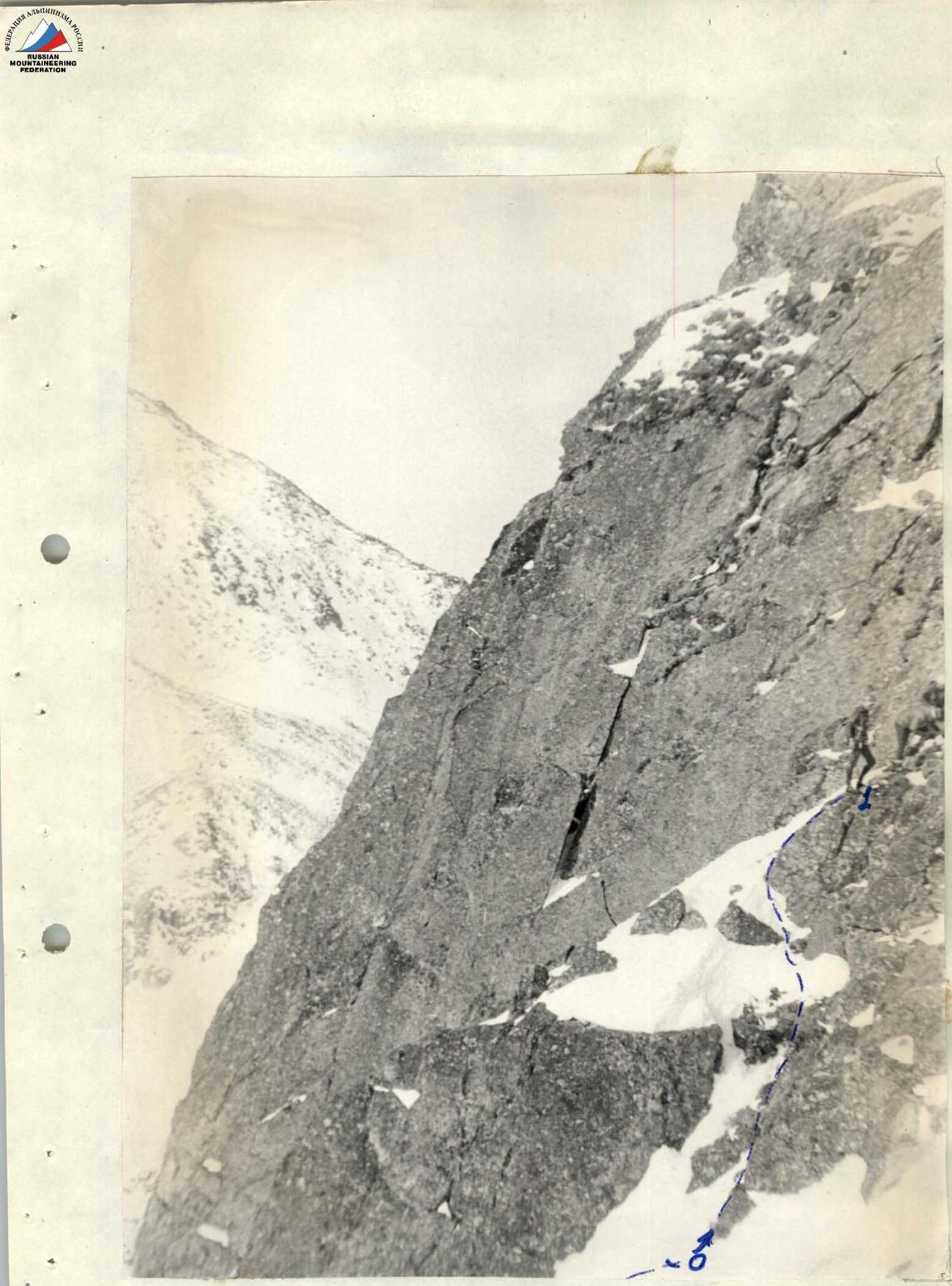
Photo 5. Beginning of the route. Section R0–R1.
Section R1–R2
The route goes along the right side of the buttress, 10 m from the edge, through dissected rocks. Rocks are composed of large monolithic blocks. Few cracks for piton placement. Climbing is of medium difficulty. It is necessary to go up towards the top of the buttress. See photo 6.
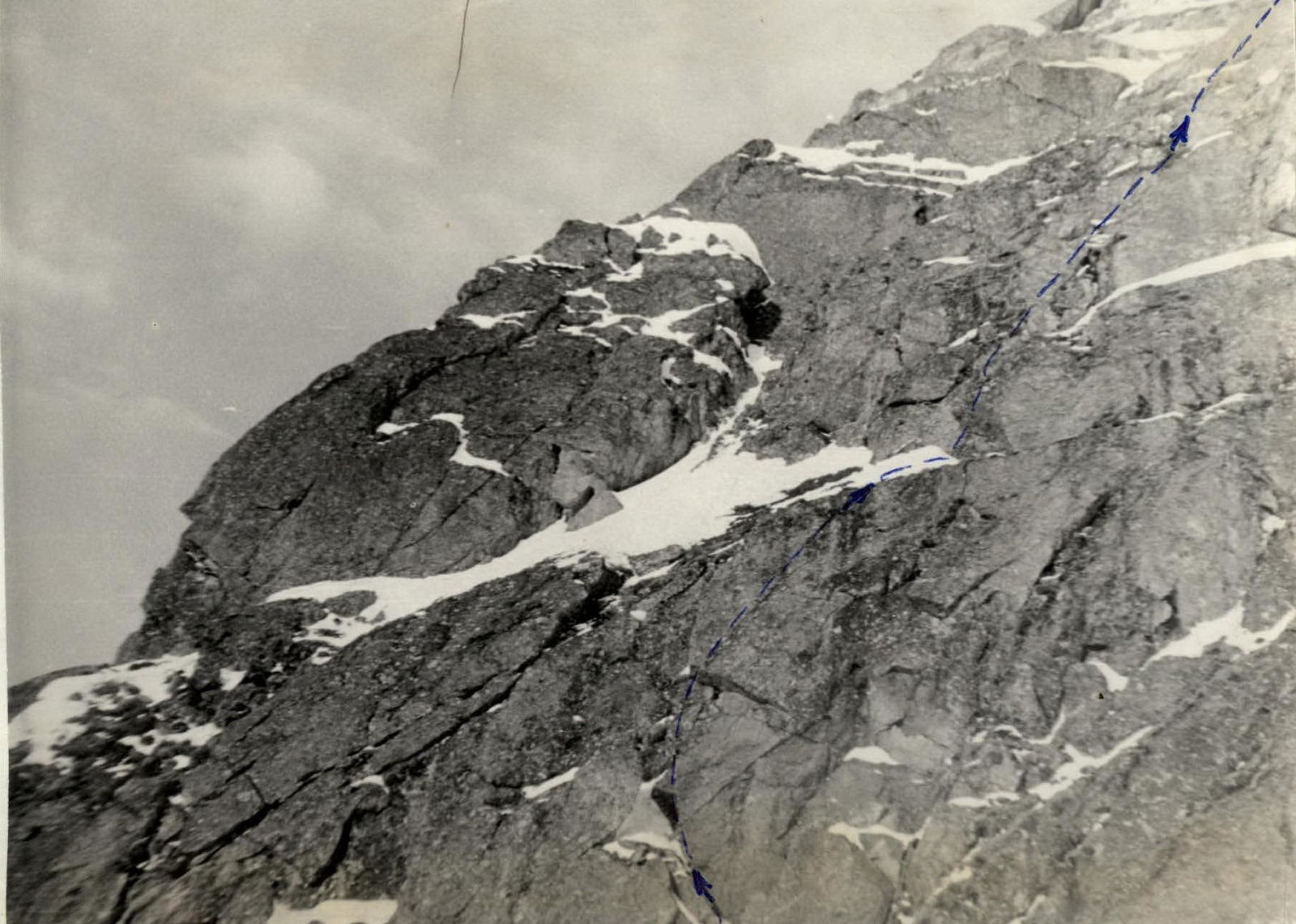
Photo 6. Section R1–R2.
Section R2–R3
Inclined slabs and shelves end and turn into a wall with a steepness of 60°. To the right, there is a smooth steep wall. It is necessary to move straight up to the wall of the buttress. See photo 7. Rocks have a block structure with a small number of holds and cracks. Climbing is difficult. Shelves are covered with snow. The buttress ends in a gendarme, 25 m high. On top of the gendarme, a control cairn №1 is built.
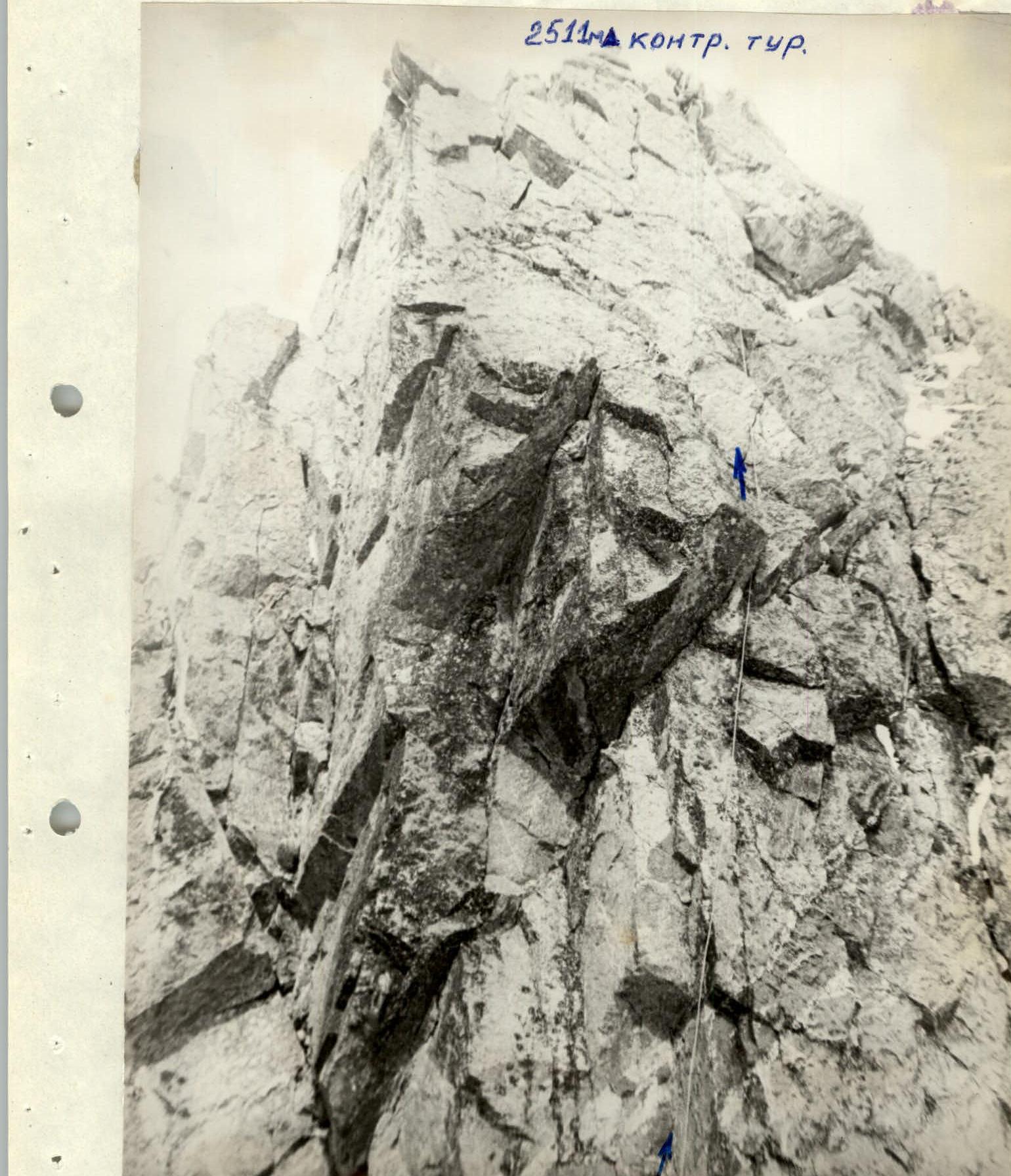
Photo 7. Section R2–R3.
Section R3–R4
Descent from the gendarme towards the peak Dinosaur to the north. Ropes 20 m. Steep rocks are covered with snow. It is difficult to find a place to drive a piton. From under the gendarme wall, it is necessary to traverse to a snowy ridge leading to the Eastern ridge.
Section R4–R5
A gentle snowy ridge leads to the main Eastern ridge. There are rock outcrops. The ridge is quite wide, without cornices. Movement is simultaneous. See photo 3.

Photo 3. Profile of the ridge part of the route.
Section R5–R6
The snowy ridge turns into a rocky buttress. Rocks are heavily destroyed but not prone to rockfall. Easy detour to the left of the front wall along the snowy slope is hazardous due to avalanche risk. Therefore, it is better to go straight to the wall that the buttress abuts. Depending on weather conditions, rocks can be iced, snowy, or dry. Under any conditions, rocks are passable by climbing without using artificial support.
Section R6–R7
The rocky wall is monolithic. It consists of large blocks with cracks and shelves. The wall is the southern side of one of the gendarmes of the Eastern ridge. Cracks are iced. Exit to the Eastern ridge.
Section R7–R8
The Eastern ridge is heavily dissected. It has many gendarmes with a knife-like ridge. See photo 4. Movement is simultaneous and sometimes alternate with rope wrapped around ridge outcrops. This section to the summit is a small part of the existing 4A category difficulty route along the Eastern ridge. Descent via the Southern ridge, 2B category difficulty.

Photo 4. Section R7–R8.