
Brief Overview of the Climbing Area in the Mugovek Valley, Bolshoy Sayan Ridge
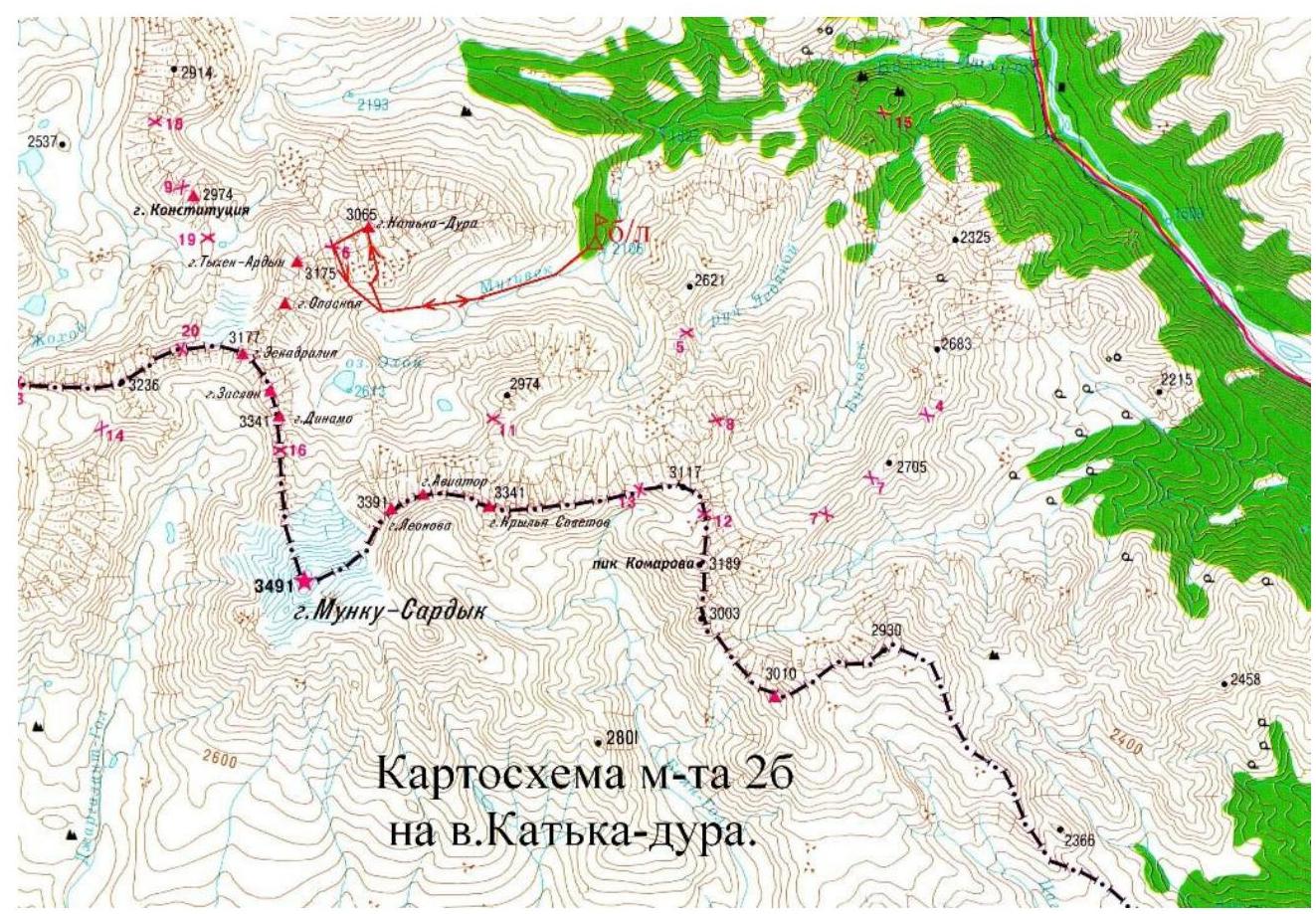
The climbing area is located in the Buryat Republic on the border with Mongolia in the Bolshoy Sayan Ridge and its constituent part - the Munku Sardyk Ridge - in the upper reaches of the Mugovek and Beliy Irkut valleys. The hub of the area is the massif of Munku Sardyk mountain (3491 m) - the highest point of the Sayan Mountains.
The area is 300 km from Irkutsk in a strictly western direction. The road passes as follows:
- From Irkutsk to Mondy village - a good asphalt road of state significance.
- From Mondy village - 25 km on a gravel road leading to the Okinsky district of the Buryat Republic, to the bridge over the Beliy Irkut River.
- Further, the road goes to the pass, and the path to the foot of Munku Sardyk mountain and the climbing site in the Mugovek valley passes through the canyon of the Beliy Irkut River and the Mugovek River from an altitude of 1400 to 2200 m, i.e., to the forest boundary.
Features of the section:
- In winter, this section is traversed on ice with crampons.
- Above the canyon and the forest boundary, the Mugovek River valley is wide and trough-shaped.
- In the upper part, above the second cirque, there is a cirque lake Ehoy.
From the road to the base camp at the forest boundary - 4 hours of approach.
According to these indicators, the Mugovek valley area is the most accessible today among all, even closer, climbing areas in Eastern Siberia.
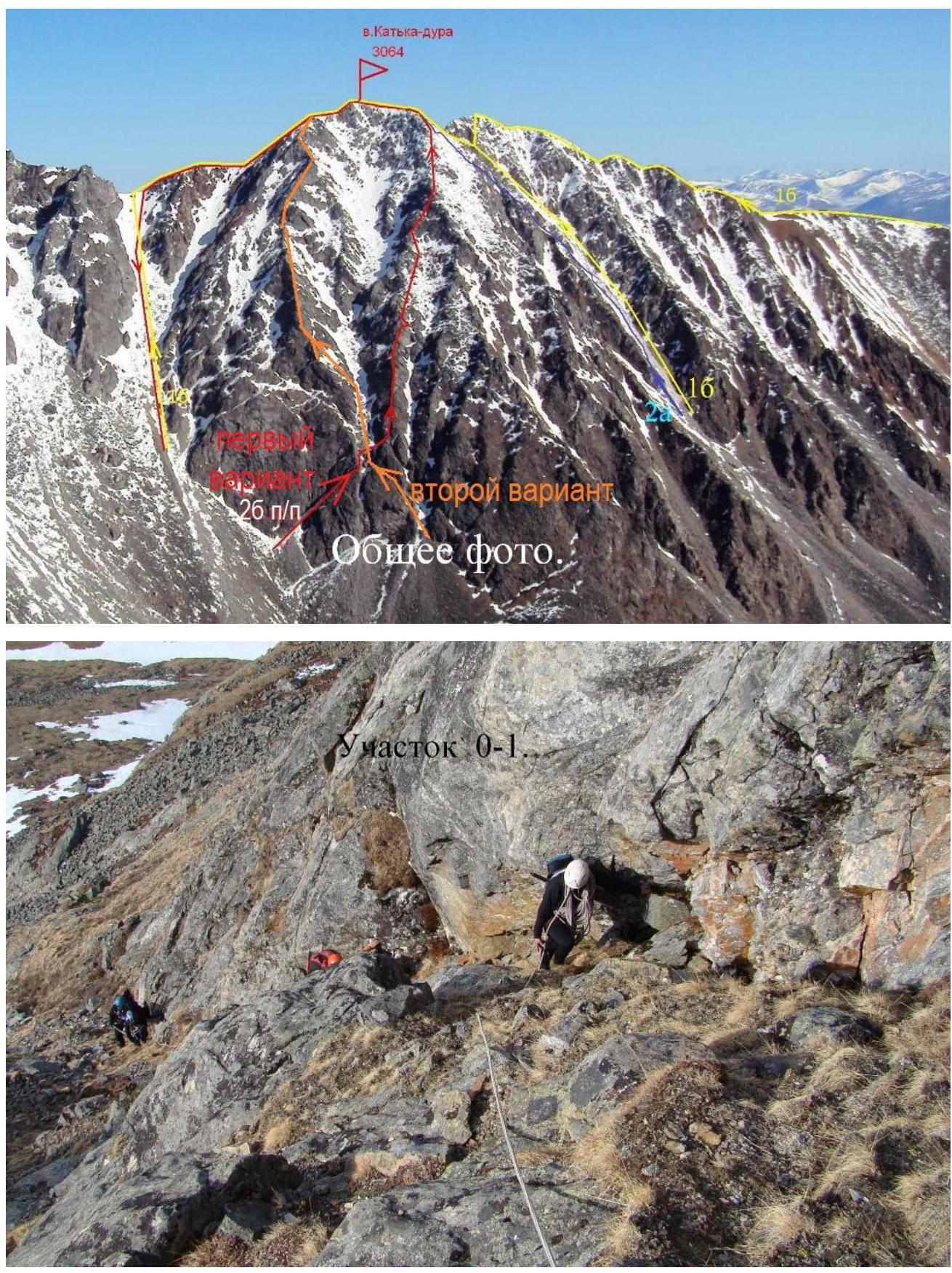
Climbing Route Passport to the peak Katka-dura 3064 m, via the South Ridge, rated 2B category of difficulty (first ascent)
- East Sayan, Bolshoy Sayan Ridge, Mugovek valley, section 6.1.1.
- Peak Katka-dura 3064 m, via the South Ridge.
- Proposed category of difficulty: 2B, first ascent.
- Character of the route: rocky.
- Height difference - 400 m, length - 807 m, average steepness - 30°.
- Number of pitons: rocky and chockstones - 19.
- Team's moving hours - 6 hours.
- No overnight stays on the route.
- Group:
- Afanasyeva O.A. 3rd sports category
- Afanasyev A.E. Master of Sports
- Bobrysheva A.A. 3rd sports category
- Grigoryev A.F. 2nd sports category
Afanasyeva O.A. 3rd sports category, Afanasyev A.E. Master of Sports, Bobrysheva A.A. 3rd sports category, Grigoryev A.F. 2nd sports category
Description of the Climbing Route to the peak Katka-dura 3064 m via the South Ridge, rated 2B category of difficulty (first variant)
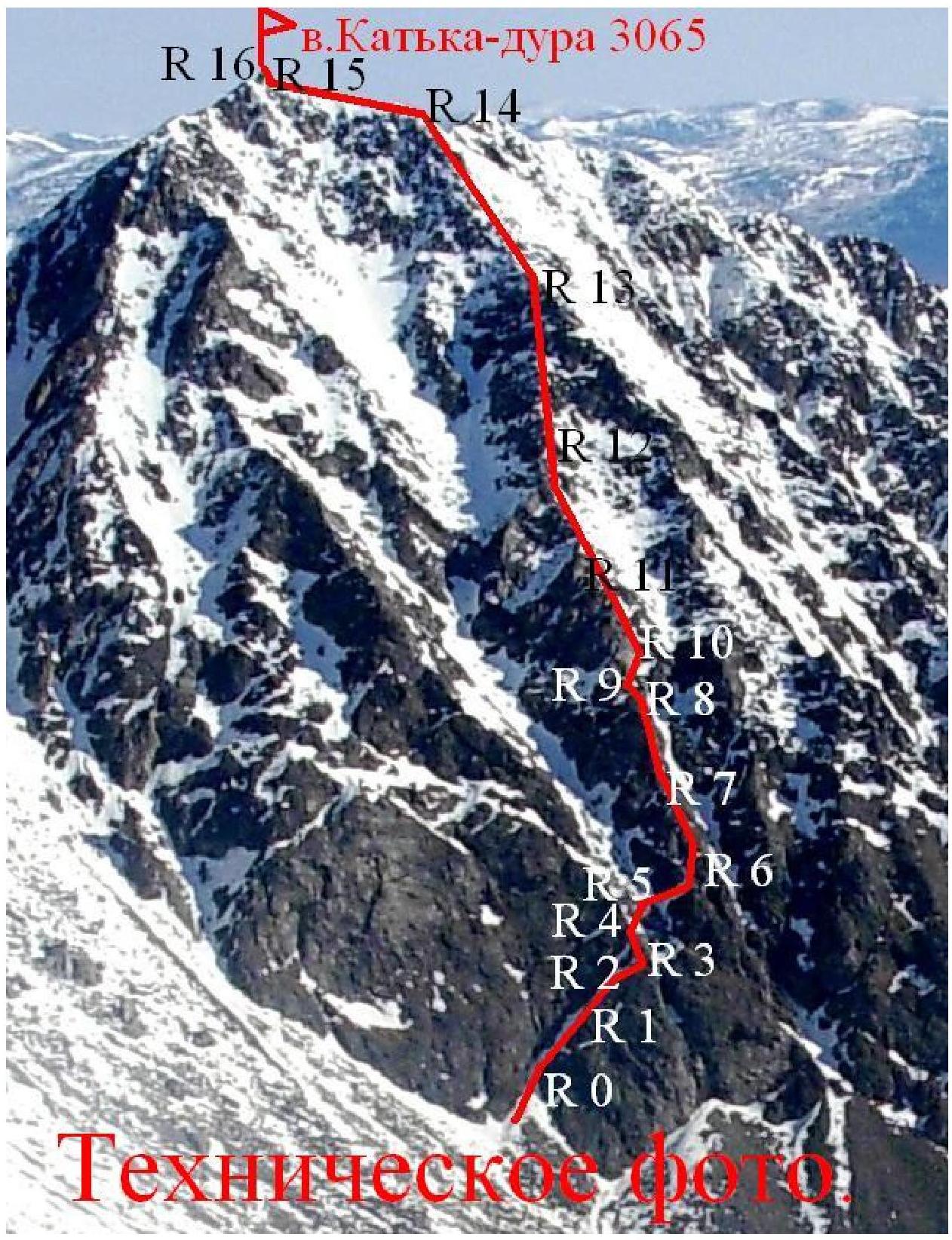
The approach to the route from the base camp takes 2 hours. The route starts from the wall of the left ridge of the southwest exposure, crossing upwards to the right the lower part of the:
- Section 0–1 60 m. 40° II - Snowy ledge upwards to the right.
- Section 1–2 30 m. 50° III - Ice-filled rocky (continuation of the ledge).
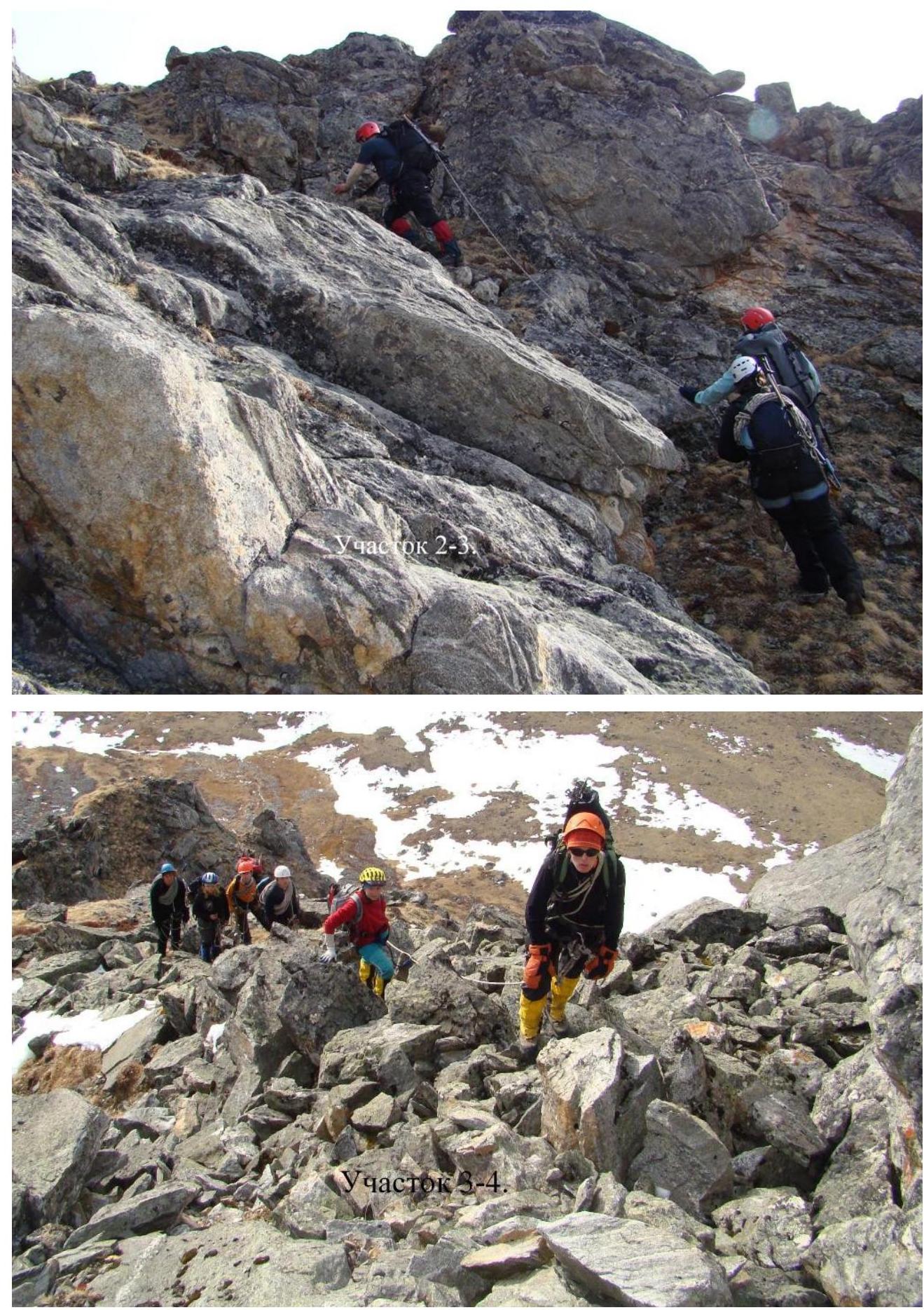
- Section 2–3 30 m. 45° II - Snowy ledge in the same direction. Exit to the rocky ridge.
- Section 3–4 30 m. 55° II+ - Reliable rocks along the ridge to a wide couloir on the right.
- Section 4–5 20 m. 25° I - Crossing through the couloir to the right rocky ridge of the southwest exposure.
- Section 5–6 50 m. 50° II+ - Along the inner corner with a transition to the right ridge.
- Section 6–7 50 m. 50° III - Rocky ridge.
- Section 7–8 65 m. 70° IV+ - Bypassing a gendarme in the upper part. Reliable rocks. Exit to the ridge.
- Section 8–9 30 m. 40° II+ - Rocky ridge and 3 m to the col.
- Section 9–10 40 m. 35° I+ - To the right, towards the right couloir, bypassing a light-colored gendarme.
- Section 10–11 45 m. 45° II - Rocky slab on the right:
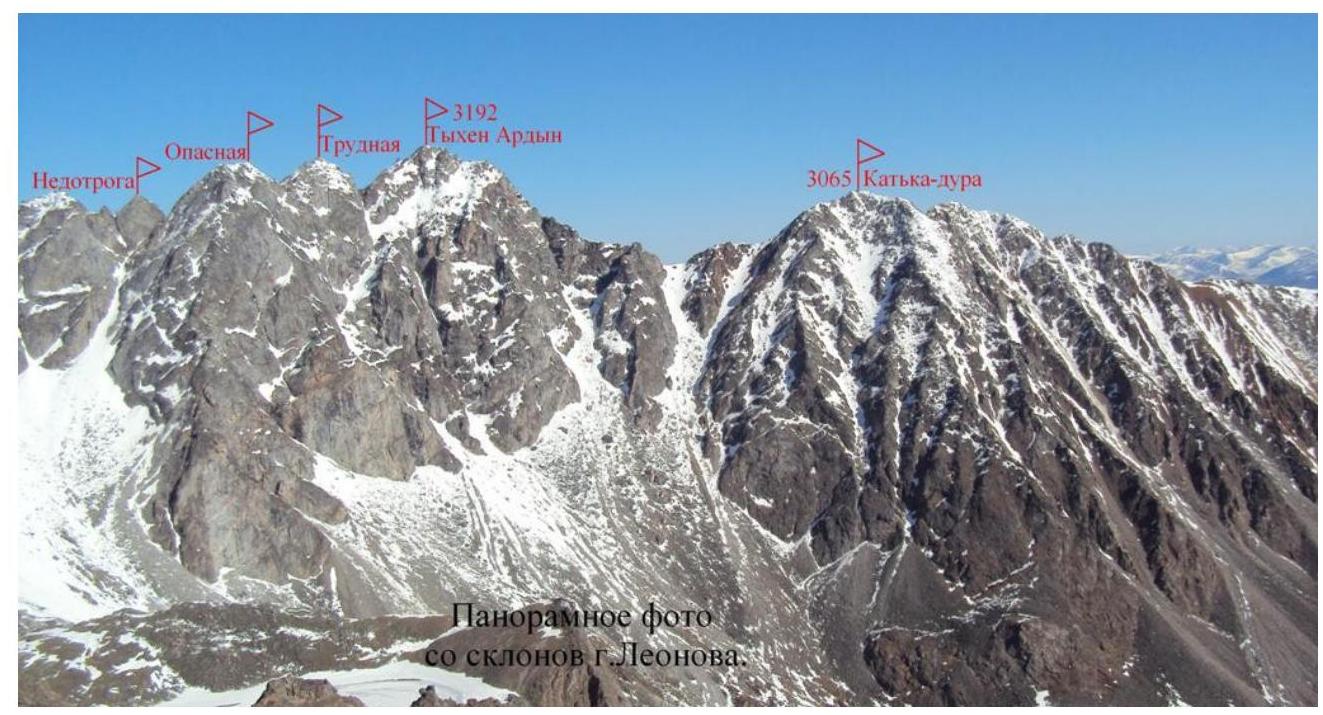
Panoramic photo:
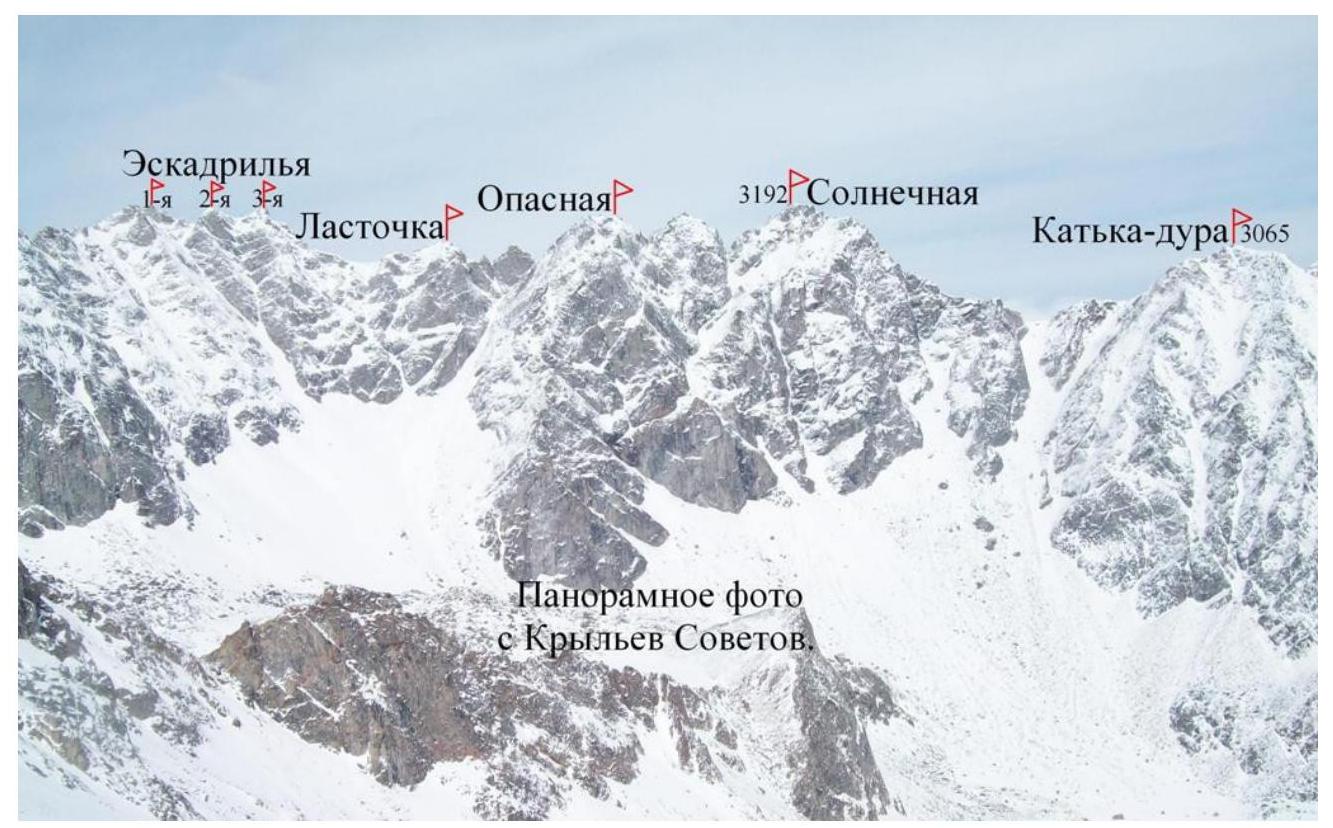
Panoramic photo from Krylya Sovetov
V. Katka-dura 3065
1. Introduction
1.1. Background
The study of quantum mechanics has revolutionized our understanding of the microscopic world. It provides a framework for describing the behavior of particles at atomic and subatomic scales. The principles of quantum mechanics are fundamental to modern physics, providing a framework for understanding the behavior of particles at atomic and subatomic scales.
1.2. Objectives
The primary objectives of this research are:
- To investigate the behavior of quantum particles at atomic and subatomic scales.
- To develop a theoretical model for the behavior of quantum particles.
- To validate the theoretical model through experimental data.
2. Literature Review
2.1. Historical Context
The field of quantum mechanics emerged in the early 20th century, with a focus on the behavior of particles at atomic and subatomic scales. This research focuses on the behavior of quantum particles under various conditions, including:
- Quantum entanglement: The entanglement between particles is a phenomenon where two or more particles become correlated in such a way that the state of one particle instantly affects the state of the other, regardless of distance. This property has been demonstrated in various experiments, such as:
- Quantum entanglement: The entanglement between particles at atomic and subatomic scales is a phenomenon where two or more particles become correlated in such a way that the state of the particles affects the state of the particles.
- Quantum entanglement — The entanglement between particles at atomic and subatomic scales is a phenomenon where two or more particles become correlated in such a way that the state of the particles affects the state of the particles.
- Quantum entanglement — The entanglement between particles at atomic and subatomic scales is a phenomenon where two or more particles become correlated in such a way that the state of the particles affects the state of the particles, regardless of distance.
3. Methodology
3.1. Experimental Setup
The experimental setup involved a quantum system with a laser source and a laser source. The system was divided into 32 states, each with a specific number (n) and a specific number (n−1). The system was divided into 64 states, each with a specific number (n) and a specific number (n−1−1). The system was divided into 32 states, each with a specific number (n) and a specific number (n−1−1−1−2). The system was divided into 164 states, each with a specific number (n) and a specific number (n−1−1−1−3). The system was divided into 32 states, each with a specific number (n) and a specific number (n−1−1−1−4). The system was divided into 164 states, each with a specific number (n) and a specific number (n−1−1−1−5). The system was divided into 32 states, each with a specific number (n) and a specific number (n−1−1−1−6). The system was divided into 164 states, each with a specific number (n) and a specific number (n−1−1−1−7). The system was divided into 32 states, each with a specific number (n) and a specific number (n−1−1−1−8). The system was divided into 32 states, each with a specific number (n) and a specific number (n−1−1−1−9). The system was divided into 32 states, each with a specific number (n) and a specific number (n−1−1−1−10).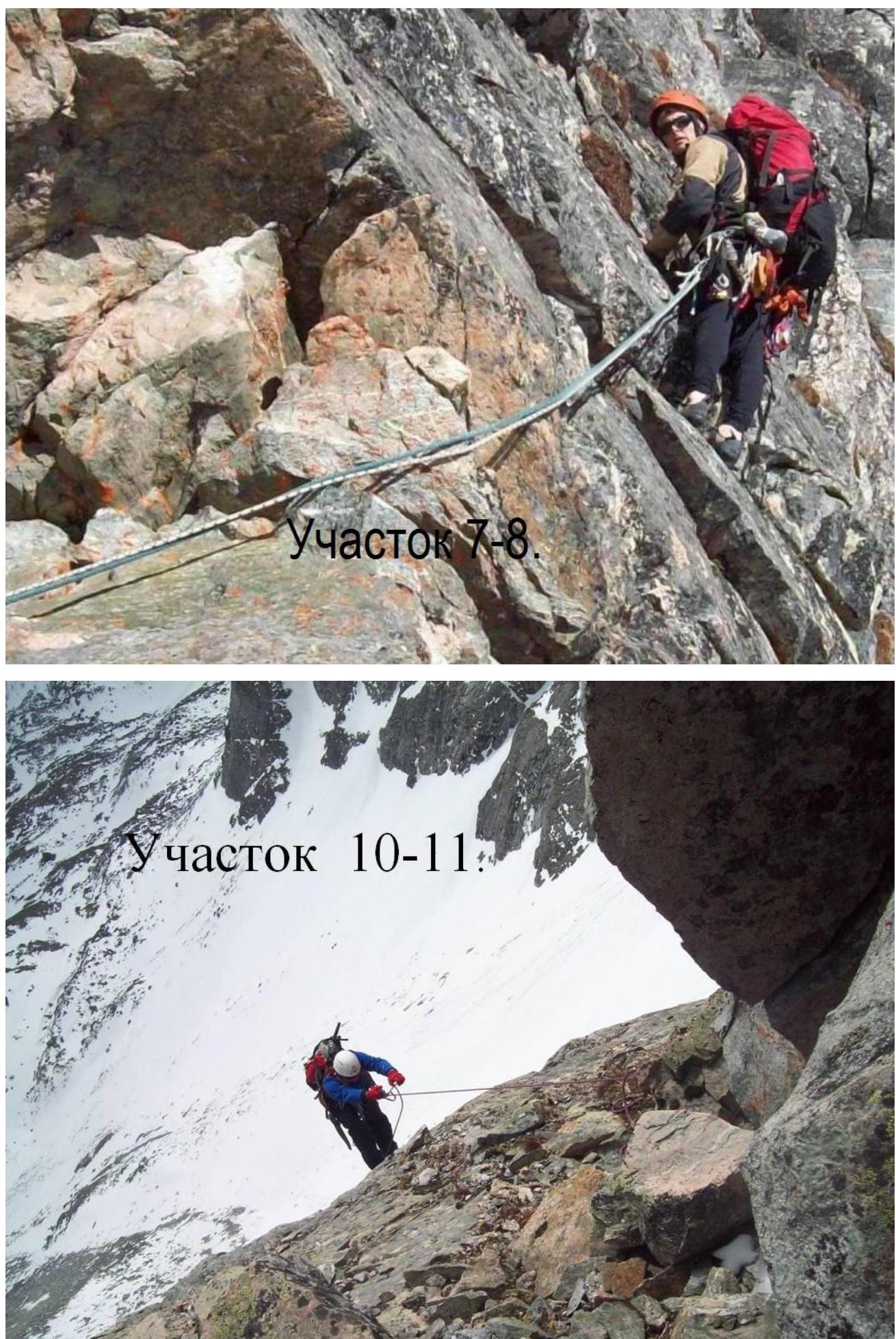 √
Section
10–11
√
Section
10–11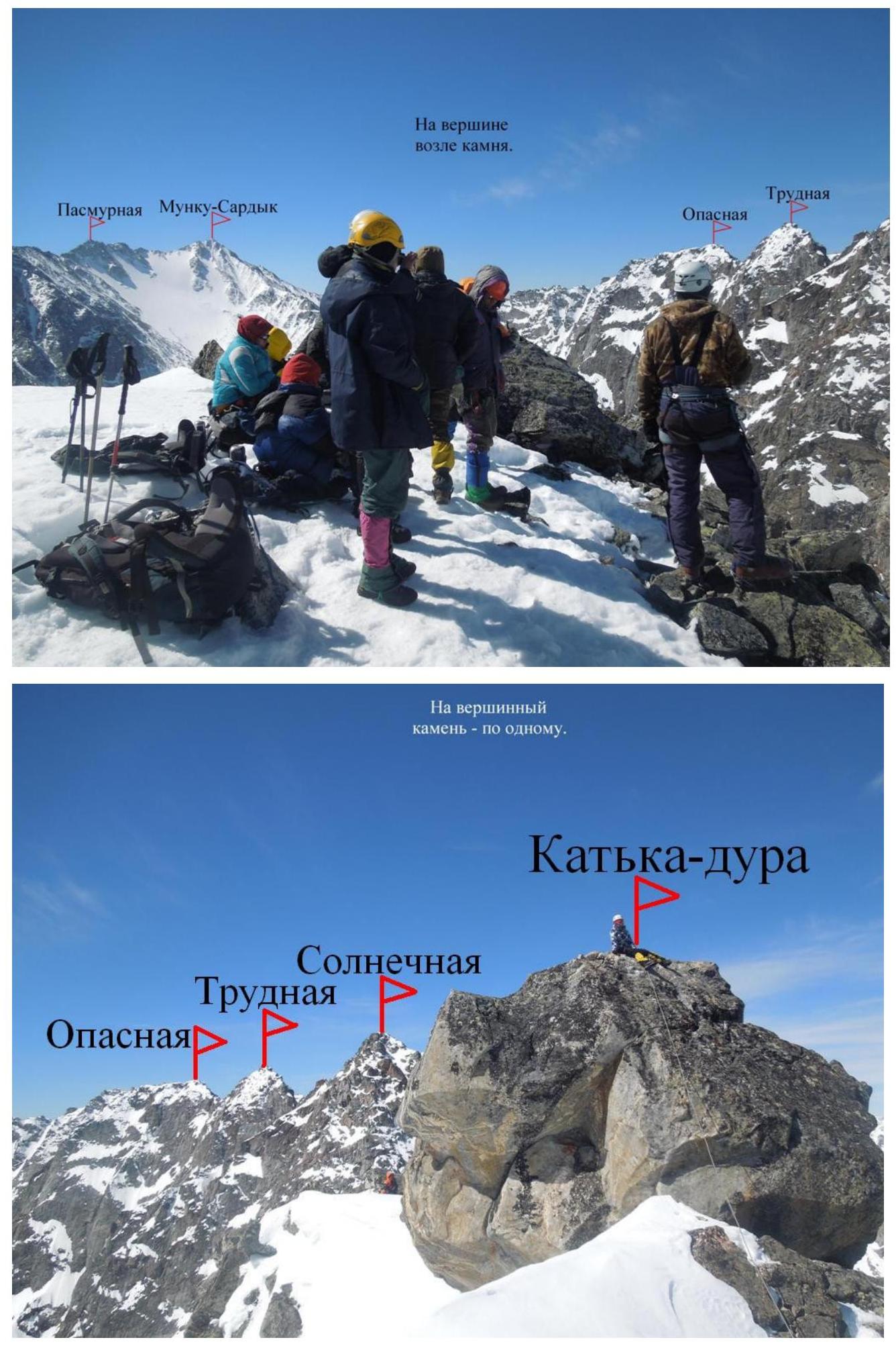
At the summit, there is a stone - one each.

Comments
Sign in to leave a comment