
REPORT
on the first traverse of Tbau Glavnaya – Tbau Severo-Zapadnaya, 1B category of complexity, by the KAT Fatum team February 14, 2024
I. Climbing Report
| № | 1. General Information | |
|---|---|---|
| 1.1 | Full name, sports rank of the leader | Egorin S.V. — Master of Sports |
| 1.2 | Full name, sports rank of participants | Tolistikova E.Yu. — 2nd sports rank |
| 1.3 | Full name of coach | Egorin S.V. |
| 1.4 | Organization | KAT Fatum |
| 2. Characteristics of the Climbing Object | ||
| 2.1 | Region | Caucasus, Skalisty Range |
| 2.2 | Valley | Dargavs depression |
| 2.3 | Number according to the 2020 classification table | 2.8 |
| 2.4 | Name and height of the peak | Tbau Gl. (3007 m) — Tbau SZ (2980 m) |
| 3. Characteristics of the Route | ||
| 3.1 | Name of the route | Traverse, from the South |
| 3.2 | Proposed category of complexity | 1B winter |
| 3.3 | Degree of route exploration | First ascent |
| 3.4 | Relief characteristics of the route | Rocky |
| 3.5 | Height difference of the route | 600 m from point R0 |
| 3.6 | Length of the route | about 1.5 km from point R0 |
| 3.7 | Technical elements of the route | 1st category ice/rock/combination — 500 m. 2nd category ice/rock/combination — 300 m. 3rd category ice/rock/combination — 80 m. 4th category ice/rock/combination — 2 m. Movement on a closed glacier — none. |
| 3.8 | Descent from the summit | From Tbau SZ, along the North-East slope, or via the ascent route. |
| 3.9 | Additional information on the route | There is mobile coverage on the summits. No water on the route. |
| 4. Characteristics of the Team's Actions | ||
| 4.1 | Time of movement | 6 hours |
| 4.2 | Overnight stays | None |
| 4.3 | Start of the route | 8:00, February 14, 2024 |
| 4.4 | Reaching the second summit | 14:00, February 14, 2024 |
| 4.5 | Descent to the road | 18:00, February 14, 2024 |
| 5. Responsible for the report | ||
| 5.1 | Full name, e-mail | Egorin S.V., [email protected] |
II. Description of the Ascent
1. Characteristics of the Climbing Object
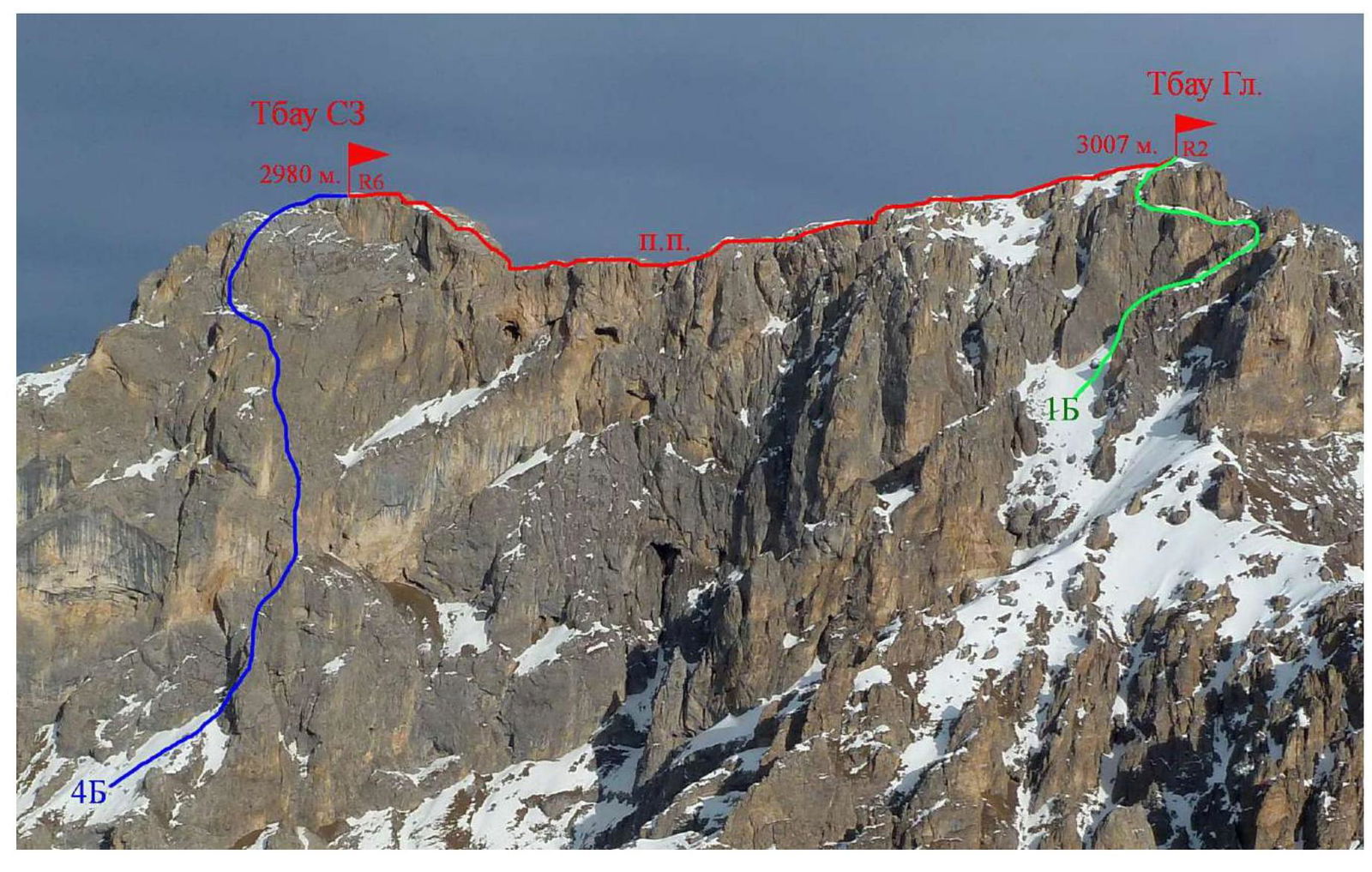
Photo 1. View from the South-West, from the summit of Uacilakhoh. December. The first ascent route is marked in red.
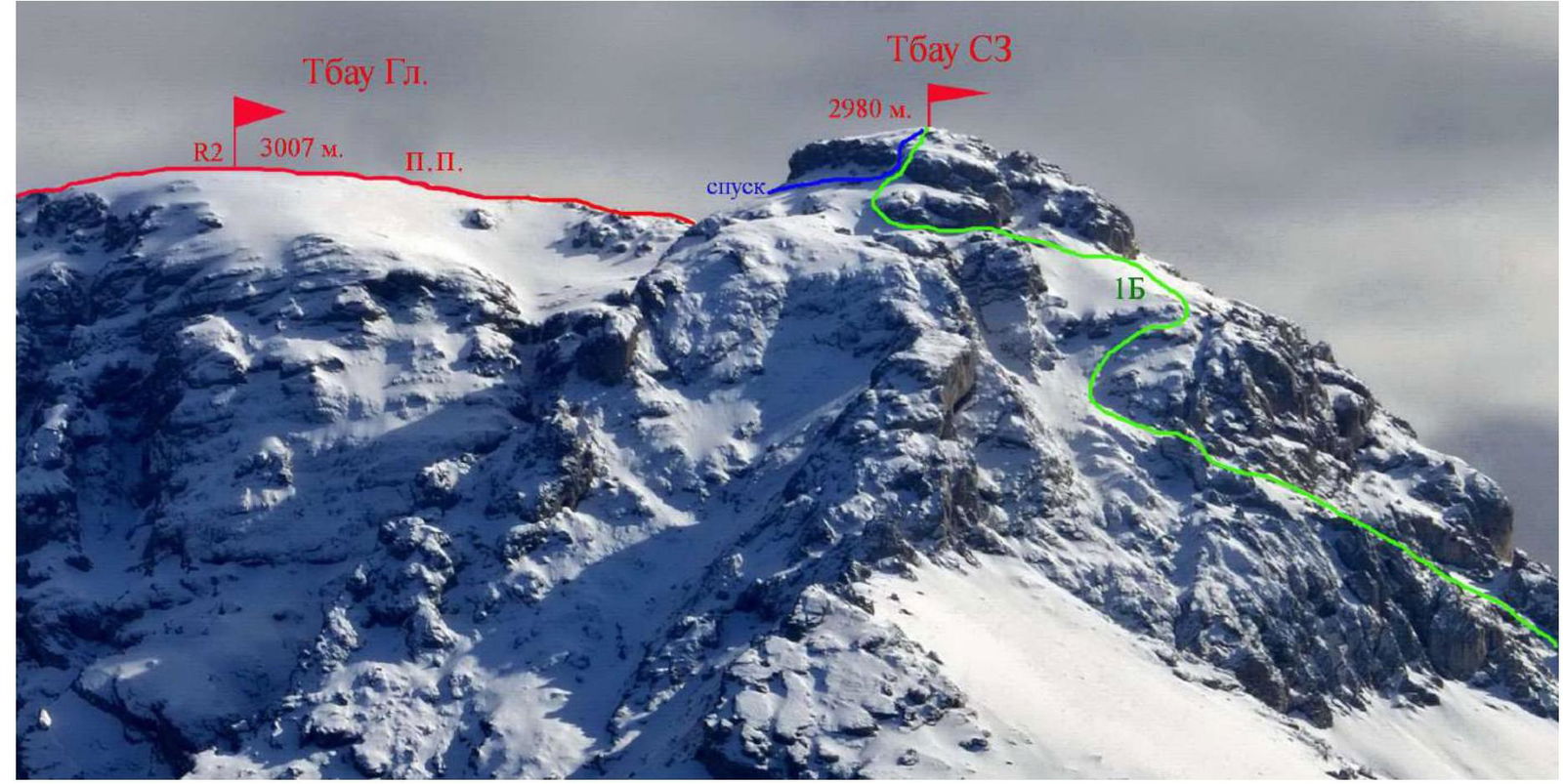
Photo 2. View from the North-East. March. The first ascent route is marked in red. The descent from Tbau SZ is marked in blue, its visible part.
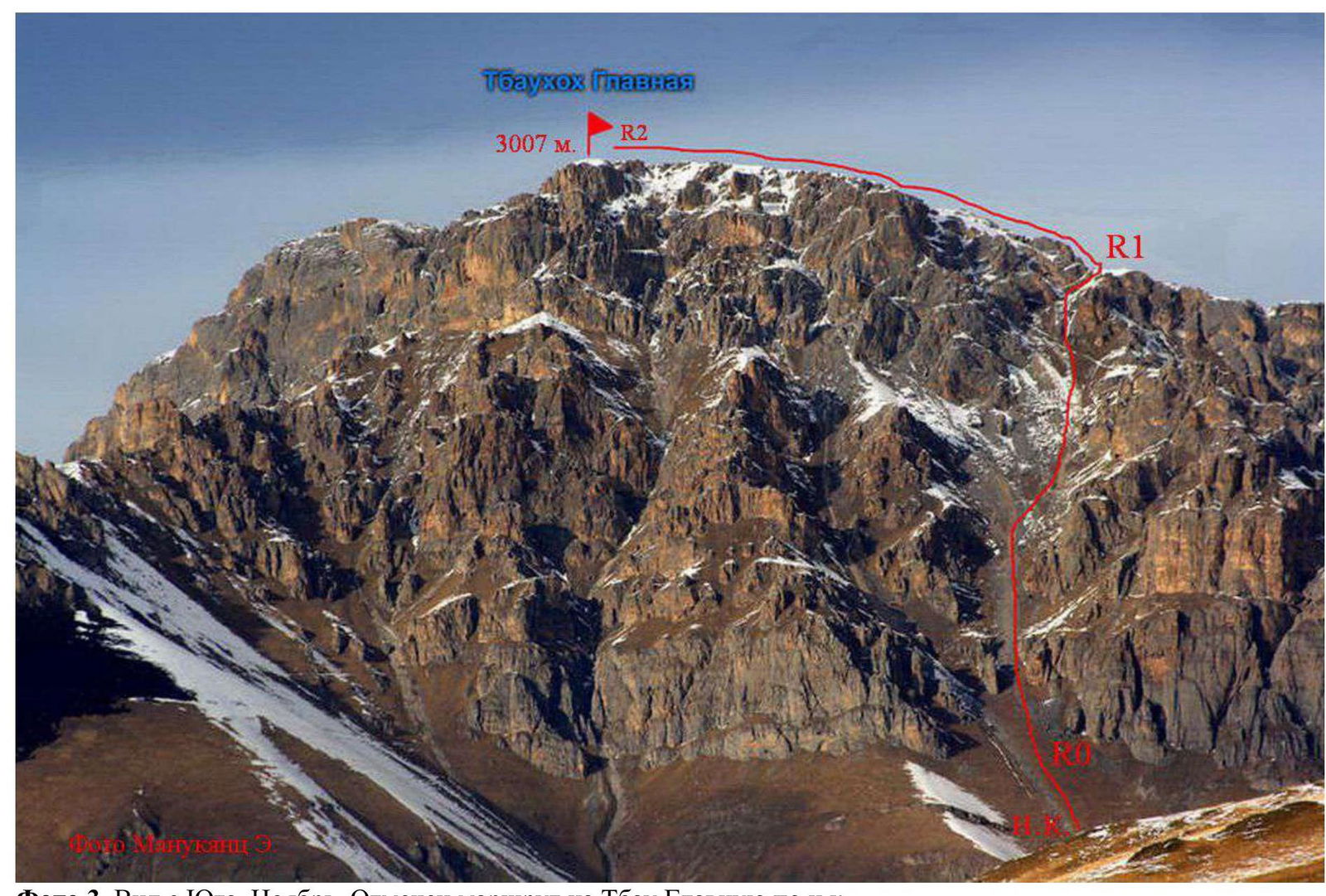
Photo 3. View from the South. November. The route to Tbau Glavnaya is marked.
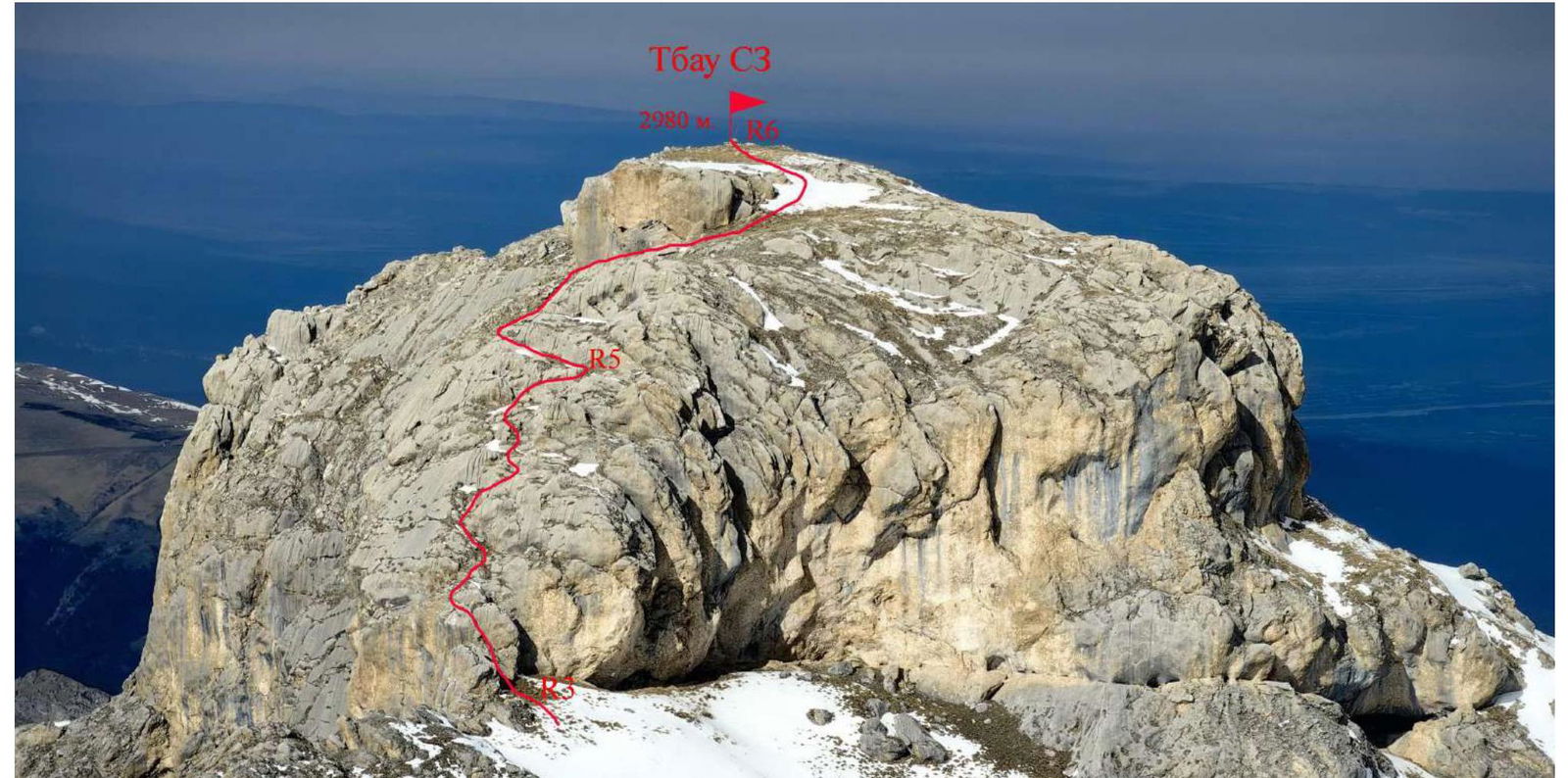
Photo 4. View of the Tbau SZ tower, from the South. February. The first ascent route is marked.
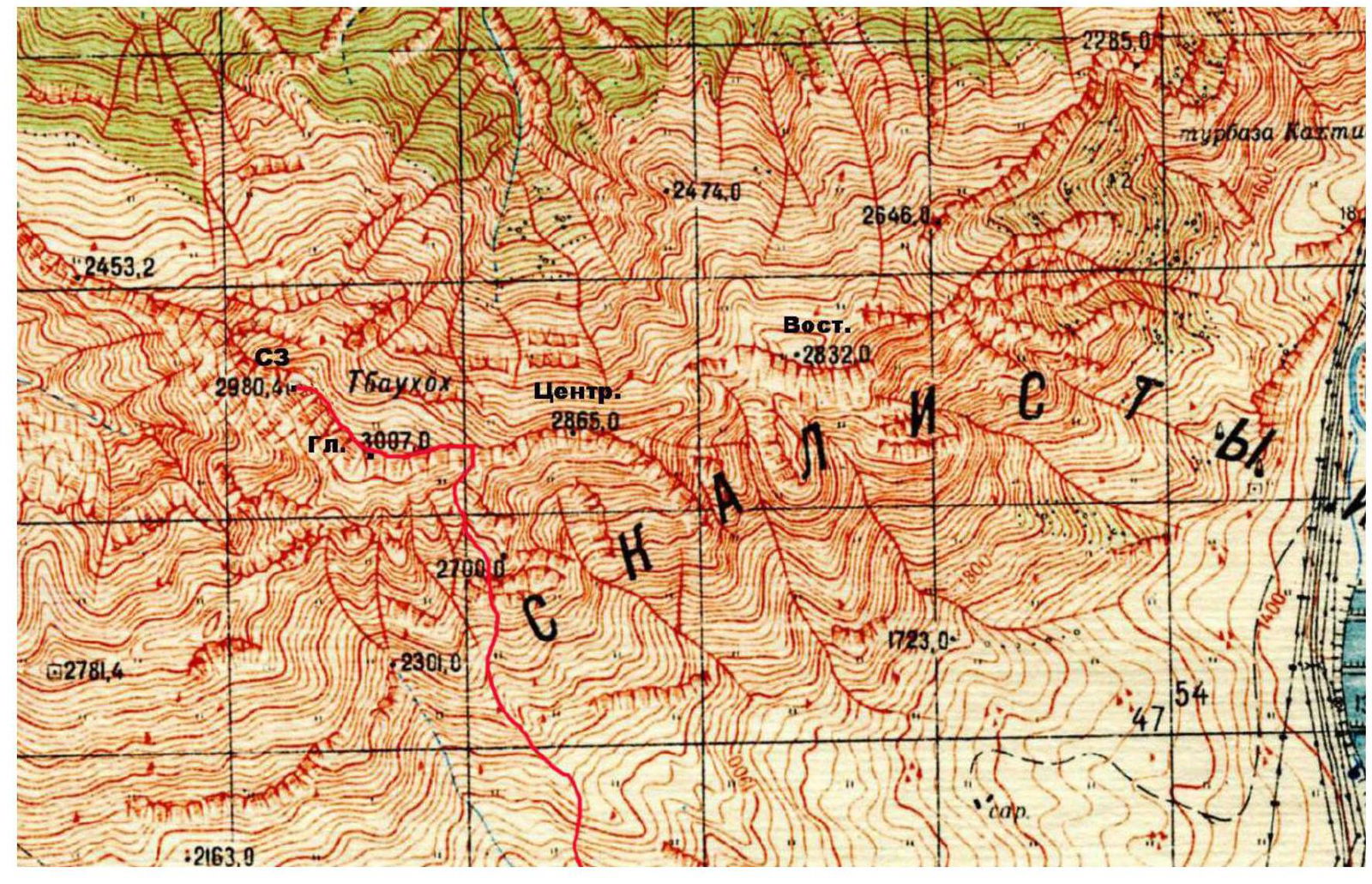
Photo 5. Map of the climbing area. The first ascent route is marked in red.
2. Technical Characteristics of the Route Sections
| Section № | Relief characteristics | Category of complexity | Length, m | Type and number of anchors |
|---|---|---|---|---|
| R0–R1 | Grassy-scree couloir, with individual rock outcrops. | n.c. – 1st cat. | 700 m | - |
| R1–R2 | Grassy-scree slope, with individual rock outcrops. | n.c. – 1st cat. | 350 m | - |
| R2–R3 | Rocky-scree ridge. | 1–3 cat. | 350 m | Belay through rock formations. |
| R3–R4 | Wall, with a crack. | 3–4 cat. | 5 m | 2 stoppers (friends) |
| R4–R5 | Rocks like "sheep's foreheads". | 2–3 cat. | 45 m | 2 stoppers (friends). 3 anchors. For station organization — anchors. |
| R5–R6 | Rocks like "sheep's foreheads", scree slope. | 1–2 cat. | 50 m | 1–2 stoppers (friends). 2 anchors. |
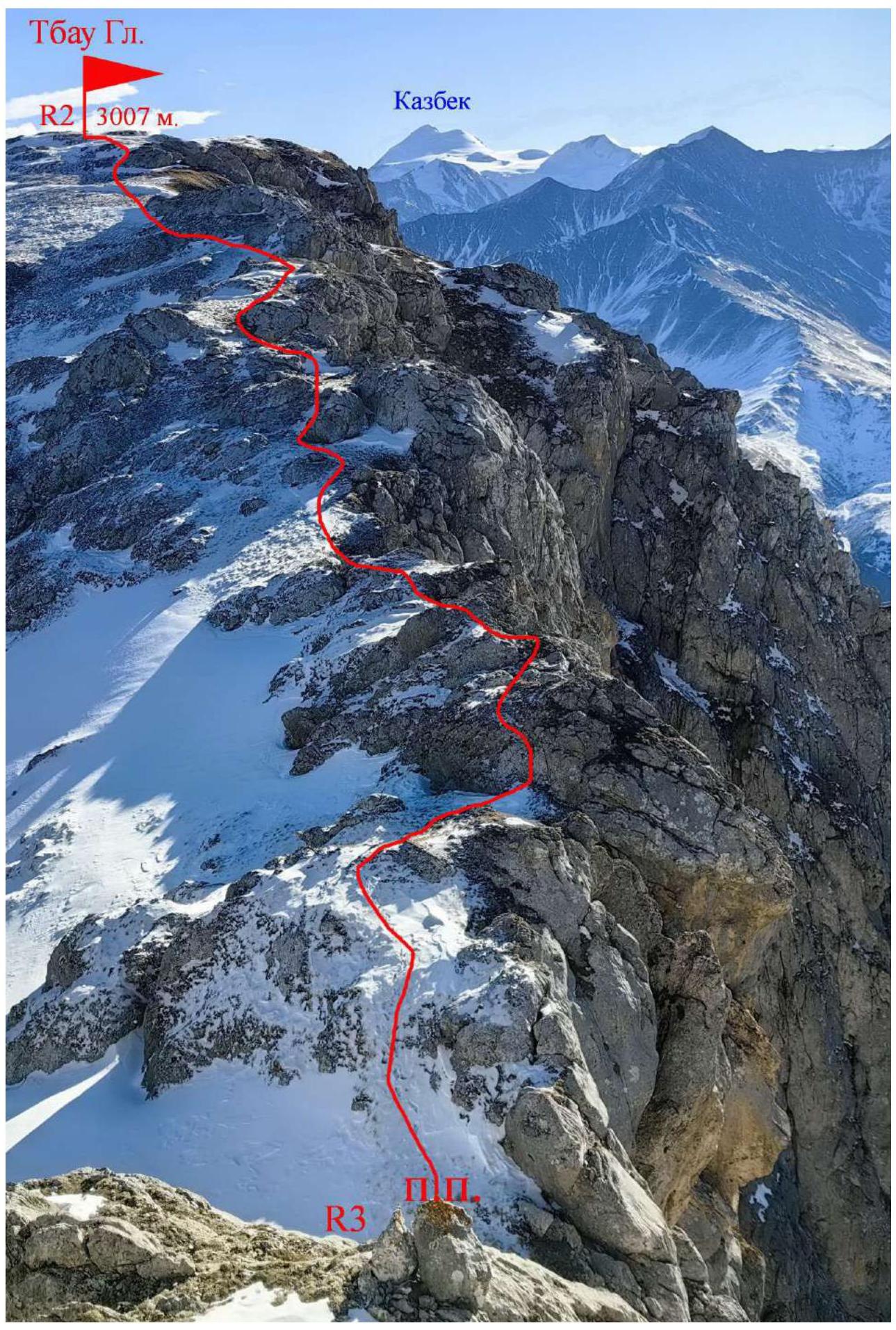
Photo 6. The path along the ridge on section R2–R3 is marked. Photo from R5.
3. Characteristics of the Team's Actions
3.1 Description of the Approach to the Route
From Vladikavkaz to the village of Lamardon, it takes 1.5 hours. Along the western outskirts of the village, you can drive along a dirt road to an altitude of 1650 m. Then we move along cattle trails towards the beginning of the southern couloir of the Tbau massif.
Approaching the couloir, we come out onto a scree path that leads to the eastern ridge of the massif, and then to the Main summit — via the n.c. route. Coordinates of the lower part of the couloir: Latitude: 42.860853°, Longitude: 44.398971°
3.2 Brief Description of the Route Passage
| Section № | Description | Photo № |
|---|---|---|
| R0–R1 | We move along the scree couloir, along a clearly visible path, bypassing rock outcrops. At the top of the couloir, at the fork before the grotto, we turn right and exit onto the main ridge of the Tbau massif. | 3 |
| R1–R2 | After exiting onto the ridge, we turn West and move up the slope towards the Tbau Glavnaya summit. The Tbau SZ tower is visible to the North from the summit. | 4 |
| R2–R3 | We descend from the Main summit down to the North-West. It's better to move directly along the ridge line, there's less snow and it's safer. Individual rock outcrops — we bypass or descend from them with belay. Attention! There are 400 m drops on the left. | 6–9 |
| R3–R4 | We approach the southern side of the Tbau SZ tower. We bypass the first rock and climb onto the saddle behind it, under the wall with a sloping crack. The crack is suitable for placing large-sized stoppers. | 10,11 |
| R4–R5 | Further directly upwards, along smoothed rocks like "sheep's foreheads". Short walls and slabs alternate with scree shelves. Organizing a station without anchors is difficult. | 12,13 |
| R5–R6 | Left along the shelf, to the end. Below are the South-West wall drops! Then right up the rocks towards the summit. Station on a ledge. At the end of the section, a scree slope. | 14 |
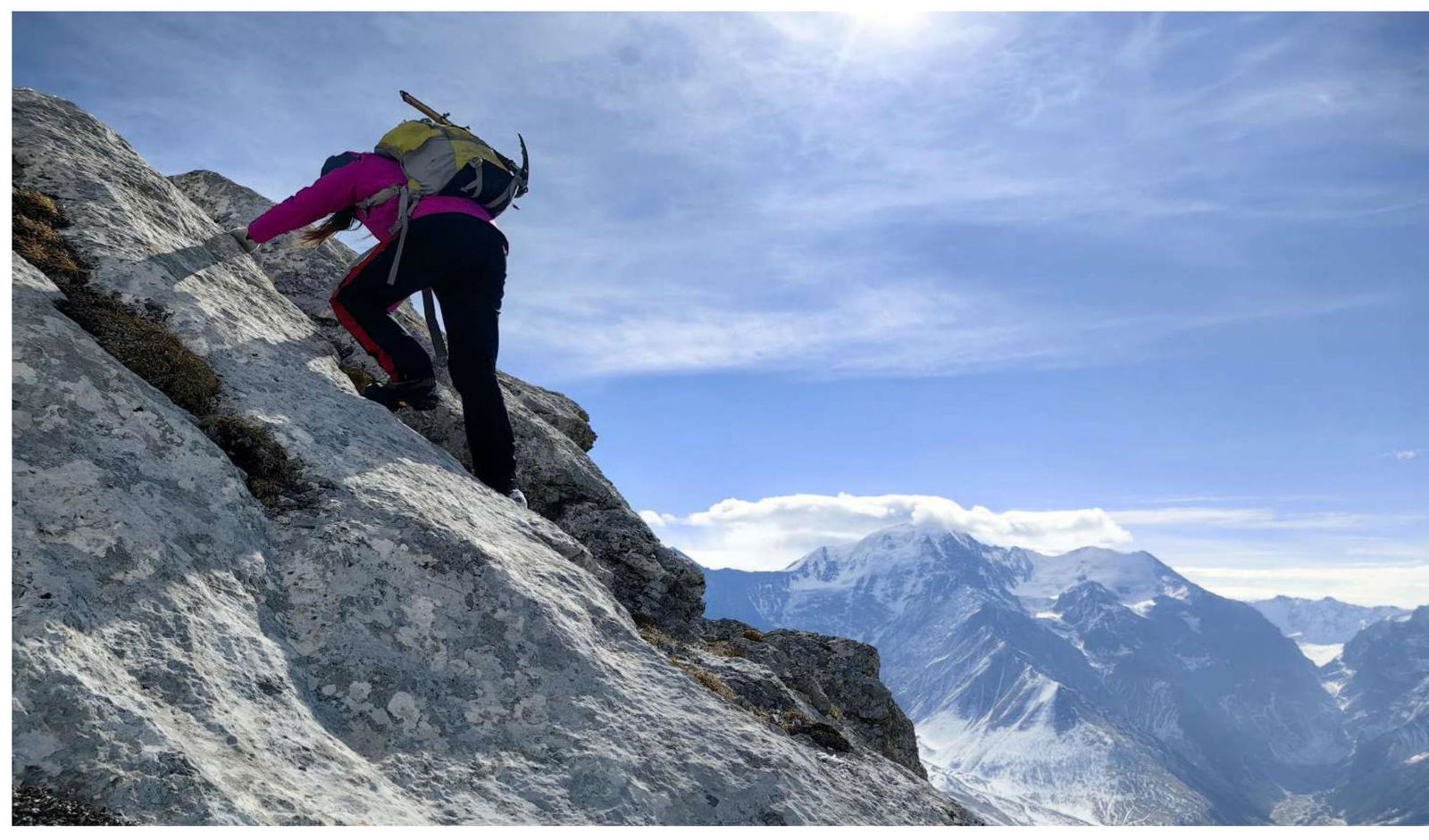
Photo 7. Movement through short rock walls on section R2–R3. Gymnastic belay.
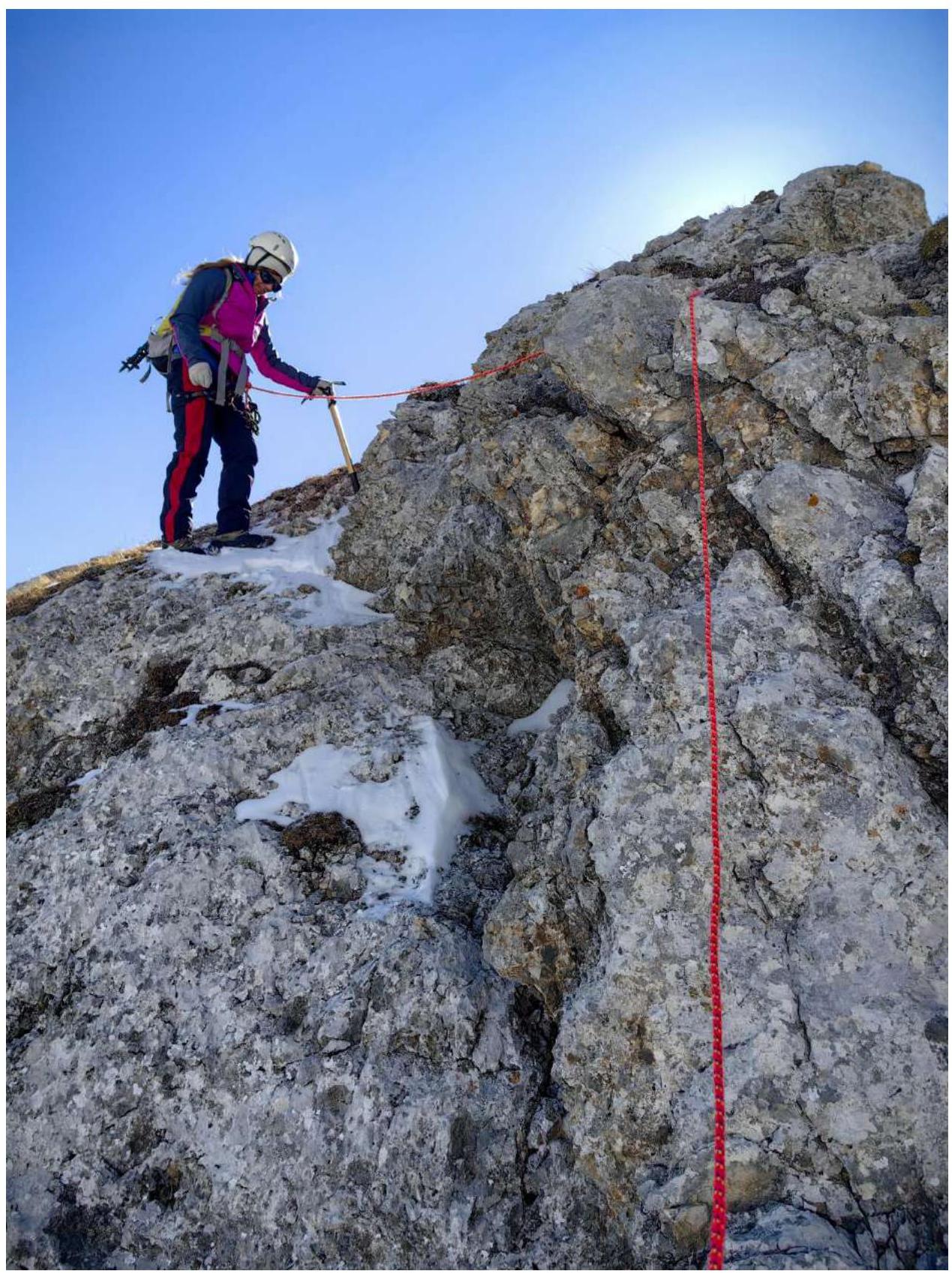
Photo 8. Movement through short rock walls on section R2–R3. Belay through rock formations.
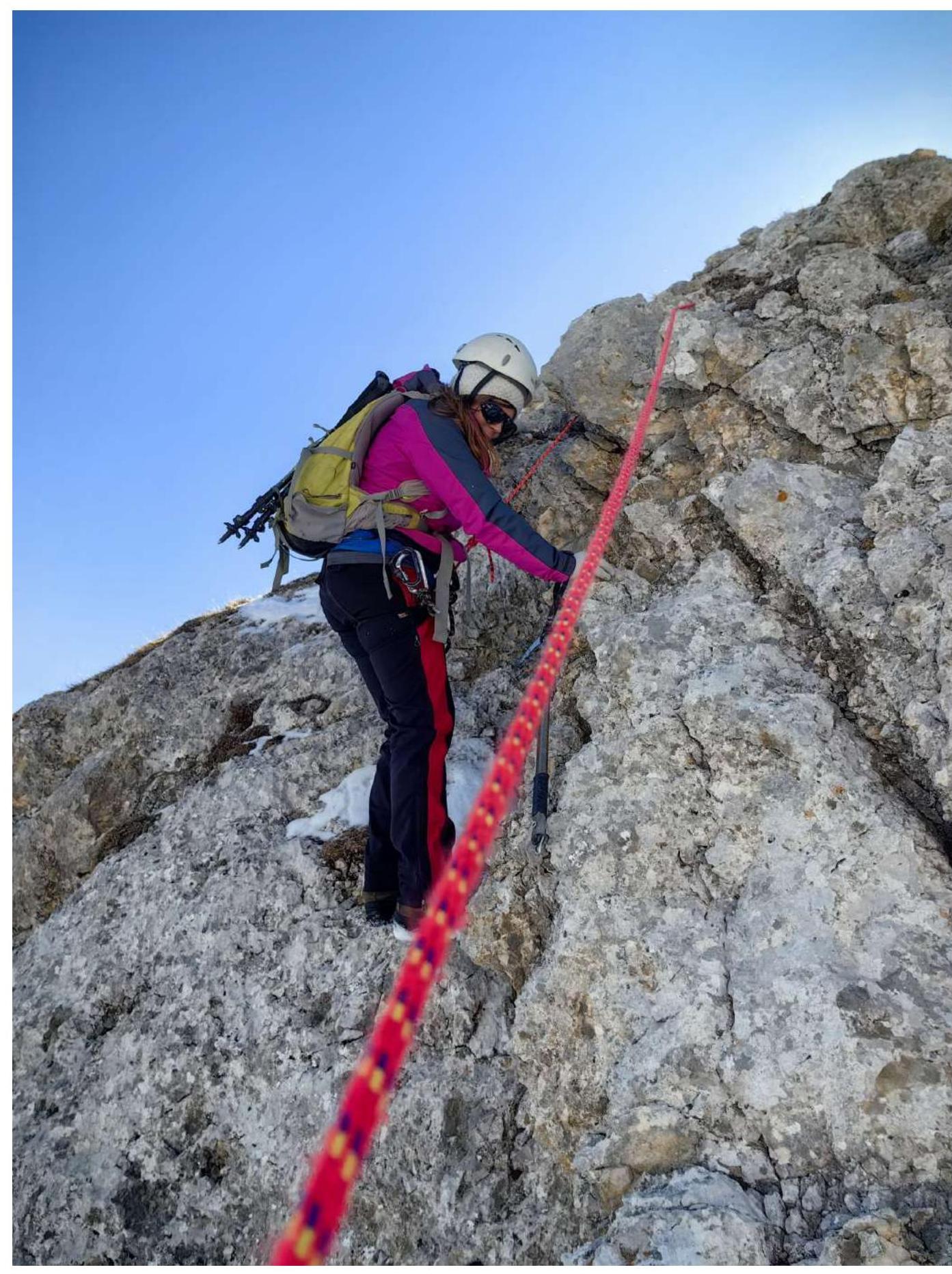
Photo 9. Movement through short rock walls on section R2–R3. Belay through rock formations.
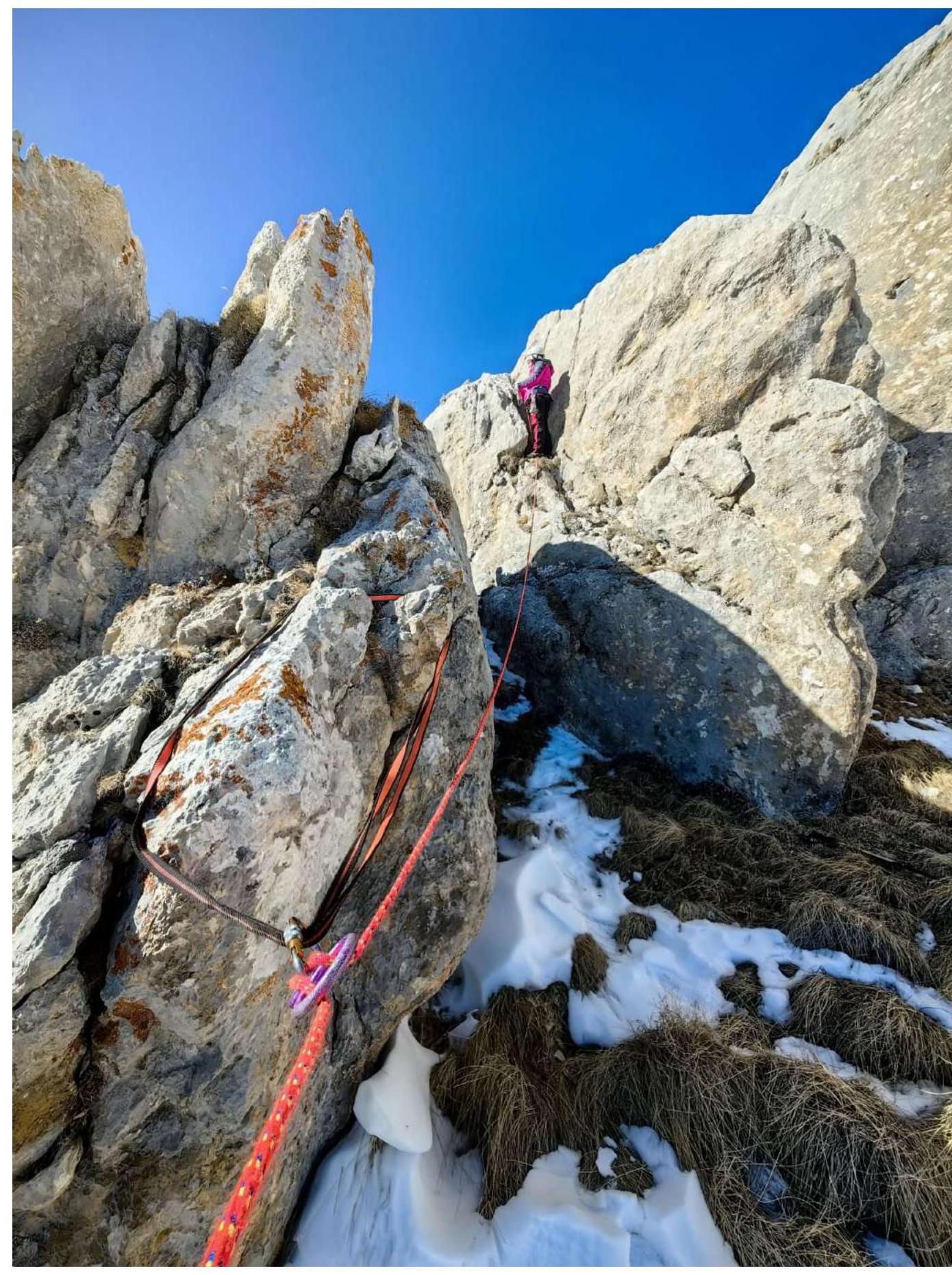
Photo 10. Passage of section R3–R4. Organization of an intermediate point.
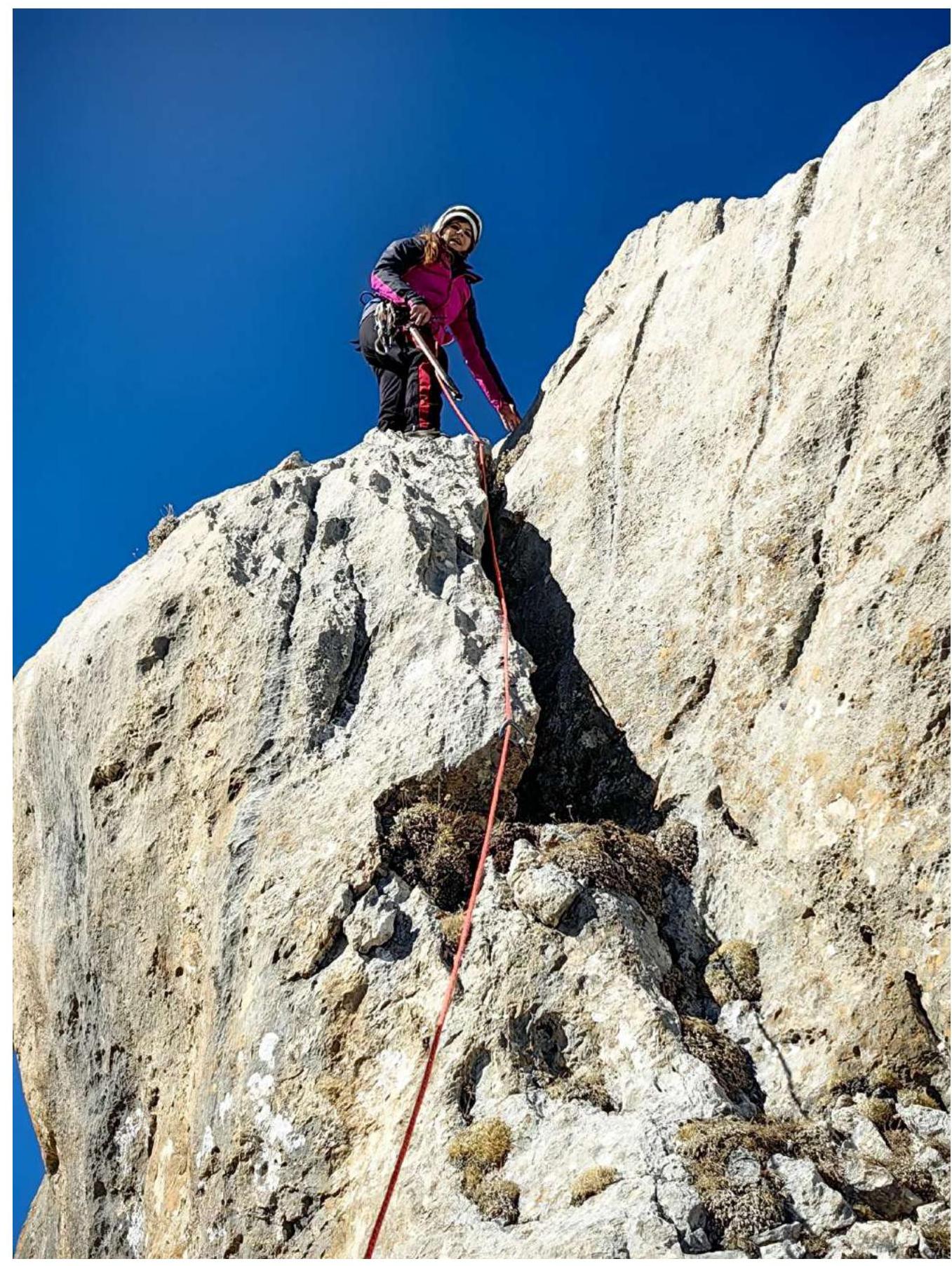
Photo 11. Exit through the crack on section R3–R4.

Photo 12. Movement on section R4–R5.
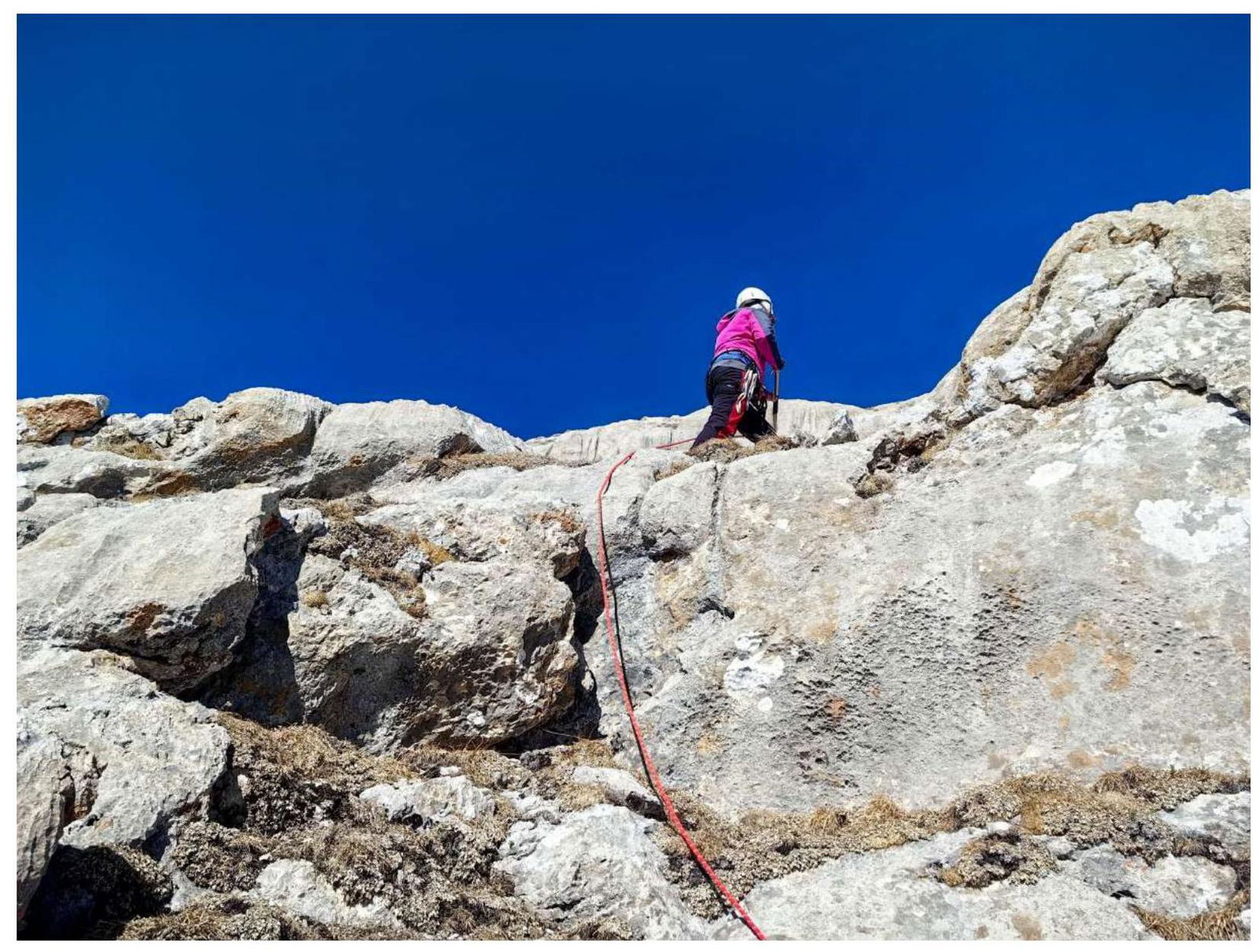
Photo 13. Movement on section R4–R5.
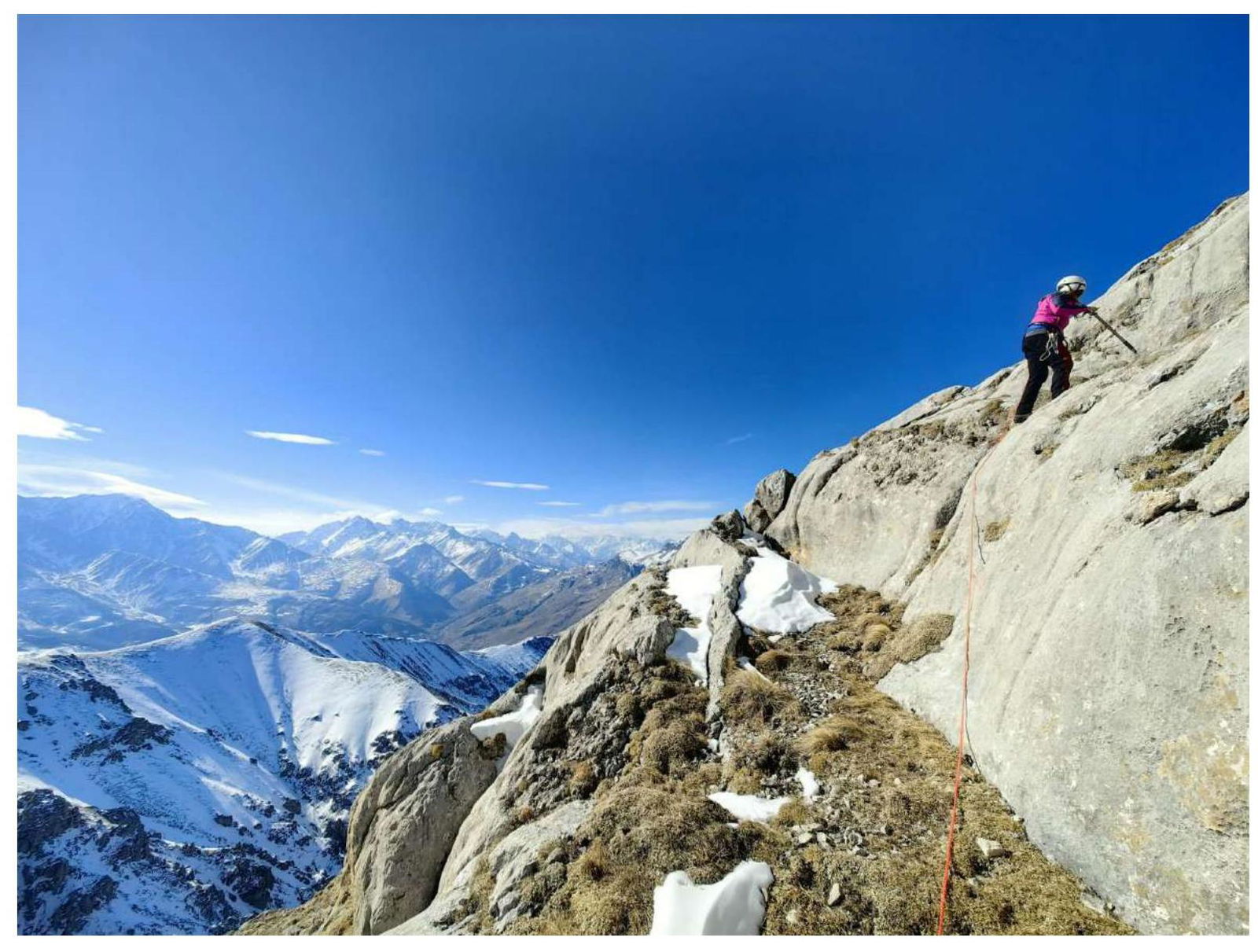
Photo 14. Movement at the beginning of section R5–R6.
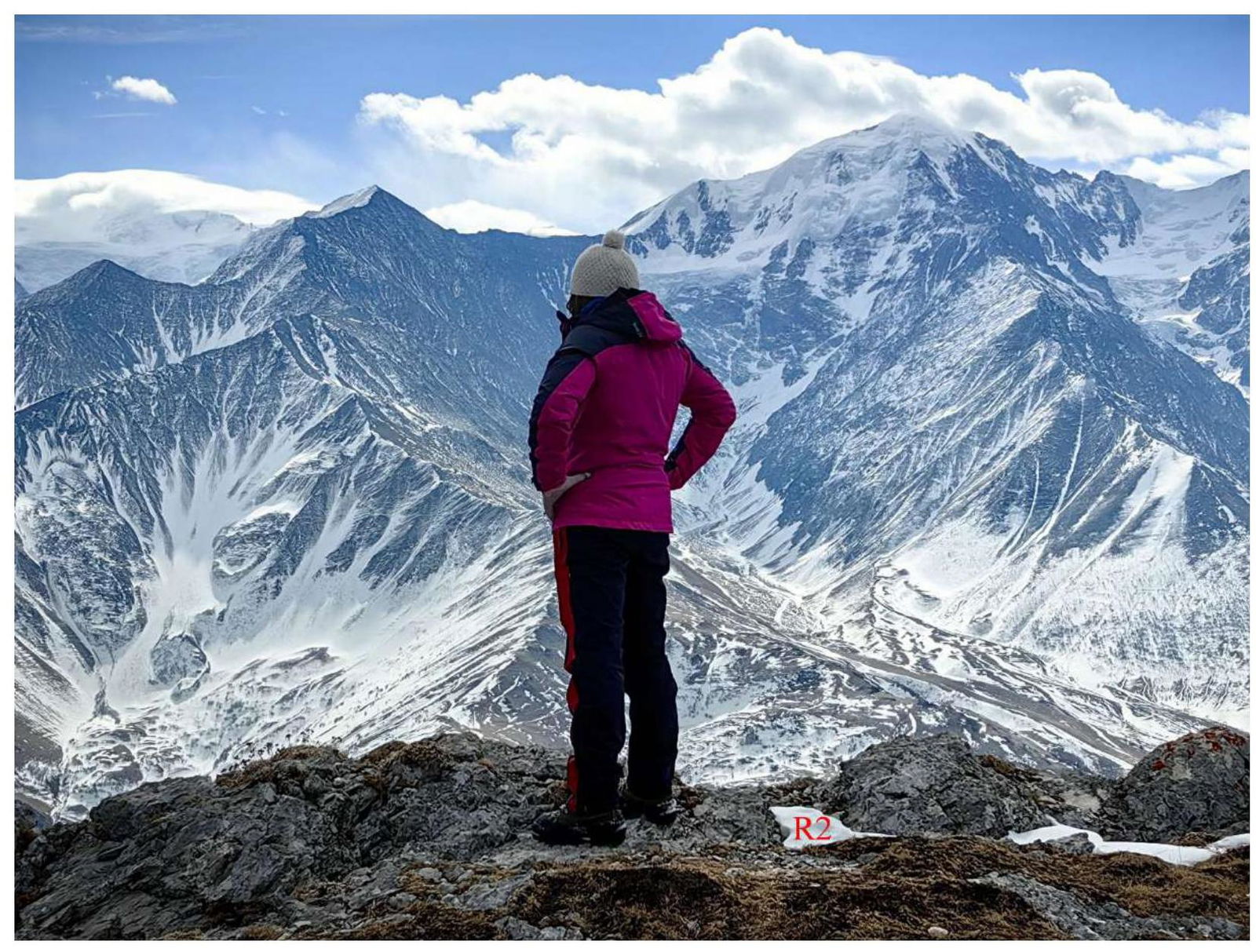
Photo 15. On the summit of Tbau Gl.
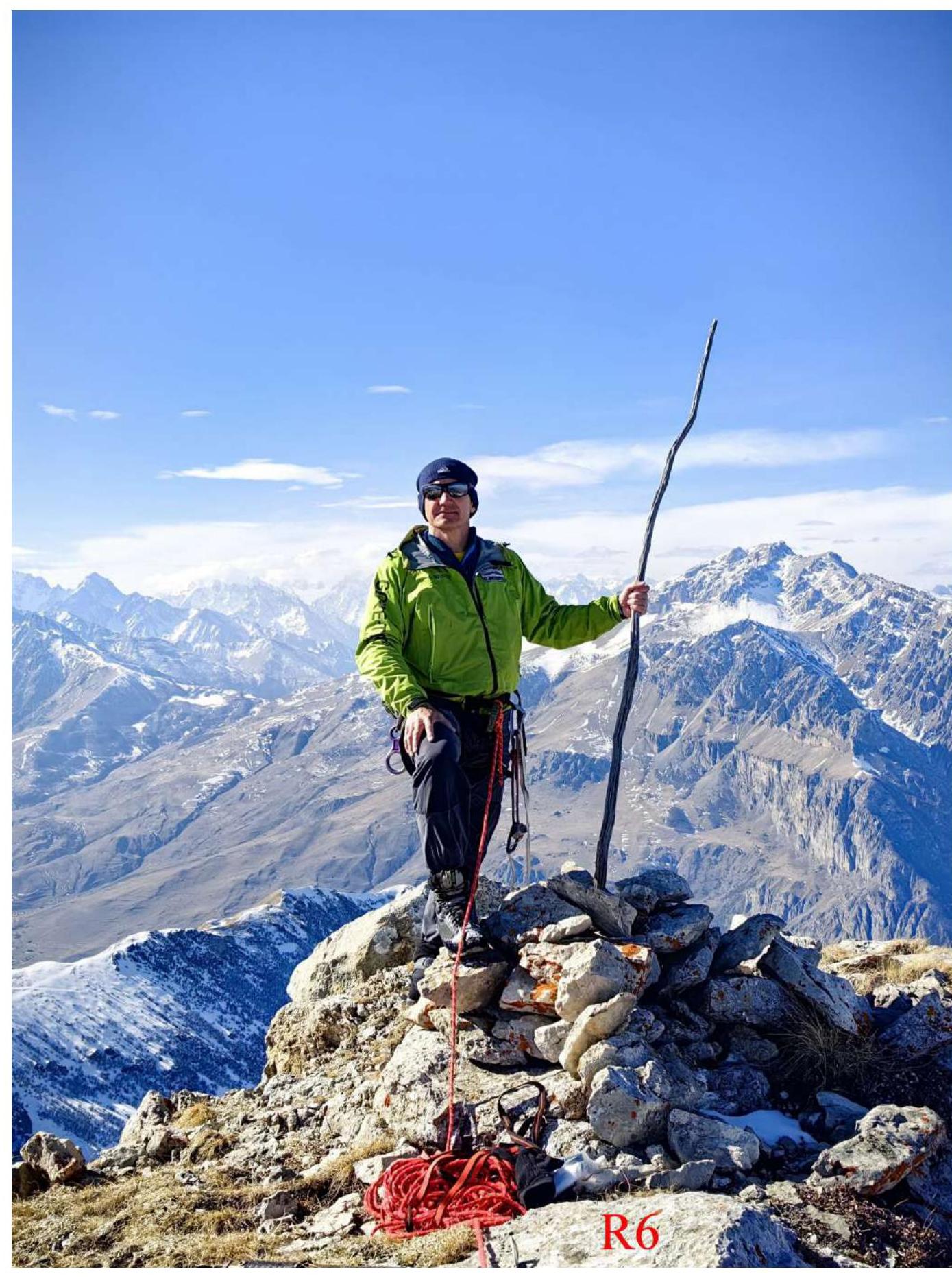
Photo 16. On the summit of Tbau SZ.
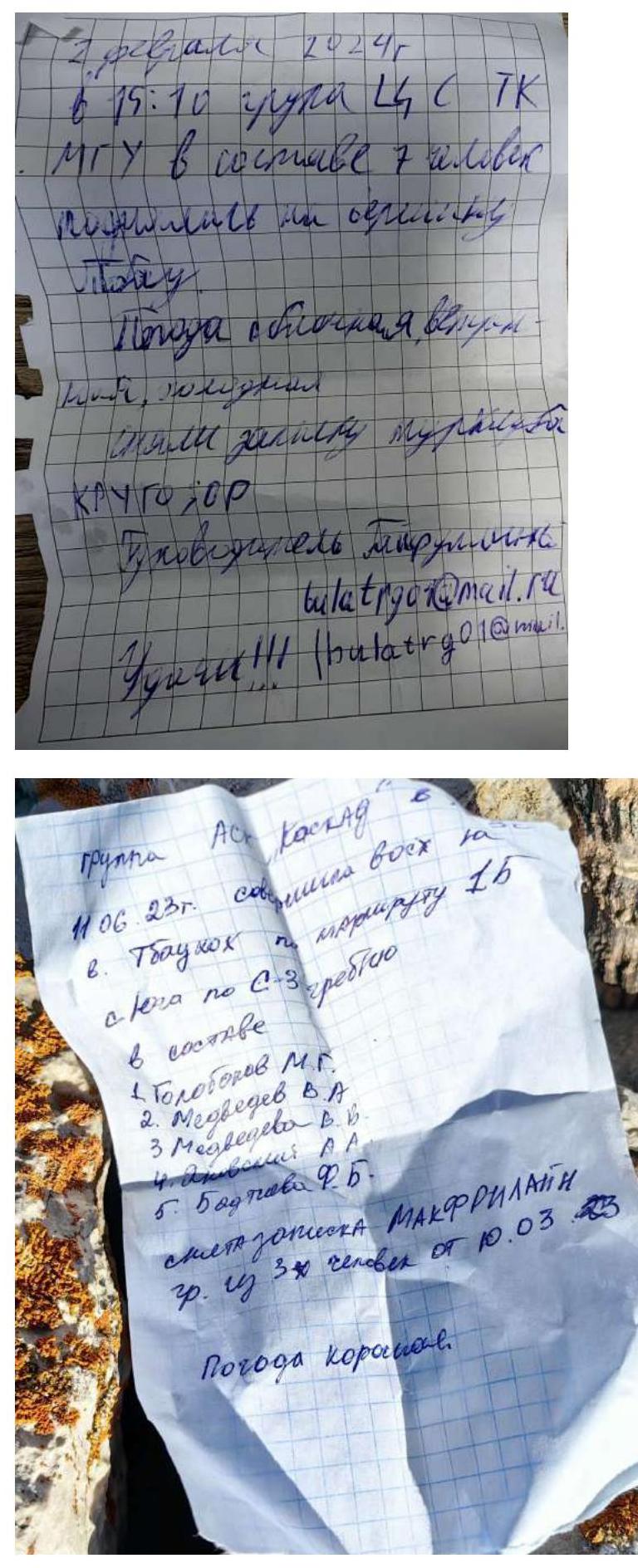
Photo 17. Notes on the summits.
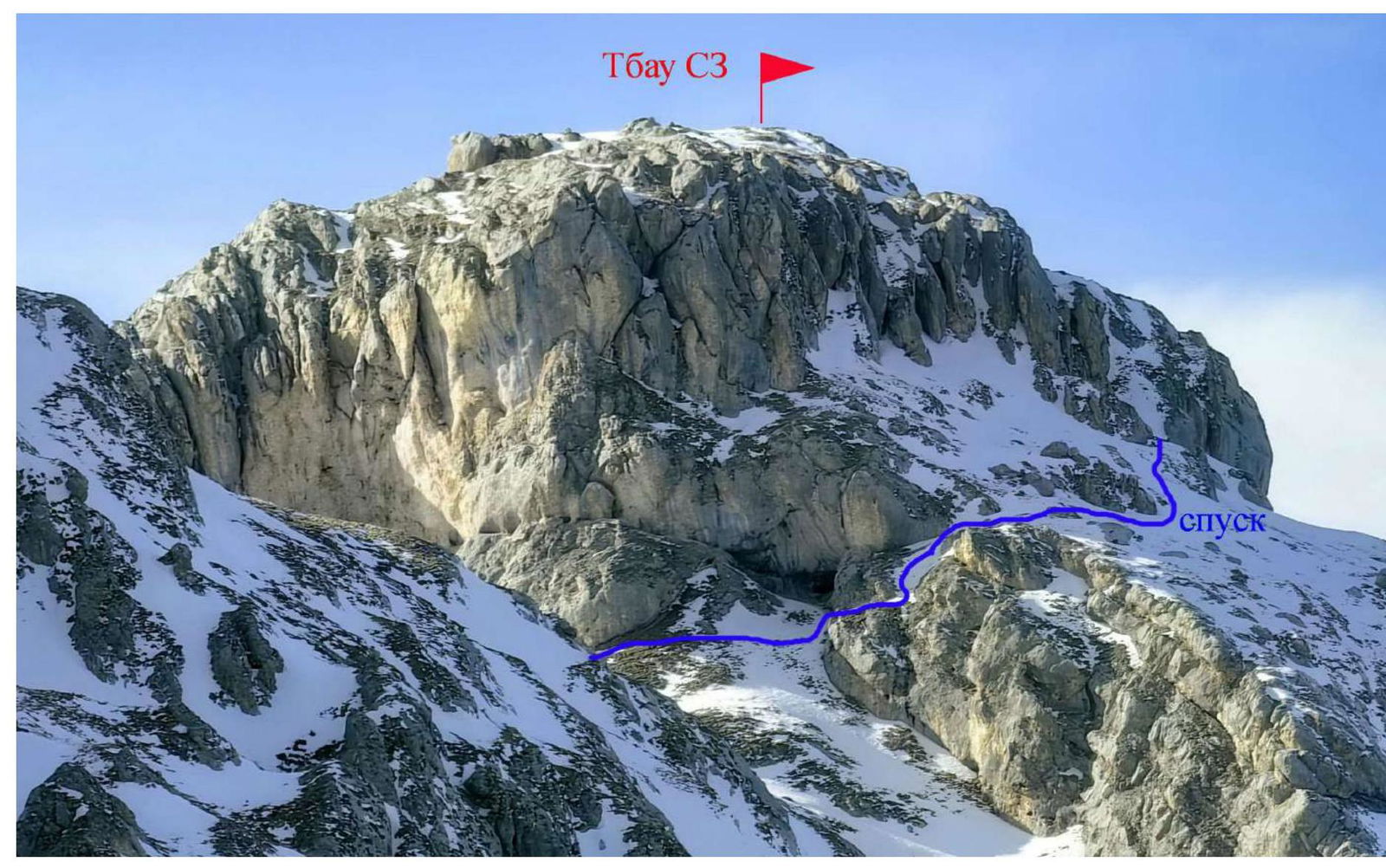
Photo 18. The descent path from Tbau SZ is marked — its visible part. View from the East, from the summit of Tbau Tsentr. February.
3.3 Recommendations and Conclusions on the Route
The descent from Tbau SZ goes along the usual (classical) ascent route to the tower, i.e., along the North-East slope. In the lower part of the slope — a snowy inner corner of 1–2 categories.
The traversed traverse route of the two Tbau summits is logical and safe, as it moves primarily along the ridge of the massif. The route corresponds to the 1B category. It was traversed by the leader of the ascent back in the last century, and is now suitable for photographing key sections.
The route is better classified for winter conditions due to the low heights of the summits. The technically complex part of the route — rocks with southern exposure, i.e., they quickly clear of snow after bad weather.
On section R2–R3 and when descending from the North-West summit:
- With a large amount of snow, it is necessary to move only with belay.
- From the North, the formation of snowboards is possible.

Comments
Sign in to leave a comment