
Гора Сокол марушт подарочний набір (велика прогулянка) 2А
Автор: Іванов Геннадій
У червні 2012 року ми з моєю дружиною Анею побували в Судаку і здійснили восхождення на гору Сокол по марушу з назвою «Подарочний набір» 2А–2Б.
Маруш простіший за Вілку або ПК у Форосі. Так що, скоріше за все, його категорія 2А.
Мої коментарі до опису (курсивом)
R0–R1 35 м: 5с+
- страховка організується по деревах і за необхідності — своя.
- Станція на шлямбурі і дереві, на маленькій полці.
Довжина ділянки 45 м, на 35 м зустрічається перший шлямбур, але станція на 10 м вище.
R1–R2: 25 м, 5Б — просте лазання з легкою організацією страховки по деревах і при необхідності своїми точками.
Станція на полці на дереві.
R2–R3: 50 м, 5C — від дерева вліво вгору через невелике нависання, потім по зручних для страховки щілинах підніматися вправо.
Станція на великій полці на дереві.
R3–R4: 50 м, легкий траверс вправо по полці помимо дерев. Станція на дереві.
На ділянці є спуск вниз. Йшли зі страховкою.
R4–R5: 50 м, 4C, траверс полки з постепенним підйомом на сідло. Станція на дереві з лівого боку сідла.
R5–R6: 50 м, 5C+
- Пройти через невеликий шматочок дзеркала
- Перейти на щілину над зруйнованою ділянкою породи
- Вийти на дерево
Страховка організується легко. Станція на дереві. Ця верівка збігається з верівкою «Одинички».
При проходженні зруйнованої ділянки старалися її не навантажувати. В цілому ділянка простіша, ніж 5с, пологі скелі, скальові утворення стоять на них як влиті.
R6–R7: 25 м, 5а:
- По полці вправо
- Потім по щілині на плато
Збігається з «Одиничкою». Станція на плато на маленькому
ялівці.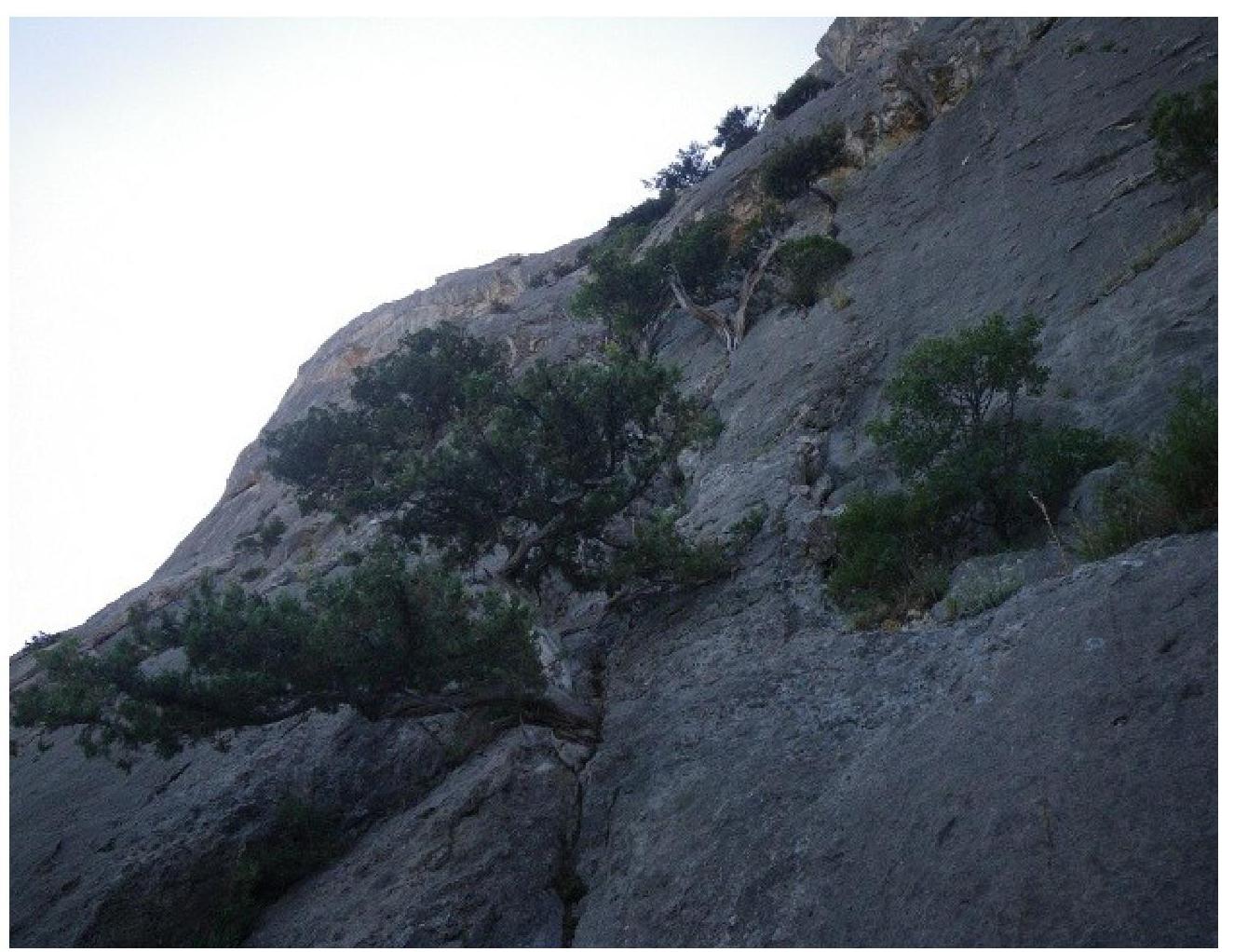
Перша верівка
маршруту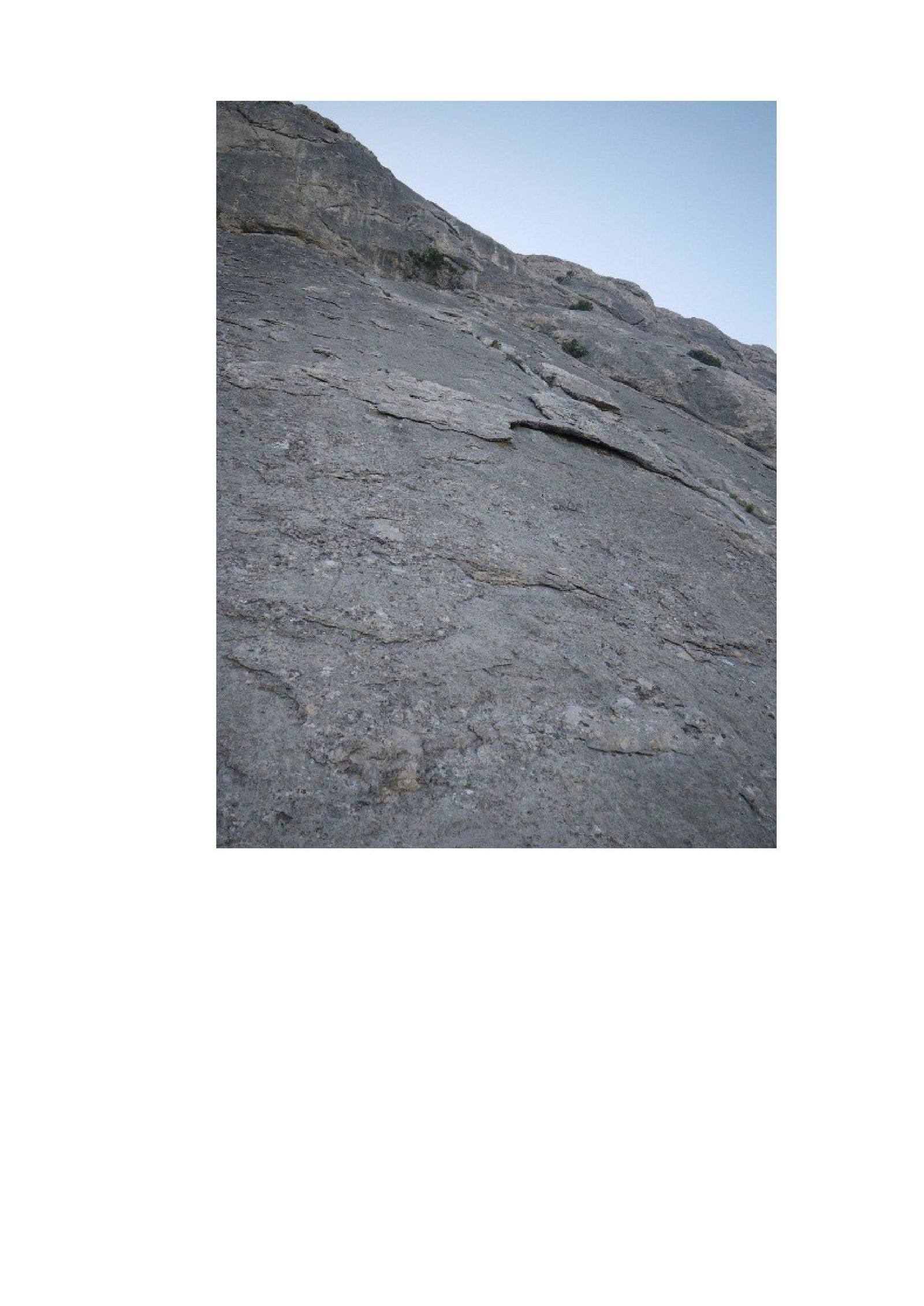
1. Introduction
This document provides an overview of the key concepts and methodologies used in the study of quantum mechanics. It covers:
- Fundamental principles
- Mathematical formulations
- Practical applications
2. Fundamental Principles
2.1 Wave — Particle Duality
Quantum mechanics introduces the concept of wave — particle duality, where particles, such as electrons and photons, exhibit both wave-like and particle-like properties. This duality is central to understanding quantum behavior.
2.2 Superposition
The principle of superposition states that a quantum system can exist in multiple states simultaneously until it is measured. This is mathematically represented by a wave function, denoted as |ψ⟩.
2.3 Uncertainty Principle
The Heisenberg Uncertainty Principle states that it is impossible to simultaneously know the exact position and momentum of a particle. This is expressed as: Δx ⋅ Δp ≥ ℏ/2 where Δx is the uncertainty in position, Δp is the uncertainty in momentum, and ℏ is the reduced Planck constant.
3. Mathematical Formulations
3.1 Schrödinger Equation
The Schrödinger equation is a fundamental equation in quantum mechanics that describes how the quantum state of a physical system changes over time. It is given by: iℏ ∂/∂t Ψ(r, t) = Ĥ Ψ(r, t) where Ψ(r, t) is the wave function, Ĥ is the Hamiltonian operator, and Ĥ is the Hamiltonian operator.
3.2 Dirac Notation
Dirac notation is a convenient and convenient way to represent quantum states and operators. It uses bra-ket notation, where a quantum state is described by a quantum state, and bra-ket notation is used to represent quantum states and operators.
4. Practical Applications
4.1 Quantum Computing
Quantum computing leverages the principles of superposition and entanglement to perform computations that are infeasible for classical computers. Quantum bits, or qubits, are the fundamental units of quantum information.
4.2 Quantum Cryptography
Quantum cryptography uses the principles of quantum mechanics to secure communication. Quantum key distribution (QKD) is a cornerstone of quantum computing, where key distribution (KDD) is a subset of classical computers.
5. Conclusion
Quantum mechanics is a cornerstone of modern physics, providing a framework for understanding the behavior of particles at the smallest scales. Its principles have led to groundbreaking technologies and continue to inspire new research and development.
6. References
- Griffiths, D. J. (2005). Introduction to Quantum Mechanics. Pearson.
- Shankar, R. (2012). Principles of Quantum Mechanics. Plenum Press.

Коментарі
Увійдіть, щоб залишити коментар