
Passport
- Class — technical.
- Pamir-Alay, Turkestan Range
- Peak 4810 m, via the "mirror" of the western wall
- Complexity category — 6B.
- Height difference — 1150 m
- wall — 885 m
- Length — 1730 m
- Length of sections with 5–6 cat. diff. — 1320 m
- of which: 6 cat. diff. — 1250 m
- Average steepness of the wall part of the route — 74° /3650–4535/
- Pitons driven:
| Rock | Nuts | Bolt |
|---|---|---|
| 123/21 | 267/29 | 25ˣ/7 |
ˣ — inability to drive bolted pitons
- Team's travel time — 65.5 hours; 7 days, including — 2 days of processing.
- Overnights: all overnights were lying down in a tent on rock shelves.
- Team leader: Pavel Shabalin — Candidate Master of Sports
Team members:
- Andrey Antonov — Candidate Master of Sports
- Mikhail Zholobov — Candidate Master of Sports
- Sergey Tat'yankin — Candidate Master of Sports
- Autoliy Chepur — Candidate Master of Sports
- Team coach — Pavel Shabalin. Departure to the route on July 25, 1992.
Reached the summit on July 31, 1992. Returned on August 1, 1992.
- Organization: "Rodina" Sports Club, Kirov

Photo 1. General photograph of Peak 4810. Taken on July 24, 1992 at 12:00 from the moraine under the slopes of Peak 1000-letiya kreshcheniya Rusi at a distance of 1.5 km. Height — 3100 m. Camera "Zenit". Lens "Helios".
Routes on the photo:
- 1 — Kritsuk's route on the Central 3rd wall, 6B cat. diff.
- 2 — Team's route
- 3 — Verenev's route on the 3rd wall, 6B cat. diff.

Photo 2. Profile of the route to Peak 4810 via the "mirror" of the Western wall. View from the right. Retaken from Ruslev's report. Date taken — August 18, 1988. Time taken — 17:00. Lens — "Lyubitel-166". Distance — 165 km. Height of the shot — 3600 m. Shooting point № 2. 3925 — height marks. 9–10 — section numbers.
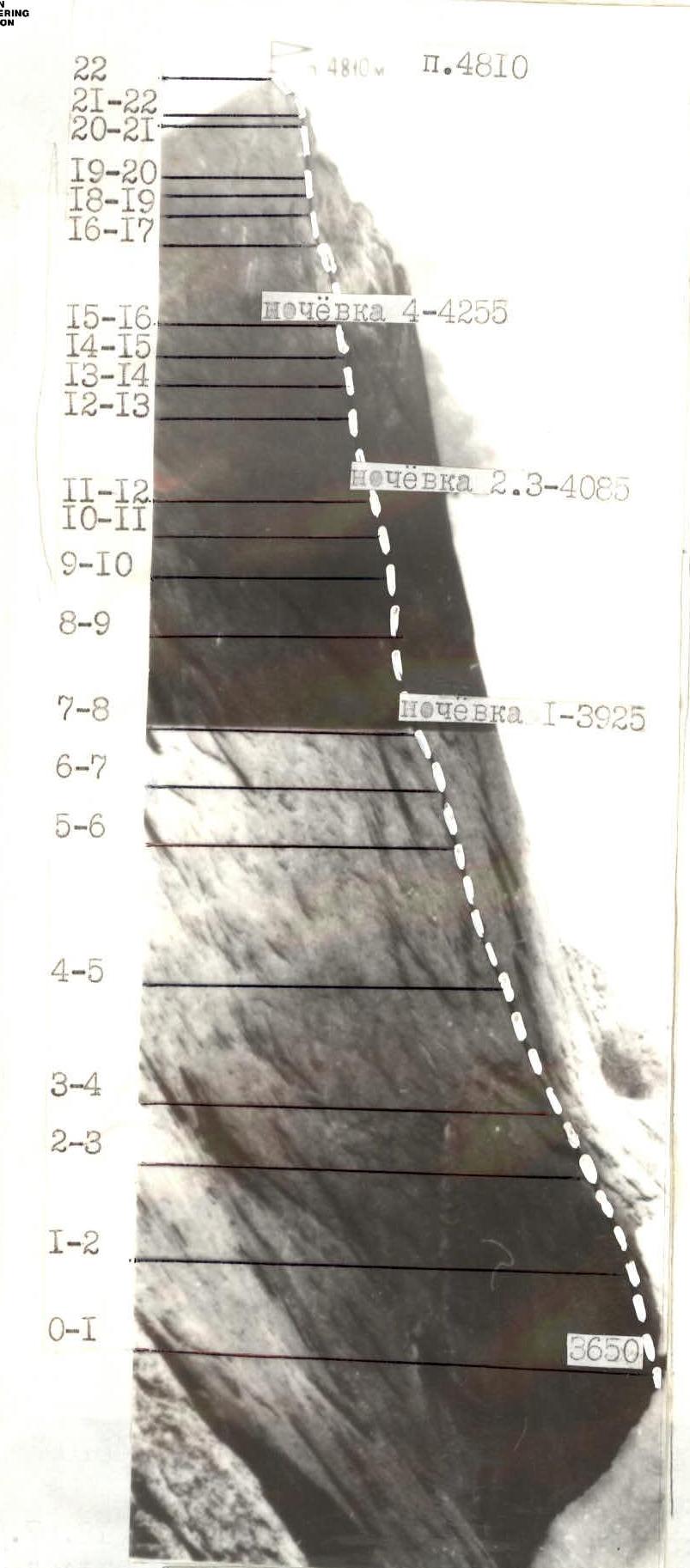
Photo 3. Profile of the route to Peak 4810 via the "mirror" of the Western wall. View from the left. Retaken from Ruslev's report. Date taken — July 17, 1988, 17:00. Lens — "Industar". Distance — 1 km. Height of the shot — 3800 m. Shooting point № 4. 3650 — height marks, 14–15 — section numbers.
Tactical Actions of the Team
The results of the reconnaissance and study of photographic materials formed the basis for drawing up a tactical plan. Considering the unstable weather in the Karavshin gorge this season, reserve days were planned for bad weather.
At the end of the second day of processing, due to clear signs of deteriorating weather, it was decided to adjust the tactical plan and wait out the possible bad weather below. The next day, the worst fears were not confirmed, and the team "took off from the ground".
On July 29, in difficult weather conditions, the duo Shabalin-Zholobov went out for processing twice and was forced to return the first time due to hurricane-force winds and snow grains. In the second half of the day, the duo made a second attempt and managed to process 2 very difficult ropes. However, it no longer made sense for the entire team to retreat from the overnight stay, and it was decided to use the second reserve day.
There were no further deviations from the tactical plan. The change of leaders and the organization of rope team movement were carried out according to the tactical plan. The rope teams worked ahead every other day. This regime provided rest for the leaders and contributed to the safety of the ascent. Convenient overnight platforms and pre-planned processing ensured full rest for those not involved in processing.
Safety measures when passing the route included:
- High physical, technical, and tactical, as well as psychological preparation of team members.
- A tactical plan drawn up taking into account the specifics of the area.
- Material support, including the use of modern special equipment.
- Ensuring all participants on the route had double protection, with the first climber working on a double rope (UIAA+USSR).
- Organization of belay points with at least 3–4 elements (nuts, pitons), blocked together.
- Stable radio communication.
- Presence of a rescue team and observation group below the route.
There were no accidents or injuries during the ascent. The route was mainly climbed using free climbing. Unlike many modern routes, skyhooks were used mainly on the terrain, not in bolt holes, which increased the speed of passing the route and did not devalue its complexity. New equipment samples worth noting include:
- universal rock pitons suitable for both holes and terrain;
- a set of flexible and rigid friends from the latest generation from firms "Summit" (model "TRANGO") and "SALEWA" (model "Super").
Hot meals were prepared twice a day — in the morning and evening. In addition, each participant had a pocket snack.
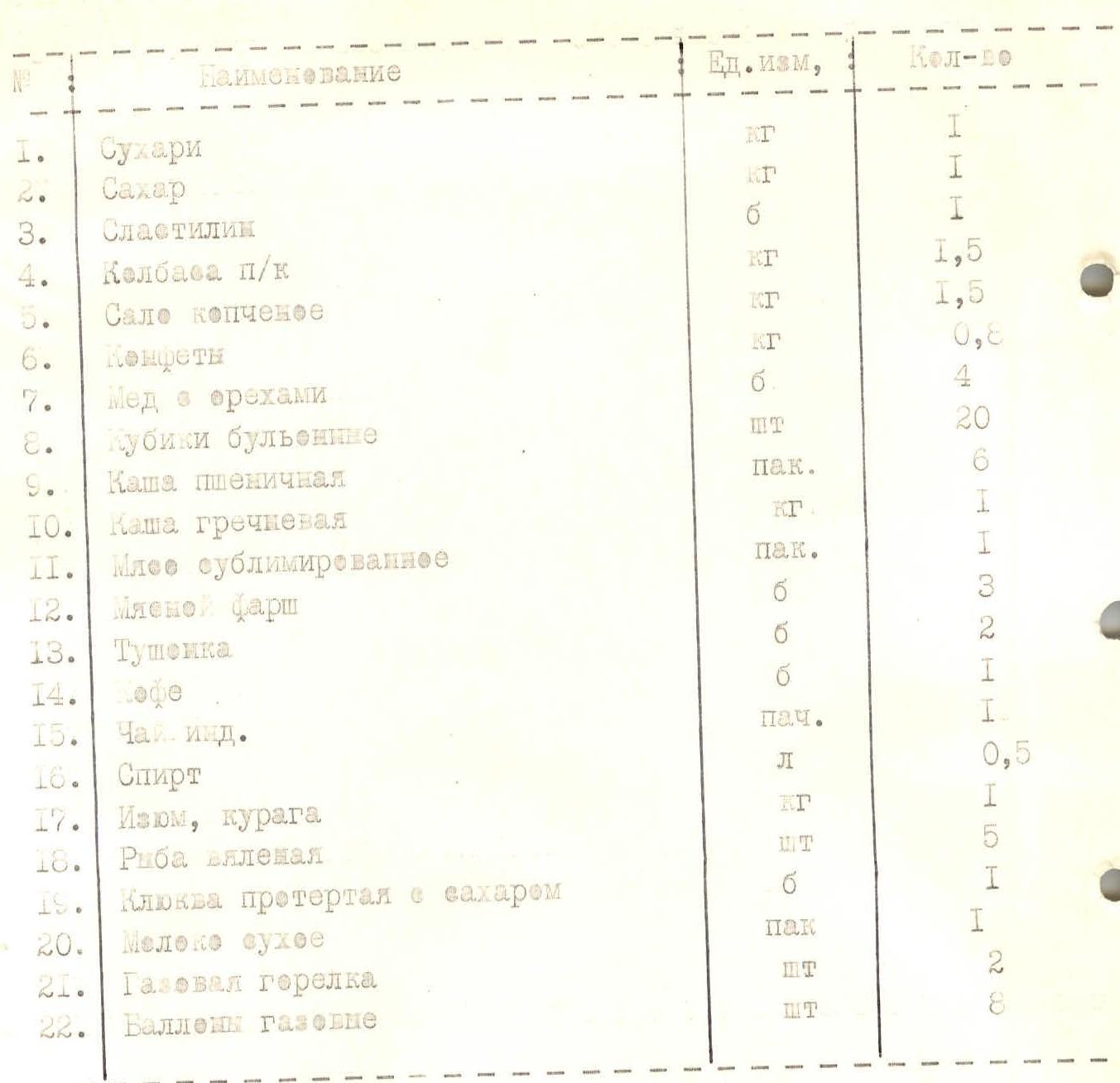
Table of Food and Fuel
| № | Name | Unit | Quantity |
|---|---|---|---|
| 1 | Crackers | kg | 1 |
| 2 | Sugar | kg | 1 |
| 3 | Slastilin | g | 1 |
| 4 | Semi-smoked sausage | kg | 1.5 |
| 5 | Smoked lard | kg | 1.5 |
| 6 | Candies | kg | 0.8 |
| 7 | Nuts with honey | 4 | |
| 8 | Bouillon cubes | pcs | 20 |
| 9 | Wheat porridge | pack | 6 |
| 10 | Buckwheat porridge | kg | 1 |
| 11 | Freeze-dried milk | pack | 1 |
| 12 | Minced meat | 3 | |
| 13 | Canned stew | 2 | |
| 14 | Coffee | 1 | |
| 15 | Individual tea | pack | 1 |
| 16 | Alcohol | l | 0.5 |
| 17 | Dried fruits | kg | 1 |
| 18 | Dried fish | pcs | 5 |
| 19 | Cranberries with sugar | 1 | |
| 20 | Powdered milk | pack | 1 |
| 21 | Gas burner | pcs | 2 |
| 22 | Gas canisters | pcs | 8 |
The total weight of food was 12 kg.
Description of the Route by Sections
Section R0–R1. The route begins from the anchor point up a vertical slab without holds. Up the slab 20 m by aid climbing straight up, then along an unexpressed flake to the right — up. Belay point on bolt pitons. 40 m, 80°, 2.
Section R1–R2. The wall is somewhat gentler, but the terrain is the same.
- Unexpressed internal corners formed by the main wall and flake features.
- Belay points are hanging, climbing is more difficult. 60 m, 70°, 1e.
Section R2–R3. The wall becomes vertical. The number of places for organizing belay points is limited. General direction of movement is straight up. 45 m, 85–90°, 1e.
Section R3–R4. The section begins with a cornice, which is overcome on the left part using aid climbing. Then to the right-up 20 m along the junction of a steep slab and an overhang. Climbing is very difficult. After the overhang becomes narrower, straight up 20 m along a smooth internal corner using bolt pitons for protection. The corner leads to a small oblique ledge, where a belay point is organized on nuts. From the point straight up. Extreme climbing through an overhang 4 m. Then along the internal corner to the left-up. A relatively convenient belay point. 90 m, 80°, 1e.
Section R4–R5. A vertical internal corner turning into a chimney. The chimney leads to a comfortable ledge. Belay point on pitons. Then again along the internal corner towards a powerful flake-chimney. Belay point on a small ledge. 80 m, 75°, 1.
Section R5–R6. Extreme climbing along the flake, occasionally using aid climbing. Large nuts work well. The flake is blocked by a cornice. Directly on the cornice, a bolt piton. The cornice is bypassed on the left with an exit to the outer side of the flake, which is the right wall of a powerful internal corner. Belay point in the corner on bolt pitons and nuts. 45 m, 85–90°, 1e.
Section R6–R7. A vertical internal corner. First 20 m along the corner, then, moving to the left outer wall, straight up along small holds. Climbing is difficult. Exit to a horizontal shelf. 35 m, 80°, 1. Convenient belay point. Along the shelf to the left, traverse 40 m. The traverse leads to a convenient overnight platform. There is snow.
Section R7–R8. Up the slab straight up to a horizontal shelf (40 m). On the shelf, a control cairn. From the shelf 20 m up a vertical slab turning into an internal corner. In the upper part of the internal corner, an inconvenient belay point. 80 m, 75°, 1.
Section R8–R9. Up the vertical wall to the right-up (10 m). Then along a relatively gentle internal corner-flake. Belay point on bolt pitons. The corner in the upper part is blocked by a cornice. Overcoming the cornice, you enter the next internal corner, going left-up. Hanging belay point under the cornice. 80 m, 75°, 1e.
Section R9–R10. First, 15 m traverse to the right along a vertical wall. Then through a cornice and 20 m along an internal corner to a convenient horizontal shelf. In the right part of the shelf, "live" rock blocks. It's better not to touch them. 40 m, 80°, 1.
Section R10–R11. Up a steep slab straight up, then along an internal corner overhanging in the upper part, exit to a shelf. 35 m, 80°, 1. Along the shelf, traverse to the left, first slightly down, then up a chimney — exit to a horizontal shelf of meter width. Overnight spot.
Section R11–R12. On the shelf at the beginning of the section, a control cairn. The section begins with a vertical flake (25 m). Then to the left-up, an internal corner towards an overhang. Under the overhang, a belay point on bolt pitons and nuts. The rock is very hard — quartz. The section is characterized by alternating extreme free and aid climbing. Through a series of overhangs and cornices to the left-up towards an internal corner. Climbing is very difficult, sometimes extreme. The wall is a series of "inverted" flake features of small sizes (2–5 m in length), so movement is zigzag, having to "wander" along the wall, choosing sections for free climbing. 80 m, 80°, 1e.
Section R12–R13. Along a vertical wall to the left-up to a flake-chimney. After 15 m, the chimney becomes narrower, turning into a crack in an internal corner. Very steep. Climbing is extreme, sometimes aid climbing. Belay point is hanging on small stoppers. 45 m, 85°, 1.
Section R13–R14. Along a vertical slab 15 m to the right-up to an internal corner, then along the right wall of the internal corner, bypassing an overhang on the right, exit to a gentle slab. Belay point on bolt pitons. 45 m, 85–90°, 1e.
Section R14–R15. Along a wet internal corner to the right-up to a small ledge 35 m. Then under the cover of a powerful cornice to the left-up 25 m towards a "gate" between cornices. Behind the "gate" is an excellent horizontal shelf for overnight stay. On the shelf, a control cairn. 60 m, 80°, 1.
Section R15–R16. Along the shelf to the left to an internal corner. The internal corner is climbed using free climbing, nuts go well. Then along a slab to a small ledge. Belay point behind a protrusion. From the point, a smooth slab forms the left wall of an internal corner. Movement along the internal corner is very difficult, occasionally using aid climbing. Belay point on a wide gentle slab. 80 m, 75°, 1.
Section R16–R17. Along the slab to the left bypassing a powerful overhang, then straight up under a cornice. The cornice is overcome on the left part, along a crack using aid climbing. The crack turns into a chimney with absolutely smooth walls. After 10 m of movement along the chimney, a transition to the left (5 m) into an internal corner. Along the corner straight up to a small ledge. On it — a belay point on large nuts. Another 10 m — a convenient shelf. Here a belay point is organized on pitons. 55 m, 65–80°, 2.
Section R17–R18. From the belay point to the right, a steep slab with a crack. Along the crack, using free climbing, enter a monolithic couloir filled with dense snow. The left wall of the couloir is vertical. Along the wall, a crack into which average nuts and chocks fit well. Aid climbing. Exit from the couloir to the right onto a small shoulder. Belay point on a powerful protrusion. 35 m, 65°, 2.
Section R18–R19. Straight up along an internal corner. The corner is blocked by a powerful overhang. Bypassing the overhang on the right and overcoming a cornice, exit to a small snow shelf with snow. Belay point on pitons. 45 m, 70°, 1.
Section R19–R20. To the right-up 30 m along a smooth internal corner. Climbing is very difficult, sometimes on wet rocks. Then along a monolithic slab 15 m to a horizontal shelf, on which a convenient belay point on nuts. From the point 20 m straight up along a steep wall. Holds are small, climbing is extreme. Then 40 m along a monolithic internal corner. In the middle part of the corner, a hanging belay point. The internal corner turns into a chimney. In the upper part of the chimney, a belay point on pitons. 130 m, 60–80°, 1.
Section R20–R21. From the belay point to the left-up, a wide internal corner goes. There are practically no holds. Climbing is extreme. Sometimes aid climbing. The corner leads to the North ridge. 45 m, 60°, 1.
Section R21–R22. Section of a classified route with 5B cat. diff. along the North ridge to Peak 4810. The ridge is not pronounced. There are walls and slabs of varying steepness and length. Nuts work well. 400 m, 40°, UIA-3⁺. Descent from the summit along the North ridge via the 5B cat. diff. route.

Table of Equipment
| № | Name | Quantity |
|---|---|---|
| 1 | Rope UIAA "Elita" 11 mm | 1 pcs |
| Other Soviet reepschnur 11 mm | 1 pcs | |
| 10 mm | 6 pcs | |
| Titanium carabiners | 30 pcs | |
| Duraluminum carabiners | 40 pcs | |
| 3 | Ice axes | 1 pcs |
| 4 | Alpine harness | 5 pcs |
| 5 | Descent slings | 5 pcs |
| 6 | Slings with extenders | 25 pcs |
| 7 | Bolt kit | 1 set |
| 8 | Climbing jumar | 10 pcs |
| 9 | Rock shoes | 1 pair |
| 10 | Auxiliary rope | 10 m |
| 11 | Rock hammer | 2 pcs |
| 12 | Rock pitons | 40 pcs |
| 13 | Crampons | 1 pair |
| 14 | Nuts | 35 pcs |
| 15 | Personal safety slings | 5 pcs |
| 16 | Cams, wedges | 7 pcs |
| 17 | Sling-pull | 1 pcs |
| 18 | K-hook | 10 pcs |
| 19 | Skyhook | 3 pcs |
| 20 | Ladder | 2 pcs |
| 21 | Personal gear | 5 sets |
| 22 | Sleeping bag | 5 pcs |
| 23 | Down jacket | 5 pcs |
| 24 | Protective helmets | 5 pcs |
| 25 | Matches | 5 |
| 26 | Candles | 2 pcs |
| 27 | First aid kit | 1 set |
| 28 | Balloon tent | 1 pcs |
| 29 | Poncho | 5 pcs |
| 30 | Gas burner | 22 pcs |
| 31 | Gas canisters | 8 pcs |
| 32 | Cookware | 2 pcs |
| 33 | Water bottles | 6 pcs |
| 34 | Camera | 1 pcs |
| 35 | Communication and signaling means: | |
| Radio station "Kaktus" | 1 pcs | |
| 36 | Radio station power supply | 2 sets |
| 37 | Flashlights | 3 pcs |
| 38 | Watches | 3 pcs |
| 39 | Clinometer-compass | 1 pcs |
| 40 | Flashlight batteries | 2 sets |
| 41 | Red flare (emergency cartridge) | 1 pcs |
| 42 | Descent devices | 5 pcs |
| 43 | Backpack, sleeping mat, | 4 sets |
| 44 | Polyethylene | 2 sets |
We took 4 backpacks. The weight of the backpack at the exit was 13 kg. The total weight of equipment and fuel was 41 kg. We took 12 kg of food.
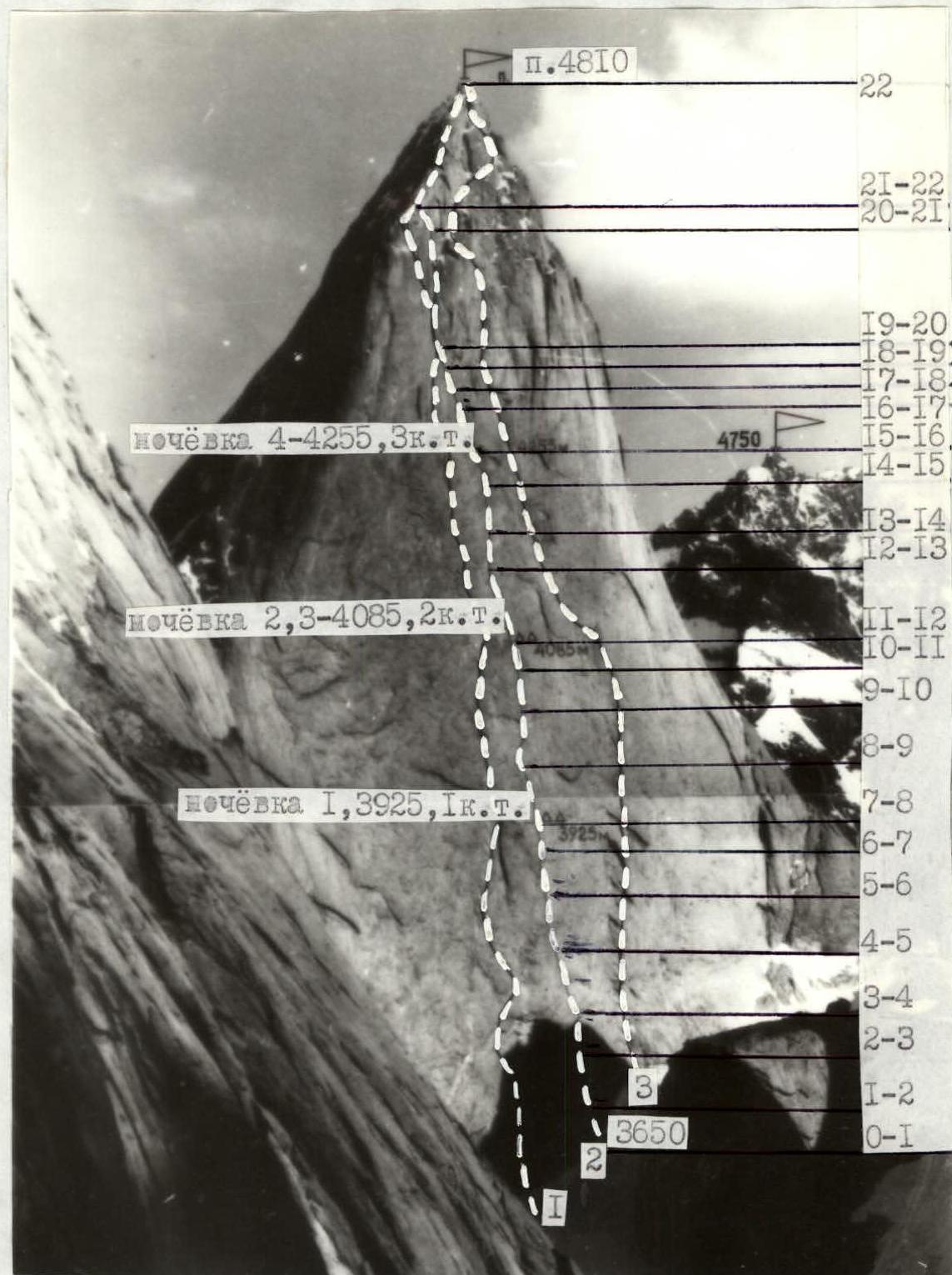
Photo 5. Technical photograph of the route
Retaken from Ruslev's report. Date taken — July 10, 1988. Time taken — 17:00. Distance — 5 km. Height of the shot — 3800 m. Lens — "Mir-26". Shooting point № 4. Routes on the photo:
- 1 — Kritsuk's route on the Central 3rd wall.
- 2 — Team's route on the "mirror" of the 3rd wall (Rusyaev, 1988, 6B).
- 3 — Verenev's route on the 3rd wall.