
Ascent Passport
- Region — Pamir-Alai, Karavshin Valley, # 5.4.3.
- Peak — Yellow Wall 3800 m via the center of the east wall.
- Proposed — 6A cat. sl. first ascent.
- Route type — rock
- Route characteristics: elevation gain — 530 m. route length — 600 m. length of 6B cat. sl. sections — 375 m, 5B cat. sl. — 180 m. average steepness — 79°.
- Left on the route: pitons — 29, including drilled pitons — 29. Pitons used on the route: stationary drilled pitons — 29, including ITO — 10. removable drilled pitons — 2, including ITO — 0. Total ITO used — 217, including skyhooks — 86.
- Climbing hours — 31, days — 2.5.
- Number of bivouacs — 1.
- Leader — Yanushevich Alexander Arturovich CMS
Team members:
- Rodikov Boris Anatolyevich CMS
- Prokofiev Denis Evgenyevich MS
- Tsyganov Dmitry Valeryevich MS
- Khvostenko Oleg Valeryevich MS
- Team coaches: Balezin Valery Viktorovich ICMS Zakharov Nikolai Nikolaevich ICMS, Honored Coach of Russia
- Departure date: on route — August 6, 2005 at 7:00. on summit — August 8, 2005 at 13:00. return — August 8, 2005 at 18:00.
- Organization: Krasnoyarsk Kraisportkomitet.
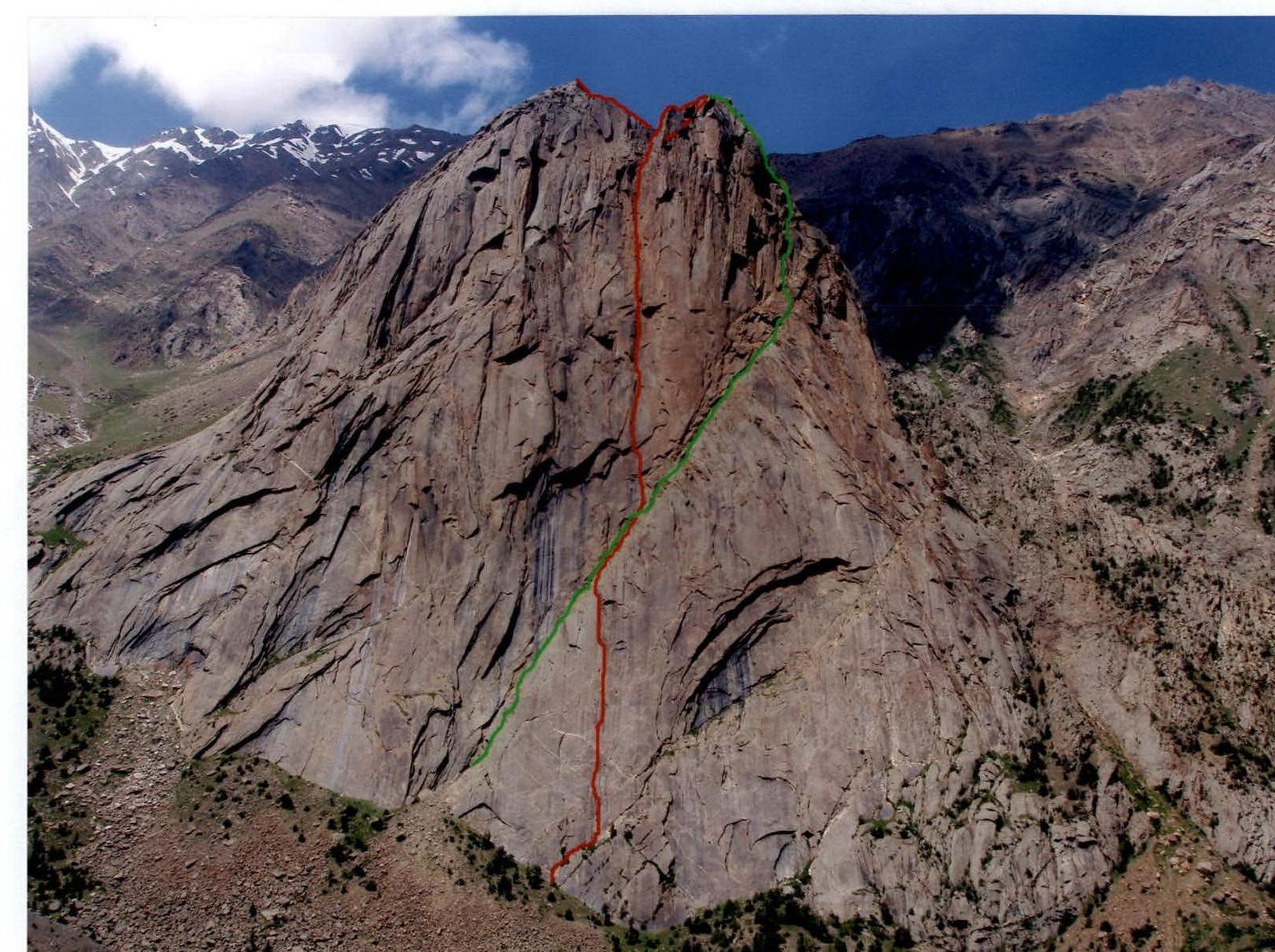
Peak Yellow Wall 3800 m. Photo taken on August 1, 2005. Red — center of the E wall, 2005, 6A; Green — along the E wall shelf, V. Solonnikov. 1987, 5A
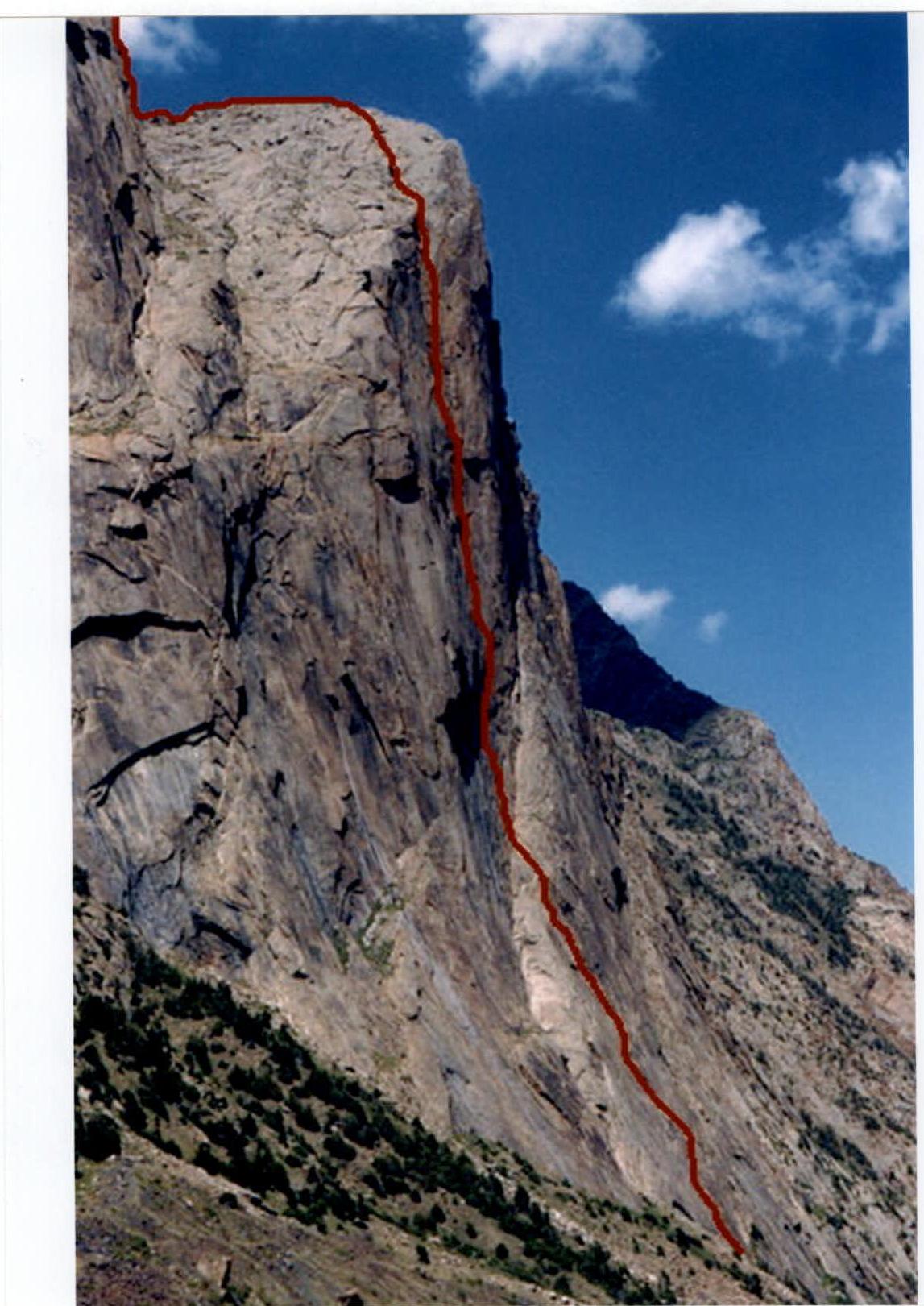
Route profile from the left
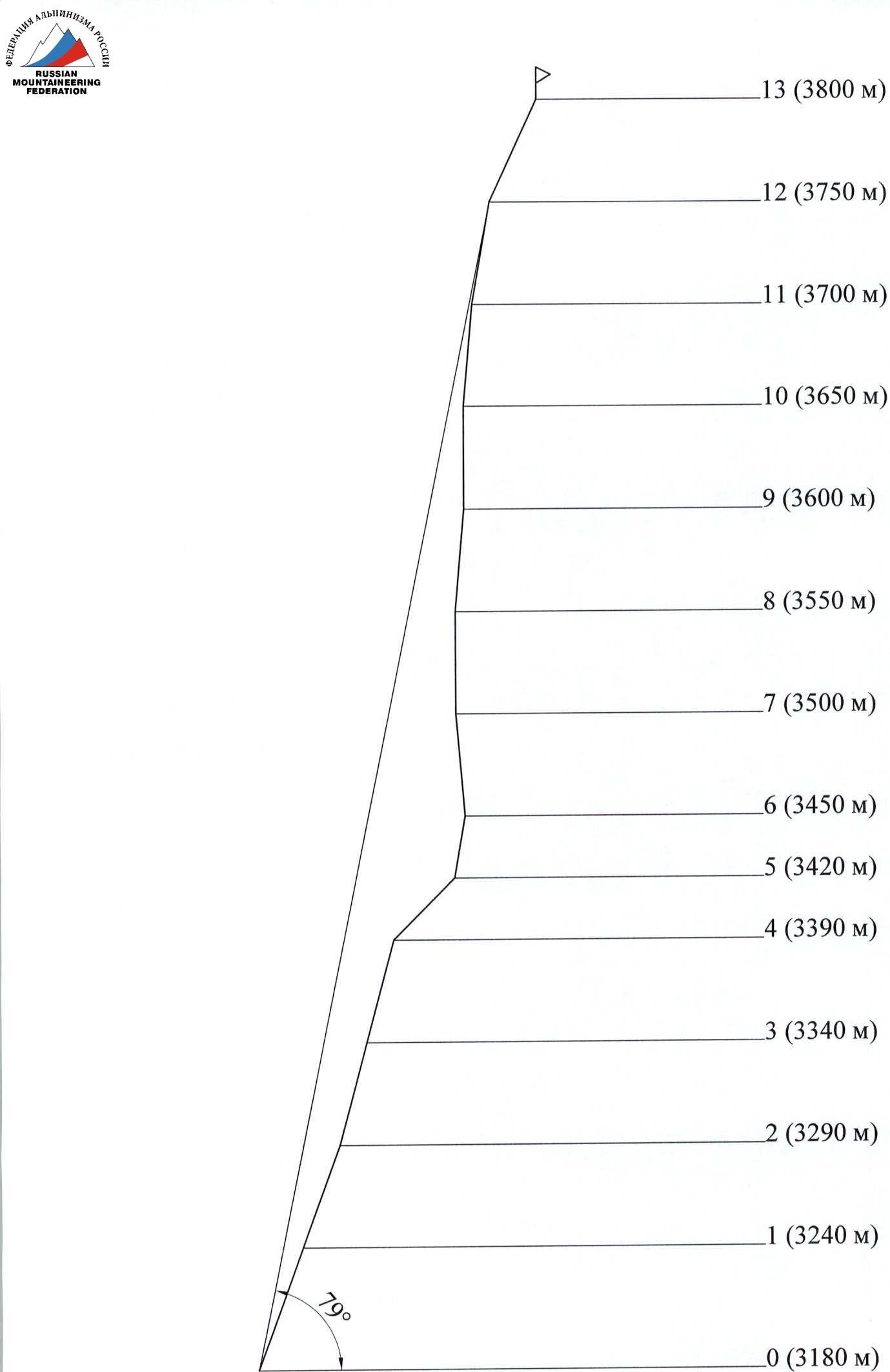
Route profile
UIAA Scheme
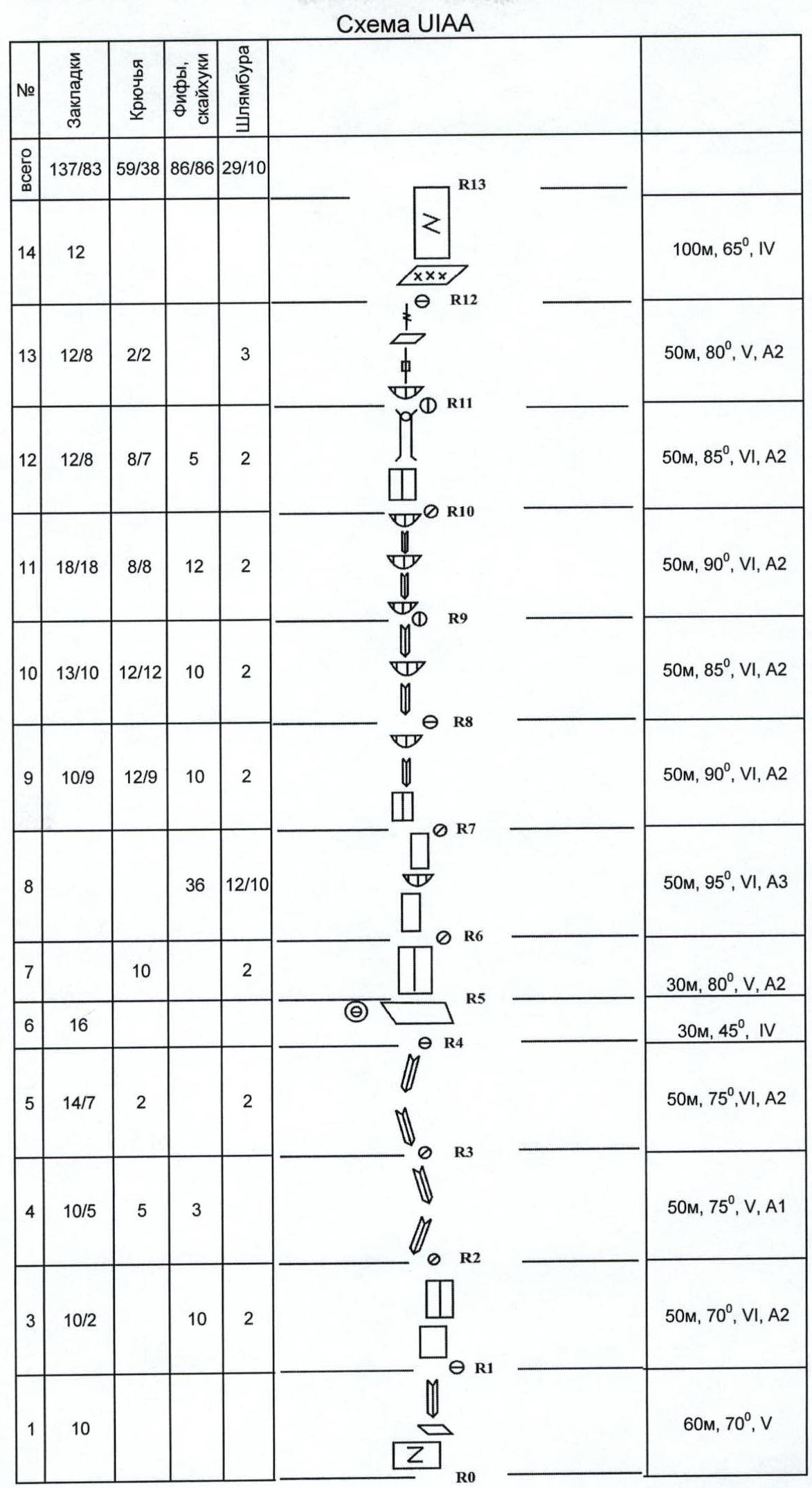
Route description by sections
The route starts along an oblique shelf. Movement is simultaneous.
Section R0–R1. The inner corner is climbed using free climbing. Protection: medium friends, cams, large stoppers. Belay station on a small ledge in front of a monolithic slab.
Section R1–R2. A 20 m monolithic slab with holds. Movement is up and to the right towards a flake. Part of the slab (10 m) can be climbed using free climbing, but only in good weather. Otherwise, skyhooks are used. From the upper drilled piton, a pendulum swing to the right into a crack. The crack is climbed using free climbing and leads into an inner corner. Belay station in the corner on a small ledge.
Section R2–R3. Continuation of the crack in the inner corner, which bends slightly left, towards a characteristic inner corner. Belay station is set up in the crack on a small ledge.
Section R3–R4. Continuation of the inner corner, which leads to a large shelf, along which the 5A Solonnikov route runs. Belay station is set up on the edge of the shelf on two stationary drilled pitons. 20 m below, a tent platform is available. The platform is sloping.
Section R4–R6. The route crosses the shelf diagonally from left to right. Further, a wall with a system of cracks leads to a monolithic, slightly overhanging wall with cornices. Hanging belay station on drilled pitons.
Section R6–R7. Along the slab to the cornice, 25 m on skyhooks (6 mm bolt). Protection — construction drilled pitons (ears with M6 nuts). On the cornice, a "SPIT" drilled piton. Further, 20 m also on skyhooks to the next cornice. On the cornice, another "SPIT" drilled piton. Behind the cornice, a belay station is set up on stationary drilled pitons. A small ledge for feet.
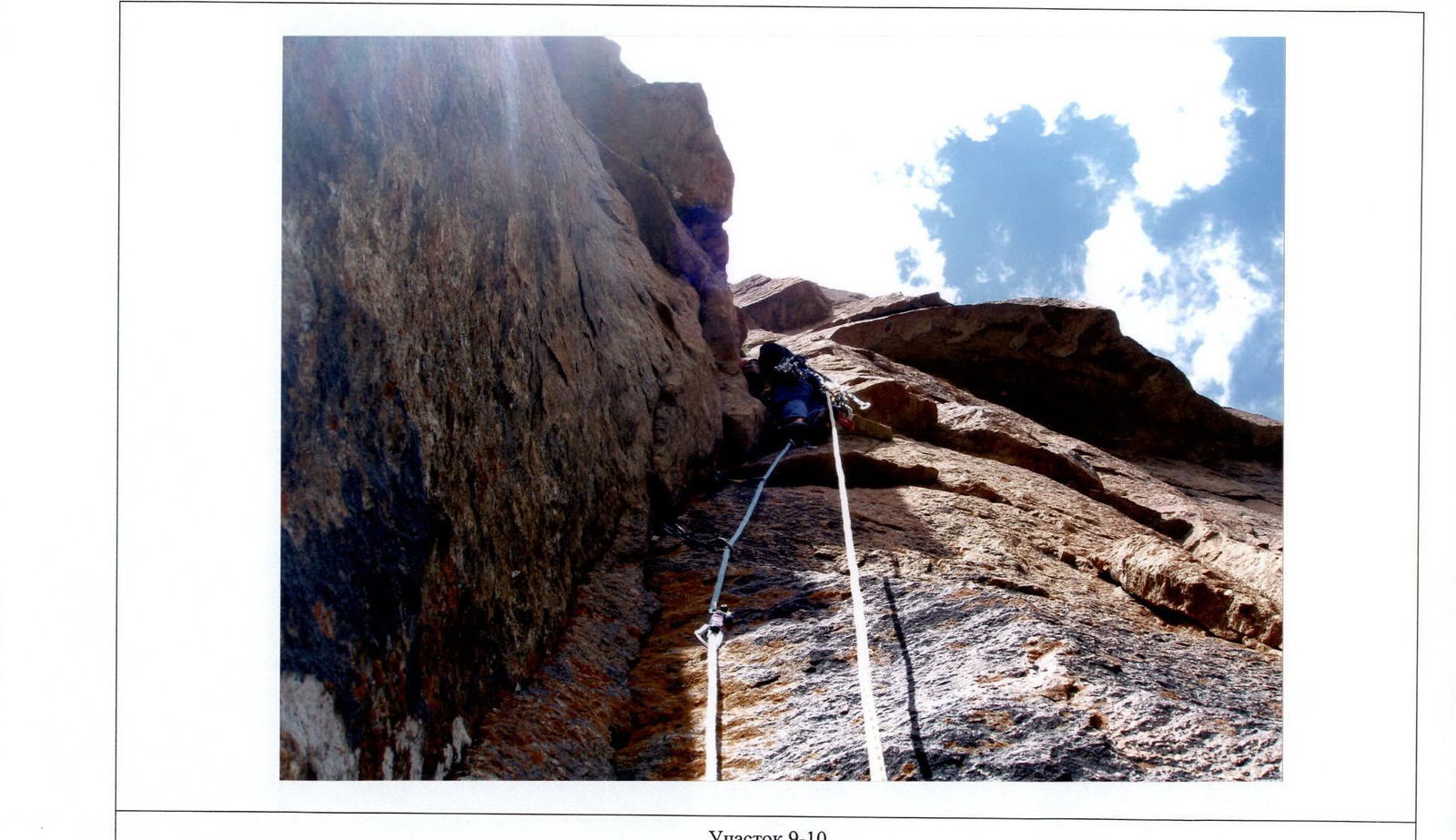
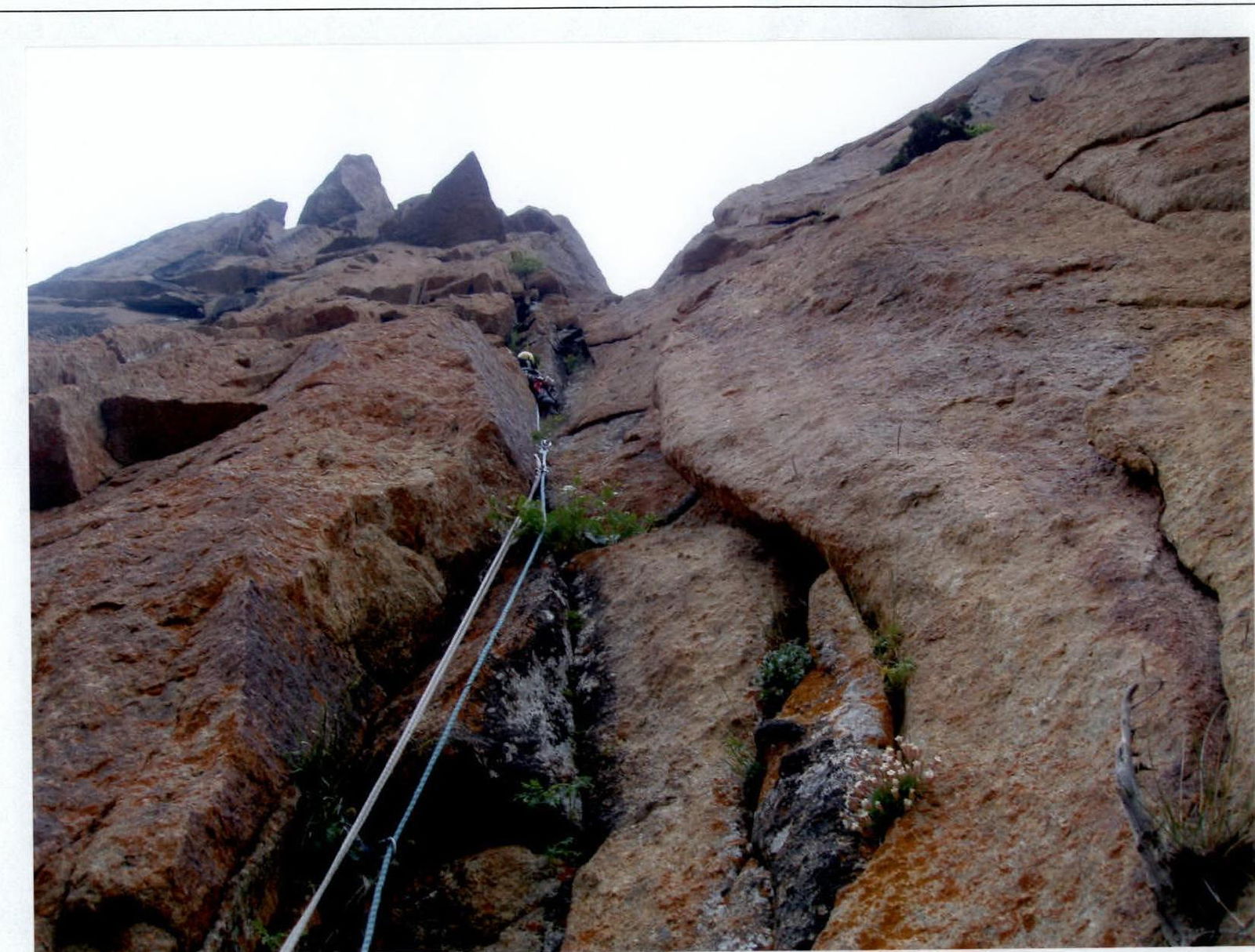
Sections R7–R10. A 150 m crack in the inner corner, 85°–90°. Mainly climbed using ITO with the use of fifi hooks and anchor pitons, small and medium stoppers. Often interrupted by small cornices with a pull-out of about 1 m. Belay stations are equipped with drilled pitons.
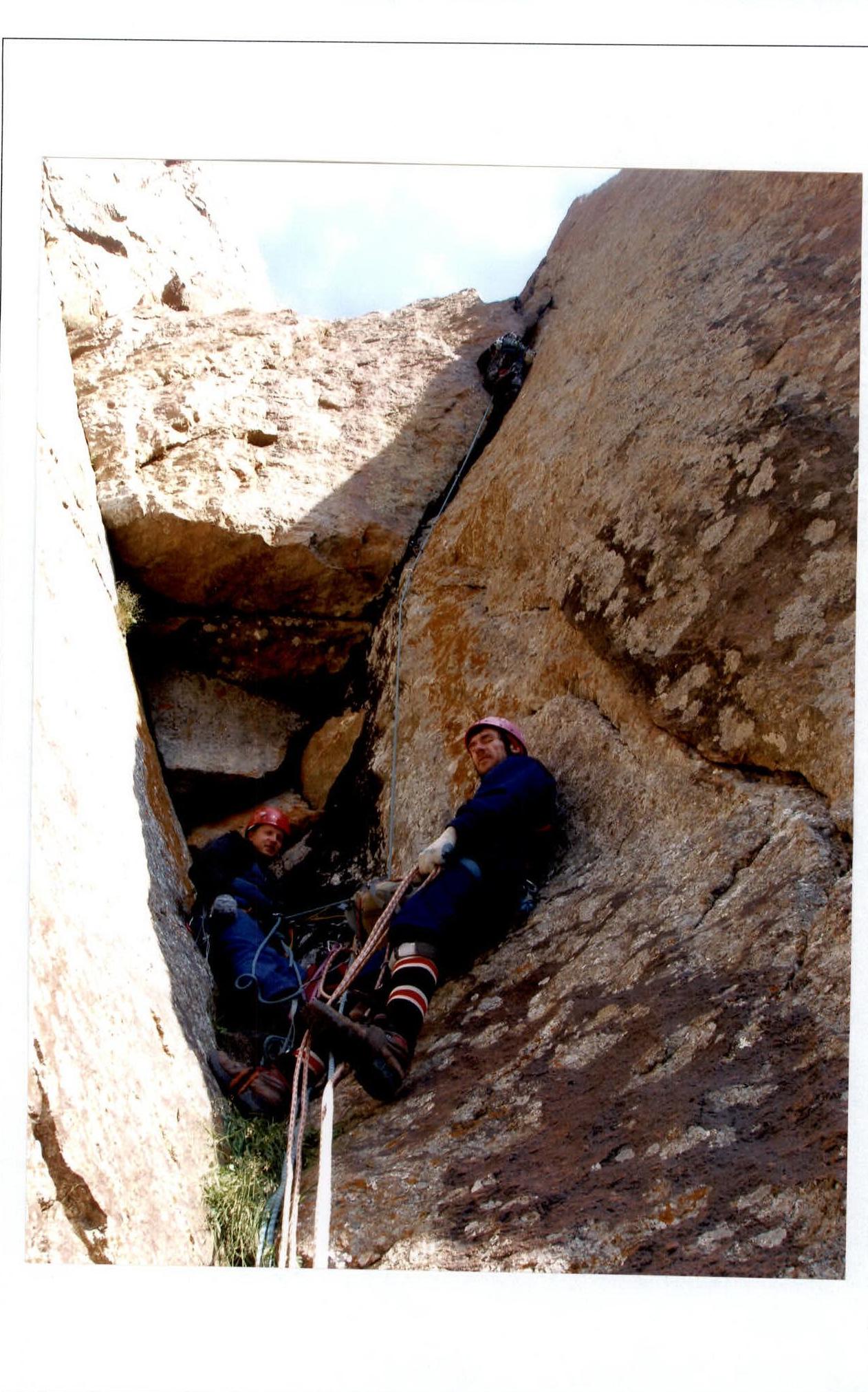
Sections R10–R11. A 15 m wall with a crack is climbed using ITO. Then it transitions into a vaguely defined chimney, ending in an inner corner (free climbing). Belay station under a cornice.
Section R11–R12. From under the cornice to the right on ITO, large-sized cams, large friends. After a ledge, climbing leads to a good green ledge on the ridge. Belay station on a drilled piton. A good lying bivouac can be set up here.
Section R12–R13. Along the ridge to the summit ~100 m. Easy climbing.
Descent is via the ascent route to the shelf (section R4–R5). Further, along 5A. No notes were found on the summit.
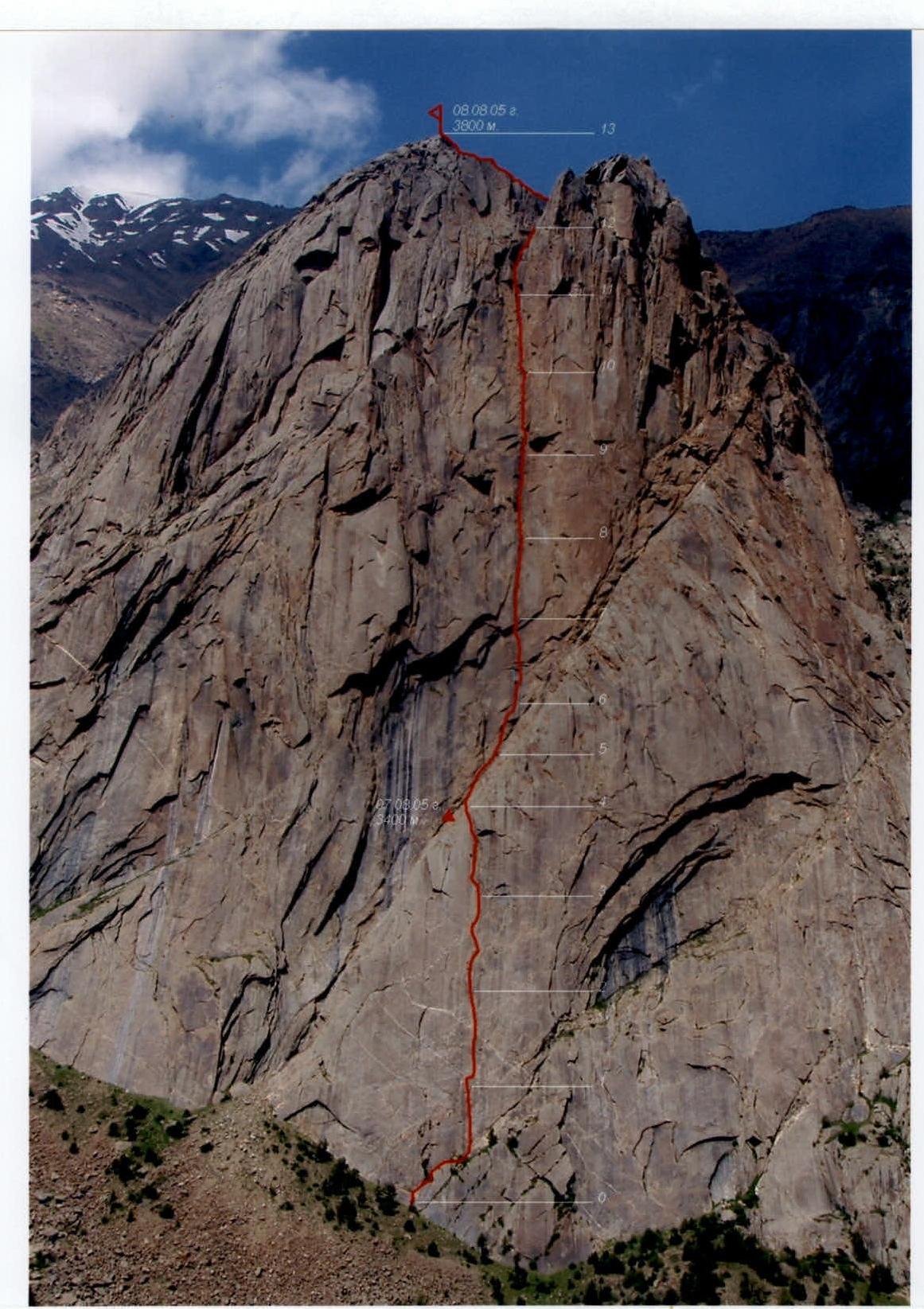
Technical photograph of the route.
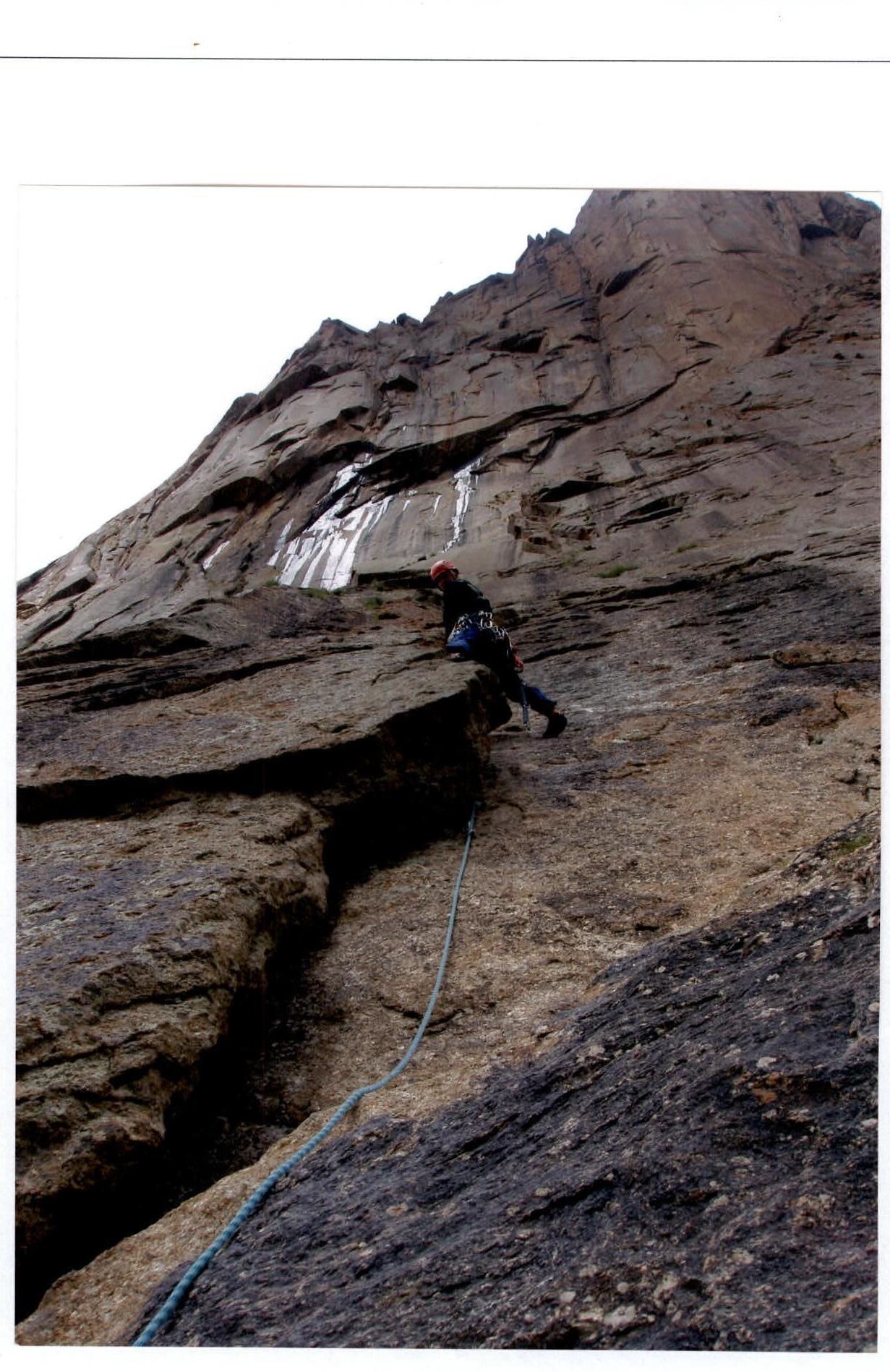
Section R0–R1. D. Prokofiev, free climbing.
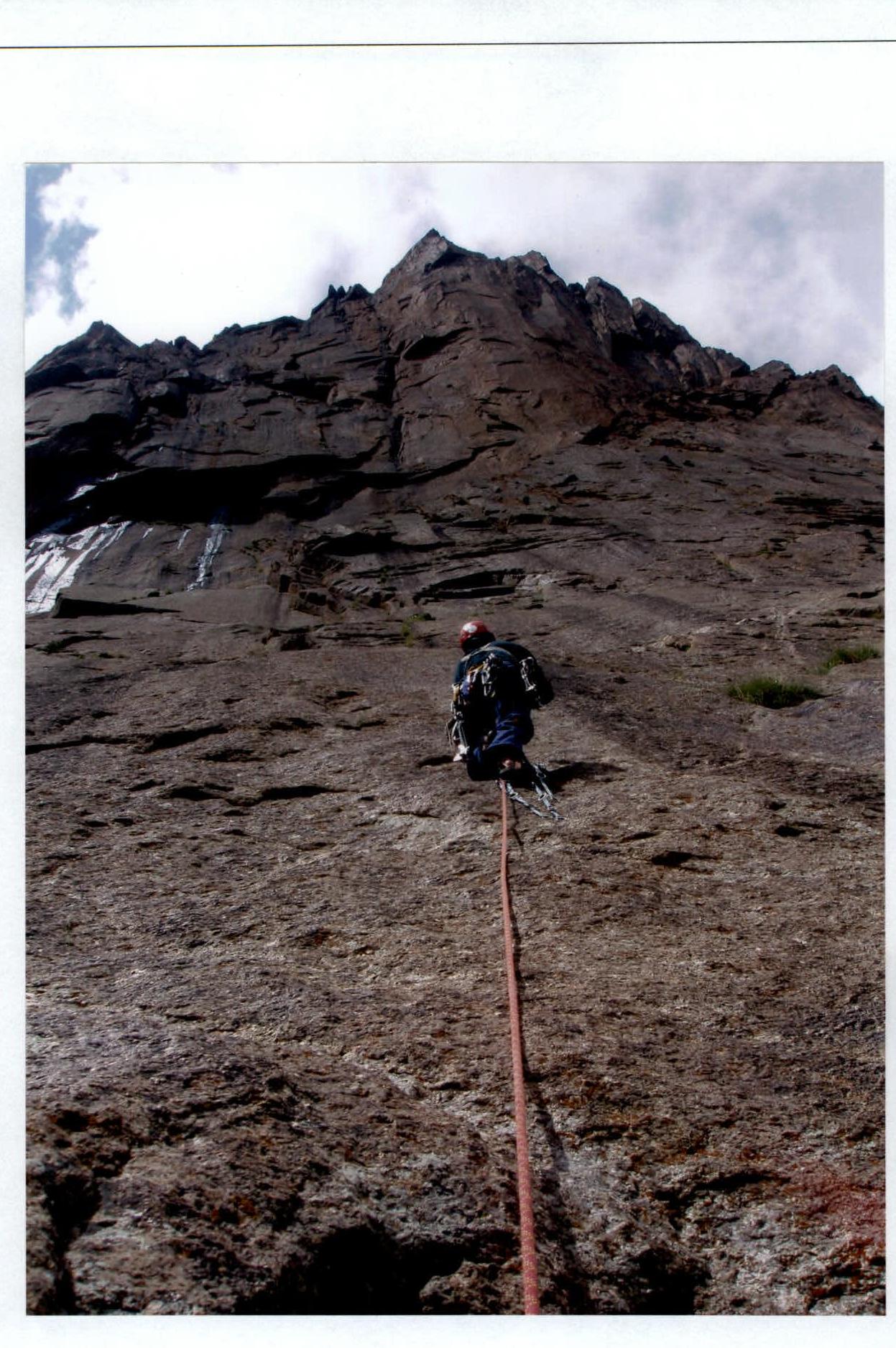
Section R1–R2. D. Prokofiev leads!
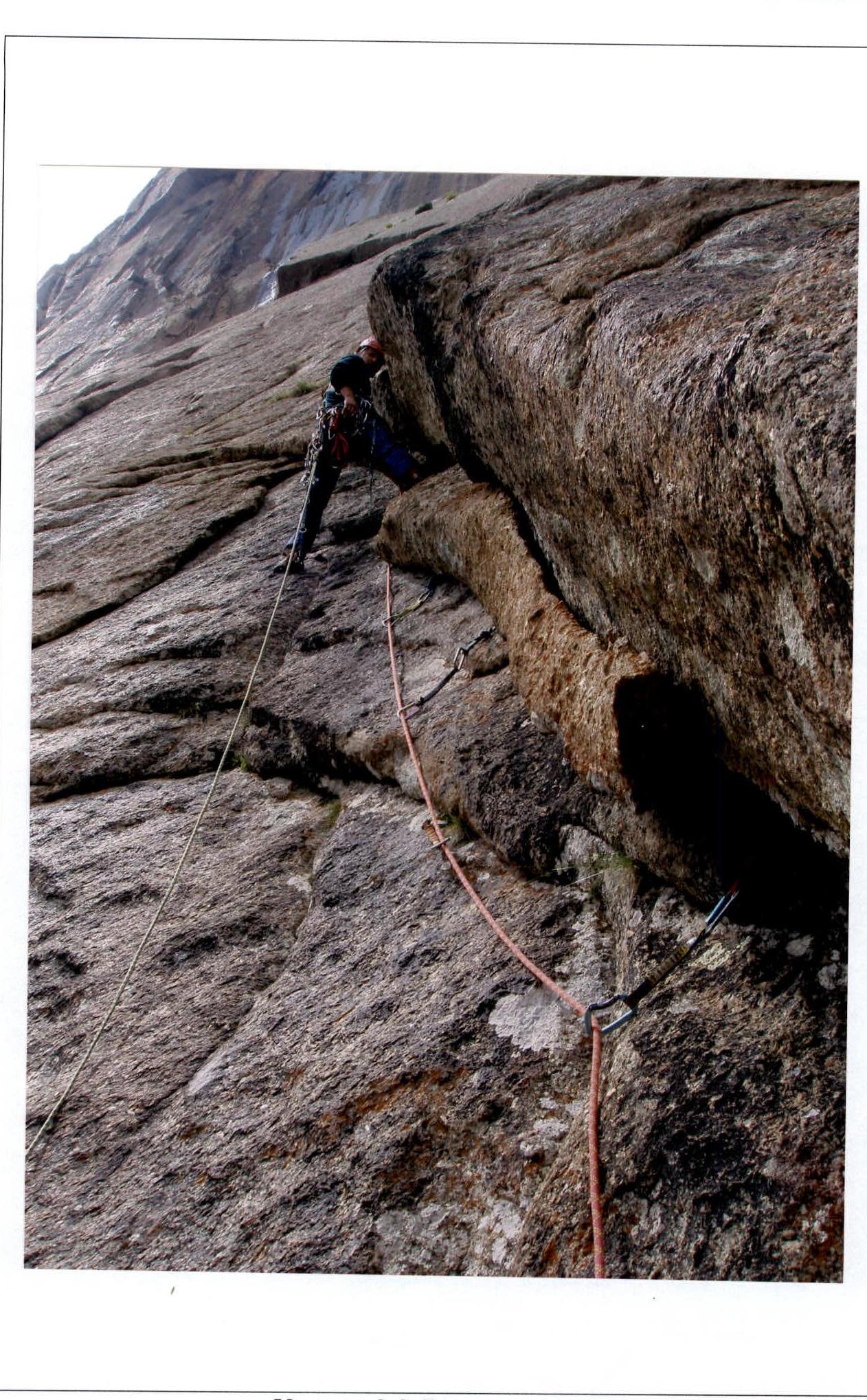
Section R2–R3. Inner corner.
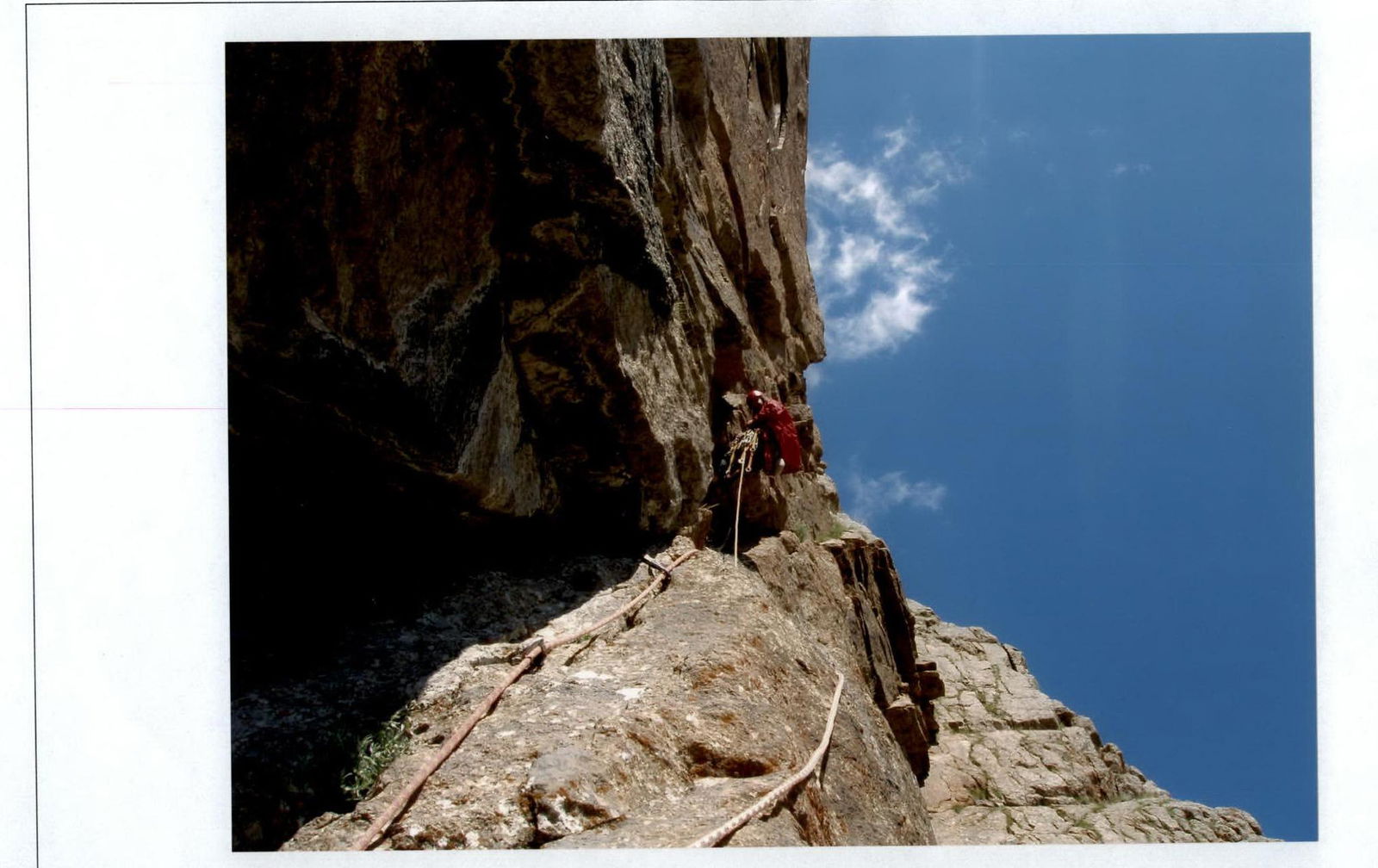
Sections R4–R6. Exit from the shelf to the wall. A. Yanushevich leads.

Section R3–R4. B. Rodikov leads!
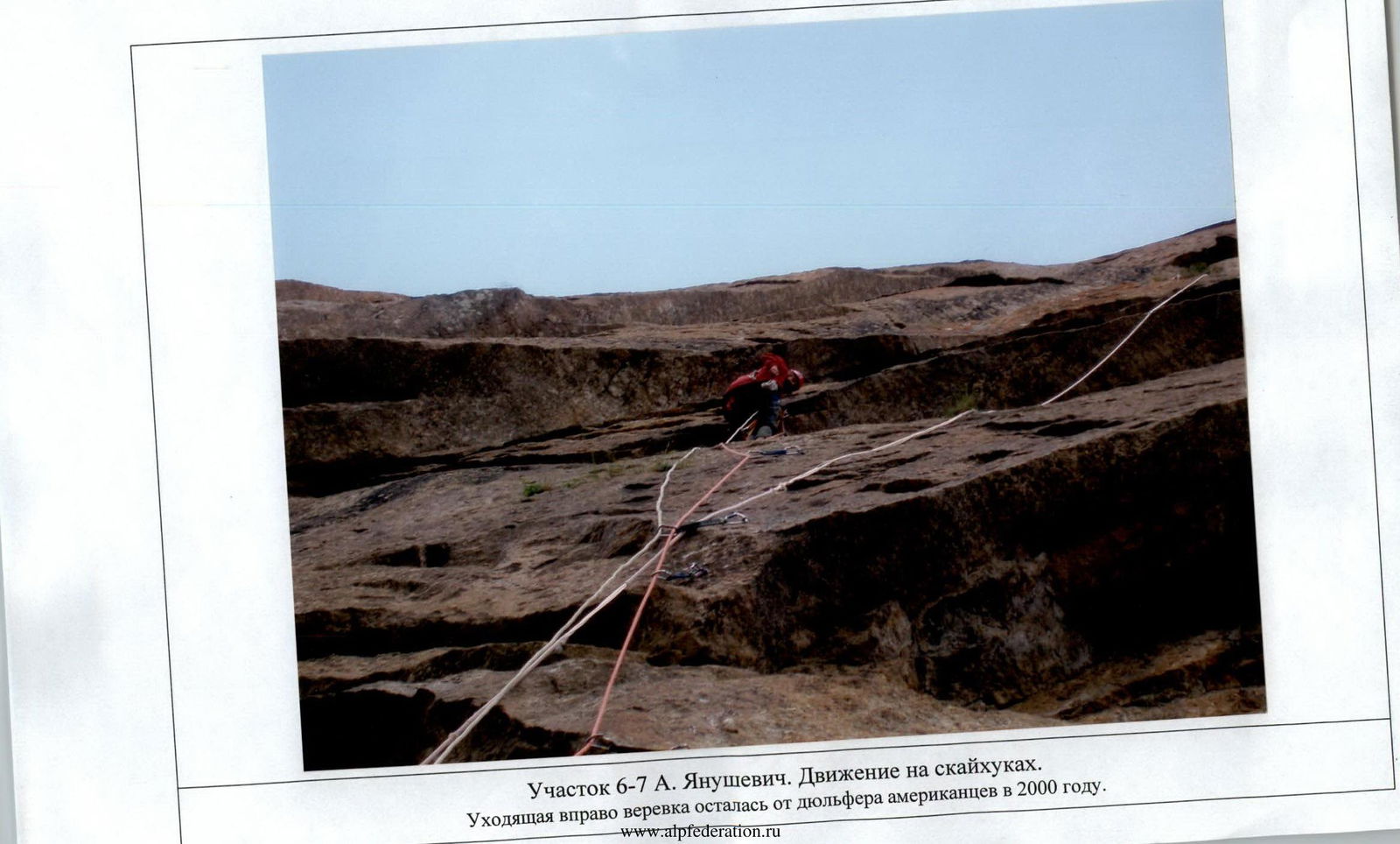
Section R6–R7. A. Yanushevich. Movement on skyhooks. The rope going to the right remained from the rappel of Americans in 2000.
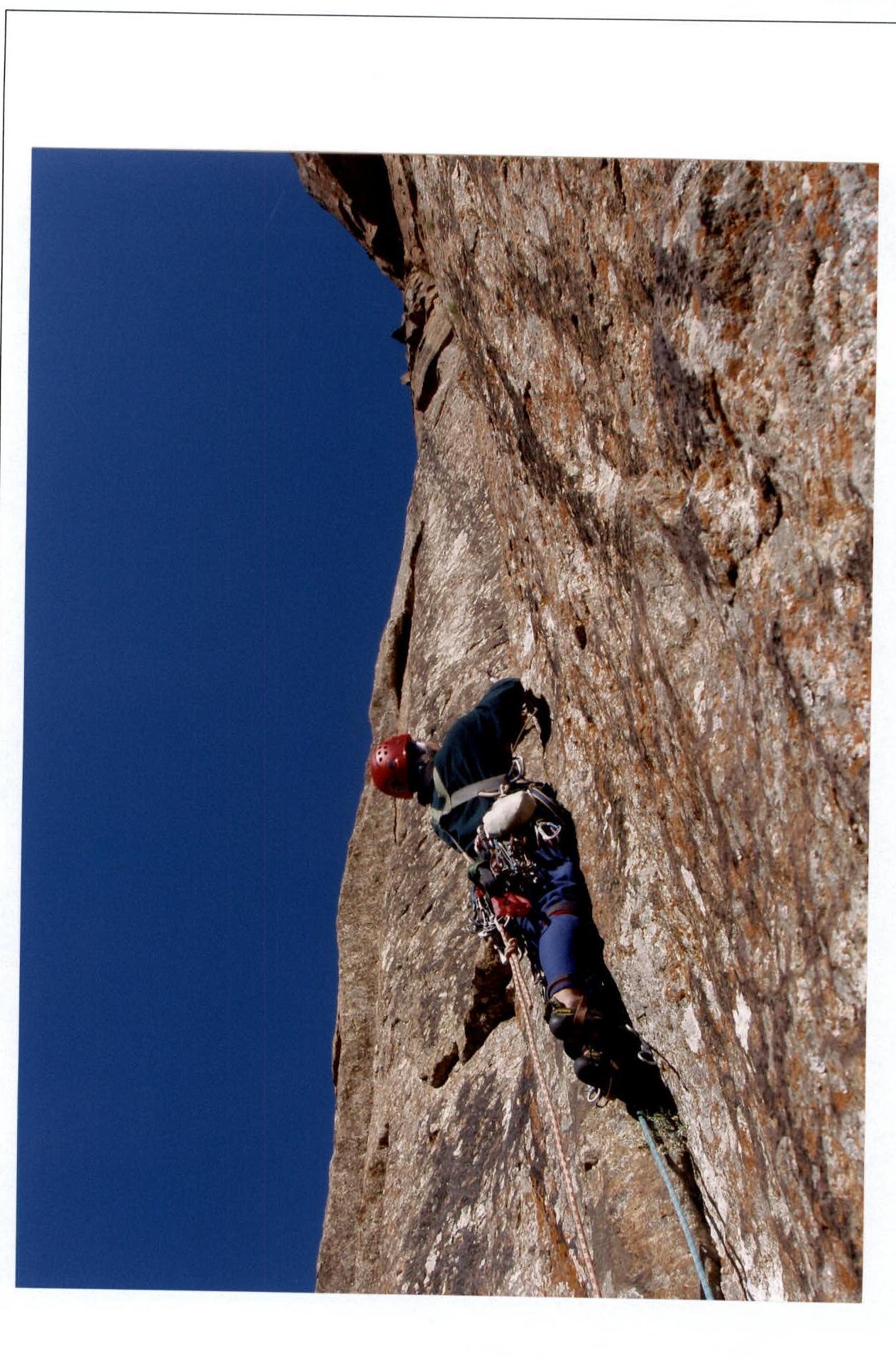
Section R7–R8. Beginning of the inner corner in the upper part of the route. ITO.
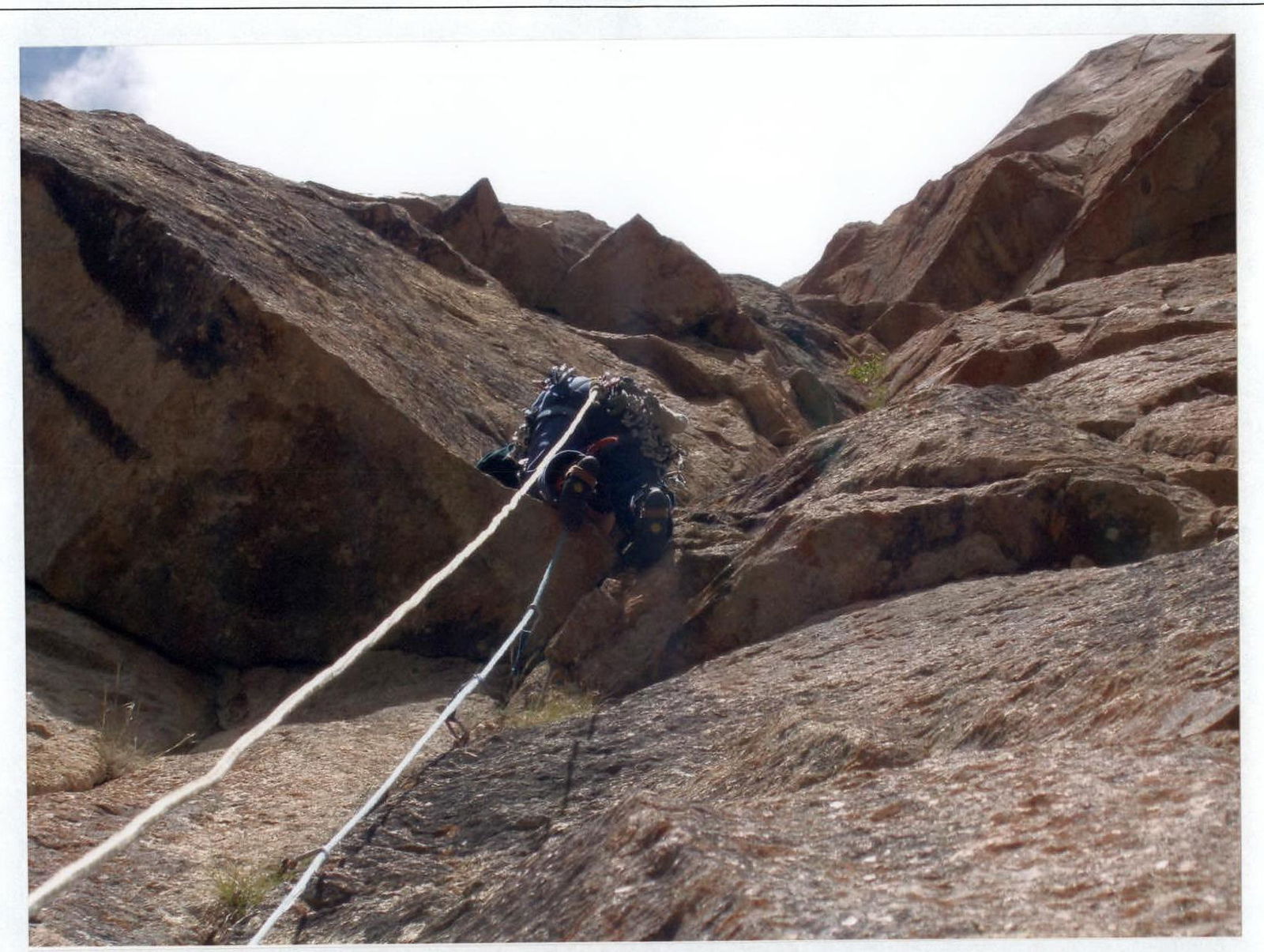
Section R8–R9. Overcoming a cornice.

Section R9–R10.
Section R10–R11. B. Rodikov leads.
Section R11–R12. B. Rodikov leads.
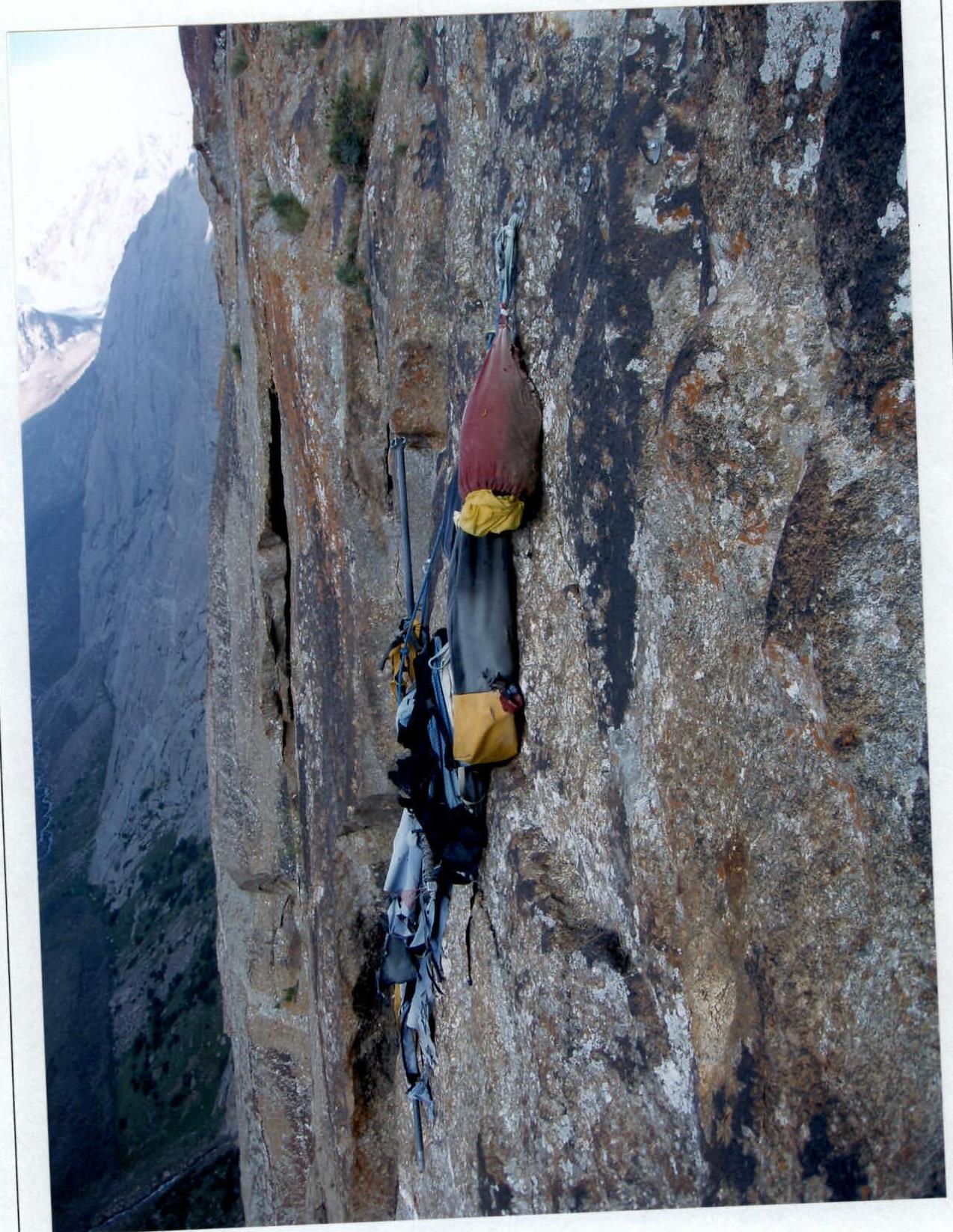
Remains of Americans' bivouac.
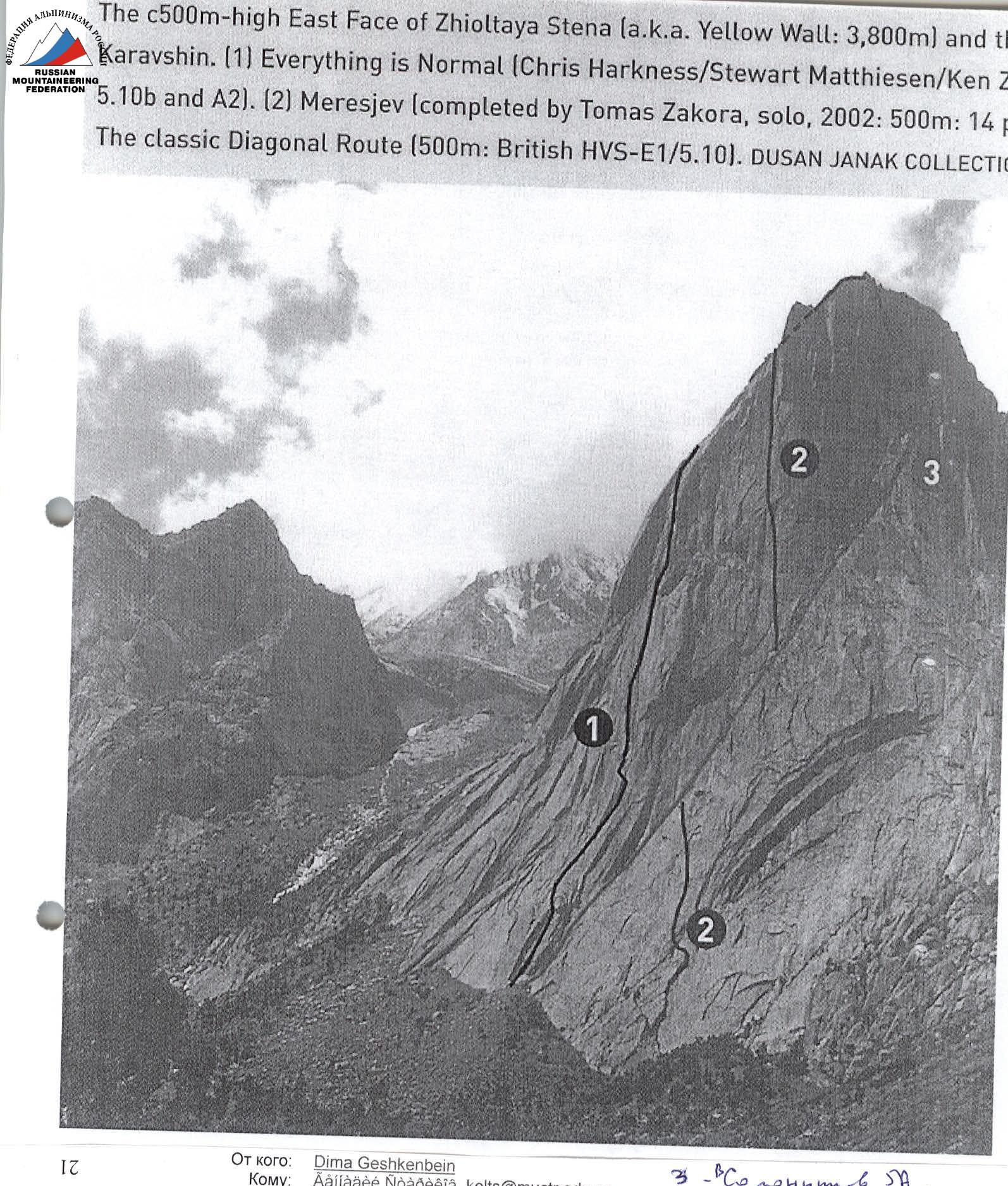
From: Dima Geshkenbein To: Starikov G.A. [email protected] Date: Mon, 21 August 2006 22:47 +0200 Subject: Re: Starikov G.A.
I just saw a photo of Yellow Wall with route threads in the February issue of 'Climb'. Classic (Solonnikov) 5A is number 3 on the photo. Zakori route is number 2. Number 1 is a newer route by Americans from 2004. Vinokurov should return home today. All the best. Dima

Comments
Sign in to leave a comment