
Passport
- Rock climbing category.
- Turkestan Range, Karavshin valley.
- Peak Asan Northeast wall (Timofeev's route).
- 6B category of difficulty.
- Height difference 750 m, length 1225 m.
Length of sections:
- VI–475 m
- V–190 m
- IV–130 m
- R2–R3–400 m
Average steepness of the main part (from the start of the rock " slap" to the ridge) 78°.
- Reuse of previously driven pitons — 19 pieces.
- Team's working hours 24 h 13 min, days — 4.
- Overnights: 1 — good in a niche after processing; 2 — 5 people sitting on a ledge, 1 in a hammock; 3 — sitting on a ledge; 4 — on the summit, on a platform.
- Team leader: Grigoryev O. E. — CMS.
Team members:
- Diyarov B. K. — CMS
- Buzlov A. G. — CMS
- Bukreev V. V. — CMS
- Boytsov K. A. — CMS
- Balmagambetov Kh. — CMS
- Coach: Shabanov A. V. — Honored Coach of UzSSR.
- Departure to the route: July 8, 1991. Summit: July 11, 1991. Return: July 12, 1991.
- Organization: Goskomsport UzSSR.
Tactical actions of the team
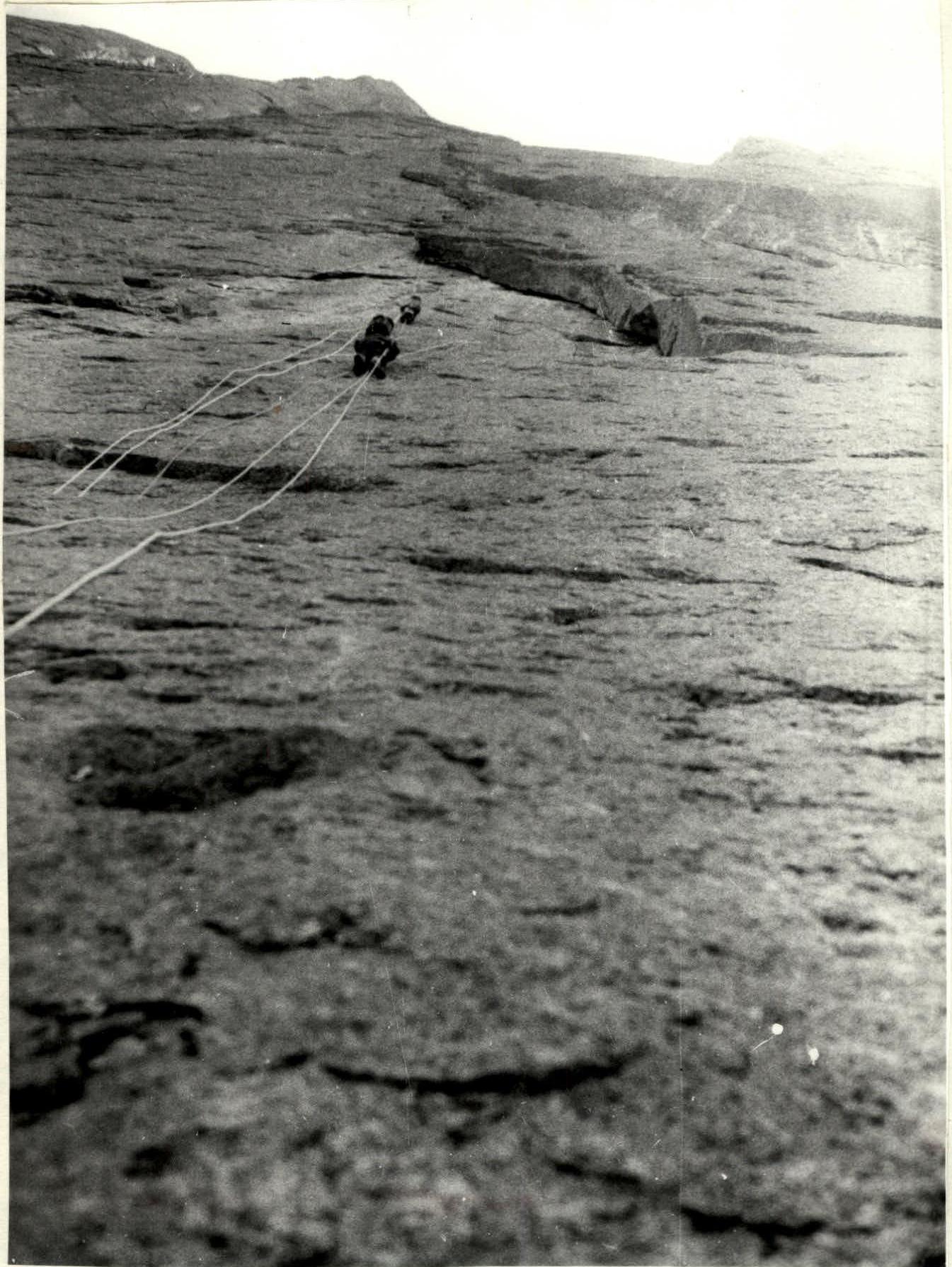
The team's tactical actions were carried out in accordance with the tactical plan. Due to strong bad weather, the movement along the route followed the second option (tactical plan is attached). The organization of rope team movement, their interaction and rotation of leaders were carried out in full accordance with the tactical plan. 50 m long ropes were used to quickly pass the route. To ensure the safety of the first climber on complex sections, double rope technique was used, both (1) UIAA. Modern Western-style mountaineering equipment: friends, stoppers, jumar, hammers, rock shoes provided increased reliability and safety of the route passage. Skyhooks were used on critical sections. Belaying on a stance was done through a Shikhth bailer. The first climber used a shock absorber throughout the entire route. The last person in the group moved along the fixed ropes with top-rope belay. The team's daily movement regime was continuous; individual high-calorie food packets were used to feed the participants.
The first overnight stay was organized on a small ledge in a tent under a corniche, which ensured its safety. The second overnight stay was also in a tent under a corniche. Throughout the entire route, there was a problem with water.
When passing problematic sections of the route, it was necessary to clarify the path with observers via radio, and a time reserve was planned for these sections.
The route was passed with a sufficient margin of safety. Organization of overnight stays began in daylight, which allowed for quality rest and preparation for the next day's movement.
All sections of the route were passed reliably, with necessary safety measures in place for all team members.
The combined rescue team along with a doctor were in full "combat" readiness. The observation radio station was constantly on receive. Radio communication with the team was conducted according to schedule.
Description of the route by sections
July 8, 1991.
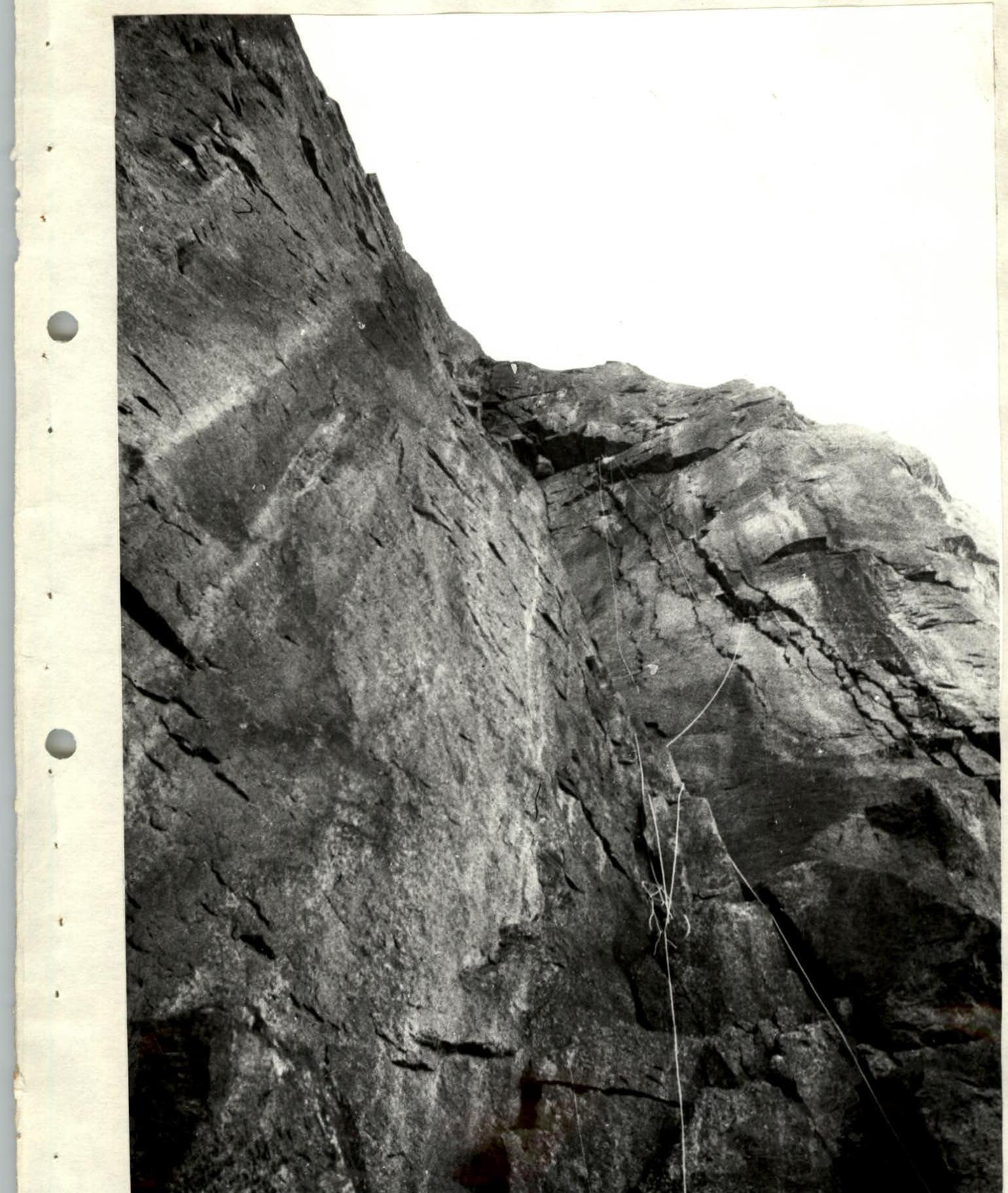
Having thoroughly checked the equipment and food supply, we left the base camp early in the morning. Two hours later, we were under the route. Leaving some equipment behind, we started processing at 9:20 AM. The Grigoryev — Boytsov rope team began processing the first ropes on the rock in the form of a giant "slap". The first rope made an impression that the route was extremely difficult. The R1–R2 section is a rock in the form of a "coil" — complex technical climbing with extremely limited holds; previously left pitons were used for belaying. About an hour later, there was a change, and the Diyarov — Buzlov rope team moved forward. They worked on one of the complex sections R4. Delicate friction climbing and work using skyhooks. Pitons left by previous teams somewhat facilitated the movement. After a short traverse to the left, an internal corner begins, leading to the first key section of the route — a pendulum leading to a crack. From there, the movement is strictly upwards on artificial aids; very large friends (we made them in winter, the act is attached), stoppers are necessary. Next comes a serious corniche, from under which water was flowing, and in some places, the rocks were covered with a thin layer of ice. When passing it, skillful work on artificial aids was necessary, and large friends and stoppers were also used. At 14:48, we finished processing and everyone descended down to the tent.
July 9, 1991.
It rained all night until morning, the rocks were wet, and the ropes left on the wall became heavy and inconvenient. At 8:30, we started on the route along the processed section. Without obstacles, we reached section R8, where we finished processing yesterday. Section R9 gives rise to an even larger crack, but unlike the previous one, it requires friends of various sizes and other placing elements; section R11–R14. The Diyarov — Grigoryev rope team is working ahead. As it turned out (the previous day), we did not reach the control point and the overnight stay by 15 m. At 9:30, we reached a ledge where the control point is located. Our movement was interrupted due to heavy precipitation, which forced the team to stop work and take measures to set up the tent. This took a lot of time and effort, as everyone was on a sheer wall. The first rope team had to descend to the ledge. During the bad weather, everything got completely wet, but optimism remained. At 15:00, we resumed work; the Buzlov — Boytsov rope team worked on sections R15–R17. The peculiarity of this section is a large crack, completely filled with water (result of strong bad weather), which made for difficult and dangerous climbing, with difficulties in creating belay stances. Boxes and wedges were used here. At 17:00, we stopped for the night.
July 10, 1991.
We started on the route at 11:40 due to everything being wet — a result of bad weather; it took a lot of time to get ourselves in order and dry out. At 12:30, we passed 2 control points. The Diyarov — Buzlov rope team is working ahead; they passed the most critical sections (in our opinion). The internal corner is completely wet, and climbing is done on artificial aids, mostly on stoppers and friends. Bad weather forced us to stop for the night at 16:45. The overnight stay was normal, but there was no water to prepare food and boil tea.
July 11, 1991.
We started work at 9:15. On section R20, the Buzlov — Diyarov rope team, having worked through 3 ropes, reached under a giant corniche. The corniche is a jumble of huge stones, but stably monolithic. First, a extremely difficult traverse goes under the entire corniche, requiring excellent rock climbing skills; reaching a large crack, strictly upwards 10 m, and then exit to a more gentle wall, and then 10 m — belay stance. Large friends and stoppers work well. It took considerable effort to pass it. Further on the route, there were no particular difficulties as there were earlier on the route. At 16:00, we reached the ridge. At 17:15, the entire team was on the summit of Asan.
Due to the fact that none of the group had previously descended from Peak Asan, and knowing its complex descent, we decided to stop for the night, following recommendations, to start the descent at dawn, observing safety measures.
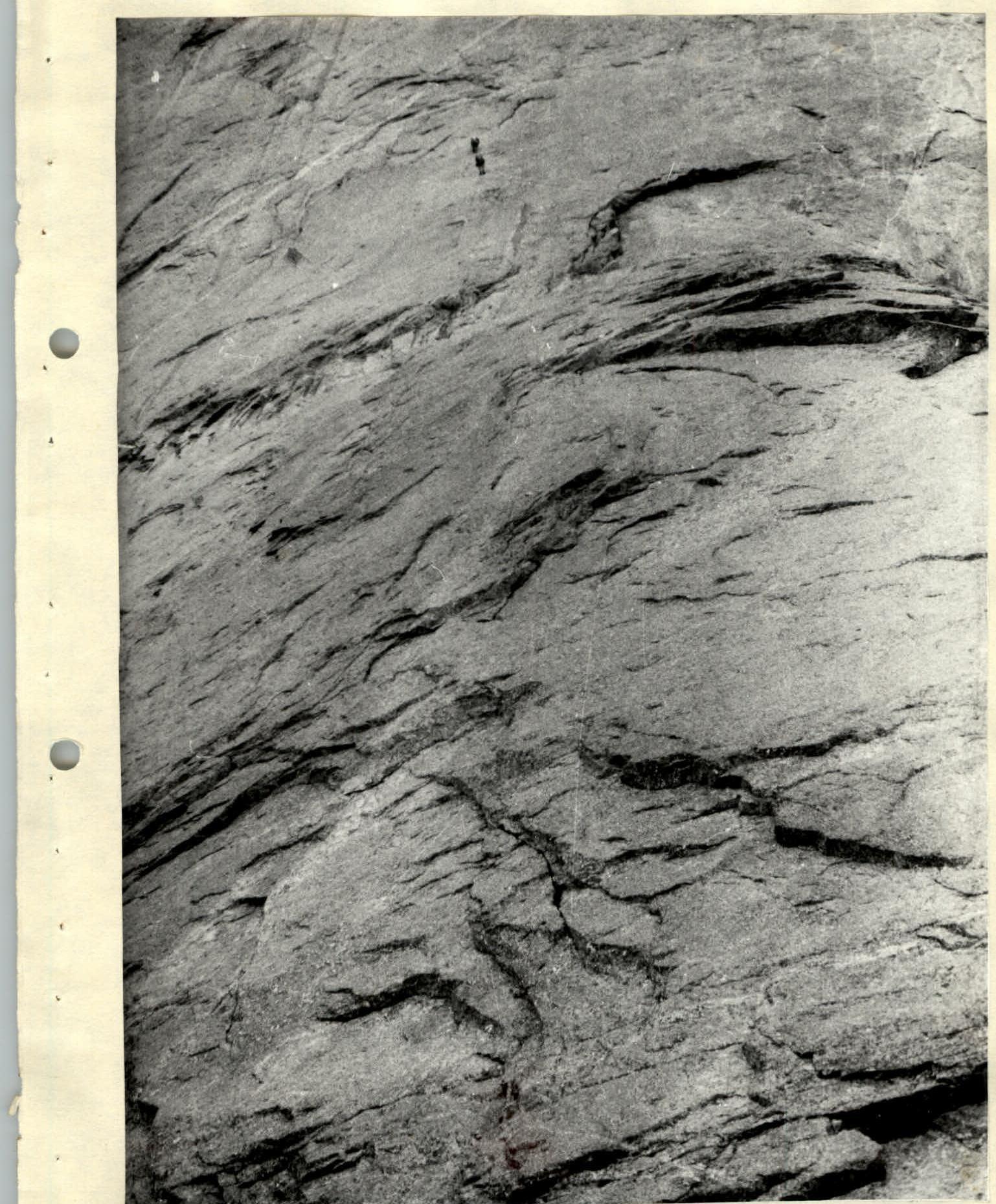
www.alp-federation.ru ↗ CLIMBING ON FIXED ROPES, SECTION R3–R8.

Comments
Sign in to leave a comment