
Passport
-
Technical class
-
Pamir-Alai, Ak-Su gorge
-
Pik Petrogradets (5164 m), via the center of the southeast wall through the spall.
-
Assumed — 6A cat. tr. first ascent.
-
Elevation gain: 960 m, length — 1160 m.
Length of sections with 5–6 cat. tr. — 640 m. Average steepness of the main part of the route 74° (4200–5120 m), including 6 cat. tr.:
- 83° (4560–4600 m)
- (4700–4940 m)
- (5020–5060 m)
-
Pitons hammered:
Pitons Rock Bolt Nuts Ice Hammered 38 7 221 42 -
Team's man-hours: 37 h and days — 4.
-
Overnight stays:
- 1st — lying in a tent on a ledge;
- 2nd — sitting using hammocks;
- 3rd — semi-reclining in a tent on a ledge.
-
Leader: Alexander Petrovich Bishirov — CMS
Participants:
- Igor Gennadievich Timofeev — CMS
- Alexander Nikolayevich Miroshkin — CMS
- Alexey Alexandrovich Odintsov — CMS
-
Coach: Vitaly Dmitrievich Yakovlev — MS
-
Access to the route: July 12, 1989
Summit — July 15, 1989. Return — July 15, 1989
-
Goskomsport of the Udmurt ASSR.

General photo of the summit. Photo from the moraine of the glacier (4000 m) July 13, 1989, 10:00. 1 km.
Tactical actions of the team
There are no classified routes on Pik Petrogradets via the Southeast wall. The simplest descent option is along the South ridge (5A cat. tr. route). The wall is very similar to the South wall of Pik Iskander, Grishchenko's route, which the team climbed in the 1988 season, in terms of its structure, relief, climbing nature, and type of key sections.
Team members had experience climbing routes with 6A–6B cat. tr. This allowed them to:
- prepare well for the ascent;
- competently draw up a tactical plan;
- quickly and safely complete a serious and interesting route.
The tactical plan was designed for three overnight stays with one reserve day. The second and third overnight stays were moved up by two ropes each. This was due to an error in assessing the length of the middle and upper parts of the route, which also accelerated the ascent to the summit 4.5 hours earlier than planned.
The following movement scheme was applied on the route:
- the first person climbs the section without a backpack with UIAA double-rope belay;
- each subsequent person climbs on a fixed rope with top belay;
- the third team member climbs on a fixed rope with bottom belay, thus freeing the second person to work with the first;
- backpacks were lifted on a harness attached to the belt.
This movement scheme was applied and practiced on previous ascents. It involves some increase in the amount of equipment on the route but increases the speed of the group's movement while ensuring sufficient reliability.
The order of movement in the team was determined as follows: Bishirov and Timofeev work alternately as the first on the wall part of the route, with Odintsov being the last. This distribution was based on each person's level of training and experience, as well as their ability to work in a specific role.
Difficulties with organizing overnight stays and safety concerns determined the option of processing the route above the overnight stay. The provided hammocks made it possible to organize the second overnight stay well in the middle part of the route, where there are no ledges for a tent.
The nutrition regimen was normal:
- hot food in the morning and evening;
- individual snacks with drinks during the day.
The bad weather preceding the ascent allowed the use of snow and ice in the cracks. In the case of prolonged good weather, the route is waterless.
Communication with the observation group was carried out regularly 3 times a day using a "Kaktus" type radio station.
The successful ascent confirmed the correctness of the choice:
- movement tactics;
- selection of equipment and supplies.
| Pitons | Nuts | Bolt |
|---|---|---|
| 2/0 | 6/0 | – |
| 3/0 | 9/1 | – |
| 3/0 | 9/6 | – |
| 1/0 | 8/0 | – |
| 1/1 | 10/1 | – |
| 1/0 | 10/4 | – |
| 2/0 | 10/3 | – |
| 2/1 | 9/5 | – |
| 13/4 | 55/21 | – |
| 3/0 | 10/6 | – |
| 4/2 | 8/3 | – |
| 1/1 | 11/7 | – |
| 4/0 | 25/2 | – |
| 2/1 | 10/4 | – |
| 0/1 | 2/0 | – |
| 1/0 | 10/0 | – |
| 11/2 | 10/6 | – |
| 2/0 | 13/0 | – |
| 1/0 | 12/0 | – |
| 1/0 | 9/0 | – |
| 1/0 | 17/0 | – |
| 2/0 | 23/0 | – |
| Section | Length, m | Steepness, ° | Cat. tr. |
|---|---|---|---|
| R1 | 120 | 60 | 4 |
| R2 | 80 | 70 | 4⁺ |
| R3 | 40 | 70 | 5 |
| R3 | 40 | 70 | 5 |
| R3 | 80 | 65 | 4⁺ |
| R4 | 40 | 75 | 5 |
| R5 | 10 | 90 | 6 A2 |
| R5 | 35 | 85 | 6 A2 |
| R6 | 120 | 70 | 5 A2 |
| R7 | 45 | 95 | 6 A4 |
| R8 | 45 | 90 | 6 A4 |
| R9 | 40 | 80 | 6 A3 |
| R10 | 40 | 80 | 6 A2 |
| R11 | 40 | 80 | 6 A3 |
| R12 | 40 | 80 | 6 A2 |
| R13 | 40 | 75 | 5 A2 |
| R14 | 40 | 75 | 5 |
| R15 | 40 | 90 | 6 A3 |
| R16 | 40 | 80 | 5 A1 |
| R17 | 40 | 75 | 5 |
| R18 | 80 | 40 | 3 |



Description of the route by sections
R0–R1: 120 m up the snow to the internal angle of the left wall of the couloir.
R1–R2: 120 m up the internal angle of the left wall of the couloir. Free climbing, convenient cracks for large and small nuts.
R2–R3: From the angle to the right onto the wall, straight up 120 m to a large scree ledge. Rocks are strong, many footholds, cracks for all types of nuts.
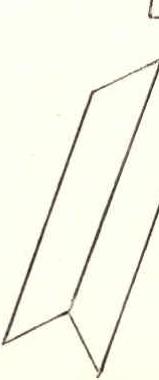
R3–R4: 160 m to the right along the ledge crossing a small couloir and up its right wall to the right part of the base of the large spall like an "Iron".
R4–R5: Slabs, small scree ledges. Exit to a large scree ledge. Comfortable overnight stays under the protection of cornices.
R5–R6: 40 m up the internal angle to the left under a cornice. Rocks are strong. Under the cornice is a belay station. On the section, there are cracks of all sizes.
R6–R7: The cornice is bypassed on the left along the wall with small holds 10 m, transition to a large crack (AID), then up the internal angle to the base of the spall. Convenient belay station.
R7–R8: 120 m up the right cheek of the spall, forming an internal angle with the main wall. Rocks are monolithic, belay stations are hanging, nuts of all sizes were used. On top of the spall is a ledge, possible semi-reclining overnight stay.
R8–R9: Overhanging wall without holds with an oblique crack from right to left, turning into a cleft. Up the crack (AID), up the cleft — extreme climbing. Monolith, small stoppers, large eccentrics, "friends". Belay station under the overhang. Beginning of the cornice belt.
R9–R10: Traverse left 10 m, then up through the cornice 1.5 m (AID), exit to the internal angle. Convenient station. Nuts of all sizes, on the cornice — pitons.
R10–R11: Up the internal angle and short wall (AID), exit left onto a ledge. Convenient sitting overnight stay, ice in the cracks.
R11–R12: Left along the ledge 10 m, then up the internal angle under a large cornice. In the upper part of the angle (AID), hanging station, hexes and stoppers were used.
R12–R13: Left up and around the cornice via a chimney 10 m, then crossing a slab from right up to the left, exit to the internal angle. Hanging station.
R13–R14: Up the internal angle (AID) to the left edge of the large angle formed by the huge 65 slab and the main wall. Convenient belay station, small ledges, ice in the cracks. Possible sitting overnight stay.
R14–R15: Up the left side of the angle (AID), then up short walls alternating with small ledges 80 m under a black cornice. Small stoppers and hexes were used.
R15–R16: The black cornice is bypassed on the left along the overhanging wall with large cracks (AID). Here the second cornice belt is passed. Then up the internal angle (AID). Hanging station, large eccentrics and "friends" were used on the section.
R16–R17: Up the internal angle to the ridge. Rocks are heavily destroyed, rockfall hazard, sections of formed ice occur. Semi-reclining overnight stay.
R17–R18: 15 m up the icy destroyed rocks to the snow ridge. Convenient to use an ice axe or ice hammer.
R18–B: 80 m along the snow ridge to the summit. Belay through protruding rocks.
Descent along the South ridge via the 5A cat. tr. route.