
14

5.4.2.5. All-Union Championship of the Trade Unions DFSO on Alpinism 1988 Class of technical ascents
Report
Report on the ascent of Peak Ak-su North 5217 m via the north wall by the team of instructors of AUSB “Alay”
Team Leader
Team Coach
Kuzevov Yu.S. Yakovlev V.D.
AUSB “Alay”
714000 Kirghiz SSR, Osh South-East
Tel. 5-29-35

- 660119, Krasnoyarsk, pr. Molodyozhny, d. 7, kv. 183, Kuzovov Yuri Stepanovich
- 620059, Sverdlovsk, ul. Donbasskaya, d. 12, kv. 36, Yakovlev Vitaly Dmitrievich

Elevations of characteristic places on the route are taken from the report on the ascent of Peak Ak-su North by the team of LOS DSO “Trud” led by Vedernikov V. (1986)

The right wall profile was not photographed due to bad weather.
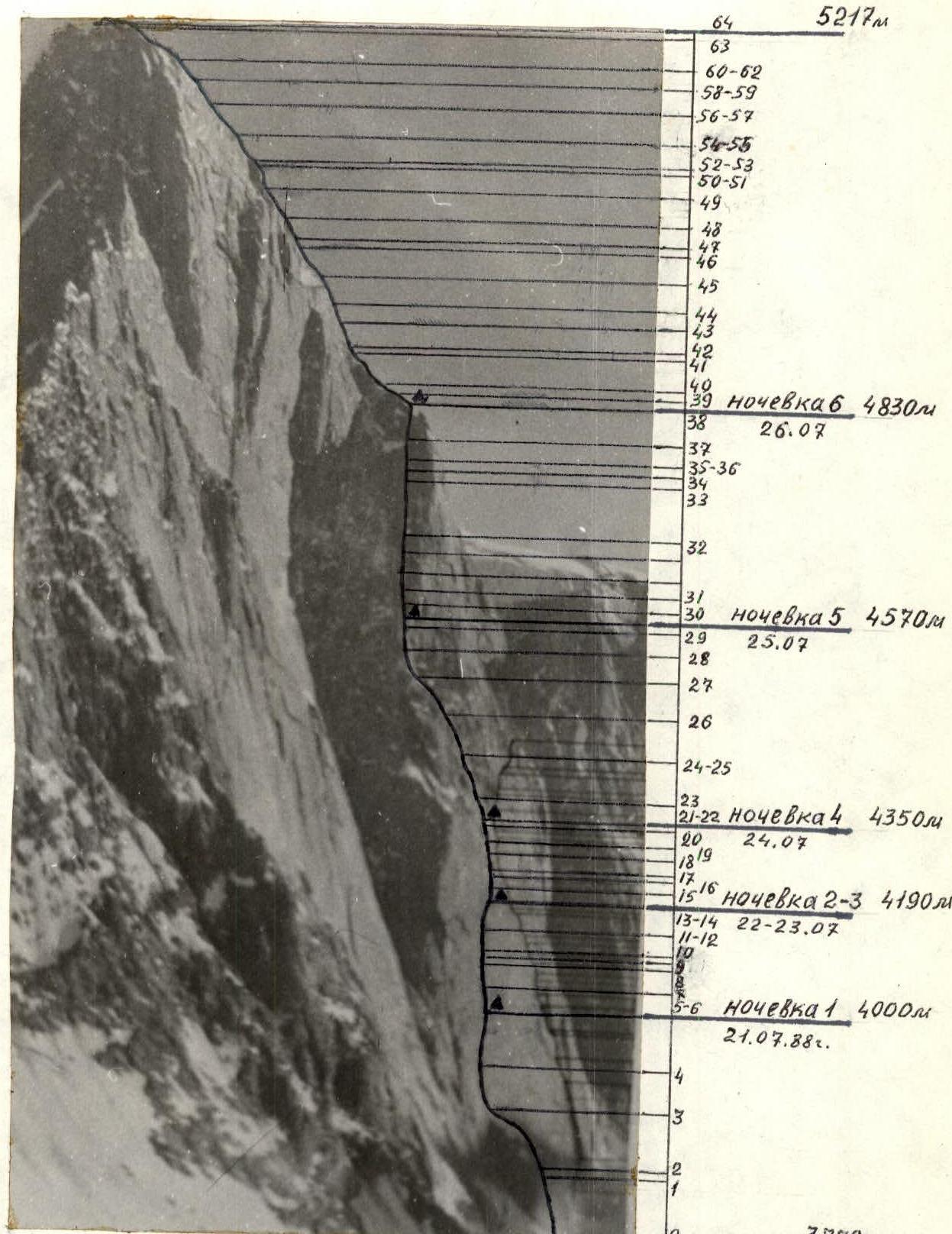
The left wall profile. The photo is taken from Vedernikov's report.
Tactical actions of the team
The tactical actions of the team were determined by the tactical plan, which was largely executed.
Deviations from the main tactical plan:
- 2nd and 3rd nights at the end of section 5 (initial UIAA scheme), due to bad weather, for which the tactical plan provided two reserve days.
- There was no overnight stay in the middle of section R10–R11, as noted in the tactical plan.
- The summit was reached in the evening, not the next morning, due to favorable weather throughout the day, whereas the tactical plan assumed early organization of overnight stays due to characteristic bad weather in the late afternoon and partial coincidence of ascent and descent near the summit, allowing part of the ridge to be traversed without a load.
- Due to the high complexity of the route, the determining factor in the team's speed was the time taken by the first and second participants to complete sections, and the rest of the group, including the last, managed to catch up and pass necessary equipment forward. The third participant climbed on a fixed rope with bottom insurance to free the first rope. The rest, except the first, climbed on a fixed rope with top insurance. The first worked on a double rope without a backpack, wearing rock shoes or galoshes. When possible, the route was traversed using free climbing. The leaders changed throughout the day on designated sections.
Change of leaders by sections (revised UIAA route scheme):
| Sections | Leader |
|---|---|
| R0–R11, R46–R58 | Kuzovov |
| R12–R13, R24–R29 | Timofeev |
| R14–R22, R30–R31 | Pavelev |
| R23–R24, R43–R45 | Burlakov |
| R32–R38 | Borzenko |
| R39–R42, R59–R64 | Odintsov |
Preliminary processing was done on sections: R6–R10, R23–R24, R29–R31, R39–R42, allowing the team to approach new rock sections already "warmed up" on the fixed ropes, which is important when climbing the North wall in the morning. Overnight stays on the wall of the bastion were on a platform in a tent, on the edge and ridge - on platforms in a tent.
During the ascent, water (snow, ice) was available at all overnight stays. Orientation on the route was not difficult, as it logically follows clearly defined natural relief features and has several notable landmarks.
The safety of the ascent was ensured by the use of imported rope with good dynamic characteristics, textile shock absorbers, and damping elements. Overnight stay locations were safe, slightly protected by overhanging rock walls and cornices. There were no falls or injuries during the route.
No fundamentally new equipment was used during the ascent.
During the ascent, there was a period of bad weather in the form of rain, snow, wind, and fog from approximately 17:00 on July 21 to 15:00 on July 23. The rest of the time had good weather. For almost the entire route (except the ridge), climbing was complicated by the presence of ice and water on the rocks. Before leaving for the route on July 20, it rained.
Regular and stable radio communication was maintained with observers and the base camp using "Lastochka" radios. Since the team was under constant observation through binoculars for most of the route, a visual signal was agreed upon to initiate additional radio communication between the team and observers.
Route scheme in symbols (sections of traverses and gentle shelves are not to scale)
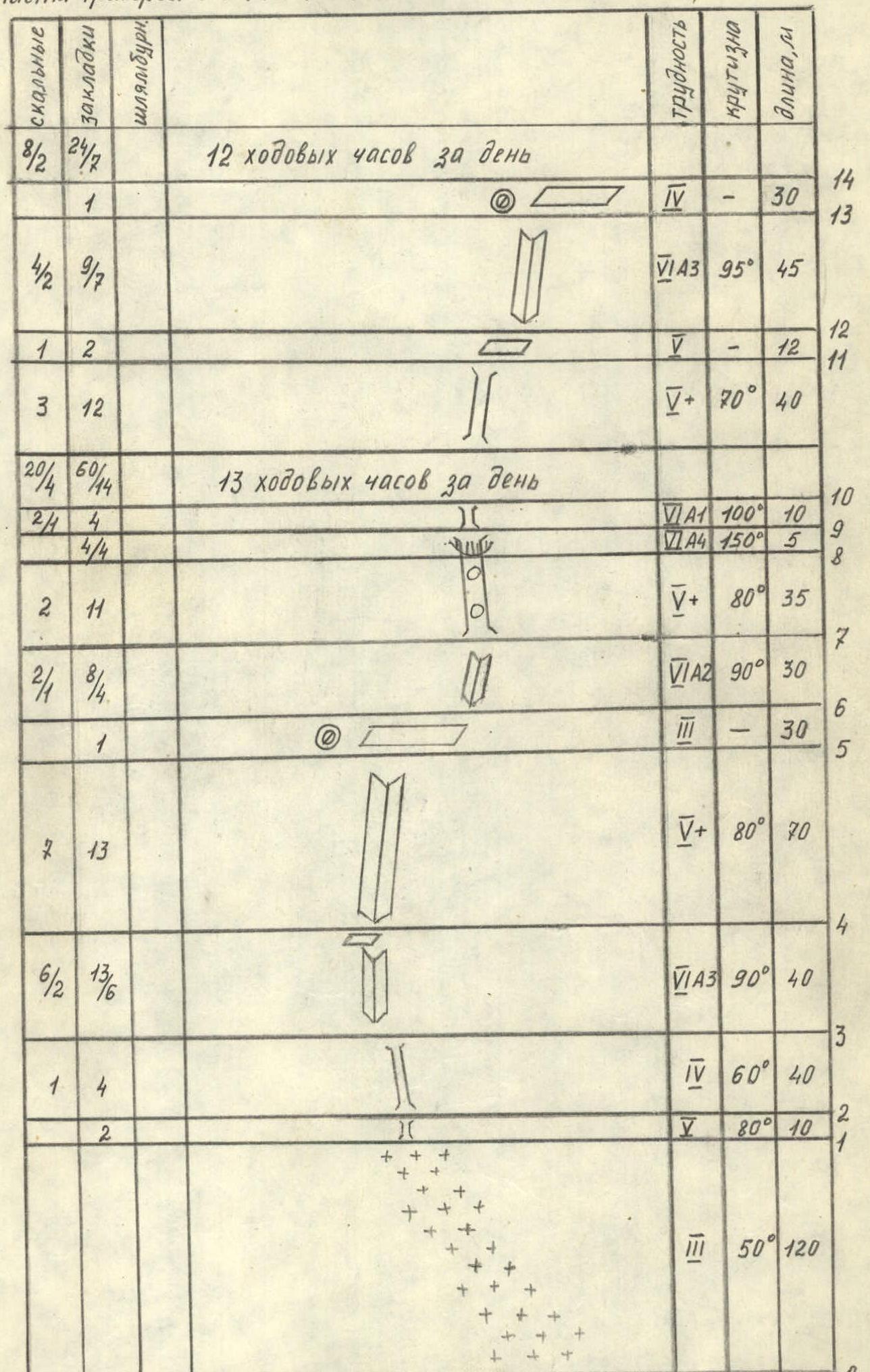
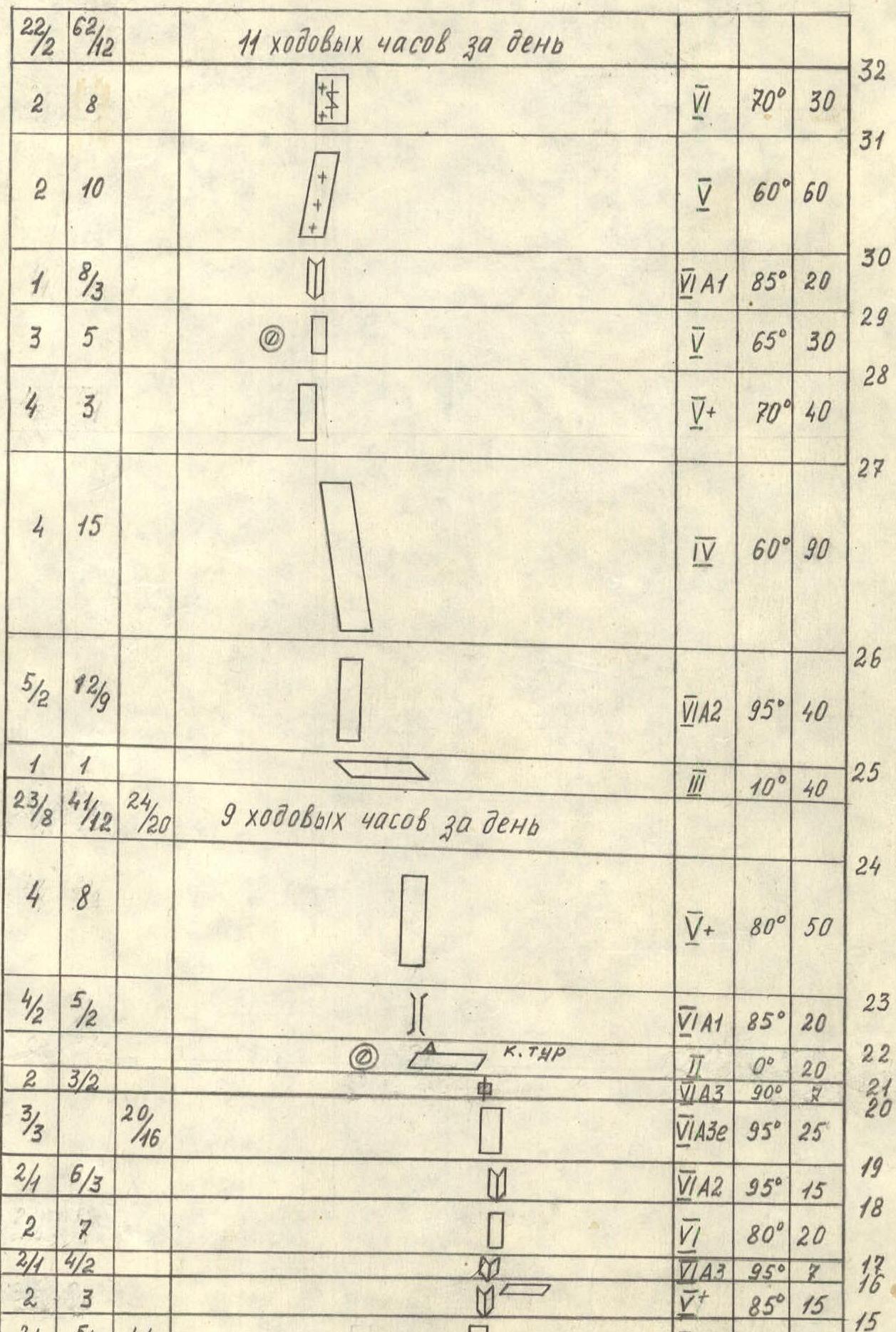
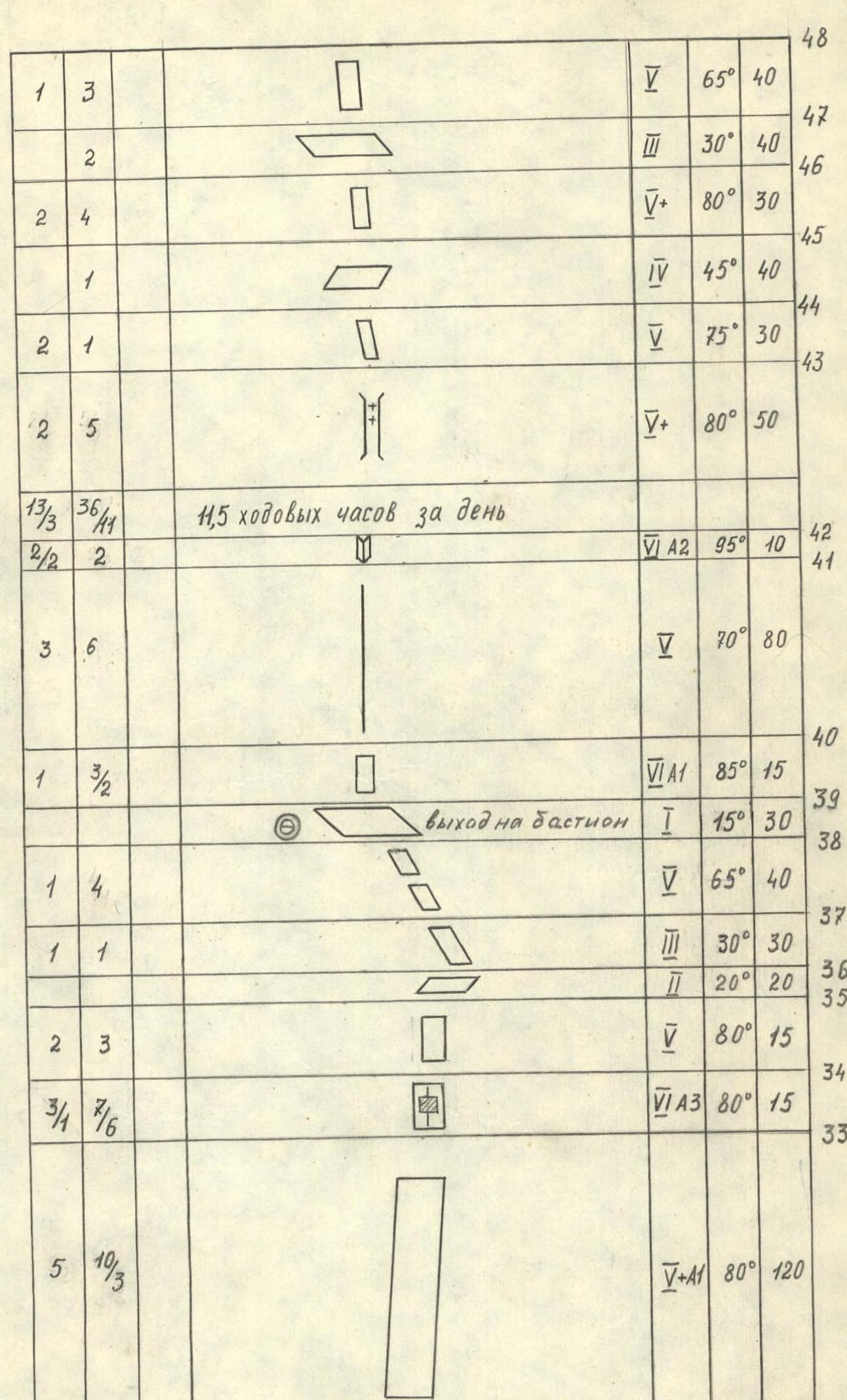
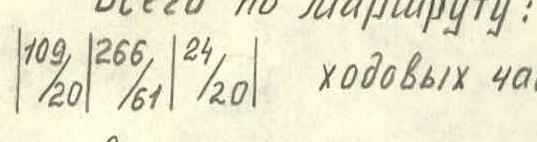
Total on the route: 109 / 20, 266 / 24, 20 travel hours – 68
Total on the bastion: 85 / 17, 211 / 54, 20 travel hours – 53
| Bolts | Rock hooks | Nuts | 11.5 travel hours per day | Category | Angle | Length, m | R-number |
|---|---|---|---|---|---|---|---|
| 23 | 43 | 5 | 64 | ||||
| 1 | III | 15° | 150 | 63 | |||
| 1 | III | 60° | 30 | 62 | |||
| –90° | 5 | 61 | |||||
| 1 | 2 | I | – | 5 | 60 | ||
| 4 | V+ | 80° | 20 | 59 | |||
| 1 | I | 5° | 10 | 58 | |||
| 1 | 2 | IV | 50° | 20 | 57 | ||
| 1 | 6/5 | III | 5° | 20 | 56 | ||
| 1 | VI A3 | 80° | 25 | 55 | |||
| 5/4 | 3 | III | 10° | 15 | 54 | ||
| 2 | V A1 | 80° | 30 | 53 | |||
| 1 | 3 | I | – | 30 | 52 | ||
| 1 | V | 80° | 25 | 51 | |||
| 2 | 1 | II | – | 20 | 50 | ||
| 2 | 3 | IV | 55° | 30 | 49 | ||
| V | 65° | 20 |
Route description by sections
Section R0–R1. Hard firn, ice near rocks. There are signs of falling stones. Section R1–R2. The walls have ice, water. Passed in jamming. Section R2–R3. There are "live" stones. Left is a possible bypass of sections R1–R2, R2–R3 along the system of walls-shelves. Section R3–R4. Wet inner corner with a series of chocks, some ice. At the beginning of the corner (6 m) is a "coil". In dry weather, it is possible to pass the wall from left to right, focusing on the top of the visible part of the corner. Section R4–R5. In the first half of the section, there is a possible drop of "live" stones. The upper part can be passed along the "coils". Section R5–R6. On the right part of the shelf, stones falling from above are possible. Section R6–R7. At the top of the wet crevice is ice. Section R7–R8. Wide wet chimney with "plugs". Section R8–R9. Cornice in the form of a "pancake" with an overhang of about 4 m. Water seepage. Section R9–R10. Movement in jamming. Section R10–R11. Chimney with "plugs" with an exit to the wall. "Live" stones. Section R11–R12. Traverse along the wall to the right. Section R12–R13. Left in the middle part of the section is a bolt (station). Section R13–R14. Traverse to the right, 6 m short of the corner. Section R14–R15. Straight up (3 bolts), then traverse to the right-up to the flattening of the inner corner. Section R15–R16. To the right-up to the shelf. Section R16–R17. To the crevice is a "coil" 2–2.5 m. Section R17–R18. To the right-up along the crevices. Ice. Section R18–R19. From the corner-chock throws out. Section R19–R20. Bolt "road". In 2 places, a hook is missed. Section R20–R21. At the beginning, the crevice is only for "petals". Section R21–R22. Traverse to the left along the shelf. Control cairn. Possible fall of stones on the edge of the shelf. Section R22–R23. To the left-up. "Live" stones. Section R23–R24. Along the simplest walls, movement to the left-right-left. "Live" stones. Section R24–R25. Along the wide oblique shelf to the left-up to the end. Section R25–R26. Up the corner with ice. Section R26–R27. Destroyed rocks. To the left-up to the lowering in the rib. Section R27–R28. To the left-up along the wall with crevices. Section R28–R29. Through a small inner corner in the direction of the "gendarme". "Live" stones. Section R29–R30. Along the corner to the left of the "gendarme", then through the crevice, exit to its top. Section R30–R31. Along the destroyed rocks in the direction of the second "gendarme". Section R31–R32. To the left of the "gendarme" with an exit to its top. Ice. Section R32–R33. Along the walls with crevices to the right of the chimney with ice. Section R33–R34. Wall with very narrow crevices. Section R34–R35. Bypass on the right is possible. At the exit, "live" stones. Section R35–R36. Shelf with stones leads to a "tooth". Section R36–R37. Movement along the rib between large blocks. Section R37–R38. Slabs. There are small crevices. Section R38–R39. Destroyed ridge. There is a good overnight stay. Section R39–R40. "Gendarme" is passed through the center. Bypass along the crevice on the left is possible. Section R40–R41. Bypassing the second "gendarme" on the left along the ridge under the inner corner. Section R41–R42. Along the corner along the crevices. Bypass on the right along the wide crevice is possible. Section R42–R43. Ice. "Live" stones. Exit to the main ridge. Section R43–R44. Along the left part of the wall. Section R44–R45. At first to the left, then to the right of the ridge. Section R45–R46. Wall as if in the depth of a small rock circus. Section R46–R47. Beginning along a not clearly defined chimney. "Live" stones. Section R47–R48. In the upper part is ice. Section R48–R49. Walls along the ridge, goes from right to left. Section R49–R50. Along the corner turning into a wide groove, exit to the right onto a shelf. Section R50–R51. Along the shelf to the right to the wall with a chock. Section R51–R52. "Live" stones. Section R52–R53. Along the shelf under the "gendarme". Good overnight stay. Section R53–R54. Along the wall to the left onto a chock, then to the right onto the ridge and along it to the top of the "gendarme". Descent by "rappel" or pendulum to the right of the ridge. With a good state of the route (absence of ice), bypassing the "gendarme" on the right along the couloir is possible. Section R54–R55. Along the shelf to the right-up under the wall with a crevice. Section R55–R56. Up the crevice onto the ridge. Section R56–R57. Along the shelf to the right to the "coil". Section R57–R58. Along the wall to the right, bypassing the "gendarme". Section R58–R59. Along the shelf to the ridge. Good overnight stay. Section R59–R60. Slab-wall is passed along the left part, along the ridge. Section R60–R61. Shelf. Section R61–R62. Descent into the hollow. Ice is possible. Section R62–R63. Exit to the shoulder. Start of descent. Section R63–R64. Along the ridge, bypassing the "gendarme" on the left. Movement to the summit.