
Passport
- Class — high-altitude technical.
- Pamir-Alay, Fann Mountains, Pravy Zindon river valley.
- CHIMTARGA peak, 5487 m, via the West face.
- 5B category of difficulty, fourth ascent, submitted for reclassification to 6B category of difficulty.
| Entire route 4350–5487 m | Wall 4350–5360 m | Most technically challenging part of the wall | |
|---|---|---|---|
| Height difference | 1137 m | 1010 m | 510 m (4350–4860 m) |
| Length | 1450 m | 1240 m | 640 m |
| of which 6th cat. diff. | 300 m | 300 m | 190 m |
| 5th cat. diff. | 410 m | 410 m | 240 m |
| Average steepness | 77° | 85° |
-
Pitons driven:
Rock: 200/74; Bolt: 0/0; Chocks: 41/17; Ice screws: 1/0.
-
Team's travel hours: 42 and 6 days.
-
Overnights: 1st and 2nd — on a ledge under a cornice, 3rd — on the bastion crest, 4th — on the descent below the summit.
-
Leader: Lobachev Evgeny Alexandrovich CMS Participants:
- Pronin Mikhail Mikhailovich CMS
- Salma Alexander Georgievich CMS
- Timoshenko Tatyana Ivanovna CMS
- Fedorov Sergey Ivanovich CMS
-
Coach: Kalmykov Sergey Georgievich MS
-
Approach to the route: August 6, 1985. Summit: August 10, 1985. Return: August 11, 1985.
-
Team from LOS DSO "Burevestnik", sports club "Polytechnic".
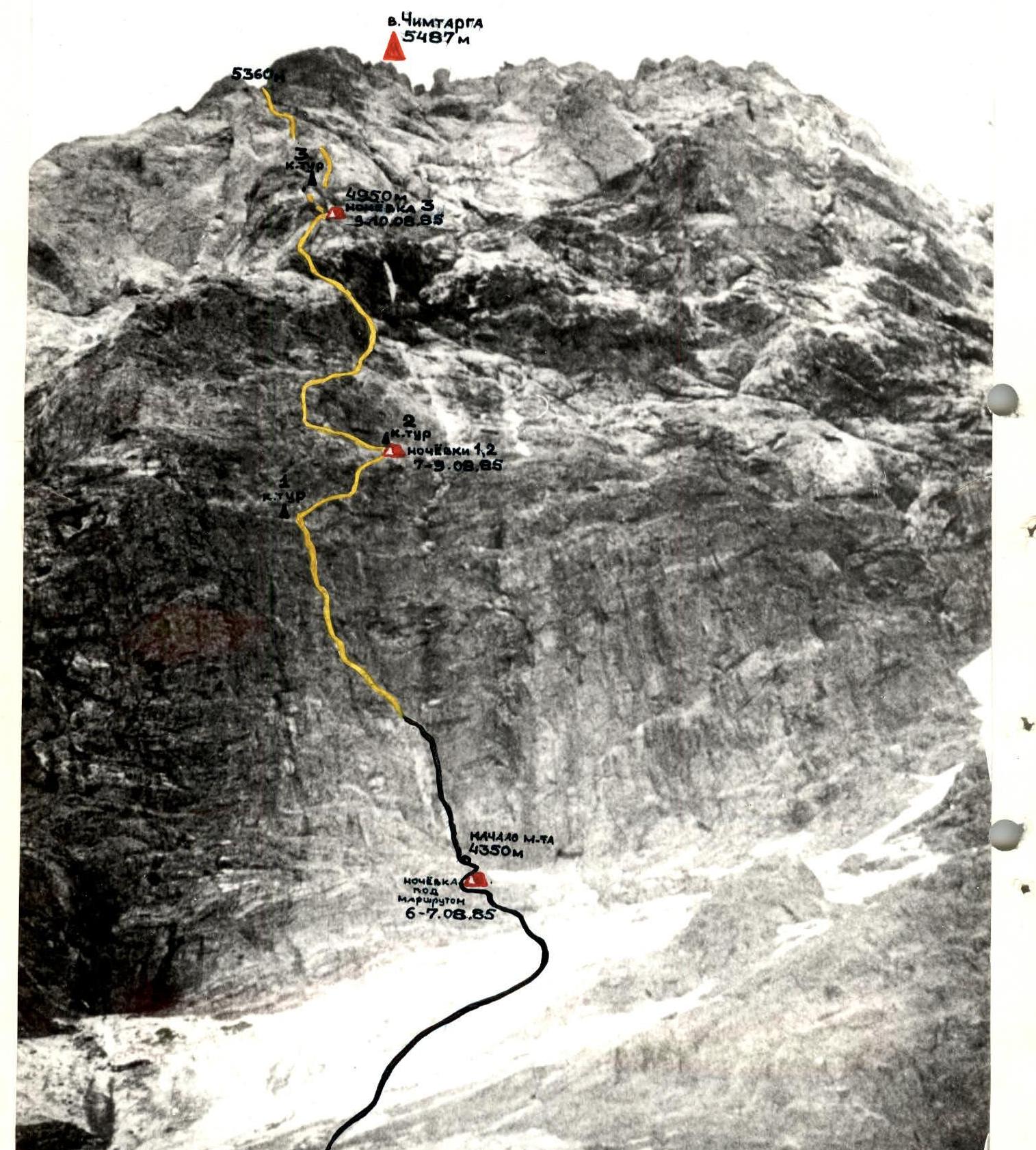
Photo 1. Overall photograph of the peak. Taken from the observers' camp on August 8, 1985 (point (1) on the area diagram, height ~4000 m, distance to the start of the route 2 km, Industar-50 lens, f=50 mm). Time of shooting — 16:30.
- Team's route
- Overnights
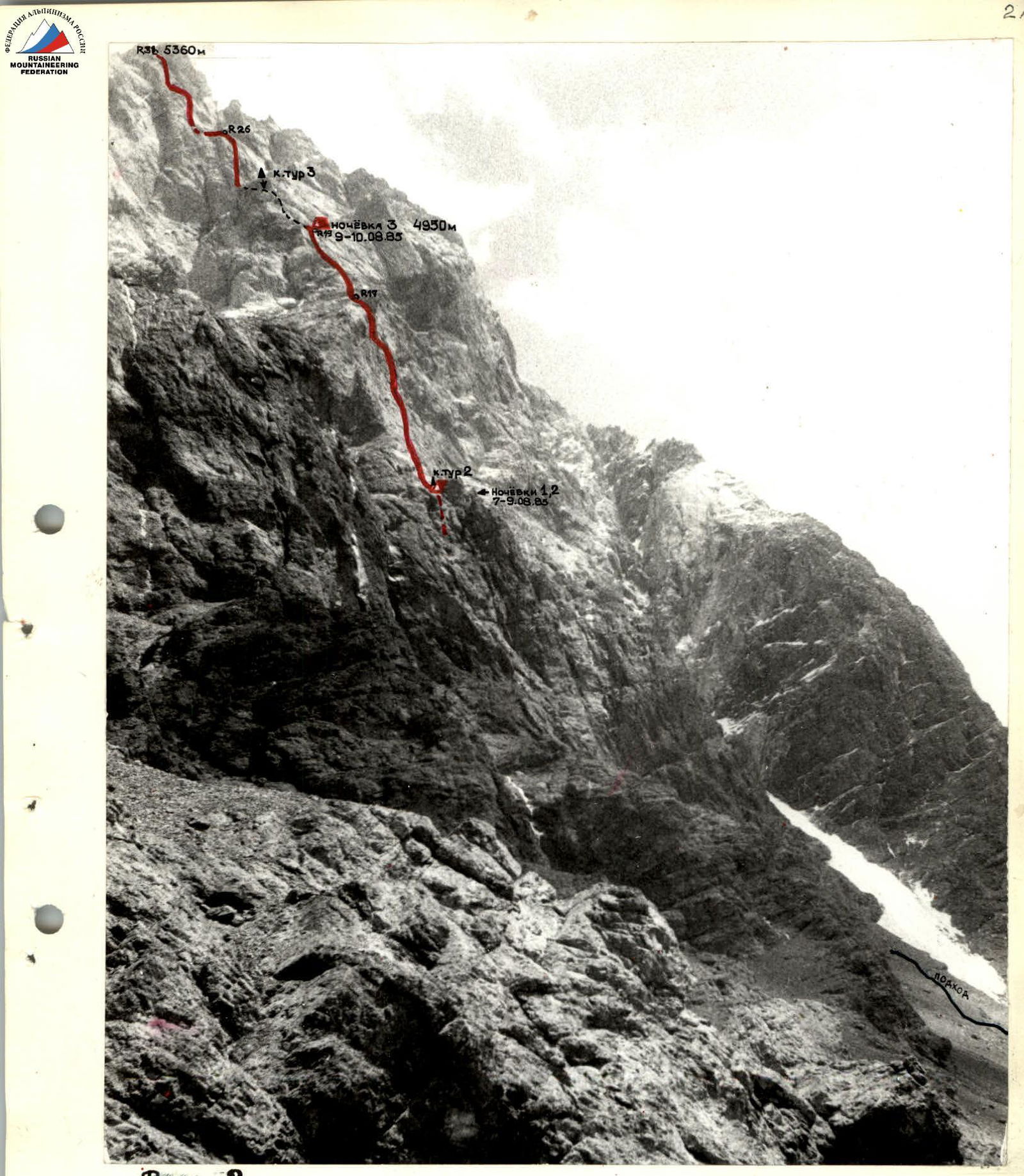
Photo 2. Profile of the left part of the wall.
- Route taken by the team
- Overnights
The shot was taken on August 7, 1985 at 16:00 from a height of 4100 m from point (2) on the area diagram. Distance — 2 km. T-43 lens (camera "Smena-8M", f=43 mm).
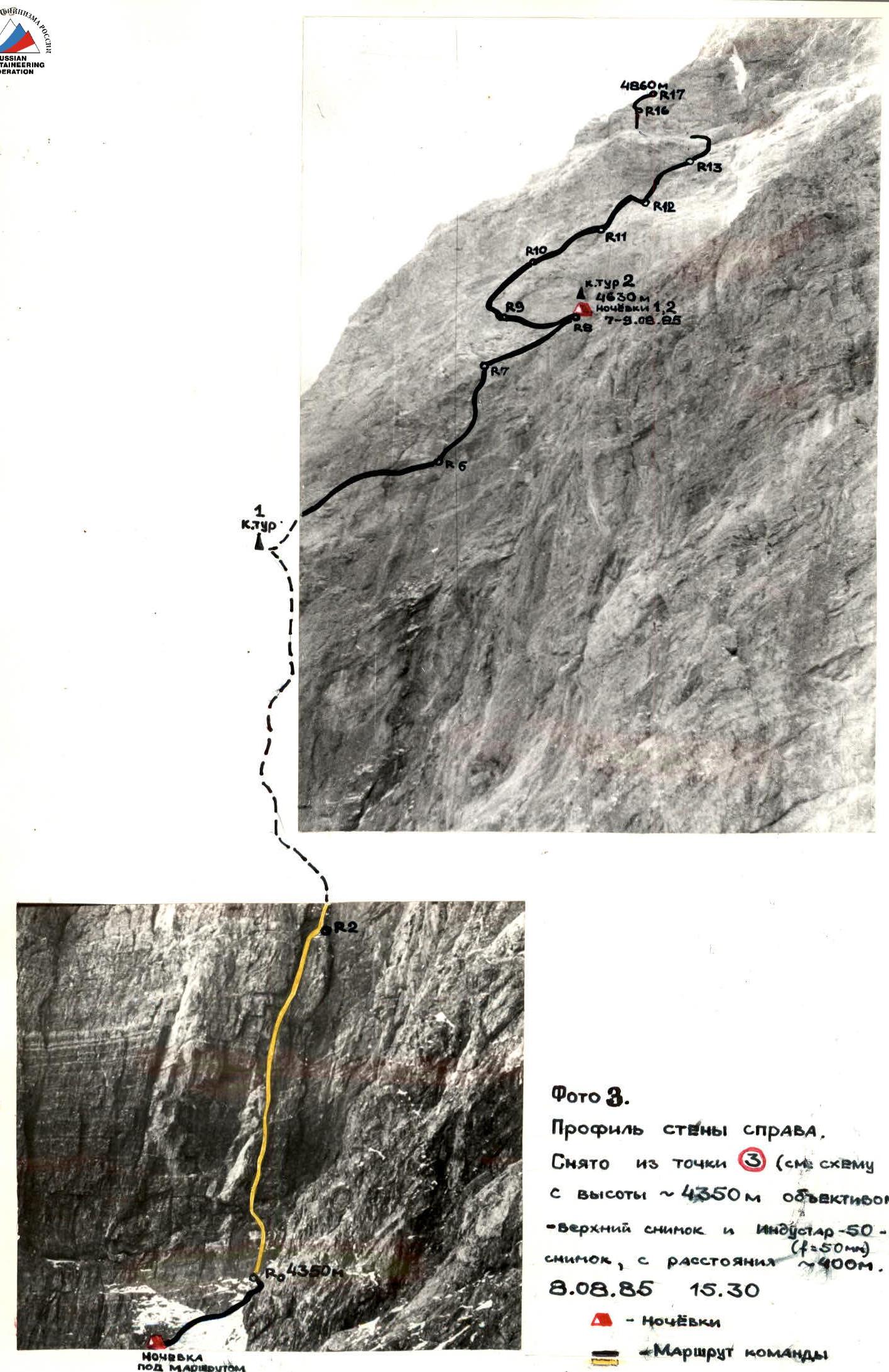
Photo 3. Profile of the right part of the wall. Taken from point (3) (see area diagram) from a height of 4350 m with a T-43 lens — upper shot and Industar-50 lens — lower shot, from a distance of — 400 m. August 8, 1985 15:30
Fig. 1. Route profile. Scale 1:4000

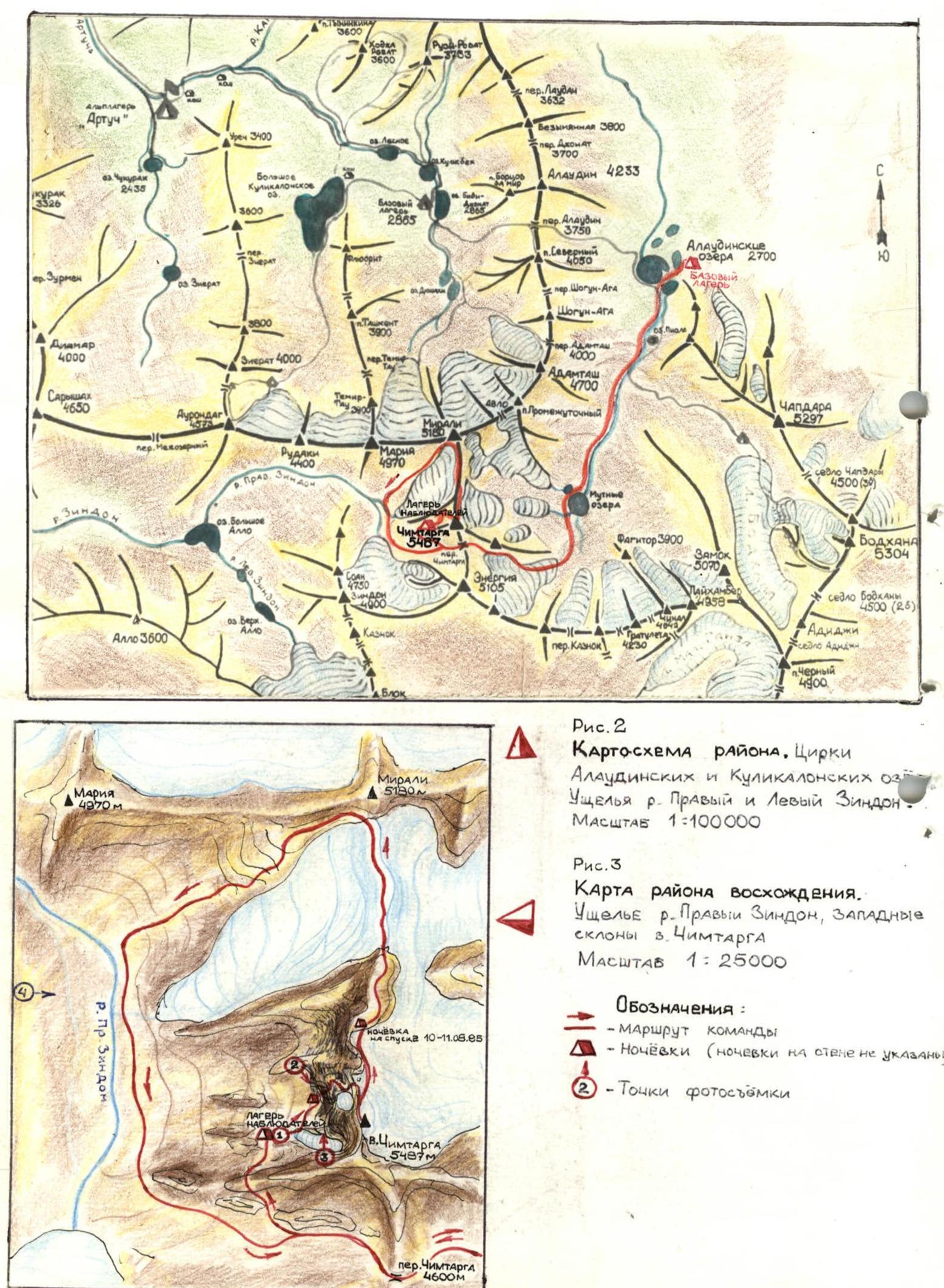
Fig. 2. Area diagram. Circuses of Alauddin and Kulikalon lakes. Valleys of Pravy and Levy Zindon rivers. Scale 1:100000
Fig. 3. Map of the ascent area. Valley of Pravy Zindon river, Western slopes of Chimtarga peak. Scale 1:25000. Notations:
- Team's route
- Overnights (overnights on the wall are not indicated)
- Photo shooting points
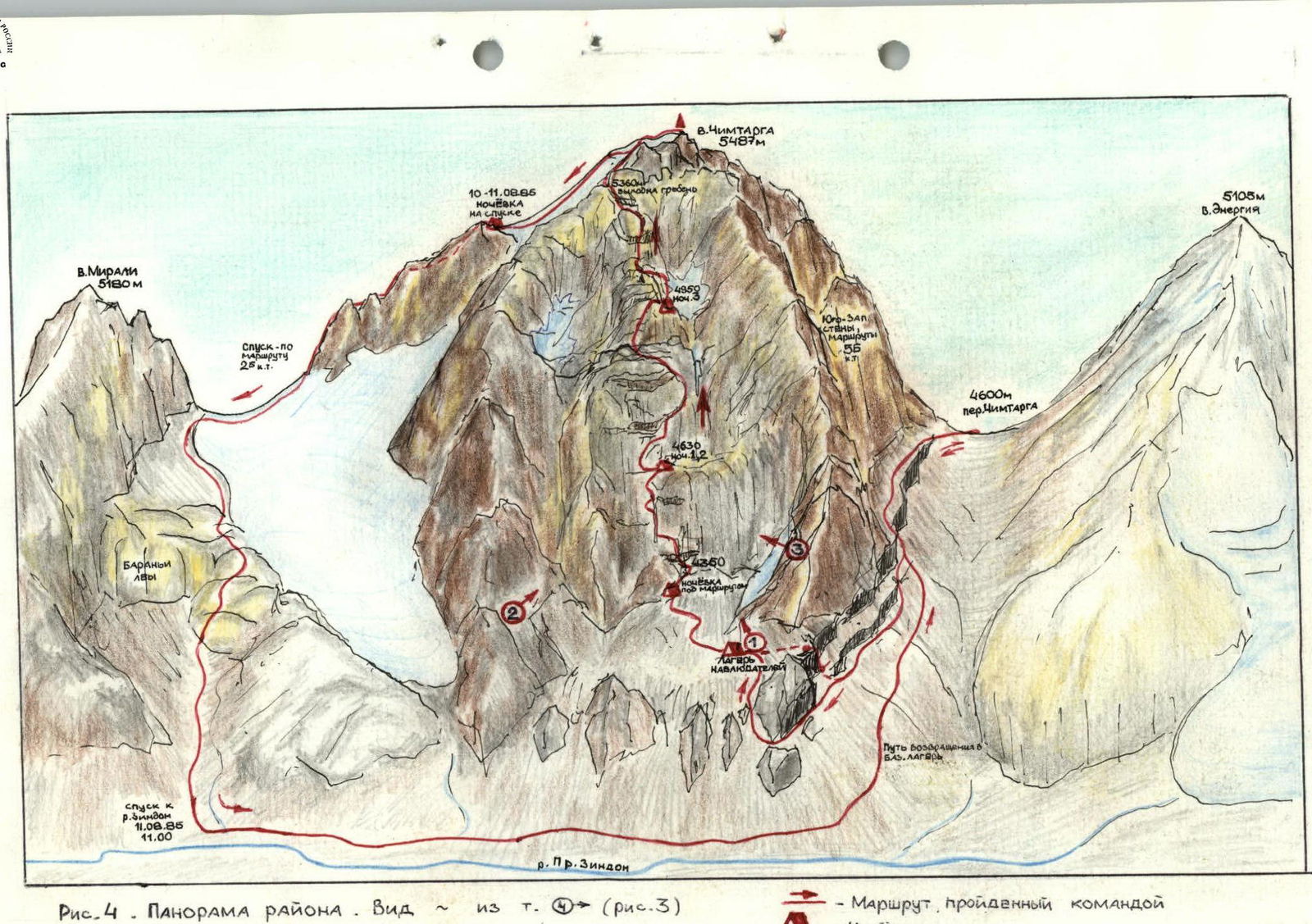
Fig. 4. Panorama of the area. View from point (4) (Fig. 3) to the western slopes of Chimtarga. The tactical plan included a one-day processing of the start of the route and further movement along the wall over 5–6 days (see route sheet). It was planned to use the 1st bivouac on the wall twice to avoid overnight stay at an uncomfortable location. 2 days were reserved for weathering bad weather. This plan was executed without significant deviations.
The only serious and unexpected event was the descent of the sick A. Timofeev on August 7 between 14:00 and 16:00 (see "Ascent Description" and "Debriefing Report"). But this did not throw the group off schedule. The team worked in two ropes:
- I — Pronin–Fedorov, alternating when working first,
- II — Lobachev–Timoshenko–Salma (last).
Processing on August 6 was carried out by the trio Lobachev–Timofeev–Salma, with Lobachev and Timofeev working first. The first person was always secured with a double rope, one of which was a rope from Interalp with the marking YUAA.
Due to evening bad weather, late sunrise on the wall, and low temperatures, the wall was usually covered in ice and snow in the mornings. Therefore, morning departures were late, around 10:00. The first person in the evening continued working until dark.
There were 3 bivouacs in 2 locations on the wall. All bivouacs were comfortable, lying down, and protected from falling rocks and ice from above. Therefore, the group did not suffer much from bad weather on the bivouacs. There were no falls or injuries.
Observers conducted radio monitoring of the group every hour and continuous visual observation with binoculars. Mandatory radio communications were at 14:00 and 20:00. Observers transmitted the information accumulated during the day to the base camp daily at 10:00. To do this, the observer climbed to Chimtarga pass, taking 4–5 hours round trip.
In addition, the base camp conducted radio monitoring at:
- 12:00,
- 16:00,
- 20:00.
Radio communication was carried out using a 2IRTH ("Kaktus") radio set.
The safety of the ascent was also ensured by a rescue team consisting of:
| A. Epstein | — rescue team leader, CMS, |
|---|---|
| S. Kalmykov | — team coach, MS, |
| A. Basenko | — CMS, |
| V. Kolokshansky | — 1st sports category, |
| V. Pleskachevsky | — 1st sports category, |
| I. Barikhin | — radio operator, 1st sports category, |
| S. Ionenkov | — 1st sports category, |
| A. Dobrovolsky | — 1st sports category, |
| V. Khismatullin | — 2nd sports category, |
| L. Tikhonov | — doctor, 3rd sports category. |
A rescue route was planned in case the team needed help:
- From Mutnye lakes along the path of 4A category of difficulty to the ridge between Chimtarga and Mirali;
- Further, if necessary, descent to the wall via the summit of Chimtarga.
Description of the route by sections
On August 5, the team gathered at the observers' camp by 17:00, but the planned route processing for that evening was canceled due to a severe thunderstorm and wet snow that continued until dark.
On August 6, the sky cleared, but the wall was covered in ice and only began to clear by noon. At 11:00, Lobachev, Salma, and Timofeev left for the route and began processing the cornice and the overhanging angle above it at 14:00 (sect. R0–R1). Lobachev managed to overcome the cornice, which protruded by 4–5 m, only by looping a sling around a ledge (photo 6) — there were no places for pitons there. The next 40 m were climbed by Timofeev almost entirely on artificial technical aids (ITA), as the internal angle was filled with ice and water was flowing from above. They threw 6 ropes and all necessary equipment for further work to the upper anchoring point. The remaining team members in the camp were called to come under the wall, and by 19:30, they arrived and set up an overnight stay, to which the processing team descended at 20:30.
On August 7, at 9:00), the pair Fedorov–Pronin took over, passed the processed section, retrieved all the left equipment, and moved further. Fedorov worked first. After completing the remaining 10 m of the angle, he reached a ledge and began moving left and upward along steep, smooth ice towards an 80-meter internal angle formed by a smooth vertical slab and overhanging cornices on the left (sect. R2–R3).
The section was climbed as follows:
- R3 was traversed along the slab to the right of the angle using micro-footholds.
- The next 40 m (R3) were climbed directly up the angle, almost on every piton, standing in a sling and climbing over blocks protruding from the left.
- The angle ended with a strongly overhanging cornice (start of sect. R4), which was bypassed on the right.
- After passing it by traversing, the rope was transferred to a wide crevice, leading left to a ledge with traces of a sitting overnight stay (sect. R4).
A can was found on the ledge, tied to a piton; there was no note inside. According to the description of the first ascenders, they left their 1st control tour here. The team left their note and moved right along the wall, which was without relief for the first 10 m and was climbed using a pendulum on a piton driven above (sect. R5).
Further along the wall, a ledge appeared — smooth and steep; it could be held by hands, and feet could be placed below, under the cornice, using friction. This section was comparable in difficulty to the key sections of serious competitive climbing routes.
After it, a wide crevice went upward to the right, which was quickly climbed despite its steepness, with only one spot requiring standing in a sling on a steep wall (sect. R6).
Further, the wall turned into a smooth face with a steepness of no more than 60°, and 30–40 m higher, at the base of the next rock belt of steep walls, a ledge was visible, sheltered from rocks by a cornice protruding about 3 m (sect. R7).
Here, not reaching one rope length to the ledge, the first pair stopped at 16:00. All ropes were hung, and the rest of the group had not yet arrived. At this time, a decision was made below to descend Timofeev from the route. The previous day, on a wet cornice, he got wet, caught a cold, and showed signs of pneumonia. Observers were called via radio, and by 16:00, they arrived and took Shura away, also retrieving 3 ropes thrown from the wall, which were no longer needed after processing. The team continued the ascent with five members.
At 17:30, the weather deteriorated sharply, wet snow began to fall, and the meters left to reach the convenient ledge began to become difficult to pass. Snow covered the ropes, and jammers grabbed this wet mess, got clogged with ice, and slipped.
With the help of the first pair descending 40 m, the ropes were pulled up only by 19:00.
Fedorov, with great effort:
- driving many pitons,
- reached the ledge
- and secured the last, 8th rope.
Helping each other to pull up backpacks, all participants reached the overnight stay by 21:00.
August 8, 1985. The overnight stay allowed for comfortable accommodation in a tent lying down. The ledge was surprisingly well-found — surrounded by walls, and here was a completely flat, wide ledge under a cornice.
Upon inspection, a control tour with a note from the "Arutch" alpine camp from the previous year was found nearby. Until the sun illuminated the wall, the route was completely impassable — the rocks were covered with a uniform layer of seeping ice. Only by 14:00 did the steepest sections of the wall clear.
The Pronin–Fedorov pair left for processing. Pronin worked first. Having climbed 40 m to the left (sect. R8), and then another 40 m straight up along a steep wall with a small "tile-like" structure (sect. R9), he reached a narrow ledge where the first ascenders had driven 2 bolt pitons and spent the night. This ledge continued upward and to the right, requiring maximum attention, as the only relief here was smooth recesses in monolithic steep rocks, where ice and snow remained (sect. R10). It was possible to make progress another 40 m that day, after which the ledge narrowed and was covered in ice. An attempt to exit through the cornices to the top was also unsuccessful: hanging fragments of firn were seen from there. At 17:30, snow began to fall again, and the pair descended. Bad weather continued throughout the evening, but by night, the clouds had dispersed.
August 9, 1985. By morning, the route was in a much better condition than the day before — the snow had been blown away, and the ice had melted in places. At 10:00, the same pair went first, followed by the entire team. The icy section of the ledge was bypassed. Pronin climbed through the cornices 30 m higher and made a pendulum across the smooth monolithic wall to the right, around the corner (sect. R11). From here, a logical path opened:
- upward,
- then bypassing the hanging slab on the right.
Into the wide crevice under the slab (sect. R12), it was necessary to drive at least 7 pitons every 1.5–2 m, as the wall was covered with melting ice, and galoshes did not grip.
The next rope (sect. R13) led along strongly destroyed "tile-like" rocks under an even more complex belt of cornices. Now it was necessary to make a traverse to the left (sect. R14) and find a passage where this belt narrowed. The next section (sect. R15) was only passable on ITA with the use of hook legs, after which the slope began to ease — the team reached the top of the bastion.
From here, a smooth, rounded, and steep counterfort went upward. Snow was falling, and the wall was shrouded in fog. By evening, the first pair managed to climb another 100 m along the counterfort (sect. R16–R17–R18) and, behind a bend, found a wide snow corrie, on the edge of which a place for a normal lying overnight stay was found.
That day, the last member had significant difficulties. On sections passed by traverses and pendulums, it was not easy to drive pitons, but A. Salma, working from behind, coped well with his task and never once delayed the passing of ropes. By 20:30, the team gathered at the overnight stay and managed to set up a tent before dark. By night, the weather improved, the snow stopped, and the clouds dispersed.
August 10, 1985. The team left at 10:30 and moved along the edge of the snow corrie for the first 80 m, bypassing the steep rises of the counterfort (sect. R19). Fedorov worked first. Having climbed the third rope along the wall in the direction of the counterfort's edge (sect. R20), he reached a cave where the first ascenders had spent the night. This place did not seem convenient to us, but the cornice above the cave was passed by free climbing, although ITA were indicated in the description.
After the cornice and a wide chimney (sect. R21), Fedorov reached control tour #3 on the shoulder of the counterfort. A note from the "Arutch" alpine camp from 1984 was retrieved. The shoulder rested against a steep wall of a 100-meter bastion with two oblique crevices in the upper part.
Fedorov climbed:
- first 40 m straight up (sect. R23),
- then through hanging, destroyed cornices (sect. R24) turned onto the right face of the bastion,
- and climbed to the top, overcoming a hanging section with "shells" at the very end (sect. R25).
A series of bolt pitons driven by the predecessors remained to the right, along the way, abandoned wooden wedges were encountered. ITA were used in several places; climbing was extremely difficult throughout, but the first rope passed in 2 hours. The weather was excellent, the rocks were dry, and nothing hindered maintaining a high speed.
The last 100-meter ascent remained to reach the crest (sect. R28–R29–R30). The first 40 m of the wall were extremely unpleasant — deep crevices, almost no footholds or places for pitons. After several attempts to climb different crevices, it was possible to find a way into a wide internal angle, where the rock structure changed, and there were many ledges.
At 17:00, Fedorov reached the crest, and an hour later, everyone else followed. Until now, the first person had continuously worked in galoshes, from the very start of the wall; now crampons were needed as difficulties were not yet over. To reach the summit, there was:
- a steep ice slope,
- and above it — smooth slabs with ice couloirs between them (sect. R31–R32–R33).
It was necessary to secure 2 ropes and climb up them to reach the pre-summit ridge. At 19:30, the team reached the summit. They saw a fantastic sight — on a neighboring cloud, surrounded by a ring of rainbow, the shadow of the summit and the people standing on it were reflected!
At 20:30, they began descending along the steep snowy slope to a gentle scree ridge. They descended along secured ropes, with the last person wearing crampons and carrying an ice axe. On the scree shoulder of the ridge, they stopped for an overnight stay at 21:30, 200 m below the summit.
August 11, 1985.
- At 9:00, they began descending along the ridge towards Mirali peak.
- Then descended along scree, bypassing glaciers on the right.
- Reached "ram's foreheads," and from there — to the trail towards Zindon river.
- At 11:20, they descended to Zindon river, where they were met by Khismatullin and Ionenkov.
- At 20:00, they returned to the base camp.
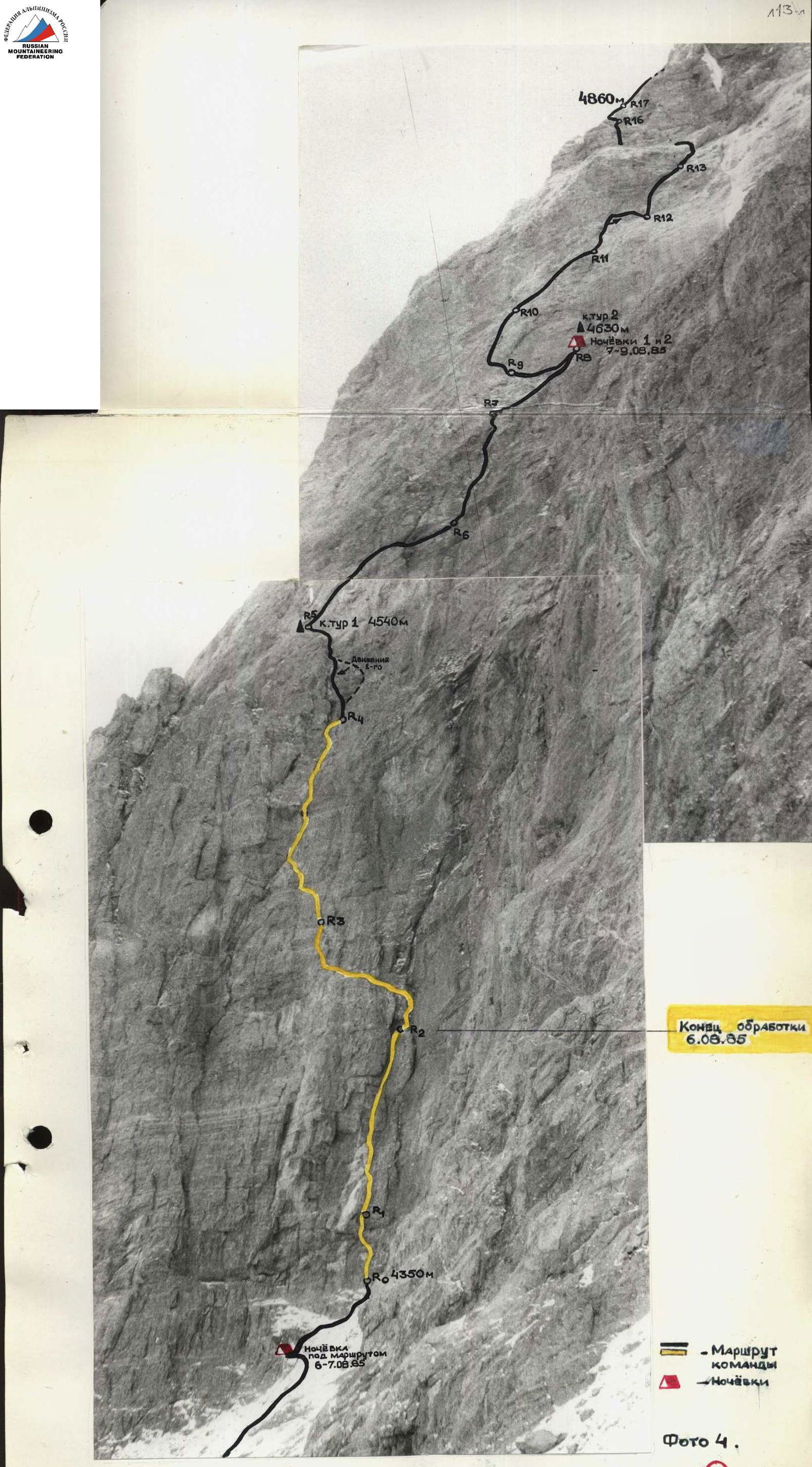
Technical photograph of the route. Taken on August 8, 1985 from point (3) (see area diagram) from a height of — 4350 m with a T-43 lens (camera "Smena-8M", f=43 mm). Distance to the wall — 400 m, time of shooting — 15:30.
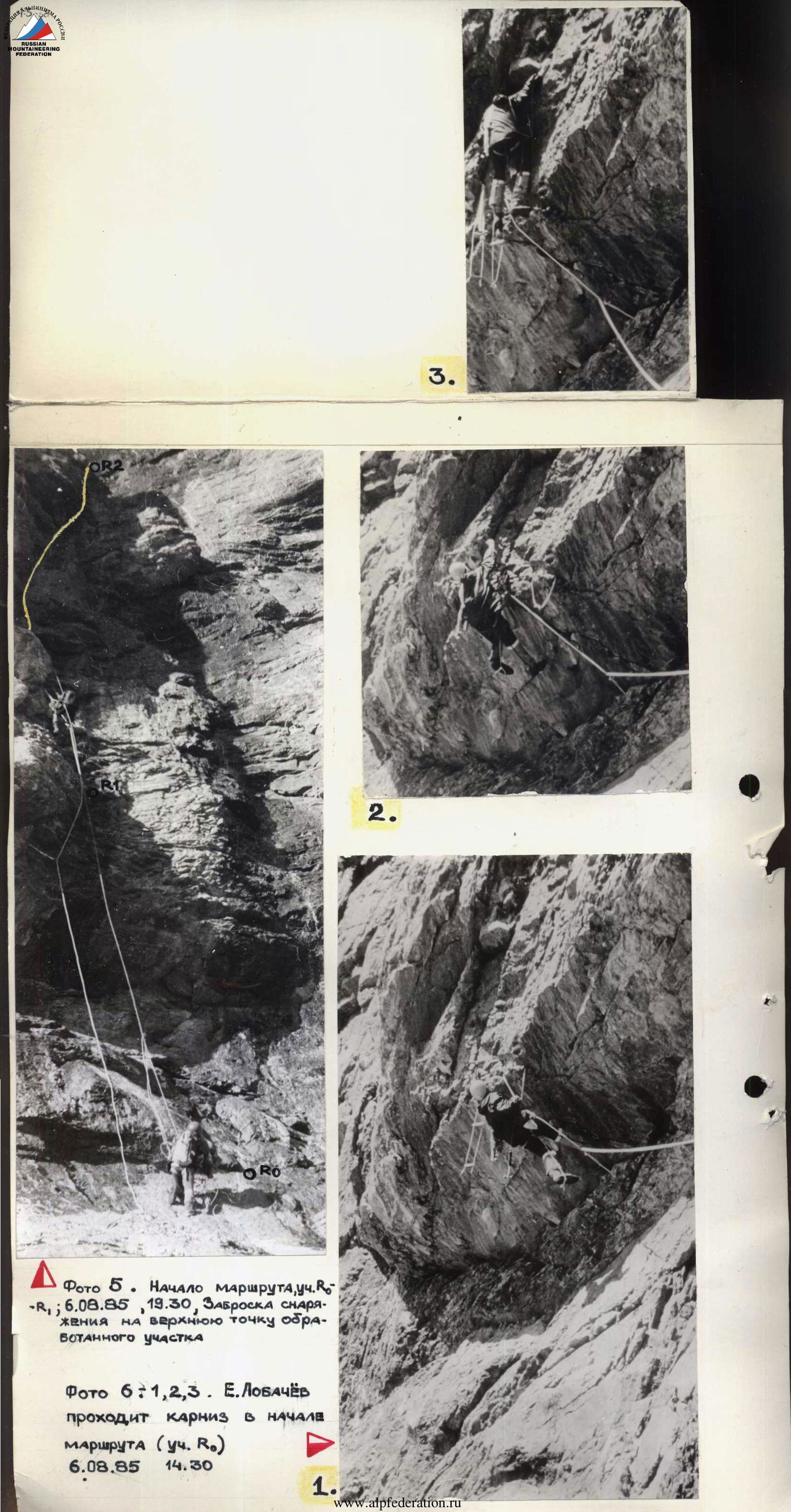
Photo 5. Start of the route, sect. R0–R1; August 6, 1985, 19:30. Throwing equipment to the upper anchoring point of the processed section.
Photo 6:1,2,3. E. Lobachev climbing the cornice at the start of the route (sect. R0) on August 6, 1985, 14:30.
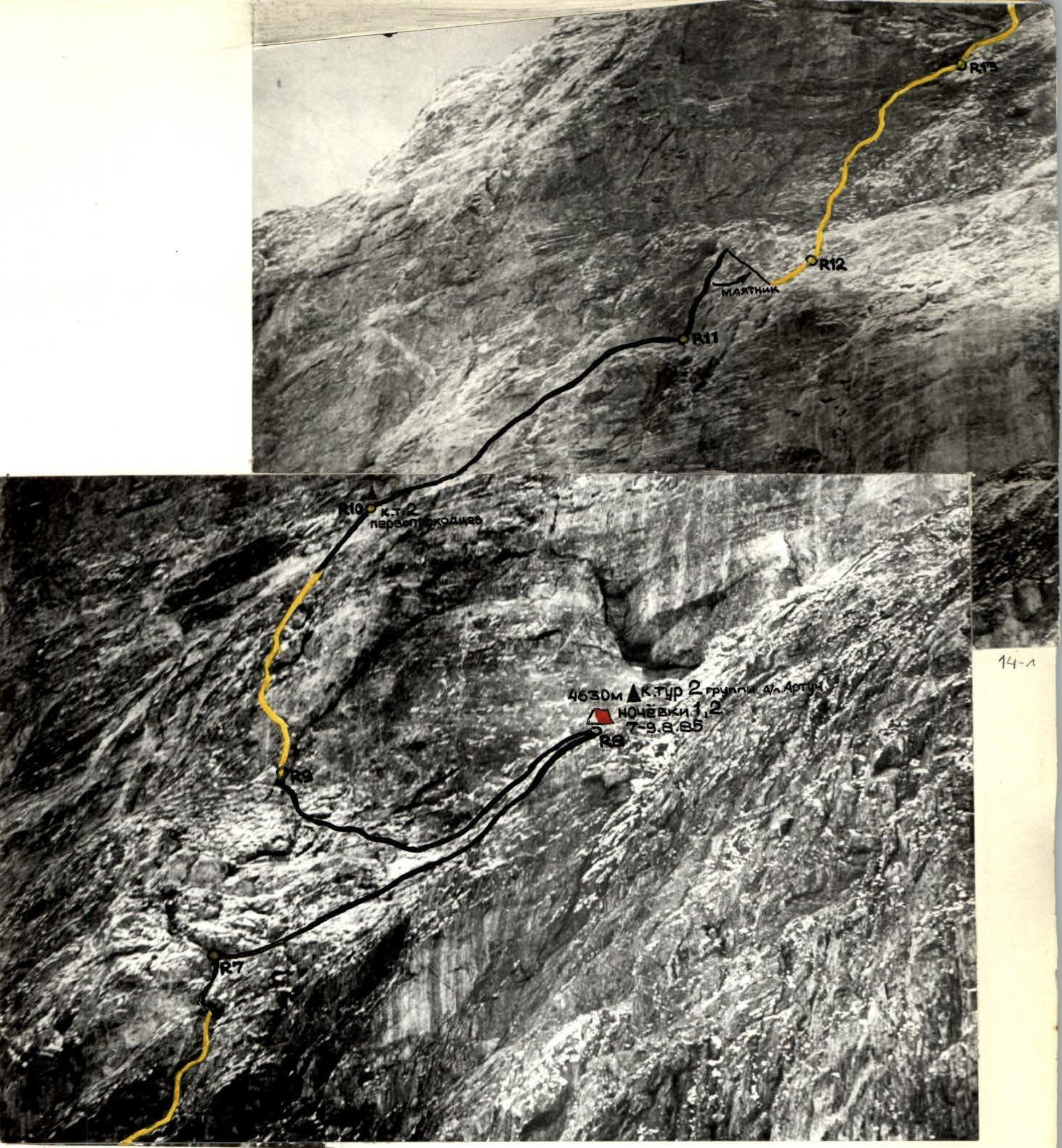
Photo 7. Technically challenging sections on the middle part of the wall. Sects. R5, R11, R12 — 4; Sects. R9, R10 – 5. The shot was taken from point 3 (see area diagram) from a distance of ~800 m. Height of the shooting point ~4400 m, "Helios-44" lens, f=58 mm. August 8, 1985, 15:30.
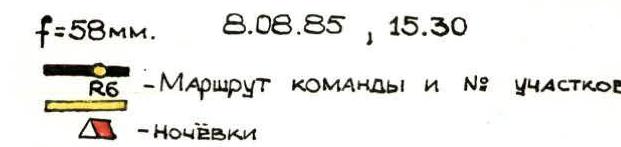
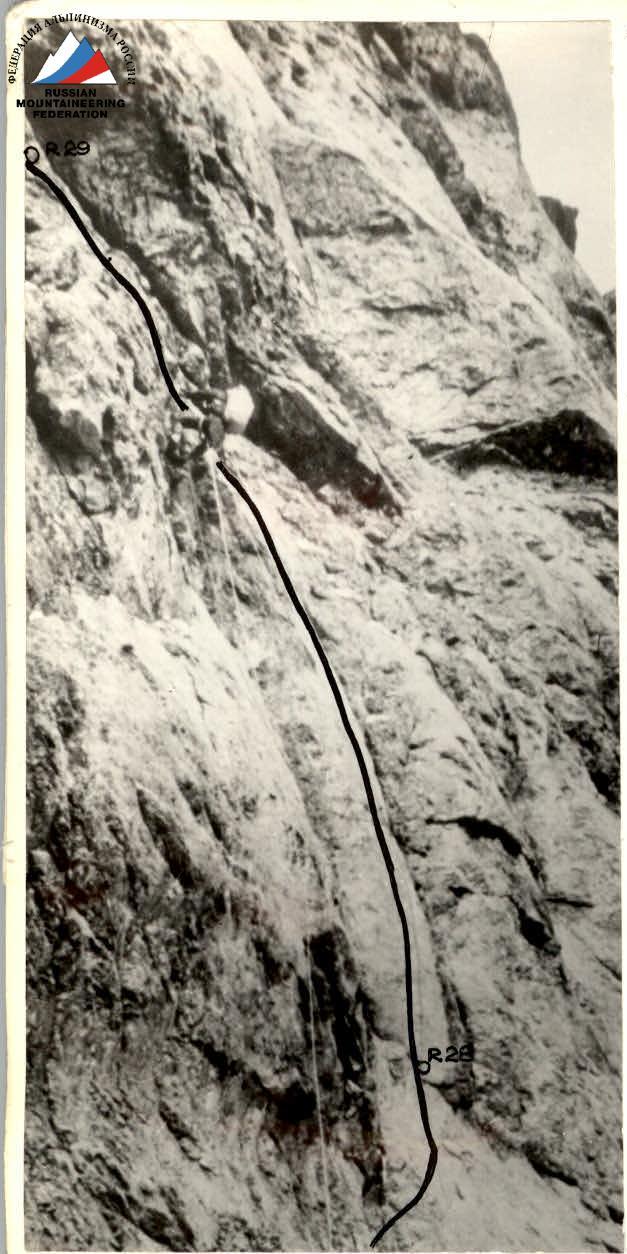
Photo 8. Section R28 on the last steep ascent of the wall before reaching the crest. August 10, 1985, 16:00.
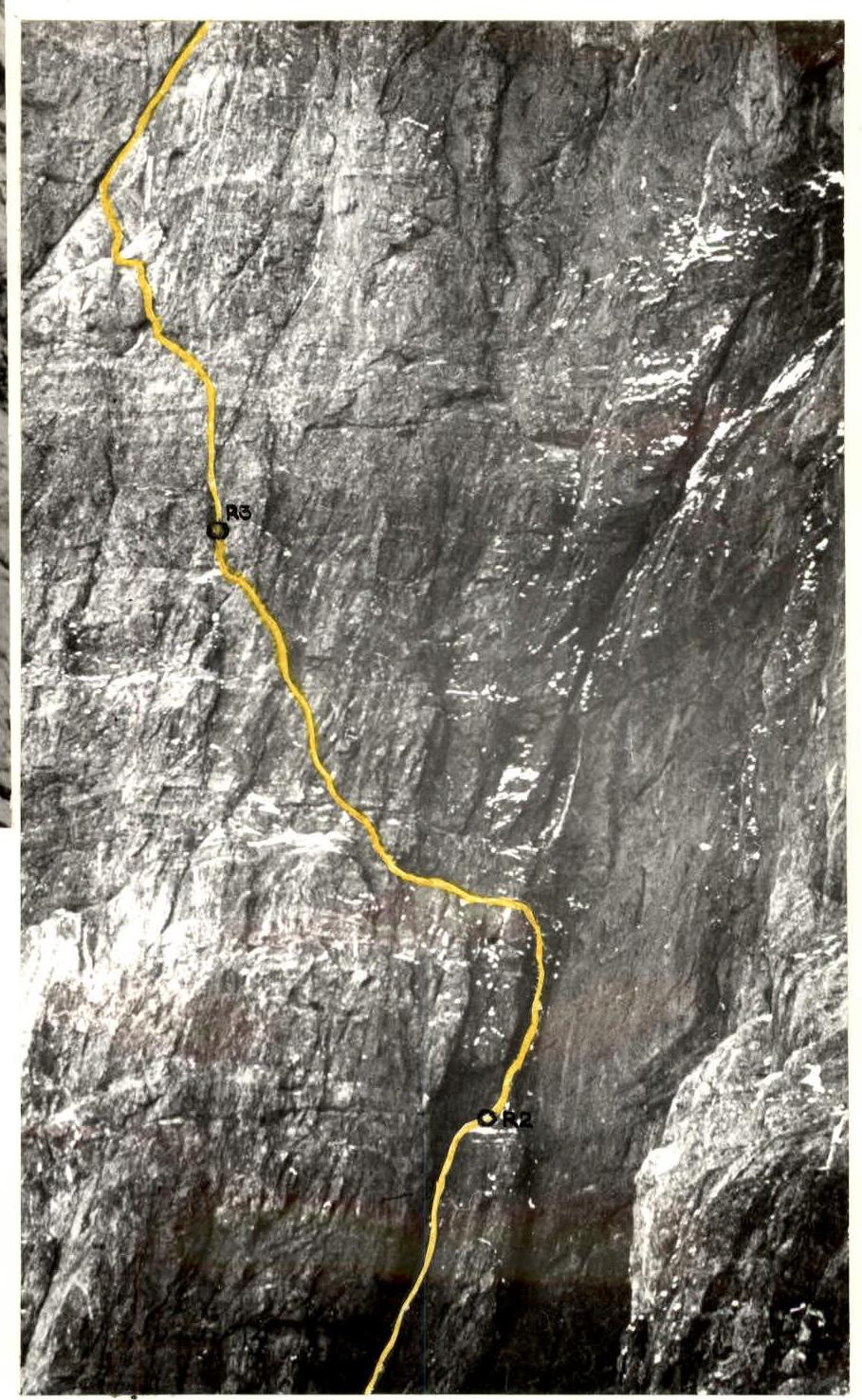
Photo 9. First sections of the wall. R2 — end of processing on August 6, 1985. R3 — Climbing along the wall into the internal angle, 5, ITA.

Comments
Sign in to leave a comment