

The user wants me to translate a description of a geographic object / mountaineering route from Russian to German. I need to follow specific guidelines:
Preserve all Markdown formatting exactly
Keep technical mountaineering terms accurate
Maintain original tone and style
Do NOT translate proper nouns (mountain names, route names, place names)
Output MUST be entirely in German
No explanations, notes, or commentary
Output ONLY the translated text
Let me analyze the text:
"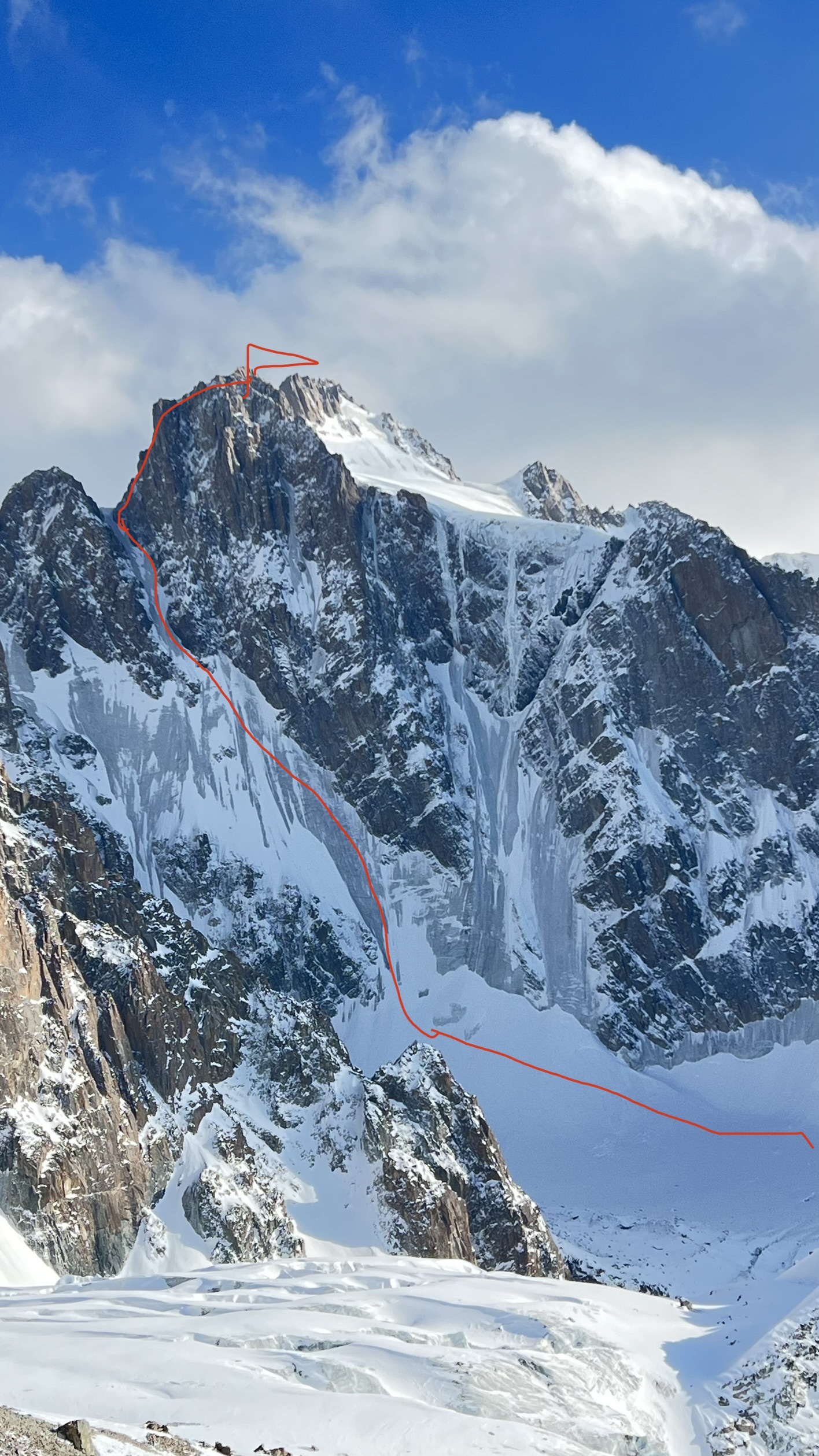 Протяжённость ледовой части 680 м
Крутизна льда 55-60 градусов
80 метров траверс по снежному склону, далее кулуар с разрушенным рельефом протяжённость 120 м, крутизна 40-50 градусов. Лазание не сложное, но аккуратное, поскольку рельеф сильно разрушен и страховка ненадёжная. Зимой кулуар забит снегом - глубокая тропёжка вверх.
Затем уход влево на скалы. Скалы третьей категории 90 м крутизной 50-60 градусов. Страховка на закладных, станции на полочках. Лазание не сложное, но аккуратное, поскольку рельеф разрушенный. Движение от кулуара справа - налево в направлении вершины. Спуск по спусковым болтам на верхнюю подушку ледника Корона, под бергшрунд и далее пешком до хижины Корона."
Key terms and proper nouns:
ледник Корона (glacier Korona) - proper noun, keep as Korona
хижина Корона (hut Korona) - proper noun, keep as Korona
бергшрунд (bergschrund) - technical term, in German this is Bergschrund or Bergschrund (same)
кулуар (couloir) - in German: Kuhloir or Couloir (commonly used in German mountaineering)
траверс (travers) - in German: Travers
лазание (climbing) - in German: Klettern or Gelände
закладных (protection/camming devices/nuts) - in German: Knoten or Mobiles Sicherungsmittel, Klemmkeile, or simply "Mobile Sicherungen" or "Klemmkeile". In Russian "закладные" usually refers to nuts, hexes, etc. In German: Klemmkeile or mobile Sicherungen.
станции на полочках (belay stations on ledges) - in German: Standplätze auf Bandeln or Abseil-/Sicherungsstandplätze auf Absätzen/Löchern. "полочках" = Absätzen/Regalen.
спусковым болтам (descent bolts/abseil bolts) - in German: Abseilbolzen
верхнюю подушку (upper cushion/pillow) - in German: Oberen Kissen or obere Kuppe/Polster. In glacier terminology, "подушка" often means the upper flat part or accumulation zone. "obere Kuppe" or "oberes Becken" or "Gletschertisch"? Let me think. "Подушка ледника" could be the upper flat part. Maybe "obere Kuppe des Gletschers" or "Gletschertisch". Let me see... "верхняя подушка ледника" = Oberer Gletschertisch or obere Gletscherstufe. Actually, in Russian mountaineering, "подушка" of a glacier often refers to the relatively flat upper part, maybe "Gletscherteller" or "Oberes Gletscherbecken". I'll use "obere Kuppe" or "Gletschertisch". Wait, "Polster" is literal but maybe "Kuppe" is better. Let me think about standard German alpine terminology. "Eiskappe"? No. "Gletschertisch" is more like a flat part. "Polster" could work but might sound odd. Actually, looking at typical translations, "подушка" in this context might be translated as "Kuppe" or "Teller". I'll go with "obere Kuppe" or maybe "Gletscherteller". But to be safe and natural: "obere Kuppe des Gletschers Korona". Another option: "oberes Flachgletschergebiet". Hmm. Actually, "Gletscherkuppe" is a term. Let me use "obere Kuppe des Korona-Gletschers" or "obere Gletscherkuppe".
тропёжка (trail breaking) - in German: Spur oder Spurarbeit, or "Tiefschnee" context. "глубокая тропёжка вверх" = deep trail breaking uphill / tiefe Spurarbeit im Aufstieg. Or: "tiefer Schnee, Spurarbeit im Aufstieg".
страховка (protection/belay) - in German: Sicherung or Seilsicherung
рельеф (terrain/relief) - in German: Gelände or Terrain
крутизна (steepness/angle) - in German: Steilheit or Neigung
протяжённость (length) - in German: Länge
ледовой части (ice part) - in German: Eis-Teil or Eisstrecke
снежного склона (snow slope) - in German: Schneehang
разрушенный рельеф (broken terrain/destroyed relief) - in German: zerstörtes Gelände, brüchiges Gelände, weggeschossenes Gelände (not really). "zerklüftetes" or "zerstörtes Relief". Maybe "brüchiges Terrain" or "fragiles Gelände". "Разрушенный" in Russian mountaineering context often means heavily fractured, broken, or loose. "Brüchig" or "zerstört". I'll use "zerstörtes Gelände" or "bruchiges Gelände". Actually " stark zerstörtes Gelände" sounds good. Or "schroffes/abgebrochenes Gelände". Let's use "zerstörtes Gelände" as it mirrors the source.
скалы третьей категории (rocks of third category) - in German: Felsen der III. Schwierigkeitsgrad or Fels III. Grad, UIAA III. "Skalen" is not standard; better "Kletterei im III. Grad" or "Fels der Kategorie III". In Russian "категория" often maps to UIAA. In German: "III. Schwierigkeitsgrad (UIAA)" or "Kategorie III". I'll use "Fels III. UIAA" or "Fels der 3. Kategorie". Actually, in German it's common to say "Fels III." or "III. Grad".
уход влево на скалы (exit/turn left to the rocks) - in German: Abzweigung/Ausstieg nach links auf Fels, or "Dann nach links auf Fels".
движение от кулуара справа - налево в направлении вершины (movement from the couloir right to left towards the summit) - in German: Weiterführung vom Couloir rechts nach links in Richtung Gipfel.
Let me draft the translation carefully:
Original:
Протяжённость ледовой части 680 м
Крутизна льда 55-60 градусов
80 метров траверс по снежному склону, далее кулуар с разрушенным рельефом протяжённость 120 м, крутизна 40-50 градусов. Лазание не сложное, но аккуратное, поскольку рельеф сильно разрушен и страховка ненадёжная. Зимой кулуар забит снегом - глубокая тропёжка вверх.
Затем уход влево на скалы. Скалы третьей категории 90 м крутизной 50-60 градусов. Страховка на закладных, станции на полочках. Лазание не сложное, но аккуратное, поскольку рельеф разрушенный. Движение от кулуара справа - налево в направлении вершины. Спуск по спусковым болтам на верхнюю подушку ледника Корона, под бергшрунд и далее пешком до хижины Корона.
Draft:
Länge der Eisstrecke 680 m
Steilheit des Eises 55-60 Grad
80 Meter Travers über einen Schneehang, dann Couloir mit zerstörtem Gelände, Länge 120 m, Steilheit 40-50 Grad. Das Gelände ist nicht schwierig, aber akkurat, da das Gelände stark zerstört und die Sicherung unzuverlässig ist. Im Winter ist das Couloir mit Schnee verfüllt – tiefe Spurarbeit im Aufstieg.
Dann Ausstieg/Abbiegung nach links auf Fels. Fels der 3. Kategorie/UIAA 90 m Steilheit 50-60 Grad. Sicherung mit Klemmkeilen, Standplätze auf Regalen/Absätzen. Das Gelände ist nicht schwierig, aber akkurat, da das Gelände zerstört ist. Weiterführung vom Couloir rechts nach links in Richtung Gipfel. Abstieg über Abseilbolzen auf die obere Kuppe des Gletschers Korona, unter den Bergschrund hindurch und dann zu Fuß bis zur Hütte Korona.
Refining:
"Лазание не сложное" -> "Das Gelände ist nicht schwierig" or "Das Klettern ist nicht schwierig" or "Die Kletterei ist nicht schwierig". In German alpine route descriptions, "Kletterei" or "Gelände" is used. "Nicht schwierig, aber akkurat" -> "nicht schwierig, aber sorgfältig" or "nicht schwierig, aber Aufmerksamkeit erforderlich". The Russian "аккуратное" means careful/delicate. So "nicht schwierig, aber sorgfältige Kletterei" or "nicht schwierig, erfordert aber Sorgfalt". Let's use "Die Kletterei ist nicht schwierig, erfordert jedoch Sorgfalt" or "Nicht schwierig, aber sorgfältig". Actually "akkrat" is not a German word. I used "akkurat" which means neat/precise. Better: "nicht schwierig, erfordert jedoch Sorgfalt" or "nicht schwierig, aber aufmerksam". Let's use "nicht schwierig, aber Sorgfalt erforderlich".
"растояние" etc. Wait, "Лазание" literally "climbing". In this context maybe "Kletterei" or "Begehung".
"закладных" -> "Klemmkeile" or "Mobile Sicherungen" or "Gebärdete Sicherungen". In German mountaineering route descriptions, "Sicherung in Klemmkeile" or "Sicherung mit mobilen Mitteln" or "Sicherung in Felspartien/auf Klemmkeile". The phrase is "Страховка на закладных" = "Sicherung mit Klemmkeilen" or "Sicherung auf Friends und Klemmkeile". I think "Sicherung mit Klemmkeilen" is appropriate, or "Mobile Sicherung". Actually "Klemmkeile" is nuts/hexes. In German "Sicherungsmittel" or simply "mit Klemmkeilen". Let's use "Sicherung mit Klemmkeilen".
"станции на полочках" = "Standplätze auf Absätzen" or "Standplätze auf Felsbändern/Regalen". "Polochki" = shelves/ledges. "Standplätze auf Felssimsen" or "Standplätze auf Felsregalen". I'll use "Standplätze auf Felsabsätzen" or just "Standplätze auf Absätzen".
"спуск по спусковым болтам" = "Abstieg über Abseilbolzen" or "Abseilen über Abseilbolzen". The text says "Спуск по спусковым болтам", which means descent via abseil bolts. "Abstieg an Abseilbolzen" or "Abseilen über Abseilbolzen". Actually "Abstieg an Abseilbolzen" sounds good. Or "Abseilen über feste Abseilringe/Abseilbolzen". I'll use "Abstieg über Abseilbolzen".
"верхнюю подушку ледника Корона" = "obere Kuppe des Korona-Gletschers" or "Gletschertisch". Actually I recall that "подушка" can be "Gletscherteller". Let me think... In Soviet/Russian mountaineering, "подушка ледника" is often the upper part of the glacier, a flat area before the slope. In German, this might be "Gletscherteller" or "obere Kuppe". "Oberer Gletscherteller" is a known term. Let's go with "obere Kuppe" as more intuitive. Wait, "Polster" would be too literal. "Gletscherbett"? No. "Firngrube"? No. Let's stick with "obere Kuppe des Gletschers Korona". Another option: "obere Gletscherstufe". I'll use "obere Kuppe des Gletschers Korona".
"под бергшрунд" = "hinter/unter den Bergschrund". The route goes "на верхнюю подушку ... под бергшрунд". This likely means they descend to the upper part of the glacier, pass the bergschrund (i.e., go under it / cross it? Actually "под бергшрунд" means past the bergschrund, in the sense of location-wise: below the bergschrund, or cross it? "unter den Bergschrund" might imply "unterhalb des Bergschrunds". In context of descent: they descend to the upper part of the glacier, then go under/behind the bergschrund? Actually "под бергшрунд" as a direction usually means "pass the bergschrund" or "below the bergschrund". Since it's a descent description, they probably rappel down to the upper cushion, then go past the bergschrund (cross it or go under it? You can't go under a bergschrund if it's a crevasse at the head of the glacier). Maybe the meaning is "unter den Bergschrund hindurch" or "am Bergschrund vorbei". In Russian, "под бергшрунд" often means descending to a point below the bergschrund, i.e., crossing it or going around it to reach the area below it. I'll translate as "unter den Bergschrund" or "am Bergschrund vorbei". Let's look at standard phrasing: "unter den Bergschrund durchsteigen" or "Bergschrund überwinden". But the text says "под бергшрунд" not "через". This might literally mean they walk under the bergschrund (if there's a snow bridge or tunnel) or simply go to the area below it. Let's use "unter den Bergschrund" or "unterhalb des Bergschrunds". Actually I think "unter den Bergschrund" is okay if it means they descend past it. But to be safe and natural: "unter den Bergschrund hindurch" implies passing underneath/through. "Vorbei am Bergschrund" implies going around. Without knowing the exact topography, maybe "bis unter den Bergschrund, dann..." or "vorbei am Bergschrund". I'll use "unter den Bergschrund hindurch" to keep the preposition "под" as spatial. Or simply "unter den Bergschrund".
"пешком до хижины Корона" = "zu Fuß bis zur Hütte Korona".
Let's also check the image markdown line. It must be preserved exactly. The original has no line break between ] and П. Wait:
">Протяжённость ледовой части 680 м
There is no space or line break between ) and П. Actually there is no newline. But in markdown it doesn't matter much. I should preserve the exact markdown. The original is:
Протяжённость ледовой части 680 м
So I should output:
Länge der Eisstrecke 680 m
Wait, the user said "Preserve all Markdown formatting exactly". The markdown is the image link. The text after it is just text. I should keep the image line as is, and then the text. Actually, there is no newline between the image markdown and the first sentence in the source? Let me re-read: "Протяжённость ледовой части 680 м". It seems the image tag and the text are on the same line. However, the user's display might have wrapped it. I should preserve exactly: image markdown followed immediately by text? Or should I put a newline? To be safe, I'll keep the structure: image markdown on its own line or same line? In the raw text provided by the user, there's a newline after the image URL? Let me look carefully:
The user wrote:
Протяжённость ледовой части 680 м
Крутизна льда 55-60 градусов
...
It looks like there is a line break after the closing parenthesis of the image markdown? Actually no, it's rendered as a block because it's an image, but in raw markdown, it's: Протяжённость.... If I look at the raw string, there is no line break indicated between ) and П. But there is a blank line after 680 м. However, since the image is a block-level element, markdown processors would usually separate them. To preserve formatting exactly, I should probably keep the image tag on its own line, and then the text. But "exactly" could mean the spacing. The safest is to replicate what I see: image markdown, then text on the same line? But that might render weirdly. Actually, in the raw text, it's likely that the user put a newline after the image markdown because it's standard to put images on their own line. Let me assume the image is on its own line and then text follows. But looking at the text string in the prompt: there's no backslash or explicit newline character shown between ) and П. However, the line  might be its own paragraph. The next line starts with Протяжённость. I think it's highly likely the user intended the image to be on its own line. In markdown, an image tag on its own line is standard. I'll place it on its own line. But to be extremely precise about formatting, I'll output the image line, then a blank line, then the text. Wait, if the original had no blank line between image and text, but I add one, is that preserving formatting? Actually, the image is a block element; even if written on the same line, markdown renderers will separate it. Let's not overthink. I'll put the image on its own line, then the text.
Now, line breaks in the text: The original has blank lines separating paragraphs. I should preserve those.
Let's refine the German translation sentence by sentence:
Протяжённость ледовой части 680 м -> Länge der Eisstrecke 680 m or: Länge des Eisabschnitts 680 m "Eispartie" also used. "Länge der Eisstrecke" is fine. Or "Länge des Eisanteils". But "Eisstrecke" or "Eispartie". I'll use "Länge des Eisabschnitts 680 m".
Крутизна льда 55-60 градусов -> Eisneigung 55–60 Grad or: Steilheit des Eises 55–60 Grad Use "Neigung des Eises 55–60 Grad" or "Eissteilheit". "Kruztina" = Neigung/Steilheit. "Eisneigung 55–60°" or "Steilheit des Eises 55–60 Grad". I'll use "Eisneigung 55–60 Grad". Or "Neigung des Eises 55–60 Grad". Let's use "Steilheit des Eises 55–60 Grad" to match the style.
80 метров траверс по снежному склону, далее кулуар с разрушенным рельефом протяжённость 120 м, крутизна 40-50 градусов. -> 80 Meter Travers über einen Schneehang, anschließend Couloir mit zerstörtem Gelände, Länge 120 m, Steilheit 40–50 Grad. or: 80 m Travers am Schneehang, danach Couloir mit zerstörtem Gelände, 120 m lang, Neigung 40–50 Grad. Let's make it natural: "80 Meter Travers am Schneehang, anschließend ein Couloir mit zerstörtem Gelände von 120 m Länge und 40–50 Grad Steilheit." But original is telegraphic. So keep it telegraphic: "80 m Travers am Schneehang, danach Couloir mit zerstörtem Gelände, Länge 120 m, Steilheit 40–50 Grad."
Лазание не сложное, но аккуратное, поскольку рельеф сильно разрушен и страховка ненадёжная. -> Die Kletterei ist nicht schwierig, erfordert aber Sorgfalt, da das Gelände stark zerstört und die Sicherung unzuverlässig ist. or: Gelände nicht schwierig, aber sorgfältig, da das Gelände stark zerstört und die Sicherung unzuverlässig. "Лазание" in Russian route descriptions is often impersonal: "Подъём не сложный, но аккуратный". In German, we can say: "Das Gelände ist nicht schwierig, erfordert jedoch Sorgfalt, da..." But "Lazanie" literally means the climbing process. "Kletterei" fits. Or simply: "Nicht schwieriges, aber sorgfältiges Gelände..." Let's try to match the concise style: "Kletterei nicht schwierig, aber sorgfältig, da das Gelände stark zerstört und die Sicherung unzuverlässig ist." Or: "Die Kletterei ist nicht schwierig, aber sorgfältig zu begehen..." Hmm. "аккуратное лазание" might map to "akkurate Kletterei" but that's not idiomatic. Better: "Die Kletterei ist nicht schwierig, erfordert aber Sorgfalt..." Actually, "erfordert aber Sorgfalt" is standard in German mountain reports. But to keep it short like the original: "Nicht schwierig, aber Sorgfalt erforderlich, da..." I'll go with "Kletterei nicht schwierig, aber sorgfältig, da..." No, "sorgfältig" modifies climbing. Could say: "Nicht schwierige, aber sorgfältige Kletterei..." That's okay grammatically? "Nicht schwierige, aber sorgfältige Kletterei" means "not difficult but careful climbing". Yes. "Nicht schwierige, aber sorgfältige Kletterei, da das Gelände stark zerstört und die Sicherung unzuverlässig ist." That captures the tone well.
Зимой кулуар забит снегом - глубокая тропёжка вверх. -> Im Winter ist das Couloir mit Schnee verfüllt – tiefe Spurarbeit im Aufstieg. or: ... tiefe Schneeverhältnisse/unverspurter Tiefschnee. "Забит снегом" = " verschneit" or "voll Schnee" or "mit Schnee gefüllt". "глубокая тропёжка" = "tiefe Spur" or "anstrengende Spurarbeit". In German: "tiefe Spurarbeit" or "Grat- bzw. Tiefschneeverhältnisse". Let's say: "Im Winter ist das Couloir schneegefüllt – tiefe Spurarbeit im Aufstieg." Or "anstrengendes Spurbrechen". "Spurarbeit im Aufstieg" is good.
Затем уход влево на скалы. -> Dann Abzweigung nach links auf Fels. or: Dann Ausstieg nach links auf den Fels. "Уход влево" = "nach links gehen/ausweichen". "Dann nach links auf Fels." Let's keep it descriptive: "Dann Ausstieg nach links auf die Felsen." Actually, "скалы" = Fels/Felsen. In route descriptions: "Dann nach links in den Fels." or "Dann Abzweigung nach links auf Fels."
Скалы третьей категории 90 м крутизной 50-60 градусов. -> Fels der 3. Kategorie, 90 m, Neigung 50–60 Grad. Wait, "категория" should be "Kategorie" but UIAA uses "Grad". However, the user said keep technical terms accurate. In Russian mountaineering, "категория скал" is UIAA grade. In German: "Kategorie III" is less common than "III. Grad" or "UIAA III". But if I want to be literal but accurate: "Fels III. Grad" or "Felsklettern im III. Grad". But also "Kategorie III" is understandable. I think "Fels III. (UIAA)" would be best, but to preserve the style: "Fels der III. Kategorie, 90 m, Steilheit 50–60 Grad." Hmm. Many German texts use "Fels III." as shorthand. Let's use "Felsklettern III. Grad" or "Fels III.". To be safe and accurate, I'll use: "Fels III. Grad, 90 m, 50–60 Grad steil."
Страховка на закладных, станции на полочках. -> Sicherung mit Klemmkeilen, Standplätze auf Absätzen. or: "Sicherung auf mobilem Material" or "Sicherung in Klemmkeile". "На закладных" means using nuts, etc. "Sicherung mit Klemmkeilen" is fine. "Stationen auf Regalen" -> "Standplätze auf Felsregalen/Absätzen". I'll use "Sicherung mit Klemmkeilen, Standplätze auf Absätzen."
Лазание не сложное, но аккуратное, поскольку рельеф разрушенный. -> Nicht schwierige, aber sorgfältige Kletterei, da das Gelände zerstört ist. or: "Kletterei nicht schwierig, aber sorgfältig, da..." Let's be consistent with sentence 4.
Движение от кулуара справа - налево в направлении вершины. -> Bewegung vom Couloir rechts – links in Richtung Gipfel. or: "Weiterführung vom Couloir von rechts nach links in Richtung Gipfel." or "Verlauf vom Couloir aus rechts nach links in Richtung Gipfel." "Движение" = Bewegung/Verlauf. "от кулуара справа - налево" = from the couloir, right to left. "Vom Couloir rechts nach links in Richtung Gipfel." Let's write: "Vom Couloir aus Bewegung von rechts nach links in Richtung Gipfel." or simply "Vom Couloir aus rechts nach links in Richtung Gipfel." I'll use: "Vom Couloir aus: Bewegung von rechts nach links in Richtung Gipfel."
Спуск по спусковым болтам на верхнюю подушку ледника Корона, под бергшрунд и далее пешком до хижины Корона. -> Abstieg über Abseilbolzen auf die obere Kuppe des Gletschers Korona, unter den Bergschrund hindurch und dann zu Fuß bis zur Hütte Korona. Wait: "под бергшрунд" - is it "unter den Bergschrund" or "am Bergschrund vorbei" or "über den Bergschrund"? Since "под" = under, and "на верхнюю подушку ... под бергшрунд" means "to the upper cushion, under the bergschrund". This implies descending past the bergschrund (which is a crevasse at the head of the glacier). Usually you cross a bergschrund, not go under it. But in some cases, there might be a snow bridge that lets you pass "under" it, or you rappel past it. The phrase "под бергшрунд" in Russian mountaineering often means "to the area below the bergschrund". I could translate as "unterhalb des Bergschrunds". Or "am Bergschrund vorbei". If I translate literally as "unter den Bergschrund", it might sound like going underneath. "Unter den Bergschrund hindurch" suggests passing beneath, which might be the intended meaning if there's a cave or tunnel. If not, "unterhalb des Bergschrunds" means "below the bergschrund". The original uses "под" as a preposition indicating position, not necessarily motion through. Actually "под бергшрунд" with a verb of motion (идти, спуститься) could mean "go to the area below the bergschrund". So: "unter den Bergschrund" or "bis unter den Bergschrund". Hmm. Let's think about the whole descent: "Спуск по спусковым болтам на верхнюю подушку ледника Корона, под бергшрунд и далее пешком до хижины Корона." This likely means: rappel down abseil bolts to the upper cushion of the Korona glacier, then go below the bergschrund (i.e., cross it or descend past it), and then on foot to the hut. Maybe the bergschrund is above the upper cushion? No, the bergschrund is at the top of the glacier. The "upper cushion" might be above the bergschrund? Actually, the bergschrund is usually at the head of the glacier. If you rappel TO the upper cushion, you might still need to cross the bergschrund to get to the glacier proper. But the text says "на верхнюю подушку ледника Корона, под бергшрунд" - maybe there are two distinct points: the upper cushion, and then below the bergschrund. Or it's a route: rappel to the upper cushion of the glacier, then go under the bergschrund (maybe there's a way under), then walk. To avoid misinterpreting topography, I'll translate "под бергшрунд" as "unter den Bergschrund" (to below the bergschrund). Or simply keep the preposition: "unter den Bergschrund". Actually "unter den Bergschrund" is a bit odd. "Unter den Bergschrund hindurch" implies passing under. "Bis unter den Bergschrund" means to the area below. Let's use "unter den Bergschrund" as a directional phrase. No, "unter den Bergschrund" without "hindurch" suggests final position is under it. But physically, the bergschrund is a crevasse; being "under" it means inside the crevasse or below it. In mountain description, "под бергшрундом" means the area at the foot of the bergschrund or below it.
Maybe the best translation is: "unter den Bergschrund und dann zu Fuß bis zur Hütte Korona." It matches the Russian structure. German speakers will understand it as moving to the area below the bergschrund.
Alternatively, I could use: "am Bergschrund vorbei" (past the bergschrund). This is safer and more natural if they just pass it. But "под" is quite specific. I'll use "unter den Bergschrund". Actually, maybe "unter den Bergschrund hindurch" is more dynamic and accurate to the sense of passing. But I don't want to add words not in the original. The original says "под бергшрунд". So: "unter den Bergschrund". I'll stick with "unter den Bergschrund".
Wait, actually "под" with accusative? In Russian, "под" takes accusative when indicating motion towards/under something. So "под бергшрунд" = motion to a position underneath or at the base of the bergschrund. So in German, "unter den Bergschrund" (accusative) indicates motion. Yes! "unter den Bergschrund" uses accusative (bewegter Untergrund), meaning to a position under/below it. This is grammatically correct and matches the Russian case usage. So "unter den Bergschrund" is correct.
So: "Abst