

Краткий огляд району підйому в ущ. Могувек, хр. Великий Саян.
Район здійснення підйомів знаходиться в Бурятській республіці на кордоні з Монголією в хр. Великий Саян і його складовій частині — хр. Мунку Сардик — в верхов'ї ущелин Могувек і Білий Іркут. Вузлом району є масив гори Мунку Сардик (3491 м) — найвища точка Саян.
Район знаходиться в 300 км від Іркутська почти в суворо західному напрямі. Дорога проходить наступним чином:
- Від Іркутська до с. Монди — добра асфальтована дорога державного значення.
- Від с. Монди — 25 км по гравійній дорозі, що веде в Окинський р-н Бурятської республіки, до моста через р. Білий Іркут.
- Надалі дорога йде на перевал, а шлях до підніжжя г. Мунку Сардик і альпіністського полігону в ущелині Могувек проходить по каньйону р. Білий Іркут і р. Могувек від висоти 1400 до 2200 м, тобто до межі лісу.
Особливості проходження ділянки:
- В зимовий період ця ділянка проходиться по наледи в кошках.
- Вище каньйону і межі лісу долина ріки Могувек — широка, трогова.
- У верхній частині, вище другого хищана, є карове озеро Ехой.
Від дороги до базового табору на межі лісу — 4 год підходу.
За цими показниками район ущелини Могувек — найдоступніший на сьогоднішній день з усіх, навіть більш близьких, альпіністських районів Східного Сибіру.
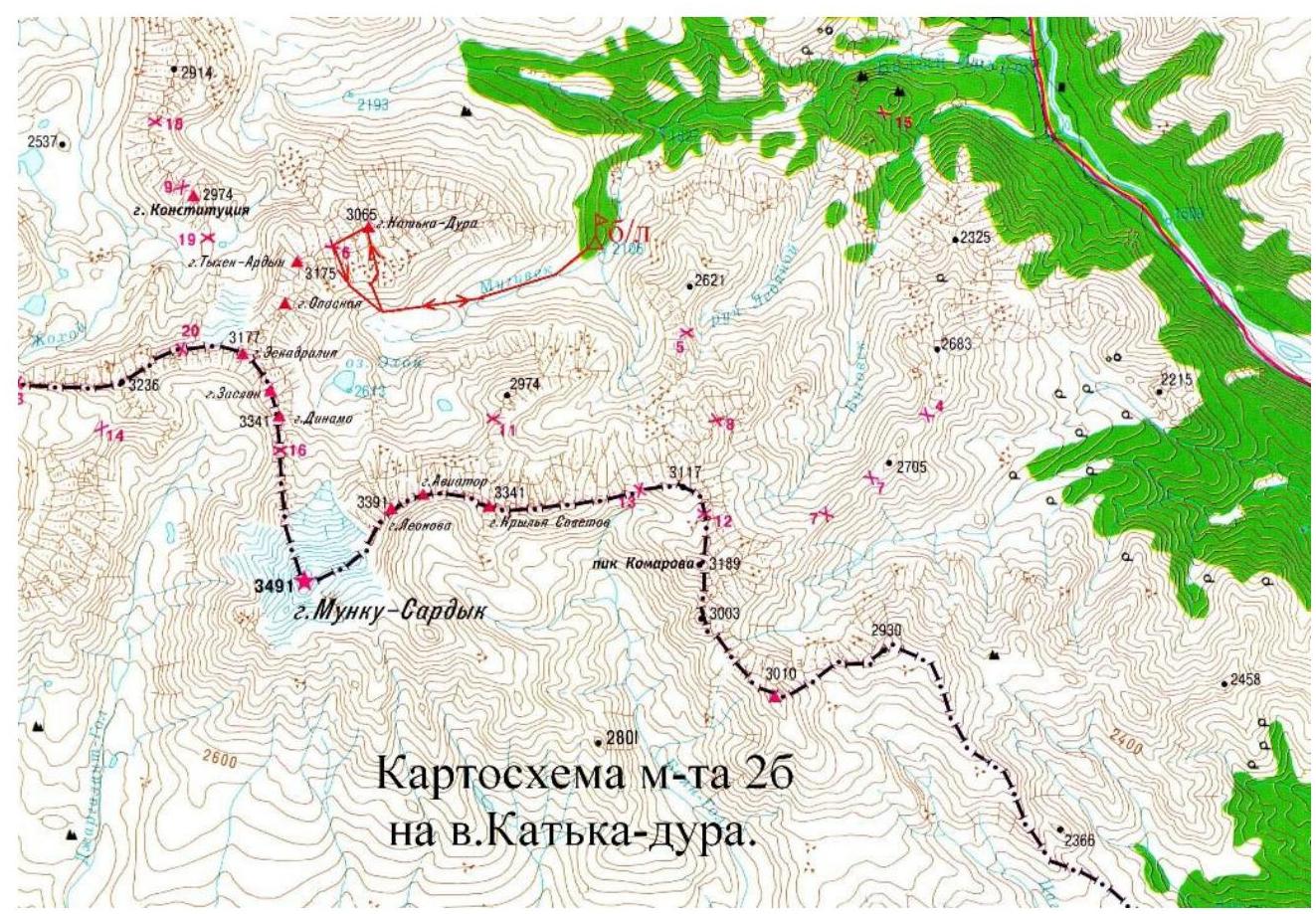
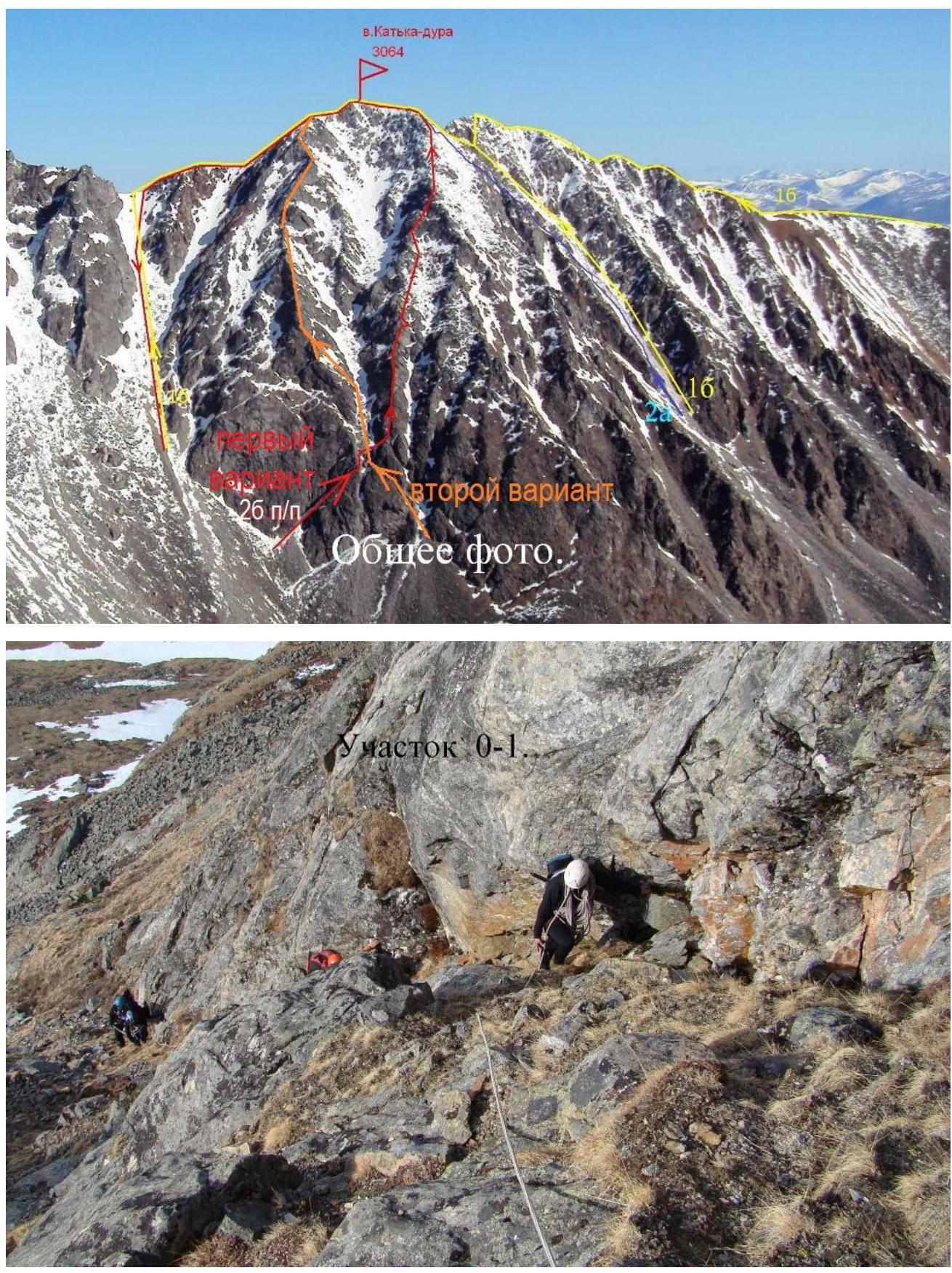
Паспорт підйому на вершину Катька-дура 3064 м, по Южному ребру, ор. 2Б кат. скл. (м-т дві сестри
- Саян Східний, хр. Великий Саян, ущелина М розділ 6.1.1.
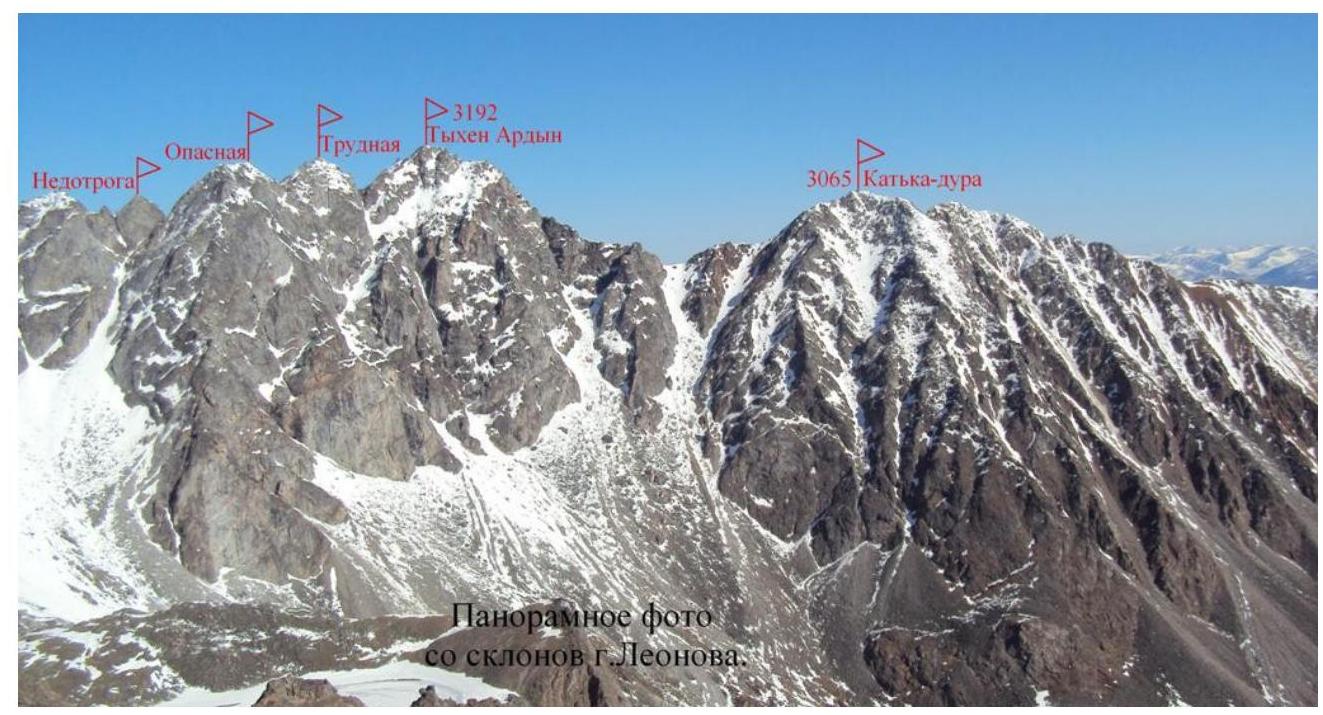
- Вершину Катька-дура 3064 м, по Південному ребру.
- Пропонується 2Б кат. скл., першопроходження.
- Характер маршруту — скільний.
- Перепад висот — 400 м, протяжність — 807 м, середня крутизна — 30°.
- Забито крюків: скільних і закладних — 19.
- Ходових годин команди — 6 год.
- Нічлігів на маршруті немає.
- Група:
- Афанасьєва О.А. 3-й сп. розряд
- Афанасьєв А.Є. МС
- Бобришева А.А. 3-й сп. розряд
- Григор'єв А.Ф. 2-й сп. розряд
Афанасьєва О.А. 3-й сп. розряд, Афанасьєв А.Є. МС, Бобришева А.А. 3-й сп. розряд, Григор'єв А.Ф. 2-й сп. розряд
Описання маршруту підйому на вершину Катька-дура 3064 м по Південному ребру, ор. 2Б кат. скл. (перший варіант).
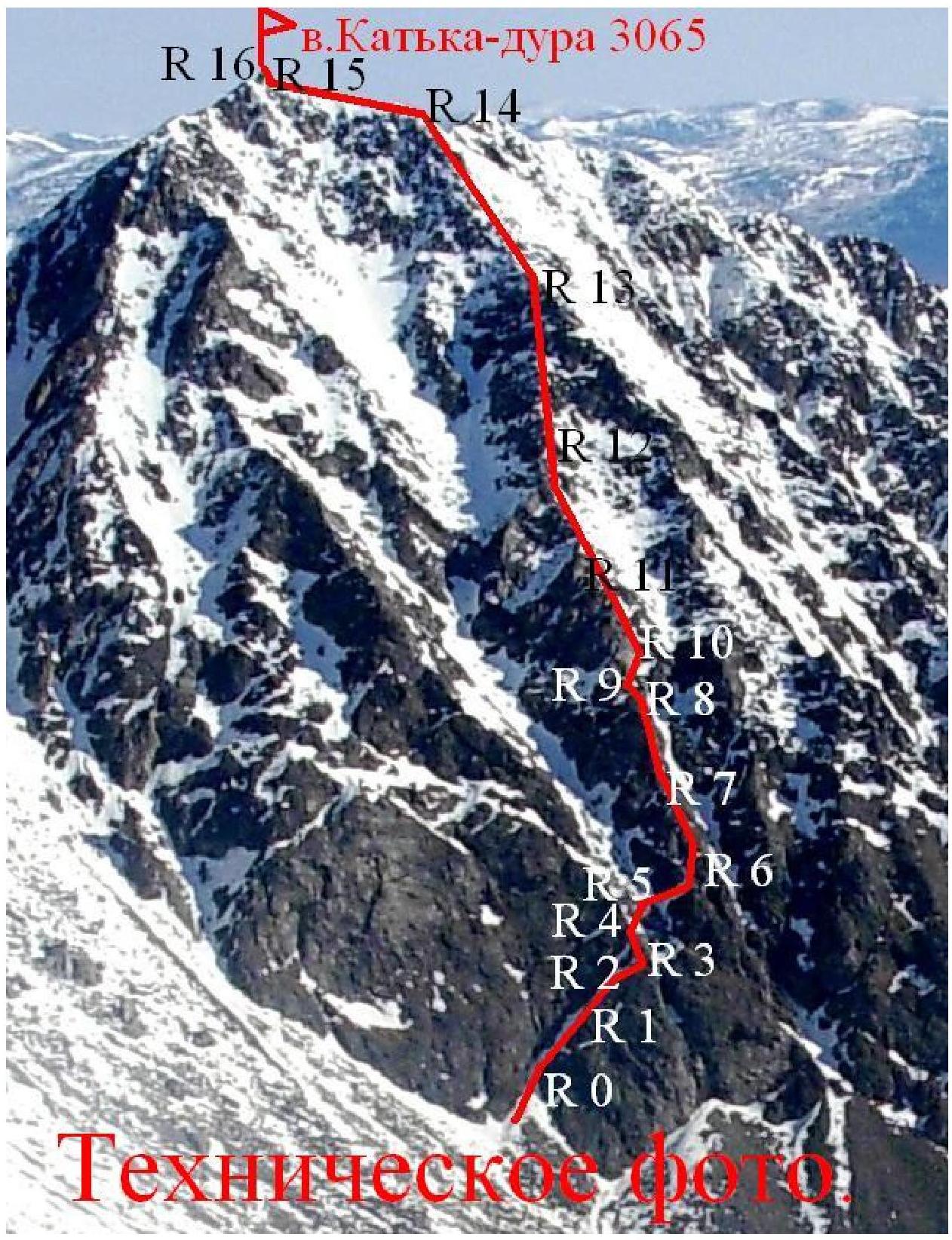
Підхід під маршрут від базового табору лісу займає 2 год. Маршрут починається від стiни лівого ребра південно-західної експозиції, що перетинає вгору направо нижню частину е:
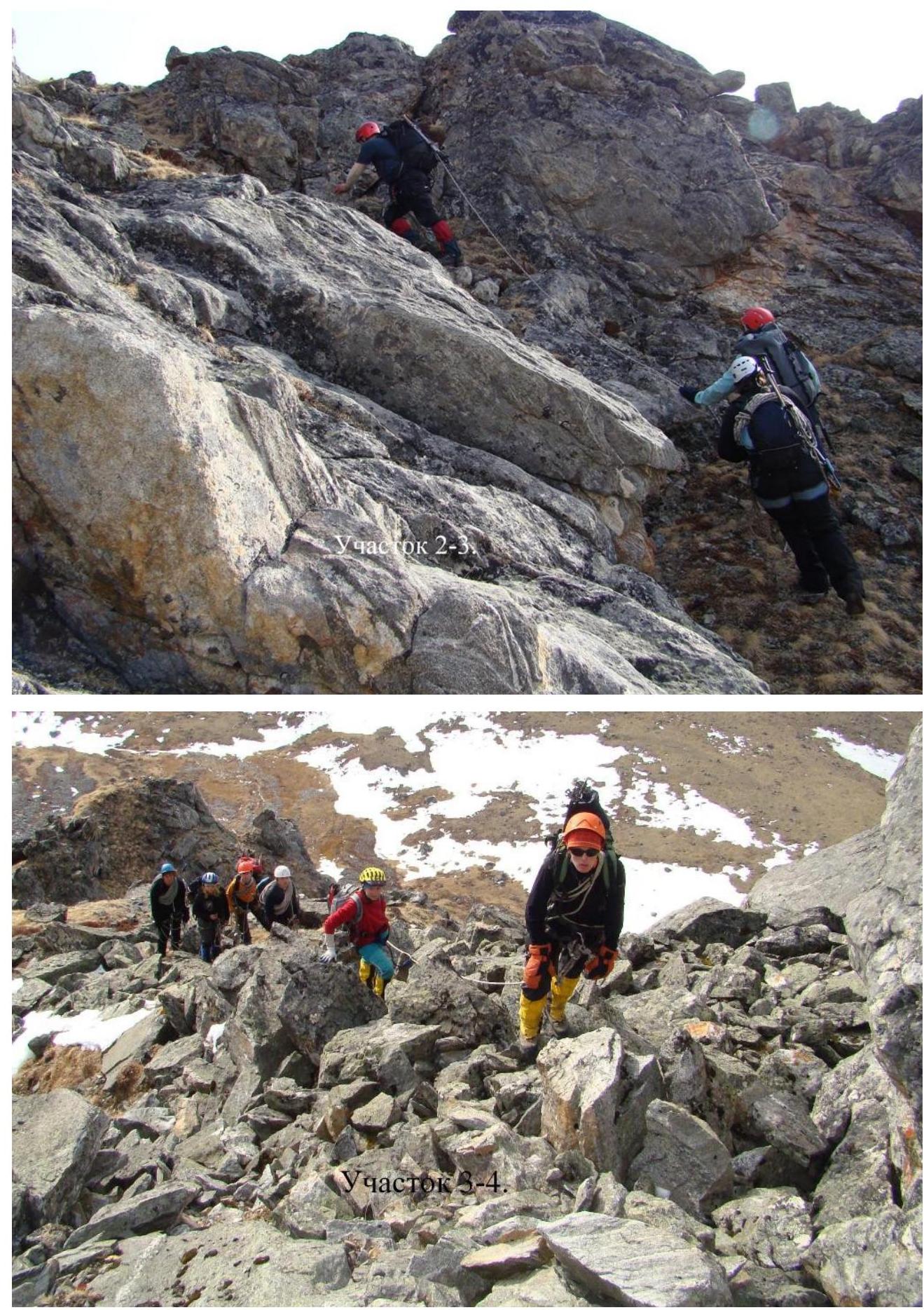
- Уч. 0–1 60 м. 40° II — Снігова полка вправо вгору.
- Уч. 1–2 30 м. 50° III — Затікла льодом скільна (продовження полки).
- Уч. 2–3 30 м. 45° II — Снігова полка в тім же напрямі. Вихід на скільний гребінь.
- Уч. 3–4 30 м. 55° II+ — Надійні скелі по гребеню в широкий кулуар справа.
- Уч. 4–5 20 м. 25° I — Перехід через кулуар до правого скільного ребра південно-західної експозиції.
- Уч. 5–6 50 м. 50° II+ — По внутрішньому куту з переходом на правий гребінь.
- Уч. 6–7 50 м. 50° III — Скільний гребінь.
- Уч. 7–8 65 м. 70° IV+ — Обхід жандарма в верхній частині. Надійні скелі. Вихід на гребінь.
- Уч. 8–9 30 м. 40° II+ — Скільний гребінь і 3 м на перемичку.
- Уч. 9–10 40 м. 35° I+ — Вправо в сторону правого кул, обхід світлого жандарма.
- Уч. 10–11 45 м. 45° II — Скільна плита справа о:
Напорядне фото:
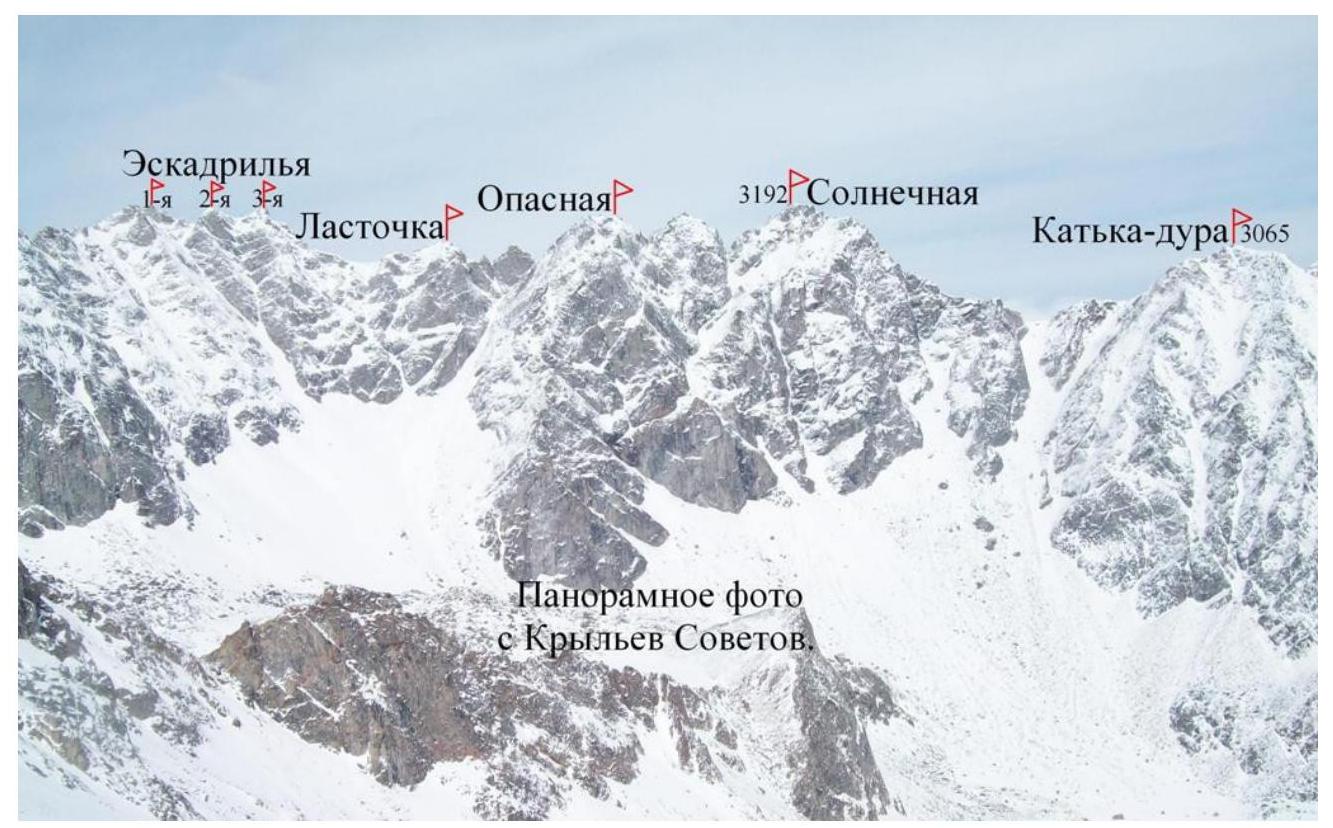
Панорамне фото з Крильїв Совєтів
B. Катька-дура 3065
1. Introduction
1.1. Background
The study of quantum mechanics has revolutionized our understanding of the microscopic world. It provides a framework for describing the behavior of particles at atomic and subatomic scales. The principles of quantum mechanics are fundamental to modern physics, providing a framework for understanding the behavior of particles at atomic and subatomic scales.
1.2. Objectives
The primary objectives of this research are:
- To investigate the behavior of quantum particles at atomic and subatomic scales.
- To develop a theoretical model for the behavior of quantum particles.
- To validate the theoretical model through experimental data.
2. Literature Review
2.1. Historical Context
The field of quantum mechanics emerged in the early 20th century, with a focus on the behavior of particles at atomic and subatomic scales. This research focuses on the behavior of quantum particles under various conditions, including:
- Quantum entanglement: The entanglement between particles is a phenomenon where two or more particles become correlated in such a way that the state of one particle instantly affects the state of the other, regardless of distance. This property has been demonstrated in various experiments, such as:
- Quantum entanglement: The entanglement between particles at atomic and subatomic scales is a phenomenon where two or more particles become correlated in such a way that the state of the particles affects the state of the particles.
- Quantum entanglement — The entanglement between particles at atomic and subatomic scales is a phenomenon where two or more particles become correlated in such a way that the state of the particles affects the state of the particles.
- Quantum entanglement — The entanglement between particles at atomic and subatomic scales is a phenomenon where two or more particles become correlated in such a way that the state of the particles affects the state of the particles, regardless of distance.
3. Methodology
3.1. Experimental Setup
The experimental setup involved a quantum system with a laser source and a laser
source. The system was divided into 32 states, each with a specific number (n)
and a specific number (n−1). The system was divided into 64 states, each with a
specific number (n) and a specific number (n−1−1). The system was divided into
32 states, each with a specific number (n) and a specific number (n−1−1−1−2).
The system was divided into 164 states, each with a specific number (n) and a
specific number (n−1−1−1−3). The system was divided into 32 states, each with a
specific number (n) and a specific number (n−1−1−1−4). The system was divided
into 164 states, each with a specific number (n) and a specific number
(n−1−1−1−5). The system was divided into 32 states, each with a specific number
(n) and a specific number (n−1−1−1−6). The system was divided into 164 states,
each with a specific number (n) and a specific number (n−1−1−1−7). The system
was divided into 32 states, each with a specific number (n) and a specific
number (n−1−1−1−8). The system was divided into 32 states, each with a specific
number (n) and a specific number (n−1−1−1−9). The system was divided into 32
states, each with a specific number (n) and a specific number
(n−1−1−1−10).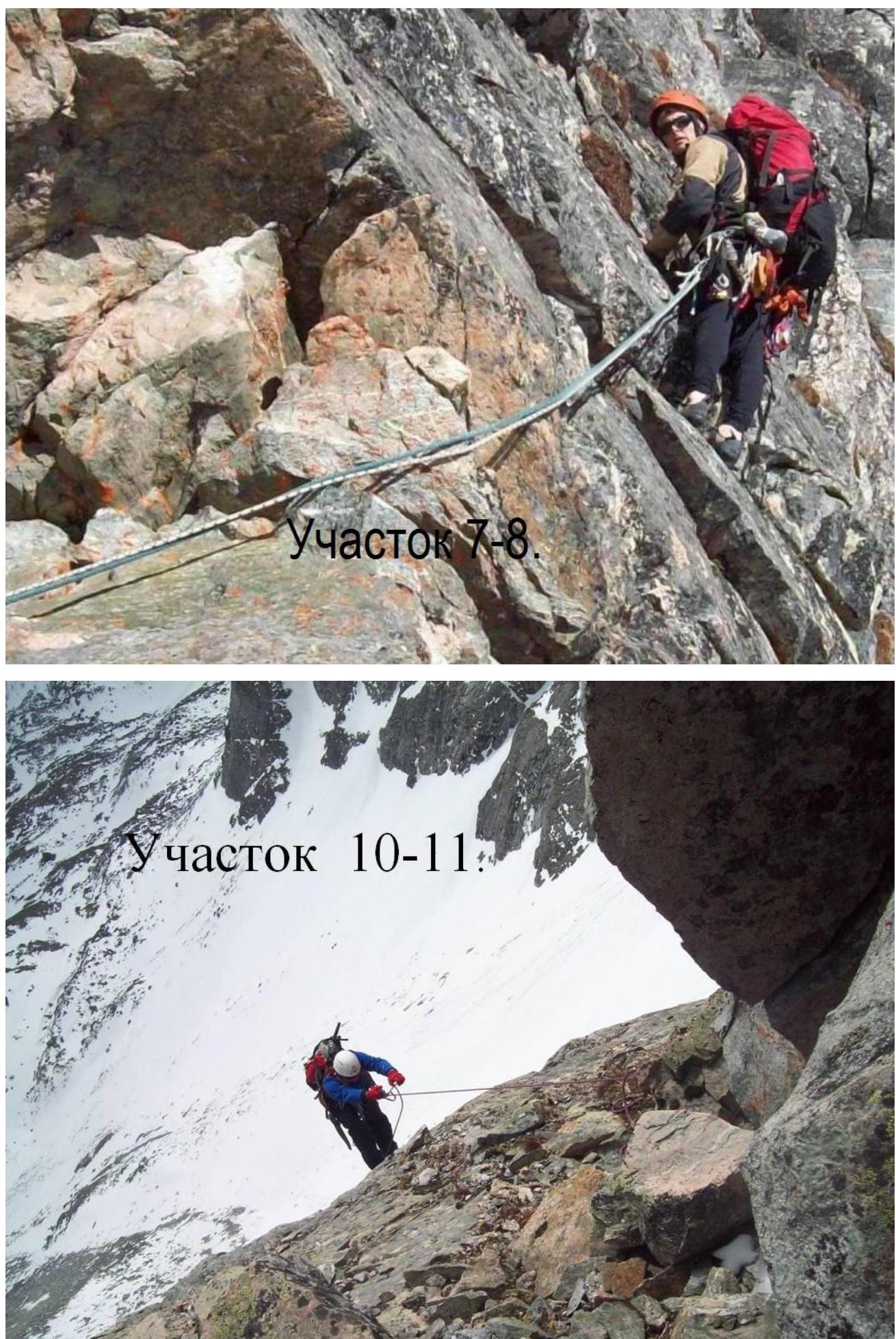 √
часток
10–11
√
часток
10–11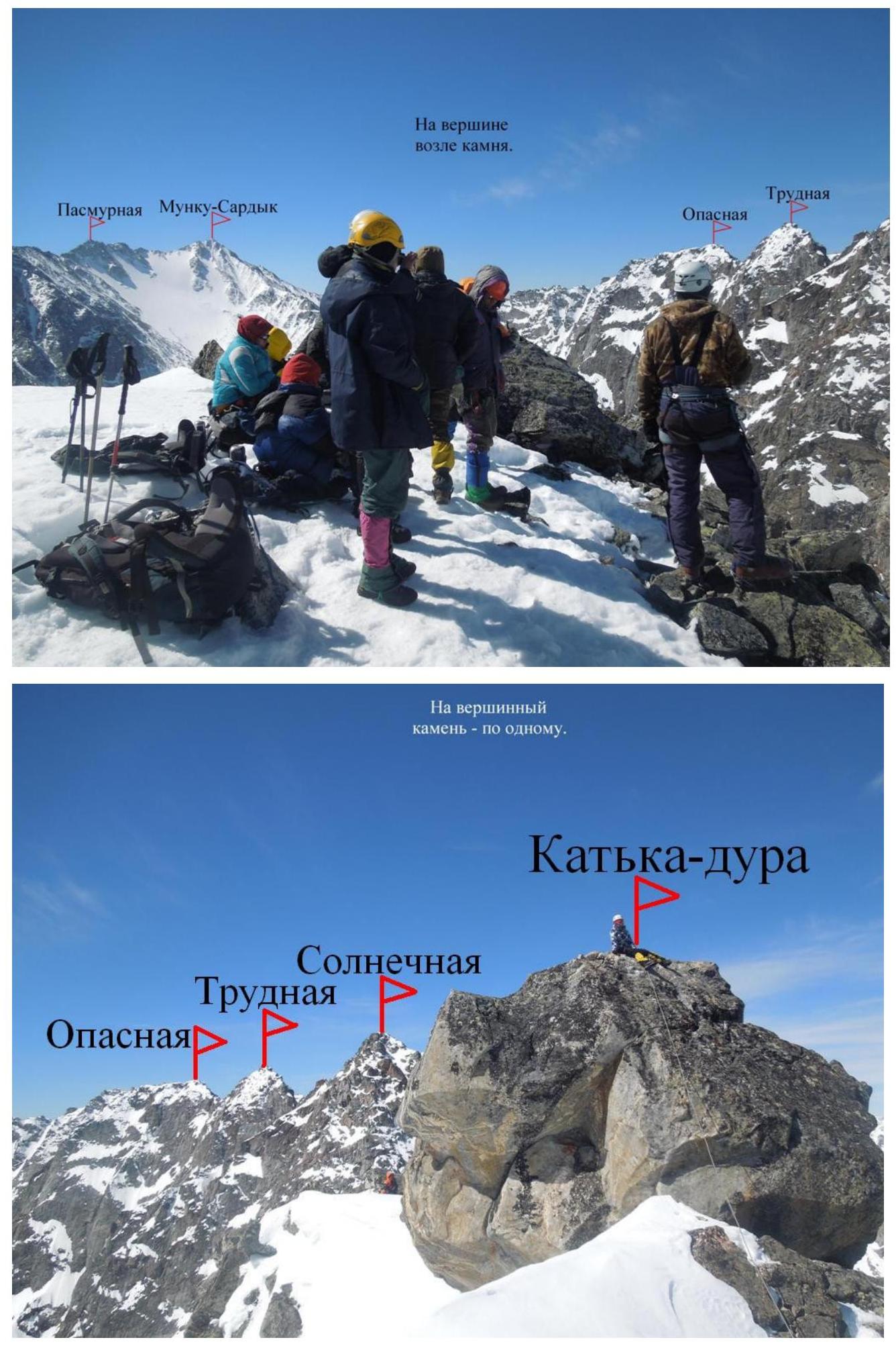
На вершині камінь — по
одному.
Коментарі
Увійдіть, щоб залишити коментар