
A query from a reader (ExplorersWeb's reader — editor's note) planning a trip to Upper Mustang drew our attention to the hurdles independent climbers face when planning their Himalayan projects, especially solo ascents or attempts on unclimbed peaks in restricted areas.
We reached out to a Nepalese tour operator for clarification on obtaining such permits.
Q&A
Matt Powell from the US asked:
I was hoping you could provide me with some clarification regarding Nepal's rules for solo climbers, particularly in restricted areas such as Upper Mustang and the Nar Phu valley. Is it possible for a single climber (myself) to obtain a permit to climb a peak in a restricted area if I use the services of a Nepalese guide? And if so, how do I go about it?
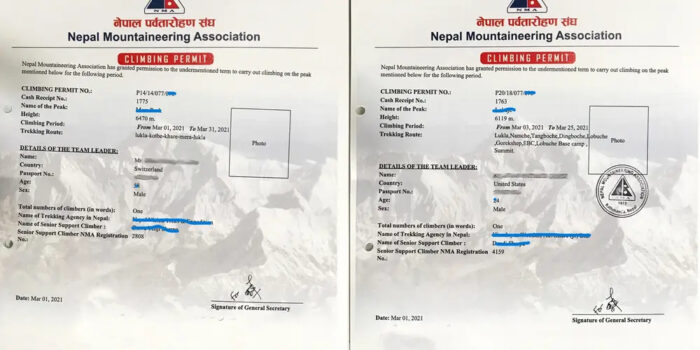
Dawa Stephen Sherpa clarified that it is possible. However, he added, the climber must obtain the permit through a registered and certified trekking agency in Nepal. The main question, however, lies in what permits the climber needs and what are the requirements for each. It turns out that it depends on the height of the peak and involves various permits and procedures.
Expedition Peaks
Peaks above 6,500 m are considered expedition peaks and require a permit and the presence of a sirdar/guide and liaison officer on the expedition, increasing the cost. Permits for these peaks are issued by the Department of Tourism, under the Ministry of Culture, Tourism, and Civil Aviation of Nepal.
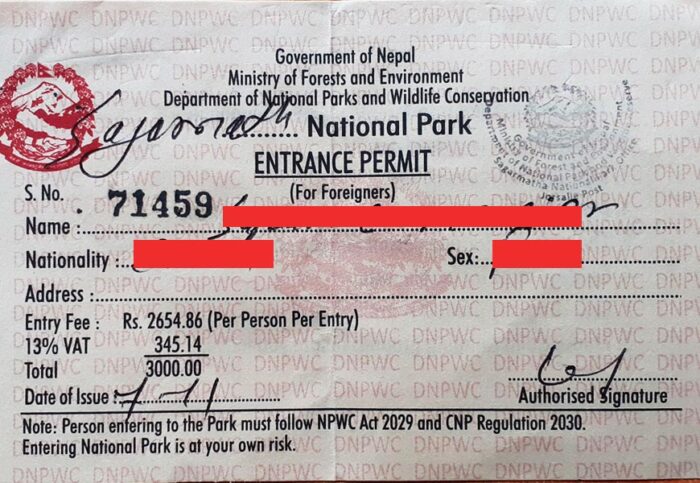 Once the climber has paid for the permit, the agency receives a letter from the Department of Tourism, which must be presented to the immigration department, issuing a second permit: the Restricted Area Permit (RAP). This allows the climber to enter the restricted zone at no additional cost, since they have already paid for the climbing permit.
If the climber or climbers intend to be accompanied by non-climbers who will not go beyond base camp, they will need to pay for the relevant trekking permits and RAP. The cost of the RAP depends on how long they plan to stay in the restricted area. In addition, there must be at least two non-climbers/trekkers in the group.
Trekking Peaks
Trekking peaks are peaks between 5,800 m and 6,500 m. Teams climbing them do not need a liaison officer, but require a climbing permit and a Nepalese guide. Again, the permit application must be submitted through a registered trekking company. However, although the rules provided by the Nepal Mountaineering Association (NMA) do not state this specifically, there must be at least two people in the team, says Dawa Stephen.
In autumn 2024, Nepal opened 57 peaks to climbers, mostly in Dolpo, Upper Mustang, and Western Nepal. Many, but not all, of them were still unclimbed, according to the American Alpine Journal. Most of them were also 6,000-meter peaks, classified as trekking peaks. Last year, the authorities waived royalties for 97 peaks; many of these were opened in 2024.
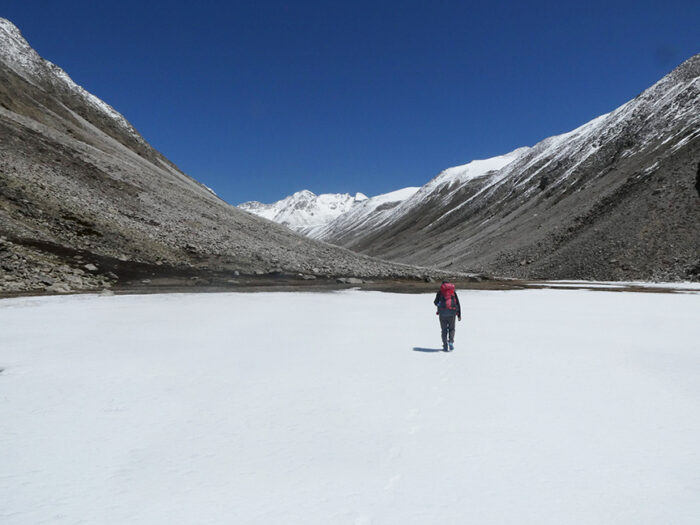 The NMA issues permits for popular trekking peaks. The institution lists 27 peaks specified as eligible for permitting, but none of the recently opened peaks are on this list.
Reading the Fine Print
If the peak chosen by the team is not on the list of 27 (e.g., those mountains that were recently opened for climbing), climbers need to apply to the Department of Tourism through a local agency for a climbing permit, as if it were a higher mountain.
Thus, it appears that the Department of Tourism may issue a solo climber a permit for a lower 6,000-meter peak, which is normally considered a trekking peak. In any case, it would be wise to consult with a trekking/climbing agency, says Dawa Stephen, as some rules have changed recently. More changes are likely to follow when the new Tourism Act is passed, which is expected in the next few months. It's a gray area, warns Dawa Stephen.
Our Reader's Experience
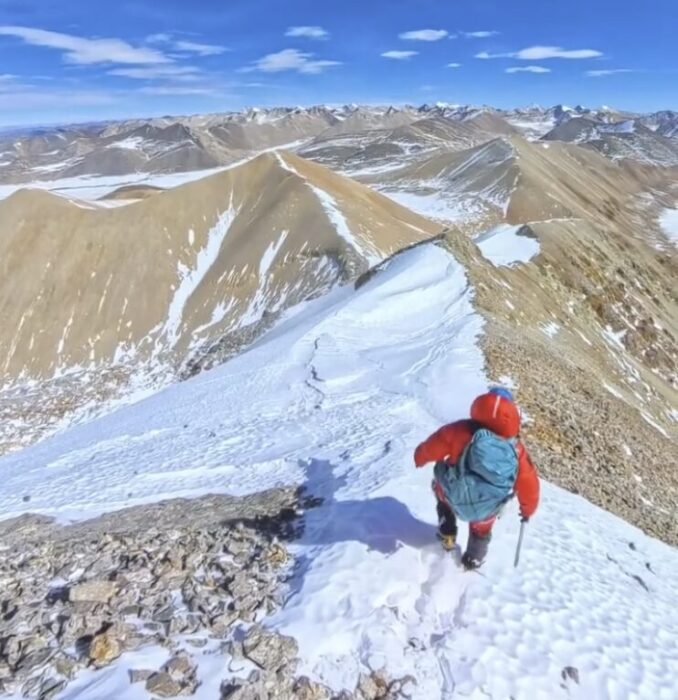 Matt Powell describes himself as an "intermediate-level climber" with a clear priority: to explore remote areas of the Himalayas and see the world from the top of mountains off the beaten track, preferably unclimbed, but not necessarily technically challenging. Three years ago, he was looking for such an unclimbed, yet straightforward mountain and found one in Western Nepal.
With two friends and a hired guide, a base camp crew from a small local company, and mules to transport gear, Powell's team spent several days approaching the region and then trekked for two weeks. Along the way, they spent four hours climbing Chandi Himal from their high camp. For Powell, the journey into the wild region, where they saw only snow leopard tracks, was as valuable as reaching the summit.
The Next Project
This year, Powell started planning a similar trip to Upper Mustang. However, he was not the only one interested in this desert region with plenty of 6,000-meter peaks on the border with Tibet.
I was eyeing https://summitx.info/ru/objects/peaks/12765825/about ↗ and Jyanglatunpu peak as targets in the Upper Mustang region and was hoping to make a first ascent of these two peaks later this year. But I didn't have a climbing partner, and I thought that for expeditions to restricted areas, a minimum of two foreign climbers was required. Then I read your article about He Jing's first ascent of these very peaks.
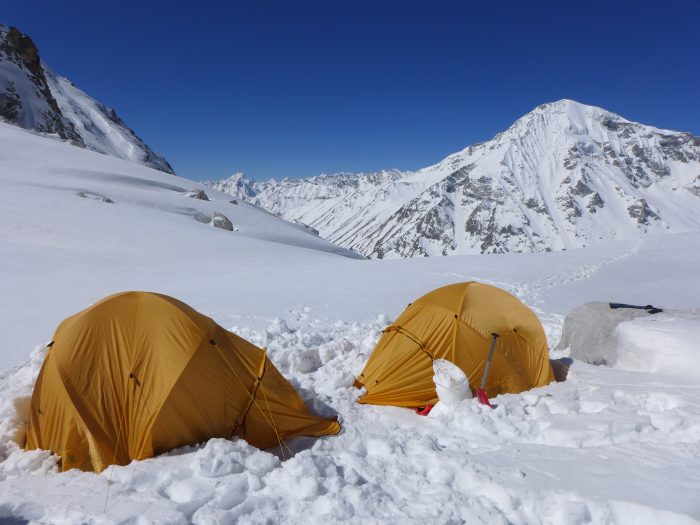 So, his chance at a first ascent was gone. But he also noticed that He Jing was the only foreigner mentioned in the expedition. He wondered if expeditions with a single foreign climber were allowed.
Not a Typical Trekking Peak Ascent
Jyanglatunpu (6,062 m) and https://summitx.info/ru/objects/peaks/12765825/about ↗ fall within the height range of trekking peaks, where a minimum of two climbers is usually required, but there might be exceptions for three reasons:
- The NMA rules do not mention the nationality of team members. Some of them could presumably be locals.
- Since these unclimbed mountains were recently opened for climbing, it was likely the Department of Tourism that handled the permit, so the requirements may have been different.
- He Jing's team included several Sherpa climbers and was organized by a powerful company (Seven Summit Treks). Their influence may have helped with the climbing permits.
So, the short answer to Matt Powell's question is that solo climbing an unclimbed peak in Nepal is possible. However, the Department of Tourism's criteria may vary, and some patience is required to figure out the specific requirements for a particular peak and area.
Source: ExplorersWeb ↗, Angela Benavides

Comments
Sign in to leave a comment