
Passport
-
Class of winter ascents
-
South America, Andes, Patagonia, Fitz Roy massif
-
Peak — Fitz Roy via the southeast face
-
Route 6B cat. dif. (Franco-Argentine)
-
Route length — 1481 m
-
Length of the wall section of the route — 560 m
-
Length of sections with 5–6 cat. dif. — 576 m
incl. 6 cat. dif. — 381 m
-
Height difference — 1220 m
-
Average steepness of the wall section of the route — 77°
-
Pitons driven:
- ice screws — 22
- rock pitons — 97 (14*) / 50
- chocks — 358 / 192
- bolt pitons — 3
- sky hooks — 2
Note: * — previously used pitons
-
Climbing hours — 51.5 hrs, days worked on the route — 9
-
Overnights: 3 on the wall, semi-sitting on a ledge
5 in the Italian Saddle, semi-reclining on a ledge
-
Team leader: Sibaev Mingalim Minsalimovich — MS
Team members:
- Zaitov Rinat Nuruлович — MS
- Ivanov Alexander Vasilievich — CMS
- Igolkin Viktor Ivanovich — MS
- Soldatov Sergei Yurievich — MS
-
Coach: Igolkin Viktor Ivanovich
-
Departure to the route: December 23, 1996
summit: January 31, 1997, return: February 1, 1997
-
Mountaineering club of Magnitogorsk "MGMI"
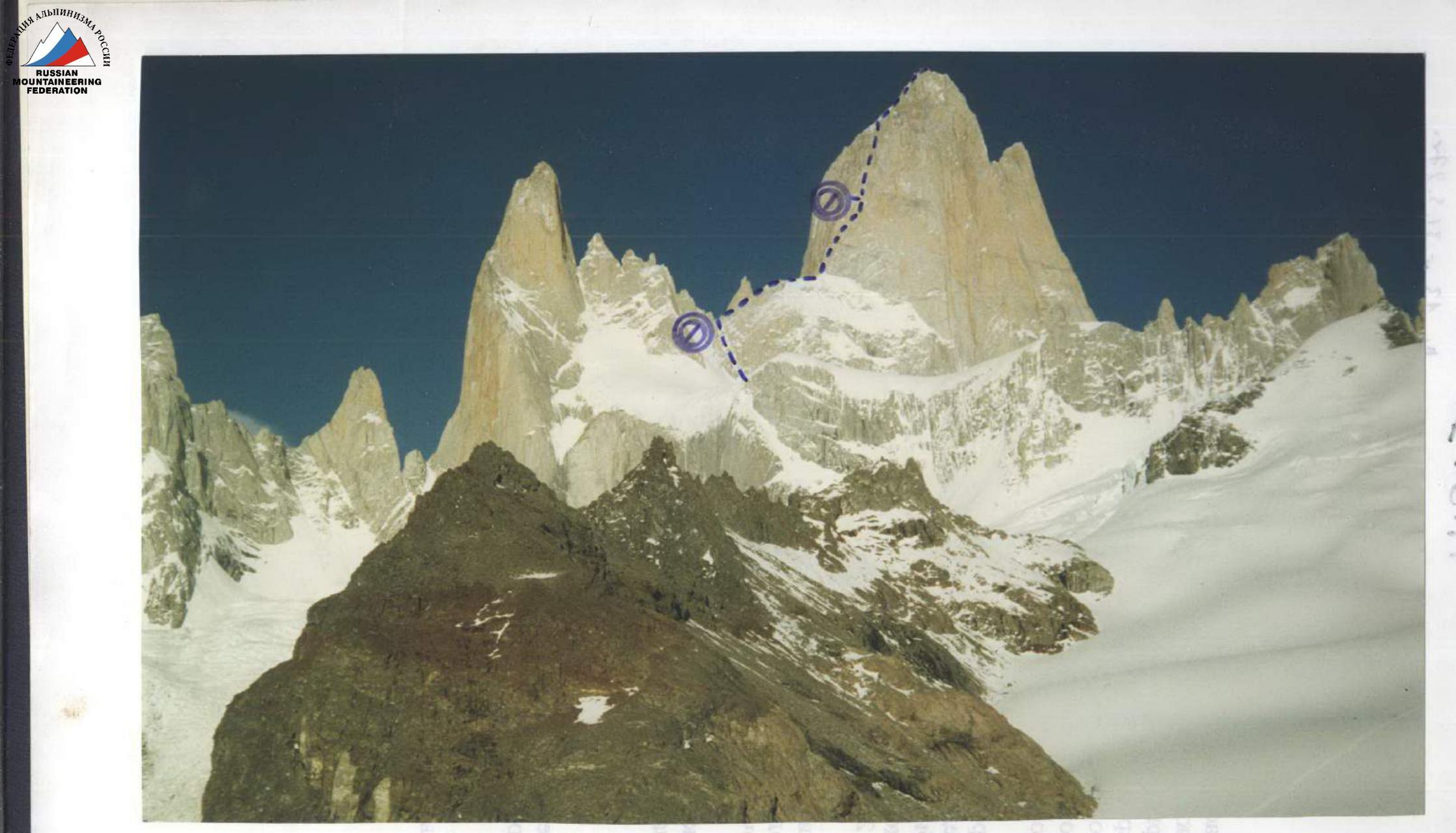
Photo № 1. General photo of the peak. Franco-Argentine route. Shooting point FL. Distance to the wall 1500 m. Camera "Kodak-500".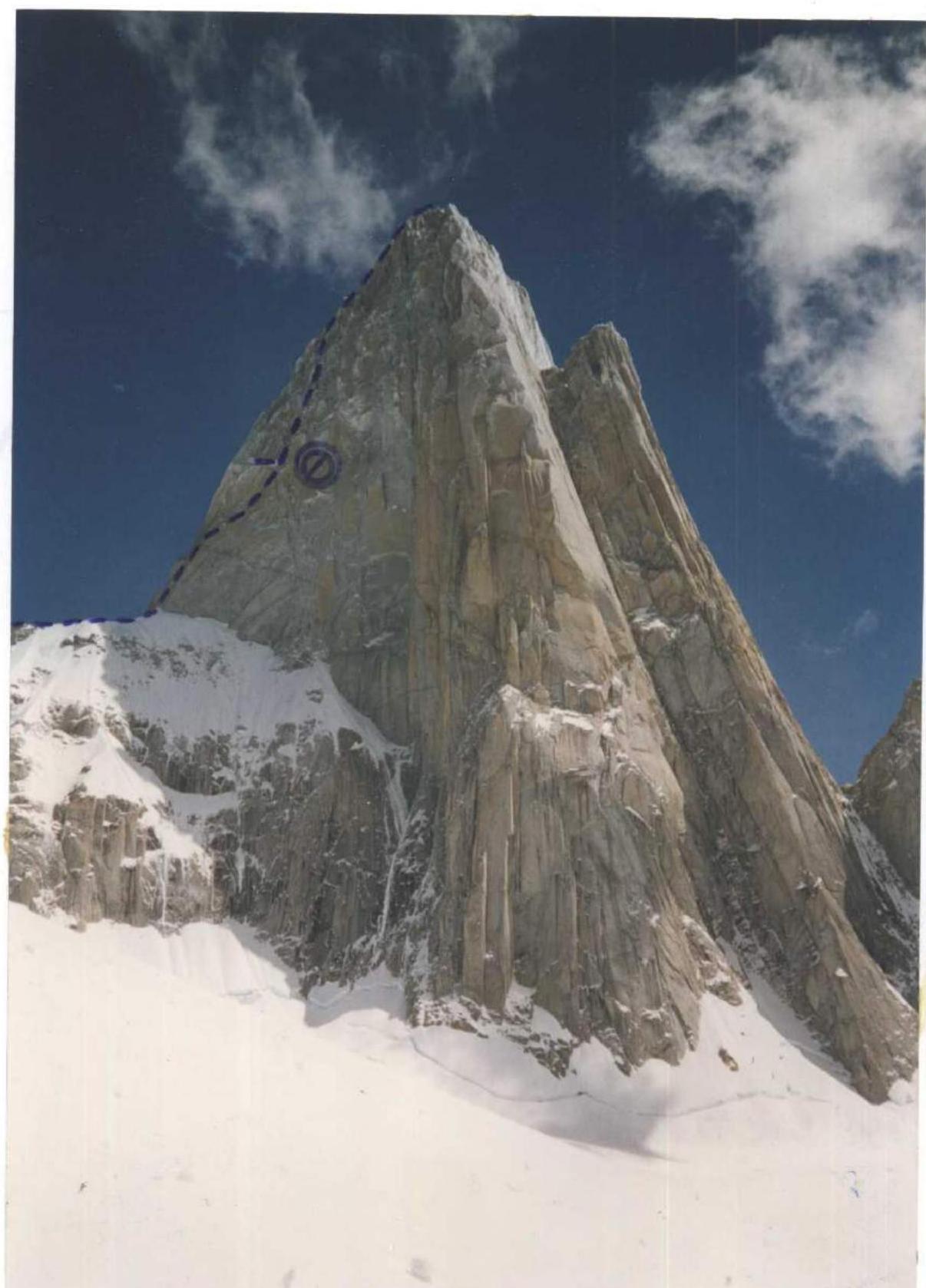
Photo № 2. Wall profile from the right. Distance 900 m. Lens — Kodak 500. Taken on January 23, 1997 15:00.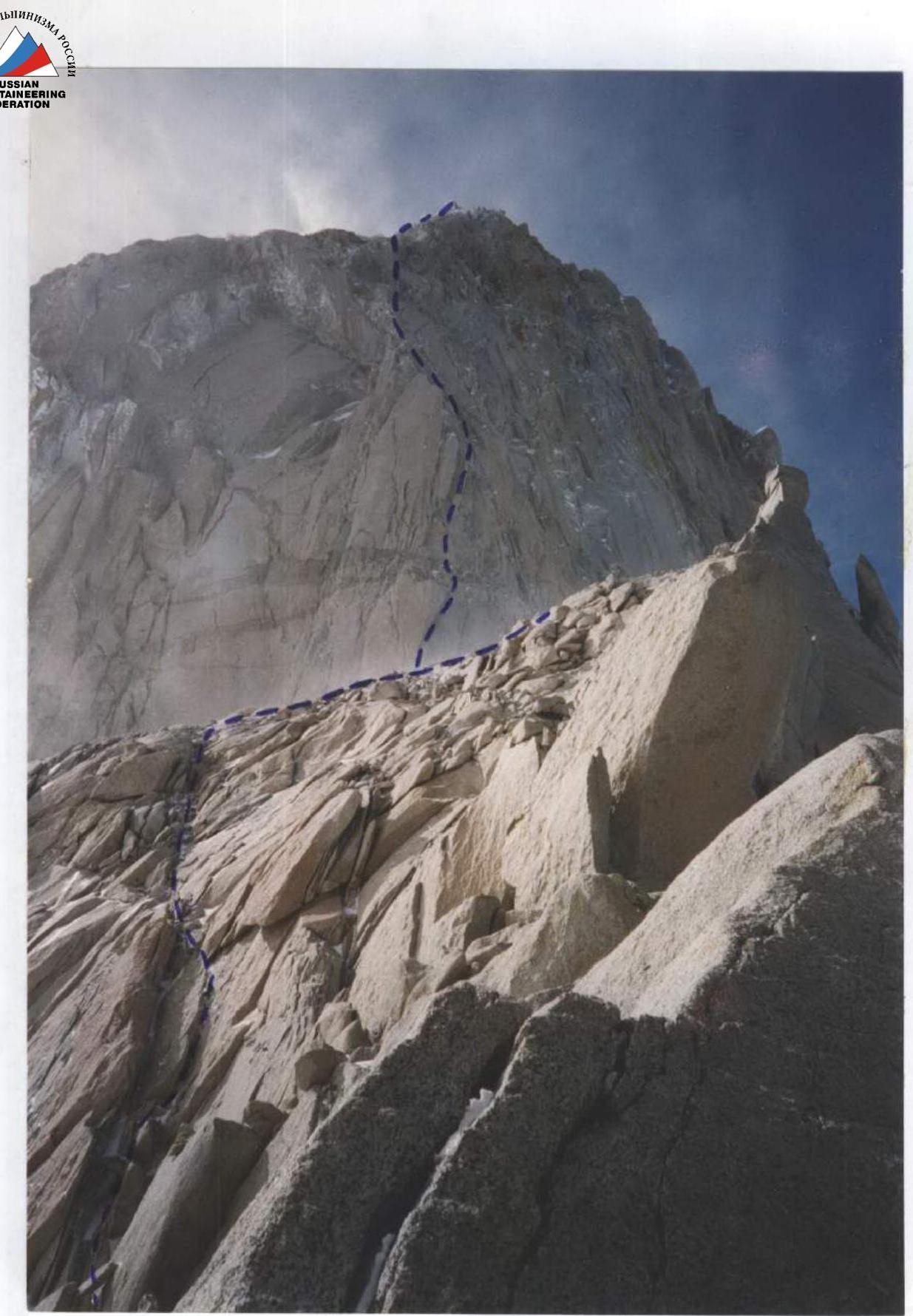
Photo № 3. Wall profile from the left. Distance 500 m. Lens — Kodak 500. Taken on January 24, 1997 16:00.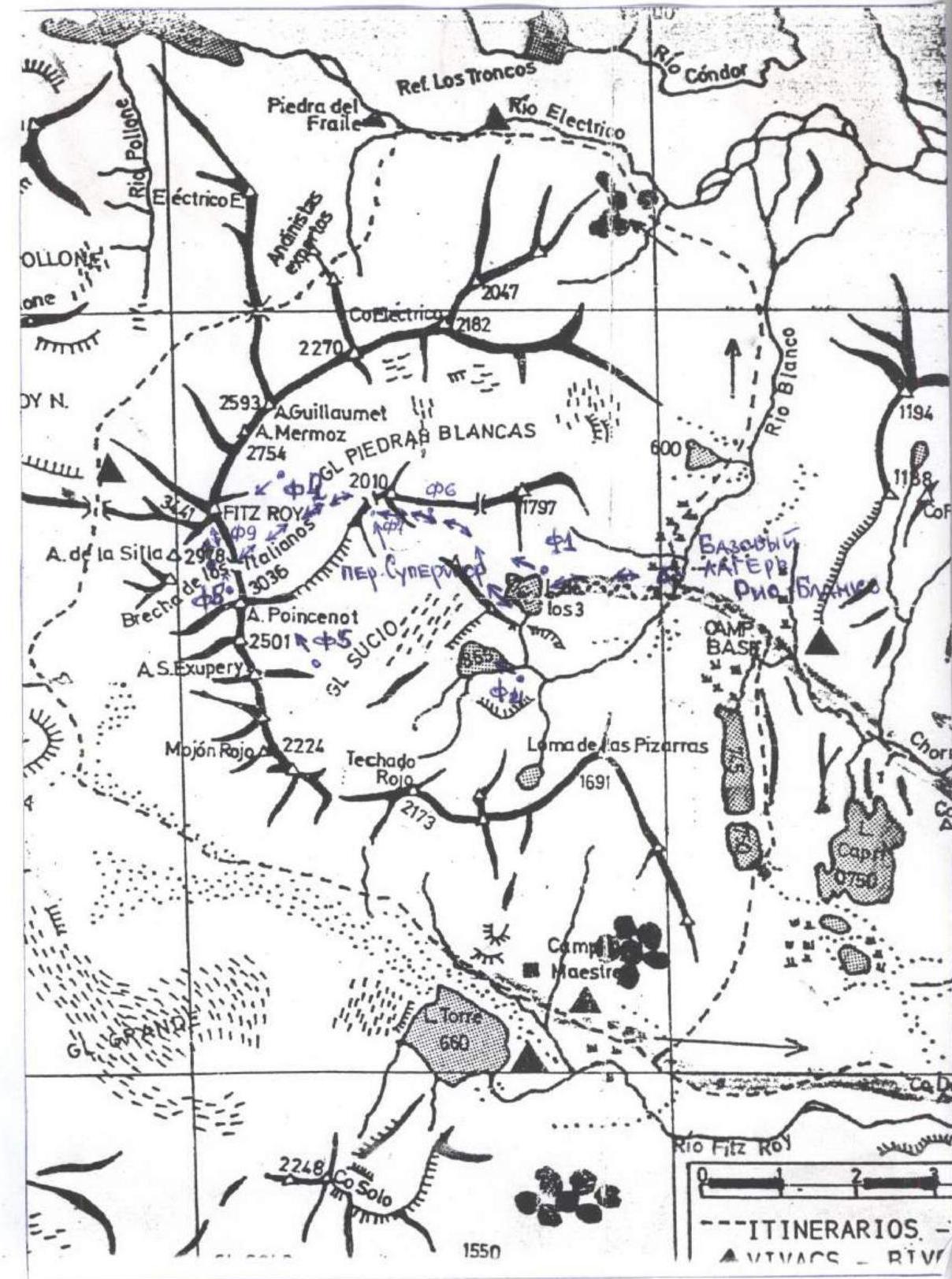
Area map.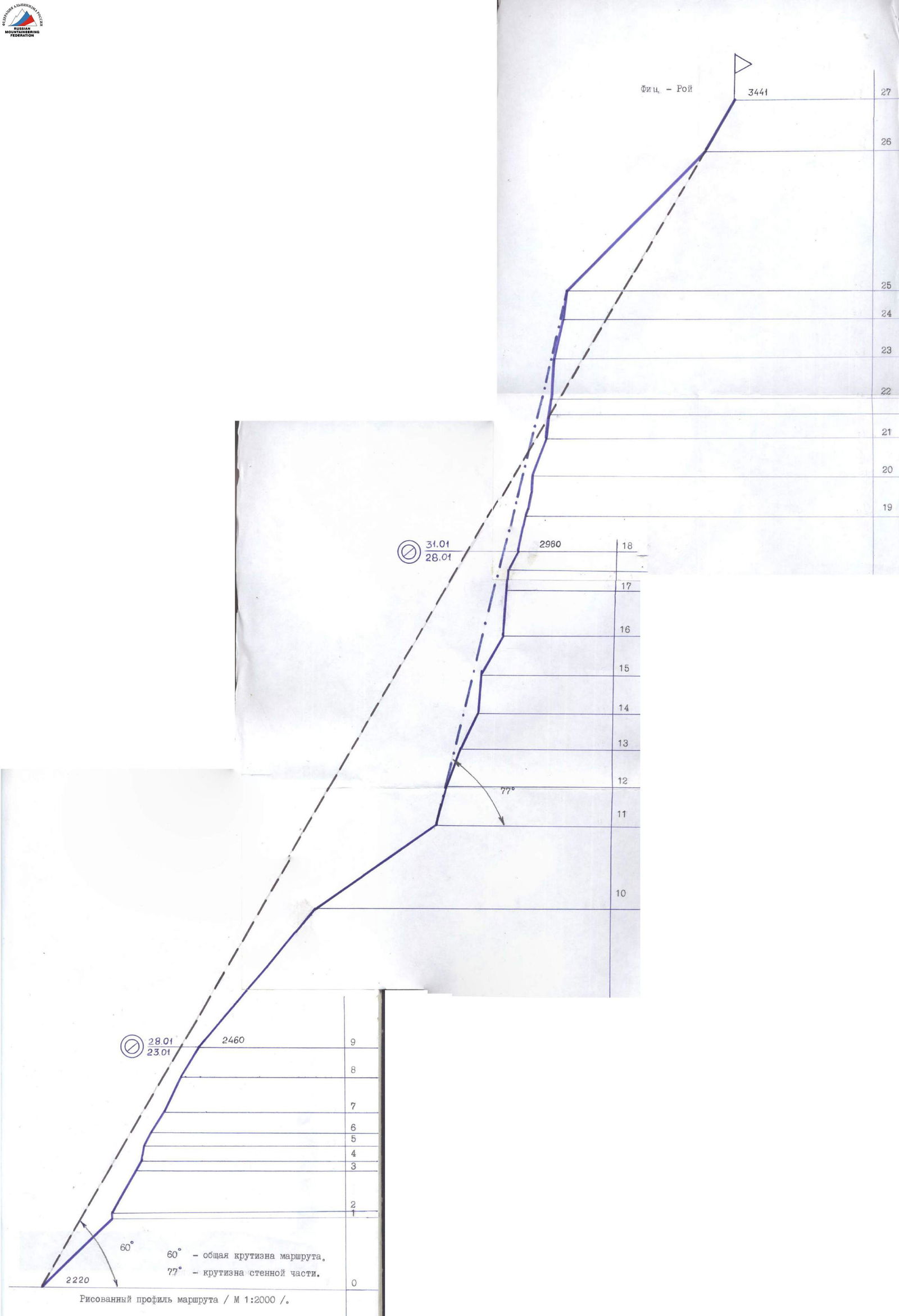
Photo №64805313)
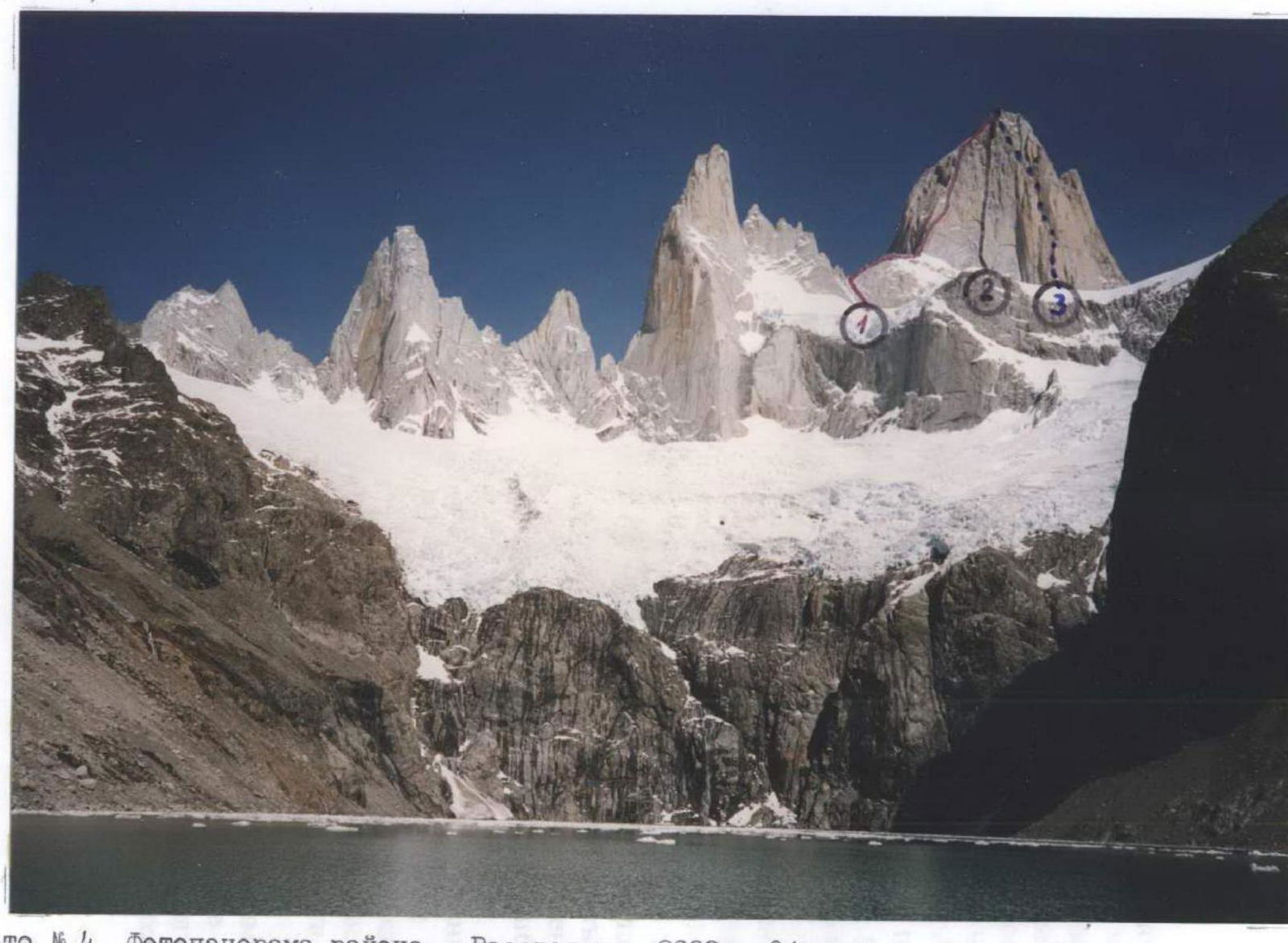
Photo № 4. Panoramic photo of the area.
- Distance – 2000 m
- Lens – Kodak 500
-
- Franco-Argentine route 1952 / route of the team /
- Spanish route 1984
- Italian route 1976
Brief overview of the ascent area
The peak Fitz Roy (indigenous name — Chaltén) is located in the mountain range (cordillera) Fitz Roy. The massif is situated in the southernmost part of the Andes on their eastern slopes in the area of Lake Viedma, in Patagonia. To the west, through the Cerro Torre massif, it borders the Patagonian Ice Sheet, which is about 100 km wide, 400 km long, and has an ice cover thickness of up to 1000 m. To the east, through the small foothills of the Andes, it borders the Pampas plain, stretching to the Atlantic Ocean. Fitz Roy is located at 50 degrees South latitude. It is the highest point in the area, which causes the formation and concentration of clouds around the peak even on relatively favorable days.
The first attempt to climb Fitz Roy was made in January 1937 by Italians. But only in 1952 did a well-prepared French expedition succeed.
Already, the size of the Hello Continental glacier, which is 3–4 km away, gives an idea of the weather and precipitation in the peak area. Patagonia is the only territory on Earth completely open to circumpolar (centrifugal due to the Earth's rotation) air mass movement. Between 40 and 60 degrees South latitude, bypassing the Earth and not encountering other obstacles, hurricane-force winds crash onto a narrow strip of land. The close proximity of Antarctica, with its ice dome from which cold air masses flow, forms cyclones that also have a significant impact on the climate and weather of Patagonia. In summer, in the foothills at an altitude of 500–1000 m, precipitation constantly falls, often in the form of snow. Out of 365 days a year, about 50 are sunny.
The Fitz Roy and Cerro Torre massifs are composed of strong diorites, which gives them fantastic needle-like shapes. The height differences of many peaks are 1000–1500 m of sheer rock monoliths.
Hurricane-force winds and constant precipitation, sheer walls, and unpredictable weather make the area unique and highly popular among serious climbers.
Preparation for the ascent
The trip to Patagonia to Fitz Roy was planned in 1991 and was only foiled by the late receipt of an invitation from the Argentine side. Then again in 1992. Since then, a collection of materials on the Fitz Roy and Cerro Torre routes has been organized, and by the time of departure on the expedition, there was practically a complete set of their detailed descriptions.
For two years before leaving for Patagonia, the team specifically prepared for ascents in extreme weather conditions. Therefore, in the previous mountaineering season, they chose Tian Shan, Karakol Valley, where they climbed routes of 5B–6B cat. dif. in any weather conditions. In November and until mid-December, the team trained on the most complex rock walls of the Southern Urals (Ural-Tau ridge), covered with snow and ice. The expedition included a scientific leader of the UNESCO program for the study of Patagonian glaciers from Moscow State University, who had worked on the glaciers of the Fitz Roy massif in the previous season. He supplied the team with detailed topographic maps, weather observations, and geological characteristics, which significantly helped in adapting to the new area.
Upon arrival in Patagonia and setting up a base camp on Rio Blanco (a traditional place for alpinists to base in the Los Glaciares National Park), they conducted reconnaissance and reconnoitering of the area. Glaciers, passes, and approaches to the peaks were examined. Training was conducted on rocks and ice. On December 24, 1996, a training ascent was made to peak Superior (2010 m, 2B cat. dif.) and equipment and products were transported to the Superior pass. On December 26–27, 1996, a new route was made on peak St. Exupery via the N ridge and NE wall, approximately 5B cat. dif. On December 30–31, 1996, another shipment of equipment and products was made to the Superior pass, and a cave for 8 people was dug, where they spent the night.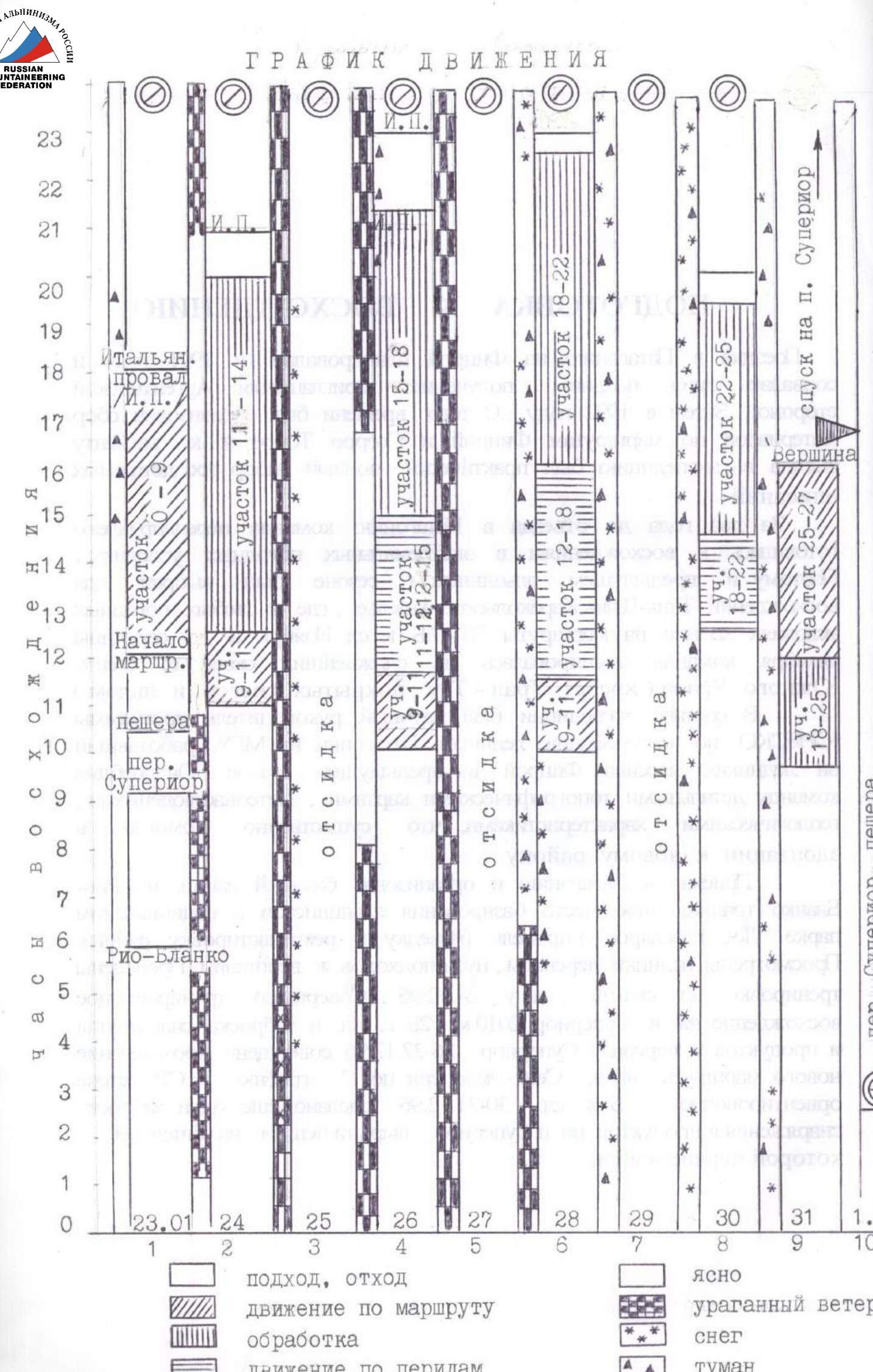
Tactical actions of the team
After reconnaissance and observation of Fitz Roy, 2 routes were chosen — via the East face ("Italian") and via the Southeast face (Franco-Argentine). It was planned to wait for 3–4 days and then make a speedy ascent. But the state of the mountain in the current season and complex weather conditions forced them to choose the Franco-Argentine route. Its advantage is the possibility of organizing an overnight stay on the South ridge in the Italian Saddle in a tent, where it is possible to wait out bad weather. Good and detailed descriptions and visual observations of the route gave a fairly good understanding of its technical complexity.
Constant bad weather and hurricane-force winds, which did not allow any of the numerous groups of alpinists from around the world to even come close to the routes of Fitz Roy and Cerro Torre until mid-January, forced the team to switch to a siege tactic.
A good material base was created in a large ice cave on the Superior pass.
Then the team broke through with a large number of ropes (11 pieces) into the Italian Saddle, where they secured themselves on a small artificial ledge, relatively well-protected. From here, they began processing the next part of the route. They worked, paying no attention to the weather, and the fact that the first 2 ropes were constantly being worn out by the hurricane-force wind.
Having processed 7 ropes, they broke away from the South ridge, securing themselves on bolt pitons on the middle of the wall on an ice ledge 1 m wide, with a special wall tent. From here, they also processed 7 ropes in 3 days and then stormed the summit. This tactic allowed:
- Having a fairly well-equipped bivouac on the route
- Having the possibility, in case of a sharp deterioration in the weather, to quickly descend to the tent
- To wait out bad weather for several days in the tent
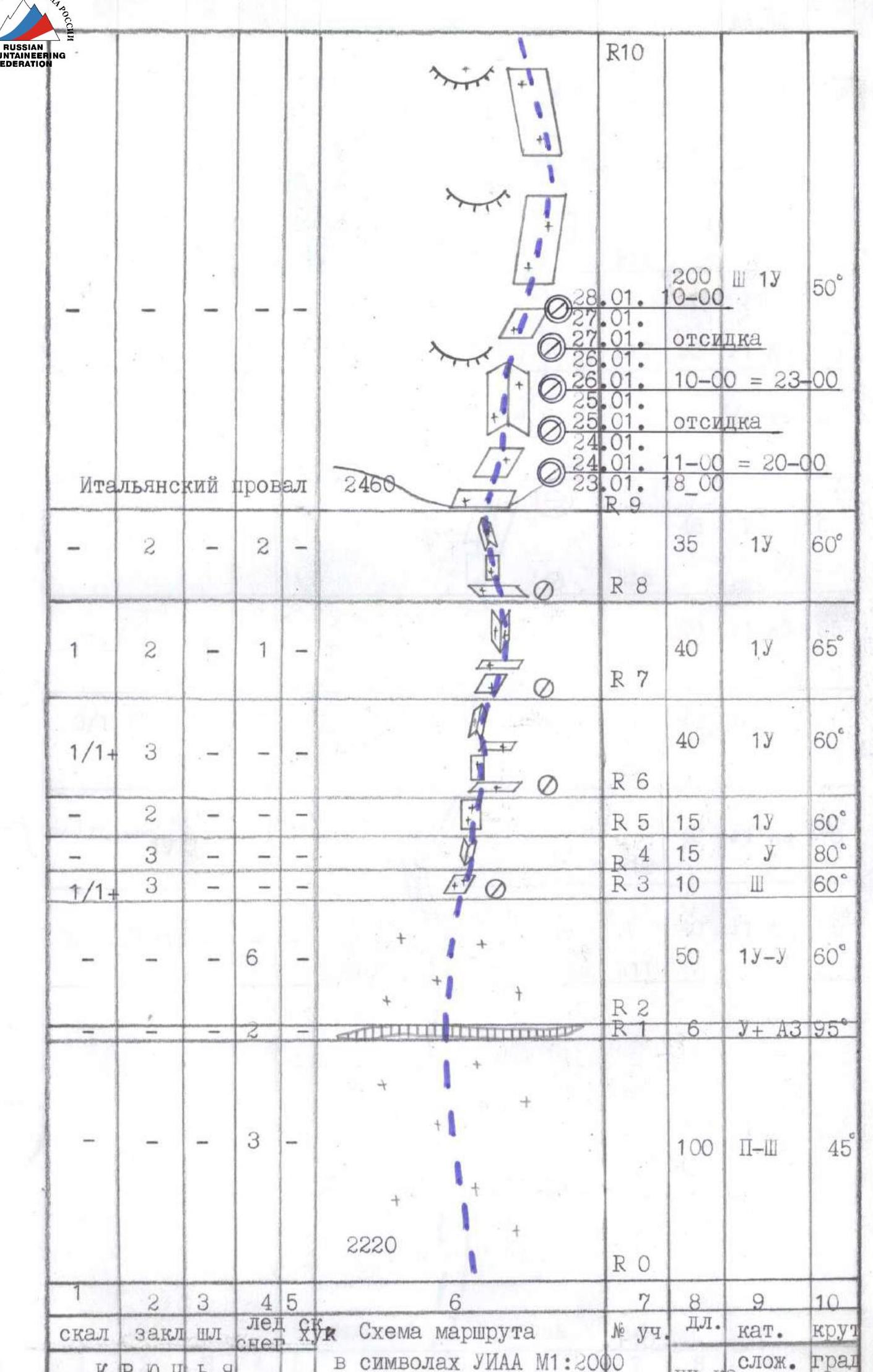
| Date, time | № sect. | Length | Cat. dif. | Steepness, deg. | ||||||
|---|---|---|---|---|---|---|---|---|---|---|
| 10/4 | 18/11 | - | - | - | 31.01. 9:30, 30.01. | R20 | 15 | У1АЗ | 90° | |
| 30.01.000.12–14, 29.01. hiding | 17 | У А1 | 80° | |||||||
| 28.01.16:00, breaking 18–22 | R19 | 8 | 1У | 65° | ||||||
| 7/1+ | 28/20 | 3 | - | - | 26.01. 10:00–23:00 | R18 | 40 | У1 А2 | 80° | |
| R17 | 20 | У1 | 65° | |||||||
| 3/2+ | 35/28 | - | - | - | R16 | 20 | У1 А3 | 85° | ||
| 4 | 7/2 | - | - | - | R15 | 45 | У1 А3 | 85° | ||
| R14 | 45 | y | 60° | |||||||
| 5/1+ | 30 | - | - | - | 24.01. 11:00–21:30 | R13 | 40 | У1 А3 | 85° | |
| 3/1 | 10/6 | - | 1 | - | R12 | 40 | У1 А1 | 65° | ||
| 4/1+ | 29 | - | - | 1 | R11 | 40 | У1 А3 | 70° | ||
| 2 | 19 | R10 | 40 | У1 А3 | 75° | |||||
| 7/3 | 25/18 | - | - | - | 2700 | start of wall | R9 | 40 | У1 А3 | 75° |
| - | - | - | 2 | - | R8 | 150 | П-Ш | 35° | ||
| Ice ridge | R0 | |||||||||
| 1 | 2 | 3 | 4 | 5 | 6 | 7 | 8 | 9 | 10 |
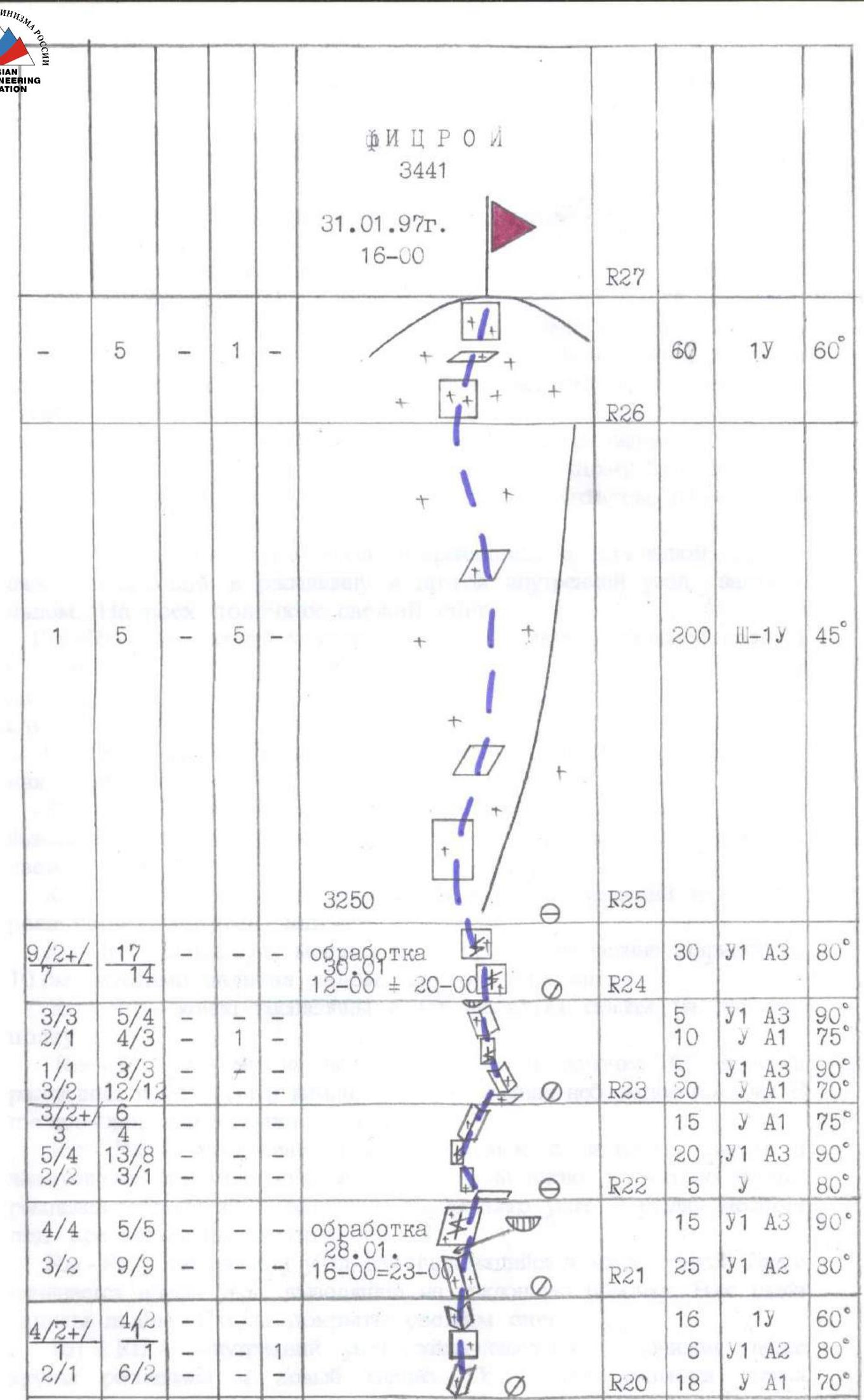
Description of the route by sections
R0–R1 — snow slope. R1–R2 — bergschrund, with sheer walls of snow, местами льда. R2–R3 — ice slope, местами covered with snow. R3–R9 — series of internal corners, rock walls, inclined ledges, местами covered with ice and snow, leading to the "Italian Saddle". R9–R10 — несложные скалы, местами залитые льдом и снегом, подводящие от "Italian Saddle" к ледяному гребню. R10–R11 — ice ridge, местами covered with snow, leading to the wall of Fitz Roy. R11–R12 — внутренний угол, упирающийся в небольшой карниз, далее переходящий в расщелину и другой внутренний угол, залитый льдом. На всех полочках свежий снег. R12–R13 — внутренний угол заканчивается отвесной скальной стенкой и начинается мощный 50-метровый угол с расщелиной на всю его длину шириной 0,5–8 см, местами залитой льдом. На полочках свежий снег. R13–R14 — окончание внутреннего угла и серия скальных стенок и наклонных полок, covered местами льдом и свежим снегом. R14–R15 — начинается мощная расщелина шириной 2–10 см, выводящая на наклонную полочку, местами залитая льдом, на полочках свежий снег. R15–R16 — по скалам во внутренний угол, подводящий к мощной расщелине. Местами лёд, снег. R16–R17 — начинается мощная 60-метровая расщелина шириной 3–10 см, местами залитая льдом, на полочках снег. R17–R18 — конец расщелины и по некрутым скалам на ледовую полку. R18–R19 — ночёвка на наклонной ледовой полочке. От ночёвки расщелина, выводящая в камин, на верху камина небольшая полочка. В щелях — лёд, на полочках — снег. R19–R20 — чередование скальных стенок с залитыми льдом и засыпанными снегом полочками, выходящими влево под серию крутых расщелин, выводящих в основание внутреннего угла. В щелях местами лёд, всё засыпано свежим снегом. R20–R21 — внутренний угол, заканчивающийся крутой стенкой. Далее начинается новый угол, выводящий на наклонную полочку. Все щели залиты льдом. Скалы covered свежим снегом. R21–R22 — внутренний угол, заканчивающийся карнизом, далее крутая расщелина и новый карниз. После него скальная стенка заканчивается небольшой полочкой. Всё залито льдом, по скалам идут потоки снега. R22–R23 — залитые льдом и засыпанные снегом скалы, выводят под расщелину, переходящую во внутренний угол. Всё во льду. По скалам идут потоки снега. R23–R24 — с наклонной полочки во внутренний угол, который заканчивается скальной стеной и расщелиной, упирающейся в карниз. Далее новый внутренний угол с карнизом. Все щели во льду. По скалам идут потоки снега. R24–R25 — по наклонной полочке вправо и по скалам с расщелинами вверх на гребень. Все щели во льду. По скалам идут потоки снега. R25–R26 — за гребнем начинается ледовый склон с выходами скальных стенок. Лёд местами засыпан снегом. Снег переметается сильным ветром и вниз, и вверх. R26–R27 — чередование скальных стенок с наклонными полками. Всё облеплено снегом с застругами. Вершина представляет собой скалы, облепленные мощными снежными застругами.
List of equipment
- Main rope 11 mm – 45 m — 11 pcs. 1 UIAA 11 mm – 45 m — 1 pc. 1/2 UIAA 9 mm – 50 m — 1 pc.
- Quickdraws — 29 pcs.
- Carabiners — 90 pcs.
- Pitons:
- rock pitons — 35 pcs.
- ice screws — 11 pcs.
- snow stakes — 1 pc.
- permanent bolt pitons — 2 pcs.
- removable bolt pitons — 4 pcs.
- Chocks — 40 pcs.
- Friends — 21 pcs.
- Drill — 3 pcs.
- Sky hooks — 2 pcs.
- Ladder steps — 3 pcs.
- Hammers — 3 pcs.
- Pullers — 2 pcs.
- Hook nippers — 8 pcs.
- Jumars — 10 pcs.
- Descenders — 5 pcs.
- Chock extractor — 1 pc.
- Crampons — 3 pairs
- Ice axe — 3 pcs.
- Wall tent — 1 pc.
- Gas burner — 1 pc.
- Fuel cylinders — 6 pcs.
- "Ogonyok" stove — 1 pc.
- "Alinka" radio station — 1 pc.
- Battery set — 2 pcs.
- Petrol — 3 l
- Autoclave — 1 pc.
- Pot — 1 pc.
- Flashlight — 3 pcs.
- Candles — 2 pcs.
- Lighters — 3 pcs.
- Matches — 5 packs
- Altimeter watch — 1 pc.
- First aid kit — 1 pc.
- Rock shoes — 2 pairs
- "Koflach" boots — 5 pairs
- Harness with leash — 5 sets
- Helmets — 5 pcs.
- Bivouac sacks — 3 pcs.
- Gortex suits — 5 sets
- Down jackets — 5 pcs.
- Sleeping bags — 4 pcs.
- Ice tools — 2 pcs.
- Personal gear — 5 sets
- Video camera — 1 pc.
- Cameras — 2 pcs.
- Food — 18.7 kg
Initial weight of one backpack — 27 kg.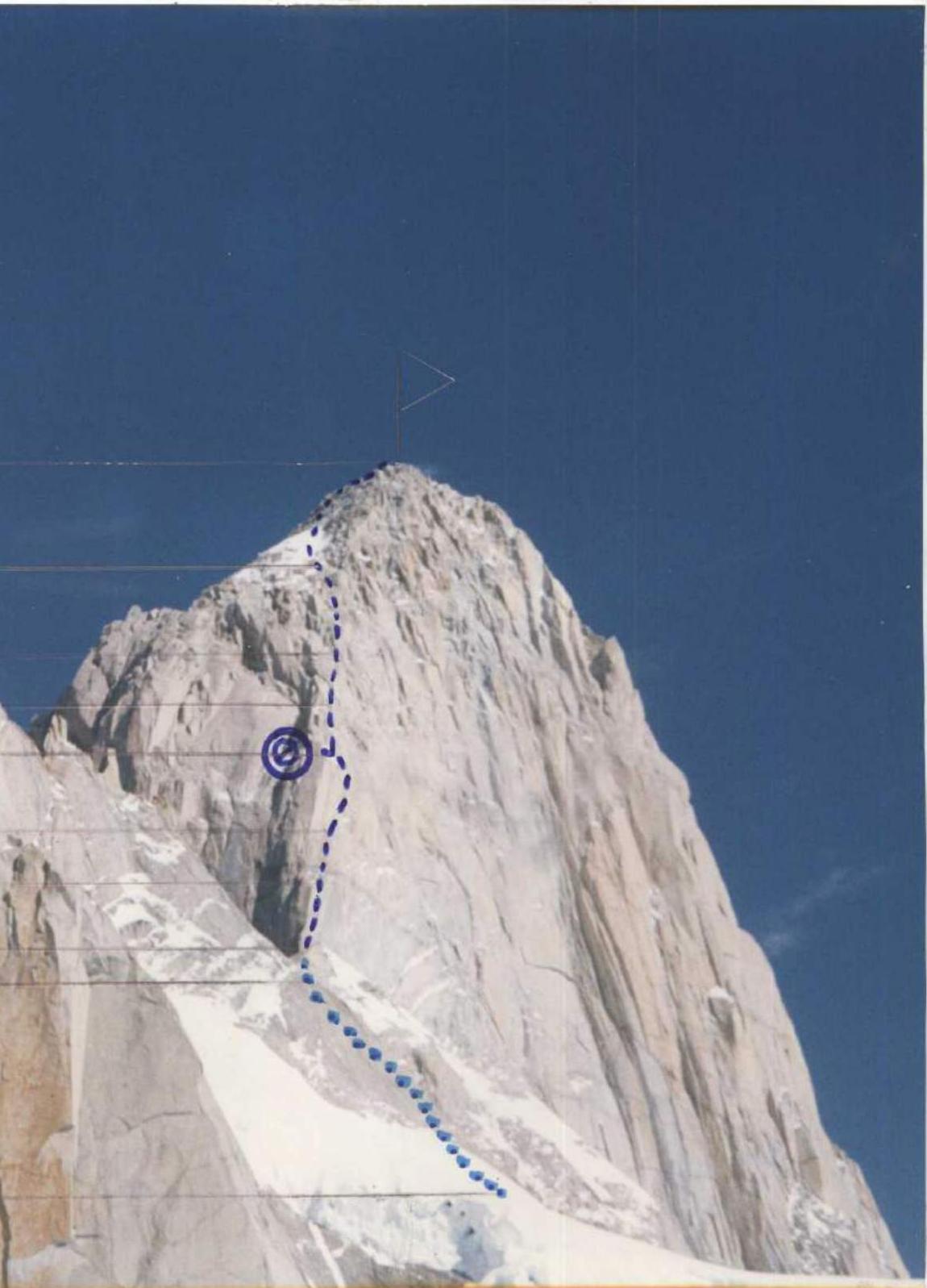
Photo № 5. Technical photo of the route
- Distance – 1500 m
- Lens – Kodak 500
- Taken on December 30, 1996 12:00
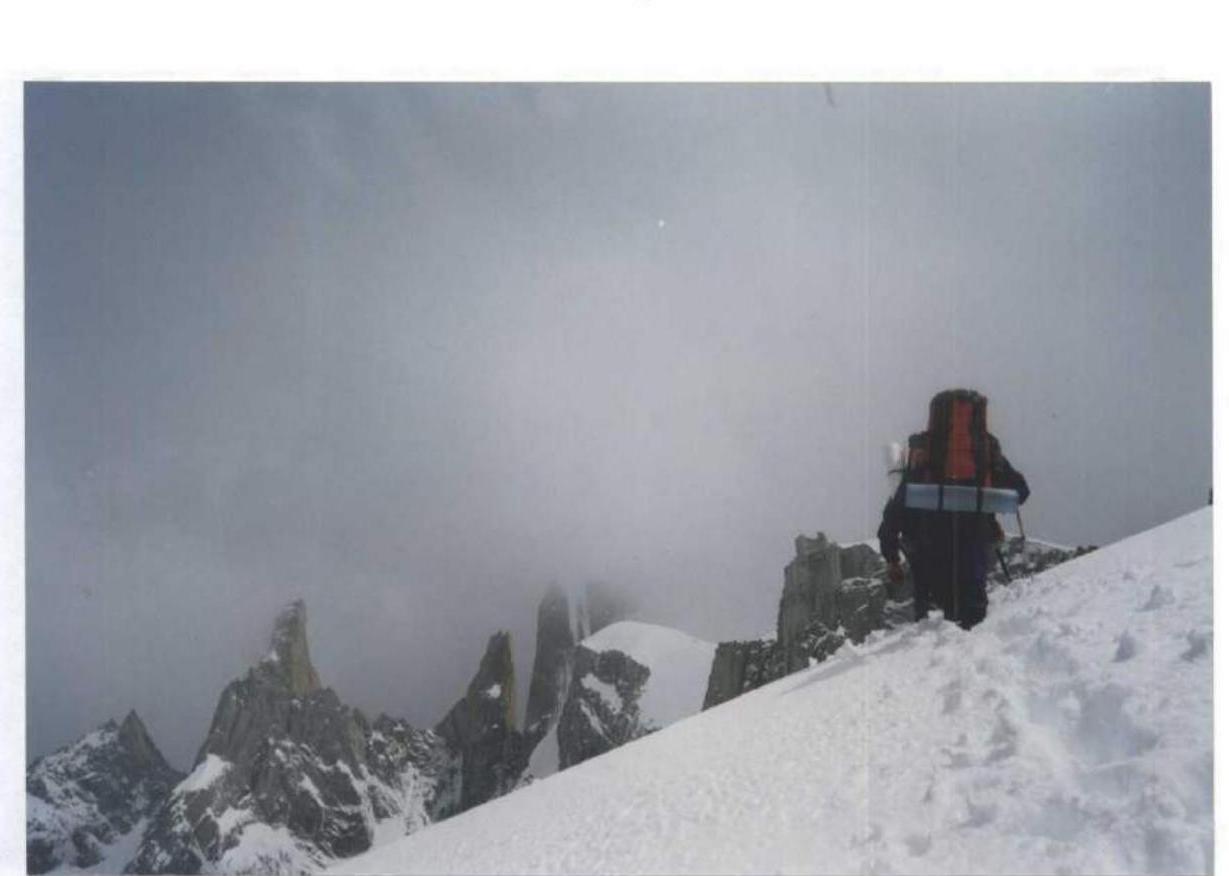
Photo 6. Approach to the Superior pass. Shooting point F6. January 23, 1997 9:30.
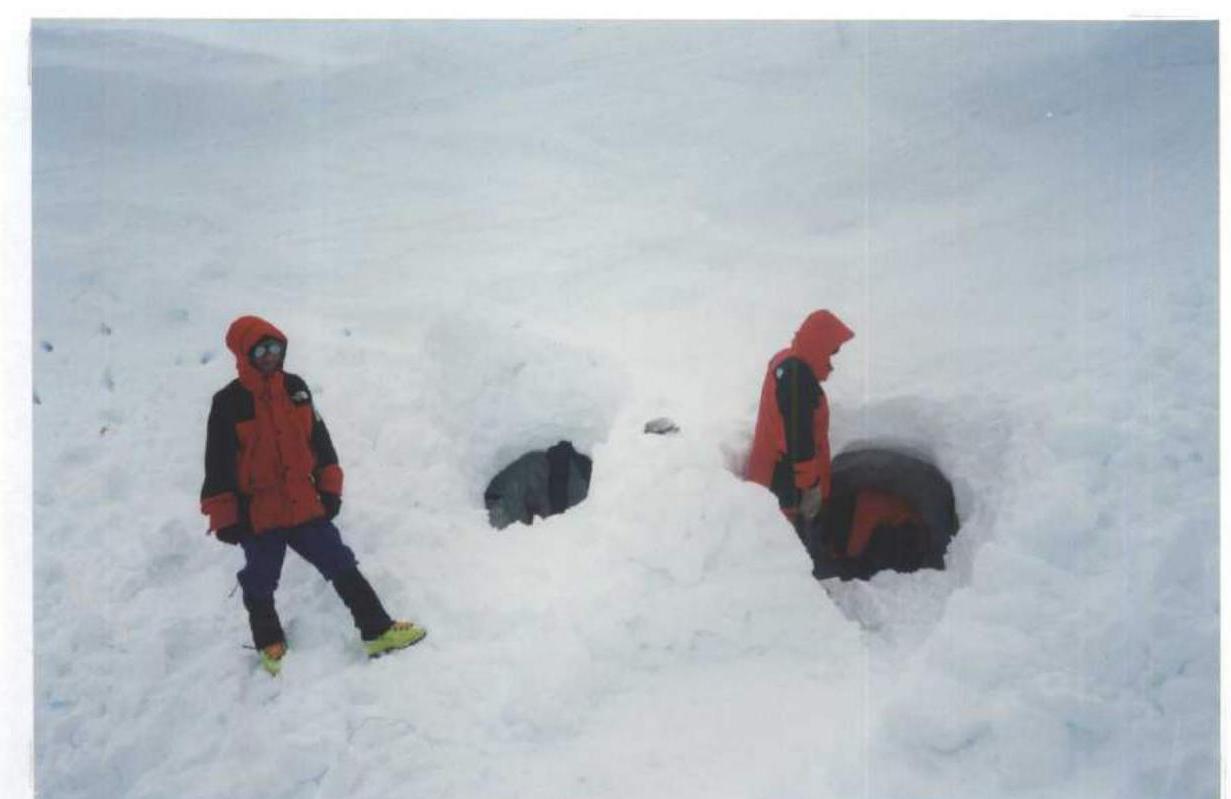
Photo 7. Caves on the Superior pass. Shooting point F7. January 23, 1997 10:00.

Photo 8. Overnight stay in the Italian Saddle. Shooting point F8. January 25, 1997 14:00.
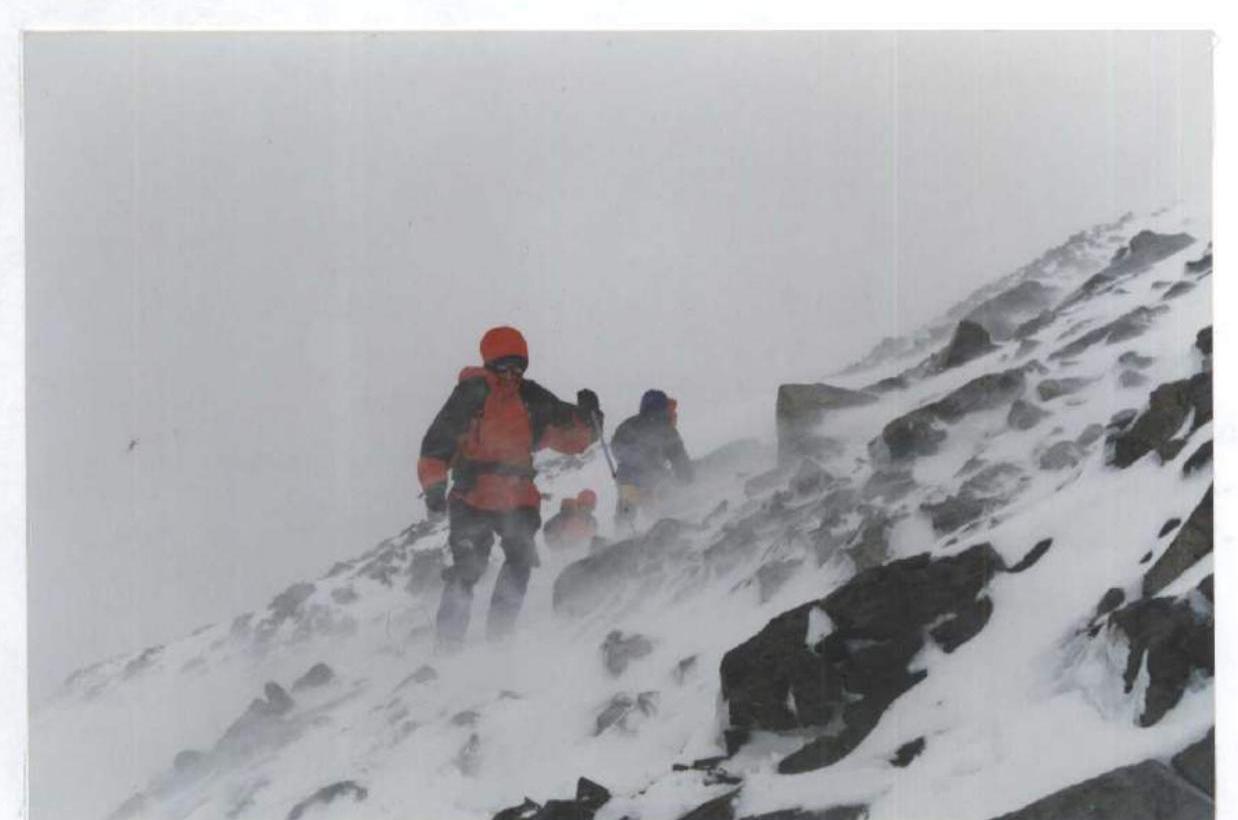
Photo 9. Descent into the Italian Saddle after checking the condition of the processed ropes. R9–R10. Shooting point F9. January 27, 1997 19:00.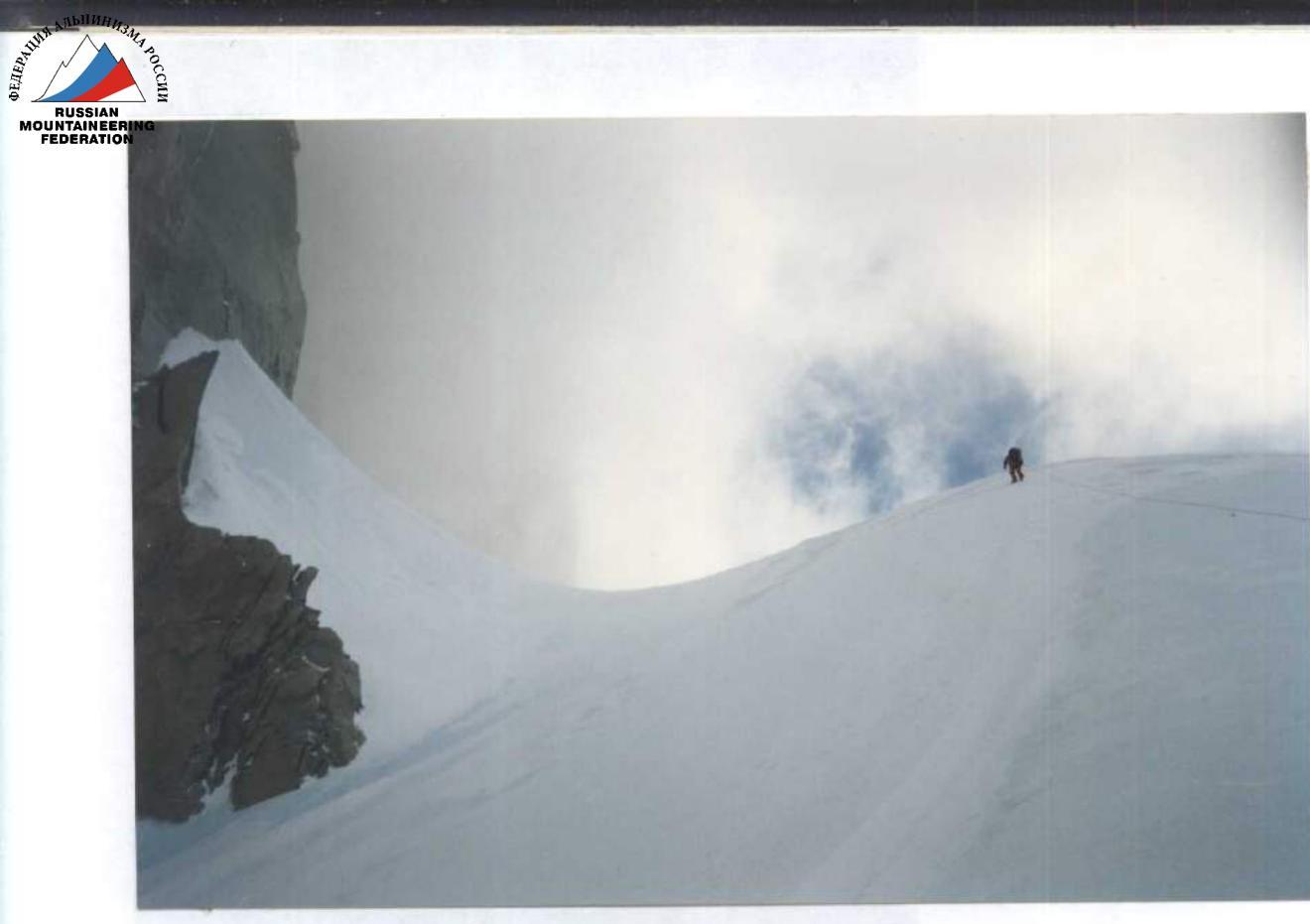
Photo 10. Passage of section R10–R11.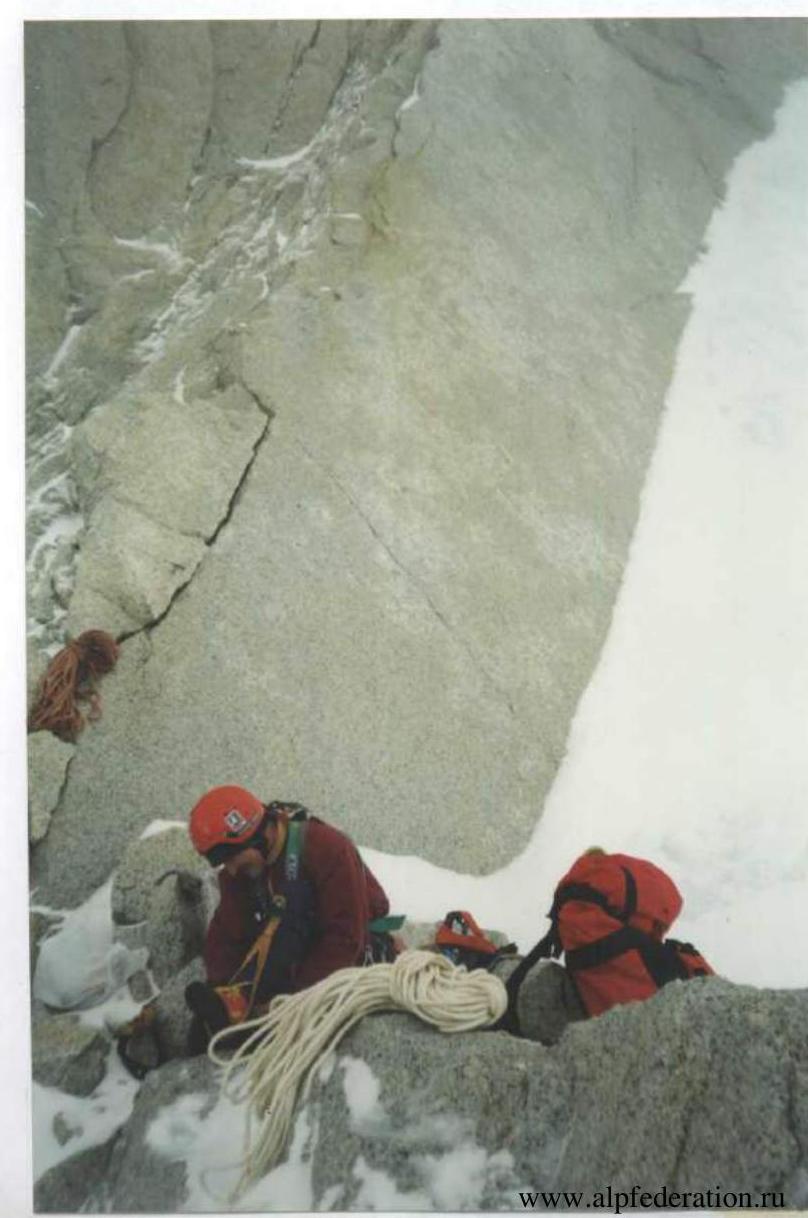
Photo 11. Preparation for the assault on R11–R12. January 24, 1997.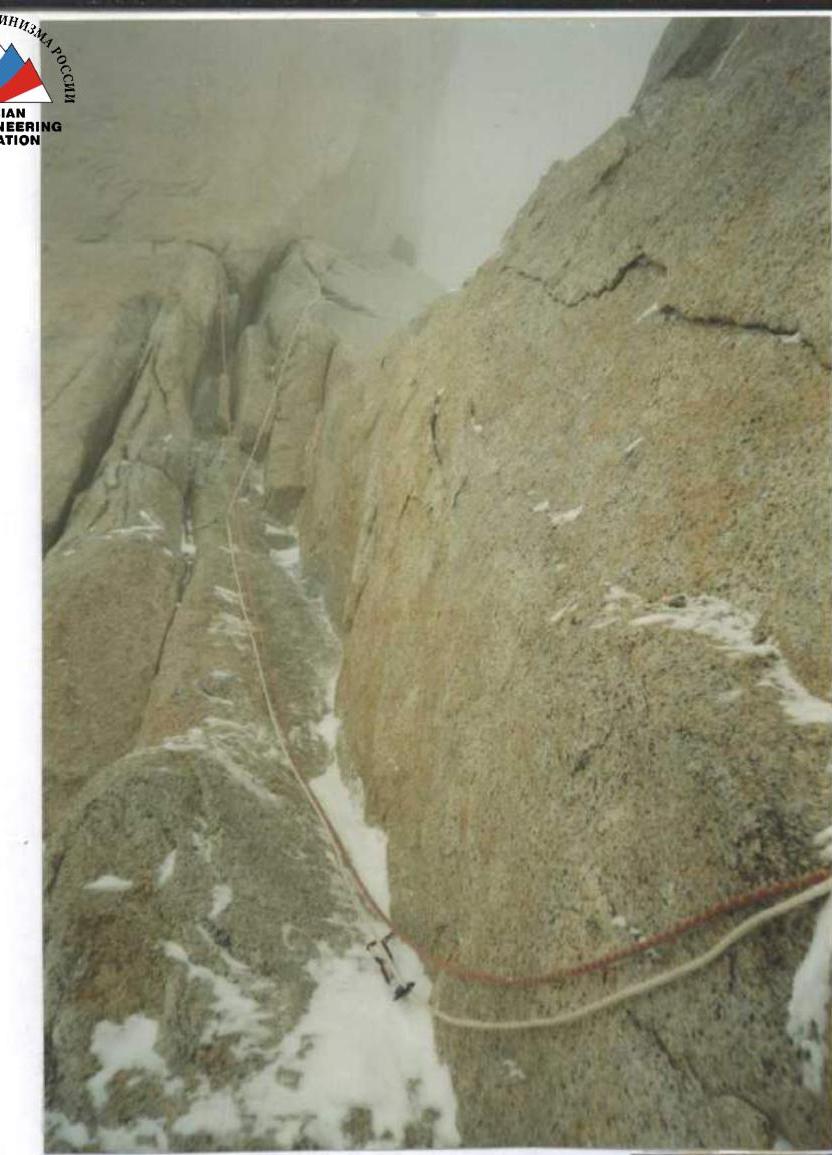
Photo 12. Passage of R12–R13. January 24, 1997 17:00.
Photo 13. Movement along the fixed ropes on R15–R17. January 28, 1997 15:00.
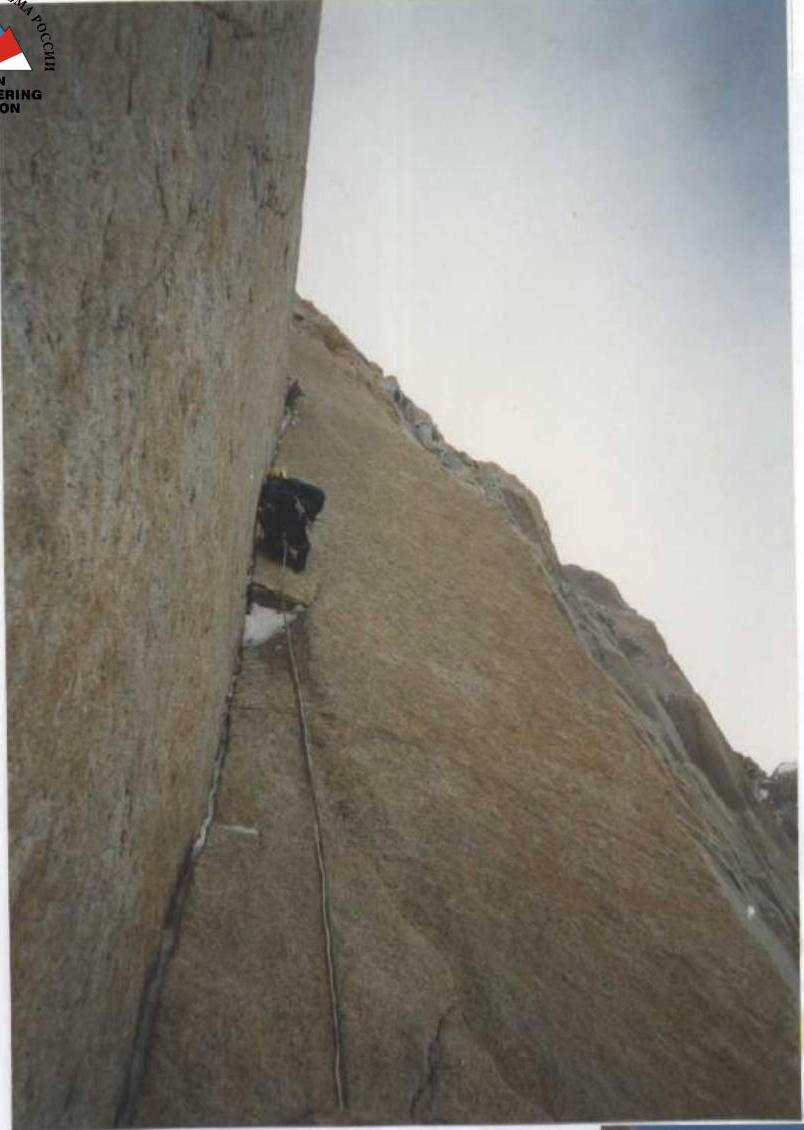
Photo 14. Passage of R16–R17. January 26, 1997.
Photo 15. Movement along the fixed ropes on R17–R18. January 28, 1997.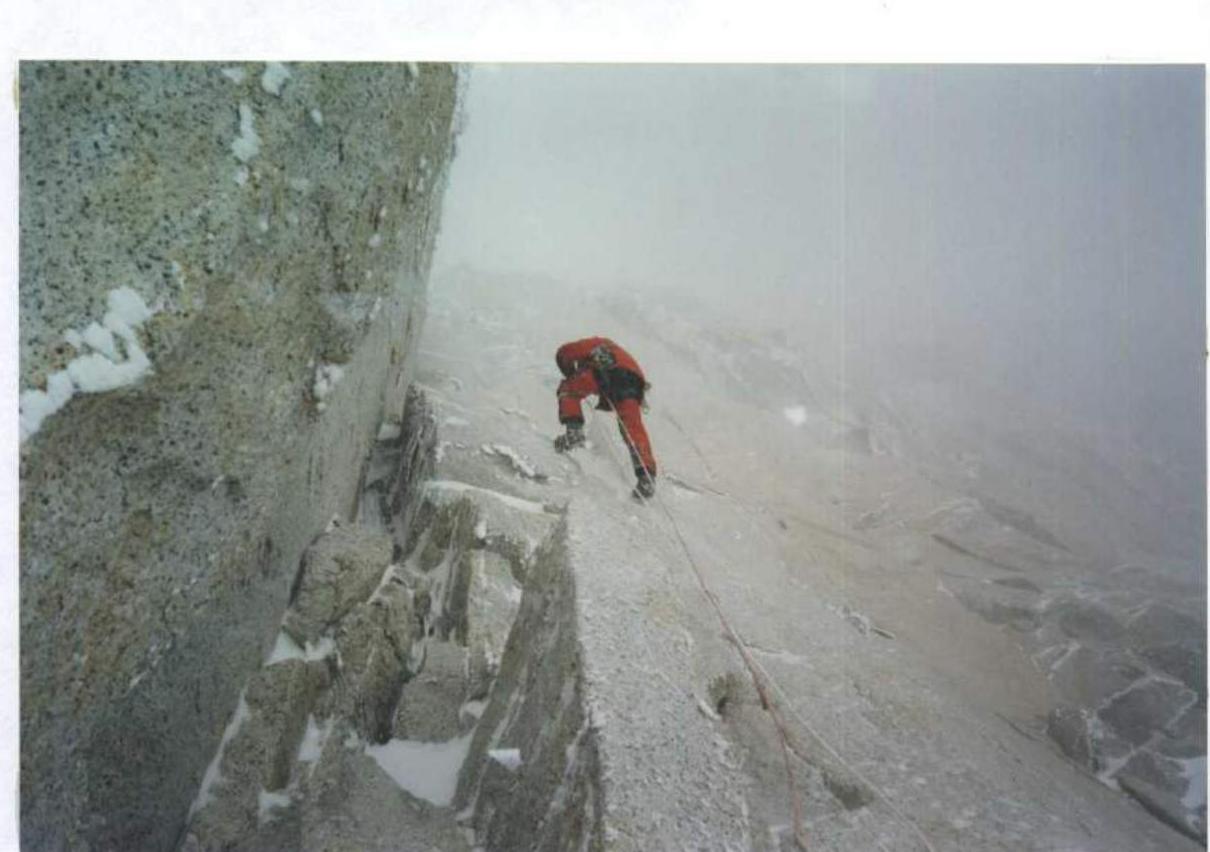
Photo 16. Movement along the fixed ropes on R18–R19. January 31, 1997 10:30.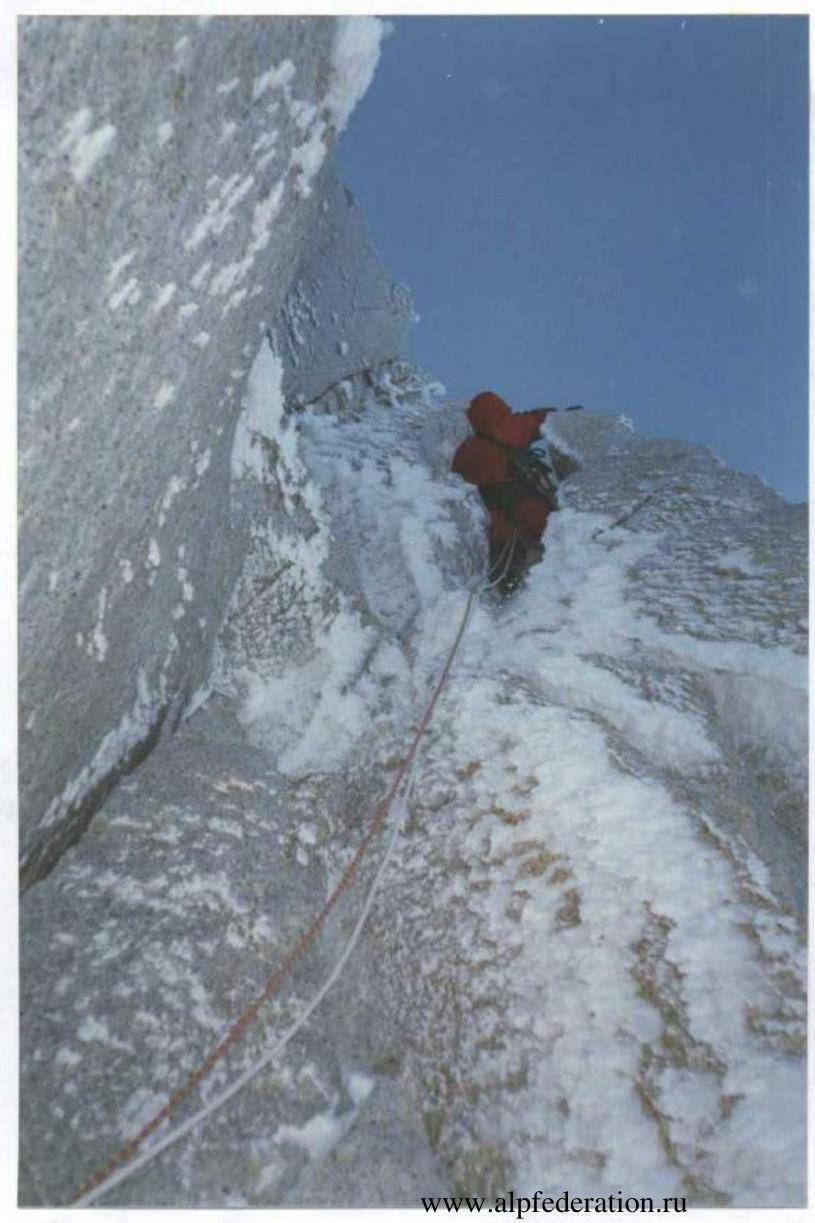
Photo 17. Passage of R19–R20. January 28, 1997 18:00.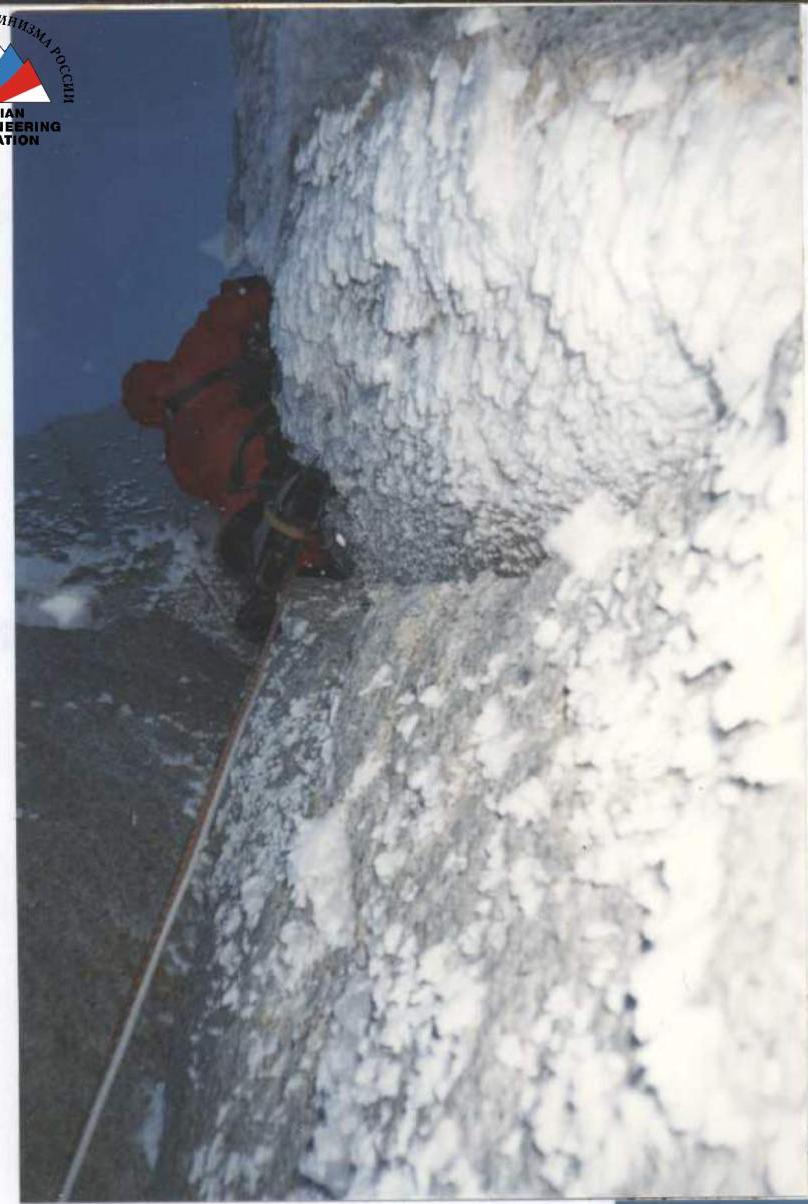
Photo 18. Passage of R19–R20. January 28, 1997 18:30.
Photo 19. Passage of R20–R21. 19:30.
Photo 20. Passage of R21–R22. January 28, 1997.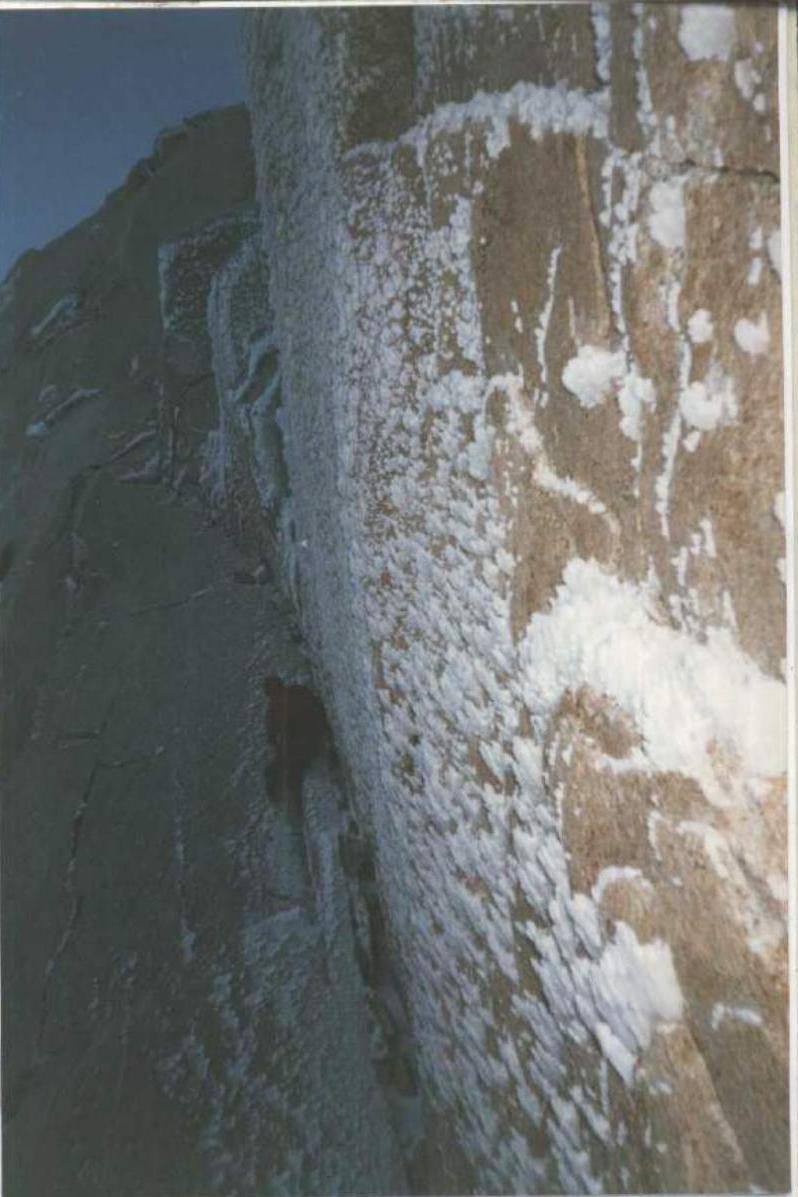 Photo 21. Movement along R22–R23. January 30, 1997.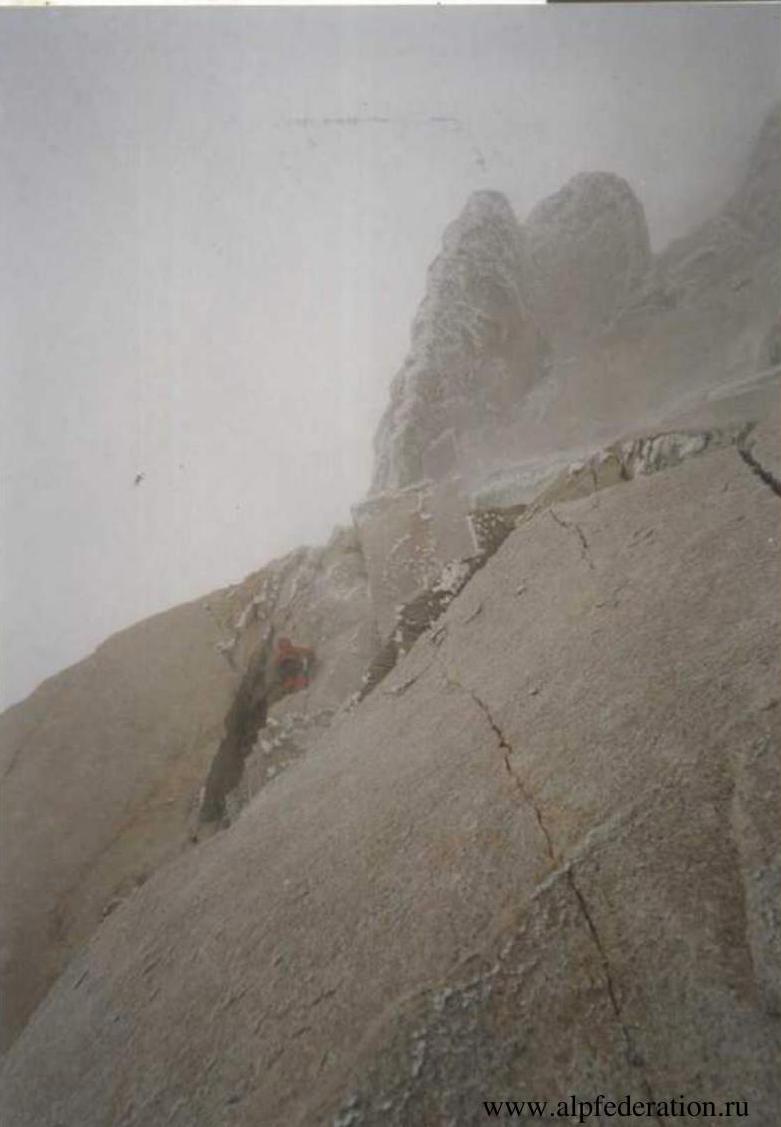
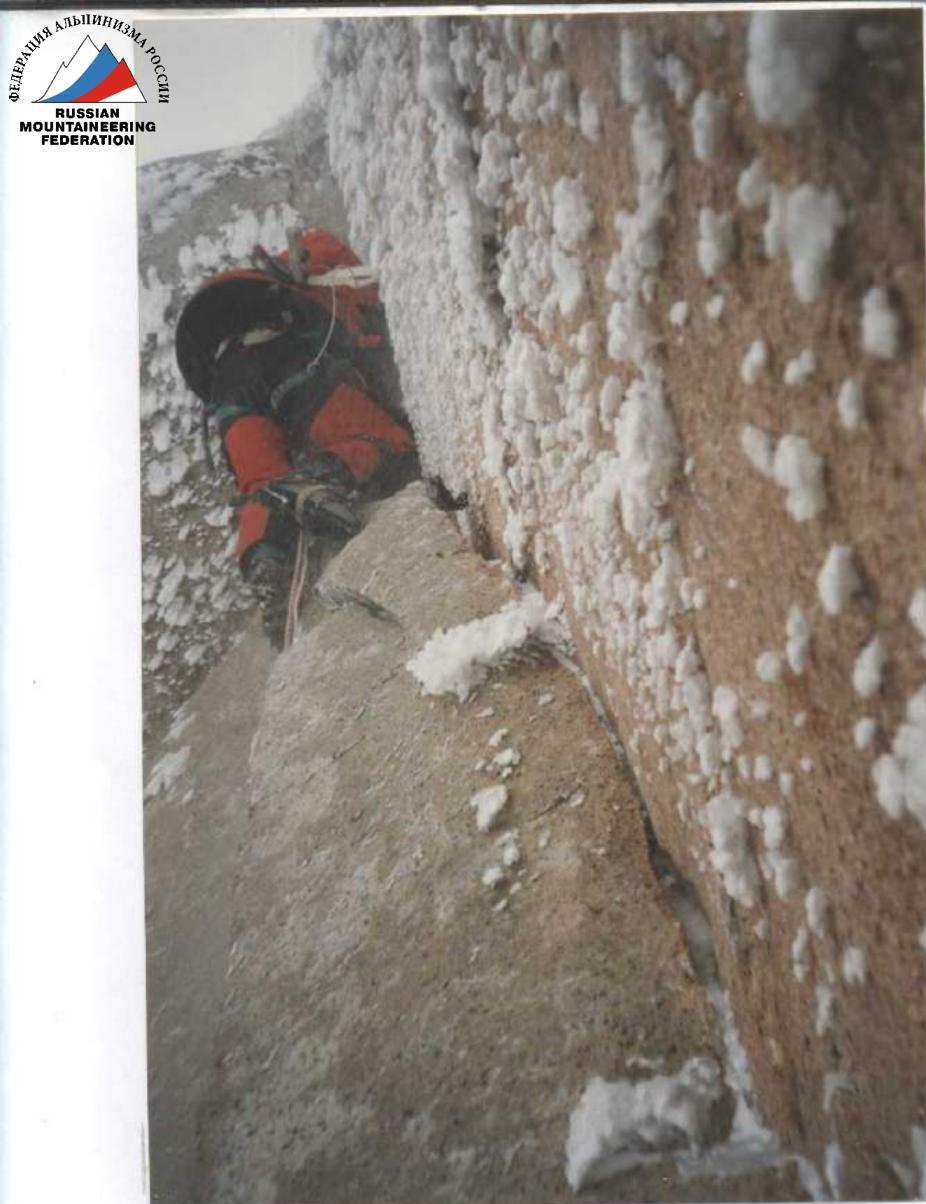
Photo 22. Passage of R23–R24. January 30, 1997.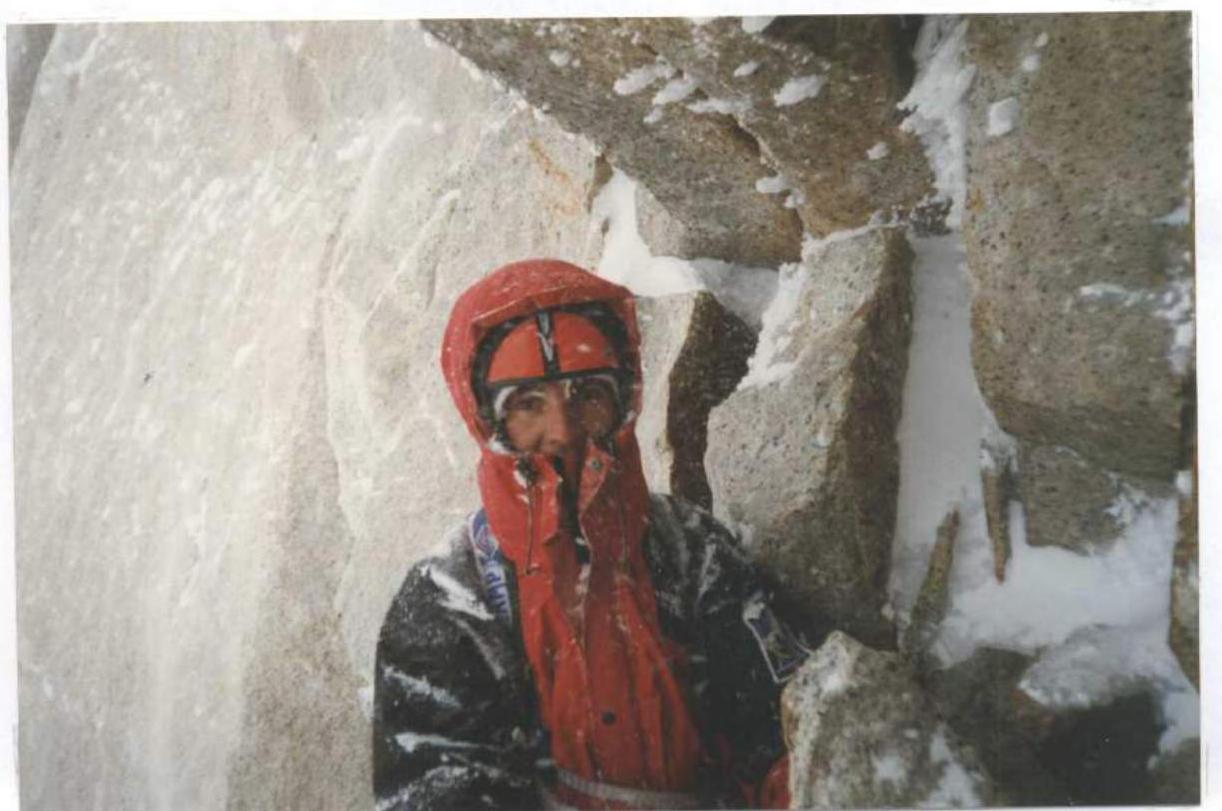
Photo 23. Zaitov R. Weather during the processing of R23–R24. January 30, 1997.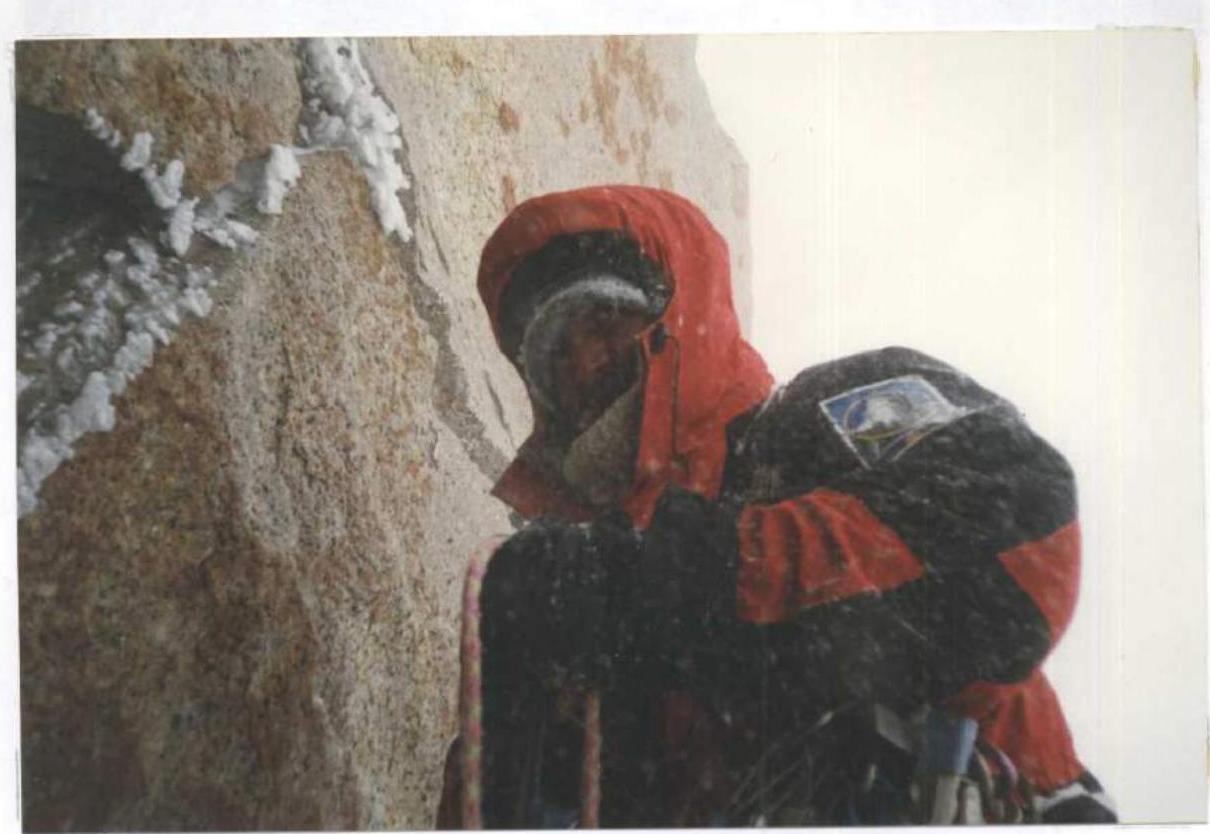
Photo 24. Sibaev M. Weather during the processing of R23–R24. January 30, 1997.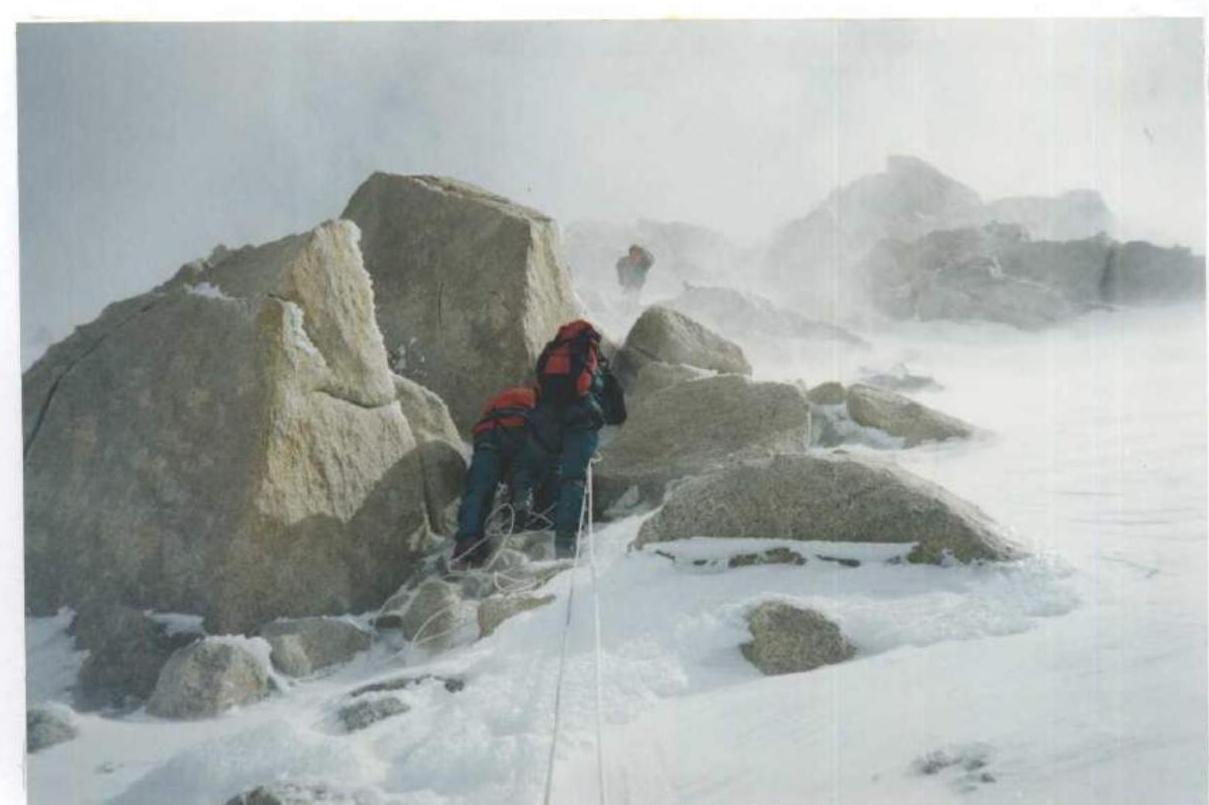
Photo 25. Movement along R25–R26. January 31, 1997 14:00.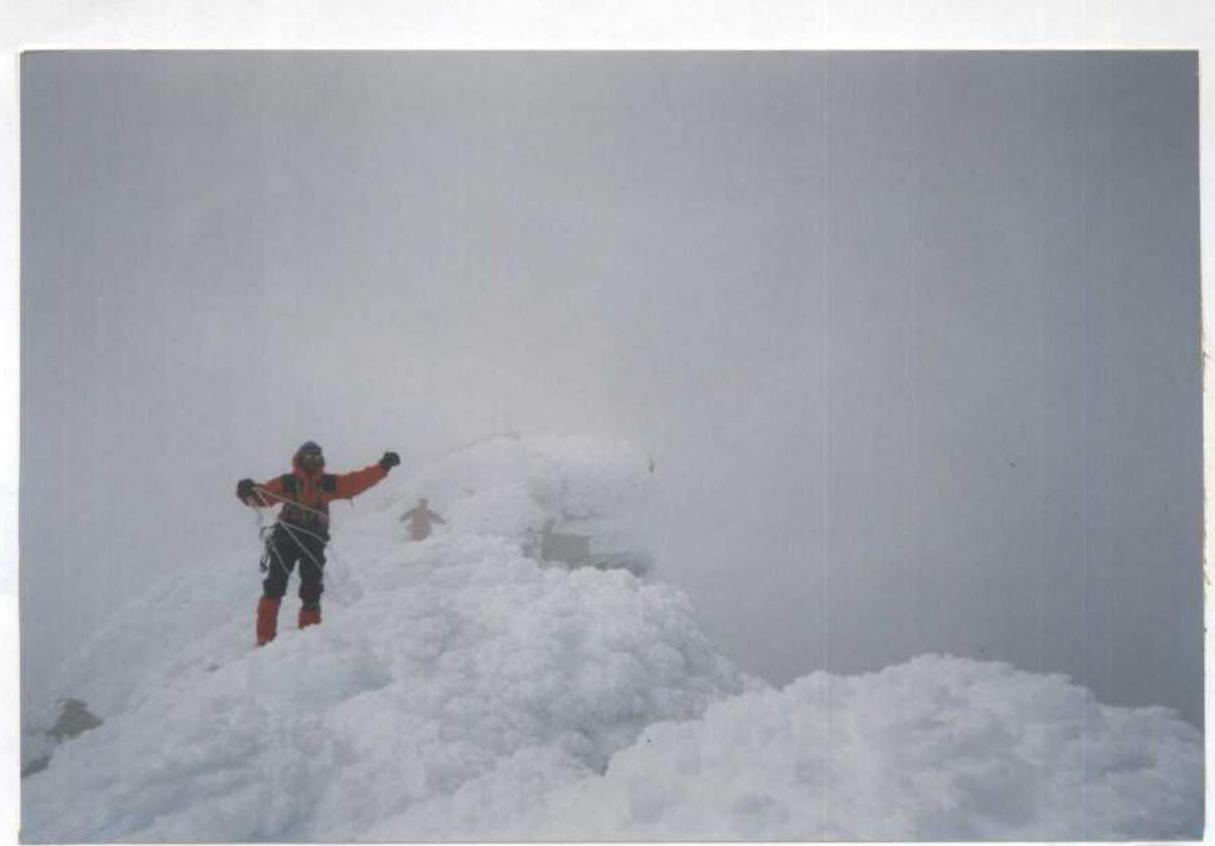
Photo 26. Exit to the summit via R26–R27. January 31, 1997 16:00.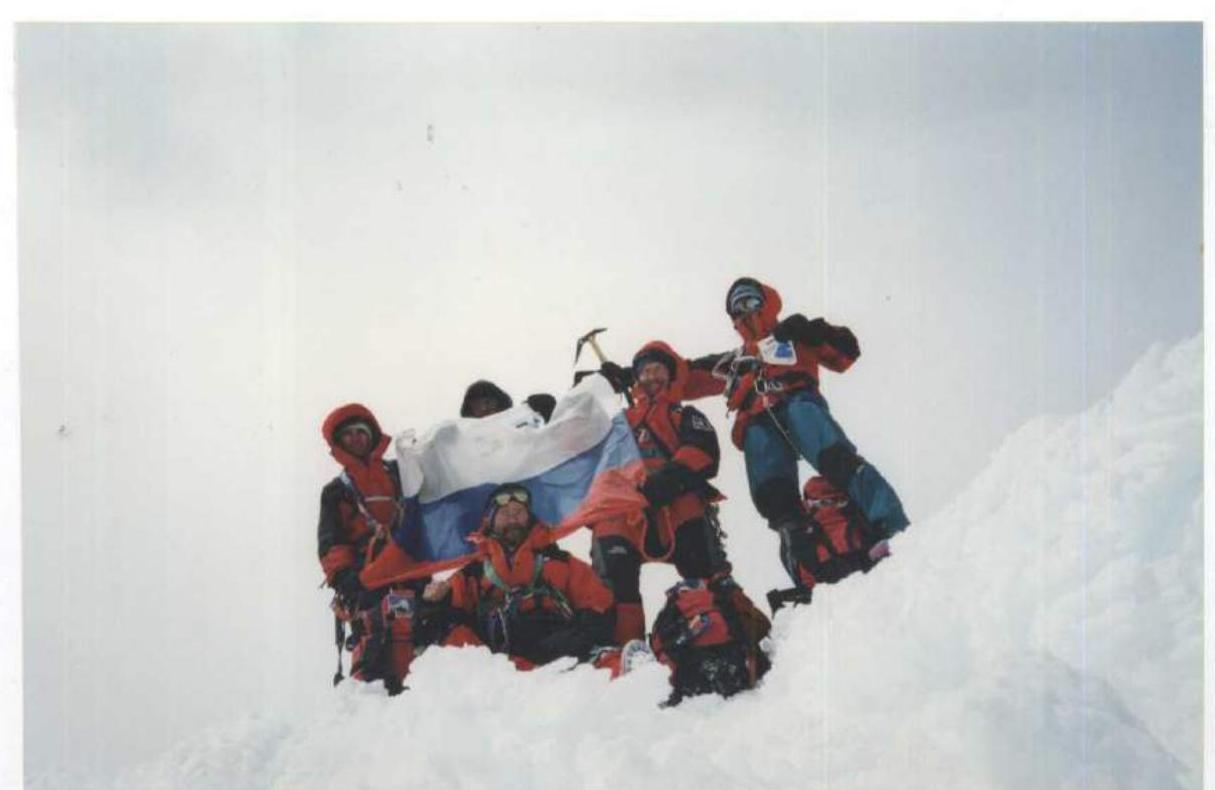
Photo 27. On the summit. Photo taken with a self-timer. January 31, 1997 16:30.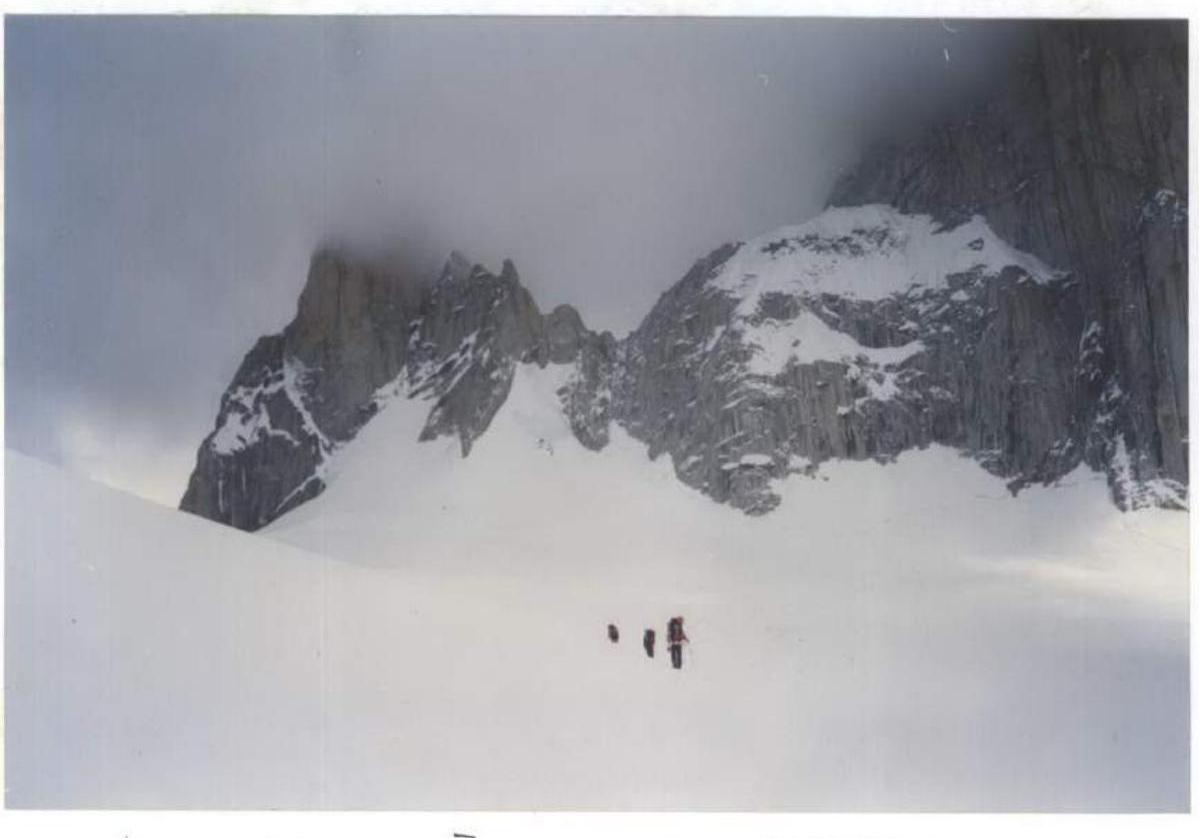
Photo 29. Approach along the glacier to the start of the route R0.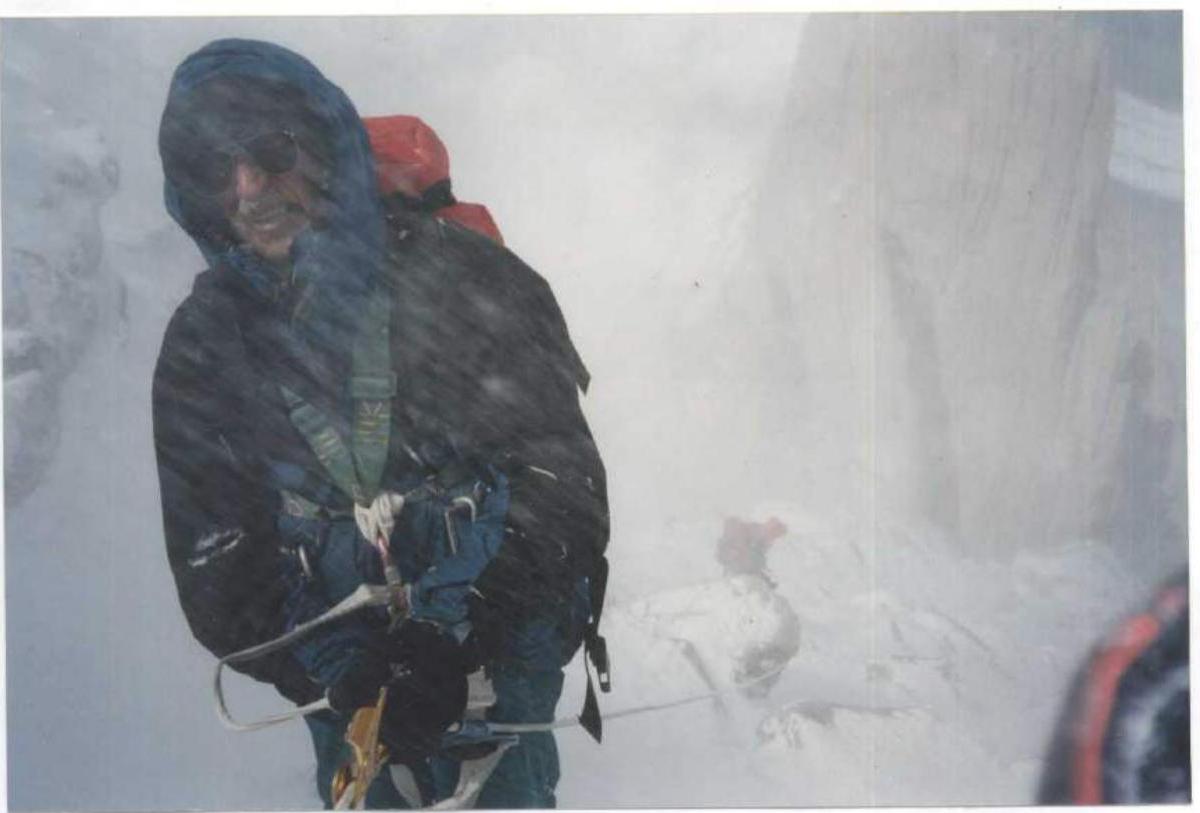
Photo 28. Ivanov A. Descent on R25–R26. January 31, 1997 17:00.

Comments
Sign in to leave a comment