

Northern Tien Shan, Trans-Ili Alatau
Peak Yoshkar-Ola
via the large dihedral of the West Face
5A cat.
Ascent Passport
- Region, valley, section number according to the classification table of 20__ year — Northern Tien Shan, Trans-Ili Alatau, Maloye Almatinskoye valley.
- Name of the summit, its height, name of the route: Peak Yoshkar-Ola 3950 m, via the
large dihedral of the West Face
- Proposed: 5A cat.
- Nature of the route: rock
- Height difference of the route: 400 m
Route length: 700 m. Length of sections:
- V cat. — 200 m
- VI cat. — 10 m. Average steepness:
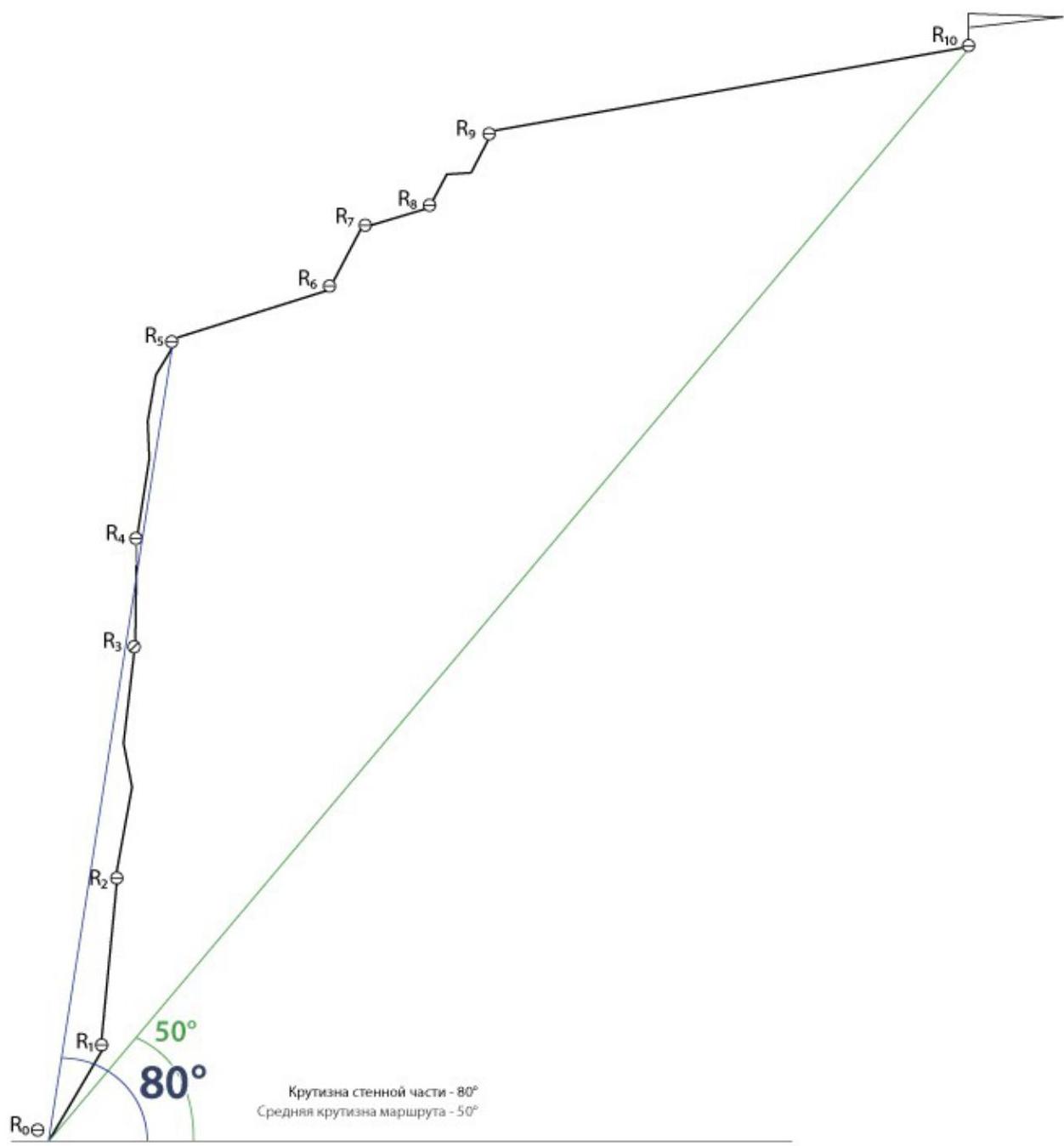
- main part of the route — 85°
- entire route — 60°
- Pitons left on the route:
total 12; including bolted — 6
- Team's walking hours: 8 hours
- Leader: Kirill Belotserkovsky, 1st sports category
Members: Artem Skopin, Candidate for Master of Sports
- Coach: Evgeny Ilyinsky, Honored Coach of the Republic
- Departure from Base Camp to the route: date, time
Route started: October 3, 2009, 8:00 AM Summit reached: October 3, 2009, 4:00 PM Return to Base Camp: October 3, 2009, 6:00 PM Descent from the summit: via route 1B category;
-
Organization: CSKA MO RK
-
Responsible for the report: K. Belotserkovsky
Email and phone k.belotserkovskiy@gmail.com, +7 7017361887
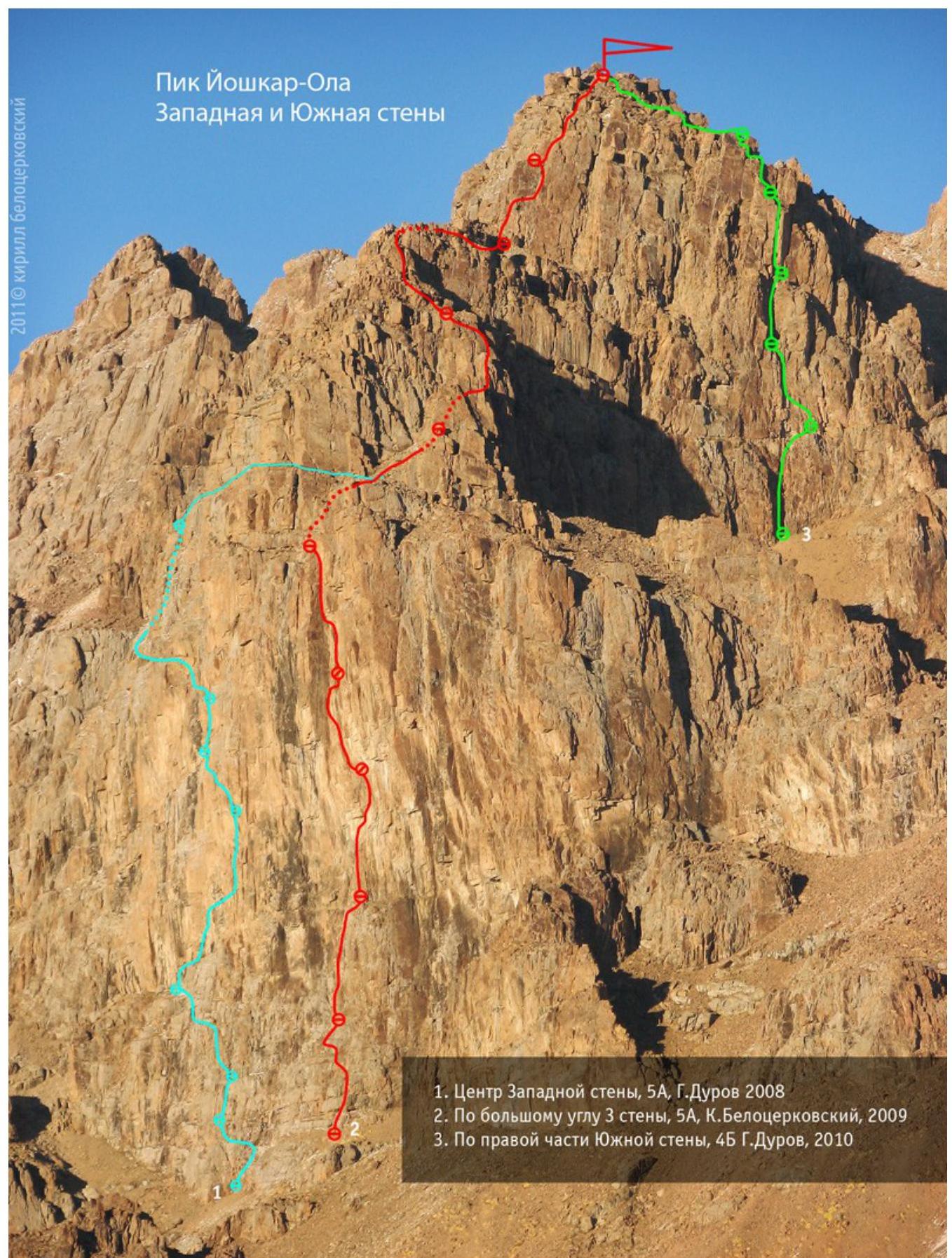
General photo of the wall
-
Center of the West Face, 5A, G. Durov, 2008
-
Via the large dihedral of the 3rd wall, 5A, K. Belotserkovsky, 2009
-
Via the right part of the South Face, 4B, G. Durov, 2010
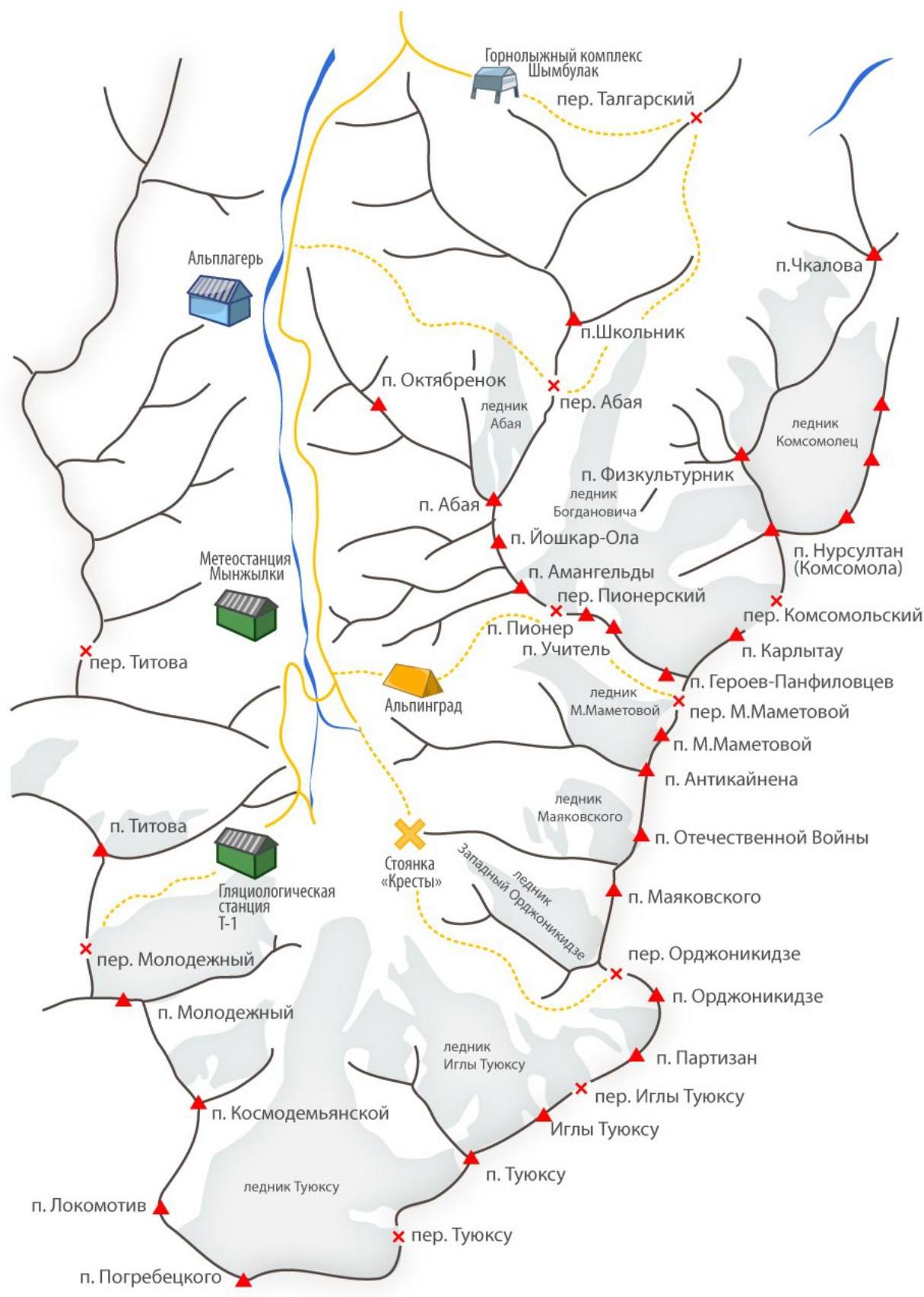
Map — scheme of the area
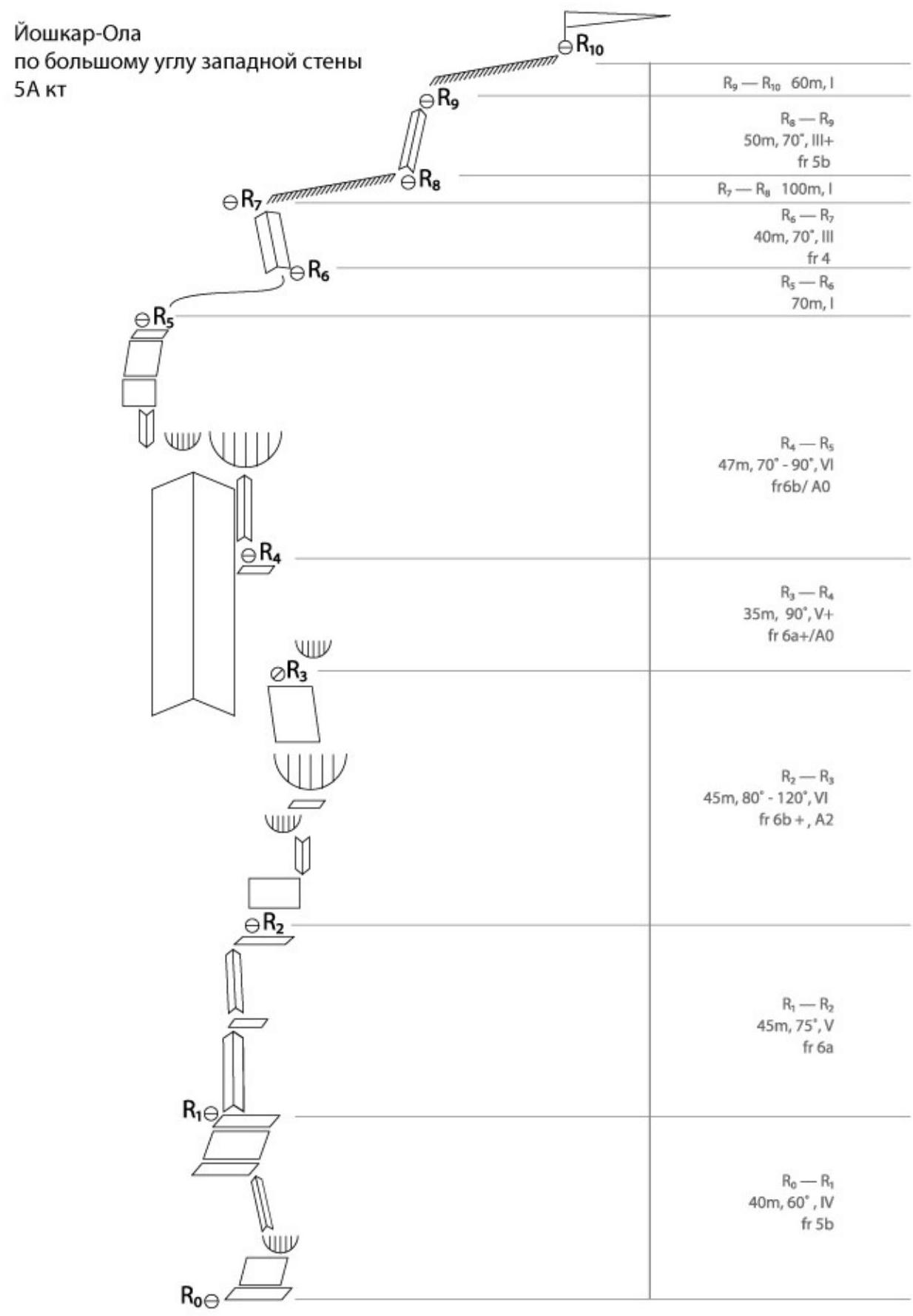
Route scheme
Drawn profile of the wall
Peak Yoshkar-Ola via the large dihedral of the West Face, 5A cat.
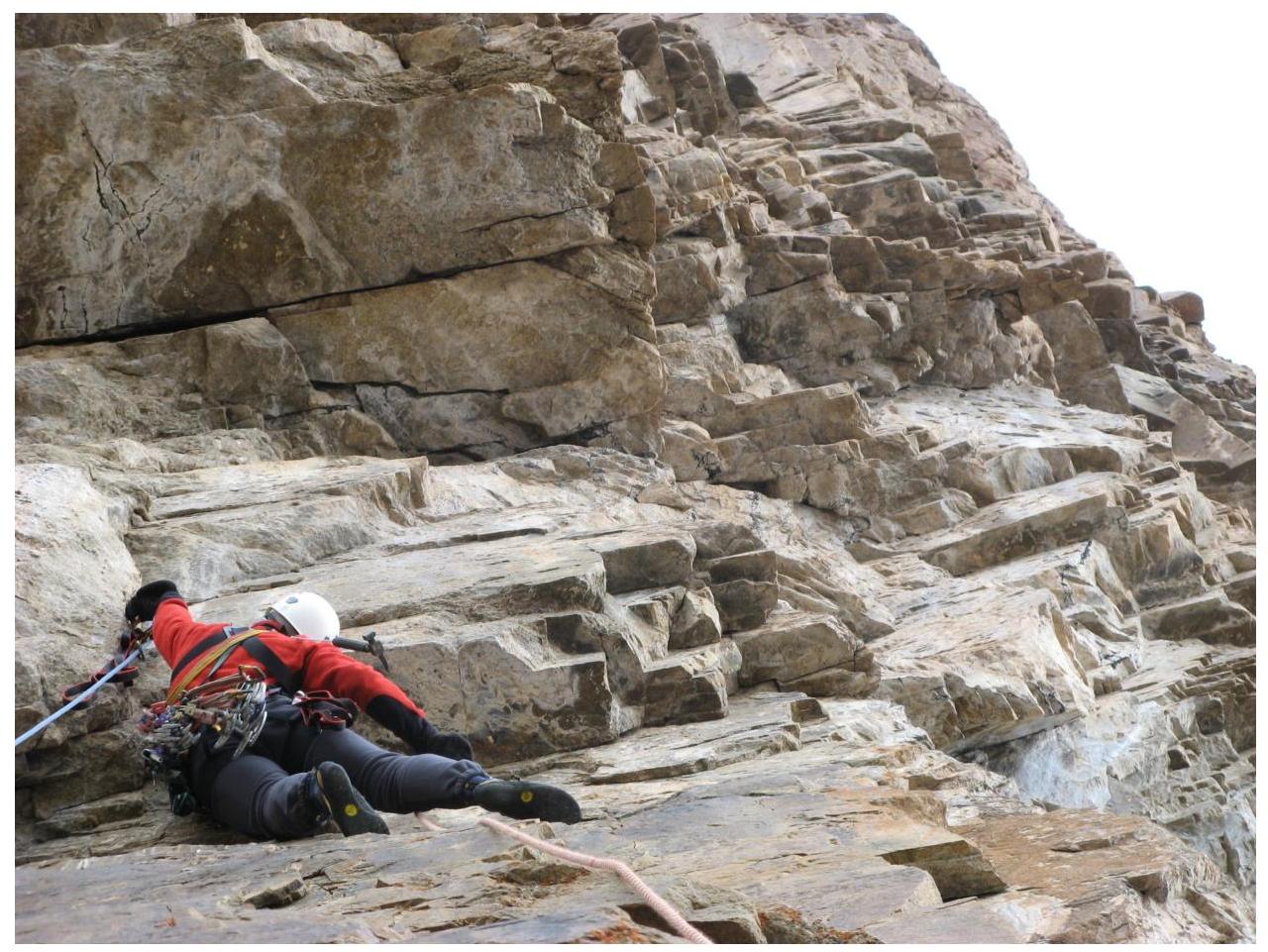
Kirill Belotserkovsky at the start of the first crux
(R3–R4)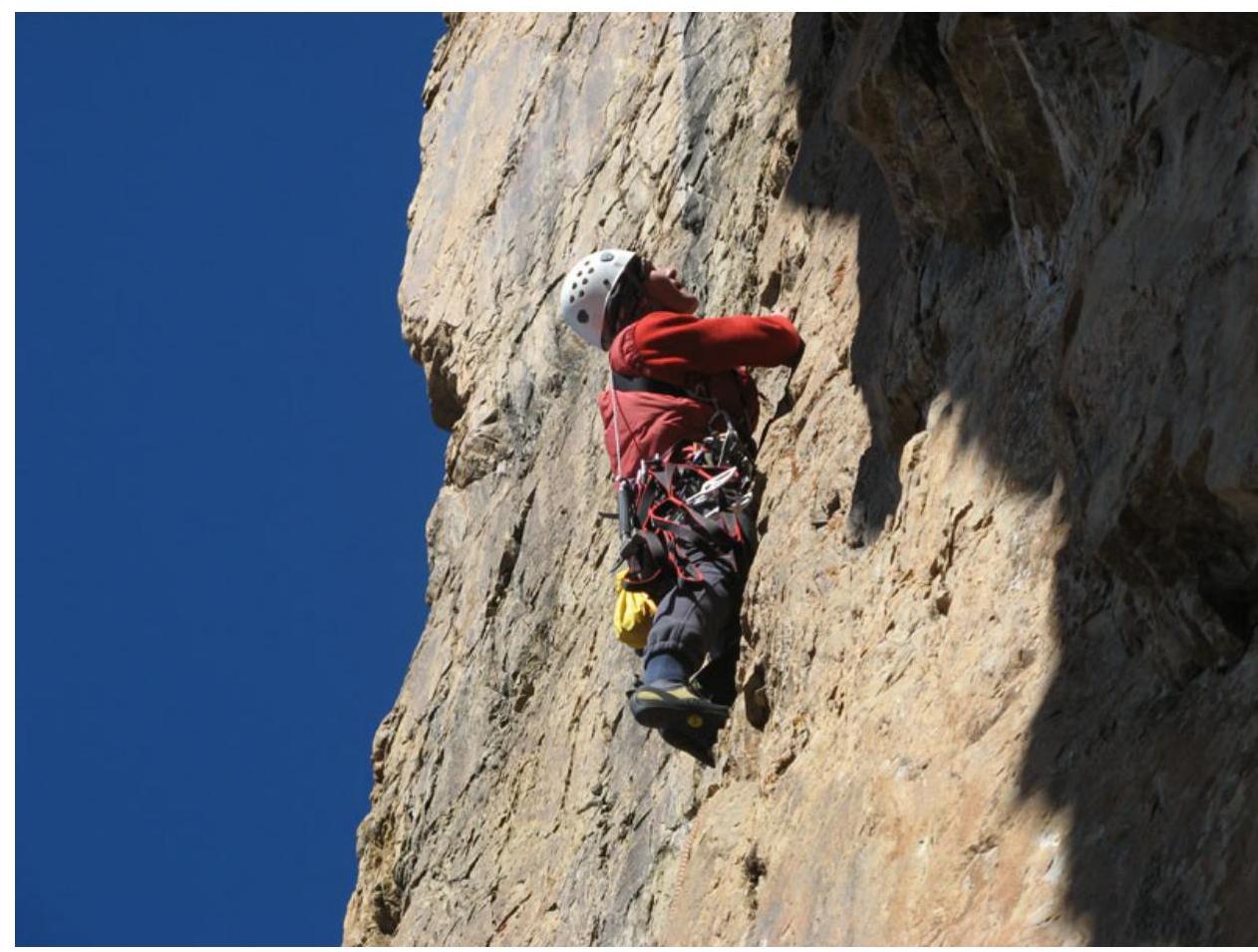
Kirill Belotserkovsky at the start of the R4–R5 section
Description
R0–R1
- Start from a large ledge
- Up through the small walls and ledges to a large comfortable ledge
- This is essentially part of the approach
- Difficulty category — III
- Belay station on a выступe
R1–R2 From the station upwards through the internal dihedral. The dihedral is initially easy, but towards the top it "opens out" to 75°. After the dihedral, exit onto a ledge and move slightly right to a small ledge with a piton and bolt. If desired, the station can be reinforced with additional gear — there is space.
R2–R3. Movement starts left–up through a small internal dihedral, from which after about 8 meters you need to move right onto an external dihedral. Along it to a small ledge under a overhang (bolted). The overhang is bypassed on the right via an external dihedral (difficulty fr 6b). Then a section of A2, after which you exit from the overhang onto a wall with a steepness of 80° and move left–up under a white overhang. Under the overhang is a station with 2 bolts.
R3–R4. From the station, left and up along a slab. The first few meters have no protection, then a good crack appears. This section follows a large internal dihedral. You need to move either along the right wall of the dihedral or directly along the dihedral. Protection is mainly on anchor pitons. After the dihedral "opens out" to 90°, move right onto a small ledge and establish a station. There is a local bolt.
R4–R5 From the ledge, vertically up through an internal dihedral. The dihedral is overlapped by an overhang, which needs to be bypassed on the left via an internal dihedral (difficult). Then continue up the internal dihedral until you reach a ledge. There is a station with 2 local pitons.
R5–R6 As a team, traverse an scree ledge to a rock step (done with alternating belay) and then along the scree into a couloir on the right–above. From the couloir, right onto a ridge, and along it up to a wall with a cleft.
R6–R7 The wall leads to a large scree ledge. R7–R8 Along a gentle ridge to the base of the summit tower. R8–R9 Along a ledge, move right and then up through an internal dihedral until you exit onto a wide scree ridge.
R9–R10 Along the scree ridge, reach the summit. Descent via route 1B to the pass, and then:
- through couloirs
- or to the road
- or to Alpingrad.
The route is complex and requires a high level of climbing skill from the leader. To complete the large internal dihedral (R3–R4), it is desirable to have several anchor pitons.
A big request is not to twist the ears off the pitons.