
Федерации Альпинизма Республики Бурятии
Отчёт о восхождении команды ФАРБ на вершину Гайкомд, первопрохождение по левой части юго-восточной стены
Чемпионат России. Класс Технический. Февраль 2017 г.
г. Улан-Удэ 2017 г.
Паспорт восхождения
- Район восхождения: Кавказ, от пер. Крестовый до в. Шавиклде
- Вершина: Гайкомд, 3192 м, первопрохождение по левой части ЮВ стены
- Предполагаемая кат. сл.: 5Б, первопрохождение.
- Характер маршрута: скальный.
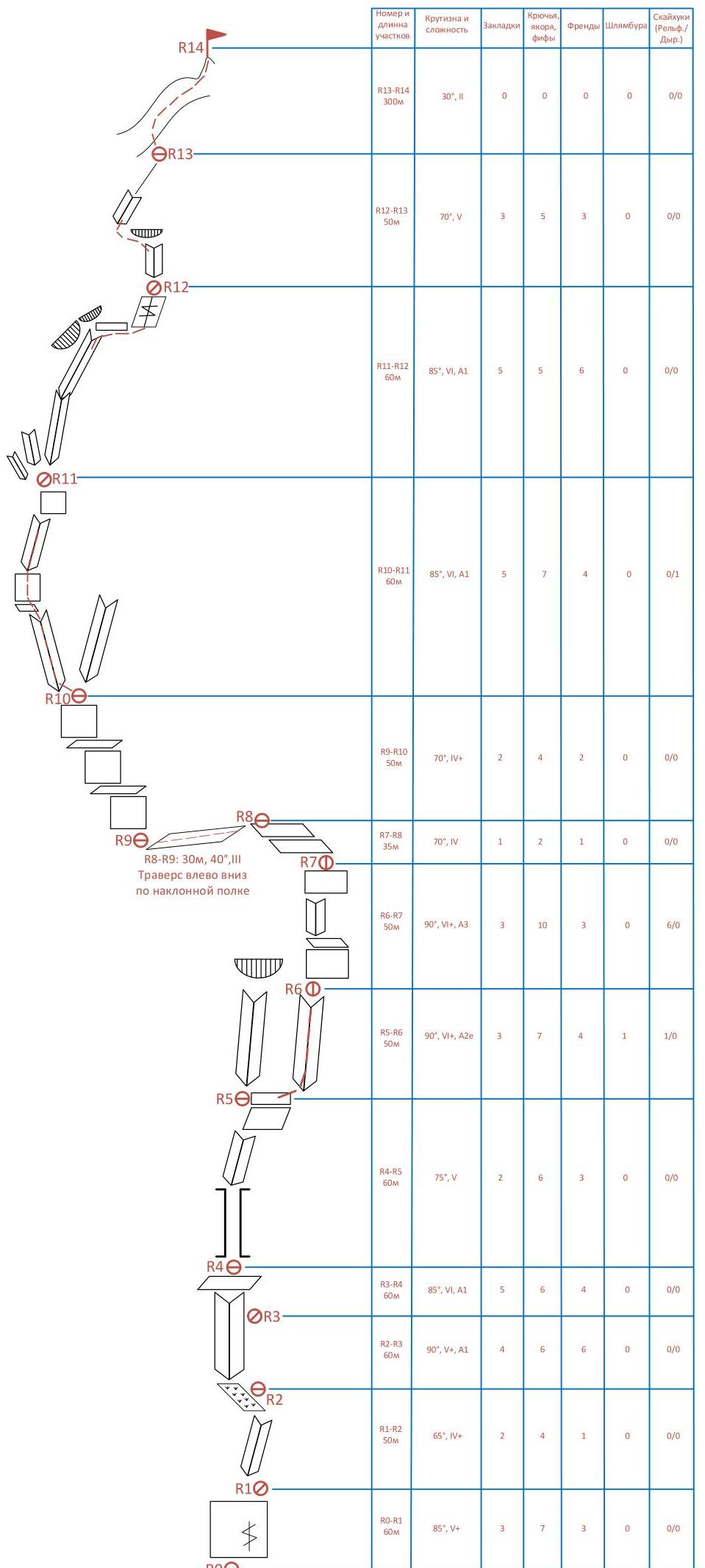
- Перепад высот: м Протяженность маршрута: 945 м. Протяженность стенной части: 645 м. Протяженность участков V кат. сл.: 230 м. VI кат. сл.: 280 м. Средняя крутизна маршрута: 64°. Крутизна стенной части: 80°.
- Оставлено крючьев на маршруте: Всего: 2, в том числе шлямбурных: 1
- Использовано всего на маршруте (в том числе ИТО): якорей, фиф и скальных крючьев 69; закладок: 38; френдов: 40; скайхуков: 8
- Ходовых часов команды: 21 ч
- Руководитель: Аюшеев Д.В. — КМС. Участники: Багуза А.М. — 1-й сп. разряд. Тренер: Аюшеев Д.В. — КМС.
- Выход на маршрут из БЛ: 5 февраля 2017 г. 05:00 Выход на вершину: 6 февраля 2017 г. 18:00 Возвращение в БЛ: 7 февраля 2017 г. 13:00
- Организация: Федерация Альпинизма Республики Бурятия
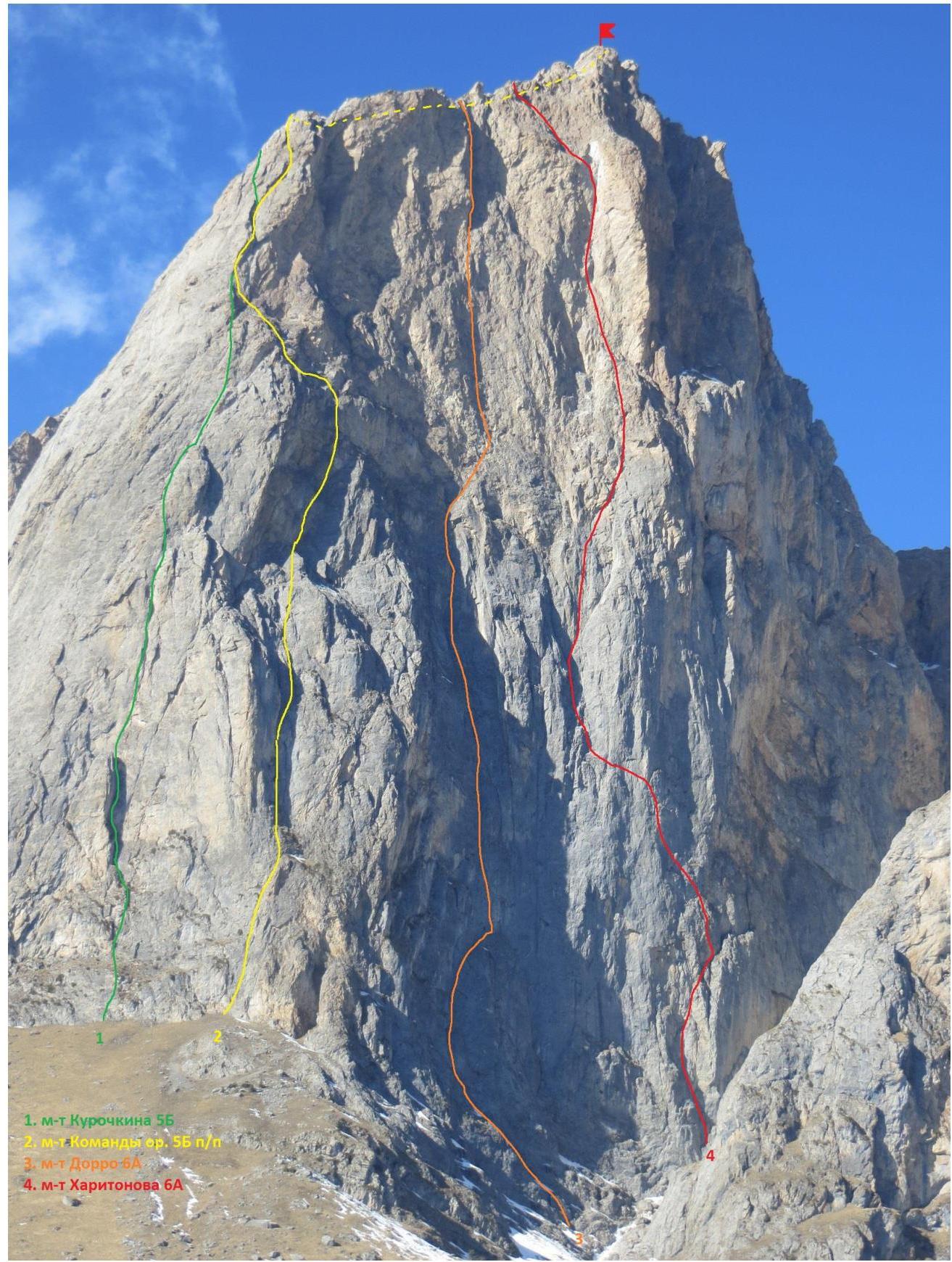
Общее фото вершины
Рисованный профиль маршрута
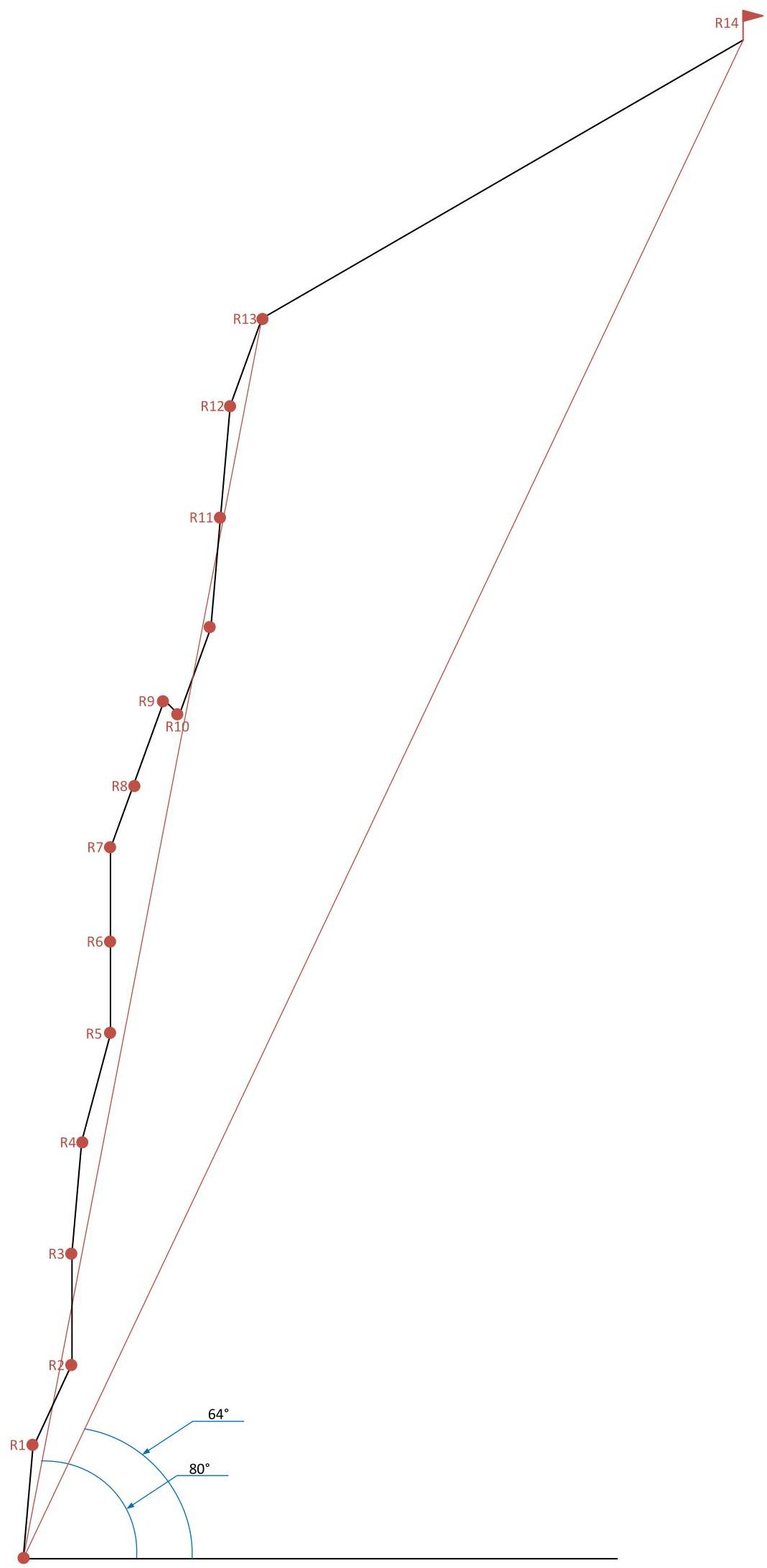
Схема УИАА (сделана с помощью программы MS Visio)
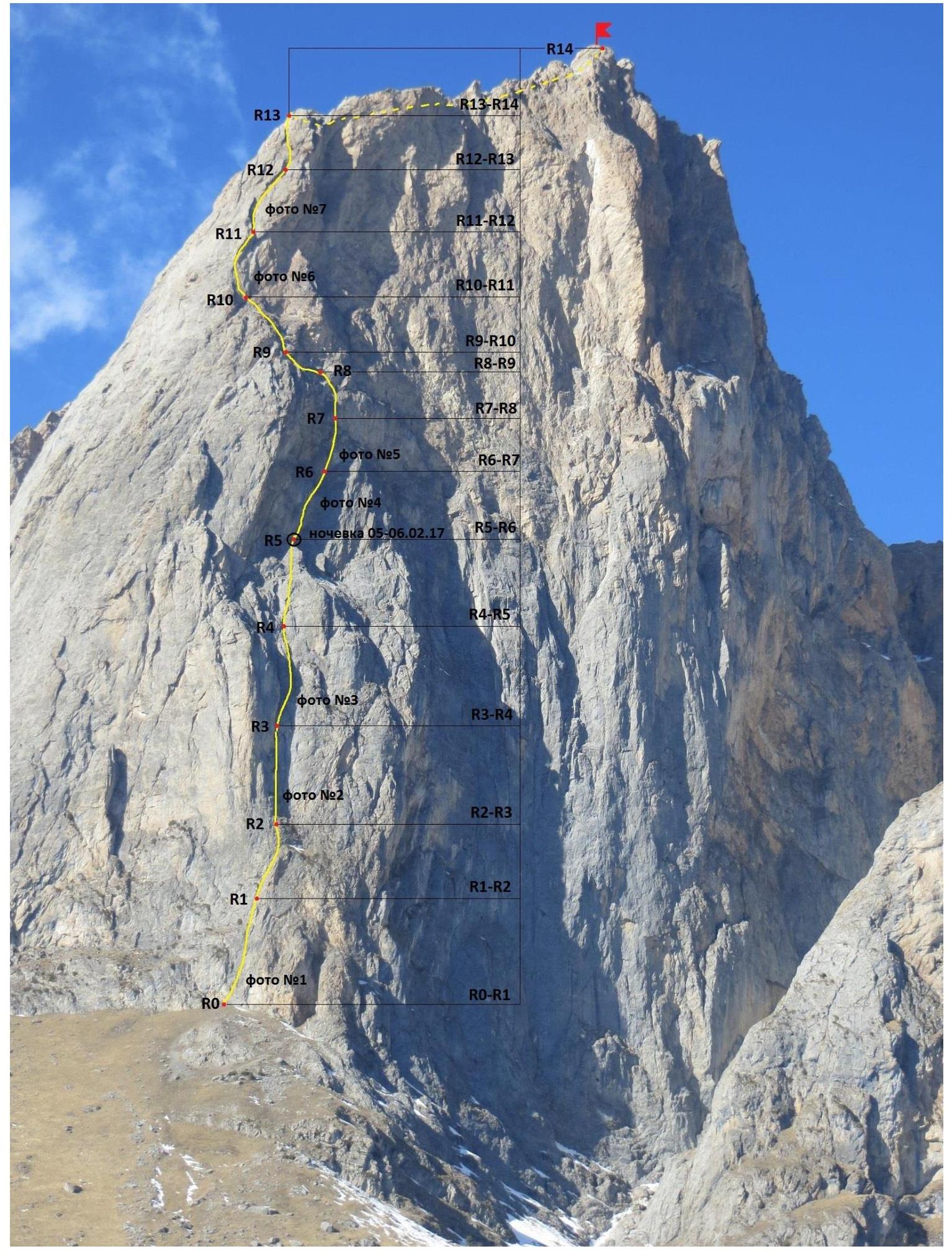
Техническое фото маршрута
Фотографии
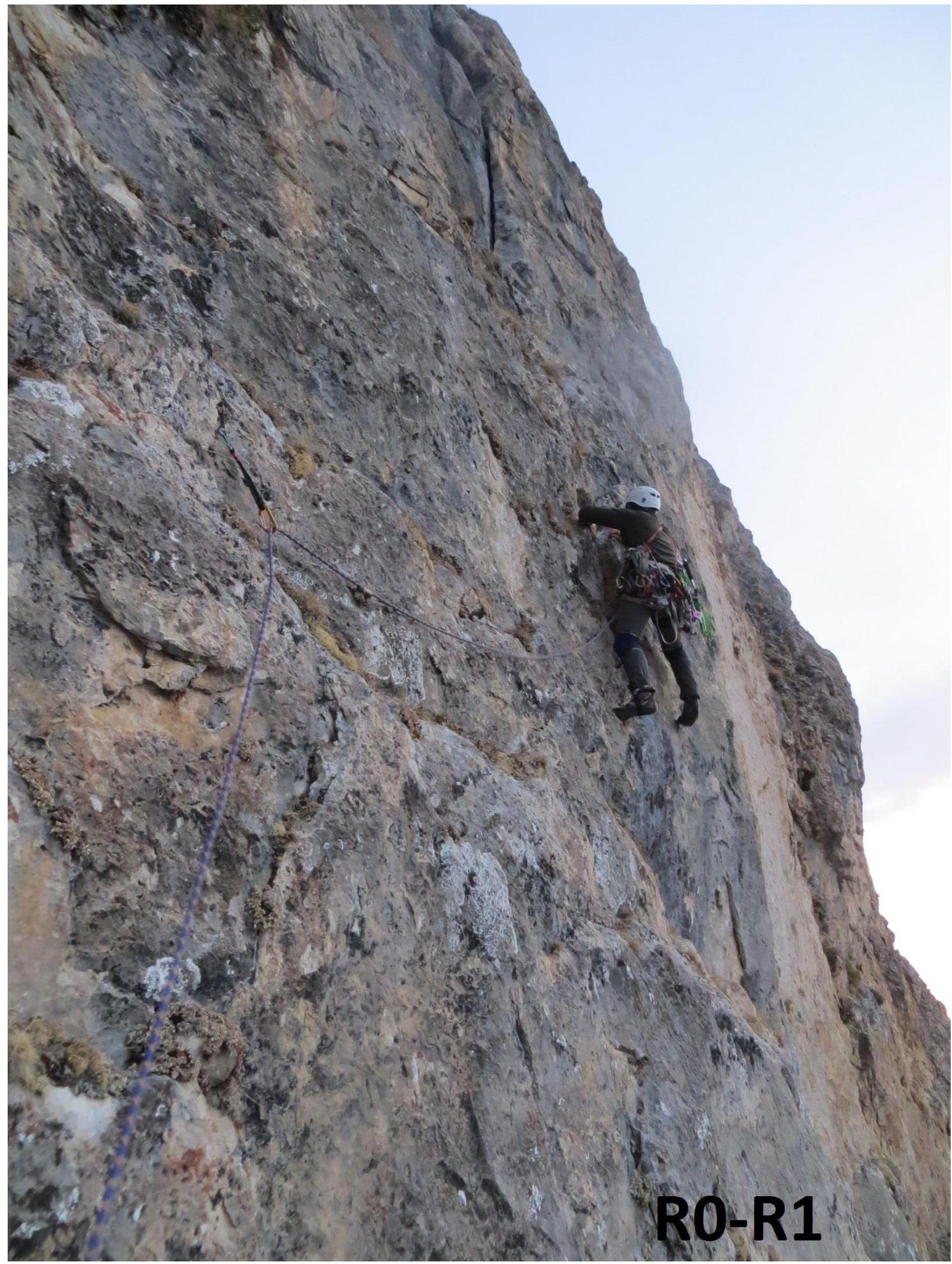
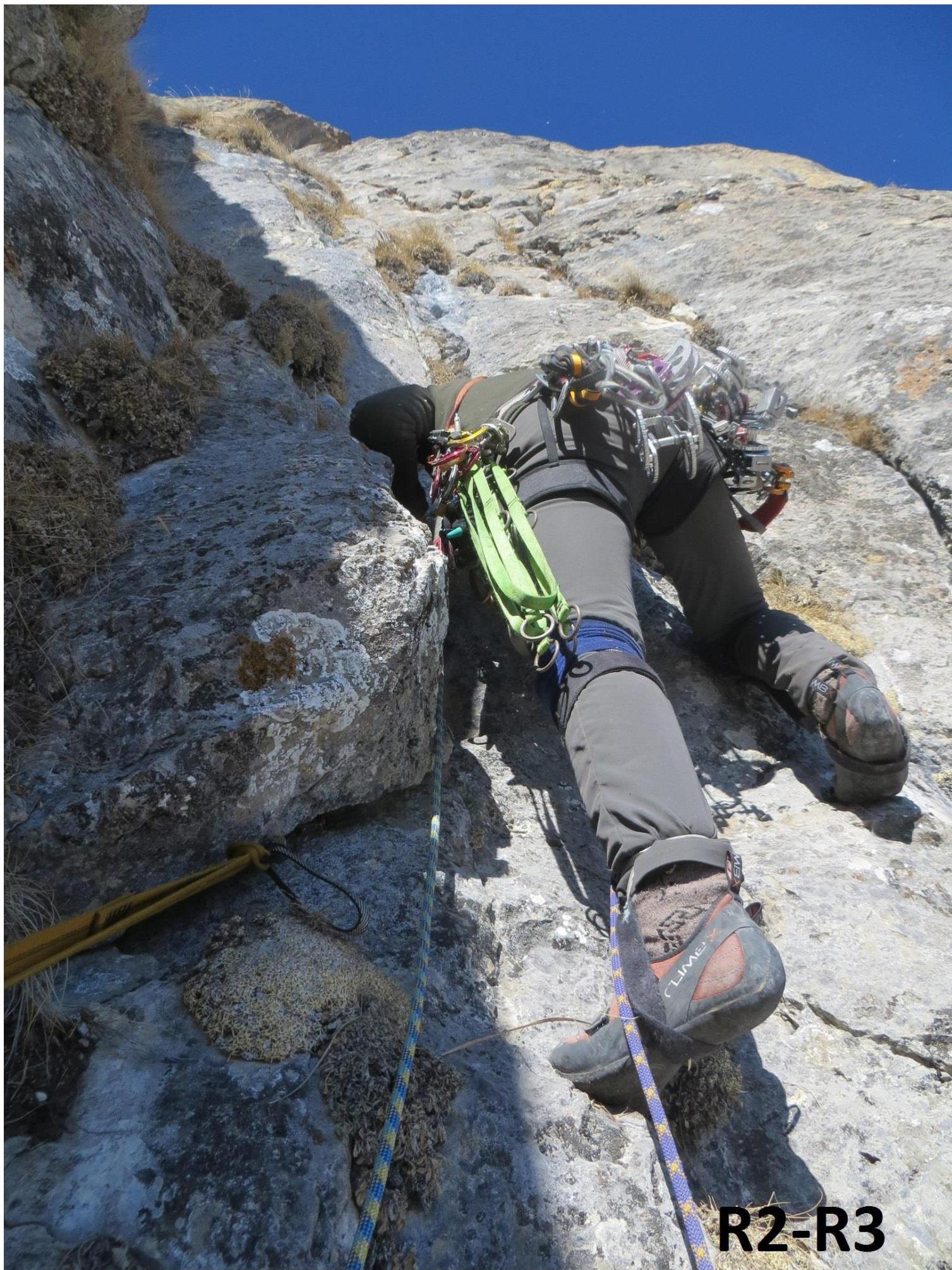
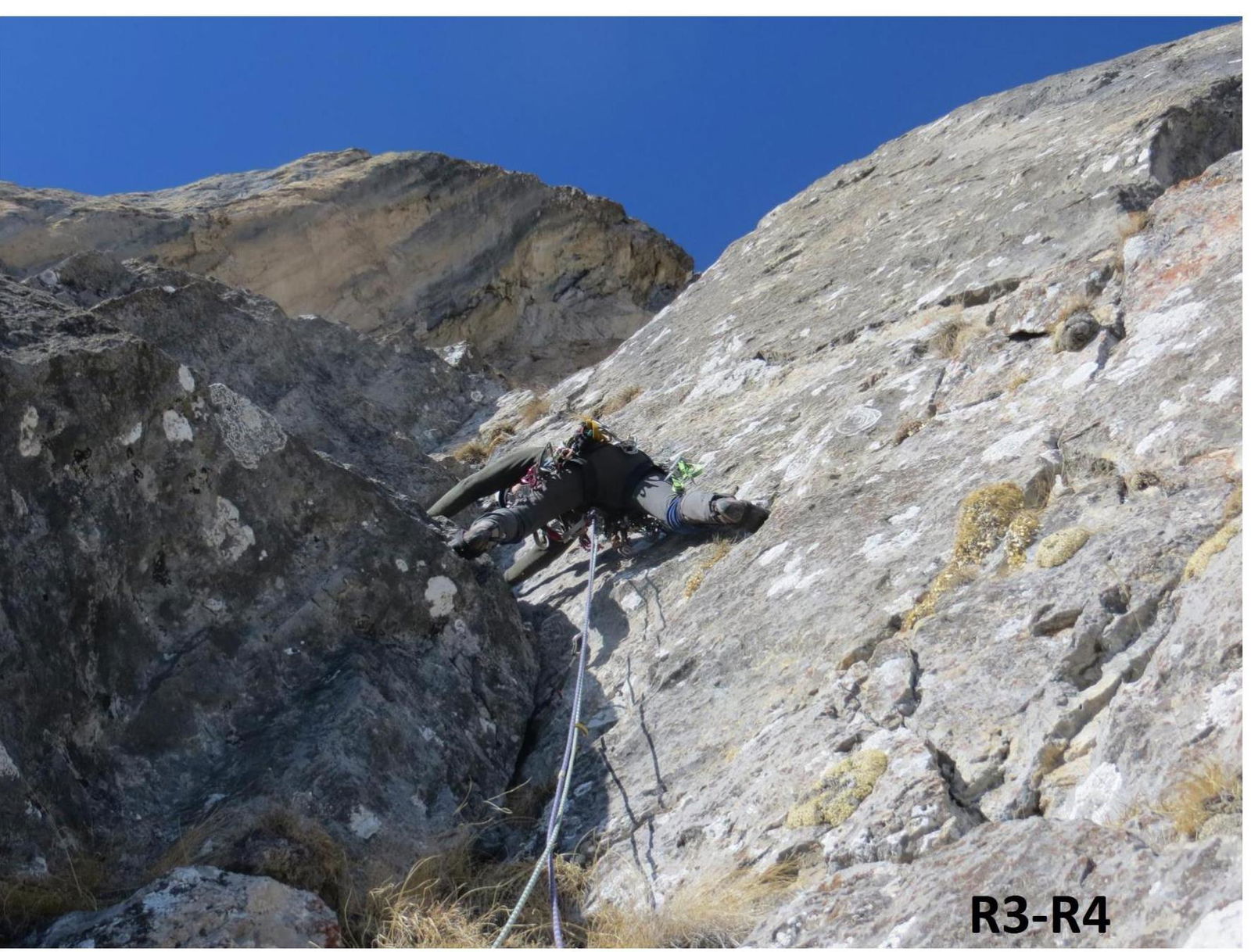
R3–R4
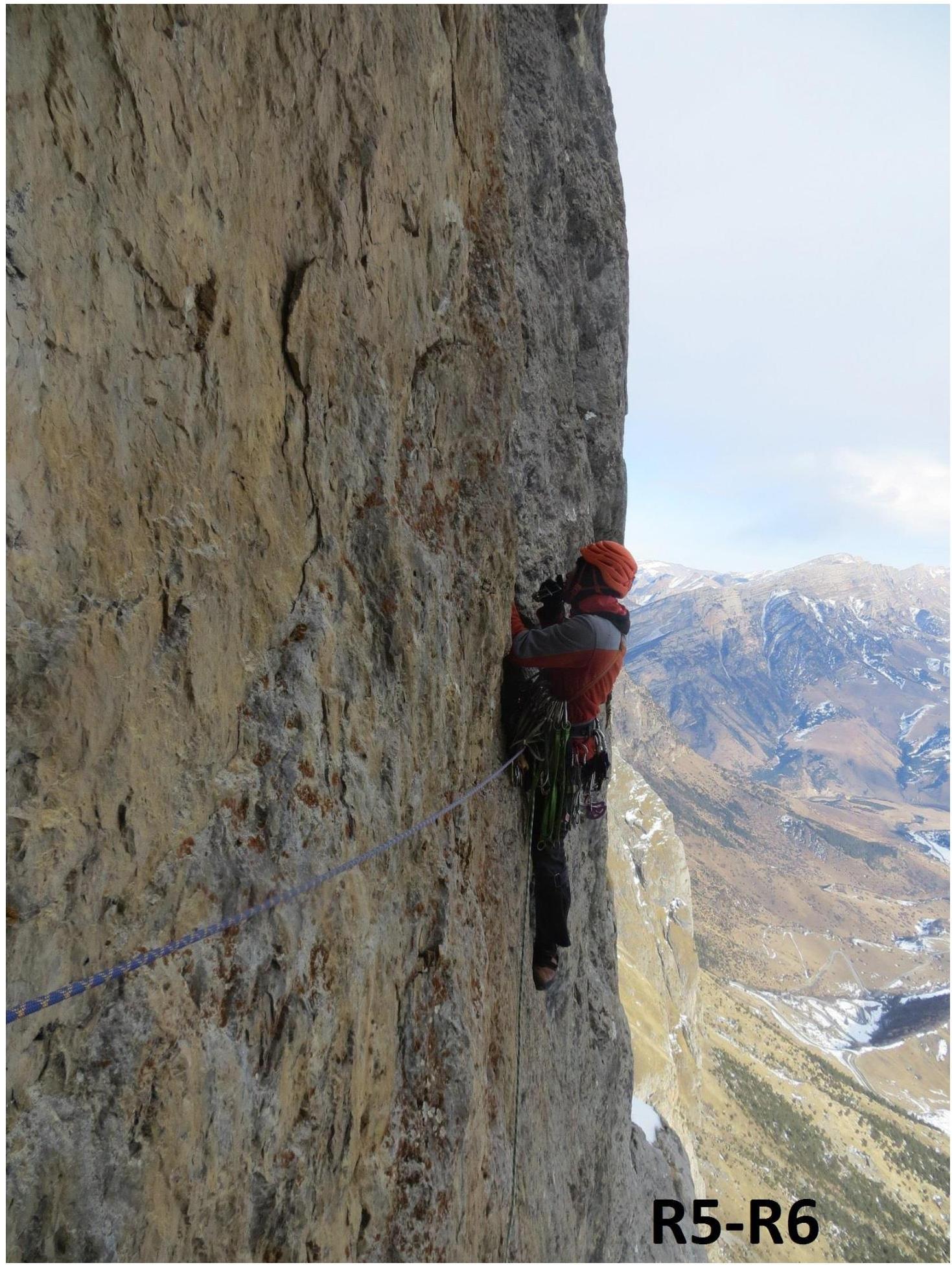
R5–R6
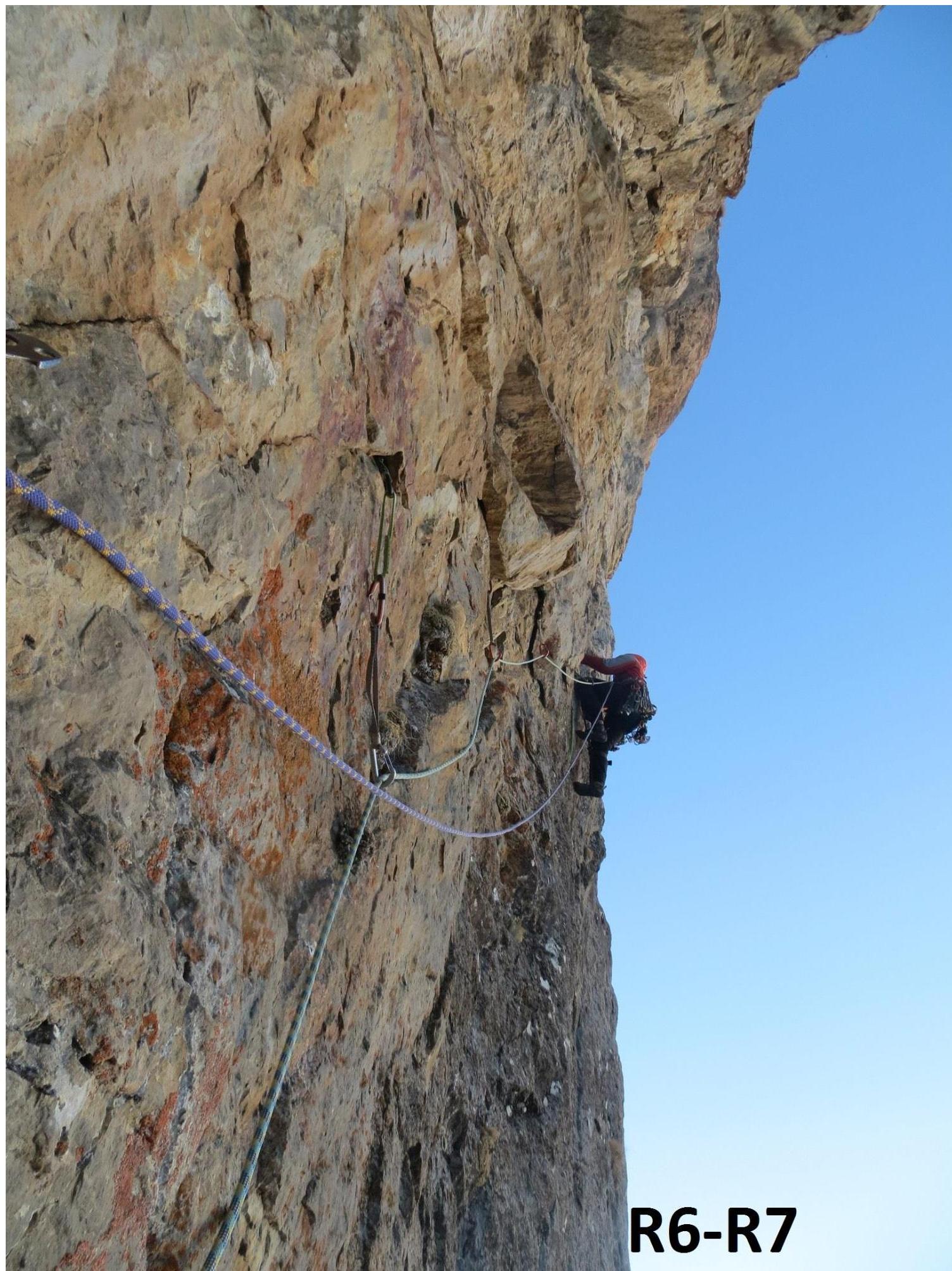
R6–R7
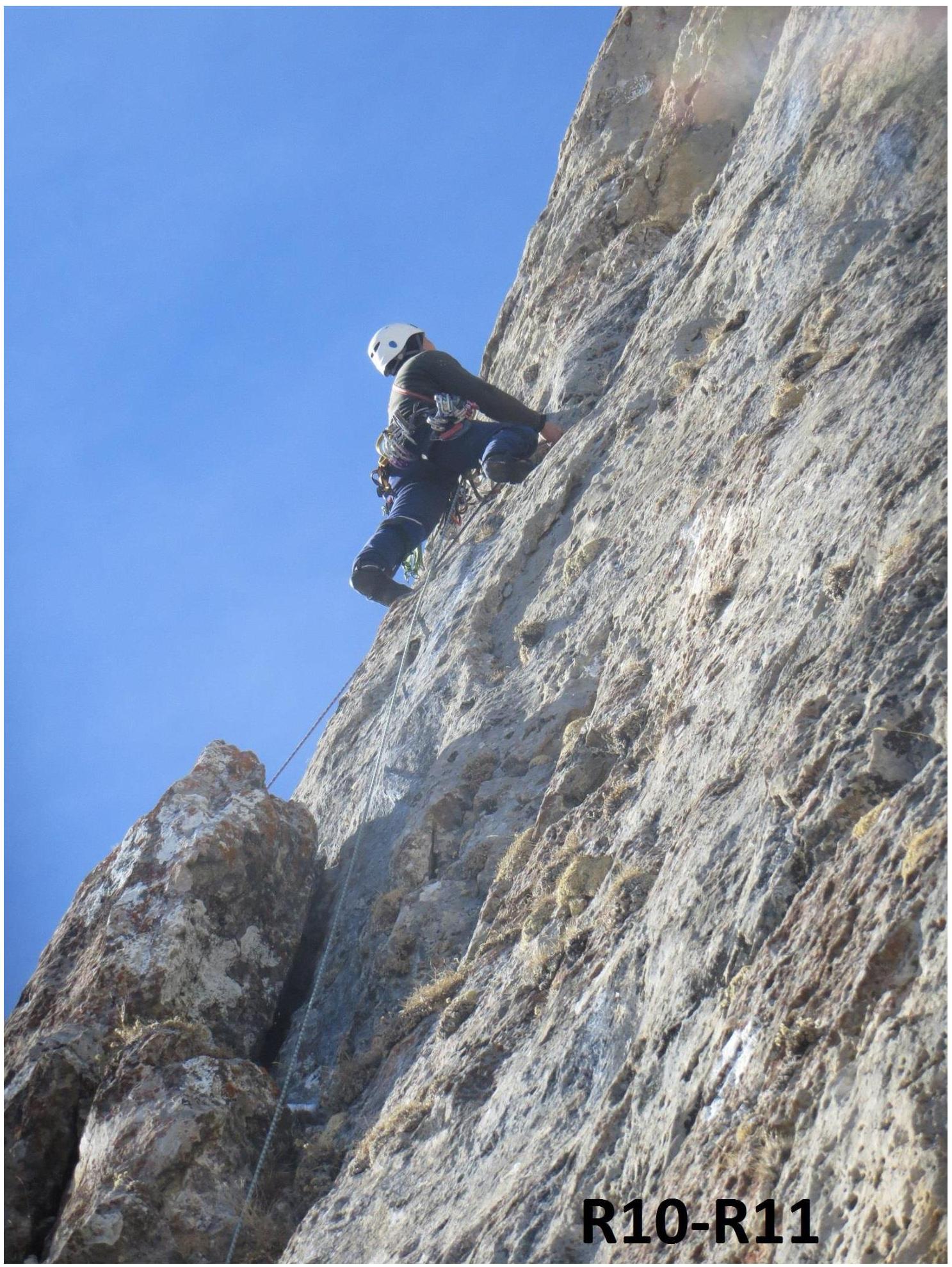
R10–R11
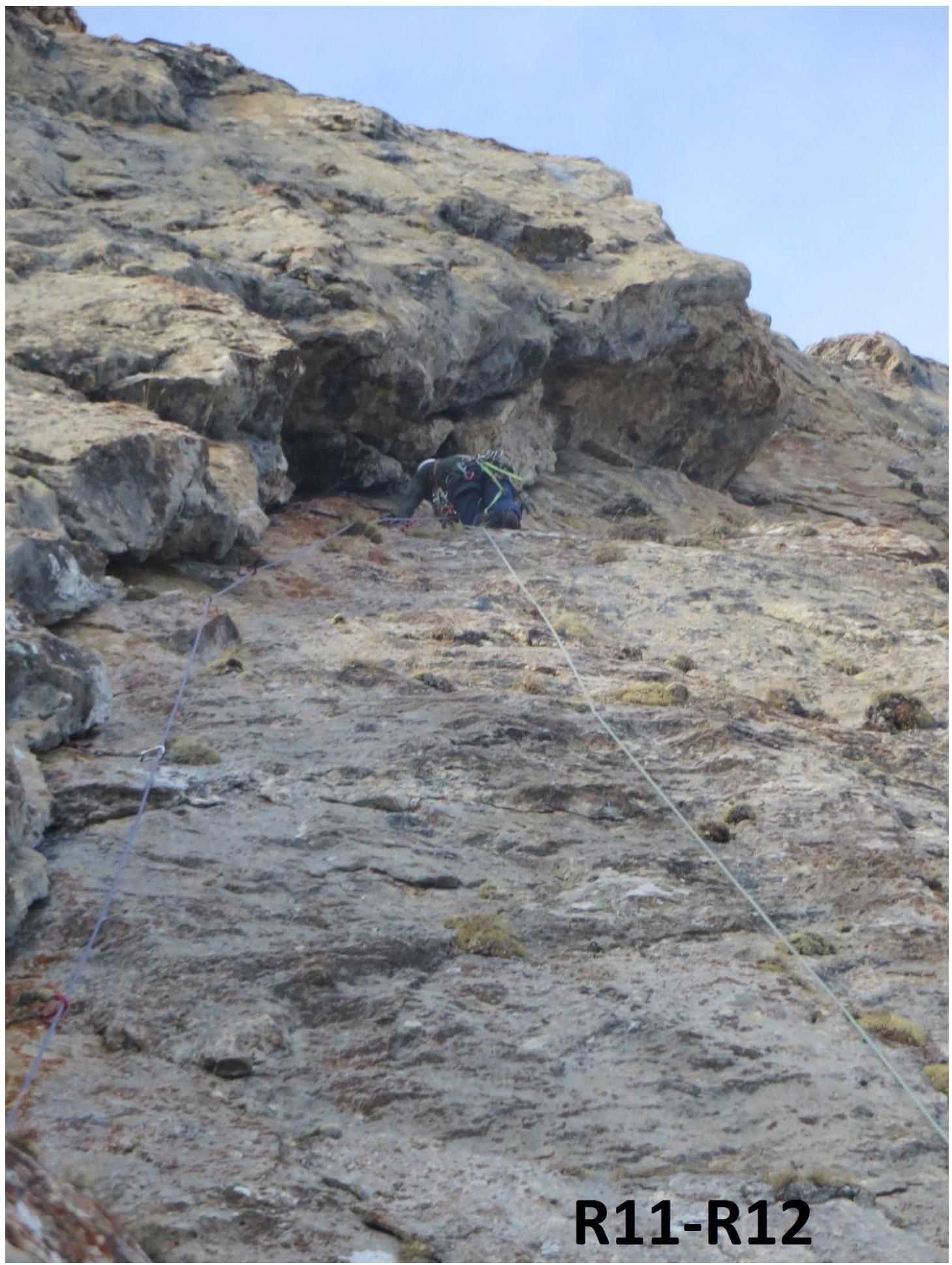
R11–R12
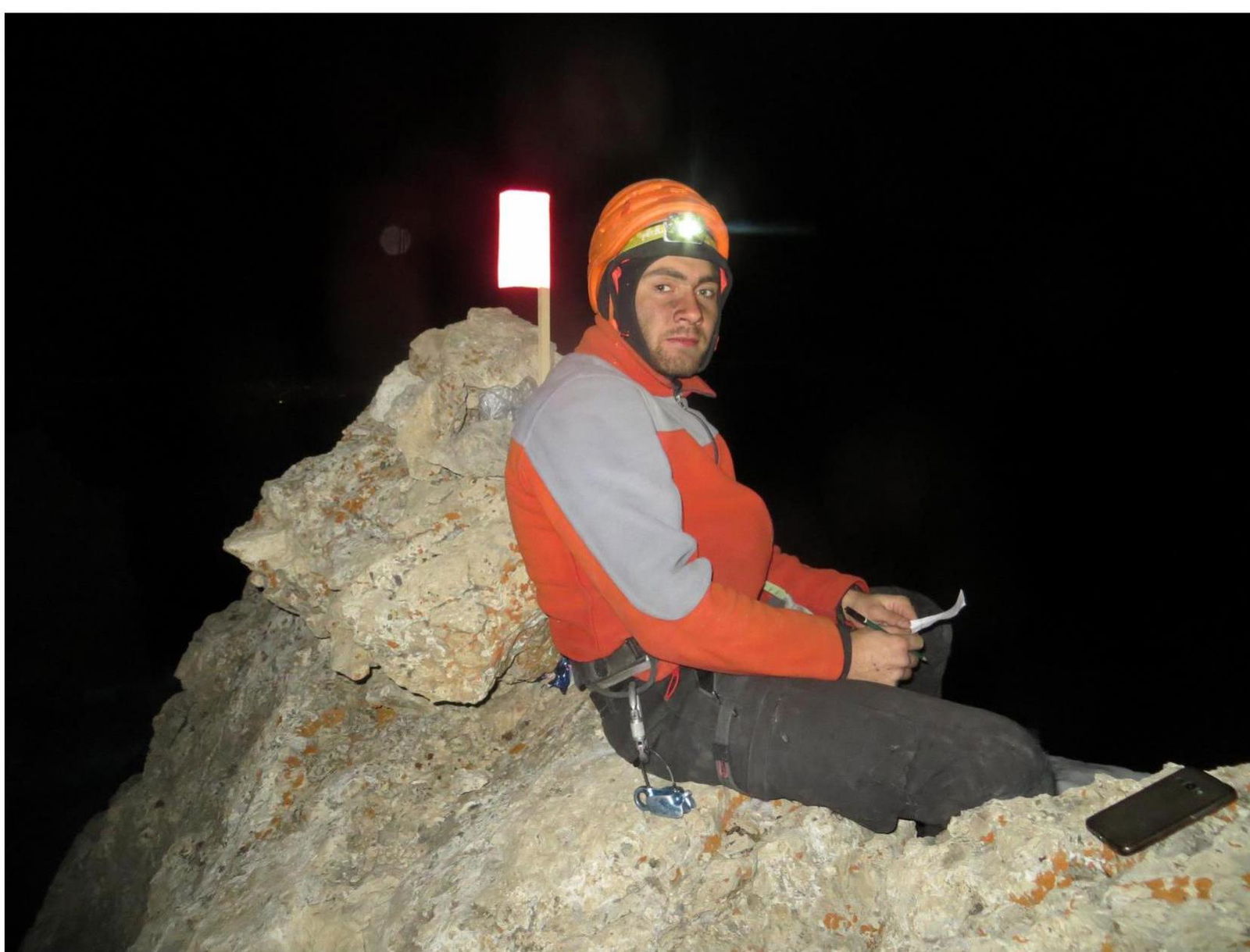
Фото на вершине

1. Introduction
This document provides an overview of the key concepts and methodologies used in the study of quantum mechanics. It covers:
- Fundamental principles
- Mathematical formulations
- Practical applications
2. Fundamental Principles
2.1 Wave-Particle Duality
Quantum mechanics introduces the concept of wave-particle duality, where particles such as electrons and photons exhibit both wave-like and particle-like properties. This duality is central to understanding the behavior of quantum systems.
2.2 Superposition
The principle of superposition states that a quantum system can exist in multiple states simultaneously until it is measured. This is mathematically represented by a wave function, denoted as |ψ⟩. Superposition is a principle that states a system of particles at a rate |ψ̇⟩ for all n particles (cosmotic and noncosmic particles).
2.3 Uncertainty Principle
The Heisenberg Uncertainty Principle states that it is impossible to simultaneously know the exact position and momentum of a particle. This is expressed as: Δx · Δp ≥ ℏ/2 where Δx is the uncertainty in position, Δp is the uncertainty in momentum, and ℏ is the reduced Planck constant.
3. Mathematical Formulations
3.1 Schrödinger Equation
The Schrödinger equation is a fundamental equation in quantum mechanics that describes how the quantum state of a physical system changes over time. It is given by: iℏ ∂/∂t Ψ(r, t) = Ĥ Ψ(r, t) where Ĥ = ℏ/2 Ĥ(r, t) + Ĥ Ψ(r, t).
3.2 Dirac Notation
Dirac notation is a convenient and convenient way to represent quantum states and operators. It uses bra-ket notation, where the ket |ψ⟩ represents a quantum state, and a bra ⟨ψ| represents its dual.
4. Practical Applications
4.1 Quantum Computing
Quantum computing leverages the principles of superposition and entanglement to perform computations that are infeasible for classical computers. Quantum bits, or qubits, are the fundamental units of quantum information.
4.2 Quantum Cryptography
Quantum cryptography uses the principles of quantum mechanics to secure communication. Quantum key distribution (QKD) is a cornerstone of quantum computing, with its applications in cryptography and cryptography.
5. Conclusion
Quantum mechanics is a cornerstone of modern physics, providing a framework for understanding the behavior of particles at the smallest scales. Its principles and mathematical formulations have led to groundbreaking technologies and continue to drive innovation in various fields.
6. References
- Griffiths, D. J. (2005). Introduction to Quantum Mechanics. Pearson.
- Shankar, R. (2012). Principles of Quantum Mechanics. Plenum Press.

Комментарии
Войдите, чтобы оставить комментарий